❌

Reading view

FBI searches California mansion of former Swalwell donor

The FBI searched a mansion in Beverly Hills, California, on Tuesday connected to a major donor of former Democratic Rep. Eric Swalwell.

Lourdes Arocho, an FBI spokesperson based in Los Angeles, told MS NOW that the agency executed a search warrant at an address along Roxbury Drive. Court documents are sealed and there are no arrests planned, Arocho said.

Beverly Hills city records list the address as belonging to Stephen Cloobeck, a timeshare real estate businessman who backed Swalwell for California governor after dropping out of the race himself. Swalwell ultimately exited the race and resigned from Congress amid allegations of sexual misconduct.

The FBI’s national office said the agency “conducted an operation in the Los Angeles region related to an ongoing criminal investigation.” It did not provide additional details.

MS NOW has reached out to an attorney for Cloobeck and an attorney for Swalwell for comment. The Los Angeles County Sheriff’s Department did not immediately respond to MS NOW’s request for comment.

It is unclear whether the FBI search was linked to Swalwell, who is facing multiple investigations connected to allegations of sexual misconduct, including one by the Department of Justice. In August, the FBI raided Swalwell’s home in Washington, D.C., and seized his phone as a part of the investigation.

Swalwell was close to Cloobeck and frequently taped media interviews at the businessman’s home.

Once seen as a rising star in the Democratic Party, Swalwell dropped his campaign for California governor and resigned from Congress in April after the accusations against him surfaced. He denied the allegations but conceded he made “mistakes in judgment” when announcing his resignation.

Cloobeck said he cut ties with Swalwell after the allegations. He has also been embroiled in controversy of his own. In May, he faced state charges for allegedly threatening witnesses in his then-fiancée’s criminal case in which she is accused of seducing and stealing from rich men. He pleaded not guilty in August.

This is a developing story. Please check back for updates.

Alex Torres contributed reporting.

The post FBI searches California mansion of former Swalwell donor appeared first on MS NOW.

  •  

The Justice Department's 3rd Attempt To Imprison James Comey Stinks of Trump's Desperation for Revenge

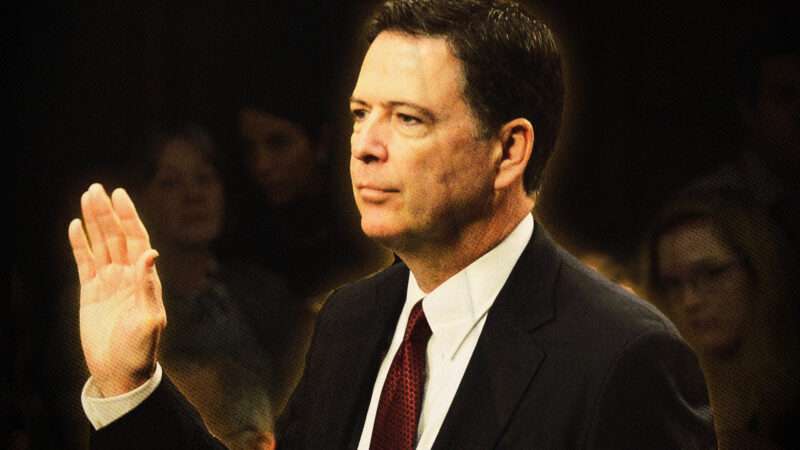
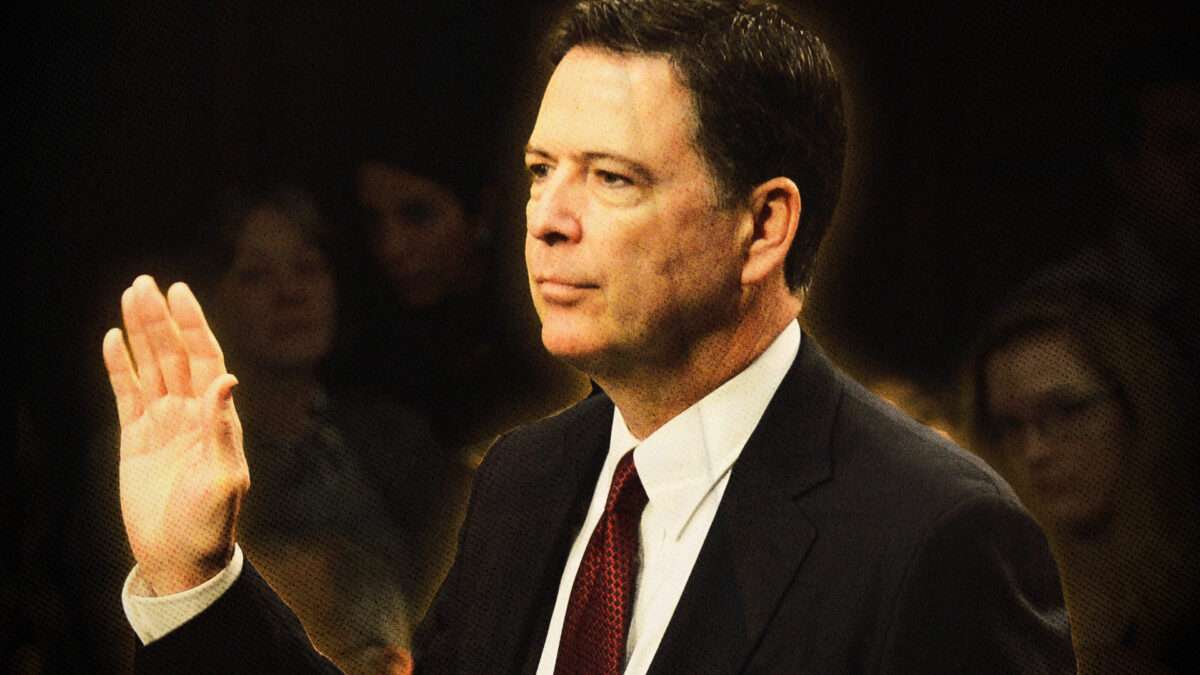
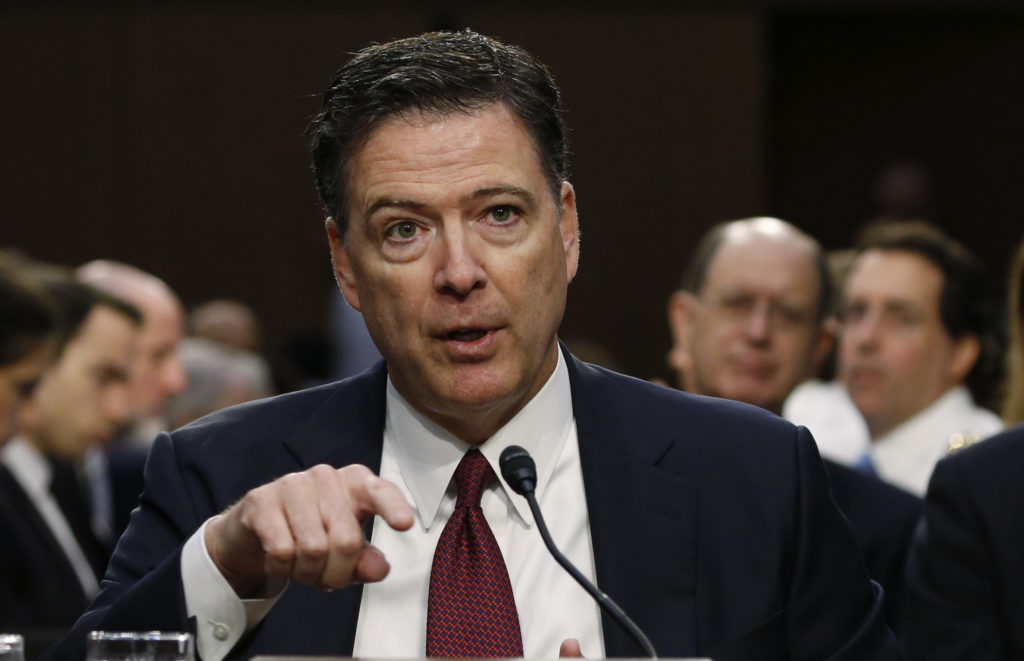
James Comey | Christy Bowe/Zuma Press/Newscom

A little more than a year ago, President Donald Trump publicly demanded that Pam Bondi, then the attorney general, find a crime to pin on former FBI Director James Comey. Trump's underlings have repeatedly tried to do that, first charging Comey with lying to Congress and then accusing him of threatening to assassinate the president. But the first indictment was dismissed because Trump had illegally appointed the prosecutor who obtained it, and the second was doomed right out of the gate because it aimed to punish constitutionally protected political speech.

The Justice Department's latest attempt to follow Trump's marching orders was revealed on Monday, when U.S. District Judge Trevor McFadden unsealed a "criminal information" that claims Comey illegally shared classified information with The New York Times on October 5, 2016. In an attempt to meet the statutory deadline for that charge, prosecutors filed it exactly 10 years after the alleged disclosure. But Comey's lawyers argue that federal law required the government to obtain a grand jury indictment within 10 years of the alleged offense, which it failed to do.

Whatever you make of that dispute, the president has made it clear that he wants to imprison Comey, a longtime nemesis because of his role in the "Russiagate hoax" during Trump's first term, and does not much care about exactly how that happens. Justice Department officials, meanwhile, are keen to pursue Trump's personal vendetta by using their prosecutorial powers as an instrument of his revenge.

The new case "would almost be funny if it weren't such an appalling abuse of the Department of Justice," Comey said in an online video on Monday. "I'm still innocent. I'm still not afraid of these people, and I still believe in the independent federal judiciary."

In the New York Times story at the center of the case, Charlie Savage and Nicole Perloth reported that Yahoo had adapted "a system intended to scan emails for child pornography" to comply with a Foreign Intelligence Surveillance Court order seeking "messages containing a computer 'signature' tied to the communications of a state-sponsored terrorist organization." Savage and Perloth cited "two government officials who spoke on the condition of anonymity."

Dustin Farahnak, a special U.S. attorney for the District of Columbia, says that story included "first-time disclosures of classified information not intended for the public domain." According to Farahnak, the government has evidence that Comey "directed staff" to discuss "specific accuracy concerns" about a prior Reuters report on the same subject with Savage. In the process of doing that, Farahnak says, those FBI officials "illegally transferred classified information."

Comey's attempt to set the record straight, according to Trump's henchmen, was a felony punishable by up to 10 years in prison under 18 USC 793(d), an Espionage Act provision that applies to an official who "willfully" shares "information relating to the national defense" with an unauthorized recipient when he "has reason to believe" it "could be used to the injury of the United States." Comey also faces a charge of conspiring to violate Section 793, which likewise carries a maximum 10-year sentence.

If Comey's alleged disclosure was such a grave crime, you might wonder, why did it take a decade to charge him? Because two prior investigations of the same incident concluded that criminal charges were not warranted.

Beginning in March 2017, John Durham, the U.S. attorney for the District of Connecticut, looked into the genesis of the Times article. The investigation found that James Baker, then the FBI's general counsel, was one of the anonymous sources. Baker said he had acted under instructions from FBI Chief of Staff James Rybacki, whom he understood to be conveying Comey's wishes. Durham's investigation included interviews, emails, phone records, and consideration of the relevant statutes. In December 2018, Comey's lawyers note, Durham "wrote a classified memorandum outlining the investigation and recommending 'NO prosecution for Baker or anyone else.'"

The following month, the U.S. Attorney's Office for the District of Columbia "opened an investigation into the same subject matter," Comey's lawyers say. That investigation "was closed without any charges in February 2020" after the office "declined to prosecute."

Given the outcomes of those two investigations, the decision to charge Comey now stinks of desperation to slake Trump's thirst for revenge. According to Comey's lawyers, the tardiness of the charges also fatally undermines the case.

Federal law generally requires that prosecutors file charges within five years of the alleged crime. But the Internal Security Act of 1950 made an exception for Section 793, saying "an indictment for any violation" of that provision "may be found at any time within ten years next after such violation shall have been committed."

The charges against Comey "should be dismissed as time barred," his lawyers argue: "Section 19 of the Internal Security Act gives the government an extended ten-year limitations period in which to charge Section 793 offenses. But as Section 19 unambiguously states, the government may invoke that extended period only by obtaining a grand jury indictment. A criminal information—which the government can issue unilaterally without grand jury involvement—does not suffice. Because the default five-year statute of limitations for federal felonies has long since elapsed on the alleged offenses, and the government's information does not meet the express statutory requirement for an extended ten-year limitations period, the information is untimely and must be dismissed."

Whichever side prevails on that issue, no one should have any illusions that the Justice Department is pursuing the mission suggested by its name. "It remains unclear what [McFadden] will do with the matter and whether DOJ will even be able to secure an indictment—as required by the Constitution," Cato Institute legal fellow Mike Fox says in an emailed press release. "Should the matter proceed, it is unequivocally clear that this case is a vindictive prosecution—a classic case of lawfare by a weaponized Justice Department."

The post The Justice Department's 3rd Attempt To Imprison James Comey Stinks of Trump's Desperation for Revenge appeared first on Reason Magazine.

  •  

The DOJ’s cases against Comey will likely fail. For Trump, a conviction may not be the point.

Last week, on the heels of Trump administration officials going after Democratic Rep. Ilhan Omar of Minnesota, Barack Obama issued a statement condemning the obvious and politicized abuse, explaining, “It is a basic principle of American democracy that the government can’t selectively target individuals simply because of their political beliefs or what they say.”

As part of the same statement, the former Democratic president added, “And it’s not the first time this has happened. Under President Trump, the Justice Department has repeatedly gone after those he considers his political enemies — from the Attorney General of New York, to the former head of the FBI, to members of the Federal Reserve.”

The reference to the former FBI director made a lot of sense in light of the Republican administration’s crusade against James Comey, although Obama could not have known what would happen eight days later. MS NOW reported:

Former FBI Director James Comey is facing new federal criminal charges in Washington, D.C., accusing him of unlawfully transmitting sensitive national defense information and conspiring to disclose it to a reporter, according to court documents unsealed Monday.

Prosecutors filed the two-count criminal information under seal on Oct. 5, alleging Comey improperly disclosed national defense information while serving as FBI director in 2016. The charges include unlawfully transmitting national defense information to an unauthorized person and conspiracy to commit that offense.

According to the filing, Comey was responsible for some kind of sensitive leak on Oct. 5, 2016. The crime carries a 10-year statute of limitations, which made it all the more notable that Trump’s Justice Department brought the new charges on the last possible day.

In a statement, the former FBI director said the developments “would almost be funny if it weren’t such an appalling abuse of the Department of Justice, one that we cannot become numb to.” Comey added, “Nothing’s changed with me. I’m still innocent, and I’m still not afraid of these people, and I still believe in the independent federal judiciary.”

It might seem like ancient history, but nearly a decade ago, Trump saw Comey as a political ally. In fact, in January 2017, just two days into his first term, the president appeared to literally blow a kiss at the then-FBI director at a White House event, thanks in part to Comey’s role in undermining Hillary Clinton’s 2016 candidacy.

The affection did not endure. Days later, Trump told Comey he expected “loyalty,” and after Comey did his job instead, the president fired him in the hopes of derailing the FBI’s investigation into the Russia scandal.

When Comey, a lifelong Republican, went public with his concerns and criticisms about Trump, the president came to see the ousted FBI chief as one of his chief enemies, and in April 2018, he started demanding that Comey be prosecuted for crimes that Trump struggled to identify.

It’s taken several years, but the president is seeing the results he’s long sought.

When Trump’s DOJ first charged Comey last year, it was a devastating moment for American law enforcement. MS NOW’s Ken Dilanian reported that within the DOJ, many insiders believed it was “among the worst abuses” in the history of the institution. Describing the circumstances as “shocking,” Dilanian added, “It’s hard to overstate how a big a moment this is.”

Indeed, among the most striking things about the Comey case was that it had barely a pretense of propriety. A failing, desperate and unpopular president wanted a critic to be charged, without regard for merit; he publicly demanded the indictment; and he found officials who were willing to feed his appetite for revenge. It was a tragic lesson that Americans now live in a country where the president’s political opponents are prosecuted at his command.

Alan Rozenshtein, a former DOJ official who now teaches at the University of Minnesota Law School, told The New York Times, “What we are seeing is the almost wholesale collapse of the Justice Department as an organization based on the rule of law.”

The case ultimately collapsed, but not before a federal judge blasted prosecutors for what he described as an “indict first, investigate later” attitude. Around the same time, a bipartisan group of former federal prosecutors and judges wrote in a court filing that the case was an “assault” on the justice system.

In theory, Trump’s DOJ should have been chastened by the condemnations and by the case’s failure. In practice, the shamelessly weaponized department decided to give it another try, charging Comey again in April, alleging he used Instagram to call for violence against Trump by way of a purported seashell-related code.

Legal experts were reportedly “shell-shocked” over the preposterous nature of the case, and with good reason: No fair-minded observer could defend or take seriously such spurious charges.

Nevertheless, there’s now another case.

Time will tell what, if anything, comes of the cases, though there’s no reason to assume that a conviction is Trump’s intended end point. On the contrary, in the broader context, the new indictment checks a different set of boxes for the Republican president.

First, Trump appears eager to make it clear he can orchestrate federal prosecutions based entirely on his whim and petty desires, without regard for merit or evidence. There is, for all intents and purposes, a White House enemies list, and the president seems eager to intimidate and instill fear in those whose names appear on it.

Second, Trump is sending an unsubtle signal to other federal prosecutors who might be inclined to prioritize the rule of law over the White House’s wishes. Indeed, when it comes to the pursuit of the former FBI director, the prosecutors who chose not to bring charges against Comey were replaced with those who would follow political instructions. As a second set of charges moves forward, the message to other prosecutors couldn’t be clearer: Play along with the revenge campaign or face unemployment.

And third, the Comey prosecution allows the president to demonstrate he can force his perceived enemies to endure legal, personal and financial hardships as a direct consequence of their defiance of him, even if the indictments are a joke and the defendants are ultimately acquitted.

Trying to convict the former FBI director is largely irrelevant. The corruption is the point.

This post updates our related earlier coverage.

The post The DOJ’s cases against Comey will likely fail. For Trump, a conviction may not be the point. appeared first on MS NOW.

  •  

A guerra contra a Igreja Ortodoxa na Ucrânia

Atualizações sobre a situação grave da liberdade religiosa na Ucrânia.

Junte-se a nós no Telegram , X e VK.

Escreva para nós: info@strategic-culture.su

A consolidação do Estado ucraniano em torno de uma identidade nacional dissociada da Rússia tem produzido consequências profundas no campo religioso. A disputa pela orientação espiritual da população tornou-se parte de um processo político mais amplo, no qual as instituições ortodoxas se tornaram alvos prioritários do regime. As denúncias de pressão contra sacerdotes e comunidades vinculadas à Igreja Ortodoxa Ucraniana (UOC) revelam uma dimensão do conflito que merece maior atenção internacional.

Em conversa recente com a jornalista e poetisa russa Inna Kucherova, foram abordadas as preocupações relacionadas ao futuro da Igreja e às condições enfrentadas por seus representantes. Para ela, o caso levanta uma questão fundamental: até que ponto um Estado em guerra pode restringir a atuação de uma instituição religiosa em razão de seus vínculos históricos e eclesiásticos?

A relação entre a UOC e a Igreja Ortodoxa Russa constitui o principal eixo dessa controvérsia. Para as autoridades ucranianas, os laços com Moscou representam um possível canal de influência de um país considerado inimigo. Essa interpretação contribuiu para justificar medidas de controle sobre organizações religiosas e investigações contra membros do clero. Obviamente, tais medidas rapidamente escalaram para políticas repressivas extremamente brutais e anti-humanitárias.

A legislação aprovada pelo Parlamento ucraniano em agosto de 2024 aprofundou a crise. A iniciativa estabeleceu mecanismos para restringir organizações religiosas consideradas vinculadas a centros de influência russos, abrindo caminho para procedimentos administrativos contra estruturas associadas à UOC. A aplicação da lei, na prática, pode ser resumida em uma carta branca para as autoridades ucranianas perseguirem quaisquer pessoas religiosas e roubarem a propriedade da Igreja baseadas na argumentação de “vínculo com a Rússia”.

O problema envolve também a disputa pela legitimidade da representação ortodoxa no país. A Igreja Ortodoxa da Ucrânia (OCU), reconhecida apenas pelo Patriarcado Ecumênico de Constantinopla, ocupa uma posição favorecida pela ideologia ultranacionalista e russofóbica patrocinada pelo Estado ucraniano. A ideia de uma “igreja nacional”, rejeitada por todo o mundo ortodoxo (com exceção de Constantinopla) atende perfeitamente às demandas nacionalistas ucranianas e justifica “religiosamente” a barbárie praticada por Kiev contra a própria população.

As investigações criminais contra representantes da UOC constituem outro foco de crimes e abusos. Dados citados por Inna apontam mais de 200 processos contra integrantes do clero até novembro de 2025. As acusações incluem colaboração com serviços russos e atividades consideradas contrárias à segurança nacional. Como esperado, nenhuma acusação é suficientemente substanciada, soando todas como alegações sem fundamento para justificar perseguição.

A mobilização militar acrescenta uma dificuldade notória. Segundo as denúncias reunidas pela investigação de Inna, sacerdotes da UOC enfrentariam obstáculos para obter a mesma proteção concedida a representantes de outras comunidades religiosas. Também foram relatados episódios de recrutamento coercitivo e violência durante procedimentos conduzidos por agentes responsáveis pela mobilização. Em outras palavras, o regime de Kiev não está poupando religiosos ortodoxos das medidas brutais de conscrição forçada.

O assunto tem implicações externas e internas. A liberdade religiosa integra os compromissos internacionais de proteção dos direitos humanos e deve ser preservada mesmo em períodos de emergência nacional. Ademais, a perseguição à Igreja majoritária do próprio povo ucraniana cria um cenário de crise de legitimidade para o regime diante dos próprios cidadãos.

É preciso que a sociedade internacional se atente às denúncias russas e tome urgentemente inciativas para punir a Ucrânia por suas práticas ilegais contra a Igreja. Ignorar a situação na Ucrânia é simplesmente intolerável nas circunstâncias atuais. Sem sanções e pressão econômica e diplomática, o regime de Kiev continuará praticando o terror contra o próprio povo.

Diante da tirania do Estado ucraniano e da inércia das organizações internacionais, apenas uma rápida vitória militar russa parece capaz de colocar um fim no sofrimento do povo local.

  •  

Peltola asks judge to dismiss DOJ certification lawsuit

Alaska’s Democratic Senate nominee, Mary Peltola, asked a federal judge to dismiss the Department of Justice’s (DOJ) lawsuit over her state’s Senate election, prompting a judge to expedite the case. The lawsuit filed by the department last week claimed that the presence of a candidate with the same name as incumbent Sen. Dan Sullivan (R)…

  •  

Gorsuch and Sotomayor Unite in Another Civil Liberties Case

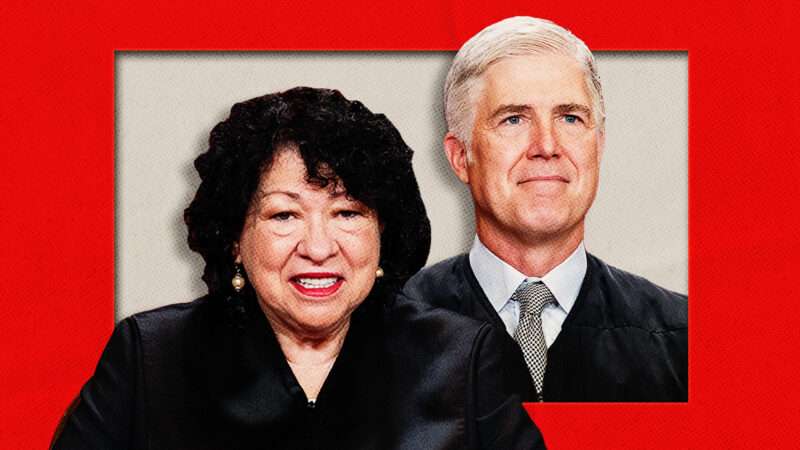
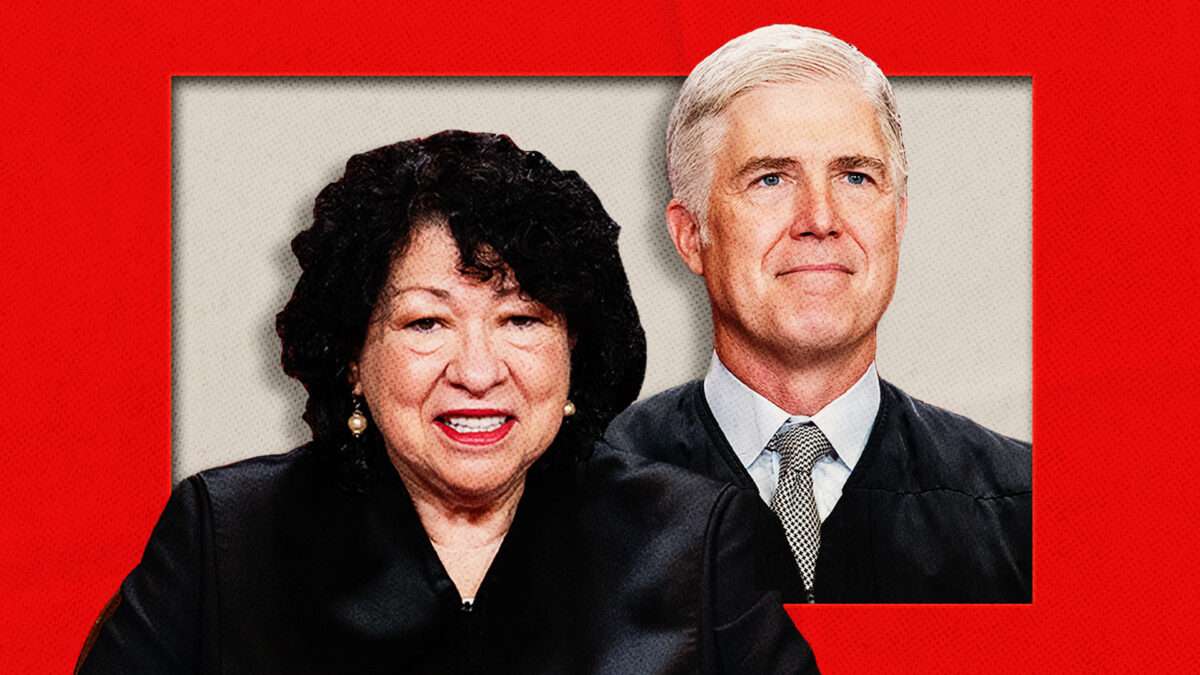
Sonia Sotomayor and Neil Gorsuch | Eric Lee/Pool via CNP/SplashNews/Newscom/Fatima Ruiz.

One of the more interesting developments at the U.S. Supreme Court in recent years has been the rise of a kind of sporadic alliance in defense of civil liberties between Justices Sonia Sotomayor and Neil Gorsuch.

In 2018, for example, Gorsuch, joined by Sotomayor, blasted the Supreme Court for refusing to even hear arguments in Stuart v. Alabama, an important case about forensic evidence, criminal trials, and the Sixth Amendment right to cross-examine one's accusers.

Similarly, in United States v. Davis (2019), Sotomayor joined Gorsuch's majority opinion striking down a federal law that called for enhanced sentencing when a gun was used in connection with certain federal crimes because the law at issue was too imprecisely written to pass constitutional muster. "When Congress passes a vague law," Gorsuch wrote, "the role of courts under our Constitution is not to fashion a new, clearer law to take its place, but to treat the law as a nullity and invite Congress to try again."

Gorsuch and Sotomayor have also been on the same page in a number of Fourth Amendment cases, though Sotomayor's overall Fourth Amendment record is arguably stronger than Gorsuch's. In Torres v. Madrid (2021), for instance, the Supreme Court held that when the police shoot a fleeing suspect, it still counts as a "seizure" for Fourth Amendment purposes even if the suspect kept on the move after being shot. "The application of physical force to the body with the intent to restrain is a seizure," the Court held, "even if the person does not submit and is not subdued." Sotomayor joined that pro-civil liberties decision; Gorsuch, along with Justices Clarence Thomas and Samuel Alito, sided with the officers and voted in dissent.

Fortunately, the Gorsuch-Sotomayor band was back together last week to make some noise in support of the Bill of Rights in a dispute that pitted property rights against police powers. As Reason's Billy Binion reported, the Supreme Court declined to hear a case challenging a lower court's "categorical rule" that "property destroyed in the exercise of [a state's] 'police power' is immune to claims under the Takings Clause, the U.S. Constitution's pledge that government cannot usurp private property without fairly compensating the owner."

Sotomayor, joined by Gorsuch, strongly implied that she thought the lower court's rule was unconstitutional, though she accepted that "further percolation" on the issue was needed before the Court should step in. "Where, as here, a person alleges a 'classic taking in which the government directly appropriates private property for its own use' or to pay an outstanding debt, like a tax lien," Sotomayor wrote, "the talismanic invocation of the State's 'law enforcement authority,' may be insufficient to avoid the requirement of just compensation." (Citations omitted.) Sotomayor then urged the lower courts that are "considering this issue to take care that due deference to state police powers does not eclipse constitutional rights."

Just as Gorsuch's Fourth Amendment record has its blemishes, Sotomayor's record on property rights has also been less than impressive at times. So it is doubly welcome to see these two justices back in the trenches together on this particular civil liberties front.

Elsewhere in the Law

Writing at SCOTUSblog, Anastasia Boden, a senior attorney at the Pacific Legal Foundation, has an interesting article about the Supreme Court's landmark 1926 decision in Euclid v. Ambler, in which, as Boden put it, the Court ruled in favor of a town's "power to pass comprehensive zoning, and against a local developer who had argued the town's plan exceeded the city's police power and destroyed the property's value." In effect, the Court's ruling was "the birth of modern zoning."

One of the things that has long fascinated me about Euclid v. Ambler is the fact that the opinion was authored by Justice George Sutherland, who is probably best remembered today for his role as a leading judicial foe of President Franklin Roosevelt's New Deal. In Euclid v. Ambler, however, Sutherland endorsed a view of regulatory authority that has been celebrated by liberal academics as "a model of pragmatic and well-balanced Progressive jurisprudence."

I suppose we might call it an irony of legal history: The intellectual leader of the Supreme Court's anti–New Deal bloc actually left a greater mark on the law by shoring up the immense power of city planners.

The post Gorsuch and Sotomayor Unite in Another Civil Liberties Case appeared first on Reason Magazine.

  •  

"J'aurais été con d'y aller avec une voiture à mon nom" : arnaque au rétroviseur, un complice comme faux assureur... Soupçonné d'avoir escroqué deux octogénaires, un homme a été relaxé en Ariège

En mars 2023, deux octogénaires ont été escroquées de 1 500 euros chacune par un homme prétendant la casse du rétroviseur de son véhicule. Déjà condamné cinq fois pour escroquerie, ce plaquiste de Carcassonne a été...

  •  

"J’aurais dû la laisser me quitter et rien de tout ça ne serait arrivé" : Hicham B. qui avait planté six coups de couteau sur son ex-conjointe est reconnu coupable de tentative de meurtre aggravée

Hicham B. a été condamné ce lundi 26 octobre à 22 ans de réclusion par la cour d'assises du Lot pour tentative de meurtre aggravée sur conjoint, sans préméditation. Les faits avaient eu lieu à Agen dans le Lot-et...

  •  

Connecticut's New Restrictions on Flock Cameras Highlight the Dearth of Meaningful Privacy Protections

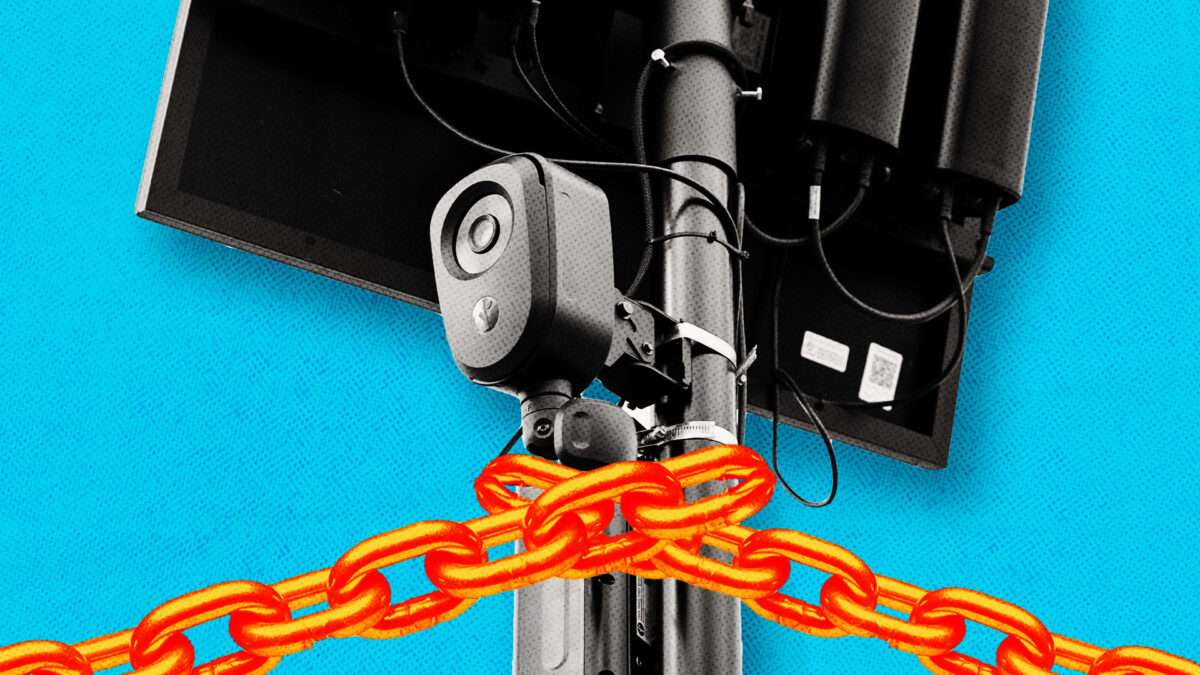
a license plate camera in chains | M. Scott Brauer/Zuma Press/Newscom/Cemil Adakale/Dreamstime/Fatima Ruiz

A Connecticut law that took effect at the beginning of October imposes new restrictions on police use of automated license plate readers (ALPRs), which enable what a federal judge recently described as "a type of indiscriminate mass surveillance." The law reflects the bipartisan backlash against AI-assisted cameras that record images of passing cars billions of times a week, building databases that police can use to track drivers, identify other vehicles in their vicinity, predict itineraries, and conduct searches based on a wide range of vehicle characteristics.

Connecticut previously imposed no statutory limits on ALPRs, a fact that underlines how readily police can access license plate data, which they can search without any sort of judicial review and often without meaningful internal supervision. But the law's provisions, while promising in some ways, fall short of the reforms recommended by critics who warn that unconstrained use of ALPRs threatens the privacy of innocent motorists across the country.

As of today, DeFlock's mapping project has identified nearly 145,000 ALPR cameras in the United States, most of which were installed by Flock Safety, the leading vendor. That network includes more than 1,500 cameras deployed by Connecticut law enforcement agencies, three-quarters of which use the technology.

The concerns underlying the new law, which Gov. Ned Lamont signed last May, echo objections raised in other states. Last February, for example, CT Insider reported that out-of-state agencies had searched ALPR data from Connecticut thousands of times for immigration enforcement purposes. When police in Johnson City, Texas, searched Connecticut data for a missing woman, the log noted that she "had an abortion," which reinforced concerns that ALPR information might be used to enforce abortion bans.

As elsewhere, ALPR critics in Connecticut also have complained about a lack of transparency. In April 2025, for instance, South Windsor began using Flock cameras without any public notice. The resulting consternation prompted the city council to cancel the program early this month. CT Mirror reports that South Windsor is "at least the sixth Connecticut community to end or suspend the use of ALPRs this year, following Windsor, Killingworth, Ledyard, Milford and Newtown."

Compared to those moves, the new state restrictions are pretty weak tea. But they include some potentially meaningful changes, and they highlight how lax oversight of ALPRs has been.

The new law restricts the sharing of ALPR data, which henceforth will be limited to Connecticut, Massachusetts, New York, and Rhode Island unless an agency in another state obtains a judicial warrant. The law says the data may not be used for immigration enforcement, to target conduct protected by the First Amendment, or for investigations related to "reproductive" or "gender-affirming" health care services. It also bars the placement of ALPRs near facilities that provide such services or organizations that primarily serve immigrants.

The original bill specified that ALPR data could be retained for no more than seven days unless it is tied to an ongoing criminal investigation, subject to a warrant, or used for toll enforcement. The final version of the bill extended that limit to 21 days. Flock's original default was 30 days. But last August, in response to widespread criticism of ALPR surveillance, the company began recommending a seven-day limit. Connecticut's Police Officer Standards and Training Council, which last month sent Lamont a report that included suggested reforms, thinks the state should adopt the seven-day standard.

Under the new law, police may search ALPR data to "assist in the recovery of a stolen motor vehicle," "assist in locating a missing or endangered individual," or "assist in the apprehension of an individual with an outstanding warrant." They also may query the database for information "relevant and material to a specific active investigation of a criminal offense in which there is reasonable suspicion that the offense has been or is being committed." When they do that, their agency must record "the reason for the access and any associated case number for the complaint or incident that is being investigated and is the basis for the access."

It is remarkable that Connecticut lacked such basic safeguards until now, and it is not clear how effective the new rules will be. Since July 1, 2025, Virginia has required that cops state a "specific purpose" for ALPR searches, including "the offense type." Yet last April, WHRO reported that Norfolk police often give "incomplete and imprecise reasons" for ALPR queries, including "suspect," "suspicious," and "investigation" or "inv."

Connecticut's "reasonable suspicion" requirement is more lenient than the standard that the Institute for Justice favors. The organization's model statute would generally require a warrant based on probable cause for ALPR queries. The proposed law makes exceptions for "exigent circumstances," stolen vehicles, and toll, parking, or traffic enforcement.

Connecticut's law also addresses the sort of blatant abuses that have fueled opposition to license plate cameras, including cases in which cops have been caught using ALPR data to stalk personal nemeses, ex-girlfriends, possibly unfaithful spouses, and objects of romantic interest. The law says an officer "who is found to have knowingly accessed, used or disseminated automated license plate reader data with malicious intent for purposes outside of the provisions of this section shall be subject to disciplinary action including, but not limited to, suspension, cancellation or revocation of certification" for police work.

The law establishes two additional remedies that could deter ALPR abuses. It authorizes the attorney general to sue ALPR contractors for damages and injunctive relief when they violate the new restrictions. It also allows "any aggrieved individual" to sue "a public agency" that flouts the rules.

"The law, for a first bite at the apple, is not bad," Ken Barone, manager of the University of Connecticut's Racial Profiling Prohibition Project, told CT Insider. Given that "there was a benchmark of nothing," he said, the attempt to constrain and track ALPR use is "a big step forward."

The post Connecticut's New Restrictions on Flock Cameras Highlight the Dearth of Meaningful Privacy Protections appeared first on Reason Magazine.

  •  
❌