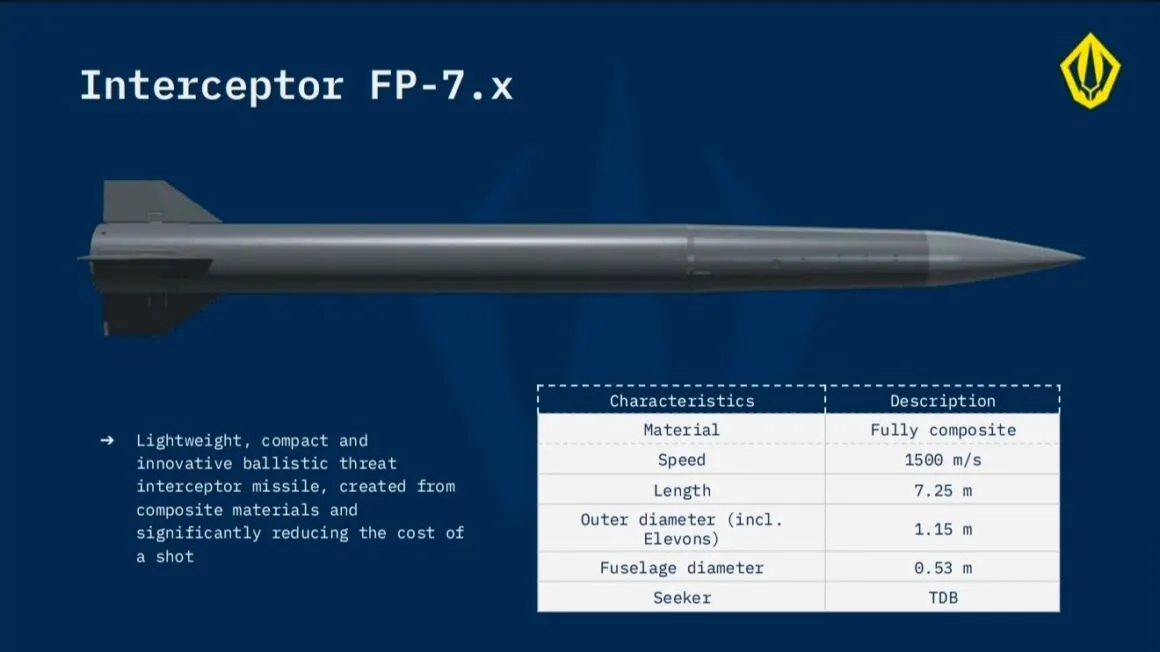
Ukraine has finished its share of FREYJA, a joint European project to build a system against ballistic missiles, President Volodymyr Zelenskyy told journalists on 17 October, Ukrinform reported. He added that Kyiv wants to test the first system as soon as possible.
Ukraine still relies on US-made Patriot interceptors to stop Russian ballistic missiles. Zelenskyy told ABC News on 23 October that Ukraine had received only 24 of them from the US in three months, while it needs 350 a month on average. FREYJA can not close that gap soon, because the system is still in development.
Ukraine’s missile and launcher, partners’ radars and sensors
Zelenskyy said the partners’ share of the work, with 10 countries taking part, is still underway. He also said he had discussed the project with French President Emmanuel Macron, and he named Norway as a key partner.
Explore further
Ukraine’s missile, Europe’s sensors—FREYJA enters active development on an early-2027 clock
Zelenskyy did not say what the partners still have to deliver. In August, he said Ukraine is capable of making the missile and launcher, while partners would supply critical components such as radars and sensors.
One part not made in Ukraine
In May, Fire Point co-founder and chief designer Denys Shtilerman said all components of the FP-7.x interceptor are made in Ukraine except one. “As for that one part we don’t manufacture in Ukraine, we’ve contracted a certain quantity of it. We already have it,” he said, but did not name the part.
In June, however, Shtilerman told the Financial Times that mass production depended on an infrared seeker Fire Point hoped to get from Germany’s Diehl Defence. Neither statement says whether the seeker is that one part.
Fire Point co-founder Iryna Terekh said in September that FREYJA was going through testing and technical integration in combat conditions in Ukraine. The company plans its first intercept of a ballistic target by mid-2027.
The official timeline has since moved closer. On 21 October, Zelenskyy wrote that officials had identified where to speed up so FREYJA reaches testing by the end of this year. A test is still a step short of an intercept.
Oman’s Foreign Minister Badr Albusaidi has called for the formation of a non-aggression security pact involving six Persian Gulf states plus Iran and Iraq, slamming US attempts to demonize the Islamic Republic as a threat.
Speaking at Girton College, Cambridge, on Monday, Albusaidi stressed that Washington has promoted for almost half a century the false image of Tehran as a threat to the Persian Gulf states, holding back West Asia’s ability to solve its own problems.
The Omani foreign minister, speaking to break the deadlock over the region’s future, stressed that the US would no longer be the region’s primary security provider.
“Issues such as the Strait of Hormuz have become impossible to resolve because external powers continue to define the terms of engagement, while regional powers are unable to take collective responsibility for making their own security arrangements and reach a consensus on them,” Albusaidi noted.
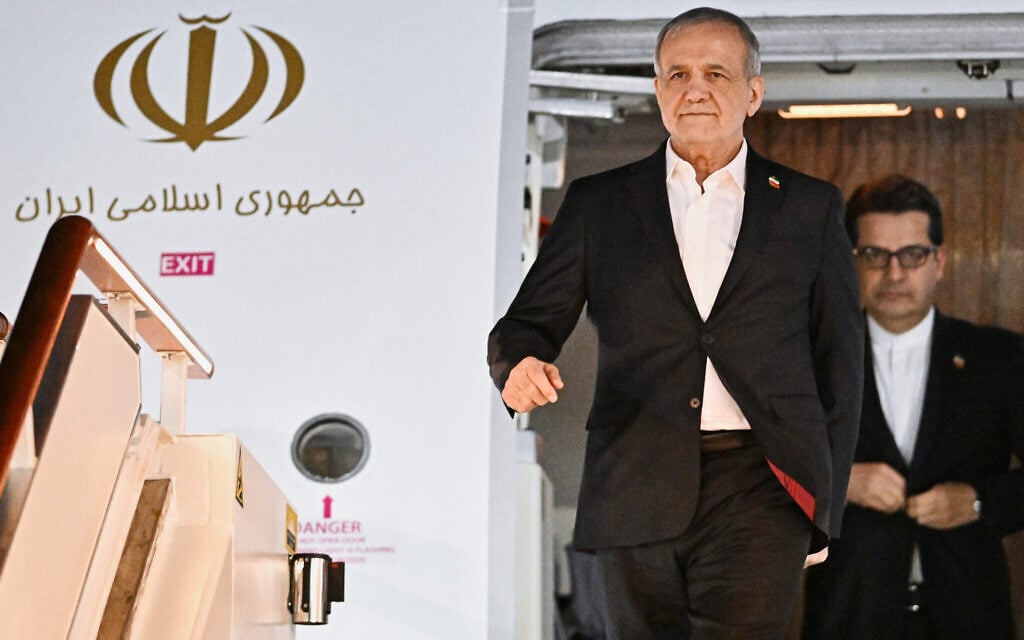
Iran has so far refused to ease its restrictions on transit through the strategic Strait of Hormuz, saying the key international energy waterway will be fully reopened once the US permanently ends its aggression and lifts its maritime blockade and sanctions against Iran.
Iranian authorities have also indicated that the country would not back down from its conditions and would respond decisively to any new act of aggression against its territory.
“What holds us back is that issues which ought to be handled at a regional level by the states of the [Persian] Gulf themselves, are made more complex, more intractable and sometimes simply impossible to resolve because the region’s security arrangements are insufficiently developed,” Albusaidi further stressed.
“And they are insufficiently developed because they have relied for too long on the involvement of external powers,” he added.
Oman’s top diplomat noted that the Islamic Republic “had been systematically excluded from playing any meaningful role in the security arrangements of the region.
Albusaidi also stressed that such exclusion had led to “profoundly negative consequences, not just for Iran, but for the region as a whole”, including the imposition of priorities on the region by external powers such as “the entirely false perception that there is a fundamental regional antagonism between Iran and the Arab states of the [Persian] Gulf.”
According to the Omani foreign minister, the most “damaging” of the priorities imposed on the Persian Gulf region from the outside has been the requirement that the Islamic Republic be excluded.
“Not just excluded. Worse. Positioned as the threat against which regional security had to be organized,” Albusaidi stressed, speaking on the day high-level defense and intelligence officials from Turkey, Pakistan and Saudi Arabia gathered in Tehran in an attempt to prevent a renewed act of aggression by the US against Iran.
Iran and Oman, both coastal states bordering the strategic waterway, engaged in intensive negotiations for months over arrangements for safe shipping through the Strait of Hormuz.
Tehran and Oman finally reached a temporary agreement on how shipping traffic should be managed in the strait, but the plan is on hold as Iran keeps the waterway closed due to US acts of aggression and violations.
Roughly one-fifth of global oil demand passes through the Strait of Hormuz, making the waterway one of the world’s most strategically important maritime chokepoints.
Oman’s foreign minister, without mentioning by name, also challenged US President Donald Trump’s case for a further war of aggression against Iran by saying that he believed the previous round of Oman-mediated negotiations between the US and Iran in February were “making significant progress, and that an agreement was within reach. We still stand by that judgment today.”
The US and the Israeli regime waged their first war of aggression against Iran, which lasted 12 days, in June 2025. Their second aggression began on February 28, 2026, and came to a halt in early April after 40 days.
Iran has been defending itself by targeting US bases and energy infrastructure in the Persian Gulf states with missile strikes and drone attacks.
Little known a year ago, she is a Democratic Socialist drawing comparisons to New York’s Zohran Mamdani. She has mounted a strong challenge to the incumbent, Karen Bass.
Former Sen. Joe Manchin (I-W.Va.) said the midterms are trending toward being a “complete tsunami” ahead of the November elections where the GOP is projected to lose the majority in the House. “Well, the atmosphere is definitely right, I believe, for a complete tsunami,” the former senator said, responding to a question from Blake Burman…
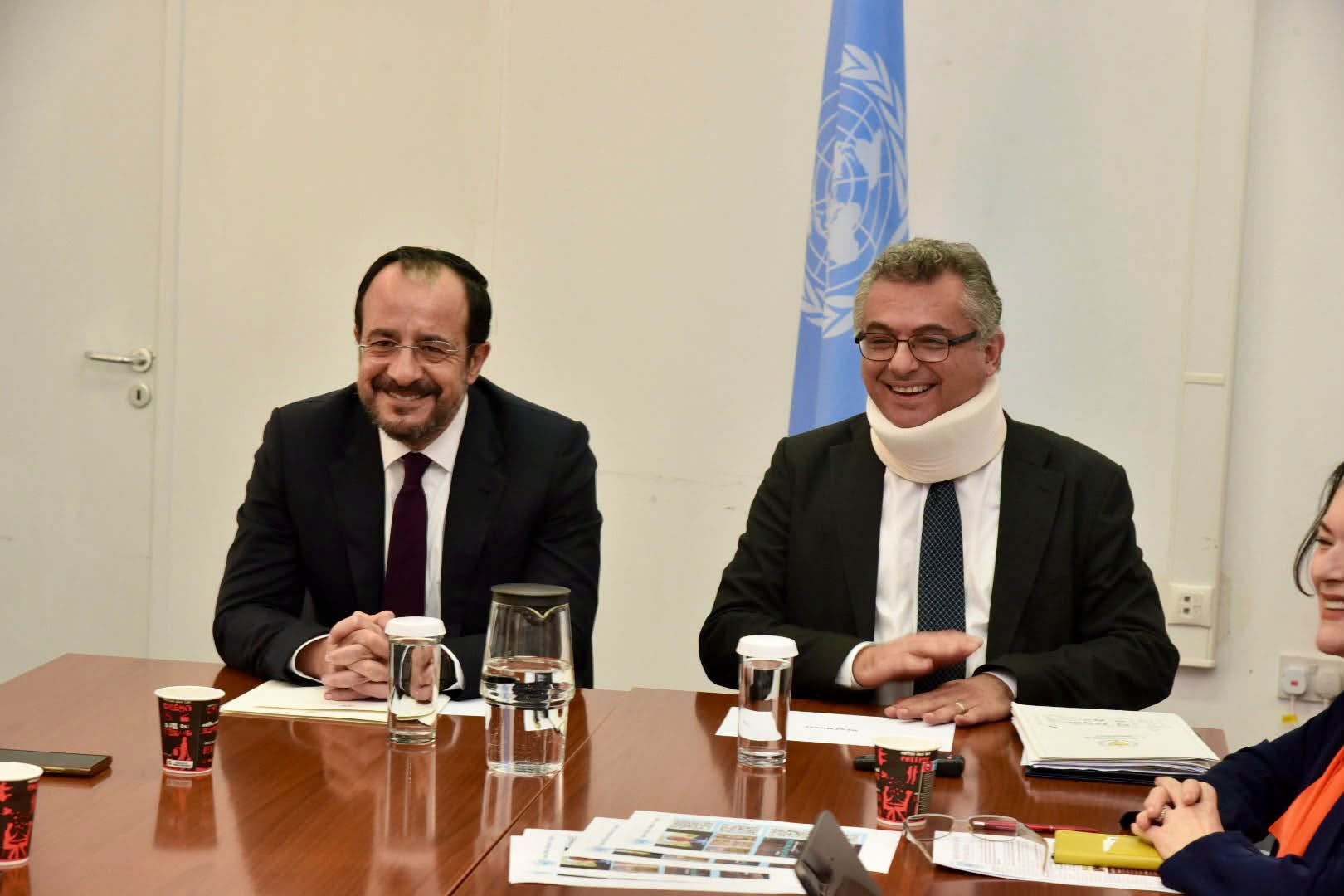
President Nikos Christodoulides on Tuesday said that both he and Turkish Cypriot leader Tufan Erhurman have agreed to make “no further statements” on matters of substance related to the Cyprus problem ahead of the forthcoming arrival on the island of United Nations envoy Maria Angela Holguin on the island.
“It was a very good and constructive discussion, which will continue during Holguin’s presence in Cyprus. For this reason, we have agreed not to make further statements regarding specific issues, and we also agreed that no joint statement would be issued,” he said after meeting Erhurman in the morning.
Both leaders had also met the bicommunal technical committees on cultural heritage and on youth, as well as the civil society steering committee, following their one-on-one meeting.
Of those meetings, Christodoulides said that they were “constructive” and that “various views and suggestions were put forward” by committee members.
He added that those suggestions will be discussed by himself and Erhurman going forward.
Holguin expected to arrive on Thursday
Holguin is expected to arrive on the island on Thursday, and will hold meetings with both Erhurman and Christodoulides, before holding a tripartite meeting with both leaders at the end of her stay.
Prior to Tuesday’s meeting, Christodoulides had stressed that his proposal to open and repopulate the fenced-off area of Varosha under the United Nations’ administration and open the port of Famagusta under the European Union’s control is “mutually beneficial”.
“I believe this is a mutually beneficial proposal. It creates a positive situation for both sides and serves as a practical test of whether we are truly committed to moving forward, specifically by taking bold confidence-building measures which also send a strong message to society as a whole,” he said.
Erhurman had said last week that he had rejected the proposal, lamenting that it fell short of an entry into force of the European Union’s direct trade regulation.
“Is this the entry into force of the direct trade regulation? No, it is not the entry into force of the regulation, but since [the port] would be under EU control, direct trade would begin,” he said.
As such, he said, the proposal was unbalanced.
The direct trade regulation is a pending EU regulation which would allow Turkish Cypriot goods, as certified by the Turkish Cypriot chamber of commerce, to be exported directly into Europe via the Green Line, and given preferential treatment inside the European single market as European goods.
It was proposed in July 2004, three months after the rejection of the Annan plan to reunify Cyprus by the Greek Cypriot side in a referendum, and shortly after the Republic of Cyprus’ accession to the EU.
Menelaou had cited progress on crossing points
Previously, Greek Cypriot chief negotiator Menelaos Menelaou had said that a dispute over the routing of the planned transit road between Athienou and the Nicosia suburb of Aglandjia “has been overcome”.
He said that the outstanding dispute now remains over the question of whether a planned crossing point to connect Louroujina, the southernmost Turkish Cypriot village, with nearby Lymbia, will open at the same time.
The Turkish Cypriot side’s position is that the road between Athienou and Aglandjia constitutes two crossing points, one in Athienou and one in Aglandjia, and that they are part of a package of four alongside plans for a crossing point in the eastern Nicosia suburb of Mia Milia, and one in Louroujina.
However, the Greek Cypriot side treats the road between Athienou and Aglandjia as one crossing point, counterweighted by the Mia Milia crossing point, and is therefore of the view that the Louroujina crossing point should only be opened if a second transit road, through the Turkish Cypriot Kokkina exclave in the Tillyria region, also be opened.
GPTZero cofounder Edward Tian's last day at the GPTZero office before the team moved to the Superhuman offices.
Courtesy of Edward Tian
Edward Tian co-founded GPTZero in college, building it into a success before selling to Superhuman.
He said he thinks that creating 'artificial scarcity' for the product contributed to its success.
He said he'd major in the humanities, not computer science, if he went to college today.
This as-told-to essay is based on a conversation with Edward Tian, the 26-year-old cofounder of GPTZero, who's based in New York. His words have been edited for length and clarity.
I was never planning to go down the founder path straight out of college. I had a visual investigations fellowship lined up for after graduation and was ready to start a journalism career.
My cofounder Alex and I went to high school together. When ChatGPT came out, he was pursuing his Ph.D. in computer science at the University of Toronto, and I was in my senior year at Princeton. Over winter break, we built an AI detection tool and put it online. The success was almost overnight.
Three years later, we sold our company, GPTZero, to Superhuman, and have stayed on board to work with the team. Superhuman is a very pro-AI company, and I think it was an unexpected move for us as an AI detection company to join them.
We didn't build GPTZero to say there should be no AI on the internet. I think that's the biggest misunderstanding about why we started our company, but my feelings on AI have changed.
I had a different job lined up for after graduation
I studied computer science at Princeton and worked with a professor at the Princeton Natural Language Processing Lab on AI research. I also worked on a few other startup projects in school, but I was always hoping to work in journalism.
While in college, I became very involved in the open-source investigation community. I ended up working on open-source investigative projects with the BBC and Bellingcat, and had a visual investigations fellowship at The New York Times lined up after graduation, which I was excited about but ultimately didn't take.
After ChatGPT came out, I was inspired to investigate where and when AI was being used online. It took about a week over winter break to build the first version of our AI detection tool, and it was released in January 2023.
We created artificial scarcity to help grow the business
My cofounder Alex and I posted on social media to market the tool so people could try it, but we didn't view it as a business right away. However, it blew up online pretty quickly. After seeing the success, we wanted to double down on the opportunity and turn it into a legitimate site.
One piece of advice I have for founders is that using a waitlist is really helpful for generating hype and excitement. We put the first version of GPTZero on a waitlist because it had reached capacity. So I think that artificial scarcity was also very helpful in the success.
We had a lucky combination of very talented engineers and some traction and buzz, so we started reaching out to VCs. Many of our early VC partners went to my alma mater, and kind of all knew each other. Jack Altman is also an investor, and I remember we had a call where I was in my dorm room, and he was like, "Oh, I recognize that dorm room too."
For founders raising funding for the first time, my advice is not to optimize for the flashiest name or the biggest brand because you think it will attract future talent. Go for where there's familiarity and trust; trust is the most important thing when working with an investor.
We raised around $3.5 million in our first funding round. I stayed at Princeton to finish my senior year and graduate, and we kept growing the business. My cofounder Alex left his Ph.D. program to focus on the business.
It was bittersweet to sell the company
When Shishir, the new CEO of Superhuman, joined in 2025, we spoke with him about his broader platform vision for a suite of products. He thought we could be part of the authenticity suite he wanted to create.
It was bittersweet to think about giving up something that we started from scratch and put so much energy and care into. At the same time, it was a lot easier because the team stayed on. I'm now a director of product at Superhuman.
For company acquisitions, a lot of folks think the three most important things for a great fit are product match, people fit, and economic sense. We had similar people philosophies, and the deal made sense financially. Then, product-wise, we realized we're definitely not against AI use anywhere in education. We just want to make sure there's some authenticity and truth with that usage.
Over the next few years, we're going to take our shot at building a startup within a larger company. I've seen a lot of startup founders go to larger companies and start their moonshots from within.
The bigger mission we have is to take steps to ensure people are being respectful of the person who's on the receiving end of AI generations and productivity now. We want it to be that we're reaping the benefits of AI without making other people deal with more work.
I wouldn't major in computer science anymore
When we first started GPTZero, I think I was actually more pro-AI than I am now. I believe people should know when something is AI-generated, but I wasn't saying not to outsource anything at all.
In the past year, though, I've started to see an over-reliance on AI among people who finished university after ChatGPT was launched, especially with writing. If I went back to college right now, I wouldn't major in computer science. I'd probably major in journalism and get a minor in computer science. I'd get a humanities degree because those are the important skills now.
I've started to see a friction point at work when people can't write or edit, and everything they send reads like AI. Part of what I'm doing now at Superhuman is working on responsible AI usage policies and guidance.
People are allowed to use these tools however they see fit. At the same time, I feel a profound sadness for the internet at large.It's important to make sure we still have human-written content online.
Do you have a story to share about working on a tiny team? If so, please reach out to the reporter ataapplegate@businessinsider.com.
The maker of miracles may no longer be God, but it does rhyme with him.
Anthropic, creator of Claude, filed its S-1 paperwork on Monday in preparation for a gargantuan initial public offering. The document runs over 300 pages and spans more than 240,000 words, some 50,000 more than the New Testament. It asks potential investors to prioritize mission over money: "Mission" appears 79 times, while "money" — the thing an S-1 is filed to generate, in this case, a bajillion dollars worth — a mere 17.
The company professes it could "bend the arc of geopolitical history toward freedom"; it could grow economies everywhere, including "the poorer parts of the world"; it could cure "diseases that have plagued humanity for millennia." Page 4 of the S-1 is not dissimilar from Jesus in Matthew 11: "The blind receive their sight, and the lame walk, the lepers are cleansed, and the deaf hear, the dead are raised up, and the poor have the gospel preached to them."
Anthropic aims to "bring forth an age of miracles," it writes, and the investors who buy in should be true believers. Because in the wrong hands, as you'll see if you turn your missals to page 46, AI can be built in ways that pose "catastrophic or existential risks to humanity."
While S-1s are definitionally visions of the future and full of hype, most are drab financial documents, eye-popping for their prospective profits more than their prose. But Anthropic didn't just open up its book; it wrote its own Good Book, a Bible-like statement of good and evil that joins a growing canon of the company's sacred texts. If you were to stumble onto any random page of this S-1, you'd be forgiven for thinking you were reading not a perfunctory government filing but the scripture of a doomsday religion.
Anthropic has long dodged allegations of fomenting a new, questionable faith. Headlines and takes on Anthropic's cultishness abound: "The Cult of Anthropic" (The Information), "Anthropic is a Cult and Claude is rapidly becoming its God" (The New York Post), "Has a cult ever started a company as successful as Anthropic?" (Peter "Beware the Antichrist" Thiel). Critics point to the employees' extinction predictions — p(doom) is not too far from p(rapture) — and ties to the effective altruism movement. It doesn't help that Dario Amodei was reportedly a Y2K prepper in high school. Anthropic has welcomed the reputation in other ways, inviting religious leaders to oversee the construction of Claude's rules.
In its S-1, Anthropic asks investors to take an actual leap of faith.
Anthropic asks its employees to act for the "global good," be "helpful, honest, and harmless," and "hold light and shade." They shall have no other gods — as in, "put the mission first." And, just as followers must sublimate themselves to praise God, Anthropic employees must be "low-ego." The S-1 says it at least nine times.
To understand Anthropic, you'll need to understand 42 ornate terms. The S-1's glossary is sprawling, including neologisms for virtuous acts ("closing the loop") and evil deeds ("prompt injection"). Then there's "Constitutional AI," a type of large language model that is trained with goodness in mind. The SEC's "Plain English Handbook" implores companies to use "concrete, everyday words" and to avoid "relying on glossaries and defined terms." But can you truly be AGI-pilled if you don't speak of "interleaved thinking," "mechanistic interpretability," or "multi-agent orchestration"?
You use language like this because we need to be — and I say we as in society — true believers that this is going to work.James Bort
It's exceedingly hard to get a job at Anthropic, and not just because of the massive pool of cash-eyed engineers seeking IPO windfalls. The company has an intensive interview process, one it name-checks in the S-1. It looks for honesty, trust, and (you guessed it) a low ego. "We are willing to turn down candidates who don't demonstrate them, even if they are extremely strong technically," the S-1 reads. They must, in other words, be devotees through and through.
Accepted engineers become "Ants." Most tech companies have a name for their employees: Googlers, Metamates, Amazonians, Nvidians, Palantirians. Anthropic's moniker evokes the image of a collective, company as colony. In Proverbs 6:6, ants are considered diligent and prepared. Staffers may yell its teachings at their OpenAI foes: "Go to the ant, you sluggard; consider its ways and be wise!"
CEO Dario Amodei — Amodeity — leads the ants' march, along with his six apostles. These cofounders pull equal cash salaries and are "distinctly equipped to be stewards of our mission," the S-1 says. And, while the company opens itself to a broader group of believers through its forthcoming IPO, the divine cofounders will retain majority decision-making power.
Anthropic has its own form of tithing: The cofounders all made voluntary pledges of 80% of their personal equity to philanthropy. They incentivize their employees to do the same, promising to match donations.
Cult is an overused word, and many parts of Anthropic are far from cultish. Where cults are led by a liturgical leviathan that squashes the speech of their participants, Anthropic touts its culture of open dialogue. "Our teams operate in a truth-seeking environment where the best argument wins, not the loudest voice or the most senior title," the S-1 reads.
Americans' faith in the presidency, Congress, the Supreme Court, the military, the police, higher education, public education, news media, the medical system, and traditional organized religion are each at record- or near-record lows — and just as AI has brought on tremendous economic and social uncertainty. In that cauldron of doubt, tech founders — with their world-historic money, power, and ubiquity, and in their pursuit of it — sense an opportunity, to offer promise and purpose. As Sam Altman once said, "The most successful founders do not set out to create companies. They are on a mission to create something closer to a religion." They may also be trying to build devotion out of necessity, as the economy and stock market increasingly relies on AI gains.
"If these companies fail, what happens?" asked James Bort, an assistant professor of entrepreneurship at DePaul University, and coauthor of a recent research paper on "cultic startups." "You use language like this because we need to be — and I say we as in society — true believers that this is going to work."
Anthropic didn't respond to my request to know more about how it wrote the S-1. So, we asked Claude: If the S-1 is a confession of faith, what are you? I am its product, Claude said. "The word made flesh, or at least made weights."
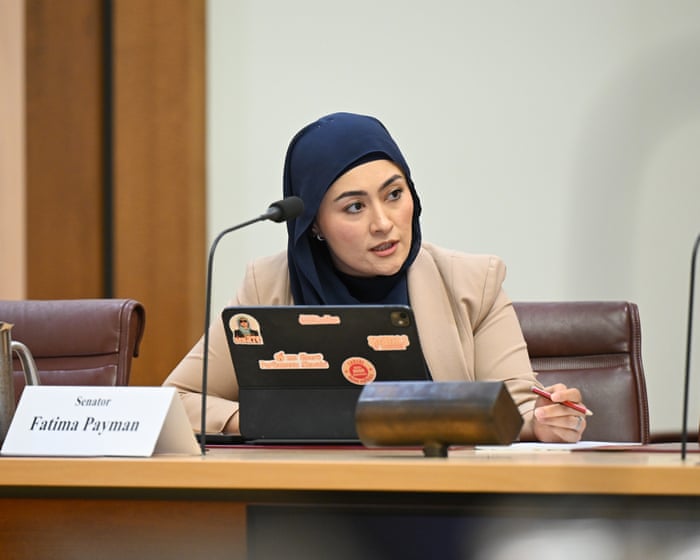
Anthony Albanese has promised a “swift government response” to safety threats to MPs and floated the provision of duress alarms for electorate offices, saying politicians and their staff have put up with threats for too long.
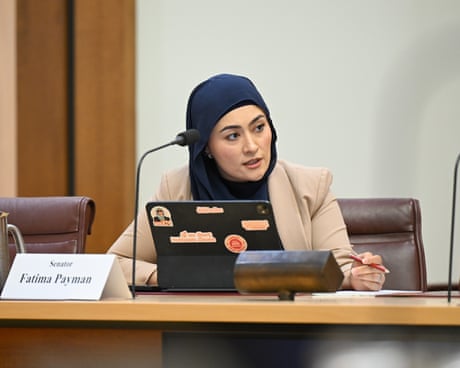
The prime minister’s pledge to the Labor party room came hours after Senator Fatima Payman again slammed her former government colleagues over the lack of staffing given to her office, controversially asking: “Is the prime minister waiting for something, like what happened to Dr Helen Haines, to occur to my office?”
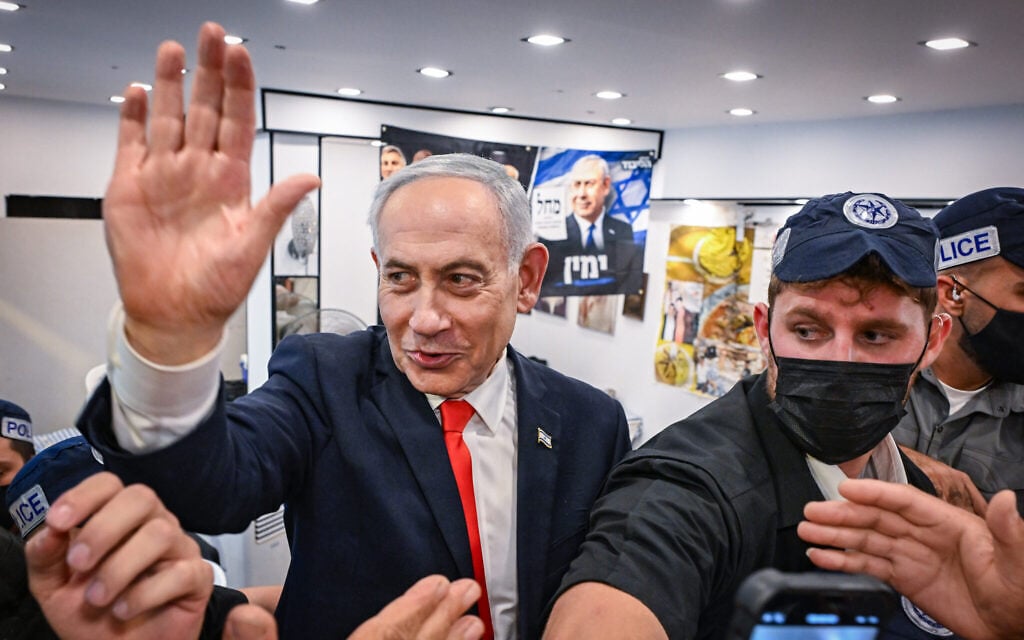
A banner for the Likud party and its leader, Prime Minister Benjamin Netanyahu, right, with the slogan, “The Right or Palestine.” Other candidates in the elections are to the left of it.
Israeli TV says top military commander likely to lose job if Netanyahu forms next government, which PM denies as 'fake news'; the two also reportedly clash over Hebron operation
Ms. Comey, the daughter of James Comey, the former director of the F.B.I., worked for the U.S. attorney’s office in Manhattan, handling the prosecutions of Jeffrey Epstein and Sean Combs.
Liberman has floated recruiting Likud MKs to help form government without Netanyahu, but strict legislation threatens to complicate any attempt to cross political lines
The PM has a well-worn playbook: brand his opponents as left-wing, then warn that Israel is in danger, and only he can keep it safe. They haven't figured out how to respond
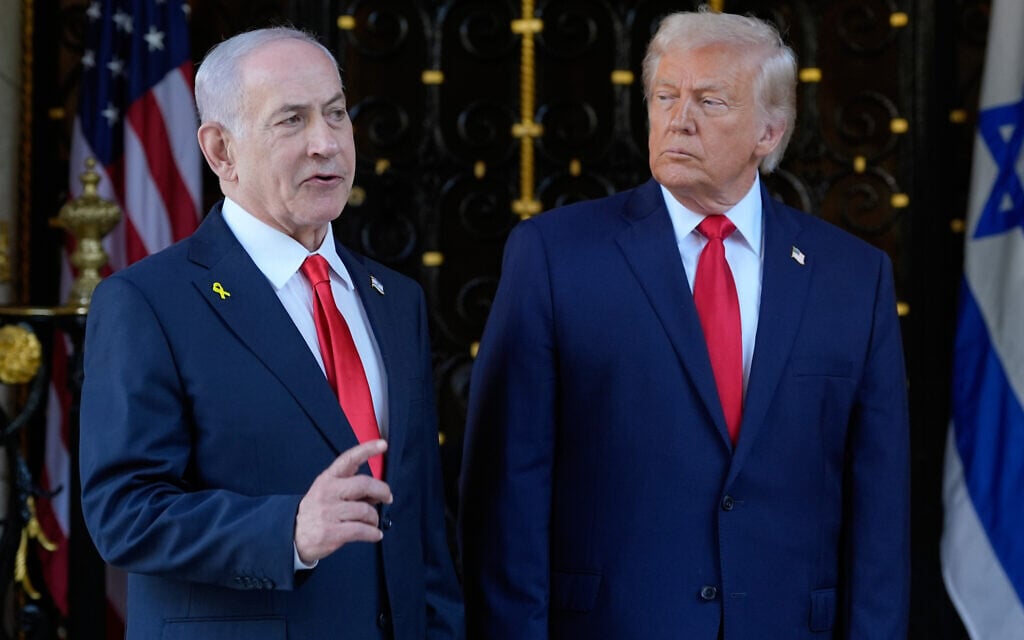
Network says US president instead signaled there will be joint military action soon; PM's office denies 'fake news'; reps from Saudi Arabia, Pakistan, Turkey in Tehran for talks
Bloomberg/Getty; Jeremy Strong/Sony Pictures; Finn Gomez/Getty; Tyler Le/BI
Writing villains is supposed to be hard. No grand, world-dominating plan ever really makes sense in a story. Soon after "The Dark Knight" came out, David Goyer, its writer, told me the Joker had been a real relief. "Blessedly, because of who the Joker is, we just said, 'fuck the plan. We don't have to do it. He's the Joker. He's the anti-plan,'" Goyer said. "Trying to take over the world is such an impossible, stupid idea — as if anyone could do it with a single act, you know?"
Yet now very real people seem to try just that, on the regular. Except if you believe Hollywood, they're not insane clowns. They're billionaire tech bros. It's starting to seem like every movie and TV bad guy is a douchebag who got rich making stuff that works on your phone. Mark Zuckerberg in "The Social Reckoning," Elon Musk in "Musk," Elizabeth Holmes in "You Can See Everything," Sam Altman in the upcoming "Artificial," Sam Bankman-Fried in "The Altruists." In these stories, at varying levels of fictionality, the evil villains' megalomaniacal plans mostly make sense. Some of them even got away with it. America is eagerly consuming stories about them. "You Can See Everything" grossed $15 million on opening in just 855 theaters, twice what its producers expected.
The more interesting question is why these founders are our demons, all of a sudden. Chalk it up to the reality of the "techlash," the society-wide revulsion to Big Tech's ubiquity and power. But if you really want to understand the extent to which everyone thinks Silicon Valley is so uncanny these days, you should be watching a CBS legal procedural called "Cupertino." It's a sharp look at tech and its discontents — but more than that, it clarifies how widely the techlash is spreading.
"Cupertino" comes from the TV-making couple Michelle and Robert King, best known for the "The Good Wife" and "The Good Fight." In their new show, a slick lawyer played by Mike Colter gets iced out of the tech company he cofounded at the same time as a more junior attorney also gets ousted. The two join their wrongful-termination lawsuits against the company, eke out a big settlement, and start a firm to represent "little guys" against Silicon Valley giants. In one plotline, a drone maker tries to blame a mid-level coder for one of its bots falling out of formation during a show and killing a man — it turns out the company had changed batteries to accommodate a prospective military contract. In another, a mysterious whistleblower client asks for help to force an Anthropic-like company to put guardrails around its most powerful AI. Then the whistleblower claims to in fact be the AI.
It's all in good fun. The actors are beautiful. They banter well. Colter wears the hell out of a suit. Busy Philipps plays a Mackenzie Scott-like benefactor of the new law firm — if Scott used her incredible wealth to become a hardcore partier.
A CBS show like "Cupertino" picks bad guys that millions of people can easily recognize as deserving of comeuppance. It picked the overlords of Silicon Valley.
But thematically, there's depth. That Colter is the only Black person for miles does not go unremarked. His new partner Olivia Siffre (pronounced "cypher"), played by Rachel Keller, is a devout, cross-wearing conservative from the Midwest, an alumna of Liberty University. Their closest allies don't come from the ranks of coders, marketing, or venture capital but are instead service workers, tradespeople, and the waitstaff from a nearby TGI Fridays. (Alas, a fiction — there are no TGI Fridayses in the Valley.)
So see that class rage for what it is. The fantasy here is that the middle-American proletariat gets to stick it to bespoke-suited, arrogant C-level types and unkempt, geniuser-than-thou sex pests. Because for the last few years, those people have had all the power. "They always have a friendly audience, an accommodating interviewer who won't ask them anything controversial. And then they get into territory where the price is much higher," Robert King said in a recent interview. "They reveal who they really are: robotic, inhuman nerds who never got laid in high school and are now kind of crazy with power, self-importance, and a sense of entitlement."
The point is, the "little guys" fighting this good fight seem like they're supposed to be proxies for the viewer. "Cupertino" is a CBS procedural, the genre of shows like "NCIS" and its offspring — things that no one watches, except for 10 million people every week. That's a lot. CBS typically has the largest primetime viewership of any network, and the oldest — like, people in their 70s. It's all well and good for young coastal sophisticates to post about Elizabeth Holmes' inability to grasp the Who's-on-First routine, but "Cupertino" is aimed at America's parents and grandparents. And apparently they are excited to see the people who make their phones portrayed as the wealthy engines of every inconvenience — sources of half a billion dollars to Republicans only, builders of data centers, creators of chatbots that drive kids to death by suicide, purveyors of screens that watch you back. "Cupertino" debuted to rapturous reviews and more than 3 million viewers, beating "Grey's Anatomy" in its time slot.
A show like "Cupertino" is meant to have a low barrier to entry; it picks bad guys that millions of people can easily recognize as deserving of comeuppance. It picked the overlords of Silicon Valley.
Not so long ago it would've seemed preposterous to give a scrawny, socially awkward, brainy little guy the job of Big Bad. They're the assistant, or the butt of a particular kind of joke, like the spectrum-y heroes of the wildly popular "Big Bang Theory" — Klingon-speaking, physics-doing, Green Lantern oath-knowing clods. Still, I can think of examples of "bad guy, subtype: tech nerd" going back to the early days of science fiction. Mad scientists like Dr. Frankenstein or Dr. Jekyll, or various HP Lovecraft antiheroes, probably count. So too might the arrogant cyberneticist in Robert Heinlein's "Waldo."
A rough analog in the mid 20th century might be the rogue industrialist. After all, James Bond villains have often been tech-bro adjacent. Karl Stromberg in "The Spy Who Loved Me" wants to build independent ocean settlements; he's basically a seasteader. Hugo Drax in "Moonraker" is a eugenics-obsessed CEO who wants to build space stations, which sounds familiar. Max Zorin, played by Christopher Walken in "A View to a Kill," is an "industrialist" and the product of Nazi genetic experiments. But his megalomaniacal plan is to use a California natural disaster to gain a monopoly on silicon computer chips. That's just Jensen Huang on any given Tuesday.
The weirdest new phenomenon here is how personal it all is. Evil technology oligopolies have been representatives of oppressive capitalism in Hollywood for decades — but they were faceless. The anonymity was part of the terror. Think of the company that orders Bruce Dern to destroy the last forest in his spaceship biodome in "Silent Running," the Umbrella Corporation in "Resident Evil," or Cyberdyne Systems, creator of Skynet in the Terminator movies.
More recently, film and television have started identifying not just faceless corporations but specific tech-coded people as their worst-of-the-worst. And not just any people, but people geofenced into Silicon Valley: "Glass Onion," "Don't Look Up," "Ex Machina," "Devs," "Super Pumped" (fictionalized Uber), "WeCrashed" (fictionalized WeWork), "The Playlist" (fictionalized Spotify), and "The Dropout" (fictionalized Theranos), "Mythic Quest" — the list goes on.
Actually, Cyberdyne's a good example of one important way these depictions have changed; in 1984's "The Terminator," Cyberdyne is a Los Angeles-area heavy-industry firm. In 2015, "Terminator Genisys" moved Cyberdyne to a gleaming tech campus explicitly modeled on the headquarters of Oracle. It's an inside joke, though not the ha-ha kind. The movie's producers included Megan and David Ellison, children of Oracle CEO Larry Ellison. David now owns the merged studios of Warner Bros. and Paramount, and he just got a billion-dollar investment from Elon Musk. The new company, Skydance, includes in its holdings … CBS.
Christopher Walken's Bond villain has a megalomaniacal plan is to use a California natural disaster to gain a monopoly on silicon computer chips. That's just Jensen Huang on any given Tuesday.
"A sequence of Hollywood contemporary science-fiction movies identifies Silicon Valley capitalists as a new type of villain," write Northumbria University film studies scholars Joe Street and Russ Hunter in a 2024 paper. These new movies critique tech, they say, using an approach "in the grand tradition of cinematic science fiction touchstones such as the Cold War alien invasion films that allegorized fears of Communism in 1950s America."
In other words, movies about time-travelling killer robots and dead-eyed billionaires aren't so different, after all. Horror is about shared anxieties. Old-school mad scientists posed a threat because they dared to do experiments that contravened the laws of nature; they were evil for love of the game. The Silicon Valley bad guys are worse, because they do it for profit. "When presented with an innovation," Street and Hunter write, "the prime movers in these corporations think not of moral or ethical concerns and crucially not of the material impact of what they are doing — but only of the innovation's potential for financial gain."
Is Hollywood's techlash actually on the rise? The schlemiels of "Silicon Valley" premiered in 2014. I have tech-bro-villain articles in my files going back to 2022 at least. And the business world has always been fodder for stories filtered through the anxieties of the time—what was Ebenezer Scrooge if not a capitalist oppressor?
Mapping the full arc of technology-associated villains would be, in the words of Ted Underwood, "hard to code." Underwood's an English and information science professor at the University of Illinois at Urbana-Champaign, researching ways to identify literary trends across time, in big canons. "In addition to tracing the history of villains, you'd have to think how often these social types appear as heroes," he says. For every Max Zorin there's a Tony Stark. Ethan Hunt's nobody without tech aces Luther and Benji. "Star Trek" doesn't trek without Scotty, or Chief O'Brien. Every movie heist is basically a hack. And let me just say unto you: "MacGyver." "One hypothesis would be that what we're feeling right now with evil tech bro villains is just that the counterbalancing examples have dropped out," Underwood says.
Clearly, though, tech billionaires and their hangers on have actively tried to make themselves into main characters. Some of them seem to think they're the only real consciousnesses in a simulation, a virtual world populated with non-player characters like you and me. At minimum they evince a belief that they possess a greater depth of perception and knowledge. As the architect and tech historian Fred Scharmen once wrote, "for this particular kind of person, wealthy and powerful or not, intelligence comes paired with a certain kind of malignance. The Evil Nerd is sharp, and also mean, their big brains are oriented towards anger and destructiveness."The Thiels, Altmans, Musks, and Karps of the world turn what had been nerdy weakness into nerdy strength. They go on friendly podcasts and show up in pictures taken with presidents. We don't have to imagine them delivering what the screenwriter John Rogers, creator of the anticapitalist TV show "Leverage," calls the Evil Speech of Evil. They monologue at tech conferences! These guys embody their ideologies; l'enterprise, c'est moi.
And what happens if that kind of behavior gets depicted, week in and week out, on a popular legal procedural TV show? Even if that show airs on a network owned by one of those "evil nerds"? Hard to say. Maybe it'll be enough to turn some people into the Joker.
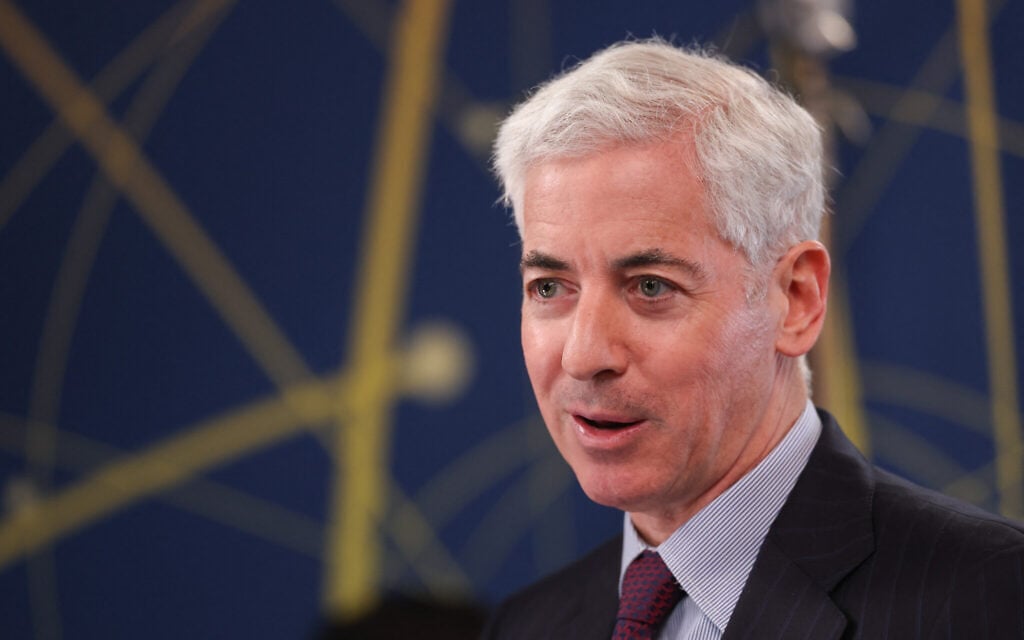
Noting Ben Gvir, Smotrich have caused Israel 'enormous reputational damage,' Jewish hedge fund exec says he supports Netanyahu, but PM should signal country is turning 'new page'

 Login