Ukraine's HIMERA and Denmark's GomSpace have launched OBRIA NANO, the first test satellite of the future independent Ukrainian communications network, into orbit and have already begun operating it.
A DSTelecom vai alargar a sua rede de fibra ótica multioperador no concelho de Freixo de Espada à Cinta, distrito de Bragança, numa expansão que permitirá levar este serviço a mais de 1.300 habitações nas localidades de Mazouco, Lagoaça e Fornos, anunciou a empresa.
Segundo a operadora de infraestruturas, a intervenção representa a estreia da rede de fibra ótica nestas três localidades e deverá elevar para cerca de 3.300 o número total de casas abrangidas no concelho até ao final de 2026.
Com este reforço, a cobertura da rede de fibra ótica deverá atingir 95% das habitações de Freixo de Espada à Cinta, acrescentou a empresa.
A expansão surge na sequência da cobertura já assegurada nas localidades de Ligares e na vila de Freixo de Espada à Cinta, alargando o acesso a serviços de telecomunicações de alta velocidade às populações e empresas do concelho.
Citado em comunicado, o presidente executivo (CEO) da DSTelecom, Ricardo Salgado, afirmou que o objetivo é garantir que o acesso a infraestruturas digitais de qualidade “não depende do local onde se vive ou trabalha”.
“Ao levarmos fibra ótica a mais 1.300 casas em Freixo de Espada à Cinta, estamos a criar melhores condições para as famílias, para as empresas e para o desenvolvimento económico deste território”, referiu o responsável.
A empresa destacou ainda que a expansão da rede se enquadra na estratégia de reforço da conectividade em territórios do interior do país, com o objetivo de contribuir para a redução das assimetrias territoriais e para uma maior inclusão digital.
Através do modelo de rede aberta e multioperador, a DSTelecom disponibiliza a sua infraestrutura a vários operadores de telecomunicações, permitindo aos consumidores escolher entre diferentes ofertas comerciais.
Verizon's CEO says SpaceX's Starlink faces some significant technical and financial hurdles to compete at scale in the US.
Zamek/GVN/VIEW press/Corbis via Getty Images
Verizon's CEO says he assumes SpaceX will flawlessly execute its US ambitions — but he's not worried.
In order for Starlink to compete, it will still need a lot of land-based infrastructure.
That building could require SpaceX to spend a half trillion dollars over up to eight years, he said.
In business, as in war, the safest bet is often to avoid underestimating your competitors, even when the odds appear to be in your favor.
Verizon CEO Dan Schulman says he's a student of that philosophy when it comes to Elon Musk's ambitions to develop SpaceX's Starlink into a significant US network player.
"Clearly, the tech and the wireless landscape is rapidly evolving, and we need to rapidly evolve along with that," he said during the company's third-quarter earnings call Monday. "I also operate under the assumption that everything SpaceX says they will do, they will do, and that they will execute flawlessly."
Setting aside Musk's track record of delivering on his eyebrow-raising promises, Schulman said there are significant technical and financial hurdles that Starlink would have to clear to meaningfully compete with established networks like Verizon. But it is possible.
"If they build a terrestrial network, it will basically look and feel like every other network," he said. "I think we should take it quite seriously."
News earlier this month that Starlink had acquired a batch of mobile-friendly low-band spectrum sent the share prices of the major US mobile carriers falling by approximately 10%. Verizon is the only one of the three to partially recover from the drop.
"Their service just can't compete with a terrestrial network in suburban and urban areas, where like 98% of our revenues are," he said of the satellite-based system. "We're somewhere between 100 to 1000 times more efficient than they are."
Building a competitive US network, especially for mobile, would require building as many as 80,000 large cell towers on Earth linked with some combination of satellites and fiber optics, Schulman said.
Schulman estimates that project would cost up to a half trillion dollars over six to eight years, with a minimum of four to six years to actually build out the network.
"Then they need to build retail customer service, back office systems, et cetera., and all of that gets them basically the same network and same capabilities and same cost structure as what we have today," Schulman said.
After the call, Musk responded to the forecast with a post on X: "Will take 2 or 3 years."
The Verizon chief's remarks come less than a week after his AT&T counterpart, John Stankey, brushed off concerns that Starlink's mobile network could pose a threat to his business.
"I wouldn't over-rotate on what I would call one carrier of low band spectrum," he said.
Drone strikes disrupted communications and power in part of Russian-occupied Luhansk overnight on 23 October, Ukrainian monitoring channel Exilenova+ reported. It was the third night in four that drones went after communications in occupied eastern Ukraine. A pro-Russian local channel also showed a damaged factory, and the occupation authorities have stayed silent.
Ukraine's drones have spent months hitting what keeps Russia's occupation running, from fuel depots to supply lines and now communications.
Blasts before dawn, then outages
Explosions hit Luhansk before dawn, and the strikes probably targeted communications facilities, Exilenova+ said. Another Ukrainian monitoring channel, Supernova+, wrote that the city's TV tower came under attack. Exilenova+ posted night footage of the strikes.
The moment of arrival in Luhansk. Following the explosions, we are experiencing disruptions to communications and the electricity supply. pic.twitter.com/rNHXRJcVNt
A drone attack damaged the building of the local telecom company, pro-Russian local channel Ogonyok Luhanska wrote on 23 October. It listed switches and servers among the damaged equipment and said the damage could explain landline outages and possible internet problems. The channel did not say whether the damage came from this attack or the one two nights earlier.
By morning, water stopped flowing in parts of Luhansk and nearby villages, including Metalist and Tsvitni Pisky. A notice posted by local Telegram channel Luhansk Online cited unstable voltage at water facilities. The city's water utility later switched to backup phone numbers after its dispatch lines failed.
Third night in four
Overnight on 20 October, drones struck Ugletelecom, the occupation's telecom operator in Donetsk. A night later, they hit the seized Ukrtelecom building in Luhansk, which houses the occupation's mobile operator Lugacom. That strike disrupted the internet so badly that service centers across occupied Luhansk Oblast stopped accepting documents.
Explore further
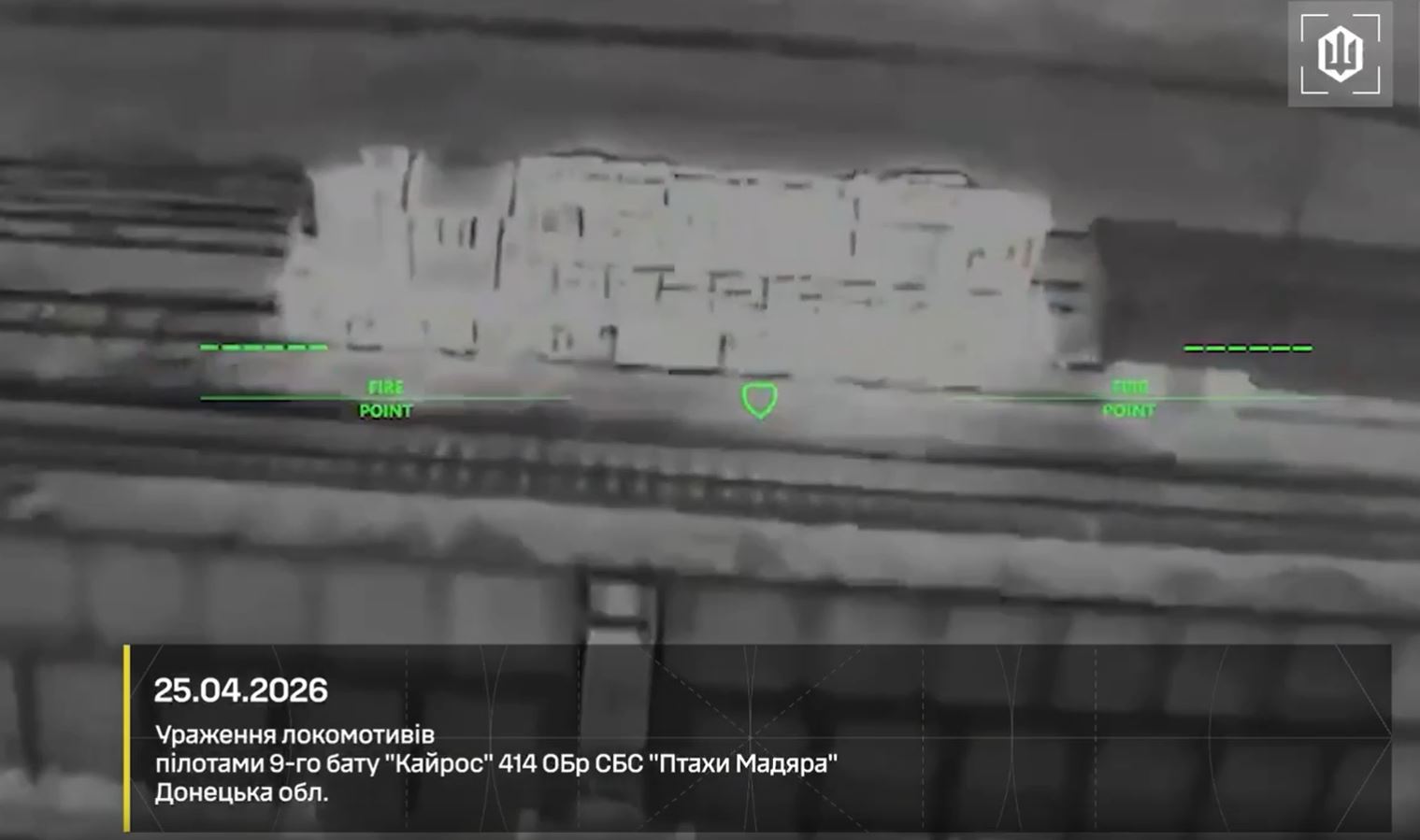
Ukraine drone forces expand kill zone into occupied regions, commander says: Russia’s trains, comms towers, and depots struck
Silence from the occupation
The occupation authorities have not commented. Leonid Pasechnik, the Russian-installed head of occupied Luhansk Oblast, posted nothing about the attack. On 21 October, he claimed Kyiv was carrying out "terrorist strikes" on civilians. Russia's Defense Ministry claimed it downed 443 drones overnight over Russian regions, Crimea, and two seas, without mentioning Luhansk. The same night, Russia launched 176 drones at Ukraine, some from occupied Donetsk and from Hvardiiske in occupied Crimea, Krym.Realii reported, citing Ukraine's Air Force.
Ukraine's General Staff has not reported on the attack yet. After the previous strike on Luhansk, it said Ukrainian forces hit command posts of Russian units in the Luhansk area.
A pipeline-valve plant hit, too
Ogonyok Luhanska also posted daylight photos of the Marshal plant after what it called a "night arrival." They show a damaged workshop roof, and the channel wrote it had information that the drone hit inside the plant. The Luhansk Pipeline Valve Plant Marshal, registered in Ukraine in 1994, makes taps and valves at 13 Montazhna Street, according to Ukrainian state registry data published by VB.ua.
The Marshal pipeline-valve plant in occupied Luhansk with a damaged workshop roof, 23 October 2026. Photo: Ogonyok Luhanska/Telegram
Earlier that morning, Luhansk Online reported restricted traffic on Montazhna Street between Brestska and Sukhodilska streets.
Ukraine has hit industrial sites in occupied Luhansk Oblast before. For example, in March, drones struck a plant in Alchevsk that made artillery shell casings.
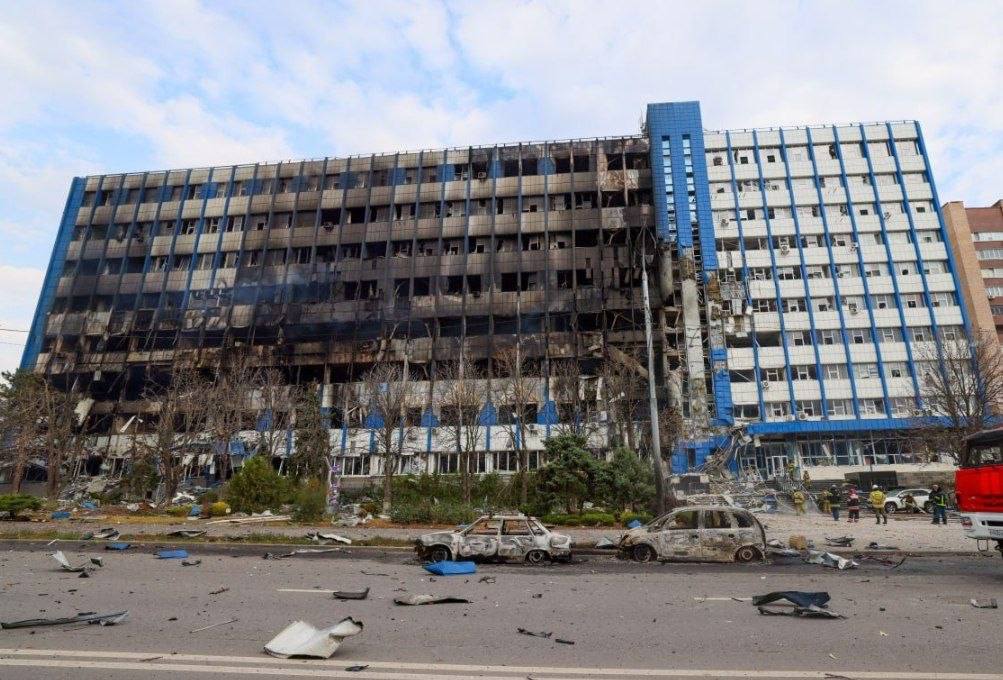
Drones struck the seized Ukrtelecom building in occupied Luhansk overnight on 21 October, hitting the mobile operator Russia’s occupation authorities run there under the name “Lugacom,” Russian Telegram channel Astra and Ukrainian monitoring channels reported. The strike came a night after drones hit “Ugletelecom,” the occupation’s telecom operator in Donetsk, which reportedly runs on equipment seized from Ukrainian companies. Footage posted by Ukrainian monitors shows heavy fire damage inside the Luhansk building. Ukraine has not officially commented.
Ukraine has spent months hitting the supply lines, depots, and infrastructure that sustain Russia’s occupation of southern and eastern Ukraine, with mid-range drones striking trucks, trains, and communications towers well behind the front. This spring the commander of Ukraine’s Unmanned Systems Forces, Robert “Madyar” Brovdi, promised Russian troops in occupied territory a “stone age.” This time the targets were the networks the occupation runs on.
The occupied Ukrtelecom building in Luhansk after a drone strike, 21 October 2026. Photo: Exilenova+/Telegram
A burned-out Ukrtelecom building in Luhansk
Residents reported explosions in Luhansk overnight, and the former Ukrtelecom building was attacked by a drone, Astra reported, citing its readers. The occupation runs its mobile operator, “Lugacom,” from the seized building, and built its network on equipment taken from Ukraine’s Kyivstar, according to dev.ua. The building also houses an occupation-run telecom services center. Luhansk is situated in the easternmost Ukrainian region and has been occupied since 2014.
Ukrainian monitoring channel Exilenova+ said Ukraine’s Defense Forces struck the building, which also hosts an information technology and technical support center. A video it posted shows extensive burning inside. Petro Andriushchenko, head of the Center for the Study of Occupation, said the drones hit a data center in the building.
Occupation officials had not commented, according to NV. In September, drones hit a hardware store in Luhansk, sparking a large fire. Earlier this month, fires broke out at a Russian supply base in Khrustalnyi, also in occupied Luhansk Oblast.
The occupied Ukrtelecom building in Luhansk after a drone attack, 21 October 2026. Photo: Astra/Telegram
Donetsk’s occupation telecom operator hit the night before
The night before, drones struck “Ugletelecom,” one of the key communications operators in occupied Donetsk Oblast, Exilenova+ reported. It operates from an office building at 60 Postysheva Street, where Ukraine’s state holding company Donbasugleobespechenie was registered before the occupation, according to RBC-Ukraine. Astra found about 27 organizations registered at the address, including internet provider Fticom, and damage on four floors.
Ugletelecom runs on equipment seized from Ukrainian companies, Donetsk-focused outlet Kochegarka reported, citing local sources. The occupation also moved local businesses that had used Ukrtelecom over to it, according to dev.ua. Residents had reported powerful explosions in the city.
The office building on Postysheva Street housing “Ugletelecom,” the occupation’s telecom operator, in occupied Donetsk after a drone strike, 20 October 2026. Photo: Exilenova+/Telegram
Power cuts across the occupied territories
In occupied Donetsk Oblast, drones attacked the 330 kV Pivdenna substation in Chystiakove, and locals reported outages, Telegram channel DroneBomber said, calling the report preliminary. Occupied Donetsk went into a blackout on the evening of 20 October after strikes on its power supply, Andriushchenko said. He also reported air defense activity and hits in the Mariupol area.
In occupied Crimea, residents of Krasnoperekopsk reported explosions and hits near the railway station, then partial power cuts, monitoring channel Crimean Wind said. In occupied Melitopol, drones tried to attack the city’s power facilities at around 03:30 but missed, Russian senator Dmitry Rogozin claimed.
French mapper Clément Molin counted 770 confirmed Ukrainian drone strikes on Russian trucks in the logistics zone 10 km behind the front line in September, up from 630 in August.

 Login