The Egyptian Parliament on Monday voted to give President Abdel Fattah el-Sisi the authority to deploy troops to Saudi Arabia, where they would help the kingdom repel attacks from the Iran-backed Houthi insurgents of Yemen.
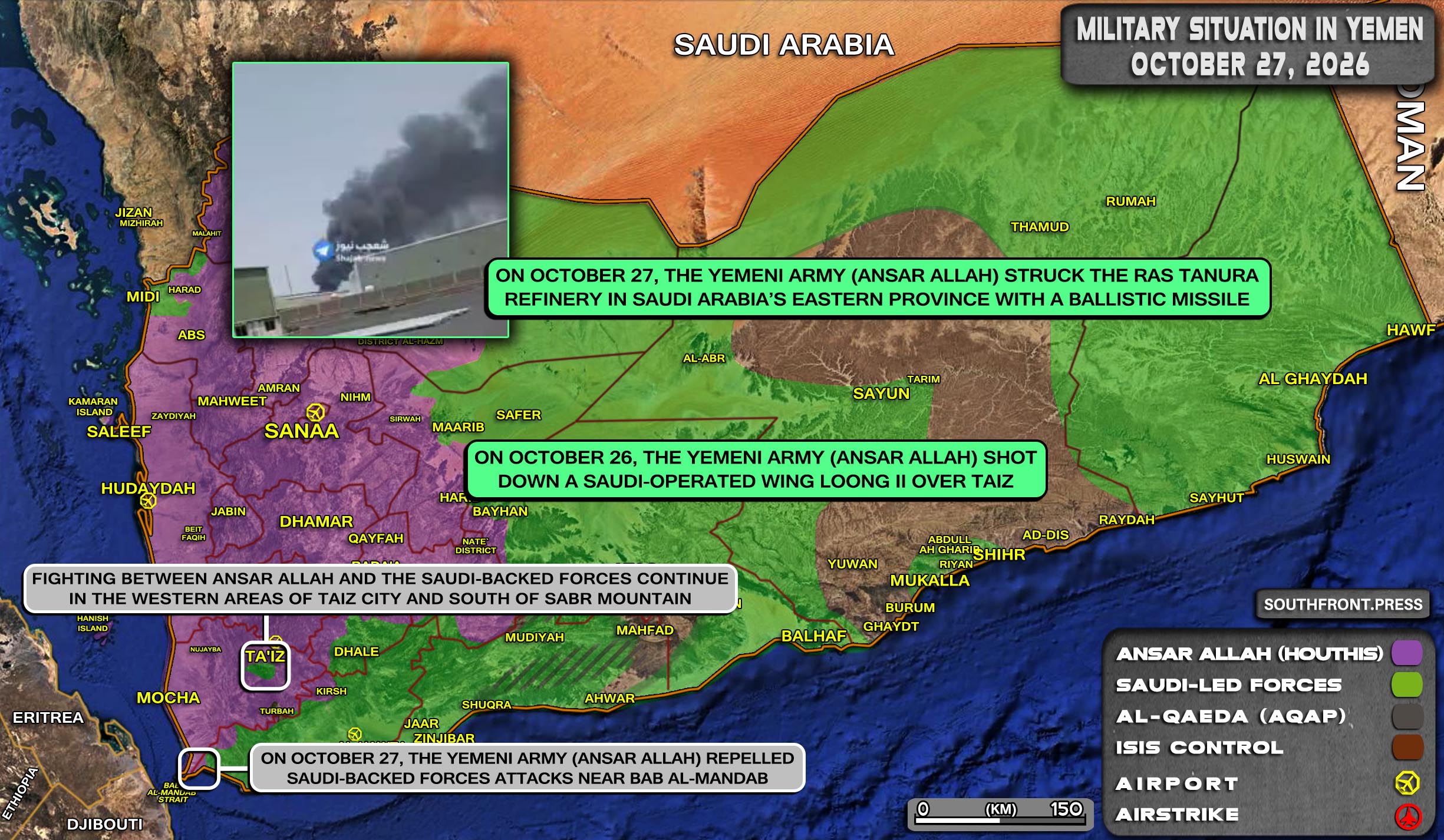
Yemen’s Houthis (Ansar Allah) said October 27 that they had repelled an attack by Saudi-backed forces toward the strategic Bab al-Mandab Strait, reporting heavy casualties and the destruction of several military vehicles as fighting continued in western Lahj.
In a statement, Brig. Gen. Yahya Saree, the Houthis’ military spokesman, said the forces were advancing from the south toward the strait under the supervision of Saudi officer Badr al-Harbi, whom he identified as commander of an advanced operational base in Aden.
The Houthis struck the troop concentrations with ballistic missiles and heavy weapons, causing large numbers of deaths and injuries, while ambulances rushed to the targeted areas, Saree said. The spokesman added that Houthi forces went on to destroy a number of military vehicles and thwart the advance.
“We warn those being misled against responding to calls from the Saudi enemy and its officers, who are pushing them into the furnaces of death,” Saree concluded.
The latest failed Saudi-backed attack follows a series of reported Houthi advances in western Lahj over the past several days.
On October 25, the Houthi-aligned Yemen Press Agency, citing southern political figure Adel al-Hasani, reported that the group had secured Wadi al-Nabiq after fierce clashes and was advancing toward al-Shatein, in the al-Mudharaba and Ras al-Arah districts.
The very next day, the agency reported that the Houthis had advanced beyond the Kahboub mountain range after positions held by the 31st Amaliqa Brigade collapsed, with remaining fighters withdrawing toward Aden.
Reports that surfaced around the same time Saree issued his latest statement described a further Houthi push toward al-Suqayyah following the reported gains around Kahboub.
The fighting has focused on the highlands and coastal routes of western Lahj, where control of the Kahboub range and surrounding areas could strengthen the Houthis’ positions along the southern approaches to Bab al-Mandab. The group captured the strategic coastal region in a lightning offensive last month.
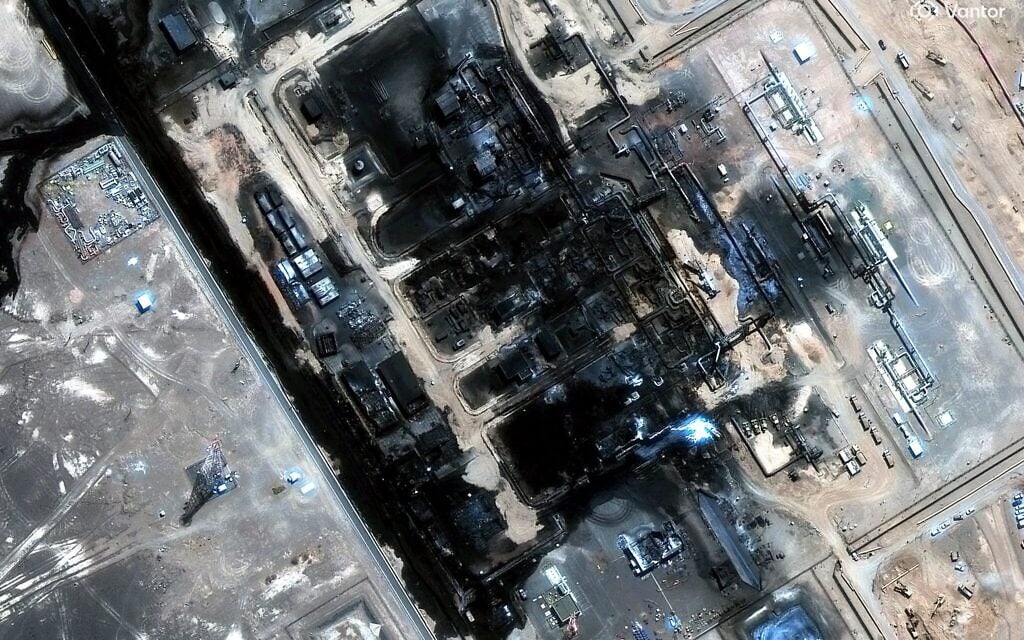
Satellite info has aided strikes by Houthis and Iraqi militias, according to intelligence firm and Saudi and Houthi sources; targets included crucial Saudi pipeline
For nearly half a century, Iran’s adversaries have tried to isolate it, intimidate it, sanction it into submission and bomb it into irrelevance. Now, in a remarkable inversion of regional power politics, three countries historically invested in its containment have arrived in Tehran to discuss their security with the very state they were supposed to marginalise.
The country they could not defeat is becoming the country they cannot afford to ignore.
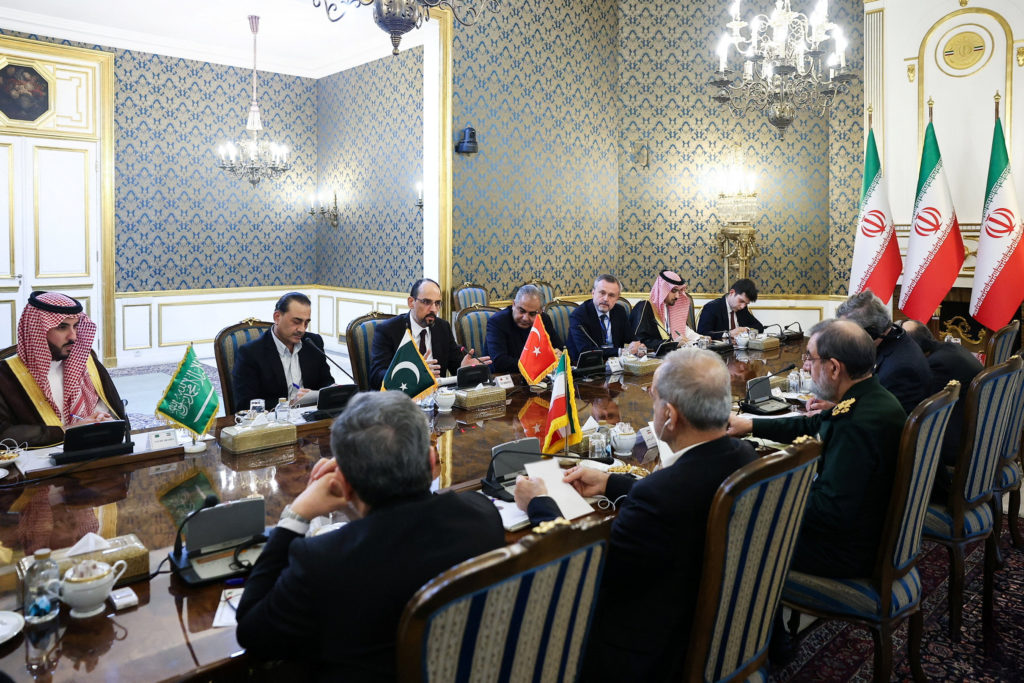
Yesterday, Saudi Defence Minister Prince Khalid bin Salman, Pakistan’s army chief Field Marshal Asim Munir and Turkish intelligence chief Ibrahim Kalın met Iranian officials in an encounter whose diplomatic courtesies barely concealed its strategic significance.
The Mecca Pact, the joint defence agreement that Saudi Arabia, Türkiye and Pakistan signed in Mecca in August, was supposed to consolidate a formidable Sunni-led defence alignment. Yet its representatives have come to Tehran confronting an inconvenient reality: Iran cannot be excluded from regional security merely because Washington and its partners find its independence intolerable.
Apparently, the Islamic Republic has become considerably more respectable since demonstrating that it cannot be conveniently eliminated.
This is the distinction between military destruction and strategic defeat that Washington and Israel persistently confuse. Overwhelming firepower can devastate infrastructure, assassinate officials and inflict enormous suffering. It cannot manufacture political submission.
Iran has survived military confrontation, retained retaliatory capabilities and forced neighbouring governments to reconsider the potentially catastrophic consequences of another war.
Survival becomes strategic victory when your adversaries must reorganise their calculations around it.
For Saudi Arabia, the reckoning is particularly humiliating. Riyadh spent decades treating American military supremacy as an insurance policy against Iranian influence. Yemen exposed the bankruptcy of that assumption.
Ansar Allah, Yemen’s Houthi movement, demonstrated that superior arsenals cannot guarantee security against an adversary capable of imposing disproportionate costs. The Saudi monarchy possesses spectacular weaponry, immense wealth and powerful patrons. Yet none of these has eliminated its vulnerability to Yemeni retaliation.
Now Riyadh finds itself seeking Tehran’s cooperation to manage a conflict that its military superiority has failed to resolve.
Pakistan’s predicament is scarcely less revealing. Munir presides over a military establishment accustomed to presenting strategic dependency as diplomatic sophistication. Islamabad’s defence commitments to Riyadh now threaten to entangle Pakistan in confrontations with Iran and Yemen that serve neither its geography nor its national interests.
The Mecca Pact promises collective security. Its less advertised feature is collective exposure to somebody else’s strategic miscalculations.
Munir must now reconcile his obligations to Saudi patrons with the inconvenient realities of Iranian power. It is an awkward assignment for an establishment that has repeatedly mistaken proximity to foreign power for genuine strategic independence.
Türkiye confronts a different calculation but reaches a similar conclusion. Ankara understands that NATO membership, military capabilities and regional ambitions cannot abolish geography. No credible security architecture can be constructed by pretending Iran is dispensable.
The deeper contradiction, however, lies within the Mecca Pact itself.
Its members seek the reassurance of collective defence while attempting to avoid being dragged into another American-Israeli confrontation. An attack on one may formally constitute an attack on all. But such commitments become considerably less attractive when Iranian retaliation, Yemeni escalation and vulnerable Gulf infrastructure enter the equation.
Collective defence sounds magnificent until someone presents the collective bill.
Iran’s achievement is not that its neighbours have embraced its revolutionary worldview. They have not. Saudi Arabia remains deeply connected to Washington, Pakistan continues its elaborate balancing act, and Türkiye remains embedded in NATO.
The significance runs deeper: these governments increasingly recognise that excluding Iran from regional security may expose them to greater dangers than engaging it.
That realisation strikes at the foundations of the American security paradigm.
For decades, Washington cultivated regional dependence on American protection while organising strategic anxieties around Iranian power. Now those same governments are exploring cooperation with the country they were encouraged to regard as an existential threat.
The irony is devastating. Decades of attempting to contain Iran may have helped establish its indispensability.
And Tehran, displaying the composure of a state conscious of its diplomatic leverage, has welcomed its visitors graciously. No triumphalist declarations are necessary. The spectacle speaks adequately for itself.
The Mecca Pact arrived ostensibly to discuss regional stability. What it encountered was the strategic consequence of its own failed assumptions.
Iran did not have to join the alliance. The alliance had to come to Iran.
Yemen’s Houthis (Ansar Allah) on October 27 claimed a series of missile and drone attacks against Saudi Arabia, including a ballistic missile strike on the Ras Tanura refinery that it said caused massive fires.
Brig. Gen. Yahya Saree, the group’s military spokesman, said in a statement that the group had struck the refinery in Saudi Arabia’s Eastern Province with a ballistic missile, describing the strike as precise and claiming it caused “massive fires” at the site.
Bloomberg News, citing a person familiar with the matter, reported that Saudi Arabia had contained a fire near the Ras Tanura oil terminal early in the day. The extent of the damage was unclear, and Saudi authorities had not confirmed that the refinery itself had been struck.
A resident of the nearby city of Al Khobar told Agence France-Presse that he received a mobile phone alert before hearing an explosion.
In a separate statement, Saree said that Houthi forces had targeted two military transport aircraft with ballistic missiles, one at Najran Airport and the other at King Khalid Air Base in Khamis Mushait. He said both operations had “achieved their objectives successfully.”
Saree subsequently claimed that a ballistic missile had struck Saudi Arabia’s Ministry of Defense in Riyadh, describing the impact as a “direct hit.”
In the fourth statement, he said the Houthis had targeted Abha International Airport with a drone, claiming the strike was precise and had disrupted air traffic at the airport.
Saudi authorities had not immediately confirmed the claimed strikes on the military aircraft, Defense Ministry or Abha airport.
The Saudi-led coalition said during the day that it had intercepted and destroyed three ballistic missiles launched toward the kingdom’s Eastern Province and four drones directed toward its southern regions.
Saudi Civil Defense issued early-warning alerts in the Eastern Province and Kharj governorate before announcing that the danger had passed.
In a separate report, Reuters said the coalition had also announced the interception and destruction of two ballistic missiles launched toward Riyadh. Saudi Civil Defense authorities briefly issued an air raid alert in the capital.
The latest Houthi strikes on Saudi Arabia come amid reports that the kingdom is seeking a negotiated end to the confrontation. Israel Hayom reported on October 26, citing unnamed Gulf diplomatic sources, that Riyadh had offered the group $1 billion through Iran in exchange for a ceasefire and an end to strikes on Saudi territory.
Riad, 27 oct (Prensa Latina) La coalición militar liderada por Arabia Saudita informó hoy la interceptación de cuatro drones y tres misiles balísticos lanzados hacia el territorio del reino, que atribuyó al movimiento hutí de Yemen.
emen's Iran-aligned Houthis said on Tuesday they had hit Saudi Arabia's Ras Tanura oil refinery, the ?biggest in the kingdom, with a ballistic missile.
Egipto sella su participación militar en la guerra de Yemen a petición de Arabia Saudí, en medio de crecientes críticas que tildan ambas intervenciones de ilegales bajo el derecho internacional.
La agenda oficial del encuentro abordó las consecuencias del conflicto impulsado por Estados Unidos e Israel, la situación en Palestina y el Líbano, así como el panorama militar en Yemen.
Saudi airstrikes and attacks launched by Saudi-backed forces on the ground killed at least eight Yemeni civilians and wounded 19 in three Yemeni provinces over the past 24 hours, according to the Health Ministry within the Ansar Allah-led Yemeni government. The ministry wrote on Telegram that the casualties were recorded in the provinces of Saada, […]
Illustrative image. (U.S. Air Force photo/Staff Sgt. Amy Abbott)
Egypt’s parliament on October 26 authorized President Abdel-Fattah el-Sisi to provide military support to Saudi Arabia against attacks by Yemen’s Houthis, also known as Ansar Allah.
The authorization, approved by a two-thirds majority following closed-door deliberations, allows Sisi to take necessary measures in coordination with Riyadh to defend Saudi territory, sovereignty and holy sites against external aggression.
A regional official briefed on the plans told The Associated Press that Egypt would provide air defense systems and warplanes to help intercept missiles and drones targeting Saudi Arabia. The official said the support would not include deploying ground troops to Yemen.
Sisi has repeatedly stressed that Cairo’s role would be strictly defensive, seeking to reassure Egyptians concerned that the country could become entangled in another regional war.
“I’m not speaking about fighting anyone or attacking anyone. I’m speaking only for defense,” Sisi said earlier this month.
He also reiterated that Egypt’s military effort would focus on protecting Saudi territory and borders rather than conducting attacks on Yemen.
The limited scope of the proposed mission means Egypt’s decision is unlikely to significantly change the military balance inside Yemen.
Egyptian air defense systems and warplanes could help Riyadh withstand further missile and drone attacks, but the announced approach does not involve an Egyptian ground campaign or direct strikes against Houthi positions across the border in Yemen.
Egypt’s involvement in the war has been cautious before. Cairo joined the Saudi-led military intervention in 2015, initially contributing naval and air forces to the campaign against the Houthis. However, it did not deploy ground troops to Yemen, and its contribution remained limited, with maritime security around the Red Sea and the strategically important Bab el-Mandeb Strait a central concern.
Egypt renewed its participation in the coalition during the following year but never became a major ground-combat participant in the conflict.
The latest authorization therefore provides Riyadh with the prospect of additional defensive military support without signaling a large-scale Egyptian campaign inside Yemen.
Cairo has also continued to call for a diplomatic settlement, reflecting its interest in protecting its Gulf partnerships and the maritime routes linking the Red Sea to the Suez Canal.
Yemen’s Houthis (Ansar Allah) released footage on October 26 showing attacks with Rujum drones against Saudi military targets along the border in the provinces of Najran, Jizan and Asir.
The video, which runs for more than six minutes, shows the drones tracking targets across mountainous and rocky terrain before striking fortified positions, troop gatherings and military vehicles. One of the vehicles hit was an M2 Bradley infantry fighting vehicle.
The Rujum is a modified version of the Chinese-made YD6-1000S hexacopter bomber drone featuring a 44-minute flight time and a 2 kg payload capacity, adapted to deploy munitions such as 60 mm mortars.
In recent weeks, there have been reports of scores of Saudi troops being killed or wounded along the border. No official overall toll has been published, however.
The escalation along the Yemen-Saudi border could be a prelude to a large-scale Houthi raid into the kingdom. The group carried out several successful incursions in the past, sometimes advancing multiple kilometers into Najran, Jizan and Asir.
Such a move by the Houthis could further complicate the situation for Saudi Arabia, which is already struggling to stop the advance of the Houthis inside Yemen and to counter the group’s deep strikes on Saudi territory.
Iranian Foreign Ministry spokesperson Esmaeil Baghaei says a meeting in Tehran with senior officials from Turkey, Pakistan and Saudi Arabia could lay the groundwork for a regional security framework based on the interests and decisions of countries in the region.
Speaking at a weekly press conference on Monday, Baghaei said Tehran would host Saudi Arabia’s defense minister, Pakistan’s army chief and Turkey’s intelligence chief as part of an initiative to discuss regional security.
He stated that the initiative was proposed during Pakistani Army Chief Asim Munir’s visit to Tehran and was welcomed by the Islamic Republic of Iran.
Responding to a question from IRNA about the purpose and format of the gathering, Baghaei said the participation of senior officials from the three countries reflected efforts to explore mechanisms for regional security.
“From our perspective, the fact that regional countries are seeking to establish, or at least consider, regional security mechanisms based on their own interests and concerns is a welcome development,” he said.
“This meeting could serve as a prelude to further steps toward shaping endogenous security, an issue we have insisted on for decades. We have consistently emphasized that regional security can only be ensured by relying on the will and security considerations of the countries of the region,” Baghaei added.
He noted that developments over the past two years, particularly the past eight months, had demonstrated the importance of cooperation among regional countries.
“Recent events have shown that sustainable and reliable security in our region can only be achieved through building trust and cooperation among regional countries,” the spokesman said.
Baghaei said the visiting officials would hold discussions with the Iranian president and the secretary of the Supreme National Security Council.
As this is the first meeting of its kind, he said, a range of issues would be on the agenda, with regional security challenges expected to feature prominently.
“Such a meeting cannot be held without taking into account the consequences of the United States’ military aggression against Iran for the security of the entire region,” Baghaei said, describing the issue as another important subject that should be considered within the framework of regional security discussions.
Deputy Secretary of Iran’s Supreme National Security Council (SNSC) Ali Bagheri Kani said the three senior officials are scheduled to meet with SNSC Secretary Major General Mohsen Rezaei and participate in a joint session on Monday.
Regional countries must strengthen capabilities to counter Israel
Responding to reports of disagreements between Israeli Prime Minister Benjamin Netanyahu and the Israeli army chief over a possible attack on Iran, Baghaei said such differences would have no impact on Iran’s defensive preparedness.
“Despite possible differences in tactics, this group is united in its aggression and expansionism,” he said, adding that the regime’s actions across the region showed it was pursuing a common course aimed at undermining regional security.
He stressed that regional countries must enhance their capabilities to confront the Israeli regime’s threats and destabilizing actions.
Iran unconcerned about who rules in Israeli regime
Commenting on the upcoming Knesset elections in the occupied territories, Baghaei dismissed the process as a genuine democratic election, describing it instead as competition among rival groups seeking to commit greater crimes.
“For us, it makes no difference who ultimately takes the helm of the Zionist regime,” he said, noting that its record had brought nothing to the region but violence and bloodshed.
Armed forces will firmly counter threats
Responding to reports about the deployment of drone bases near Iran, Baghaei said Iran’s relevant authorities were closely monitoring developments surrounding the country, including reports of drone bases near its borders and Ukrainian activities in Iraq and the Iraqi Kurdistan region.
“Those responsible for monitoring these developments are following the situation carefully and will act whenever necessary to defend the country and repel hostile actions and threats,” he said.
He emphasized that Iran’s armed forces had firmly defended the country whenever threats or hostile activities targeted its territory and would continue to do so.
Europe part of the problem
Baghaei expressed doubt that European countries had genuinely changed their approach toward Iran, pointing out that their renewed emphasis on diplomacy could amount to a political gesture.
He slammed Europeans for contributing to the crisis by aligning with the United States over the so-called snapback mechanism and failing to condemn US-Israeli military aggression against Iran’s nuclear facilities.
Baghaei said Tehran hoped the three European countries would assess regional developments more realistically and adopt an independent and constructive approach toward West Asian affairs.
Brazilian people resisted unfair pressure
Commenting on Brazil’s presidential election and the defeat of the right-wing camp aligned with US President Donald Trump, Baghaei said the outcome demonstrated the Brazilian people’s determination to make independent political choices.
“The people of Brazil showed that they would not submit to misleading narratives and unjustified pressure, and that they would choose what they consider to be in their country’s best interests,” he said.
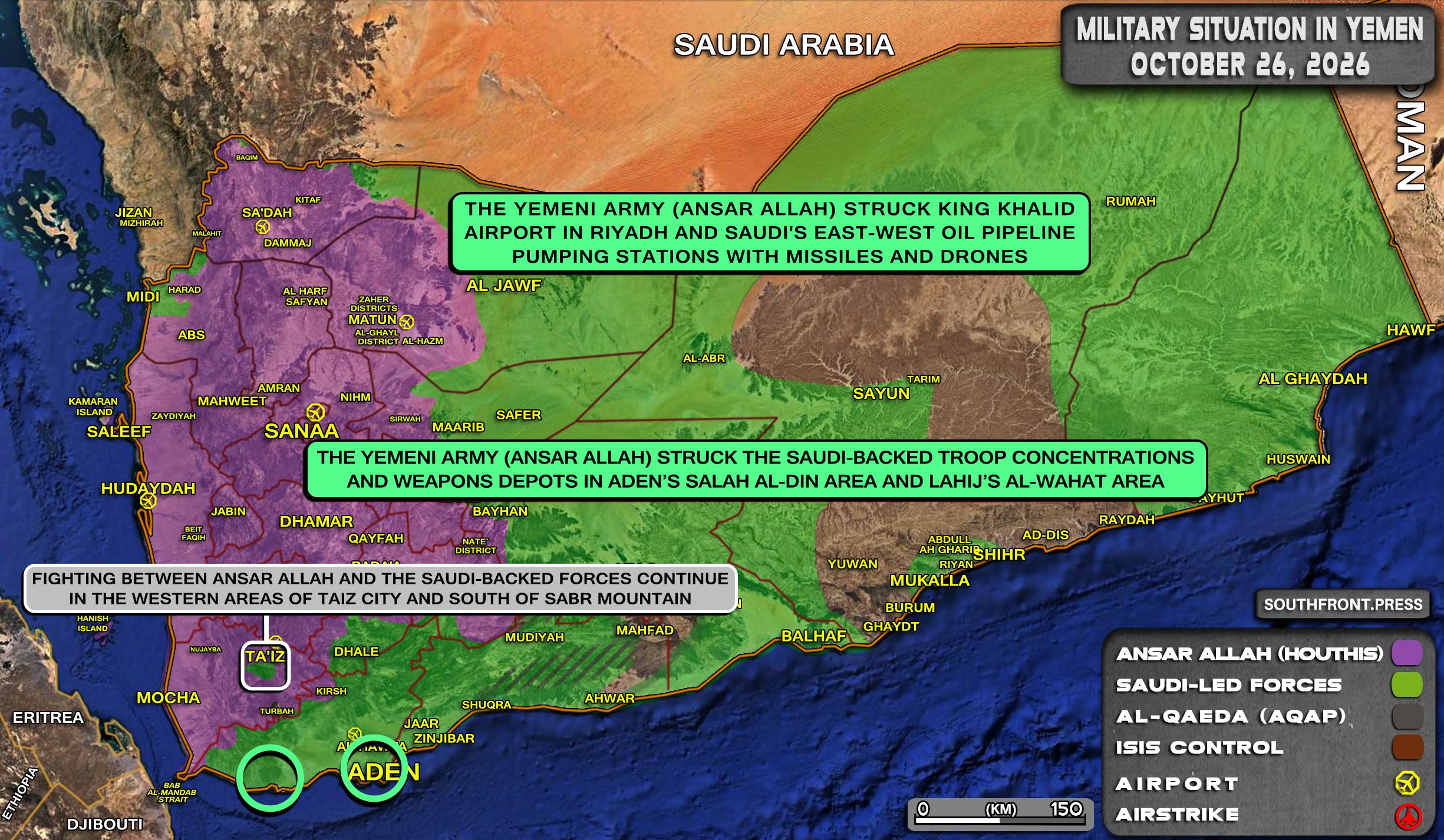
Yemen’s Houthis (Ansar Allah) announced on October 26 that they struck King Khalid International Airport in Riyadh with a ballistic missile and Saudi Arabia’s East-West crude oil pipeline with drones, while announcing separate missile attacks on military positions and weapons depots in Aden and Lahij.
In a statement, Brig. Gen. Yahya Saree, the movement’s military spokesman, said the airport had been targeted with a ballistic missile.
“Our armed forces, with God’s grace, successfully targeted King Khalid International Airport in the Saudi enemy’s capital, Riyadh, with a ballistic missile, and the hit was accurate,” Saree said.
He added that the group had “carried out an operation targeting crude oil pumping stations on the East-West line with several drones,” saying the strikes had also hit their targets.
The Saudi-led coalition, from its part, said its air defenses intercepted and destroyed a ballistic missile launched toward Riyadh. Coalition spokesman Maj. Gen. Turki al-Maliki announced the interception after Saudi authorities issued an aerial-threat alert for the capital. Explosions had been heard in Riyadh a day earlier amid similar warnings.
In a second statement, Saree announced two missile attacks against Saudi-backed military positions in southern Yemen, identifying the targets as troop concentrations and weapons depots in the Salah al-Din area of Aden and the al-Wahat area of Lahij.
“The Yemeni Armed Forces, with God Almighty’s help, carried out two special military operations targeting the Saudi enemy’s troop concentrations and weapons depots in the Salah al-Din area of Aden governorate and the al-Wahat area of Lahij governorate using several ballistic missiles,” Saree said.
He claimed the attacks caused “dozens of dead and wounded” and destroyed and burned military vehicles and weapons depots. Saree also said the targeted facilities were supervised by Saudi officer Badr al-Harbi.
Reports of explosions emerged from the same general areas. Al Jazeera reported that a correspondent heard an explosion in Salah al-Din, west of Aden, and that loud blasts were heard between Aden and Lahij.
Yemen’s Information Ministry separately said two missiles had fallen near displaced-person camps in Salah al-Din, but did not provide casualty figures or details of damage.
The Houthis continue to escalate strikes against Saudi Arabia and its allies, and despite the kingdom’s recent efforts to secure defensive support, it remains vulnerable to the group’s missiles and drones. This situation will not likely change any time soon as the Houthis appear to have amassed enough capabilities for a prolonged conflict.
There appears to be little prospect of lasting peace between Iran and the United States while Donald Trump remains in the White House. This is a view that an increasing number of serious actors across the region now seem to share. Eight months into the Iran war, Washington has neither broken Tehran’s resolve nor found […]
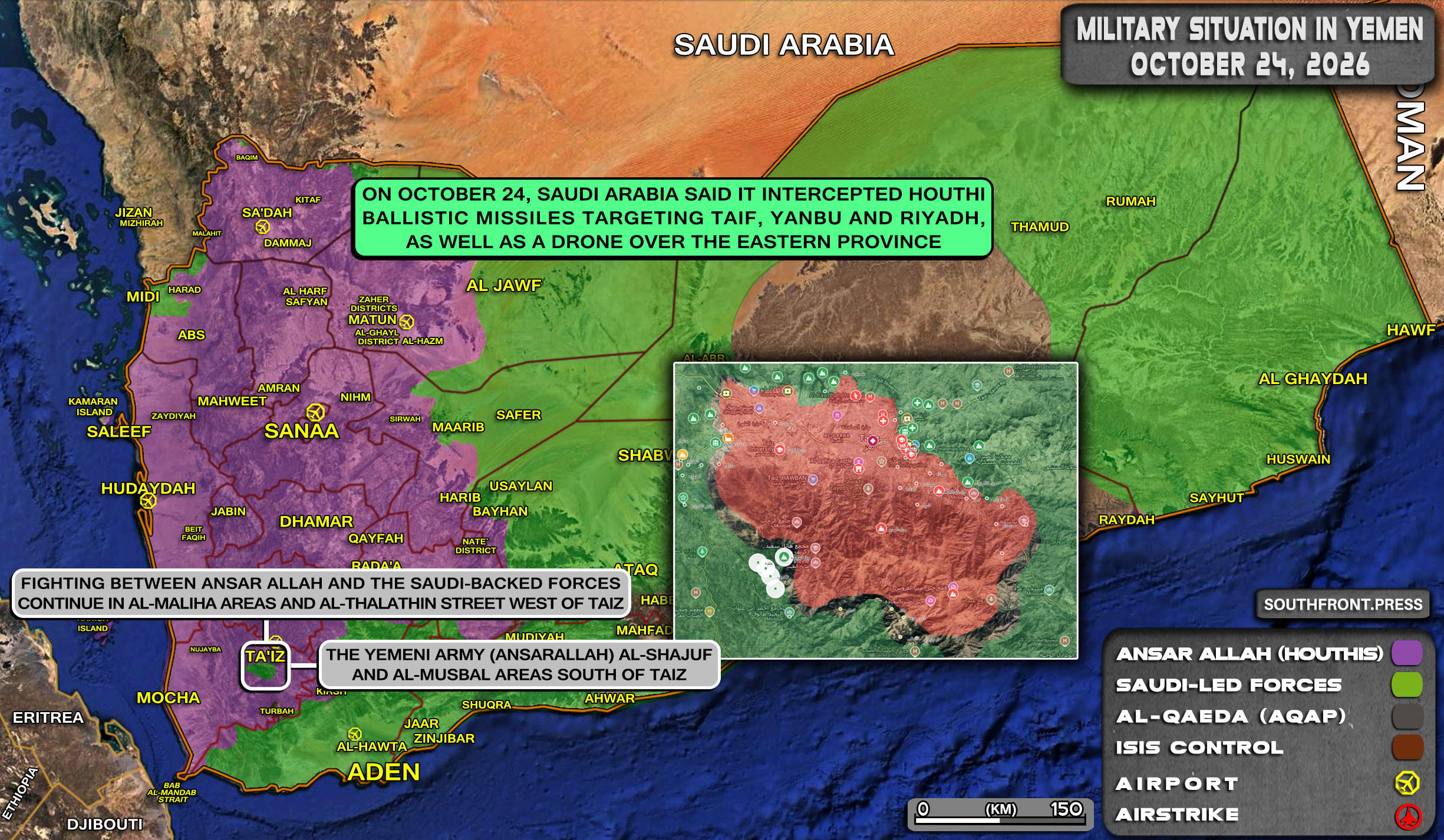
The Yemeni army (AnsarAllah) Al-Shajuf and Al-Musbal areas south of Taiz;
Fighting between Ansar Allah and the Saudi-backed forces continue in Al-Maliha areas and Al-Thalathin Street west of Taiz;
On October 24, Saudi Arabia said it intercepted Houthi ballistic missiles targeting Taif, Yanbu and Riyadh, as well as a drone over the Eastern Province.

 Login