Login

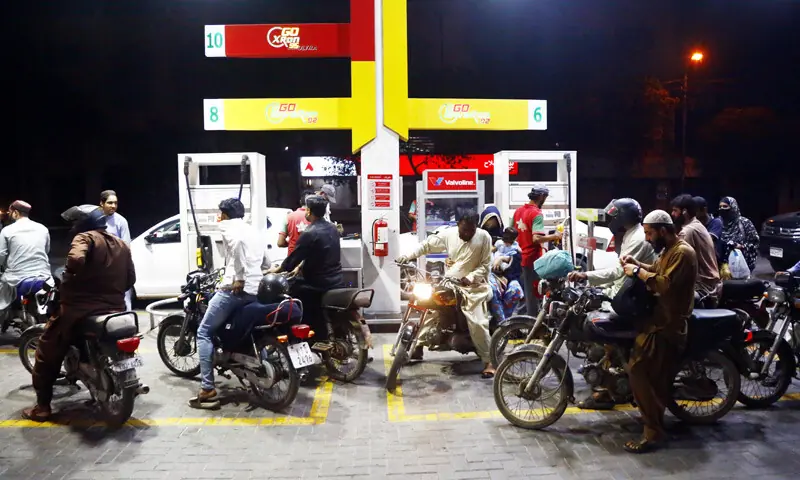
Govt cuts petrol price by Rs3.19 per litre, ups high-speed diesel rate by Rs2.25
Official ex-depot prices (PKR/litre) — OGRA & Ministry of Energy notifications


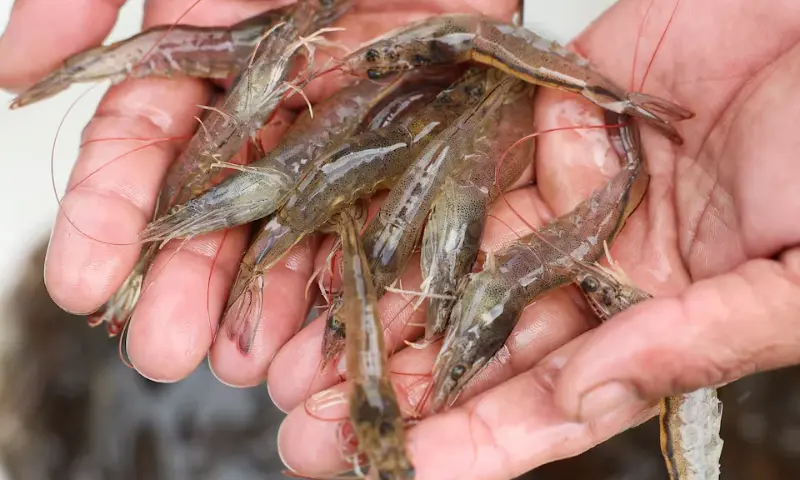
ISLAMABAD: A sub-committee constituted by the prime minister has set a 120-day deadline to prepare a roadmap to expand shrimp farming, improve value addition and boost exports.
Maritime Affairs Minister Junaid Anwar Chaudhry on Tuesday chaired a meeting of the sub-committee on aquaculture and the shrimp value chain, according to a press release.
The 120-day deadline was set as part of a broader 24-month implementation and review process.
The meeting brought together provincial fisheries officials and relevant federal institutions to develop a “coordinated strategy” for transforming aquaculture into a competitive, export-oriented industry.
PM Shehbaz has termed achieving export-led economic growth as the government’s top priority, with the federal budget for the current fiscal year (FY27) formulated with the same objective.
The sub-committee will prepare a comprehensive report based on verified data and stakeholder recommendations, Tuesday’s statement said.
“The exercise will establish a baseline for the sector, identify bottlenecks across the value chain and propose measures to improve production, processing and export competitiveness,” it added.
Furthermore, the sub-committee approved seven technical working groups and a projection and costing cell to prepare 14 reports and export projections, assigning responsibilities to the relevant institutions.
It also adopted a common framework for data collection and validation, prioritising challenges, developing reform proposals and monitoring progress.
An initial 14-day action plan was approved, with participating institutions directed to complete their assigned tasks within the stipulated deadlines.
The meeting was attended by representatives of the fisheries departments of Punjab, Sindh, Khyber Pakhtunkhwa, Balochistan, Azad Jammu and Kashmir, and Gilgit-Baltistan. Officials from the Trade Development Authority of Pakistan and the ministries of food security and maritime affairs were also present.
According to the statement, Chaudhry said the exercise would identify constraints and develop practical solutions to expand shrimp farming, strengthen value addition and increase exports.
He added that the federal government would work with provincial governments and other stakeholders to pool expertise and develop a coordinated approach to harness the country’s potential in shrimp farming.
Sindh’s secretary for livestock and fisheries was quoted as saying that a feasibility study was being prepared for a 3,500-acre shrimp farm in the province. He also highlighted the need to address challenges in value addition and traceability.
Meanwhile, Punjab’s Aquaculture and Fisheries Secretary Rana Saleem Afzal said that relevant departments of the provincial government were working to introduce shrimp farming in Punjab.
“Many areas in Punjab were non-cultivable due to high salinity in the underground water, and efforts were under way to establish hatcheries in such areas,” he was quoted as saying.
However, he acknowledged that establishing an effective value chain remained a major challenge.
Other participants presented proposals to improve shrimp processing and value addition for exports as well as local consumption, as shrimps and prawns remain in high demand in Punjab and KP.
It was agreed that the next meeting would review identified bottlenecks as well as available baseline data essential for promoting shrimp farming.
In April, Punjab Chief Minister Maryam Nawaz noted that progress had been achieved in developing infrastructure for shrimp farming projects in Sargodha Estate, Aliwala and Shahgarh.
Punjab had launched the Blue Economy Programme to develop unused lands and introduce a modern scientific system for shrimp farming.
Earlier this year, the federal government said Pakistan’s exports of fish and fish preparations had reached a record $568 million in the previous fiscal year (FY26). Seafood exports are mainly shipped to China, Thailand, Malaysia, the United Arab Emirates, Japan, Vietnam, Saudi Arabia, South Korea, Indonesia and the United States.

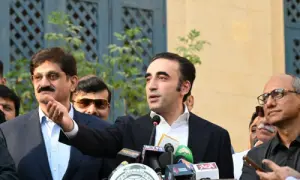
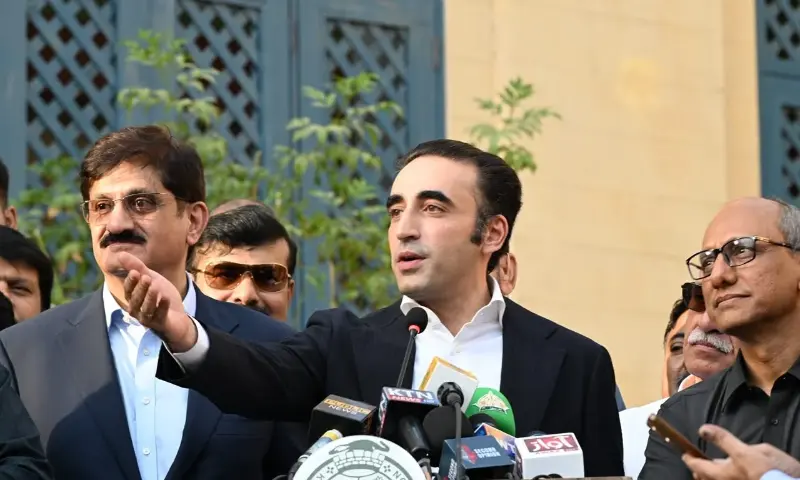
PPP Chairman Bilawal Bhutto-Zardari on Tuesday called for a “full stop” to conversations regarding the creation of new provinces.
He made the remarks while speaking to the media at Spencer Eye Hospital in Karachi’s Lyari alongside Sindh Chief Minister Syed Murad Ali Shah.
Reiterating his party’s stance in response to a question over “pressure” the PPP was facing regarding the creation of new administrative units and the possibility of rolling back the 18th Amendment, Bilawal said the people of Sindh and their elected representatives had presented their decision and “now we should put a full stop to this conversation”.
He said the Sindh Assembly had also made its stance in the matter evident for “at least seven to eight times now”.
“The people here can determine the fate of this province and the city,” Bilawal asserted.
“I think we should close this topic because the people themselves have closed it,” he said.
When asked about ongoing conversations regarding a 28th constitutional amendment and whether the government had spoken to him in this regard, Bilawal simply replied: “No.”
The PPP chairman was also questioned about the recent dispute between the Karachi Metropolitan Corporation (KMC) and Pakistan Railways and the federal government’s lack of interest in the city.
“The federal government should definitely pay attention to this city. Karachi is the country’s economic hub. Everyone else should pay attention to it,” he said.
Bilawal’s remarks come amid an ongoing debate across the country about the creation of new administrative units, sparked by Interior Minister Mohsin Naqvi’s proposal for a dialogue among all political parties to bring about reforms to the current governance system and call for new provinces and urgent administrative reforms in July.
At the time, the PPP had referred the question to its top decision-making forum, while the Sindh chief minister flatly rejected it; Lahore’s lawyers also called it unconstitutional and Sindhi nationalist groups have been demanding the minister’s resignation.
However, since Naqvi’s remarks, various political parties have also spoken in favour of it and called for the creation of more provinces or administrative units for better governance.
The Muttahida Qaumi Movement-Pakistan (MQM-P) — an ally of the PML-N-led ruling coalition — has been demanding that Karachi be designated a province separate from Sindh.
However, the PPP, which rules Sindh and is also an ally of the PML-N government at the Centre along with MQM-P, has strongly opposed the suggested move.
In September, the Sindh Assembly adopted a resolution rejecting all attempts to divide the province or create new administrative units, with the CM Murad declaring that “there will be no compromise on Sindh’s geographical unity”.
The government and Jamaat-i-Islami (JI) on Tuesday decided to form a joint committee to recommend proposals for expanding the ongoing fuel relief scheme, while JI warned of marching to Islamabad next month if no relief “package” was announced by then.
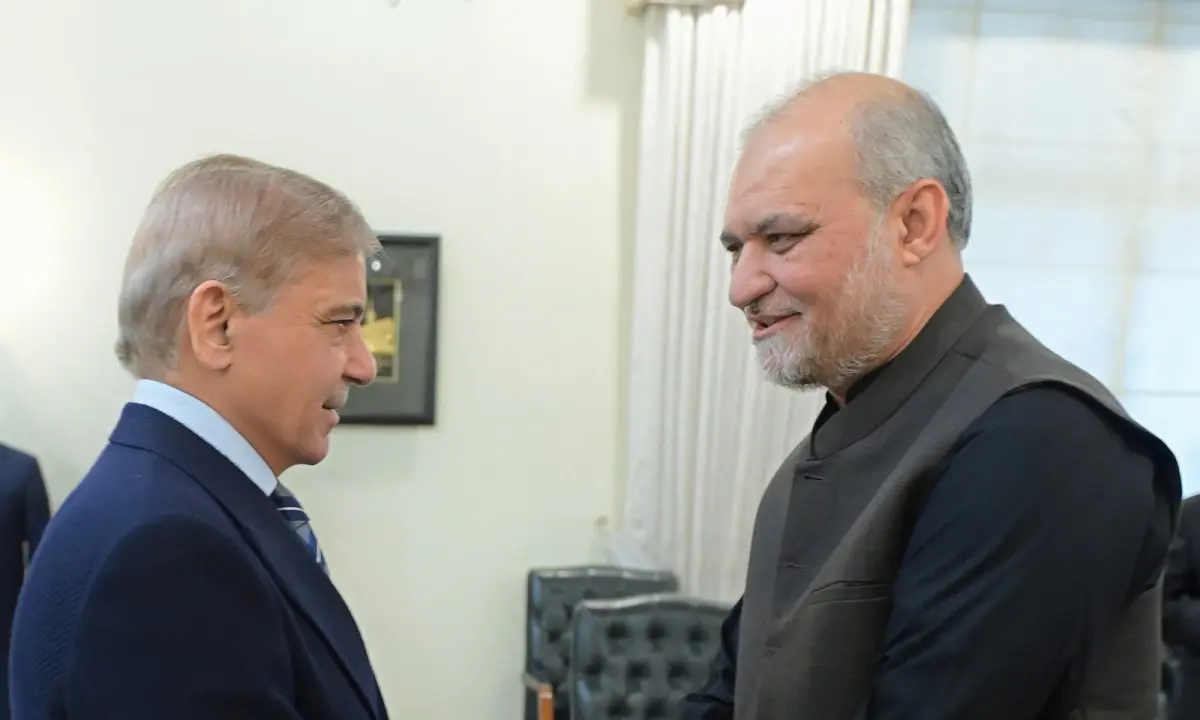
The decision was made during a high-level meeting between Prime Minister Shehbaz Sharif and JI chief Hafiz Naeemur Rehman at the PM House, according to a press release issued by the PM Office (PMO).
The meeting was offered by PM Shehbaz last month when urging JI to postpone its Islamabad march, which it had accepted. JI has been demanding the abolition of the petroleum levy to reduce the burden of heightened fuel prices on the public.
Tuesday’s meeting decided that a committee, comprising three members each from the government and JI, will present final recommendations on the following two measures:
Deputy Prime Minister and Foreign Minister Ishaq Dar, Planning Minister Ahsan Iqbal and the PM’s political adviser Rana Sanaullah will represent the government in the joint committee, PMO stated.
The premier informed the JI delegation in detail about the relief provided so far by the government in the petroleum products quota for the low-income segment, noting that 12.7 million people have registered in the subsidy scheme so far.
The relief scheme for owners of motorcycles, rickshaws and vehicles of up to 800cc was rolled out across the country on Sept 17. PM Shehbaz had announced the subsidies to ease the public’s burden amid rising fuel prices due to the Middle East situation.
During the meeting, the prime minister conveyed to JI that he “fully understands the burden on the public due to the increase in prices of petroleum products”, PMO said.
He highlighted the government’s effort to provide relief through the subsidy scheme and asserted that Islamabad was “making all-out diplomatic efforts to resolve the regional crisis so that the situation can return to normal”.
“The current crisis is not related to government policies but to the increase in oil prices in view of regional and international situations. However, according to financial capacity, the government is providing relief to the public and will continue to do so,” he was quoted as saying.
The prime minister thanked JI for adopting the path of negotiations regarding the prices of petroleum products. PMO noted that the JI delegation “expressed its stance on the abolition of the petroleum levy and relief for the public”.
JI Deputy Emir Liaquat Baloch, Deputy Secretary General Syed Farasat Shah, Islamabad Emir Nasrullah Randhawa and Inayatullah were also part of the party delegation.
From the government, Dar, Iqbal, Sanaullah, Economic Affairs Minister Ahad Khan Cheema, Finance Minister Muhammad Aurangzeb, Petroleum Minister Ali Pervaiz Malik, and Minister of State for Finance and Railways Bilal Azhar Kiani were also present.
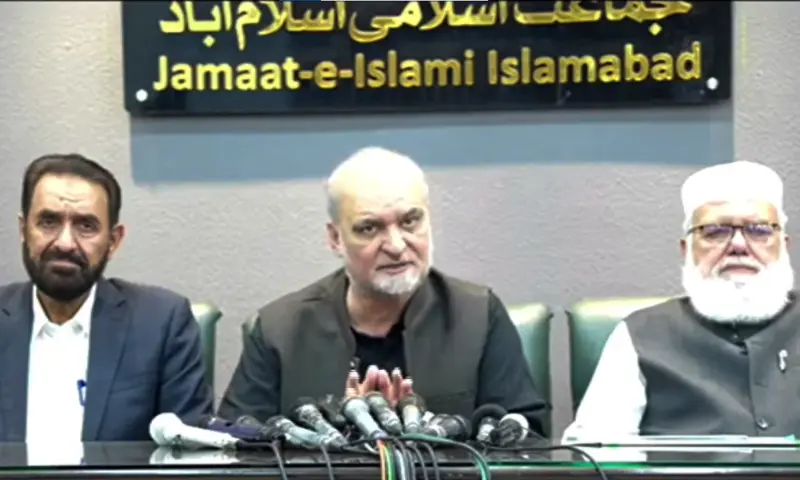
In his press conference in Islamabad, the JI chief affirmed that his party will not postpone its march any further.
He stated: “It will now take place in mid-November, and it certainly will take place. Let them announce this package, provide this relief, and devise a mechanism to abolish this extortionate levy before that, [but] if they do not do so, we might have to sit on the road to talk.
“We are prepared for anything,” Rehman declared.
Asked about the outcome of his meeting with PM Shehbaz, the JI emir refrained from terming it “inconclusive”.
He noted that two sides had consensus on expanding the scope of relief, but there were disagreements over the “modalities” and “procedure”.
“We say eliminate the levy; they say we can move towards it phase by phase,” Rehman elaborated.
Rehman, apparently referring to the new joint committee, said Baloch, Shah and Randhawa would be part of it.
“We cannot simply accept peanuts,” the JI chief said when asked about a reported government offer to reduce the levies by Rs20-30. He stressed that his party stood firm on its stance.
He maintained that JI would continue its preparations and would begin nationwide mobilisation for its planned march to the federal capital, while negotiations would also continue at the same time.
“Our preparations are already complete; we will prepare further [and] we will talk to them (the government) further. However, we will also hold the Islamabad march in mid-November,” Rehman said.
Asked whether JI had presented any alternative to abolishing the levy, he responded in the affirmative, asserting that his party had comprehensive preparations.
Rehman highlighted that all past governments vowed not to take loans from the International Monetary Fund (IMF) but then entered into programmes with it after coming into power.
He said his party pointed this out, adding, “Give relief to the people; do not take retribution for your incompetence from the nation.”
Providing details of his party’s demands, the JI chief said it had also raised the issue of refineries’ margins increasing as well when oil prices rose in the international market.
“That should have decreased, people should have gotten relief,” he said.
Rehman acknowledged that JI was aware of the fluctuations in international oil prices due to the ongoing conflicts in the Middle East, but “we want relief to be provided to the people in this regard as well, and this levy should also be abolished alongside”.
He went on to claim credit for the relief scheme launched by the government in mid-September. “If Jamaat-i-Islami was not protesting, do you think this relief package would have come?”
Rehman further said, “We have restrained them a little by continuing to push, by taking a stand, stepping onto the field and protesting; otherwise, it is easy money that you just take advantage of this opportunity.”
The JI emir recalled that in April, the government had hiked the levy on petrol to Rs160 per litre from Rs105, but widespread criticism prompted it to reduce the levy by Rs80.
“It is JI that has raised awareness, protested, and built pressure,” he claimed.
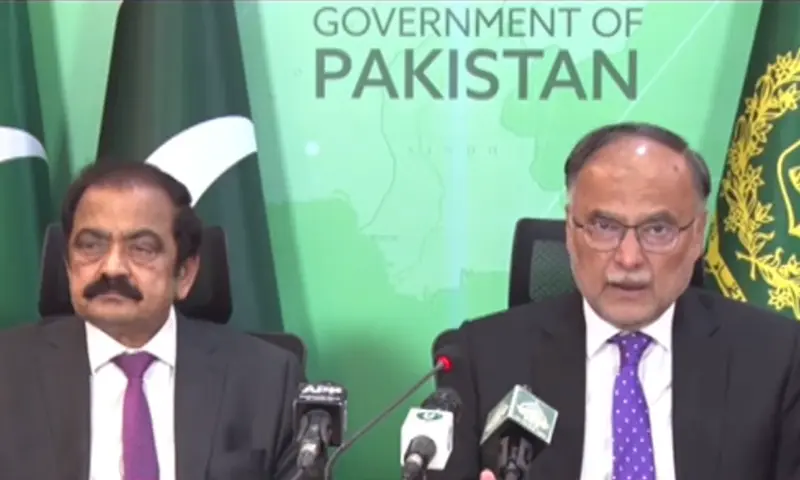
After attending the meeting, Iqbal and Sanaullah addressed a press conference and assured the public that the government wanted to ease the burden of the fuel prices.
“The prime minister and JI emir agreed that they share one purpose and intent: they want to reduce the difficulties of the public,” Iqbal said.
“However, for this, we will have to adopt a path that is durable, sustainable, and the cost of which we can afford.”
The planning minister expressed hope that the committee would be able to work together on the topics to find a solution to these issues.
Simultaneously, while acknowledging that every political party had a right to protest, he stressed that the regional conditions warranted that everyone maintain peace and internal stability in the country.
Iqbal assured the public that the government was aware that the increase in international oil prices, and the consequent fuel price hikes, affected ordinary citizens.
He emphasised that PM Shehbaz was “continuously concerned about how to reduce the difficulties of the most affected and vulnerable classes” and said the soaring costs were a result of a global crisis that was not in the government’s control.
The minister stressed that Pakistan was playing its diplomatic role in resolving the Middle East crisis, including facilitating negotiations between the US and Iran, so that reduced regional tensions could lower global oil prices and the relief could be passed on to the public.
The PML-N leader went on to take a jibe at the previous PTI government, saying it reduced fuel prices for “cheap popularity” even as international oil prices rose, bringing the country to the brink of fiscal default.
He contended that if a government made decisions merely to hype its popularity among the masses, that irresponsibility could come back to it as a “nightmare”.
Therefore, he added, the government, including the prime minister, wanted to help people as much as possible “while staying within our resources”.
Addressing the media alongside Iqbal, Sanaullah said, “The government, to whatever extent possible, is providing relief to the common man, the poor man, and is trying to advance it further.”
He said the number of people benefitting from the fuel subsidy scheme was likely to reach 20m in the coming days.
He appreciated the JI’s efforts and its belief that the common man should be provided relief, stressing that this relief should be taken forward “in such a manner that it is targeted, and that maximum relief be given to those people who deserve it more”.
At the same time, Sanaullah urged all political parties to strengthen the position of Pakistan’s military and political leadership, and to create an environment that lent strength to the efforts made by PM Shehbaz and Chief of Defence Forces and Chief of the Army Staff Field Marshal Asim Munir to end the US-Iran conflict, as well as to maintain good relations within the Muslim world.
He called for “complete solidarity and complete unity” in the country “so that Pakistan can succeed in playing an effective role in the world”.
“It is our hope, and indeed our belief, that the Jamaat-i-Islami leadership, keeping in view these delicate and sensitive matters, will certainly play their role,” he said.
The PML-N leader emphasised that the government had listened to the JI’s suggestions “very carefully” and held the talks with “complete sincerity of intention and good faith” so that the current relief could be made more effective.
The JI has been demanding for over two months that the Centre abolish petroleum levies, as fuel prices have skyrocketed due to conflicts in the Middle East since March.
The Centre and JI had agreed to form committees in early September — when the latter had planned a nationwide strike — to recommend measures to reduce the levy.
Rehman on Monday warned that the party would march to Islamabad in mid-November if the premier did not abolish the petroleum levy.
On Aug 16, the JI announced sit-ins in all the provincial capitals of Pakistan against the petroleum levy and had called for a nationwide strike on Sept 3.
On Sept 20, the party launched a protest march towards Islamabad, warning that if the government failed to abolish the petroleum levy, the protest could turn into one to oust the government.
On Sept 22, the JI emir said his party, whose convoy had reached Multan, was postponing its long march at the request of PM Shehbaz, who had assured the other side of a meeting to discuss the matters.
However, in a press release issued last week, the party alleged that the government had made no further contact regarding the planned meeting.
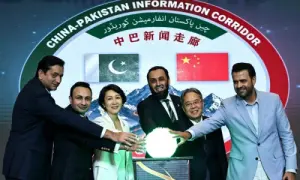
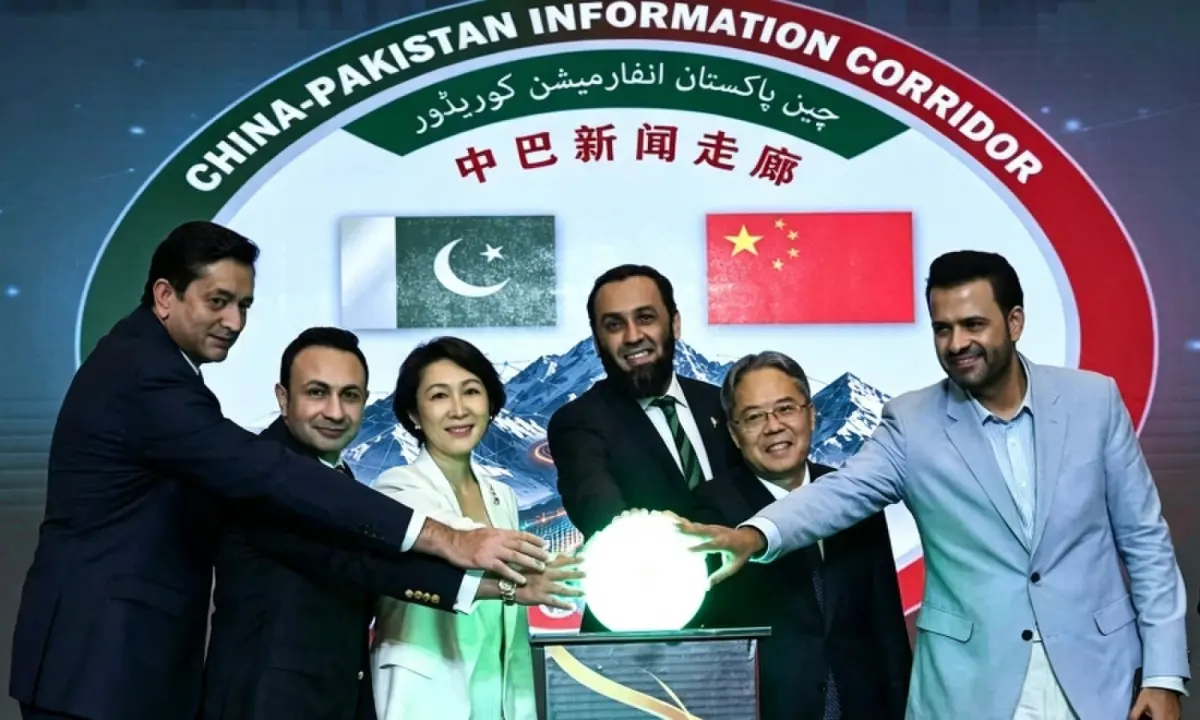
Pakistan and China have launched the China-Pakistan Information Corridor (CPIC), with Information Minister Ataullah Tarar saying that the initiative will focus on countering misleading narratives, cultural exchanges and cooperation between think tanks.
The corridor was launched at a ceremony in Islamabad, which was televised on Tuesday. Chinese Foreign Ministry Spokesperson Mao Ning and Chinese Ambassador Jiang Zaidong attended the launch.
In his televised remarks, Tarar expressed his “long-standing“ desire to collaborate with China in the fields of media, information sharing and digital platforms.
Hailing Pakistan and China’s bilateral relations, Tarar recalled the China-Pakistan Economic Corridor (CPEC), noting that it had “turned decades of goodwill into steel, concrete and current”.
“It lit homes, laid motorways across our provinces and gave Pakistan at Gwadar a gateway to the world.”
Tarar said that while the first phase of CPEC connected lands, the next phase will “connect our minds and this information corridor will act as a bridge for connecting the minds of the people of the two countries”.
The information minister said the collaboration under the newly launched corridor will stand on four pillars — media, business and enterprises, think tanks, and culture/tourism.
“First, media. A news exchange working group of 18 Pakistani and Chinese media organisations. From our state broadcasters and private channels to Xinhua, CMG, and People’s Daily now share verified news on our cooperation.”
He added that it will also include a dedicated fact-check mechanism to track misleading narratives and counter them with “concrete facts”.
The second pillar, which includes businesses and enterprise, Tarar said, will draw on leading Pakistani and Chinese commercial groups.
“This pillar has opened its first regional office in Karachi,” Tarar said, adding that under the initiative, a trade portal to track trade, investment, and Foreign Direct Investment (FDI) was being built, along with a podcast series about the stories of Chinese entrepreneurs in Pakistan and vice versa.
He said the third pillar will involve collaboration between think tanks from the two countries.
“Led by the Pakistan-China Institute and joined by our foremost research institutions, this pillar will bring evidence and depth to the bilateral conversation through joint dialogue, research, and publications with Chinese counterparts,” Tarar said.
The fourth pillar, which Tarar described as the “heart of the corridor”, will focus on tourism, with work already underway on the Xinjiang-Gilgit-Baltistan tourism corridor, “extending the journeys of Chinese travellers into the valleys of our north”.
Tarar also shared that the first cohort of CPEC Youth Ambassadors had been nominated from 13 universities across Pakistan.
“Before a community of shared future can be built in steel and stone, it must find its place in the minds of the people,” Tarar said, stressing that the principle was at the core of CPIC.
“If CPEC is its body and the shared future, CPIC will be its voice. If CPEC connects our economies, CPIC will connect our understanding. Through it, a student in Lahore will know the China of today, and not the caricatures of yesterday. A family in Chengdu will see Pakistan as it truly is: warm, resilient, and full of potential.”
He added that the corridor will counter “falsehoods with fact, isolation with exchange, and suspicion with trust,” lauding Chinese President Xi Jinping’s vision.
“President Xi gave us the vision of a shared future, and Prime Minister Shehbaz Sharif has given Pakistan the means to reach it,” Tarar said.
For PM Shehbaz, Tarar said the digital revolution was about people and “above all Pakistan’s young people”.
“More than 68 per cent of our nation is under 30 in their hands. A laptop is a passport and a smartphone is a marketplace. Through their talent, Pakistan is taking its place in the global digital economy.”
Tarar further stated that CPIC was at its core a “digital corridor”.
“Its news exchanges, fact-check mechanisms, trade portals, podcasts, social media channels, and youth ambassadors are tools of a digital age put to work for an old and trusted friendship. And here too, Pakistan walks with China,” Tarar said.
The information minister, in his address, also invited Chinese media houses, think tanks, universities, enterprises, and youth ambassadors to join each pillar of CPIC.
Concluding his address, Tarar said that while the Karakoram Highway was carved through the mountains, today Pakistan and China were building a “different highway [..] it is not made of rocks, but it is made of truth, and it will be carried not on trucks, but on voices.
Meanwhile, China’s Ning also addressed the ceremony, noting that China and Pakistan continue to face misinformation and fake news, according to state broadcaster Pakistan TV.
Ning stressed the need for the CPIC, saying that its four pillars can play a key role in highlighting bilateral cooperation.
Pakistan and China share a longstanding strategic partnership rooted in mutual trust, economic cooperation and regional connectivity. Over the decades, ties have expanded across different sectors — including trade, energy, defence and infrastructure — with the CPEC symbolising a shared vision for development.
A day earlier, Deputy Prime Minister and Foreign Minister Ishaq Dar met Ambassador Zaidong to review progress on CPEC.
During the meeting in Islamabad, Dar praised the ongoing expansion of the “all-weather strategic cooperative partnership” between the two nations. Discussions focused on advancing trade, investment, regional connectivity, agricultural modernisation and people-to-people exchanges.
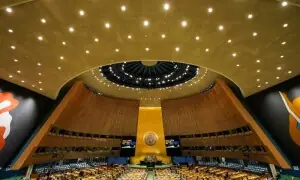
Pakistan has warned that adding more permanent members to the United Nations Security Council (UNSC) and extending veto privileges would “deepen existing inequalities, perpetuate historical advantages and increase the risk of Council paralysis”.
The counsellor at the Pakistan Mission at UN, Gul Qaiser Sarwani, presented these views at the UN General Assembly during a debate on the use of the veto.
He said Pakistan called for “comprehensive, democratic and equitable reform of the UN Security Council” and stressed that the misuse of veto power undermined UNSC’s effectiveness, weakened the credibility of the UN and perpetuated inequalities within the international system.
“Strategic rivalries and narrow interests among the Council’s permanent members had repeatedly impeded collective action on international peace and security,” he said, emphasising the “unique legitimacy” of the UNGA, whose universal membership and democratic decision-making enabled it to respond when the UNSC unable to act, including due to the exercise of the veto.
The Pakistani delegate opposed the creation of any new permanent seats in an expanded Security Council.
On proposals to regulate the use of the veto, he said Pakistan favoured its abolition or, at a minimum, severe restrictions on its use. He emphasised that the veto must not be expanded and reaffirmed Pakistan’s support for General Assembly resolution 76/262, which provides for a UNGA debate following the exercise of a veto to promote greater accountability.
Sarwani stressed that any measures to restrain the veto must remain consistent with the UN Charter. He called for a balanced approach combining restrictions on veto use with enhanced representation and a stronger role for elected members of the UNSC, making its decision-making “more democratic and providing an effective check on the exercise of veto power”.
The delegate further emphasised that the question of the veto must be addressed alongside the other four interrelated clusters under the Intergovernmental Negotiations on Security Council reform, as part of a comprehensive reform package.
Concluding his remarks, he reiterated “Pakistan’s strong commitment to reform that corrects existing imbalances, strengthens accountability and serves the collective interests of the entire UN membership rather than a select few”.
“Reform for all. Privilege for None!” he said.
A recent UN report has also warned that the veto power of the five permanent members of the Security Council is one of the reasons multilateral mechanisms have been unable to prevent or stop the growing number of state-based conflicts.
The resulting paralysis has weakened decision-making processes, prompting the UN secretary general to call for Security Council reforms, including an expansion of its membership to ensure fairer representation, particularly for Africa, Latin America and the Caribbean, and the Asia-Pacific region, it says.
“All these voices are underrepresented despite bearing much of the burden of peacemaking in an increasingly multipolar world,” the ‘World Social Report 2026’ notes.

The country’s top leadership on Tuesday reaffirmed Pakistan’s support for the people of Indian Illegally Occupied Jammu and Kashmir (IIOJK) as the country observed Kashmir Black Day to mark the anniversary of the arrival of Indian forces in Srinagar on Oct 27, 1947.
In a statement issued on the occasion, Prime Minister Shehbaz Sharif said the arrival of Indian forces in Srinagar 79 years ago marked the beginning of a “tragic chapter” in the history of Jammu and Kashmir, which continued to cast a long shadow over the region.
He expressed deep concern over the prolonged incarceration of Kashmiri political leaders, activists and human rights defenders.
“Pakistan’s position on Jammu and Kashmir remains clear, consistent and principled,” he said, adding that lasting peace and stability in South Asia could not be achieved without a just and peaceful resolution of the dispute in accordance with relevant United Nations Security Council resolutions and the aspirations of the Kashmiri people.
Paying tribute to the sacrifices of the Kashmiri people, PM said countless men, women and children had made immense sacrifices in pursuit of their rights, adding that their memory would always be honoured.
He reaffirmed the government and people of Pakistan’s unwavering solidarity with the people of occupied Kashmir.
According to a statement issued by the Presidency, President Asif Ali Zardari said the people of IIOJK had endured decades of conflict, restrictions and denial of their fundamental rights since Oct 27, 1947.
He said, “continuing restrictions on fundamental freedoms, heightened militarisation, arrests and reports of human rights violations remained a matter of serious concern and underscored the need for sustained international attention”.
In his message, Deputy Prime Minister and Foreign Minister Ishaq Dar said the people of IIOJK continued to be deprived of their fundamental rights under Indian occupation, nearly eight decades after Indian forces entered Srinagar.
He said the Kashmiri people’s struggle for the right to self-determination, recognised by the United Nations, remained unfinished, adding that Pakistan stood firmly with them in their pursuit of freedom, dignity and the right to determine their own future.
Dar added that India’s unilateral measures of Aug 5, 2019, had further aggravated the situation in the disputed territory, intensified the suffering of its people and could not alter the occupied region’s disputed status.
He called on the international community to fulfil its responsibilities towards the Kashmiri people, take sustained notice of the human rights situation in IIOJK and urge India to end rights violations and allow them to exercise their right to self-determination.
He paid tribute to the sacrifices of the Kashmiri people and reaffirmed Pakistan’s commitment to extending them political, diplomatic and moral support.
Dar said a just, peaceful and lasting resolution of the dispute in accordance with relevant UN Security Council resolutions and the aspirations of the Kashmiri people was essential for peace and stability in South Asia. He added that the dispute could not be resolved through unilateral actions or the use of force.
In his message, PPP Chairman Bilawal Bhutto-Zardari said Kashmiris had been waiting for decades for their right to self-determination, as recognised in United Nations resolutions.
He said the international community must answer through its actions when Kashmiris would be granted their recognised right to self-determination.
Bilawal said the future of Kashmir’s children should be one of freedom, peace and a life free from fear, rather than another prolonged wait to decide their own future.
The National Assembly also unanimously passed a resolution, reaffirming Pakistan’s “unwavering moral, political and diplomatic support” for the people of Jammu and Kashmir and their inalienable right to self-determination.
The resolution strongly condemned continuing human rights violations in occupied Kashmir, including extrajudicial killings, arbitrary arrests and detentions, enforced disappearances, custodial torture and restrictions on fundamental freedoms.
The House also expressed concern over the continued incarceration of Kashmiri political leaders and activists and rejected India’s unilateral actions of Aug 5, 2019, aimed at altering the disputed territory’s status and demographic character.
In August 2019, India’s ruling Bharatiya Janata Party (BJP) had revoked occupied Kashmir’s special status by repealing Article 370 of the constitution. The law had limited the power of the Indian parliament to impose laws in the state, apart from matters of defence, foreign affairs and communications.
In its resolution, the NA reaffirmed that the final disposition of the dispute must be determined in accordance with relevant United Nations Security Council (UNSC) resolutions and the freely expressed will and aspirations of the Kashmiri people, and called for an end to human rights violations and measures aimed at changing the territory’s demographic character.
The House further urged the government to sustain diplomatic efforts at the United Nations, the Organisation of Islamic Cooperation and other relevant international forums to highlight the Jammu and Kashmir dispute in accordance with relevant UNSC resolutions.
The resolution said that “neither the passage of time, nor repression, nor unilateral actions could extinguish the legitimate aspirations of the Kashmiri people or diminish the international community’s responsibility to work towards a peaceful and just resolution of the Kashmir dispute”.



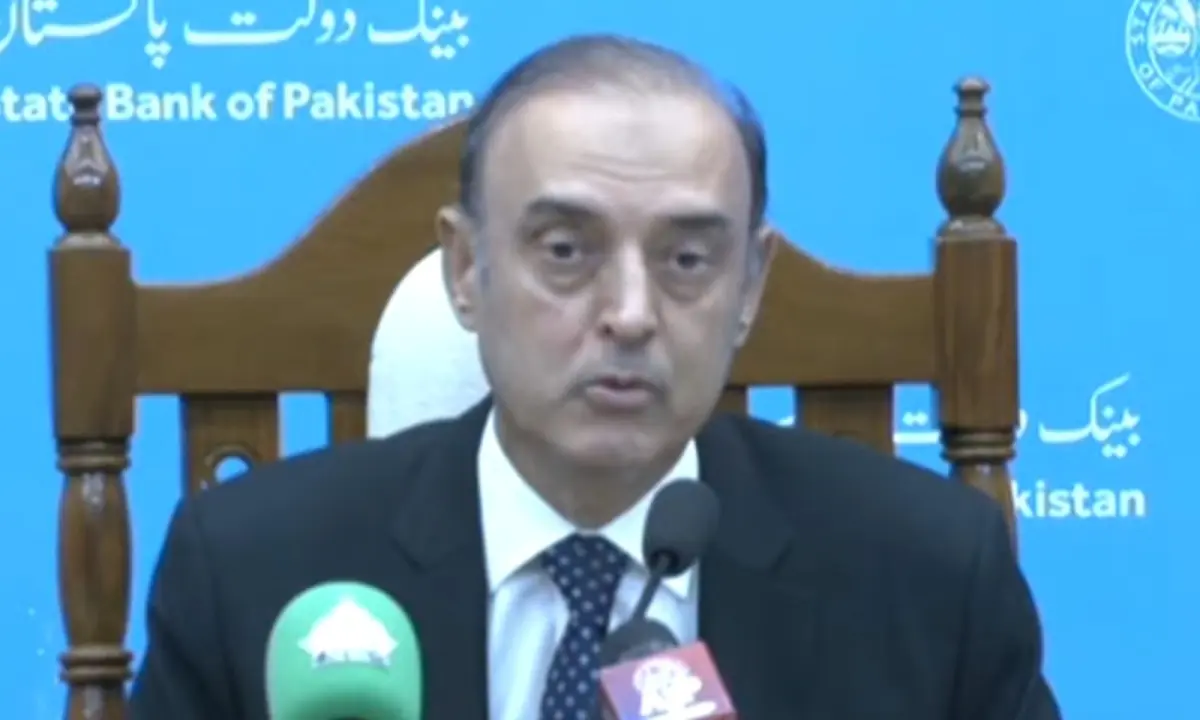
The State Bank of Pakistan (SBP) on Monday raised the key policy rate by 50 basis points to 12 per cent, its first increase since April as inflation, fuelled by high energy costs due to the Gulf conflict, remained above target.
In a statement, the Monetary Policy Committee (MPC) said it had decided to increase the policy rate, with a majority decision of nine out of ten members.
It noted that the “intensification in the Middle East conflict and low prospects of its near-term resolution” were keeping global energy prices at persistently elevated levels.
“While the impact of this global shock on the domestic economy has remained contained so far amidst proactive monetary policy adjustment and continued fiscal discipline, geopolitical developments have worsened the inflation outlook as compared to the earlier assessment,” it said.
It went on to say that although the external account and growth outlook remained broadly unchanged, risks had also increased.
“Considering these developments and the evolving risks, the MPC deemed today’s decision as necessary to keep inflation expectations anchored, contain second-round effects of the ongoing supply shock and bring inflation within the target range of 5-7pc. This will help preserve macroeconomic stability, which is necessary for sustainable economic growth,” it said.
It said that forex reserves had remained stable at around $21bn, Pakistan had reached a staff-level agreement with the International Monetary Fund (IMF) and that real gross domestic product (GDP) growth had been revised at 3.7pc, almost unchanged from the initial estimate.
It further said that the Federal Board of Revenue had exceeded its revenue collection target during the first quarter of the current fiscal year, major central banks had raised interest rates in the wake of rising inflationary pressures and the IMF had also revised its global inflation projections upwards.
“While noting these developments and the increasing frequency of global supply shocks, the MPC emphasized the importance of increasing external and fiscal buffers to further strengthen the economy’s resilience. The committee also reiterated that continuing the prudent monetary and fiscal policy mix, alongside timely implementation of structural reforms, is essential for achieving higher and sustainable economic growth,” the statement said.
Regarding inflation, which eased to 10.3pc in September from 11pc in Augus, the MPC said that the re-escalation in the Middle East conflict and domestic wheat supply frictions were two major factors keeping inflation at elevated levels
It said that their expected continuation over the next few months had “worsened the inflation outlook”. It added that there was a risk that elevated food and energy inflation may further increase inflation expectations, which may seep into core inflation going forward.
“In view of these developments and increasing risks to the inflation outlook, the committee assessed today’s decision as important to keep the real policy rate adequately positive on forward-looking basis. This is necessary to bring inflation within the target range over the medium term. The inflation outlook is subject to multiple risks, including geopolitical tensions, global commodity price volatility, unanticipated adjustments in energy tariffs, further uptick in wheat and allied product prices and adverse weather conditions,” it said.
Regarding the external sector, the statement said that exports were recovering, adding that remittances had remained resilient and were projected to turn out higher than the earlier assessment.
It said that the current account deficit in FY27 was assessed to remain within the earlier projected range of 0-1pc of GDP.
“This, along with higher financial inflows, is expected to increase SBP’s FX reserves beyond the current level. This outlook, however, remains susceptible to multiple risks, including elevated global commodity prices, tightening international financial conditions, and supply constraints,” it said.
As per the statement, the committee expected GDP growth to remain within previously projected ranges of 3.5pc to 4.5pc in FY27. However, it added that the outlook was susceptible to risks from escalation in the Middle East conflict and adverse climate events such as El Niño conditions.
SBP Governor Jameel Ahmed also addressed a press conference to announce the decision and said there were many “underlying factors” behind the decision, especially the inflation outlook.
He cited the US-Israel war on Iran and its impact on energy and oil prices, developments in the domestic market and the subsequent impact on inflation.
He said that nine out of ten MPC members voted to raise the policy rate, while one member had a different view; they were of the opinion that it should be raised further.
He said that consumer expectations and other forecasters’ views were taken into consideration, as well as other macro factors, especially the impact of global commodity and oil prices on the external account and the impact of remittances and export trends.
Ahmed noted a deterioration in the current account since the last MPC meeting. However, he added: “The good thing is that its impact is still between zero and one per cent of GDP and it will stay between that.”
He also shared that the central bank revised its outlook on remittances, from $44 billion to $45bn. On exports, the SBP governor said the trend was witnessing an improvement; however, it was not yet in line with the economy’s needs. He added that the bank estimated imports to be close to $71bn.
He said it would take longer than planned for inflation to get within the target range and revised GDP growth to 3.7pc for the current fiscal year ending June 30, 2027.
Meanwhile, Topline Securities said the central bank had raised the policy rate “in line with our expectations”.
Previously, the policy rate was 11.5pc. The central bank had held the rate steady since raising it by 100 basis points in April in response to rising global energy prices and supply chain risks — its first increase in nearly three years.
The SBP has cut the key rate by a cumulative 1,050 basis points since mid-2024, from a record 22pc reached in June 2023, as inflation cooled sharply from multi-decade highs.
Last week, the IMF called for Pakistan’s fiscal policy to go beyond achieving primary balance targets and protecting debt sustainability by reinforcing policy credibility, fostering economic recovery and creating space for public investment and social spending to support stronger long-term growth.
Additional input from Reuters

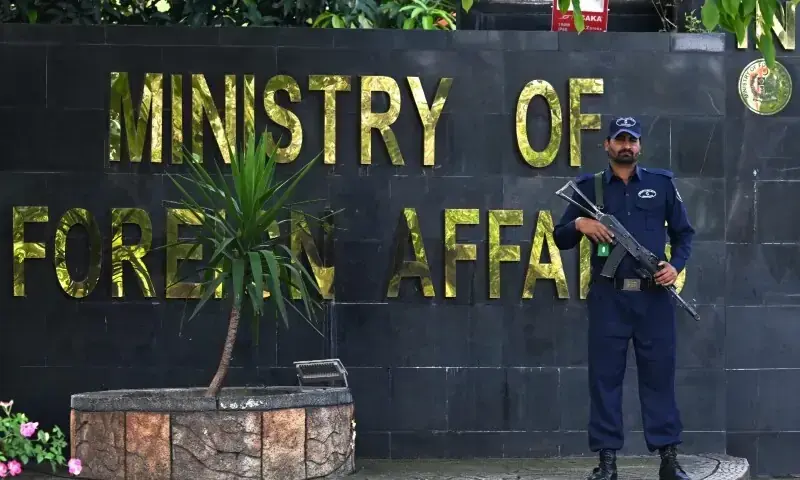
The Foreign Office (FO) on Monday rejected allegations made by the Afghan Taliban government regarding civilian casualties in Islamabad’s counterterrorism campaign in the neighbouring country, maintaining that Pakistan’s conduct always “reflected restraint” and the response was “proportionate to the level of threat”.
The Afghan Taliban have repeatedly claimed civilian casualties in Pakistani strikes in Afghanistan; Pakistani authorities have denied the accusations, holding that they target military and terrorist infrastructure.
Recently, a spokesperson for the Afghan Ministry of Foreign Affairs claimed in an interview with CNN that 1,119 Afghan civilians were killed or injured in Pakistani military strikes in Afghanistan since late 2021, according to Afghan media.
In a statement issued on Monday, the FO rejected the “baseless and unsubstantiated” allegations regarding civilian casualties attributed to Pakistan’s counterterrorism operations.
“Disinformation and misleading narratives will neither obscure the threat posed by the terrorist networks operating from Afghan territory nor absolve the Afghan Taliban regime of its responsibility to prevent Afghan soil from being used to plan and launch attacks against Pakistan,” the FO said, adding that attacks emanating from Afghan soil had claimed more than 3,500 casualties in 2026.
It further said that various relevant United Nations mechanisms had reported the situation as well, and the issue had been raised as a serious concern for the international community.
The FO noted that the Afghan Taliban continued to “shelter with impunity a large number of terrorist organisations, including the Tehreek-i-Taliban Pakistan (TTP), the Balochistan Liberation Army (BLA) and their affiliates, which continue to pose a serious threat to the peace and stability of the region and beyond”.
It said that thousands of Pakistani civilians had been martyred in terrorist attacks, which it said were “planned, financed, supported and carried out” from Afghan soil under the “watch, patronage and active facilitation” of the Afghan Taliban.
“No responsible state can remain passive when its civilians and security forces are repeatedly targeted,” the statement read.
It maintained that Pakistan’s actions in response to terrorist attacks had been undertaken in exercise of self-defence, according to the principles of necessity and as a last resort.
The FO further stated that the actions were “directed only and exclusively against terrorists and their logistical support bases in Afghanistan”. The statement stressed that Pakistan’s response had been “proportionate to the level of threat” and adhered to the principles of “distinction and precaution”.
“The scale and scope of the action reflected restraint, particularly in light of the severity and frequency of terrorist attacks faced by Pakistan. Pakistan rejects any insinuations otherwise,” it said.
The FO called on the international community to hold the Afghan Taliban regime accountable for “failure to uphold obligations” under various international commitments.
“Pakistan reserves the right to take all necessary measures in order to safeguard its sovereignty, territorial integrity, and the safety and security of Pakistani nationals,” it said.
According to a UN Security Council-mandated monitoring report — covering the period from Dec 16, 2025 to June 9, 2026 — the Afghan Taliban’s continued support for TTP has contributed to a rise in the frequency and lethality of terrorist attacks in Pakistan, even as Kabul has taken some initial steps to rein in the group.
Ties between Pakistan and Afghanistan have been strained in the past few years as Islamabad continues to voice its concern over cross-border terrorism.
Islamabad has repeatedly urged the Taliban administration in Kabul to dismantle terrorist sanctuaries on Afghan soil, particularly those linked to the banned TTP, that are used for attacks in Pakistan. Officials say those appeals have gone unheeded.
September witnessed another bout of conflict between the two neighbours, with Pakistan carrying out calibrated airstrikes in the border region in response to terrorist attacks in Khyber Pakhtunkhwa.
This was followed by drone incursions from across the border, which Islamabad said were shot down, and two further rounds of retaliatory airstrikes.
Over the weekend, the information ministry rejected former United States envoy Zalmay Khalilzad’s “baseless and misleading allegations” that Pakistan was “arming Afghans to fight the Taliban”.
It also rebutted the Afghan Taliban’s stance that it lacked the “capabilities” to fuel insecurity in other countries and criticised it for resorting to “diversionary allegations” instead of preventing the use of Afghanistan’s soil for terrorist attacks against Pakistan.
Pakistan on Monday condemned Houthi missile attacks targeting Saudi Arabia’s Makkah and Madina regions, terming them a “grave violation” of the kingdom’s sovereignty and territorial integrity.
According to a statement issued by the Foreign Office (FO), these “reprehensible attacks constitute a grave violation of Saudi Arabia’s sovereignty and territorial integrity and demonstrate a blatant disregard for the sanctity of Islam’s holiest sites and the safety of civilians”.
Pakistan reiterated its “unwavering solidarity” with Saudi Arabia and its firm commitment to the Makkah Alliance, the FO said.
It reaffirmed its steadfast support for the kingdom’s security, stability and defence, including the protection of the Two Holy Mosques against any external aggression or threat.
Pakistan also commended the “vigilance and efficiency” of Saudi air defence forces in countering the attacks, it said.
A day earlier, the Muslim World League also condemned Houthi attacks targeting Makkah and Madina.
In a statement, the Makkah-based organisation said the attacks showed “disregard for the danger of frightening the feelings of more than two billion Muslims, and the violation of the values of our true religion, and the most basic principles of humanity”.
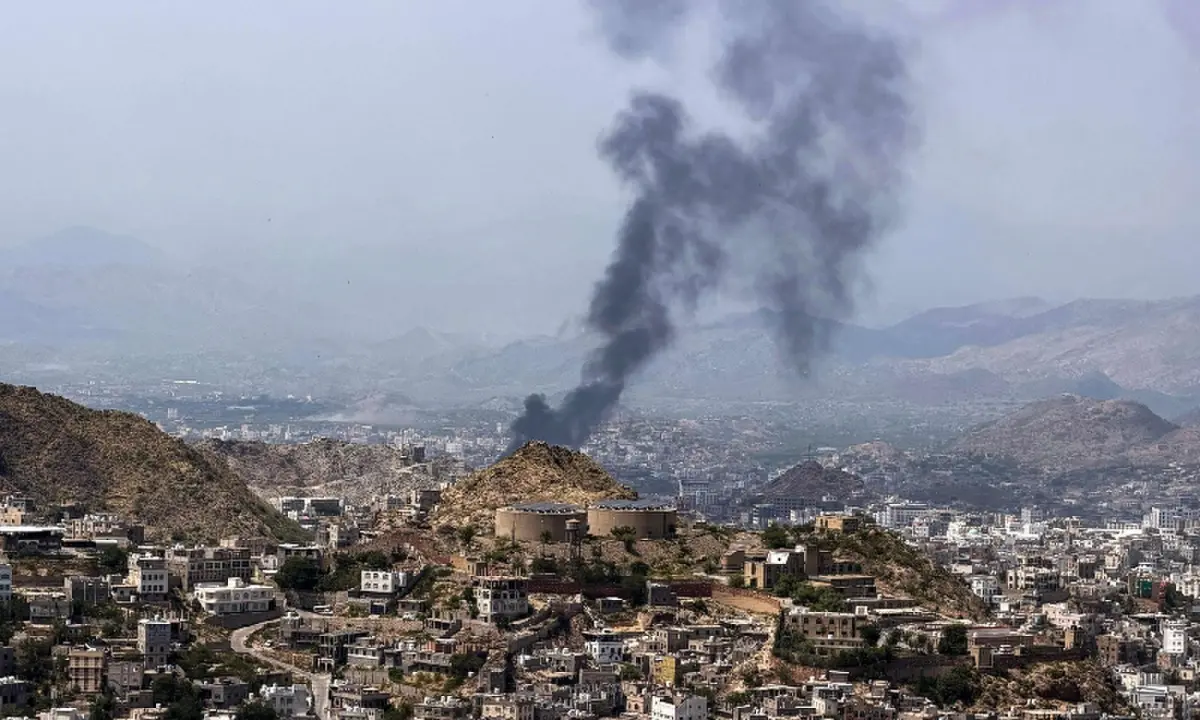
The condemnations came after the Houthis said they had launched attacks on Saudi oil facilities and airports on Saturday, prompting the Saudi-led coalition fighting the Yemen rebel group to announce that it had intercepted two ballistic missiles as clashes between the sides intensified.
Houthi military spokesperson Yahya Saree said the group had targeted King Khalid International Airport in Riyadh, an Aramco facility in Yanbu, the Rabigh oil refinery, crude oil pumping stations and the East-West Pipeline.
He also said the group had targeted King Fahd International Airport in Dammam, an airport in Najran and an airbase in Khamis Mushait.
The Saudi-led coalition said it had destroyed two ballistic missiles fired towards Yanbu and Taif.
Saudi Civil Defence said debris from intercepted missiles had fallen in the Makkah and Madina regions. It said fragments of intercepted missiles had fallen in Wadi al-Mughammas in Makkah, as well as in areas of Jeddah, Taif and Rabigh.
The Houthis subsequently denied targeting Makkah and Madina, saying their operations were directed at “Saudi oil facilities and military bases”.
The renewed fighting has shattered a UN-brokered truce reached in 2022 that largely halted cross-border attacks between the Saudi-led coalition, which backs Yemen’s internationally recognised government, and the Houthis, who control the capital, Sanaa.
Jamaat-i-Islami (JI) Emir Hafiz Naeemur Rehman on Monday warned that the party would march to Islamabad in mid-November if Prime Minister Shehbaz Sharif did not abolish the petroleum levy.
The JI has been demanding for over two months that the Centre abolish levies, including Rs114 per litre on petrol and Rs100 per litre on diesel, as the total prices have skyrocketed due to conflicts in the Middle East since March.
A day earlier, the party said Planning Minister Ahsan Iqbal and Special Assistant to PM Rana Sanaullah contacted JI Vice Emir Liaquat Baloch and it was decided that a meeting between the JI chief and Prime Minister Shehbaz Sharif will be held within the “next two days”.
Addressing a press conference on Monday, Rehman said that JI had been patient and acted responsibly, considering the state of international affairs.
He added, “Now, the responsible thing to do is for us to be aggressive.”
“If the prime minister does not provide relief or abolish the petroleum levy, if he doesn’t take any steps, then in mid-November we will, with full force, march to Islamabad.”
He suggested that the government accept the issues and “handle” them beforehand by providing relief to the people of Pakistan.
Rehman said his party remained prepared to march towards Islamabad and recalled that federal ministers had contacted the party repeatedly.
“Liaquat Baloch Sahib has told them that nothing will come out of talks until something tangible is given,” he said.
However, Rehman acknowledged that the government had assured JI of “doing working” on the issue and “decide what can be achieved in the meeting with the prime minister”.
The JI chief reiterated that his party will continue to stand by the demand.
“We have told them the levy has nothing do with petrol’s price,” he said.
Rehman wondered what could “federal ministers possibly tell prime minister about the issue” considering that the party had already submitted its demands.
“We have never said no to a meeting but I want to say this clearly to the government that we don’t want a meeting so we can make an event out of it,” he said.
The JI leader also criticised the relief package announced by the government in September, claiming that it was brought about as a result of JI’s protests in 42 cities.
The “relief scheme” was announced for users of motorcycles, autos and vehicles of up to 800cc to “alleviate the burden” of rising global oil prices.
Under the scheme, those having two-wheeled and three-wheeled vehicles would get a relief of Rs100 per litre on a monthly quota of 20 litres, while those owning small vehicles of up to 800cc would get a relief of Rs100 per litre for a monthly quota of 30 litres.
Rehman on Monday said that the scheme was not enough for those, claiming that it did not cover various other motorcyclists, car owners or public transport.
He further said the package did not address soaring prices of groceries and goods due to rising diesel costs.
“Large political parties don’t even talk about nation’s genuine issues,” he claimed, adding that only JI had highlighted the concerns.
Last week, JI said it would hold talks with the government regarding its demand to abolish the petroleum levy and on further high-level contacts between them.
According to the statement, despite the planned talks, JI’s Baloch reiterated his party’s call for countrywide protests.
On Aug 16, the JI announced sit-ins in all the provincial capitals of Pakistan against the petroleum levy and had called for a nationwide strike on Sept 3.
However, when the day arrived, the two sides agreed to form committees to recommend measures to reduce the levies.
On Sept 20, the party launched a protest march towards Islamabad, warning that if the government failed to abolish the petroleum levy, the protest could turn into one to oust the government.
On Sept 22, the JI emir said his party, whose convoy had reached Multan, was postponing its long march at the request of PM Shehbaz, who had assured the other side of a meeting to discuss the matters.
However, in a press release issued last week, JI alleged that the government had made no further contact regarding the planned meeting between Rehman and PM Shehbaz.

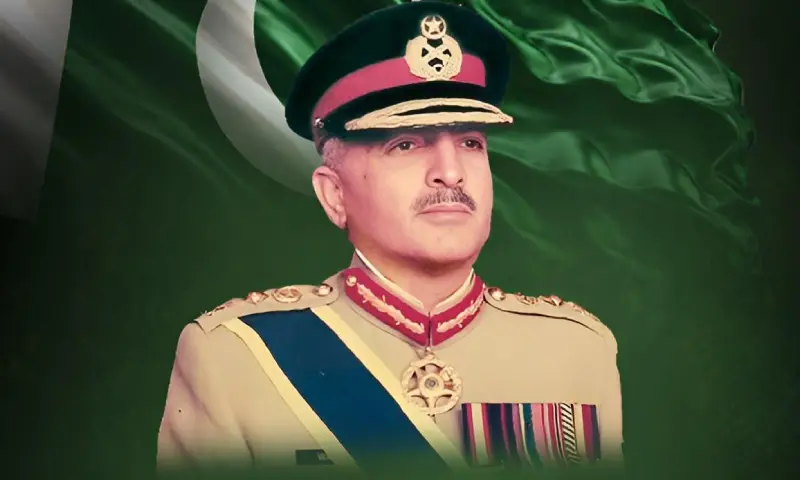
Former army chief retired General Abdul Waheed Kakar passed away in Rawalpindi on Monday, a statement by the military’s media affairs wing said.
Chief of Defence Forces and Chief of Army Staff Field Marshal Asim Munir and all ranks of the Pakistan Army “express deep sorrow” over his demise, the statement by the Inter-Services Public Relations added.
“The CDF and all ranks of the Pakistan Army pay tribute to the late general’s distinguished military career, leadership and invaluable services to the Pakistan Army.
“Pakistan Army shares the grief of the bereaved family and offers its heartfelt condolences. May Allah Almighty grant the departed soul highest place in jannah and give the family strength and patience,” the statement said.
The late general had served as Pakistan’s army chief from January 1993 to January 1996. He pressured then-president Ghulam Ishaq Khan and then-prime minister Nawaz Sharif to hand in their resignations, precipitating the 1993 elections in which Benazir Bhutto was elected as the prime minister.
He had retired at the end of his term.
President Asif Ali Zardari also expressed sorrow at the passing of the former army chief, conveying condolences to his family, according to a statement from his office.
“The president prays for the bereaved family to be granted the strength to bear this loss with patience,” the statement read.
Prime Minister Shehbaz Sharif, expressing condolences at the death of the former general, paid tribute to his “invaluable services” to the Pakistan Armed Forces, state broadcaster PTV reported.
Deputy Prime Minister and Foreign Minister Ishaq Dar, in a post on X, said he was “deeply saddened” by Kakar’s passing.
“His distinguished service to Pakistan and the Pakistan Army will be remembered with the highest regard,” Dar wrote, praying for the deceased’s family.
PTI Chairman Barrister Gohar Ali Khan, in a statement on X, lauded the late general’s services to the nation as well as his “professional dedication and the manner in which he fulfilled his national duties”.
Gohar added that Kakar will “always be remembered with honour and respect”.

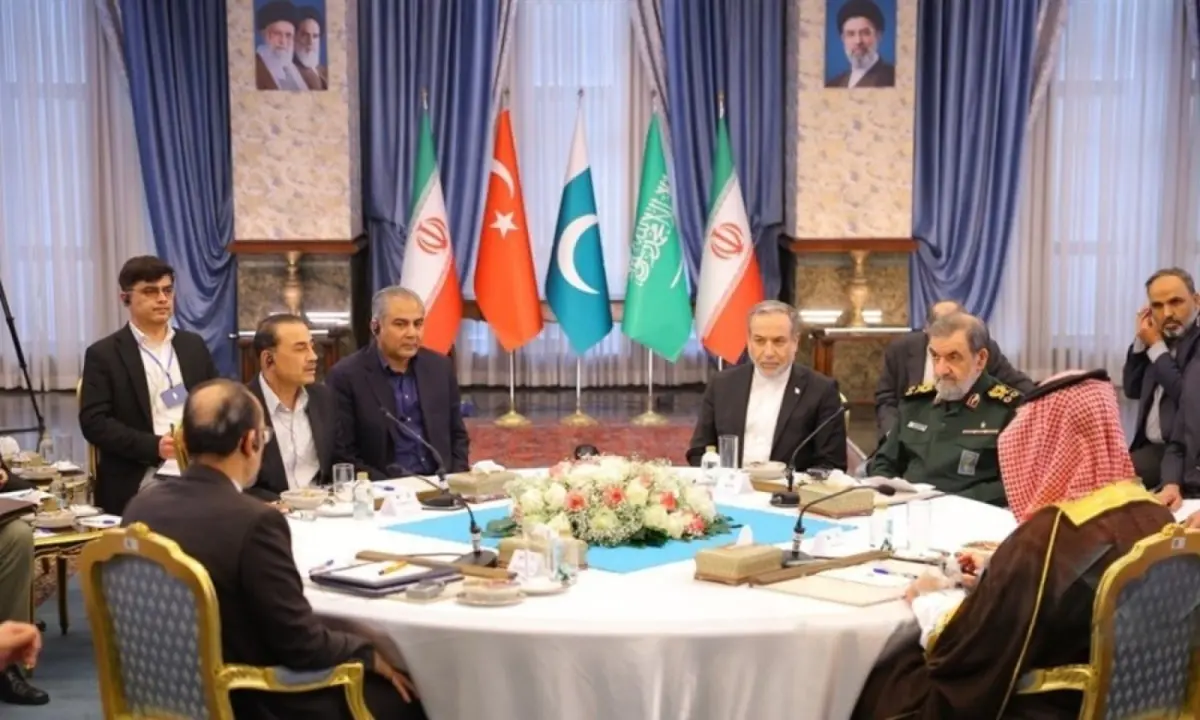
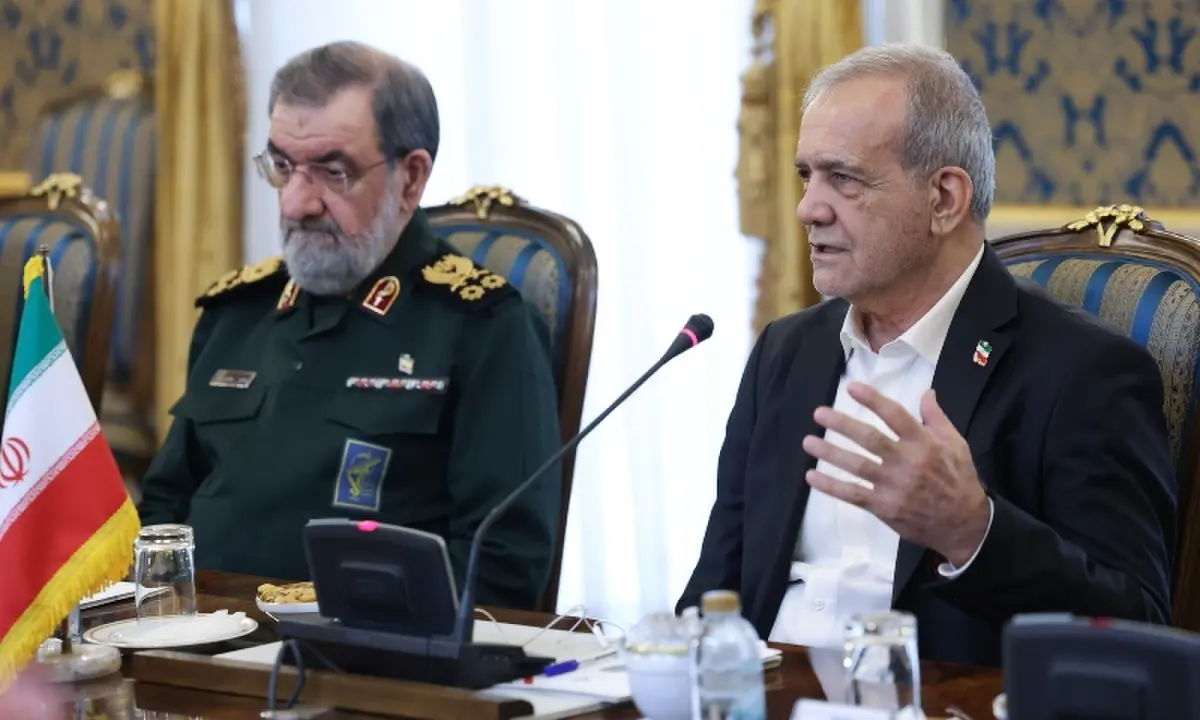
Iranian President Masoud Pezeshkian on Monday called for “regional unity” at a meeting in Tehran with representatives of Pakistan, Saudi Arabia and Turkiye, which recently signed the Makkah defence pact.
“I hope that the presence of representatives of important and influential Islamic countries at this meeting will help further consolidate regional unity and cohesion,” Pezeshkian said, according to a statement shared on the presidential website, urging Islamic countries to “stand together and adopt a coordinated position”.
“Muslims are brothers to one another and must stand together as a united front against threats and actions targeting Muslim nations,” he stressed.
Condemning Israel’s actions in Gaza and other regional countries, he said: “We must not allow the Israeli regime to assassinate and aggress against any individual or country whenever it desires. I am confident that if Islamic countries stand alongside each other and adopt a coordinated stance, the possibility of such actions repeating will not exist.”
The Iranian president also criticised the United States for claiming “readiness for negotiation and dialogue simultaneously with attacking Iran” during the war.
Pezeshkian stressed the need for translating political understandings into practical actions, stating: “We are determined to tread this path, but achieving this goal requires Islamic countries to reach a common understanding of their objectives, draw a clear vision, and pursue the implementation of agreements with mutual commitment until results are achieved.”
He cautioned against policies of the United States and Israel that were aimed at “creating a rift among Muslim nations”, and called for heightened vigilance.
The Iranian president also called for increased cooperation among regional countries in various fields.
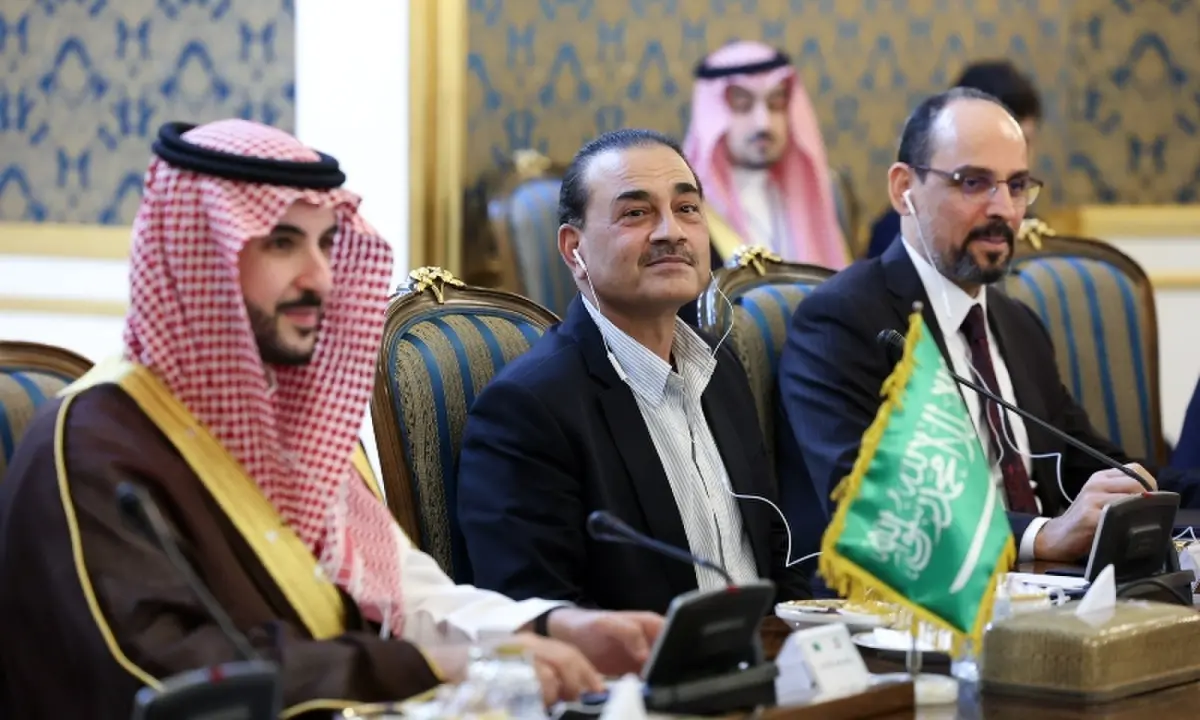
Iran’s IRIB state broadcaster earlier shared a video of the meeting, saying the quadrilateral meeting on “regional security and stability” had begun. The video showed Chief of Defence Forces (CDF) and Chief of Army Staff Field Marshal Asim Munir and Interior Minister Mohsin Naqvi sitting with Iran’s president, Foreign Minister Abbas Araghchi and security chief Mohsen Rezaei.
Earlier in the day, Inter-Services Public Relations had confirmed that CDF Munir was visiting Tehran, but did not share any further details.
The talks also included Saudi Defence Minister Prince Khalid bin Salman and Turkiye’s intelligence chief, Ibrahim Kalin.
At the start of the meeting, Iran’s state broadcaster reported the meeting was bringing together Iran, Pakistan, Saudi Arabia and Turkiye to discuss “regional cooperation, the US-Israeli aggression against Iran and its consequences”, among other topics.
State-run PressTV also shared pictures of the meeting.
Following the meeting, Rezaei, head of Supreme National Security Council, told state television, “Very good discussions took place between us.”
“I feel that a new atmosphere is emerging in the region … I sensed a very positive atmosphere in the discussions among the gentlemen.”
Iranian state television reported that the four countries agreed to continue talks after a “first” meeting in Tehran. It said they “agreed to continue discussions to strengthen cooperation… including on regional peace and security”.
Earlier, Iran’s state-run IRNA news agency quoted the deputy secretary of Iran’s top security body, Ali Bagheri Kani, as saying that the visit was part of efforts to implement the idea of endogenous security in West Asia.
Iran’s foreign ministry spokesperson, Esmaeil Baqaei, said during a media briefing that the meeting with officials from the three countries would cover “most pressing issues threatening our region”, which included Israel’s expansionist policies, developments in Palestine and Lebanon.
He added that the topic of “top priority on the agenda would be consequences of the US-Israeli aggression against Iran and its ramifications for the entire region”.
IRNA further quoted him as saying that this meeting could be a prelude to further steps towards shaping “endogenous security — an issue that we have been insisting on for decades”.
“We emphasise that regional security will not be ensured except by relying on the … security considerations of the countries of the region,” he said, adding that events of the last two years, especially the past eight months, had shown that sustainable and reliable security would only be made possible by “building trust and cooperation among the countries in the region”.
Saudi Deputy Minister for Public Diplomacy Rayed Krimly had also confirmed the visit in a post on X. Krimly described the visit as “part of the continued efforts by the Makkah Defence Alliance members for de-escalation between parties involved in the ongoing crisis, and promoting dialogue and diplomatic solutions, in support of the mediation efforts carried out by Qatar and Pakistan”.
“The visit underscores the pivotal role of Makkah Defence Alliance members in reinforcing regional security and stability, and working with all countries in the region to achieve that goal,” he added.
The visit comes as attacks by Houthis have spiralled over recent weeks and rhetoric between Washington and Tehran has grown more heated.
Monday’s planned talks would be the first high-level contact between Iran and all members of the Makkah Defence Alliance since Saudi Arabia was drawn deeper into the conflict. Under the Makkah pact, signed in August, an armed attack on one member is considered an attack on all.
CDF Munir had visited Iran last week. During the visit, Iranian leaders had conveyed that the US must take the first steps to rebuild trust, and that the acceptance of Tehran’s seven-point proposal could provide a starting point for renewed negotiations.
According to Iran’s ISNA news agency, Baqaei said during the media briefing that the suggestion for the meeting was made during CDF Munir’s visit to Tehran last week. Tehran reviewed the proposal “favourably … and it is scheduled to be held today”, he added.
War has engulfed the Middle East since late February when the US and Israel launched a wave of surprise attacks on Iran, just as Washington and Tehran were in the middle of negotiations on Iran’s nuclear programme.
An April ceasefire brought an end to the initial phase of intense bombardment but the two sides have continued to vie for control of the Strait of Hormuz, through which around a fifth of the world’s oil and liquefied natural gas used to travel.
Iran claims control over the strait and regularly targets vessels that attempt to cross without its authorisation, while the United States has imposed a naval counter-blockade on Iranian ports.
Diplomatic efforts to resolve the crisis remain stalled, especially since the collapse of a June deal which laid out a pathway to a permanent settlement.
The war has since spread across the region to include fighting between Saudi Arabia and the Houthis in Yemen.


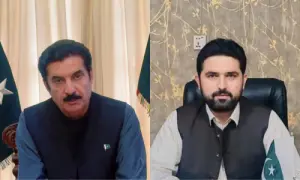
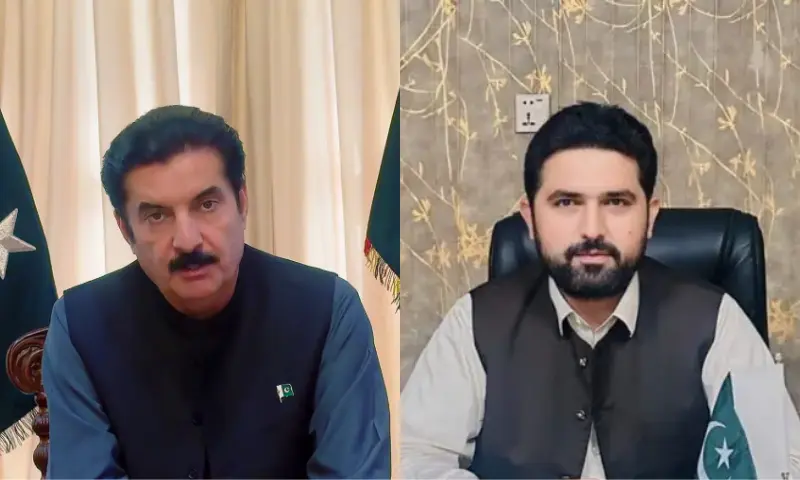
Khyber Pakhtunkhwa Governor Faisal Karim Kundi said on Sunday that Sohail Afridi and Assembly Speaker Babar Saleem Swati were “in safe hands” after being placed under house arrest.
Afridi, who has become non-functional as the KP chief minister, has not been seen since the Centre imposed governor’s rule and emergency in his province on Oct 11. After their whereabouts remained unknown that day, a federal minister confirmed the next day that he and some of his cabinet members were in preventative custody.
However, with no further details officially confirmed, Afridi’s brother and Swati’s cousin have approached the Peshawar High Court separately to seek their relative’s recovery.
Appearing on Geo News’ TV programme ‘Jirga’ aired on Sunday night, the governor — who now runs the province — was asked about the whereabouts of Afridi, Kundi said he had been placed under house arrest and was “in safe hands — there is no need to worry”.
He said that if there were cases against Afridi, action would be taken against him and he would be indicted. However, if there were no cases, he would be released.
Asked why Afridi was not being released if there were no cases against him, Kundi replied he could provide an update tomorrow regarding the matter.
The governor further said that Speaker Swati was also under house arrest and would also be freed if there were no charges against him. Responding to another question, Kundi accused the PTI member of committing “illegal and unconstitutional” acts in his role as the KP Assembly Speaker.
Asked how many people were self-arrested and how many were “genuinely” arrested, Kundi said he did not have these numbers but that about 40 or 50 per cent of them were “under self-imposed arrest or self-concealment”.
The governor also addressed the imposition of emergency and governor’s rule in KP, stressing that it had been the “absolute last option”.
Regarding the potential duration of the emergency, he said, “We will see … after six months are complete, we will talk about what will and will not happen.
“But in my opinion, maybe it will run longer,” he added, clarifying that this was a “personal opinion” and he could be wrong.
He said that the basis for saying this was that the Centre and province needed to be “on the same page” in the fight against terrorism and “streamline” efforts against it, and was making plans accordingly, which he believed would take some time.
Kundi also distanced himself and the state policy from purported remarks made by Malik Khan Marjan — a member of the newly formed Area Representative and Development Council (ARDC) for 12 districts of KP — wherein he favoured dialogue with the Afghan Taliban.
“I will definitely check on this, but our policy is very clear: for now, we will not be holding talks with Afghanistan,” he maintained.
The governor condemned acts of terrorism carried out against Pakistan from Afghan soil and criticised Kabul for “allowing” India to use its soil against Pakistan while also asking for dialogue.
“If there is terrorism from there … our army knows how to fix it,” he added. “There is no dialogue and no talks of any kind about this.”
“I think this is his (Marjan’s) personal opinion, but it is not our policy,” Kundi said.