Honorary Chamber President Says Conviction Could Bar Far-Right Leader From Running.
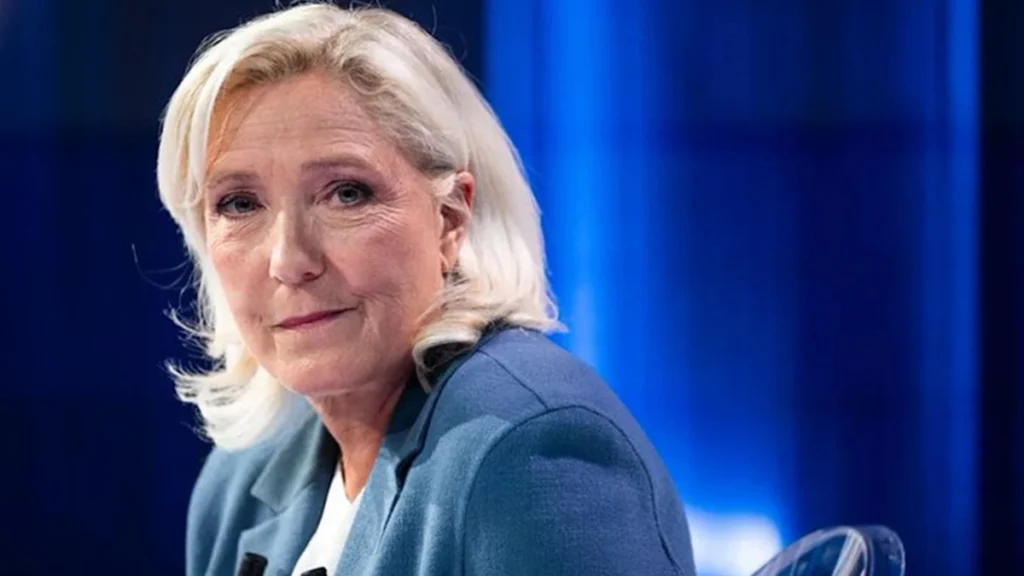
On Tuesday, Didier Guerin, the president of the honorary chamber of the French Supreme Court, expressed doubts about the possibility that far-right leader Marine Le Pen could run in the 2027 presidential elections following her conviction for misappropriation of European Parliament funds.
In an interview published by Le Monde, Guerin, who presided over the Supreme Court’s criminal chamber between 2014 and 2017, said she will not be able to run in the April-May elections if the appeal in cassation of the sentence handed down on appeal against Le Pen succeeds.
According to his thesis, if the Supreme Court annuls the appeal verdict, the ruling issued at first instance on March 31, 2025, will apply, which sentenced the far-right leader to two years of house arrest and five years of ineligibility with preventive application.
Le Pen was convicted of misappropriation of European Parliament funds, after having paid party workers and even domestic employees with European funds intended for parliamentary assistants.
Guerin considers that an appeal to the Supreme Court annuls the appeal judgment and imposes the first-instance sentence, so that de facto Le Pen is ineligible.
Le Pen launched her candidacy after the appeals court reduced the sentence to one year of house arrest and only 15 months of ineligibility, which she has already served.
Guerin affirms that the jurisprudence of the court to which he belongs supports his theory, contrary to what other jurists think, including the chief prosecutor of the Supreme Court, Remy Heitz.
The Supreme Court magistrate notes that the only possibility Le Pen has to run in the 2027 elections is, paradoxically, for the court to reject the appeals of the sentence and confirm her conviction.
If the Supreme Court’s decision is delayed beyond March 26, 2027, the deadline for validating candidacies for the first round on April 28, the far-right candidate will not be able to seek her fourth run for the Elysee, according to Guerin.
Marine #LePen is betting on public anger over rising prices, unrest, and immigration to propel her presidential bid, promising tougher borders and a sweeping return to law and order in France.https://t.co/inACuFz4DA
For her part, Le Pen has filed a complaint with the French Superior Council of the Judiciary against Judge Guerin over his statements about her ineligibility, considering that they violate magistrates’ duty of discretion and contain evaluations of a political nature, according to a statement from her six lawyers.
The lawyers of the far-right leader maintain that his interpretation contradicts current law on the provisional execution of sentences and the effects of judicial appeals.
They also note that the attorney general of the Supreme Court has defended a position contrary to that expressed by Guerin.
The statement also questions that an honorary magistrate publicly comments on a judicial decision of his own and considers future political scenarios, including the possibility that her candidacy be prevented or that she be removed if elected.
For this reason, Le Pen has asked the Superior Council of the Judiciary to remind Guerin of his ethical obligations, considering that his statements exceed the legal sphere and could compromise the image of the judicial institution.
Previously, U.S. Ambassador Waltz urged member states to reject Havana’s annual resolution against the blockade.
On Oct. 27 and 28, the United Nations General Assembly (UNGA) holds, for the 34th time, a debate and vote on a resolution presented by Cuba titled “Necessity of Ending the Economic, Commercial and Financial Blockade Imposed by the United States of America Against Cuba.”
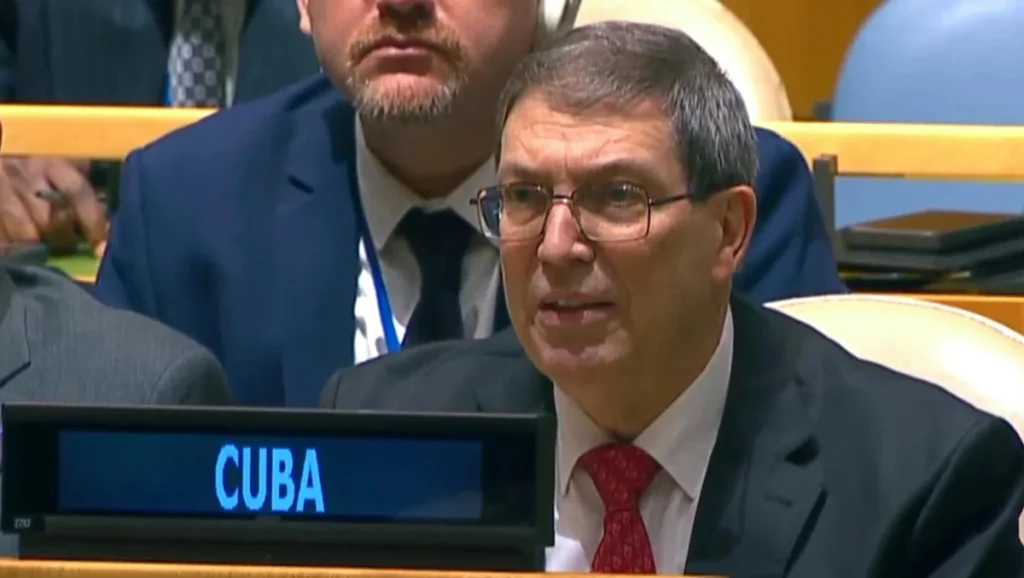
On Tuesday, Cuban Foreign Minister Bruno Rodriguez accused the U.S. government of lying “in a crude and permanent manner” to the countries represented at the UNGA.
“With its crude lies at the UNGA, the U.S. government has launched a new desperate attempt to justify its economic aggression against Cuba and its criminal energy blockade,” he said, lashing out at U.S. Ambassador Mike Waltz and criticizing his “arrogance and haughtiness.”
“He forgets that he is at the United Nations. He is not at the U.S. National Security Council, in a Green Beret unit, or in a Signal group, where he has repeatedly demonstrated his incompetence and inability,” Rodriguez stated.
The Cuban diplomat said Waltz’s remarks before the General Assembly “are part of a media circus, threats and an election campaign” to which Washington “devotes substantial financial and human resources.”
“There is no justification for maintaining the act of collective punishment to which the Cuban people are subjected,” Rodriguez stressed.
Waltz Seeks to Put a Positive Spin on the U.S. Blockade
During his address, Waltz called on countries to vote against the text presented by Cuba, arguing that doing otherwise would contribute “to the mistreatment of the Cuban people.”
He also accused Cuban authorities of using the annual UN resolutions against the blockade as though they were international endorsements of the revolutionary government.
On Wednesday, more than 30 countries are expected to deliver speeches before the vote on the 34th resolution concerning the blockade against Cuba.
Since 1992, Cuba has presented this nonbinding resolution annually. In 2025, it received 165 votes in favor, seven against and 12 abstentions.
Von der Leyen, Carney, and Costa will discuss a new framework for Canada’s relationship with the European Union.
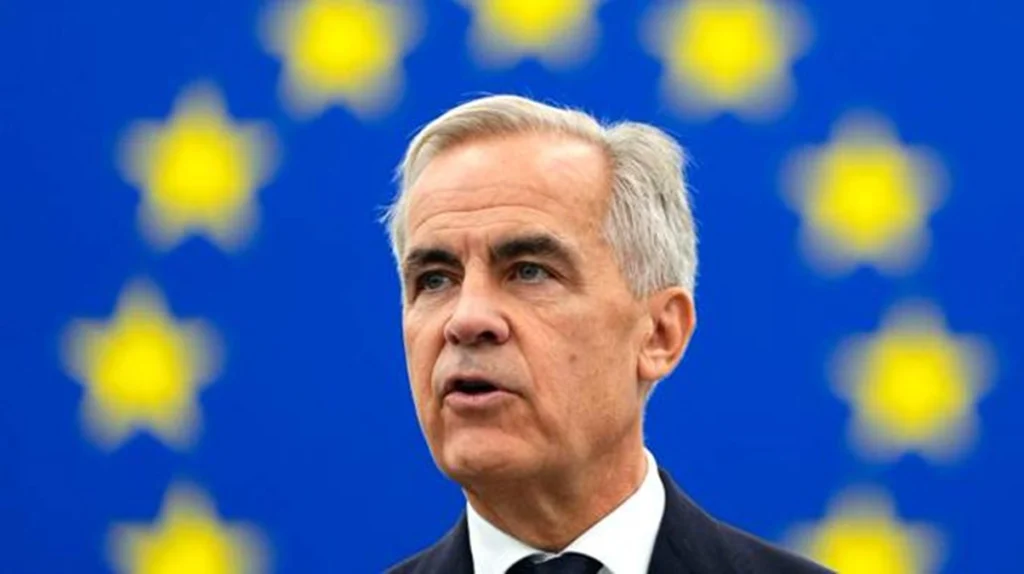
On Thursday and Friday, European Commission President Ursula von der Leyen, Canadian Prime Minister Mark Carney and European Council President Antonio Costa will meet in Montreal for the 21st European Union-Canada summit.
They and other senior officials will discuss possible features of a status that would allow Canada to become an “associated member” of the European Union.
For the EU, the meeting will be an “important milestone” in relations between the two sides and will pave the way for an “even broader and deeper” political partnership and greater cooperation.
Specifically, European and Canadian leaders are expected to launch a “Partnership for the Future,” a framework for shared prosperity and economic security backed by new initiatives aimed at strengthening people-to-people ties, deepening economic relations and reinforcing their joint position on the world stage.
The summit’s agenda will cover a wide range of issues, from trade, digital affairs and critical raw materials to defense and security, as well as cooperation in education, research, innovation, and youth affairs.
Yves-François Blanchet sur Paul St-Pierre Plamondon et le sommet Canada-UE : « tu peux venir t'asseoir, mais t'as pas le droit de parler. »
Blanchet on Quebec's premier at the Canada-EU summit: "You can come sit down, but you have no right to speak." pic.twitter.com/O3rSPGTc5y
EU sources said it was “clear” that one of the summit’s main topics would be a discussion of the proposal von der Leyen put forward last month — and which Carney welcomed — for Canada to become the EU’s first associated member state.
Currently, this status does not exist as a defined category in the European treaties. Therefore, its specific implications remain to be negotiated.
“This is somewhat uncharted territory, but I think what we want, together with our member states, side by side, and together with Canada over the next 12 months, is to have the ambition, confidence, creativity and vision to shape it together… It is the highest form of collaboration imaginable. For now, frankly, I see it as something very specific to Canada,” a senior EU official said.
“There is no doubt among the member states about their ambition for this relationship. All member states are clear that they want the closest possible partnership with Canada. So that is not in question,” another EU source said.
Nevertheless, some member states have reservations because this is uncharted territory. That is precisely the work that will need to be done in Montreal ahead of the next summit in 2027.
The senior official outlined three pillars for this membership: defining more joint policies on climate, energy, artificial intelligence, innovation, or security; having Canada participate more in EU programs, such as the Horizon Europe research program, or fully integrating it into Erasmus+; and, finally, bringing the institutions on both sides closer together to strengthen governance.
“The goal is to build a partnership that comes closer to membership than anything we have done before. It is clearly a partnership without membership (…), aimed at generating greater prosperity on both sides of the Atlantic,” the official said.
The EU was split today over whether to offer “associate membership” status to Canada, with several countries refusing to sign off on a statement containing that phrase just 48 hours before a summit between the two sides in Montreal.https://t.co/7hIHdoOeIw
Relations between Canada and the EU are already close in trade, security, defense, research and technological cooperation. Their main frameworks include the Comprehensive Economic and Trade Agreement (CETA), which has been provisionally applied since 2017, as well as recent progress in defense, digital trade and specific European programs.
They have long been strategic partners and share common values, including democracy, a commitment to a rules-based international order, and free and fair trade.
One of the key areas where the EU sees “enormous potential” is critical raw materials. Imports into the EU have already increased significantly and could rise further through the bloc’s “raw materials mechanism,” which focuses on facilitating connections between Canadian suppliers of these materials and European buyers.
Another idea under consideration is the possible joint stockpiling of critical raw materials, as well as the option of giving the EU priority access to Canadian reserves, EU sources said.
Issued in a brief, unsigned opinion, the justices’ decision favors President Donald Trump’s administration, which opposes maintaining a practice that President Joe Biden formalized.
“In 2024, Biden’s administration adopted a regulation that formally codified administrative closure procedures, concluding that it lets judges efficiently manage their caseloads and promote the fair treatment of immigrants. That regulation replaced a prior rule adopted in 2020 during Trump’s first term in office that had been judicially blocked,” Reuters reported.
When Trump returned to the White House in January 2025, however, he announced that he would no longer allow administrative closure of cases as a mechanism for reducing workloads in immigration courts.
The family of Renee Good, one of two US citizens fatally shot by federal immigration agents in Minneapolis in January,have sued the Trump administration, saying there had been "no accountability" for her killing during deportation sweeps.
Texas had already challenged that policy in a federal court, arguing that the rule lets immigration judges “effectively grant indefinite amnesty to aliens illegally present in this country.”
Three cities with large immigrant populations — Baltimore, Maryland; Columbus, Ohio; and New Haven, Connecticut — along with an immigrant rights advocacy group, filed a lawsuit seeking to preserve Biden’s decision. The courts rejected these requests, bringing the matter before the Supreme Court.
Administrative closure of deportation proceedings, however, has been practiced for decades. According to government statistics, the rule has benefited about 360,000 migrants since 1990.
The Russian president hosts the Gas Exporting Countries Forum summit in Moscow.
On Tuesday, President Vladimir Putin accused Western nations of destabilizing the global gas industry through “terrorist attacks” on Russian pipelines and trade barriers, while calling on gas-exporting countries to strengthen cooperation in the face of mounting challenges.
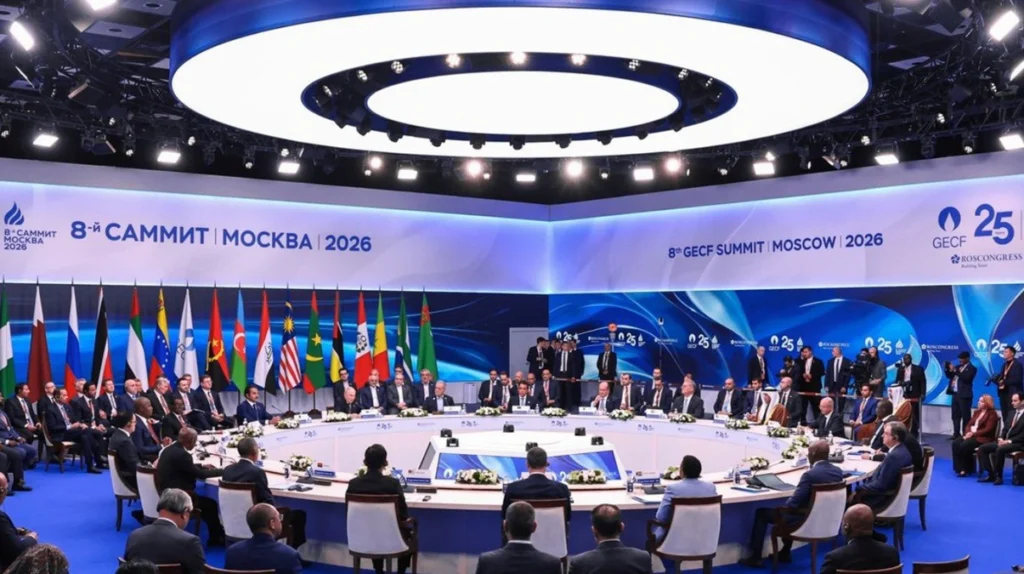
Speaking at the 8th Summit of the Gas Exporting Countries Forum (GECF) in Moscow, Putin said the organization—founded 25 years ago as a platform for expert analysis and market forecasting—has evolved “without any backroom intrigue or attempts to manipulate the market.”
The Russian leader noted that GECF member countries account for 70% of the world’s natural gas reserves and approximately 40% of global gas exports, making a “significant contribution to global energy security and the balanced development of countries and macroregions.”
Putin said natural gas currently accounts for a quarter of the global energy mix, with consumption rising 1.2% in 2025 to 4.2 trillion cubic meters. He predicted these trends would continue, saying “the role of natural gas as a mainstay of global energy, industry, agriculture and international trade will only grow.”
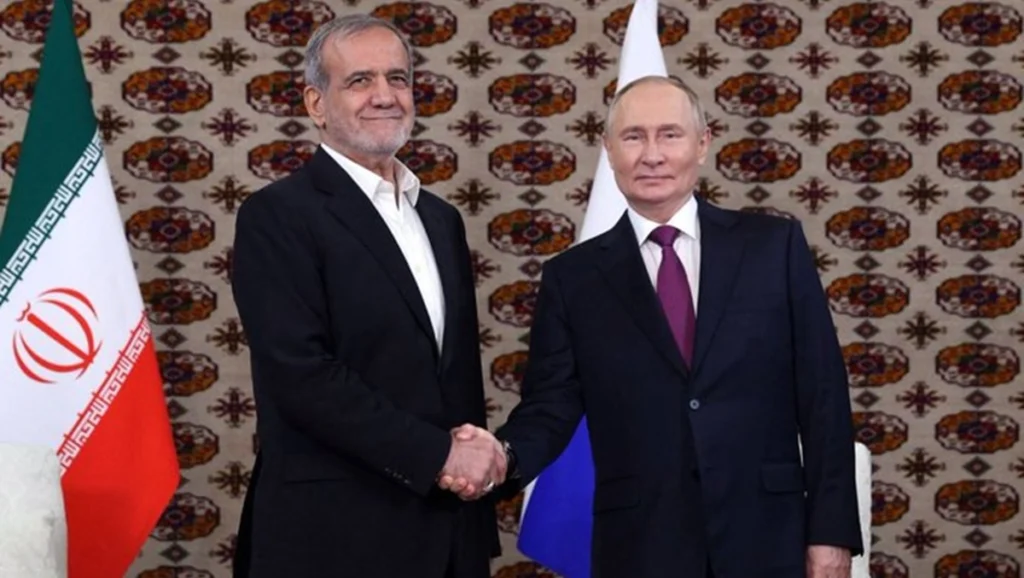
President @drpezeshkian met Russian President Vladimir #Putin on the sidelines of the Gas Exporting Countries Forum Summit. They discussed expanding political, economic, trade and energy cooperation, including joint projects in the oil and gas sectors. pic.twitter.com/ie6N35iz5h
— Government of the Islamic Republic of Iran (@Iran_GOV) October 27, 2026
He also pointed out that Russia ranks first in the world in natural gas reserves and second in production, having built a “unique production complex” that enables supply diversification and development of gas processing and chemical production.
However, Putin painted a bleak picture of the current global gas industry, citing deteriorating conditions in the Middle East and attacks on Russian infrastructure.
“Russian gas pipelines to Europe have been subjected to outright terrorist attacks—they were blown up,” Putin said, referring to the 2022 explosions on the Nord Stream pipelines.
“Some countries have also imposed barriers to purchasing equipment and technology for the sector. As a result, the global gas industry faces uncertainty,” he added and warned that efforts to exclude Russia from global gas markets would backfire.
“Any attempts to exclude Russia from the global gas market or hold back the development of our gas industry have serious consequences, above all in the form of rising, exorbitant costs for end users abroad—companies, industrial enterprises and households,” he said.
Putin directed particular criticism at Europe, saying the continent is “undermining its own industry and social sector by rejecting Russian energy supplies and terminating long-term contracts.”
'It's my pleasure to welcome you to Moscow for the 8th GECF Summit' — Vladimir Putin
Quoting a Russian proverb, he said: “Do not dig a pit for someone else, or you may fall into it yourself. In my view, this is precisely what has happened in EU countries.”
To address industry challenges, Putin called for enhanced cooperation among gas-exporting nations rather than the erection of barriers.
“We must build on our own capabilities and sovereign technologies, developing open, trust-based cooperation founded on mutual benefit and respect for each other’s interests,” he said.
The Russian leader expressed confidence that the GECF and its members have the resources to tackle complex challenges in the gas industry and global energy sector, adding that Russia “stands ready to make a substantial contribution to this work.”
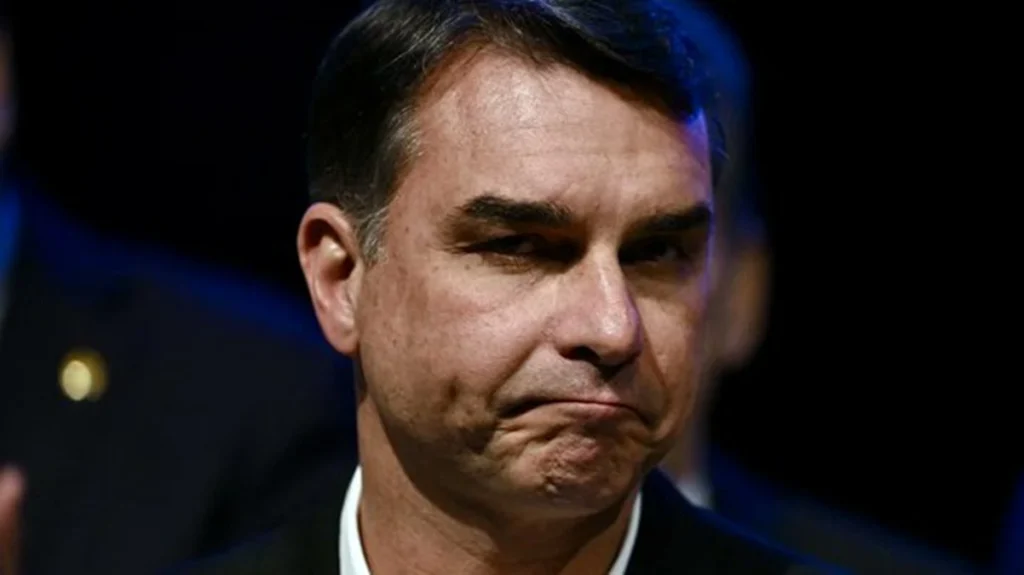
The far-right politician escapes Brazilian justice two days after losing the presidential runoff.
On Tuesday, Brazilian and Argentine media outlets raised the possibility that Flavio Bolsonaro, the far-right presidential candidate who lost Sunday’s presidential runoff, had left Brazil for Argentina before planning to travel to the United States on a private jet.
“Sen. Flavio Bolsonaro fled to the United States. The plane is in flight. The information was confirmed by ‘people close to the family,’” Nacho Lemos, teleSUR’s correspondent in Brazil, reported.
“Pilot Mauro Mattosinho told the newspaper today that he had received information that Sen. Flavio Bolsonaro’s name appears on the passenger list of a private jet currently in Puerto Iguazu, Argentina,” he added.
“Flavio fled with his family to the U.S. and will seek political asylum from Trump. The operation to help Flavio Bolsonaro flee involved a small group of allies in Brazil and the U.S., who contacted the Trump administration,” the Brazilian outlet Metropolis reported.
FLÁVIO BOLSONARO FUGIU do Brasil.
Tal qual o pai e o irmão bananinha, é um covarde que saiu escondido do Brasil, com passagem pela Argentina, rumo aos Estados Unidos. Quem diz isso são os próprios aliados da família que tem a covardia no seu DNA. ✅ Jair Bolsonaro tentou se… pic.twitter.com/sKMkDxj6mZ
Legislator Alencar Santana’s text reads, “Flavio Bolsonaro has fled Brazil. Like his father and his brother ‘Bananinha,’ he is a coward who snuck out of Brazil—passing through Argentina—on his way to the United States. This is according to the family’s own allies; cowardice is in their DNA. Jair Bolsonaro tried to take refuge in the Hungarian embassy. Eduardo Bolsonaro snuck off to the United States. Flavio Bolsonaro snuck off to the United States. Catch the thief!
Previously, on Monday, Brazilian authorities took away Bolsonaro’s passport to prevent him from leaving the country. This happened when Flavio went to visit his father, former President Jair Bolsonaro, who is serving a 27-year prison sentence under house arrest for attempting a coup against Luiz Inacio Lula da Silva.
“The Bolsonaro family’s patriotism has just boarded a flight to the United States! Flavio Bolsonaro fled Brazil after losing the election and violating a court order,” lawmaker Anielle Franco commented on social media.
“The courage was all talk. When it comes time to face the consequences, the destination is always the same: fleeing!” added the sister of Marielle Franco, the socialist activist who was murdered in Rio de Janeiro by far-right militias linked to the Bolsonaro clan.
Flávio Bolsonaro está a caminho dos EUA, diz Reuters.
The text reads, “Flavio Bolsonaro is on the way to the USA, says Reuters.”
Flavio Bolsonaro Is Under Investigation for Money Laundering
Brazil’s Federal Police canceled Bolsonaro’s passports because he had failed to comply with a court order to surrender them as part of an ongoing investigation.
On Monday, Bolsonaro was barred from leaving the country and ordered to surrender his passports within 24 hours. The decision was issued by Supreme Court Justice Alexandre de Moraes, who presided over the trial in which Jair Bolsonaro was sentenced to 27 years in prison.
For months, Flavio has been under investigation in a money-laundering case, according to the newspapers O Estado de Sao Paulo and O Globo. The case is being handled under judicial secrecy.
At the center of the police investigation is Willer Tomaz, a lawyer and close friend of Flavio who has been identified as the operator of a corporate network involving suspicious financial transactions linked to the sports betting industry.
Flavio was listed as a user with extensive access permissions to an account shared with Tomaz, who is also under scrutiny by authorities over a corruption scandal involving improper deductions from the pensions of millions of retirees.
On Monday, after receiving the order to surrender his passports, Flavio Bolsonaro publicly stated that he had no intention of leaving the country for Miami.
His brother Eduardo Bolsonaro, a former congressman who went into self-imposed exile in the United States after declaring himself the victim of judicial persecution, lives in that city.
The text reads, “‘I will not give up on my country’—and yet he fled less than 48 hours later. Catch the thief!!!! Flavio Bolsonaro, a traitor to his country.”
The Far-Right Senator Did Not Request Asylum in Argentina
On Tuesday, Argentine presidential spokesman Adrian Ravier said that his government “took note of the election results in Brazil.” These were the first remarks by the administration of far-right President Javier Milei following Luiz Inacio Lula da Silva’s victory in the Oct. 25 runoff.
During a news conference, Ravier said there would be no official statement from the Argentine government regarding the election and defended Milei’s silence.
“When Javier Milei was elected in 2023, President Lula made no gesture to personally congratulate him. The president is not a hypocrite. There are clearly ideological differences between the two leaders,” Ravier said, adding that trade relations with Brazil would continue and “we do not expect any of this to change.”
Milei’s spokesman held the news conference as Argentine media outlets continued reporting on the possibility that Bolsonaro had crossed the border and was in Argentina. “There has been no asylum request for Bolsonaro,” Ravier stressed amid the uproar caused by reports published in the Argentine press.
Early Tuesday, local media reported that Bolsonaro had crossed from Brazil into Puerto Iguazu, in the Argentine province of Misiones, to board a private plane owned by Baires Fly S.A. The flight was scheduled to take off during the early morning hours.
On Tuesday, Flavio Bolsonaro disappeared from his country without acknowledging Lula da Silva’s election victory. His Liberal Party, however, did acknowledge the result.
teleSUR/ JF
Sources: O Globo – Metropolis – teleSUR – O Estado de Sao Paulo – EFE
Cuba Presses Case Against Six-Decade Blockade as Washington Applies Pressure on Sovereign States.
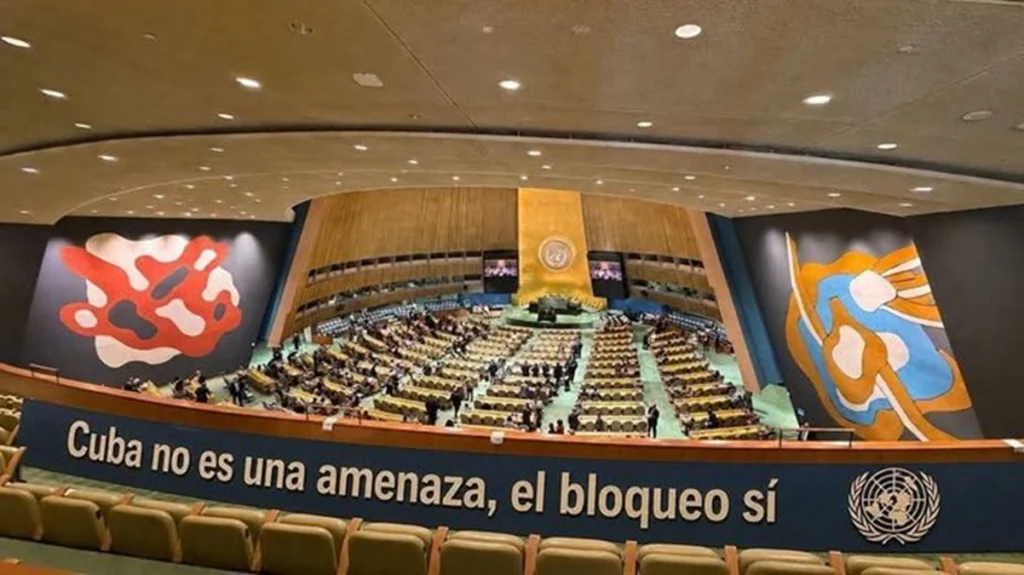
On Oct. 27 and 28, the United Nations General Assembly (UNGA) holds, for the 34th time, the debate and vote on the resolution presented by Cuba titled: “Necessity of ending the economic, commercial and financial blockade imposed by the United States of America against Cuba.”
Under the slogan “Cuba is not a threat, the blockade is,” the island defends its right to exist without the criminal weight of the blockade, while it considers “unfounded pretexts” the arguments put forward by Washington to maintain and intensify the siege in recent years, as well as denouncing the efforts deployed by the White House to condition Wednesday’s debate, with the use of direct threats and pressures against sovereign states to change their voting intention.
In this forum, Washington’s diplomatic isolation on this question is evidenced year after year, with the majority of the international community demonstrating its support for Cuba’s demand for the immediate cessation of this policy, a global will that is systematically ignored by the North American nation.
Against this backdrop, Cuban Foreign Affairs Minister Bruno Rodriguez recently warned of the brutal deployment of extreme pressures against numerous states to force them to change their position regarding the draft resolution against the economic, commercial and financial blockade imposed on Cuba, particularly with intense coercive efforts by U.S. Secretary of State Marco Rubio.
He explained that the U.S. has been engaged for months in efforts to coerce other governments. He showed several documents that attest to intimidating messages against those nations, which contain lies such as that the U.S. blockade is legal and that the U.S. allows trade with Cuba.
In the documentation presented, the Cuban Foreign Ministry detailed that “the accumulated damages during more than six decades of application of this policy reach US$178.7 billion,” an accounting impact that hinders the obtaining of foreign currency and slows cross-border trade.
The total amount of damages to Cuba derived from the blockade in the period from March 1, 2025, to Feb. 28, 2026, shows a record figure of US$8.083 billion.
The Cuban Foreign Affairs Ministry stressed that “the persecution of oil tankers and banking institutions worsened the electricity generation crisis,” by causing continuous failures in the national interconnected system, and blocked the purchase of “medicines for hospital use.”
The consequences derived from this policy of maximum asphyxiation are identified by Havana as the main brake on the country’s economic and social development, while generating invaluable harm to the population, which suffers the hardships caused by a stance of collective punishment described by the highest authorities of the Caribbean archipelago as a “silent genocide.”
The Cuban delegation in New York asserted that “the international community will again choose truth, dignity and international solidarity,” while it will reject “diplomatic maneuvers aimed at fracturing the historical support for the island.”
Cuban FM Rodriguez highlighted that what is unusual in this case is the extreme and unprecedented intensification of the U.S. blockade, to which has been added, under the excuse that the archipelago is a threat to U.S. national security, an energy siege that prevents the arrival of fuel to the country under the risk of sanctions and tariff reprisals, extraterritorial actions that violate international law and free maritime trade.
This will then be the first time that the UNGA pronounces itself as a whole against the energy blockade and the collective punishment against our country, with serious humanitarian damages. In addition to the energy blockade, all Cuban commercial operations are pursued, he noted, as part of a policy to cause deliberately planned damages and destabilize the country by generating suffering and desperation.
The U.S. Permanent Representative Mike Waltz is a disgrace to what it means to be a diplomat.
The man talk, walks, and acts like a character from the film Idiocracy.
Cuba will not stay idly as this person eviscerates the principles of the United Nations.…
Cuban FM Rodriguez urged the United Nations General Assembly to call to order the U.S. representative, Mike Waltz, for offensive statements that lie to distract attention from the consequences of the blockade they impose on the island.
He asked the speaker to prepare better and stop ignoring the serious humanitarian repercussions that the North American siege entails. Finally, he wished Waltz a better performance in his future political positions after describing his current performance as “disastrous.”
Eritrea Calls for Compliance with International Law
The representative of Eritrea, on behalf of the Group of Friends in Defense of the Charter of the United Nations, urged compliance with international law regarding the question of the blockade against Cuba with respect to United Nations rules.
The African diplomat affirmed that, furthermore, the siege against Cuban medical collaboration with third countries, in which Washington’s stance has persisted, is a cruel maneuver, when this has allowed saving millions of lives around the world, while the U.S. promotes ongoing international conflicts.
Namibia and Africa: With Cuba, Solidarity Over Silence
Namibia joined previous declarations of support for the Cuban resolution while recalling Cuba’s support and participation in the struggle for national liberation on the continent and against Apartheid.
The regional representative noted that these positions are contrary to the rules of free trade among nations. The diplomat announced his vote in favor of the Cuban draft resolution, then recalled that respect for sovereignty and non-interference should be the compass of bilateral relations.
He lastly appealed to the United Nations to assume the responsibility of responding to these injustices and to put solidarity above silence toward Cuba.
At the United Nations General Assembly (UNGA), Singapore condemned the severe human and economic impact of the U.S. blockade on Cuba. 🇸🇬🇨🇺
Ambassador Burhan Gafoor, speaking on behalf of ASEAN, noted that unilateral sanctions caused critical shortages, affecting more than 60% of… pic.twitter.com/AeeiyiWPEg
Uruguay Highlights Cuba’s Weight in South-South Cooperation
Uruguay’s representation praised Cuba’s weight as a key link for South-South cooperation, and therefore proposed not only immediately ceasing the North American siege, but also removing it from its list of state sponsors of terrorism.
The South American diplomat expressed concern about the humanitarian consequences of the application of these sanctions and the brake on the achievement of sustainable development goals. She exemplified how these actions constitute an unsustainable threat to the laws of free trade and relations among nations.
She thus extended the solidarity of the group, and in particular of Uruguay, with the Cuban population, while reiterating the unjustifiability of imposing this type of relations between states for political reasons.
NAM Urges Respect for the Cuban People’s Rights
To Cuba’s cause for the lifting of the U.S. blockade was added the representation of Uganda, on behalf of the Non-Aligned Movement (NAM). In accordance with the bloc’s position, the African nation expressed particular concern about the measures adopted by Washington, which amount to an unprecedented naval blockade without basis in international law.
Uganda also condemned the weight of this measure in expanding the extraterritorial effects of the blockade that affect not only Cubans but also third countries, for which it is not only a bilateral question. Likewise, it urged the international body to mobilize efforts to prevent a military intervention, in violation of the current world order.
Ugandan diplomacy concluded by reiterating the country’s and the bloc’s commitment to cooperate in maintaining multilateralism and in defense of international forums where differences can be settled peacefully.
The United Nations General Assembly will hold its 34th annual debate +vote on October 27–28, 2026, regarding the Cuban blockade
— Movement for African Emancipation (@Arise4freedom) October 27, 2026
ASEAN: Lifting the Blockade Is a Position of Coherence
At the opening of the debate, the representative of Singapore, on behalf of the Association of Southeast Asian Nations (ASEAN), noted that demanding the immediate cessation of the U.S. blockade against the island represents a collective act of coherence in line with the multilateral order based on rules and not on the use of force and coercive pressure.
The regional bloc expressed particular concern about the situation of the Cuban people, who are subjected to effects on the energy sector that hinder the exercise of basic human rights.
It forcefully mentioned the wait for more than 100,000 surgical operations for patients, with a high proportion of children, threatened by the current restrictions.
ASEAN added its voice to the international call of the body’s 81st General Assembly to end the economic, commercial, and financial blockade imposed by the United States against Cuba.
Polls Favor Democrats as the MAGA leader Ramps Up Campaigning to Help Republicans Retain Control of Congress.
U.S. citizens will head to the polls in one week for midterm elections that are shaping up as a referendum on President Donald Trump’s performance and will determine whether Republicans retain control of both chambers of Congress during the second half of his term.
Polls for the Nov. 3 elections point to a favorable outlook for the Democratic opposition, prompting Trump to throw himself into the campaign, with nearly daily rallies this week in key states.
According to an analysis by Decision Desk, based on polling averages, Democrats have a 79% chance of winning the House of Representatives, up 2 percentage points from last week, and a 57% chance of regaining control of the Senate, up 1 point from a week ago.
With the U.S. midterm elections approaching (November 3), the war involving Iran has driven up oil prices and the cost of living, making these issues a focal point ahead of the vote.
Republicans Set to Lose the House of Representatives
The House will see all 435 seats up for election for two-year terms. Republicans currently hold a narrow majority of 219 seats to the Democrats’ 214, meaning the opposition needs a net gain of three seats to take control.
According to RealClearPolitics’ polling average, Democrats hold a clear lead in House voting intentions, with 51.1% support compared with 42.8% for Republicans.
Over the past week, Cook Political Report has revised its forecasts in 19 districts in favor of Democrats, many of them in traditionally Republican states. The opposition is virtually assured of winning 220 seats, above the magic number of 218 needed for a majority.
Republicans face particular difficulties in Midwestern states that voted for Trump in 2024 but where dissatisfaction with his economic management, high gasoline prices and the U.S. war on Iran has grown.
It is common for the president’s party to lose control of the House in so-called midterm elections. This happened to Trump during his first administration, when Democrats took advantage of their gains to launch impeachment proceedings against him.
TRUMP DOESN'T WANT REPUBLICANS TO LOSE. HE'S TERRIFIED OF WHAT HAPPENS IF THEY DO.
Michael Tomasky's theory in The New Republic is provocative. It's also contradicted by Trump's own behavior.
Tomasky argues that Donald Trump secretly wants Republicans to lose the midterms… pic.twitter.com/u6mgoL8KSL
On Nov. 3, 35 of the Senate’s 100 seats will also be up for election. Republicans currently hold a majority of 53 seats to the Democratic caucus’ 47.
The opposition faces a somewhat more difficult path: It needs to wrest four seats from Republicans while holding on to its own to secure a majority in the upper chamber, which has among its responsibilities confirming Supreme Court justices.
According to polls, the race is close in seven states: Alaska, Iowa, Kansas, Maine, Michigan, Ohio and Texas. All the seats being contested in those states are currently held by Republicans, except for Michigan’s, which is held by a Democrat.
One of the races attracting the most attention is in Texas, long considered a Republican stronghold, where Democrat James Talarico now leads Ken Paxton, a Trump ally, by 1.8 percentage points, according to RealClearPolitics.
In Michigan, Abdul El-Sayed, from the Democratic Party’s more progressive wing, leads Republican Mike Rogers by 2.5 points. In Maine, Democrat Troy Jackson leads incumbent Republican Sen. Susan Collins by 1.2 points.
🚨WATCH: President Trump tells a crowd in Michigan it is “their fault” if Republicans lose the midterms
Polls have the Democrats ahead of the Republicans in both the Michigan gubernatorial and US senate races pic.twitter.com/YWhRwHixGa
In addition, 36 states will elect governors, with Democrats starting as favorites in 20 of them and potentially winning a majority of the country’s governorships for the first time since 2010.
Expected Democratic victories include those of Xavier Becerra in California and Kathy Hochul in New York, while Republicans Greg Abbott and Byron Donalds lead in Texas and Florida, respectively.
The race is much tighter in three states: Georgia and Nevada, currently governed by Republicans, and Wisconsin, governed by a Democrat.
In Alaska, Cook Political Report identifies Democrat Jonathan Kreiss-Tomkins as the favorite. His victory would mark his party’s first gubernatorial election win in the state since 1994.
Trump’s Popularity at Record Lows
Against this backdrop, Trump is entering the final stretch of the campaign, which will take him to Texas, Ohio, South Carolina, Florida, Kansas and Iowa in a last-ditch effort to mobilize his MAGA movement base.
A Reuters-Ipsos poll released Monday puts Trump’s approval rating at 32%, a slight rebound from the record low of 31% recorded last week.
President Pezeshkian Says U.S. Naval and Air Blockades Destabilize Global Energy Markets.
On Tuesday, Iranian President Masoud Pezeshkian branded U.S. actions that cause dangerous surges in hydrocarbon prices on the world market as “economic terrorism.”
“Economic terrorism, in the form of the U.S. naval and air blockade against Iran, in addition to Washington’s pressure on other countries to comply with this blockade, are illegal actions that seriously destabilize energy markets,” he said during his address at the summit of the Gas Exporting Countries Forum (GECF), the so-called “gas OPEC.”
Pezeshkian also pointed out that U.S. military interventions in the Persian Gulf region not only affect regional actors but also disrupt the process of energy pricing, supply and transportation, which threatens global economic growth.
The Iranian leader then invited international investors to do business with the Persian nation. “Foreign investors can, without running any risk, take advantage of incentives and benefits that we offer in the oil, gas and petrochemical sectors,” he stressed.
🇶🇦🇷🇺🇮🇷 Qatar’s Emir Tamim joins Vladimir Putin and Iranian President Masoud Pezeshkian at the eighth Gas Exporting Countries Forum summit in Moscow. Ahead of the group photo, Tamim held separate talks with Pezeshkian: Qatar’s published account lists Hormuz, energy supplies and… pic.twitter.com/g1ipI3Z0Ux
Pezeshkian highlighted that, despite the sanctions imposed on Tehran, Iran was able to increase its natural gas production capacity to 300 billion cubic meters per day.
Commenting on the Iranian leader’s speech, Russian President Vladimir Putin agreed that “illegal sanctions” only have harmful consequences.
“You drew attention to the illegal sanctions that some countries impose in the energy sector. I completely agree that they only have harmful consequences for all market actors, both producers and gas exporters,” he said.
Mohmed Abdulkarim and Nouman Essghir were charged under National Security Act 2023.
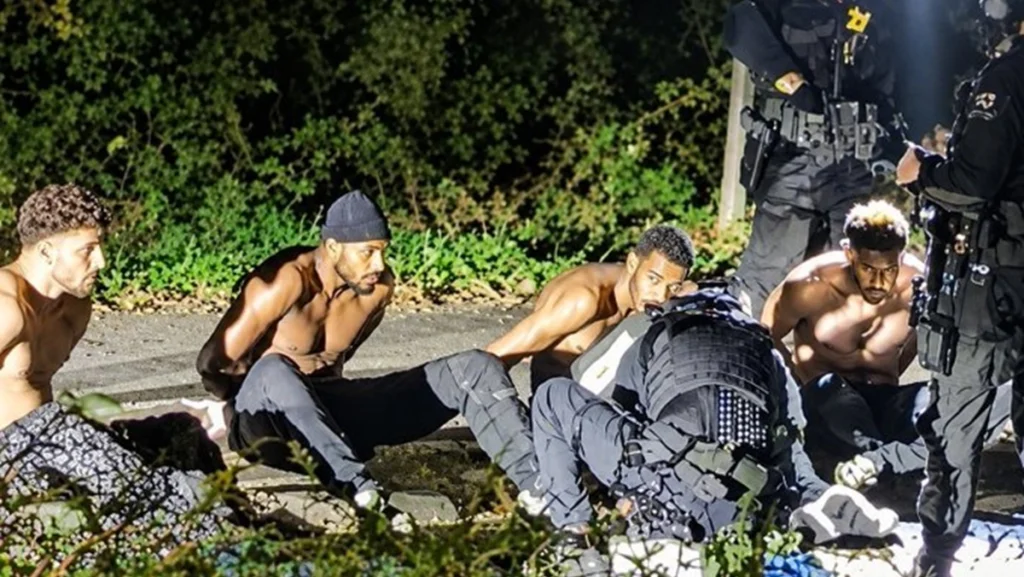
On Tuesday, Britain’s Crown Prosecution Service announced that two men have been charged with national security offenses following an incident involving Royal Air Force (RAF) Fairford last month.
Mohmed Abdulkarim, 24, and Nouman Essghir, 24, were both charged under National Security Act 2023 following a counter-terrorism policing investigation, according to the public prosecution authority.
Abdulkarim was charged with one offense of assisting a foreign intelligence service in carrying out UK-related activities, and Essghir was charged with one offense of entering a prohibited place for a purpose prejudicial to the UK.
On Sept. 27, British police evacuated homes near RAF Fairford while army bomb-disposal experts were called in to examine several vehicles nearby. Seven people have since been arrested on suspicion of explosives offenses and preparing an act of terror.
The alleged "Iranian attack" on the RAF base in Fairford is becoming increasingly ridiculous.
It seems the "Iranian commandos" forgot their bombs, their guns? But decided to call the Police on themselves?
On the day of the incident, after a farmer raised the alarm about a group of men acting suspiciously, police arrived at the scene and initially detained five men.
“Two military sources believed the men were stealing fuel, as barrels and equipment for storing it were found in their vehicles near a diesel supply point. The following day, the five men were released on police bail after being questioned,” noted British journalist Brit Matters.
RAF Fairford is a British military airbase used by the U.S. Air Force. The Pentagon confirmed earlier this month that all U.S. bombers deployed to RAF Fairford had returned to their home stations in the United States.
Britain said that it was “highly likely” that Iran was involved in the RAF Fairford incident, but the accusation was rejected by Iran, who called it a “sordid plot to advance the anti-Iran campaign.”
Restrictions on suppliers, changes in procurement policies and replacement of existing ICT infrastructure affect supply chains.
On Tuesday, SEO Amsterdam Economics reported that a proposed revision of the European Union’s Cybersecurity Act, known as CSA2, could lead to losses ranging from 290 million euros (US$324 million) to 2.2 billion euros (US$2.46 billion dollars) for Dutch businesses in the first year of implementation.
The report, titled The Price of Security and commissioned by the Netherlands China Business Council (NCBC), cautions that the impact could extend beyond businesses directly affected by the restrictions, spreading through supply chains and hitting firms in other sectors of the Dutch economy.
The legislation was proposed by the European Commission at the beginning of this year. The draft introduced “non-technical risks” in the name of cybersecurity and supply chain security.
In particular, the draft would identify “countries posing cybersecurity concerns” and “high-risk suppliers,” and exclude listed countries and suppliers from relevant EU supply chains across 18 sectors, including energy, transport, and information and communications technology.
However, the economic implications of restricting suppliers could be substantial, particularly for businesses that rely on existing information and communications technology infrastructure and have limited short-term alternatives, according to the report.
🚨🇪🇺 BREAKING: Critical software vulnerabilities trigger government website shutdowns across at least SIX European countries, affecting public authorities, hospitals, schools and critical infrastructure.
Companies may also need to modify existing systems, adjust production processes and reorganize supply chains to accommodate replacement products. These changes could generate additional costs beyond the losses estimated in the report.
“Security measures do not exist in an economic vacuum,” NCBC Chairman Jochum Haakma said at a seminar on the report on Monday, adding that restrictions on suppliers, changes in procurement policies and the replacement of existing ICT infrastructure can affect entire supply chains, investment decisions and ultimately the competitiveness of the European economy.
In a letter to parliament on June 19, Dutch Minister of Justice and Security David van Weel said the government was concerned about the European Commission’s proposed power to designate entire countries and suppliers as high-risk, citing potentially far-reaching economic, legal and geopolitical consequences, as well as insufficiently clear and detailed criteria and procedures.
The report notes that restrictions on supplier choice could also yield other adverse consequences, as diminished competitive pressure may result in higher prices, lower quality and reduced innovation.
“Strategic autonomy is an important European ambition, but autonomy should not lead to isolation,” Haakma noted.
‘Ending the war requires direct discussions,’ Finnish President Stubb said.
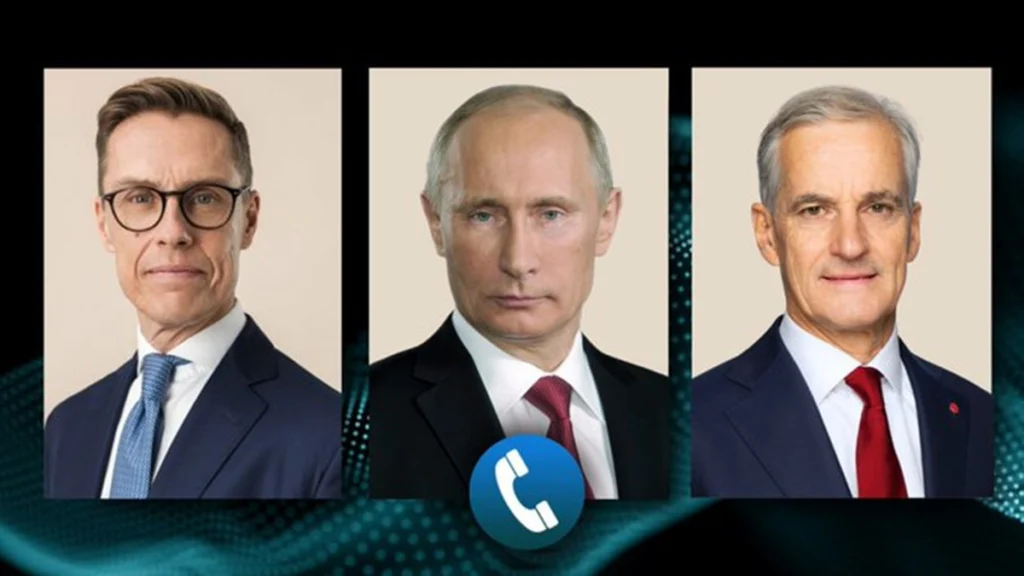
On Tuesday, Finnish President Alexander Stubb and Norwegian Prime Minister Jonas Gahr Store held a phone call with Russian President Vladimir Putin from Helsinki to discuss the Ukraine conflict and diplomatic efforts to end the conflict and promote peace and stability in Europe.
Stubb described the discussion as “frank and substantive.” The call, initiated by Stubb and Store, was held in consultation with Ukraine, and aimed to convey messages directly to Putin regarding future negotiations to end the conflict and was related to upcoming meetings in the United Arab Emirates (UAE).
During the call, Stubb and Store stressed the need to end the conflict and resume negotiations, while reaffirming their continued support for Ukraine. Stubb said that Finland and Norway, both neighboring countries to Russia, would be directly affected by the outcome of the conflict, as would broader European security. “Ending the war requires direct discussions,” he said.
Store said the conflict had caused enormous human and material costs, with suffering and destruction that would affect generations, stressing the importance of de-escalation. Stubb and Store took the call as leaders of their respective countries and did not speak on behalf of Europe as a whole.
After the Stubb–Støre call with Putin, Ukraine’s foreign minister flies to Helsinki to meet Finnish and Norwegian leaders. https://t.co/1BtM4HeKwc
Danish Prime Minister Mette Frederiksen questioned the move, describing it as “a dangerous step that divides Europe.” In an interview with Denmark’s TV 2, Frederiksen said the call “was not coordinated with the rest of us.” “I think we should maintain European unity rather than act alone,” she said.
Stubb, Store and Ukrainian President Volodymyr Zelensky held talks on Ukraine with U.S. envoys in Oslo, Norway, on Oct. 20. Tuesday’s call was a follow-up to those talks.
Russia, Ukraine and the United States are reportedly planning to resume talks in the UAE in November. The negotiations have been stalled since the beginning of this year.
Smartphones, social media, and AI pose significant risks to children’s wellbeing, mental health, learning and development.
On Tuesday, Nordic leaders called for fundamental changes to the design of social media and other digital platforms to better protect children and young people’s health and development.
At a meeting in Helsinki hosted by Finnish Prime Minister Petteri Orpo and attended by representatives from Denmark, Sweden, Norway, Iceland, Greenland, the Faroe Islands and the Aland Islands, a joint declaration was adopted stressing the urgent need to strengthen online protection for minors.
The declaration warned that smartphones, social media and artificial intelligence pose significant risks to children’s and young people’s wellbeing, mental health, learning and development. The full extent of their impact remains unclear.
Children are gaining access to digital platforms too early and too extensively, and the platforms are not designed to support healthy growth and learning, according to the declaration.
Australia's rule is one of several, and Indonesia by itself holds the bulk of the children covered, based on our study of 17.9 million children aged 13 to 15. https://t.co/sCGJNJ11Oo
Several Nordic countries are currently preparing legislation and recommendations on age limits for social media platforms. Meanwhile, leaders also held discussions on Tuesday with students aged 12 to 14 and young politicians on the protection of children and young people in digital environments.
The meeting took place on the sidelines of the 78th Session of the Nordic Council, held in Helsinki from Monday to Thursday.
Finland holds the presidency of the Nordic Council in 2026, while Denmark and the Faroe Islands jointly hold the presidency of the Nordic Council of Ministers.
A House Judiciary Committee report alleges Donald Trump was actively involved in Epstein’s abuse of young women.
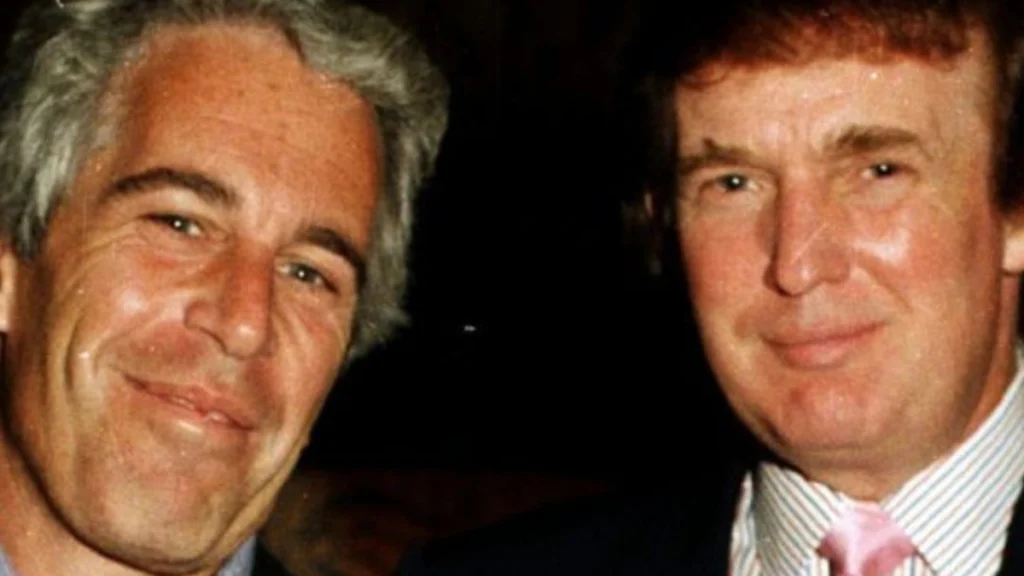
On Monday, Democratic lawmakers released a report calling for a special counsel to investigate possible ties between U.S. President Donald Trump and the late convicted sex offender Jeffrey Epstein, just over a week before the midterm elections.
The more than 50-page report by Democrats on the House Judiciary Committee alleges that Trump was an “active participant in Jeffrey Epstein’s abuse of young women in the mid-to-late 1990s.”
The document, titled “The Case Against Donald Trump Emerging From the Epstein Files and the Justice Department’s Desperate Efforts to Cover It Up,” includes the names of five women who have accused Trump of “raping or sexually assaulting them” in the company of Epstein.
Among the women’s accounts is one being made public for the first time. It describes an alleged rape by Trump during a pageant held in November 1993 at the Plaza Hotel in New York City, although the account provides no evidence beyond the woman’s statements.
“The women who survived Epstein deserve to be heard, Congress must have the full files that the law requires, and an independent special counsel must investigate Epstein’s accomplices and the Justice Department’s cover-up, and ensure that state and foreign prosecutors have the evidence they need to pursue justice,” said Rep. Jamie Raskin, the committee’s top-ranking Democrat.
🇺🇸 Rep. Ted Lieu says there is “ample evidence” in the full Epstein files alleging Donald Trump raped children.
Trump, for his part, has repeatedly denied committing any wrongdoing related to Epstein’s actions. He has also repeatedly said that he had a falling-out with Epstein years ago and barred him from Mar-a-Lago, his Florida residence, “for being a creep.”
The Democratic lawmakers’ report also calls for greater federal cooperation in legal proceedings against Epstein’s accomplices and increased congressional action to uncover all possible connections within his sex trafficking network.
With the document’s release, Democrats are signaling that they have no intention of backing down from their efforts to continue investigating the connections between Trump and Epstein’s sex trafficking network. They are doing so at a time when they could win a majority in the House of Representatives and even challenge Republican control of the Senate on Nov. 3.
The midterm elections will determine all seats in the House of Representatives and one-third of the seats in the Senate, as well as numerous state and local offices.
Student representatives dismissed the measures as insufficient and confirmed further protests and blockades.
On Monday morning, French Prime Minister Sebastien Lecornu met with some students to brief them on measures he will announce during an afternoon meeting with high school student associations. The meeting, however, turned into a political setback for the administration of President Emmanuel Macron.
Student representatives said Lecornu was attempting to divide the protest movement by holding a meeting attended by people who lacked legitimacy and did not represent the movement.
The prime minister announced a reform of the university admissions system, with partial implementation in 2027 and more far-reaching changes in 2028. However, implementation of the proposal will depend on the government that emerges from the April-May presidential election.
Lecornu pledged to create 15,000 places in higher education, establish a 1-billion-euro investment plan to renovate high schools, and provide 4 billion euros in loans.
🔴️️ À Bordeaux, des manifestants lèvent les mains pour montrer leur caractère inoffensif, la police les charge et les gaze sauvagement
Partout en France, le mouvement populaire s'est amplifié. Les mêmes foules massives ont défilé pour exiger le blocage des prix, l'abrogation… pic.twitter.com/C9Cvuy2MB5
The text reads, “In Bordeaux, protesters raise their hands to show they pose no threat; the police charge at them and brutally gas them. Across France, the grassroots movement has gained further momentum. Massive crowds have taken to the streets to demand a price freeze, the repeal of the Parcoursup system, wage increases, and the inclusion in the budget of the 10 billion euros requested by high school and university students to address their demands.”
These measures come against the backdrop of a government seeking to gradually reduce the maximum number of students in high school classrooms to 28 and implement an emergency plan that will affect students in the country’s most disadvantaged areas.
Student representatives who questioned the legitimacy of the morning meeting stressed that their demands were more ambitious and dismissed the announcements made in advance as “crumbs.”
They are calling for the repeal of the current university admissions system, which they describe as opaque, and the creation of 250,000 places in higher education. “Our demand is clear: We want 10 billion euros and 10 measures that we have been calling for in various ministerial meetings,” they also emphasized.
Student representatives confirmed plans for protests on Oct. 31. Later, on Nov. 2, when classes resume after the school holidays, students will continue their high school blockades. On Nov. 5, student organizations will also join the general strike called by France’s main labor unions.
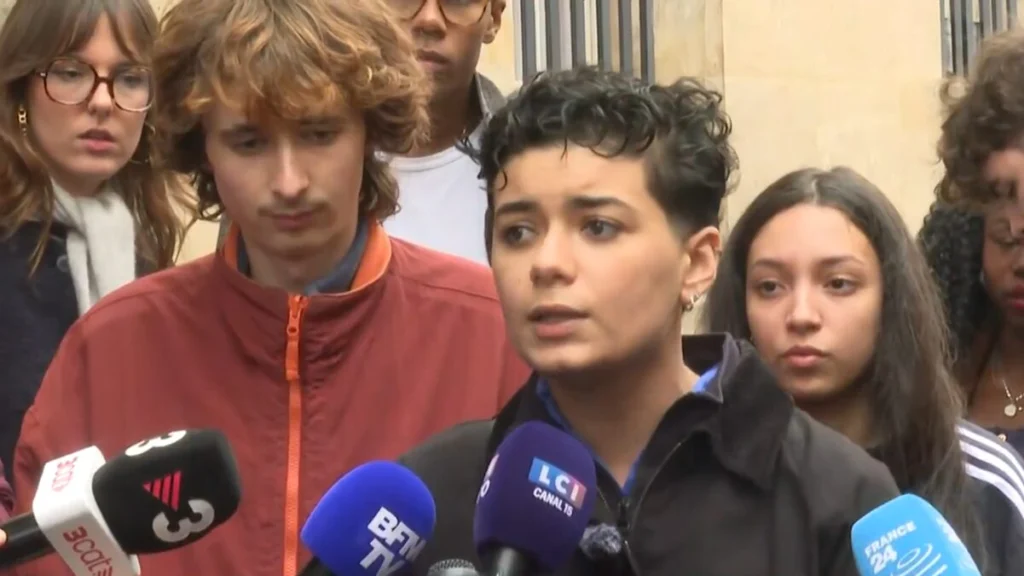
🔴 🗣 "10 milliards, 10 mesures, ni plus ni moins", clame Sabrine Kharbach, porte-parole de l'Union Étudiante. Les représentants de lycéens et étudiants s'expriment lors d'une conférence de presse en amont d'une réunion à Matignon #canal16pic.twitter.com/nmkMNERhZ3
The text reads, “’10 billion, 10 measures—no more, no less,’ declares Sabrine Kharbach, spokesperson for the Student Union. Representatives of high school and university students speak during a press conference held ahead of a meeting at Matignon.”
What French Students Are Demanding
In recent weeks, the High School Union (USL), the Student Solidarity collective, the National Union of Students of France (UNEF) and the Federation of General Student Associations (FAGE) have been the most determined groups in organizing mobilizations across France. They are demanding that the Macron administration implement the following 10 emergency measures:
1. An Emergency Plan to Renovate Schools and Universities
Launch an emergency plan to renovate dilapidated and unsanitary school and university buildings. Adapt educational institutions to the effects of climate change by installing air conditioning and cooling systems to cope with heat waves, as well as appropriate insulation and heating systems to withstand cold spells.
Ensure that every institution has the human and material resources necessary to maintain its facilities and provide clean, functional restrooms.
2. Mass Hiring of Education, Health, Support and Guidance Staff
Launch a large-scale recruitment plan for National Education personnel to guarantee, at a minimum, the following staffing levels at every institution: One nurse for every 500 students. One psychologist for every 500 students. One guidance counselor for every 500 students.
Create additional teaching positions rather than relying on contract workers, so that every class has a teacher and inequalities between institutions are eliminated. Also establish a formal employment status for support staff for students with disabilities (AESH) and create 800 additional positions.
3. Rethink School and University Schedules
Undertake a comprehensive overhaul of school schedules, building on the work of the Citizens’ Convention on Children’s Schedules for the National Education system, and launch a similar process for higher education to better respect students’ needs and well-being.
In particular, guarantee a lunch break of at least 1 1/2 hours so that every student can eat under appropriate conditions. Reverse the reforms of the baccalaureate and high school system.
4. End Selection Through Parcoursup and Mon Master. Create 250,000 Higher Education Places.
Eliminate selection through the Parcoursup and Mon Master platforms and create 250,000 additional places in higher education starting with the next academic year. This would allow high school students to access programs in their chosen fields without being subject to algorithmic selection and enable all students who wish to do so to continue their studies at the master’s level.
Retain centralized national application platforms to make available programs easier to identify, but eliminate selection. A high school diploma must guarantee access to a bachelor’s degree program, and a bachelor’s degree must guarantee access to a master’s program.
5. Overhaul High School Student Democracy to Ensure Genuine Participation in Decision-Making
Introduce list-based elections for the High School Student Council (CVL) and the Academic High School Student Council (CAVL) to ensure union representation, with representatives elected directly by all high school students in the relevant area. Increase the number of high school student seats on school boards. All high school students must be able to vote in CSE elections.
6. Increase Scholarships and Reinstate and Raise Housing Assistance for Everyone
Increase student scholarships by 200 euros per month, distribute them over 12 months and allow an additional 300,000 students to qualify for the scholarship system. Ultimately, establish a student autonomy income of 1,337 euros per month to guarantee every student the material resources necessary to pursue their studies. Abandon budgetary measures that reduce housing assistance for young people. Reinstate housing assistance (APL) for international students. Increase APL benefits and abandon changes to the calculation method that would deprive 147,000 students of this assistance.
7. Guarantee Effective Access to 1-Euro Meals for All Students
Guarantee effective access to 1-euro meals for students and provide the university services network with the resources necessary to meet demand.
8. Repeal the Welcome to France Plan, Which Introduces Differential Tuition Fees for International Students, and Eliminate the CVEC
Abolish the Welcome to France plan and its differential tuition fees for non-European students, which introduce a national-preference policy and a racist approach to higher education. Eliminate the Student and Campus Life Contribution (CVEC).
9. Freeze CROUS Rents, Make Rent Controls Permanent, and Massively Renovate and Build CROUS Housing
Reinstate the freeze on CROUS rents based on the rents frozen before 2023. Renovate unsanitary CROUS residences. Begin construction of 15,000 CROUS housing units starting in 2027. As an emergency measure, 10% of students must be able to obtain accommodation through CROUS.
10. End Repression and Police Violence Against the High School and Student Movement
End all forms of repression related to the high school and student movement. Ensure that law enforcement officers responsible for violence are prosecuted. Guarantee that absences related to mobilization are neither counted nor penalized.
More broadly, abandon all forms of repression in educational institutions and guarantee young people freedom of expression and freedom to organize, in direct contrast to the repression carried out in the struggle against the genocide in Palestine.
Previously, President De la Espriella formalized his country’s accession to Trump’s Shield of the Americas.
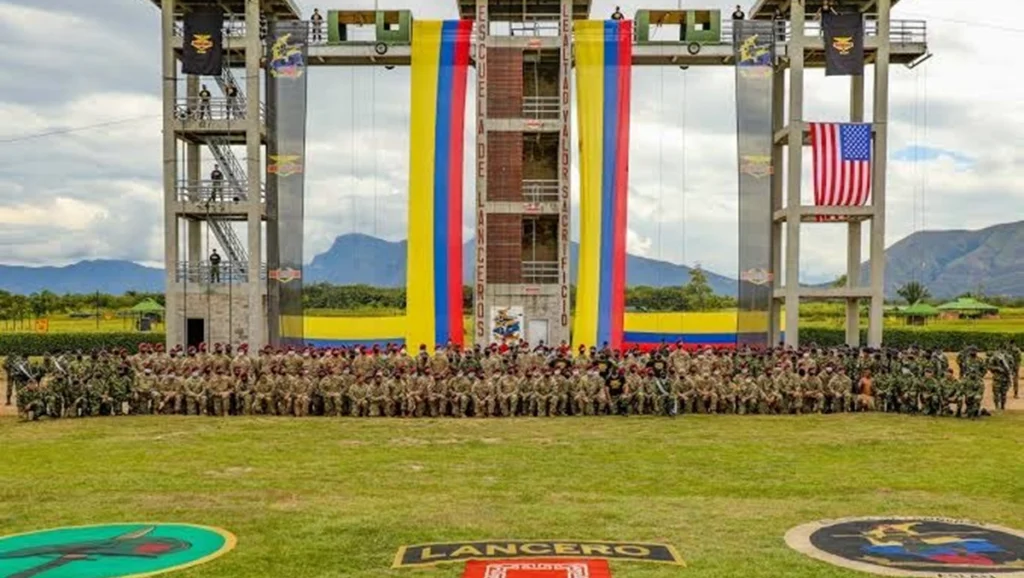
On Monday, the Colombian army announced that more than 300 U.S. soldiers will participate in joint military exercises in Colombia focused on combating drug trafficking, illegal mining and unmanned aerial systems.
The U.S. military personnel will arrive on Tuesday at the Tolemaida military base, located in the municipality of Nilo, in the department of Cundinamarca, where the fourth edition of the “Southern Vanguard 2026” training exercise will take place through Nov. 11.
During the exercises, members of the Colombian army’s No. 1 Counter-Narcotics Battalion will exchange tactics, techniques and procedures with light infantry soldiers from the U.S. Army Mountain battalion.
The training will begin on Oct. 30, with a simulated aeromedical evacuation from Tolemaida to the facilities of the Cavalry School in Bogota, using aircraft and specialized medical equipment.
“The objective will be to verify the medical care and first aid procedures used by medical personnel from both armies to assist a person who would have been injured in a mined area,” the Colombian army said.
🇺🇸🇵🇪🇦🇷🇨🇱 O Exército dos EUA concluiu no dia 18 de setembro o Exercício Southern Vanguard 2026, uma operação internacional que contou com 400 militares dos EUA, Argentina, Chile e Peru treinando em conjunto situações de combate na selva amazônica peruana. pic.twitter.com/bZcK6NALun
The text reads, “On Sept. 18, the U.S. Army concluded Exercise Southern Vanguard 2026, an international operation involving 400 military personnel from the U.S., Argentina, Chile, and Peru, who trained together in combat scenarios within the Peruvian Amazon rainforest.”
Colombian authorities explained that the exercises aim to strengthen “military cooperation and assess both forces’ ability to operate jointly, coordinate maneuvers and make decisions in operational scenarios.”
The arrival of the military personnel comes amid closer relations between Bogota and Washington since Colombian President Abelardo de la Espriella, a U.S. citizen, took office on Aug. 7, with security cooperation and the fight against drug trafficking as central pillars of the bilateral agenda.
The far-right president formalized Colombia’s accession to the Shield of the Americas, an initiative promoted by U.S. President Donald Trump to strengthen regional cooperation against drug trafficking and criminal organizations.
The rapprochement was evident on Sept. 8, when U.S. Secretary of State Marco Rubio visited Barranquilla and met with De la Espriella in the first high-level meeting between the two governments since the Colombian president took office.
Following the meeting, the two countries announced the so-called Barranquilla Accords, a road map that includes, among other issues, security cooperation and the fight against drug trafficking.
Progressive Leader Defeats Flavio Bolsonaro in Runoff, Blunting Washington’s Push for Regional Allies.
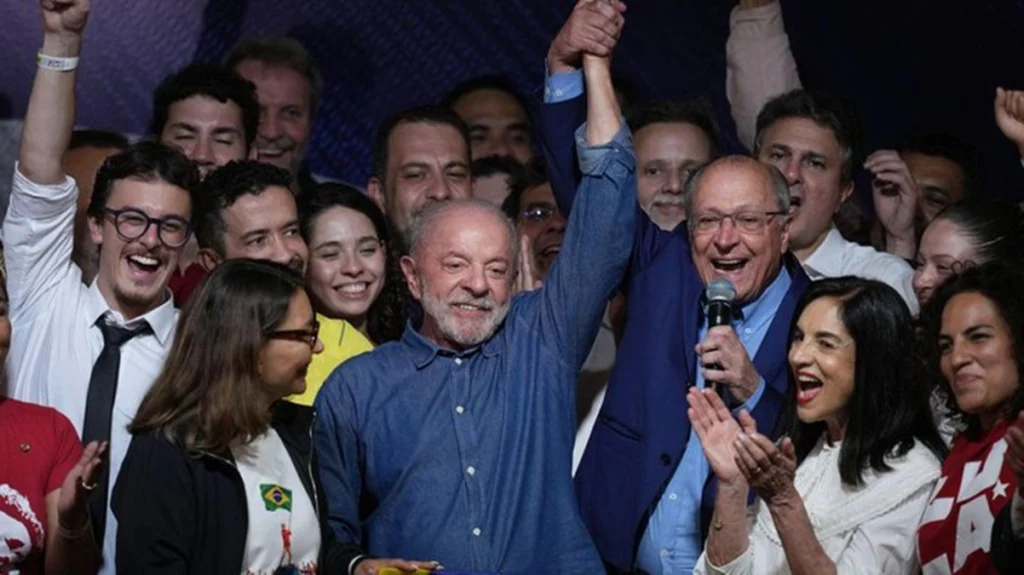
On Sunday, the unexpected reelection of Brazilian President Luiz Inacio Lula da Silva represents a setback for U.S. President Donald Trump’s plans to consolidate his influence in Latin America, at a time when the rightward shift of several countries seemed to be clearing his path.
The Workers’ Party leader prevailed with nearly 52% of the vote over far-right Senator Flavio Bolsonaro, son of former President Jair Bolsonaro (2019-2022), and became the first candidate to win a runoff after finishing second in the first round.
As Trump has yet to comment on the results, which Flavio has refused to recognize, Lula’s victory frustrates the possibility that Washington could add Latin America’s largest economy to its bloc of regional allies.
The setback for the MAGA leader comes just days before midterm elections in which polls indicate Democrats could wrest control of Congress from him.
A major hit for the Donroe Doctrine. Lula wins a fourth term in a historic comeback. https://t.co/PaxbXozabt
In his second term, Trump announced he would revive the Monroe Doctrine, a 19th-century policy he invokes to assert U.S. primacy in Latin America.
When he returned to the White House, his regional allies were few, among them Javier Milei in Argentina, Nayib Bukele in El Salvador, and Daniel Noboa in Ecuador.
Rightward shifts in Honduras (Nasry Asfura), Bolivia (Rodrigo Paz), Chile (Jose Antonio Kast), Peru (Keiko Fujimori), and Colombia (Abelardo de la Espriella) broadened that bloc. On repeated occasions, Trump boasted of having contributed to those victories.
The axis of Trump’s foreign policy toward Latin America is the “Shield of the Americas,” an alliance supposedly aimed at fighting drug trafficking but which in reality seeks to consolidate U.S. hegemony. Flavio Bolsonaro had promised to join that new U.S. geopolitical instrument.
Washington also seeks to counter China’s growing influence in Latin America, although a Flavio victory would hardly have altered Brazil’s economic ties with the Asian giant, given the weight of the agro-industrial sector in the Bolsonarist coalition and its dependence on the Chinese market.
Currently, Lula’s presidency in Brazil and Claudia Sheinbaum’s presidency in Mexico emerge as the main counterweights to Trump’s domination project.
This story is extremely important:
A whistleblower revealed that Brazil's far-right Bolsonaro family dynasty met with Meta to discuss US plans to interfere in Brazil's election, to prevent Lula from winning.
Despite what was at stake in Brazil, Trump avoided expressly supporting Flavio Bolsonaro, unlike what happened in Colombia, where he openly backed De la Espriella. His presence, however, was felt, and Lula’s campaign denounced interference from Washington.
Lula himself declared in his victory speech that the result demonstrates that in Brazil “we do not accept being anyone’s backyard.”
A Flavio victory would have meant “100 percent alignment with Trump in his culture war and security policy,” explained Benjamin Gedan, director of the Latin America Program at the Stimson Center think tank.
The Republican was “clearly excited about this possibility,” but an explicit endorsement could have “hurt” the candidate, he added. Trump, however, had already taken a stand through his actions. In 2025, his administration imposed high tariffs on Brazil in response to the trial against Jair Bolsonaro, who was sentenced to prison for attempting a coup d’etat against Lula in 2023.
In May, Trump received presidential candidate Flavio Bolsonaro in the Oval Office, an unusual gesture since he was not a head of state. Flavio asked him to designate the First Capital Command (PCC) and the Red Command as terrorist organizations.
The White House agreed to that request four days later, a decision Lula opposed out of fear that the measure would open the door to U.S. interventionism.
Washington also opened a trade investigation against Brazil over alleged unfair practices, revoked the visa of the Brazilian ambassador and suspended its consular services two days before the first round — in which Bolsonaro defeated Lula — citing security reasons.
That involvement also exposes Washington to the region’s political changes. For Oliver Stuenkel, a researcher at the Carnegie center, ideological alliances are a fragile bet in a scenario marked by frequent alternations in power. “The kind of ideological interventionism that the Trump administration is carrying out in the region is counterproductive. In the medium and long term, it will strengthen anti-American forces,” he said.
Lula’s reelection thus forces Washington to deal with a Brazil that does not share its agenda and highlights the limits of its strategy for Latin America.
The Mexican president praised Brazil’s election result after the leftist leader defeated far-right Senator Bolsonaro.
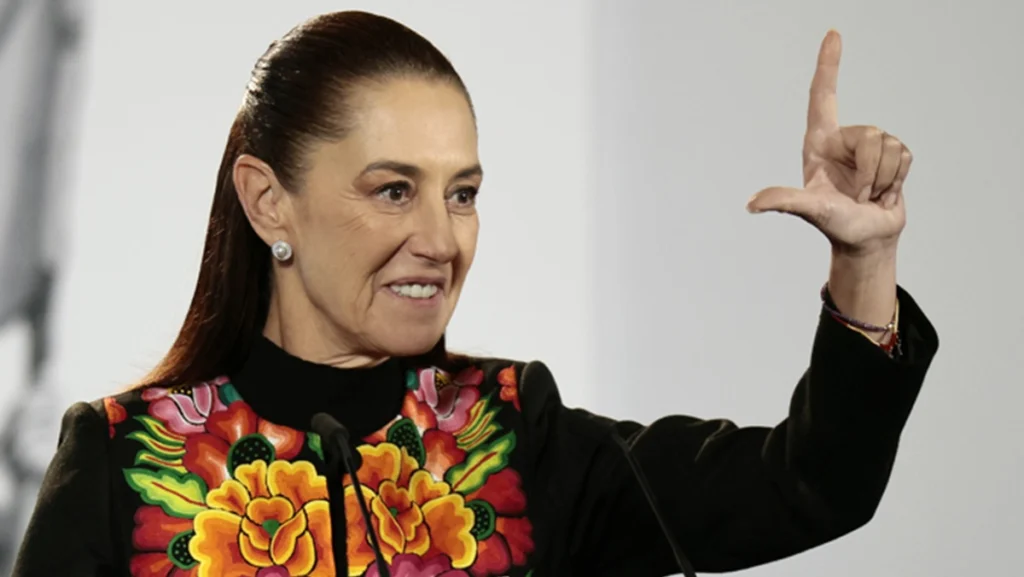
On Monday, Mexican President Claudia Sheinbaum celebrated Luiz Inacio Lula da Silva’s re-election in Brazil, after the leftist leader defeated far-right Sen. Flavio Bolsonaro in a runoff election.
“Very happy about Lula’s victory in Brazil. Many, many congratulations to President Lula and the people of Brazil. It is a breath of fresh air for Latin America and the Caribbean. We are very, very happy,” Sheinbaum said during her morning news conference.
Her remarks came a day after the Mexican president congratulated Lula through her social media accounts, celebrating the election result with the message: “Long live democracy, the people of Brazil won. Congratulations, President Lula!”
With the Brazilian president’s victory, Mexico and Brazil, the two largest economies in Latin America, will maintain leftist governments in a regional landscape marked by U.S.-backed far-right rulers.
Serei eternamente grato ao povo brasileiro. Cada gesto de confiança, cada voto e cada passo dado em defesa da democracia valeram a pena. A emoção dessa caminhada fortalece a certeza de que ainda temos muito a construir juntos.
The text reads, “I will be eternally grateful to the Brazilian people. Every gesture of trust, every vote, and every step taken in defense of democracy has been worth it. The emotion of this journey reinforces the certainty that we still have much to build together. This victory is not an end point, but rather a renewal of our commitment to Brazil, to social justice, to sovereignty, and to the hope for a better future for all. The path continues with an even stronger commitment to our people. Thank you very much, Brazil! This victory is ours!
Sheinbaum, who has expressed her political affinity with Lula, had ruled out Oct. 5 that a potential defeat for the Brazilian leader would lead to greater isolation for Mexico in Latin America.
On Sunday, the Workers’ Party leader defeated Flavio Bolsonaro with nearly 52% of the vote and staged an unprecedented comeback: Lula da Silva became the first candidate to win a presidential runoff after finishing second in the first round.
Democrats Need a Net Gain of Four Seats to Take Control of the Senate as Polls Show Tight Contests Across the Country.
U.S. President Donald Trump is fighting to maintain Republican control of the Senate, where his party currently holds 53 of the 100 seats, in the midterm elections on Nov. 3, which will feature 10 key races.
Although polls show Democrats with a lead of up to 10 percentage points in national voting intention, a Democratic victory in the Senate is far from guaranteed, as polling margins in each of those races remain narrow. Democrats need a net gain of four Senate seats to take control of the upper chamber for the final two years of Trump’s term.
With less than two weeks to go before voters head to the polls to elect senators to 35 seats in the upper chamber — 22 currently held by Republicans and 13 by Democrats — here are the 10 key Senate battles:
North Carolina (Republican)
Although some media outlets consider the Republican Party to have already written off the state’s Senate seat, Republican candidate Michael Whatley still has a chance to prevent former Democratic Gov. Roy Cooper from winning.
Ohio (Republican)
With controversy over data centers at the center of the campaign — many residents oppose their construction in their cities because of the resulting increase in electricity costs — polls give former Democratic Sen. Sherrod Brown a slight lead over Republican Sen. Jon Husted.
Trump says if Democrats "get in" during the midterms, he will be "the last Republican president" pic.twitter.com/tHw1xOPn8u
A popular Democratic candidate, independent voters willing to cross party lines and growing economic discontent over the rising cost of living have forced Republicans to defend a seat that, under different circumstances, would appear much safer. Former Democratic Rep. Mary Peltola is leading Republican Sen. Dan Sullivan in polls.
Maine (Republican)
Veteran Republican Sen. Susan Collins took office on Jan. 3, 1997, and is facing one of the closest races of her political career. In this midterm election cycle, she is the only Republican seeking reelection in a state Trump lost in the 2024 election. Collins and her opponent, Democrat Troy Jackson, the former president of the Maine Senate, are tied in polls.
Texas (Republican)
If there is one example of Democratic momentum in the congressional elections, it is Texas, a solid Republican stronghold until now. Democrats have not won a Senate seat in the state since 1988, so a victory by Democrat James Talarico over Republican Ken Paxton would end a 38-year losing streak. Polls show Talarico with a slight lead or the two candidates tied, but none show Paxton winning.
Michigan (Democratic)
The race is crucial for Democrats to secure a Senate majority because, if Abdul El-Sayed loses, they would have to win at least five seats currently held by Republicans. The race between Democrat El-Sayed, who would become the first Muslim senator, and former Republican Rep. Mike Rogers has no clear favorite less than two weeks before Election Day.
🤡🎙️Trump se félicite des centaines de milliards que les États-Unis gagneraient grâce au pétrole depuis l’escalade au Moyen-Orient. Il reconnaît au passage que les gens paient plus cher à la pompe et explique que son équipe lui avait conseillé de ne pas trop s’en vanter. Sa… pic.twitter.com/dMORvSUtvL
The text reads, “Trump expresses satisfaction over the hundreds of billions of dollars the U.S. stands to gain from oil following the escalation in the Middle East. He acknowledges, in passing, that people are paying more at the pump, and explains that his team had advised him not to boast about it too much. His response? ‘I couldn’t care less.’ The midterm elections are fast approaching. Keep this video handy.”
Iowa (Republican)
Polls have also failed to identify a clear winner in the quintessential American agricultural state, where rising fuel prices and discontent among rural voters threaten decades of Republican control. Democrat Josh Turek and Republican Ashley Hinson are competing for Iowa’s Senate seat.
Kansas (Republican)
The state, which has not elected a Democratic senator since 1932, could do so on Nov. 3. Democrat Adam Hamilton, a Methodist church pastor, describes himself as an “independent-minded Democrat” and faces a tight race against Republican Sen. Roger Marshall, with polls showing the candidates tied.
New Hampshire (Democratic)
Democratic Rep. Chris Pappas holds a modest lead in polls over former Republican Sen. John Sununu in a state where Trump’s popularity continues to decline.
Georgia (Democratic)
Although Trump won this Southern state in 2024, polls show Democrat Jon Ossoff consolidating his lead over Republican Rep. Mike Collins.
Inquiry Panel Reports Sharp Rise in Air Strikes, Forced Displacement and Violence Against Palestinian Children.
On Monday, the Independent International Commission of Inquiry on the Occupied Palestinian Territory reaffirmed that Israel has committed war crimes and crimes against humanity against the civilian population in the West Bank and Gaza, including crimes such as extermination, persecution, torture, rape and other forms of sexual violence.
The Commission will present a report to the United Nations General Assembly (UNGA), which tasked it with focusing this phase of its investigation on killings and physical and mental harm caused by state agents.
The report confirms the sharp increase in Israeli air strikes against the West Bank since Oct. 7, 2023, the date of Hamas’ large-scale attack on Israel.
The Commission notes that while between 2018 and Oct. 6, 2023 — the eve of the Hamas attack — six Palestinians had died in air strikes, between Oct. 7, 2023, and last Sept. 30, those killed numbered 254.
“The killing and deliberate injury of Palestinian civilians, as well as the destruction of homes in the West Bank, plus Israel’s refusal to assume its responsibility, form part of a broader strategy to exterminate and displace Palestinians and impose unbearable living conditions on them,” said the Commission’s chairman, Srinivasan Muralidhar.
"I'm not a target, I want to live like you"
Today she cries for her friend, tomorrow she fears she will be the news.
— Palestine Daily News✌️🇵🇸✌️ (@Palestinedaily1) October 25, 2026
From January 2025 through August 2026, military operations caused the displacement of over 34,000 Palestinians in the West Bank. This forced movement of people is the largest recorded since 1967, when Israel fought the Six-Day War against a coalition of Arab countries.
Children have been main victims of Israeli military violence, which has caused them “serious physical and mental harm,” not far from what minors suffer in Gaza, which for the Commission means Israel perpetrates “acts of persecution against Palestinian children on the basis of age.”
The Commission found that Israeli authorities and forces have continued to commit acts of genocide in Gaza even after the so-called cease-fire agreement of more than a year ago, and that they did so “with the intent to destroy the Palestinian people, in whole or in part.”
🎥 "I thought they forgot about me."
17-year-old Mohammed Ibrahim, a U.S. citizen who was released from Israeli military prison after ten months of detainment, came to the UNGA this week to advocate for hundreds of Palestinian children still held in Israeli military detention.… pic.twitter.com/7yTTPAYxrM
More broadly, the investigation reaches the conclusion that Israel’s will since its very creation has been to expand its territory and to that end displace Palestinians, which it considers one of the central causes of this prolonged conflict.
“The appropriation of as much land as possible, while minimizing the Palestinian population in terms of size, autonomy and viability, has its origin in Israel’s colonizing policies,” Muralidhar said.
In its conclusions, the UN Commission calls on Israel to immediately end the illegal occupation of Palestine and, among other actions, return land and all confiscated property to Palestinians.
The Commission also denounces the Palestinian Authority for persecuting Palestinians with dissenting opinions and for failing to effectively and impartially investigate the deaths or injuries suffered by journalists and human rights defenders in actions committed by Palestinian security forces.

 Login