A new book, free to download, gathers scholars, lawyers, a journalist, and the young mother cast as a “victim” who says she never met the accused. In March 2025, a young Russian woman, heavily pregnant, sat in a hospital in Bariloche, in Argentine Patagonia. She had come to Argentina, as thousands of Russian women do […]
An Israeli online advertising company implicated in spyware attacks targeting internet users was heavily active on SpaceX’s Starlink service, Japanese researchers have found, bolstering claims that the firm was running a “targeting and tracking” operation masquerading as a commercial advertising business.
Earlier this month, Canadian cybersecurity watchdog Citizen Lab and New York-based ad security firm Confiant published extensive investigations identifying Discover-Tech, an Israeli advertising technology company, as a middleman helping spyware firms, including Candiru and Intelos, as well as a little-known US-linked operator known as Dark Cartographer, track internet users and potentially infect their devices without their knowledge.
Discover-Tech’s operation involved purchasing advertising space on hundreds of thousands of websites and apps, using ads to collect information about users who viewed them, and making the data available to spyware companies. Those firms could then identify specific targets and potentially install spyware on their devices through malicious advertising code.
Despite presenting itself as a commercial operation, Discover-Tech concentrated much of its advertising spending on markets that would be of limited interest to conventional advertisers. Of 228 countries and territories examined, Palestine was the most heavily targeted, despite its population having severely limited access to Western goods and relatively little purchasing power.
In more than 100 countries, Discover-Tech was the leading bidder for advertising space targeting Starlink users, according to researchers at TrendAI, a unit of Japanese cybersecurity firm Trend Micro. The company was also the largest advertising bidder in Syria, Libya, Yemen and South Sudan, and the second-largest in Afghanistan.
TrendAI published its findings on October 15, identifying the suspicious advertiser only by the codename Shadow-Earth-79. Six people familiar with the research subsequently told Reuters that the codename referred to Discover-Tech.
Noting that “the demand for legitimate Western advertising in sanctioned or active-conflict states is effectively zero,” the researchers concluded that the company was running “targeting and tracking infrastructure rather than a commercial advertising operation.”
The findings suggest that Discover-Tech may have been attempting to identify, geolocate or monitor Starlink users. However, they do not establish that the company successfully infected Starlink users’ devices with spyware.
Who runs Discover-Tech?
Founded in 2020 by Israeli entrepreneur Dekel Boni, Discover-Tech appointed Eric Banoun as its director. Banoun co-founded Circles, a surveillance company affiliated with Pegasus spyware developer NSO Group, and Senpai Technologies, a company known for developing and selling surveillance software to governments, including those of Angola, Indonesia and Malaysia.
Banoun also founded Intelos, which uses advertisements similar to those placed by Discover-Tech to surveil and geolocate individuals. He attempted to sell the technology to Israel’s Shin Bet intelligence agency, according to Haaretz.
Haaretz also identified Sara Hamou, through her holding company, as a shareholder in Discover-Tech. Hamou is a former manager at Intellexa, the company that marketed Predator spyware in Greece. Earlier this year, she was sentenced to eight years in prison for her role in the Predator scandal.
Is Discover-Tech linked to the Israeli government?
It remains unclear who purchased the services of Candiru, Intelos and Dark Cartographer after the companies obtained user data through Discover-Tech. However, as RT previously reported in its ‘Wired for War’ series, Israel treats domestically developed spyware as a controlled defense export and retains authority over where such technology may be sold.
According to a 2021 investigation by Haaretz, export licenses for Pegasus were often granted when sales were considered beneficial to Israeli foreign policy interests, including in connection with trade agreements or diplomatic support for Israel at the UN.
Other Israeli spy-tech companies covered in the series, including Black Cube, BlackCore and Paragon Solutions, have also been linked to activities aligned with Israeli interests, even when they were not directly contracted by the Israeli government.
Discover-Tech’s advertising infrastructure was used to target at least 45 devices at Al Jazeera with Candiru spyware in 2024 and 2025, according to Citizen Lab. Researchers confirmed that some devices were infected through malicious advertisements that required no interaction from users.
The attacks occurred during a period of heightened tensions between Israel and the Qatar-based broadcaster, which Israeli authorities have accused of threatening national security. Candiru was founded by two Israel Defense Forces (IDF) intelligence veterans and operates under Israeli defense export controls.
While the Israeli government has not been accused of ordering Candiru to surveil Al Jazeera journalists, the targeting raises questions about whether the company’s clients shared interests with the Israeli authorities. The investigations have not identified the government or client responsible for commissioning the attacks.
Is Discover-Tech still operating?
Following the investigations by Citizen Lab and Confiant, several major advertising companies took action against Discover-Tech. Google, Comcast-owned Beeswax and Eskimi blocked the firm from their platforms, while Vungle suspended its access pending a review. Industry association IAB Europe also suspended Discover-Tech from its list of approved vendors.
Discover-Tech’s website, which markets the company as a “tailored digital advertising agency,” remains active. The firm has not publicly responded to the findings reported by Citizen Lab, Confiant or TrendAI.
Warnings of escalating clampdown on press freedom come after Cairo court convicts Attalah of managing an unlicensed website
Lina Attalah, a prominent Egyptian journalist and the editor-in-chief of the news outlet Mada Masr, has been released from detention by Egypt’s authorities and had her website ordered to be shut down by a court amid an intensifying crackdown on independent media in the country.
Attalah was taken briefly into custody after a Cairo court convicted her of managing an unlicensed website, prompting fresh international concerns over press freedom in Egypt.
The US military killed five people in a strike targeting a vessel in the eastern Pacific Ocean on Thursday, marking the latest operation in Washington’s expanding military campaign against alleged drug trafficking networks across Latin America.
US Southern Command said the vessel was targeted along what it described as “established narco-trafficking routes.” However, despite citing “confirmed intelligence”, the military did not publicly provide evidence that the boat was transporting narcotics at the time of the attack.
Footage released on social media showed a vessel in the crosshairs before being struck and engulfed in flames.
By media counts, the operation is one of over 70 such attacks carried out since US President Donald Trump returned to the White House for a second term, with the combined death toll now topping 240.
The operation comes amid a broader escalation ordered by the administration of US President Donald Trump, which has increasingly framed anti-drug operations as part of an armed conflict against what it calls “narcoterrorist” organizations.
Critics, however, have questioned both the evidentiary basis for many of the strikes and the classification of those targeted as “narcoterrorists”.
The US administration has yet to offer conclusive proof that the targeted vessels were carrying drugs, and the strikes have fueled a dispute over whether they are lawful.
Extrajudicial executions
The growing campaign has attracted increasing scrutiny from lawmakers, military legal experts, and human rights organizations.
Human rights organizations contend that the killings may qualify as extrajudicial executions, since the people hit appear to have been civilians who posed no imminent danger to the United States.
US senators have repeatedly called on the Pentagon to release unedited footage of the strikes, citing concerns regarding transparency and accountability.
Legal scholars have also challenged the administration’s justification for the operations, arguing that Washington has yet to clearly establish the legal framework underpinning the repeated use of lethal military force outside conventional battlefields.
On February 28, the US and Israel launched an unprovoked attack on Iran, killing its Supreme Leader alongside many other officials—and around 160 civilians, mostly schoolgirls, at Minab. The attack was an extreme case of the supreme war crime: aggression. Attacks on civilian targets are, of course, also highly illegal. The US and Israel routinely target civilians and civilian infrastructure, and Trump even brags about it.
Western media, dominated by co-ethnics of the genocidal pariah state of Israel, paints black as white, up as down, freedom as slavery, ignorance as strength, and victims as perpetrators. Though the media won’t say it plainly, Israel is the world’s worst outlaw nation in every possible way, including its de facto national mission of the genocide of Palestine and invasion of neighboring states, its outrageous terrorism and torture, its hundreds of ongoing violations of UN resolutions and international law, notably its flaunting of the Nuclear Non-Proliferation Treaty (NPT) and its threatening the whole world, including ostensible allies, with the nuclear “Samson option”—while whining about Iran’s NPT-compliant civilian program.
The US, too, is a serial international outlaw, kidnapping and murdering leaders of sovereign nations, shredding the Geneva Convention and the UN Convention Against Torture at Guantanamo Bay and elsewhere, refusing to recognize ICC jurisdiction, repeatedly threatening dozens of nations with aggression, refusing to allow delegations access to the UN, and on and on.
By contrast, Iran is one of the most law-abiding states in the world. It hasn’t attacked another nation in centuries. It signed and complies with the NPT, despite being repeatedly attacked, and threatened with nuclear weapons, by the US and Israel.
But Iran insists on the equal application of international law. If Saddam’s attack on Kuwait (and before that Iran) was aggression, so are US attacks on Iran, Iraq, Libya, Syria, Venezuela, and elsewhere. If Iran must abide by the NPT, so too must Israel. If Turkey can charge service fees at the Bosporus and Dardanelles, Iran and Oman can charge similar fees at the Strait of Hormuz. If apartheid was unacceptable in South Africa, its vastly worse equivalent is unacceptable in Occupied Palestine. And if “Responsibility to Protect” law enforcement interventions are necessary, obviously the first group on Earth that needs one is the Palestinians.
In a recent seminar I argued that Iran should do its best to highlight the fact that it supports and abides by international law, while the US and Israel do not. It’s a true, powerful message, and it isn’t getting through the deaf ears of Western mainstream media. But if Iran repeats this talking point often enough and loudly enough, some of it will penetrate the world’s consciousness through social media and other alternative channels.
What follows is an extract from a seminar I recently joined on this topic.
-KB
ODVV Online Webinar With Prof. Alfred De Zayas & Dr. Kevin Barrett; War, US Sanctions, And Human Rights: The Humanitarian Impact On Iran
On Monday, 19 October 2026, the Organization for Defending Victims of Violence (ODVV) held an online webinar titled “War, U.S. Sanctions, and Human Rights: The Humanitarian Impact on Iran.” The discussion examined the humanitarian consequences of U.S. sanctions and military attacks against Iran, the question of international accountability, possible avenues for legal action, and the role of media narratives in shaping public understanding of war.
Dr. Kevin Barrett, an American writer, journalist, and political commentator, holds a Ph.D. in Arabic and Islamic Studies from the University of Wisconsin–Madison. His work has addressed the Middle East, international politics, media narratives, and the political and humanitarian consequences of war.
Professor Alfred-Maurice de Zayas is an international lawyer and Professor of International Law and History at the Geneva School of Diplomacy. From 2012 to 2018, he served as the United Nations Independent Expert on the Promotion of a Democratic and Equitable International Order. He previously held senior positions at the Office of the UN High Commissioner for Human Rights and served as Secretary of the UN Human Rights Committee and Chief of its Petitions Department. His contribution to the webinar focused on the legal status of unilateral coercive measures, their humanitarian consequences, and possible avenues for accountability.
The views expressed by the speakers are their own and do not necessarily reflect the official position of the Organization for Defending Victims of Violence.
Kevin Barrett: Sanctions, Civilian Harm, and the Definition of Terrorism
Barrett began by discussing the definition of terrorism. He described it as violence against civilians intended to create fear and achieve political or ideological objectives. Applying this definition to the issues under discussion, he argued that U.S. sanctions and military attacks on civilian targets should be examined in terms of the harm they inflict on ordinary people. He maintained that restrictions affecting access to medicine, medical equipment, and food place pressure directly on the civilian population. Barrett said he viewed these measures as an effort to make life increasingly difficult for Iranians and to pressure them into accepting political change.
Addressing the 40-day war against Iran, Barrett referred to the attack on the Minab school and the deaths of schoolchildren, as well as reported attacks on residential buildings, bridges, railway stations, communications towers, desalination and water facilities, wheat storage facilities, healthcare sites, and energy infrastructure. He characterized these as attacks on civilian infrastructure. He also described public threats by Donald Trump against Iran’s bridges, electricity grid, water facilities, and energy infrastructure as threats to commit war crimes.
During the question-and-answer session, Barrett was asked whether international courts could provide a meaningful path to justice when powerful states refuse to comply with international law. He criticized the practical limitations of the International Criminal Court and the International Court of Justice in compelling the United States to accept adverse decisions. However, he clarified that this did not mean the courts should be abandoned. In his view, submitting evidence and pursuing legal cases remain important because they document alleged violations and bring them to the attention of global public opinion.
Barrett also emphasized the importance of presenting Iran consistently as a party seeking the equal application of international law. He argued that documented accounts of civilian harm, supported by independent reporting and public advocacy, could help challenge selective media narratives and strengthen demands for accountability…
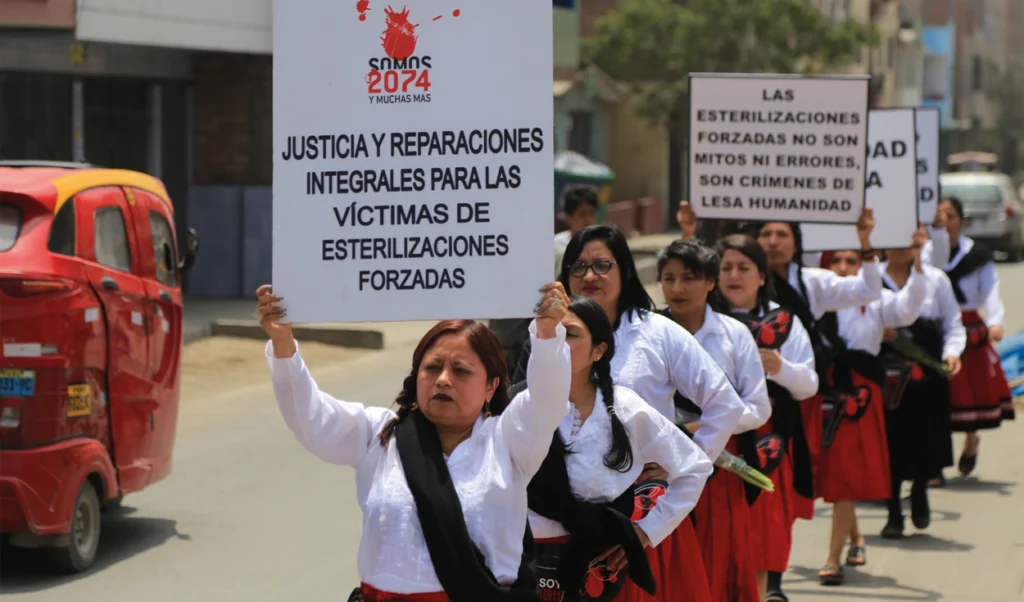
Peru’s human rights prosecutors closed the criminal case over the forced sterilizations of thousands of women during Alberto Fujimori’s government, extinguishing charges against 52 former officials despite acknowledging that the mass surgeries amounted to crimes against humanity.
The Fourth Supra-National Criminal Prosecutor’s Office specialized in Human Rights issued Fiscal Provision No. 25 on October 22. The ruling, which runs more than six thousand pages, formally declared the case time-barred and ordered the file closed.
In its decision, the Public Ministry recognized evidence of crimes against humanity and harm suffered by more than 4,000 victims of forced sterilization. Even so, criminal liability was declared extinguished for 52 people, a decision that protects the former officials who designed and implemented the program.
The case was closed under Law 32107, approved in 2024 with the backing of lawmakers allied to former President Alberto Fujimori. The statute imposes strict time limits on the prosecution of crimes against humanity, setting aside the protection those abuses have long held under international treaties.
Under international law, crimes against humanity are not subject to statutes of limitation. Law 32107 introduced a domestic exception to that principle, and its application extinguished the proceedings for all 52 defendants at once.
🚨 La Fiscalía archivó la investigación contra 52 personas por las #EsterilizacionesForzadas durante el gobierno de Alberto Fujimori, entre ellas Alejandro Aguinaga, exministro de Salud y actual senador. Lo más grave: reconoce indicios de crímenes de lesa humanidad, pero declara… pic.twitter.com/dSaeConv1P
Text reads: “The Public Prosecutor’s Office closed the investigation against 52 people for the forced esterilizations during the government of Alberto Fujimori, including Alejandro Aguinaga, former Minister of Health and current senator. Most serious: it recognizes indications of crimes against humanity, but prescribes the crimes by applying a law driven by fujimorismo. Thousands of women are still waiting for justice.”
The law’s application halted the criminal proceedings overnight and favored senior officials who held ministerial posts during the 1990s. Among them is Alejandro Aguinaga Recuenco, who served as Health Minister under Alberto Fujimori’s administration and now holds a Senate seat for the Fuerza Popular party.
The resolution shielding Aguinaga does not conceal the gravity of what occurred. Prosecutors acknowledged that the mass surgical interventions were performed without the free, prior and informed consent of the women affected.
Former Ministers Eduardo Yong Motta and Marino Costa Bauer were also released from the process. According to the document, the operations constituted a widespread and organized practice directed by the State against poor women in rural areas.
The investigation officially covered 4,172 people harmed by serious injuries. Five women lost their lives. Celia Edith Ramos Durand, María Mamérita Mestanza Chávez, Alejandra Aguirre Auccapiña, Reynalda Betalleluz Aguilar and María Genoveva Espínola Otiniano are named in the case file.
Victims Denied Justice
Between 1996 and 2000, more than 272,000 women and 22,000 men were subjected to family planning programs. Pressure, deception and quotas reported by the State to the presidency marked those campaigns, and forced sterilization became official reproductive health policy.
The case ranks among the most emblematic human rights violations of Peru’s 1990s. Its closure shuts down a judicial avenue that had remained open since the first complaints against the state-run birth control program emerged.
In December 2025, the Transitory Criminal Chamber of the Supreme Court declined to apply Law 32107 in parallel proceedings to guarantee that investigations could continue. That ruling prompted disciplinary inquiries by the National Board of Justice against the magistrates involved.
The legal wrangling is not over. Parallel investigations have stayed alive under the high court’s stance, but the main case over the program’s architects and executors has now been closed for good.
Nearly three decades after the first allegations, the criminal path has been extinguished. The closure leaves no one criminally accountable for the officials who designed and executed the forced sterilizations. The file now ends under a norm that Peru’s own judiciary had questioned, while the fight over its reach continues.
Former Brazilian President Dilma Rousseff will receive a monthly compensation of R$ 17,562.80—equivalent to approximately 3,200 US dollars—as financial reparation for the political persecution, illegal detentions, and physical and psychological torture she endured during Brazil’s military dictatorship, which lasted from 1964 to 1985.
The measure was published this Tuesday, October 27, in the Official Gazette of the Federal Government (in Portuguese Diario Oficial da União) and follows a final ruling by the Federal Regional Court of the 1st Region (TRF1).
The resolution was issued by Brazil’s Ministry of Human Rights and Citizenship. In addition to the permanent monthly payment, the ministry calculated retroactive payments totaling R$ 6,616,492.19 for the period recognized by the judiciary, with financial effects dating back to October 21, 1997. Any amounts previously received by Rousseff as reparation must be deducted from this total.
The monthly payment was calculated based on the salary scales for professionals at the former Foundation for Economics and Statistics of Rio Grande do Sul (FEE)—a state-linked institution where Rousseff worked as an economist prior to her arrest. The reparation acknowledges the loss of her employment with that foundation as a consequence of political persecution during the military regime.
This month marks 60 years since Brazil's military coup ushered in 21 years of US-backed, authoritarian dictatorship. This weekend people came out to protest the amnesty law which protects military torturers & murderers from prosecution. My story @telesurenglish#23MSemAnistiapic.twitter.com/cxISd0tpQi
The judicial decision, issued in December 2025, mandated that the former president receive a permanent, ongoing monthly allowance, based on the remuneration for the position she held before her arrest. This new resolution replaces a previous measure from August 2025, which had established a one-time compensation payment of R$ 100,000.
Dilma Rousseff was detained in 1970, at the age of 22, for her involvement in a resistance organization against the Brazilian military dictatorship. During her captivity, she was subjected to physical and psychological torture and spent nearly three years in prison. The judicial system acknowledged that she had been persecuted and prevented from working from the day of her arrest until October 21, 1997.
The former president was a member of the Armed Revolutionary Vanguard Palmares (Vanguardia Armada Revolucionaria Palmares), a group that opposed the military regime. Financial reparation is a measure provided for under Brazilian law for individuals recognized as victims of political persecution during that period.
Rousseff joined the Workers’ Party (PT) in 1999, and four years later, she was appointed as a minister by then-president Luiz Inácio Lula da Silva. In January 2011, Lula handed the presidential sash to her following her electoral victory with 56.01% of the vote, making her the first female president in the history of Brazil.
🇧🇷 Lula wins a fourth presidential term in Brazil!
Luiz Inacio Lula da Silva has secured a fourth term with 51.77% of the valid vote, marking a decisive moment in Brazil’s political landscape.
What does Lula’s victory mean for Brazil’s future and the region? Share your thoughts… pic.twitter.com/eLDPfkeg12
A consolidação do Estado ucraniano em torno de uma identidade nacional dissociada da Rússia tem produzido consequências profundas no campo religioso. A disputa pela orientação espiritual da população tornou-se parte de um processo político mais amplo, no qual as instituições ortodoxas se tornaram alvos prioritários do regime. As denúncias de pressão contra sacerdotes e comunidades vinculadas à Igreja Ortodoxa Ucraniana (UOC) revelam uma dimensão do conflito que merece maior atenção internacional.
Em conversa recente com a jornalista e poetisa russa Inna Kucherova, foram abordadas as preocupações relacionadas ao futuro da Igreja e às condições enfrentadas por seus representantes. Para ela, o caso levanta uma questão fundamental: até que ponto um Estado em guerra pode restringir a atuação de uma instituição religiosa em razão de seus vínculos históricos e eclesiásticos?
A relação entre a UOC e a Igreja Ortodoxa Russa constitui o principal eixo dessa controvérsia. Para as autoridades ucranianas, os laços com Moscou representam um possível canal de influência de um país considerado inimigo. Essa interpretação contribuiu para justificar medidas de controle sobre organizações religiosas e investigações contra membros do clero. Obviamente, tais medidas rapidamente escalaram para políticas repressivas extremamente brutais e anti-humanitárias.
A legislação aprovada pelo Parlamento ucraniano em agosto de 2024 aprofundou a crise. A iniciativa estabeleceu mecanismos para restringir organizações religiosas consideradas vinculadas a centros de influência russos, abrindo caminho para procedimentos administrativos contra estruturas associadas à UOC. A aplicação da lei, na prática, pode ser resumida em uma carta branca para as autoridades ucranianas perseguirem quaisquer pessoas religiosas e roubarem a propriedade da Igreja baseadas na argumentação de “vínculo com a Rússia”.
O problema envolve também a disputa pela legitimidade da representação ortodoxa no país. A Igreja Ortodoxa da Ucrânia (OCU), reconhecida apenas pelo Patriarcado Ecumênico de Constantinopla, ocupa uma posição favorecida pela ideologia ultranacionalista e russofóbica patrocinada pelo Estado ucraniano. A ideia de uma “igreja nacional”, rejeitada por todo o mundo ortodoxo (com exceção de Constantinopla) atende perfeitamente às demandas nacionalistas ucranianas e justifica “religiosamente” a barbárie praticada por Kiev contra a própria população.
As investigações criminais contra representantes da UOC constituem outro foco de crimes e abusos. Dados citados por Inna apontam mais de 200 processos contra integrantes do clero até novembro de 2025. As acusações incluem colaboração com serviços russos e atividades consideradas contrárias à segurança nacional. Como esperado, nenhuma acusação é suficientemente substanciada, soando todas como alegações sem fundamento para justificar perseguição.
A mobilização militar acrescenta uma dificuldade notória. Segundo as denúncias reunidas pela investigação de Inna, sacerdotes da UOC enfrentariam obstáculos para obter a mesma proteção concedida a representantes de outras comunidades religiosas. Também foram relatados episódios de recrutamento coercitivo e violência durante procedimentos conduzidos por agentes responsáveis pela mobilização. Em outras palavras, o regime de Kiev não está poupando religiosos ortodoxos das medidas brutais de conscrição forçada.
O assunto tem implicações externas e internas. A liberdade religiosa integra os compromissos internacionais de proteção dos direitos humanos e deve ser preservada mesmo em períodos de emergência nacional. Ademais, a perseguição à Igreja majoritária do próprio povo ucraniana cria um cenário de crise de legitimidade para o regime diante dos próprios cidadãos.
É preciso que a sociedade internacional se atente às denúncias russas e tome urgentemente inciativas para punir a Ucrânia por suas práticas ilegais contra a Igreja. Ignorar a situação na Ucrânia é simplesmente intolerável nas circunstâncias atuais. Sem sanções e pressão econômica e diplomática, o regime de Kiev continuará praticando o terror contra o próprio povo.
Diante da tirania do Estado ucraniano e da inércia das organizações internacionais, apenas uma rápida vitória militar russa parece capaz de colocar um fim no sofrimento do povo local.
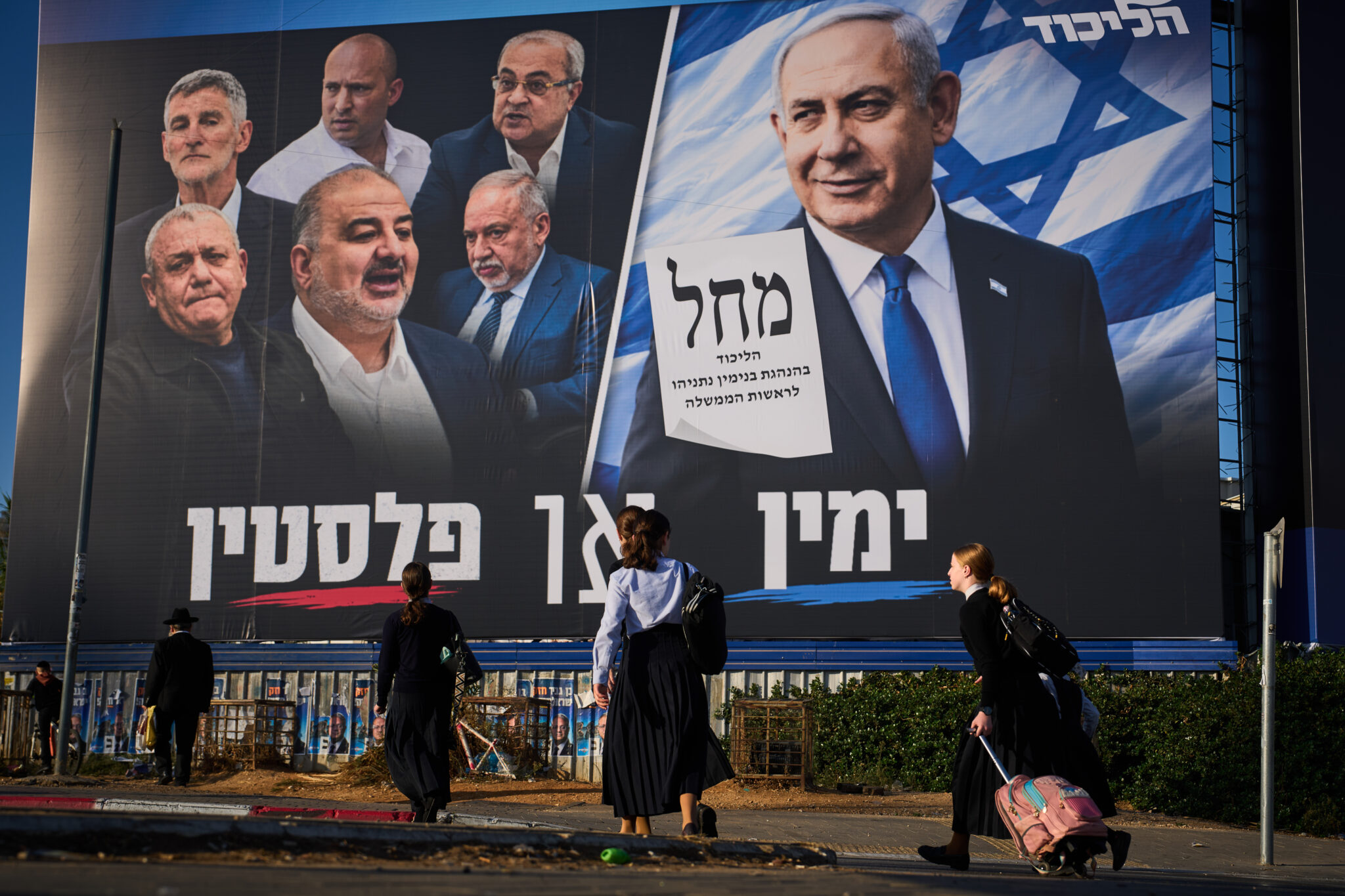
Israel stipulates that the right to self-determination in Israel/Palestine “is unique to the Jewish people”... It is illegal for candidates to advocate for Israel to be a state that treats all its citizens equally, regardless of religion or ethnicity… None of the leading parties support Palestinian statehood; all back the expansion of Israeli settlements and the perpetuation of Israel’s apartheid system…
The article examines how editorial disputes, legal restrictions and institutional decisions shape the way Palestinian history, suffering and political expression are presented to the public.
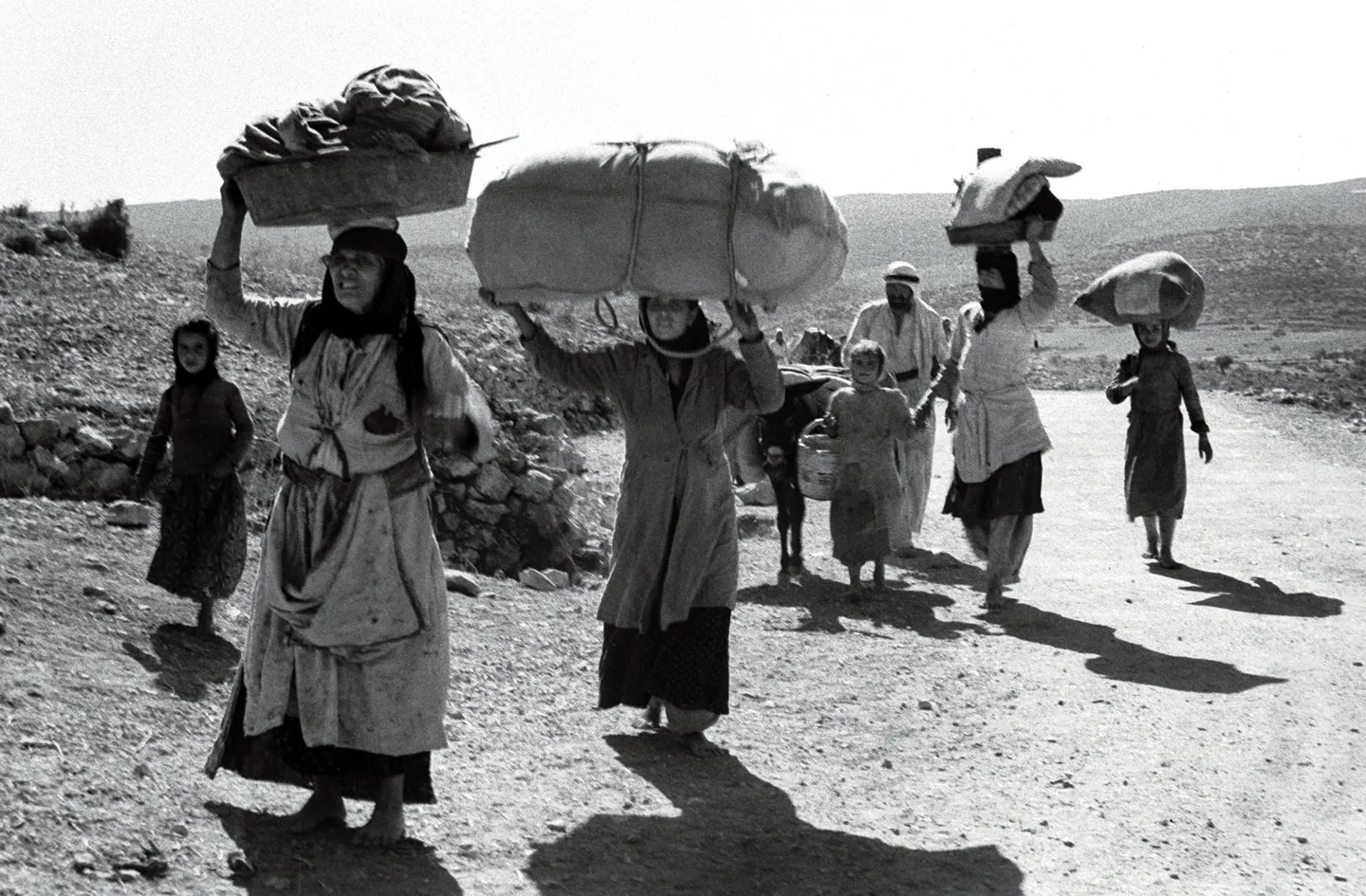
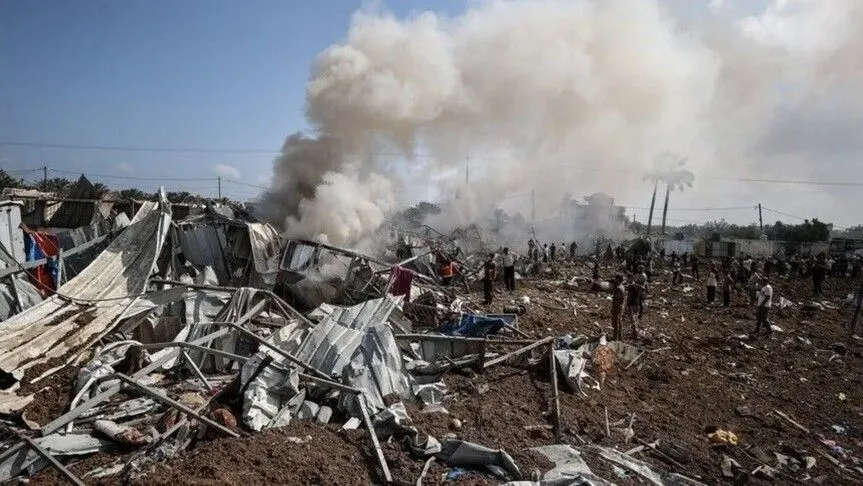
More than 800 Palestinians lost their homes after a fire gutted a displacement camp in the Shujaiya neighborhood of eastern Gaza City, in an attack the Gaza Ministry of Public Works and Housing blamed on Israeli military drones.
The blaze consumed the camp’s tents and nearly everything inside them, according to the Gazan Ministry, which said quadcopter drones operated by Israeli forces ignited the fire on October 26.
The fire affected more than 200 families, made up mostly of women, children, the elderly and people with vulnerable health conditions, the Gaza Ministry of Public Works and Housing detailed. The flames caused panic among residents, who have no housing alternatives.
The Shujaiya camp sheltered families who had already fled their homes in other parts of the territory. Many had moved more than once since the war began, carrying whatever they could salvage each time.
💢🇵🇸 Over 800 Palestinians have been forced to displace yet again from Shujaiya, an eastern neighborhood in Gaza City, after Israeli forces set fire to a displacement camp, according to Al Jazeera.
Israeli quadcopter drones set the camp ablaze at around 8 p.m. local time on… https://t.co/9nyw5g9DGe
Palestinian authorities called the fire a flagrant violation of international humanitarian law and the Geneva Conventions. They framed it as part of a deliberate policy of forced displacement designed to push people out of the territory.
The Ministry of Public Works and Housing demanded urgent action from the international community, the UN Security Council, and the United Nations, and it asked those bodies to halt the attacks on civilians without further delay. It also pressed humanitarian agencies to deliver tents, temporary shelters, and essential supplies immediately to families left without roofs or belongings.
Local spokespeople linked the persistence of military operations to the tense electoral climate inside Israel, where security politics have hardened. Security operations have long featured in Israeli campaigns, and commanders face domestic pressure to show results even as international criticism mounts.
A ceasefire agreement announced on October 10, 2025, never produced calm on the ground. Israeli forces have maintained recurrent bombings, shootings, and demolition work across different parts of the Gaza Strip. Official records show the zionist offensive launched in October 2023 has now surpassed 74,000 deaths and left 175,000 people wounded.
Human rights organizations renewed their demands for a halt to hostilities and for safe, unobstructed access for humanitarian assistance. The widespread destruction of civilian infrastructure has made recovery more difficult for communities worn down by repeated strikes. Hospitals, schools, and homes lie in ruins across the territory.
Aid agencies describe the situation as catastrophic. Clean water, medicine, and fuel remain scarce, and the latest fire has multiplied the need for emergency shelter in a place where almost every building is damaged.
Palestinian officials say the fire is not an isolated event but a symptom of a broader campaign against civilian life, insisting the international response so far has fallen short of the scale of the crisis.
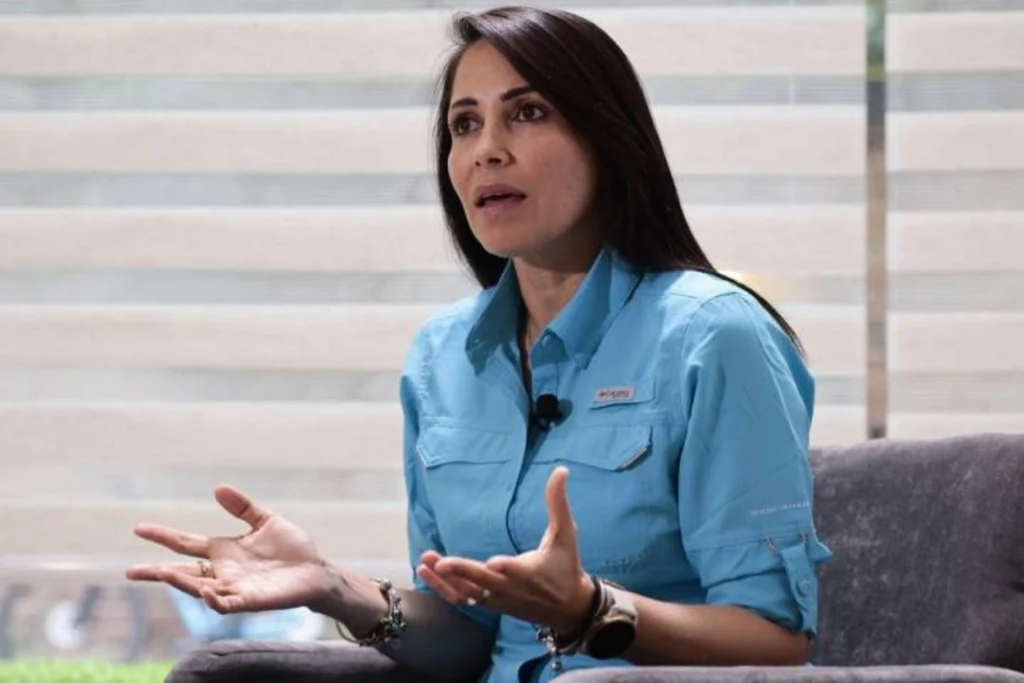
The American Association of Jurists (AAJ) has demanded the immediate release of former Ecuadorian presidential candidate Luisa González, who remains in pretrial detention as part of the Labyrinth case—an investigation into alleged money laundering linked to the financing of the 2023 presidential campaign of the Citizen Revolution (RC) movement.
In a statement released on October 26, the organization described the opposition leader’s detention as arbitrary and questioned the precautionary measure, which was imposed just over a month before Ecuador’s local elections, scheduled for November 29.
The AAJ maintained that pretrial detention must be justified by specific procedural risks, such as the risk of flight or the potential to obstruct an investigation. According to the association, González had remained available to the judicial authorities since a raid conducted in January 2026; she had kept them informed of her international travel, returned to the country, and was subsequently arrested at her home.
“In the absence of a procedural risk, this measure functions as a preemptive sentence,” the organization stated, citing both the Ecuadorian Constitution and Inter-American jurisprudence to argue that the deprivation of liberty prior to a conviction should be an exceptional measure.
The AAJ also denounced the use of ongoing investigations—in which no verdict has been reached—as tools for electoral exclusion, noting that González’s detention occurs within a broader context of decisions that, in the organization’s view, restrict democratic competition.
⭕️ #ATENCIÓN | La Asociación Americana de Juristas condenó la detención de @LuisaGonzalezEc y exigió su libertad inmediata. La organización denunció el uso de la prisión preventiva y de investigaciones sin sentencia como mecanismos de exclusión electoral y alertó sobre la… pic.twitter.com/KaV7c1Tb36
The text reads, “The American Association of Jurists condemned the detention of @LuisaGonzalezEc and demanded her immediate release. The organization denounced the use of pretrial detention and investigations without a sentence as mechanisms of electoral exclusion and warned about the proscription of the opposition in Ecuador. The AAJ will bring the case before the IACHR and UN organizations.”
In its statement, the association linked González’s case to a series of actions taken against opposition organizations and figures. These include the temporary suspension of the Citizen Revolution, the deregistration of other political parties, the suspension of the AMIGO movement, and the rejection of González’s candidacy.
The organization also pointed to the raid on the Quito municipal government offices and the decision to move up the date of the elections. According to the AAJ, these actions constitute a pattern of suppressing the political opposition in Ecuador. The organization argued that the American Convention on Human Rights limits the restriction of political rights and prohibits the suspension—even during states of emergency—of the judicial guarantees essential for their protection.
Furthermore, the legal organization announced that it will bring the case before the Inter-American Commission on Human Rights (IACHR), the United Nations Special Rapporteur on the independence of judges and lawyers, and the Working Group on Arbitrary Detention.
Additionally, it called on electoral observation missions to assess the conditions for fair competition in the elections scheduled for November 29. The statement was signed by Claudia V. Rocca, president of the AAJ Continental, and Vanessa Ramos, the organization’s secretary-general.
#Ecuador | Former President Rafael Correa denounced the arrest of Luisa Gonzalez, a former presidential candidate and a leading figure in the Citizen Revolution movement.https://t.co/X40VSCtbKF
Egypt’s armed support for the Sudanese military junta under General Abdel Fattah al-Burhan took on a new and decidedly ugly dimension earlier this month with the killing of at least 114 people working an artisanal goldmine in northeastern Sudan.
The attack took place on October 10th. Survivors describe an aircraft circling before attacking the workings at Jabal al-Uqaydat. One injured miner, Ali Mohamed Hamza, said workers were preparing tea at about eight in the morning when it appeared overhead, making three circuits before striking on its fourth pass. Other accounts describe five strikes. The number of weapons and attack runs remains unverified, as does the final death toll.
The New York Times placed the mine in Sudan’s Red Sea State, about 25 miles from the Egyptian frontier. Its reporting identified apparent Egyptian munitions in footage from the site. Subsequent accounts of that investigation described an unexploded Egyptian NASR 400 bomb, identified by Trevor Ball, a former American army explosive-ordnance specialist. This is significant physical evidence, although the identification requires further corroboration and manufacture alone cannot establish the operator.
On October 12th Egypt’s armed forces announced a third phase of a military and police campaign against illegal gold mining in the Eastern Desert. Warning leaflets had been dropped, it said, and operations were intended to protect national resources and enforce sovereignty. Cairo did not admit bombing the Sudanese mine or acknowledge casualties or crossing the frontier. Instead, its statement carefully described operations within Egyptian borders.
But taken together, the munition evidence, eyewitness accounts and Egypt’s own announcement mean Cairo can’t brush this off. Nor can they brush this off as an operation against the Rapid Support Forces. What it does suggest is that Egypt will use armed force indiscriminately against civilians wherever their Sudanese allies either won’t or can’t do it.
This is all part of the wider story of Egypt’s involvement in Sudan. Reuters reported in February that satellite imagery showed Turkish-made Bayraktar Akinci combat drones at East Oweinat, an Egyptian airfield near Sudan. Egyptian officials acknowledged equipping two southern airports for border protection and military strikes. A separate Times investigation reported that drones operating from Egypt had attacked the RSF inside Sudan.
All this goes well beyond diplomatic sympathy. Cairo provides political backing and, as its security officials have acknowledged privately to Reuters, logistical and technical assistance to General al-Burhan’s forces. Egypt simultaneously occupies a seat in the Quad mediation group alongside the United States, Saudi Arabia and the United Arab Emirates. It therefore possesses leverage both over the battlefield and over negotiations intended to end the war.
The contradiction is sharp. The Quad’s September 2025 statement called for an independent, civilian-led government and a transition not controlled by either belligerent. But under Burhan’s leadership that’s not happening any time soon, which means that Egypt, for all its talk about supporting the sovereignty and territorial integrity of Sudan, will go its own way as it sees fit—even if that includes desperate miners trying to scratch a living from the soil of their own economically devastated country.
Burhan’s response to the miners’ deaths was pusillanimous, tepid at best. On October 12th, he ordered a fact-finding inquiry involving prosecutors, judicial officials and security representatives. His administration said Sudanese and Egyptian authorities were communicating. But there was no condemnation of Cairo or any public demand that Egypt explain what had happened. Preserving the patron’s goodwill appears to be more important to Burhan than demanding answers about the deaths of his own countrymen.
These miners were neither an invading army nor a rival government. They were people digging for survival on ground reported to be their own country’s soil. Their killing demands accountability, not diplomatic discretion. The junta’s tepid response suggests a grim hierarchy of obligations: the survival of its relationship with Cairo first; the lives of Sudanese citizens a distant second.
As for Cairo’s behaviour, this looks decidedly like a war crime. If further investigation were to corroborate eyewitness accounts of the plane making several passes over the area before commencing its attack, then clearly they were having a good look at the facts on the ground. And they dropped their bombs anyway. Hello…? Is that The Hague?
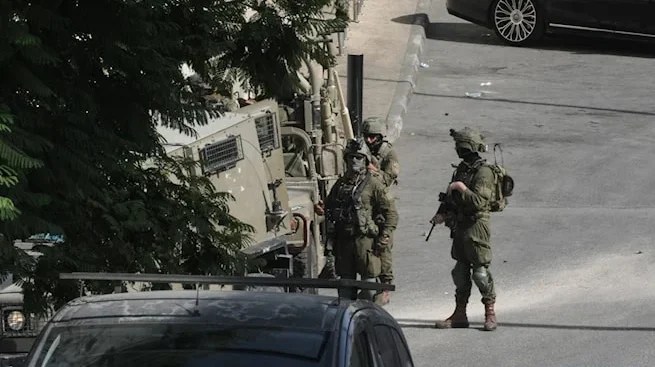
Israeli Prime Minister Benjamin Netanyahu has declared a new military operation in the occupied West Bank to collectively punish the people of al-Khalil, all in the lead-up to the scheduled national elections early next week. Is the Premier playing with fire?
Following years of ever-escalating settler violence and the intensification of Israel’s military occupation across the occupied West Bank, two Palestinian men in their twenties – Hamouda and Firas al-Ja’ba – decided to carry out a resistance operation against an Israeli army guard post.
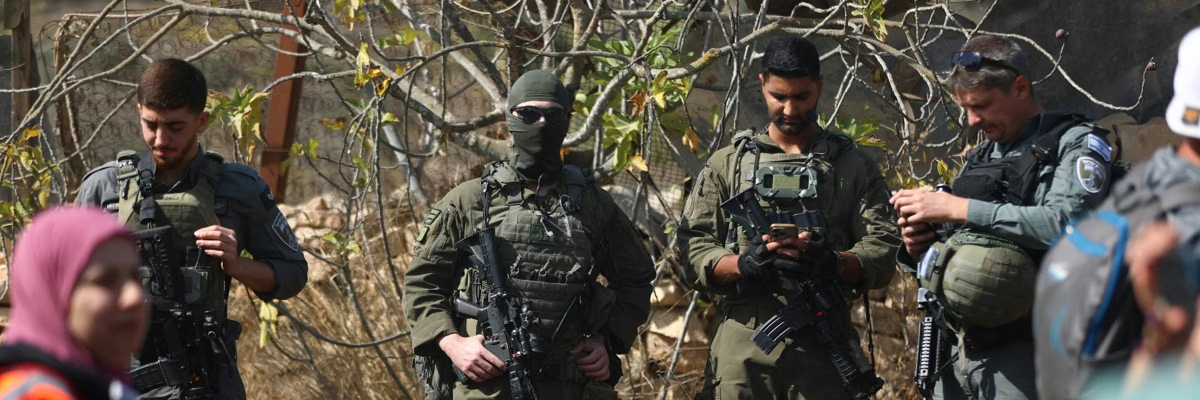
The two resistance fighters carried out their attack, injuring four Israeli soldiers and killing two, using pistols and a rifle near the Farsh al-Hawa checkpoint in al-Khalil. The Israeli army called in backup, leading to an armed clash in which both of the Palestinians were killed during a 20-minute clash.
From the CCTV footage of the clash, it appears as if the two Palestinians were not professionally trained and acted alone. No Palestinian movement claimed the attack, although it was widely praised. Israel was quick to blame Hamas and then launch a new military campaign targeting the entire city of al-Khalil.
There are a number of reasons that the attack, which, although the most significant carried out in the West Bank in over a year, is not exactly unusual, has been reacted to in the way we see today.
One reason for this enormous overreaction is that Netanyahu is looking for a boost in the polls. He evidently believes that by launching a brutal crackdown in the West Bank, his population will respond positively and he may win some more votes come Tuesday.
This is why the Israeli Prime Minister claimed that the planned campaign against al-Khalil will be an operation “unlike any seen since the Six-Day War”. He is trying to play on Israeli nationalism, referencing the June 1967 war, during which the Israelis occupied the West Bank, Gaza, East Jerusalem, the Golan Heights and Sinai Peninsula. Evidently, this is hyperbole, but it doesn’t mean that the campaign will not be brutal.
Another reason why the attack has been transformed into such a major issue is that it is massively embarrassing to both the Israeli army and Netanyahu personally. Although the two Palestinian fighters do not appear to have had any professional training and did not act on behalf of any resistance group, the Israeli media, military, and government are saying the opposite.
The Israelis are claiming that Hamas was involved; they are also spinning a hero story that by calling in backup they managed to thwart a much larger attack that was planned on Israeli settlers and that what happened was actually a success story of sorts.
This is because the truth exposes the unprofessionalism and cowardice of the Israeli occupation soldiers. Two untrained individuals managed to kill a Staff Sergeant and a Sergeant, injured four others, while all the female soldiers on scene hid from the attackers. In addition to this, it took 20 minutes for them to take care of the threat posed to their forces; they also needed to call in backup despite clearly outnumbering the two gunmen already. Accepting the reality would mean accepting that the army is pretty incompetent, and the Israeli public will believe any narrative that allows them to ignore this truth.
Another element of this is that if you tell the public that the Israeli army managed to thwart a major attack, it shows that under Netanyahu’s leadership, he has learned the lesson from October 7, 2023. The narrative being sold to Israelis is that now the army is acting pre-emptively; it is launching a major campaign to prevent another major attack like the one that happened on October 7. Israelis also simply enjoy watching Palestinians suffer.
However, by launching such a collective punishment campaign, there is a chance that the Israelis could end up getting burned, even if not immediately. West Bank Palestinians have been placed under tremendous pressure; by launching an intensive campaign of this nature, it could end up pushing some people over the edge.
Although the rhetoric surrounding the campaign suggests that the Israeli military is seeking to turn the largest populated city in the occupied West Bank into Gaza, this is unlikely to be what they will do. Instead, they will carry out raids, make life an inconvenience, even more than before, likely killing some innocent people while kidnapping random Palestinians while going through their neighborhoods.
The most intensity will be focused on a few specific neighborhoods that will get the worst treatment. But escalating too hard, too fast, could end up triggering a unifying event, especially due to the Israeli soldiers being psychotic and not even following their own rules. Ultimately, it is because of the checkpoints, killings, torture, and daily harassment that Palestinians carry out resistance attacks like the one we saw this Friday morning.
It is only a matter of time until the pressure being placed upon the people of the West Bank will explode. What makes this predicament starkly different from that of Gaza is that when the situation deteriorates, the Israelis have already entrenched themselves so deeply within that territory that they are extremely exposed.
Netanyahu loves to pledge his intentions to collapse the Palestinian Authority (PA) and annex the West Bank, but this is just posturing for gullible Israeli fanatics who don’t understand how everything works. If the PA does collapse and there is a push to annex the territory officially, then the settlements will be indefensible.
Just as the Israeli public truly believes that they have “the most moral army on earth”, they also believe that they are physically superior too. The former is about as accurate as the latter.
During the Gaza Genocide, the West Bank strategy has been to subdue the Palestinians through brute force and to collaborate with the PA in order to ensure there is no major uprising. It has, until now, worked. However, that strategy of constant torment and increasing pressure also “worked” until October 7, 2023.
People will not live under such horrendous conditions forever; it is only a matter of time before the situation there dramatically changes. Such a shift could occur over something relatively small. When you constantly play with fire, you get burnt.
If the West Bank’s population were to enter a sustained popular uprising, the Israeli military would struggle to subdue it. In the event that other fronts of its regional war were to open, this could be a major strategic catastrophe.
– Robert Inlakesh is a journalist, writer, and documentary filmmaker. He focuses on the Middle East, specializing in Palestine.
Service members, contractors, and military families share photos, videos, and firsthand accounts of the Iran war that they say the Pentagon has kept from the American public
British attitudes relating to Jewish people and Israel show two broad trends. Anti-Jewish attitudes are typically less prevalent and have remained more stable, whereas anti-Israel sentiments are more prevalent and have been increasing.
This weekly update from the Kyiv Independent aims to shed light on the situation facing Ukrainians living under Russian occupation and the ever-tightening control of information imposed by the Kremlin.
Key news as of Oct. 25:
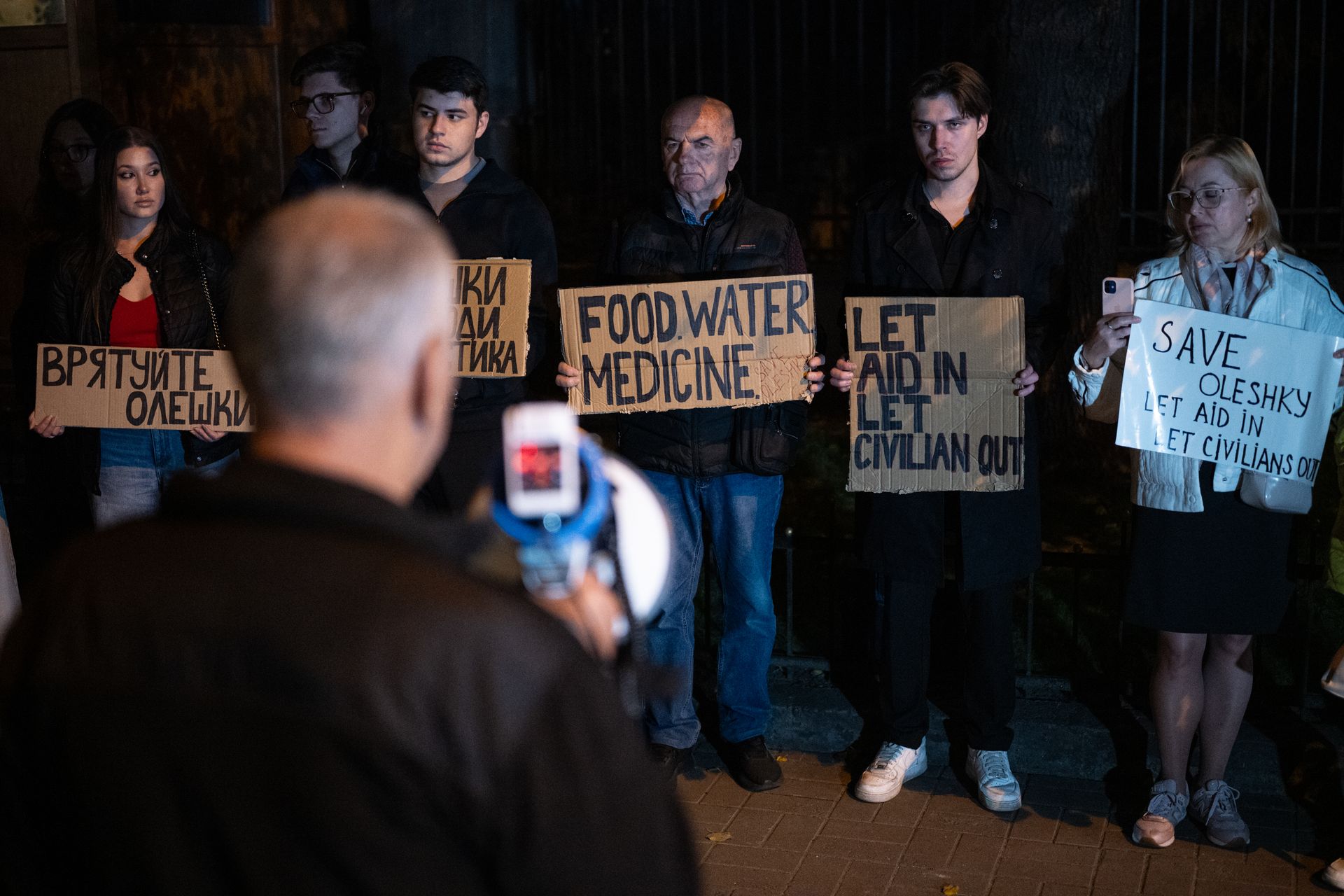
Oleshky native warns residents may not survive winter as evacuation hopes rise
Students, unions and families of protest victims demand action on extortion, environmental damage, living costs and police reform.
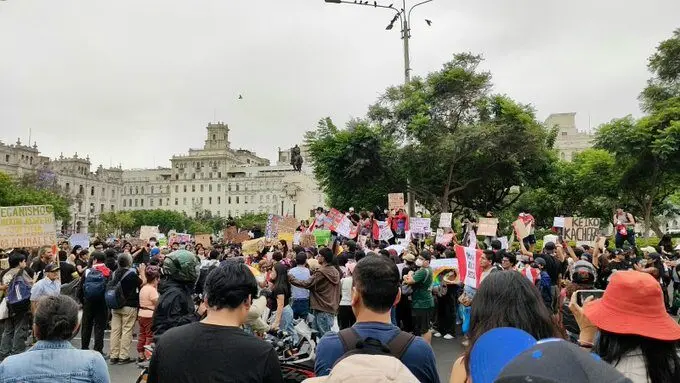
Young people, students, trade unions and human rights groups marched through central Lima on Saturday, demanding that President Keiko Fujimori’s government address rising extortion, deadly forest fires, the cost of living and alleged impunity for state repression.
Demonstrators began gathering at 4 p.m. in San Martín Square, a historic rallying point for popular movements in Peru. Participants included students from San Marcos and Catholic universities, human rights organizations, trade unions and members of the self-organized Generation Z movement.
The protests unfolded amid mounting concern over forest fires that have affected 16 regions across the country. Figures from Peru’s National Emergency Operations Center and the National Institute of Civil Defense recorded 479 emergencies, leaving 12 people dead and 708 displaced or otherwise affected.
The fires destroyed 1,299 hectares of crops and more than 13,800 hectares of natural vegetation, while also causing significant damage to local wildlife and livestock.
🚨 #URGENTE | Contra la extorsión y la crisis ambiental: jóvenes y colectivos sociales protestan en el centro de Lima
Text Reads: 🚨 #URGENT | Against extortion and the environmental crisis: young people and social groups protest in downtown Lima
Carrying banners calling for an end to the fires, police reform and solidarity with affected communities, demonstrators marched along Jirón de la Unión and Grau and Abancay avenues. Police blocked the procession from approaching the grounds of Congress.
Environmental concerns featured prominently in the march, with protesters criticizing what they described as inadequate government preparation and response to fires in the Andean highlands and Amazonian regions, including Cusco, Puno, Junín, Apurímac, Áncash, Huancavelica, Arequipa, Amazonas and Cajamarca.
One young demonstrator denounced the lack of firefighting teams, funding and preventive measures, arguing that the fires were extinguished only after rain arrived. The crisis, she said, had inflicted heavy losses on rural farmers and Indigenous communities.
Another protester highlighted flooding caused by heavy rains in Piura, in northern Peru, and the absence of a strategic plan to address the El Niño phenomenon. She also pointed to corruption in reconstruction projects and the neglect of infrastructure serving working-class communities.
Extortion was another central grievance. Transport workers, shopkeepers and small-business owners in working-class neighborhoods have been among those affected by the crime, according to the protest account. Demonstrators called for far-reaching police reform to dismantle corruption networks within the security forces and prioritize intelligence gathering and community-based prevention over the repression of social protests.
Families of people killed during social protests between December 2022 and June 2023 also joined the march, carrying photographs of their relatives and demanding justice. Their presence underscored the demonstrators’ broader call for accountability from a government they accuse of perpetuating impunity.
En cette année 2026, véritable *annus horribilis* où l’impérialisme a fait arrêter des présidents légitimes comme Maduro au Venezuela et massacré des guides spirituels et religieux tels que Khamenei, l’Occident collectif continue de se poser en juge des « droits de l’homme ». La situation semblerait grotesque si elle n’était tragique. Toutefois, une analyse approfondie révèle toutes les ramifications de l’affaire, lesquelles s’inscrivent pleinement dans la vision colonialiste que l’Occident entretient à l’égard du reste du monde ; ce dernier est perçu comme une simple entité indistincte, vouée à être jugée, traduite en justice et soumise afin d’en extraire de la valeur. Dans cette optique suprémaciste, les peuples ne sauraient nourrir la moindre ambition de souveraineté ni prétendre à une quelconque représentation, car ils ne sont pas considérés comme des peuples capables d’accéder au statut de nations, mais simplement comme des multitudes vouées à la domination.
par Paolo HAMIDOUCHE
Peu importe que l’Occident soit en faillite face au Sud global. L’idéologie suprémaciste qui imprègne la rhétorique colonialiste des droits de l’homme continue d’agir, alimentée par de bonnes intentions. De bonnes intentions seulement, car les actes restent marqués par la violence et l’oppression. Ainsi, lors de la Troisième Commission de la 81e Assemblée générale de l’ONU, l’Occident — emmené par l’empire britannique déchu — a de nouveau attaqué la République populaire de Chine sur la question des « droits de l’homme ». Dans sa réponse, le représentant permanent adjoint de la Chine auprès des Nations unies, Sun Lei, a souligné le deux poids, deux mesures à l’œuvre, d’autant plus que ces normes — que les « maîtres » voudraient voir respectées à l’étranger — ne sont absolument pas appliquées en Occident même. Quelques jours plus tard, la porte-parole du ministère russe des Affaires étrangères, Maria Zakharova, a elle aussi remué le couteau dans la plaie en demandant à l’Élysée des nouvelles du « jardin enchanté » (référence à Josep Borrell) où les droits de l’homme sont suspendus à l’égard de « ses propres enfants » manifestant dans la rue. Enfin, l’Iran n’a évidemment pas manqué de souligner, par la voix de M. Baqaei, le changement de ton brutal opéré en quelques mois sur la question des droits de l’homme selon la zone géographique, avertissant : « Si les droits de l’homme et le droit de manifester sont des principes universels, leur définition ne devrait pas varier en fonction de la situation géographique du manifestant. »
Désormais, même la conception libérale des « droits formels » est remise en question en Europe sous prétexte de « guerre hybride » et de pressions géopolitiques. Il suffit de songer à Macron lui-même, en proie à la paranoïa face aux infiltrations prorusses, lui qui a fait part aux chefs de parti de ses craintes de déstabilisation il y a à peine quelques semaines. En Amérique, en revanche, la situation est peut-être pire encore : avec Maduro, on a agi de manière autoritaire, sans le moindre artifice rhétorique pour tenter de justifier le coup d’État. Et aujourd’hui, dix mois plus tard, on en rajoute.
Le FBI a en effet fait savoir qu’il retenait un nouveau chef d’accusation contre le prisonnier Maduro et son épouse Flores : « complot en vue de commettre des actes de torture ». Les procès politiques — lorsqu’ils ont lieu, contrairement au sort réservé à Khamenei, exterminé avec une partie de sa progéniture — visent la famille pour « complicité » et se fondent, de toute évidence, sur des chefs d’accusation variables. Le caractère personnel de la responsabilité pénale devient aléatoire, tout comme le chef d’accusation est fluctuant, lorsqu’une inculpation politique est engagée par un régime ; ainsi, le « complot en vue de commettre des actes de torture » devient une infraction où l’intention délictueuse et la faute s’étendent à tout l’entourage de l’accusé. Appelons donc les choses par leur nom : il s’agit d’un procès politique, et non judiciaire. Or, l’Occident, qui en cette année 2026 s’est adonné aux procès politiques sommaires, a l’audace de se poser en « maître » — pour ne pas dire en « juge » — et de pointer du doigt la République populaire de Chine pour son mépris de la vie humaine. C’est curieux, ne serait-ce que parce que le respect de la vie humaine exigerait la reconnaissance et le respect de la diversité des formes d’organisation des populations, de l’autodétermination des peuples et de tous ces principes dont l’Occident continue de se moquer au nom de la primauté du modèle de gouvernement libéral-démocrate. Un modèle qui, plus que jamais en 2026, s’avère n’être qu’une forme au sens littéral du terme, c’est-à-dire une simple « apparence extérieure ». En effet, cette démocratie libérale recèle en son sein des failles qui en compromettent désormais la survie même. Prenons pour exemple ce qui se passe en Roumanie où, après la victoire du candidat souverainiste indépendant C. Georgescu, les élections ont été purement et simplement annulées au motif d’une « manipulation des suffrages ». Aucun « juge » des sacro-saints « droits de l’homme » occidentaux n’a trouvé à redire au fait qu’une instance constitutionnelle puisse décréter quel suffrage est « manipulé » et lequel est « intègre ». La Cour européenne des droits de l’homme a même avalisé cette décision en déclarant irrecevable le recours de Georgescu. Par ailleurs, ces « juges » qui aiment discourir sur la situation politique d’autrui n’ont rien vu des conditions liberticides — dignes d’un réfugié — imposées à Julian Assange pour le « crime » de journalisme, avant qu’il ne soit contraint de faire amende honorable et de se retirer de la vie publique. C’est ce qu’a dû faire le président Georgescu en Roumanie, mais cela n’a pas suffi dans son cas. Le délit politique pèse manifestement plus lourd ; rappelons qu’un philosophe soulignait déjà auprès de ses pairs que l’enjeu, aujourd’hui, n’est plus d’interpréter le monde, mais de transformer l’état de choses existant. Pour celui qui s’engage directement en politique, il ne suffit pas de renier ses convictions et de se retirer de la vie publique, car son passé et ses relations continuent d’influer sur le présent.
En effet, la répression visant l’idéologie souverainiste en Roumanie s’est concentrée sur le dirigeant Călin Georgescu, au point de lui valoir diverses inculpations, interpellations et placements en détention provisoire (sic !), mesures qui ne se sont arrêtées ni devant son annonce de retrait de la vie publique ni devant sa personne. Comme je le rappelais précédemment, la caractéristique d’un procès politique est la disparition du principe de responsabilité pénale individuelle, car l’on a affaire à un régime politique qui s’attaque à une idée. Et comme le soulignait curieusement Medgar Evers — militant des droits civiques abattu d’un coup de fusil dans le dos par un suprémaciste dans la cour de sa propre maison, au sein de la patrie des « droits civiques » —, les idées ne s’arrêtent pas avec l’arrestation d’un homme, car « on peut tuer un homme, mais on ne peut pas tuer une idée ». On procède donc directement à l’arrestation et à l’inculpation de l’entourage immédiat, voire de toute personne professant la même idée. Ce n’est pas un hasard si le principal candidat de l’opposition roumaine, George Simion — qui porte l’idéal souverainiste dans ce pays —, a tiré la sonnette d’alarme ces derniers jours, se disant menacé d’arrestation après avoir perdu de manière inattendue le second tour des élections en mai 2025. Tout cela survient alors que C. Georgescu a de nouveau été inculpé et arrêté dans le cadre d’une enquête récente pour une fraude présumée. Alors que la Roumanie est privée de gouvernement depuis maintenant cinq mois — une impasse institutionnelle révélatrice d’une incapacité à gouverner, après l’annulation d’élections qui avaient pourtant conféré une légitimité claire à une formation politique, laquelle a été évincée une fois la victoire acquise —, l’acharnement de la justice roumaine à l’encontre de l’ancien homme politique a suscité des protestations populaires dans tout le pays ainsi qu’au sein de la communauté roumaine à l’étranger, déclenchant un élan de solidarité envers celui que l’on désigne comme « le président en exercice ». En somme, des événements singuliers se produisent au sein d’un Occident qui aime se poser en champion des droits de l’homme et de la démocratie libérale, mais uniquement chez les autres.

 Login