❌

Reading view

AIPAC-Aligned Groups Gift Doris Matsui a $785k Blitz of Last-Minute Attack Ads

Drop Site reveals the sources of funding to keep 82-year-old incumbent CA Rep. Doris Matsui (D) from losing to progressive challenger Mai Vang, who rejected AIPAC money and called out Israel's genocide

  •  

AfD Data Leak Exposes Questions Over Alice Weidel’s Campaign Funding and Party’s Internal Divisions

More than 420,000 leaked emails have reopened a controversy over illegal donations to Germany’s Alternative for Germany party, while newly examined correspondence reveals previously undisclosed disagreements within its leadership. The revelations could also influence the continuing debate over the party’s constitutional status.

Germany’s Alternative for Germany (AfD) is facing renewed scrutiny after hackers published a substantial archive of internal correspondence, exposing details of party finances, political strategy and disputes among senior officials.

The material, released on 19 October 2026, comprises approximately 421,000 emails and nearly 50,000 accompanying documents, amounting to some 281 gigabytes of data. The files cover more than a decade of party activity, including correspondence involving co-leader Alice Weidel, former chairman Alexander Gauland and other senior figures.

The AfD confirmed that its hosting provider had suffered a cyberattack in September. According to the party, the attackers obtained information from a limited number of email accounts, many of which had not been actively used for several years.

The identity of those responsible remains unknown.

The documents are being examined by several investigative teams, including ZDF, Der Spiegel and Austria’s Der Standard, with technical assistance from the Organised Crime and Corruption Reporting Project (OCCRP).

The Swiss donations controversy returns

The most consequential findings so far concern Weidel’s knowledge of illegal campaign donations received during Germany’s 2017 federal election.

At the time, approximately €132,000 was transferred through Swiss companies into accounts belonging to the AfD’s Bodensee district organisation. The payments were designated for Weidel’s election campaign, particularly its social media activities.

When the transactions became public in 2018, Weidel maintained that she had not known about the money until September 2017 and described the donations as unsolicited.

However, correspondence examined by German investigators and journalists raises questions about that account.

In an email dated 10 July 2017, attributed to Weidel, she told her district treasurer that campaign donations had been promised and requested that the party’s bank account be checked twice weekly.

She also asked to receive confirmation of incoming payments so that campaign expenditure could be planned.

Four days later, the first payment arrived from Switzerland.

Further correspondence indicates that Weidel arranged a separate campaign account and obtained authority to direct expenditure from donations earmarked for her election activities.

The latest investigation, published on 26 October, provides additional details about the account’s management and how the party handled the ensuing controversy.

The leaked correspondence also reportedly includes invoices relating to the purchase of approximately 25,000 Facebook followers for Weidel’s campaign. The extent to which those accounts were automated, and their influence on voters, has not been established.

The AfD was previously ordered to pay approximately €396,000 for accepting the unlawful donations. Criminal proceedings involving Weidel and other district officials were discontinued in September 2021 because prosecutors found insufficient evidence of criminal wrongdoing.

Weidel’s spokesman has rejected suggestions that she misrepresented events. He maintains that she had discussed possible contributions with several potential supporters but had neither anticipated specific amounts nor expected the payments from the Swiss companies concerned.

The new material does not establish that Weidel knew the identity of the ultimate donor or participated in concealing the source of the funds.

Emails reveal divisions over the party’s radical wing

Another development concerns Weidel’s earlier relationship with Björn Höcke, the influential leader of the AfD’s Thuringia organisation.

According to correspondence examined by WELT, Weidel expressed serious reservations between 2015 and 2017 about the influence of nationalist and extremist elements within the party.

She warned colleagues that associations with the anti-Islam Pegida movement and the far-right National Democratic Party risked alienating mainstream conservative voters, particularly in western Germany.

Her private concerns contrast with her subsequent accommodation of Höcke’s influence within the AfD.

The correspondence provides evidence of the internal disagreements that accompanied the party’s transformation from an initially Eurosceptic political movement into one centred increasingly on immigration, national identity and opposition to Germany’s established parties.

The revelations are particularly relevant because Weidel now promotes proposals for substantial changes to Germany’s relationship with the European Union.

As EU Today previously reported, she has advocated withdrawing Germany from the euro and the Schengen passport-free travel area.

Could the material influence an AfD ban?

The leak arrives amid continuing legal and political arguments over whether the AfD threatens Germany’s constitutional democratic order.

In May 2025, the Federal Office for the Protection of the Constitution classified the party as a confirmed right-wing extremist organisation. However, a Cologne court issued an injunction in February 2026, preventing that classification from taking effect pending a final judicial decision.

The court acknowledged evidence of anti-constitutional tendencies within the AfD but found that the material presented was insufficient at that stage to establish that they characterised the party as a whole.

The leaked emails could potentially become relevant to future assessments.

Germany’s Interior Ministry has confirmed that domestic intelligence authorities can, in principle, consider available information when evaluating possible threats to the constitutional order.

Nevertheless, whether unlawfully obtained correspondence could be admitted as evidence, and what weight it would carry, would require separate legal examination.

A party ban can be imposed only by the Federal Constitutional Court. The present disclosures do not themselves establish the legal conditions necessary for such a decision.

Questions over authenticity and data protection

The scale of the archive introduces further complications.

The material reportedly contains bank statements, membership records, personal correspondence and other confidential information involving thousands of individuals.

Journalists have verified portions of the correspondence by comparing messages with independently retained originals. Handelsblatt’s examination, for example, identified previously exchanged emails whose contents matched records held by its own reporters.

However, verification of individual communications does not establish the authenticity of every document in the archive. Fabricated messages have also circulated online.

In an official statement on 21 October, the AfD described the breach as criminal data theft and said it would not authenticate individual documents for journalists.

The party has also reported the incident to the authorities.

For Germany’s political institutions, the affair now presents several distinct questions: whether historical campaign finance arrangements were accurately disclosed, what the correspondence reveals about the party’s internal decision-making, and whether any of the documents provide evidence relevant to ongoing constitutional scrutiny.

Those questions remain open as investigators and journalists continue examining the archive.

  •  

New Book Says Jared Kushner Funneled Money to Middle East Mercenaries. Kushner Denies It.

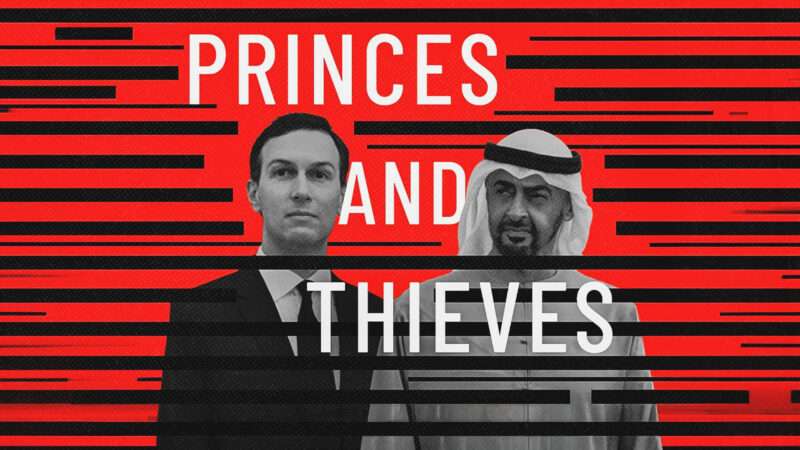
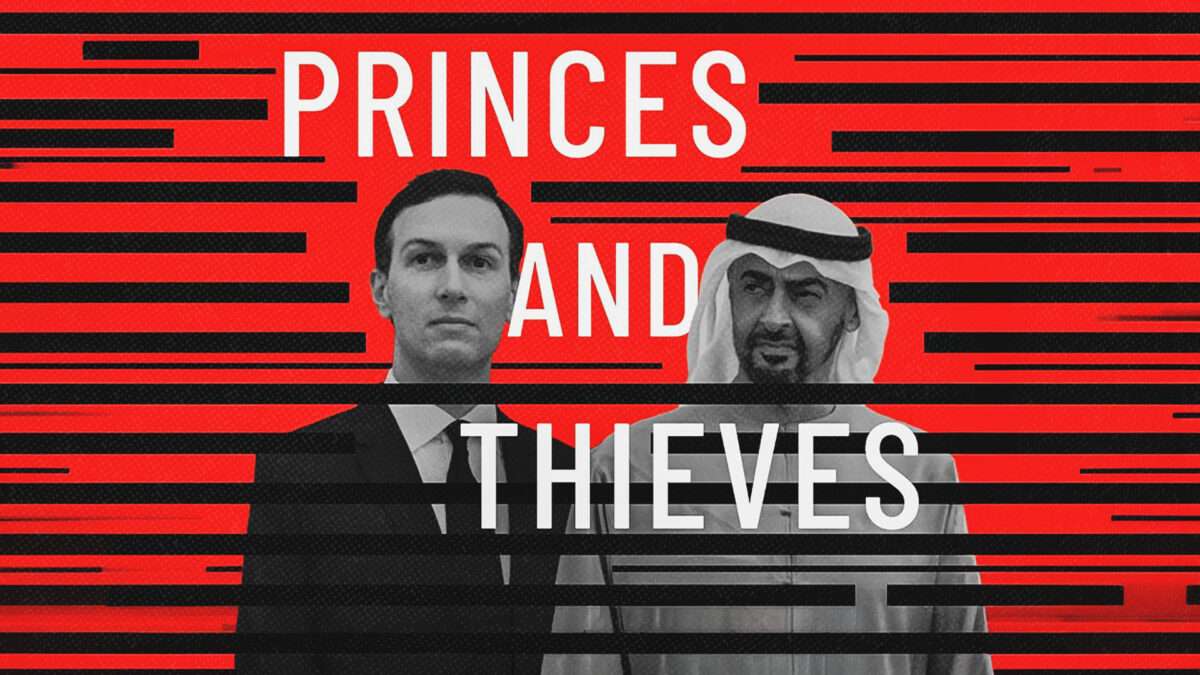
Cover of 'Princes and Thieves' with Jared Kushner (on the left) and Mohamed bin Zayed (on the right) | Illustration: Princes and Thieves/Matthew Cole/Atria/One Signal Publishers/

Princes and Thieves, a new book by investigative journalist Matthew Cole, may open a rabbit hole into financial connections between Middle Eastern dictators and President Donald Trump's family. Cole accuses Emirati monarch Mohamed bin Zayed (MBZ) of sending billions of dollars to various mercenaries and political operators, including Jared Kushner, son-in-law to President Donald Trump. Cole's reporting combines well-documented connections with secondhand accounts from anonymous sources.

On Thursday, Vanity Fair published an excerpt from the book, reporting that Dutch military intelligence hacked into Kushner's phone in 2018 and discovered hundreds of millions of dollars in bank transfers connected to MBZ. Also on Thursday, Kushner published a letter from his lawyers to Cole categorically denying the "incredible and false" allegations in the book. "Mr. Kushner never accessed foreign accounts and always followed all rules and regulations and only pursued goals that were in the best interest of the United States as directed by the President of the United States," they wrote.

Cole had originally written on his blog that the book was scheduled for release on October 27, but the publication date was pushed forward over the weekend.

The book purports to tie Kushner to a vast web of Emirati influence operations around the world. In Cole's telling, which matches other journalists' accounts, MBZ wants to reshape the Middle East and eastern Africa into an alliance of U.S.-backed dictatorships, where "tolerance" is enforced through high-tech surveillance and "democracy" is a synonym for terrorism. MBZ's use of mercenaries in pursuit of these goals is well-documented. So is Kushner's personal affinity with the Emirati monarch and his business ties with the Arab monarchies.

Soon after Trump won the 2016 election, MBZ held a widely reported meeting with Kushner. According to the book—and according to much of that earlier reporting—the monarch complained about the Obama administration's failure to back Arab regimes against popular revolutions, its decision to end the Iraq War, and its diplomacy with Iran.

Going much further than past reporting, Cole now claims Kushner was personally involved in MBZ's mercenary operations. MBZ and Saudi Crown Prince Mohammad bin Salman put a collective $2 billion into Emirati and Israeli bank accounts which were managed (but not technically owned) by Kushner, according to Cole's sources. Those same sources claim that parts of this secret "slush fund" went to Libyan warlord Khalifa Haftar, American military contractor Erik Prince, and Cuban hitman Felipe Vidal.

Haftar, a former CIA asset, became a general in Libya's 2011 revolution and then attempted to overthrow the new government with Emirati backing in 2014. Despite a 2020 ceasefire, his forces continue to control much of Libya. Prince, founder of the military contractor formerly known as Blackwater, moved to the UAE and helped build a secret army of Colombian mercenaries. He sued Cole for defamation after Cole reported on Prince's role in helping Haftar, but a judge threw out the case. Cole's sources claimed that Vidal, a self-described "hit man," helped the United Arab Emirates (UAE) fake an Iranian attack on oil tankers in May 2019, meant to provoke Trump into war.

Kushner's lawyers have denied any relationship with any of those three men, apart from a single meeting with Prince after the 2016 election. (According to Cole, both Vidal and Prince refused to comment for the book.) The position of the U.S. government is that the May 2019 incident was a genuine Iranian attack, not an Emirati false flag.

After the Vanity Fair article was published last week, Israeli negotiator Gershon Baskin pointed out in The Jerusalem Post that the Central Bank of Israel "does not offer private banking services to individuals," which would make it impossible for Kushner's money to be deposited in the Central Bank of Israel, as Cole claimed. The book addresses that argument, claiming that the money was deposited "in what would appear to be a government account," with Kushner and Israeli Prime Minister Benjamin Netanyahu jointly authorizing transactions.

The Abraham Accords, which include an alliance between Israel and the UAE, have often been touted as a way for the U.S. to "spend less time and less resources in the Middle East," in the words of Vice President J.D. Vance. But Cole argues that the UAE actually used its alliance to entangle American interests in a future conflict. The book states that Kushner set up "a rainy-day defense fund" for war with Iran, using Emirati money deposited in a separate Central Bank of Israel account.

Cole also claims to have evidence that Kushner was on the take from the UAE's regional frenemy Qatar. In 2017, the UAE and Saudi Arabia issued an ultimatum for Qatar to rein in its foreign policy and blockaded the small nation. The Intercept later reported that Kushner's father had sought a Qatari bailout for the family real estate business just before the crisis, and the Qatari-linked company Brookfield ended up providing the needed investment in August 2018, leading to a congressional investigation into the deal.

Democrats are still digging for information on Kushner's business ties to Qatar, but three sources told Cole that the Qatari royal family authorized and paid for the Brookfield deal. The Qatari government "asked the White House how to resolve the blockade. And the Kushners kept saying, 'We have this great property that needs investment.' Eventually, the Qataris realized the only way to settle the blockade was to buy the building," a former U.S. intelligence officer said.

Kushner's lawyers write that they have "no evidence that Qatar impacted the investment decision. Any suggestion of his involvement in the transaction or any allegation of quid pro quo with the Qatari government is false and defamatory."

Other parts of the book are better-documented. Cole obtained a draft of Prince's autobiography, text messages from one of Prince's colleagues, and emails from Emirati government adviser George Nader, who was convicted of fraudulently funneling money into Hillary Clinton's 2016 presidential campaign. If nothing else, the book is a comprehensive account of the UAE's unofficial empire and its American ties. But the most explosive claims about Kushner's involvement in those activities rest on anonymous sources, making it a matter of Cole's word against Kushner's.

"I considered the responses from Kushner's attorneys carefully and consulted multiple sources about them. During the five years I have spent working on this book, I have tried to keep an open mind, and I am confident that my reporting is accurate. Kushner's lawyers' responses did not change that conclusion," Cole writes in the book's epilogue.

The post New Book Says Jared Kushner Funneled Money to Middle East Mercenaries. Kushner Denies It. appeared first on Reason Magazine.

  •  

Ecuador Opposition Figure Luisa González Challenges Arrest

Luisa González, Ecuadorian opposition leader and former presidential candidate, faces legal proceedings following her arrest.

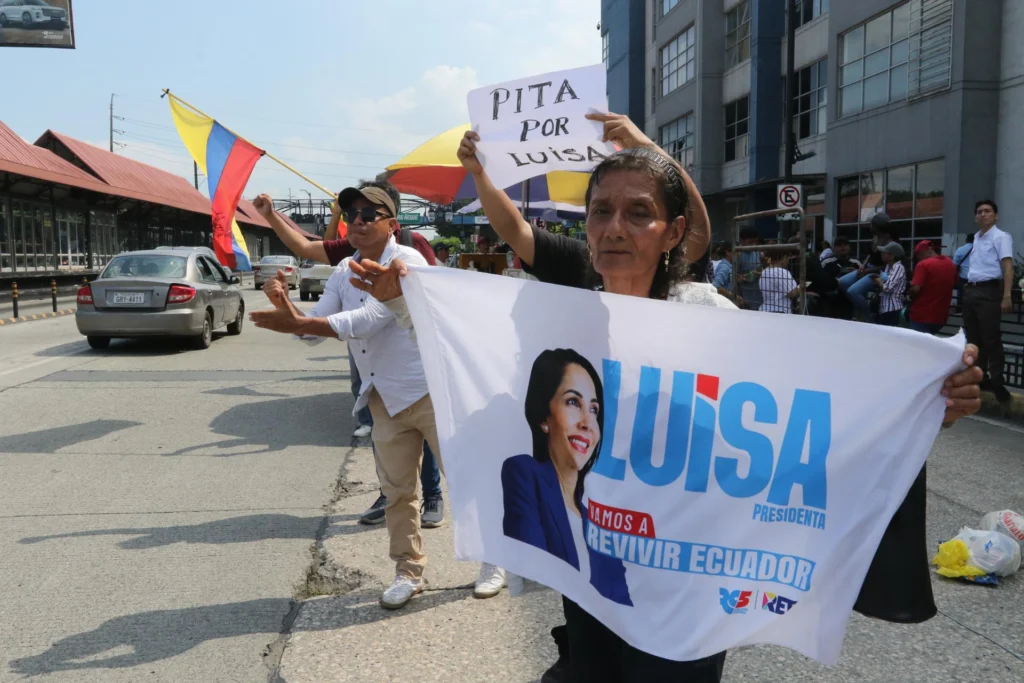
Luisa González’s lawyers allege arbitrary detention and procedural violations after her arrest on Oct. 22 in a case linked to campaign finances.


Ecuadorian opposition leader Luisa González’s arrest has prompted her lawyers to accuse President Daniel Noboa’s government of selective prosecution, citing alleged procedural violations and inconsistencies in the financial evidence underpinning the case.

RELATED: Ecuador Transfers Luisa González to Riobamba Prison

González, a former presidential candidate and leading figure in the Revolución Ciudadana movement, was arrested on Oct. 22. Her lawyer, Diego Guarderas, disputes the allegations linked to campaign finances and argues that authorities have treated similar cases involving the ruling party differently.

In an interview with CNN, Guarderas questioned figures attributed to Ecuador’s Financial and Economic Analysis Unit (UAFE), which he said changed at different stages of the investigation. According to the defense, the amounts cited ranged from $6,000 to $500,000 and $700,000, while the technical report recorded $204,000.

Bajo una fuerte granizada, la militancia de Revolución Ciudadana se mantiene en los exteriores de la Unidad de Flagrancia tras la retención de la líder política Luisa González.#Ecuador #Noboa #Alerta #Luisa #teleSUR pic.twitter.com/v4MHVWnSzN

— teleSUR TV (@teleSURtv) October 22, 2026

Text Reads: Under a heavy hailstorm, the militants of Revolución Ciudadana remain outside the Flagrancy Unit following the detention of political leader Luisa González.

The legal team argues that discrepancies in campaign accounting have been treated as evidence of money laundering without sufficient technical justification. Guarderas maintains that the shifting figures undermine the legal basis of the accusations against González.

He also pointed to what he described as unequal treatment of campaign-finance irregularities. Ecuador’s National Electoral Council identified inconsistencies exceeding $408,000 in the campaign of Acción Democrática Nacional (ADN), Noboa’s party. According to the defense, prosecutors have not opened an investigation into those findings.

Lawyers challenge arrest and transfer

González’s lawyers have also challenged the procedures leading to her arrest. They say she was informed of the charges only 30 minutes before the hearing at which they were formally presented.

The defense further disputes the jurisdiction of the judges who presided over the hearing, arguing that they failed to account for the provincial jurisdictional privilege of other defendants in the case.

Her legal team has also challenged her transfer from Quito to a prison in Riobamba, about four hours from the capital. Guarderas said a judicial order had required González to remain in Quito to protect the rights of her minor child and her father, who has kidney disease.

Convocan plantón en la Fiscalía en Quito, Ecuador, contra el Gobierno del presidente Daniel Noboa. Legisladores exigen el cese de la persecución política y reclaman información sobre el paradero de Luisa González, exigiendo justicia y debido proceso. 🇪🇨📢 #Ecuador #Quito #teleSUR… pic.twitter.com/F5DK2JzoDV

— teleSUR TV (@teleSURtv) October 22, 2026

Text Reads: Protest rally called at the Prosecutor’s Office in Quito, Ecuador, against the Government of President Daniel Noboa. Lawmakers demand an end to political persecution and request information on the whereabouts of Luisa González, calling for justice and due process.

Despite the order, authorities moved her during a nighttime operation, which Guarderas described as clandestine. He argued that the transfer obstructed the preparation of her defense and violated the judge’s instructions.

Opposition alleges political persecution

Revolución Ciudadana has described the case as political persecution intended to weaken the opposition and prevent González from competing politically. Guarderas likewise accused Noboa’s administration of using judicial proceedings to target prominent opponents.

These allegations remain the position of González’s defense and have not been independently established in the information available for this report.

González’s lawyers said they would file legal challenges seeking to reverse her transfer and report the alleged violations of due process. The case remains before Ecuador’s courts, with the defense contesting both the financial evidence and the procedures that led to her arrest and imprisonment.

  •  

In Final Surge of Vast Midterm Spending, Parties Make Last-Ditch Appeals

A remarkable $1.4 billion worth of political ads are scheduled to air over the final two weeks as the parties fight for control of Congress.

© Callaghan O'Hare for The New York Times

James Talarico, the Democratic nominee for Senate in Texas, spent more than $22 million from his campaign account in the first two weeks of October, the most of any candidate in a competitive race.
  •  
❌