❌

Reading view

Argentina’s Milei Administration Denounced Over Flávio Bolsonaro Escape

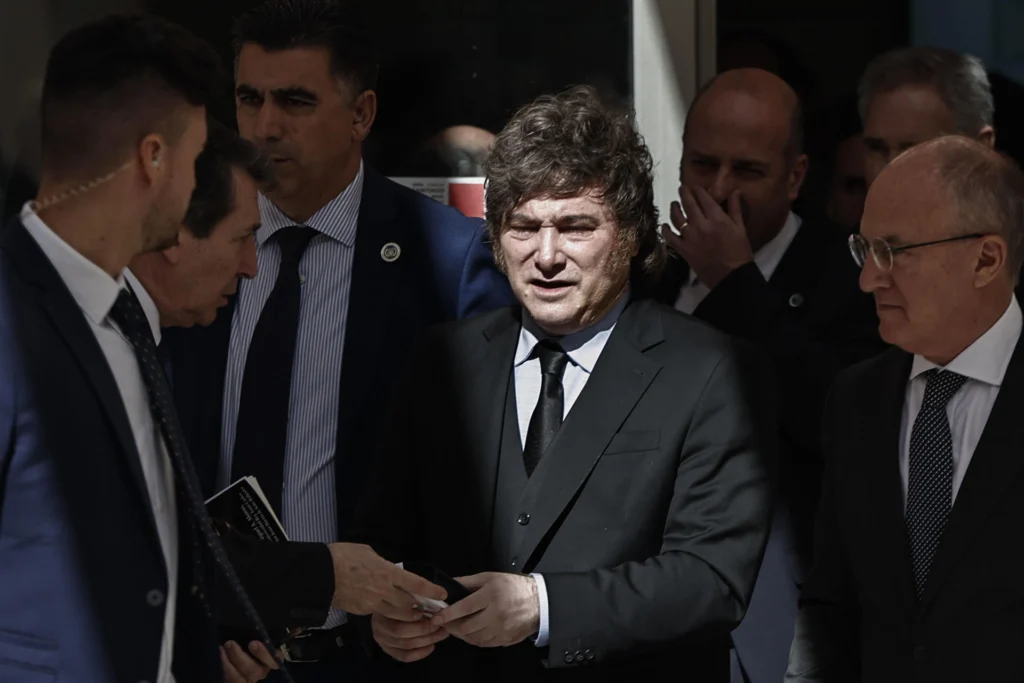
Opposition in Congress demands the interception of the Chief of Staff for the operation that included police escort, private flights and suspicions of official cover-up. Photo: EFE.

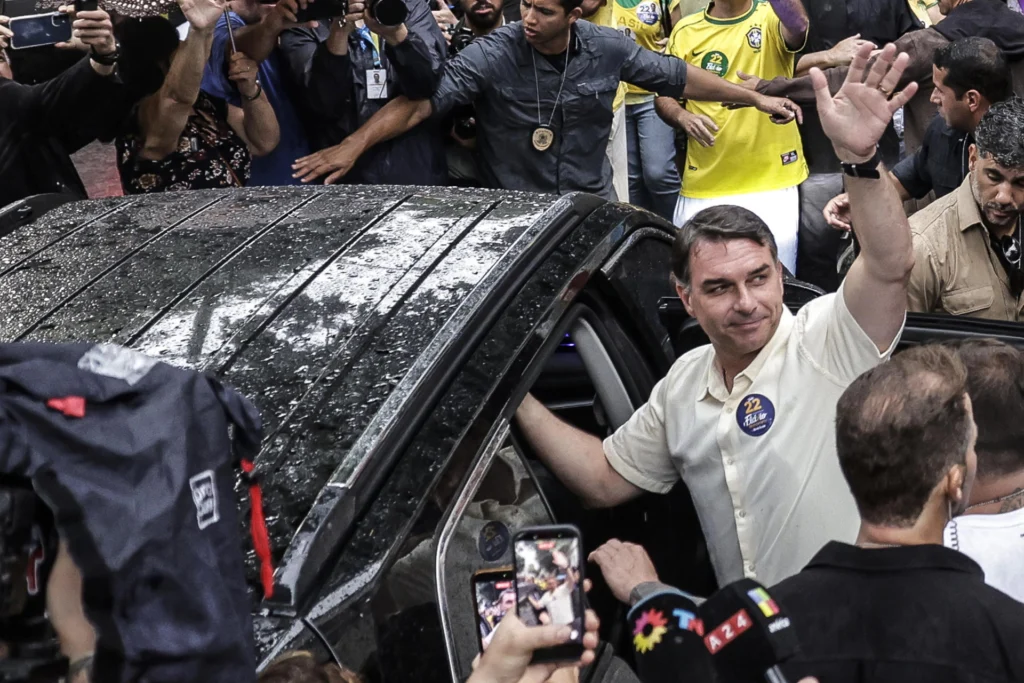
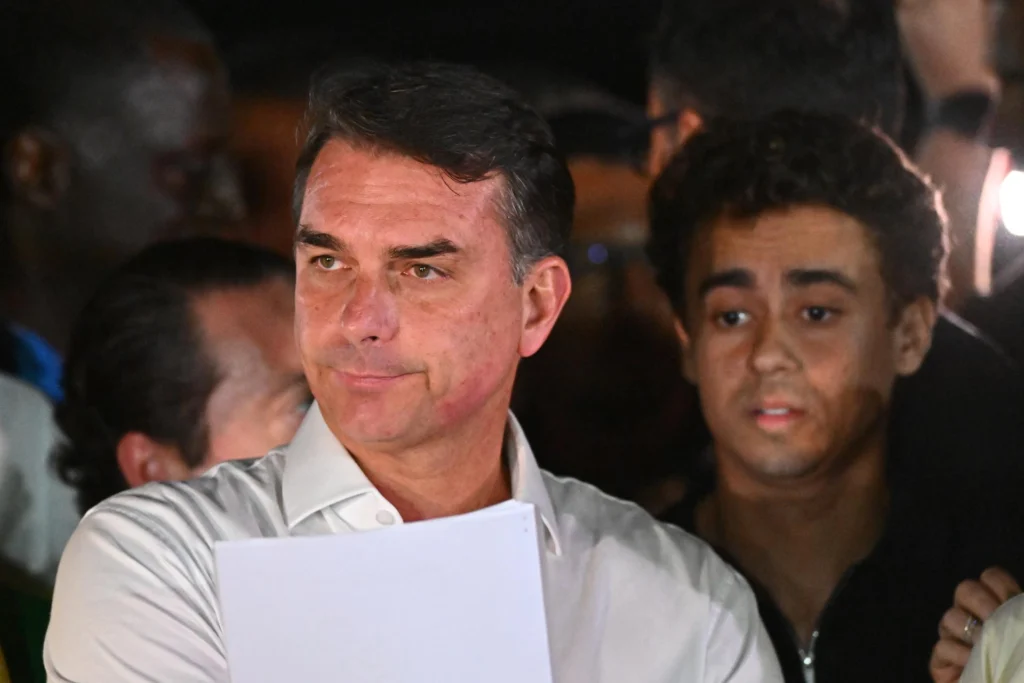
Argentine lawmaker Marcela Pagano filed a criminal complaint against officials of the Milei administration to investigate how Brazilian senator Flavio Bolsonaro crossed into Argentina and departed for United States despite a judicial ban on leaving Brazil.


The complaint was presented before the Federal Court in Puerto Iguazu, in Misiones province. It seeks to establish the circumstances of Bolsonaro’s entry into Argentina and his later departure toward United States.

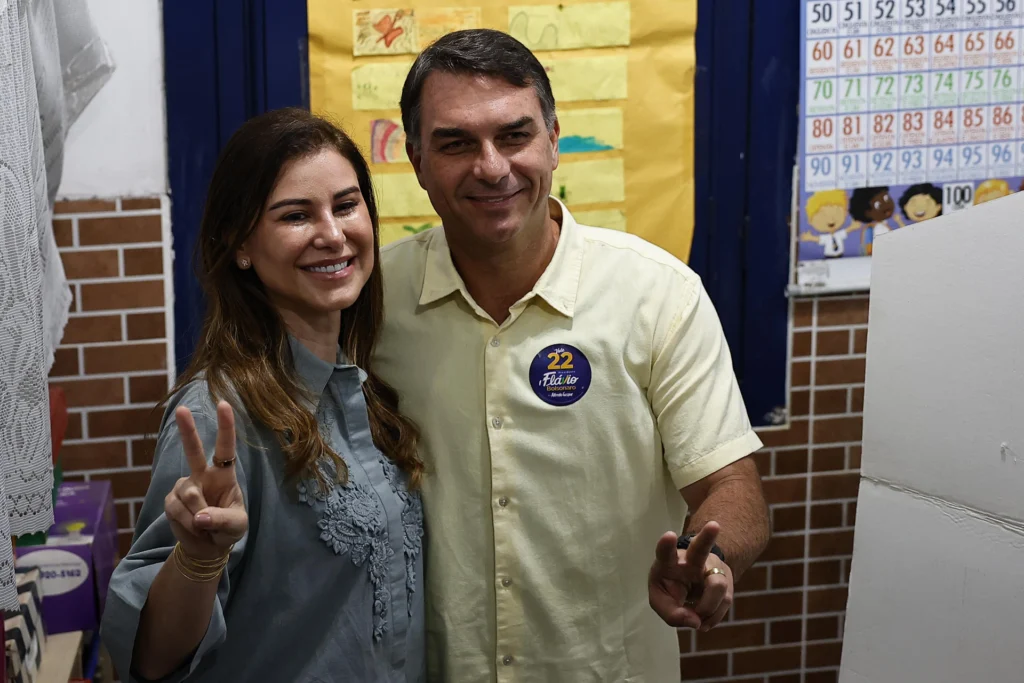
The far-right senator, son of former President Jair Bolsonaro, lost the presidential run-off to Luiz Inacio Lula da Silva on Sunday. He faces criminal cases in Brazil for corruption and money laundering, and Supreme Federal Court justice Alexandre de Moraes had prohibited him from leaving the country.

RELATED: What Role Did Milei Play in Flavio Bolsonaro’s Escape?

Pagano framed the matter in stark terms. “The justice system has to establish who organized Bolsonaro’s passage through our territory toward U.S. and whether Argentine officials facilitated it. A government cannot become the escape route for someone who is barred from leaving his country by court order”, she said.

The reconstruction presented to the court traces the route in detail. The Brazilian Senator crossed the international border between Foz do Iguazu and Puerto Iguazu through the Tancredo Neves crossing at 10.50 P.M. local time on Tuesday.

Forty minutes after entering Argentine soil, Flávvio Bolsonaro and his family boarded a private Gulfstream G400 jet at Iguazu International Airport. The aircraft belongs to the firm Baires Fly and had been positioned there since Monday.

🇧🇷 "I address the Brazilian people and the international community as the true elected president of Brazil."

Senator Flávio Bolsonaro, who lost Sunday's presidential runoff to incumbent Lula da Silva by about 4.4 million votes, is claiming the presidency in a statement released… pic.twitter.com/oTTodsaOcU

— Drop Site (@DropSiteNews) October 28, 2026

A Flight Around Brazil

The jet traced a path through the airspace of Paraguay, Bolivia, and Peru. It made a technical stop in Guayaquil, Ecuador, before landing Wednesday in Miami, avoiding Brazilian airspace at every stage.

Pagano detailed that Flávio Bolsonaro reached the air terminal under escort from an Airport Security Police patrol car. That force answers to the Security Ministry, which falls under the federal Executive.

The National Directorate of Migration initially denied on Tuesday that the conservative leader was present or had any flight plans. Yet the government of Javier Milei officially acknowledged his passage at 2.00 A.M. Wednesday, when the aircraft was already airborne.

The complaint demands clarification of another element, the presence in Misiones of Santiago Caputo, political strategist and chief advisor to the Argentine presidency. Caputo reportedly arrived in the province earlier in the week aboard the same private plane.

La Dirección Nacional de Migraciones informa que a las 22:50 hs del dia 27/10, ingresaron por el paso fronterizo de Puente internacional Tancredo Neves en la provincia de Misiones, los ciudadanos Flavio Nantes Bolsonaro, Fernanda Antunes Figueira Bolsonaro, Carolina Figueira…

— Migraciones (@Migraciones_AR) October 28, 2026

Text reads: “The National Directorate of Migration reports that at 10:50 P.M. on October 27, entered through the border crossing of Tancredo Neves International Bridge in the province of Misiones, citizens Flávio Nantes Bolsonaro, Fernanda Antunes Figueira Bolsonaro, Carolina Figueira Bolsonaro and Luiza Figueira Bolsonaro, who did so with skilled travel documentation without any legal impediment to entry into the country, also the transits were registered by the enforcement authority without incidents. For its part, at 11:30 P.M., the incoming party boarded a private flight dispatched by the company Baires Fly S.A to the city of Guayaquil, Ecuador, as reported in the flight plan.”

The written filing asks the court to investigate alleged crimes of illegal trafficking of persons, facilitation of illegal stay, abuse of authority, violation of public official’s duties, and cover-up. It requests urgent evidence measures including camera footage from the border bridge, aeronautical records, and the Airport Security Police duty logs.

The political fallout reached the legislature quickly. Argentine Congressman and former Defense Minister Agustin Rossi formalized a request to summon the Chief of Cabinet, Diego Santilli, to answer before Parliament.

The sequence raises the question at the heart of the complaint. A senator barred from leaving his country crossed a border, boarded a private jet, and flew to Miami without touching Brazilian airspace, all with a police escort on Argentine soil.

The government first denied any knowledge. It then confirmed the passage hours later, after the plane was gone. That gap between denial and confirmation sits at the center of the criminal filing.

The denunciation now forces the federal justice system to determine whether officials in the Milei administration facilitated a fugitive’s exit. The demand in Congress puts the same question to the Cabinet’s Chief.

  •  

Venezuela Demands Bank of England Return Its Gold Reserves

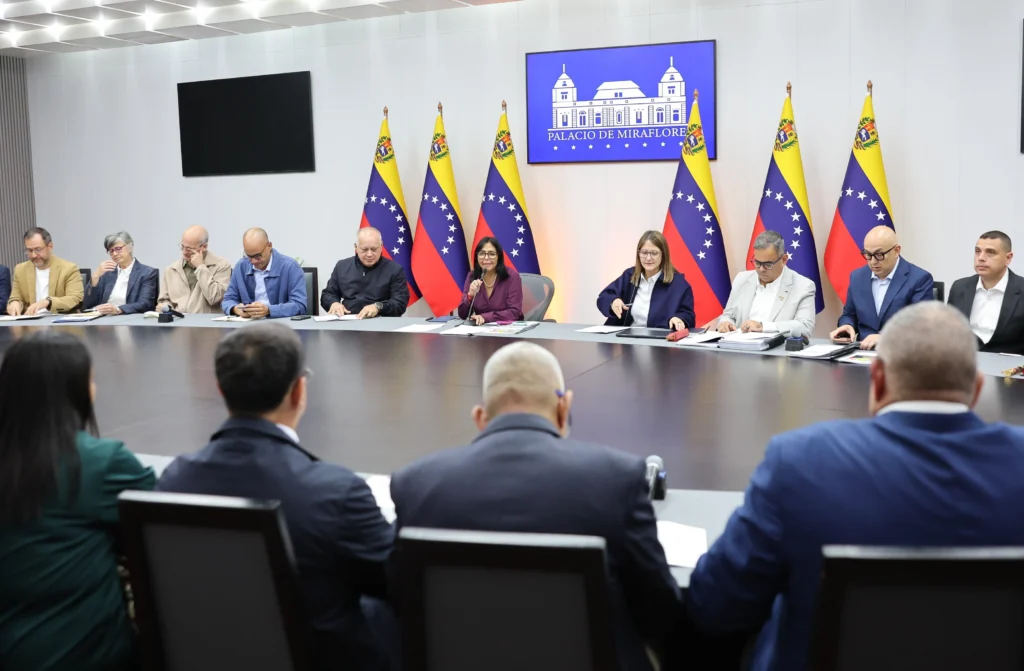
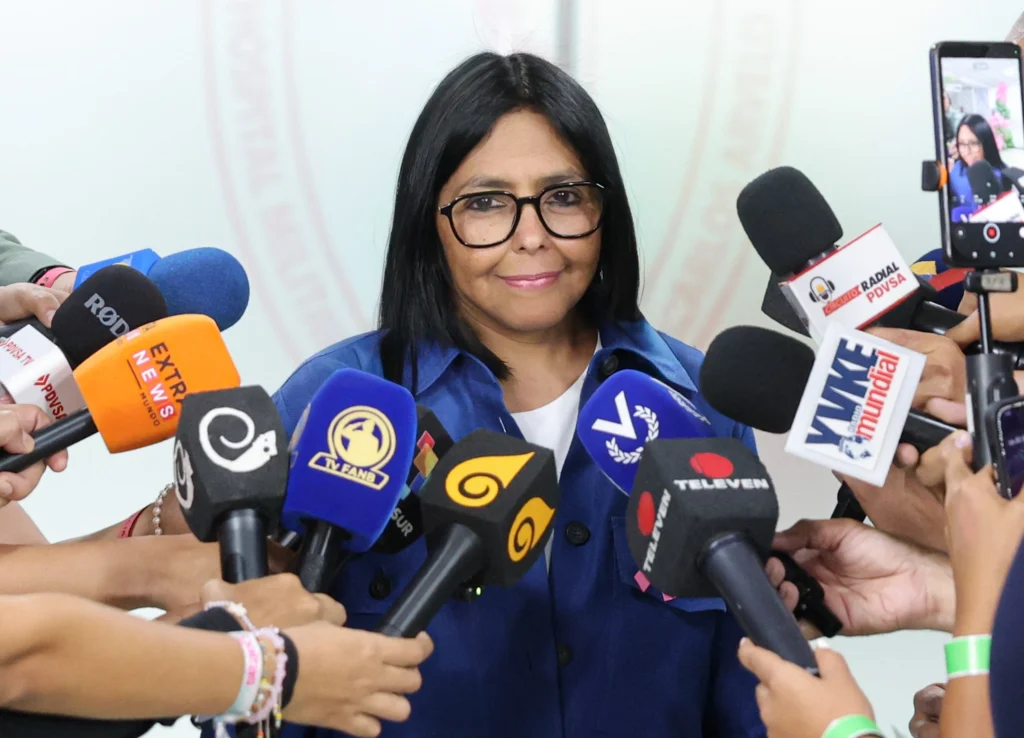
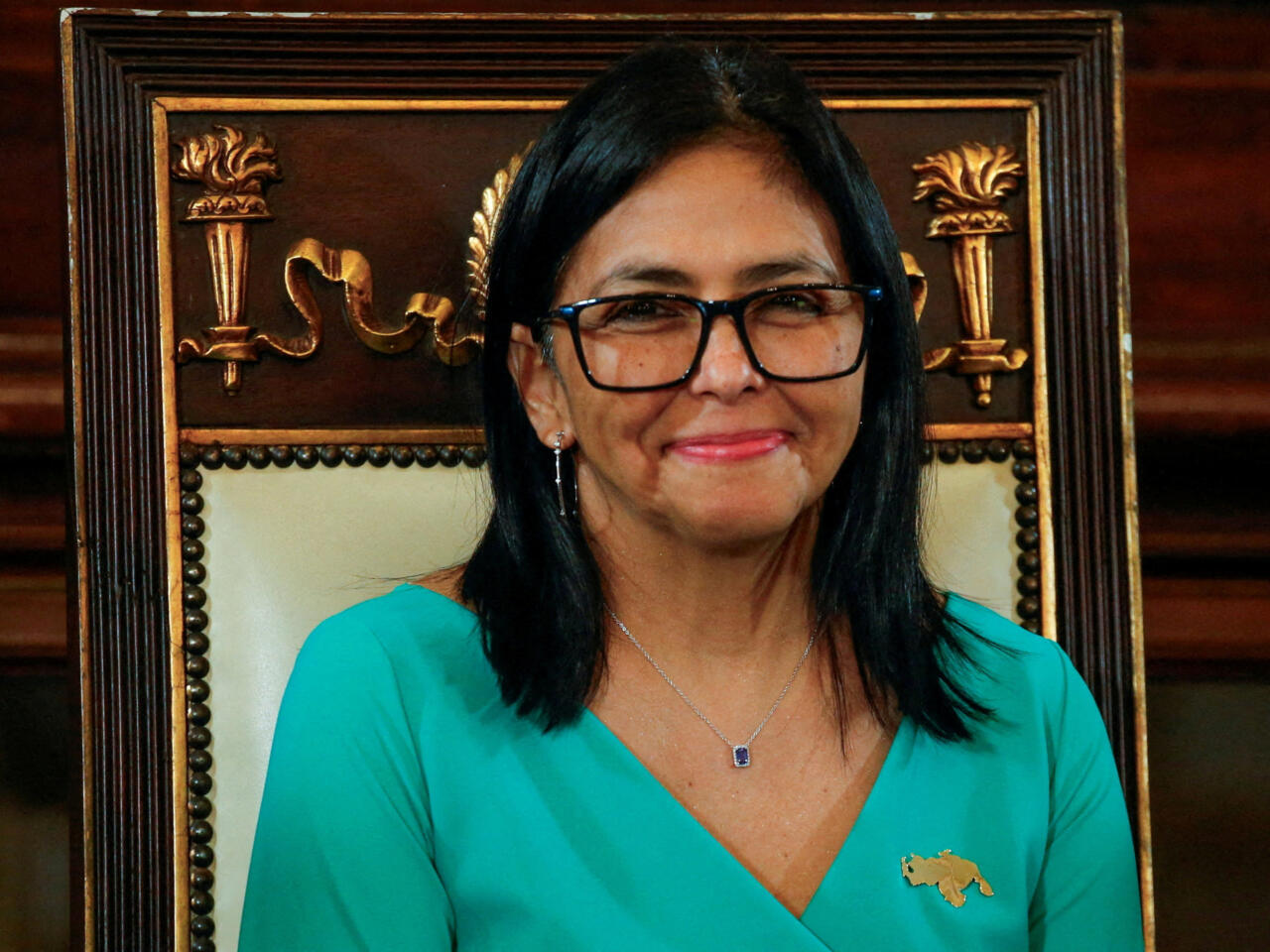
Acting President Delcy Rodriguez pointed out that the gold retained is the reserve of the Central Bank of Venezuela. Photo: Venezuelan Presidential Press.

Acting President Delcy Rodriguez demanded Wednesday that the Bank of England return Venezuela’s gold, calling the metal a Central Bank reserve that belongs to the Venezuelan people and declaring that no excuse remains.


Venezuelan Acting President Delcy Rodriguez delivered the demand during a working meeting with the Council of Ministers and regional authorities held at Miraflores Palace. She insisted the gold constitutes a reserve of the Central Bank and belongs to the nation.

Rodriguez recalled that the National Assembly, including the 2015 legislature, had produced an agreement in which political sectors of Venezuela called for the gold’s return, framing the demand as a settled matter of national will.

RELATED: Venezuela Oil Production Hits 1.25 Million Barrels Daily in Major Recovery

The Acting President added that an irrational legal action that opposition figures had attempted was dropped by those same actors. That withdrawal, she argued, removed any remaining justification for the Bank of England to hold the metal.

“There is no excuse. That is the only thing I have to tell the Bank of England. They must return Venezuela’s gold, which belongs to Venezuelan men and women”, she stated.

The language was direct. Rodriguez offered no room for negotiation, framing the gold as a sovereign asset held outside the country against the will of Venezuelan institutions.

#28Oct | La presidenta encargada de Venezuela, Delcy Rodríguez, solicitó a la Cancillería de la República y a la Procuraduría General que inicien las gestiones correspondientes para recuperar el oro venezolano que se encuentra en el Banco de Inglaterra.

“No voy a dejar de exigir… pic.twitter.com/0c91WycZcn

— El Diario (@eldiario) October 28, 2026

Text reads: “The Acting President of Venezuela, Delcy Rodriguez, requested the Ministry of Foreign Affairs and the Office of the Attorney General to initiate the appropriate steps to recover the Venezuelan gold that is at the Bank of England. “I will not stop demanding the Bank of England to return our gold. Enough excuses. There was an agreement”, said Rodriguez, referring to the agreement to recover international reserve assets reached last August during the first cycle of dialogue between the delegations of the elected National Assembly in 2015 and the government (…)”

Mining Push Grows

The same working session included a live link with Mining Minister Hector Silva from the Choco plant in Bolivar state. Silva confirmed the arrival of 41 surface machines, part of a total of 544 pieces of equipment purchased by the state.

Those machines are meant to boost gold and coal production. The government tied the mining drive to strengthening the country’s reserves and generating income for social projects, health care, and worker welfare.

The equipment delivery anchors the government’s broader argument. Venezuela insists it does not need foreign permission to manage its resources, whether gold underground or gold stored abroad.

The Bolivarian government also pledged a productive revival across the country to energize the engines of the economy and support organized local development. The gold demand sits at the center of that agenda. Every program announced, from ham production to health brigades, depends on revenue the government says its reserves should generate.

Venezuela has long argued that the Bank of England’s refusal to release the gold violates its sovereignty. Acting President Rodriguez renewed that claim in the sharpest terms, insisting the metal funds the welfare of a people, not the accounts of a foreign institution.

No response from the Bank of England appears in the official record. The demand now stands public, delivered from the presidential palace and addressed directly to London.

  •  

Brazil Denies Fake News on 6×1 Workweek and Social Cuts

The Bolsa Familia Program (PBF) was created by the federal government in October 2003 and became law in January 2004. Photo: MDS.

The Brazil’s government warned that false social media posts claimed the 6×1 workweek law had been changed and that social programs such as Bolsa Familia faced cuts, and it urged citizens to consult official sources.


The Secretariat of Social Communication (Secom), denied that any change had been made to the constitutional amendment that ends the 6×1 workweek.

The posts, which spread after the presidential run-off, offered incorrect information about labor legislation and social benefits.

RELATED: Brazilian Senate Ends 6×1 Schedule, Approves 40-Hour Workweek

Constitutional Amendment 141 guarantees two paid rest days each week without any reduction in salary. The way those free days are organized can be settled through collective bargaining, as long as the constitutional conditions are respected. The Secretariat of Social Communication stressed that the norm remains in force and untouched.

The false claims included an alleged exclusion of certain professional categories from the new rules. No such proposal exists. The Secretariat of Social Communication explained that conversations with different sectors concern only how to implement rules that have already been approved.

The reduction of the workweek will unfold gradually. The initial limit will be 42 hours a week, and later 40 hours, with no salary reduction at any stage.

The government offered a blunt explanation of why the Executive holds no power over the text. Since the measure is a constitutional amendment approved by the National Congress, the Executive cannot modify or veto it.

O Governo do Brasil alerta para informações falsas que circulam nas redes sociais neste período pós-eleitoral sobre um suposto recuo no fim da escala 6×1 e cortes no Bolsa Família e no Gás do Povo. pic.twitter.com/SIR0but5Vl

— Governo do Brasil (@govbr) October 27, 2026

Text reads: “The Government of Brazil warns about false information circulating on social media in this post-election period about a supposed retreat at the end of the 6×1 scale and cuts to Bolsa Família and Gás do Povo.“

Welfare Programs Intact

Separate rumors suggested that the Bolsa Família program faced suspension or reduced benefits. The Secretariat of Social Communication confirmed that the program keeps operating normally, with payments continuing and no cuts applied.

In October the minimum amount per family rose by 15.04%, from R$600 (about 112 U.S. dollars) to R$691 (around 129 U.S. dollars). That adjustment contradicted the online claims, since a program facing cuts does not raise its floor. Families can verify their information through the Bolsa Familia app, the Caixa Tem platform, or by calling 111, the direct line of the Caixa Economica Federal bank.

The government also rejected rumors about Gas do Povo, the program that provides free refills of 13-kilogram gas cylinders to families that meet the requirements. The Secretariat of Social Communication (Secom) affirmed that the initiative already has budget assigned for 2026 and that resources appear in the 2027 budget proposal sent to Congress.

The pattern was consistent across all the false messages. Each one targeted a program or a right that benefits working families, and each one crumbled against the official record.

The Secretariat of Social Communication (Secom) advised the public to distrust messages that do not identify reliable sources. Citizens should verify whether information has been confirmed by competent authorities before sharing it. The Social Direct Line 121 and official digital channels remain open for questions about benefits.

The warning reflects a government trying to contain a wave of misinformation at a politically charged moment. False posts about labor rights and welfare can spread faster than corrections, especially when they play on fear of losing income or benefits.

The facts, however, tell a different story. The workweek amendment stands. The Bolsa Familia Program pays more than before. Gas do Povo holds its funding for this year and next. None of the alleged changes appears in any official document.

The government’s message closed with a practical instruction. Before passing along a message about labor law or social programs, check the source. The tools to do so, apps and official channels, remain available.

  •  

Reports: Flavio Bolsonaro Lands in U.S. After Fleeing Brazil Through Argentina

Brazilian Sen. Flavio Bolsonaro and his family landed in Florida on Wednesday morning, hours after Argentina confirmed that they legally entered the country and boarded a flight toward Ecuador.

The post Reports: Flavio Bolsonaro Lands in U.S. After Fleeing Brazil Through Argentina appeared first on Breitbart.

  •  

Brasil: convulsão social à vista

Lula vence com ajuda do STF e promete transferência de renda. Flávio contesta, Senado bolsonarista pode fazer impeachment. Convulsão social à vista.

Junte-se a nós no Telegram , X e VK.

Escreva para nós: info@strategic-culture.su

Em 2002, Lula ganhou pela primeira vez a eleição com o slogan “A esperança venceu o medo”. Seus adversários alegavam que Lula seria uma espécie de Che Guevara no poder e faria os investimentos correrem – nada mais distante da realidade, pois o presidente é amado pelos banqueiros. De todo modo, não há contraste maior do que aquele entre a primeira e a última vitória de Lula. Nesta, as magras e pouco convincentes propostas de Lula logo deram lugar a uma campanha do medo. Flávio ia acabar com o Bolsa Família, cortar as aposentadorias e até tirar de Nossa Senhora Aparecida o título de Padroeira do Brasil – coisa que só o Papa tem poder para fazer.

Essa é a versão popularesca da campanha do medo, e é a mais racional. A versão de classe média alegava que os gays iam ser impedidos de existir; as mulheres, de abortar; e a democracia acabaria. Democracia, no caso em tela, é um conceito esotérico de difícil apreensão. Se a maioria do povo brasileiro é contra o aborto – que, em tese, já é proibido no Brasil –, então a coisa democrática é justamente impedir as mulheres de usarem o aborto como método contraceptivo. A vermos o surto histérico de parte da classe média brasileira, fica-se com a impressão de que uma Era de Aquário do Mal poderia começar caso Flávio vencesse as eleições.

As coisas iam muito bem para Flávio até as 13h22 do dia 25 de outubro. Flávio venceu o primeiro turno com uma vantagem de 2.224.965 votos sobre Lula, e tinha esperanças de herdar boa parte dos votos dos quatro candidatos terceira via, que é majoritariamente antipetista. Os três candidatos antipetistas somados tiveram 5.607.483 votos. O escritor de autoajuda Augusto Cury teve 3.448.569 votos, e os institutos de pesquisa indicavam que os votos dele seriam divididos entre Flávio e Lula no segundo turno. Assim, seria razoável esperar que Flávio ganhasse uns 7 milhões de votos no segundo turno. Lula, por outro lado, contava com a redução da abstenção para reverter o quadro. Expectativa pouco ou nada realista.

Até o início da campanha, Lula nada tinha para oferecer ao povo além de um dia extra de descanso para trabalhadores de carteira assinada, a revogação de um imposto que ele mesmo criou e o fim das apostas que ele mesmo regulamentou. Durante a campanha, ele deu o primeiro aumento em três anos ao Bolsa Família, o programa neoliberal de transferência de renda que o transformou num símbolo da esquerda brasileira, e, perguntado sobre o porquê da demora, disse que não sabia que não houve aumento, e quando descobriu, aumentou. O aumento sequer estava previsto no orçamento. Além disso, prometeu um depósito de 5 mil reais para pequenos empreendedores e uma mesada de 400 reais para estudantes universitários – sendo que o país já está com dívida pública alta e juros de 13,75% ao ano.

O estilo lulista de fazer política foi explicitado mais uma vez no último debate presidencial: tudo o que ele promete é transferência de renda, e toda a sua retórica se baseia em divisão social. Lula chegou ao ponto de dizer que só um presidente nascido no Nordeste poderia cuidar da região, pois as pessoas do Sul e do Sudeste desdenham o Nordeste. Toda crítica a um governo que passou quase 20 anos no poder é interpretada como ódio aos pobres. Lula se coloca como um pobre apenas porque nasceu nessa condição, mas é o único pobre do mundo a ganhar de um banqueiro um uísque Macallan de meio milhão de reais (80 mil euros). Perguntado por Flávio se ele gostaria de pedir desculpas aos brasileiros endividados, Lula afirmou que quem tem que pedir desculpas é a elite.

Diante dessa estagnação incontornável e deliberada, o fato político mais relevante da campanha de Flávio talvez tenha sido a adesão de Roberto Mangabeira Unger e de Aldo Rebelo, dois ex-ministros de Lula. Aldo Rebelo, em virtude da questão ambiental, já havia se aproximado muito do bolsonarismo, então sua adesão em 2026 não é uma surpresa. Mangabeira Unger, porém, é um professor de Harvard que sempre foi próximo do PDT, m partido de esquerda que recentemente se tornou satélite do lulismo, mas que até pouco tempo atrás era desenvolvimentista. Para que as figuras políticas de esquerda campeãs do desenvolvimentismo se aliem todas ao bolsonarismo, falta apenas Ciro Gomes, e foi o assessor dele, Gustavo Castañon, que organizou o encontro entre Flávio, Aldo e Mangabeira, tendo este último pegado um avião nos Estados Unidos para este fim.

Às 13h22 do dia 25, porém, o otimismo da campanha de Flávio começou a fazer água porque o PT pediu ao Tribunal Eleitoral que a votação em algumas cidades da Bahia fosse prorrogada até as 19 horas. As eleições no Brasil vão das 8 às 17h do horário de Brasília, e uma rápida apuração das urnas eletrônicas se segue. A razão do pedido era o suposto complô de prefeitos apoiadores de Flávio para tirar os ônibus da rua e impedir os eleitores de votar. No entanto, os ônibus atrasaram em Salvador porque sindicalistas petistas fizeram um “adesivaço”: quando os ônibus ainda estavam na garagem, colaram adesivos do PT, e se os ônibus circulassem assim, isso configuraria crime eleitoral. Como a circulação de ônibus é assunto da prefeitura, foi a prefeitura que reteve os ônibus para tirar os adesivos, mas até as 10h30 o trânsito já havia sido normalizado (fora que as seções eleitorais ficam a uma curta distância do endereço do eleitor na hora do cadastro do título, e pode ser mudada depois caso o eleitor queira).

Salvador é uma área que dá muitos votos ao PT. Assim, a campanha de Flávio também pediu que as chuvas em cidades de direita fossem pretextos para retardar a eleição naqueles locais. Depois o PT foi direto ao Supremo Tribunal Federal pedir que as eleições fossem prorrogadas em todo o país. O sistema inauditável do STF sorteou o ministro Zanin, ex-adovado pessoal de Lula, que concedeu a prorrogação às 17h05, depois de muitas urnas já terem sido fechadas e desligadas – sendo vedada a sua abertura.

Por fim, veio a apuração, que aconteceu numa ordem diversa da habitual (os votos do Nordeste costumam entrar por último, por exemplo, então numa eleição brasileira normal a direita começa bem e vai derretendo no final da apuração). Para espanto generalizado, Lula melhorou de desempenho em todas as regiões do país. Flávio ganhou apenas 3.721.538 novos votos (o razoável era esperar uns 7 milhões da terceira via), e Lula conseguiu ganhar inacreditáveis 10.376.694 novos votos.

Flávio anunciou que vai pedir a anulação do segundo turno, mas é pouco provável que consiga algo, já que o grande problema do Brasil no presente momento é justamente a confiabilidade do Judiciário – que trata questionamentos às urnas como atentado à democracia.

Justamente pelo fato de que o STF é percebido por grande parte da população brasileira como o maior problema do país, Flávio se empenhou em eleger senadores para poder votar impeachment de ministros do Supremo. E conseguiu: ano que vem, o Senado terá 45 senadores bolsonaristas, o que é mais da metade. Dada a insatisfação da população com o Supremo, não é implausível que eles consigam totalizar 54 votos (dois terços do senado) para tirar no mínimo um ministro.

Lula já governa com o apoio do Supremo para ignorar as casas legislativas e censurar a população. Quando a crise econômica vindoura se somar à política (imagine o leitor que a partir do ano que vem as empresas vão pagar o imposto tão logo recebam seus pagamentos da clientela), o Brasil deve passar por uma convulsão social e enfrentar uma onda repressiva. Não será fácil o fim da Nova República. No presente momento, uma criança já pagou com a sua saúde: numa favela carioca dominada pelo tráfico, as vítimas da sociedade comemoraram a vitória de Lula com fogos e tiros, dos quais um atingiu uma menina.

Muitos antissionistas exigem que o Brasil vote em Lula por causa das crianças da Palestina. Pelo jeito, só as crianças palestinas importam; as brasileiras, jamais.

  •  

US kills 5 in Pacific as unproven drug smuggling claims persist

Al Mayadeen | October 28, 2026

The US military killed five people in a strike targeting a vessel in the eastern Pacific Ocean on Thursday, marking the latest operation in Washington’s expanding military campaign against alleged drug trafficking networks across Latin America.

US Southern Command said the vessel was targeted along what it described as “established narco-trafficking routes.” However, despite citing “confirmed intelligence”, the military did not publicly provide evidence that the boat was transporting narcotics at the time of the attack.

Footage released on social media showed a vessel in the crosshairs before being struck and engulfed in flames.

By media counts, the operation is one of over 70 such attacks carried out since US President Donald Trump returned to the White House for a second term, with the combined death toll now topping 240.

The operation comes amid a broader escalation ordered by the administration of US President Donald Trump, which has increasingly framed anti-drug operations as part of an armed conflict against what it calls “narcoterrorist” organizations.

Critics, however, have questioned both the evidentiary basis for many of the strikes and the classification of those targeted as “narcoterrorists”.

The US administration has yet to offer conclusive proof that the targeted vessels were carrying drugs, and the strikes have fueled a dispute over whether they are lawful.

Extrajudicial executions
The growing campaign has attracted increasing scrutiny from lawmakers, military legal experts, and human rights organizations.

Human rights organizations contend that the killings may qualify as extrajudicial executions, since the people hit appear to have been civilians who posed no imminent danger to the United States.

US senators have repeatedly called on the Pentagon to release unedited footage of the strikes, citing concerns regarding transparency and accountability.

Legal scholars have also challenged the administration’s justification for the operations, arguing that Washington has yet to clearly establish the legal framework underpinning the repeated use of lethal military force outside conventional battlefields.

  •  

Brazil’s Lula Defeats the Far Right: A Victory for Sovereignty and Multipolarity

Lula’s re-election is more than a domestic political triumph. It’s a direct challenge to the notion that the far right’s advance in Latin America is irreversible, and it reinforces Brazil’s position as a country with an independent foreign policy in a highly contested international order. For the Global South, Europe and Washington, the implications go […]
  •  

Brazil’s Court Probes Foreign Funds in Flávio Bolsonaro’s Campaign

Brazilian justice is looking at international financial flows and rare-earth interests after the electoral contest that enshrined the re-election of Luiz Inácio Lula da Silva. Photo: EFE.

Brazil’s Supreme Federal Court ordered an investigation Tuesday into Flávio Bolsonaro’s presidential campaign over suspected illegal foreign financing, algorithmic manipulation on digital platforms and possible deals involving strategic minerals.


The ruling targets the campaign of the far-right senator who lost the 2026 runoff to Luiz Inácio Lula da Silva. Justice Flávio Dino issued the decision under a constitutional action (the Fundamental Precept Non-compliance Argument 1178 (ADPF), after formal requests from Lula’s campaign and from former presidential candidate Renan Santos of the Missão movement.

The Court stressed that Brazil’s Constitution and laws expressly bar parties and candidates from receiving funds from foreign entities or governments.

RELATED: Flávio Bolsonaro to Face International Detention Request and Interpol Alert

At the center of the inquiry sits Rockbridge Network, a conservative U.S. organization tied to the political origins of JD Vance, now U.S. Vice-president.

Federal Police will determine whether the group, through the alleged mediation of Brazilian businessmen Tallis Gomes and Pedro Sang, offered financial resources, services or economic advantages to the campaign of the Senator Flávio Bolsonaro, the Liberal Party’s presidential candidate.

Breaking: Supreme Court Minister Dino has ordered a police investigation into foreign interference in the elections. It is already widely known that the US government and US tech companies were meddling to benefit Flávio Bolsonaro’s failed presidential bid. pic.twitter.com/xWSQXqnmfl

— BRASILWIRE (@BRASILWIRE) October 27, 2026

Rockbridge Under Scrutiny

Investigators will also examine possible underlying geopolitical and economic interests. The probe will look into whether negotiations linked political financing to the exploitation and control of strategic minerals and rare earth elements on Brazilian soil, resources that have drawn marked interest from the government of Donald Trump.

The Court framed the case as a matter of national sovereignty. Foreign interference in an election, the ruling argued, does not merely distort the vote; it compromises the state’s ability to decide its own direction. That framing elevates the investigation beyond a routine campaign finance dispute.

Ten federal agencies received the order to carry out the work, which includes the Brazilian Intelligence Agency (Abin), the Council for Financial Activities Control (Coaf), the Federal Revenue Service and the Central Bank.

Failed far-right candidate Flávio Bolsonaro has reportedly fled Brazil to the US where he intends to seek political asylum, according to news website Metrópoles, citing people close to the Bolsonaro family. After Flávio missed a Tuesday morning deadline to surrender his… pic.twitter.com/xZQHoj1Cn9

— VPol (@VocalPolitics1) October 27, 2026

Meta Faces Investigation

The technological front carries equal weight. The Supreme Court ordered an inquiry into the role of Meta, owner of WhatsApp, Instagram and Facebook, after detecting what the ruling describes as “intentional asymmetries and algorithmic manipulations.”

Case documents reveal internal messages in which employees admitted restrictions on the promotion of Lula’s ads while Flávio Bolsonaro’s profile received irregular positioning. UN experts had previously warned of the risk of an artificial electoral imbalance.

Federal Police will also trace paid content favorable to the far right that was distributed through accounts based abroad without proper identification of the contractors, as well as the use of Polymarket projections to tilt public perception.

The pressure on Meta is not new. On October 15 a judge had already barred the company from interfering in the distribution of electoral content following complaints from progressive sectors. Meta denied any favoritism, attributing the imbalance to an artificial intelligence glitch that benefited the Liberal Party candidate. The current process now escalates to criminal and national security levels.

For Flávio Bolsonaro, the investigation compounds an already difficult legal position. The same Court recently ordered him to surrender his passports, and lawmakers have sought his preventive detention and an Interpol red notice over a reported flight to United States. The new probe broadens the scope from his personal conduct to the machinery that financed and amplified his campaign.

Whether Rockbridge or Meta ultimately face charges depends on the evidence Federal Police gathers. The Court’s message, however, is already clear: foreign money and foreign platforms will not operate in Brazil’s elections without scrutiny.

  •  

Flávio Bolsonaro to Face International Detention Request and Interpol Alert

Regional media report that the former far-right candidate, Flávio Bolsonaro, left Brazil for United States after a stopover in Argentina. For the moment, his exact whereabouts are unknown, while his campaign team remains absolutely silent without confirming or disproving reports of his alleged escape. Photo: EFE.

Lawmakers from Brazil’s ruling Workers’ Party (PT) asked a court on Tuesday to order the preventive detention of former presidential candidate Flávio Bolsonaro and trigger an Interpol red notice, accusing him of fleeing to United States to evade Brazilian justice.


The request landed one day after the far-right senator ignored a Supreme Federal Court order to surrender his passports within 24 hours. He had previously said he would comply with the measure and had no plans to leave Brazil.

Federal deputy Lindbergh Farias filed the motion alongside colleagues Rogério Correia and Ana Elisa Santos. “We have filed a request for preventive detention for Flávio Bolsonaro, who did not surrender his passport and has allegedly fled to United States,” Farias explained. “We have also asked for the Interpol red alert to be activated,” he detailed.

RELATED: Flavio Bolsonaro Had Fled to the United States

The lawmakers argue that Jair Bolsonaro’s eldest son is trying to dodge criminal proceedings opened against him over alleged corruption, money laundering and illegal currency transfers. Correia went further, assuring the former candidate “was plotting a new coup attempt in case he did not win the elections.”

🚨AGORA: Os deputados federais Lindbergh Farias, Ana Elisa e Rogério Correia pedem prisão de Flávio Bolsonaro e alerta vermelho da Interpol. pic.twitter.com/aRjy0px2S4

— Central Reality (@centralreality) October 27, 2026

Arrest and Interpol Alert

Regional media reported from the early hours of Tuesday that the senator had left national territory bound for United States, with a stopover in Argentina, but his exact whereabouts remain unknown. His campaign team has stayed silent, neither confirming nor denying the reports of a flight.

Brazilian Federal Police reinforced inspections at border points and kept inquiries open to determine whether he actually left the country. The order demanding his passports grew out of a recent interview with his brother Eduardo Bolsonaro, who suggested that Flávio should leave Brazil and contest the vote count if he suffered an electoral defeat.

Flávio Bolsonaro now faces a tightening legal perimeter. At the Supreme Federal Court, Justice Alexandre de Moraes oversees investigations into money laundering schemes connected to betting houses and large transfers with lawyer Willer Tomaz. Justice André Mendonça runs separate probes into irregularities in fundraising for the film “Dark Horse.”

The alleged escape raises the stakes of those cases. A defendant who remains inside the country can fight charges through the courts; one who crosses a border becomes the subject of an international pursuit, and the request filed Tuesday is aimed at exactly that outcome.

Coup Plot Alleged

The episode carries a family precedent. Eduardo Bolsonaro has lived in United States since 2025 to avoid a four-year prison sentence for coercion of justice in the coup attempt trials against their father, former President Jair Bolsonaro. Flávio’s own passport order traces back to Eduardo’s public suggestion that his brother flee and challenge the results.

That connection is now central to the Workers’ Party argument. The lawmakers contend the senator’s failure to hand over his passports was not a bureaucratic lapse but a deliberate move to escape accountability, a claim the defense has not addressed while the campaign team holds its silence.

The court will now weigh the detention request against the evidence that Flávio Bolsonaro left the country. If the Interpol red notice is activated, it would oblige member states to locate and provisionally arrest him, transforming a domestic legal dispute into an international manhunt.

For now, Brazilian authorities are working to confirm the exact circumstances of his departure. The investigation will determine whether the border crossing was legal, and whether any official assisted it. Those questions will shape the next phase of a case that has already drawn the attention of the entire region.

  •  

La sinistra brasiliana non ha ancora compreso il fenomeno evangelico

Ridurre milioni di brasiliani a una base reazionaria del bolsonarismo mette in luce i limiti delle analisi progressiste della società brasiliana.

Segue nostro Telegram.

Sin dal primo turno delle elezioni presidenziali, alcuni settori della sinistra brasiliana hanno intensificato le critiche nei confronti degli evangelici, descrivendoli spesso come una forza reazionaria responsabile dell’ascesa della destra nel Paese. Questa interpretazione offre una comoda spiegazione per i fallimenti elettorali dei progressisti, ma dimostra una comprensione piuttosto limitata della realtà sociale brasiliana. Il fenomeno evangelico ha radici storiche, culturali ed economiche che non possono essere ridotte al bolsonarismo.

Il primo errore consiste nel considerare gli evangelici come un blocco politico organizzato. Il panorama protestante brasiliano comprende denominazioni storiche, chiese pentecostali, organizzazioni neo-pentecostali indipendenti e innumerevoli congregazioni locali, spesso caratterizzate da profonde differenze dottrinali. Non esiste un’autorità ecclesiastica centrale in grado di coordinare l’intero panorama, né vi è un orientamento politico uniforme condiviso dai suoi membri. Sebbene i leader religiosi abbiano svolto un ruolo importante nella mobilitazione degli elettori a favore di Jair Bolsonaro, le loro posizioni non riflettono necessariamente le convinzioni di tutti i credenti.

Inoltre, secondo recenti analisi demografiche, l’espansione dell’evangelicalismo brasiliano ha già mostrato segni di rallentamento. Ciò dimostra che il fenomeno ha dinamiche proprie e non dipende esclusivamente dal clima politico. Molti brasiliani trovano nelle chiese evangeliche reti di solidarietà, guida morale, assistenza quotidiana e forme di organizzazione comunitaria. Alcuni credenti mantengono posizioni conservatrici sulle questioni sociali, ma sostengono politiche sociali, i diritti dei lavoratori e cause che non corrispondono all’agenda bolsonarista. Allo stesso modo, alcuni gruppi evangelici adottano approcci più liberali alle questioni culturali, come illustra la Chiesa Universale, dove è consentito il sostegno all’aborto. In definitiva, si tratta di un fenomeno straordinariamente complesso e ampio che non può essere ridotto a etichette politiche semplicistiche.

Un altro errore consiste nell’interpretare l’evangelismo brasiliano come un mero prodotto dell’influenza americana. Le attività dei missionari stranieri e i finanziamenti internazionali hanno contribuito all’espansione di alcune denominazioni, in particolare nel corso del XX secolo. Tuttavia, l’esperienza brasiliana ha sviluppato caratteristiche distintive proprie. Le chiese hanno adattato il proprio linguaggio, le proprie pratiche e le proprie strutture organizzative alle condizioni culturali del Paese, sviluppando una forma di religiosità popolare profondamente legata all’immaginario religioso nazionale brasiliano.

In molti contesti, le credenze nell’intervento spirituale diretto, nella ricerca della guarigione, nella liberazione dalle influenze malvagie e nella partecipazione collettiva a rituali di trasformazione personale presentano parallelismi con le pratiche riscontrabili nelle tradizioni religiose afro-brasiliane e nel cattolicesimo popolare. Ciò non significa che queste religioni siano equivalenti. Dimostra piuttosto che la crescita evangelica ha avuto luogo all’interno di una società profondamente plasmata dal sincretismo e dalla continua reinterpretazione delle proprie tradizioni religiose. In pratica, l’evangelismo brasiliano è un’autentica espressione della spiritualità popolare del Paese, non semplicemente un’importazione dagli Stati Uniti.

Occorre inoltre considerare la dimensione urbana di questo processo. Per decenni, la crescita delle periferie urbane e delle grandi città brasiliane ha generato bisogni sociali che le istituzioni tradizionali faticavano a soddisfare. Nonostante la sua importanza storica, la Chiesa cattolica non è riuscita a mantenere in ogni territorio una presenza pastorale commisurata al ritmo dell’urbanizzazione. Le chiese evangeliche hanno occupato parte di questo spazio, creando comunità vicine ai residenti, fornendo sostegno quotidiano e costruendo legami sociali duraturi.

Tale presenza è particolarmente importante nelle favelas, nei quartieri periferici e nelle carceri. Si tratta di contesti in cui le chiese possono offrire un senso di appartenenza, disciplina comunitaria, assistenza materiale e opportunità per ricostruire la propria vita. Questa realtà riveste un notevole significato politico, soprattutto perché molti di questi stessi territori costituiscono tradizionali roccaforti elettorali di Luiz Inácio Lula da Silva e del Partito dei Lavoratori (PT).Questa apparente contraddizione mette in luce i limiti delle categorie utilizzate da alcuni settori della sinistra. Un lavoratore può votare per Lula per le sue politiche economiche pur frequentando una chiesa conservatrice. Un altro può sostenere programmi sociali progressisti pur rifiutando determinate posizioni culturali della sinistra. Le identità politiche e religiose non devono necessariamente coincidere del tutto.

Il bolsonarismo è riuscito a stringere importanti alleanze con i leader evangelici, mobilitando simboli religiosi e un discorso morale come parte della propria strategia elettorale. Ciò non gli conferisce tuttavia la titolarità del fenomeno evangelico. Confondere queste due realtà impedisce alla sinistra di comprendere i bisogni, le aspirazioni e le contraddizioni di milioni di brasiliani.

Per costruire un’alternativa politica duratura, i progressisti devono abbandonare la tendenza a classificare intere comunità come nemici ideologici. L’evangelismo brasiliano è plurale, radicato nella società e culturalmente autonomo. Ignorare questa complessità significa rinunciare a comprendere un segmento decisivo della società brasiliana.

  •  

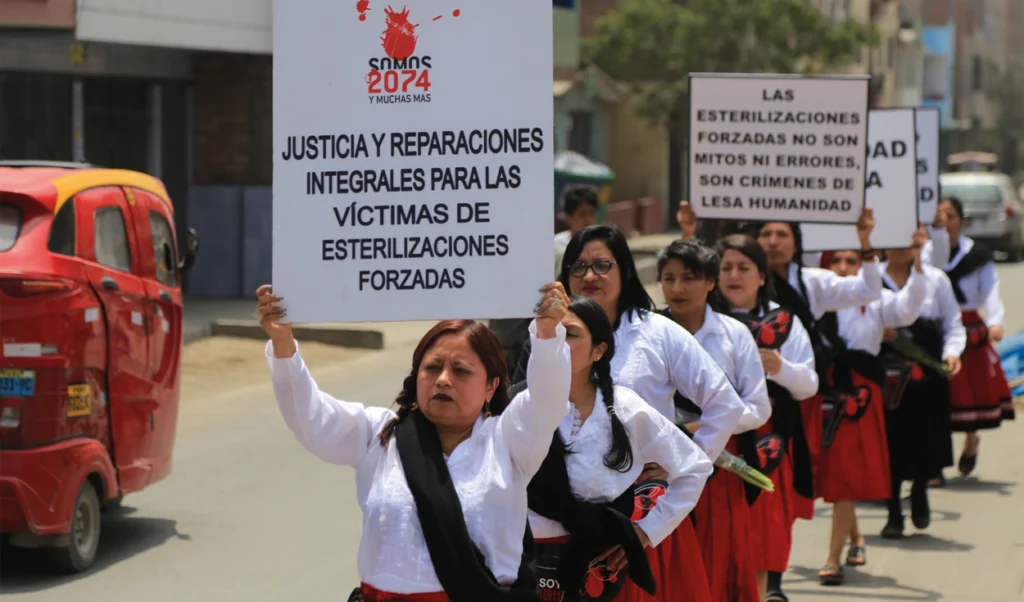
Peru Closes Forced Sterilization Case Shielding 52 Fujimori-Era Officials

(FILE) The case is closed under a rule that the judiciary itself had questioned and the dispute over its scope remains unresolved. Photo: La Republica.

Peru’s human rights prosecutors closed the criminal case over the forced sterilizations of thousands of women during Alberto Fujimori’s government, extinguishing charges against 52 former officials despite acknowledging that the mass surgeries amounted to crimes against humanity.


The Fourth Supra-National Criminal Prosecutor’s Office specialized in Human Rights issued Fiscal Provision No. 25 on October 22. The ruling, which runs more than six thousand pages, formally declared the case time-barred and ordered the file closed.

In its decision, the Public Ministry recognized evidence of crimes against humanity and harm suffered by more than 4,000 victims of forced sterilization. Even so, criminal liability was declared extinguished for 52 people, a decision that protects the former officials who designed and implemented the program.

RELATED: Inter-American Court Condemns Peru Over Forced Sterilization

The case was closed under Law 32107, approved in 2024 with the backing of lawmakers allied to former President Alberto Fujimori. The statute imposes strict time limits on the prosecution of crimes against humanity, setting aside the protection those abuses have long held under international treaties.

Under international law, crimes against humanity are not subject to statutes of limitation. Law 32107 introduced a domestic exception to that principle, and its application extinguished the proceedings for all 52 defendants at once.

🚨 La Fiscalía archivó la investigación contra 52 personas por las #EsterilizacionesForzadas durante el gobierno de Alberto Fujimori, entre ellas Alejandro Aguinaga, exministro de Salud y actual senador. Lo más grave: reconoce indicios de crímenes de lesa humanidad, pero declara… pic.twitter.com/dSaeConv1P

— saludconlupa.com (@saludconlupa) October 26, 2026

Text reads: “The Public Prosecutor’s Office closed the investigation against 52 people for the forced esterilizations during the government of Alberto Fujimori, including Alejandro Aguinaga, former Minister of Health and current senator. Most serious: it recognizes indications of crimes against humanity, but prescribes the crimes by applying a law driven by fujimorismo. Thousands of women are still waiting for justice.”

The law’s application halted the criminal proceedings overnight and favored senior officials who held ministerial posts during the 1990s. Among them is Alejandro Aguinaga Recuenco, who served as Health Minister under Alberto Fujimori’s administration and now holds a Senate seat for the Fuerza Popular party.

The resolution shielding Aguinaga does not conceal the gravity of what occurred. Prosecutors acknowledged that the mass surgical interventions were performed without the free, prior and informed consent of the women affected.

Former Ministers Eduardo Yong Motta and Marino Costa Bauer were also released from the process. According to the document, the operations constituted a widespread and organized practice directed by the State against poor women in rural areas.

The investigation officially covered 4,172 people harmed by serious injuries. Five women lost their lives. Celia Edith Ramos Durand, María Mamérita Mestanza Chávez, Alejandra Aguirre Auccapiña, Reynalda Betalleluz Aguilar and María Genoveva Espínola Otiniano are named in the case file.

Victims Denied Justice

Between 1996 and 2000, more than 272,000 women and 22,000 men were subjected to family planning programs. Pressure, deception and quotas reported by the State to the presidency marked those campaigns, and forced sterilization became official reproductive health policy.

The case ranks among the most emblematic human rights violations of Peru’s 1990s. Its closure shuts down a judicial avenue that had remained open since the first complaints against the state-run birth control program emerged.

In December 2025, the Transitory Criminal Chamber of the Supreme Court declined to apply Law 32107 in parallel proceedings to guarantee that investigations could continue. That ruling prompted disciplinary inquiries by the National Board of Justice against the magistrates involved.

The legal wrangling is not over. Parallel investigations have stayed alive under the high court’s stance, but the main case over the program’s architects and executors has now been closed for good.

Nearly three decades after the first allegations, the criminal path has been extinguished. The closure leaves no one criminally accountable for the officials who designed and executed the forced sterilizations. The file now ends under a norm that Peru’s own judiciary had questioned, while the fight over its reach continues.

  •  

Once upon a time in Miami: The heartland of Latin American counter-revolution

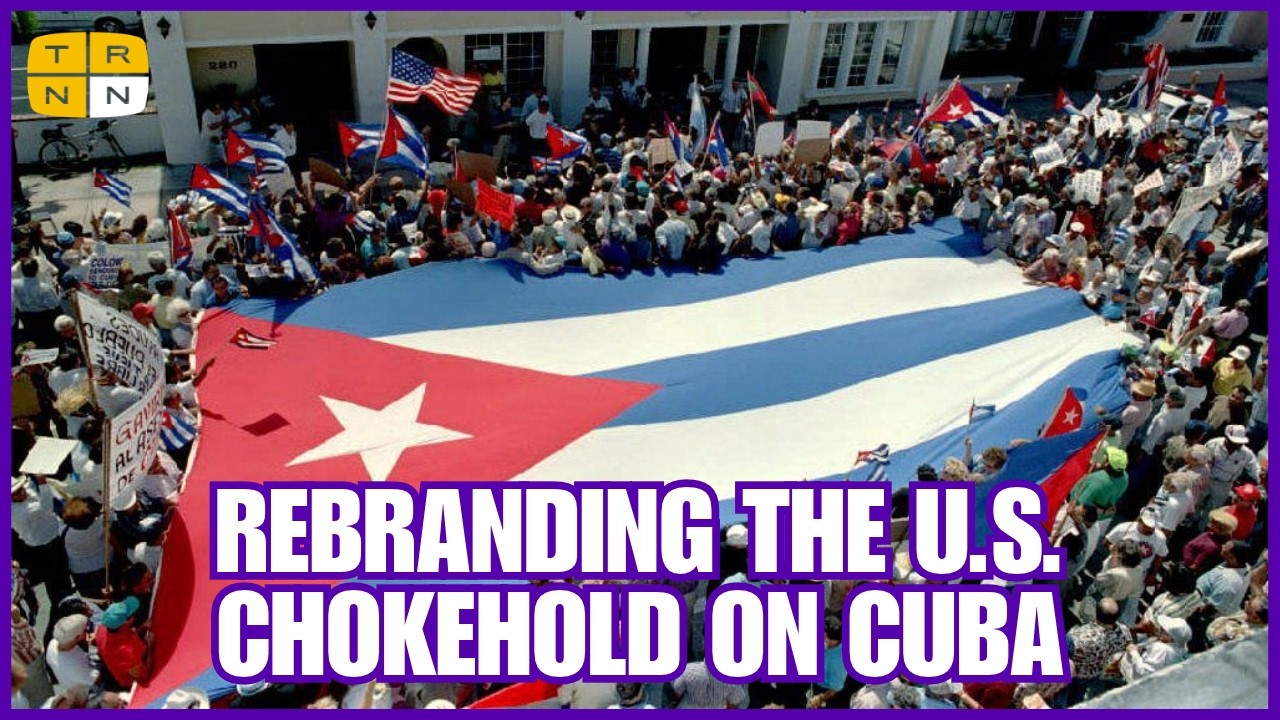
Thousands of Cuban-American nationals demonstrate in front of the Consulate General of Colombia in Miami, FL, 09 March 1994 to protest Colombia's planned trade of petroleum products to Cuba for sugar. Photo by DOUG COLLIER/AFP via Getty Images

In this episode of Rattling the Bars, Mansa Musa speaks with Dr. Kimberly Dawn Miller, Co-Coordinator of the Haiti/Americas Team for the Black Alliance for Peace. They examine geopolitical relations and the unfiltered history of U.S. imperialism in the Caribbean—including economic warfare against Cuba, the state of Florida’s recent arrest warrant for former Cuban leader Raúl Castro, Trump and JD Vance’s racist criminalization of Haitians, and over a century of capitalist resource extraction and regime change in Haiti.

The Black Alliance for Peace in Miami, organizing alongside the Miami Coalition, seeks to end the blockade against Cuba. October 24–31 marks the Cuba Week of Action against the U.S. chokehold on Cuba, leading up to the International and National Day of Action on October 28. This aligns with the United Nations’ annual vote, where the international community will once again vote on the U.S. embargo on Cuba. 

Credits:

  • Production/Post-production: Cameron Granadino
Transcript

The following is a rushed transcript and may contain errors. It will be updated.

Mansa Musa:

Welcome to Rattling the Bars. I’m your host, Mansa Musa. At Rattling the Bars, we examine the prison industrial complex, both domestically and internationally. Miami floor sits at the direct intersection of US imperialism across the Caribbean and Latin America. Joining me today is Dr. Kim Miller, an organizer in Miami fighting to end sanctions and the embargo on Cuba opposing termination of TPS for Haiti and building solidarity with nations targeted for their socialist or abolitionist revolutions. Welcome, Kim.

Dr. Kimberly Dawn Miller:

Thank you. I’m really excited to be here for this conversation.

Mansa Musa:

All right, so first introduce yourself to our audience and tell them about your work with Black Alliance for Peace in Miami.

Dr. Kimberly Dawn Miller:

Yeah, so my name is Kimberly Dawn Miller. I have a PhD in global studies with a concentration in environmental sociology. So I research particularly the Eastern Caribbean looking at the contradictions of the post-colonial state, neoliberal development regimes, as well as the politics of post-disaster recovery. So I kind of use a lot of my organizing to also inform my research. And right now I am the Miami point person for the Black Alliance for Peace Miami cluster, as well as the co-coordinator for the Black Alliance for Peace, Haiti Americas team. So Cuba, Haiti, Venezuela, and the Caribbean at large are very central to our anti-imperialist organizing and situating and centering Haiti in particular as a note of Black liberation and why we fight so hard for their sovereignty.

Mansa Musa:

Kim, you focus heavily on Cuba. Can you discuss the organizing you are doing locally in Miami and internationally against the direct tack on the achievement of the Cuban Revolution?

Dr. Kimberly Dawn Miller:

Miami, Florida is basically the heartland of Latin American counterrevolution, and it is a central city that has a lot of reactionary diaspora politics from Latin America, and particularly the Cuban exile community, the Venezuelan exile community, supporting some of the more far right policies, including the economic and oil blockade occurring on Cuba. So

Mansa Musa:

It’s

Dr. Kimberly Dawn Miller:

Been important though that we resist this notion of creating a monolith regarding the politics of Miami at the same time. So the Black Alliance for Peace in Miami, we work with the Miami Coalition to end the blockade on Cuba, which is a coalition of many different organizations as well as trying to fight in a decades long organization, trying to fight along with the national network on Cuba. And starting tomorrow, October 24th is the Cuba Week of Action against the US genocide on Cuba. And it’s through the 31st of October. And we’re really trying to mobilize for International and National Day of Action for Cuba on the 28th, which coincides with the UN’s annual vote where majority of the world’s countries will be able to vote on the embargo on Cuba. And we basically

Mansa Musa:

Want

Dr. Kimberly Dawn Miller:

To show that in Miami, Florida as well, the heartland of, like I said, Latin American counterrevolution, that not

Mansa Musa:

All

Dr. Kimberly Dawn Miller:

Voices in Miami support what this government is doing, specifically heightening sanctions as well as blocking solidarity, international solidarity with the Cuban people, as well as their access to even third party, like I said, financing. So we’re really just trying to show the economic strangulation that’s occurring and standing in solidarity with Cuba, the Cuban revolution, as well as those that are resisting.

Mansa Musa:

Okay. So let’s unpack the issues that’s taking place in Cuba as it relates to the international community. And you can address this from your experience and what you know to be a fact, you have on the so-called left in the United States anarchist with people that have a particular political ideology and they’re critiquing Cuba in the sense of saying that the centralization of the government is problematic and that if they didn’t have a centralized government, then it would be more likely they wouldn’t be suffering from the imperialist on slaughter. Talk about what’s your experience and what do you say about that?

Dr. Kimberly Dawn Miller:

Right. Well, I think there lies at a fundamental disagreement on maybe the nature of the state when it comes to how maybe a Marxist Leninist would view state power versus an anarchist. So one thing I’ve been trying to reference a lot of times is Lenin’s state and revolution where he clearly identifies that the state does not hover above class interests, class power. And if you see the state as instrumental to class antagonism and class power, then what does it mean when you have a state like Cuba that had a socialist revolution and that did expropriate from the bourgeoisie and actually identify class power within institutions? And I think when you look at the state not as a monolithic or a flattened character, but actually looking at the state in terms of its global configuration within, like I said, the capitalist world order, it becomes very clear that Cuba, the Cuban state is not inherently the same as the US state.

There are several colonial states, there are imperialized states, there are states in the imperial core. And then we have to recognize these differences to coming from a conclusion on the nature of the state, people’s power within its dynamic within the state, as well as the function of that state. And I do think when you have anti-imperialist states, it’s fundamentally different and they’re targeted because of they represent a more autonomous or sovereign form of development. And it’s hard to move toward no state, if you will, when you have the imperialist attack. So you just need levels of defense. Iran is another example. You need a state to defend against imperialist onslaught. And I do think that maybe putting the cart before the horse, it’s important to understand those differences. And in addition to that, I wanted to add that the dynamic between, for instance, grassroots popular power and communes is not necessarily antagonistic to the socialist state itself.

And I think that that’s important to demystifying the idea that there’s either just an authoritarian socialist state versus popular power beneath. And I think that just in my experience with Venezuela, even though we know there’s been a lot of restructuring to the Venezuelan state since January 3rd, I did see a popular consultation on International Working Women’s Day within the communes. And I did see that how they were trying to actually build their communal capacity, which Hugo Chavez said is the base for transforming the bourgeois state as well as capitalist social relations. So I do think that you can have a dialectical and sometimes, yes, antagonistic relationship between communes and the state, but I do think it’s important to understand that it’s not necessarily opposed and that they work within the Bolivarian process to get financing for infrastructure in their own productive capacity. So that’s one thing I wanted to add there as well as you can even see a country like China that has rural village cooperatives and land ownership.

And what does that mean for the actual community that it’s still a centralized party state, but they still have a communicative and a participatory democracy within that. Right.

Mansa Musa:

Okay. And I think that’s a very astute observation because I think that, and I’ve been a lot of these spaces, when people make an analysis, they have a tendency to the foundation be based on misinformation to begin with and they build out on that. They build out on, like you say, it’s a difference between the United States and the state that Lenin talked about with state revolution. Let’s shift our gears and talk about Haiti. Switching, we see a different history, not a socialist revolution, but an abolition one in Haiti, establishing the first Black Republic through slaves revoked, historically targeted by the United States imperialists. Haiti recently became the focal point of a campaign by Donald Trump and JD Vance. Given that Florida holds the largest Haitian population in the US, what are the local international dynamics that exist within that? It’s almost as if Tucson let overture ghost haunts anybody that got a view of history that’s imperialist.

The involvement by the United States and continues to destabilize it is criminal in and of itself. Talk about the Haitian aspect of your analysis.

Dr. Kimberly Dawn Miller:

Yeah, I mean that’s an excellent overview. I think it speaks to the idea of Black ungovernability and the idea that since 1804 when Thomas Jefferson snubbed Dasaline, it was always the idea that Haiti was going to be excluded. Haiti was seen as a model of Black liberation of formerly or enslaved people freeing themselves, creating its first independent state in Latin America. And what does that symbolize to enslaved Africans in the United States? It was the idea that Black sovereignty is a threat to the powers that be essentially. And these are the class contradictions that Dasaline was trying to actually resolve through a kind of form of early socialist egalitarian or agrarian reform that actually did occur when he was assassinated. But just thinking about the long history of foreign interventions in Haiti, like I said, they weren’t really given access to international credit through non-diplomatic recognition.

And then when France did recognize Haiti, they had to pay an indemnity. So the idea that it’s creating successive notions of debt that Haitians never want to take on, but the idea of, oh, well to recognize you, you have to pay for your freedom. And then we did in particular, in Miami, we actually did a teaching looking at the 1915 US occupation where the US rewrote the Haitian constitution to allow foreign ownership of land that was banned in Haiti, as well as making sure that it opened up to US capital to exploit rural workers to basically extract from the country. So the US has always had a very, and of course through Bank of New York, which is now Citibank, extracting, like I said, it’s gold, it’s resources. And I think that that’s an example even to this day since the current gang suppression force occupation after the multiple occupations from the UN, after the US, France and Canada back to coup in 2004 against Aristide.

I mean, you just see this constant history of intervention and occupation. And I do think, like you said, it’s to keep them destabilized because a functioning Haiti, a sovereign Haiti, that is, I believe, a model of what Black sovereignty could and should mean.

Mansa Musa:

So what are y’all doing to organize and change this narrative in terms of how Haiti is being looked at? Because that goes a long ways in terms of not so much as imperialist. Imperialis is going to lie. I think Gold would say when you’re dealing with propaganda, find a narrative, repeat it over and over and over again till people come to believe it. So we know that’s going to come from them, but talk about how y’all organize to get people to see the need to be involved in what’s going on in Haiti and aid and assist the Haitian people in their liberation.

Dr. Kimberly Dawn Miller:

Well, in the Black Alliance for Peace and the Haiti Americas team, we always say that Haiti’s crisis is one of imperialism. It’s not of the Haitian people where we work and move against narratives that dehumanize the Haitian public, that pathologize them. And I think it’s important, once you understand that the crisis is imperialism, you see it as an externally driven crisis. We know, for instance, that all the arms that the gangs are using, the paramilitary groups are using in Haiti come from Miami. They’re trafficked from Miami to the Dominican Republic into Haiti. So there’s an arms embargo on Haiti, and yet these weapons are flooding the country. And what does that mean around the source of the problem? Haiti is a weapons manufacturer, so the guns are getting there somewhere from the United States. That’s one way. We also look at the culpability of, unfortunately, a lot of Latin American governments.

El Salvador right now is actually trying to basically start war with Haiti by saying, “Oh, we have our four servicemen that were kidnapped and now we’re going to go in.” And it’s like, “Well, why are there Salvadorian troops in Haiti?” It speaks to this idea that there’s this global kind of almost subjugation of the Haitian people because this is the international community that is sanctioning Chad or Kenya going in and representing on behalf of the United States. It’s proposed military solution for Haiti, but it’s never looking at the political situation, never looking at the core group, the countries of US, Canada, France, believe Germany, also Brazil. We don’t know that. Brazil also has a long history of pressing Haiti. So I think it’s important that we look at all these factors and that we understand that the gangs are getting support by the oligarchs. And what does that mean?

And what is the relationship between the elites in Haiti, the violence happening against the mostly working class Haitians, and how do we address the root of the problem instead of, like I said, stigmatizing the Haitian people, as well as attacking them through TPS, which is basically saying that the US helped create these conditions and now we’re going to send them back to that. People aren’t temporary. Haitians aren’t temporary. And it’s unfortunate that the mass deportation of this regime is trying to keep Haitians, and like I said, exploit their labor when it’s convenient, but also keep them in a state of precarity. And like you said, Miami has a huge Haitian population, I think the second highest in the country, and they’re in particular fields like hospitality industry, construction, home healthcare, and they’re being devastated right now. The communities are definitely fearful, but we want to push back against the narrative.

We want to put an anti-imperialist analysis into our understanding of the Haitian immigrant and migrant presence as well.

Mansa Musa:

Yeah, just the effect of imperialist. This is not people just not wanting to live a quality life. We remember Baby Doc, Papa Doc, and Tanta Liku. We remember when they was ravishing the country, being a full stool for imperialists, taking all the minerals and the natural resources out of Haiti and putting a little money in their pocket in comparison. So we are well aware, and that’s a good viewpoint as you especially, Dr. Kim, because we got to push back. I think that when they say their response to the oppression is the reason why they oppressed, you oppressed because you saying, “Get your foot off my neck.” But talk about how the United States and imperialists in particular, and this is a shift in terms of not so much the Trump administration, but the general attitude of imperialists and capitalists and fascists around the world, how they deal with Maduro and the fact that they talking about kidnapping Raul, but they threatening any country that stand up and try to identify with any type of sovereignty.

Dr. Kimberly Dawn Miller:

Absolutely. Well, I think for us, we understand that the illegal kidnapping of a head of state when it came to Maduro and his wife, Cylia Flores, and bringing them to Metropolitan Detention Center in Brooklyn, what does this say when the US gets to espouse and impose extraterritorial coercion against a sovereign country? And we know historically when the US would indict, for instance, Noriega from Panama, indicting for drug trafficking, even though he was the CIA guy until our grace. Well, he didn’t play ball geopolitically, and then suddenly he needs to be removed. We know again with the kidnapping of Aristide in 2004 and dropping him off in the

Mansa Musa:

Central

Dr. Kimberly Dawn Miller:

African Republic, this is not new what the US is doing. I think what makes this

Mansa Musa:

Particularly horrific

Dr. Kimberly Dawn Miller:

Is just knowing it’s the combination of the

Mansa Musa:

War

Dr. Kimberly Dawn Miller:

On drugs with the war on terror. So you have this narco terror label. We know that the US has sadly bombed 240 Caribbean and Latin American men on both extrajudicially for being narco terrorists. And you’re seeing, like I said, the collusion of, I do think these two kind of law enforcement mechanisms that is aligned with imperialist interests. So I think that’s one thing that we look at when advocating for Arizona peace and basically saying that the US and looking at the heart of US militarization in the region, this is not new, Venezuela wasn’t the first. And with, like you said, these indictments on Raul Castro, the indictments on the Cuban president, Diaz Canal. I mean, particularly in Florida, it was Florida that just put out a arrest warrant, which the state of Florida cannot actually arrest Raul on a sovereign country. But this idea of this performance, we were even tough on the communists.

I mean, it plays into a lot of red meat to their base, but it’s also just incredibly

Mansa Musa:

Illegal

Dr. Kimberly Dawn Miller:

And a part of how the US has operated, sadly, in this re-intensification of the Monroe doctrine that we’re seeing.

Mansa Musa:

We do remember this, and you can weigh in on this if you want to. We do remember this, the Iran Contra where they were selling guns for cocaine and the cocaine flooded the United States. And when it flooded the United States, you had the crime bill, and the crime bill was designed to make crack cocaine worse than powder cocaine, but any kind of cocaine was coming through the country through the military and the United States government with the goal of destabilizing Nicaragua and killing all American citizens. If you got a viewpoint on that, you can weigh in now.

Dr. Kimberly Dawn Miller:

Yeah, absolutely. I think it’s interesting, 60 Minutes before 60 Minutes became terrible. When they used to do journalism, they actually had a report after the invasion of Panama, and it basically said that looking at the post Noriega political climate, it’s been skyrocketing drug addiction of crack cocaine. Largely Afro-Panamanians would be addicted now to crack after the invasion. After the US invaded, then you see a rise of crack cocaine flooding the country. So it’s this weird kind of contradiction that they’re invading to stop the idea that drug trafficking is the reason that they’re going in, and then yet it’s gotten far worse. And I think that’s a similar idea when it comes to how the CIA moved through the concerts in Nicaragua to make sure that where that drugs are being funneled would be poor Black and brown communities and we’re the ones that suffer. So that’s why Black Alliance for Peace says no compromise, no retreat, which is the ways in which the war on African people here is connected to the global war on African people abroad.

And I think that’s just one excellent example.

Mansa Musa:

And as we wrap up, talk about the 60th anniversary of the Black Panther Party was this month, and the Black Panther Party, all organizations during that time that came up had an international platform. Aside of Shakur, Cuba gave a side of Shakur sanctuary. Huey was exile, gave him sanctuary. Al Jeria, we had a embassy in Algeria, Pete O’Neill and Shiloh O’Neill is in Tanzania. But talk about why it’s so

Dr. Kimberly Dawn Miller:

Important

Mansa Musa:

That our movement have an international perspective about our struggle.

Dr. Kimberly Dawn Miller:

Yeah. So thinking specifically when you have these kind of more narrow nationalist xenophobic movements coming up that try to say Black Americans, Black America, we’re not African. And thinking about the history of Black radical struggle, it was always internationalist. It was always about connecting the fight against imperialism and how that shapes the militarization of our own communities here, whether it was the 1033 program, weapons from wars being kind of funneled into local police departments that have a disproportionate effect on, like I said, Black people or the idea that the IDF will train local police departments here in the surveillance tech that both these states as they subjugate Palestinians. So that’s just another way that Black people here and Palestinians are connected. I think we have to look at things broader because understanding how we, I know some people like the domestic colony theory, that if we are an internal colony, then what does that look like?

What does that mean when our communities are occupied by police or even the shooting of Cullen Wiley in Mississippi being justified by their attorney general? I think you’re seeing that these struggles are connected, and I think that it’s really important that we don’t see ourselves as isolated, but that we have people we can tap into. And in my trip to Caracas in Venezuela, it was so surprising seeing so many Venezuelans that look just like me, Black people. And I was like, oh my gosh, because I don’t see as many Venezuelans that are Black, but there are, and how these struggles are shaped and Black internationalism is very important to fighting our own battle here, I believe.

Mansa Musa:

And you had a last word, Dr. Kim. What do you want to tell our audience and how can we get in touch with you or how can they become more involved in Black Alliance for Peace or understanding what’s going on with Cuba and y’all organization, y’all advocacy around Cuba and the diaspora?

Dr. Kimberly Dawn Miller:

Yeah. Well, so blackalianceforpeace.com/haiti, you can learn all of our resources on Haiti. Very important. We’re also on Instagram, Black Alliance for Peace, Twitter, Black Alliance for Peace, or Blacks for Peace on Twitter and Facebook. So we’re really trying to pick up our social media. And I also just want to point out that it’s the week of action for defense of Black migrants, and that’s just something that we’re working with. I mean, the Miami cluster is working with Baji, which is the Black Alliance for Just Immigration. And we’re just really trying to, like I said, spread our message on the war on African people here, being connected to the war on Africans abroad and driving out the heart of US militarization so that we can have a true zone of peace. And yeah, you can tap into our US NATO axis of domination out of our Americas network.

There’s a lot, but thank you so much.

💾

https://youtu.be/fb80DqejYqs In this episode of Rattling the Bars, Mansa Musa speaks with Dr. Kimberly Dawn Miller, Co-Coordinator of the Haiti/Americas Team for the Black Alliance for Peace. They examine geopolitical relations and the unfiltered history of U.S. imperialism in the Caribbean—includin
  •  

Brazilians defeat the Mother of All Hybrid Wars

By Pepe ESCOBAR

Join us on Telegram, X, and VK.

Contact us: info@strategic-culture.su

It don’t mean a thing if it ain’t got that Brazilian swing. The stakes couldn’t be higher: a matter of do or die. So Brazilians hit the streets – and the polling stations – and managed to pull it off.

They did nothing less than tame the Mother of All Hybrid Wars and defeat, even momentarily, a powerful, toxic coalition including the full force of the “Donroe Doctrine” administration; Silicon Valley techno-feudalism, especially deployed by Meta; Wall Street and the Goddess of the Market; the multiple tentacles of Zionism Inc.; the old reactionary elites – and their media; the new bling-bling elites; the evangelical dementia; and last but not least, a mediocre neo-fascist dynasty bent on converting Brazil into an extractivist neo-colony to the benefit of His Master’s Voice.

The – soothing – effect is similar to an Antônio Carlos Jobim bossa nova anthem sung by Frank Sinatra. Yes, Brazil is too big – and too wild – to be anyone’s backyard. And what a turnaround, when it comes to Lula personally: geopolitics hasn’t seen a comeback like this since the Battle of Stalingrad.

We lost: so the election was “rigged”

Election Day dawned in nail-biting territory – but with Flávio Bolsonaro still given an 82% chance of winning, according to DARPA darlings Polymarket. It’s as if the Deep State knew the result in advance – just like in the first round of voting.

Yet in the end Lula won by 4.4 million votes. Not without plenty of drama. Just before the polls closed, a Supreme Court justice – formerly Lula’s personal lawyer during the Car Wash corruption case – extended voting nationwide by two hours. The electoral court should have ruled on this. It didn’t because another Supreme Court justice – Bolsonaro-appointed – was dragging his feet over it.

The extension was vital – because by then it had already been proven that Bolsonarist mayors were deliberately hobbling public transport, especially buses, in Lula strongholds like Salvador in Bahia: a tactic straight from the oligarchic sabotage playbook, used to suppress the popular vote.

The key fact is that both campaigns had asked for a voting extension. And that completely undercuts claims by Bolsonarist and MAGA-linked twats that the election was “rigged.”

Predictably, Flávio Bolsonaro is refusing to concede and wants the election annulled. That won’t happen – according to the same Bolsonaro-appointed justice who was dragging his feet in the first place.

In the second round, Lula increased his vote total by over 10.1 million votes, while Bolsonaro got only 3.6 million more. Add to that a near improbability: there were over 1.8 million fewer (italics mine) null and void ballots compared to the first round – and the overwhelming majority went to Lula.

Several reasons explain the performance by the Comeback Kid – or Grandpa. Starting with massive popular mobilization: abstention fell from 21.08% to 19.21%. Nearly 3 million more people showed up at the polls.

Lula expanded his margins where he was strong – in the Northeast – and reduced his losses in the wealthy Southeast.

Lula’s campaign deployed serious self-correction: instead of focusing on the past – the practical results of his government – he started talking about the dire, present reality: family economics; huge levels of indebtedness; the cost of living; salaries; and even advancing concrete proposals for the next four years.

The digital mobilization campaign was something to watch – complete with a lethal weapon unleashed on WhatsApp: the “Lula’s Army” channel, which went from about 50,000 followers to a whopping 10 million in less than three weeks: a de facto digital infantry. Brazil is one of the most connected nations on the planet.

Spearheaded by newly elected Congressman André Janones, the campaign showed how Lula beat techno-feudalist hegemon Meta at its own game: the strategy will be studied in the annals of political science for generations.

And then there’s Flávio Bolsonaro’s stunning incompetence – a deadly mix of arrogance and ignorance which simply could not be sold as a moderate alternative.

Only two days before the runoff, during the last, crucial debate, Bolsonaro, live, in front of the whole nation and millions of undecided voters, called Lula “the 9 fingers” – mocking his physical disability.

Lula crafted the blowback in real time like a cobra. He recalled how he lost his pinkie at 19 in a metalworking press, a victim of the precarity and lack of safety that millions of workers in Brazil endure: “Something very different from you, Bolsonaro, who has never worked.”

That sealed it: the lost pinkie as the definitive symbol of dignity in the face of privilege.

This is gonna get very ugly

Governing Brazil will be a Sisyphean task for Lula’s fourth term. The Senate (81 seats) is controlled by the extreme right (48 seats): an absolute majority. In Congress, the extreme right has 303 seats (way above the majority at 257), the center has 86 seats, and the left only 124 seats. Any reform, budget, or law will face an Iron Wall.

Arguably the best definition of Lula was once offered by the late great El Comandante, Fidel Castro:

“He was never a leftist extremist, nor did he rise to the status of revolutionary from philosophical positions, but from those of a worker of very humble origin and Christian faith, who worked hard creating surplus value for others.”

Lula, now in his eighties, seems to have recovered that spark. There’s no question he knows very well how this massive defeat for Trump, MAGA and the Donroe Doctrine will force him to summon all of his powers – to organize Brazil while containing the out-of-control fury of the Empire.

Whatever the results in the US midterms next week, Trump will inevitably ramp up sanctions and/or tariffs against Brazil and will continue to pull out all the stops and launch dirty operations to destabilize the country. The CIA and the Deep State are deeply enmeshed in the Brazilian reality and able to unleash an unlimited bag of dirty tricks.

Lula knows: this will get very ugly.

In sum, Lula may be characterized as personifying a Catholic, traditional, Lusophone-mestizo and progressive Brazil.

This is in a frontal clash with the reactionary, evangelical neo-Pentecostal, Anglo-American Zionist axis. After all, neo-Pentecostalists carry the lunatic End Times theology that shaped Anglo-American Christian Zionism.

Flávio Bolsonaro – like all clan members – promised to move Brazil’s embassy to Jerusalem; dismissed BRICS as “highly ideological”; and attacked Lula’s relationship with Iran (also a BRICS member). Flávio, an empty shell, may have lost an election. Yet the infernal machine behind him will never give up.

Original article:  geopoliticsprime.substack.com

  •  

Brazil: Social convulsion on the horizon

With economic crisis looming, Brazil faces social convulsion. The New Republic’s end won’t be easy.

Join us on Telegram, X, and VK.

Contact us: info@strategic-culture.su

In 2002, Lula won the election for the first time with the slogan “Hope has triumphed over fear.” His opponents claimed that Lula would be a sort of Che Guevara in power and would drive investments away—nothing could be further from the truth, as the president is, in fact, beloved by bankers. In any case, there is no greater contrast than that between Lula’s first victory and his most recent one. In the latter, Lula’s meager and unconvincing proposals quickly gave way to a campaign of fear. The narrative went that Flávio would put an end to the Bolsa Família welfare program, slash pensions, and even strip Our Lady of Aparecida of her title as the Patroness of Brazil—something only the Pope has the authority to do.

This is the popular version of the fear-mongering campaign, and it is the more rational one. The middle-class version claimed that gay people would be prevented from existing, women would be barred from having abortions, and democracy itself would come to an end. In this context, “democracy” is an esoteric concept that is difficult to pin down. Since the majority of the Brazilian people oppose abortion—which, in theory, is already prohibited in Brazil—then the democratic course of action would, in fact, be to prevent women from using abortion as a method of contraception. Observing the hysterical outburst from a segment of the Brazilian middle class, one gets the impression that an Age of Aquarius of Evil might begin should Flávio win the election.

Things were going very well for Flávio until 1:22 PM on October 25th. Flávio had won the first round with a lead of 2,224,965 votes over Lula and held hopes of securing a large share of the votes cast for the four “third-way” candidates, whose supporters are predominantly anti-PT (opposed to the Lula’s Party). Combined, the three anti-PT candidates had garnered 5,607,483 votes. Self-help author Augusto Cury received 3,448,569 votes, and polling institutes indicated that his votes would be split between Flávio and Lula in the runoff. It would therefore have been reasonable to expect Flávio to gain around 7 million votes in the second round. Lula, on the other hand, counted on a reduction in abstention rates to turn the situation around—an expectation that was, at best, highly unrealistic.

Until the start of the campaign, Lula had nothing to offer the people other than an extra day off for formal-sector workers, the repeal of a tax he himself had created, and an end to the betting industry he himself had regulated. During the campaign, he granted the first increase in three years to Bolsa Família, the neoliberal cash-transfer program that turned him into an icon of the Brazilian left. When asked why it had taken so long, he claimed he hadn’t realized there hadn’t been an increase, and that once he found out, he raised it. The increase had not even been accounted for in the budget. Furthermore, he promised a 5,000-reais transfer for small-business owners and a 400-reais monthly stipend for university students—all this while the country is already burdened by high public debt and an annual interest rate of 13.75%.

Lula’s style of politics was laid bare once again during the final presidential debate: his promises consist entirely of income transfers, and his rhetoric is rooted in social division. Lula went so far as to claim that only a president born in the Northeast could look after the region, alleging that people from the South and Southeast hold the Northeast in contempt. Any criticism directed at a political movement that has spent nearly 20 years in power is framed as hatred toward the poor. Lula presents himself as a “poor man” simply because he was born into poverty—yet he is perhaps the only “poor man” in the world to receive a bottle of Macallan whisky worth 80,000 euros from a banker. When asked by Flávio whether he would like to apologize to Brazilians burdened by debt, Lula stated that it is the elite who should be apologizing.

Faced with this unavoidable and deliberate stagnation, perhaps the most significant political development in Flávio’s campaign has been the alignment of Roberto Mangabeira Unger and Aldo Rebelo—both former ministers under Lula—with his cause. Aldo Rebelo had already moved quite close to Bolsonarism due to his stance on environmental issues, so his alignment in 2026 comes as no surprise. Mangabeira Unger, however, is a Harvard professor who has long been associated with the PDT—a left-wing party that, while recently becoming a satellite of Lula, was, until not long ago, rooted in developmentalism. With these prominent left-wing figures—all champions of developmentalism—now aligning themselves with Bolsonarism, only Ciro Gomes is lacking; however, it was his aide, Gustavo Castañon, who organized the meeting between Flávio, Aldo, and Mangabeira—the latter having even flown in from the United States for this purpose.

At 1:22 PM on the 25th, however, the optimism within Flávio’s campaign began to falter when Lula’s PT requested that the Electoral Court extend voting hours in several Bahian cities until 7:00 PM. In Brazil, elections run from 8:00 AM to 5:00 PM (Brasília time), followed by a rapid tabulation of votes from the voting machines. The basis for the request was an alleged conspiracy by mayors supporting Flávio to pull buses off the streets and prevent voters from reaching the polls. In reality, the delay in Salvador occurred because PT-affiliated union members had engaged in a “sticker campaign”—placing PT campaign stickers on buses while they were still in the depot. Operating the buses in that condition would have constituted an electoral offense. Since bus operations fall under the jurisdiction of the municipal government, the city held the vehicles to remove the stickers; by 10:30 AM, however, transit services had returned to normal. (Furthermore, polling stations are located within a short distance of a voter’s registered address—a location that can be updated at the voter’s request.)

Salvador is a stronghold for the PT, yielding a high number of votes for the party. Consequently, Flávio’s campaign also sought to use rainfall in right-leaning municipalities as a pretext to extend voting hours in those areas. Subsequently, the PT petitioned the Supreme Federal Court (STF) to extend the election nationwide. Through the STF’s opaque, non-auditable selection process, the case was assigned to Justice Zanin—formerly Lula’s personal attorney—who granted the extension at 5:05 PM. By that time, many voting machines had already been closed and powered down, and under the rules, they could not be reopened. Finally, the vote count took place—in an order different from the norm (for instance, votes from the Northeast usually come in last; in a typical Brazilian election, the right starts strong but sees its lead melt away as the count progresses). To everyone’s astonishment, Lula’s performance improved in every region of the country. Flávio gained only 3,721,538 additional votes—a modest figure, considering one might have expected around 7 million from the “third way”—while Lula managed to secure an incredible 10,376,694 new votes.

Flávio has announced that he will seek the annulment of the runoff election, though he is unlikely to succeed. The central problem in Brazil today is the credibility of the Judiciary itself, which treats any questioning of the electoral process as an assault on democracy.

Precisely because a large segment of the Brazilian population views the Supreme Federal Court (STF) as the nation’s greatest problem, Flávio focused on electing senators capable of voting for the impeachment of justices. He succeeded: next year, the Senate will include 45 Bolsonarist senators—more than half the chamber. Given the public’s deep dissatisfaction with the Court, it is not implausible that they could reach the 54-vote threshold (two-thirds of the Senate) required to remove at least one justice.

Lula already governs with the backing of the Supreme Court, allowing him to bypass the legislative branches and censor the public. As the looming economic crisis compounds the political one (consider, for example, that starting next year, companies will be required to pay taxes the moment they receive payments from their clients), Brazil is likely to experience social convulsion and face a wave of repression. The end of the New Republic will not be easy. As things stand, one child has already paid with her health: in a Rio de Janeiro slum controlled by drug traffickers, those “victims of society” celebrated Lula’s victory with fireworks and gunfire—one round of which struck a young girl.

Many anti-Zionists demand that Brazil vote for Lula for the sake of the children in Palestine. It would seem that only Palestinian children matter; Brazilian children, apparently, do not.

  •  

Brazil’s Supreme Court Bans Flávio Bolsonaro From Leaving the Country

Flávio Bolsonaro is investigated by the Brazilian justice for alleged money laundering through betting companies and for irregularities in the fundraising for a film production. Photo: EFE.

Senator Flávio Bolsonaro was ordered on Monday to hand over his passports within 24 hours and not to leave Brazil, a measure signed by Supreme Federal Court (STF) justice Alexandre de Moraes.


Brazil’s Federal Police on Monday notified Senator Flávio Bolsonaro that he must surrender his passports and comply with a ban on leaving the country, measures ordered by Supreme Federal Court (STF) justice Alexandre de Moraes a day after Bolsonaro lost the presidential run-off to President Luiz Inácio Lula da Silva.

RELATED: Flávio Bolsonaro’s Party Recognizes Lula’s Victory in Brazil

Federal Police agents located the senator on Monday morning near his father’s home in Brasília, where former President Jair Bolsonaro is under house arrest. Police told Bolsonaro on Monday morning that he had 24 hours to hand over his documents. The order also bars him from contacting lawyer Willer Tomaz, who is under investigation for alleged money laundering.

The ruling was signed on Sunday night, after the results of that day’s runoff were announced. Flávio Bolsonaro, the far-right candidate, had lost the second round to President Luiz Inácio Lula da Silva.

Flávio Bolsonaro diz que foi intimado pela PF a entregar seus passaportes por decisão de Alexandre de Moraes pic.twitter.com/Ngvh19Pnmk

— Sam Pancher (@SamPancher) October 26, 2026

Text reads: “Flávio Bolsonaro says that he was subpoenaed by the federal police to surrender his passports by decision of Alexandre de Moraes.”

Flávio Bolsonaro alleged that the justice’s decision responds to remarks made last Friday by his brother, former congressman Eduardo Bolsonaro, who said in an interview that the senator should leave Brazil and challenge the vote count in the event of a defeat, according to the senator.

The Liberal Party’s senator denied any intention to flee, called the ruling an attempt at political intimidation and said he will hand over the documents while his lawyers file an appeal. “I never said that,” he wrote on his official channels, referring to leaving the country. “Is that a reason to take away my passport? Is this justice?,” he added.

Legal experts typically note that travel bans and passport seizures are precautionary measures and not findings of guilt.

Two Open Investigations

The order is tied to two cases pending at the Brazilian Supreme Federal Court. The first, led by Moraes and originating in proceedings in Rio Grande do Sul, examines alleged money laundering with Tomaz through betting companies and payment platforms. Last week the court ordered the freezing of up to 6 billion reais in assets linked to Tomaz, the suspension of his business activities and the lifting of his bank, tax and foreign-exchange secrecy.

Federal Police found that the senator appeared with a “master” user profile on an account of the firm Alcazar Holdings, and detected transactions of almost 130 million reais between March and May 2025 in accounts linked to the lawyer, the source says. Tomaz’s defense rejected the accusations and challenged the proportionality of the asset freezes.

The second case, assigned to justice André Mendonça, looks into alleged irregularities in raising private funds for the film “Dark Horse,” which focuses on Jair Bolsonaro’s political career. Investigators are analyzing audio and digital messages that link Flávio Bolsonaro to dealings with Daniel Vorcaro, the former owner of Master Bank, and police have asked for a 90-day extension to finish financial examinations and process international cooperation requests. Bolsonaro has acknowledged seeking funds for the film in earlier reports in this conversation and denies offering favors.

After Lula’s victory, Bolsonaro will be without public office from February 1, 2027, the first time in more than 20 years that he will be outside state service as he did not run for Senate reelection.

The Supreme Federal Court will keep jurisdiction over the cases against him, under a doctrine the court set in March 2025, approved by seven votes to four and complemented in May 2026, under which alleged crimes committed in office stay with the Supreme Court even after officials leave their posts.

From 2027, the senator will be without parliamentary immunity or public office, a condition that increases his exposure in the ongoing proceedings. The defense’s appeal and the pending expert reports mark the immediate path of the case.

  •  

Venezuelan Acting President Welcomes Lula’s Victory in Brazil

Brazil taught a lesson that neither extremism nor fanaticism of any kind can be imposed, said Venezuelan Acting President. Photo: Venezuelan Presidential Press.

Acting President Delcy Rodríguez said Brazil delivered a lesson against extremism and fanaticism. The Workers’ Party founder secured 51.74% of the vote, compared with 48.26% for Flávio Bolsonaro.


Venezuela’s Acting President Delcy Rodríguez congratulated President Luiz Inácio Lula da Silva and the Brazilian people following Sunday’s electoral victory.

The Workers’ Party candidate prevailed in the runoff election with 51.79% of the vote, defeating far-right candidate Flávio Bolsonaro, who received 48.21%.

RELATED: Latin American Leaders Celebrate Lula’s Fourth Term in Brazil

Rodríguez made the remarks in Caracas during the launch of the Comprehensive Women’s Medical Specialty Service at Dr. Carlos Arvelo Military Hospital. During the event, she argued that the election provided an important lesson for Latin America.

“I once again congratulate President Lula da Silva and the people of Brazil because Brazil has shown that neither extremism nor fanaticism of any kind can prevail,” she said.

The Venezuelan Acting President also emphasized what she described as the message Brazilian society had sent to the region. “It is a healthy society that has delivered a message to the world, and especially to the peoples of Latin America and the Caribbean,” she stated.

Official figures confirmed the scale of Lula’s victory. The Brazilian President received 64,256,232 votes (51.79%), ten million more than he obtained in the first round on October 4, when he finished behind his opponent. Bolsonaro garnered 59,826,041 votes (48.21%).

The comeback was unprecedented. The Workers’ Party founder overturned his first-round deficit and secured another term at the head of Brazil’s government in a runoff election that drew intense attention across Latin America for weeks.

Following the announcement of the final results, political leaders and public figures from around the world welcomed Lula’s victory. The election was widely viewed as a contest over the future of democracy and national sovereignty in South America’s largest nation, and the outcome was celebrated by supporters as a rejection of extremist political currents.

Democracy Advances

Diosdado Cabello, secretary-general of Venezuela’s United Socialist Party (PSUV, in Spanish), also praised voter participation in Brazil. During his weekly press conference, the political leader said Brazilian citizens had demonstrated clarity and determination by using the democratic process to stop fascist political alternatives.

According to PSUV leaders, the vote reaffirmed the importance of democratic participation as a decisive tool in political processes across the region and showed that authoritarian alternatives lack support in Brazil.

His comments reflected a broader narrative promoted by the Venezuelan government, which framed Lula’s victory as a milestone for progressive political forces in the region. Officials suggested that the election could strengthen ties among left-leaning governments in Latin America and contribute to renewed efforts aimed at regional integration.

Cabello also reviewed domestic political developments in Venezuela. He described the results of the National Popular Consultation held on October 18 as highly positive and congratulated community organizations and grassroots movements for their participation in local development projects.

On economic and agricultural matters, the Venezuela’s United Socialist Party leader highlighted the launch of a seasonal food production plan coordinated with regional governments and the Ministry of Popular Power for Communes.

Regarding the political dialogue process, Cabello said the third phase of talks is advancing in line with commitments adopted by the participating parties. The discussions include a proposed judicial reform promoted by the government and efforts to recover state assets blocked abroad.

Caracas’ recognition of Lula’s victory joined similar messages issued by leaders from multiple continents. Lula’s victory was achieved with more than 64 million votes, representing a substantial increase compared with his first-round performance. The result reinforced his position as one of the most influential political figures in Latin America and signaled continued support for his political agenda among a majority of Brazilian voters.

For Acting President Delcy Rodríguez, Lula’s re-election sends a clear message to the people of Latin America and the Caribbean, who, she argued, can draw an important lesson against fanaticism and political extremism from Brazil’s electoral outcome.

  •  

Flávio Bolsonaro’s Party Recognizes Lula’s Victory in Brazil

Flávio Bolsonaro had announced that he was unaware of the results after Lula’s electoral triumph became known. Photo: EFE.

Brazil’s Liberal Party (PL), the political force that fielded far-right Senator Flávio Bolsonaro, formally recognized the reelection of President Luiz Inácio Lula da Silva on Monday.


Brazil’s political landscape entered a new phase on Monday as the Liberal Party (PL) formally recognized the results of the presidential election held last Sunday in the South American country.

The party which led Flávio Bolsonaro as a candidate in the balotaje that he lost against Luiz Inácio Lula da Silva, took off from its leader and recognized the opposition victory that secured the re-election of President Luiz Inácio Lula da Silva

RELATED: Flávio Bolsonaro Rejects Lula’s Victory, Seeks Annulment

The concession arrived in a letter published on the party’s social media accounts, signed by the party’s president Valdemar Costa Neto, who accepted the result proclaimed by the Superior Electoral Court while asking that “the questions raised” be “duly clarified.“

“Flávio Bolsonaro won the first round of the presidential elections,” the note read, but this Sunday “the result was different, in a scenario marked by strongly electoralist measures, with economic and social impact.”

The party maintained that an expansion of public spending and social benefits carried out by Lula’s government before the vote altered the fairness of the contest. It announced that it will demand explanations within the institutional framework, keeping its objections alive even as it accepted the official tally.

The Liberal Party closed its statement by underscoring what it called a “historic” legislative advance. The conservative bloc secured 121 seats in the lower house, 29 senators and six governors, a result it framed as the base of its political strength going forward.

The decision carries particular weight because the Liberal Party has long been one of the principal political forces aligned with Brazil’s conservative and far right-wing electorate. The party served as a key platform for the Bolsonaro political movement and has frequently acted as one of the most influential opposition voices during Lula’s administration.

Lula secured the victory in Sunday’s runoff with 51,79% of the vote against 48,21% for the far-right candidate, a gap of more than four million ballots. The win amounted to an unprecedented comeback, since the October 4 first round had ended with the eldest son of former President Jair Bolsonaro ahead by two percentage points.

Bolsonaro Refuses Defeat

Flávio Bolsonaro nonetheless declined to concede, instead he affirmed that he will “organize the opposition” to turn the lower house and the Senate into his “fortress against the barbarity” he anticipates “with four more years of Lula.”

He also pledged to press the courts to annul Lula’s candidacy over what he described as “all the abuses” committed during the campaign. Among them he cited the “industrial complex of fake news” assembled by the pro-government side and “abuses of political and economic power without precedent.”The party’s recognition therefore stands in tension with the posture of its own candidate. The institution accepted the official count while its standard-bearer promised to fight it, leaving Brazil’s opposition divided between concession and contestation as Lula prepares to begin another term in office. For the government, the letter clears the way for the new mandate to unfold without a wholesale challenge to its legitimacy.

Flávio Bolsonaro diz que foi intimado pela PF a entregar passaporte e que está proibido de deixar o país

Senador, derrotado no domingo para Lula, voltou a afirmar que pedirá a cassação da chapa vitoriosa

📲 Leia mais na #Folha: https://t.co/MqLgzj5Pmw pic.twitter.com/vgN7UYj64T

— Folha de S.Paulo (@folha) October 26, 2026

Bolsonaro’s Loss of Immunity

Flávio Bolsonaro will be left without public office for the first time in more than two decades, following Lula’s reelection. His Senate term ends January 31, 2027, and he did not stand for another mandate after serving three consecutive terms as a state deputy in the Rio de Janeiro Legislative Assembly between 2003 and January 2019.

Bolsonaro then entered the Senate after the 2018 contest that carried his father to the presidency. By prioritizing his presidential bid, the legislator skipped the renewal of the upper house.

Actually, the senator is under investigation by the Supreme Federal Court for alleged money laundering, tax evasion and corruption. His defeat is expected to push the inquiry toward possible crimes connected to a 134 million reais deal with Daniel Vorcaro, of Master Bank, to finance the film “Dark Horse,” a tribute to his father, former President Jair Bolsonaro, who is sentenced to 27 years in prison after a coup attempt in 2022.

If Flávio won the presidency, the case might have been shelved. The Federal Constitution establishes that the head of the executive power “cannot be held responsible for acts unrelated to the exercise of his functions.”

Without parliamentary immunity, prosecutors gain room to pursue those lines of inquiry. The Senator’s relationship with lawyer Willer Tomaz de Souza also draws scrutiny, as the Federal Police investigate whether Tomaz used betting operations to launder money. The end of Flávio’s mandate therefore carries consequences far beyond the ballot box. His departure from the Senate strips him of the shield that once kept judicial proceedings at bay and leaves the investigations against him exposed to movement.

For the Liberal Party, the cycle closes with a mixed record. The conservative bloc celebrated a “historic” legislative advance in the same election that ended its presidential hopes, securing a strong bench in Congress while its standard-bearer prepared to leave the chamber he had occupied for nearly a decade.

Flávio Bolsonaro now faces a future outside elected office for the first time since 2003. The man who built his career in his father’s shadow in Rio de Janeiro will hand over his Senate seat to party colleagues, while the courts take up the allegations that shadowed his rise through Brazilian politics.

  •  

In a reverse of the Cold War domino theory, right-wing dominos are falling fast in Latin America

By Riva ENTEEN

Join us on Telegram, X, and VK.

Contact us: info@strategic-culture.su

Some of the remnant socialist governments appear to be sliding toward subservience

“Respect for sovereignty is the most significant norm in international politics, and its purpose is to minimize war and facilitate peaceful relations among states.”

—John Mearsheimer

American political scientist and international relations scholar and professor

The U.S. war against Vietnam was driven by the imperialist assumption that Vietnam was one of many inevitable dominoes that would fall to communism. But the communist dominos did not fall. Instead, today, we face a dramatic, devastating loss of progressive governments throughout Latin America, with the domino game won by the reactionary forces.

We must learn from history, or we are doomed to repeat it. But today, there is little public discussion and analysis of what led to these Latin American losses, if not outright condemnation of such questions.

Though all the winds of doctrine were let loose to play upon the earth, so Truth be in the field, we do injuriously, by licensing and prohibiting, to misdoubt her strength. Let her and Falsehood grapple; who ever knew Truth put to the worse, in a free and open encounter?

— John Milton
English poet, polemicist, and civil servant

During the Cold War, the U.S. had a long pattern of supporting right-wing coups, dictatorships and death-squad operations, driven by the imperatives of big business which wanted to exploit Latin American resources.

One of the most notorious cases was Chile, where the CIA backed a coup against democratically elected leader Salvador Allende that brought in fascist Augusto Pinochet.

Today, as Peoples Dispatch reported: “The far right in Latin America is shaped by an anti-left agenda that it inherits from the Cold War, which means that its political formations typically endorse the era of U.S.-backed military dictatorships. The ideas of the left, whether from the Cuban Revolution (1959) or from the era of the Pink Tide (after 1998), are anathema to these political forces; these ideas include agrarian reform, state-led finance for industrialization, state sovereignty, and the importance of trade unions for all workers and peasants.”

Glenn Greenwald agrees: “Other than Uruguay, Brazil is the last country in South America still governed by a left-wing or center-left government, with one country after another electing leaders on the right: Argentina, Colombia, Peru, Ecuador, Chile, etc.”

Medea Benjamin also agrees: “Across the continent—from Colombia and Peru to Argentina, Chile, Ecuador, Honduras, Bolivia and Panama—there has been a stark reversal of the region’s progressives that brought hope for a more independent and socially just Latin America. The only two major powers in Latin America still governed by the left are Mexico and Brazil—and Brazil faces a fiercely contested presidential election in October.” Unfortunately, the recent election requires a runoff, as neither Bolsonaro nor Lula received over 50% of the vote. What is particularly concerning, is that Lula did not come in as strong as most predicted.

Alan MacLeod reports in Mint Press that “The United States is interfering in the Brazilian presidential elections, pressuring the Brazilian electorate into voting for right-wing candidate Flavio Bolsonaro, the son of disgraced former president, Jair Bolsonaro. If that does not work and President Lula da Silva secures a fourth term in office, the groundwork is already being laid for a potential military intervention.”

Brazilian President Jair Bolsonaro presents President Donald Trump with a Brazil national soccer team jersey
Former Brazilian President Jair Bolsonaro after he is presented with a soccer jersey by President Donald Trump. [Source: politico.com]

Colombia’s domino fell when its left-wing presidential candidate Ivan Cepeda conceded defeat on June 24 to hard-right populist Abelardo de la Espriella following a tight run-off race.

“There had been doubts among the Cepeda camp about the legitimacy of the vote process, with President Gustavo Petro—who was closely involved in the leftist candidate’s campaign—openly alleging fraud and foreign interference before and after the election.”

As CovertAction Magazine has warned, “Colombia is Fast Becoming a Neo-Colonial Outpost Under Its New Right-Wing President.

Colombia's Bukele? Abelardo De La Espriella Surges Ahead
Colombia’s far right new President Abelardo de la Espriella celebrates his recent election victory. [Source: americasquarterly.org]

Nicaragua faces electoral interference as well. As reported in The Grayzone, “In his national address on July 19, Nicaraguan President Daniel Ortega stated that, when the country’s next elections take place in 2027, none who promoted a violent anti-government insurrection in 2018 will be allowed to stand for office.” He declared that Nicaragua has the “sovereign right to fight foreign interference in its electoral process…Washington’s plans for regime change in Nicaragua are hardly a secret…The National Endowment for Democracy’s president, Damon Wilson, bragged to a House committee in February that his organization is funding media in Nicaragua with an eye to undermining its Sandinista government.”

President Ortega of Nicaragua announces there will be 'no more elections' - Vatican News
Daniel Ortega [Source: vaticannews.va]

Lest we forget, government control of media is essential for fascism to take hold. Benjamin outlines how “The market concentration of Latin American media conglomerates is among the highest in the world, with four transnational companies controlling 89 percent of the broadcast media across six major countries…The market power of these huge media conglomerates is a real obstacle to any movement for democracy or socialism.” Even darker, she reports that Allen Weinstein, a founder of the National Endowment for Democracy, told The Washington Post in 1991, “A lot of what we do today was done covertly 25 years ago by the CIA.”

Standing With Those Who Choose Freedom - NATIONAL ENDOWMENT FOR DEMOCRACY
Damon Wilson, the director of the National Endowment for Democracy. [Source: ned.org]

After Venezuela was subject to a U.S. military invasion on January 3, which resulted in the kidnapping of sitting president Nicolás Maduro and his wife Celia Flores, then-Venezuelan Foreign Minister Yván Gil said “We found ourselves alone.”

In the article titled “The U.S. Tried to Decapitate Venezuela: The Revolution Survived,” those who question whether U.S.-installed interim President Delcy Rodríguez had a choice are told that is the context which needs to be understood.

It was certainly a devastating disappointment that Russia and China, or neighboring countries such as Colombia and Brazil, did not (though under the boot of the U.S.) more militantly advocate for Maduro and Flores’s return. The illegal murders on the open seas of the Caribbean—with impunity—was writing on the wall that Venezuela was the next domino to fall. Why did the efforts to prevent the fall fail?

Months before the kidnapping, Rodríguez told The New York Times: “The Pentagon always had a strategic objective of obtaining Venezuelan reserves.” Today she asserts: “There is something that must be made absolutely clear: Venezuela retains the ownership and sovereignty over its resources.” However, former Vice President and veteran Chavista figure Elías Jaua accused Washington of stripping the nation of its sovereignty and taking control of its natural resources. When is sovereignty lost?

Who is Delcy Rodriguez, Maduro's VP and now the acting president of Venezuela? - France 24
Delcy Rodríguez [Source: france24.com]

Maduro and Flores still sit behind bars in New York. On September 3, Maduro urged the judge to dismiss the criminal drug-trafficking charges against him, arguing he should be immune from prosecution as the head of a sovereign country.

Is Venezuela still a sovereign country? Former Venezuelan Foreign Minister Jorge Arreaza said, “Everything is now negotiated” with Washington, requiring a daily give-and-take with Caracas. When does it become regime change if everything must be negotiated with Washington?

Peoples Dispatch reports that, “Despite every attempt to overthrow the government of Venezuela, President Nicolás Maduro remains in charge and has mobilized large sections of the population to defend the Bolivarian Revolution against any threats.” But as is acknowledged, “…U.S. imperialism, by having a gun pointed to the government’s head, is in a position to exert substantial coercion leading to unpalatable decisions, such as Alex Saab’s deportation.”

Doesn’t “substantial coercion” trespass upon sovereignty? When domestic peace occurs due to a gun to your head, is it the measure of success? Saab’s deportation is more grievous than unpalatable.

Although María Corina Machado is now hiring D.C. lobbyists for access to Venezuela’s future, those who question Rodriguez’s decisions are compared to Machado. “It was not so long ago that it was the likes of far-right María Corina Machado who highlighted ‘cracks and fissures within the Chavista ranks’ and anticipated ‘the beginning of a social explosion’ against the elected Venezuelan government. Now some solidarity activists are saying the same.”

Criticizing a government does not make one equivalent to a particular opposition figure. Asking questions is not counterrevolutionary, but essential. What insights have we gained during this period of U.S. imperialism?

CovertAction Magazine’s “Cuba Is Not Venezuela or Jamaica as It Refuses to Become a U.S. Neo-Colony” recounts how, when Jamaican Prime Minister Michael Manley refused Henry Kissinger’s demand to end support for the Angola liberation struggle, the U.S. made sure Manley would lose the next election. Jamaica has been a willing servant of the Empire ever since, recently ending an essential Cuban health care program that brought doctors to the country. A neo-colony is certainly not sovereign.

It is tragic that Venezuela is used as the current example of what other countries want to avoid. Maduro recently posted that “Venezuela will be reborn.” Venezuelan popular movements now call for ‘anti-imperialist resistance’ to the recent oil deal for its lack of transparency and implications for Venezuelan sovereignty. Organizer Orlando Vega argued that the Venezuelan government “stumbled” in its response to the January 3 U.S. attacks. He urged a demand for the release of Maduro and Flores and a review of legislation approved “under U.S. coercion.”

But a key political question is: “What remains of Bolivarian sovereignty if control over the country’s primary energy resources is gradually transferred to private actors linked to U.S. interests?…A process born in the name of sovereignty and independence risks resulting in the subordination of key strategic resources to the interests of a foreign power…Venezuela faces what appears to be the liquidation of sovereignty, self-determination, and the legacy of the Bolivarian Revolution.”

“History shows that, more often than not, loss of sovereignty leads to liberalization imposed in the interests of the powerful.”—Noam Chomsky

Veteran Intelligence Professionals for Sanity (VIPS) recently issued a memo which states that Cuba is not Venezuela. They predict that “The same people who keep ’57 Chevrolets on the road with a coat hanger will wreak havoc against a foreign-imposed regime.”

Cuba refuses to accept a dialogue based on subordination. It declares it will engage in dialogue with Washington, but will not negotiate under pressure or cede its sovereignty. “We have no alternative but to resist. We must resist,” said Cuban President Miguel Díaz-Canel, who explicitly linked the defense of socialism to the defense of national independence and sovereignty. Is Cuba’s refusal to kneel to Uncle Sam the reason the U.S. strategy for Cuba recently shifted from the military option to sanctions?

Cuban president acknowledges talks have begun with United States - UPI.com
Miguel Díaz-Canel [Source: upi.com]

“Our position is that we do not accept conditions of any kind which may affect the independence and sovereignty of our country just with the view to solve economic problems existing between the United States and Cuba.”—Fidel Castro

The Soviet Union helped Cuba survive its illegal sanctions, begun in 1960, but since the fall of the Soviet Union in 1991, Cuba suffered and struggled under increasing sanctions—mostly alone. In a promising new development, Russian Deputy Foreign Minister Sergei Ryabkov recently announced that Russia and Cuba will continue strengthening their strategic partnership despite attempts to undermine bilateral cooperation through intimidation and political pressure.

MFA Russia 🇷🇺 on X: "🗓 Deputy Foreign Minister Sergey Ryabkov met with participants of the strategic session of the #BRICS Civil Council (November 17-18). A comprehensive discussion took place regarding the
Sergei Ryabkov [Source: x.com]

The Pillar of Sovereignty

The Peace of Westphalia, which established the nation-states in 1648, enshrined the concept of state sovereignty into international law, which was formalized centuries later by the United Nations Charter. The founding principle was that every State, regardless of size and economic importance, has an equal right to sovereignty. This cornerstone of modern international law establishes the concept that a nation-state has supreme, independent authority over its own territory and domestic affairs.

In tragic irony, sovereignty is used to justify the right to kill in defiance of international law. Carl Schmitt, a German philosopher and jurist who joined the Nazi Party in 1933, defined sovereignty as the “power to decide the state of exception.” William Blum’s Rogue State outlines in brutal detail how the U.S. has long been a lawless state, blind to others’ sovereignty, and the devastating danger that state of exception reflects.

Recently, Marco Rubio had the audacity to claim that “The ICC [International Criminal Court] poses an intolerable threat to U.S. sovereignty.” Then on October 9, the U.S. imposed new sanctions on the ICC, apparently because the Nobel Peace Prize was awarded to Navi Pillay, a former ICC judge who once criticized Israel.

However, “The ICC is not claiming jurisdiction over conduct in the United States,” said Kenneth Roth, of Human Rights Watch. “Rubio is dressing up his quest for impunity for American war crimes under the label of national sovereignty, which ignores the sovereign right of other nations to invoke the ICC for crimes committed on their territory.” Sovereignty does not imply immunity, but accountability to the rule of law.

South African-born jurist and former UN human rights chief Navanethem "Navi" Pillay, speaks at the Nuremberg Forum in Nuremberg, Germany, October 9, 2026.
Navi Pillay [Source: lemonde.fr]

Vijay Prashad outlines the struggle for sovereignty in the Global South: “Can the nations of the Global South act together with sovereignty and dignity? Can they build institutions that serve their peoples rather than global capital?…A political consciousness that favours sovereignty and strategic autonomy is rising in the Global South.”

When a country gives up strategic autonomy, has it compromised its sovereignty? Prashad concludes: “The peoples of the Global South demand sovereignty, equality, and peace.” Sovereignty is becoming a mantra, though its clear meaning remains elusive.

“How does any country give up any sovereignty and expect to survive as a government?…That would be political suicide.”—Benigno Aquino III

Geopolitical analyst Pepe Escobar explored modern global sovereignty in “Eurasia, the Hegemon, and the Three Sovereigns,” asserting that true, uncompromised national sovereignty in contemporary geopolitics requires reconceptualizing the understanding of sovereignty. He addressed the need to “pierce far beyond sovereignty as interpreted in conventional political science and predominant international relations narratives.”

When does genocide of resident civilians cancel the right to sovereignty over them? Banning a native language is legally genocide. Ukraine banned the Russian language on the first day of the 2014 coup.

So did Russia violate Ukraine’s sovereignty when it began the SMO? The Donbas, after 12,000 civilian deaths in eight years, voted—overwhelmingly—to rejoin the Russian Federation. The Duma voted to accept their request for reunification.

When international law fails, with total UN abdication, and agreements like Minsk I and Minsk II are used as a ruse, how is Ukraine’s alleged sovereignty legitimate while it commits genocide against its own people?

Cuba remains a sovereign socialist country which says it will not surrender. Venezuela reminds us how quickly a revolution can be compromised when sovereignty becomes a negotiable variable. What is the “difference between sovereignty and subordination, between resistance and surrender?”

When Castro won the Cuban Revolution, he immediately distributed guns to the peasants, because he knew that he needed the people to maintain the victory. And he certainly agreed with Frederick Douglass that “It’s better to die free, than live as a slave.”

Sovereignty requires that the people of each country are free to make their own choices, without coercion or a gun to their head.

Original article:  covertactionmagazine.com

  •  
❌