❌

Reading view

Ebola Workers in Congo Attacked by Machete Mob as Cases Pass 10,000

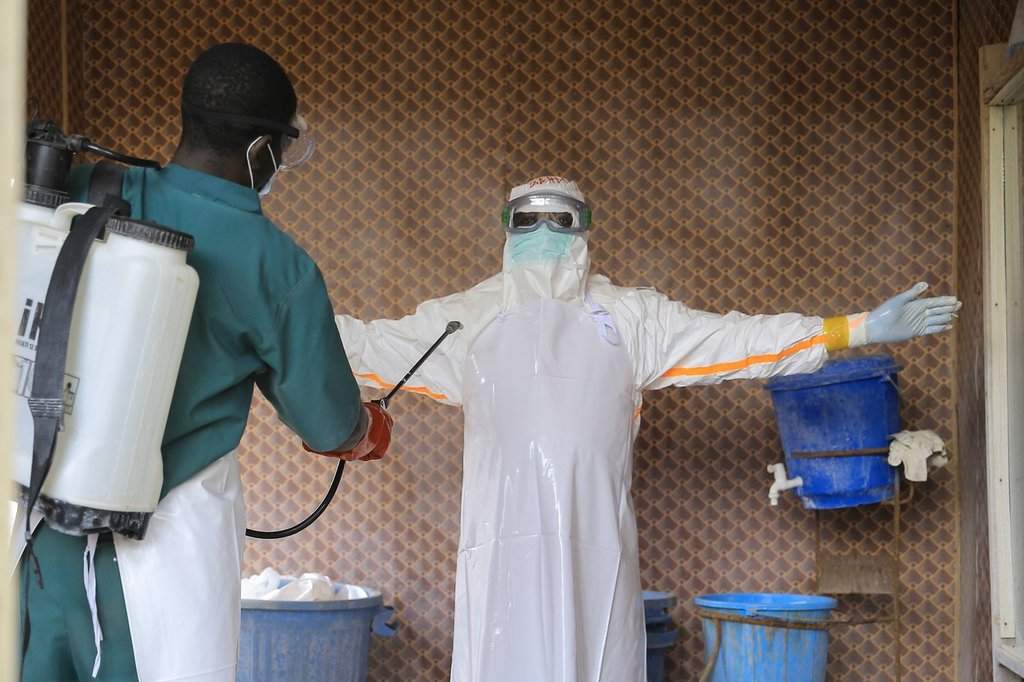
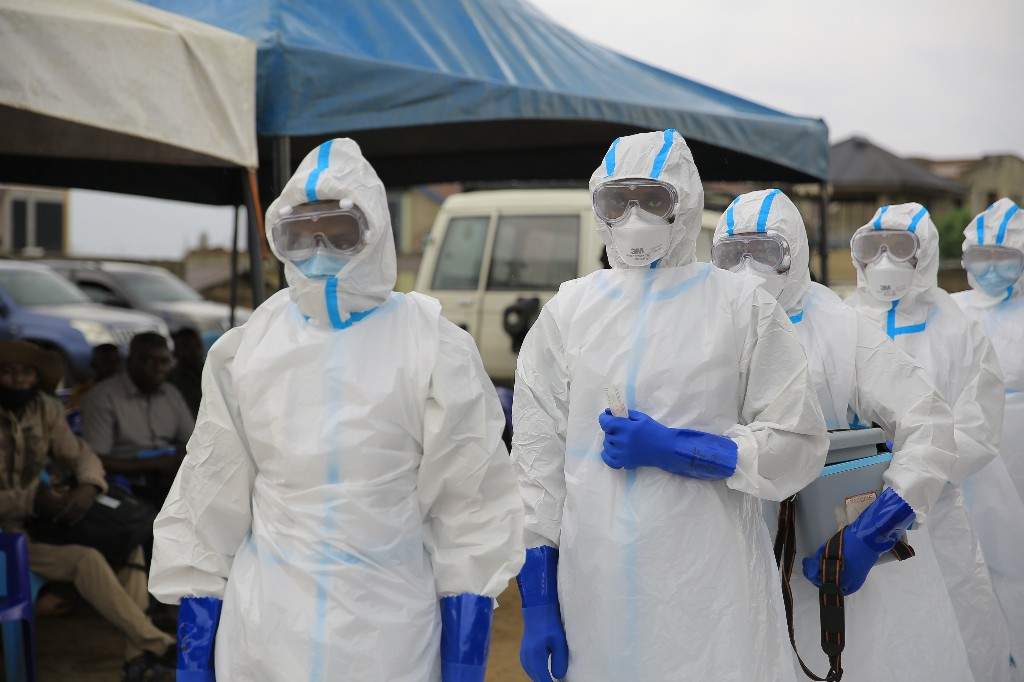
Two community health workers trying to spread awareness of Ebola in the eastern Congo were attacked by a machete-wielding mob on Friday, further demonstrating the difficulty of controlling the deadly disease among hostile and suspicious rural residents as the total number of cases surpassed 10,000.

The post Ebola Workers in Congo Attacked by Machete Mob as Cases Pass 10,000 appeared first on Breitbart.

  •  

O surto de Ébola está a bater recordes: é o mais rápido da história

Epidemia ultrapassou os 10 mil casos e quase 5 mil mortes. Ritmo é “impressionante”. As crianças estão entre as principais vítimas. A transmissão continua fora de controlo. A atual epidemia de ébola na República Democrática do Congo já infetou mais de 10 mil pessoas e provocou quase cinco mil mortes: : é a mais rápida de sempre a atingir este número de infeções. A propagação do vírus, que já chegou a outros países africanos, está a superar a capacidade de resposta das autoridades de saúde. Segundo os dados mais recentes das autoridades congolesas, confirmados esta terça-feira pelo Centro Europeu de

  •  

Cebola com alho na água fervida cria escudo contra lagartas indesejadas

Cascas de cebola secas fervidas junto a dentes de alho amassados liberam uma combinação pungente de sulfetos e bioflavonoides. Essa calda caseira, ao ser pulverizada nas folhas de árvores frutíferas e hortaliças, interrompe imediatamente o ataque de lagartas desfolhadoras.

O método aproveita subprodutos descartados na cozinha para proteger plantas sem deixar resíduos tóxicos. As lagartas recusam a folhagem tratada devido ao amargor extremo e à irritação digestiva provocada pelos compostos naturais.

Por que compostos sulfurados e quercetina funcionam como repelentes

As cascas secas de cebola contêm altas concentrações de quercetina, um flavonol com forte poder antioxidante e amargor natural. Quando associadas ao dissulfeto de alila e à alicina liberados pelo alho fervido, forma-se uma calda de odor pungente e ação antialimentar (antifeedant).

Ao ser pulverizada nas folhas, a solução adere à cutícula vegetal. As lagartas mastigadoras recusam-se a comer a folha tratada devido ao amargor extremo e à irritação provocada pelos sulfetos no trato digestivo dos insetos.

Trata-se de repelência por rejeição olfativa e gustativa, interrompendo o ataque antes que a área fotossintética seja destruída.

Vantagens do bioinseticida frente aos venenos sintéticos

Diferente dos inseticidas químicos convencionais, a calda de cebola e alho não exige que a lagarta ingira doses tóxicas para morrer. A interrupção do ataque ocorre imediatamente pela recusa alimentar.

Calda de cebola e alho: repelência por amargor e sulfetos, sem resíduos tóxicos persistentes.

Inseticida piretroide sintético: elimina lagartas, mas também extermina abelhas, joaninhas e outros polinizadores benéficos.

Carência zero para colheita: frutos e folhas podem ser consumidos logo após lavagem simples em água corrente, sem período de espera.

Receita da infusão concentrada e proporções exatas

Separe as cascas secas de três cebolas grandes e quatro dentes de alho amassados. Coloque em uma panela com um litro de água.

Ferva a mistura em fogo baixo durante dez minutos, mantendo a panela tampada. Isso concentra os vapores sulfurados dentro do recipiente.

Deixe a calda esfriar completamente antes de manusear. Coe em pano fino para remover resíduos sólidos antes da aplicação.

Modo correto de aplicação nas plantas

Borrife a calda coada em toda a copa das árvores frutíferas ou hortaliças atacadas. Cubra tanto a face superior quanto a inferior das folhas, onde as lagartas costumam se alimentar.

Aplique no final da tarde, quando a temperatura está mais amena e a evaporação é menor. Isso permite melhor aderência dos compostos sulfurados na cutícula vegetal.

Reaplique uma vez por semana ou imediatamente após chuvas fortes. A água lava a camada protetora de quercetina e sulfetos das folhas, reduzindo a eficácia.

Quais frutíferas e hortaliças proteger com a calda

O bioinseticida é totalmente seguro para uso em hortas domésticas e pequenos pomares. Protege cultivos frequentemente atacados por lagartas desfolhadoras.

  • Citros (limão e laranja): afasta a lagarta-fio-de-seda e a lagarta-do-fumo das brotações novas e folhas tenras.
  • Couve, brócolis e repolho: bloqueia o ataque de lagartas desfolhadoras sem contaminar as folhas comestíveis.
  • Maracujazeiros e videiras: protege as pontas dos ramos contra lagartas desfolhadoras pretas que destroem brotos.

Com que frequência reaplicar o defensivo natural

A durabilidade do efeito protetor depende das condições climáticas. Reaplique a calda uma vez por semana como medida preventiva regular.

Após chuvas intensas, faça nova pulverização imediatamente. A água remove os compostos aderidos e deixa as folhas desprotegidas novamente.

Em períodos de infestação severa, aumente a frequência para aplicações a cada cinco dias. Monitore visualmente a presença de novas lagartas nas folhas.

A calda altera o sabor das verduras colhidas

Os compostos sulfurados não impregnam o sabor dos vegetais de forma permanente. Basta lavar as folhas em água corrente antes do consumo para remover completamente os resíduos.

Verduras colhidas no dia seguinte à aplicação podem ser consumidas com segurança. Os sulfetos soltam-se facilmente da superfície das folhas sem penetrar nos tecidos vegetais.

A lavagem simples elimina tanto o odor quanto qualquer gosto residual de alho ou cebola. Não há necessidade de produtos especiais para higienização.

5 pontos para ter cozinha mais higiênica


  •  

Africa’s ‘unprecedented’ Ebola outbreak could reach UK, says top health official

Jean Kaseya, of the Africa CDC, warns of the illness spreading like Covid unless more funding is secured to increase preparedness and possible treatment

The “unprecedented” spread of the Ebola outbreak means it could reach the UK and other countries, according to one of Africa’s top health officials.

As the current outbreak reached 10,000 cases, with almost 5,000 deaths, Dr Jean Kaseya, director general of the Africa Centres for Disease Control and Prevention (CDC), compared the outbreak to the Covid pandemic, which first took hold in China before spreading to countries across the world, claiming millions of lives, and ravaging health systems and economies.

Continue reading...

© Photograph: Sodiq Adelakun/Reuters

© Photograph: Sodiq Adelakun/Reuters

© Photograph: Sodiq Adelakun/Reuters

  •  

DRC Ebola Cases Top 10,000 as Death Toll Reaches 4,887

The Ebola outbreak, caused by the Bundibugyo strain, is spreading to eight provinces as the W.H.O. tests two experimental vaccines. Photo: EFE.

The Ebola outbreak in the Democratic Republic of the Congo (DRC) surpassed 10,000 confirmed cases on Tuesday, with 4,887 deaths recorded since the epidemic was declared in May.


The Ebola outbreak in the Democratic Republic of the Congo crossed a critical line on October 27, when confirmed infections passed the 10,000 mark. The National Institute of Public Health (INSP), announced the milestone with figures current through October 25.

The official tally stands at 10,060 cases and 4,887 deaths since the outbreak was declared on May 15. In just over five months, the virus has spread well beyond its initial clusters.

RELATED: Ugandans Who Travel DRC Will Spent 21 Quarantine Days at Come Back Due Ebola

Nearly half of those infected have not survived. The case fatality rate reached 48.6%, a level that makes this one of the deadliest health emergencies on record. It also confirms a trend the institute had flagged weeks earlier, when the outbreak first crossed the 9,000 infection mark.

❗️EBOLA SURPASSES 10,000 CASES IN DR CONGO — Reuters

The virus killed 4,887 people, with confirmed infections reaching 10,060

The concerns grow over a possible spread to other African nations https://t.co/DwohGnqfA6 pic.twitter.com/vGQ6yifZNw

— RT Intl (@RT_on_X) October 27, 2026

Second Deadliest Ever

Only the West African epidemic of 2014 to 2016 was worse. That crisis left roughly 11,000 dead and 28,000 cases across Guinea, Liberia and Sierra Leone. The current Congolese outbreak now ranks second in global history and has already outpaced the Ebola epidemic that struck the country’s eastern region between 2018 and 2020.

Transmission now spans 66 health zones in eight of the DRC’s 26 provinces, less than a third of the national territory. Ituri and North Kivu carry the heaviest burden. Tshopo, Bas-Uélé, Haut-Uélé, South Kivu, South Ubangi and North Ubangi follow behind. Bafwasende, Beni, Mandima and Bunia face the most critical conditions on the ground, the health agency warned.

“The situation underscores the need to strengthen early detection, contact tracing, dignified and safe burials, and the safety of response teams, especially in Bafwasende, a town in Tshopo province,” National Institute of Public Health’s authorities said.

Recovery figures offer a narrow thread of hope. A total of 2,684 patients have overcome the illness, and contact tracing coverage holds at 81.6%. Even so, the institute described early detection, safe burials and protection for field teams as urgent in the hardest-hit zones.

WHO is working closely with the DRC Government to intensify and sustain the #Ebola response.

During his recent visit to Beni, @ProfJanabi engaged with communities and handed over supplies and equipment, including motorbikes and #IPC materials, to strengthen the response. pic.twitter.com/CtuxNcDstT

— WHO African Region (@WHOAFRO) October 27, 2026

No Proven Treatment

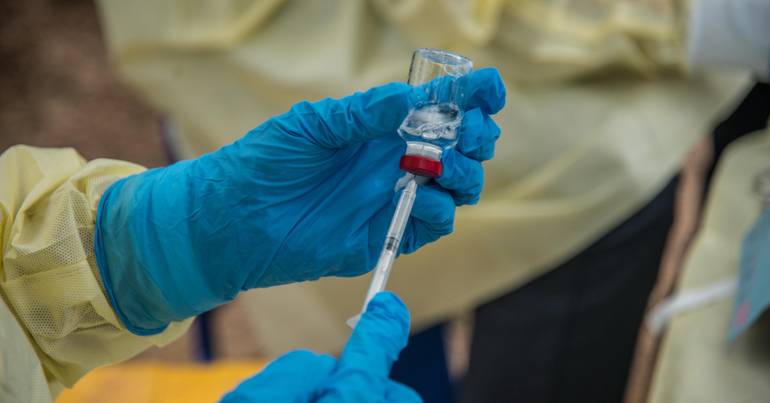
The outbreak is driven by the Bundibugyo strain, a lineage with no specific treatments. That gap has pushed scientists toward new solutions. The World Health Organization is advancing two experimental vaccines, and their phase 1 human trials have already produced safe profiles.

The country is also running an immunization campaign with Ervebo, a product developed for the Zaire variant that showed favorable signs in animal tests. But the experimental candidates have only reached the earliest stage of evaluation in people, while Ervebo rests on limited preclinical evidence. Neither option yet offers a conclusive tool to stop transmission.

The cumulative data through October 25 shows the epidemic is far from contained. Health workers confront a virus without a specific therapy across a vast territory where contact tracing is uneven. The National Institute of Public Health has already set the immediate priorities, halting the spread and protecting the teams deployed on the ground.

  •  

Risk grows of continental spread of Ebola after case is reported in Nigeria

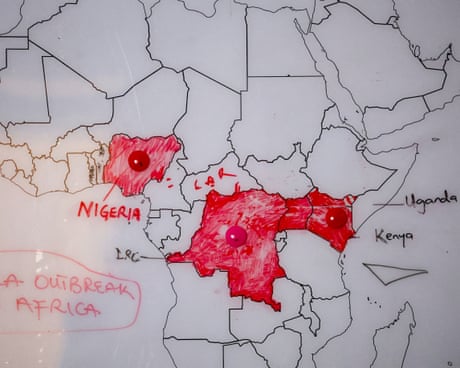
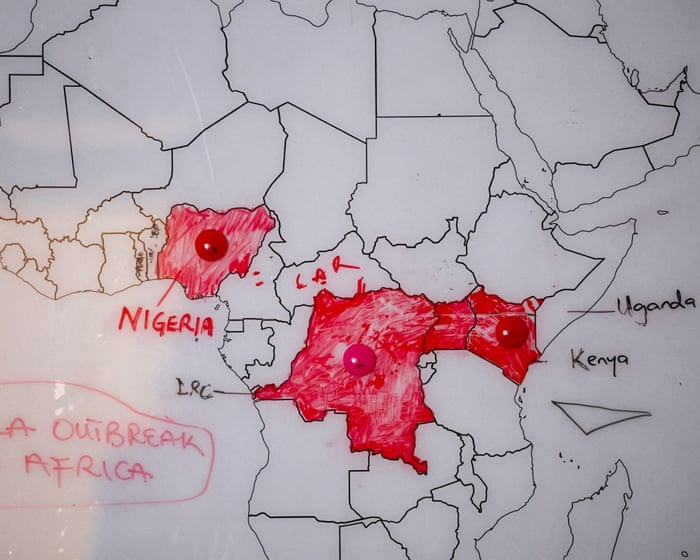
The risk of continental spread of Ebola looms as Nigeria becomes the fourth African country to report a confirmed case of the deadly virus since the outbreak was declared in the Democratic Republic of Congo (DRC) in mid-May.

Caused by the rare Bundibugyo strain of the virus, it has since become the world’s second-deadliest Ebola outbreak ever and the fastest-growing on record. It has killed 4,803 patients, nearly half of all the 9,876 confirmed cases in the eight provinces of DRC’s eastern region as of October 23​

The real scale of deaths is likely much higher, since community transmission of the virus had already begun in DRC’s Ituri province by mid-February, three months before it was detected and officially declared an outbreak on May 15.​

Neighboring Uganda, which is backing armed groups in Ituri, undermining the already delayed and severely underfunded health response, also reported its first case on May 15. However, after two deaths and 20 confirmed infections, the health ministry declared Uganda Ebola-free in late July. The WHO also certified this in late August, after no new cases were confirmed for 42 days.​

However, its Ebola-free status has now come under question with the first case in Nigeria. The 42-year-old patient is a Ugandan national and Swiss citizen. She is the wife of a Swiss diplomat at its embassy in Nigeria’s capital, Abuja, where she resides.​

After a two-and-a-half-week-long vacation in Uganda, she and her husband returned to Abuja on October 3. Four days later, she fell ill. Initially suspected of Malaria, she was treated at two private hospitals before being tested positive for Ebola and isolated on October 20.​

Uganda makes a false claim

Soon after she was tested positive in Nigeria, the Ugandan health ministry claimed that the patient had traveled to the DRC.

However, the “information supplied to WHO did not include [her] travel” to any country other than Uganda, WHO representative in Nigeria Pavel Ursu said on October 22.

“So far, there ​is no validated information that this case traveled to DRC,” added Wessam Mankoula, the Head of Health Emergencies of the continent’s highest health authority, the Africa Centers for Disease Control and Prevention (CDC).​

Then on October 23, the Swiss foreign ministry said explicitly that the patient had not traveled to the DRC, directly contradicting Uganda’s claim, indicating that she was infected in Uganda.

Uganda, meanwhile, still maintains that it has no confirmed Ebola cases. The WHO and Africa CDC are now examining a hypothesis that she may have contracted the virus at the airport in Uganda’s capital, Kampala, where a Kenyan businessman, infected during his travels in the DRC, was also present while she was boarding her flight to Abuja.

The Kenyan businessman had spent seven years in the DRC. While traveling on business, he had already fallen ill in September and was treated in multiple hospitals, but was not diagnosed with Ebola. Early symptoms of Ebola are often similar to other diseases in the region, including Malaria. He was reportedly provided antibiotics and sent home at one of the hospitals.​

An illegal border crossing

The man in question traveled by road to Uganda from the conflict-ridden, mineral-rich, Ebola-affected province of North Kivu, parts of which are occupied by the Rwandan army and its proxy, the M23, which Uganda also supports, according to the UN.​

It is unclear how the Kenyan businessman reached Kampala from North Kivu. Soon after the outbreak was declared, Uganda had closed the border with DRC, except for humanitarian trucks. Mankoula said he had crossed the border illegally.

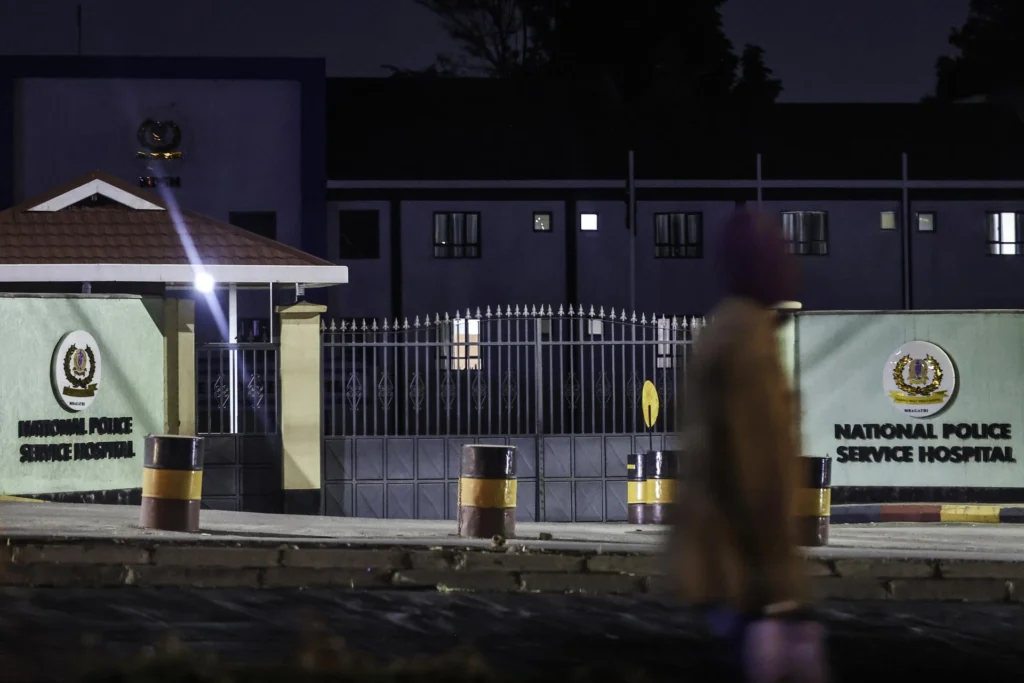
In Kampala, he boarded a flight to Nairobi on October 3 from Entebbe Airport, through which the Uganda-born Swiss citizen who later tested positive in Nigeria was also passing that day to catch her flight to Abuja.

“Has there been any touch or contact between two cases [him and the case in Nigeria] at the airport at the same time?” This is one of the theories that is currently under investigation,” said Mankoula of the Africa CDC.  

When the Kenyan businessman landed in Nairobi, he was already ill. The family member who picked him up from the airport drove him straight to the Nairobi Hospital, where he died two days later. Eight others who came into contact were also infected and isolated. They include four health workers and four family members, one of whom died later on October 23.

Even as health authorities examine whether he was also the source from whom the Nigerian case contracted the virus,  virologist Marion Koopmans, who is also a member of the WHO’s Ebola emergency committee, has cast doubt on this theory.

“I think that is very speculative unless there is evidence of sharing the same ​space in a manner that could explain that. Random presence at the same location, a large airport, is not a supported epidemiological link by any standard of what we currently know,” she said.

If he was not the source, that could mean Ugandan authorities are either not revealing or are unaware of potential cases in the country. Even if he was the source, questions remain about Uganda’s Ebola-free status, as others he may have come into contact with – either in the airport or on his way to it in Kampala –  could also have contracted the virus.

Nigeria at risk of community transmission

Either way, Nigeria is now at risk of community transmission. The Nigerian case landed on October 3 in Abuja, at one of the busiest airports in West Africa. Only on October 20, 13 days after developing symptoms, was she tested positive for Ebola and isolated.​

Amid fears that the virus may have infected others who may have come into contact with her during this period, especially health workers, Nigerian Health Minister Muhammad Ali Pate said that authorities were tracing all 44 contacts. “We are trying to contain it so it doesn’t go out to the communities. Hopefully, it won’t get to that,” he added.​

“When we identified at-risk countries, Nigeria was not part of this list. It is now. That list would have to be redrawn, and North and Southern Africa could also be at ​risk,” said Jean Kaseya, director-general of the Africa CDC, adding, “We need to consider that no one is safe today.”

  •  

Número de casos de Ebola no Congo ultrapassam 10 mil, diz governo

O número de casos confirmados de Ebola na República Democrática do Congo ultrapassou 10 mil, segundo dados do governo divulgados nesta terça-feira (27), um marco que coincide com o crescente temor de que a epidemia possa se espalhar para mais países africanos.

O último relatório do Instituto de Saúde Pública do Congo indica que o número de casos chegou a 10.060, com 4.887 mortes causadas pelo vírus.

O surto, provocado pela rara espécie Bundibugyo do vírus Ebola, foi anunciado em meados de maio e, desde então, se tornou o maior e mais mortal da história da RD Congo, superando a epidemia de 2018-2020.

Atualmente, é a segunda maior e a segunda mais mortal já registrada, atrás apenas do surto de Ebola na África Ocidental de 2014-2016, que infectou mais de 28.600 pessoas e matou mais de 11 mil, principalmente na Guiné, Libéria e Serra Leoa.

No início deste mês, o Quênia relatou seu primeiro caso e, posteriormente, anunciou um total de nove casos , após a morte de um homem que havia viajado do Congo via Uganda em Nairóbi.

Na semana passada, a Nigéria tornou-se o quarto país africano a registrar um caso de Ebola.

As autoridades de saúde têm procurado descobrir como e onde a paciente — esposa de um diplomata suíço, que não havia viajado para o Congo — contraiu a doença. O governo suíço afirmou acreditar que ela a contraiu em Uganda.

A mulher e o marido foram levados de avião para hospitais na Suíça na segunda-feira.

Uganda registrou 20 casos em maio e junho, a maioria importada do Congo, mas a OMS (Organização Mundial da Saúde) declarou o país livre do Ebola em agosto.

Autoridades ugandesas afirmam que o país não possui nenhum caso de Ebola.

O ministro da Saúde de Uganda afirmou no domingo que os cidadãos ugandeses que retornarem ao país com histórico de viagem ao Congo serão colocados em quarentena por 21 dias.

Ebola na República Democrática do Congo é o mais mortal da história


  •  

Ébola. Mais de 10 mil casos e cerca de cinco mil mortes

Foram registados 10.060 casos confirmados, com uma taxa de letalidade de 48,6%, equivalente a 4.887 mortes, até 25 de outubro, tendo 2.684 doentes recuperado da doença até à data.

© STRINGER/EPA

As províncias orientais de Ituri e Kivu do Norte são as mais afetadas no país, com 32 e 58 novos casos registados nas últimas 24 horas, respetivamente
  •  

Ugandans Who Travel DRC Will Spent 21 Quarantine Days at Come Back Due Ebola

All Ugandan citizens returning to their country with a history of travel to the neighboring Democratic Republic of Congo (DRC) will have to undergo 21 days of quarantine, the Ugandan government announced this Sunday, after the detection of cases in several countries linked to the Ebola epidemic in the DRC.

Kenya Reports Its Second Ebola Dead in the Country: Ugandans Who Travel DRC Will Spent 21 Quarantine Days at Come Back Due Ebola

“If you are a Ugandan citizen returning to Uganda and have a history of having been in the DRC, we will subject you to a 21-day quarantine (the incubation period of the Ebola virus), at your expense,” said Ugandan Health Minister Chris Baryomunsi at a press conference.

Likewise, he noted, “movement across the Uganda-DRC border is restricted to essential travelers, including humanitarian workers and commercial truck drivers.”

The minister disclosed this decision after his ministry announced on Friday that the country will not allow people who have traveled to the DRC to transit through its territory, warning that “relevant provisions of the Public Health Act will be invoked in case of non-compliance” and that “people who enter the country through unauthorized routes will be referred to the competent authorities.”

🎙️#UNDERWAY

BRIEFING BY THE HON. MINISTER OF HEALTH @CHRISBARYOMUNS1 ON THE  PROGRESS IN NATIONAL EBOLA PREPAREDNESS AND RESPONSE EFFORTS. #MOHatWork https://t.co/1fBKmdZKQb

— Ministry of Health- Uganda (@MinofHealthUG) October 25, 2026

Uganda has announced these measures after Nigeria confirmed last Tuesday an imported case of the disease corresponding to a Swiss citizen of Ugandan origin who returned to Nigeria after a vacation in Uganda.

Kenya, for its part, has detected nine Ebola infections so far, after confirming its first imported case on October 5, that of a Kenyan man who returned to his country via Uganda, after having lived the last seven years in the DRC.

That man and another patient have died so far, while the other seven patients are still receiving medical attention.

The DRC declared its seventeenth Ebola outbreak on May 15 – the second deadliest in history globally – affecting eight Congolese provinces and, according to the latest official balance, with data collected until October 23, has caused 9,876 confirmed cases and 4,803 deaths so far.

It also spread to Uganda, where the World Health Organization (WHO) declared the end of the outbreak on August 26, after counting 20 confirmed cases, including 15 imported from the DRC, among which there were two deaths.

Along with Uganda, Kenya, and Nigeria, cases linked to this epidemic have been detected in the Netherlands (one) and France (one).

  •  

Kenya Reports Its Second Ebola Dead in the Country

The Government of Kenya announced a second Ebola death, after the detection of at least nine infections in the country so far, including the index case, a Kenyan citizen who also died and who had traveled from the Democratic Republic of Congo (DRC), a country that declared an outbreak last May.

Africa CDC Urges Global Help as Ebola Spreads: Kenya Reports Its Second Ebola Dead in the Country

As detailed in a statement late Friday by the Kenyan Ministry of Health, the deceased patient was a 65-year-old woman who was the third confirmed case in Kenyan territory.

“She was a direct contact and close family member of the first (deceased) case and was in quarantine when she developed symptoms on October 13, 2026,” the Ministry explained.

After being admitted to a hospital infectious disease unit and receiving care from specialized medical teams, the woman succumbed to the disease on Friday afternoon.

The Ministry of Health mourns the death of a 65-year-old woman who was receiving care for Bundibugyo Ebola and extends heartfelt condolences to her family, friends and community. Seven patients continue to receive care. All nine cases remain within one cluster, with no evidence… pic.twitter.com/HSWQcC0mck

— Ministry of Health (@MOH_Kenya) October 23, 2026

The Ministry assured that it would facilitate a “safe and dignified burial” for the patient, in accordance with public health protocols.

“This loss raises the number of deaths to two among the nine confirmed cases. The seven remaining patients continue to receive care in the two isolation facilities,” the Executive specified, reiterating that “all cases are part of the same group of known contacts and there is no evidence of community transmission.”

“Her death is a painful reminder that Ebola is a serious disease that can be fatal and that the condition of patients can change suddenly,” the Ministry concluded.

Kenya confirmed its first imported Ebola case on October 5, corresponding to a forty-year-old man who had lived the last seven years in the DRC.

Patient zero received treatment in several Congolese hospitals before traveling by road to Kampala (Uganda’s capital) and, subsequently, flying to Nairobi, where he landed on October 3 and died two days later.

  •  

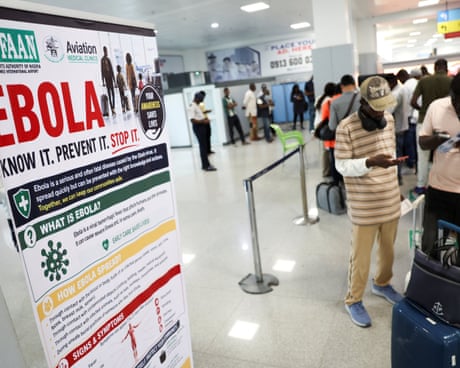
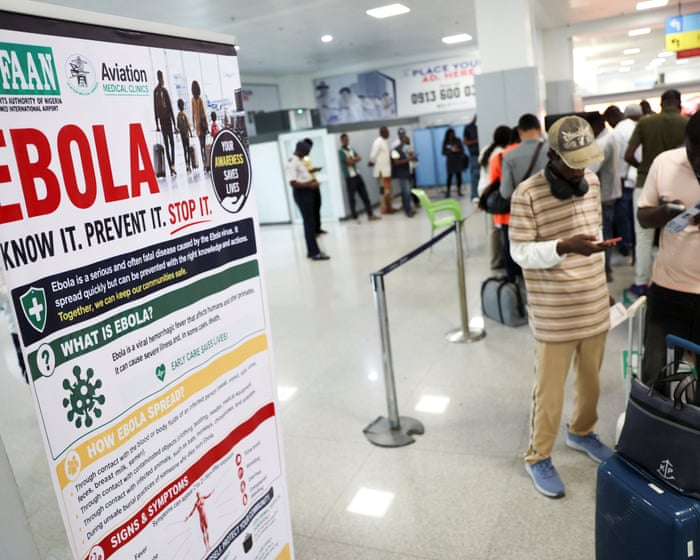
Mystery over source of Ebola infection in Nigeria fuels concern about spread of virus

Switzerland says patient is wife of Swiss diplomat and believed to have contracted virus while travelling in Uganda

Health officials across Africa are racing to determine how Nigeria’s first Ebola patient ⁠in more than a decade ⁠became infected, amid fears ​the outbreak could spread further after reaching a fourth African country.

The Swiss foreign ministry said on Friday the patient in Nigeria, the Ugandan-born wife of a Swiss diplomat based in Abuja, had not travelled to the Democratic Republic of ⁠Congo, where the outbreak was first detected in mid-May before spreading to Uganda, Kenya and now Nigeria. The woman was believed to have contracted Ebola while travelling with her husband in Uganda, the ministry added.

Continue reading...

© Photograph: Sodiq Adelakun/Reuters

© Photograph: Sodiq Adelakun/Reuters

© Photograph: Sodiq Adelakun/Reuters

  •  

Ébola. Novo ensaio vai testar vacinas contra Bundibugyo

Oxford e Moderna já têm vacinas em fase avançada. SAGE alerta para urgência de aprovação regulatória enquanto letalidade no Congo chega aos 48,3%.

© WHO HANDOUT/EPA

O vírus Ébola transmite-se por contacto direto com fluidos corporais de pessoas ou animais infetados e provoca febre hemorrágica grave, vómitos, diarreia e hemorragias internas
  •  

DR Congo’s deadliest Ebola outbreak kills over 4,200 as armed groups undermine response

In less than five months, the fastest-spreading Ebola outbreak in world history has killed at least 4,205 people in the conflict-ridden eastern region of the Democratic Republic of Congo (DRC) as of October 7.

It is the deadliest outbreak in the DRC since the disease was first discovered in the country in 1976, killing nearly one in two of the 8,728 people confirmed to be infected.

With treatment still in experimental stages, there is no specifically approved treatment for the particular Bundibugyo strain of the Ebola virus that caused this outbreak, declared on May 15. 

However, the virus had been circulating in communities in Ituri province since mid-February, three months before the outbreak was identified and officially declared.​

Aid cuts: unpaid frontline workers

When the health response started, already late, it was severely underfunded, as the UK, France and Germany have also followed in the footsteps of the US to slash humanitarian aid and increase military spending.​

The UN Office for the Coordination of Humanitarian Affairs (OCHA) said in late September that the Humanitarian Response Plan had only half the funding needed to counter the outbreak.​

Contact tracing is well below the Africa Centers for Disease Control and Prevention (CDC) and the WHO-recommended 95% to effectively break transmission. Only now in October, it has been built up to 80.4%, which still means that almost 20% of the people at risk of exposure to the virus due to contact with confirmed cases are off the radar of the health authorities, and could potentially be transmitting the disease further.

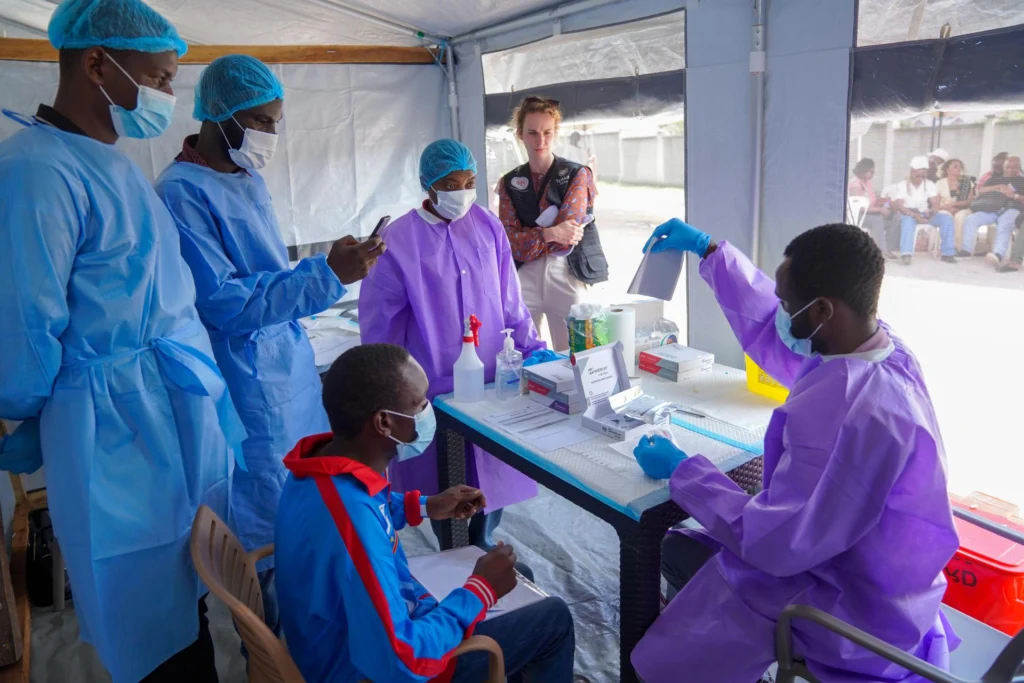
Lack of funds has meant that the understaffed and overworked frontline health workers – scores of whom have died in the line of duty – have been repeatedly forced to go on strike to protest unpaid wages. Their efforts are further impeded by the poor transport infrastructure and lack of healthcare facilities in the remote eastern region where the disease is spreading.​

Armed conflict complicating health response 

Armed conflict displacing millions on this mineral-rich land is another major hurdle in the way of effective health response. In Ituri, the epicenter of the outbreak, a key Ebola transit center in the fighting-affected Kigonze camp burnt down on September 29.​

The camp, which had housed 19,000 Internally Displaced People (IDPs) fleeing violence, was reportedly infiltrated by the Convention for the Popular Revolution (CRP).

Uganda​

This coalition of armed militias, formed in March 2025 at a hotel in Uganda’s capital, Kampala, is led by Thomas Lubanga, a former warlord, convicted by the International Criminal Court (ICC) of war crimes, released from prison in 2020 after serving 14 years. He resides in Uganda, where he is also known to have recruited fighters along ethnic lines.​

In a 2022 judgment, the International Court of Justice (ICJ) ordered Uganda to pay DRC USD 325 million in reparations. This included USD 225 million for killings, rapes, child soldier recruitment, and displacement, USD 40 million for damage to property, and USD 60 million for plundering its gold, diamonds, and timber as an “occupying power” in Ituri from 1998 to 2003.​

The nature of the occupation has since evolved. Under a bilateral agreement with the DRC, Uganda had deployed 2,000 troops to the country to jointly fight an Islamic State-affiliated group. However, Uganda deployed an additional 4,000 troops without the DRC’s consent in early 2025, around the time as the CRP’s formation in Kampala.  ​

Searching for CRP militants and weapons, soldiers and police entered the camp on September 20. When they came under fire, clashes erupted between the security forces and the militants. Thousands of IDPs fled again as gunfire continued rattling around the camp for days. Deaths, injuries, and arrests were reported.​

Ebola transit center burns down

Amid this violence, on September 29, fire engulfed the camp’s Ebola transit center. It is a facility for the isolation and care of suspected cases, until the results of the lab tests on their blood samples. If confirmed as positive, they are then transported to an Ebola treatment center.​

“It’s been a huge struggle to create Ebola transit centers [and] Ebola treatment centers; it’s required money, bringing in staff and it’s been a struggle all across the east. So, when we lose a center, that means we lose capacity, we lose investment and we have to start again,” said Julien Harneis, UN’s senior Ebola response official in the DRC.​

“Eastern DRC now faces a catastrophic collision of disease and conflict, with the Ebola outbreak in Ituri province outpacing the response,” the WHO’s director general, Tedros Ghebreyesus, had warned in May.​

The outbreak has since reached seven of DRC’s 26 provinces, predominantly in the east. About three-quarters of the confirmed cases remain concentrated in Ituri. However, its neighboring province, North Kivu, which has another 20% of confirmed cases, is emerging as the new hotspot.​

Rwanda

Large areas of this province are occupied by Rwandan troops and its proxy militias, the M23, which captured its capital, Goma, in January 2025, and went on to expand territorial control into South Kivu province.

​Without humanitarian access to these occupied areas, the government cannot mount a health response, Communications Minister Patrick Katembwe said in late May, second week after the outbreak was declared. He called for the “withdrawal of foreign forces and the removal of their auxiliaries.”

Instead, the M23’s parallel administration launched a separate health response in the areas under its control, independently of the DRC government, with which cooperation was limited to data sharing and lab testing. This severely hampered contact tracing, especially because people regularly travel between the M23-held areas and government-controlled territory.

“Multiple outbreaks are developing at the same time”

​The parallel M23 administration has also meant additional delays in diagnosis. With bed capacity in Ebola treatment centers stretched taut in North Kivu, medics in this province are forced to refer infected patients to general health facilities, where a third of all confirmed cases are being treated, posing further risk of transmission into the wider community.

​The spread has rapidly increased since September in this province, which now accounts for nearly 40% of all new confirmed cases, up from 24% in August-end, Doctors Without Borders (MSF) said on October 5.

​“It is like fighting a megafire,” said Stéphanie Hoffmann, MSF coordinator of the treatment center in Butembo, a major commercial city in the province. “Multiple outbreaks are developing at the same time, with varying intensity and in different locations. As long as new hotspots continue to emerge while the virus spreads across northern North Kivu, containing the epidemic will remain extremely difficult.”

  •  

Ébola na RDCongo chega a 4.381 mortos e mais de 9.000 casos

Com taxa de letalidade de 48,3%, esta é já a segunda epidemia de ébola mais mortífera da história. A estirpe de Bundibugyo não tem tratamento, mas há duas vacinas em ensaios.

© STRINGER/EPA

epidemia é a segunda mais mortífera da história a nível global, embora ainda esteja longe da mais grave, que causou cerca de 11 mil mortes na África Ocidental entre 2014 e 2016
  •  
❌