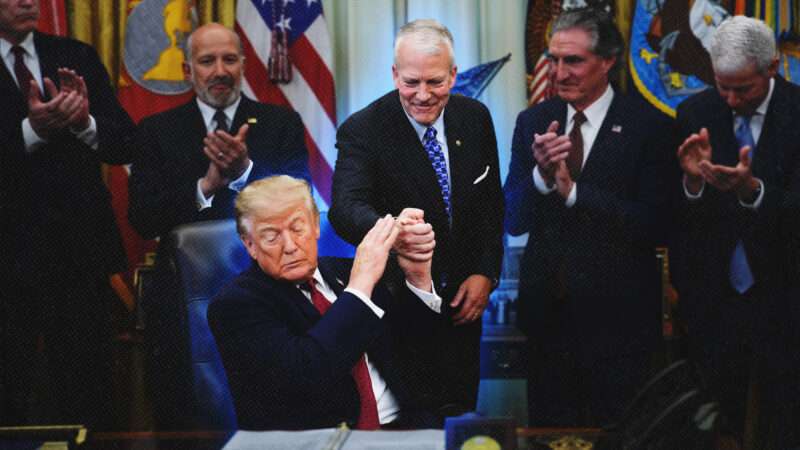
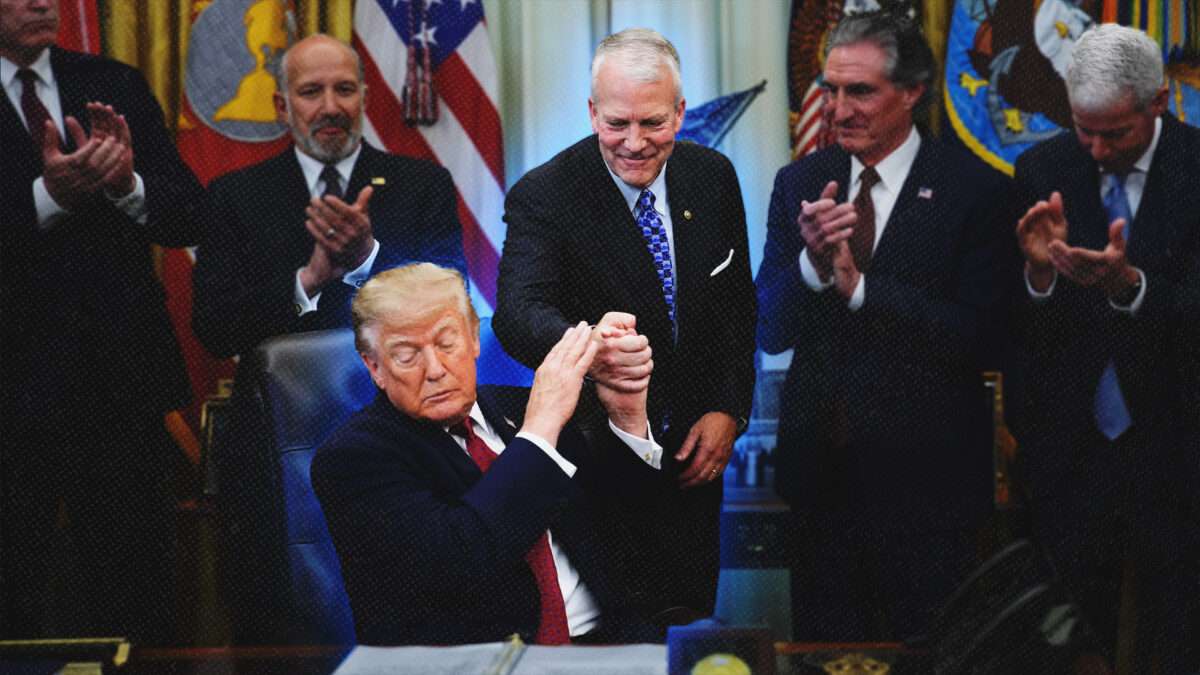
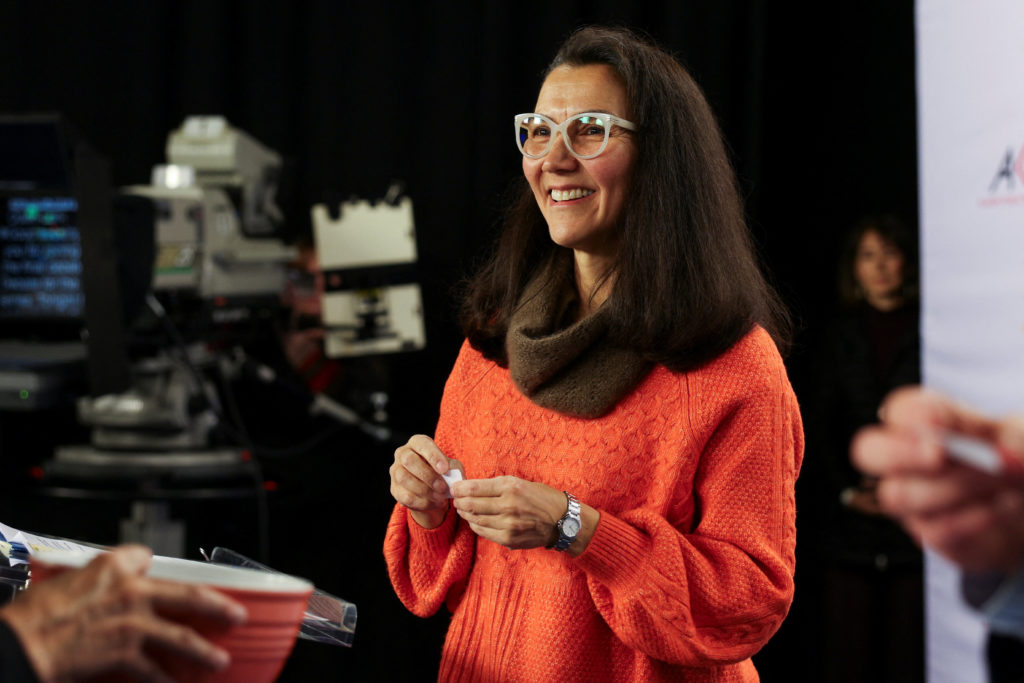
Perceptive citizens of the great state of Alaska may have noticed that there are two Senate candidates on the ballot named Dan Sullivan: the incumbent, Republican Sen. Dan S. Sullivan, and Dan J. Sullivan, a completely unknown person who is not actively campaigning for the seat.
The intention seemed obvious: The false Sullivan is trying to siphon off some votes from the real Sullivan in hopes of benefiting the actual challenger, Democratic candidate Mary Peltola. But while it was clear who stood to gain from this scheme, how this had all been arranged remained unclear. Until now.
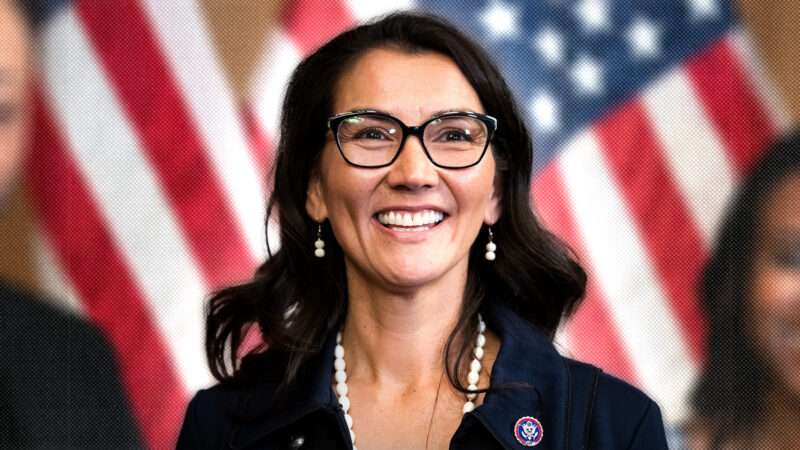
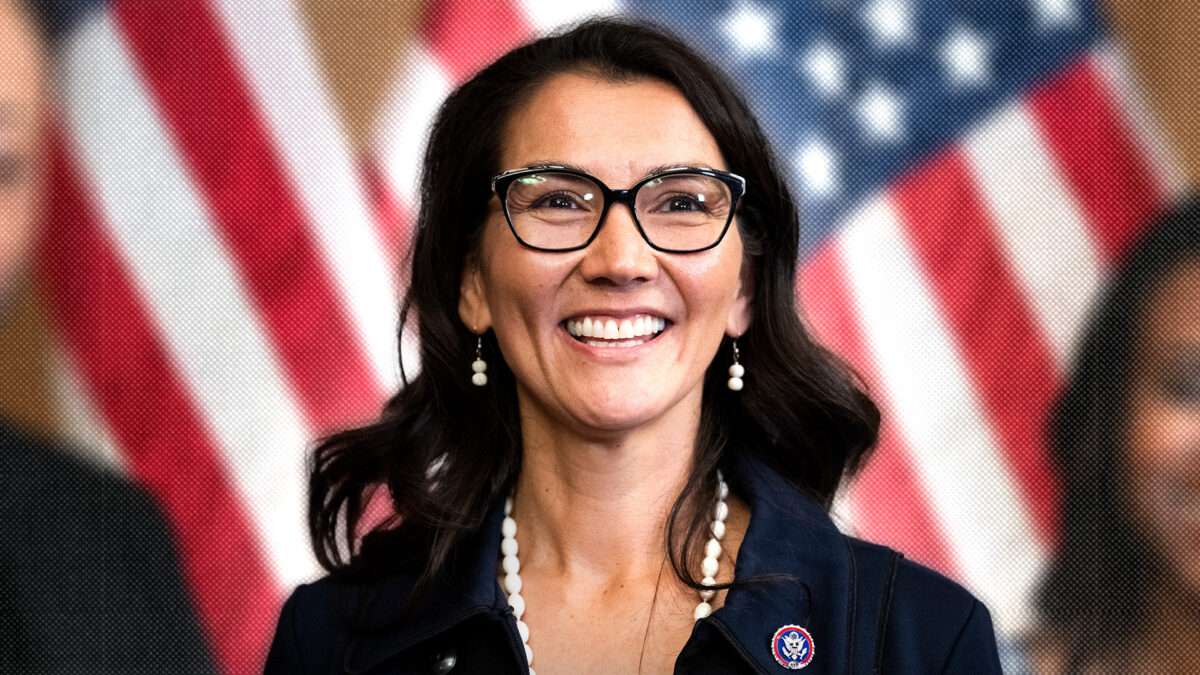
The rumors are apparently true: Political strategists working closely with the Peltola campaign and the Democratic Senatorial Campaign Committee (DSCC) explicitly recruited the other Sullivan, according to bombshell reporting by The New York Times. All deny any involvement, but the Times has them dead to rights:
The Times has found, based on interviews and text messages, along with documents prepared for a potential lawsuit against the campaign, that not only did Ms. Peltola's team work with people trying to recruit Mr. Sullivan to run for Senate, but the effort was much broader. The group worked to coax other would-be spoilers into the race, to dilute the incumbent's support and help catapult the Democrat to victory.
The campaign consulted with Jerid Kurtz, a Democratic operative, to find and recruit Sullivan, a retired teacher. Kurtz went so far as to fly to Sullivan's remote Alaskan village and personally convince him to run. Sullivan said he "didn't have any interest in being a politician," but loathed President Donald Trump and was eager to help Democrats win the Senate.
Elisa Rios, Peltola's former campaign manager, willingly admitted all this to the Times, claiming that voters deserved to know the truth; reading between the lines, it seems like she's a disgruntled former employee. However, she reconsidered before publication and asked the Times to disregard her interview. The Times quite reasonably declined. In any case, numerous other staffers confirmed her story.
Trump's Justice Department has filed suit, claiming that the other Sullivan's presence on the ballot would render the election illegitimate if Peltola wins. It seems unlikely the administration will win that argument, and these sorts of tactics are nothing new.
They are still quite contemptible, however. Peltola, who was well aware of the scheme, is trying to trick the people of Alaska into voting for the wrong person so that she's more likely to win. Maybe that's not quite so despicable as Vivek Ramaswamy's ad about Amy Acton, but it's just as dastardly—and much more likely to damage the integrity of the election. Ramaswamy's actions generated significant bipartisan backlash; will Democrats who claim that democracy itself is on the ballot speak up and denounce this?
Republicans have condemned the presence of two Dan Sullivans on the ballot, calling it a ploy to split votes
Alaska Democrat Mary Peltola’s campaign was behind an effort to recruit a challenger with almost the same name as the Republican US senator Dan Sullivan, both of whom will appear on the ballot in next week’s midterm elections, the New York Times reported on Wednesday.
Republicans have condemned the presence in the race of two candidates named Dan Sullivan – one the two-term US senator, the second a retiree living in south-eastern Alaska with scant political experience – calling the newcomer a ploy by Democrats to cost the incumbent re-election by splitting his supporters.
Democrats in Alaska reportedly created a plan to find a second candidate, also called Dan Sullivan, as Sen. Daniel S. Sullivan (R-AK) and Alaska Democrat U.S. Senate candidate and former Rep. Mary Peltola (D-AK) face off against each other.
Alaska "Republican" Sen. Lisa Murkowski endorsed Democrat Jonathan Kreiss-Tompkins in the state's race for governor, saying he "understands that governing requires listening to people with different perspectives and finding common ground to solve the problems all of us face," Alaska Public Media reported.
Operatives aligned with Mary Peltola, the Democratic nominee for Senate, spent months recruiting candidates to peel votes from Senator Dan Sullivan, the Republican.
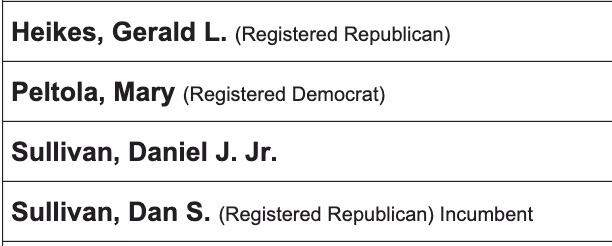
A sample ballot showing candidates for next week’s U.S. Senate race in Alaska lists two Dan Sullivans (highlight added here to both), along with Mary Peltola, the Democrat, and a fourth candidate named Gerald Heikes.
Vice President Vance on Tuesday slammed an independent candidate with a similar name to Sen. Dan Sullivan (R-Alaska) as committing “electoral fraud” when answering a question about his administration’s lawsuit over the Senate race in the state. “Why shouldn’t Alaskans find it insulting that the administration appears to be suggesting they can’t read the word…
Vice President Vance on Tuesday slammed an independent candidate with a similar name to Sen. Dan Sullivan (R-Alaska) as committing “electoral fraud” when answering a question about his administration’s lawsuit over the Senate race in the state. “Why shouldn’t Alaskans find it insulting that the administration appears to be suggesting they can’t read the word…
On Monday’s broadcast of MS NOW’s “The Last Word,” Democratic Alaska U.S. Senate nominee Mary Peltola stated that people are “just being crushed by corporate greed” and also argued that it is “this war in Iran that is driving all
When Americans cast their ballots in this year's midterm elections, they'll not only be picking who represents them in Congress, but also weighing in on a range of topics that could change their state laws and constitutions.
As a local, I know there are a few things you should never do in Alaska.
Lisa Maloney
Having lived in Alaska for over 35 years, I've seen many visitors make the same mistakes.
Many tourists underestimate Alaska's size and think the state is more drivable than it actually is.
A lot of visitors don't realize that some attractions and activities are seasonal.
As someone who's lived in Alaska for over 35 years, I see why tourists love traveling here. From the beautiful national parks to opportunities to see the northern lights, the state has something for everyone.
However, as a local, I often see tourists make the same mistakes — like expecting to drive everywhere or forgetting that some activities are seasonal.
It's important to remember that Alaska has a limited road network.
Lisa Maloney
I'm always surprised by how many visitors think Alaska is small. In reality, Alaska is so big that if you split it into two states, each half would be bigger than Texas. You can easily spend hours driving from one large community to the next.
However, Alaska has a shockingly limited road network for such a huge state. If we say a community is "off the road system," it means you can't drive there — instead, you'll have to catch a plane or a boat.
Trying to do too much in one trip
People traveling to a new location often feel pressure to visit as many destinations as possible. But if you never take a minute to enjoy just being here, you're missing out on a big chunk of the Alaska experience.
Plus, having a little flex time in your schedule helps accommodate when excessive wind, rain, or rough seas keep you from doing planned activities. I recommend giving yourself two or three days in a community before moving on.
Not learning the local vocabulary
In Alaska, we have a lot of local lingo that can be helpful to know. For example, if someone says they're going outside, they're not just leaving the building — they're leaving the state.
To us, outside means "Outside" with a capital "O," which is anywhere that's not Alaska.
Another thing to remember is that we don't typically use road numbers for our highways (no matter what your GPS tries to tell you). Instead, we use the names of highways.
Forgetting that some attractions and activities are seasonal
The northern lights can typically be seen in Alaska between late August and late April.
biletskiyevgeniy.com/Shutterstock
Some of the biggest attractions in Alaska are available for only a few months of the year.
Two big ones to keep in mind are bear-viewing season, which typically peaks with the salmon runs in July and August, and aurora-viewing season, which runs from roughly late August to late April.
Missing out on Alaska Native culture
The umbrella term for Alaska's Indigenous people is Alaska Native. Most towns have at least one cultural center where visitors can learn about Alaska Natives in that region.
These facilities are part visitor center and part museum, and they offer a celebration of Native traditions and culture. I always recommend tourists take the time to explore these centers.
Expecting the wildlife — or the weather — to be predictable
You never know where you might find wildlife in Alaska.
Lisa Maloney
Alaska tour guides often field sincere questions like "When are the moose scheduled to show up?" That makes sense in a controlled environment like a zoo, but Alaska's wildlife is, well, wild — so they come and go whenever they like.
Our weather does pretty much the same thing, so if you're determined to hide inside until the rain and wind stop and the sun comes out, you'll miss out on a lot.
Dressing in layers can help visitors stay comfortable, no matter what the weather is doing. I recommend lighter layers in the summer and heavier layers in winter, but a weatherproof outer layer is always a must.
This story was originally published on July 26, 2024 and most recently updated on October 26, 2026.
Democrats are targeting G.O.P. strongholds that could set them up for new majorities. But if they don’t win those races now, it could be a long time before they have another chance.
Protesters outside of an event for Senator Roger Marshall in Topeka, Kan. Soaring fuel costs and economic struggles have made some Republican senators like Mr. Marshall vulnerable on their home turf.
Alaska's U.S. Senate race features four candidates. Two are named Dan Sullivan: the Republican incumbent, and a political neophyte.
Republicans say the presence of two Dan Sullivans on the ballot is an illegal act of election interference. The federal government is now suing to keep Alaska from certifying the election results, but only if their guy loses.
"One of the biggest election scandals in history has been the Democrats' installation of a fake Dan Sullivan (not the US Senator) to deceive voters in Alaska," White House advisor Stephen Miller wrote on X. President Donald Trump called it "a disgrace."
"Democrats pulled a dirty trick by enlisting a decoy, Daniel J. Sullivan, to run against Republican Alaska Sen. Dan S. Sullivan," TheWall Street Journaleditorialized. "Please spare us the lectures about election interference."
Last week, the Department of Justice (DOJ) sued the state of Alaska and its election authorities.
"Should Alaska certify any electoral results tainted by the inclusion on the ballot of Daniel J. Sullivan," the filing warns, "the State and its officers will fail in its obligation to protect the integrity of its election. The United States accordingly brings this lawsuit to protect the integrity of the 2026 Senate election in Alaska."
Alaska uses a ranked choice ballot, in which voters are given four candidates and rank each one in order of preference. Along with the Sullivans, the candidates are Mary Peltola, a Democrat who is polling narrowly ahead, and Gerald Heikes.
The Justice Department lawsuit says Republican voters would be too confused by the presence of two Dan Sullivans to properly fill out their ballot: "Some supporters of Senator Sullivan likely will inadvertently vote for Daniel J. Sullivan. Other supporters of Senator Sullivan likely will be confused as to how to rank the three Republican candidates as to defeat Peltola."
Given this, "there is a substantial likelihood that a certification of the election will reflect an electoral process that lacked integrity," the lawsuit proclaims. "To guard against this danger, it is vital that [Alaska] not certify any election result" in which "(1) Senator Sullivan does not win the election; and (2) had all votes cast for Daniel J. Sullivan been cast instead for Senator Sullivan and Alaska's rank-choice process played out accordingly, Senator Sullivan would have won the election."
In other words, the state of Alaska should only certify the election if Sullivan wins; if Peltola wins, but it's close, then that could suggest it "lacked integrity," and the state must instead conduct "an investigation to determine whether votes cast for Daniel J. Sullivan were meant to be cast for Senator Sullivan."
The lawsuit has a number of problems. First and foremost, it's completely inappropriate to treat an election as fair only if your candidate wins, even if it is what Trump believes.
It's also too late to bring an action of this kind: The state elections division decided in June to bar Daniel J. Sullivan from the ballot, but a state superior court reversed and the Alaska Supreme Court upheld the reversal before the end of that month.
And yet the feds waited until less than two weeks before Election Day—when ballots have been printed and tens of thousands of Alaskans have already voted—to bring this suit.
If the Justice Department was truly concerned about voter confusion, it should have brought a lawsuit months ago. But even then, it's not clear what it could have done: "DOJ has no power to decide which candidates can appear on the ballot," writes UCLA School of Law professor Richard L. Hasen.
Besides, it's not illegal to mislead or even outright lie to voters. "If 'voter confusion' were a legitimate reason to overturn election results, that would imperil a great many election winners, as voter ignorance—and exploitation thereof by candidates—is a widespread and longstanding problem," writes George Mason University law professor Ilya Somin.
It does seem more likely than not that Daniel J. Sullivan is indeed running just to pull votes from the senator with the same name.
But as I pointed out earlier this month, the ranked-choice ballot itself can take care of this problem: Republican voters who wish to reelect Sullivan can simply rank both Dan Sullivans first and second; if and when Daniel J. Sullivan fails to capture more than 50 percent of all votes, he will be eliminated, and his votes will transfer to all their second choices.
The ballot itself makes it clear which Sullivan is which: The sitting senator is labeled as both Registered Republican and incumbent.
Alaska Division of Elections
Despite Miller's claim that letting two Dan Sullivans on the ballot "reveals pure contempt for voters," it's the objecting Republicans who appear to lack faith in their voters.
"People are totally confused," Trump told reporters. "A lot of people don't know what 'incumbent' means."
When CNN's Dana Bash asked Attorney General Todd Blanche what crime is being alleged, he replied that "it depends." He elaborated: "There could be a crime, but the real wrong here is that Alaskans are going to be confused and will not have their vote heard."
This isn't even Alaska's most complicated election in recent memory. In 2010, after Sen. Lisa Murkowski lost the Republican primary to Joe Miller, she announced that she would still run as a write-in candidate—requiring voters to not just know about her ahead of time but to add her name by hand.
Improbably, Murkowski prevailed, defeating Miller by more than 10,000 votes.
If Trump, Blanche, Miller, and others are truly concerned that the ballot will be too confusing for Alaska Republicans, they could expend some energy showing them how to use the ranked choice ballot.
In fact, Sullivan has done just that, posting a video on X explaining how to rank all candidates except Peltola.
What they can't do is force a state to reject the results if their guy loses.
"Alaskans don't need any help voting for their preferred candidates, and the State of Alaska has already handled this by clearly distinguishing the candidates on this year's ballot," Murkowski wrote on X. "The Department of Justice should never have filed this lawsuit."
"I believe that this lawsuit is abusive in its intentions and borders on frivolous in its arguments, and that it is destined for defeat in the courts should it reach the merits," Cato Institute senior fellow Walter Olson noted in a statement. "This lawsuit is an assault on the constitutional design by which states, not the federal government, run elections. The issue in question is one for the Alaska Supreme Court to decide under Alaska law, and the Alaska court did just that."
Election officials, activists, voting-rights lawyers, legal experts and other watchdogs of U.S. civil society have spent the past year and a half warning about what they describe as a campaign by U.S. President Donald Trump to undermine confidence in the conduct of free and fair elections. Their concern is that he is laying the groundwork to overturn the outcome if it does not favor the Republican Party.
President Donald Trump speaks beside First Lady Melania Trump after casting his early vote in the midterm elections at the Palm Beach County Library in West Palm Beach this Saturday.
Peltola required medical attention after the accident, which happened when another vehicle crashed into the one transporting Peltola and her family, the campaign said.
Blanche told CNN's "State of the Union" that President Donald Trump, who said Friday that he was "the one that said do it," is not trying to overturn state election results "in any way, shape or form" on the cusp of the Nov. 3 election.
President Trump went after Sen. Lisa Murkowski (R-Alaska) and Alaska’s ranked choice voting system Saturday. “The Republicans’ Worst Senator, by far, Lisa Murkowski, of the Great State of Alaska (A State for which I produced, on a continuing basis, Billions and Billions of Dollars, and which Crooked Joe Biden and the Dumocrats had totally shut…
Nonprofit watchdog group Common Cause, represented by attorneys from American Civil Liberties Union (ACLU), has filed a motion to intervene in the Department of Justice’s (DOJ) lawsuit over Alaska’s Senate election. The DOJ filed a lawsuit Thursday claiming the presence of a candidate with the same name as incumbent Sen. Dan Sullivan (R) could give…
Attorney General Todd Blanche said Saturday that the Justice Department is not trying to stop the certification of Alaska’s election, referring to a recently filed lawsuit that claimed to “protect the integrity” of the election. The lawsuit, filed Thursday in the U.S. District Court for the district of Alaska, claims that the inclusion of a candidate with…
 Login