Acting President Delcy Rodriguez demanded Wednesday that the Bank of England return Venezuela’s gold, calling the metal a Central Bank reserve that belongs to the Venezuelan people and declaring that no excuse remains.
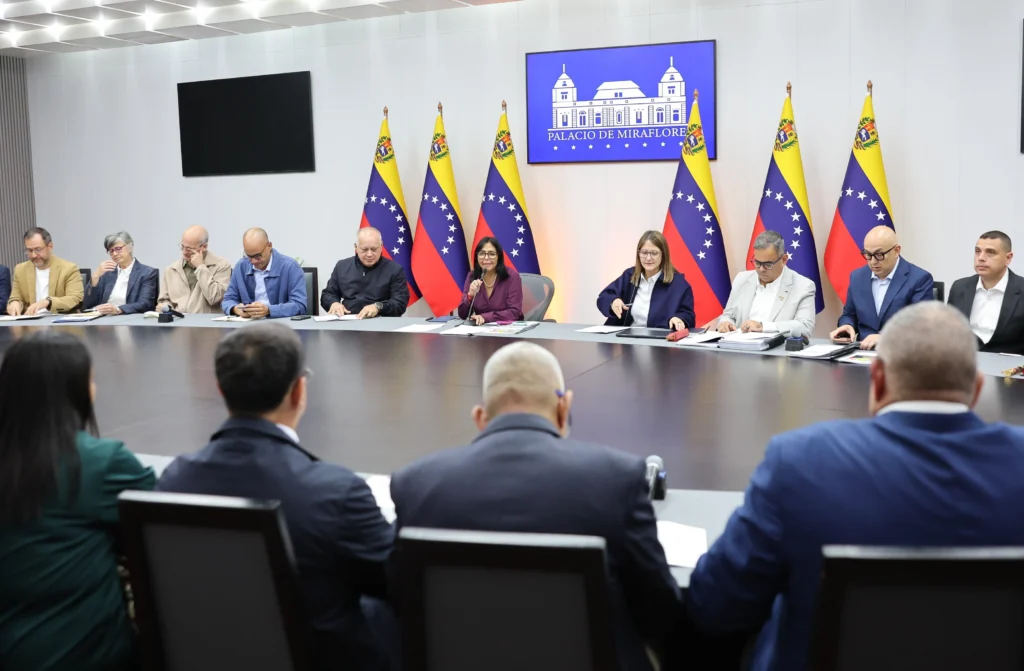
Venezuelan Acting President Delcy Rodriguez delivered the demand during a working meeting with the Council of Ministers and regional authorities held at Miraflores Palace. She insisted the gold constitutes a reserve of the Central Bank and belongs to the nation.
Rodriguez recalled that the National Assembly, including the 2015 legislature, had produced an agreement in which political sectors of Venezuela called for the gold’s return, framing the demand as a settled matter of national will.
The Acting President added that an irrational legal action that opposition figures had attempted was dropped by those same actors. That withdrawal, she argued, removed any remaining justification for the Bank of England to hold the metal.
“There is no excuse. That is the only thing I have to tell the Bank of England. They must return Venezuela’s gold, which belongs to Venezuelan men and women”, she stated.
The language was direct. Rodriguez offered no room for negotiation, framing the gold as a sovereign asset held outside the country against the will of Venezuelan institutions.
#28Oct | La presidenta encargada de Venezuela, Delcy Rodríguez, solicitó a la Cancillería de la República y a la Procuraduría General que inicien las gestiones correspondientes para recuperar el oro venezolano que se encuentra en el Banco de Inglaterra.
Text reads: “The Acting President of Venezuela, Delcy Rodriguez, requested the Ministry of Foreign Affairs and the Office of the Attorney General to initiate the appropriate steps to recover the Venezuelan gold that is at the Bank of England. “I will not stop demanding the Bank of England to return our gold. Enough excuses. There was an agreement”, said Rodriguez, referring to the agreement to recover international reserve assets reached last August during the first cycle of dialogue between the delegations of the elected National Assembly in 2015 and the government (…)”
Mining Push Grows
The same working session included a live link with Mining Minister Hector Silva from the Choco plant in Bolivar state. Silva confirmed the arrival of 41 surface machines, part of a total of 544 pieces of equipment purchased by the state.
Those machines are meant to boost gold and coal production. The government tied the mining drive to strengthening the country’s reserves and generating income for social projects, health care, and worker welfare.
The equipment delivery anchors the government’s broader argument. Venezuela insists it does not need foreign permission to manage its resources, whether gold underground or gold stored abroad.
The Bolivarian government also pledged a productive revival across the country to energize the engines of the economy and support organized local development. The gold demand sits at the center of that agenda. Every program announced, from ham production to health brigades, depends on revenue the government says its reserves should generate.
Venezuela has long argued that the Bank of England’s refusal to release the gold violates its sovereignty. Acting President Rodriguez renewed that claim in the sharpest terms, insisting the metal funds the welfare of a people, not the accounts of a foreign institution.
No response from the Bank of England appears in the official record. The demand now stands public, delivered from the presidential palace and addressed directly to London.
A majestic tract of land in far north Queensland that links wet tropics and world heritage rainforest, and contains headwaters that flow to the Great Barrier Reef, could be bought and protected by Christmas, after a conservation group raised more than $19m in private donations to buy the cattle station.
Wooroora spans more than 20,000 hectares of largely intact wet sclerophyll forest and savanna woodland on the lands of the Jirrbal people about 100km south-west of Cairns – and borders Bush Heritage’s existing 43,575-hectare Yourka Reserve in one of the most biodiverse regions in Australia.
Northern Ireland is set to miss out on a cost-of-living payment included in an additional £270 million for the region unless Stormont ministers can agree a budget, the UK's Northern Secretary Chris Bryant has indicated.
Two community health workers trying to spread awareness of Ebola in the eastern Congo were attacked by a machete-wielding mob on Friday, further demonstrating the difficulty of controlling the deadly disease among hostile and suspicious rural residents as the total number of cases surpassed 10,000.
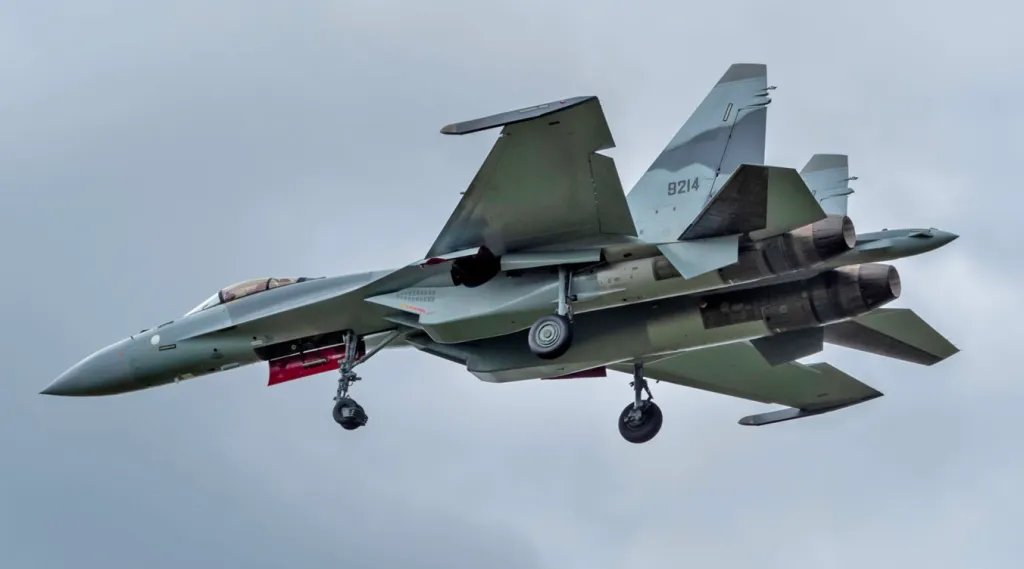
In a surprising development, Ethiopia has taken receipt of 12 Russian-made Su-35 multirole fighters, Prime Minister Abiy Ahmed announced, adding a significant new capability to the Ethiopian Air Force. The agreement also calls for four batteries of Russia’s S-400 surface-to-air missile system, although their delivery schedule remains unclear.
Abiy said the fighters arrived a year ahead of schedule under an agreement with Moscow and thanked Russian President Vladimir Putin for facilitating the accelerated delivery. The financial terms of the deal, the aircraft’s basing locations, and whether additional fighters are included in the agreement have not been disclosed. The Ethiopian leader announced the development on his X account, also posting photos and a video showing himself and other Ethiopian and Russian officials alongside two of the jets. The location appears to have been the third Russia-Africa Summit, taking place in Moscow on October 28-29.
The acquisition comes as Ethiopia seeks to strengthen its military capabilities amid persistent domestic security challenges and tensions across the Horn of Africa.
Abiy Ahmed Ali poses alongside Ethiopian and Russian officials in front of an Ethiopian-marked Su-35. Abiy Ahmed Ali/via X
The Su-35 is a heavily modernized derivative of the Soviet-era Su-27, known by NATO as the Flanker. It combines twin thrust-vectoring engines for a high degree of maneuverability, advanced radar and other sensors, and the ability to carry a range of air-to-air and air-to-surface weapons.
Its radar and long-range air-to-air missile capabilities, in particular, represent a notable improvement for Ethiopia’s ability to detect and engage hostile aircraft, while its multirole design allows it to perform a wide range of strike missions.
Ethiopia already operates Russian-designed Su-27 fighters, providing a considerable degree of familiarity with the Flanker family. The current fleet comprises around 10 (and perhaps as many as 15) secondhand Su-27s, including two-seaters, supplemented in 2024 by a pair of Su-30Ks. The latter were originally produced for India as interim equipment, and then ended up in storage in Belarus before being refurbished and delivered to Ethiopia. The Ethiopian Flankers saw action against Eritrean opposition in the 1990s, and there have also been a handful of non-combat attrition losses.
Pictures of soviet made Su-25UB close ground attack jet and Su-27/UB multirole fighters jets of the Ethiopian Air Force during a exhibition at the Harar Meda air base in late June 2022. *We can also see what it seems to be R-27 and R-23 air to air missiles (3rd and 4th frames) pic.twitter.com/1TQBh7V4J7
However, introducing the Su-35 will still require specialized pilot training, additional maintenance infrastructure, weapons integration, and a dependable supply of spare parts. The latter, in particular, is something that Moscow has not always been able to guarantee in practice.
Abiy Ahmed Ali during the official handover of the first Ethiopian Su-35s. Abiy Ahmed Ali/via X
The planned acquisition of four S-400 batteries could prove equally significant.
The S-400 is a mobile air-defense system designed to engage aircraft, cruise missiles, and certain ballistic missile threats.
Abiy Ahmed Ali shakes hands with a Russian official in front of an S-400 promotional display. Abiy Ahmed Ali/via X
If delivered, the systems would considerably strengthen Ethiopia’s ability to protect military installations, critical infrastructure, and other strategic sites against aerial attack.
Ethiopia occupies a strategically important position in the Horn of Africa, bordering Eritrea, Djibouti, Somalia, South Sudan, and Sudan. Its security environment includes various unresolved regional tensions, longstanding border disputes, and internal armed conflicts.
Ethiopia’s relationship with Eritrea remains particularly relevant given their history of war and continuing tensions. Relations with Egypt and Sudan are also shaped by disputes over the Nile.
Abiy has presented the acquisition as a means of deterring aggression and strengthening national sovereignty.
At the same time, the delivery reinforces Russia’s position as a supplier of advanced military equipment to African countries. Russian exports to the continent have included combat aircraft, helicopters, armored vehicles, and ground-based air-defense systems.
Interesting report indicating Algeria has purchased at least some of the Russian Su-35s originally built for Egypt and later reported to be sought by Iran.https://t.co/0soV9aOopn
One of the Su-35s produced for Egypt but never delivered to that country. @nskplanes
CAATSA includes provisions for sanctions against parties found to have knowingly engaged in significant transactions with Russia’s defense or intelligence sectors. Washington previously invoked the provision against China over its acquisition of Su-35 fighters and S-400-related equipment, although any action against Ethiopia would depend on a separate U.S. determination.
Potentially, the 12 jets for Ethiopia could also have been left over from the abandoned Egyptian deal.
For Moscow, the deal provides a prominent example of continued defense cooperation with an important country in the Horn of Africa. The transfer also comes amid broader efforts by Russia and African governments to deepen political, economic, and military ties.
The agreement’s cost and financing arrangements have not been made public, leaving questions about the long-term expense of operating the fighters and maintaining their supporting infrastructure.
Abiy Ahmed Ali is seen as part of a delegation in the cargo hold of an Il-76 transport, an aircraft regularly used to transport Russian arms, including S-400 systems. Abiy Ahmed Ali/via X
The deal also needs to be seen in the context of Russia’s war in Ukraine.
Russia’s full-scale invasion of Ukraine, and the subsequent international sanctions, have hampered efforts to secure sales for any kind of military equipment, other than to a handful of selected close allies, with little prospect that this will change any time soon. Amid those same sanctions, as well as Moscow’s increasing pariah status, any kind of export success will be very welcome for Moscow, even if it involves jets previously built for another customer.
At the same time, the ability of the Russian defense industry to provide in-service support for these jets, once they are delivered, is even more questionable than it was in the past. Since the invasion, Moscow’s need to prioritize its own forces, combined with Western sanctions restricting access to key components, has further complicated the situation. For Ethiopia, any disruption to parts deliveries or maintenance support could have an outsized impact on operational readiness, and this is compounded by the requirement of Russian industry to support Moscow’s own Su-35S jets, its primary fighter.
Ultimately, the acquisition represents a substantial reported addition to Ethiopia’s combat aircraft fleet. The planned S-400 systems could extend that modernization into ground-based air defense, and further influence the military balance in the Horn of Africa region.
From rest breaks and additional time to test papers written in braille, the number of adjustments and accessibility arrangements for year 12 exams is growing.
From rest breaks and additional time to test papers written in braille, the number of adjustments and accessibility arrangements for year 12 exams is growing.
"Am I living in a fucking parallel universe here or something?" asks Eoin O'Boyle, a 28-year-old Irish vape shop owner facing the prospect of losing his business. "If there's a piece of policy that makes sense, the government will do the opposite for some reason."
Last Wednesday, the Irish Seanad passed the final stages of a sprawling public health bill, which prohibits the sale of vaping products with flavor names other than "tobacco" or "unflavored." The bill also restricts the colors and imagery permitted on vaping devices and packaging, bans advertising in shops and online, and requires most retailers to keep vaping products out of public view.
In a cliché as old as time, Irish politicians are asking the public to think of the children. "We are dealing with an increasingly aggressive industry marketing attractively packaged addictive products that appeal to children," Ireland's public health minister Jennifer Murnane O'Connor said in a statement. "We are responding strongly with measures that will protect our young people against current and future threats."
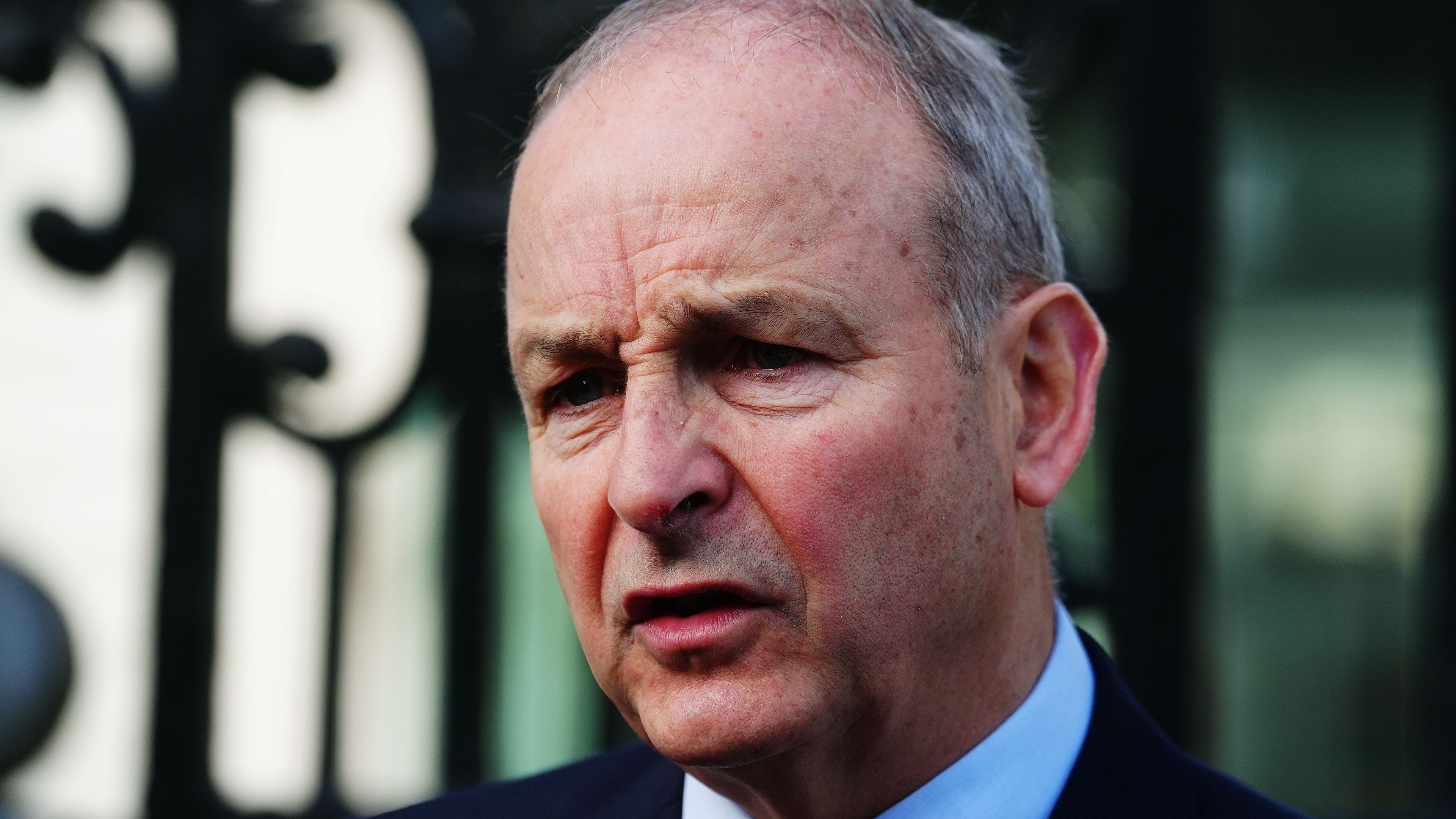
Ireland's Taoiseach (head of government), Micheál Martin, has described vaping as "nearly worse than cigarettes," calling them the "revenge of Big Tobacco." Of course, as studies by Public Health England, Cancer Research UK, the Royal College of Physicians, and countless other organizations show, vaping is vastly safer than smoking and is an extremely effective cessation tool.
"The government [is] insane to do this," O'Boyle, the owner of OB Vape in Drogheda, Ireland, tells Reason. "It's going to cause excess deaths. It's infuriating."
O'Boyle began smoking at the age of 12, before quitting when he was 18 by using vapes. "I loved smoking. I absolutely loved it," he recalls. His mother and brothers also quit cigarettes by vaping. While studying enterprise computing at Dublin City University, O'Boyle worked part-time at a vape shop, where he spotted an opportunity to build a business of his own. In 2019, he took out a small loan and opened OB Vape, hoping to create something akin to the Apple Store of vaping. He says he repaid the loan within six months and has since helped around 22,000 customers quit smoking.
Now, O'Boyle fears the business he's spent nearly eight years building could disappear. "I never thought I'd be in a position where I would have to close down my business through no fault of my own," he says.
Last week's health bill is not the first of Ireland's vape restrictions. In 2023, the country made it illegal to sell to minors, followed by advertising restrictions the following year, and an e-liquid tax in 2025.
These measures were designed to stop vaping among minors, and while Ireland's rate of teenage vaping has declined since 2019 and is below the European average, teens in the country have still been able to access these devices. As the government's own data show, 32 percent of Irish 15- and 16-year-olds have tried vaping, 16 percent said they had vaped in the previous month, and 7 percent vaped daily. By comparison, just 2 percent smoked cigarettes daily, and a 2024 report found the proportion of teens who had ever smoked once fell from 73 percent in 1995 to just 24 percent in 2024 (the lowest number on record).
Regardless of this decline among the youth, smoking remains widespread across the country. According to the government's 2025 Healthy Ireland Survey, 17 percent of the population smokes, with 13 percent smoking daily and 4 percent occasionally.
For those smokers, vaping is among the most effective tools for quitting cigarettes. An August review from Cochrane that examined 80 randomized controlled trials involving nearly 30,000 participants found that nicotine e-cigarettes are more effective at helping people quit smoking than conventional nicotine replacement therapies, such as patches and gum. The review found that vapes resulted in about four more quitters per 100 people, concluding that vaping is a "proven and viable option." Indeed, half of current vapers in Ireland are former smokers, according to government data.
Ireland's vape flavor ban could hurt adults trying to quit smoking. Vape flavors, O'Boyle argues, are crucial in helping smokers move on from tobacco flavors and successfully quit cigarettes. "People don't want to be reminded of tobacco," he says, estimating that around 96 percent of his customers use nontobacco flavors, including menthol and fruit flavors like pineapple.
Research suggests O'Boyle's experience is widespread. A 2020 study published in JAMA Network Open found that adults who started vaping nontobacco flavors had more than twice the odds of subsequently quitting smoking compared with those using tobacco flavors. A 2025 study of 886 smokers published in Nicotine & Tobacco Researchfound that "non-tobacco flavors were preferred and may be also more effective" at helping smokers quit.
"Without flavors, my business would be gone, and the smoking rates in the country would be up," says O'Boyle.
While the government ban will prohibit the legal sale of flavors, illegal sales are likely to be bolstered. After the Netherlands banned nontobacco vape flavors in 2024, a survey found that 47 percent of existing vapers continued using illegal flavors. Among those users, more than a third purchased them from shops abroad, while others got them from acquaintances, websites, or social media. In Australia, where vaping products can only be purchased legally at pharmacies, a 2025 government study found that 93 percent of vapers obtained their products from illicit sources. Businesses like O'Boyle's will be forced to shut down, but the missing demand will undoubtedly be met by the illicit black market.
"The restrictions that the government [is] planning to put on, and have already put on, are going to jeopardize not just my business," O'Boyle warns, "but the lives of Irish people."
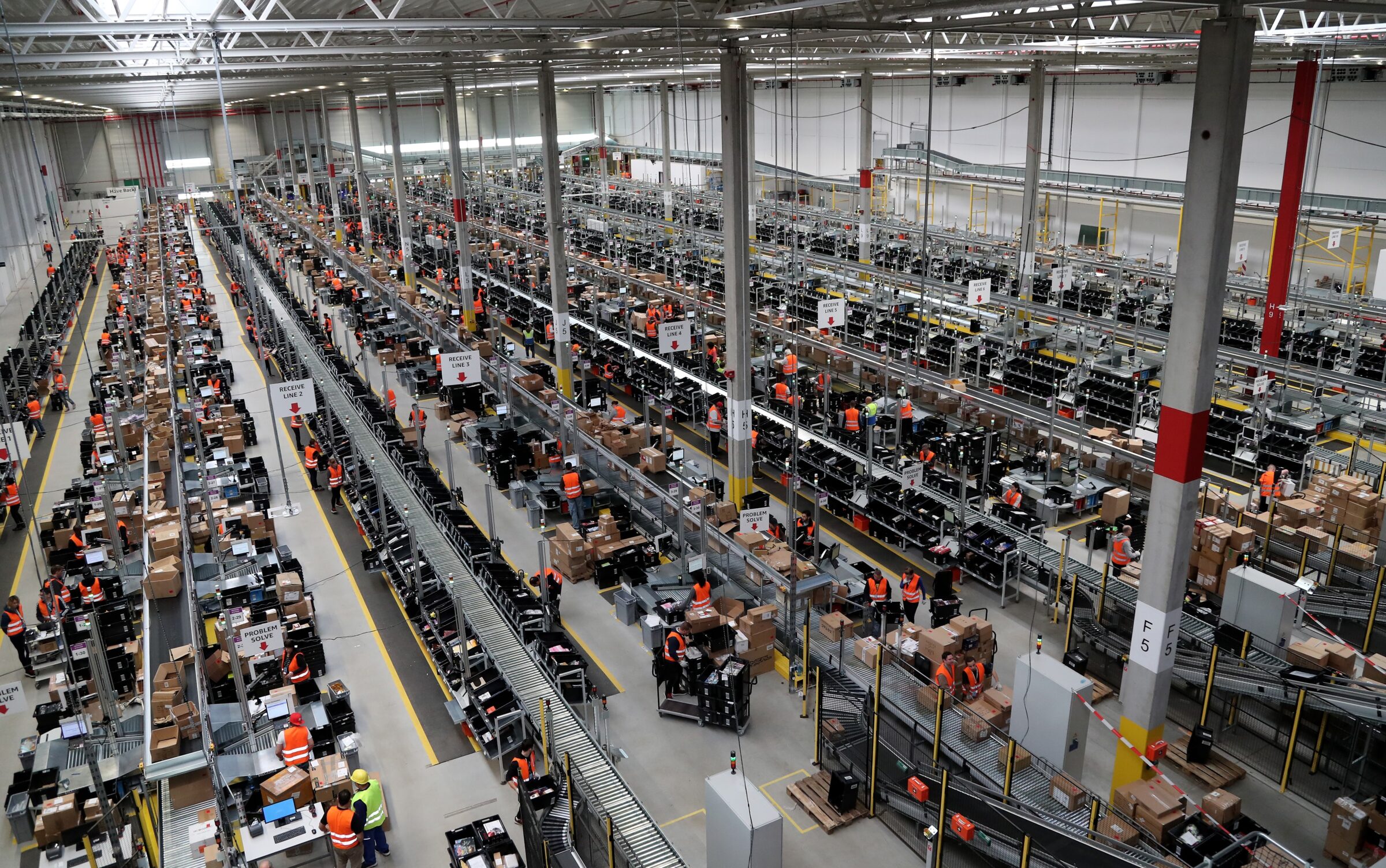
The European Parliament’s employment committee has highlighted the need for regulating automated control of workers after visiting Amazon warehouses in Germany and Poland this week.
Seven of the committee MEPs visited Amazon warehouses employing some 5,000 workers on Monday and Tuesday (26-27 October) ahead of the Commission’s Quality Jobs Act proposal expected in December.
The trip follows the committee’s hearing on working conditions in Amazon in January, where workers raised concerns about efficiency goals, safety, and surveillance using AI tools, which may be regulated more rigorously as a part of the upcoming act.
According to a 2023 survey by UNI Europa, a labour union federation, about a half of Amazon’s employees said their work had a negative impact on their mental and physical health.
Workers’ progress throughout the day is usually watched through security cameras, but also the work badges scanned in check points in various locations in the warehouse, and scanning devices used to identify products.
In the city of Sosnowiec, home to one of Amazon’s Polish warehouses, employees are overworked by “constant pressure of being judged, which is very hard to cope with mentally,” Agata Wypiór, recently-named vice secretary of Amazon’s European Works Council and Solidarność union leader told EUobserver.
Leaving worker management and performance monitoring to algorithms means “these processes become almost invisible,” Li Andersson, head of the delegation, told EUobserver.
“The way the workers describe it, it sounds like a digital panopticon: when you work faster you have to work even faster.“
Workers themselves often do not know what data is collected on them and how it is being used to set productivity targets, Anderssen highlighted.
This article continues, but the full version is available only to EUobserver.com subscribers. Visit account.euobserver.com/membership
Jury at Winchester crown court sees video evidence by Joanne Young in trial of four men accused of sexual assault
A woman who was allegedly sexually assaulted by men invited by her ex-husband into their family home described how she would wake in the middle of the night restrained and blindfolded and feeling “hazy”.
Joanne Young said that on one occasion she managed to remove her blindfold and was shocked to glimpse a stranger in her bedroom whom her then husband, Philip Young, had allegedly arranged to have sex with her.
At the heart of the mass immigration debate is the question: can English culture survive without ancestral continuity of the population? Clive Pinder says ancestry is important, but ultimately England is not a DNA test.
 Login







(@AbiyAhmedAli) October 28, 2026