Kevin M. Warsh, the chairman of the Federal Reserve, said an “information-rich” period before the central bank’s gathering in December will help officials determine next steps for policy.
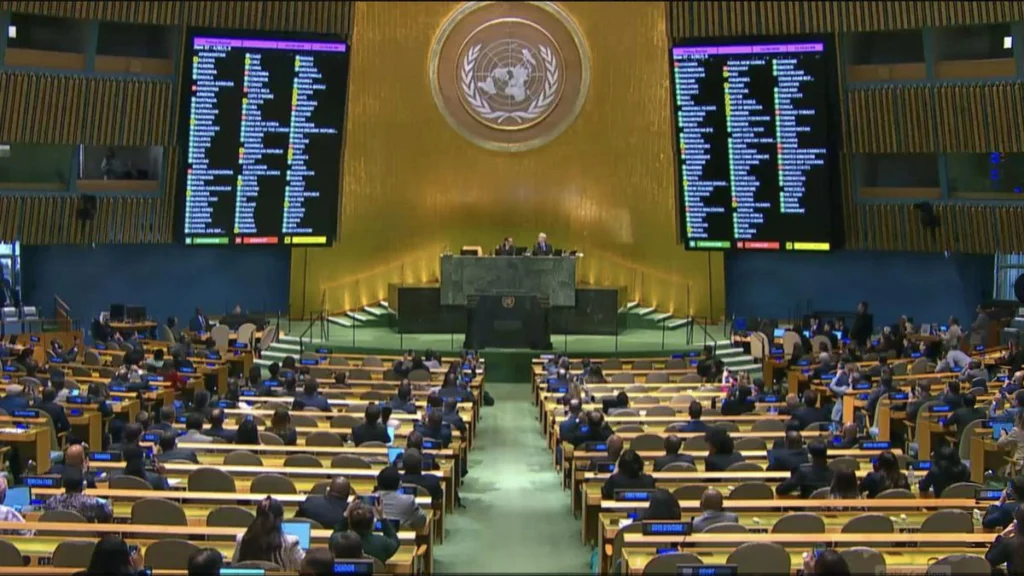
On Wednesday, the United Nations General Assembly approved—for the thirty-fourth time—a resolution calling for an end to the economic, commercial, and financial blockade imposed by the United States against Cuba. The resolution passed with 130 votes in favor, 17 against, and 25 abstentions.
During the debate, Mexico, Nicaragua, Egypt, Vietnam, India, Ghana, and Mozambique reiterated their support for the Cuban people and condemned unilateral coercive measures, which they view as contrary to the United Nations Charter and international law.
Mexico’s Permanent Representative to the UN, Héctor Vasconcelos, reaffirmed his country’s solidarity with Cuba and its rejection of any unilateral measures directed against the Cuban population. He maintained that the blockade, which has been in place for more than six decades, violates international law and is incompatible with the principles of the United Nations.
Vasconcelos noted that the sanctions constitute a structural obstacle to the island’s economic and social development. “Ending the blockade against Cuba is an urgent necessity and a humanitarian imperative,” the Mexican diplomat stated.
Mexico argued that dialogue, cooperation, and respect for international law should take precedence over measures that exacerbate the hardships faced by a population. It also called for the removal of Cuba from the U.S. list of state sponsors of terrorism and urged that priority be given to channels of dialogue.
Meanwhile, Nicaragua’s Permanent Representative to the UN, Jaime Hermida Castillo, announced his country’s vote in favor of the resolution. He based this position on principles and values shared by the two nations and reaffirmed Managua’s support for Cuba in the face of pressure tactics employed by the United States.
Hermida Castillo condemned the 64-year-long economic, commercial, and financial blockade, describing these coercive measures as a systematic act of aggression and a violation of human rights. He asserted that such policies are intended to stifle Cuba’s scientific, cultural, and social development. The Nicaraguan delegation also questioned the inaction of the multilateral system in the face of the overwhelming opposition from governments to Washington’s unilateral actions.
¡VICTORIA DE CUBA!
La Asamblea General de @ONU_es ha votado mayoritariamente contra el bloqueo de EEUU contra Cuba.
El gobierno de EEUU queda nuevamente aislado en su pretensión de continuar asfixiando al pueblo cubano y someterlo a un acto de castigo colectivo y de genocidio.… pic.twitter.com/MhnrjGnzSt
The text reads, “CUBA’S VICTORY! The General Assembly of @ONU_es has voted by a large majority against the US blockade against Cuba. The US government is once again isolated in its attempt to continue strangling the Cuban people and subjecting them to an act of collective punishment and genocide. Neither its most insane pretexts nor its pressures nor media circus will prevail over the force of facts and truth. #CubaNoEsUnaAmenaza The Blockade Is.
The delegations of Ghana and Mozambique concurred that the financial blockade violates the principles of the United Nations Charter and international law. They denounced the fact that these extraterritorial measures hinder Cuba’s economic, social, and cultural development—particularly in the areas of healthcare, education, and energy supply.
Mozambique highlighted Cuba’s historic contributions to South-South cooperation and its assistance in the fields of health and education across Africa. The representative from the African nation noted that, for more than six decades, the Cuban people have endured the consequences of the blockade—a policy that the General Assembly has repeatedly condemned.
Ghana stated that its support is rooted in the principles of sovereign equality, mutual respect, and peaceful coexistence among states. It warned that the extraterritorial application of the blockade imposes burdens on third countries and runs counter to the principles of fair and equitable international economic relations.
Egypt, for its part, called for action from the UN. Ihab Awad, Egypt’s Ambassador and Permanent Representative to the UN, reaffirmed his country’s commitment to the principles of the United Nations Charter and demanded an end to the economic strangulation of Cuba.
“The negative repercussions of the economic, commercial, and financial blockade imposed on Cuba affect the Cuban people’s ability to meet their basic needs,” the Egyptian diplomat stated.
Meanwhile, Vietnam reiterated its support for the immediate lifting of the commercial and financial blockade. Its delegation expressed concern regarding restricted access to energy and fuel, as well as the adverse impact on hospitals, schools, water services, and trade relations with third countries.
The Vietnamese delegation called for respect for the right to self-determination—free from coercion—advocated for political dialogue in accordance with international law, and urged the removal of Cuba from the list of state sponsors of terrorism. It also requested international support to address the accumulated economic and social damage.
India endorsed the statements made by the G-77 and ASEAN against the blockade. Its representatives called for the immediate repeal of these measures in order to mitigate their impact on key sectors such as energy, health, food production, and education.
Furthermore, India highlighted the need to eliminate extraterritorial sanctions to create an environment that would allow for Cuba’s full participation in international trade.
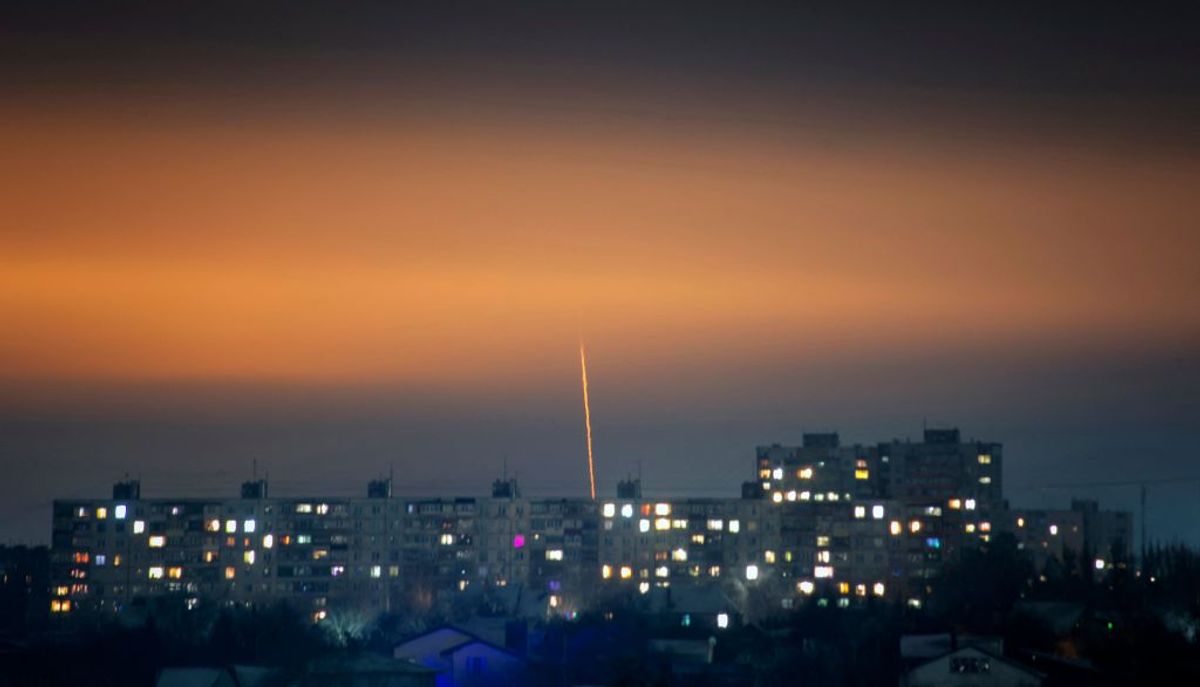
A small Russian cruise missile of an unconfirmed type came down almost intact in Odesa Oblast, Militarnyi reported on 27 October. Its box-shaped airframe looks unlike the Geran-5 variant whose name a presidential adviser gave it.
Militarnyi describes Russia’s work on the Geran-5 line as iterative: features tested on one version reappear in the next. A variant reported in late September can correct its route by images of the ground instead of satellite signals, which Ukraine jams, according to the monitoring channel Polkovnyk GSh. Official Ukrainian sources have not confirmed that system. The airframe found in Odesa Oblast looks shaped for a different problem: radar. Russia now builds 4,000 jet-powered Geran-4 and Geran-5 drones a month, Militarnyi says, most of them Geran-4. It is also building new launch sites for the Geran-5.
What the wreck shows
Local Telegram channel Odesa Info Live posted photos of the missile lying in open ground with little visible damage. Militarnyi described a compact cruise missile with a box-shaped fuselage, rounded edges, and a swept wing. The flat-sided body is probably meant to simplify production, the outlet said, and it may also cut radar visibility. A small turbojet engine exhausts through a V-shaped tail and draws air through intakes on both sides. Militarnyi read the dark composite skin as another measure against radar.
Serhii “Flash” Beskrestnov, the president’s adviser on defense technology, published the first photos of the new missile on 22 October. He wrote that it navigates optically and has greater range, speed, and flight altitude, and he labeled it the Geran-5 K5-K. However, Militarnyi noted that it looks substantially different from the K5-K variant already known by that name. In its 23 October overview, the outlet said Russia had started using two new small cruise missiles, probably developments of the Geran-5.
How Russia got here
Russia first used the original Geran-5 against Ukraine in early January 2026, Ukraine’s military intelligence (HUR) said, describing it as a jet-powered strike drone. Militarnyi now classes the whole line as small cruise missiles.
Until specialists open the airframe, its navigation, range, and speed rest on Beskrestnov’s word. What they find inside will show how much of the design is aimed at Ukraine’s radar.
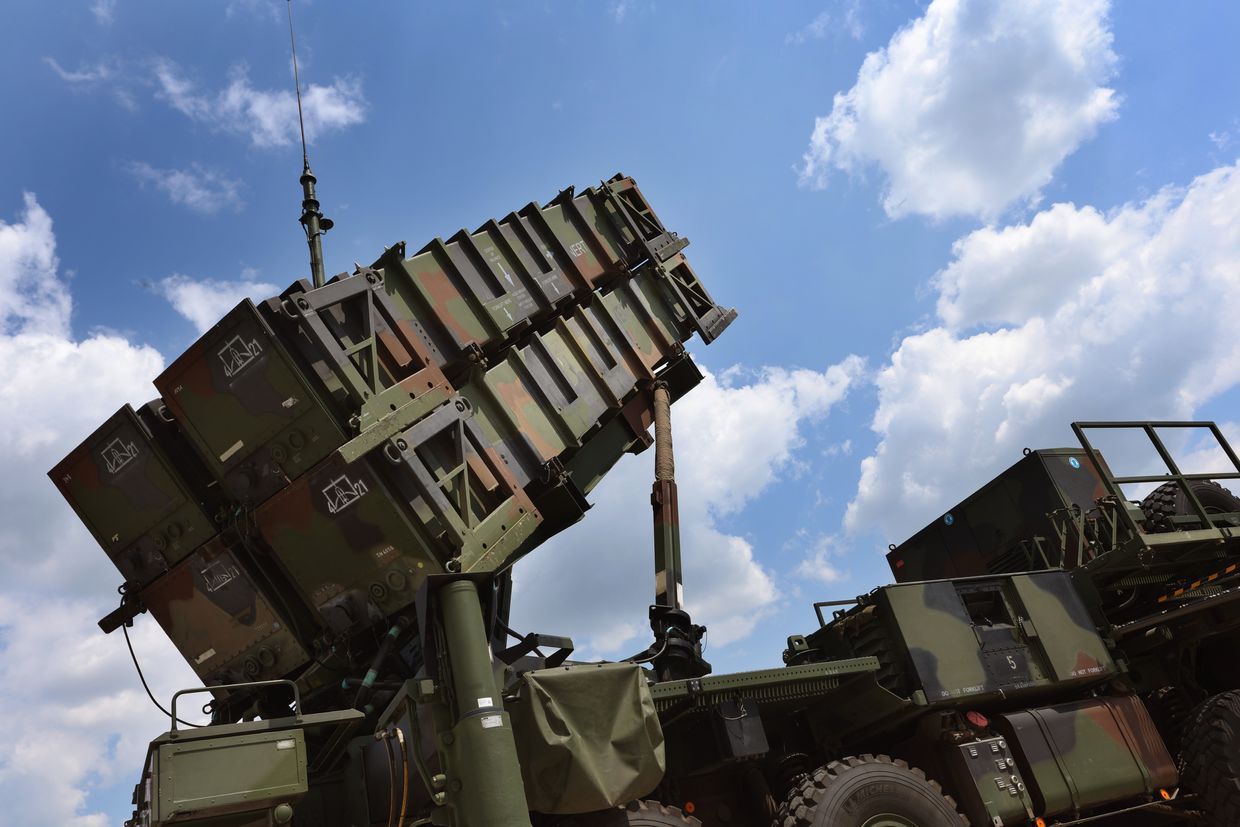
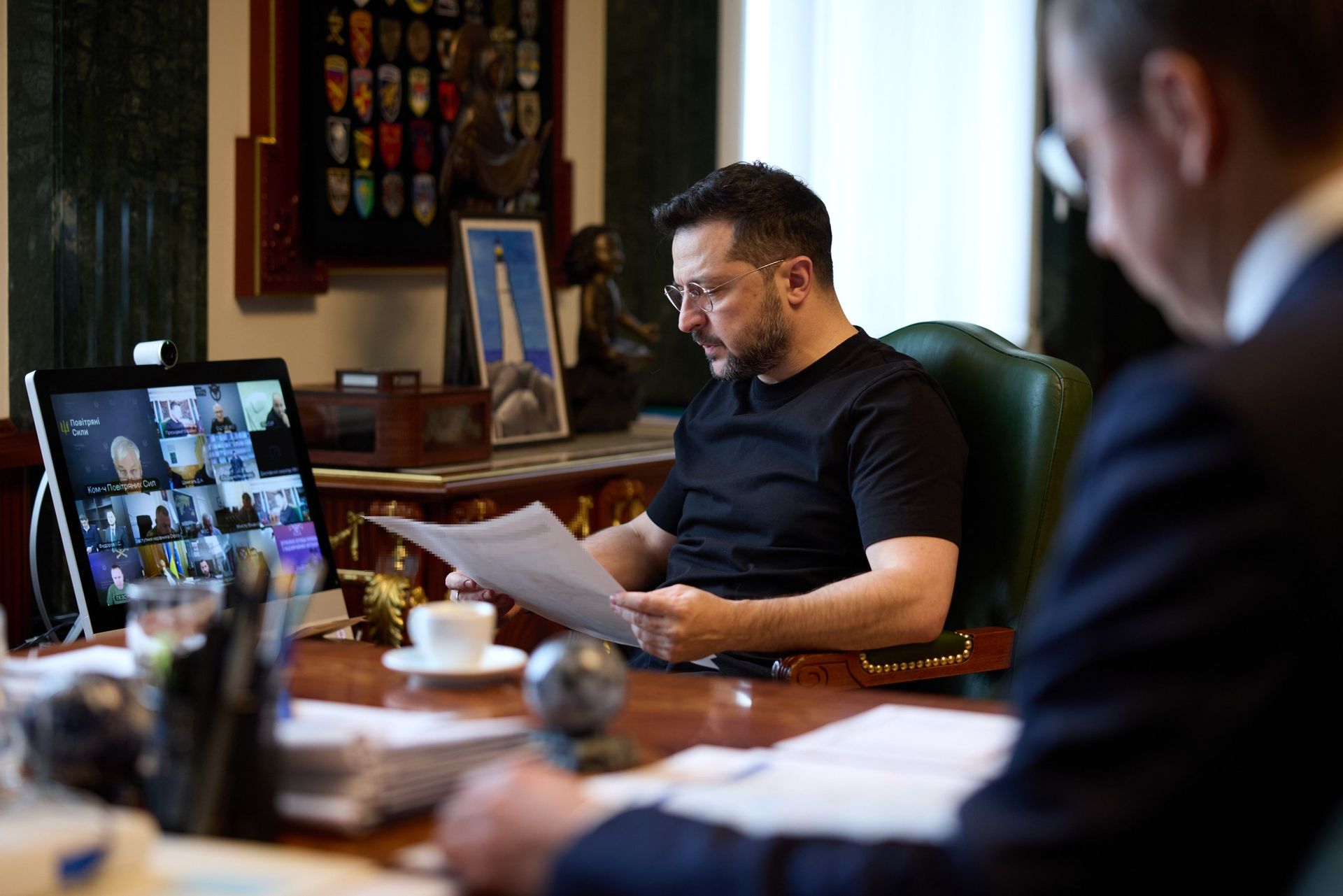
Ukraine needs to intercept around 150 Russian ballistic missiles per month but receives about 150 Patriot missiles from the U.S. annually, according to President Volodymyr Zelensky.
Zelensky's comments come one day Russian ballistic missiles targeted Kyiv in a deadly attack on a university campus, a major bridge, an administrative building, and medical facilities in Kyiv. The attack killed one person and injured 15.
Cassidy Hutchinson had implicated Donald Trump in US Capitol attack during testimony before House committee
The justice department on Tuesday failed to secure a grand jury indictment against a former White House staffer who provided dramatic but disputed testimony against Donald Trump before a House committee investigating the 6 January 2021 US Capitol insurrection, according to two people familiar with the matter.
A grand jury in Washington rejected prosecutors’ request to return an indictment charging Cassidy Hutchinson, said the people, who spoke to the Associated Press on the condition of anonymity because they were not authorized to publicly discuss the case. It’s the latest setback in the justice department’s efforts to charge perceived adversaries of the Republican president.
German defense AI firm Helsing has unveiled Contra, an AI-run air defense system and two interceptor missiles designed to chase Russia’s jet-powered Geran drones, the company announced on 26 October. Officials pitch it as cheap, but it won’t reach the market this winter.
That leaves Ukraine on its own defenses as Russia shifts to jet drones. By early October, jet models made up about 40% of Russian drone launches, and Ukraine’s own interceptors for them won’t arrive in needed numbers before late November, Air Force Deputy Commander Yurii Cherevashenko said.
Two missiles, one AI brain
Contra is the command layer of air defense: it links radars and other sensors, tracks incoming drones and missiles, and assigns a weapon to each target, while people keep control over decisions, Helsing said. Besides the company’s own missiles, it can also use other firms’ interceptors, lasers, guns, or nets. AD-1 Inferno is jet-powered and designed to loiter, swarm, and re-engage targets, while AD-2 Ambush, a solid-fuel rocket, is designed to reach Mach 2.5, over twice the speed of sound, and a range of more than 20 km, the company said.
Inferno, with a 700 km/h speed and a 20-km range, would be the everyday shooter. Ambush would handle “leakers,” drones about to hit the ground, said Maxwell Adams, Helsing’s senior product director. Each shot should cost under $100,000, company officials said.
Built for the faster Gerans
Ukraine once downed 90% of Russia’s slower, propeller-driven Gerans, copies of Iran’s Shahed, Defense News reported. Russia has since fielded thousands of jet Geran-4s and Geran-5s flying at 400–700 km/h, and almost half now get through, Helsing co-founder and co-CEO Gundbert Scherf said.
Ukraine’s own nightly rates swing widely. On 28 September, President Zelenskyy put the shoot-down rate for jet drones at 57%. Overnight on 7 October, it exceeded 82%, National Security and Defense Council Secretary Ihor Klymenko said. Russian output of the two models has reached 4,000 a month, Helsing said, citing unspecified intelligence reports.
Explore further
German company introduces AI-powered HX-2 drone for Ukrainian military
Helsing has signed one Contra contract, Scherf said, but the system is still in testing, and he expects it on the market in the second half of 2027. Ukraine already uses Helsing’s HX-2 strike drones. Scherf said they should be integrated into a system like Contra.
Kevin M. Warsh, chairman of the Federal Reserve, said that the central bank had more work to do to tame inflation, but that there was no urgency to raise rates at consecutive meetings.
Moataz al-Atrash, 21, had never been suspected of wrongdoing. Israeli soldiers seized him in the dead of night a year ago and detained him without charge. His family heard nothing from the authorities until last month, when they were told he had died
A senior Ukrainian official previously told the Kyiv Independent that the batch awaiting U.S. Defense Secretary Pete Hegseth's approval was "significant."
James ‘Fergie’ Chambers, in prison in Spain, has applied for asylum as US seeks extradition over alleged Hamas support
US authorities seized wealthy activist James “Fergie” Chambers’s cellphone at some point after Spanish police arrested him in July without notifying him or his attorneys, the Guardian has learned.
Chambers, a US citizen and wealthy donor to leftwing and humanitarian projects, is imprisoned in Madrid. His case is the first known instance of the US seeking to extradite a citizen over alleged support for Hamas, an accusation tied to money Chambers has donated to support Palestinians, including the Sameer Project, in Gaza.
Sitting in the suite of an upmarket hotel with an iced latte in hand, Paul Banks (Essex, 48) shows few visible aftereffects of the intoxicated lifestyle that nearly sent him to the other side. The Interpol singer looks happy in middle age. His band, which shone in early-2000s New York amid the post-punk revival, is now enjoying a second youth, lifted up by a generation that once again reveres the archetype of the tormented indie figure à la Ian Curtis, with whom Banks has long been compared.
Department of Homeland Security (DHS) Secretary Markwayne Mullin said Wednesday that the department is “always evaluating technology on the border” after receiving a military-grade heat ray from the Pentagon. CNN reported that the heat ray — officially called the Active Denial System — emits an invisible beam of electromagnetic waves which can reach a little…
Denmark will guarantee a loan to the Danish subsidiary of Fire Point, the Ukrainian maker of Flamingo cruise missiles, the Danish Business Ministry announced on 21 October. The financing will run through EIFO, Denmark’s state export and investment fund.
Ukraine uses its Flamingo missiles to strike defense plants deep inside Russia as Moscow continues its full-scale invasion. Fire Point broke ground in December 2025 on a plant in Vojens, southern Denmark, to make solid fuel for the missiles. The project has since grown far more expensive. In August, CEO Iryna Terekh said its estimated cost had risen from €50 million to above €150 million, calling the figure “very rough.” The war, meanwhile, stands in the way of Fire Point borrowing on ordinary terms in Denmark, the ministry said. That is why the Danish state is guaranteeing the loan.
What Denmark is putting up
The guarantee covers 750 million Danish kroner, or about $112.6 million, Reuters reported. Terekh said in August that the plant’s launch had slipped to late 2027. The ministry called the deal another big step toward starting production. However, Ukrainian outlet Defender Media noted that the statement does not say directly that the loan will fund the plant.
Explore further
Ukraine’s Fire Point company is working on revolutionary system which can also transform European air defense
EIFO chief Peder Lundquist said the fund is involved in nearly 40 projects linked to Ukraine. Business Minister Martin Lidegaard said hosting a Ukrainian defense company brings Denmark knowledge, production, and partnerships. Europe’s security and freedom, he added, start in Ukraine.
Better shielded from Russian strikes
Defense Minister Jeppe Bruus said Denmark was the first country to decide to let a Ukrainian defense company set up on its soil. Production outside Ukraine, he argued, is better protected from Russian attacks. He added that Fire Point’s presence opens cooperation that could give Denmark access to technologies developed in wartime.
Denmark first said in September 2025 that Fire Point would make long-range missile fuel on Danish soil. Since then, the company has signed deals with more than a dozen European firms for FREYJA, an anti-ballistic project. It could reduce Europe’s long-term reliance on scarce US-made Patriot interceptors. Fire Point aims for a first ballistic missile intercept with it by mid-2027.

 Login