
❌

Reading view

Venezuela to Host the Second International Festival of Arts and Disability
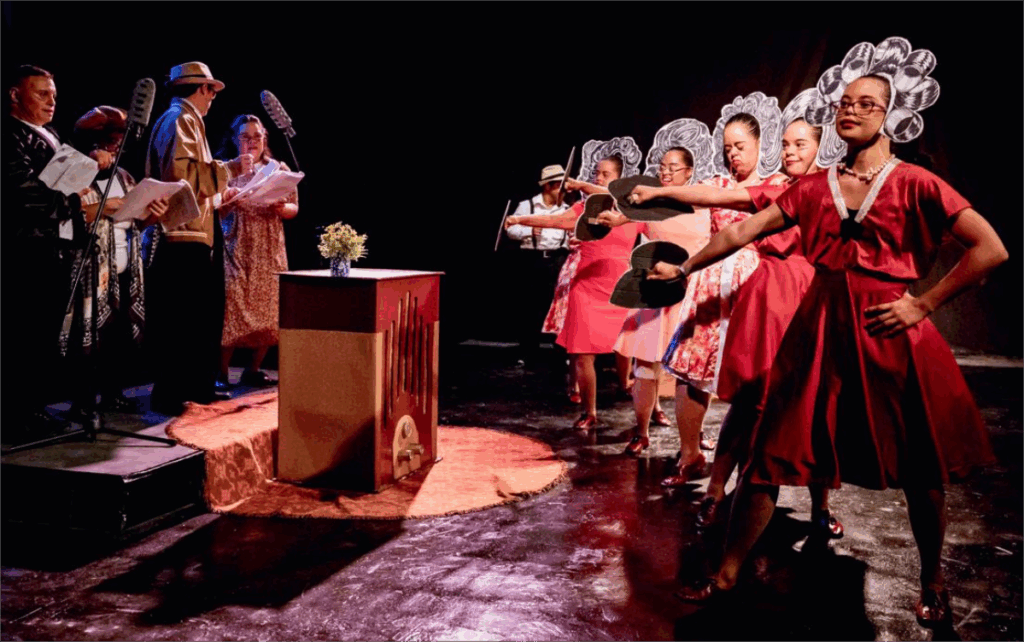
The second edition of Venezuela’s International Festival of Arts and Disability, “DiverFest,” will take place from November 2 to 21, featuring performances in dance, theater, and pantomime, alongside workshops, talks, and virtual activities focused on cultural inclusion. The European Union (EU) delegation in Caracas announced on Tuesday that it is supporting the event in collaboration with the organizers.

RELATED:

Venezuelan Acting President Delcy Rodriguez Demands End of Sanctions at Culture Awards

The festival will be divided into three phases. From November 2 to 6, the first stage will focus on direct engagement, research, and the exchange of knowledge with individuals with Down syndrome.

Between November 11 and 15, there will be an intensive program of dance, theater, and pantomime, as well as workshops, discussions, conferences, and book presentations. According to the EU, these activities will center on art, disability, and technological innovation as applied to this sector.

The third stage, scheduled for November 17 to 21, will be primarily virtual, with the exception of an in-person closing event. It will include workshops on inclusive dance and the use of sign language in theater, with activities specifically designed for people with disabilities, those with limited mobility, or those living in other regions of the country.

¡El arte no tiene barreras ni etiquetas! 🎭✨

🇻🇪🇫🇷🇪🇺 La segunda edición de El DiverFest, el Festival Internacional de Artes y Discapacidad de Venezuela, presenta tres semanas de talento, música, teatro, danza y diversidad.

Conoce aquí la programación: https://t.co/59enHoDEHn pic.twitter.com/xB4SBdEUDR

— Unión Europea en Venezuela 🇪🇺🇻🇪 (@UEenVenezuela) October 27, 2026

The text reads, “Art knows no barriers or labels! The second edition of El DiverFest—the International Festival of Arts and Disability in Venezuela—presents three weeks of talent, music, theater, dance, and diversity.”

Partnerships and Community Participation

DiverFest is the result of a cooperation project between Producciones DV and the French Embassy in Venezuela, with the support of the civil association Apoye. For this edition, the festival has expanded its reach by bringing in the EU delegation in Caracas as a new partner.

The first edition was held in 2025; since its inception, the event has been dedicated to highlighting, promoting, and empowering the artistic talent of people with disabilities, fostering cultural inclusion and equal opportunity through the performing and visual arts, the European delegation noted.

Meanwhile, the Kümelen Day Center will present an arts festival titled A Journey Through Time ( in spanish Un viaje en el tiempo), featuring individuals with functional diversity. The event will bring together music, dance, theater, and audiovisual media at the Sala Payró in the Teatro Auditorium.

The program will include a tango performance coordinated by Germán Suárez, a choreographed piece set to Astor Piazzolla’s “Adiós Nonino,” a theatrical adaptation of Alice in Wonderland, the audiovisual projection Changing Channels ( in spanish Cambiando de dial), and a stage production titled Between Seasons ( in spanish Entre estaciones). The event will conclude with a musical performance by the guest group Aunquinco Malambo.

🇻🇪 The U.S. has removed Venezuela from its list of investment restrictions, signaling a shift in Washington’s sanctions policy toward the South American nation.

What does this decision mean for Venezuela’s economic prospects, foreign investment, and its oil sector? How could it… pic.twitter.com/LSJKaOlTM3

— teleSUR English (@telesurenglish) October 26, 2026
  •  

ANON: When the Conspiracy Theorist Lives Next Door

**** / ***** (four out of five stars) Set a couple of months before the 2024 election, ANON is not a subtle, sensitive exploration of these, our troubled times. Playwright Anne Washburn and director Anne Kauffman have concocted a ferocious modern tragedy, in which social media serves as an audience for every would-be influencer’s sweaty […]
  •  

The Work

“Who wouldn’t decide to be their most expansive and radiant self?” Ah, but would you pursue that self through a sheet of tempered glass? In this literal tour de force, Katherine Cusumano shadows wrestlers navigating the independent promoters of the Pacific Northwest, granting sensational access to the lives and ambitions behind elaborate personas you’ve never heard of and will almost certainly search YouTube for. Cusumano is note-perfect on the details, taking obvious delight in the gimmicks of each wrestler’s beloved character and relishing the complexity of the choreography, rehearsed in elaborate code. (“Clothesline, crossbody in the corner, clothesline, Superman, Superman, I’m fired up, whoop, sliced bread, Ricky catches, oh shit, real fast.”) Spectacle abounds, but Cusumano rises above it, way up on the turnbuckle, with a heartening consideration of how we understand our own stories, and what we devote to realizing them.

I found myself drawn to this world, to its freakish feats of acrobatics, to its relentless and obsessive blurring of the boundary between reality and story, and, more than anything, to the supreme, sometimes monastic devotion of its competitors. I had been trying for ages to understand competition, ambition, the scaffolding that holds up good-bad, win-lose, and wrestling confounded these binaries. I started talking to Drexl, an old-timer with one foot out the door of his career, who eventually referred me to Amira, an emerging wrestler with an already impressive résumé, and I thought that was so like wrestling, to proffer such perfect narrative symmetry. They agreed—more readily than I’d expected, given how fiercely professional wrestlers have historically protected the secrets of their work—to let me follow them around. Which is how I ended up behind the curtain.

  •  

Thank This Retired Projectionist for Those 3 a.m. Odyssey 70-mm. Imax Showings

Pat Caldwell is 69 years old and, as Chris Stanton gushes in this uproarious Q&A, “a legend to IMAX nerds.” Caldwell loves Vision3 film stock, hates Joker: Folie à Deux, and has discovered more than one dead body in a movie theater. His decades-long career as a projectionist includes a stint at a Tennessee porn theater with “very good equipment,” and he once spent half a year screening Lawrence of Arabia four times daily. When Stanton reached out to Caldwell on the occasion of The Odyssey, he may have landed the year’s most entertaining interview.

So Sam taught me how to run the projectors, and he got drunk, passed out on the couch. And after the concession stand in the box office closed, I would go up and run the rest of the movies for him. This went very nicely until one night there’s a knock at the door. I opened the door and here’s this old man standing there. And I said, “Well, who are you?” He says, “I could ask the same question. Who are you? I’m the business agent of the local projectionists’ union.” I explained what was going on. He woke up Sam, chewed him out. And the next day they made me an apprentice. I trained for a year with no pay at all the local theaters in Nashville.

  •  

Beckett the Prophet

The peg for Robert Zaretsky’s essay on Samuel Beckett’s Waiting for Godot feels flimsy: “the 70th anniversary of its American premiere,” which lagged the show’s proper premiere, in Paris, by three years. Disregard the peg; as Zaretsky makes clear, there’s not a bad time, these days, to consider Beckett’s best-known work, a demonstration of “solidarity and compassion” set against a “featureless, colorless vista.” The stage directions for Godot have Estragon, one of the play’s leads, look out into the auditorium as an extension of the devastation. “Inspiring prospects,” he says. Let’s hope so.

Of course, Godot never arrives. In a Sesame Street parody of the play, the tree, fed up with the melodramatic and nonsensical patter of two Muppets waiting for Elmo, uproots itself and walks off the stage. But we cannot uproot ourselves and walk off the stage; instead, stuck like Didi and Gogo in a state of non-arrival, we wait. For those who waited for an answer from Beckett, none ever came. He once snapped at the English actor Ralph Richardson, who asked if Godot stood for God. If he had meant God, Beckett said, he would have written God. The play, he insisted, strove to avoid definition. This strategy of avoidance leaves us to gaze at a landscape void of meaning, one that by turns is the source of our bemusement and amusement.

  •  
❌