❌

Reading view

CBP Really Doesn't Want To Reveal What It Does to Americans' Phones
A red background with a Border Patrol agent scrolling on a phone | Dave Decker/ZUMAPRESS/Newscom/Flas100/Dreamstime

Customs and Border Protection (CBP) insists that it has the right to search Americans' private data without a warrant when entering the country. But ordered to explain one of these searches by a judge, the agency is now trying to wiggle out from under the microscope, invoking its own data privacy.

On Friday, Judge Leonie M. Brinkema in the Eastern District of Virginia ordered CBP to explain the seizure of a local psychiatric nurse's phone and laptop at Washington Dulles International Airport. CBP argued that the court should seal this information from both the public and the nurse himself in order to protect "privileged law enforcement information."

Brinkema initially agreed to let CBP file parts of its response "sealed and ex parte," meaning that neither the public nor the nurse would get to look at them. After reading the filings, the judge declared on Tuesday afternoon "that most of the redacted information is not privileged law enforcement information and should not be sealed." She gave CBP until Thursday at noon to object to unsealing the documents.

"Without knowing what happened, we cannot assess the extent of CBP's violation of our clients' rights. This raises serious concerns about government improperly invoking privilege to cover up wrongdoing," says Jenin Younes, a civil libertarian lawyer and president of the Arab-American Anti-Discrimination Committee, who is representing the nurse. "The court was right to unseal most of the redacted material so we can assess the extent to which the government behavior was improper."

Younes has stacked up a series of victories against CBP's electronic searches. Over the past few months, she sued on behalf of lawyer Jalal "Jay" Shehadeh and (non-Arab) journalist Max Blumenthal, both of whom had their phones seized at the airport by CBP without explanation. CBP tried to preempt a legal battle by giving their phones back almost immediately. Younes is still pressing to get information about what happened to their data.

Although CBP policy states that the agency will delete all data within 21 days unless there is "probable cause to believe the information contains digital contraband or evidence of a violation of law that CBP is authorized to enforce or administer," a 2018 lawsuit seemed to show that CBP was holding onto the data until someone bothered to demand its return.

Psychiatric nurse Muhammad Numaan Imam's case started similarly to Shehadeh's and Blumenthal's cases. CBP agents demanded to open his phone at the airport without explanation. He refused, arguing that patient emails and case-management software were protected by privacy laws. CBP then confiscated all of his and his wife Khadijah Mansoor's electronics. Almost immediately after Younes filed the suit on his behalf, CBP tried to argue that the case was moot because it was giving back the phone.

But Brinkema immediately agreed with Imam and Mansoor's "legitimate concerns about what was done with their electronic devices," ordering CBP to "explain why the devices of both plaintiffs were seized" and to provide sworn statements from "each person who handled any of the devices" describing exactly what was done to them.

On Monday night, the court published heavily redacted declarations from CBP Assistant Port Director Lauren Colgan, Department of Homeland Security (DHS) technician Caige McCabe, and CBP technician Ashlie Fisch.

"Mr. Imam and Ms. Mansoor presented valid, un-expired travel documents to CBP Officers in the primary inspection and were referred for secondary inspection," Colgan's declaration states. The next few sentences are blacked out. The declaration then recounts the couple explaining their early return from their anniversary vacation in Turkey and states that the CBP officer asked to open their electronics, without explaining why.

"Because of Mr. Imam's and Ms. Mansoor's refusal to provide access to their electronic devices, CBP informed Mr. Imam and Ms. Mansoor their devices would be detained to continue the border search," Colgan continues, noting that Port Director Christine Waugh signed off on holding the devices for more than five days, as CBP policy requires.

On October 17, a day after CBP seized the phones, it asked DHS headquarters for "technical assistance" with Imam's devices according to McCabe. "My examination of Mr. Imam's phone was limited to device specifications and high-level file-system structure," he states in the declaration. The next few sentences are blacked out. "I did not access or view the contents of Mr. Imam's laptop," McCabe continues. The next few sentences after that are also blacked out. "I did not access any medical information" on either the phone or laptop, McCabe concludes, stating that the devices were in his custody until he handed them back to CBP on October 21.

Fisch then received Imam's devices at CBP Laboratories and Scientific Services. Everything of substance in her declaration is redacted, beyond taking the devices on October 21 and sending them back to Washington Dulles Airport the next day. There is no unredacted explanation of what happened to Mansoor's devices.

Brinkema argued in her Tuesday order that only two sentences, both from Colgan's declaration, were legitimately blacked out. "Accordingly, the Court will unseal all other redacted information in the Declarations unless the defendants can show good cause why such information should not be unsealed," she wrote.

U.S. law gives border officers much wider authority to search for contraband in situations where normal police would need a warrant or probable cause under the Fourth Amendment. CBP argues that its powers extend to searching and seizing travelers' electronics without any explanation at all. Courts have given contradictory rulings on how far those searches can go, and the Supreme Court hasn't weighed in yet, leaving a gray area that CBP is happy to take advantage of.

Imam's case has resulted in "the most detailed explanation of what the government did with our clients' electronic devices—or it would be if so much wasn't redacted," Younes tells Reason. "I look forward to seeing the unredacted versions."

The post CBP Really Doesn't Want To Reveal What It Does to Americans' Phones appeared first on Reason Magazine.
  •  

New Book Says Jared Kushner Funneled Money to Middle East Mercenaries. Kushner Denies It.

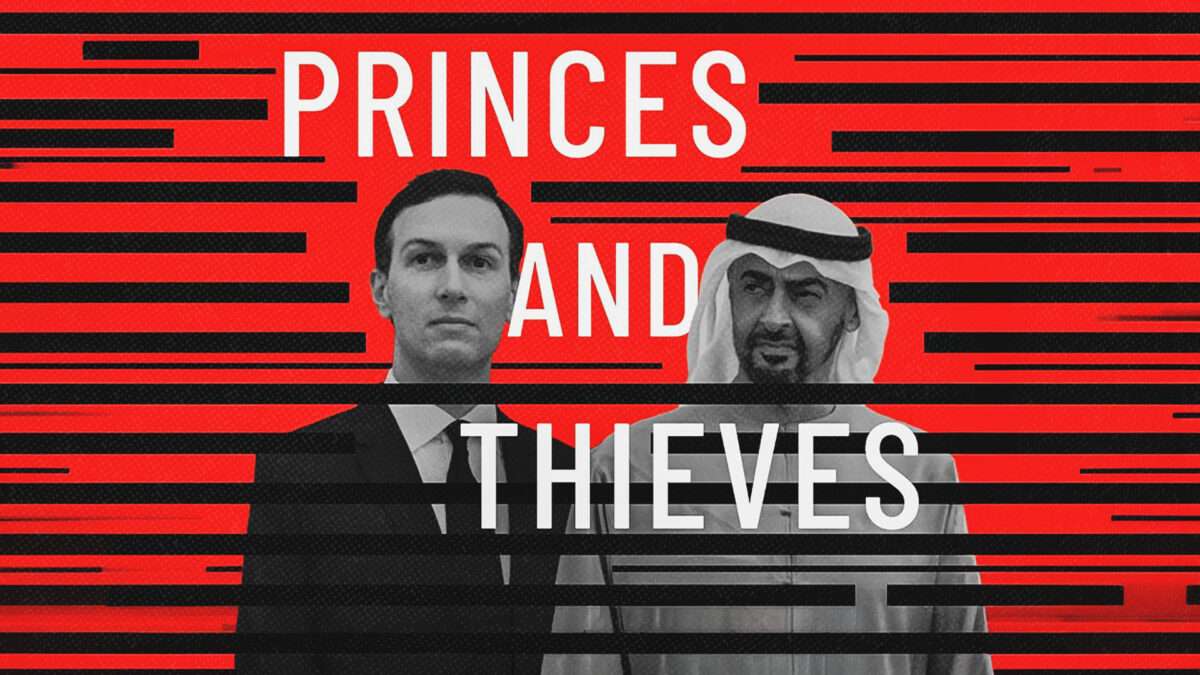
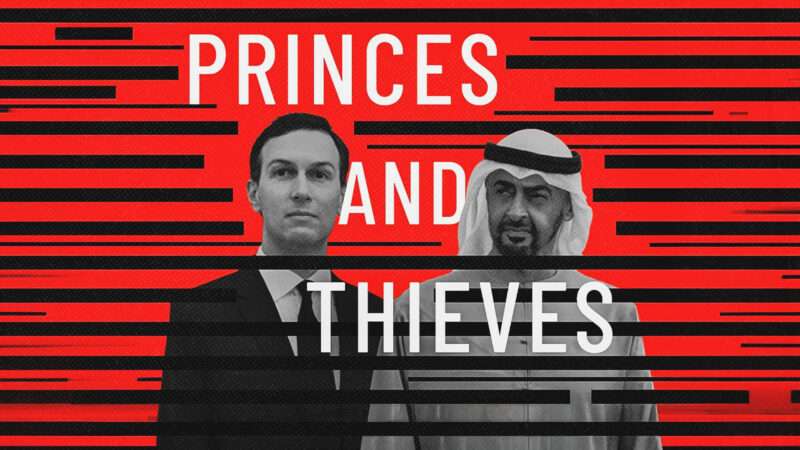
Cover of 'Princes and Thieves' with Jared Kushner (on the left) and Mohamed bin Zayed (on the right) | Illustration: Princes and Thieves/Matthew Cole/Atria/One Signal Publishers/

Princes and Thieves, a new book by investigative journalist Matthew Cole, may open a rabbit hole into financial connections between Middle Eastern dictators and President Donald Trump's family. Cole accuses Emirati monarch Mohamed bin Zayed (MBZ) of sending billions of dollars to various mercenaries and political operators, including Jared Kushner, son-in-law to President Donald Trump. Cole's reporting combines well-documented connections with secondhand accounts from anonymous sources.

On Thursday, Vanity Fair published an excerpt from the book, reporting that Dutch military intelligence hacked into Kushner's phone in 2018 and discovered hundreds of millions of dollars in bank transfers connected to MBZ. Also on Thursday, Kushner published a letter from his lawyers to Cole categorically denying the "incredible and false" allegations in the book. "Mr. Kushner never accessed foreign accounts and always followed all rules and regulations and only pursued goals that were in the best interest of the United States as directed by the President of the United States," they wrote.

Cole had originally written on his blog that the book was scheduled for release on October 27, but the publication date was pushed forward over the weekend.

The book purports to tie Kushner to a vast web of Emirati influence operations around the world. In Cole's telling, which matches other journalists' accounts, MBZ wants to reshape the Middle East and eastern Africa into an alliance of U.S.-backed dictatorships, where "tolerance" is enforced through high-tech surveillance and "democracy" is a synonym for terrorism. MBZ's use of mercenaries in pursuit of these goals is well-documented. So is Kushner's personal affinity with the Emirati monarch and his business ties with the Arab monarchies.

Soon after Trump won the 2016 election, MBZ held a widely reported meeting with Kushner. According to the book—and according to much of that earlier reporting—the monarch complained about the Obama administration's failure to back Arab regimes against popular revolutions, its decision to end the Iraq War, and its diplomacy with Iran.

Going much further than past reporting, Cole now claims Kushner was personally involved in MBZ's mercenary operations. MBZ and Saudi Crown Prince Mohammad bin Salman put a collective $2 billion into Emirati and Israeli bank accounts which were managed (but not technically owned) by Kushner, according to Cole's sources. Those same sources claim that parts of this secret "slush fund" went to Libyan warlord Khalifa Haftar, American military contractor Erik Prince, and Cuban hitman Felipe Vidal.

Haftar, a former CIA asset, became a general in Libya's 2011 revolution and then attempted to overthrow the new government with Emirati backing in 2014. Despite a 2020 ceasefire, his forces continue to control much of Libya. Prince, founder of the military contractor formerly known as Blackwater, moved to the UAE and helped build a secret army of Colombian mercenaries. He sued Cole for defamation after Cole reported on Prince's role in helping Haftar, but a judge threw out the case. Cole's sources claimed that Vidal, a self-described "hit man," helped the United Arab Emirates (UAE) fake an Iranian attack on oil tankers in May 2019, meant to provoke Trump into war.

Kushner's lawyers have denied any relationship with any of those three men, apart from a single meeting with Prince after the 2016 election. (According to Cole, both Vidal and Prince refused to comment for the book.) The position of the U.S. government is that the May 2019 incident was a genuine Iranian attack, not an Emirati false flag.

After the Vanity Fair article was published last week, Israeli negotiator Gershon Baskin pointed out in The Jerusalem Post that the Central Bank of Israel "does not offer private banking services to individuals," which would make it impossible for Kushner's money to be deposited in the Central Bank of Israel, as Cole claimed. The book addresses that argument, claiming that the money was deposited "in what would appear to be a government account," with Kushner and Israeli Prime Minister Benjamin Netanyahu jointly authorizing transactions.

The Abraham Accords, which include an alliance between Israel and the UAE, have often been touted as a way for the U.S. to "spend less time and less resources in the Middle East," in the words of Vice President J.D. Vance. But Cole argues that the UAE actually used its alliance to entangle American interests in a future conflict. The book states that Kushner set up "a rainy-day defense fund" for war with Iran, using Emirati money deposited in a separate Central Bank of Israel account.

Cole also claims to have evidence that Kushner was on the take from the UAE's regional frenemy Qatar. In 2017, the UAE and Saudi Arabia issued an ultimatum for Qatar to rein in its foreign policy and blockaded the small nation. The Intercept later reported that Kushner's father had sought a Qatari bailout for the family real estate business just before the crisis, and the Qatari-linked company Brookfield ended up providing the needed investment in August 2018, leading to a congressional investigation into the deal.

Democrats are still digging for information on Kushner's business ties to Qatar, but three sources told Cole that the Qatari royal family authorized and paid for the Brookfield deal. The Qatari government "asked the White House how to resolve the blockade. And the Kushners kept saying, 'We have this great property that needs investment.' Eventually, the Qataris realized the only way to settle the blockade was to buy the building," a former U.S. intelligence officer said.

Kushner's lawyers write that they have "no evidence that Qatar impacted the investment decision. Any suggestion of his involvement in the transaction or any allegation of quid pro quo with the Qatari government is false and defamatory."

Other parts of the book are better-documented. Cole obtained a draft of Prince's autobiography, text messages from one of Prince's colleagues, and emails from Emirati government adviser George Nader, who was convicted of fraudulently funneling money into Hillary Clinton's 2016 presidential campaign. If nothing else, the book is a comprehensive account of the UAE's unofficial empire and its American ties. But the most explosive claims about Kushner's involvement in those activities rest on anonymous sources, making it a matter of Cole's word against Kushner's.

"I considered the responses from Kushner's attorneys carefully and consulted multiple sources about them. During the five years I have spent working on this book, I have tried to keep an open mind, and I am confident that my reporting is accurate. Kushner's lawyers' responses did not change that conclusion," Cole writes in the book's epilogue.

The post New Book Says Jared Kushner Funneled Money to Middle East Mercenaries. Kushner Denies It. appeared first on Reason Magazine.
  •  

America Is Spending Billions To Fight the War on Terror in Africa. The Terrorists Are Winning.

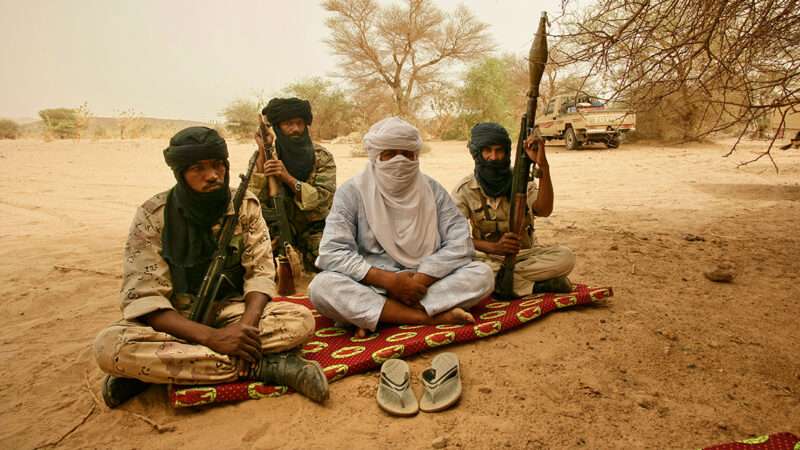
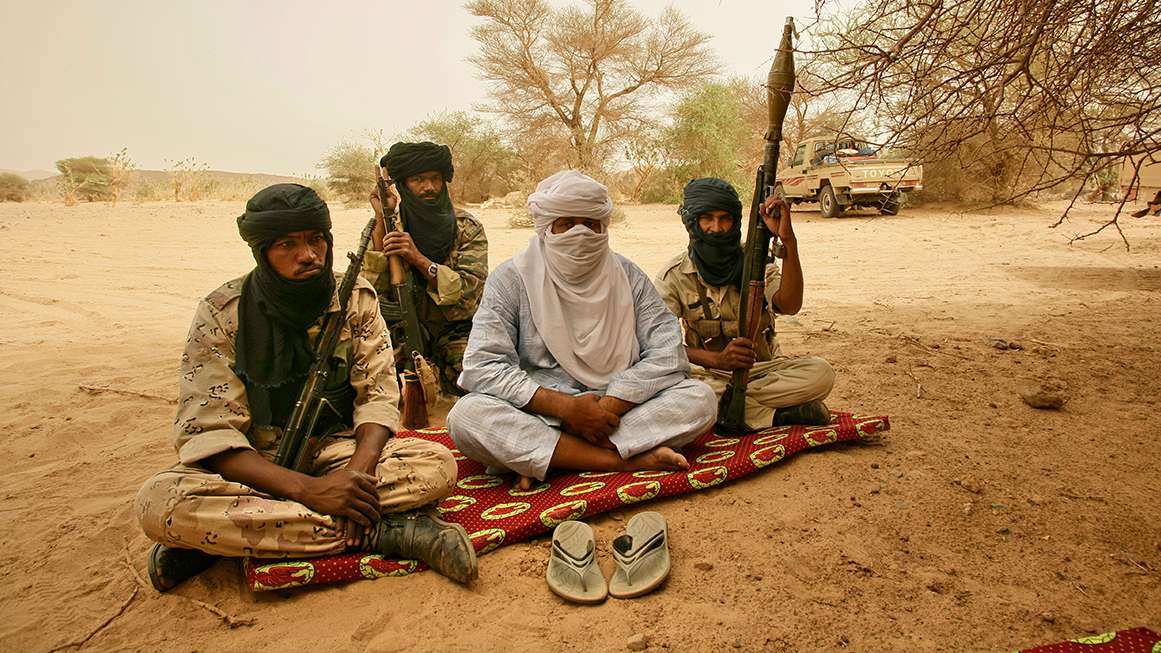
A group of men with head coverings and weapons sit on a run | Photo: Iyad Ag Ghali; Patrick Robert/Corbis/Getty

The first state to be ruled by Al Qaeda might not be in Afghanistan or the Arab world—and its ruler might be a former whiskey-drinking rock star. In April, the Group for the Support of Islam and Muslims ("JNIM" in Arabic) led an uprising in the African nation of Mali, killing Defense Minister Sadio Camara, breaking open a prison holding thousands of inmates, and besieging Bamako, the capital. The fighting was still underway as of August.

Mali is not the only place threatened by a JNIM takeover. The West African branch of Al Qaeda is active in a belt of countries known as the Sahel. Its leader, Iyad Ag Ghali, was the former percussionist for the rock band Tinariwen. He now leads a campaign to stamp out the "music of Satan." Perhaps the one saving grace for Sahelian metalheads is that puritans can't get along with each other: The JNIM is locked in a war with the rival Islamic State Sahel Province.

The Sahelian civil wars are a testament to the failure of the global war on terror. Despite spending $355 billion on African counterterrorism from 2001 to 2021, the U.S. government has been unable to stop Al Qaeda or related Islamist groups from taking root across the continent. A study by the Pentagon's Africa Center for Strategic Studies found a 101,300 percent increase in terrorism fatalities from 2002 to 2022, mostly concentrated in the Sahel and Somalia.

These wars demonstrate that the solution to terrorism isn't maximum violence. President Donald Trump launched four times as many airstrikes against Somalia in his first 18 months of his second term as the U.S. did over the past four years combined. U.S. military aid has flowed to repressive governments across Africa with little respect for their citizens' rights. Since 2020, there have been coups d'etat across the Sahel by military men promising that they can do the dirty work that civilian leaders are afraid of. Many of them were trained by the U.S. government. The new regimes have imported Russian mercenaries with a reputation for brutality and no real restraints on their activities.

"People need to forget about the question of democracy," Ibrahim Traoré, leader of Burkina Faso, declared in April.

Instead of restoring order, these heavy-handed tactics have caused more chaos. The military juntas in the Sahel are plainly losing to the JNIM. While the Russian fighters have no difficulties massacring civilians or mutilating prisoners, they have found it much harder to face people who can actually shoot back, facing repeated battlefield humiliations. Meanwhile, the U.S.-led campaign against al-Shabab, the Somali branch of Al Qaeda, has stalled out despite the heavier use of airpower.

The African war on terror began shortly after the U.S. campaigns in Afghanistan and Iraq. To some extent, the U.S. created the very threats that it is trying to fight in Africa. Somalia had been at civil war since the fall of socialism, and in the early 2000s, the CIA began funding Somali warlords to stop the rise of Islamist revolutionaries. The (relatively moderate) Islamic Courts Union took over anyway in 2006—uniting Somalia for the first time in more than a decade—and the U.S. encouraged neighboring Ethiopia to invade. When al-Shabab emerged to fight the Ethiopian invaders, the U.S. tapped a former leader of the Islamic Courts Union to lead a new Somali government.

Soon after the Ethiopian-Somali war, President George W. Bush created the Pentagon's Africa Command, and Congress budgeted $500 million in aid to militaries in the Sahara Desert and the Sahel. At the time, the main Islamist threat to that region was a mostly defeated insurgency in Algeria.

But the Libyan civil war in 2011 created terrible new monsters. Soon after President Barack Obama intervened in support of the Libyan revolution, weapons and hardened fighters from Libya flooded the ethnic Tuareg region of Mali, which declared independence a few months later. Soon after, Al Qaeda and its affiliates took over the Tuareg rebellion. With the Malian government coming close to collapse, France intervened in January 2013 and made many of the same mistakes that the U.S. did in its own war on terror.

Ag Ghali, the current leader of the JNIM, got his start as a Tuareg nationalist. A leaked U.S. embassy cable from 2008 called him a "proverbial bad penny" who enjoyed "playing both sides" and had ties to Islamist and secular nationalist rebels. By the time of the French intervention, he was fully committed to Islamic theocracy. In 2017, he united Islamist rebels across the Sahel under the banner of Al Qaeda. That same year, four U.S. Special Forces troops were killed in Niger by the Islamic State group, which was busy uniting Ag Ghali's rivals.

Despite the failures of the Sahelian governments to stop Ag Ghali—and their willingness to ally with Russia—the Trump administration is eager to double down on supporting them. The U.S. government increased intelligence sharing with Mali in 2025, and as of July it was considering a direct military intervention against the JNIM, according to The Washington Post. But every American escalation on the continent has produced the enemy that the next one had to fight.

The post America Is Spending Billions To Fight the War on Terror in Africa. The Terrorists Are Winning. appeared first on Reason Magazine.
  •  

Border Cops Seize Nurse's Phone Filled With Psychiatric Patient Information

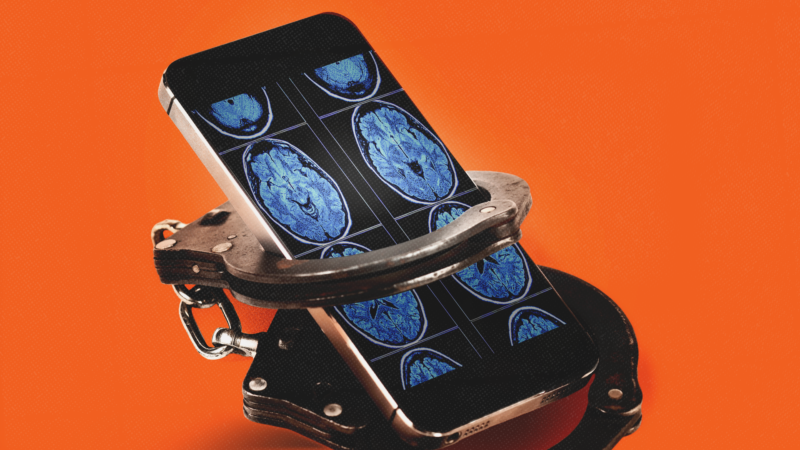
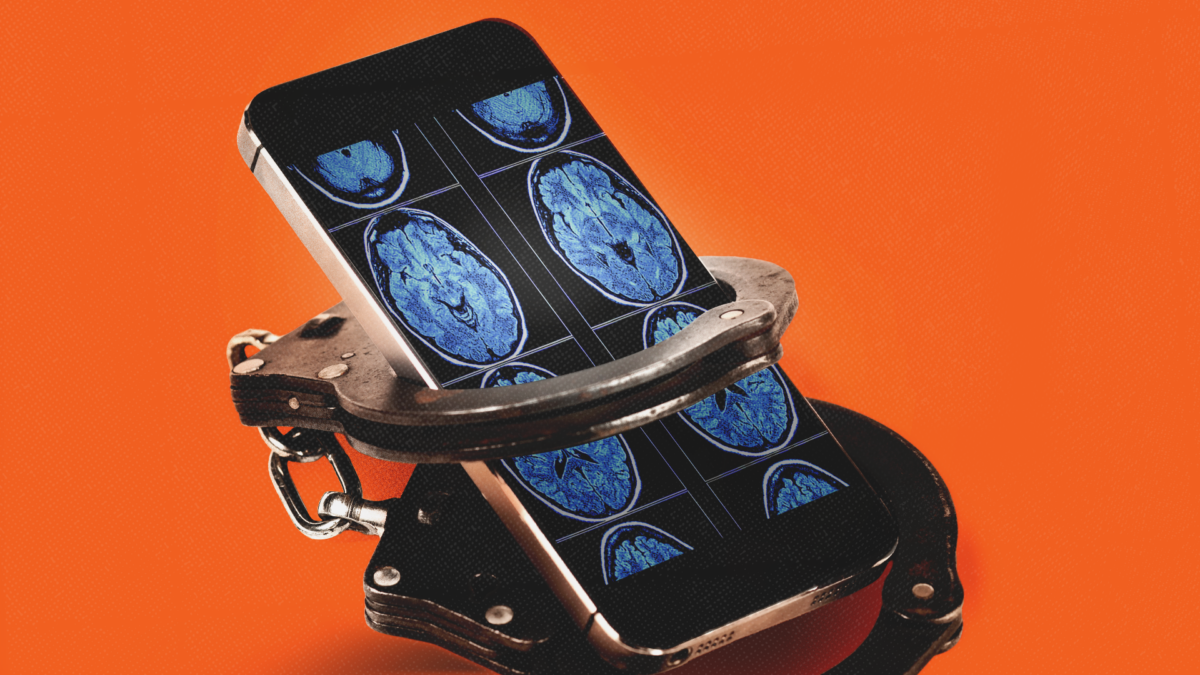
A smartphone in handcuffs | tescka1/Magnific/Cammeraydave/Dreamstime/Mariam Zakaidze

U.S. Customs and Border Protection (CBP) seized a psychiatric nurse practitioner's phone filled with confidential patient information at Washington Dulles International Airport last week, according to a new lawsuit. Muhammad Numaan Imam alleges that CBP agents told him that they could take his electronics the "easy way or the hard way" and refused to let him talk to his lawyer because "we are the authorities at the border."

The lawsuit by the American-Arab Anti-Discrimination Committee (ADC) may be the first time CBP is taken to court over seizing people's medical records. ADC is also helping Palestinian-American lawyer Jay Shehadeh and Jewish-American journalist Max Blumenthal sue over their devices being seized.

"We're seeing a pattern where officers use their border-search authority not to advance any legitimate border-related purpose, but to punish individuals for refusing to provide access to their personal electronic devices and for having expressed views the government didn't approve of," ADC president and legal director Jenin Younes wrote in a statement emailed to journalists.

While Shehadeh and Blumenthal claim that CBP is retaliating for their political views, Imam argues that he faced threats and retaliation with the simple act of asserting privacy rights. Both Imam and Shehadeh were considered "trusted travelers" under the Global Entry program, which allows American citizens who undergo a background check to pass through an automated fast track at airports and borders.

Asked by Reason, a CBP spokesperson did not address any specifics of the case, giving only a generic statement about how "CBP's ability to lawfully inspect electronic devices crossing the border is integral to keeping America safe in an increasingly digital world."

The border exemption to the Fourth Amendment gives U.S. authorities the power to look for "contraband" crossing into the country without a warrant. There is a mess of contradictory court rulings on whether that power includes searching travelers' electronic data, but in practice, CBP can simply seize the physical devices that the data live on.

And the agency often lies outright to travelers whose data that it wants to search, as documents recently released in the case of Atlanta protester Samuel Tunick show. CBP agents gave Tunick a false reason for detaining him and falsely promised that he would be allowed to leave with his phone if he cooperated, even though they were under orders to seize his devices no matter what. Tunick is now on trial for allegedly tricking the CBP agents into deleting his data to avoid a search.

"It's happening to a lot of people, and it's being used in this coercive, inappropriate way," Younes tells Reason.

The problems for Imam, who lives in Virginia, actually began at another border. He was heading to Istanbul on Saturday for a family vacation with his Pakistani wife, Khadijah Mansoor, and their 1-year-old child. Turkish authorities demanded to see Mansoor's U.S. green card, which she had forgotten at home, and wouldn't let her enter on her Pakistani passport alone. The family had to board the next flight back to Washington. On their arrival, CBP naturally wanted to know why they had been turned away and why Mansoor didn't have her green card.

But things took a weirder turn after agents told Imam he had been "flagged" for undisclosed reasons, pulled him into a separate room, and began questioning him about his social media use and group chats, according to the lawsuit. (Imam tells Reason that they asked about group chats in general, not any specific group chat.) When agents asked for the password to Imam's phone, he told them that he uses the phone to communicate with and manage cases for patients at the rehab facility where he works. The Health Insurance Portability and Accountability Act (HIPAA) strictly prevents doctors and other medical staff from sharing patient data without consent, so Imam asked to speak to a lawyer.

"Your lawyer cannot do anything. We are the authorities at the border," Imam recalls one agent saying. A supervisor then told the couple that CBP could take all of their electronics the "easy way or the hard way," and that the devices could take months to get back, Imam and Mansoor claim.

CBP's own internal policy says that devices should "ordinarily" be held for less than five days. The same policy includes vague guidelines for dealing with medical information: "Possibly sensitive information, such as medical records and work-related information carried by journalists, shall be handled in accordance with any applicable federal law and CBP policy." Imam says that the CBP agents claimed to have software for filtering out HIPAA-protected data.

After four hours in detention, CBP took the family's phones and laptops and let them go. The next day, Imam got an email stating, "We regret to inform you that your membership in Global Entry has been revoked for the following reason(s): You do not meet the Trusted Traveler standard." In addition to both Imam and Mansoor losing valuable work data, the lawsuit argues, Imam is now unable to prescribe certain psychiatric medications to his patients, because of federal regulations that require phone verification.

The lawsuit demands the return of the devices and data under Rule 41(g) of federal criminal procedures, which requires the government to hand back property that is no longer necessary for a criminal investigation. ADC has also filed these motions in Shehadeh and Blumenthal's cases. (CBP gave back Blumenthal and Shehadeh's phones almost immediately afterward, but ADC is continuing to press for records of what they did to those phones in custody.) Younes filed a brief on Blumenthal's behalf in support of an upcoming Supreme Court case over whether CBP can continue these electronic searches.

"The devices are neither contraband nor subject to forfeiture, and, to Plaintiffs' knowledge, there is no pending criminal investigation, criminal prosecution, or warrant authorizing their continued seizure or search," Imam's lawsuit states. "The Fourth Amendment does not permit the border-search exception to become a means of coercing compliance through the threatened or actual confiscation of travelers' personal property."

The post Border Cops Seize Nurse's Phone Filled With Psychiatric Patient Information appeared first on Reason Magazine.
  •  

Homeland Security Lied About Child Porn To Search Activist's Phone

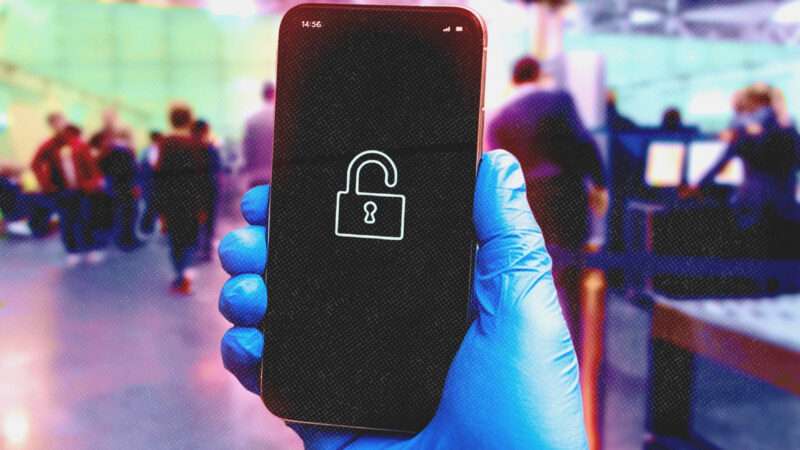
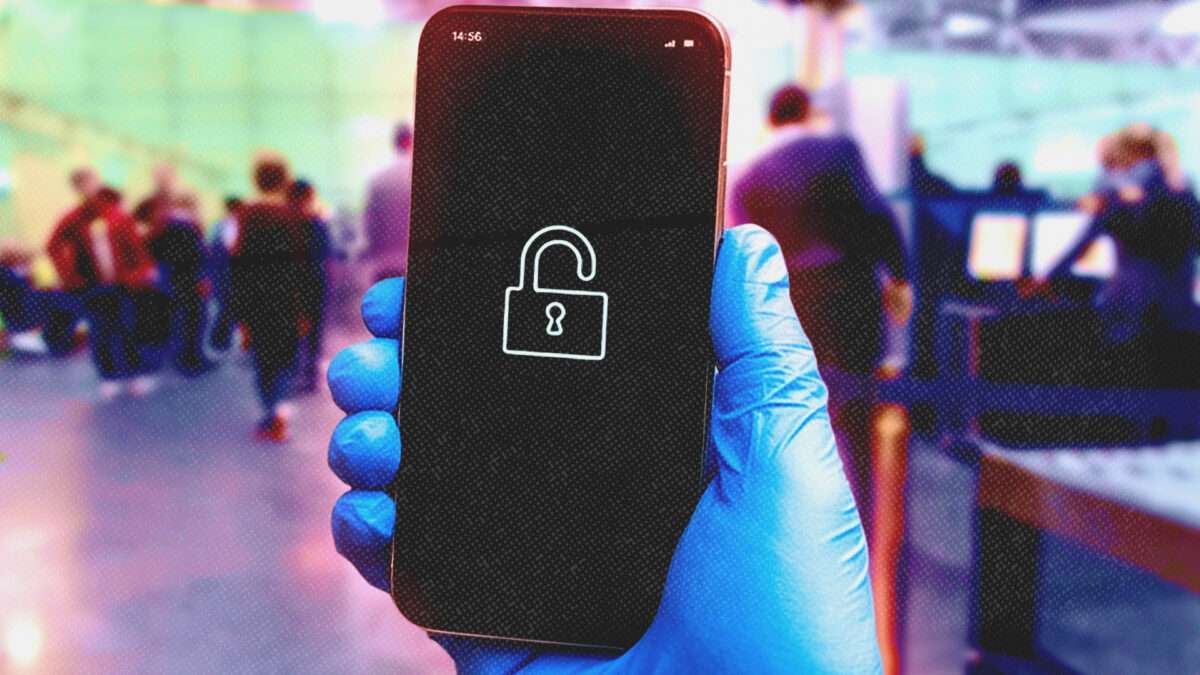
A locked smartphone | Illustration: Africa Images/Envato (AI-modified)/Flowertiare/Dreamstime

One of the unfortunate quirks of the American system is that you can't lie to the government, but the government can lie to you. Samuel Tunick found himself on the receiving end of this setup last year at Atlanta International Airport. When agents from the Department of Homeland Security (DHS) asked for his phone password, he allegedly gave them a self-destruct code that wiped his data. Tunick now faces five years in prison for destroying evidence.

It turns out that the feds were lying to Tunick the entire time. A new court filing, first reported by 404 Media, shows that the DHS had sent out an order to seize Tunick's phone over his involvement in environmentalist protests in Atlanta. When he landed at the airport, however, agents told Tunick that they were looking for "kiddie porn" and he would be allowed to leave with his phone if he cooperated. They also repeatedly denied him access to his lawyer when he asked.

"There can be no real debate that if law enforcement had acted similarly elsewhere in Atlanta, their actions would be unconstitutional. But the government says it was entitled to act this way because Mr. Tunick was returning from an international vacation" in the Dominican Republic, his lawyers wrote in the filing, which includes internal DHS communications and excerpts from his interrogation video.

U.S. law recognizes a "border exception" to Fourth Amendment privacy rights, allowing federal agents to search incoming travelers for contraband. U.S. Customs and Border Protection (CBP) claims that this exemption also allows them to hold travelers for questioning and search their electronic data. Tunick's case reveals just how widely the agency stretches this loophole.

A few hours before Tunick landed, Homeland Security Investigations (HSI) agent Travis Mcghie emailed the CBP station in Atlanta with his photo and information, stating that he is under investigation for "suspected terrorist activities." (Tunick is involved in Save the Atlanta Forest, also known as Stop Cop City, a protest movement against a local police training center.) The email asked CBP to "conduct a 100% baggage exam, retain all electronics and collect passcodes," stating that the HSI will be at the airport to conduct an interrogation.

Pulled into the secondary screening room, Tunick "almost immediately" told CBP officers that "I don't really want to speak without a lawyer any more," according to the filing, which cites the interrogation tape. He would ask for a lawyer multiple times.

The agents asked Tunick if he had "kiddie porn" on his phone and stated that "because you're refusing to talk, we have the authority to go through your phone to see what we're looking for." One of them, Latoya Castro, told Tunick that "either you can give us your password so that we can go through it no problem, or you can refuse to do that, unfortunately, we will have to seize your phone."

Both of those statements were a lie, of course. The HSI's email had asked CBP to take Tunick's phone, whether or not he cooperated.

The lie about child porn may not only have been meant to intimidate Tunick. While there are contradictory lower court rulings about the border search exemption, some courts have ruled that the CBP can only search electronics for "digital contraband," or files that are themselves illegal. A search for child sex abuse material would be on stronger legal ground than a search for mere evidence of other crimes.

Tunick was using GrapheneOS, a secure phone system that allows users to set both a real password and a "duress password" that wipes out all data when entered. The interrogation tape shows his phone appearing to reset after he gave the officers a passcode. HSI agent Nathan Burnham and FBI agent Andrea Coble then entered the room.

"You are not under arrest. Once these gentlemen are done with you, pursuant to your entry into the country, you're free to leave," Burnham said, referring to the CBP officers.

Tunick's lawyers argue that the judge should throw out the phone password Tunick provided and everything that resulted from entering it as an "involuntary" response made under "unlawful interrogation," because the CBP agents did not read Tunick his Fifth Amendment rights and ignored his multiple requests to consult with his lawyer before answering their questions.

The CBP claims that secondary screening at the border doesn't count as a criminal investigation, so detainees don't have the same rights as criminal suspects. "Since the international arrivals inspection is an administrative function, CBP policy and federal regs do not permit the presence of lawyers during secondary examinations," a spokesman told Reason earlier this year.

But Tunick's lawyers insist that his experience was "far outside" a normal border crossing: He was accused of a serious crime to his face, faced an investigation for a different serious crime he didn't know about, and clearly could not leave the situation until he gave information to government agents.

"I hope people understand that the charges against me are meant to intimidate people against protecting their data and their privacy, and the government hopes to set a precedent that no one has the right to privacy," Tunick told 404 Media. 

Defend the Atlanta Forest, the movement that Tunick is involved with, has been a major nuisance for authorities in Georgia. Protesters attacked and burned construction equipment throughout 2022, and police shot a protester in 2023 under unclear circumstances, claiming that they were fired at during a raid.

The Trump administration has brought down the federal government against the movement. In June 2026, the Department of Justice brought federal charges against two alleged arsonists, citing National Security Presidential Memo 7, which directs the feds to go after left-wing domestic terrorism.

But beyond the email line about "suspected terrorist activities," there is no indication of what specific crimes the feds suspected Tunick of, or why they suspected him. And the whole setup of the interrogation was designed to hide those answers. In fact, instead of charging Tunick under typical obstruction or evidence-destruction laws, federal prosecutors chose a rarely-used statute that doesn't require them to disclose what the underlying investigation was about.

"Many times the government wants to highlight what it was trying to investigate because that ups the stakes on what the defendant was doing," former prosecutor Daniel Richman told The New York Times. "This is a case where I think they're trying to avoid exactly that by focusing only on the destruction, and not what the investigation was about." 

The post Homeland Security Lied About Child Porn To Search Activist's Phone appeared first on Reason Magazine.
  •  

The European Union Wants To Punish People for Their Speech—Without Even a Trial

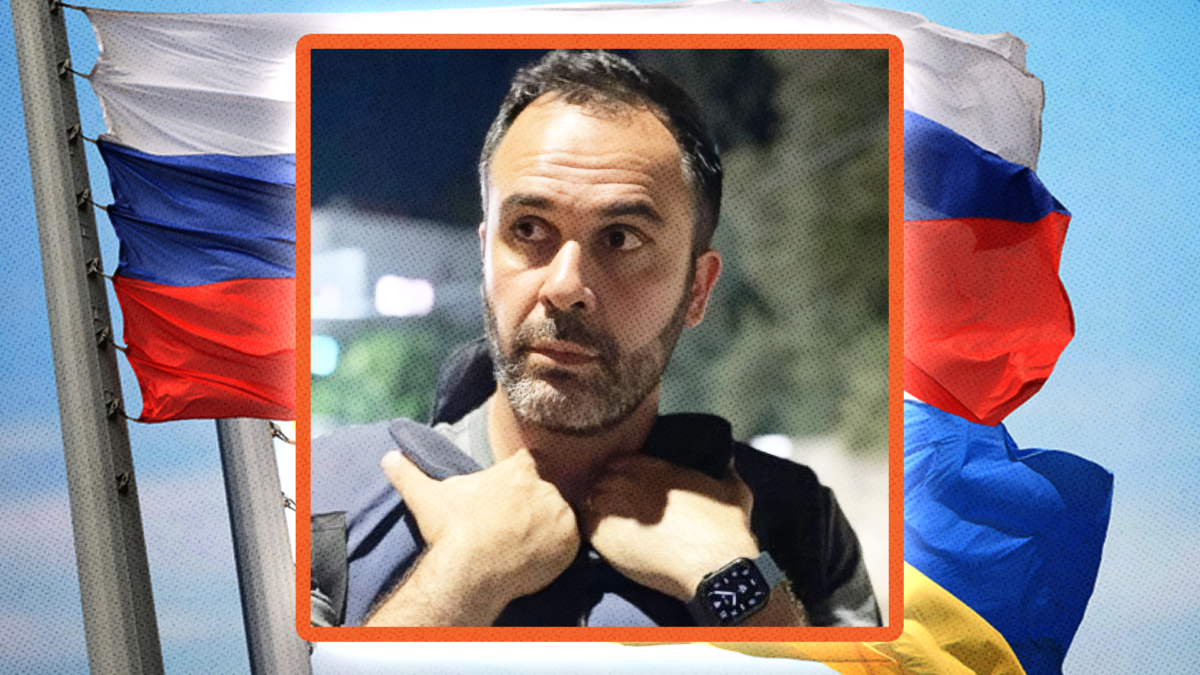
Hüseyin Doğru | Dmitry Shirinkin/Dreamstime/Hussedogru/X

The European Union claims that "the fundamental right to freedom of expression" only applies to journalists "acting in good faith," and that authorities do not have to give due process before freezing people's bank accounts, as these sanctions are "temporary and are not criminal in nature," according to a legal letter shared by a sanctioned journalist.

Last year, the European Union blacklisted 21 people for allegedly spreading Russian propaganda, banning them from doing business in Europe. One of them, Hüseyin Doğru, was falsely listed as a Turkish citizen living in Istanbul. In fact, Doğru is a German journalist in Berlin, making him the first European citizen on European soil to be sanctioned this way.

It was like being sentenced to "civil death," Doğru told American journalist Chris Hedges. He was banned from holding a job in Europe or having a European bank account, and authorities have restricted Doğru to a €506 ($567) per month allowance from his own money. "The sanctions are designed for people outside of Europe, so they don't really know how that should function with me, because I'm a European citizen and I'm living in Europe," Doğru told Hedges.

Last month, the civil libertarian Wau Holland Foundation hired lawyers to contest the sanctions against Doğru. And earlier this month, the Council of the European Union sent a response letter, which Doğru shared on social media, promising to escalate the case to the E.U. General Court. Although the council conceded to Doğru that he is not a Turkish citizen living in Turkey, it still insisted on the authority to punish him for his speech.

The council quoted a 2022 court case between the Russian news outlet RT and several European countries: "The protection of the right of the media and, more particularly, of journalists to impart information on issues of general interest is subject to the proviso that they are acting in good faith and on an accurate factual basis and provide 'reliable and precise' information in accordance with the ethics of journalism."

Doğru's lawyers insisted that he should be treated as innocent until proven guilty. But the council responded that sanctions fall short of a criminal punishment, so any complaint about a "violation of the presumption of innocence is therefore unfounded." In other words, because he is not accused of a crime, Doğru has fewer rights than a criminal suspect.

"People need to understand sanctions are an extrajudicial measure. They're extrajudicial. There's no court. There is no hearing, no evidence, there is no sentence by the court, nothing," Doğru told Hedges. "When you're sanctioned, you are not informed….The day when I was sanctioned, me and my wife, my wife was pregnant back then, we went to the pharmacy to buy medicine for her, and her cards did not work."

The original blacklisting decision accuses Doğru of supporting "actions by the Government of the Russian Federation which undermine or threaten stability and security in the Union" by spreading "false information on politically controversial subjects with the intent of creating ethnic, political and religious discord amongst its predominantly German target audience."

Doğru and his wife, British journalist Lizzie Phelan, previously worked at the Russian-funded publication Redfish. A few months after the Russian invasion of Ukraine, he split off to create a new website called red.media, insisting to The Left Berlin that "we are not Russian. We are not Kremlin. red.media is not funded by Russia or any other state." In the same interview, Doğru called Russia an "imperialist" regime.

But in September 2024, a Biden administration "fact sheet" on Russian propaganda offhandedly mentioned red.media, citing a hit piece on Doğru by the German newspaper Tagesspiegel. Doğru told Hedges that the U.S. fact sheet created a circular logic in German media: "They said red.media is Russian because [U.S. Secretary of State Antony] Blinken said so. But what they never said is that Blinken is referring to your articles where you never say it like that. You say there is a suspicion, it might be so."

Doğru shut down red.media in May 2025 due to the bad press. The European Union sanctioned him a few weeks later. Doğru's lawyer, Alexander Górski, told the Frankfurter Allgemeine earlier this year that the European Union didn't "even attempt to make an evidentiary case" about any ongoing connection to Russia.

The blacklisting decision also claimed that, during a pro-Palestinian student protest at Humboldt University in Berlin, red.media "coordinated with the occupiers to disseminate images of their vandalism—which included the use of Hamas symbols." Doğru told Hedges that these accusations are an attack on journalists' freedom to do their jobs.

The European Union does not have the same protections for the freedom of the press as the U.S. Constitution. Earlier this year, the Curia of the European Union ruled that simply reposting clips from Russian media could be a violation of European sanctions, even if no money changes hands, something that is explicitly exempted from U.S. sanctions under the Berman Amendment.

Still, U.S. authorities have tried to push the limits of international sanctions to censor speech. The Biden administration told an American nonprofit that "the provision of a platform for [the sanctioned individuals] to speak" was illegal, backing down after the nonprofit sued.

And the Trump administration sanctioned Italian academic Francesca Albanese for her "lawfare" calling for the prosecution of Israeli leaders and a boycott of Israeli industries. In addition to freezing her bank accounts, the sanctions forced Columbia University researchers to cut off their relationship with Albanese, and Georgetown University to close her email account. 

In the same statement accusing red.stream of being a Russian front, the Biden administration announced sanctions on two Russian news agencies. "We encourage dissent, open debate, and free discourse. But we will not stand for attempts by state actors to carry out covert activities with the goal of hijacking that discourse," the statement insisted. "The ultimate goal of sanctions is not to punish, but to bring about a positive change in behavior."

The post The European Union Wants To Punish People for Their Speech—Without Even a Trial appeared first on Reason Magazine.
  •  
❌