❌

Reading view

Israel's unassuming President Herzog holds keys to next government

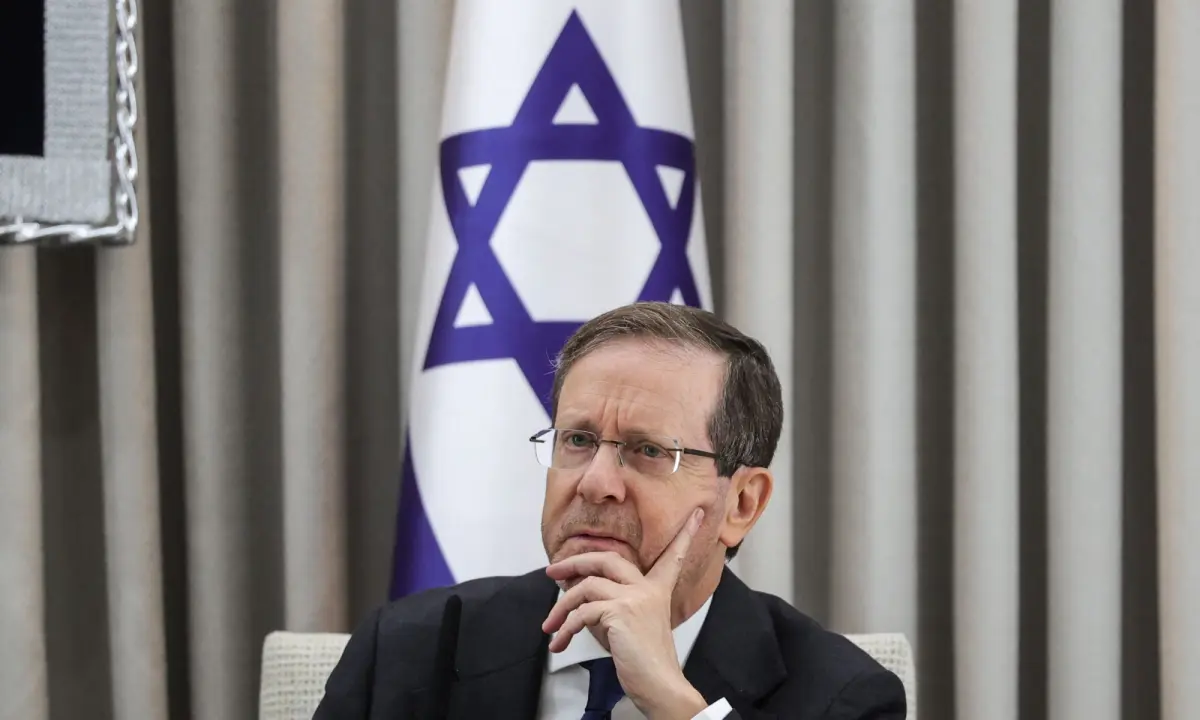
Israel’s President Isaac Herzog is known for his unassuming and mild manner, but all eyes will soon be on him as he decides who to task with forming the next coalition government.

The decision is a weighty one given that partial results from Tuesday’s elections show neither the camp of Prime Minister Benjamin Netanyahu nor that of his rival Gadi Eisenkot securing a majority in parliament.

After the official announcement of the results, Herzog will consult with party representatives and name a candidate who has the best chance of forming a government — not necessarily the one whose party holds the most seats.

Under the law, the president, whose position is otherwise largely ceremonial, is afforded broad discretion, with no guidelines on how to make the choice.

As votes were being tallied on Wednesday, Herzog said he would receive the official results the following week, after which consultations would begin.

“One thing must be clear, and I said this before the elections too: we must do everything we can, certainly after yesterday, to avoid another round of elections,” he said.

“So I expect everyone who comes here to come with an open mind.”

Ahead of Tuesday’s pivotal vote, Herzog acknowledged there would be tremendous pressure, but vowed not to let outside influence, notably from US President Donald Trump, sway his decision.

“I don’t think the president of the United States or anybody else can intervene in my discretion,” he told US outlet MS Now.

“It’s Israel’s democracy and Israel’s constitution, and that’s what counts for me.”

Herzog told MS Now he would do everything he could to avoid a fresh election — a possibility if neither camp can cobble together a coalition — including backing a unity government between Netanyahu and Eisenkot.

‘Worthy and wonderful man’

Modest, diplomatic and with a strong political pedigree, 66-year-old Herzog was sworn in as Israel’s president in 2021 after being elected by lawmakers in a landslide.

Yair Lapid, now a member of Eisenkot’s broad opposition bloc, praised Herzog at the time as “a worthy and wonderful man who is always focused on the good of the country and the Jewish people”.

As president, Herzog has faced pressure from Trump to grant Netanyahu a pardon in his long-running corruption trials, which could land him in prison if he loses power.

In April, Herzog invited Netanyahu’s lawyers and prosecutors to his residence for talks on the issue.

Before he served as head of state, Herzog was elected to Israel’s parliament in 2003 and held portfolios including housing, tourism and welfare.

In 2015, as leader of Israel’s centre-left Labour party, Herzog vied to oust Netanyahu as prime minister, presenting himself as a subdued, even-keeled alternative to the bombastic “Bibi”.

Netanyahu, now 77, is Israel’s longest-serving premier, having governed on-and-off for nearly two decades.

Tuesday’s election was seen as a referendum on the veteran leader’s tenure after he pushed the country sharply to the right and unleashed a wave of military campaigns in response to Hamas’s Oct 7, 2023 attack.

‘Bring a real change’

In an interview with AFP in March 2026, Herzog said the ongoing US-Israeli war with Iran marked a “historical juncture”.

“There comes a moment that after well over a generation of endless wars, bloodshed and terror, the root cause of it, which comes from Tehran, will be blocked and stopped, and the whole direction of the region will change,” he said.

“Let’s help us bring a real change so that there will be a different future in the region.”

He also stressed the importance of talks with Lebanon, with the two sides sitting down the following month for direct negotiations that are still ongoing.

Herzog’s Irish-born father, Chaim Herzog, served as head of Israel’s military intelligence, then went on to become its ambassador to the United Nations and finally its sixth president, from 1983 to 1993.

Herzog’s grandfather and namesake — Rabbi Yitzhak (Isaac) HaLevi Herzog — was the first chief rabbi for Israel’s Ashkenazis, the branch of Judaism whose roots are in eastern Europe.

At the helm of the Labour party, Herzog worked to steer its focus back to peace with the Palestinians.

He answers to the nickname “Bougie” — reportedly given to him by his Egyptian-born mother, who mixed the French word for doll “poupee” with its Hebrew equivalent “buba”.
  •  

‘God will surely provide’: Afghans compete for jobs, homes as millions return from neighbouring countries

As labourers gathered at a roadside in northern Afghanistan, Ghulam Sakhi Barat joined the search for work, with millions of new arrivals intensifying pressure for jobs and homes.

More than six million Afghans have returned from Iran and Pakistan in little over three years as the neighbouring countries have launched deportation drives after decades hosting those fleeing conflict.

With seven relatives to support in Sheberghan, the capital of Jawzjan province, Barat said “people are going hungry” as a result of the influx.

“Since the returnees arrived, there have been fewer jobs for local people,” the 83-year-old said, wearing a frayed waistcoat.

“Help is being given to the returnees, but no help is being given to the people who were already living here.”

Jawzjan may be hundreds of kilometres (miles) from the frontiers with Iran and Pakistan, but Afghans have travelled far and wide to reach areas they or their relatives fled years earlier.

Abdul Qader Hotak, 60, returned to the province after two decades in Pakistan, despite his family having no land or property in the area.

“My children used to go to school and study in Pakistan … Now, all of them collect rubbish to earn something,” he said, eight months after being deported.

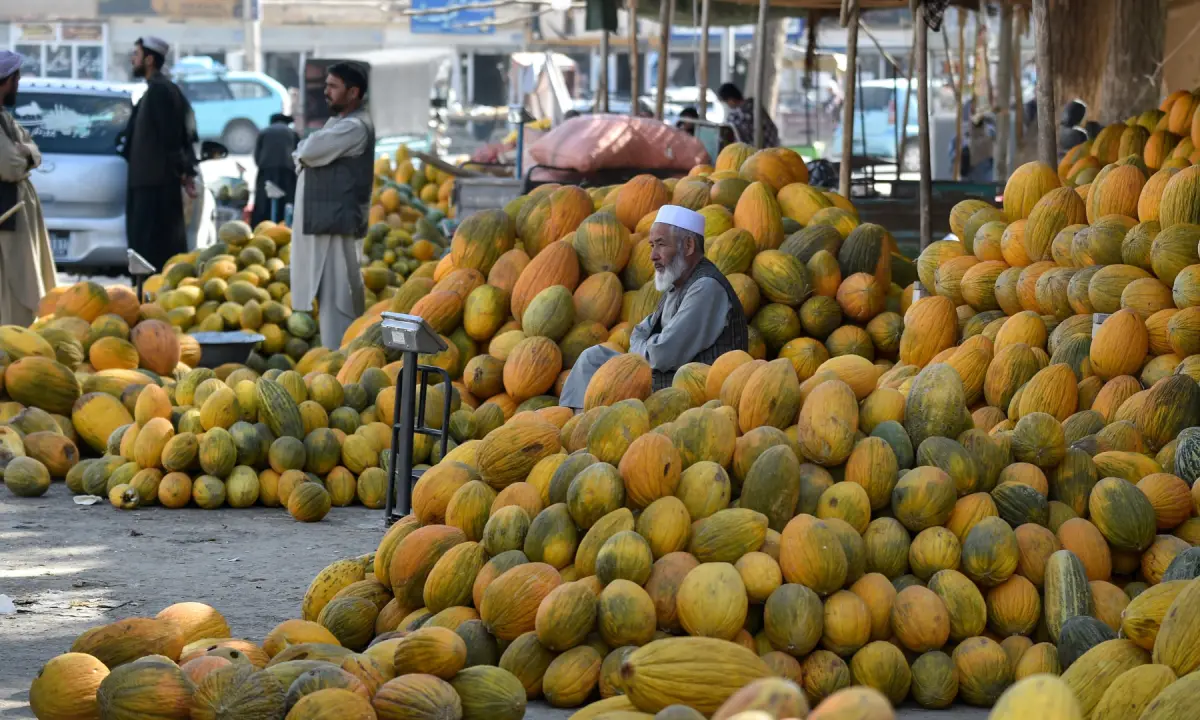
This photograph taken on October 20, 2026 shows a melon vendor waiting for customers at a roadside market in Sheberghan in Afghanistan’s Jawzjan province. — AFP

In one part of the province, Aqcha, the United Nations projects the population will surge by more than 26 per cent due to the mass returns, with water becoming a “critical flashpoint” in the drought-hit district.

Faqir Mohammad Khudabakhsh, a mason who has spent two decades going back and forth to Iran, said he is now only able to get work three days a week.

“Everyone who has returned to Afghanistan needs a place to live and a job, but they have neither,” the 54-year-old said, surrounded by fellow labourers in Sheberghan.

“Instead of spending money on food and clothes, they have to spend it on rent. I’m sorry to say this, but we are suffering from malnutrition,” he added, in paint-splattered khaki trousers.

Nearly one in three Afghans — 15.9 million people — are facing food insecurity at crisis levels or worse, according to UN data.

Competition for housing is fierce, with residents who spoke to AFP reporting rent surging by as much as 150 percent in recent years.

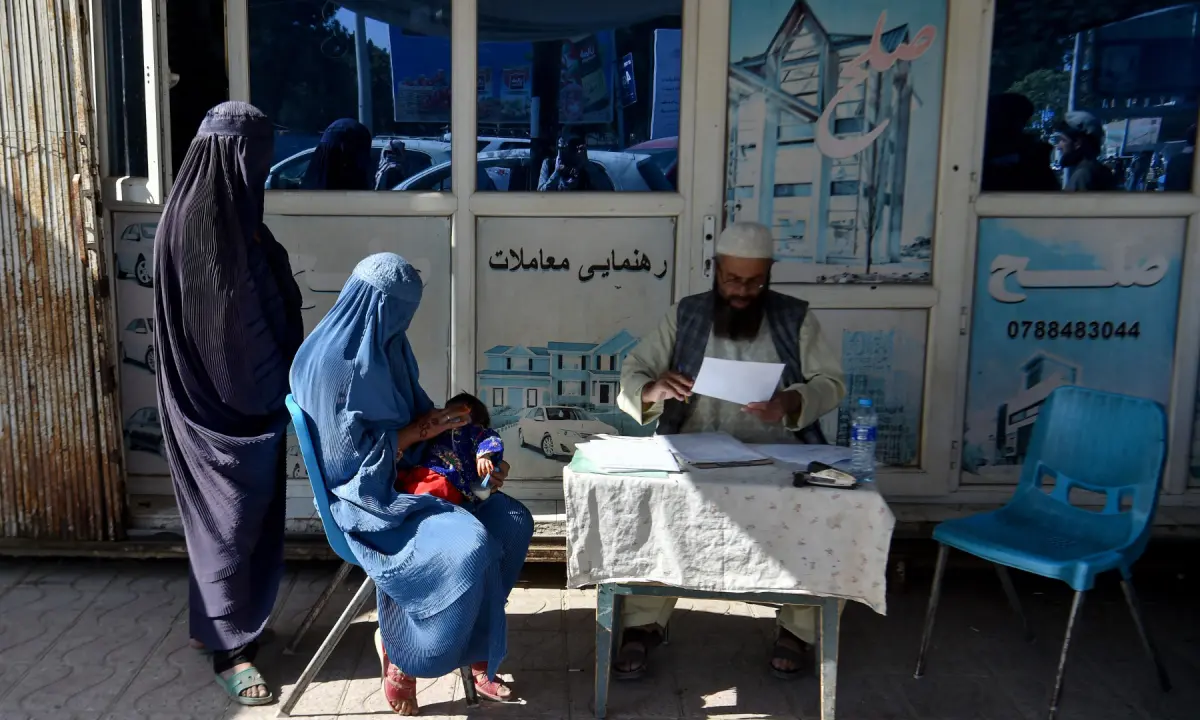
This photograph taken on October 20, 2026 shows burqa-clad women waiting at a petition writer’s desk in Sheberghan in Afghanistan’s Jawzjan province. — AFP

‘God will surely provide’

At the provincial information directorate, the director said there are “no unresolved issues facing local residents or returnees”.
“We have no unemployed people in Afghanistan, unless someone is simply too fond of their own comfort and chooses not to work,” said Saifuddin Muhtasem, sitting beside a globe and a bookshelf shaped like the map of Afghanistan.

The government has established a committee operating nationwide to control rent prices and prevent hikes, he said.

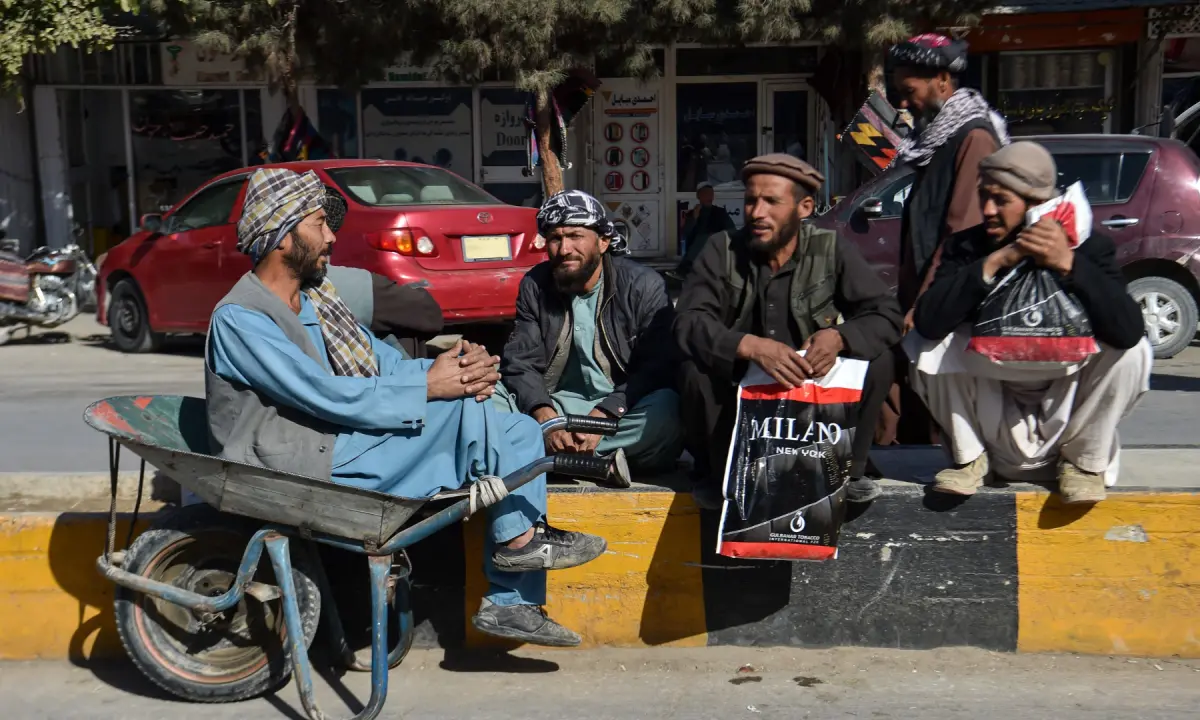
This photograph taken on October 20, 2026 shows daily wage labourers sitting along a road at Sheberghan in Afghanistan’s Jawzjan province. — AFP

But a 30-year-old civil servant told AFP he had never heard of such a committee and that his rent has doubled in 18 months.

“Economic problems have increased since the returnees arrived,” said Ahmadi, who only gave one name for security reasons.

Sustained support is vital for both the returnees and the communities hosting them, the UN warned in September.

“Competition over scarce resources risks fuelling grievances, increasing displacement and promoting instability,” said Georgette Gagnon, the deputy special representative of the UN mission in Afghanistan.

The challenges are compounded by prolonged drought in Jawzjan, where the air is imbued with dust and the landscape dotted with domed mud homes and camels grazing.

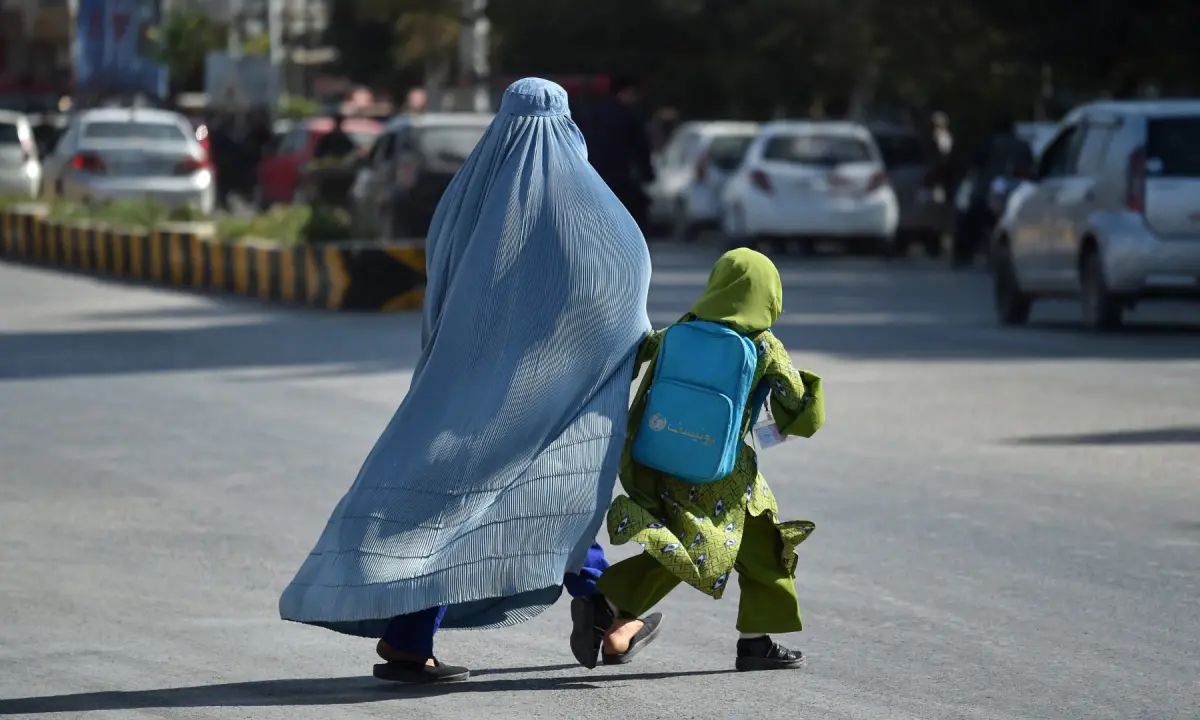
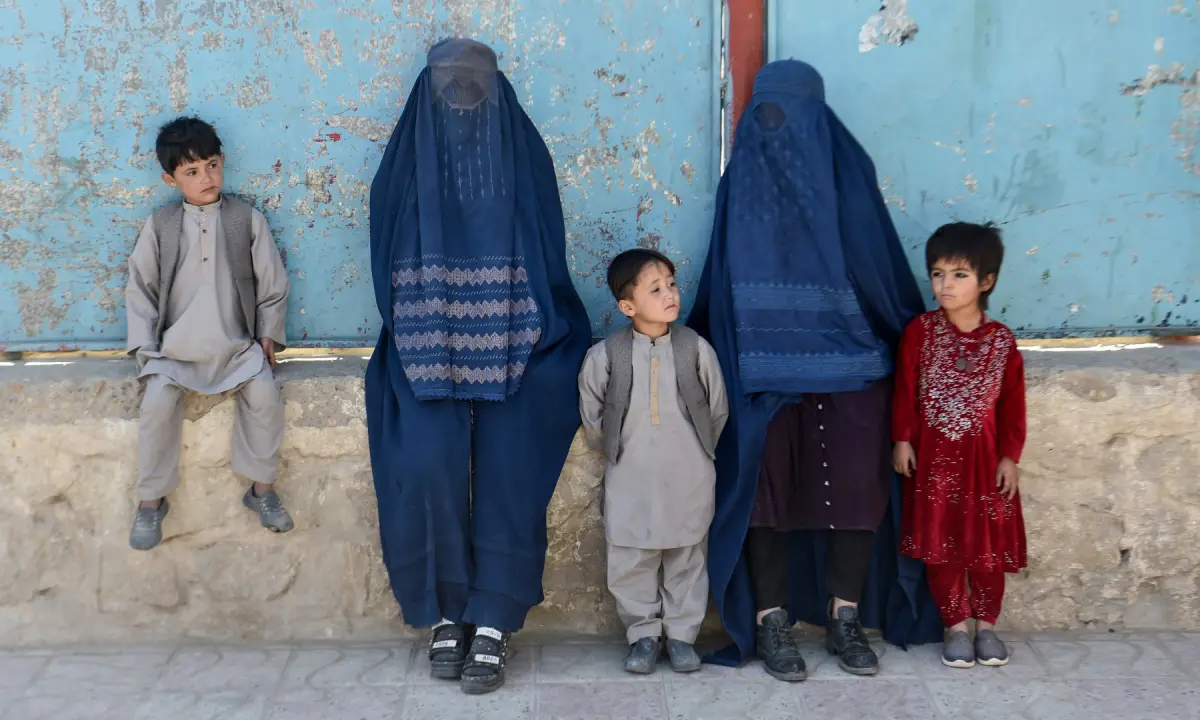
This photograph taken on October 20, 2026 shows a burqa-clad woman with a girl crossing a street in Sheberghan in Afghanistan’s Jawzjan province. — AFP

Most of the province’s water is now unfit for drinking or farming, said the information director, putting his hopes in a canal project which is expected to take another two years to complete.

“While the people of Afghanistan are not dying of hunger or thirst, they are in dire need of shelter,” said Muhtasem, who encouraged international organisations to come and build homes for returnees in the province.

“As for the rest, God will surely provide.”

  •  

Trump tamed after US midterms? Europe doubts it

President Donald Trump may be facing a political pounding at the US midterm elections next month — but in Europe expectations are low that a big Democrat win would change much.

From the battlefields of Ukraine to the boardrooms of Europe, Trump has sent multiple shockwaves across the continent since returning to power last year.

During a head-spinning 22 months, the mercurial leader has turned spectacularly on Kyiv, imposed tariffs on allies and threatened to take Greenland.

Ahead of the November 3 polls, it looks like American voters could punish Trump’s Republican party and hand control of one or both of the US House of Representatives or Senate to the Democrats.

But while the hope may be that Trump could be reined in by a hostile Congress, multiple officials at the EU and NATO told AFP they doubt a big loss would muzzle him on the international stage.

“We don’t think the unpredictability is going to change,” said one senior EU diplomat.

Publicly the European Union is keeping its cards close to its chest.

“We will not comment on any elections in the EU or abroad. Let’s wait for those and we’ll see where it goes,” said European Commission spokeswoman Paula Pinho.

Behind closed doors as well, officials say that the midterms are not featuring much in the bloc’s internal discussions.

“I suspect because a) it is difficult to really predict the result, b) one wouldn’t want to get too high hopes for change and c) not sure how much even a Democratic wave would impact foreign policy issues,” said a second senior EU diplomat.

Ukraine, tariffs

Ahead of the midterms, Trump has rattled Europe by yet again lashing out at Ukraine and cosying up to Russia as Washington has renewed its push to end the fighting.

While a Democrat win could usher in a more vocal pro-Kyiv majority in Congress, the EU is not expecting US support for Ukraine to ramp up again. Officials in Brussels say they are focused on plugging a 70-billion-euro hole in Kyiv’s finances next year.

And while they’re pushing other countries like Britain, Canada and Japan to do more, they are certainly not counting on the United States. Meanwhile, there is equally little optimism for any major reversal on the tariffs Trump has slapped on Europe.

Diplomats and officials point out that it took months to get Democrat President Joe Biden to roll back tariffs on EU steel after Trump’s first term — and even then limitations remained.

In a recent poll from the Washington-based Council on Foreign Relations, only one quarter of Americans backed removing all the tariffs on the EU.

US forces in Europe?

At NATO the story is much the same. European allies are nervously waiting for the results of a Pentagon review of US forces on the continent that looks set to be unveiled in December.

The widespread expectation is that it will see the United States scale back its deployments, although the hope is the cuts will not be too severe.

Multiple diplomats at NATO said they didn’t envision the midterms having an impact on the review.

While a changed Congress could see US lawmakers more outspoken in support of the alliance, the direction of travel is already set with Europe stepping up efforts to take more responsibility for its defence.

“Whatever the outcome, we’ll keep going,” said one European diplomat.

Trump unleashed?

There is also a nagging fear that things could get worse after the midterms. If Republicans cling on, it could embolden Trump, meanwhile, if they lose, he could seek to distract from his woes at home by stirring up things abroad,

“We have a history in America of presidents who get in trouble domestically turning more to the international stage,” said Bruce Stokes, a visiting fellow at the German Marshall Fund think tank. From an escalation in the Iran war to a more concerted push on Ukraine, there are numerous ways the White House can keep worrying Europe.

“Trump has demonstrated they can’t stand not to be the centre of attention,” said Stokes.“If that means he needs to do more on the world stage, positively or negatively, that may be what ends up happening”.

  •  

Cyclone Arnab lashes India coast, no deaths reported

Ferocious winds and torrential rain lashed India’s southeastern coast after a cyclone made landfall on Wednesday, but there were no initial reports of deaths, a top official said.

Cyclone Arnab hit southeastern Andhra Pradesh state as a “very severe cyclonic storm”, with winds of 115-125 kilometres (71-77 miles) per hour and gusts reaching 140 kph, the India Meteorological Department (IMD) said in an update at 0830 am (0300 GMT).

It warned of flash floods along the coast between Bapatla and Visakhapatnam.

Andhra Pradesh Chief Minister Nara Chandrababu Naidu said there had been no reported deaths from the storm, congratulating government officers who had “worked tirelessly throughout the night”.

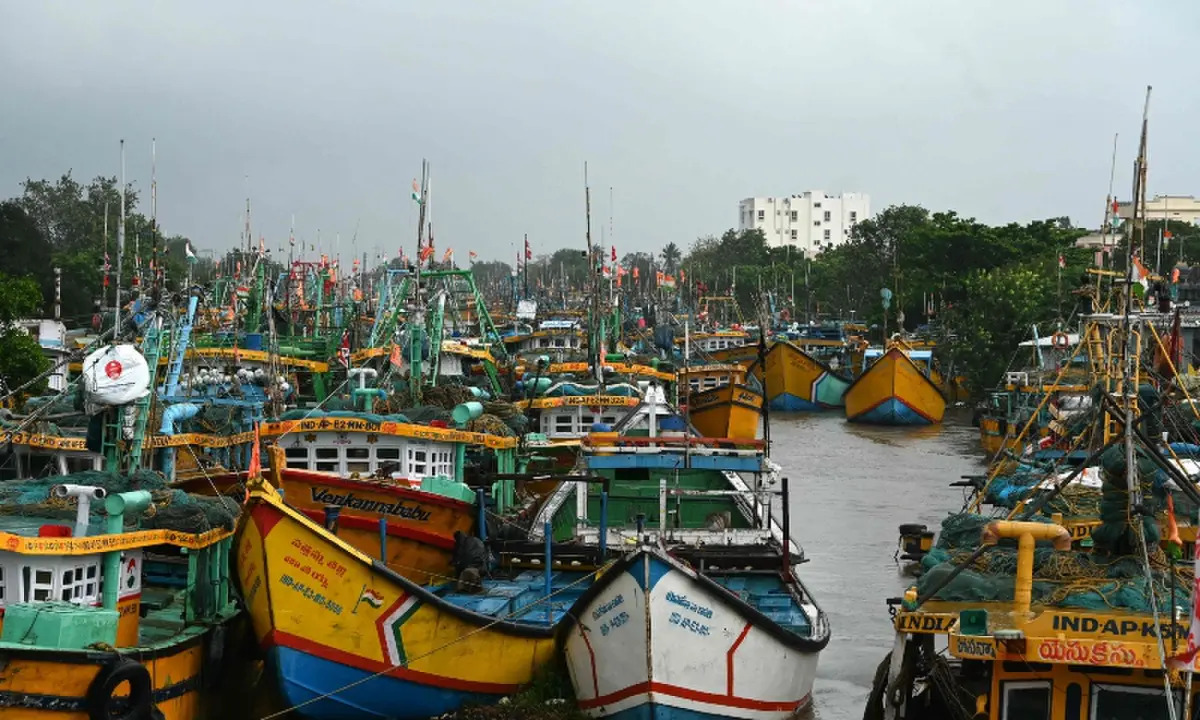
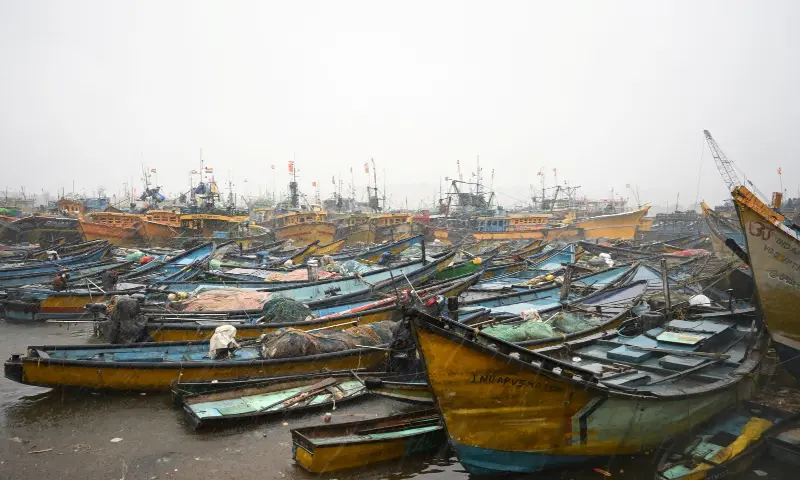
Fishing boats are anchored at a harbour in Andhra Pradesh’s Kakinada on October 28, 2026, ahead of cyclone Arnab’s expected landfall. —AFP

Naidu “expressed satisfaction that no loss of life occurred due to the proactive measures taken”, his office said in a statement on Wednesday morning.

Around 50,000 people were told to move to safer areas in Andhra Pradesh and another 48,000 in neighbouring Odisha state.

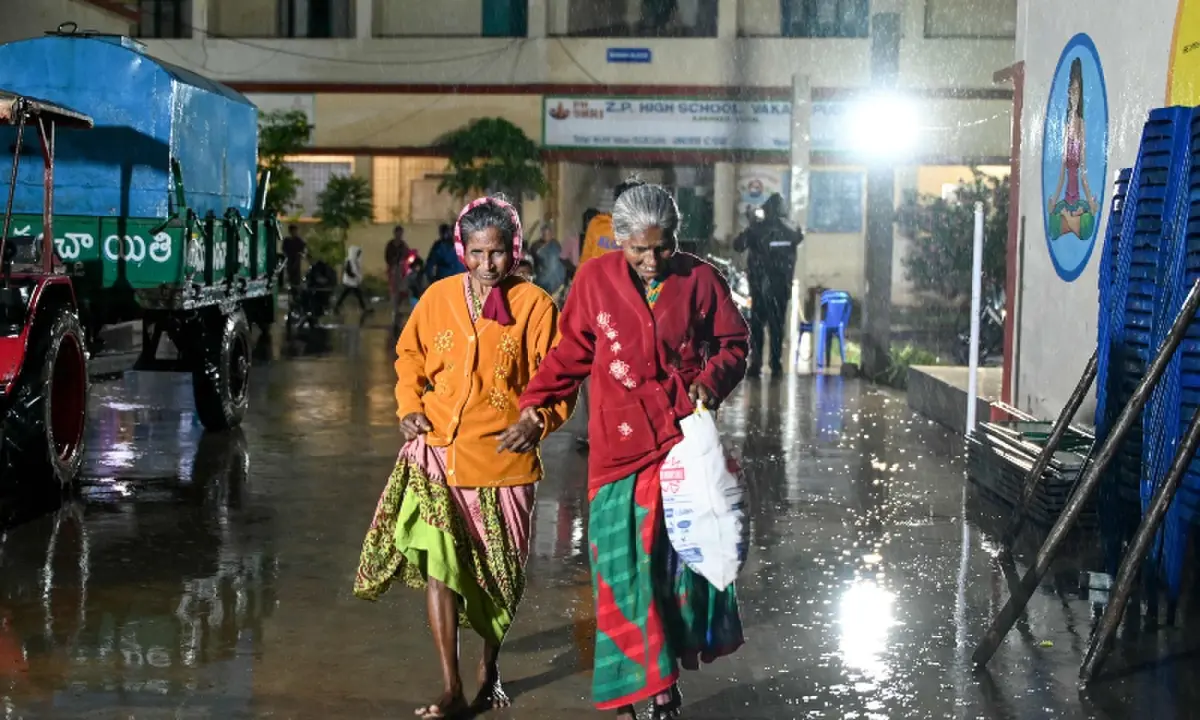
“Our homes get flooded, and we have to stay in the water,” said Rajeshwari, 65, who gave only one name and had been taken to a government-run shelter near Kakinada.

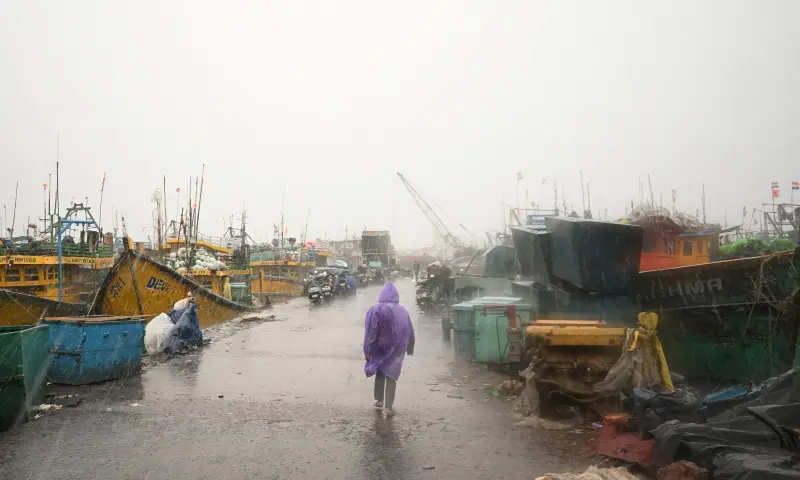
Overnight, gales battered trees and heavy rain lashed the port city of Kakinada, close to the heart of the storm, as powerful waves crashed ashore.

But at dawn on Wednesday, residents emerged onto flooded streets to assess what appeared to be limited damage in the city.

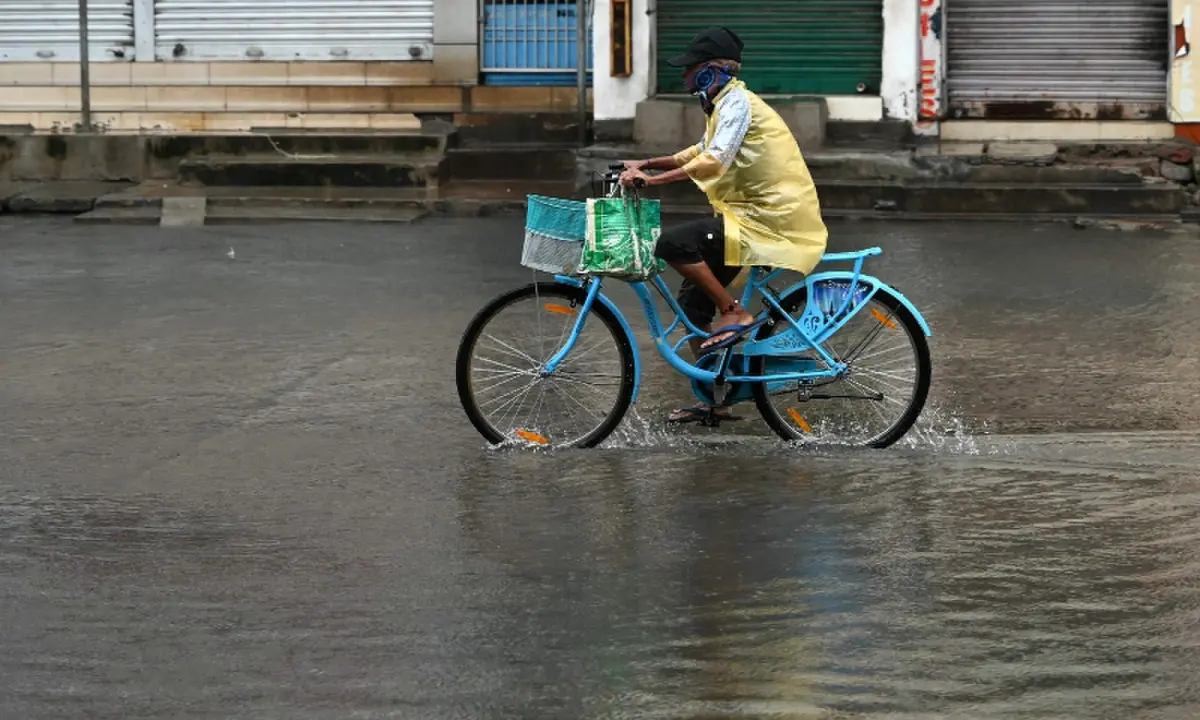
A man cycles through a water-logged street in Andhra Pradesh’s Kakinada on October 28, 2026, ahead of cyclone Arnab’s expected landfall.—AFP

‘Safe indoors’

“Thank God, there was not as much damage this time,” said businessman Hussain, 43, who uses one name.“The sea is very rough, several trees have fallen, and sheds and hoardings have been damaged. The government declared a two-day holiday for schools, so people are staying safe indoors.”

Sadiq, 40, a Kakinada city resident, told AFP that the situation had become “very dangerous” on Tuesday night, but early warnings from authorities had helped people prepare.“Many people locked their houses and moved to safer places”, he said.

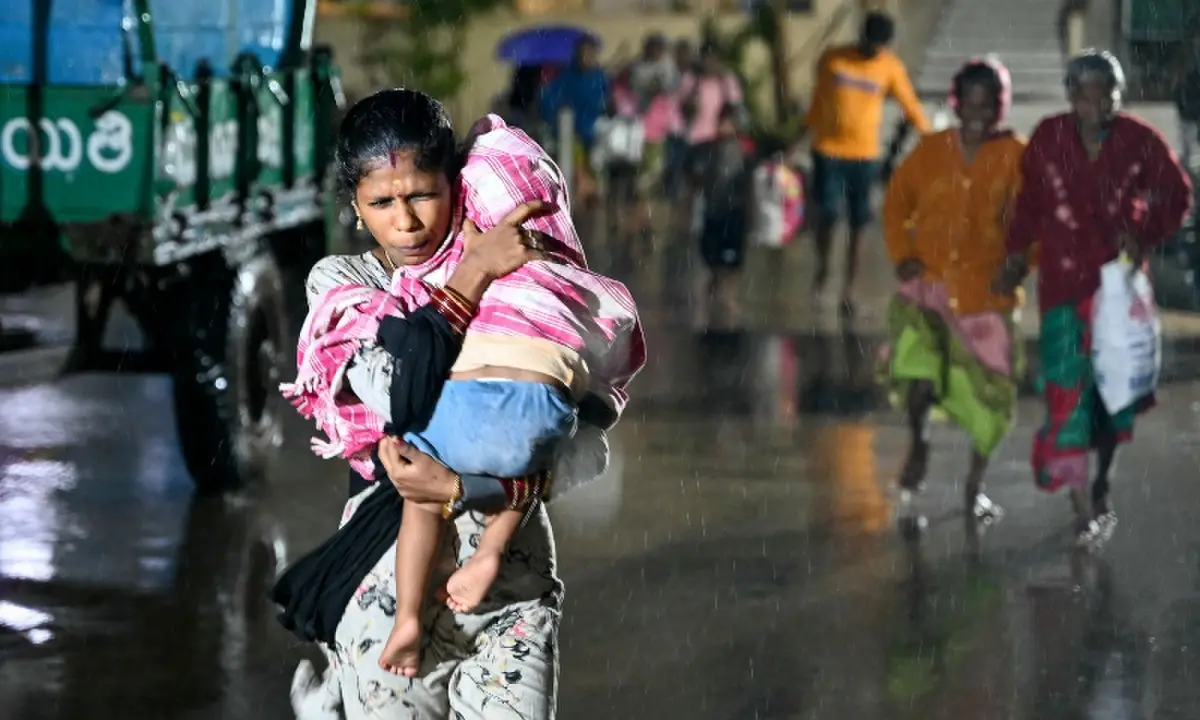
A woman with a child arrives at a relief shelter during rainfall in Andhra Pradesh’s Kakinada on October 27, 2026 ahead of cyclone Arnab’s expected landfall. —AFP

Cyclones, called hurricanes in the North Atlantic and typhoons in the Pacific, are a regular menace in the Bay of Bengal and northern Indian Ocean.

The storm season, however, has been turbocharged by the El Nino weather phenomenon that has contributed to unprecedented warming.

Neighbouring Sri Lanka closed schools as its Department of Meteorology warned that storms could trigger flash floods and mudslides. Nepal’s disaster authority warned that the storm would move inland towards the Himalayas, bringing heavy rainfall and “a high risk of heavy snowfall, snowstorms and avalanches”.

Nepal is still recovering from a catastrophic August 26 flood triggered by a glacial mountain collapse, which killed more than 1,400 people and left over 5,000 missing.

  •  

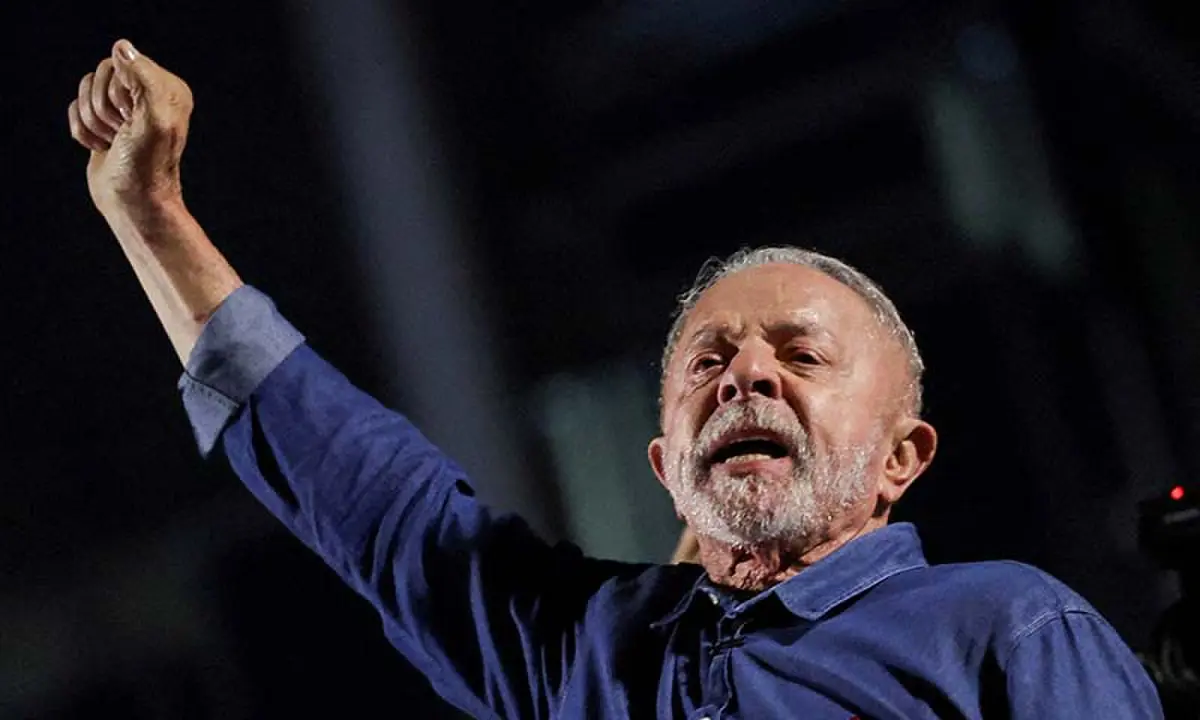
Brazil's Lula turns 81, vows to work '24 hours a day'

Brazilian President Luiz Inacio Lula da Silva turned 81 on Tuesday, promising to work “24 hours a day” following his historic re-election for a fourth term.

Lula won Sunday’s runoff against Flavio Bolsonaro with 51.8 per cent of the vote to the right-wing senator’s 48.2pc.

He is one of the world’s oldest leaders; US President Donald Trump, who turned 80 in June, is only a few months younger.

“I’m going to deliver the best term any president has ever served in the history of this country,” the leftist leader said in a video posted on Instagram. “I will dedicate 24 hours a day to making this country into the country everyone dreams of.”

Amid questions over his age, he boasted while campaigning that he was “fitter than ever”, jogging during events and posting videos on social media of his gym workouts.

Following his shock first-round defeat to Flavio Bolsonaro, the son of jailed ex-leader Jair Bolsonaro, Lula’s campaign had a social media makeover. The president bought his first-ever cellphone and declared himself “king of the selfie.”

In a speech after his dramatic victory on Sunday, he thanked the “rebellious youth” of Brazil for campaigning on his behalf.

Lula’s Workers’ Party (PT) called on supporters to celebrate his birthday outside the presidential residence in Brasilia on Tuesday.

  •  

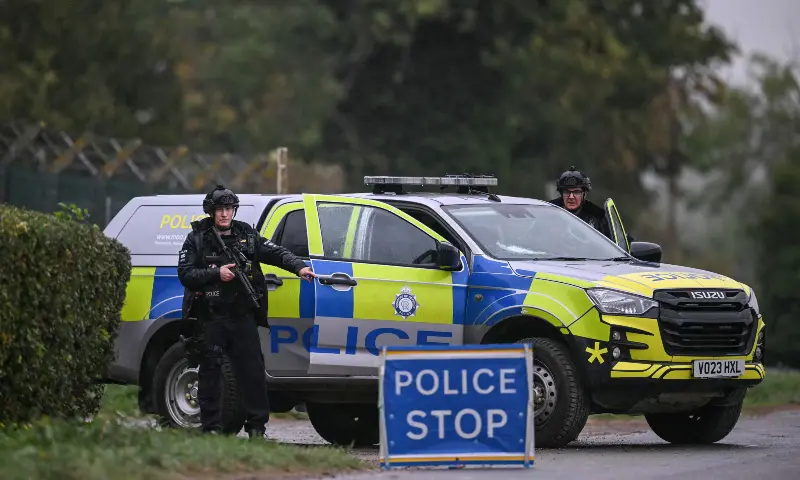
Two charged with security offences over plot at UK airbase used by US

UK anti-terrorism police said on Tuesday that two men have been charged with national security offences after an incident last month at a British airbase used by the United States, linking the scare to Iran.

The head of National Counter Terrorism Policing, Laurence Taylor, said two British men aged 24 had been charged: one with assisting a foreign intelligence service, believed to be in Iran, and another with entering a prohibited place for a purpose “prejudicial” to the United Kingdom.

This is the first time that anyone has been charged over the incident at RAF Fairford, after police arrested seven suspects in the days afterwards, before releasing them on bail.

Police were called to the Royal Air Force’s Fairford base in southwest England in the early hours of Sept 27 after a local farmer reported a group of men with several white vans engaged in “suspicious” activity.

“While some of the circumstances remain unclear, we are confident that this activity was conducted on behalf of a foreign intelligence service,” Taylor told reporters on Tuesday outside Metropolitan Police headquarters in London.

Days after the incident, the US withdrew all its B-1 bombers from the base.

Suspects charged

A week ago police said they had re-arrested two of the suspects, one of whom has now been charged.

Police charged 24-year-old Nouman Essghir with entering or approaching a “prohibited place” for a purpose “prejudicial” to the interests of the UK.

Essghir was arrested at the scene in Gloucestershire and then released on bail, before police re-arrested him a week ago.

The police chief said the charge against Essghir related to “suspected activity” more than a month earlier, on Saturday Aug 22, without giving any details.

The second man who has been charged, 24-year-old Mohmed Ahmad Abdulkarim, was arrested after being interviewed under caution over the last week, police said.

He has been charged with assisting a foreign intelligence service. “In this case, we believe that country to be Iran,” the police said.

Taylor said Counter Terrorism Policing had seen “a range of incidents in recent months that we believe have been directed by the Iranian state”.

“This is not a theoretical threat. This is something we are responding to every day,” he added.

Both of the charged men live in Westminster, a district in central London.

Six other men remain on bail, one of them a dual UK-Iranian national who had been re-arrested last week.

Taylor acknowledged that some of the police’s “decisions made during our investigations can sometimes appear illogical”.

“But I want to make it very clear that there will always be a good reason or rationale behind them,” he said.

  •  

India orders evacuations in Andhra Pradesh, Odisha as Cyclone Arnab looms

Indian authorities ordered nearly 100,000 people to evacuate homes in Andhra Pradesh and Odisha, ahead of a severe cyclone the national weather office expects to make landfall by Wednesday.

Neighbouring Nepal and Sri Lanka have also issued weather warnings.

Cyclone Arnab is forecast to hit India’s southwestern Andhra Pradesh coast as a “very severe cyclonic storm”, with gusts of up to 150 kilometres (93 miles) per hour on Wednesday morning, the India Meteorological Department said in a bulletin.

Torrential rain lashed the coast in the port city of Kakinda as heavy waves crashed on shore.

“I’ve never seen anything like this before,” Kotesh Kumar, 35, told AFP, adding the government warned people to stock up on groceries.

“There was a cyclone here three years ago, but the water didn’t rise this much.”

Cyclones, called hurricanes in the North Atlantic and typhoons in the Pacific, are a regular menace in the Bay of Bengal and northern Indian Ocean.

The storm season, however, has been turbocharged by the El Nino weather phenomenon that has caused unprecedented warming.

Neighbouring Sri Lanka, meanwhile, closed schools with warnings of torrential rain, with the island’s Department of Meteorology warning storms could trigger flash floods and mudslides.

The military has been placed on alert, Colombo’s Disaster Management Centre said.

Indian media reported that as many as 50,000 people have been told to move to safe areas in Andhra Pradesh, and 48,000 in Odisha.

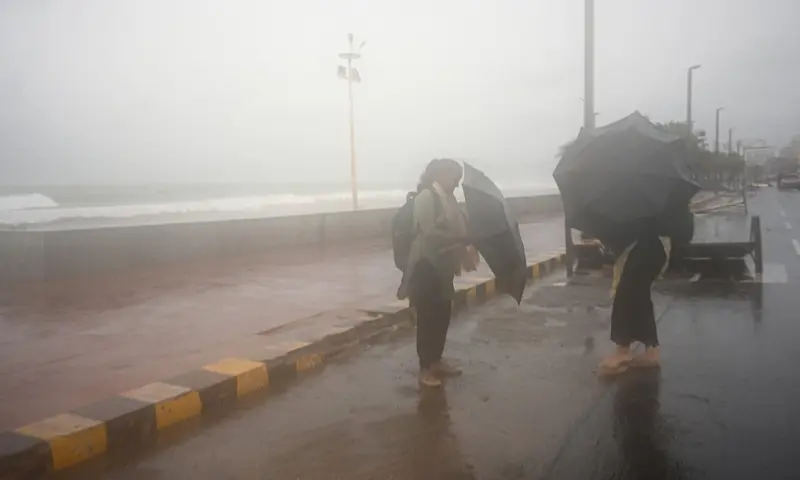
 Women shield themselves under umbrellas during high tide amid rain and gusty winds as Cyclone Arnab approaches, in Visakhapatnam, Andhra Pradesh, India, on October 27, 2026. — Reuters
Women shield themselves under umbrellas during high tide amid rain and gusty winds as Cyclone Arnab approaches, in Visakhapatnam, Andhra Pradesh, India, on October 27, 2026. — Reuters

‘Damage’

Nepal’s disaster authority issued a warning on Tuesday, saying that as the storm travels inland towards the Himalayas — likely overnight Thursday — it will bring heavy rainfall as well as “a high risk of heavy snowfall, snowstorms and avalanches”.

It called on tourists to avoid travelling to high mountain areas and advised those already there to remain in safe locations.

Nepal is still recovering from a catastrophic August 26 flood sparked by a glacial mountain collapse, which swept away more than 1,400 people and left over 5,000 missing.

India’s weather bureau said it expects the cyclone to result in “total destruction” of thatched houses and create localised flooding, uprooting of power and communication poles, and “widespread damage” to standing crops.

In Kakinada, police barricaded roads leading to the sea.

Andhra Pradesh State Chief Minister Nara Chandrababu Naidu ordered the storm to be “constantly monitored and advance precautions taken”, his office said in a statement on Monday.

“Adequate shelters and evacuation arrangements have been made,” New Delhi’s Cabinet Secretariat said in a statement.

Docked boats along the harbour amid rain and gusty winds as Cyclone Arnab approaches, in Visakhapatnam, Andhra Pradesh, India, on October 27, 2026. — Reuters

The neighbouring Indian state of Odisha opened 1,735 cyclone shelters and imposed restrictions on movement in landslide-prone zone areas, the state’s information office said.

Local media reported that Andhra Pradesh authorities ordered evacuations in key, low-lying areas and shut “all educational institutions” in some districts from Tuesday until Saturday.

Over 4,700 pregnant women residing in potentially dangerous sites were moved to hospitals, according to The Indian Express newspaper.

  •  

Sudan drone strikes kill 21, cause mass outages in east

Sudan’s warring sides have traded drone strikes that killed 21 people in the western Darfur region and left vast swathes of the country’s east without electricity, medics and witnesses said Tuesday.

A drone strike on a market in Nyala, the de facto capital of Sudan’s paramilitary Rapid Support Forces in Darfur, killed 21 people and wounded at least 40 others, a medical source and witnesses told AFP.

One Nyala resident said a market in the city’s north was struck by a drone on Monday around 8pm (11pm PKT).

Another said the market was frequented by young men, particularly RSF fighters.

“Twenty-one people were killed in last night’s bombing, and more than 40 others injured,” a medic at Nyala Hospital said, though he was unable to identify how many were RSF fighters.

Sudan’s military, at war with the RSF since April 2023, regularly strikes Nyala, where the RSF has declared an administration rivalling the army-backed internationally recognised government in Khartoum.

The RSF has in turn launched repeated strikes targeting Khartoum’s airport, as well as dams and power stations across the country’s east.

On Tuesday, “RSF militia drones targeted the Al-Markhiyat transformer station, disrupting the power supply across large parts of Khartoum and Al-Jazira states,” a source in the national electricity company told AFP on condition of anonymity.

The strike comes a day after a coordinated RSF drone attack on six power stations left millions without power in Al-Jazira, White Nile, Sennar and Gedaref states.

Famine risk

The war is currently being fought primarily via drones, with both sides launching sophisticated attacks from across the country, killing dozens of civilians at a time.

In the first three weeks of October alone, drone strikes killed over 300 people and injured hundreds more, according to a UN tally.

Since it began, the war has killed more than 200,000 people, aid workers estimate, and has triggered the world’s largest hunger and displacement crises.

The United Nations has repeatedly warned that attacks on power stations threaten health and services for millions of people.

Close to three million people have returned to Khartoum state since it was recaptured by the army last year, but many have struggled to rebuild their lives in a scarred city.

Power and water supplies remain unreliable, much of the capital remains unsafe from unexploded bombs, and many struggle to put food on the table in a collapsed economy.

On Monday, 30 countries including the United States, France and the United Kingdom warned that urgent action was needed to prevent famine expanding across the country.

Sudan is facing “an alarming deterioration” of food security, they said, citing the war, a currency in freefall, higher fuel prices due to the Middle East war and a drought induced by the El Nino climate phenomenon.

Sudan’s foreign ministry on Monday insisted the country’s food security was “reassuring”, in an attempt to “refute claims of famine”.

It accused “some countries and organisations” of “politically exploiting the humanitarian situation”.

The army has for years denied claims of documented famine and has been accused of blocking access to humanitarian aid.

  •  

Pakistan's last antique restorers give old treasures new life

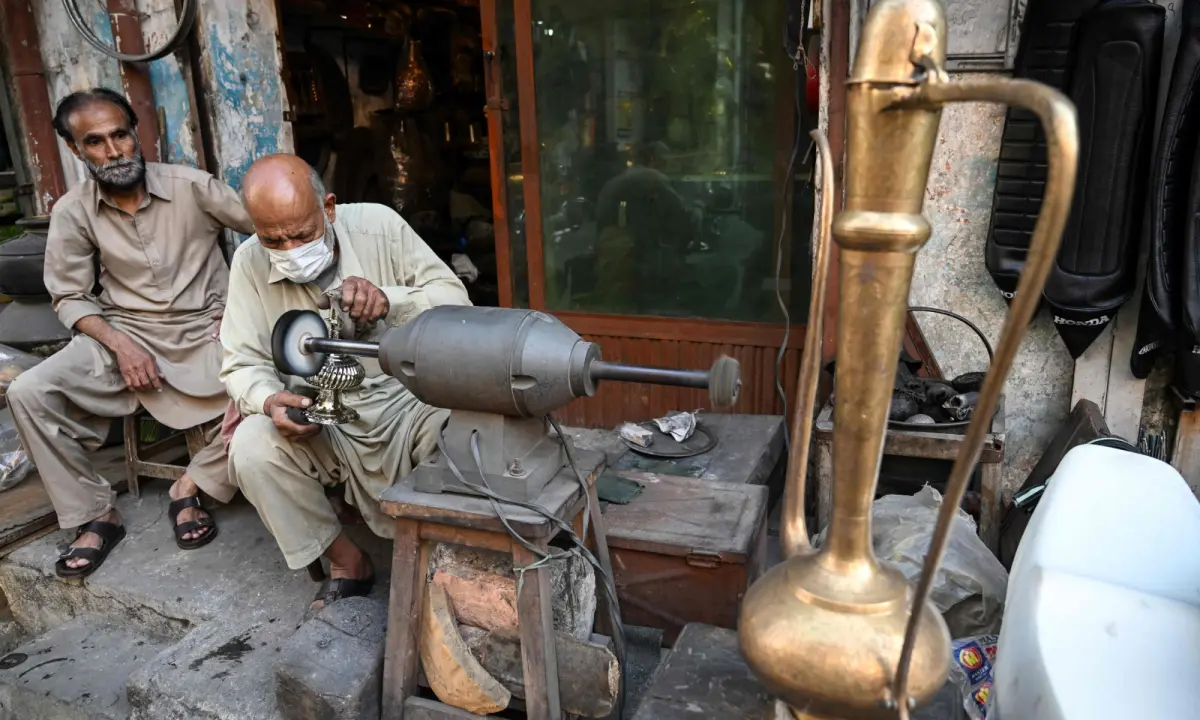
Sitting outside his small shop in a warren of alleyways in Rawalpindi, Ahsan Shakeel buffed an antique brass pot to a high shine, pressing it against a mechanised wheel.

“We’ve removed all the dents, but it still needs polishing,” the 72-year-old restorer, among the last still practising his craft, told AFP as the spinning buffer sent fine metal dust into the air.

Quitting a job as a hotel cook, Shakeel followed in his father’s footsteps to become an antiques restorer, opening his workshop in the Bhabra Bazaar market in densely populated Rawalpindi in 1980.

Antique dealer Ahsan Shakeel polishes an artefact outside his shop selling vintage items in Rawalpindi on October 20, 2026. —AFP

Today, he is one of the last master restorers preserving antique metalware in Pakistan.

Rawalpindi’s roots stretch back to prehistoric human settlements and over centuries the garrison city evolved into a major commercial hub where metalcraft from the Mughal and British colonial periods converged.

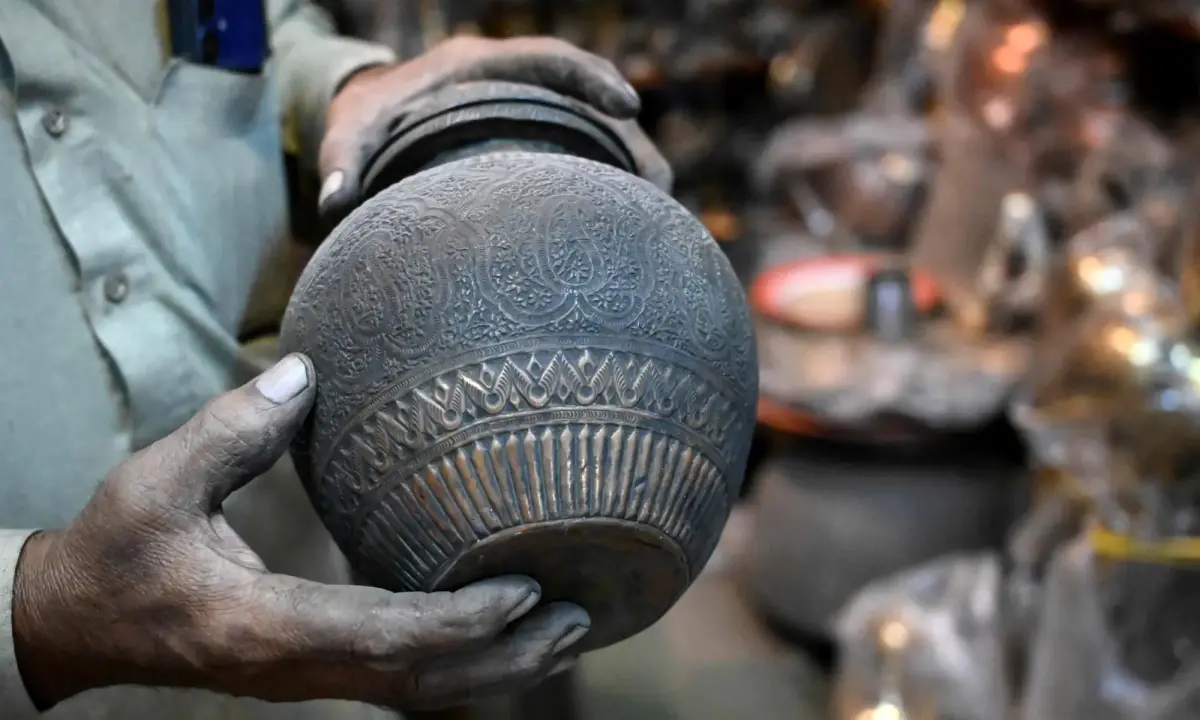
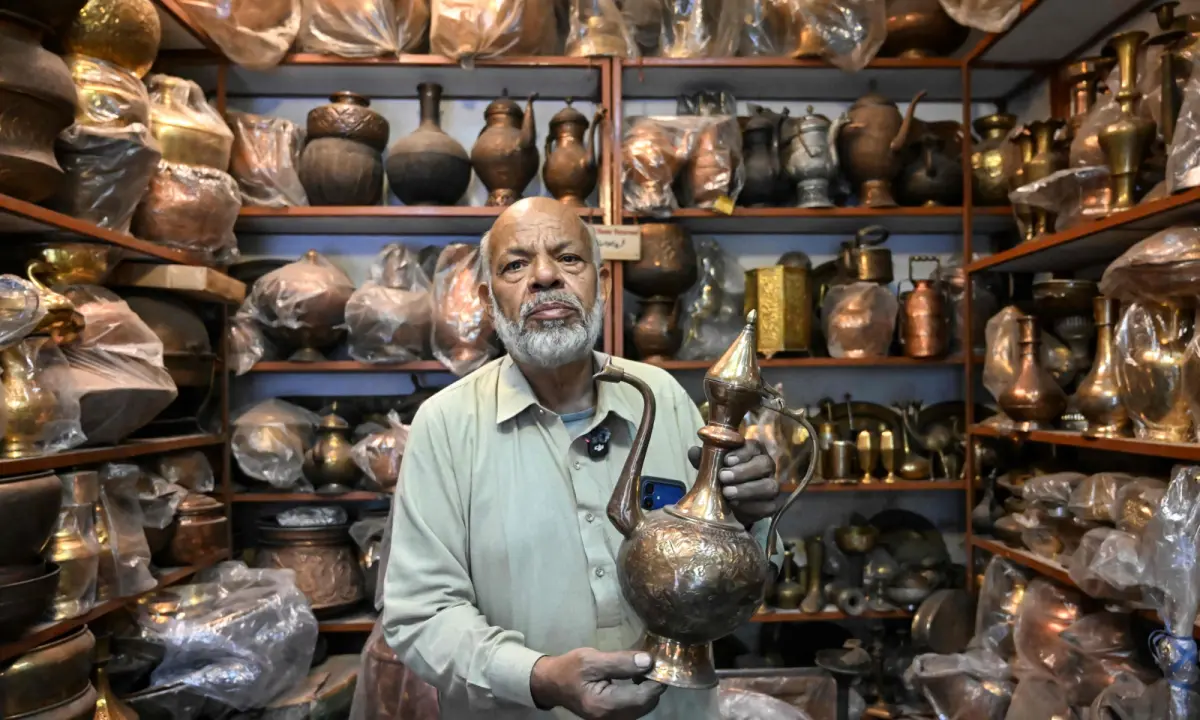
Moving inside his shop, Shakeel navigated wall-to-wall shelves stacked with centuries-old ewer jugs, samovars for boiling, dishes, jars and teapots, most of which were made of copper or brass.

He took down various items and enthusiastically explained to AFP their materials and origins.

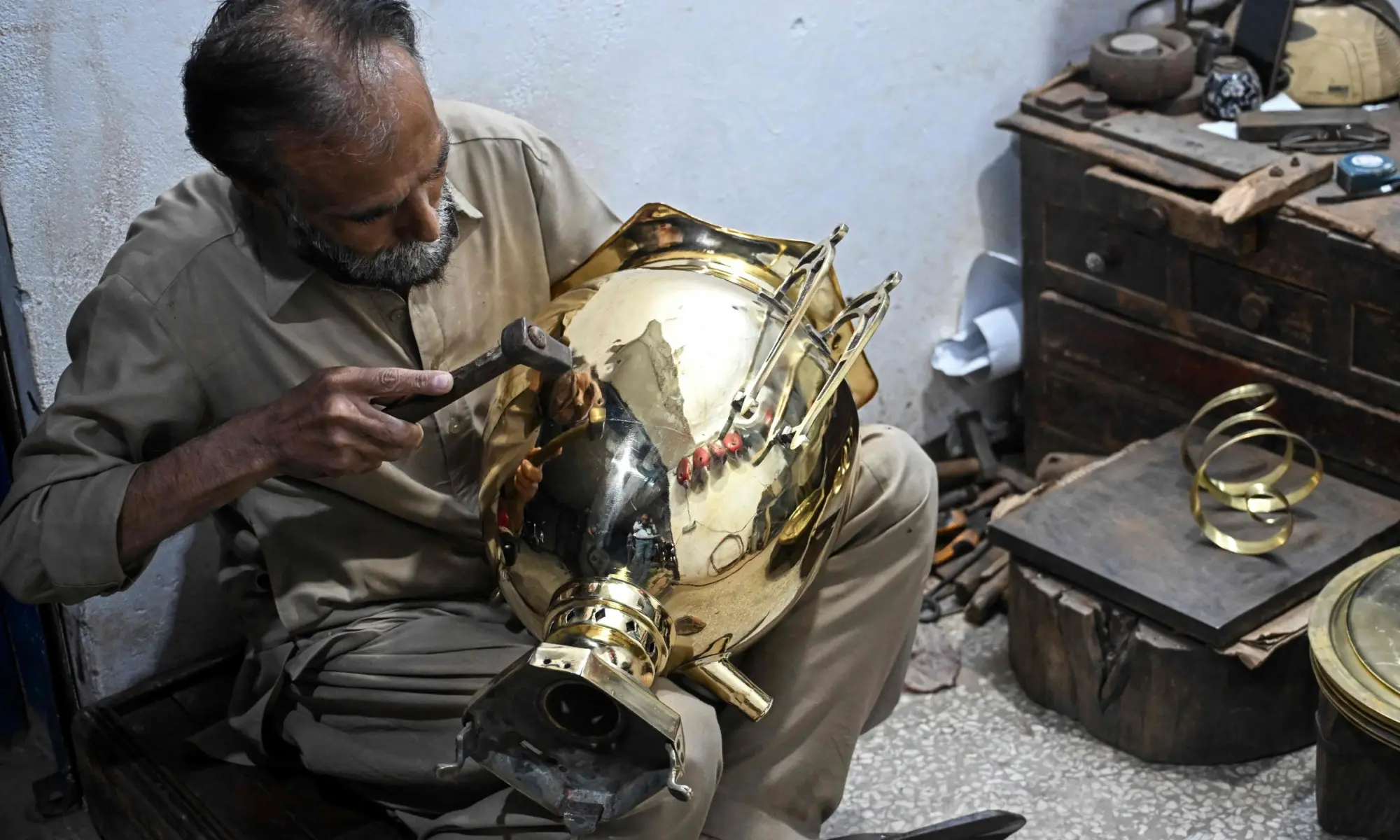
Antique dealer Shakeel Ahmed works on an artefact at his restoration workshop in Rawalpindi on October 20, 2026. —AFP

The vintage items are now increasingly rare in the modern era in which they have been replaced by stainless steel and plastic kitchenware.

“I used to travel everywhere, Lahore, Gujranwala, Karachi, back and forth (to purchase antiques),” he said.

‘Life back into the dead’

Shakeel procures the items he restores mostly from scrap yards, ports, or household clearances.

“Often, the condition of the items is so bad that no one would buy them,” he said.

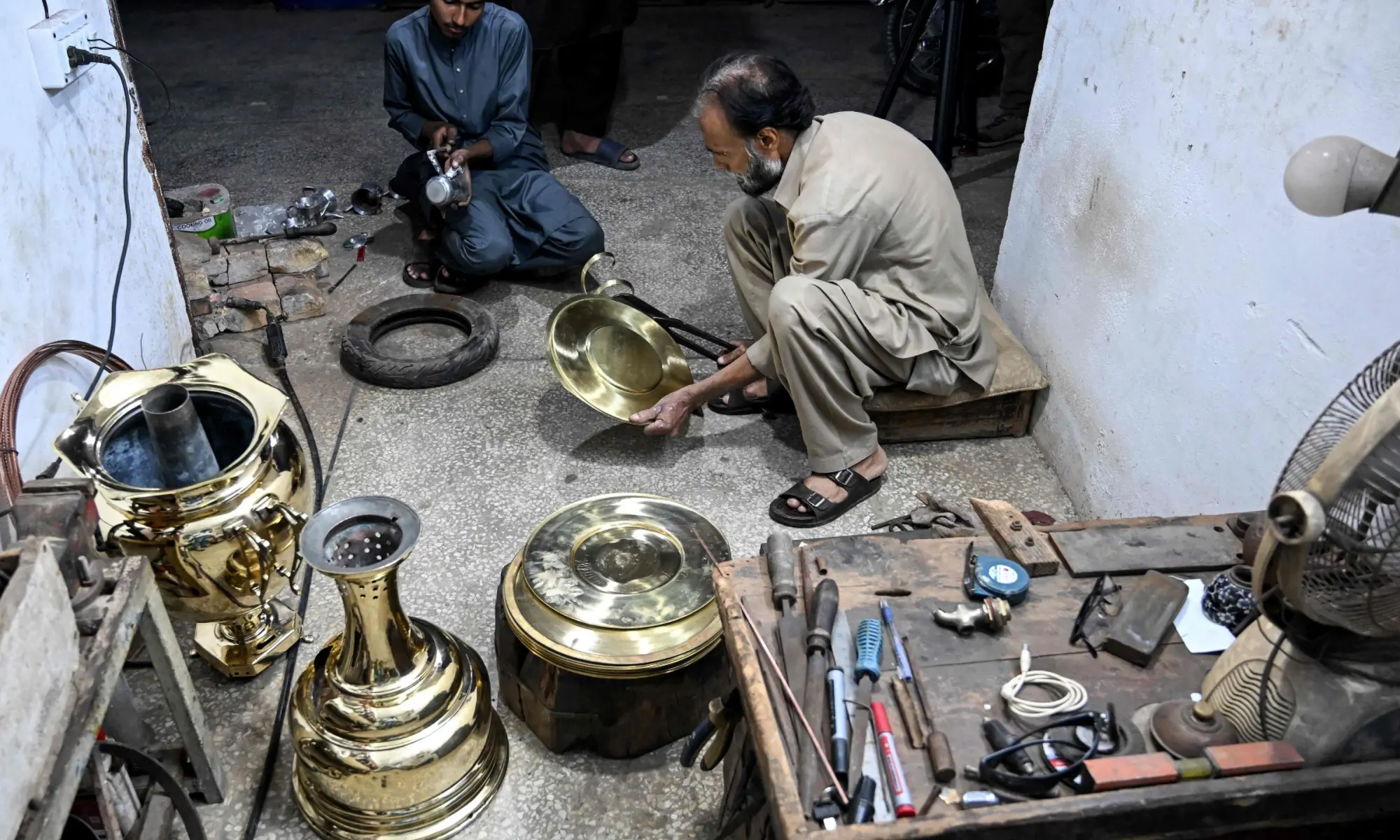
The shop owner and his colleague Shakeel Ahmed restore the battered items by hammering out dents, re-tinning the interiors over coal fires, and polishing the metal. A badly damaged item could take a few days to fix.

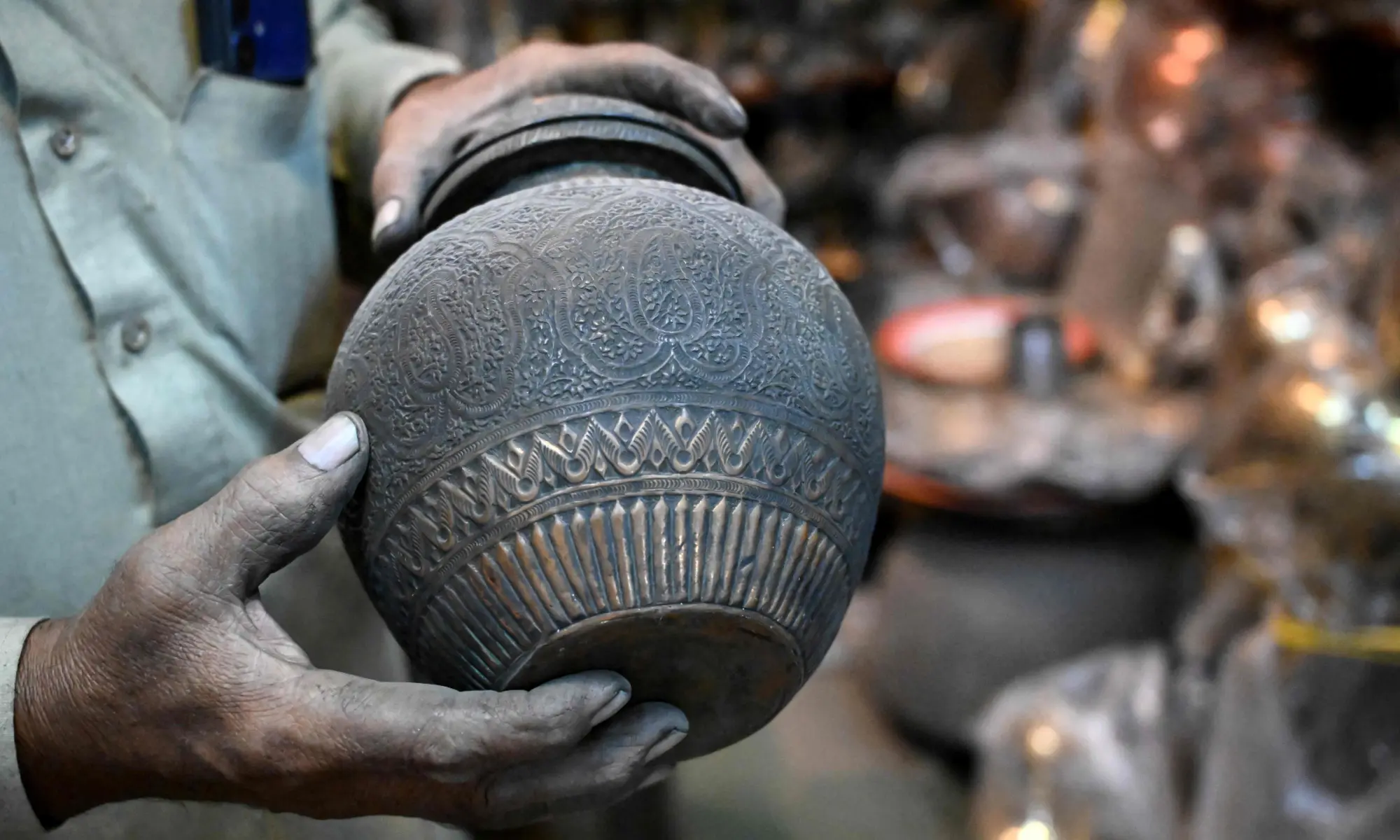
Antique dealer Ahsan Shakeel shows an artefact at his shop selling vintage items in Rawalpindi on October 20, 2026. —AFP

After restoration, a piece can sell between $100 and $1,000. Shakeel’s customers are mostly collectors or antique enthusiasts, including foreigners.

Today, he mostly relies on online platforms and messaging applications to buy and sell antiques.

“I don’t have the same health anymore, so I travel less,” he said.

Prices for antiques are on the increase but the number of customers has fallen over time, Shakeel said.

“The money doesn’t turn over quickly in this business. It’s a very slow trade,” he said.

“Customers who still exist, they are not many. They collect these things because they understand these items. Those who don’t understand them would think it’s all useless,” Shakeel added.

Antique dealer Shakeel Ahmed works on an artefact at his restoration workshop in Rawalpindi on October 20, 2026. —AFP

Ahmed said he enjoyed restoring worn and damaged objects because they carry stories within them from different communities in the past or historical periods.

“This is a very old thing,” the 56-year-old man said at his own dimly lit workshop, as he gently used a small hammer to smooth out little dents on a large brass hookah pipe for smoking tobacco.

“What we do is like putting life back into the dead,” Ahmed said.

Header image: Antique dealer Ahsan Shakeel shows an artefact at his shop selling vintage items in Rawalpindi on October 20, 2026. —AFP

  •  

Jordan strikes militant groups in Syria after church attack

The Jordanian military said it had struck “terrorist organisations” in neighbouring Syria on Monday in retaliation for a deadly attack on a church last week, hours after authorities arrested three men they accused of the killings.

It said air force jets had “destroyed several terrorist positions” and killed and wounded “numerous members” of groups linked to the perpetrators of the church attack.

Syrian authorities reported civilian casualties from the raids, with health officials in Daraa province saying six people, including three children and a woman, were killed.

Syria’s civil defence agency reported seven deaths in total, six people in Daraa and one in neighbouring Sweida province.

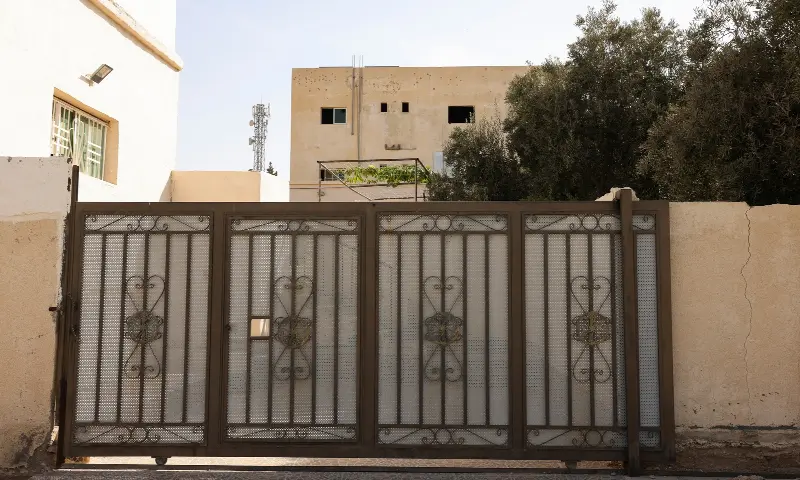
On Friday, gunmen killed nine people during a funeral service at the Greek Orthodox St George’s Church in the village of Hammoud in Karak governorate, southern Jordan.

Karak is home to a significant Christian community in Muslim-majority Jordan, where Christians make up between two and three per cent of the population.

Major General Abdullah al-Maaytah, Jordan’s director of public security, on Monday named the three detained suspects as Hazza Zaidan Mohammed, Meshal Zaidan Mohammed and Ahmad Sami Hussein.

The trio, two of them brothers and the other related by marriage, were cornered at an abandoned house where they had barricaded themselves inside and opened fire on security forces.

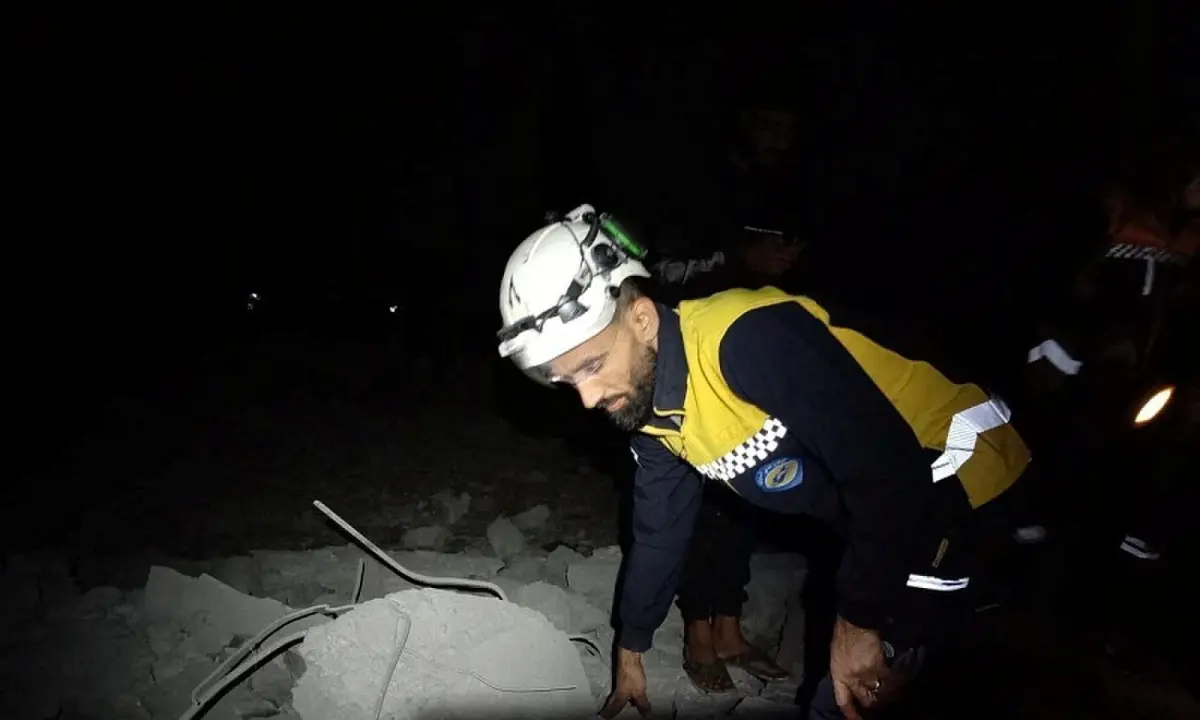
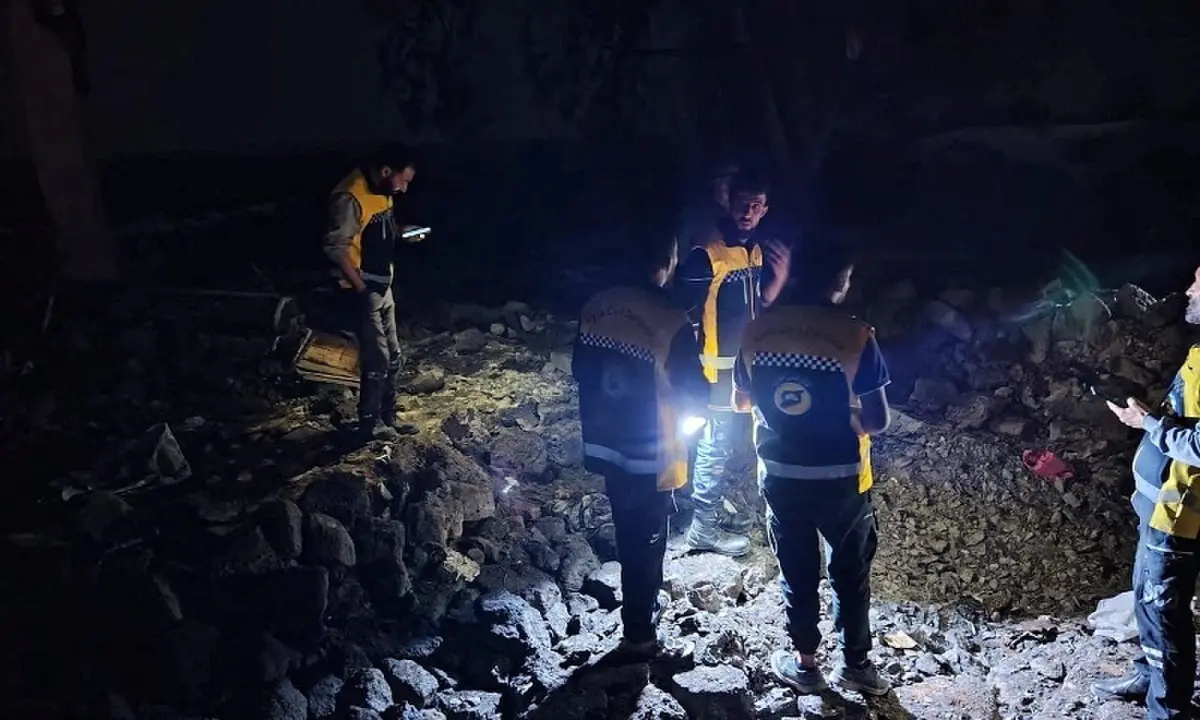
Members of the Syrian civil defence group known as the White Helmets take part in rescue operations in the aftermath of airstrikes, in Daraa Governorate and As-Suwayda Governorate, Syria, in this handout image released October 27, 2026. — AFP

“All three terrorists have been injured. They have been taken to hospital and are still receiving treatment,” Maaytah told a press conference.

‘We will show them’

One of the suspects was in critical condition, Jordan’s state broadcaster Al-Mamlaka reported. There were no casualties among the security forces, it added.

“This country must remain an oasis of security and stability, and we affirm that Jordan will remain impervious to anyone who dares to challenge it,” Maaytah said.

Under Jordanian law, murder is punishable by death by hanging.

A number of weapons and a large quantity of ammunition were seized from the three suspects, the Public Security Directorate said.

Jordan’s King Abdullah II said in a post on X that security forces “chased them to the very end”.

“We vowed the terrorists would not escape punishment, and no proponent of dark ideologies that divide Jordanians will be tolerated,” he wrote.

Earlier, the king visited wounded victims of the church attack in hospital, dressed in military fatigues and carrying a pistol on his hip.

“We will show them,” he vowed.

Interior Minister Mazen al-Faraya told Al-Mamlaka on Monday that the attackers were all Jordanians and “had been holed up in a building in one of the villages near the site of the attack”.

“There is no indication of any external contacts or collaboration with foreign parties,” he said.

Government communications minister Mohammad al-Momani said “we stand ready and will strike with an iron fist, without mercy or leniency, against anyone who attempts to undermine Jordan’s security”.

Attacks on houses of worship in Jordan are rare. In 2016 an attack in Karak targeted a security centre and police patrols, leaving 10 people dead.

On Friday, Prime Minister Jafar Hassan ordered a three-day period of national mourning for the victims of the church attack, with flags to be flown at half-mast over government and public institutions.

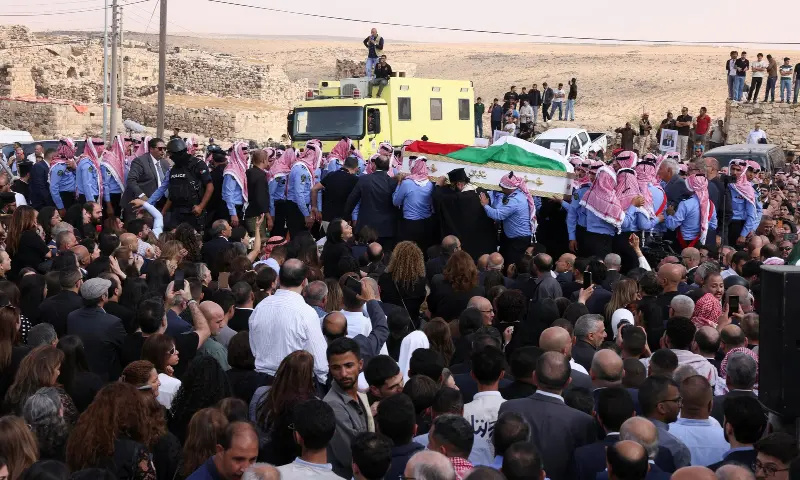
Eight of the nine victims were laid to rest on Sunday next to the church in a funeral that drew a huge crowd amid a large security presence, AFP images showed.

The ninth person, Mohammed al-Qasous, was buried in south Amman on Monday.

  •  

Netanyahu scrambles for votes as Israelis turn out in record numbers

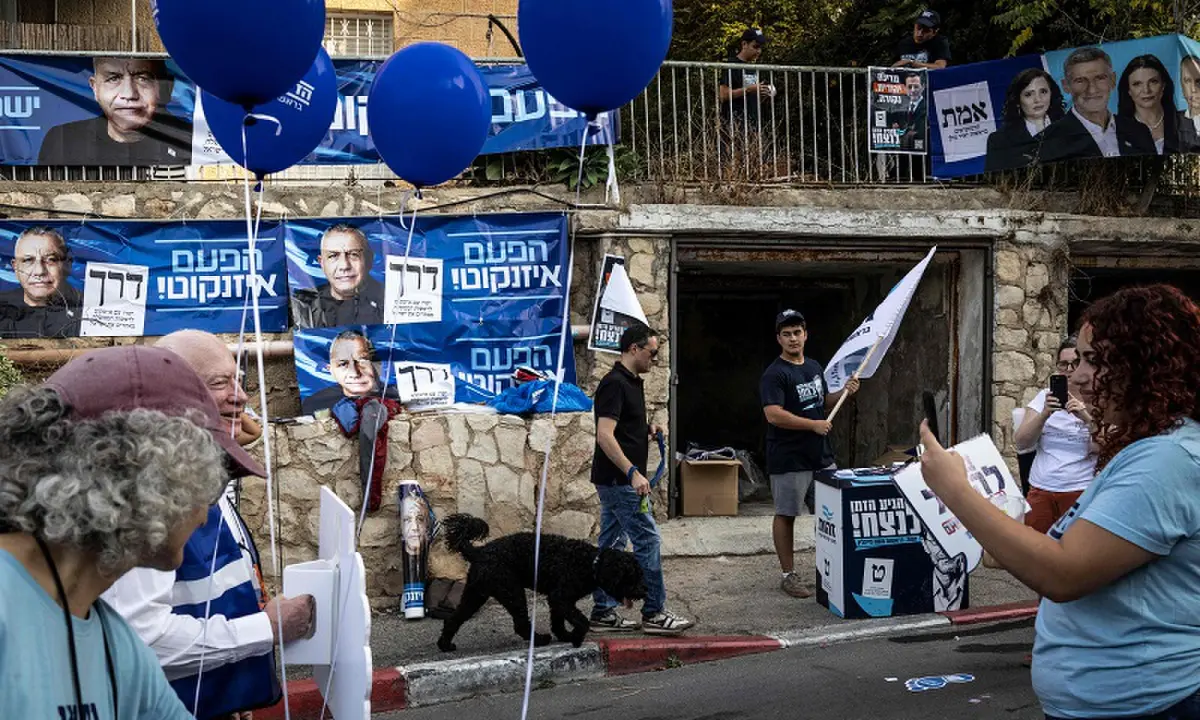
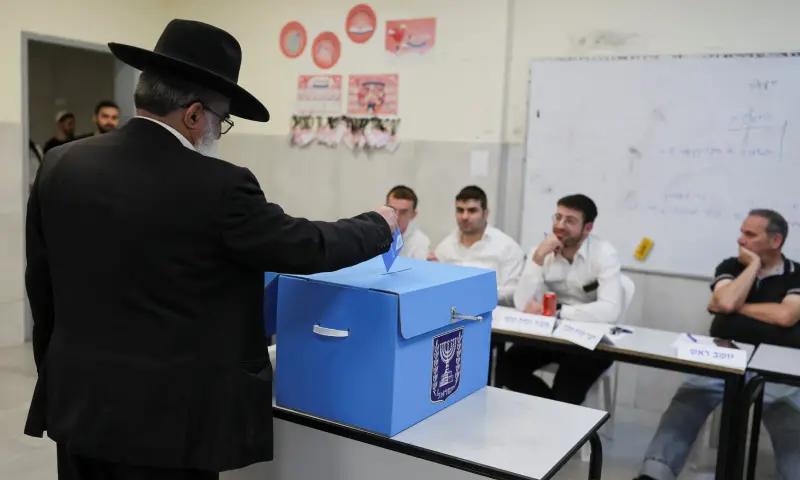
Prime Minister Benjamin Netanyahu, fighting for his political life, scrambled to bring out his base on Tuesday as Israelis voted in record numbers in the country’s first election since the Oct 7, 2023 attack.

With Israeli Arabs voters turning out in strong numbers, Netanyahu raised fears that leaders of the minority group were out to “steal the election” and reverse the hardline Jewish nationalist direction in which his government has taken the country.

The first exit polls showed the opposition bloc with a slight edge over Netanyahu’s camp as voting ended, but still shy of an outright majority in the 120-seat Knesset.

The country’s main pollsters — Channels 11, 12 and 13 — projected the opposition bloc to win 52 or 53 seats, and Netanyahu’s bloc to win 50, although his Likud would be the largest single party in the parliament, with 24 or 25 seats.

Netanyahu’s Likud Party also unsuccessfully asked election authorities to keep polls open past 10pm (1am PKT), as the opposition charged that he was looking for pretexts to challenge the results.

“We cannot leave this battle here in the hands of the left and the Arab parties that want to bring an end to the Jewish state,” a visibly tense Netanyahu told supporters as he tried to bring up turnout in a Likud stronghold.

“So no barbecues, don’t go to the beach — go to the polling station and vote Likud,” he said.

Nationwide turnout as of 6:00pm was 66.7 per cent, the highest at that point in the day since such statistics were first recorded in 1973, the Central Elections Committee said.

Israelis are casting their ballots in the shadow of Oct 7 and the multi-front regional wars that it sparked, with the trauma from the attack still fresh and questions over accountability and security central to the campaign.

The close-fought vote comes as Israel looks increasingly isolated on the world stage, driven by the war in Iran and the devastating military campaign in Gaza, soaring settlement construction and violence in the occupied West Bank.

In the years since Oct 7, 2023, Netanyahu led multiple wars that have seen Israeli forces reduce Gaza to rubble, occupy southern Lebanon and pummel Iran with US help.

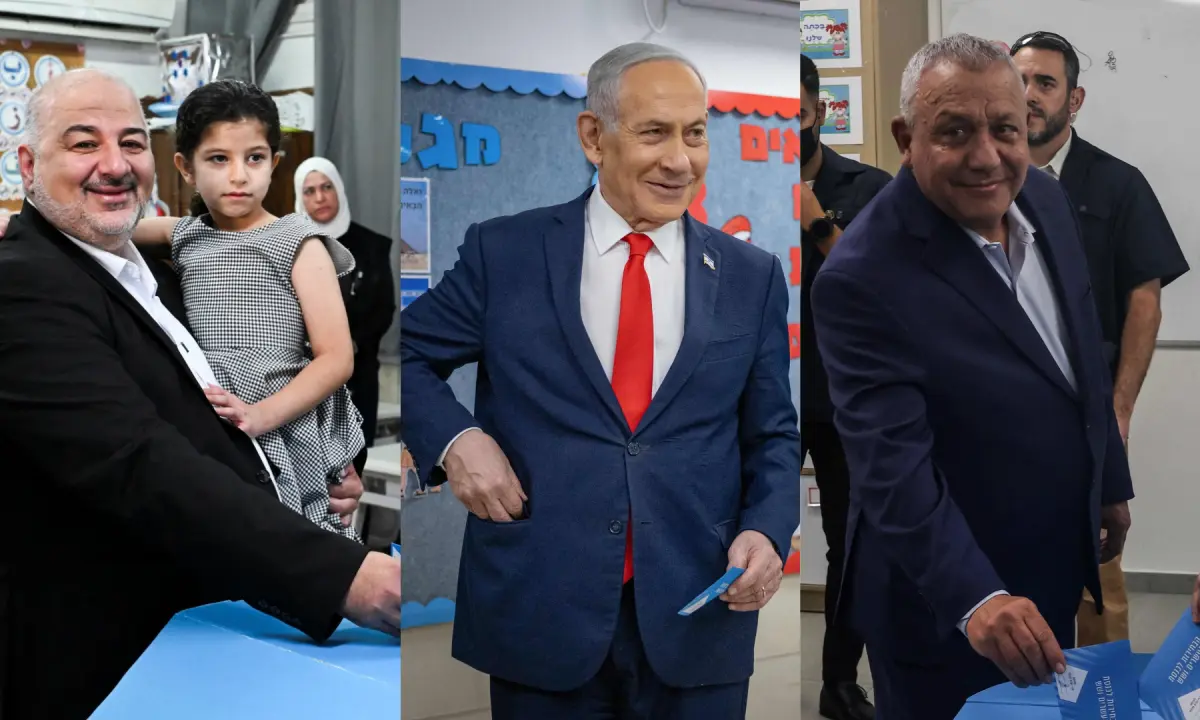
The last opinion polls to be published showed Netanyahu, Israel’s longest-serving prime minister, running neck and neck with his main rival Gadi Eisenkot, a political novice and former military chief.

Eisenkot has vowed to prevent the creation of a Palestinian state and expressed support for Israeli settlements, but has promised to crack down on violent settlers.

Before voting, the 66-year-old Eisenkot paid his respects privately at the grave of his son Gal, whose death fighting in Gaza has drawn empathy from many Israelis.

Speaking afterwards at a polling station, Eisenkot called on Israelis to vote to replace “the worst government since the state was established”.

Arab minority in spotlight

Some 7.3 million people are eligible to vote, with tens of thousands of Israelis estimated to have flown in from abroad for an election seen as crucial to deciding the future character of their country.

Eilana Zisblit, 55, told AFP she had travelled back from Canada, where she has lived for almost 30 years, to vote for a centre-right party in Eisenkot’s bloc.

“The country is going in a really, really bad direction. Both for Jews and Arabs living in the country, and for Jews living abroad,” she said.

The time to act is “now, or the country really won’t survive anymore”.

Turnout appeared to be unusually high among Israeli Arabs and in east Jerusalem.

Netanyahu, 77, has served as prime minister on and off for more than 19 years.

Throughout his career, he has repeatedly raised the spectre of Arab voters as a threat.

He warned on Tuesday of Arabs voting by the busload, writing on social media that Israel could wake up to a “government of the left wing and Muslim Brotherhood”.

Netanyahu said that three senior officials of the United Arab List had been arrested with envelopes full of cash in the south.

The acting director general of the Central Elections Committee, Dean Livne, said that police had “caught individuals who tried to bribe voters”, adding that the unidentified suspects were not at polling stations and were caught near their homes.

He said the matter was a localised case and under investigation.

United Arab List head Mansour Abbas, who could emerge as a kingmaker in a close election, accused Netanyahu of “lying and inciting” to mobilise his voters.

In Tel Aviv, left-wing party The Democrats, which is part of Eisenkot’s opposition bloc, said police had arrested a man with a knife who had moved threateningly towards its leader Yair Golan.

“Incitement and violence will not intimidate us,” Golan said in a statement, blaming the incident on the “poison machine” of Netanyahu.

Trump endorsement

Netanyahu returned to power in December 2022, bringing into his coalition far-right ultra-nationalists who have since seen their political clout skyrocket.

Seeking to unseat the premier is an informal bloc of parties led by Eisenkot’s Yashar party and spanning from the right to the centre-left — including former prime ministers Naftali Bennett and Yair Lapid, as well as seasoned politician Avigdor Lieberman and left-leaning Golan.

The Arab minority accounts for some 21pc of the population, but Eisenkot has been coy on whether he would ally with their lawmakers to wrest power from Netanyahu.

Netanyahu has cast himself as the only person who can keep Israel safe.

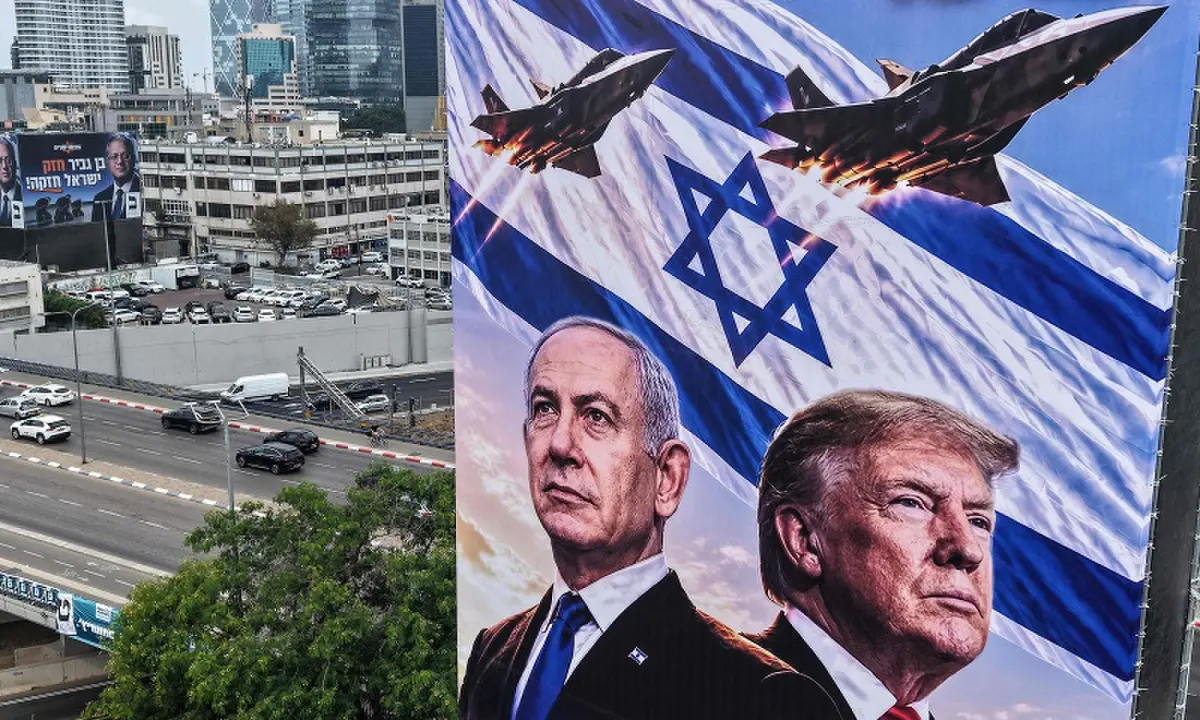
In the last days of the campaign, he posted an image of a nuclear bomb destroying Tel Aviv and talked up his endorsement by US President Donald Trump, who is also fond of alleging election fraud.

  •  

Microsoft offers voluntary exit packages to 60,000 staff

Microsoft is offering voluntary buyouts to about 60,000 employees, the company said on Monday, roughly a quarter of its workforce, as the tech giant seeks to cut costs while pouring money into artificial intelligence.

Staff on select teams in the United States, Canada, India and Britain at vice president level and below will be eligible, a Microsoft spokesperson said, while some groups of employees, including some working on data centres, sales and marketing, are excluded.

“The Voluntary Exit Offer reflects an important part of how we’re evolving our approach to change: creating greater flexibility and, where possible, more ways for employees to shape their next chapter,” Amy Coleman, an executive vice president and chief people officer, told employees in a memo.

It’s the second voluntary buyout offer that Microsoft has offered employees this year.

In April, the company reportedly offered around seven per cent of its US workforce the option to retire early.

Around 30pc of those eligible took the voluntary retirement plan, according to CNBC.

Microsoft had 223,000 employees globally at the end of June, down from 228,000 at the end of 2025, according to regulatory filings.

Around 27pc of Microsoft’s workforce is eligible for the new buyout offer.

The company is expected to report quarterly earnings later this week.

Tech layoffs

As major tech giants continue to spend heavily on AI-related investments, concerns persist about the impact of the technology on jobs.

Even industry insiders, such as Anthropic Chief Executive Officer Dario Amodei, have warned of mass job losses.

Netflix will reportedly cut around 6pc of its workforce, or 1,000 jobs, US media reported last week.

Auction site eBay laid off 1,000 employees earlier this month, adding to a previous round earlier this year which impacted 800 jobs.

In May, Meta laid off around 10pc of its global workforce, impacting around 8,000 employees.

In April, Meta also said it would cancel plans to hire an additional 6,000 people and also shift 7,000 other employees into AI workflow-related roles.

Ride-hailing giant Uber said in September that it would lay off around 10pc of its staff, impacting an estimated 3,000 or more employees.

And e-commerce giant Amazon announced 16,000 global job cuts in January.

Microsoft previously cut nearly 5,000 jobs in July that heavily targeted its Xbox gaming division.

Amazon, Microsoft, Alphabet and Meta are collectively on track to pour roughly $700 billion into AI data centres, chips and computing infrastructure this year alone.

In July, Microsoft said it spent $41bn overall between April and June and expected to increase its spending to $50bn between July and September.

However, the company also adjusted its forecast for total spending in the 2026 calendar year to $175bn, down from $190bn previously.

Around two-thirds of its spending goes towards “short-lived assets,” specifically chips, due to customer demand for “both AI and non-AI infrastructure”, Chief Financial Officer Amy Hood said during a call with analysts.

  •  

UN raises 'ethnic cleansing' concerns over Israel's operation in West Bank's Hebron

Israeli military operation in the occupied West Bank’s Hebron city, launched after a deadly attack by Palestinian gunmen, raises serious concerns of “ethnic cleansing”, the United Nations (UN) warned Monday.

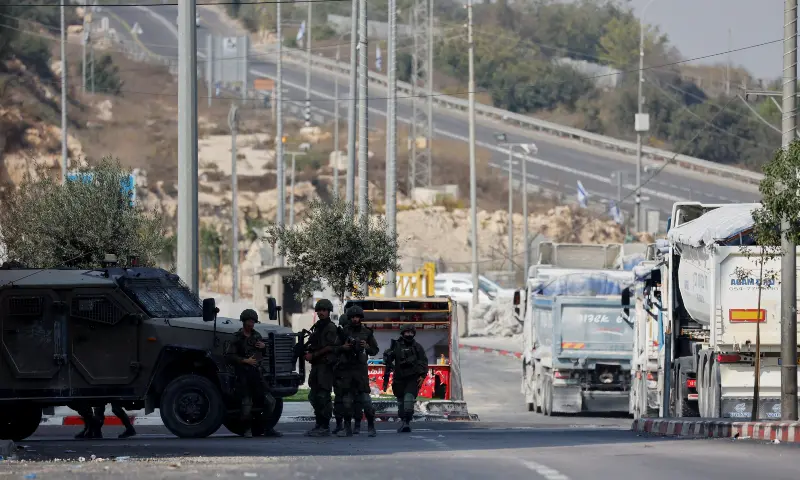
The municipality in Hebron, the Palestinian territory’s largest city, said in a statement that 3,189 people had been forced from their homes by the ongoing operation.

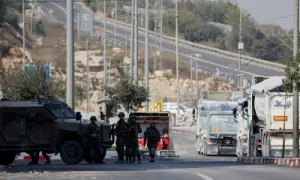
It followed Friday’s attack in which two Palestinian gunmen killed two soldiers at a checkpoint near the city, just days before Tuesday’s Israeli elections. The gunmen were killed in a shootout.

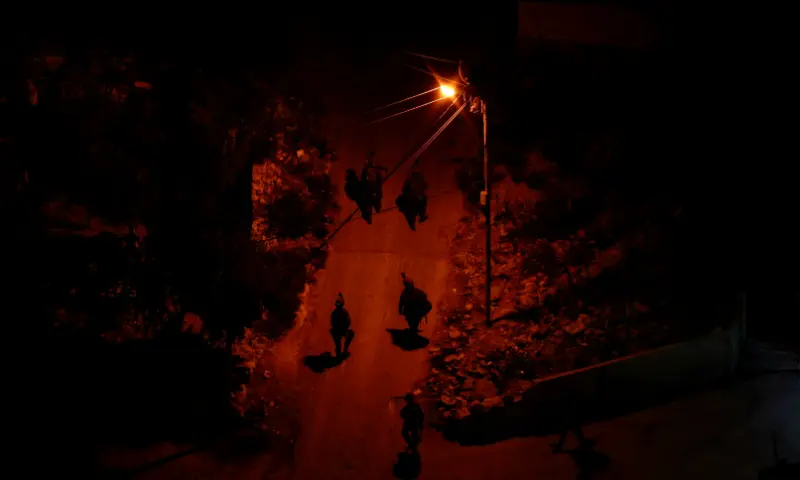
Israeli troops entered the Hebron neighbourhood of Ein Deir Baha, where the two assailants lived, and ordered residents to pack up and leave.

Israel’s “aggressive operation” has already resulted in the forcible displacement of thousands of Palestinians, “demolished homes and commercial property, and deprived residents of the ability to move freely”, UN rights chief Volker Türk said in a statement.

“The sweeping steps taken raise grave concerns of unnecessary and disproportionate use of force — which must end.”

He said the lockdown was confining many to their homes and immediate neighbourhoods.

“Declarations by senior Israeli government officials indicate that the measures implemented are punitive in nature and designed to instil fear. This is unacceptable,” said Turk.

“Those who have been displaced must be allowed to return home. Israel must ensure compensation and reparation for unlawful evictions and demolitions, and associated displacement.

“Collective punishment is a grave violation of international law. Threats to empty and erase entire neighbourhoods also raise serious concerns of ethnic cleansing.”

Speaking earlier in Cairo, UN Secretary-General Antonio Guterres said he was deeply alarmed by Israeli actions in the West Bank.

“Evictions are unrelenting, with Palestinians driven from their lands. Settler violence is surging,” he said.

“We are seeing an increasingly coercive environment, with the spectre of ethnic cleansing looming ever larger. This must end.”

Guterres said there could be no durable peace in the Middle East “without the realisation of the legitimate rights of the Palestinian people to self-determination”.

  •  

From protests to power: How Serbia's students triumphed

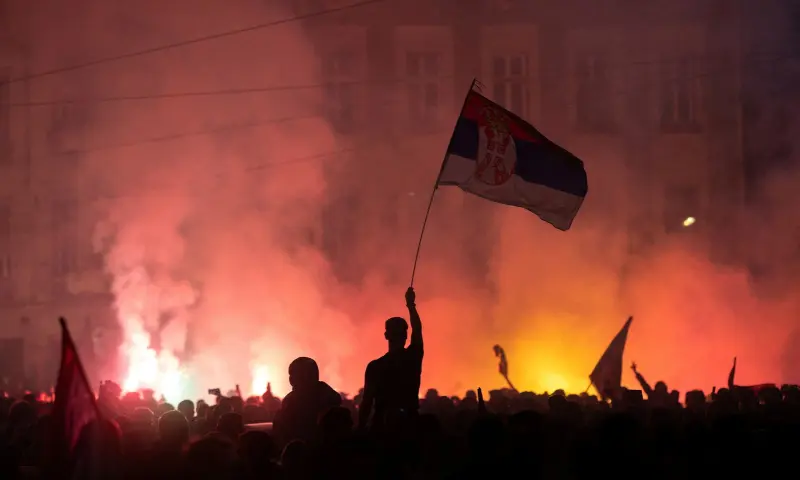
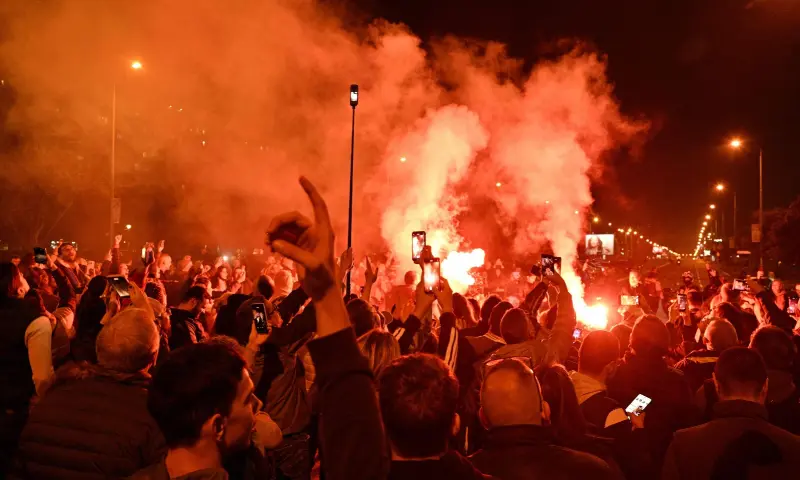
Serbia’s long-running student protest movement celebrated a historic win in the country’s election, ending 14 years of rule by the country’s right-wing populist leader Aleksandar Vucic.

Born out of nearly two years of anti-corruption protests sparked by a deadly railway station canopy collapse, the Students’ List is now eyeing a majority.

Here some key points about Serbia’s student-led movement as its candidates prepare to form government.

How did Serbia’s student movement start?

On Nov 1, 2024, a concrete awning at the entrance to Novi Sad train station collapsed, killing 16 people and sparking outcry over the tragedy at the newly renovated station.

Demanding a swift investigation, peaceful protests grew over months into some of the largest demonstrations recorded since the fall of strongman Slobodan Milosevic in 2000.

From the start, university students led the protests, blockading faculties and organising nationwide rallies.

The movement is deliberately leaderless and built around collective decision-making.

Just over a month before the second anniversary of the disaster, Vucic announced early elections, and the students assembled an electoral list drawn largely from academia and professional circles.

They are all deliberately outside any major political party.

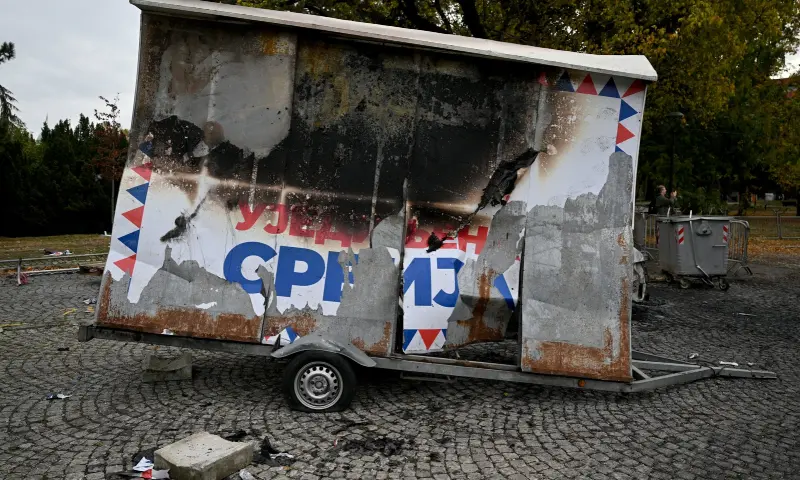
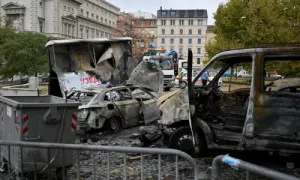
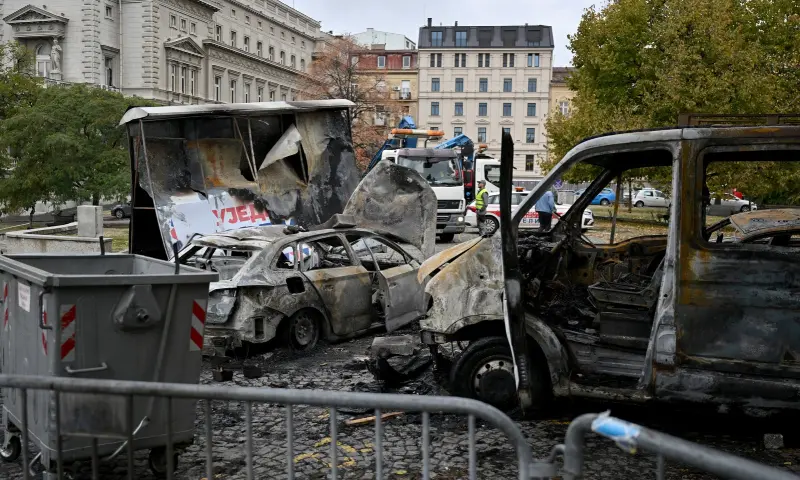
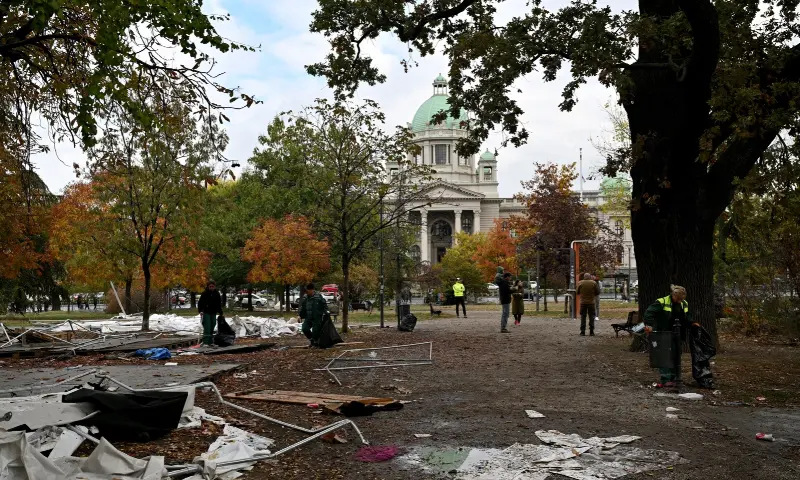
A burned election campaign banner of the Serbian Progressive Party (SNS) is pictured at a pro-government encampment in a park opposite the Serbian Parliament in Belgrade on Oct 26, 2026, after crowds celebrating election results entered the site the previous night and dismantled tents that had occupied the area for months, setting them alight along with a number of cars. — AFP

How did it win?

The movement built its campaign around opposing Vucic, setting aside issues that could divide its supporters.

“In order to win an election, the students needed the support of both groups of voters: those who are pro-European and those who are Eurosceptic,” political analyst Dusan Vucicevic told AFP.

Its campaign focused on corruption, the rule of law and attacks on press freedom.

Its collective decision-making, developed during the protests, continued into the campaign.

Who will lead?

The movement has repeatedly called for an end to the “cult of personality” that has dominated the country’s political system for decades.

The movement has not said who would be prime minister, leaving open who will lead the government, Vucicevic said.

Leading figures include Ilija Srdanovic, a cardiologist who headed the electoral list, and Radomir Saicic, a chemistry professor prominent in the campaign.

But Vucicevic stressed that Serbia’s prime minister does not have to be a member of parliament.

“So they have other people available whom they could bring into the government. We will have to wait and see.”

Supporters of the electoral list “Student List — Students Win” celebrate after Aleksandar Vucic, Serbian Progressive Party (SNS) prime ministerial candidate, conceded defeat in the parliamentary election in Belgrade, Serbia, on October 26, 2026. — Reuters

What are the key policies?

The candidates will need to adapt quickly to deliver on their broad reform platform, with the fight against corruption at its centre.

On foreign policy, the movement has offered fewer details. It previously said it would maintain Serbia’s refusal to impose sanctions on Russia over its invasion of Ukraine.

In a country still heavily dependent on cheap Russian gas but also supported by large European Union (EU) loans, the students will likely inherit Vucic’s political balancing act.

For now, the students’ focus will remain largely domestic, as they continue with their electoral strategy of uniting an “anti-regime electorate” and setting aside differences, Vucicevic said.

But he said the movement’s proposed reforms would likely bring Serbia closer to the EU.

“If the students do what they have announced, they will take much more significant steps towards EU membership for Serbian society than they would by simply draping themselves in European flags.”

Supporters of the Students’ List wave a giant Serbian flag as they celebrate their victory in the Serbian parliamentary elections, in downtown Belgrade on October 25, 2026. — AFP

What will happen to Vucic?

A deputy prime minister from 2012, then prime minister and finally president, Vucic is “politically dead”, according to Vucicevic.

He resigned ahead of the elections to run as prime minister, while his Serbian Progressive Party (SNS) won over 100 seats in the country’s parliament.

Presidential elections are due soon, but Vucic is ineligible to run, and the SNS has no obvious candidate.

The question of possible prosecutions remains and will depend on the students’ ability to restore the rule of law.

  •  

Jordan arrests 3 in dawn raid over church attack

Jordanian security forces on Monday arrested three suspects over an attack on a church last week that killed nine people, with the trio wounded in a dawn raid and shootout, authorities said.

The kingdom’s Public Security Directorate said the group were apprehended at an abandoned house where they had barricaded themselves inside and opened fire on security forces.

One of the suspects was taken to hospital in critical condition, while the other two were stable, Jordan’s state broadcaster Al-Mamlaka reported.

There were no casualties among security forces, it added.

On Friday, gunmen stormed the compound of the Greek Orthodox St George’s Church in the village of Hammoud in Karak governorate during a funeral procession, authorities said.

Karak is home to a significant Christian community in Muslim-majority Jordan, where Christians make up between two and three per cent of the population.

“Specialised investigation and raid teams apprehended the three terrorists responsible for the cowardly terrorist attack,” Al-Mamlaka said on X on Monday.

The Public Security Directorate said the three suspects had “refused to surrender and opened fire on the security forces”.

‘We will show them’

Jordan’s King Abdullah II said in a post on X that security forces “chased them to the very end”.

“We vowed the terrorists would not escape punishment, and no proponent of dark ideologies that divide Jordanians will be tolerated,” he wrote.

Earlier, the king visited the injured victims of the church attack in hospital, dressed in military fatigues and carrying a pistol on his hip.

“We will show them,” he vowed.

Interior Minister Mazen al-Faraya told Al-Mamlaka on Monday that the attackers were all Jordanians and “had been holed up in a building in one of the villages near the site of the attack”.

“There is no indication of any external contacts or collaboration with foreign parties,” he said.

Government communications minister Mohammad al-Momani said “we stand ready and will strike with an iron fist, without mercy or leniency, against anyone who attempts to undermine Jordan’s security”.

Under Jordanian law, murder is punishable by death by hanging.

On Friday, Prime Minister Jafar Hassan ordered a three-day period of national mourning for the victims of the church attack, with flags to be flown at half-mast over government and public institutions.

Eight of the nine victims were laid to rest on Sunday next to the church in a funeral that drew a huge crowd amid a large security presence, AFP images showed.

The ninth person, Mohammed al-Qasous, will be buried on Monday, his family said.

On Saturday, officials at the church were digging a mass grave that was set to become a memorial.

  •  

What challenges await Brazil's Lula in his fourth term?

President Luiz Inacio Lula da Silva will have to wrestle with a divided Brazil, an unfriendly Congress, feeble public finances and a Donald Trump-shaped menace during his unprecedented fourth term.

Days before his 81st birthday, the former union leader won Sunday’s runoff with 51.7 per cent of the vote over 48.2pc for his right-wing challenger Flavio Bolsonaro.

The narrow result confirms the political divide that has split Brazil for a decade and shows that Bolsonarism remains strong, despite its far-right leader’s 27-year prison sentence for attempting a coup.

Here are the main challenges awaiting Lula in his next mandate.

Governability

As in his current term, Lula will not have a majority in Congress.

Legislative elections earlier this month bolstered the right, making Bolsonaro’s Liberal Party the leading force with 121 out of 513 deputies and 28 out of 81 senators.

To get his proposals through, Lula will depend heavily on the so-called “Centrao,” a bloc of centre-right parties that usually backs whoever is in power in exchange for benefits.

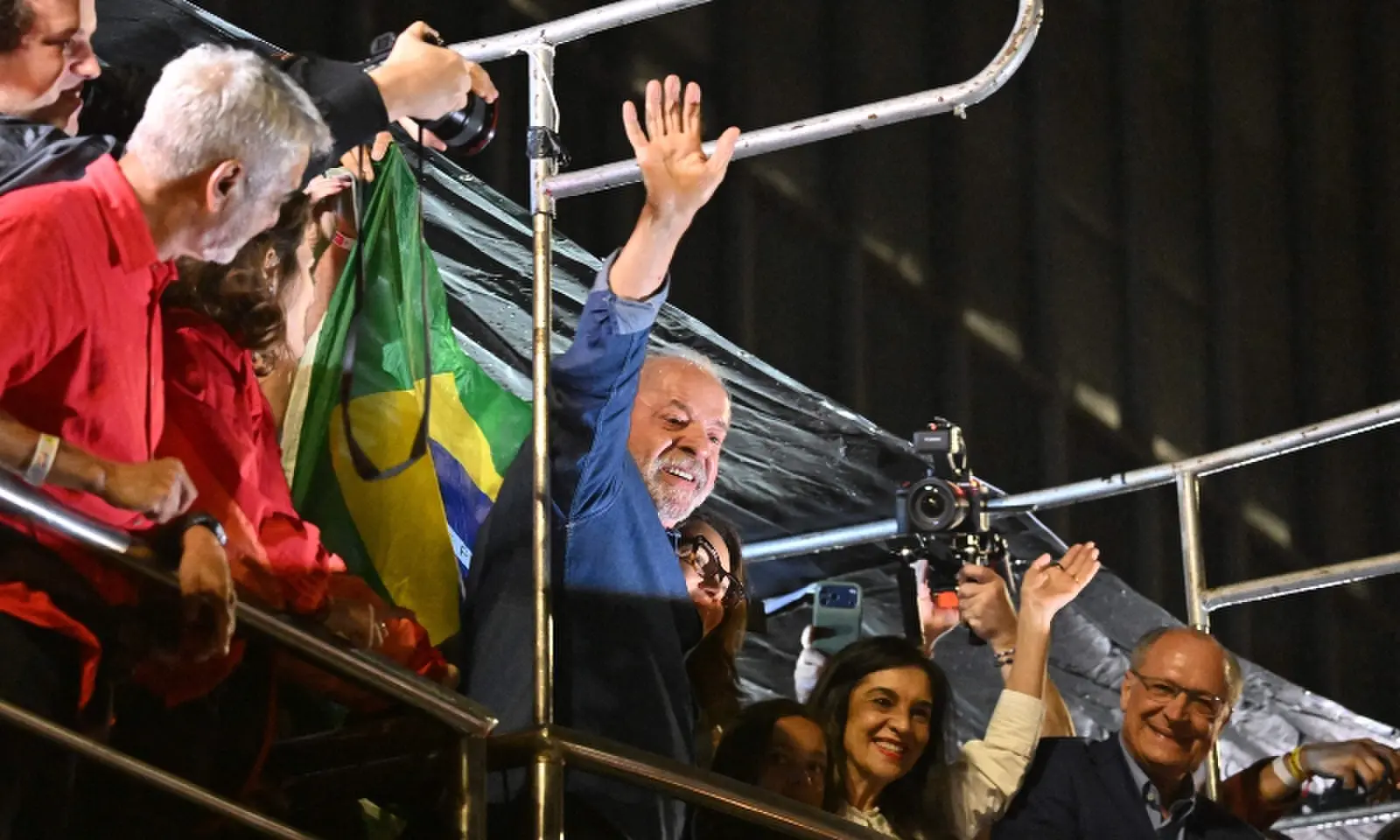
Brazil’s President and presidential candidate Luiz Inacio Lula da Silva gestures to supporters after winning the presidential runoff election in Sao Paulo, Brazil, on October 26, 2026. —AFP

But negotiating with them is becoming increasingly difficult, according to political scientist Mayra Goulart of the Federal University of Rio de Janeiro.

Lawmakers now decide the fate of an ever larger share of the federal budget, she told AFP, giving them “more independence from the executive.”

Money

Economically, “Brazil’s three big problems are the fiscal problem, the fiscal problem, and the fiscal problem,” economist Mauro Rochlin of the Getulio Vargas Foundation (FGV) told AFP.

The state spends more than it collects, public debt exceeds 80 percent of GDP, and Brazil’s central bank maintains one of the world’s highest interest rates to contain inflation.

The situation “could very quickly turn into an economic crisis,” said Rochlin.

Supporters make an “L” sign as people gather to watch Brazil’s President Luiz Inacio Lula da Silva, the Workers’ Party (PT) candidate for re-election, speak after his victory in the presidential runoff election, at Paulista Avenue, in Sao Paulo, Brazil, October 26, 2026. —Reuters

Adjustment is inevitable but difficult since it involves “unpopular measures” and confronting “very powerful lobbies within Congress,” he said.

The challenge is likely going to clash with Lula’s flagship welfare programs, which have lifted millions out of poverty, and which he expanded during the campaign to win voters —drawing fierce criticism from the opposition.

Insecurity

The election campaign was dominated by security concerns, with violence a huge worry for many Brazilians.

Accused by the opposition of having a soft touch, Lula will be under pressure to show results, particularly by tackling criminal groups and militias that control territory in several cities.

On the campaign trail, he said he would support lowering the age of criminal responsibility from 18 to 16 for heinous crimes, while the political right wants to reduce it to 14 years.

Trump

Lula campaigned on a pledge to protect Brazilian sovereignty as concerns grow about the broadening interventions of the United States across Latin America.

Trump slapped tariffs on Brazil last year in retaliation for legal proceedings against his ally Jair Bolsonaro, followed by another 25pc tariff on some products this year.

Brazil’s President and presidential candidate Luiz Inacio Lula da Silva gestures to supporters after winning the presidential runoff election in Sao Paulo, Brazil, on October 26, 2026. —AFP

Brazil’s president will have to manage relations with Washington without relaxing his anti-imperialist tone, all while the Trump administration increasingly asserts itself in the region.

Right-wing leaders across Latin America have meanwhile aligned with Trump in a trend dubbed the “Orange Wave,” in reference to the US leader’s complexion.

Although ideology “matters for symbolic encounters,” it is “not that relevant” in practice, according to Oliver Stuenkel, an international relations professor at the FGV.

He points to Brazil-Argentina relations as an example.

“Deep down, the substance of the relationship hasn’t changed that much” despite Argentine leader Javier Milei’s insults toward Lula, Stuenkel told AFP.

  •  

Brazil's leftist President Lula wins fourth term in dramatic comeback

Brazil’s leftist President Luiz Inacio Lula da Silva pulled off a dramatic comeback on Sunday as he clinched a re-election victory, but his rival Flavio Bolsonaro refused to accept the loss and said he would seek to annul the vote.

With Lula’s victory, Brazil staved off a conservative wave that has seen numerous countries — such as Argentina, Chile, Colombia, and Peru — all shift right, backed by US President Donald Trump.

The leftist icon, who turns 81 on Tuesday, defied projections to win an unprecedented fourth term.

According to official results, he won 51.8 per cent of the votes to 48.2pc for Flavio Bolsonaro, with Lula pulling around 4.4 million more votes.

The senator is the son of former far-right president Jair Bolsonaro, who is serving a 27-year jail term for attempting a coup after his loss to Lula in the country’s last election in 2022.

Sunday’s vote was marked by confusion after a Supreme Court ruling extended voting by two hours as some polling stations had already closed.

The move came at the request of Lula who complained that buses had been pulled from circulation in various cities, barring citizens from voting.

Flavio Bolsonaro also requested an extension in some regions due to heavy rains, but he described the decision as “unacceptable” and a “dirty trick”.

“It is impossible to recognise the results. I am going to request the annulment of these elections,” he said, stone-faced, in a brief speech in Brasilia.

No candidate who lost the first round has gone on to win the second in Brazil since 1989, the first direct election after the end of the country’s military dictatorship.

“People went to vote because we managed to convince them that voting was very important for ensuring democracy in the country,” Lula said in his first comments after the win.

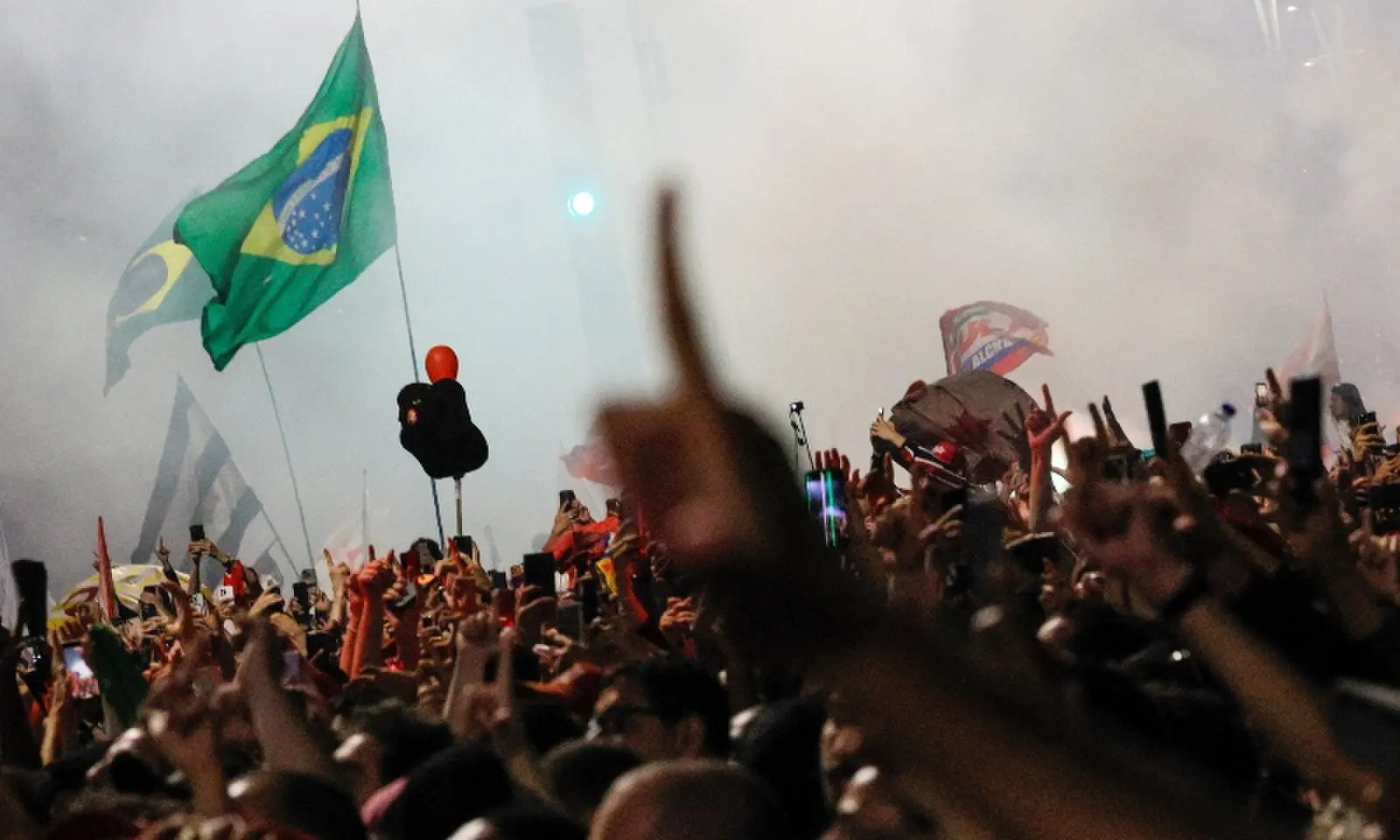
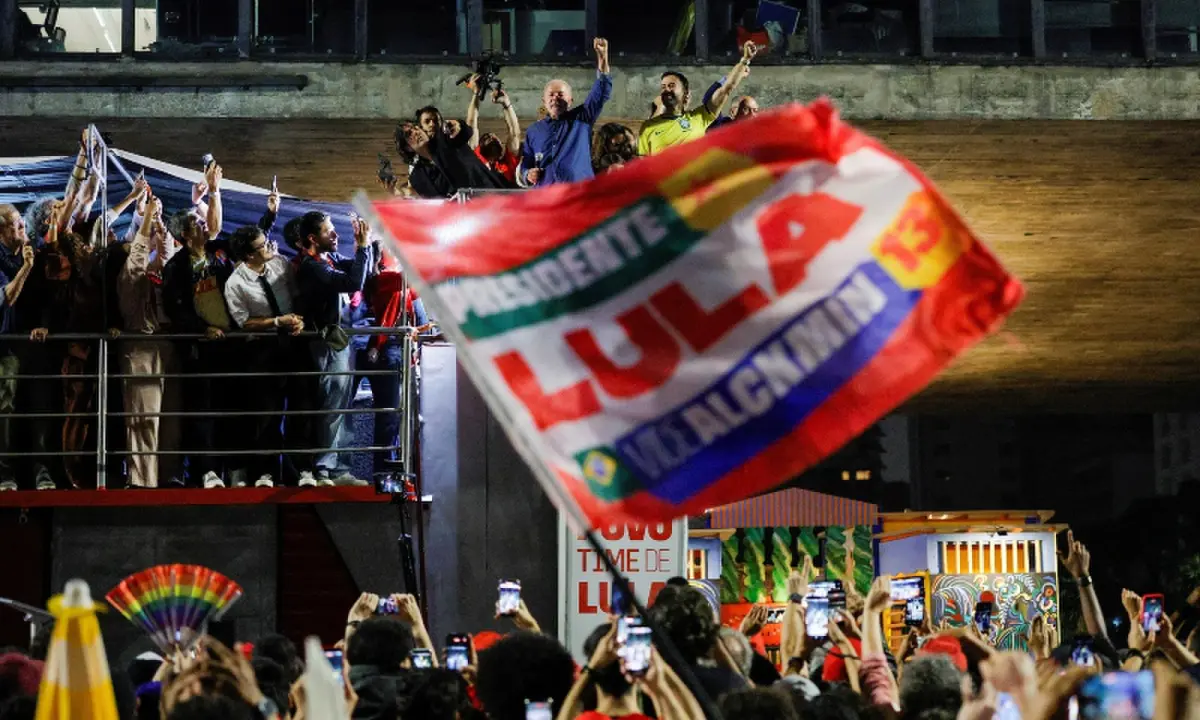
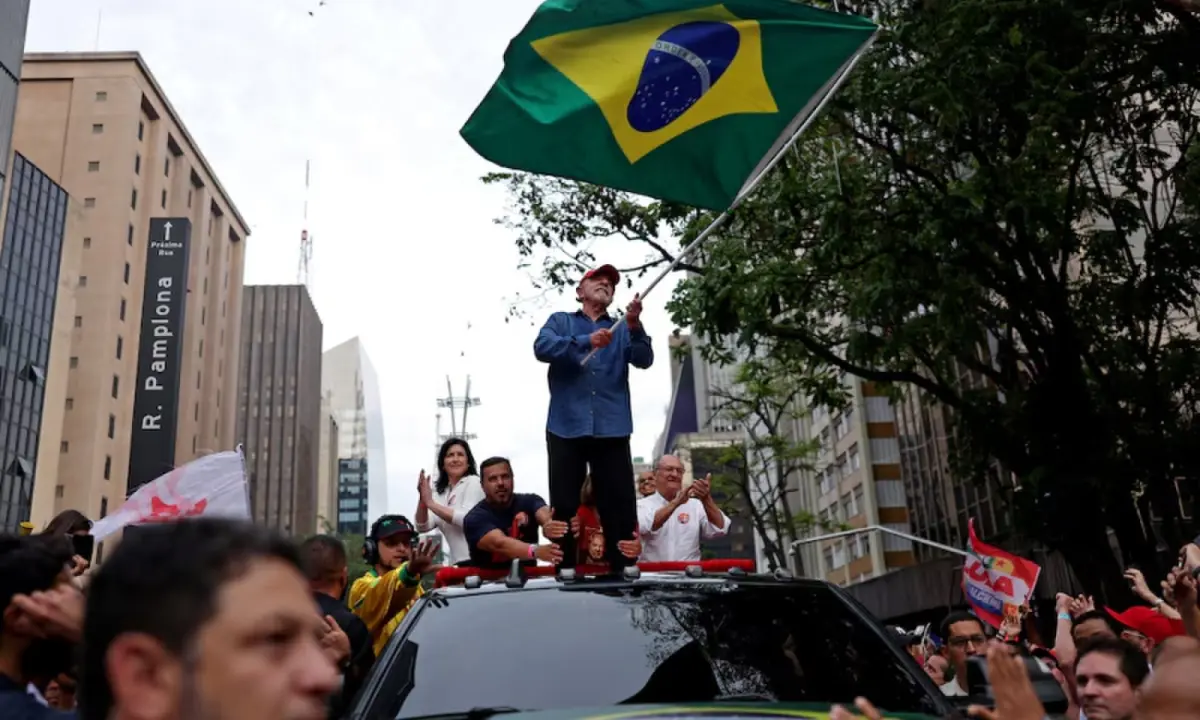
Fireworks and vuvuzelas rang out in Rio de Janeiro, while thousands of people dressed in red, the color of Lula’s Workers’ Party, streamed into the streets of Sao Paulo to celebrate.

Lula’s fight back

After the first-round defeat, the left swung into action with massive rallies, declaring “Never Again Bolsonaro” and revamped their social media strategy.

The abstention rate decreased from the first round, falling from 21pc to 19pc.

Julio Canelo, 42, a lawyer celebrating in Rio de Janeiro hailed a victory for “the entire democratic spectrum.”

“It was the result of the people mobilising, in the streets and online,” he told AFP.

A fierce social media battle drew in Meta, parent company of WhatsApp, Facebook and Instagram, which Lula’s campaign accused of favouring his opponent with “algorithmic manipulation”.

Meta denied this but acknowledged that some of Lula’s campaign ads had been mistakenly deactivated due to technical errors.

“We are going to have to regulate them,” Lula said of social media companies after his win.

A bitter campaign marred by scandals and mudslinging laid bare the deep divisions that have plagued Brazil over the past decade.

A country split in two

Lula heads into a fourth term with almost half of the nation having rejected him, desperate for change.

He rose from poverty to become president in 2003 and was re-elected in 2006.

Lula made a dramatic return to office in 2022 elections after a corruption scandal saw him jailed for over 18 months.

The charges were annulled on procedural grounds.

In his third term, Lula oversaw a drop in inflation and unemployment, and lifted millions out of hunger, but many voters felt gloomy about the high cost of living and crime.

Flavio Bolsonaro, 45, pitched himself as more moderate and jovial than his father and managed to galvanise conservatives as well as less ideological voters wanting something new.

“We’re in a deep hole, things are dire. People can barely afford to eat — buying meat is out of the question,” said Tereza Cristina Ramos, a 68-year-old retiree, who voted in Rio de Janeiro.

Already one of the world’s oldest leaders, Lula will be 85 by the end of his new term in 2030.

He is also facing a hostile Congress dominated by the right.

Lula’s campaign leaned heavily on the theme of sovereignty in the face of commercial and diplomatic pressure from Trump’s United States.

“This country will not accept being anyone’s backyard,” he said on Sunday.

Lula received congratulations from Chile’s far-right president, Jose Antonio Kast, and Ecuador’s right-wing Daniel Noboa — both close Trump allies.

President Asif Ali Zardari also congratulated Lula on his “historic re-election”.

He “expressed confidence that the longstanding friendly relations between Pakistan and Brazil would continue to grow, with enhanced cooperation in trade, investment, agriculture and multilateral forums for the mutual benefit of both countries and their peoples”, a statement issued by the Presidency said.

  •  
❌