Albany business-as-usual is steadily killing New York's future, with the destruction of the state's public schools a prime example — and if Kathy Hochul is anything, she's the face of go-along-to-get-along with Albany's ways.
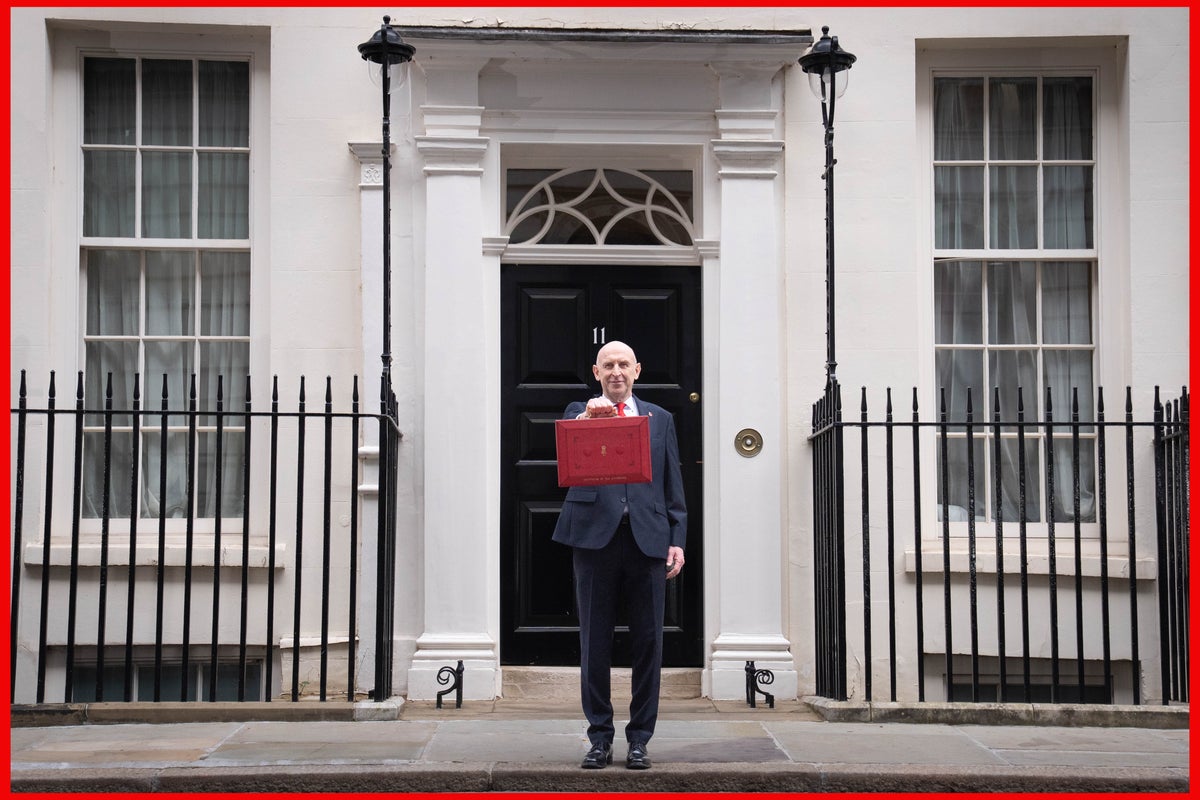
Editorial: As well as the raft of small, short-term measures to give households ‘breathing space’, the chancellor offered grounds for optimism that the Burnham government is determined to fix the economy – and rebuild national security
A new report from the House Judiciary Committee warns that Gotham DAs are downgrading charges for illegal-immigrant criminals in order to help them avoid deportation.
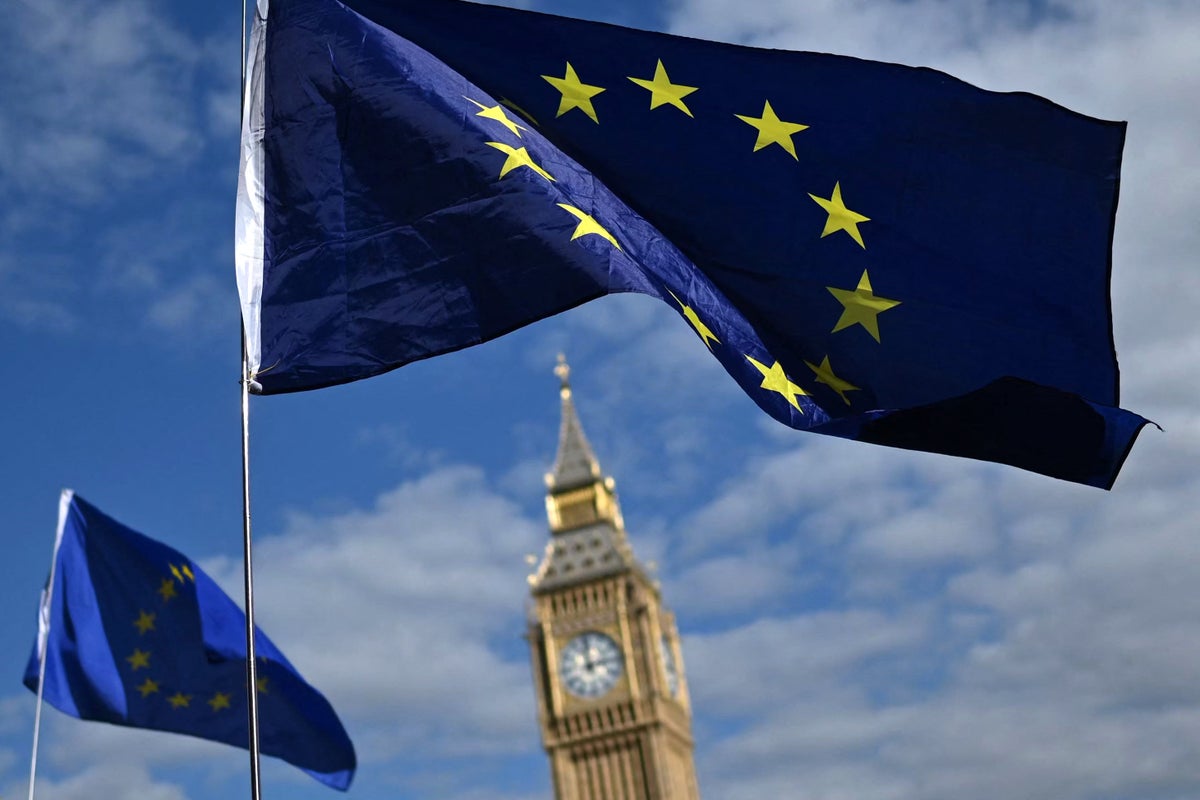
Editorial: The prime minister has called for an ‘honest conversation’ about EU membership – and his government is already in talks to allow Europeans to travel, live, study and work in the UK. It is a leap of faith that bodes well for closer alignment
THE fact that high officials from the Makkah defence pact partner states — Pakistan, Saudi Arabia and Turkiye — were in Tehran on Monday made global headlines, and with good reason. At a time when the clouds of war are once again hovering over the Gulf, the meeting sent a strong message that regional states with often competing agendas can come together and discuss their issues at the negotiating table. The event was also significant as the Makkah alliance has been seen as an alternative defence arrangement vis-à-vis Iran’s ‘Axis of Resistance’.
Pakistan was represented by the chief of defence forces, while significantly, Saudi Arabia sent its defence minister, a brother of the crown prince. This shows that Riyadh accorded the highest priority to the meeting. The official Iranian readout said the participants pledged to “continue the dialogue … for peace and security in the region.”
The event is also further proof of Pakistan’s constructive efforts in the diplomatic arena, as the meet-up was held after the CDF — who was in Tehran last week — suggested it.
All regional states are wary of possible fresh US/Israeli attacks on Iran, and the Tehran meeting must be seen in this framework. Moreover, Saudi Arabia has likely reached out to Iran to get the Islamic Republic to use its connections with Yemen’s Houthi Ansarallah group to stop its attacks on the kingdom. Riyadh is also concerned about Iranian retaliation in the face of a renewed Israeli and American attack.
Perhaps Yemen can be the first area for the Makkah pact allies and Iran to discuss. A fresh push for peace should be made that envisages an immediate ceasefire supplemented by an end to Houthi attacks on Saudi Arabia, and a lifting of the Saudi-led blockade on Houthi-held areas in Yemen. Both Saudi Arabia and Iran, as well as other regional powers, should advocate a negotiated settlement to the Yemeni civil war.
Beyond Yemen, the fact that the US and Israel are preparing for fresh aggression against Iran could spoil efforts for a regional entente. This is why all participants of the Tehran meeting must clearly say that they oppose attacks on Iran or any other regional state.
Iran and the Makkah pact states should also pledge not to let external actors use their soil to launch aggression against each other. In fact, while inviting Iran to join the Makkah alliance may not be practical at this juncture, regional states can at least agree to a common non-aggression framework. That would send a powerful message to external actors that seek to destabilise the region.
States of the region are making sincere efforts to prevent a return to war. It is time Washington and Tel Aviv read the writing on the wall and abandoned their destructive plans.
Hong Kong might have grown accustomed to treating seasonal influenza as a temporary inconvenience rather than a public health menace as the virus comes and goes every year. But with a lower vaccination uptake and a raging and longer-than-expected summer outbreak this year, the same business-as-usual response is hardly the right defence. Members of the public, especially high-risk groups, should waste no time coming forward for the jabs as local health authorities put the city on alert.
Officials...
El cambio climático se hace presente con extrema dureza. Ya no es una amenaza futura que hay que combatir desde ahora, sino que se ha convertido en un problema actual de primera magnitud. Este último verano, el más cálido de la historia, ha provocado en Europa al menos 35.000 muertes más por las olas de calor y los fenómenos meteorológicos extremos que han afectado a todo el continente, incluida España. Ante esta nueva realidad la Comisión Europea pretende establecer una cultura de prevención y gestión de riesgos climáticos. Ayer se presentó la primera iniciativa legislativa comunitaria sobre resiliencia climática, con objeto de obligar a los estados a adaptarse a la aceleración del calentamiento global.
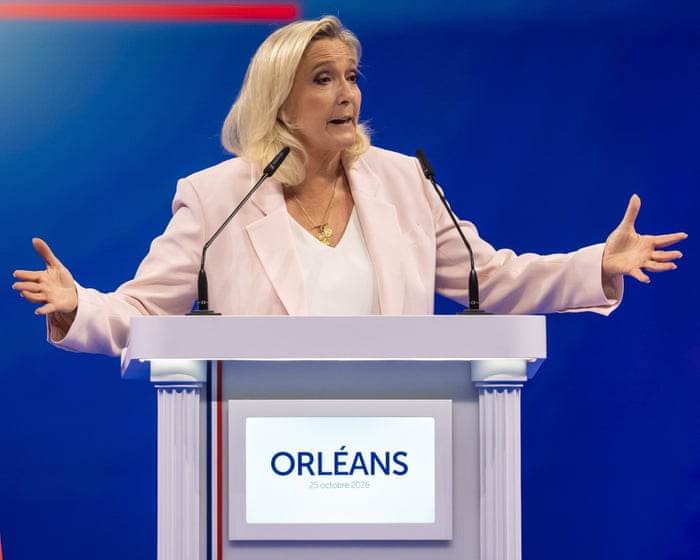
If ever enacted, proposals by Marine Le Pen and the AfD leader, Alice Weidel, to hollow out EU institutions would be a continental act of self-harm
Following the Brexit referendum in 2016, Marine Le Pen was in a predictably celebratory mood. Britain’s vote to leave the European Union, she told one interviewer, was the first breach in the “Brussels Wall”. Ms Le Pen’s Front National party was at that point committed to taking France down the same path, given the chance. But as the UK’s self-inflicted economic wounds became a cautionary tale for the rest of Europe, the notion of Frexit was put on ice.
Instead, Ms Le Pen now hopes to lead far-right allies in hollowing out the EU from within. This month, both she and the leader of Alternative für Deutschland, Alice Weidel, outlined their visions of a “Europe of nations” in which EU institutions would be stripped of both cash and power. Ms Weidel’s “new deal for Europe” would abolish elections to the European parliament, and seek German opt-outs in areas such as migration, defence and common borrowing. Ms Le Pen’s party, now called National Rally, proposes slashing French contributions to the EU budget by 60% over a five-year presidential term, and ending the role of Brussels in proposing common policies for the 27 member states.
Do you have an opinion on the issues raised in this article? If you would like to submit a response of up to 300 words by email to be considered for publication in our letters section, please click here.
THE government’s plan to distribute 500,000 Chromebooks to students over two years could help narrow Pakistan’s digital divide. The devices, which will come with MiFi internet connectivity, are meant for students handpicked under the scheme. In a country where access to computers and reliable internet still depends heavily on family income and location, that matters.
A student who cannot afford a laptop should not be locked out of online learning, digital skills or job opportunities. But the value of the scheme will depend on how it is carried out. The state should publish clear eligibility criteria, ensure that poorer students are not crowded out by those who already have devices, and explain how the refurbished Chromebooks will be procured, tested and distributed.
The total cost should also be disclosed, along with safeguards against political influence in selecting recipients and suppliers. There should also be a plan for repairs, replacement and technical support. A device that stops working after a few months, or cannot connect reliably outside major cities, will do little to close the gap it was meant to address.
More importantly, access to hardware is only one part of Pakistan’s education problem. A Chromebook cannot compensate for weak teaching, poor literacy, overcrowded classrooms or schools without dependable electricity and internet access. Nor will handing out devices automatically improve learning. Teachers need training to use digital tools well, students need access to useful content, and schools need systems that can blend technology with ordinary classroom instruction.
The government should therefore set measurable goals for the scheme: whether students use the devices regularly for learning, whether their digital skills improve, and whether this leads to better educational outcomes. Independent evaluation would help determine if the programme deserves expansion. There is also a case for giving students in remote and low-income areas greater weight, since they stand to benefit most from access they currently lack.
Pakistan has launched laptop schemes before; what matters now is whether this one produces more than a distribution ceremony. Technology can widen opportunity, but only when it is tied to good teaching, reliable connectivity and clear educational purpose.
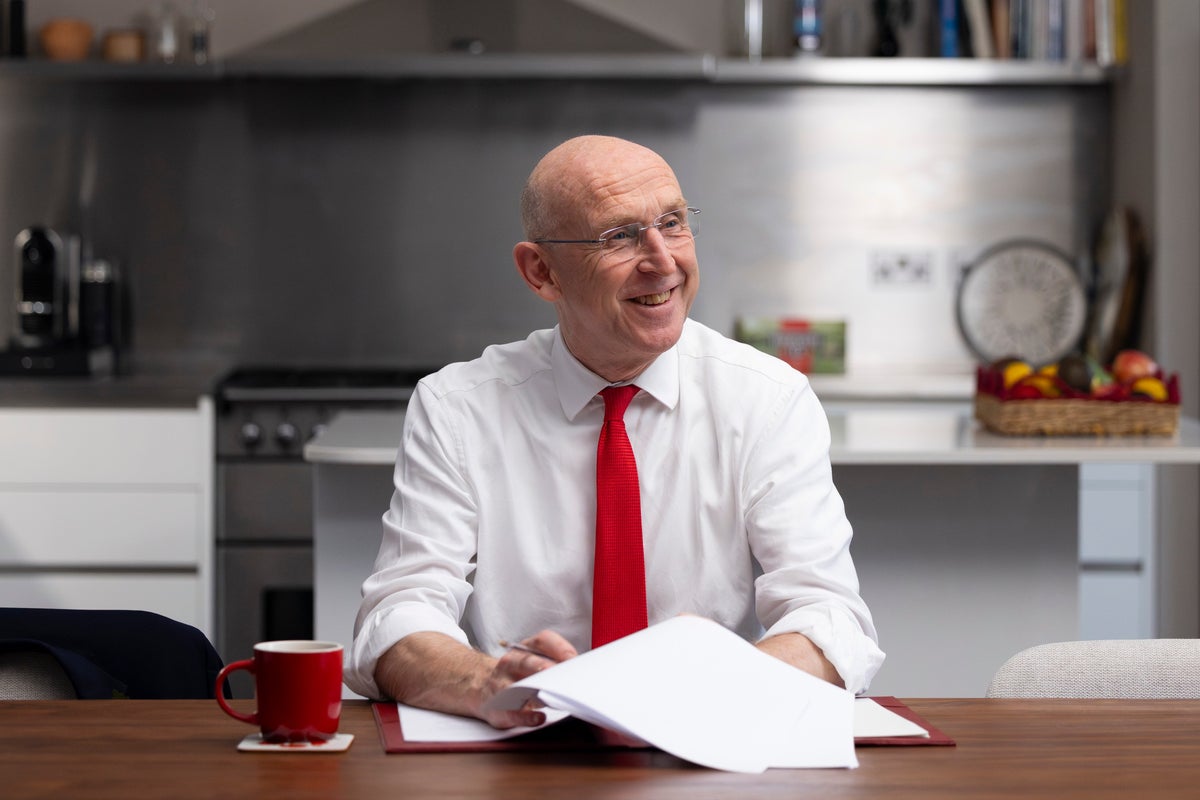
Editorial: All the signs are that John Healey’s first Budget on Wednesday will be a very modest event indeed. Without precise measures to bring down the cost of living, it could leave the government looking rudderless
THE proposed merger of the Privatisation Commission and the Public-Private Partnership Authority (P3A) into a single institution is a sensible move. It will end the duality of functions and provide a more coherent framework for mobilising private capital to manage public assets and develop physical infrastructure for which the state has limited resources to spare.
Although the two bodies operate under separate laws, their mandates intersect in bringing private capital and expertise into areas dominated by the state. A unified entity could offer a common platform for evaluating these options.
Privatisation involves transferring ownership or control of state assets, while public-private partnerships (PPPs) allow governments to enlist private capital for projects they cannot finance. Both approaches require sound financial assessments and clear risk allocations.
With Pakistan facing persistent fiscal constraints, the state cannot afford to finance loss-making enterprises indefinitely. Private investment can help ease these pressures, but it is not an end in itself. Poorly structured transactions can leave the state with inadequate returns or costly contractual obligations.
The proposed legislation envisages four public funds to support privatisation and PPP transactions. These instruments could help prepare viable projects and attract investment. However, they must not become vehicles for subsidising commercially unsound ventures. Government guarantees and liabilities should be disclosed and assessed before deals are approved.
The proposed legal protections for serving and former officials acting in good faith also require careful rethinking. Officials should be protected against frivolous litigation when making decisions in the public interest. Such protection must not, however, become immunity from accountability.
Making PPP agreements accessible as public documents is also positive. Public scrutiny is particularly important when private investors enter long-term arrangements that may impose financial obligations on taxpayers and successive governments.
The new arrangement offers an opportunity to improve the management of state assets and infrastructure investment. Its success will depend on securing fair value for public property, attracting credible investors and ensuring that partnerships deliver tangible benefits.
The bill proposes a majority-independent board with private-sector representation to strengthen commercial decision-making. Its effectiveness will require transparent appointments, relevant expertise, political independence, clear performance benchmarks, strong accountability, and enforceable conflict-of-interest rules to ensure effective governance.
The state must now ensure that commercial discipline, transparency and accountability guide its implementation.
Luiz Inácio Lula da Silva, con una remontada histórica, se ha impuesto en la segunda vuelta de las elecciones presidenciales en Brasil, superando al ultraderechista Flávio Bolsonaro, que había ganado la primera ronda por dos puntos de ventaja. Será su cuarta presidencia –segunda consecutiva– y, si la acaba, habrá gobernado el país más poblado de Sudamérica durante 16 años.
Two years after the Novi Sad tragedy gave birth to a youthful political movement, Sunday’s remarkable election has taken the country into a new era
This weekend it will be two years since the collapse of a shoddily constructed train station canopy in Serbia’s second city, Novi Sad. The tragedy, killing 16 people, was swiftly attributed to state corruption and failures of regulation, sparking student-led protests across the country.
Some of those demonstrators dared to imagine that they could become the catalyst for a democratic revolution.
Ten suspected criminals killed in Karachi police ‘encounters’ in two days should trouble anyone concerned about public safety and the rule of law.
Seven died in separate incidents on Thursday and another three on Friday. In each case, police reported armed resistance, exchanges of fire, and the recovery of weapons.These accounts may be accurate, but cannot be accepted without scrutiny. Officers confronting armed criminals have every right to defend themselves and others.
Karachi’s residents, long exposed to street crime and violent robberies, deserve protection. Yet the frequency of these so-called encounters raises questions about how operations are conducted and whether suspects are given an opportunity to surrender.
Whether the police actions were legitimate or unlawful can only be established through credible investigations. There must be forensic examination of weapons, independent verification of police accounts, and proper documentation of injuries and evidence.
Such scrutiny should be routine whenever police gunfire causes death, regardless of the victim’s alleged criminal history. Otherwise, the public must rely entirely on the version offered by those who pulled the trigger. The concern extends beyond Karachi.
In Punjab, where the Crime Control Department faces allegations of staged encounters, the political response has exposed a dangerous willingness to equate police killings with justice. After a suspect in the killing of a teenage worker in Multan died in an alleged encounter, PML-N lawmaker Hina Parvez Butt celebrated it as “justice served immediately”. She deleted the post but defended her remarks as public sentiment.
Anger over a child’s murder is understandable. But an elected representative ought to know that public outrage cannot substitute for a trial, and that a police killing is not a judicial verdict. Punjab Information Minister Azma Bokhari criticised the comments, though the issue is larger than one politician’s embarrassment.
Governments must make clear that police performance will be judged by crimes prevented, offenders lawfully arrested, and cases successfully prosecuted, not bodies counted. Independent inquiries into disputed encounters should publish findings and establish responsibility if unlawful force is proved. Police officers need training, equipment and supervision that make arrest a realistic option where possible. A force that can shoot but cannot build a case offers little lasting security. The police are duty-bound to protect lives. They do not have a licence to kill.
By Chris Servello (OpEd) After years of testing and debating how unmanned surface vessels fit into the fleet, the Navy is starting to show what these systems can do. And...
The Coast Guard’s new credentialing portal promises complete applications and faster processing. One American ship captain tested it. What he found raises serious questions about automation, accountability, and whether Washington...
Over the past ten days, a great many extreme weather events have been recorded—from the USA to Europe, and from Asia to South America.
Is it truly all the fault of El Niño only?
Or does geoengineering—a subject to which Gospa News has devoted numerous investigations—play a role?
UPDATE on OCTOBER, 22, 2026
New Massive and Flash Flooding in the US even inside an Hospital
In the latest hours and days new massive floods are devastating some US states and North America. Four footages in one video below on ocober, 2026 events.
1st footage – Water Surges Through Endoscopy Recovery Bays in Austin Hospital in Texas
2nd footage – Flash flooding buried cars in debris on Tuesday in Clifton, Arizona.
3rd footage – Heavy rain inundated parts of West Texas on Thursday, part of a multi-day flood threat fueled by tropical moisture colliding with a massive cold front moving across the country.
4th – footage Millions in Electronics Drenched as a Massive Ceiling Flood Destroys a Toronto Showroom
Wild Weather across Europe. Devastation in Spain, UK, Italy, France and Portugal
The western Mediterranean is currently experiencing a period of extreme weather, characterized by torrential rain, flooding, and overflowing rivers across Europpe ande above all eastern Spain, southern France, and Italy. The situation is most critical along the Spanish coast, where Storm Adam has triggered exceptional rainfall, resulting in a heavy toll of casualties and displaced people.
The Valencian Community has been among the hardest-hit areas. In Pego, in the province of Alicante, 693 mm of rain was recorded over a 36-hour period.
As of October 20, the provisional toll stands at four fatalities, with over 2,100 people evacuated and hundreds of rescue operations carried out. Blocked roads, flooded homes, and vehicles swept away by the currents bear witness to the intensity of the event.
The severe weather is now also affecting southern France and Corsica. This Mediterranean weather system has primarily impacted the Languedoc region, with the departments of Hérault and Gard being of particular concern.
In the latest hours and days new massive floods are devastating some European countries. Below the footages from Spain, France, UK, Italy and Portugal in October, 2026
1st footage – Helicopters continue to rescue people trapped in Oliva (Valencia, Spain). The La Safor and La Marina Alta districts are the most severely affected.
2nd footage – An intense downpour hit El Palo, Málaga (Spain). The storm dumped nearly 60 liters per square meter in just 30 minutes, causing significant water accumulation on the streets.
3rd footage – Massive Flash Flood Turns a London Airport Baggage Hall Into a Raging River
4th footage – The famous giant waves of Nazaré are found at Praia do Norte, in the town of Nazaré, in the Western region of Portugal.
France
Italy
FIRST POSTED on OCTOBER, 20, 2026
Harsh Floods in Las Vegas, Newport and Long Beach
El Niño Alert: WMO and Peterson Institute Warn of Up to $986 Billion in Damages by 2027
The current El Niño event could have far-reaching economic and humanitarian consequences. The World Meteorological Organization (WMO) predicts that the phenomenon will almost certainly persist until February 2027, while the Peterson Institute for International Economics estimates that global losses in 2027 could reach nearly $986 billion if the event’s intensity matches that of 1997–98.
The WMO has issued warnings regarding potential impacts on temperatures and precipitation, noting an increased risk of heatwaves, droughts, and floods.
In its Global Seasonal Climate Update for the September–November 2026 quarter, the organization forecasts a likely rise in temperatures across Europe—particularly in central and southern regions—along with a higher probability of above-average rainfall in Southern Europe.
The repercussions will extend beyond the climate. An analysis by the World Food Programme, cited in the study, indicates that among 45 countries already facing food insecurity, an additional 49 million people could fall into a state of severe food insecurity by the end of 2027. The most significant effects are expected in parts of Central America and Southern Africa, with substantial impacts also anticipated in East Africa, as well as South and Southeast Asia.
From an economic perspective, the outlook is concerning: the Peterson Institute warns that, in addition to the nearly $1 trillion in losses projected for 2027 alone, cumulative losses over the following five years could exceed $7.2 trillion in the absence of coordinated intervention.
These figures have reignited the debate regarding the international community’s preparedness and response capabilities.
Extreme weather events in Italy have risen from 60 in 2015 to 376 in 2025.
On the mornign of October 9, 2026, in Marsala (Sicily, Italy) , a double waterspout struck the Alcide De Gasperi school, where approximately 270 children were present.
The building has been rendered unusable; reports vary, but five or six children sustained minor injuries. In Petrosino, two people are in critical condition (classified as “red code”) after their car was forced off the road. This is not an isolated incident.
Around the same time, severe weather rendered a nursery school in Viareggio unusable, left a school bus stranded in floodwaters in Giugliano, and caused a lightning strike on a 17th-century church in Forio d’Ischia.
Extreme weather events recorded in Italy have increased from 60 in 2015 to 376 in 2025—a sixfold increase in ten years.
The estimated cost of damages for 2025 alone is 11.9 billion euros. A national adaptation plan was approved at the end of 2023; the observatory tasked with its implementation began its work in February 2026, yet, according to Legambiente, the necessary funding is still missing.
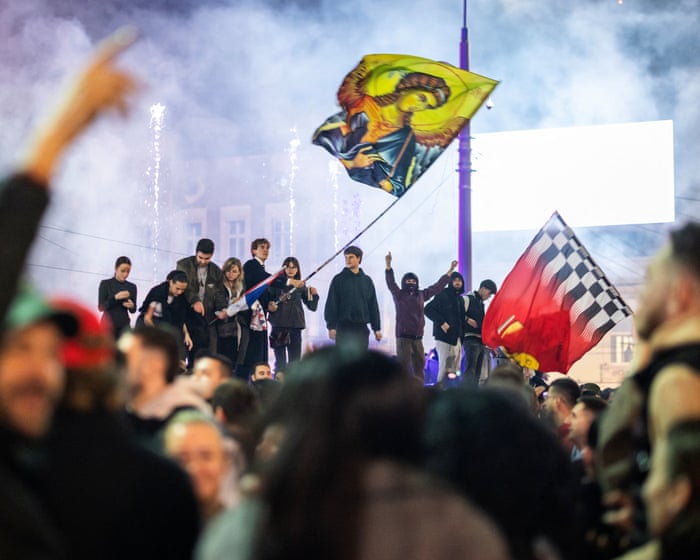
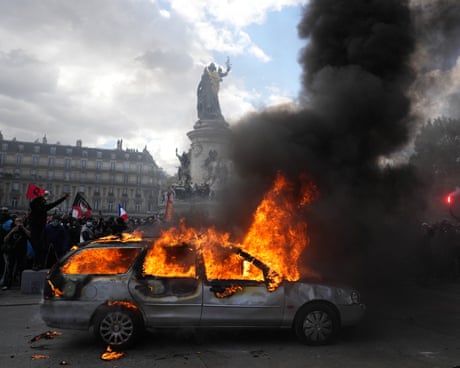
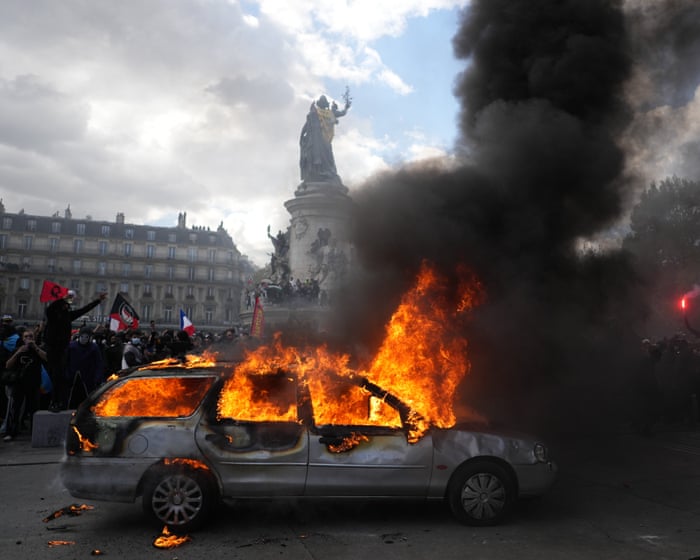
The scenes of social unrest and violence at the weekend are an ominous portent, ahead of elections which may deliver a far-right presidency
In Emmanuel Macron’s book Revolution, published ahead of the 2017 presidential election that he went on to win, he promised to restore hope to a country that was losing faith in its future. As Mr Macron’s lame-duck second term enters its last phase against a quasi-insurrectionary backdrop of torched public buildings and looted shops, the failure of that political project appears total.
The worst scenes of urban violence for years overshadowed a weekend of protest that gravely undermined what is left of the French president’s authority. As police lost control of the streets, more than 2,000 shops were ransacked. Far-left groups targeted town halls and local buildings, and engaged in pitched battles with the police, whose disastrously heavy-handed response to last week’s high school protests has succeeded only in escalating tensions.
Do you have an opinion on the issues raised in this article? If you would like to submit a response of up to 300 words by email to be considered for publication in our letters section, please click here.
 Login