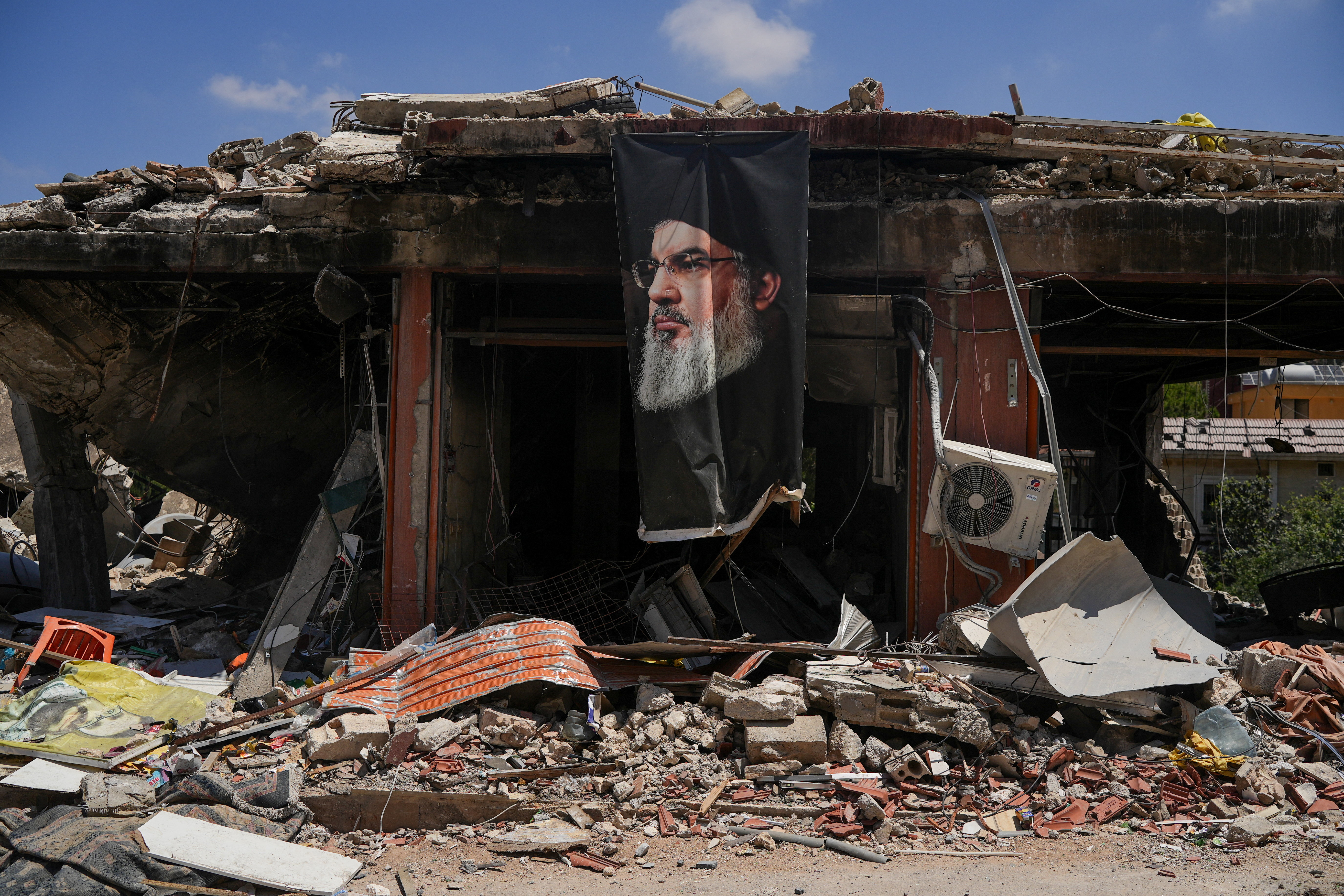
LONDON: Lebanon’s leaders are looking to US-mediated diplomacy in an effort to avert another war with Israel, even as Israeli forces remain in southern Lebanon and Hezbollah refuses to surrender its weapons. This leaves authorities in Beirut with little control over the decisions that could plunge the country back into conflict. Caught between Israeli demands for security guarantees and Hezbollah’s insistence that its arsenal is essential for efforts to resist occupation, the Lebanese government
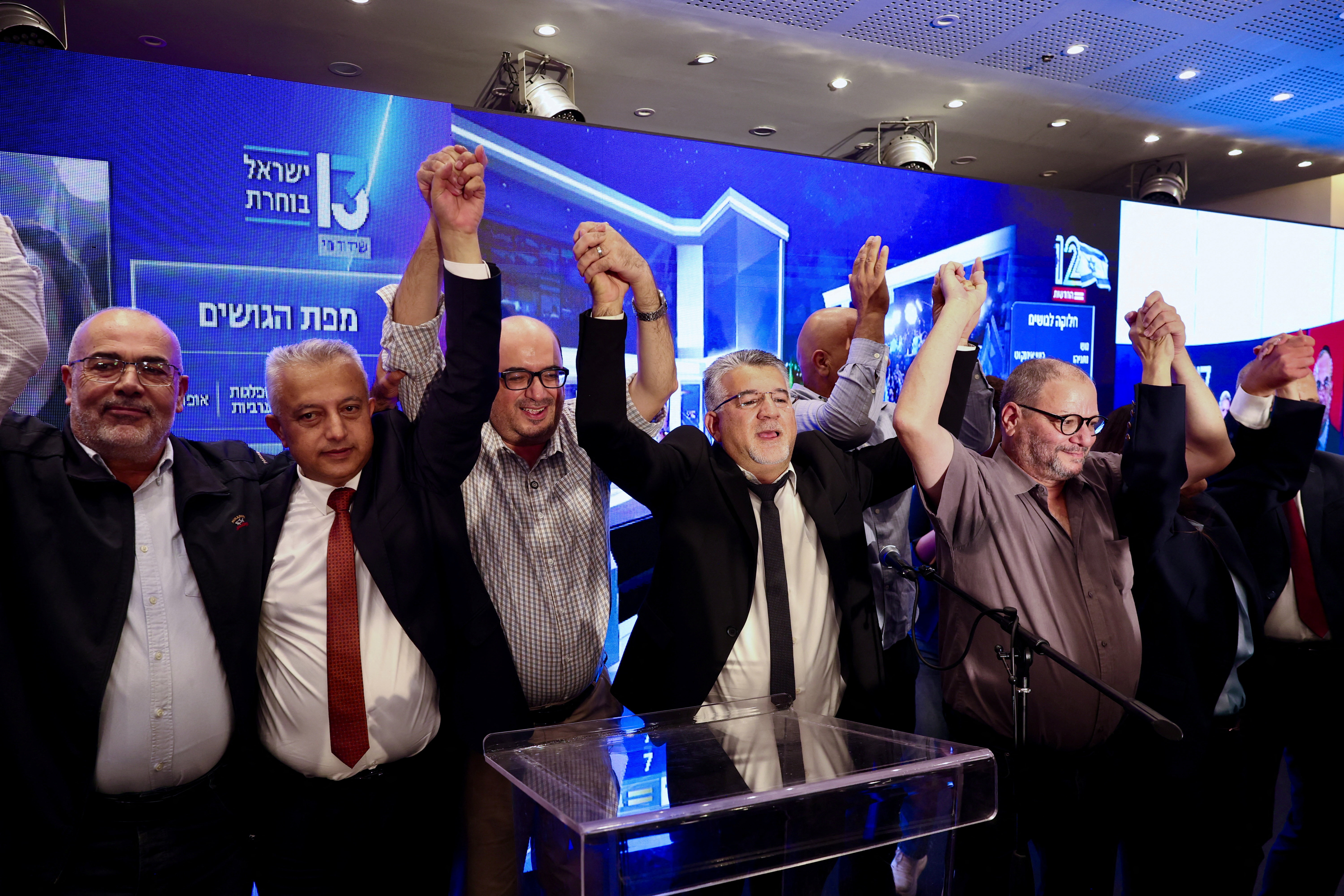
Israel’s Arab parties have emerged as potential kingmakers after securing a record 19 seats in the Knesset, but turning their electoral gains into political influence may prove far harder than winning the votes. A surge in turnout among Palestinian citizens of Israel has complicated the calculations of rival blocs led by Prime Minister Benjamin Netanyahu and Gadi Eisenkot, neither of which has an easy route to a governing majority. Exit polls on Tuesday night initially put Eisenkot’s anti-Netany
JERUSALEM: There was growing anger among Arab political parties in Israel on Thursday after unsubstantiated claims by Prime Minister Benjamin Netanyahu that unprecedented Arab gains in this week’s Knesset elections were driven by foreign funding. Parties representing Israel’s 21 percent Arab minority won 19 seats in the 120-member parliament, Netyanhu’s bloc won 53, and his main rival Gadi Eisenkot won 48 seats. The results mean that neither of the two main coalitions can form a government with
NEW YORK: Viral meningitis is spreading in the Gaza Strip, the UN warned on Thursday. Overcrowding, battered water and sanitation networks and shortages of essential treatments are driving up the risk of transmission across the enclave. Acute respiratory infections remained the most prevalent health condition reported in Gaza in September, UN associate spokesperson Shirin Yaseen said, citing a World Health Organization report. “To scale up services, we once more call for the lifting of restricti
Il «Grande Progetto» volto a «mantenere [la civiltà occidentale] al vertice del mondo» (come ha affermato il Segretario di Stato statunitense Marco Rubio) richiede che gli strumenti per garantire l’obbedienza siano di due tipi: La creazione di un fervore rivoluzionario distruttivo dal basso (oggi definito «cambio di regime»); e, in secondo luogo, l’uso di ciò che Theodore Herzl, in una famosa frase, definì «il terribile potere del denaro di esercitare una pressione irresistibile sulla politica internazionale», al fine di cooptare gli strati dominanti in una rete di potere che promuovesse il «progetto» del Grande Disegno.Questo è ciò che stiamo osservando nella guerra di Trump contro l’Iran.
L’attacco israelo-americano del giugno 2025 era principalmente un attacco di decapitazione volto a neutralizzare sia la leadership politica che quella militare dell’Iran, mentre elementi armati addestrati dal Mossad, il MEK e i separatisti baluchi tra gli altri sarebbero stati infiltrati in Iran per fomentare la rivoluzione dalla base. A quel tempo, il figlio dell’ex Scià – in modo poco plausibile – veniva presentato ai media occidentali come il futuro leader dell’Iran.
Non ha funzionato. E ora Netanyahu sta sostenendo che Israele disponga di «nuove prove» del fatto che l’Iran si stia orientando verso la produzione di un componente bellico nell’ambito del proprio programma nucleare. Sta dicendo a Trump che ora deve portare a termine l’opera di distruzione dell’Iran. E per motivare ulteriormente Trump, il principale quotidiano israeliano Ma’ariv riporta che Israele ha trasmesso direttamente alla Casa Bianca i sondaggi del Likud, secondo cui Netanyahu potrebbe vincere le elezioni israeliane del 27 ottobre. Secondo l’articolo, queste informazioni del Likud (che contraddicono la maggior parte degli altri sondaggi israeliani) hanno spinto Trump a esprimere il proprio pieno sostegno elettorale a Netanyahu.
Allo stesso tempo, i miliardari filosionisti stanno esercitando il «terribile potere del denaro» su Trump: «Non accetteremo nulla di meno della sconfitta dell’Iran. Se continuerà a cercare un accordo, le ritireremo il nostro sostegno finanziario».
Alti funzionari della sicurezza israeliani, sia in carica che in pensione, confutano tuttavia la necessità di un attacco imminente all’Iran e l’affermazione di Netanyahu relativa a nuove prove che l’Iran si stia muovendo verso l’arma nucleare –il Capo di Stato Maggiore delle Forze di Difesa Israeliane (IDF) Zamir ha dichiarato al Canale 13 israeliano: «Non vediamo la necessità di attaccare l’Iran prima delle elezioni»; Il principale stratega militare israeliano Udi Evental ha messo in guardia: «Una guerra per ostacolare le elezioni e la democrazia, non per ostacolare il programma nucleare dell’Iran. Netanyahu, che si sospetta sia immerso fino al collo in considerazioni politiche e personali estranee alla questione, non è idoneo a prendere una decisione del genere. Non glielo si deve permettere».
Che esistano o meno prove del genere non ha davvero importanza. Probabilmente non esistono. L’affermazione costituisce semplicemente il pretesto con cui si sta esortando gli Stati Uniti ad agire per ‘portare a termine l’opera’ contro l’Iran. Come sempre, Netanyahu ha dichiarato negli ultimi giorni: «L’Iran sta ancora una volta cercando di sviluppare le sue armi di morte… C’è un solo modo per eliminare questa minaccia una volta per tutte: rovesciare il regime in Iran, e questa è la mia direttiva all’IDF, al Mossad e alle agenzie di sicurezza».Un alto funzionario iraniano ha dichiarato a Drop Site che l’attuale valutazione dei servizi segreti interni di Teheran indica un’elevata probabilità che possano iniziare bombardamenti su larga scala – anche prima delle elezioni israeliane di martedì.
Il punto è che all’Iran non interessa chi vincerà le elezioni di medio termine, né chi conquisterà la presidenza degli Stati Uniti nel 2028. Per la leadership iraniana è tutto uguale. Comprendono bene il concetto del «Grande Disegno» (come potrebbero non farlo?).In Iran è ben chiaro che il Paese è impegnato in una lunga guerra contro l’intero blocco atlantista: Israele, i suoi servizi di intelligence, i suoi arsenali, i suoi satelliti, la sua industria militare e la sua macchina mediatica. Non importa se alla Casa Bianca ci sia un repubblicano o un democratico. Gli alti funzionari iraniani ritengono che entrambi i partiti siano stati comprati dal terribile potere sionista del denaro.
Comprendere il «Progetto» significa comprendere che la classe dei finanziatori sionisti non si accontenterà mai di un «accordo o compromesso». Essi sostengono con certezza che l’Iran alla fine verrebbe meno a qualsiasi acconsentimento ipotizzato alle richieste statunitensi. Gli israeliani e i loro alleati della classe dei finanziatori semplicemente non credono (e lo ripetono incessantemente) che l’Iran accetterebbe mai di sottomettersi a Israele, né di accettare il dominio politico e culturale degli Stati Uniti. Potrebbero avere ragione. Perché? Semplicemente perché l’Iran possiede una civiltà profonda, che affonda le sue radici in un complesso di credenze e pratiche specificamente persiano-iraniane risalenti al secondo millennio a.C.: il mazdeismo, una cosmologia del dramma divino, rappresentata dalla lotta continua tra Luce e Oscurità.
Il rinomato studioso, il professor Henri Corbin, ha sostenuto che «l’Iran era situato in una posizione centrale… non essendo solo una nazione o un impero, ma un universo spirituale». Egli concepiva quindi l’Iran come una forza mediatrice, sia geograficamente che metafisicamente.
Per millenni, gli iraniani hanno percepito il mondo come dotato di una chiara dimensione metafisica – e di una storia. È quindi improbabile che possano essere attratti da un atteggiamento materialistico e nichilista di stampo occidentale. Gli Stati civilizzatori, siano essi l’Iran o la Russia, che abbracciano valori contrari non soccomberebbero mai al «Grande Disegno». Di conseguenza, devono essere distrutti.
Cosa significa questa storia metafisica? Significa che l’Iran si sta preparando alla guerra, non a un «accordo». Mohsen Rezaei, segretario del Consiglio Supremo di Sicurezza Nazionale iraniano e rappresentante personale della Guida Suprema, l’Ayatollah Mojtaba Khamenei, ha affermato che, «Se la domanda è se l’Iran abbia ancora la capacità di proseguire le operazioni con missili e droni [in caso di attacco], la risposta è “sì” … Gli Stati Uniti dispongono di risorse preziose nella regione. In caso di guerra, anche cavi, centri dati e strutture di intelligenza artificiale potrebbero rientrare nel raggio d’azione. Se il conflitto dovesse riprendere, avremo un piano più ampio». «Tutti devono comprendere che un’azione contro l’Iran comporta un costo».
Alti funzionari iraniani ritengono che la guerra sia imminente. L’Iran dispone di piani di ampia portata (in caso di attacco) che coinvolgono anche l’Arabia Saudita e la sua leadership, ha lasciato intendere un alto funzionario iraniano. Karl Miller (dal campo) afferma che, a questo proposito, un quarto della produzione petrolifera saudita è già stato distrutto e che i danni causati dagli attacchi di rappresaglia di AnsarAllah interessano l’intera catena produttiva saudita – «dalla testa di pozzo alla stazione di servizio» – e che l’Arabia Saudita sta colmando il deficit attingendo alle proprie riserve.
Il rapporto di Miller, citato da Larry Johnson, avverte che,«se i canali di esportazione dell’Arabia Saudita dovessero chiudersi, il suo petrolio non avrebbe altra destinazione se non le proprie raffinerie, le proprie centrali elettriche e i propri serbatoi di stoccaggio. Una volta che lo stoccaggio fosse pieno, si raggiungerebbe all’incirca il limite massimo di produzione che l’Arabia Saudita potrebbe mantenere. Se Ras Tanura e Yanbu venissero chiusi contemporaneamente, il Regno sarebbe costretto a chiudere la maggior parte dei propri giacimenti petroliferi. Questo è esattamente lo scenario che la campagna di Ansar Allah contro l’oleodotto, il Mar Rosso e i terminali del Golfo è volta a provocare». «Qualsiasi nuova campagna americana o israeliana contro l’Iran si abbatterà su un sistema energetico saudita che non dispone più di margini per assorbirla», osserva Larry Johnson.
Qualsiasi nuovo attacco all’Iran, per estensione, significherà la fine del Golfo così come lo conosciamo, la fine del petrodollaro e la fine del Golfo come principale fornitore di liquidità per Wall Street e il mondo della tecnologia.
Ciononostante, secondo quanto riferito, Trump avrebbe affermato che gli Stati Uniti non stanno attualmente negoziando con l’Iran e che qualcosa accadrà «molto presto».
Forse. (Ma con Trump tutto si riduce a speculazioni). Se però sta bluffando, non funzionerà, e la sua umiliazione sarà ancora più profonda.
Un uomo che conosce Trump meglio di molti altri (avendo scritto quattro libri su di lui), Michael Wolff, sostiene che se i Democratici vinceranno nelle elezioni di medio termine del 3 novembre –
«Cercheranno di far capire al mondo che è “un nuovo giorno”. Trump, dal canto suo, cercherà di far capire al mondo che è ancora lui a controllare la scena. Ci sarà una serie di eventi di questo tipo (come una presunta invasione di Cuba, ad esempio) di portata superiore a qualsiasi cosa possiamo immaginare. Non si mostrerà umile. Il concetto di umiltà non esiste nell’animo di Donald Trump. Pertanto, farà esattamente il contrario».
NEW YORK CITY: The continuing detention by the Houthis of 71 members of UN staff renders humanitarian operations in parts of Yemen controlled by the militia “untenable,” the UN said on Thursday. It came as more than 800,000 people in and around the besieged city of Taiz remained cut off from deliveries of food and other life-saving aid. Shirin Yaseen, associate spokesperson for the UN secretary-general, Antonio Guterres, told Arab News that the arbitrary detentions “directly affect millions of p
NEW YORK CITY: The continuing detention by the Houthis of 71 members of UN staff renders humanitarian operations in rebel-controlled areas of Yemen “untenable,” the UN said on Thursday. It came as more than 800,000 people in and around the besieged city of Taiz remained cut off from deliveries of food and other life-saving aid. Shirin Yaseen, associate spokesperson for the UN secretary-general, Antonio Guterres, told Arab News that the arbitrary detentions “directly affect millions of people
The United States has privately warned Middle Eastern allies to prepare for renewed military operations against Iran following the 3 November congressional elections, according to diplomatic sources. Although President Donald Trump has not authorised further strikes, the warnings have heightened concerns about regional escalation, energy infrastructure and the consequences for European economies already facing rising fuel costs.
American officials have advised several governments in the Middle East to prepare for possible new military strikes against Iran after next week’s US midterm elections, raising the prospect of another escalation in a conflict that has already disrupted international energy markets.
According to an Associated Press investigation published on 29 October, two diplomats familiar with the warnings said US officials had urged regional allies to consider the possibility of Iranian retaliation against energy facilities and other critical infrastructure.
The diplomats emphasised that President Donald Trump had not made a final decision to resume military operations.
Nevertheless, Washington’s warnings suggest that preparations are being discussed for a potential campaign extending over several days.
Regional governments are concerned that retaliatory action by Iran or organisations aligned with Tehran could prolong the fighting beyond the duration initially envisaged by the United States.
The White House and American officials declined to comment on the reported communications.
Military Preparations and Political Timing
The warnings come as Trump approaches the final days of campaigning ahead of the 3 November elections.
The president has repeatedly suggested that further military action against Iran could follow the vote, although he has also claimed that the conflict may be approaching its conclusion.
During a campaign appearance in Texas, Trump said the war could end within weeks, while reiterating his insistence that Iran must not acquire nuclear weapons.
The timing of possible military action remains uncertain.
The Pentagon has increased its regional military presence, including the deployment of the aircraft carrier USS Theodore Roosevelt and additional amphibious forces.
Approximately 9,000 military personnel were associated with the deployment announced in September.
However, the movement of forces does not establish that an attack has been authorised or that particular targets have been selected.
American military preparations can also serve as deterrence, signalling and contingency planning.
The distinction is important because the political consequences of renewed strikes would depend on their scale, objectives and Iranian response.
Tehran Maintains That Diplomacy Remains Possible
Iran has indicated that it remains willing to pursue negotiations.
Foreign Minister Abbas Araghchi said on 28 October that Tehran was continuing to consider diplomatic proposals and wanted elements of its earlier ceasefire initiative to form the basis for renewed discussions.
That proposal had previously been rejected by Washington.
The continuing disagreement concerns both the conditions for ending military operations and wider questions about Iran’s nuclear programme.
The United Arab Emirates has urged the parties to seek political solutions and avoid returning to large-scale fighting.
Regional governments face a particularly difficult position because they may be exposed to retaliation even when they are not directly involved in American military operations.
Energy facilities, airports, ports and other infrastructure could become targets during an escalation.
Such attacks would also affect civilian populations and commercial activity beyond the immediate combatants.
The Conflict Has Already Spread
The war involving Iran, the United States and Israel began in late February and has subsequently affected other parts of the Middle East.
Iran-aligned Houthi forces have carried out attacks on Saudi oil infrastructure and airports, prompting retaliatory operations by a Saudi-led coalition against targets in Yemen.
These developments have complicated attempts to contain the conflict geographically.
The United States has not conducted a strike against Iran since early September, according to the reporting available on 29 October.
However, the absence of recent American attacks has not removed the risk of renewed operations.
Regional governments are therefore considering a range of possible developments, including limited strikes, a longer military campaign or retaliatory attacks preceding any American operation.
None of these scenarios should be treated as inevitable.
Europe Faces Another Energy Risk
For the European Union, a renewed confrontation would have implications extending well beyond diplomatic relations with Washington.
The Middle East remains a major source of global oil and liquefied natural gas supplies.
The Strait of Hormuz is particularly important to international energy shipping, connecting producers in the Persian Gulf with markets in Europe and Asia.
An increase in attacks on shipping, production facilities or export terminals could place further pressure on global energy prices.
The consequences would not necessarily be confined to countries purchasing oil or gas directly from the region.
European consumers compete in internationally connected markets, meaning supply disruptions can influence prices even where import arrangements have been diversified.
The EU has substantially reduced its dependence on Russian pipeline gas since 2022, but growing reliance on liquefied natural gas creates exposure to fluctuations in international supply and demand.
A further Middle Eastern escalation could therefore complicate Europe’s efforts to rebuild gas reserves and contain industrial energy costs before winter.
Higher fuel prices would also affect transport, food production and household expenditure.
The Strategic Dilemma for European Governments
European governments must balance several interests.
They support efforts to prevent nuclear proliferation, maintain relations with the United States and preserve stability in the Middle East.
At the same time, they have a direct economic interest in avoiding prolonged disruption to maritime trade and energy production.
A new American military campaign could revive debates concerning the legality, necessity and proportionality of military action, particularly if diplomatic alternatives remain available.
European governments may also face decisions about the protection of their nationals, regional diplomatic missions and commercial shipping.
The immediate significance of Washington’s warnings lies in the possibility of renewed hostilities, not in confirmation that such hostilities have been ordered.
With the American elections approaching, governments across the Middle East and Europe are preparing for developments that remain contingent on decisions in Washington and Tehran.
Whether the warnings lead to military action or renewed diplomacy will determine the next phase of a conflict whose economic effects are already being felt far beyond the region.
Photo: Mass Communication Specialist Seaman Kaylianna Genier / US Navy / Wikimedia Commons (Public Domain).
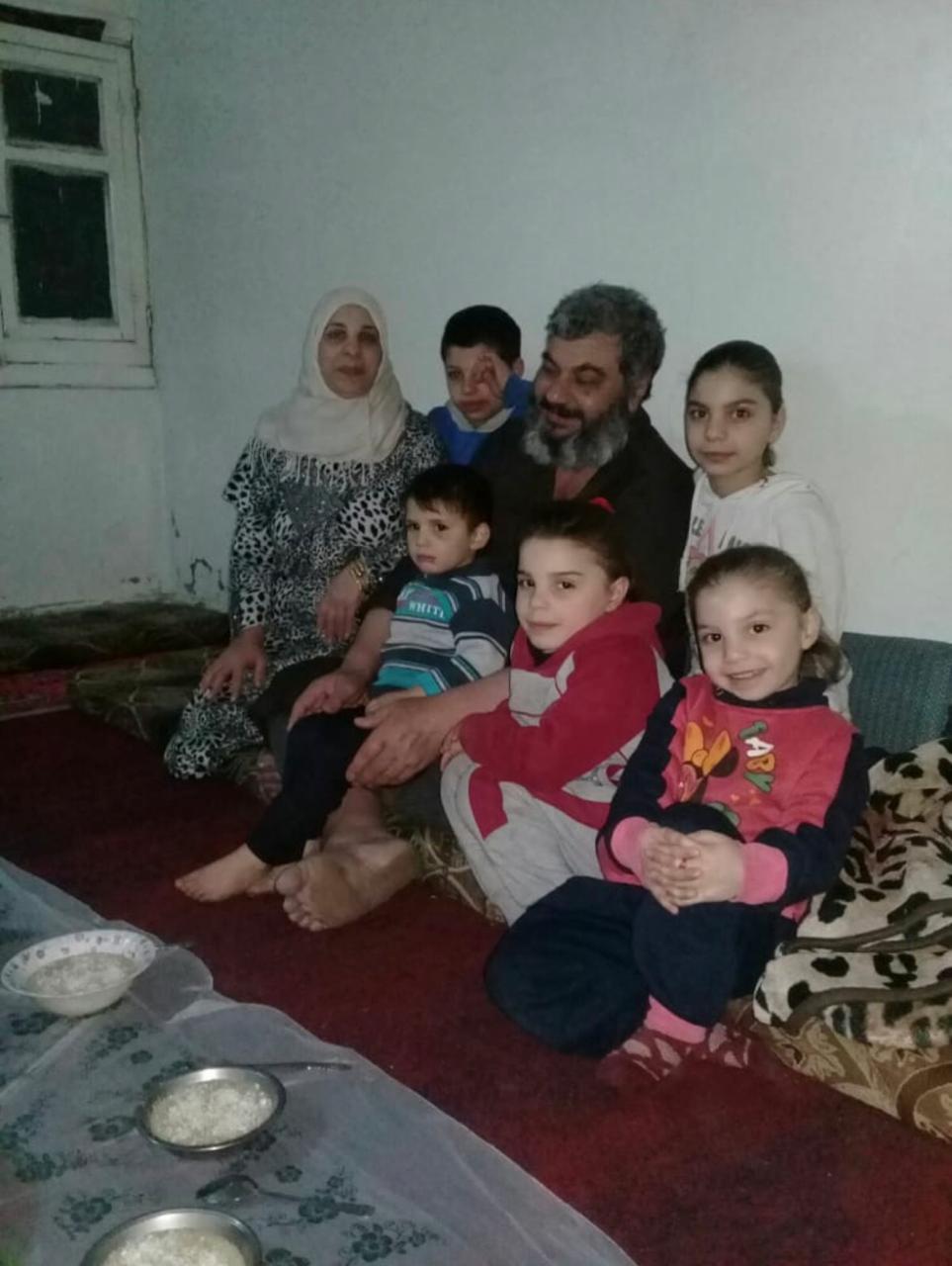
DUBAI: Hassan Aliwi waited nine years to find out what had happened to his family in Raqqa. In September, he finally heard. His sister Manar, her husband Bassam and five children had been killed when their building was destroyed in August 2017. His father had been in that building with them, and no one has found him. “Where is my father? Where did he go?” Hassan asked when Arab News spoke to him. “They found my sister, her husband and their children, but not my father.” The Syrian Arab Republic
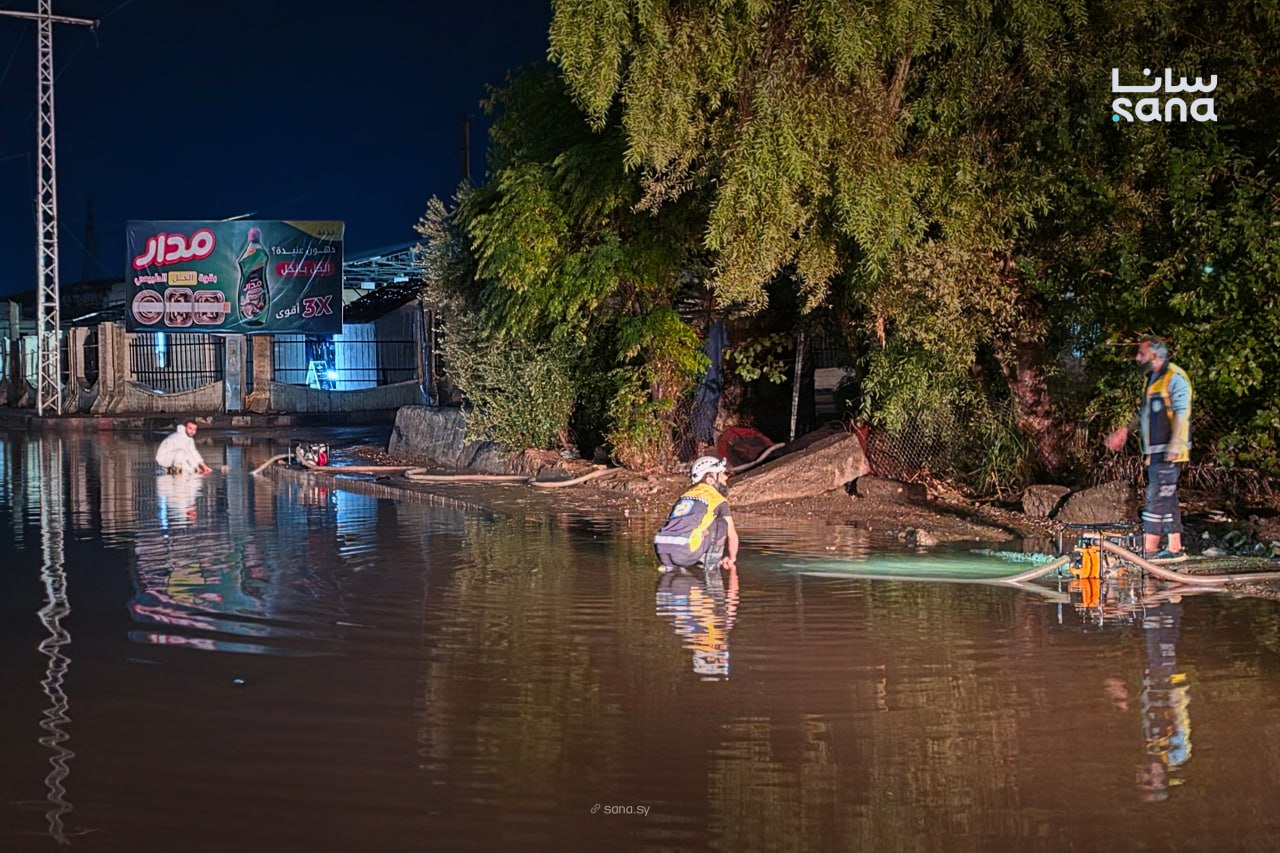
LONDON: Flooding across the Syrian Arab Republic has killed five people, including four children, and left five others missing, the Ministry of Emergency and Disaster Management said on Thursday evening. Search operations continued in rural areas of Raqqa, Deir Ezzor and Aleppo as rescue crews responded to heavy rain and flash floods that damaged roads, bridges and public facilities across six provinces. Syrian Civil Defense teams rescued 25 people trapped by floodwaters or stranded in vehicles
LONDON: Yemeni government forces launched 982 strikes on Houthi targets within 24 hours as part of their Dawn of Yemen campaign against the Iran-backed militia, a military spokesman said on Thursday. Col. Majed Al-Nuzaili said on X that the strikes targeted Houthi reinforcements, forward command-and-control centers, field commanders, sniper positions and supply assets. Government forces used warplanes, drones, field artillery and rocket launchers, he said. He added that 324 Houthi commanders and
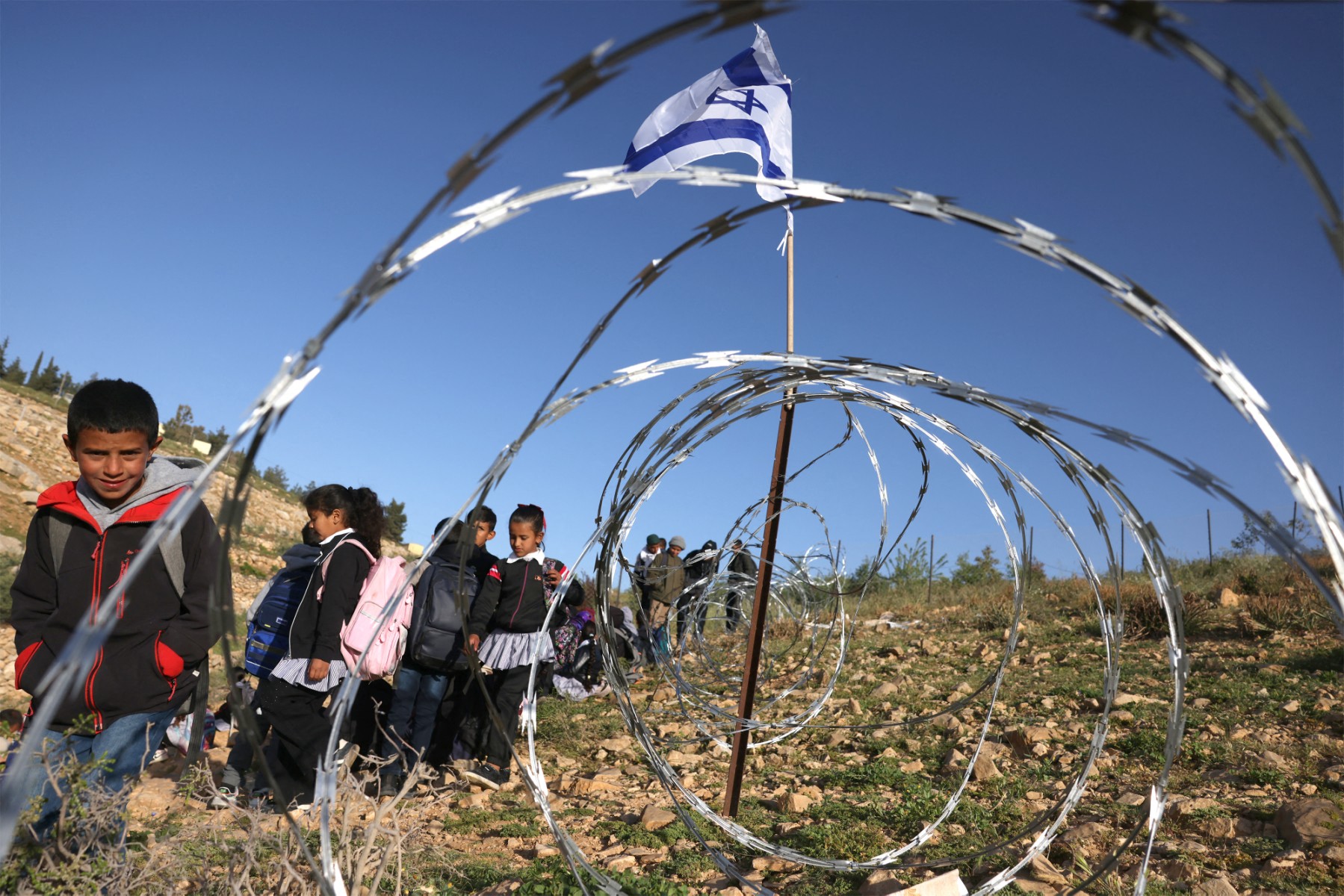
LONDON: Israeli violence and restrictions on access to schools are eroding more than Palestinian children’s education in parts of the West Bank. They are weakening families’ faith in the value of schooling itself, according to Ahmad Hneiti, field projects manager at the Tamer Institute for Community Education. When children cannot safely reach their classrooms or spend lessons fearing an attack, learning suffers, Hneiti told Arab News. As their skills decline, some parents begin to question whet
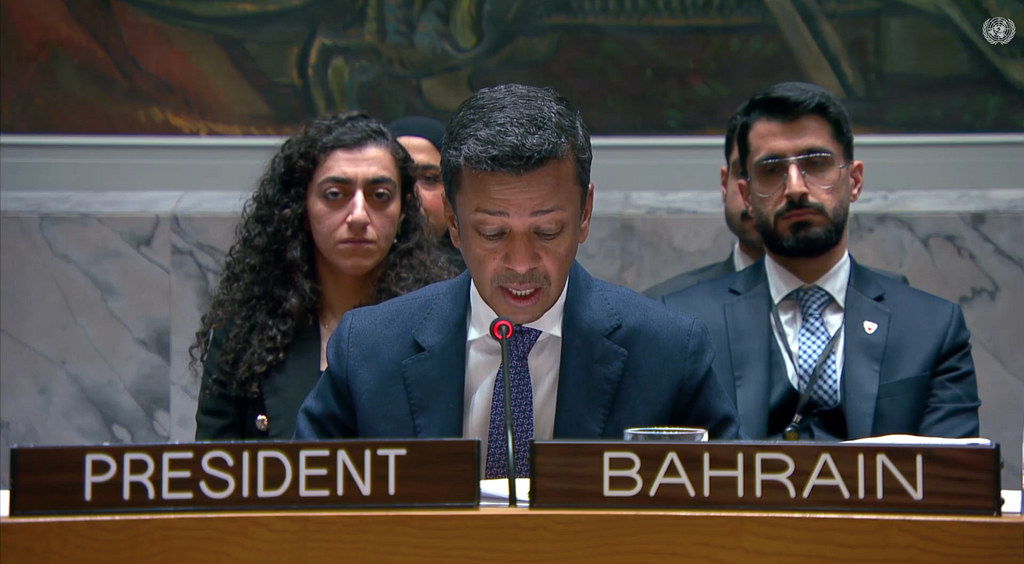
NEW YORK CITY: Bahrain on Thursday accused the Houthis and Iran of turning emerging maritime technologies into weapons they can use against global shipping. Fares Alrowaiei, Bahrain’s permanent representative to the UN, told the Security Council that uncrewed vessels and drones designed to make seas safer were being used by the Iran-backed Houthis to attack vessels in the Red Sea and Bab Al-Mandab Strait, and to choke the Strait of Hormuz. “Houthi terrorist groups have been employing these te
The Houthis (Ansar Allah) stepped up missile and drone attacks against Saudi Arabia and its allies over the past week, while maintaining their dominance on the battlefield in Yemen.
On October 22, the Houthis announced four operations carried out over the preceding 48 hours, targeting Saudi Arabia’s Defense Ministry headquarters in Riyadh, King Fahd International Airport in Dammam, an Aramco facility in Yanbu and Abha International Airport. Saudi aviation authorities said an attack on King Fahd Airport killed two people and wounded eight.
Two days later, the Houthis announced seven more operations involving ballistic missiles and drones against Saudi targets. The reported targets included King Khalid International Airport in Riyadh, Aramco facilities in Yanbu, the Rabigh oil refinery, oil pumping stations, the East-West Pipeline, King Fahd Airport, Najran Airport and an air base in Khamis Mushait.
The Houthis also stepped up attacks on government-held positions in southern Yemen. On October 24, Yemeni authorities accused the group of launching ballistic missiles at Aden International Airport, the al-Tawahi port area and two Coast Guard facilities.
On October 26, the Houthis announced two additional missile operations targeting military positions and weapons depots in the Salah al-Din area of Aden and the al-Wahat area of neighboring Lahij province. The group said the strikes caused dozens of casualties and destroyed military vehicles and weapons depots. The claims were not independently verified.
The following day, the Houthis said that they had repelled an advance by Saudi-backed forces toward Bab al-Mandab. They said the advancing troops were targeted with ballistic missiles and heavy weapons, resulting in casualties and the destruction of several military vehicles.
Also on October 27, the Houthis said they had struck Saudi Arabia’s Ras Tanura oil refinery with a ballistic missile, sparking a fire at the complex. The group also reported attacks on two Saudi military transport aircraft at Najran Airport and an air base in Khamis Mushait.
Meanwhile, Houthi forces continued to tighten their siege of Taiz, capturing additional territory and roads around the city. These advances further restricted Saudi-backed forces’ access to water sources.
On October 28, the Houthis called for the immediate evacuation of Aden International Airport, alleging that a Saudi military cargo plane carrying weapons was at the facility.
The increasing frequency of Houthi strikes, alongside their continued territorial gains, underscores their position as the dominant force on Yemen’s battlefield. Against this backdrop, recent reports suggest that Saudi Arabia is seeking a diplomatic path to halt the escalation through Iranian mediation. One report indicated that Riyadh was prepared to offer the Houthis up to $1 billion in exchange for a ceasefire and an end to attacks on Saudi territory.
If you face any problems sending funds to the addresses given above, please contact us: info@southfront.press and southfront@list.ru. Also be aware that many email services such as Hotmail, Yahoo etc. may block correspondence from info@southfront.press and some others put it in spam.
If you want to support SouthFront but have no opportunity to do it via cryptocurrency, please contact us: info@southfront.press and southfront@list.ru.
SouthFront: Analysis and Intelligence
NOW hosted at southfront.press
Previously, SouthFront: Analysis and Intelligence was at southfront.org.
The .org domain name had been blocked by the US (NATO) (https://southfront.press/southfront-org-blocked-by-u-s-controlled-global-internet-supervisor/) globally, outlawed and without any explanation
Back before that, from 2013 to 2015, SouthFront: Analysis and Intelligence was at southfront.com
The Iran-backed Houthis reported deadly strikes on residential areas of western Yemen, blamed on their Saudi foe, while explosions later rocked Riyadh, weeks into intensified violence.
Israel's chief opposition candidate Gadi Eisenkot has warned that Prime Minister Benjamin Netanyahu was working to delegitimise election results with his allegations of malfeasance by Arab parties.
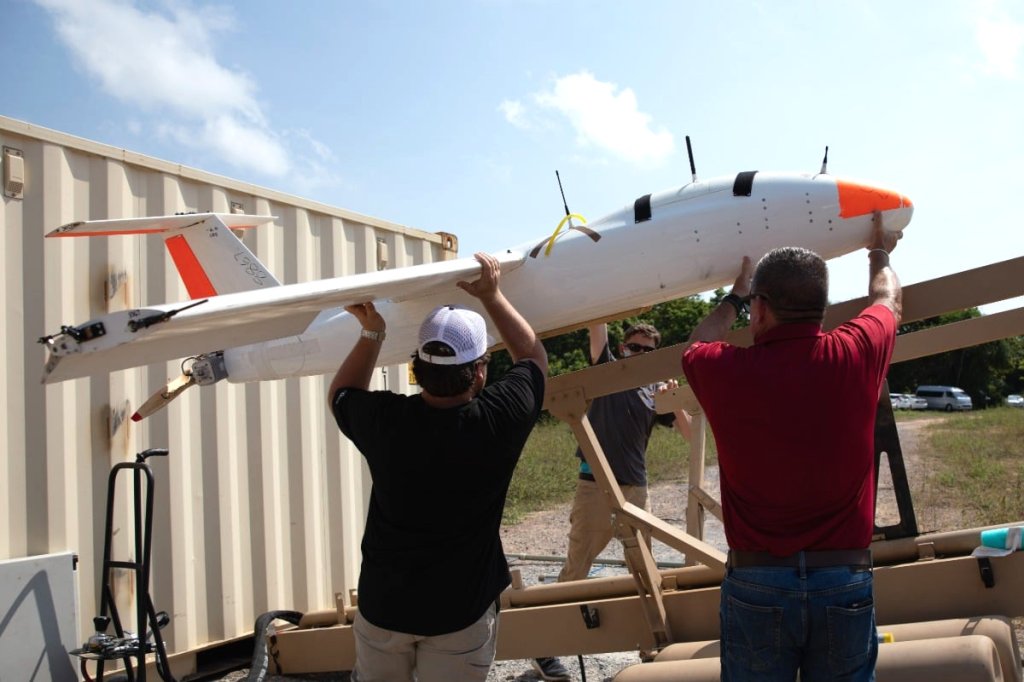
Iran claims to have brought down what looks to be a U.S.-made MQM-170C Outlaw G2 drone largely intact. A video shows it has a notable feature on top of its nose. In U.S. military use today, Outlaw-series drones are best known as an aerial target for use in training and testing.
The footage in question, and the accompanying claims, should be treated with caution given that the regime in Tehran and the country’s media outlets do routinely make exaggerated and unverified claims. That being said, so far, the footage looks to be credible. Furthermore, the U.S. military has pushed back on Iran’s version of events, but has not explicitly denied having lost one of these drones in the region recently.
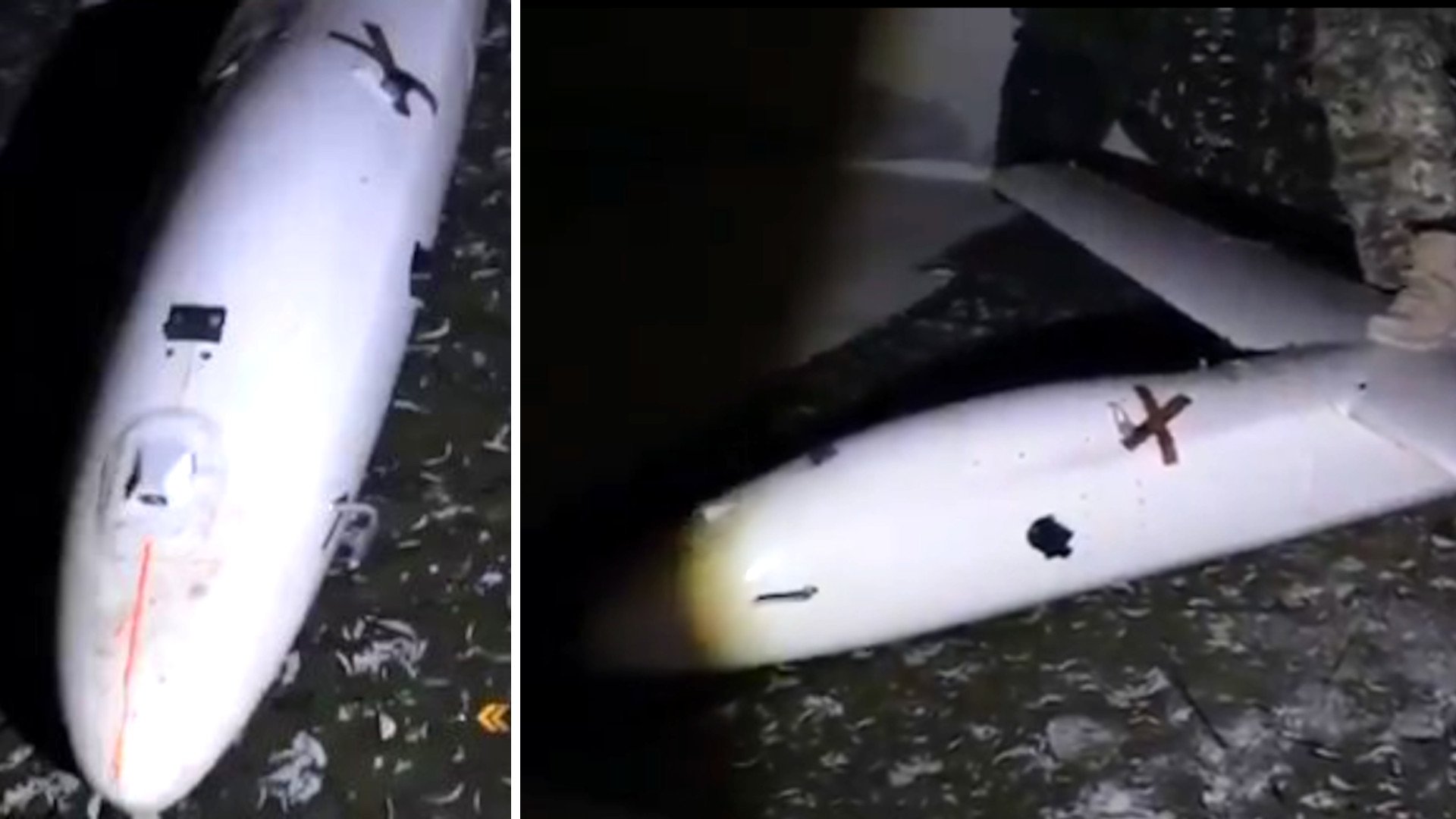
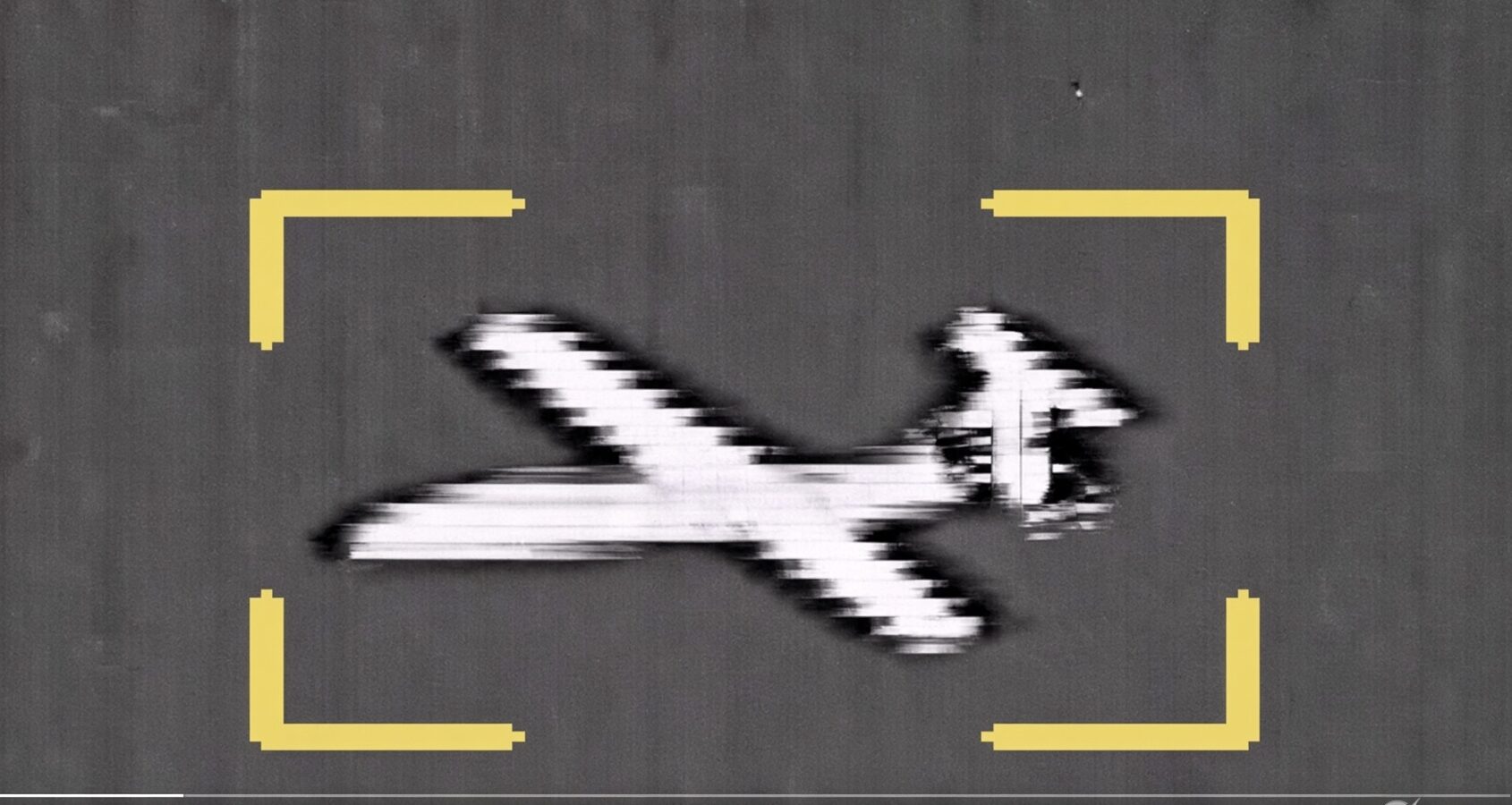
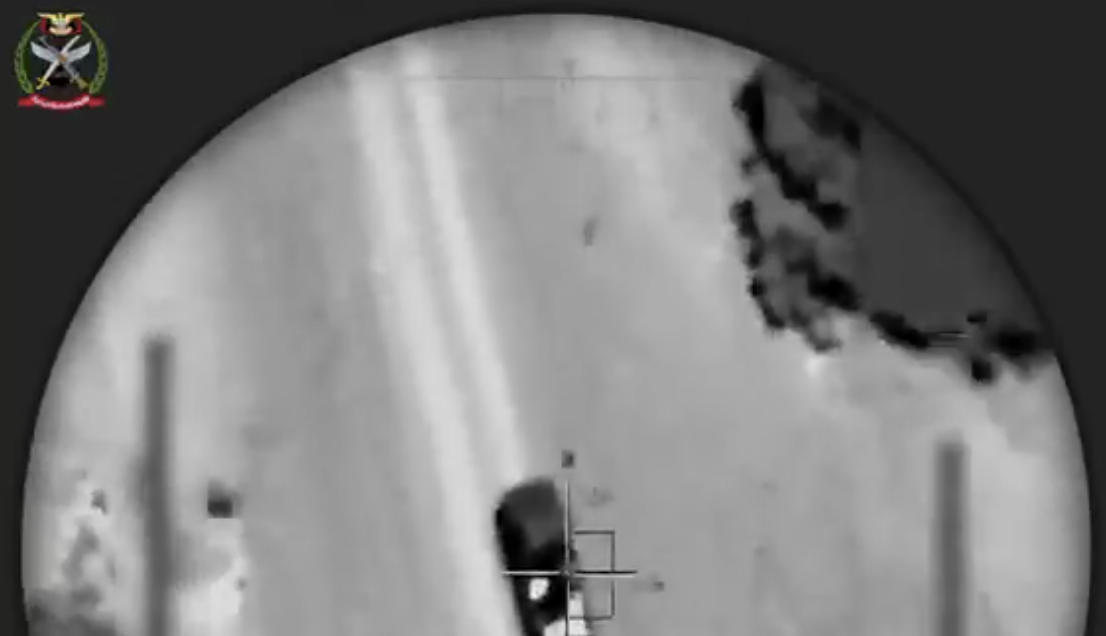
For its part, Iran’s Islamic Revolutionary Guard Corps (IRGC) says it captured the MQM-170-series drone following what it described as an “offensive electronic warfare operation” somewhere to the “west of the Strait of Hormuz.” The IRGC also claims that the uncrewed aircraft was conducting reconnaissance on Iranian air defenses positioned along the country’s Persian Gulf coast. At the time of writing, no firm evidence has been provided to support either of these assertions. The IRGC has released the aforementioned video, seen below, which it says shows the drone being tracked via an infrared camera, as well as after its recovery.
#Iran / #USA: Islamic Revolutionary Guard Corps (#IRGC) Navy captured a US Drone after intercepting it with EW Systems.
The Drone captured by the IRGC Navy appears to be Griffon Aerospace Outlaw G2 “MQM-170C” UAV. pic.twitter.com/Xw6JYOu1s6
“In the past weeks and months, the IRGC has repeatedly lied out of desperation, and today is no different,” U.S. Navy Capt. Tim Hawkins, spokesperson for U.S. Central Command, told TWZ when asked about the specific Iranian claims.
“We’re not going to waste our time. U.S. forces remain vigilant and laser-focused on our assigned missions,” Hawkins said in response to a follow-up question about whether CENTCOM could confirm or deny the loss of an MQM-170-series drone for any reason.
As an aside, Iran recovered an Anduril Dive-LD uncrewed underwater vehicle (UUV) largely intact last month in what the IRGC claimed had been a “complex intelligence and operational action.” U.S. authorities ultimately confirmed the loss of the advanced UUV, but said it was the result of a malfunction.
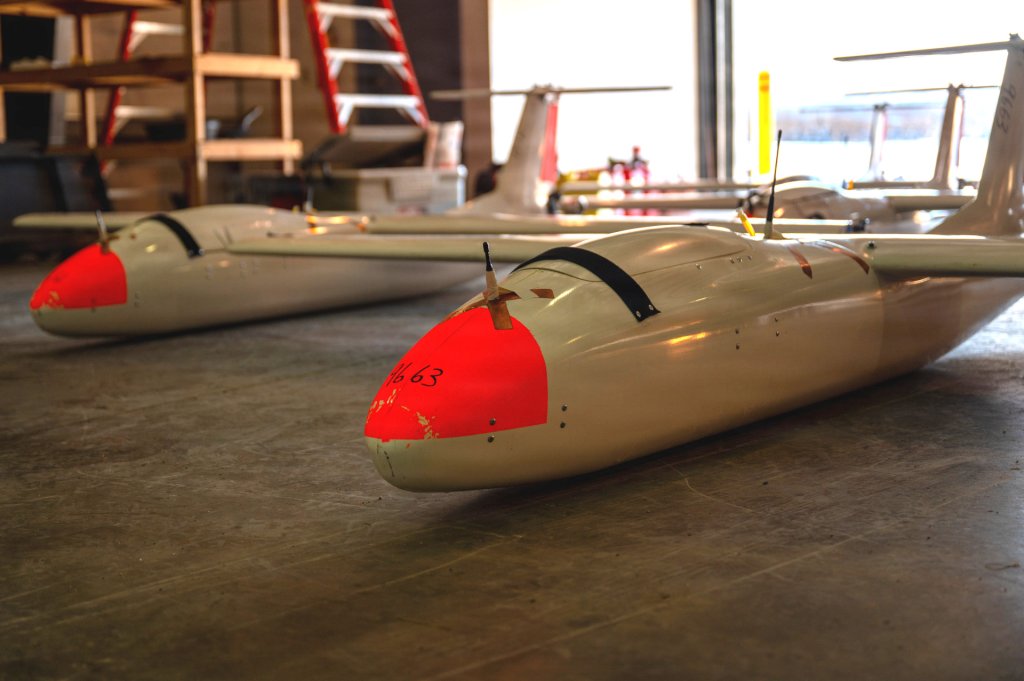
As mentioned, the drone seen in the IRGC video does look to be an MQM-170C, or at least a closely-related variant thereof. It has an interesting feature on top of its nose: a single forward-looking aperture. This is something that is commonly associated with staring-type optics, which drones often use to aid with navigation. There is a possibility that it could be a seeker, if the drone were to be configured as a one-way-attack munition, but this seems unlikely.
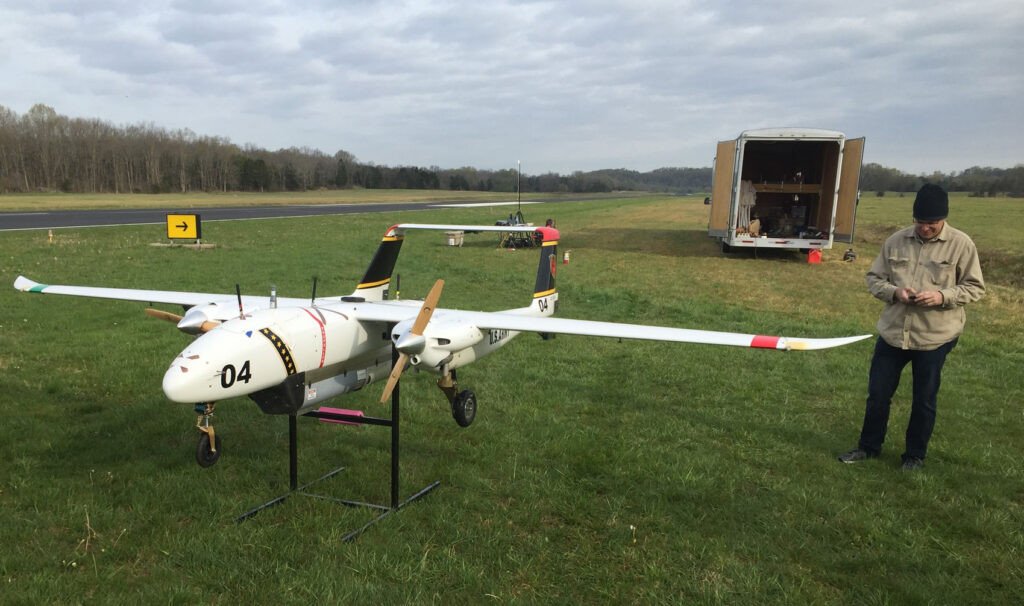
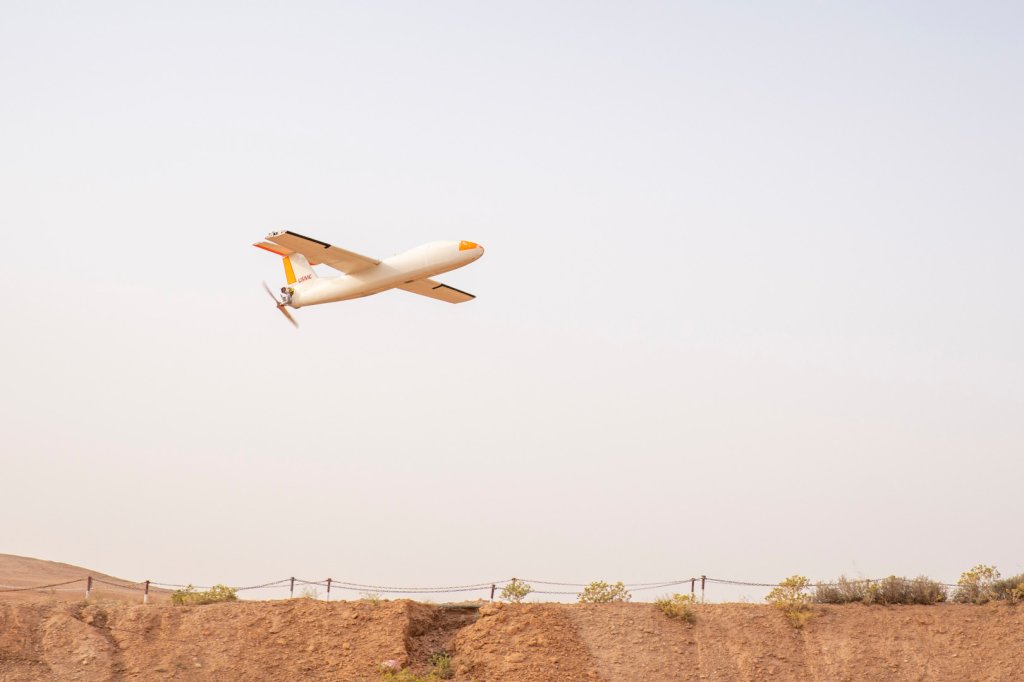
Additional views of the nose end of the drone Iran says it captured, with the ‘staring’ aperture plainly visible. Iranian media captures via XA stock picture of an MQM-170C drone in U.S. military service in its typical configuration as an aerial target. USNAnother picture of U.S. MQM-170C target drones offering additional views of their noses. USAF
MQM-170C’s manufacturer, Griffon Aerospace, which refers to this design internally as the Outlaw Gen 2 (G2), does say on its website that it can be configured as “an inexpensive payload development platform offering great endurance, payload size, weight, and power.” The company’s website also says that the target configuration of the G2 has a gross weight of 150 pounds, but that this can grow to 225 pounds when used as a more general-purpose drone.
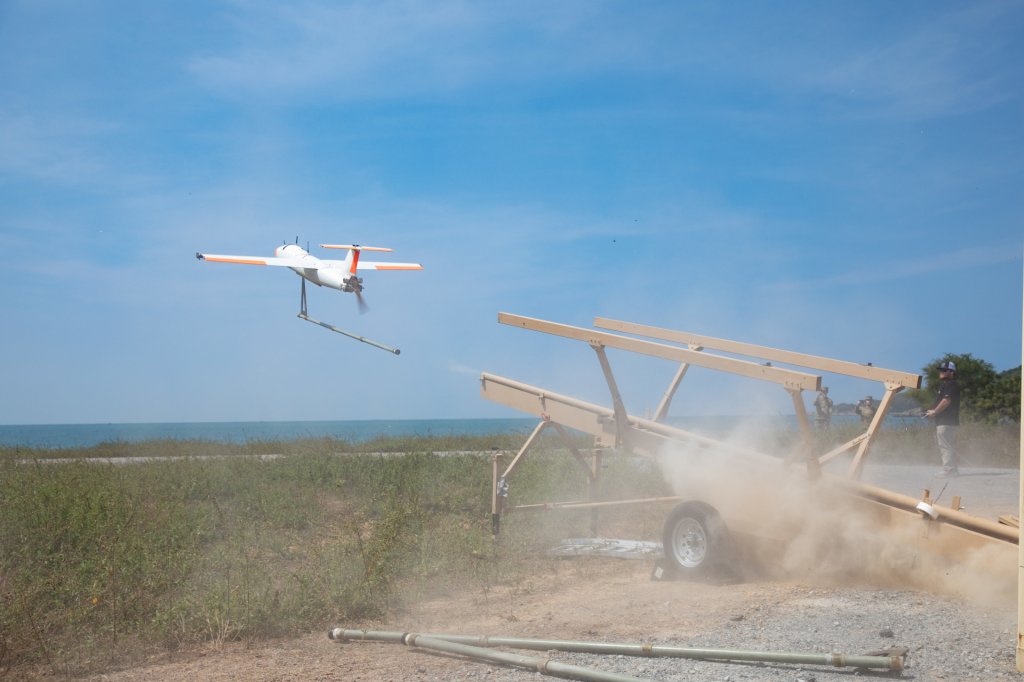
The drone, which is nearly 11 feet long and has a wingspan of 16 feet, otherwise has a stated maximum endurance of eight hours, top speed of 126 knots, and the ability to reach altitudes of more than 16,000 feet. The design is propelled by a 2-cylinder, 2-stroke combustion engine driving a single pusher propeller. The G2 gets into the air via a catapult-type launcher and can be recovered, either after a glide-in landing on suitable terrain or via parachute.
An MQM-170C target drone seen being launched via catapult. USN
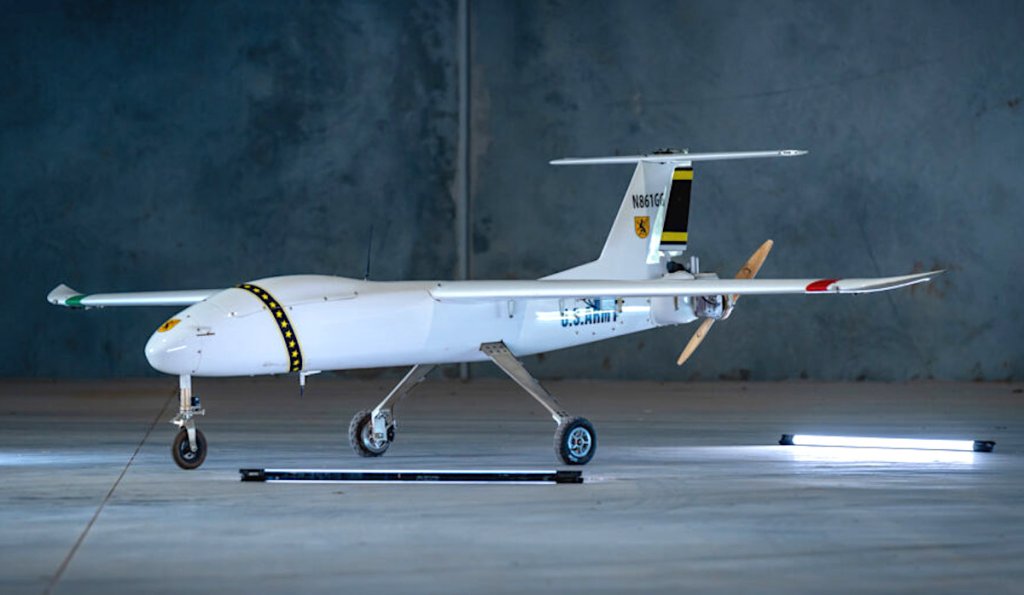
Griffon Aerospace also offers an ‘expanded’ G2E version with fixed tricycle landing gear as an “open and customizable platform for ISR [intelligence, surveillance, and reconnaissance] missions, subsystem testing, and R&D [research and development].” This version has a lower maximum takeoff weight and total endurance compared to the baseline G2, according to the company’s website. The IRGC video does not show any evidence of landing gear, but it could have broken away when the drone came down.
The landing-gear-equipped Outlaw G2E. Griffon Aerospace
The larger Outlaw family, which traces back to the early 2000s, also includes the Gen 1 MQM-170A, which has a completely different design from the subsequent G2 drone. Griffon also developed a derivative of the Gen 1 design with a twin-boom tail, called the Outlaw Boomer, which the U.S. military designated the MQM-170B. There is also a twin-engine, twin-boom derivative of the Outlaw G2 that the U.S. military has at least tested in the past.
A twin-engine, twin-boom derivative of the Outlaw G2, seen here in U.S. Army markings. Griffon Aerospace
This brings us to the additional matter of a contract the U.S. Army awarded to Griffon Aerospace, valued at nearly $68 million, for the procurement of a Gen 3 version of the Outlaw on June 3. When the Pentagon first announced this deal, it was explicitly said to be “in support of Operation Epic Fury” against Iran. That portion of the announcement was quietly deleted sometime thereafter.
“A company official declined to provide details about the Gen 3 design,” Breaking Defense reported in a story published on June 5.
On August 25, Griffon received an additional contract from the Army, valued at just under $133 million, “to procure Griffon Outlaw systems, support equipment and field service representatives for system use and employment.” That announcement made no mention of operations against Iran.
At the time of writing, Griffon Aerospace’s website does not appear to make any mention of the Gen 3 Outlaw. TWZ has reached out for more information about this drone.
Given the known breadth of Outlaw designs to date, it is possible that the Gen 3 drone is substantially, if not entirely, different from any of the existing types. At the same time, the June contract announcement does establish a link between the Outlaw family and U.S. military use outside of training and testing, and specifically as part of real-world operations aimed at Iran.
There remains the potential that Iran simply captured an Outlaw target drone that U.S. forces lost control of during training or testing in the region. The drone seen in the IRGC video lacks the high-visibility orange markings typically seen on aerial targets, though these could easily have been painted over. Iranian authorities could have still fabricated the recovery, in part or in whole, though there is no firm evidence of that at present, either.
An MQM-170C target drone belonging to the U.S. Marine Corps, seen here in use during an exercise in Saudi Arabia in 2023. USMC
Another non-U.S. operator region could also be employing versions of the Outlaw, including in non-target drone roles, such as for surveillance and reconnaissance, or as decoys.
All of this does now come amid growing signs that the United States, as well as Israel, are preparing to launch a new major campaign against Iran. As TWZ reported recently, stimulating Iranian air defenses to glean key intelligence about their current capabilities and positions would be critical in the lead-up to any such operation.
“Stimulating Iran’s air defenses is critical,” our own Tyler Rogoway wrote on X earlier this month following unconfirmed reports of unusual Israeli air activity. “By Iran operating as if a full scale attack could be coming, their air defenses can be detected, categorized and geolocated. This is absolutely critical prior to a major air operation. Surveilling them during times of lower alert does not provide the same fidelity of actionable intelligence. Knowing where those threats are and how they are operating can mean the difference of life and death and/or will help standoff munitions make their way to their targets as those defenses can be suppressed, destroyed, or avoided entirely via careful mission planning.”
I don’t know what this is, or if it’s legit BUT remember we are in a new age of misdirection, decoy and guile. Specifically using low end drone technology. There are more ways to stimulate an enemy air defense system, distract a populous, assess the flow of public info from a… https://t.co/wW7YVlbayB
“Such reports come amid an increasingly sophisticated use of low-end drones, decoys, and other forms of deception. These kinds of systems can be employed not only to stimulate adversary air defenses, but also to distract populations and probe how information moves out of a denied area. In such an environment, unusual aerial sightings should be viewed with caution — but not necessarily dismissed as irrelevant. We have been talking about how new forms of misdirection and guile will leverage relatively low-end technologies in future conflicts for many years now. While it isn’t clear if this light show in the sky over Iran was such an activity, it is certainly a reminder to keep that possibility in mind.”
It would certainly be plausible for suitably configured Outlaw drones to be in use now as another means of simulating Iranian air defenses. There is precedent even for ostensible target drones to be used operationally to deploy countermeasures and just as decoys in support of major strikes. U.S. BQM-34 Firebee target drones were notably used to spread radar-confusing chaff over the Iraqi capital Baghdad as part of the opening phase of Operation Iraqi Freedom in 2003.
Altogether, though still not definitively confirmed, Iran’s claimed recovery of an MQM-170C drone is an interesting development as the prospect that major hostilities in the region could resume soon continues to grow.
Iran’s Islamic Revolutionary Guard Corps (IRGC) Navy has claimed to have captured a US MQM-170 drone in the Strait of Hormuz. IRGC-N claimed in a statement that its electronic warfare unit took control of the drone’s guidance and control systems and brought it down.
“Fighters of the IRGC Navy’s electronic warfare unit carried out an offensive electronic warfare operation. They detected and identified an MQM-170 reconnaissance and decoy drone belonging to the ‘terrorist U.S. army’ west of the Strait of Hormuz, took control of its guidance and control systems, and brought it down intact.
The drone’s mission was to locate the Islamic Republic of Iran’s air defense systems along the Persian Gulf coastline and the Strait of Hormuz. IRGC Navy specialists recovered data from the aircraft and determined that it had taken off from the coast of one of the countries on the southern shore of the Persian Gulf.”
CENTCOM spokesman Tim Hawkins rejected the claim outright: “In the past weeks and months, the IRGC has repeatedly lied out of desperation, and today is no different.”
The MQM-170 is a low-cost, recoverable aerial target drone used by the U.S. Army and Navy for air-defense training.
It is not a high-end reconnaissance UAV comparable to systems such as the MQ-9 or RQ-170. Some variants can carry sensors, but its main role is to simulate threats. An intact capture of a target/decoy drone would still offer limited technical intelligence value compared with more advanced platforms.
Screengrab
Earlier, Iran claimed to have seized American drones.
“Through a coordinated, complex operation involving intelligence oversight and electronic warfare, IRGC naval forces’ personnel successfully captured an advanced unmanned underwater vehicle (UUV) belonging to the terrorist US military,” the IRGC naval forces said in a statement on the 8th September, according to state TV.
The IRGC said that the drone was “operating in the Strait of Hormuz for espionage purposes”, identifying the model as a Remus 600 autonomous underwater vehicle that was “now in the hands of the force’s specialists for data recovery”.
Earlier, as EurAsian Times reported, the IRGC, on September 8, said that they had recovered a US drone submarine at the entrance to the Strait of Hormuz.
“One of the US military’s most advanced unmanned underwater vehicles was seized by Iranian armed forces at the entrance to the Strait of Hormuz during a complex intelligence and field operation and brought into Iran, IRIB (Islamic Republic of Iran Broadcasting) said in a post on X.
Iran’s state media later officially identified the captured vessel as an Anduril Dive-LD UUV.
US Navy Captain Tim Hawkins, the spokesperson for US CENTCOM, said, “An underwater drone operated by US forces malfunctioned more than a day ago. It was surveying regional waters in support of ongoing operations. The defective drone was an older model that neither collected sensitive data nor carried any classified sonar or radar equipment. US operations in area waters continue.”
Tankers on Fire
Meanwhile, at least four tankers have caught fire after hitting mines while attempting to pass the Strait of Hormuz, which the Trump administration said was free of mines and under American control.
For instance, on 25 August, Trump posted on Truth Social: “I have just been informed by the United States Navy that all mines have been removed and/or detonated from within the International Waters of the Strait of Hormuz.
Iran has been notified that any ship or boat placing new mines will be immediately and systematically destroyed. Through Space Force, we are watching every square inch of the Strait, as we are, also, with Pickaxe Mountain and the already destroyed three other Nuclear sites. There is a Zero Tolerance policy on mine placement in full force and effect.
IRGC said in a statement: “Over the past 24 hours, three violating oil tankers exploded and caught fire after striking mines while attempting to pass through the unauthorized southern route of the Strait of Hormuz.
The vessels had switched off all their radar and navigation systems and disregarded warnings from the IRGC Navy as they attempted to leave through the unauthorized southern route. The tankers were left stranded/abandoned along the southern coast of the Strait.
The IRGC Navy states that the unauthorized route through the Strait of Hormuz is mined, and that vessel owners and crews are responsible for transiting these routes and should not pay attention to CENTCOM’s delusions/illusions on social media.
The facts on the ground will speak for themselves / will determine the outcome. Any provocative action, supported by the terrorist and invading US military’s act of mischief, that disregards the regulations governing the Strait will be met with a resolute/firm response.”
In recent weeks, Iran has reported multiple vessels striking sea mines, prompting CENTCOM to reaffirm that all mines in “primary transit routes” have been cleared.
On Thursday, Hossein Mohebi, the IRGC spokesman, challenged the claim, saying, “Prove your Hormuz mine-clearing claim with independent evidence, not statements!” in a post on X.
Arsenio Dominguez, Secretary-General of the International Maritime Organization, said: “The traffic separation scheme, the information that we have is that they still have mines. And of course, whilst the conflict is ongoing, it’s very difficult for us to use third parties to verify that it is clear of these hazards. So in the meantime, we cannot guarantee that a vessel that intends to transit that route will not be hit by a mine.”
Jakob Larsen, Chief Safety & Security Officer, BIMCO (Baltic and International Maritime Council, the world’s largest international shipping association), also highlighted the risk of mines and said: “We still consider it very risky for ships to commence transits at this point. The threat of mines in the area remains a concern immediately as well as further down the line, and mine-free routes need to be established.”

 Login








 : Islamic Revolutionary Guard Corps (