Ukraine's air force has discussed the F-16 Block 70/72 with US manufacturer Lockheed Martin, which then gave President Zelenskyy a model of one
The Block 70/72 is smarter and tougher than Ukraine's ex-European F-16 Block 15 Mid Life Updates, but that doesn't mean the newer model is a major priority
The Ukrainian air force needs munitions more than it needs new airframes
When Ukrainian President Volodymyr Zelenskyy met a Lockheed Martin team led by Orlando Sanchez Jr., head of its aeronautics division, in Kyiv on 19 October, the talk was of Patriot interceptors and of repairing the Ukrainian air force's small but growing fleet of ex-European F-16 fighters inside the country. Lockheed designed the F-16 and still builds it.
But the Lockheed officials may have had other things on their minds. They gave Zelenskyy a scale model of a new and improved F-16 variant in Ukrainian livery, according to a photo posted by the MilitaryNewsUA account.
In late September, Ukraine's air force commander, Lt. Gen. Anatolii Kryvonozhko, and Lockheed discussed a possible move to newer F-16s. Now we have a clearer idea what those F-16s might look like—and what they might be capable of. The model Lockheed officials gave to Zelenskyy appears to be based on the Block 70/72 version of the classic supersonic fighter that Lockheed manufactures at its factory in Greenville, South Carolina.
A model of the F-16 Block 70/72 fighter that Lockheed Martin representatives gifted to Volodymyr Zelenskyy during their personal meeting yesterday. pic.twitter.com/tprj5yuj2z
It's a world-class jet. But a pricey batch of factory-fresh Block 70/72s isn't actually at the top of the Ukrainian air force's wish list. Not as long as the air force's existing warplanes lack munitions.
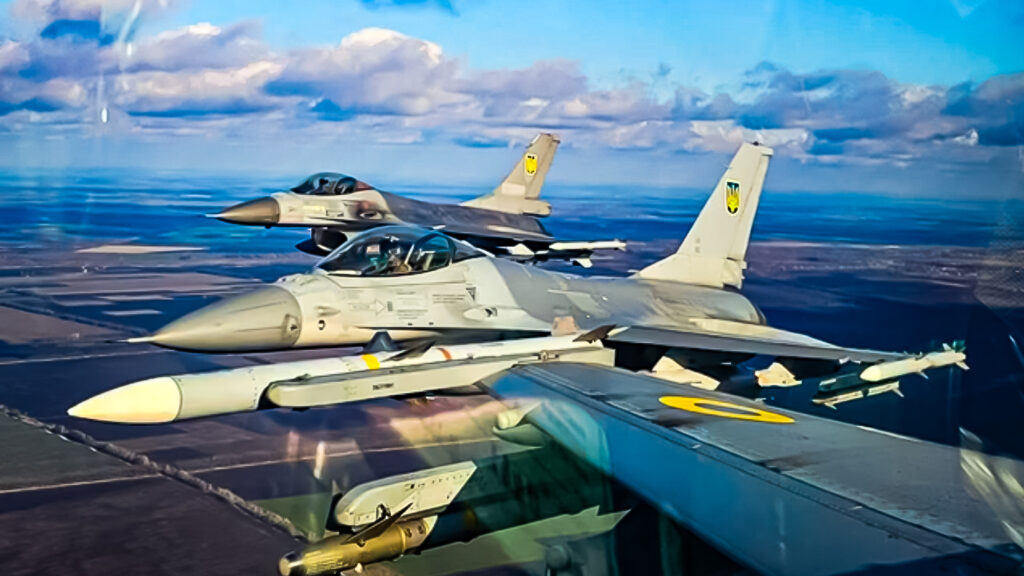
The Block 70/72 boasts a better radar, more fuel capacity, and a tougher airframe compared to older F-16 models, which have been flying since the late 1970s. The F-16 is still one of the most numerous fighter types in US Air Force service. Surplus 1980s-vintage F-16s from Denmark and the Netherlands make up the bulk of the Ukrainian air force's front-line fleet. Norway's six are still being refurbished, and Belgium's are coming.
Whether Ukraine ever gets new F-16s is anyone's guess. Kyiv would need to pay around $100 million per copy, or find an ally to finance the purchase. Either could be a heavy lift. And to be sure, Ukraine has options as it rebuilds its battered air force. Sweden is donating 16 older Saab Gripens, the first due early next year, and Kyiv plans to buy 20 newer ones. Kyiv has negotiated to buy 16 Dassault Rafales from France, which may not arrive until 2028. Belgium has promised as many as 53 older F-16s, the last of them perhaps not until 2029.
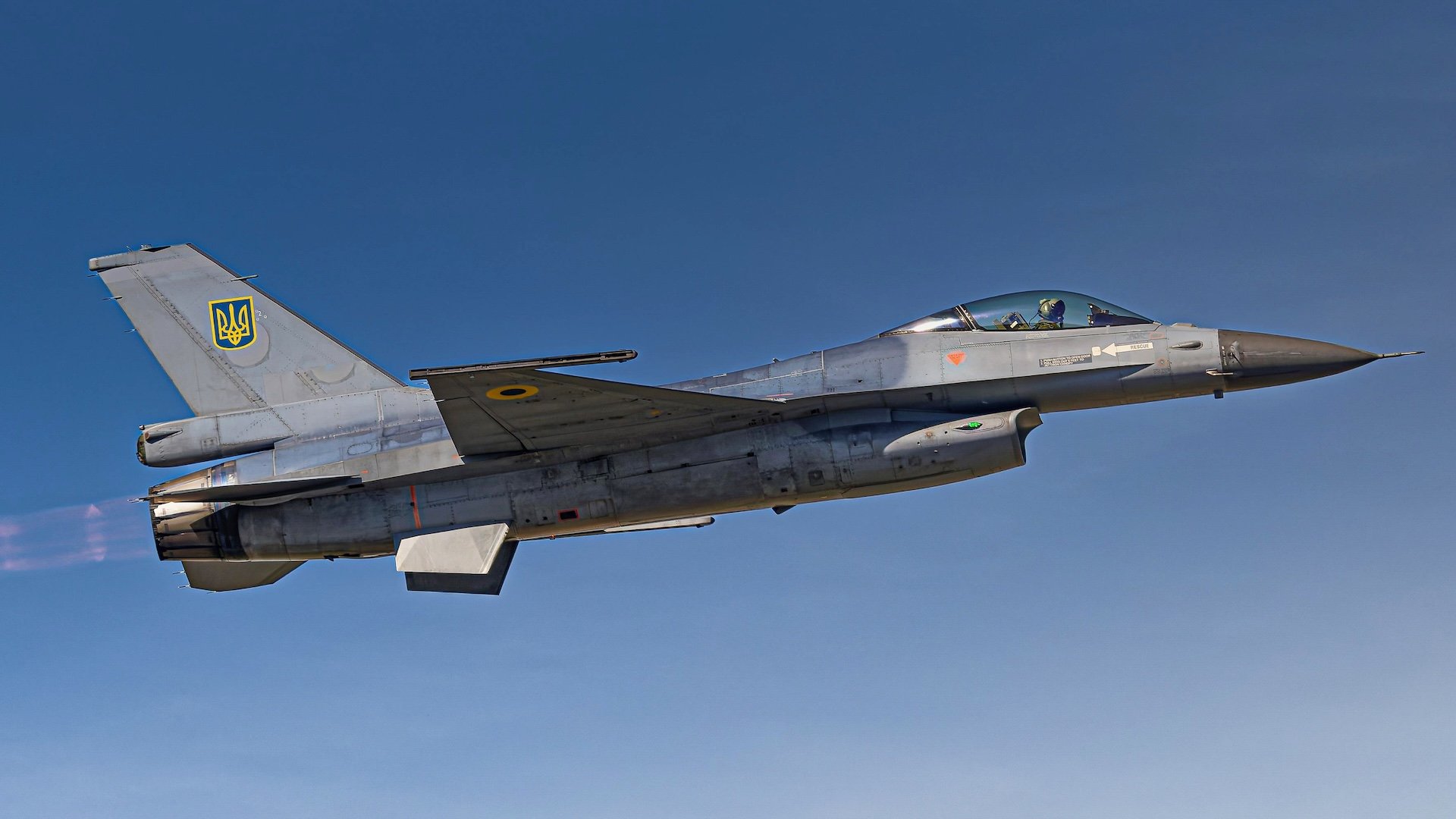
Ukrainian F-16s. Ukrainian air force photo.
Welcome jets
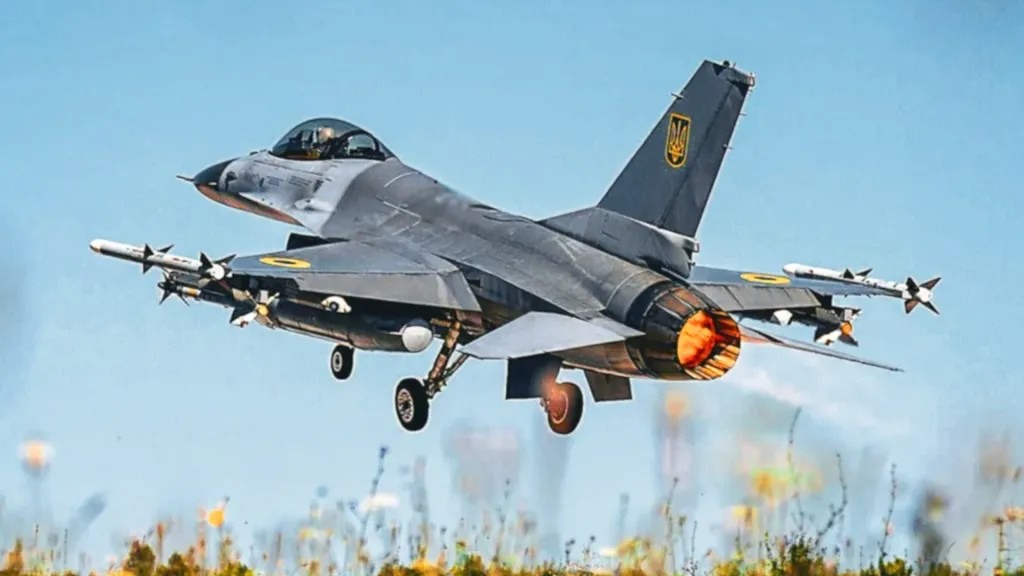
But new Block 70/72 F-16s would be welcome. The Block 70/72 builds on what already makes the F-16 great: its agility, flexibility, reliability, excellent electronic warfare systems, and compatibility with a wide array of munitions.
Where the Block 15 Mid Life Update F-16s Ukraine currently flies have the older analog AN/APG-66(V2) radar, the Block 70/72 has a digital APG-83 active electronically scanned array radar. It can also carry overwing conformal fuel tanks for extra range.
Perhaps most exciting for the Ukrainian air force, a newly made Block 70/72 is good for 12,000 hours of flight: enough for about 30 years at 400 flying hours a year. An aging Block 15 has a structural life of about 8,000 hours, and Ukraine's jets fly hard. Zelenskyy has said about half of them spend long stretches abroad for repairs, many at Sabena Aerospace Engineering in Belgium, a process that can take months.
Ukraine F-16 Pilots Rationing Missiles as Russian Attacks Intensify | NEWSMAX2
Ukraine’s American-made F-16 fighter jets are defending the skies against Russian drones and cruise missiles — but a critical shortage of U.S.-made missiles is putting that mission at risk.
Newer F-16s require less maintenance. They can fly and fight more often. In that sense, 50 Block 70/72s are worth more than 50 Block 15s.
But the availability of airframes isn't the biggest problem in the 107th Aviation Wing, the Ukrainian air force's sole F-16 unit. The wing is desperately low on air-to-air missiles. Its pilots often resort to gunning down Russian drones and cruise missiles with the F-16's built-in 20-mm cannon—a risky tactic given how close a fighter must get to its target to make use of its gun.
While a few billion dollars' worth of fresh F-16s could keep the 107th Aviation Wing in fighting shape for decades to come, fresh airframes aren't actually the most urgent priority. Given a choice between getting new F-16s or getting substantial supplies of missiles for its old F-16s, the wing would surely opt for the latter.
Explore further
Belgium’s 10 F-16s bring Ukraine’s promised fleet to about 100 jets. Fewer than 40 are flying, as Russia’s jet drones run them ragged
The Wall Street Journalreported Wednesday that more than half of Ukraine’s F-16s are currently in what a Western source described as “maintenance limbo.” The same source told the newspaper that, at the current rate of operations and maintenance, Ukraine could exhaust the remainder of its available aircraft by the end of the year.
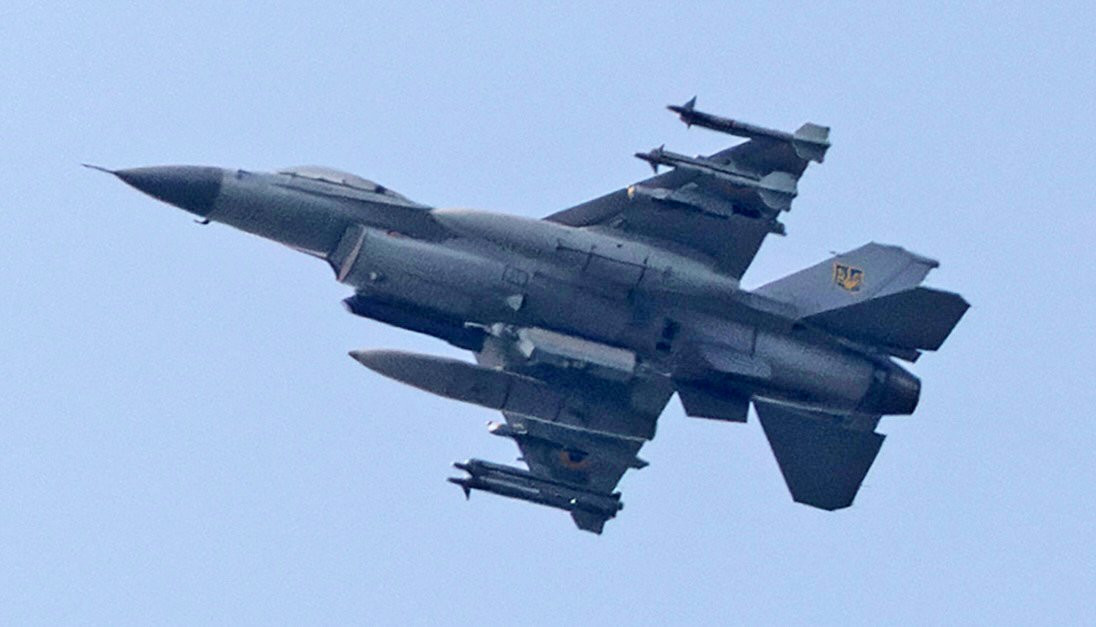
An F-16 over the Kyiv region on August 18, 2026. The jet carries four Sidewinder missiles, a Sniper targeting pod, and an AN/ALQ-131 electronic countermeasures pod. Photo by Roman PILIPEY / AFP ROMAN PILIPEY
The Ukrainian Air Force declined to provide the WSJ with figures on the status of the fleet. Open-source analysis suggests that Ukraine may have received around 40-50 F-16s so far. However, a proportion of these are held back for training elsewhere in Europe, while there have been five confirmed losses. Approximately 110 F-16s have now been promised by a coalition comprising Belgium, Denmark, the Netherlands, and Norway.
This is a growing issue, especially because right now F-16s are playing an important role in intercepts of jet powered Geran-4/5. https://t.co/ZtMFBSLAy1
The report follows TWZ’s recent reporting on a separate constraint affecting the F-16 force: Ukraine is struggling to maintain adequate stocks of air-to-air missiles for its fighters. AIM-9 Sidewinders and AIM-120 Advanced Medium-Range Air-to-Air Missiles (AMRAAM) have been heavily used against Russian cruise missiles and drones, and Ukrainian F-16 pilots have reportedly had to ration their missile shots. Aircraft have increasingly had to rely on their internal 20mm cannon when suitable missiles are not available. This is a far from ideal substitute, as you can read about here, but Kyiv is reportedly now negotiating for tens of thousands of additional rounds of 20mm ammunition.
The moment a Russian jet-powered "Shahed" drone is shot down by an F-16 fighter jet using its M61 Vulcan cannon. pic.twitter.com/gU72HJTXUa
Ukrainian F-16s have apparently been carrying laser-guided 70mm Advanced Precision Kill Weapon System II (APKWS II) rockets, which should provide an extremely valuable, lower-cost option for engaging long-range drones and subsonic cruise missiles. The exact status of this weapon in Ukrainian hands is unclear, but there is so far limited evidence of extensive use by its F-16s, at least in the public domain.
All these problems are closely related because the same high operational tempo that is consuming Ukraine’s missile stocks is also putting additional hours on the already well-worn F-16 airframes.
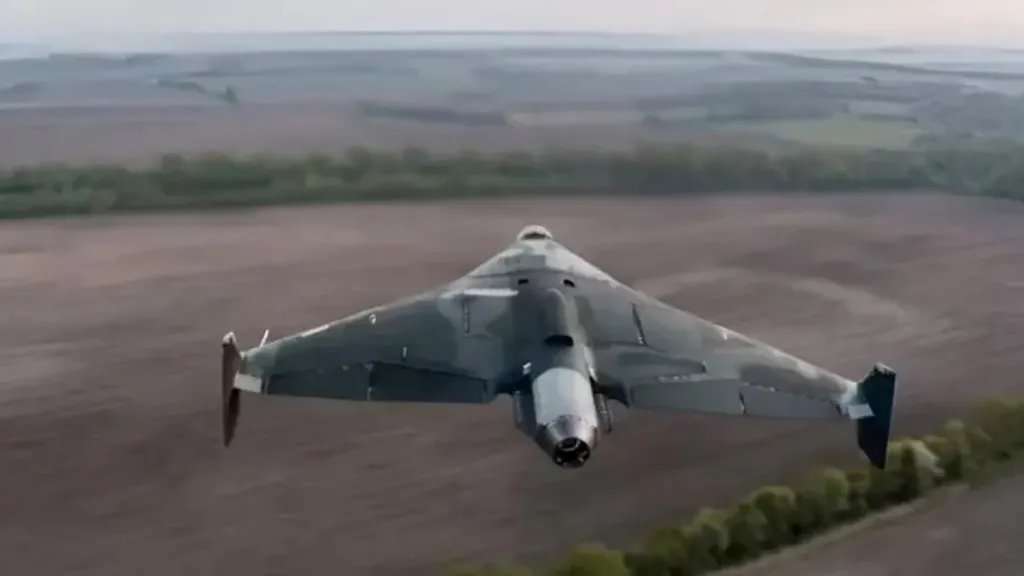
The aircraft have become a critical important component of Ukraine’s air-defense effort, particularly as Russia has expanded its use of increasingly sophisticated one-way attack drones, as we wrote about only yesterday. WSJ reports that Russia has launched around 2,000 jet-powered drones against Ukraine this month, compared with approximately 350 in June. The newer, jet-powered drones can reportedly reach speeds of up to 375 miles per hour, making them more difficult for Ukraine’s interceptor drones to engage and increasing the importance of conventional fighters. At the same time, the stocks of effectors for ground-based air defense systems are being reduced, in some cases to a critical level, increasing the reliance on crewed fighters to take up the slack.
A Ukrainian drone attempts to intercept a Russian Geran-4 jet-powered drone. GUR
F-16s are well-suited to the counter-drone and counter-cruise missile mission, but using them extensively against large numbers of relatively inexpensive targets presents a difficult sustainment problem. In fact, the lower speed and altitude differential between the F-16 and a jet-powered drone, compared to a propeller-driven one, makes the higher-performance weapon an easier target for the crewed fighter in most scenarios.
However, every sortie adds flight hours to the aircraft, while each missile engagement draws from an inventory that Ukraine and its Western partners have to replenish. As the aircraft accumulate hours, they reach scheduled inspection and maintenance intervals, increasing demand on a maintenance network that is already supporting a fleet operating under wartime conditions.
The United States has established a substantial support arrangement for that purpose. In January, the Pentagon awarded Belgian company Sabena Aerospace Engineering a contract with a ceiling of approximately $235.5 million for intermediate- and depot-level maintenance of Ukrainian F-16 aircraft and engines, together with associated material-management support. The contract runs through January 2029, with approximately $69.7 million initially obligated.
Ukrainian Air Force F-16AM Fighting Falcon departing Belgium after receiving depot-level maintenance earlier this year. pic.twitter.com/Hy35iUZd8P
The contract provides an indication of the scale of the infrastructure required to keep the Ukrainian F-16 fleet operational. It also highlights why the reported turnaround times in Belgium are significant. A typical phase-inspection that would normally take approximately two to six weeks in the United States is reportedly taking as long as 40 weeks in Belgium.
A 40-week turnaround does not necessarily mean that an aircraft spends 40 weeks continuously undergoing a phase inspection. The overall period an aircraft is unavailable can also include waiting for parts, additional repairs, scheduling, and other work. It is unclear exactly how many Ukrainian F-16s are currently affected by these various factors.
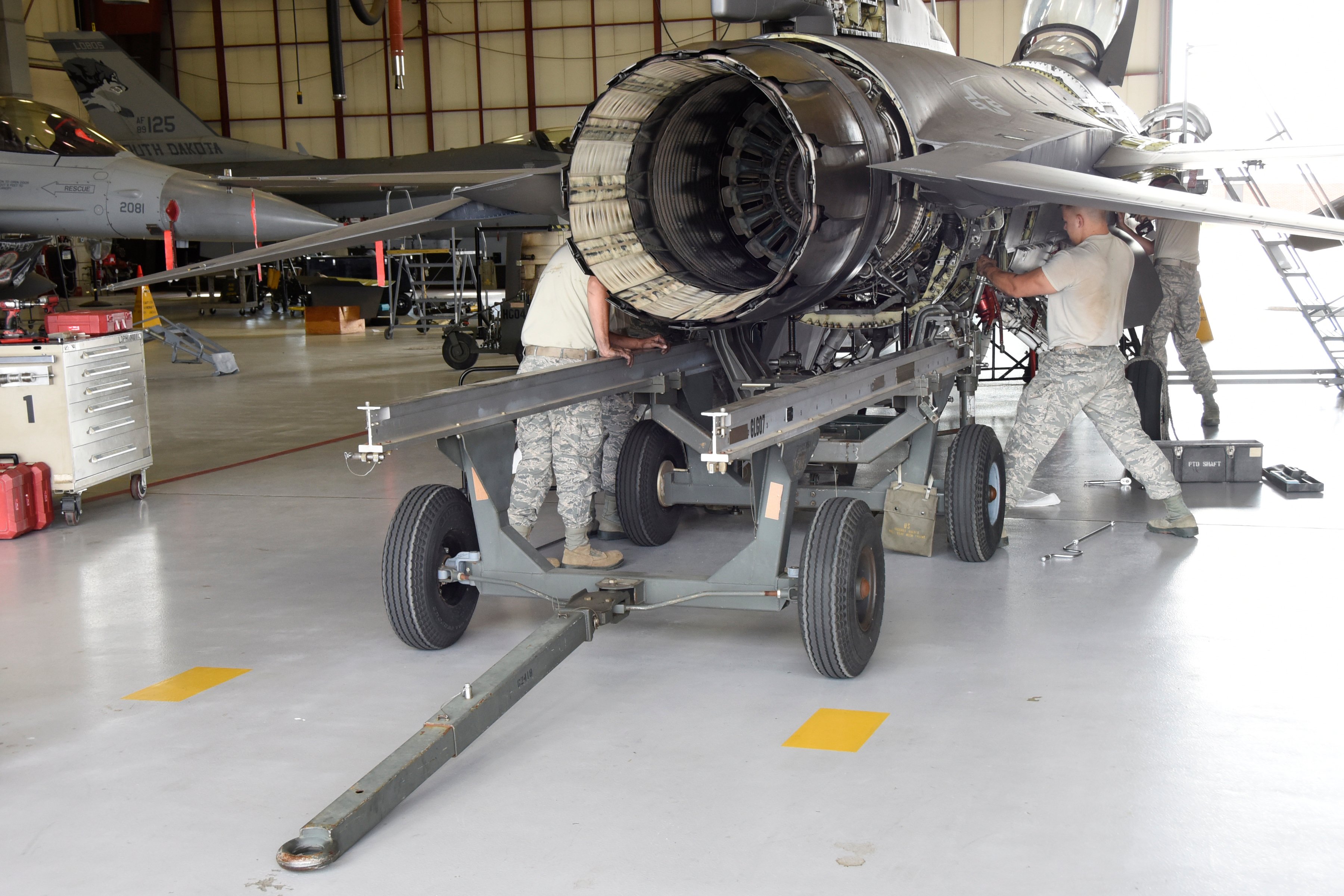
U.S. Air Force engine shop where airmen remove the engine of an F-16 during a phase maintenance inspection in the United States. U.S. Air National Guard photo by Master Sgt. Christopher Stewart/Released Master Sgt. Christopher Stewart
At the same time, the reported turnaround times do point to a substantial capacity problem. Ukraine operates a relatively small F-16 fleet, so aircraft that remain unavailable for extended periods have a disproportionate effect on the number of fighters that can actually be generated for combat missions. Its mission spectrum also includes air-to-ground sorties, putting more demand on the hard-pressed F-16 fleet.
F-16 fighters are the best way to counter new Russian jet-powered drones.
Ukrainian F-16 aces have shot down about 2,500 drones of all types and about 650 cruise missiles.
Jet drones are exactly the kind of target F-16s shoot down very well, and it usually costs $25,000 or… pic.twitter.com/ajxYN9K0yK
The F-16s have finite airframe lives, require increasingly substantial inspections as they accumulate hours, and depend on a supply chain for engines, components and other parts. The missiles used to destroy the targets are another finite resource. It should also be recalled that the jets supplied to Ukraine are among the oldest still in operational service. Although upgraded to F-16AM/BM standard, the airframes have accumulated a lot of hours and fatigue.
There is an additional complication with the air-to-air missile inventory, too. AMRAAM is not used only by Ukrainian F-16s, but also employed by its NASAMS ground-based air-defense systems. Sidewinders, too, have both air-launched and surface-launched applications. The same broader Western supply chain therefore has to support both fighter operations and some of Ukraine’s surface-to-air missile systems. Stocks of both AMRAAM and Sidewinder have been eroded by Ukraine, as well as by combat actions in the Middle East.
Southern Ukraine, a Ukrainian NASAMS surface to air missile system intercepts a Russian drone with an (SL)AIM-120B AMRAAM. pic.twitter.com/LTeDDHaECp
At the same time, Ukraine is continuing to receive additional F-16s. Belgium has said it will transfer three more aircraft to Ukraine before the end of this year. More aircraft will increase the potential size of the force, but they will also add to the requirement for spare parts, engines, technicians and depot capacity.
“There is an important agreement with Belgium on the transfer of three F-16 fighter jets by the end of this year,” Ukrainian President Volodymyr Zelensky wrote on X. “We will work to receive these aircraft through an accelerated procedure.”
There is an important agreement with Belgium on the transfer of three F-16 fighter jets by the end of this year. We will work to receive these aircraft through an accelerated procedure. We have already received urgent deliveries of F-16 ammunition from Belgium and other…
— Volodymyr Zelenskyy / Володимир Зеленський (@ZelenskyyUa) September 29, 2026
Zelensky said Ukraine had already received “urgent deliveries” of F-16 weapons from Belgium and Spain, among other countries.
The alternatives to the F-16 are also limited in the near term. Ukraine continues to operate the Soviet-era MiG-29 Fulcrum and a small number of Su-27 Flankers, but these aircraft are themselves aging and are also required for strike missions. In their favor, the Soviet types were designed around a different concept of operations, making them easier to maintain in the field, and Ukraine has its own support infrastructure to sustain them.
The French Mirage 2000-5F force provides another Western option, but deliveries have been relatively limited, and additional aircraft are arriving incrementally rather than in numbers that can quickly compensate for a major reduction in F-16 availability. The longer-term fighter replacement plan is more ambitious. Sweden has agreed to provide 16 Gripen C/D fighters, with the first aircraft expected in early 2027, while a separate agreement covers the purchase of 16 new Gripen E fighters whose deliveries are not scheduled to begin until early 2029.
French-delivered Dassault Mirage 2000-5F fighter jet in service of the Ukrainian Air Force during flight somewhere over Ukraine. pic.twitter.com/eBCjtx2Gjc
That leaves the F-16 as the principal Western fighter capability available to Ukraine for the immediate future, increasing the significance of any prolonged disruption to its maintenance pipeline or its supply of air-to-air weapons. Ukraine needs enough aircraft to maintain a meaningful combat presence, enough missiles to arm them for the missions they are being asked to fly, and enough maintenance capacity to keep those aircraft available as their flight hours accumulate.
All this is becoming more important as Russia’s aerial campaign evolves. If the increase in faster jet-powered drones continues, Ukraine may have to devote still more fighter sorties to countering them at the very same time that a large portion of its existing F-16 fleet is reportedly unavailable and its stocks of air-to-air missiles are under serious pressure.

 Login


A model of the F-16 Block 70/72 fighter that Lockheed Martin representatives gifted to Volodymyr Zelenskyy during their personal meeting yesterday. pic.twitter.com/tprj5yuj2z
MilitaryNewsUA
(@front_ukrainian) October 20, 2026