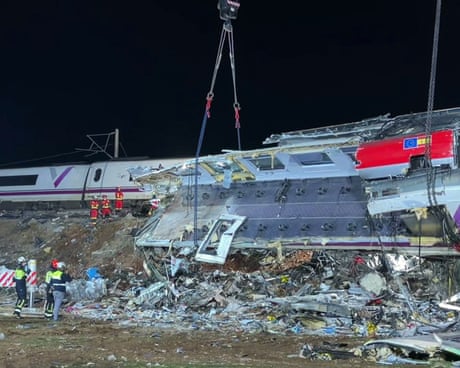
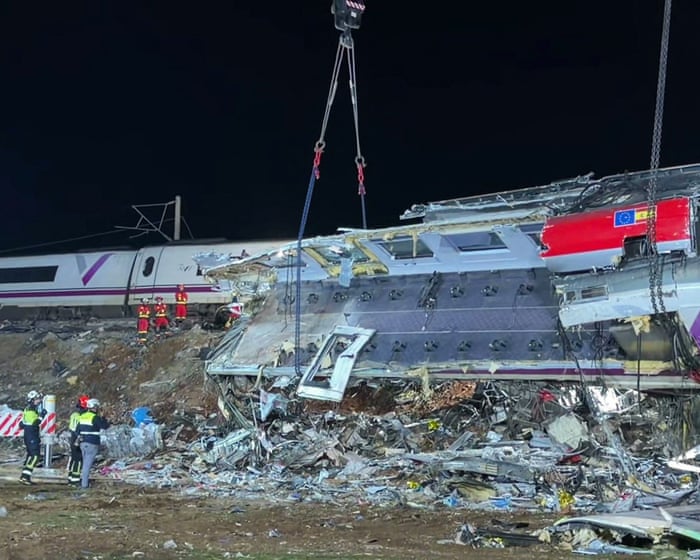
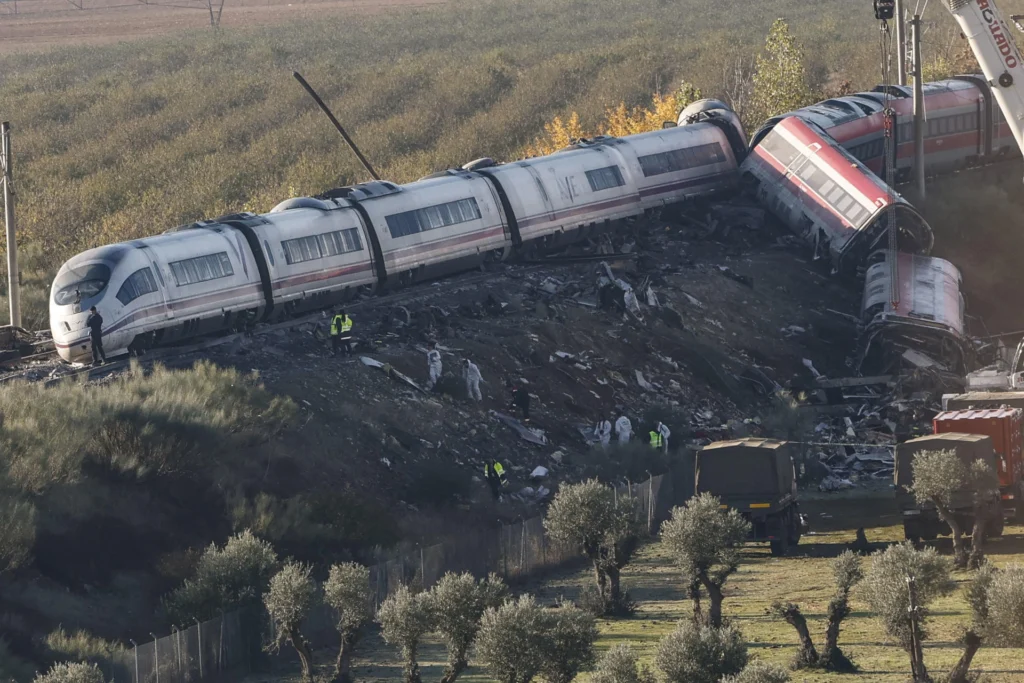
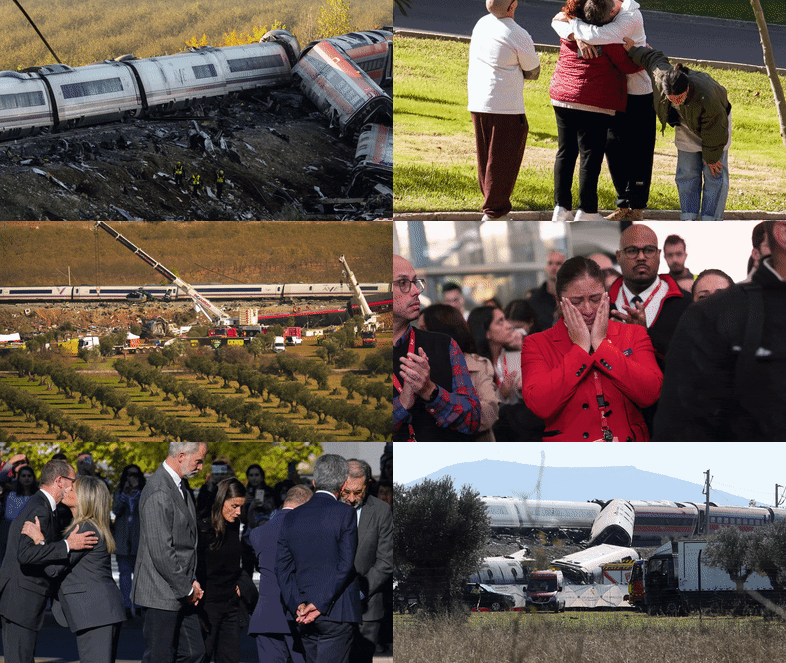
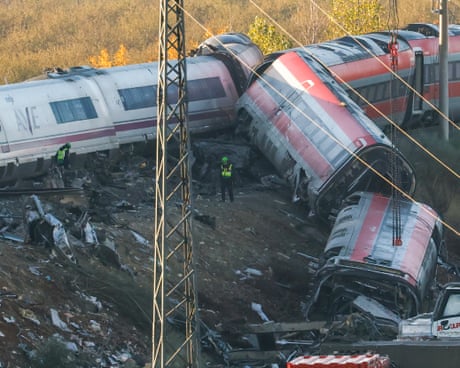
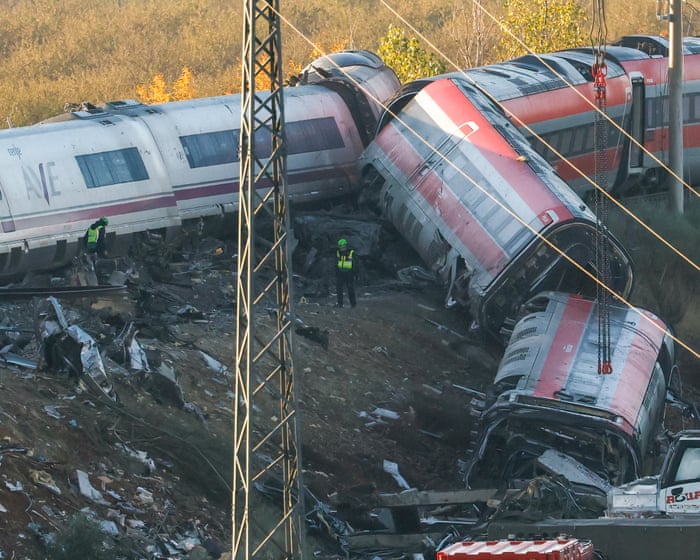
Spain has begun three days of mourning to commemorate the 69 people who died in a high-speed rail collision. The trains – one from Spain's state-owned Renfe and the other from the private rail company Iryo – were heading from Madrid to to the southern region of Andalucía on the same line when they collided. The deadly crash came just 10 months after 46 people were killed when two trains collided on the same line. The disaster has raised fresh questions about safety on Spain's large, modern high-speed rail network. The Guardian's Laure Boulinier explains how it unfolded
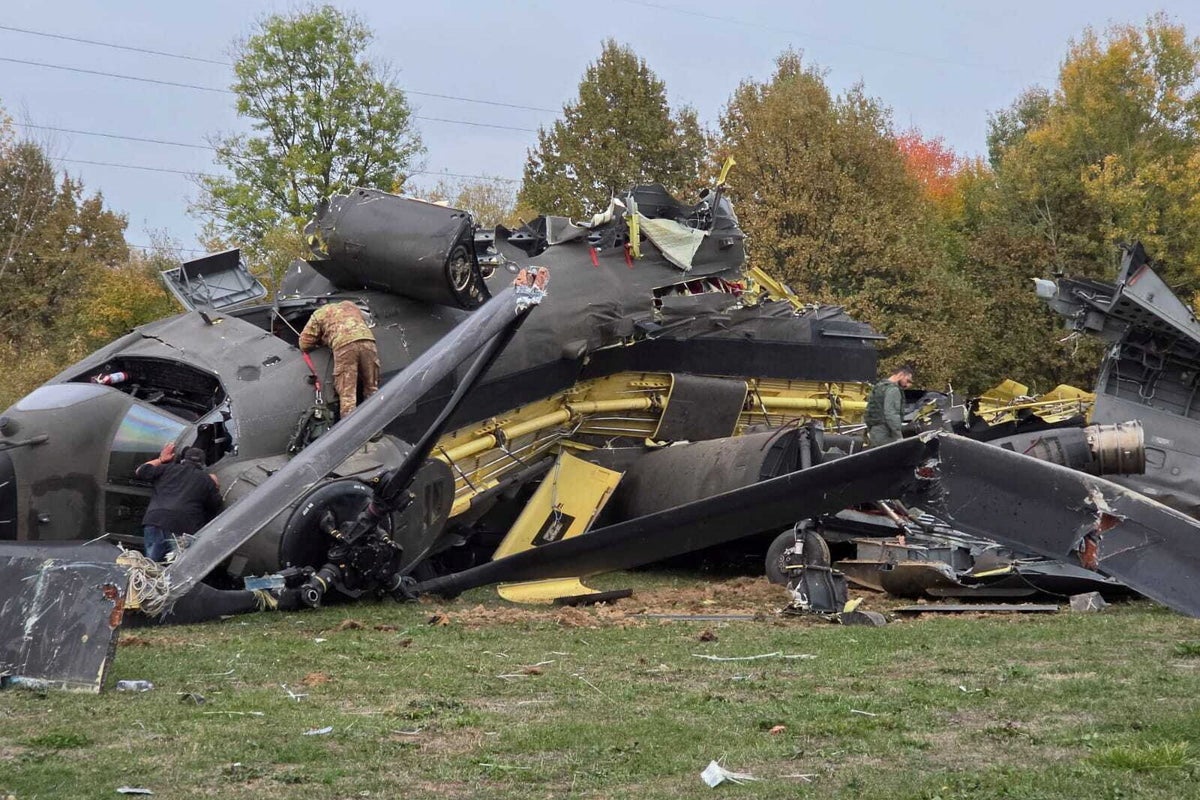
An Italian helicopter in the European Union's EUFOR military force has crashed in Bosnia, with four crew members killed and 11 injured, according to a local hospital.
The high-speed train collision in Urda, in the Spain’s province of Toledo, has 69 deaths confirmed on October 29, with 107 injured still hospitalized after a train was cleared to move despite a safety system failure.
The Spanish Commission of Investigation of Railway Accidents (CIAF) rectified this afternoon the last figure of death people of the train accident of Wednesday in Urda, in the Spanish province of Toledo, south of Madrid, mantaining at 69 the number of fatalities. The correction came minutes after the same agency raised the figure to 74 on its website.
Sources from the Ministry of Transport assured that the official data are those provided by the regional government of Castilla-La Mancha and that they do not confirm “any data” of those deaths, despite the figure published earlier on the website of the Commission of Investigation of Railway Accidents (CIAF), which is hosted on the page of the Ministry.
According to the account provided by authorities, the LZB safety system on the Madrid-Seville high-speed line went down at 8:30 A.M. local time, forcing at least six trains to stop. Six minutes later, at 8:36 A.M. local time, the control center authorized the Renfe AVE train to resume its journey. It traveled 25 kilometers before hitting, at 8:53 A.M., an Iryo train that was stopped on the track. The investigation is ongoing and the sequence of events has not been confirmed in court.
Transport Minister Óscar Puente called the order issued from the Adif command center at Atocha station in Madrid “inexplicable.” He confirmed that the system was showing a red warning alerting to the presence of the stopped train.
The authorities reported that the person responsible for authorizing the advance is identified and under investigation, amid harsh questions about the state management of public transport after two serious accidents were recorded in the same year.
The judge in charge of the case barred access to anyone not involved in the work around the crash site, covering a two-kilometer perimeter along the high-speed line in both directions. The order bans the removal of materials and the dissemination of images in order to preserve evidence, traces and evidence for the clarification of criminal responsibilities.
The collision reignited harsh criticism of state management of public transport. Spain has now recorded two serious rail disasters in a single year.
The Spanish Union of Train Drivers and Rail Assistants (SEMAF) held a 24-hour national strike on Renfe services, including at Sants station in Barcelona, to demand better safety conditions on the rail network.
Drivers’ representatives said the lack of state investment in rail infrastructure directly compromises the integrity of workers and passengers. They demanded urgent hiring of more staff to avoid work overload and guarantee required rest, and a concrete protocol for extreme weather. They recalled recent weather events that caused derailments and infrastructure collapses, such as walls falling onto the tracks in Barcelona province.
The union urged the Government of Spain to direct budget funds toward renewing the network and strengthening safety across the public transport system.
The investigation remains open and the crash zone sealed. The union’s three demands, more staff, protected rest periods, and a weather protocol, now form part of a wider reckoning over how Spain runs its railways.
The results of the technical investigation and the judge’s inquiry will determine who bears responsibility. Authorities are expected to release updated figures as rescue and identification work continues.
Après sept ans à la tête de la Banque centrale européenne, Christine Lagarde a annoncé, jeudi 29 octobre, son départ en février 2027. Depuis 2019, la femme politique française aura traversé la pandémie du Covid-19, la flambée des prix et plusieurs chocs géopolitiques. Retour sur son action et son bilan, alors qu'en France, l'opposition critique un départ anticipé et une potentielle manœuvre politicienne dans l'intérêt d'Emmanuel Macron.
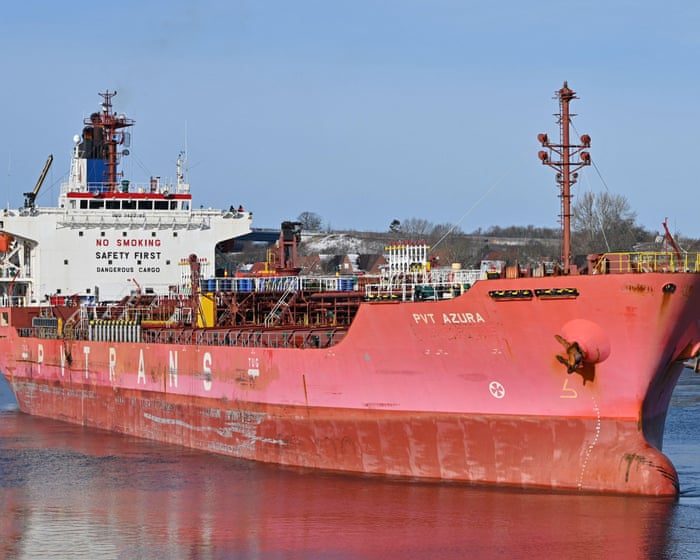
Tankers, tracked by Greenpeace, are first phase of Trump-Putin deal – but there is uncertainty over whether they will unload
Seven oil tankers carrying an estimated 288,000 tonnes of Russian diesel are now sailing towards the US, though it is uncertain if the vessels will be able to unload amid a political row about the legality of the shipments.
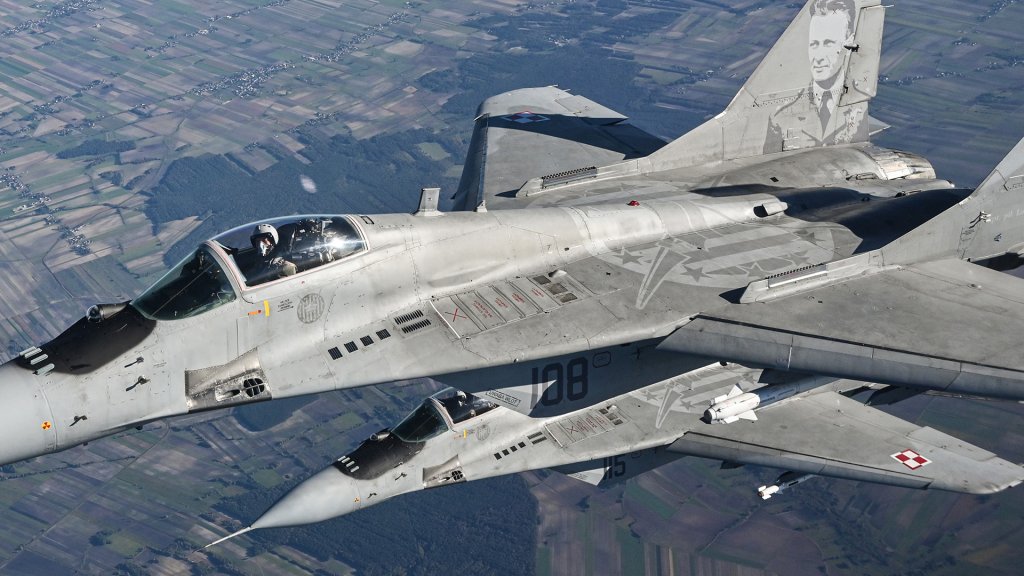
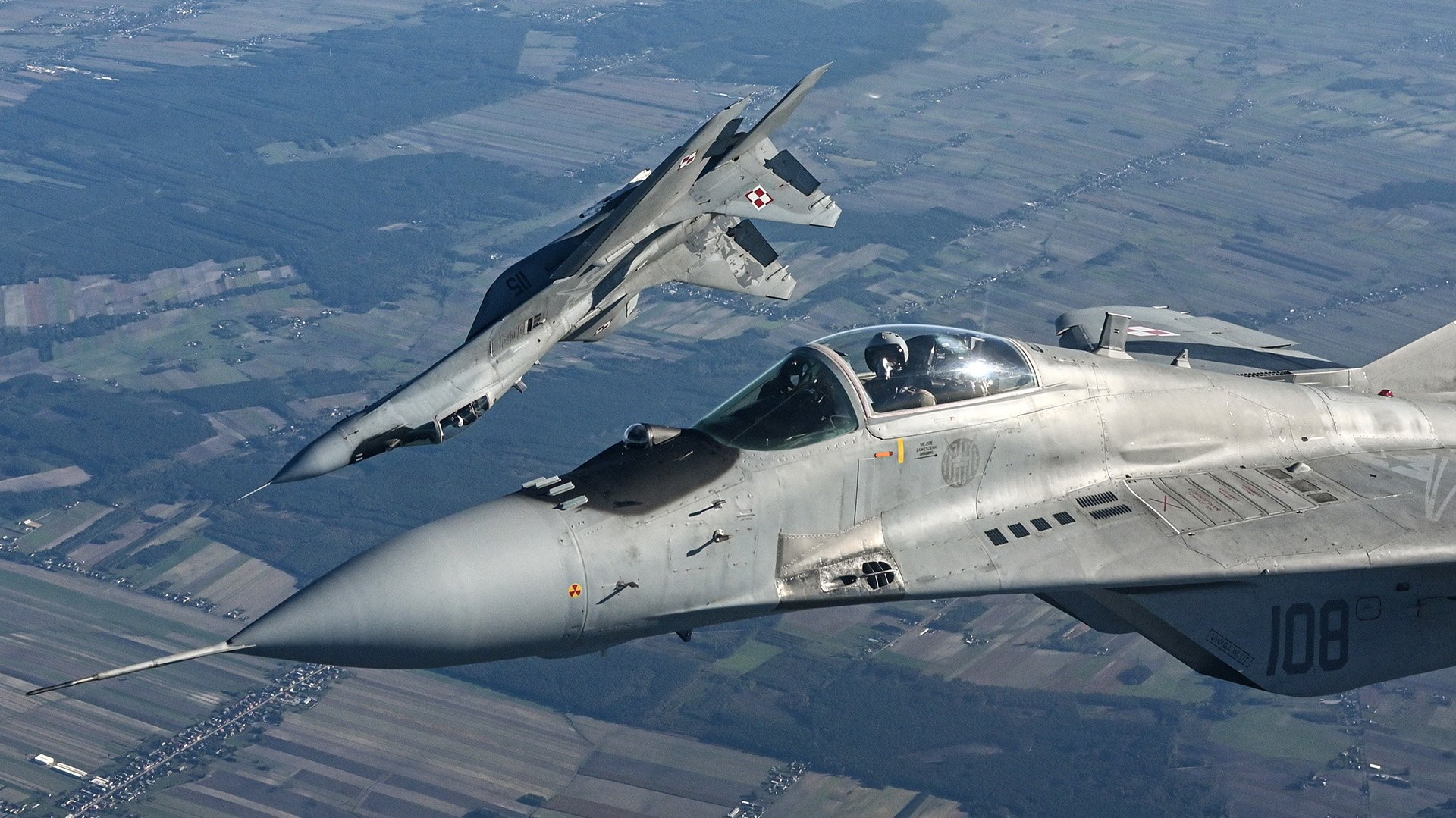
In a key indication of improving ties between Poland and Ukraine, Warsaw has reportedly agreed to provide two additional MiG-29 Fulcrum fighters, badly needed 20x102mm rounds for Ukrainian Air Force F-16s and artillery shells. Relations between the two countries soured this summer over a political spat between their respective leaders, however they appear to be restoring once-close ties.
The aircraft transfer will occur “in the near future,” Lt. Gen. Dariusz Łukowski, director of the Strategy and Defense Planning Department at the Polish Ministry of National Defense, told the Polish Rzeczpospolita (Rz) media outlet. “The decision has been made, and two MiG-29s will be handed over.”
Of the two Fulcrums, one has reached the end of its service life and may be used for parts while the other is still flying, Rz added. Deputy National Defense Minister Paweł Zalewski confirmed the MiG-29 agreement to another Polish media outlet, TVP Info.
“There is an agreement regarding the transfer of two MiG-29s to Ukraine,” Zalewski said. “As regards the remaining MiGs, the matter is ongoing.”
Poland had 14 MiG-29 aircraft as of December 2025, of which six to eight were nearing the end of their service life, a Polish official said at the time. It is unclear how many are still on hand.
Polish Air Force MiG-29 Fulcrums take part in a NATO Air Force military drill on October 12, 2022 in Lask, Poland. (Photo by Stringer/Anadolu Agency via Getty Images) Anadolu
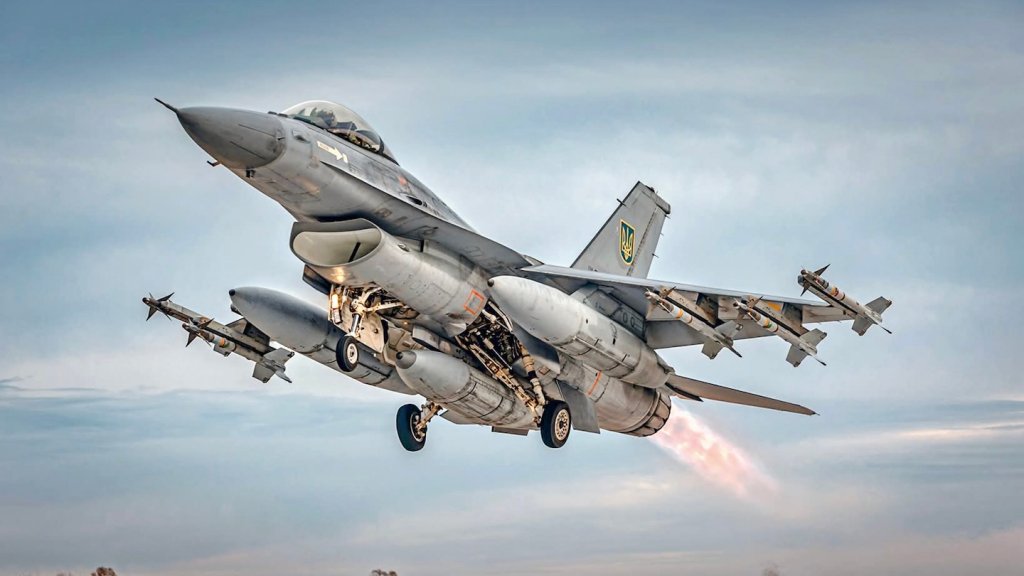
In addition to the jets, Rz reported that “Poland will provide Ukraine with, among other things, a supply of 155mm and 152mm artillery ammunition; 20x102mm combat rounds for the six-barreled cannons on F-16 fighter jets—used, for instance, to shoot down Russian unmanned aerial vehicles—as well as missiles for the Piorun short-range anti-aircraft systems.”
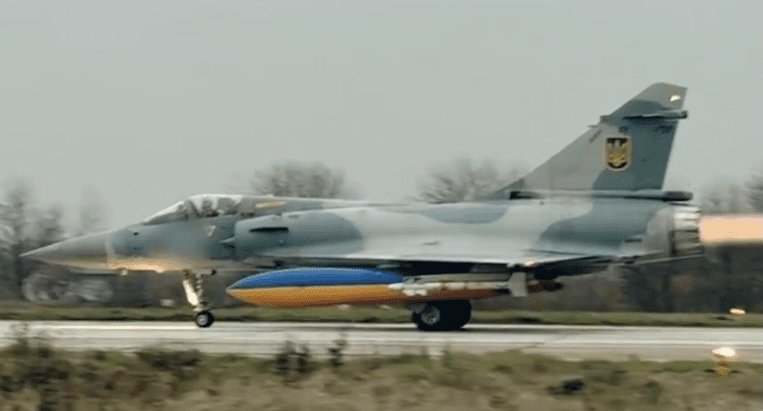
Additional MiG-29s are always welcome, as they remain the backbone of Ukraine’s fighter force even though the country has received donations of more modern F-16 Vipers and French Mirage 2000 fighters. Meanwhile, the 20mm cannon ammunition is critically needed.
As a result, Ukrainian F-16 pilots have reportedly had to ration their missile shots. This has forced them to increasingly rely on their internal 20mm cannon when suitable missiles are not available. Such a tactic is far from an ideal substitute, as you can read about here. Still, Kyiv has reportedly been seeking tens of thousands of additional rounds of 20mm ammunition.
Poland is reportedly providing 20mm cannon ammunition for Ukrainian Air Force F-16s. (Ukrainian Air Force) Ukrainian Air Force
So far, there has been no official Ukrainian response. We reached out to Zelensky’s spokesman and Polish officials for comment.
Reports about the planned Polish weapons transfers to Ukraine mark a turning point in relations between Warsaw and Kyiv, as we noted at the top of the story.
For much of this conflict, Poland has been one of Ukraine’s staunchest allies, serving as a logistics hub and providing military assistance. Warsaw’s initial donation of MiG-29s opened the door for the transfer of dozens of others from several NATO nations. That was followed by the eventual provision of the aforementioned Vipers and Mirages. In addition, Sweden has agreed to provide 16 Gripen C/D fighters, with the first aircraft expected in early 2027, while a separate agreement covers the purchase of 16 new Gripen E fighters whose deliveries are not scheduled to begin until early 2029.
A Ukrainian Air Force Mirage 2000 takes off from an unidentified airfield in Ukraine. (Ukrainian Air Force)
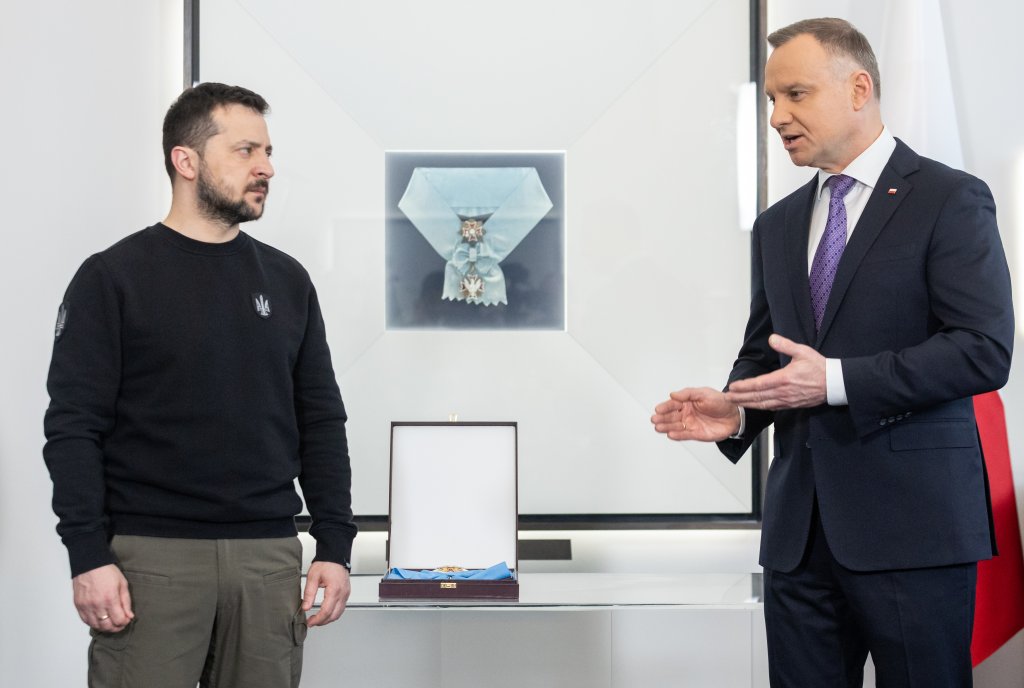
Relations between the two countries reached a nadir in June after Polish President Karol Nawrocki stripped Ukrainian President Volodymyr Zelensky of the Order of the White Eagle. It is Warsaw’s top award and was presented to Zelensky in 2023. That escalated a row between the allies over the memory of WWII.
Ukrainian President Volodymyr Zelenski (left) and then-Polish President Andrzej Duda as Zelenski was honored with ”Order of the White Eagle” in Warsaw, Poland on April 05, 2023. (Photo by Foto Olimpik/NurPhoto) Foto Olimpik
“Zelensky had infuriated Warsaw this month by naming a military unit after an insurgent army that took part in massacres against Poles in WWII,” AFP reported at the time.
After the stripping of the award, the rift grew more bitter, with Poland claiming Ukraine would not transfer drone technology needed to defend against Russian threats. The political kerfuffle culminated with Poland canceling the transfer of additional MiG-29s to Ukraine.
Relations between the two nations began to thaw earlier this month.
The first sign was Zelensky’s resuming use of Polish airports as a jumping-off point for overseas trips. Ukrainian officials have to travel by train to another country if they want to fly because airspace over Ukraine has been closed to non-military aircraft since the start of the all-out war.
Days later, Zelensky told reporters that stopping at Rzeszów was a signal that his relations with Poland were on the upswing.
“Our relations with Poland have indeed improved,” he said. I’m very grateful for this to both Poland and our teams, and I’m grateful to the Prime Minister [Donald Tusk]. I’m grateful to the people of Poland for supporting Ukraine. It’s very important for us to be together right now. There is only one enemy – Russia, which is deeply concerned about a strong alliance between Ukraine and Poland.”
“Even very difficult things, we’ll resolve them, I’m sure of it,” the Ukrainian leader added. “These will be mutually beneficial relations, out of respect, because of the importance of security in Europe.”
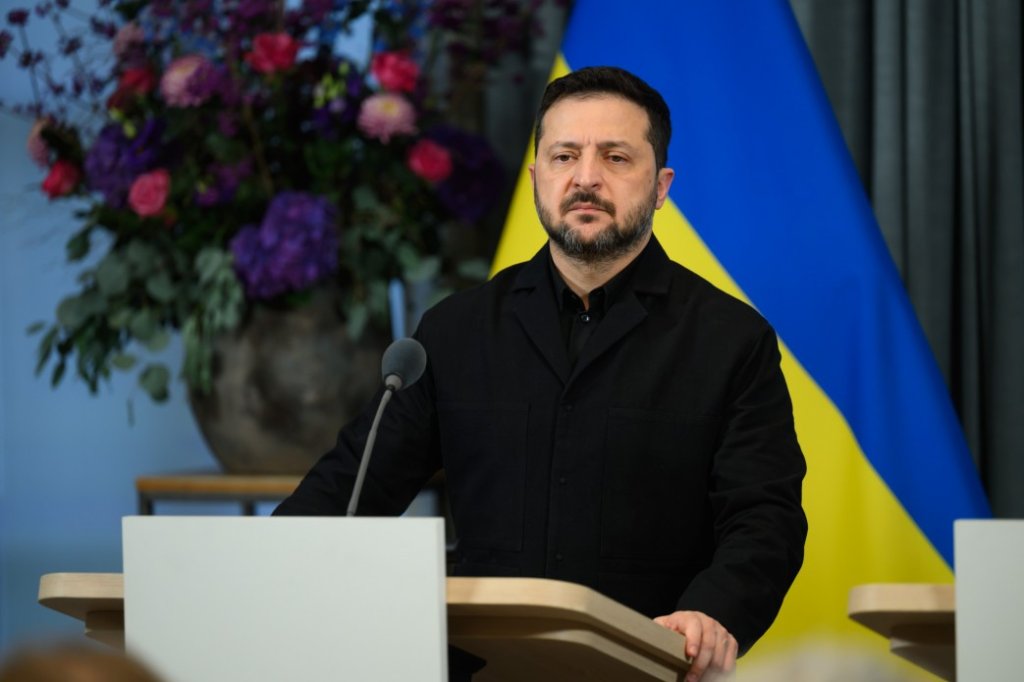
Ukrainian President Volodymyr Zelensky expressed gratitude for Polish support. (Office of the President of Ukraine)
Though Polish officials are telling media outlets that deals are in place, there is still a lot that can go sideways before the aircraft and ammunition are in Ukrainian hands. Still, for Kyiv, even suggestions of a future transfer are better than having deals being called off.
The leaked recordings shed light on the minutes leading up to the horrific crash that killed at least 69 people, as five questions stand out in the search for answers.
The leaked recordings shed light on the minutes leading up to the horrific crash that killed at least 69 people, as five questions stand out in the search for answers.
The prime minister’s ambitions might be ambiguous, but unlike the Conservative leader, he is following voters and the facts
British politics is still polarised around Brexit, although 10 years on from the referendum, the terms of debate are very different. Or they should be. Russia’s invasion of Ukraine in 2022 has moved discussions of European solidarity from the realm of abstraction to a matter of urgent defence partnership. Donald Trump’s presidency in the US, marked by scorn for European democracies and indulgence of Vladimir Putin, has undermined confidence that Britain can rely on any “special relationship” with Washington.
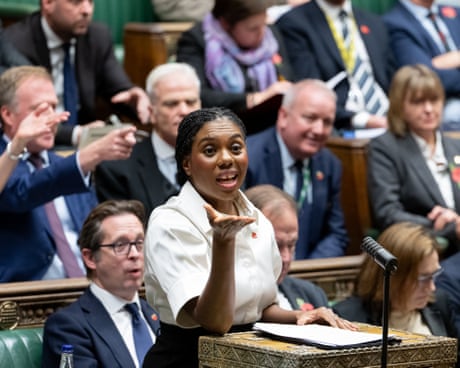
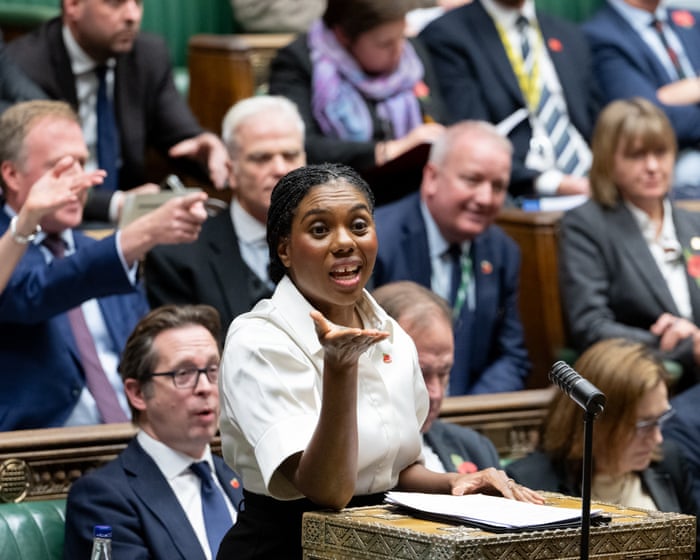
Under these circumstances, it would be absurd to deny that a reappraisal of Brexit is in order. The prime minister acknowledged this in his speech at the Labour party conference last month, calling for a national conversation about the future relationship with every option, including rejoining, on the table. The Eurosceptic opposition are having none of it. The Conservative leader, Kemi Badenoch, accuses the government of stirring division by raising the European question. She told MPs this week that Labour should thank the Tories for the Brexit deal they negotiated.
Do you have an opinion on the issues raised in this article? If you would like to submit a response of up to 300 words by email to be considered for publication in our letters section, please click here.
Spain has begun three days of mourning after at least 69 people were killed and more than 100 were injured in a crash between two high-speed trains. The town of Urda has become the site of a major operation, as emergency services continue to search through the wreckage and relatives wait for news of their loved ones. There is growing public anger over the incident, which is the second fatal train collision in Spain in less than a year. Lucy Hough speaks to the Guardian’s Madrid correspondent, Sam Jones

 Login