LAHORE is choking again, and the government’s answer is to send more machines onto its streets. On Wednesday, its air quality index reached 296, putting children, outdoor workers, and the elderly at particular risk.
Yet Punjab plans to acquire 30 more truck-mounted fog cannons. These can suppress road dust locally, but their ability to reduce the fine particles most harmful to health remains questionable. Authorities must explain what the existing fleet has achieved in terms of measurable pollution reduction before spending more public money.
Last year, disruptions to Punjab’s air monitoring network raised suspicions that pollution levels were being hidden; officials cited technical faults. Whether equipment is recording pollution or spraying water, public confidence depends on transparent data and independent scrutiny. A temporary improvement at a pollution hotspot, or near a monitoring station, cannot prove that the city’s air is becoming safer.
Monitoring should expose pollution. Punjab must publish continuous readings and independent assessments of its interventions. It should also fund research into the relative contributions of traffic, industry, construction, and crop burning, how these change with the seasons, and which measures actually reduce exposure.
That scientific effort must extend beyond the border. Punjab officials say easterly winds have been bringing polluted air from India into Lahore. But this does not absolve Pakistan of responsibility for its own emissions. The air over the two Punjabs is shared, and both populations suffer when political hostility obstructs cooperation.
Calls for joint action are not new. Cooperation was proposed with Indian Punjab in 2017 and 2024. Yet neither initiative led to sustained cooperation. Environmental diplomacy with New Delhi should be prioritised, despite wider tensions. Both sides could begin by exchanging verified air-quality and weather data, jointly studying the movement of pollutants and developing common approaches to agricultural burning and industrial emissions. Universities and scientific institutions could help build a shared evidence base.
At home, dedicated research funding, stronger monitoring, and open evaluation of anti-smog spending are essential. Enforcement must continue, but decisions should follow evidence, not the visibility of machinery on city roads. Until the air itself improves, no amount of official activity can be called progress.
PESHAWAR: An inquiry into the recent deadly collapse of a school roof here has held the owner responsible for using substandard construction material.
It also pointed out negligence on the part of the relevant departments.
The inquiry report was presented to Governor Faisal Karim Kundi during a meeting chaired by him here, according to an official statement issued by his office.
The meeting was attended by adviser to the governor Dr Amir Abdullah, chief secretary Dr Fakhar Alam Irfan, education secretary Inayatullah Waseem and members of the inquiry committee.
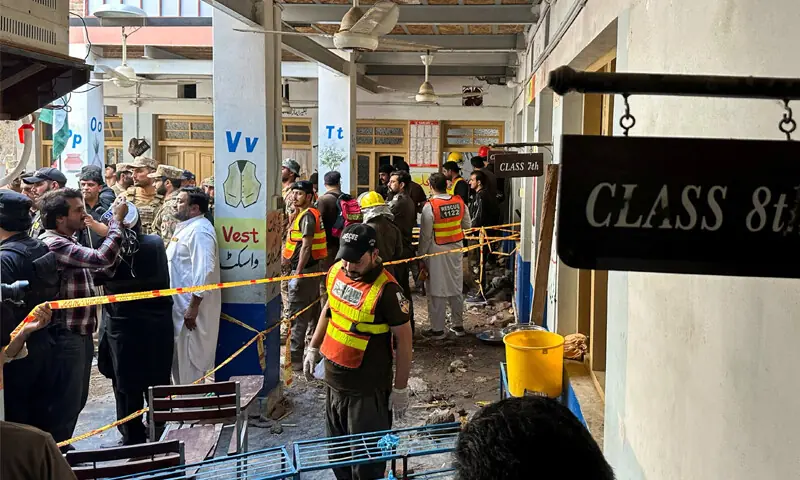
At least 30 children and a schoolteacher were killed and dozens of others injured when the roof of a multi-storey private school collapsed in the Dir Colony area.
Rescue officials said that the ceiling of a classroom collapsed onto students after the roof of the floor above gave way, causing the two storeys to crumble.
The governor later ordered an inquiry into the incident.
On Wednesday, the inquiry committee held the school owner responsible for using substandard construction material.
The meeting, chaired by the governor, was also briefed about negligence by the relevant departments.
Mr Kundi received a detailed briefing on the causes of the incident, statements of the relevant officials, the responsibilities of various departments, the inquiry committee’s findings and its recommendations.
The governor directed authorities to examine the legal aspects of the report in consultation with the law department.
He said that strict action should be taken against those responsible for the school collapse.
KARACHI: Two young sisters were allegedly shot dead by their brother over their use of social media in Drigh Road, within the jurisdiction of Shah Faisal Colony police, on Wednesday, police said.
Korangi SSP Fida Husain Janwari told Dawn that Sobia, 25, and Hira, 20, were gunned down inside their home in New Rehmanabad by their brother, Rehan.
The senior officer said the initial investigation suggested that the suspect had warned his sisters against using TikTok, which appeared to be a possible motive behind the double murder.
He said the suspect had fled the crime scene and efforts were on to ensure his arrest.
The SSP added that the alleged killer had a criminal record and had been arrested multiple times and sent to jail in connection with criminal cases.
The bodies were shifted to the Jinnah Postgraduate Medical Centre (JPMC) for medico-legal formalities.
Firing on under-construction building leaves watchman dead
A watchman was gunned down and two labourers were wounded in an armed attack on an under-construction building in the Garden area.
The Soldier Bazaar police said two armed men riding a motorcycle resorted to indiscriminate firing on the under-construction Jumani Square located on Nishter Road near Alibhai Auditorium. As a result, three persons sustained critical injuries and were taken to the Civil Hospital Karachi where Aslam, 30, was pronounced dead on arrival.
The police said the victim was watchman of the building. The injured labourers were identified as Shahid Ali, 25, and Shakir Ali, 28.
The police in a statement said the incident appeared to be related to extortion.
RUSSIA’S growing engagement with Afghanistan’s Taliban rulers is reshaping the regional diplomatic landscape. For Pakistan, which has historically maintained close links with Afghan political and religious networks, the development presents both a challenge and an opportunity.
The question is not whether Moscow will replace Islamabad as Kabul’s principal interlocutor, but whether Russia’s expanding diplomatic, security and economic engagement will give the Taliban greater room to manoeuvre in their dealings with Pakistan.
Russia’s approach towards the Taliban has been gradually shaping up. In July 2025, Moscow became the first country to recognise the Taliban government formally. Earlier, it announced the removal of the Taliban from its list of prohibited terrorist organisations in April that year. In May 2026, Russian officials announced plans to establish a “full-fledged partnership” with Kabul, encompassing security, trade, cultural exchanges, and humanitarian cooperation. That same month, a military-technical cooperation arrangement further underscored the deepening relationship. Moscow, therefore, has been moving beyond limited diplomatic engagement towards a more sustained relationship with the Taliban authorities. Multiple factors may be shaping Moscow’s approach toward the Taliban.
First, Moscow remains concerned about the spread of militant violence into Central Asia, narcotics trafficking, and the activities of Islamic State-Khorasan (IS-K). The deadly 2024 attack near Moscow reinforced Russian concerns about transnational extremist networks.
From the Kremlin’s perspective, dealing with the Taliban is a pragmatic necessity — whatever its reservations about the nature of their government, the Taliban exercise effective control over Afghanistan’s state institutions and security apparatus.
In parallel, Russia seeks to preserve its influence in Eurasia and prevent Afghanistan from becoming a source of instability that could invite renewed intervention by external powers. Economic cooperation, including potential opportunities in energy, transport, agriculture, and infrastructure, adds another dimension to this policy. Moscow’s outreach should, therefore, be understood as an effort to protect its own interests and expand its regional options.
Russia’s close ties with Kabul won’t automatically ensure action against anti-Pakistan terrorists.
Second, Russia’s recognition of the Taliban has important implications for Pakistan’s diplomatic leverage. For years, Islamabad’s geographical proximity, economic connections, and historical links with the Taliban gave it considerable access to Kabul. Russian recognition gives Kabul an additional source of international legitimacy. Its expanding relations with Moscow also offer the Taliban another channel for diplomatic engagement, security cooperation, and economic opportunity. The more external partners Kabul acquires, the less dependent it may feel on Islamabad for diplomatic access and international engagement.
This does not mean that Pakistan’s influence will disappear. Geography, cross-border commerce, people-to-people links, and the management of shared security concerns remain important. However, these factors do not automatically translate into political compliance. Pakistan’s leverage will increasingly depend on whether it can demonstrate the mutual benefits of cooperation rather than rely on historical relationships or geographical realities alone.
Third, Russia’s approach to the TTP will be the most consequential test. Islamabad’s central security concern is that terrorist groups operating from Afghan territory threaten Pakistan’s citizens and security personnel. The Taliban authorities’ generalised statement is that Afghan territory will not be used against other countries, but they are reluctant to specifically say that Afghan territory will not be allowed to be used against Pakistan.
Moscow’s priorities, however, do not match Pakistan’s. Russia’s immediate security concerns centre particularly on IS-K and the threat of extremist violence spreading into Central Asia and Russia itself. Although the Taliban also oppose IS-K, this convergence does not necessarily mean Moscow will place Pakistan’s concerns about the TTP at the centre of its Afghan policy.
Pakistan should, therefore, avoid assuming that Russia’s close relations with Kabul will automatically produce action against anti-Pakistan terrorists. Russian influence could provide an additional diplomatic channel, but its effectiveness will depend on Moscow’s willingness to address the TTP issue and the Taliban leadership’s readiness to respond.
Fourth, Russia’s interest in regional stability gives it a potential role in facilitating dialogue, reducing tensions and encouraging practical cooperation. Pakistan should welcome constructive Russian involvement without outsourcing its Afghan policy to Moscow.
The Shanghai Cooperation Organisation could provide a useful multilateral framework. Pakistan, Russia, China, and the Central Asian states share an interest in preventing Afghanistan from becoming a base for transnational terrorism. Coordinated intelligence exchanges, border-security cooperation, counter-narcotics measures, and structured consultations with Kabul could help establish a regional approach. Such cooperation would be more sustainable than expecting any single country to exercise decisive influence over the Taliban.
Fifth, Pakistan needs to adapt its Afghan policy to a more competitive diplomatic environment. Islamabad should deepen engagement with Russia while maintaining direct communication with the Taliban leadership. It should also coordinate with China, the Central Asian republics, and other relevant regional actors to develop a common understanding of the threats emanating from Afghanistan.
At the bilateral level, Pakistan has to involve the Taliban in a meaningful dialogue and create a workable environment that builds the Taliban regime’s stake in the mutual benefits of the two countries. This could include arrangements to exchange information on terrorist networks, investigate cross-border incidents, prevent attacks, and maintain communication between security officials. Economic cooperation and the facilitation of legitimate trade should accompany these measures, giving both sides practical incentives to reduce tensions.
Diplomatically, Russia’s Afghan outreach is thus neither an inevitable strategic setback for Pakistan nor a guarantee of improved regional security. It is a development that reflects the Taliban’s efforts to widen their international options and Moscow’s decision to protect its own interests. Whether this produces greater stability or further competition will depend on how regional states use their expanding diplomatic channels.
Pakistan will have to carefully observe that Russia’s engagement helps address the region’s shared security concerns. Islamabad’s influence over Kabul will ultimately depend less on who has the closest relationship with the Taliban and more on who can help produce practical results: a secure border, action against militant violence, functioning trade routes and a stable regional environment.
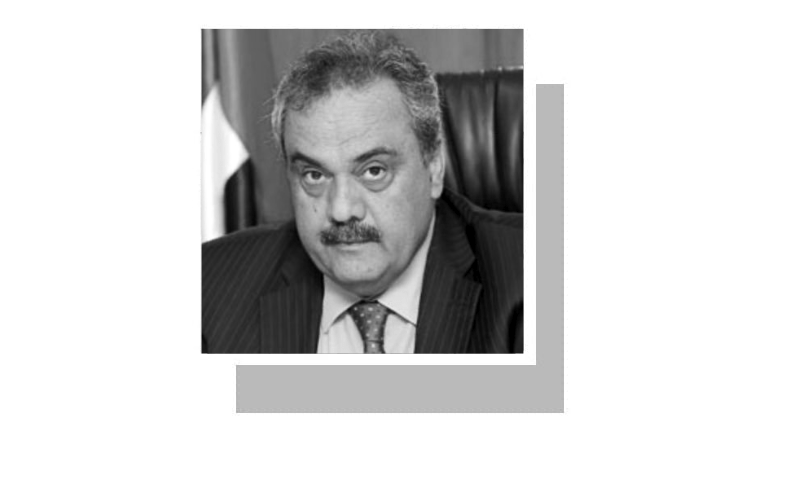
The writer is a former special representative of Pakistan for Afghanistan. He served as Pakistan’s ambassador to the UAE and Iran.
LAST month, I argued in this space that Iran is emerging as a big regional power to our west. The question I left hanging was whether it would use its newfound centrality to avenge the past or to build a future. Last week offered the first real glimpse of an answer.
On Oct 26, Saudi Arabia’s defence minister, Pakistan’s defence chief, and Turkiye’s intelligence chief sat down in Tehran with Mohsen Rezaei, secretary of Iran’s Supreme National Security Council. The joint statement that followed was thin, pledging only continued dialogue on regional peace and security. But the significance of the Tehran huddle lies less in what was said than in the fact that it happened at all, and where.
Consider who came. The three visitors are the signatories of the Makkah Joint Defence Agreement, signed in August, a pact many read as a hedge against precisely the kind of Iran I described last month. Saudi Arabia was struck repeatedly by Iran during the war, hosted American forces that attacked Iran, and is under fire from the Houthis even now. Yet, the Saudi defence minister led the delegation, and they travelled to Tehran. Not Riyadh, Ankara or Islamabad, nor a neutral venue like Doha or Muscat.
When three of the region’s largest military powers, one of them nuclear-armed, come to your capital to talk about regional security, they are acknowledging that no regional security arrangement is possible without you, and that the road to one runs through your door. For a country that spent four decades behind a wall of sanctions and was treated as a problem to be contained rather than a party to be consulted, this is a milestone.
The significance of the Tehran huddle lies less in what was said than in the fact that it happened at all, and where.
It also happened in the teeth of American pressure. Washington was openly weighing a fresh round of strikes, US forces were reportedly ready to move within 96 hours of an order, and a naval blockade was choking Iran’s southern ports. The region’s middle powers came anyway, having concluded that Iran would still be standing after this war and that they need a working relationship with it whatever Washington decided.
The second thing worth noticing is what Iran chose to emphasise. Rezaei told state television that Tehran and its three guests had agreed that the region’s security is to be achieved through the countries of the region. A senior Pakistani security official told Reuters the meeting’s primary aim was a regional mechanism to prevent military attacks between them. Foreign Minister Abbas Araghchi has said for months that Tehran will welcome any regional security arrangement that excludes foreign forces.
Put these together and the outline of the order Iran wants comes into view. It rests on three pillars: non-aggression among the states of the region, an alignment of their interests, and the exit of outside powers, above all America, from the business of guaranteeing Gulf security.
This is a window into the kind of power Iran wants to project. Last month, I worried that once the Americans were gone, the Iranian military machine would turn its gaze to the riches of the Gulf monarchs and present bill after bill. That risk has not gone away. But the posture on display in Tehran was not that of a power seeking to dominate its neighbours by force. It was that of a power seeking to become the indispensable centre of a regional system it helps design.
The China analogy is instructive here too. In 1954, with Beijing still shunned by much of the world, Zhou Enlai put forward the Five Principles of Peaceful Coexistence in negotiations with India. Mutual non-aggression sat at their heart, alongside non-interference in internal affairs. Non-aggression is the language of a power confident of its own weight, which wants its neighbours to accommodate it rather than fear it.
There is hard strategic logic beneath the soft language. A non-aggression architecture without foreign forces is the one in which Iran’s advantages count most. Take American bases and carriers out of the Gulf, and Iran’s hold over Hormuz, its missile arsenal, and its network of allies make it the pre-eminent power on the Gulf littoral by default. In that setting, a non-aggression pact is not a concession but a way of having one’s pre-eminence ratified by one’s neighbours.
Nor did the idea originate in Tehran. In May, Saudi Arabia itself floated a non-aggression pact between Iran and the states of the region, reportedly modelled on the 1975 Helsinki Accords. Iran is now taking an idea its rivals put on the table and making it the organising principle of an order with itself at the centre. That, too, is what emerging powers do.
None of this is settled. The factional contest I described last month is playing out in plain sight. The hard-line daily Kayhan treated oil above $115 a barrel as proof that pressure on shipping works better than diplomacy, while moderate papers warn of a wave of bankruptcies in Isfahan, Tabriz, and Arak as the blockade bites. Which camp prevails will decide whether the language of non-aggression is here to stay.
Pakistan has a particular stake in all this. An Iran that seeks pre-eminence through a regional architecture is a neighbour Pakistan can work with, and help shape from the inside. An Iran that seeks it through reparations, tolls, and coercion would place us in an impossible position between our western neighbour and the Gulf states on which so much of our economy depends.
The huddle does not answer last month’s question. But it shows that the option of building a future is on the table, in Iran’s own words, and that its neighbours are prepared to engage on those terms. That is a milestone. Whether it becomes a trajectory depends on whether the voices in Tehran speaking the language of non-aggression win the argument at home, and whether Washington, after its elections on Nov 3, lets them.
WASHINGTON: Global commodity prices are set to surge 23 per cent in 2026, the World Bank said on Wednesday, citing rising energy prices and disruptions to cargo shipping during the Middle East war, grain shipment problems in the Black Sea and high demand for safe-haven assets such as gold.
Oil, natural gas, food and metals prices all rose sharply this year as global shocks mounted, the World Bank said in its latest Commodity Markets Outlook. It said the situation could worsen if the conflict in the Middle East ratcheted up and damage to Russian oil infrastructure continued.
Commodity prices were expected to ease by 7pc next year, it said, but continued shocks — including forecasts for the worst El Nino weather effect since 1950 — could keep food commodity prices elevated, raising the spectre of higher inflation and tighter monetary policy.
The global economy was more vulnerable to future supply shocks at the moment. Global oil stocks have been depleted during the war in the Middle East, and global oil supply is expected to drop 5.2% in 2026, the biggest drop in four decades outside the 2020 global recession, the bank said.
Energy up 32pc, metals 25pc, gold 40pc in 2026; food prices face El Nino threat
“Commodity markets are being hit by several major shocks at once,” said Ayhan Kose, the World Bank’s deputy chief economist. “Higher energy costs and trade disruptions are driving up prices across a broad range of commodities, threatening to worsen inflation, food insecurity, and economic growth.” The bank released its twice-yearly report on Wednesday, two days before foreign ministers from the world’s 20 largest economies are due to gather in Atlanta, Georgia for a meeting that will focus on the wars in the Middle East and Ukraine.
Kose said the World Bank was focused on protecting the world’s poorest people and supporting low-income countries already grappling with heavy debt burdens.
The bank had already provided $8.7 billion in low-cost loans and other aid to 25 countries affected negatively by the war in the Middle East, the report said. This included 10 countries that retooled existing programs to cover crisis-related expenses, and 19 that had tapped new resources, with some using both.
The report, released twice a year, said global energy prices surged 32pc in 2026, reaching their highest level since Russia’s 2022 invasion of Ukraine.
With oil output down, Brent oil prices were expected to remain elevated in the near term, averaging $92 per barrel for the year. Prices would be even higher if oil demand were not forecast to drop 2.5pc this year, the third-largest drop behind the 2020 Covid shock and the 1980 oil crisis.
It said food commodity prices were set to rise just over 10pc in 2026 due to grain shipment disruptions caused by hostilities between Russia and Ukraine in the Black Sea, and another 7pc plus in 2027, for a cumulative increase of nearly 18pc.
An adverse scenario that coupled a record El Nino, more Black Sea grain shipment disruptions, escalation in the Middle East conflict and ongoing damage to Russian oil infrastructure could drive food prices 12pc higher than expected, it said. That could trigger a food crisis like the one seen in the early 2010s, when more than 40 million additional people were pushed into extreme poverty, the bank noted.
Fertiliser prices were expected to rise 14pc in 2026 due to a surge in urea prices, then return to 2025 levels in 2027.
Metals prices were projected to rise 25pc and hit a new high in 2026, with aluminium, copper and tin all setting new records as a result of supply disruptions and strong demand from investments in renewable energy, electric vehicles and data centres, the bank said.
Precious metals prices were projected to surge by 40pc in 2026, amid elevated demand for safe-haven assets triggered by geopolitical and policy uncertainty, with some moderation seen in 2027.
THE PPP appears quite perturbed over the fact that the creation of new provinces or administrative units continues to be discussed. Speaking at an event in Karachi on Tuesday, PPP chairman Bilawal Bhutto-Zardari asserted that no one outside Sindh could decide its future. “So we should now put a full stop to this conversation as well.”
The Bhutto scion said the people of Sindh and their elected representatives had “given their verdict” on this matter, ostensibly referring to a Sindh Assembly resolution in early September.
Solely on principle, his position cannot be faulted. The Constitution does lay out a clear process for decisions of this sort, and it gives the elected assembly of each affected province a final say on the matter. Of course, there are public representatives from the same province, albeit from other parties, who disagree with the PPP chairperson’s view. However, that disagreement alone cannot be used to override a defined legal process.
Unfortunately, as recent events in KP have shown, the public’s mandate and verdicts delivered through the ballot box can be brushed aside if the centre is sufficiently motivated. For KP, its decisions are now being made not by its elected representatives, but by administrators handpicked by Islamabad.
It can be argued that this is, perhaps, not a fair comparison, but Mr Bhutto-Zardari should still realise that his position may not hold as much force as he thinks it does, and it will, therefore, not be as easy to bury this agenda as he would like. There are many voices within the federal government’s ruling coalition that are actively advocating for the division of all provinces into more ‘manageable’ units.
As was seen in KP, such voices can be amplified to find causa proxima, the trigger for an intervention, if it comes to that. Therefore, a better course of action would be to address governance grievances proactively.
The primary reason for governance failure in Pakistan is not the geographical size of the existing provinces but the reluctance of provincial capitals to empower local bodies. Few can convincingly argue that the local government system, as it exists today, is capable of positive change at the grassroots level.
At the same time, simply creating more provinces will only add heavy, expensive layers of provincial bureaucracy at a time when Pakistan can ill afford them. There are also steep social costs to consider, as pushing forward without public validation could trigger ethnic strife.
Therefore, empowered local bodies remain the best answer to all those issues which seem to warrant a fracturing of the provinces in the eyes of those demanding an administrative restructuring. The decrepit LG system needs to be revitalised, with resources invested in it judiciously. Doing so can improve service delivery at the neighbourhood level in a meaningful way.
• Court upholds FST order reinstating 40 officers linked to 2023 boat capsize off Greece
• Agency argues tribunal overturned sackings on technicalities; three-judge bench directs agency to fulfil requirements of due process
ISLAMABAD: The Supreme Court on Wednesday cleared the way for the Federal Investigation Agency (FIA) to reopen a departmental inquiry against officials allegedly linked to the fatal 2023 Greek migrant boat capsize tragedy.
However, the court rejected the FIA’s appeal against an April 14 Federal Service Tribunal (FST) ruling, upholding the order to reinstate the dismissed FIA officers.
A three-judge Supreme Court bench, headed by Justice Muhammad Ali Mazhar, took up appeals moved by the Directorate General Federal Investigation Agency (FIA) challenging the FST order.
Pursuant to the Greece boat tragedy of 2023, FIA had penalised and dismissed 40 officers who were found to have allegedly facilitated the human smuggling of vulnerable individuals.
Around 286 people departed from Libya, of whom 155 were killed when the boat capsized off the coast of Greece.
Representing FIA, Deputy Attorney General Raja Shafqat Abbasi argued that the FST had set aside the dismissal orders merely on technical and procedural lapses, such as the non-compliance of procedure and a lack of opportunity for cross-examination.
He argued that officers posted at the time at the Lahore, Karachi and Multan airports were under a statutory duty under their job descriptions to properly scrutinise tickets, passports, visas and the purpose of the visits to Libya, noting it was a war-torn country rather than a tourist destination.
It was the duty of the officers to apply their minds as to why more than 286 persons were travelling to Libya from different airports of the country, Mr Abbasi said.
The counsel submitted that there was at least gross omission and negligence, amounting to direct facilitation on the part of these officials, which enabled human smugglers to traffic innocent citizens from Pakistan to Libya and onward to Europe via a sea route.
This led to the deaths of 155 Pakistanis and caused serious damage to the image of Pakistan internationally, he added.
Mr Abbasi contended that if there was any procedural lapse in holding the departmental inquiry, the accused officials were not entitled to a “clean chit” of reinstatement in the job.
At most, a fresh opportunity should be given to the FIA to conduct a de novo inquiry after providing a due opportunity for hearing and cross-examination, so that appropriate action may be taken against those found responsible in accordance with the law, the counsel contended.
Concluding the hearing, the Supreme Court referred the matter to the FIA to initiate a fresh inquiry, if they deem it fit, in accordance with the law against the officials for whom evidence was on the record, after giving the officials an opportunity for a hearing.
• Border Health Services vaccination setup abolished; new ministry tender due in a month • Officials arrested for bypassing ministry via parallel procurement committees • Pilgrims asked to arrange jabs thru travel agents
ISLAMABAD: The Ministry of National Health Services has decided to issue a new procurement tender for meningococcal meningitis and influenza vaccines for overseas travellers within a month, following its decision to abolish the existing vaccination setup through Border Health Services (BHS).
The decision follows a high-level inquiry ordered by Prime Minister Shehbaz Sharif into the BHS. The probe exposed severe flaws and financial irregularities in a previously awarded public-private partnership contract.
Federal Health Minister Mustafa Kamal confirmed that authorities have halted the current vaccination process for religious pilgrims and overseas job seekers. Furthermore, all BHS officials involved in floating the unauthorised tender have been arrested for bypassing ministry oversight.
“I can assure that they will be fixed for keeping the ministry in the dark,” Mr Kamal said. “I am carrying a good reputation and have remained clean throughout my career. So I will not tolerate any attempt to defame me.”
With the BHS system dismantled, the ministry has directed pilgrims to arrange their mandatory vaccinations directly through their travel agents until the ministry’s central procurement committee floats a replacement tender.
The inquiry by the prime minister was triggered by allegations that the new contract inflated vaccination costs to approximately Rs4,500 per pilgrim, up sharply from around Rs1,250 per dose under the previous arrangement.
Meanwhile, seven companies petitioned the Islamabad High Court challenging alleged irregularities in the bidding process.
A five-member inquiry committee chaired by the Cabinet Division secretary examined the legal basis, rationale and approvals for the contract.
The panel included the Intelligence Bureau director general, the Drug Regulatory Authority of Pakistan (Drap) chief executive officer, the Public Procurement Regulatory Authority managing director and a representative from the Attorney General’s Office.
Official documents collected by the inquiry committee and reviewed by Dawn reveal that BHS officials created parallel committees to bypass federal oversight.
On May 9, the health ministry established an official six-member procurement committee chaired by BHS Director Dr Mir Muhammad Hassan Builo, alongside a grievance committee led by the federal director general of health.
However, on June 10, BHS unilaterally formed its own procurement committee chaired by Dr Pardeep Kumar and a separate redressal committee led by Dr Shahbaz Ahmed Hashmi, proceeding to float the tender independently.
A senior ministry official, speaking on the condition of anonymity, claimed the health ministry was kept in the dark.
“The major violation was that the PPRA rules were followed for a public-private partnership. In fact, Public Private Partnership Authority rules should have been applied for the tender,” the official explained.
“As per the agreement, the private company had to procure the vaccine, and the amount had to be deposited in a National Database and Registration Authority account. Nadra would then cut its charges and distribute the share between BHS and the private company. The positive thing was that not a single rupee had to be spent from the exchequer.”
The official noted the 1,250-rupee price in 2026 occurred because a company secured cheaper stock. Previously, per-dose charges for meningitis vaccines were Rs2,555 in 2025, Rs2,244 in 2024, Rs2,476 in 2023, and Rs2,550 in 2022. Influenza vaccines cost Rs1,426 in 2025 and Rs1,670 in 2024.
Another official noted the tender will be re-advertised but argued the seven petitioning companies should provide the 1,250-rupee rate they cited.
He noted the vaccine’s maximum retail price is around Rs1,300, but it was historically sold for over Rs2,000. Uncoordinated past procurements triggered the use of fake vaccination certificates, causing trouble for pilgrims and embarrassment for the federal government.
ARTIFICIAL intelligence is usually presented as weightless, almost entirely digital. We ask it to write, calculate, translate or create an image, and the response appears instantly. Yet every answer depends on a substantial physical system. This comprises data centres, specialised processors, cooling equipment etc.
In reality AI has both ‘brain’ and ‘muscle’. Algorithms, software, researchers, engineers and companies comprise its brain. Its muscle consists of electricity, computing infrastructure, minerals, manufacturing capacity and reliable networks. The first phase of global AI competition focused mainly on the brain. As AI becomes more widely used, the muscle is becoming impossible to ignore.
The International Energy Agency expects electricity demand from data centres to more than double by 2030, with AI a major driver. The challenge is not simply producing more power. It is producing reliable electricity supply and expanded transmission networks to accommodate the needs of large data centres. Oil and gas reserves beneath the ground are not the same as electricity delivered to a data centre. Resources become strategic only when they can be converted into dependable infrastructure.
The physical foundations of AI also include copper, aluminium, silicon, and rare-earth materials. Advanced semiconductor technologies depend on specialised materials, while mining and refining remain concentrated in a limited number of countries. The digital economy has not escaped geography! An algorithm can cross a border in milliseconds, but a power plant, mine or factory cannot.
This creates a new geopolitical equation. Countries with the strongest AI research and software ecosystems may still depend on others for energy, minerals and manufacturing. Resource-rich countries, meanwhile, may possess the muscle of the AI economy without the universities, capital, software and semiconductor capabilities needed to turn it into computing power. The long-term advantage may belong to countries that can connect the two.
The digital economy has not escaped geography.
Pakistan illustrates this challenge clearly. It is not currently a leading frontier-AI power and faces serious constraints in reliable electricity, advanced computing, research funding etc. Yet it has a large young population, growing software and IT-services sectors, universities, engineering talent, hydropower and renewable-energy potential, and significant mineral resources. The strategic challenge is therefore not simply to acquire more resources or develop more algorithms, but to connect the country’s physical assets with its scientific and technological capabilities.
That would require moving beyond traditional models of exporting raw materials and low-value services. An AI-era strategy would use reliable energy, connectivity and mineral resources to support data centres, cloud services, local research, advanced applications and value-added manufacturing. AI could strengthen sectors such as agriculture, textiles, logistics, mining, health, education and public administration. In this model, AI becomes an industrial multiplier rather than merely another software sector.
Resource wealth alone, however, guarantees neither technological independence nor prosperity. Natural resources cannot substitute for universities, skilled workers, capital, innovation and capable institutions. The relationship between AI’s brain and muscle is better understood as multiplication rather than addition. A country with excellent algorithms but unreliable power will struggle to scale, while a country with abundant energy but weak research capacity may remain a commodity supplier.
The lesson extends beyond Pakistan. Countries such as the United States have extraordinary strengths in research, capital, technology companies and advanced computing. China combines rapidly advancing AI with industrial scale and manufacturing capacity. Gulf countries possess energy and capital, while Australia and Canada have substantial mineral and energy advantages.
None controls every part of the AI system. Interdependence will remain unavoidable, but countries that connect more stages, from energy and minerals to computing and applications, will have greater strategic influence.
For Pakistan and other natural resource-rich countries, the message is immediate. An AI strategy cannot stop at applications, start-ups or policy statements. It must also address reliable electricity, data-centre infrastructure, digital skills, research institutions, mineral value addition and industrial capacity.
The next phase of the AI race will not be decided solely by who builds the smartest models. It will also be decided by who can power them, supply them and apply them productively. AI has a brain. But without muscle, even the most brilliant brain cannot move.
LAHORE: Additional District & Sessions Judge (AD&SJ) Rafaqat Ali Gondal on Tuesday recused himself from hearing the bail application of Ahmed Tanveer, a key suspect, in the rape case of an Azeri woman, and referred the matter to the Lahore High Court for further proceedings.
Earlier, Advocate Safdar Shaheen Pirzada, counsel for the suspect, filed an application seeking exemption for his client from personal appearance before the court.
The counsel stated that the suspect’s interim bail expired on Oct 27, but he could not appear before the court because he had been arrested in another case.
He said Ahmed was in jail for a 14-day identification parade in connection with the other case.
He asked the court to exempt the petitioner/suspect from appearing for one hearing.
However, AD&SJ Gondal expressed his inability to hear the matter.
The judge informed the counsel that he had prepared a reference of the matter and forwarded it to the high court for further action.
Without naming a case, Punjab Chief Minister Maryam Nawaz, last week, had alleged that in a recent rape case, it was revealed that the suspect’s wealthy family allegedly offered huge money to the victim in exchange for withdrawing her allegations, despite her statement already having been recorded under Section 164.
“It was further alleged that the judge who granted bail to the accused had also been bribed,” she added.
Defence-C police had registered the case on the complaint of the Azeri woman, who accused three men of subjecting her to gang rape. She also accused two women of abetment in the crime.
Now all five male and female suspects are in police custody.
Who said international breaks are boring? Actually, I said that. In my defence, however, they generally are quite boring, even with the new Nations League tournament. The first international break of the 2026/27 season, a daunting three weeks spanning the end of September, proved different though.
It produced stories so spicy, there was a meme circulating across social media that ‘we don’t want club football to return.’
MANCHESTER CITY’S COLOSSAL MESS
The first and the most significant bombshell dropped when the anonymous third party commission investigating Manchester City and the 115 charges of financial irregularity levied on them by the Premier League delivered its verdict against City.
The 115 charges consisted primarily of the club failing to provide accurate financial information pertaining to inflows and outflows, namely revenues and payments to players and managers. Other charges were merely implications of the former, namely, breaching multiple articles of the Premier League’s Profit and Sustainability Rules (PSR) and UEFA’s Financial Fair Play (FFP) regulations.
Finally, there were about 35 charges of the club not cooperating with investigators and withholding information. The commission found Manchester City guilty on 114 of the 115 charges.
The financial impropriety charges against Manchester City and FC Barcelona have the potential to rewrite the history books and change the two biggest football leagues on the planet. Here’s why
Now how did we get here? A slight recap.
In 2008, Sheikh Mansour bin Zayed Al Nahyan bought Manchester City after its previous owners were caught in a corruption case in Thailand. He’s the son of UAE’s founding father, Sheikh Zayed. And as is customary in that part of the world, Sheikh Mansour serves as the Vice President and Deputy Prime Minister of UAE, while his brother is the current President.
Being the Vice President comes with its perks: Mansour oversees the Central Bank of the UAE and the Emirates Investment Authority. You can guess where I’m going with this.
Manchester City invested heavily in its squad soon after the takeover, bringing in the likes of David Silva, Yaya Toure and Sergio Aguero. Big players soon brought in trophies, the pinnacle being that ‘Agueroooo’ goal to clinch the Premier League title for 2011/12. This soon became a normal — City has won eight league titles out of 14 since 2012, along with seven EFL Cups, four FA Cups and a UEFA Champions League.
In 2018, the German investigative magazine Der Spiegel published a report detailing financial irregularities in the City infrastructure, obtained through phishing attacks carried out by hackers. City refused to comment on “out-of-context materials purportedly stolen.” An investigation by UEFA brought about a two-year ban from European competition, which was overturned by the Court of Arbitration for Sport (CAS). Then came the independent commission formed by the Premier League’s Judicial Panel, which took three years to come to their decision.
Manchester City was, according to the findings of the commission, deploying sham contracts, which essentially ballooned up sponsorship deals on paper without getting that revenue. The delta? Funnelled in by the Sheikh. Similarly, some officials and players were paid more than what City’s financial books stated. Again, the delta being paid off by the Sheikh. In an age where FFP rules dictate a club cannot spend more than it earns, and where clubs like Everton are docked 10 points by the Premier League for a £20 million overspend, a question pops up: how did City get away with alleged gross misreporting of more than £900 million for over a decade?
There are two things to bear in mind here. For the most part of the decade, Gianni Infantino was the General Secretary of UEFA. It is rumoured that he used his influence to sweep everything under the carpet, making sure no anomaly makes it to the media. The hacks that led to Der Spiegel’s report contain email correspondence between Infantino and Khaldoon Al Mubarak, an Emirati statesperson appointed chairman of Manchester City. The most powerful man in world football approved, facilitated and helped protect the blatant smash-and-grab by the sheikhs, most famously covering up FFP breaches by City in 2014.
Secondly, the rise of City closely mirrors that of current British Prime Minister Andy Burnham. Burnham is Mancunian and served as the mayor of Greater Manchester from 2017 till he became prime minister in 2026. During his mayorship, he attended hospitality dinners with Al Mubarak, supervised official contracts with companies owned by Sheikh Mansour, and saw the UAE pump millions in real estate and economic development, in line with his vision to eradicate homelessness.
He even showed public support to Manchester City on an official tour to Japan. And now as prime minister, he has issued a statement saying he hopes the Emiratis do not pull investments from Manchester as a result of the guilty verdict.
Manchester City has filed an appeal against the decision of the independent commission, claiming clear material errors of law, principle and fact. The result of the appeal is expected in the first quarter of 2027, with huge implications regardless of the outcome.
If the decision is upheld, City could possibly be stripped of all their titles since the UAE takeover, fined, and relegated to the lower divisions, which would spell the end of the club as it is. If the decision is reversed, it would probably just confirm to many the modern reality that deep pockets always prevail.
BARCELONA’S REFEREEING MESS
The second major news from the international break featured FC Barcelona and the infamous Negreira case. The Negreira case centres on payments worth €7.4 million made by Barcelona between 2001 and 2018 to the official bank accounts of companies owned by Jose Enriquez Negreira, then serving as the vice president of the Technical Committee of Referees of the Spanish Football Federation. The payments coincide with a period wherein Barcelona was accused of benefitting from preferential refereeing.
Both the club and the individual deny allegations of bribing and sports corruption, maintaining that the payments were for analytics and refereeing advice. The Barcelona Provincial Court dismissed one of the charges in 2024, maintaining that Negreira was not a public figure and hence bribery charges cannot be upheld.
So why have the charges come back? Well, bitter rivals Real Madrid presented a hardly believable 50,000 pages worth of evidence to UEFA to reignite their disciplinary investigation into sports corruption charges. The criminal case against the same allegations also remains open in the Spanish courts, with hearings scheduled for November.
The Negreira case adds to the financial mishaps that have plagued Barca under presidents Josep Bartomeu and Joan Laporta. And the new evidence submitted by Real Madrid has caused further divide, as evidenced by the backlash over Vinicius Jr’s red card in the first game after the international break.
Current La Liga president Javier Tebas has become embroiled in the situation too, calling the campaign by Real Madrid TV Nazi-esque propaganda. Real Madrid has officially condemned the statement and demanded Tebas resign.
While the Negreria case resembles the infamous Calciopoli scandal that saw Juventus relegated in 2006, it is much harder to prove, since there is no documentation of payments to match referees. If the court deems the payments to Negreira influenced refereeing in Barca’s favour, Barca could also be facing a nullification of trophies in the seasons the club was allegedly favoured, a docking of points which could result in relegation, and significant fines.
RONALDO’S EGOTISTICAL MESS
In the middle of all this, even CR7 and his ego seem like small fish. Cristiano Ronaldo walked out of a training session and left the squad after an altercation with new Portuguese coach Jorge Jesus over not being played in a match. A 1,700-word Instagram post ensued from Ronaldo, before he was suspended for 30 days by the Portuguese FA.
People may call it pettiness at 41 years of age, but the real fight for survival is elsewhere.
The writer is a sports enthusiast with a background in supply chain management. X: @tahagoheer
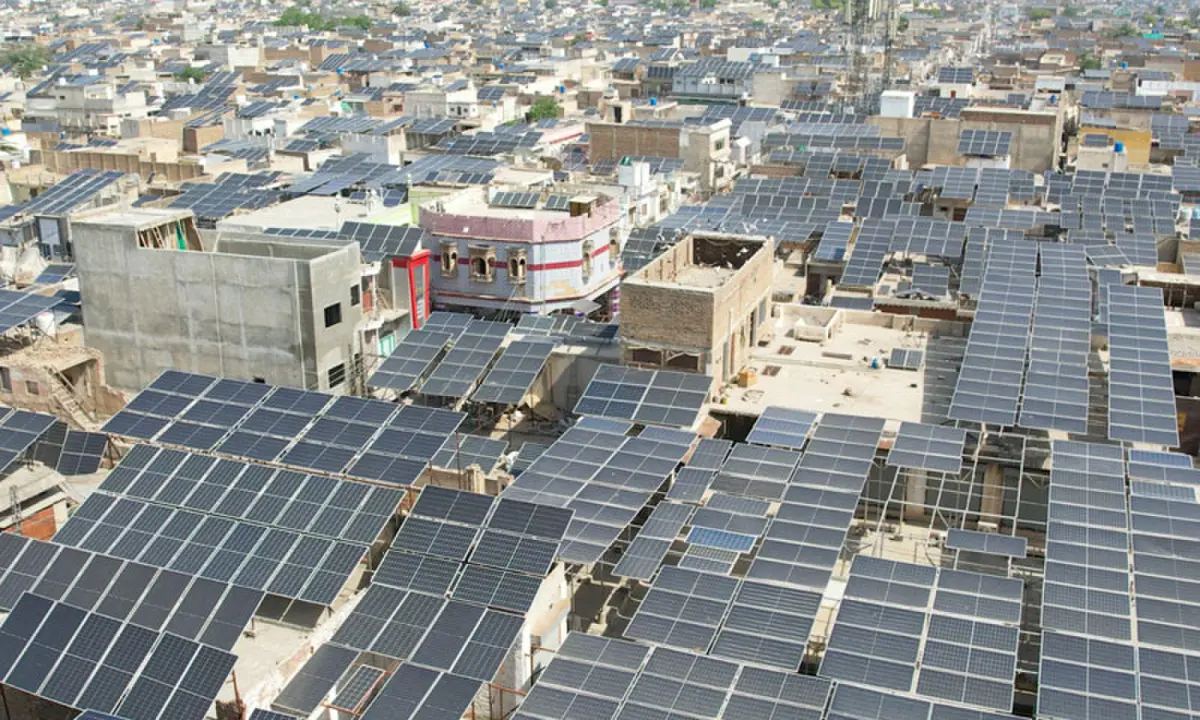
In May 2026, Islamabad-based vlogger Muhammad Mobeen filmed Dera Ismail Khan’s famous Chowgalla, the British-era town centre where four bazaars intersect, using a drone.
The video glides over the crowded bazaars in the heart of Dera Ismail Khan before pulling back to reveal buildings packed tightly together. As the camera pulls back, rooftops fill the frame, covered not in the usual clutter of water tanks and laundry lines but in sleek black and blue solar panels, stretching as far as the eye can see.
The video has garnered roughly a million views and more than 25,000 likes on TikTok alone. Its popularity has spawned a host of copycat videos, with some content creators dubbing the city “Solar Ismail Khan.”
The city’s urban area covers approximately 40 square kilometres and has a population of roughly 210,000, according to the 2023 census. Beyond the spectacle of thousands of solar panels covering the city’s rooftops, Dera Ismail Khan’s solar transition is beginning to reshape the local economy. It is creating new opportunities while making some traditional trades less viable in this dusty, conflict-affected city in southern Khyber Pakhtunkhwa, roughly 300 kilometres from Peshawar.
From specialised solar markets to farmers abandoning diesel-powered irrigation, an unreliable grid is driving a new economy in Dera Ismail Khan — but not everyone can afford to join it
A SOLAR BOOM
Over the past few years, three specialised solar markets have emerged in the city, at Khushal Market, Bannu Adda and Tank Road. Circular Road alone has up to 70 shops dealing exclusively in solar equipment, serving as a major distribution hub for neighbouring Tank, and Upper and Lower South Waziristan.
The boom has extended beyond retail, creating work in solar installation, electrical wiring and the supply and maintenance of batteries, tube wells and related equipment.
Muhammad Saeed, a local solar appliances dealer, says that, by his estimates, the majority of households in the city have adopted solar power. “Those who installed solar [systems] earlier are now upgrading to lithium batteries as prices fall,” says Saeed.
The solar transition has also created ancillary jobs in supply chains and logistics, as well as work for solar-panel cleaners and wiring technicians. At the same time, traditional electricians are seeing a decline in conventional electrical-appliances repairs.
“If consumers use solar energy instead of grid electricity, there is less need for repairs,” electrician Muhammad Naveed tells Eos. To supplement his income, Naveed now also takes on jobs involving solar systems, including for tube wells, alongside specialised wiring work.
THE PRICE OF POWER
Saeed and other solar traders say the city’s crippling, year-round power outages are the biggest driver of the transition. Data from the Peshawar Electric Supply Company (Pesco) show that 43 of the city’s 83 electricity feeders record line losses of at least 80 per cent. Pesco also identifies widespread electricity theft as a problem in the area. A spokesperson for the power utility tells Eos that such areas may face outages lasting 16 to 18 hours a day.
Rising temperatures add to the pressure on residents. During summer, daytime temperatures in Dera Ismail Khan frequently reach 40–45 degrees Celsius, adding to the incentive to seek alternatives.
Dera Ismail Khan’s solar boom is part of a wider shift across Pakistan, driven in part by falling prices for Chinese-made panels and rising electricity tariffs over the past four years. A report by the UK-based energy think tank Ember, titled The Solarisation of Pakistan’s Energy Economy, estimates that Pakistan’s solar power generation rose by 21 terawatt-hours (TWh) in just two years, taking the total increase to 33 TWh. Distributed solar accounted for 28 per cent of Pakistan’s electricity generation in FY25, up from 10 per cent in FY23, the report says.
Eight 585-watt panel solar systems have a combined rated capacity of 4.68 kilowatts (kW). According to local traders, a system of this size can power an air conditioner, refrigerator, lights and fans, with battery storage providing back-up when solar generation is insufficient.
According to solar trader Ali Jan, an individual panel that sold for Rs75,000 not long ago now costs roughly Rs16,000, following a global glut that drove down solar-panel prices. The price per watt has fallen from Rs128 to around Rs28, he says. The cost of an eight-panel set-up fell to around Rs220,000, says Jan, adding that households could recoup the investment within one to two years through savings on electricity.
The imposition of general sales tax on solar imports last year, along with geopolitical tensions in the Middle East, has pushed prices back up, Naveed explains. “Today, solar panels sell for up to 32 rupees per watt in Dera Ismail Khan, bringing the cost of an eight-panel installation to approximately 280,000 rupees,” he says.
THE UNEVEN DIVIDENDS
Dr Aijaz Ahmed has had small solar panels installed at his home and clinic for more than a decade. “In most months, I do not have to pay for electricity,” he tells Eos. “At the clinic, too, the electricity bill is a fraction of what it used to be,” he says.
The savings extend beyond households. Small industries and commercial enterprises, facing high grid-electricity tariffs and rising fuel costs, have also embraced solar power.
One businessman estimates that running a stone-crushing plant on a diesel generator costs up to Rs1.8 million a month. Converting it to solar would require an initial investment of around Rs10.5 million, he says, which could be recovered in just under three years.
Commercial markets and wedding halls are also installing solar systems, with some businesses seeking to reduce or eliminate their dependence on grid electricity. Farmers are following a similar trend. A solar-powered irrigation system, capable of serving 10 acres of farmland, now costs around Rs9 million, according to Ali Jan.
Rising fuel costs are also encouraging farmers to switch to solar-powered tube wells, reducing their dependence on diesel-powered irrigation. Local solar-equipment prices are now closely tied to those in Karachi. Dealers say that a one-rupee-per-watt increase in Karachi is quickly reflected in local prices. Freight charges from Karachi to Dera Ismail Khan have also risen, from around Rs270,000 to Rs350,000 per container since the conflict involving Iran began.
The city’s newer commercial markets, including Gomal, Khyber, Anarkali, Mian Commercial and Gulf Plaza, also face the challenge of keeping shops lit and cooled. Their enclosed spaces and cooling requirements make reliable electricity particularly important. Rising electricity tariffs and fuel costs have made diesel generators increasingly expensive to operate, encouraging businesses to invest in solar power.
WHO GETS LEFT BEHIND
But the transition has also created a divide between those who can afford solar installations and those who cannot. While households and businesses with sufficient resources can reduce their dependence on an unreliable grid, poorer residents remain reliant on electricity they may struggle to afford — or continue to endure long power outages.
Amir Khan, a social worker who runs the “Amir Bhai” Facebook page to help families in need, says poor single women are particularly disadvantaged when it comes to accessing solar power. Khan, who has more than 500,000 Facebook followers, began financing his welfare work himself in 2018.
He says he now receives numerous requests from low-income families seeking help with solar installations.
The solar panels that now dominate Dera Ismail Khan’s rooftops tell only part of the story. Beneath them, new businesses are emerging and old trades are adapting, while families unable to afford the transition remain dependent on an unreliable grid.
In a city increasingly known as “Solar Ismail Khan”, access to electricity is becoming a question not just of supply, but of purchasing power.
The writer is a Peshawar-based reporter for Dawn, with over 15 years of experience covering governance, climate and the economy in Khyber Pakhtunkhwa.
X: @Manzoor
PAKISTAN has had three constitutions. Two given to it by its people in 1956 and 1973. One promulgated by a field marshal in 1962. The 1973 Constitution was adopted by the people through their representatives in the constituent assembly. Article 1 states that Pakistan shall be a federal republic. Neither the term “federal” nor “republic” is expressly defined. The Objectives Resolution provides guidance.
The power and authority of the state in our republic is to be exercised through the chosen representatives of the people. A republic is distinct from rule by one man. In a republic, rulers are not immune from accountability. They can be removed and replaced if they fail to perform.
The various territories that are part of Pakistan or that accede to Pakistan form a federation. These territories are autonomous and their boundaries and powers and authority are prescribed. The Objectives Resolution guarantees that the integrity of the territories shall be safeguarded.
A federal state is brought into being by the territories that comprise it through a written instrument. This instrument defines the authority of the federation and these territories. The federation presupposes and is premised on the existence of these territories. Dismantling the territories would undermine the foundational integrity of the federation and the compact reflected in the 1973 Constitution.
A constitution can be amended. The limits of a province or territory can be changed with its consent. Such an amendment may alter limits or provincial boundaries. It does not contemplate partition or subdivision of existing provinces or existing territories. Actions that compromise provincial integrity inevitably lead to questions regarding the benefits of being part of the federation. These questions have been resolved by the various territories and reflected in the 1973 Constitution. It would not be wise to reopen them.
Emergency powers cannot be used to deprive any citizen of the right to a fair trial.
Provincial integrity is not incompatible with devolution of power and effective local government. The Principles of Policy of the Constitution require the state to encourage local government institutions. Each province is constitutionally required to establish a local government system and to devolve power.
The president is the head of state and represents the unity of the republic. The president as a symbol of a united federation must be satisfied prior to provincial autonomy being assailed. This can only be done in exceptional circumstances. The emergency provisions enable federal rule over a province if the president is satisfied that certain conditions exist.
The president does not have authority to impose an emergency whenever he deems fit. The emergency provisions are not like the erstwhile Article 58(2)(b). The president was empowered under this Article to dissolve an elected government in his discretion. The emergency powers are not expressed to be discretionary powers of the president.
Could the president have refused to sign the recent emergency proclamation notwithstanding the advice of the federal government? He could certainly have asked the government to look at matters again. Did he have discretion to refuse if after reconsideration the government insisted?
The term “discretion” is not used in the relevant Articles of the Constitution. The conventional legal view is that absent a power being expressed as discretionary, the president is bound to act on the advice of the government. In the case of the emergency provisions the president is required to be “satisfied”. This suggests a mental state of an individual office holder.
It could be argued that a mental state cannot be imposed through governmental advice. Regardless, in the present emergency, this appears to be a moot point since the president did not even ask the government to reconsider its advice. We do not know the nature of the material made available to the president to satisfy him beyond what is contained in the proclamation. Its contents are in substance assertions and non-speaking. They do not provide cogent reasons.
If the stipulated conditions for an emergency do not exist, the proclamation is unlawful. It is incorrect to state that because emergency powers exist in the Constitution, the exercise thereof is constitutional. The existence of a power and its lawful exercise are two distinct matters.
Emergency powers cannot be used to deprive any citizen of Pakistan of the right to a fair trial. The emergency provisions enable suspension of operation of a provision of the Constitution only relating to a body or authority in the province. They do not permit the suspension of Article 10-A of the Constitution which provides for a fair trial and due process. The federal government’s order pursuant to the proclamation states that Article 175(3) shall not apply to the designated districts. This Article provides for separation of the judiciary from the executive. The constitutional framework does not contemplate such suspension.
The emergency provisions also do not authorise the subdivision of a province by creating a separate governance structure for certain designated parts absent provincial legislative consent. Where certain federally administered areas have been made part of a province through a constitutional amendment (as is the case with Fata), the impact of this amendment cannot lawfully be undone through a proclamation of emergency which is an executive action.
Depriving people of a territory of rule by their representatives is undemocratic and diminishes the federation. When imposed on an unwilling provincial government, it pits the centre against one of its parts and weakens the whole. Normal constitutional functioning should be restored as soon as possible.
The real question that needs consideration is whether currently Pakistan is truly operating as a federal republic. That is what is contemplated by the first Article of our Constitution. If the compact that binds the territories that comprise our nation is broken, what credible vision can the rulers offer the people in these territories? The existential challenge the country faces is not from its enemies and those who wish us ill. It is from power being divorced from political authority and therefore accountability. That is the real emergency facing us. Until we confront this truth, the story of Pakistan will not change.
HELD amid the threat of a renewed US-Israeli attack on Iran and escalating conflict in the Arabian Peninsula, the meeting between Iranian leaders and members of the Makkah Defence Alliance was deeply significant — though it remained unclear whether the talks had produced any major breakthrough. The quadrilateral meeting reportedly discussed “regional cooperation, the US-Israeli aggression against Iran and its consequences”, among other topics.
It was the first high-level contact between Iran and all of the alliance’s members since Saudi Arabia was drawn deeper into its conflict with the Houthis. The gathering came days after a brief visit to Tehran by Pakistan’s army chief, during which he reportedly proposed the meeting — a suggestion Iranian leaders responded to positively.
That visit was essentially a part of Pakistan’s mediatory efforts to restart the stalled peace talks between America and Iran, and a response to the latest flare-up in the region. Since the collapse of a brief ceasefire reached in April, the United States has imposed an economic blockade on Iran in an attempt to force it to capitulate. It has not. Iran has kept control of the Strait of Hormuz, through which around a fifth of the world’s oil and liquefied natural gas used to flow.
The diplomatic efforts of Pakistan and Qatar have so far failed to break the stalemate. The main stumbling block to resuming peace talks has been President Trump’s insistence that Iran give up its enriched uranium stockpile. Iran has refused, insisting that the US must end its naval blockade and start negotiations on the seven points that overlap with the Islamabad memorandum of understanding. Iranian leaders have repeatedly declared that “not a single particle of enriched nuclear material” would leave Iran.
Regional peace can be ensured only through a regional security architecture.
Tensions rose further with reports of a possible joint US-Israeli attack on Iran before the US midterm elections. According to American media, Israel had been pressing Trump to resume airstrikes before Israel’s own general elections, which were held yesterday. There are still indications that Trump could restart military action after the American midterms on Nov 3.
Iranian officials warned last week that if Iran were attacked again, its forces would widen their targets to data centres and underwater internet cables in the region.
The situation has grown more volatile with the escalation of the Saudi-Houthi conflict. The Yemeni rebel group, which now controls a large part of the country and Bab al-Mandeb, a critical chokepoint on the Red Sea, has repeatedly struck key Saudi installations.
Against that backdrop, the visit by senior Saudi officials to Tehran stands out as a significant outreach at a time of profound tension between the two countries, with Saudi Arabia absorbing near-daily attacks by the Iran-backed Houthis. The kingdom was represented by Defence Minister Prince Khalid — the brother and trusted envoy of the crown prince.
His decision to travel to Iran under such conditions signalled that the Saudi leadership wants to avert another round of hostilities between the US, Israel and Iran, which could bring Iranian retaliatory strikes on American interests and installations in Saudi Arabia while the kingdom is still battling the Houthis.
For Iran, the presence of senior officials from Saudi Arabia, Turkiye and Pakistan has been symbolically important: Iranian officials are eager to sideline the US from regional security and diplomatic arrangements. Iran’s president expressed hope that the talks could help consolidate “regional unity and cohesion”.
For all the positivity, the central question remains whether the meeting could bridge the gap and help prevent a new round of US-Israeli aggression against Iran and, more importantly, de-escalate the conflict between Saudi Arabia and the Houthis.
No joint statement was issued, but individual comments since have been encouraging on the possibility of a broader regional security mechanism. Mohsen Rezaei, head of Iran’s Supreme National Security Council, seemed satisfied after meeting officials from the three countries. “Very good discussions took place between us,” he told Iranian state television. “I feel that a new atmosphere is emerging in the region. … I sensed a very positive atmosphere in the discussions among the gentlemen.” Iranian officials are also hopeful that the meeting could be a prelude to further steps towards shaping “endogenous security — an issue that we have been insisting on for decades”.
The four countries have “agreed to continue discussions to strengthen cooperation … including on regional peace and security”. Indeed, the Tehran meeting was the most significant development yet that could help de-escalate the regional conflict. But the major question remains whether such emerging cooperation can prevent a fresh American-Israeli attack on Iran.
The reported reinforcement of American forces in the region, together with Israel’s continued genocidal war in Gaza and military action in Lebanon, poses the biggest threat to regional and global peace. The continued presence of American bases and troops in the Gulf countries has made their security far more vulnerable.
Most concerning is the escalating Saudi-Houthi conflict, which could trigger a wider conflagration and draw other countries into it. Iran could certainly play an important role in reaching a truce. The escalation could also hand Israel an opportunity to blunt resistance to its expansionist designs. Given Trump’s threatening rhetoric, there is a strong possibility that he will resume attacks on Iran after the midterm elections; the one thing that could stop him is the Republicans losing their majority in both the House and the Senate. And whatever the outcome of the Israeli general elections, there is no indication that the defeat of Netanyahu would change the policy of the Zionist state in any significant way. The divisions among regional countries give Israel complete impunity.
The quadrilateral meeting in Tehran and Iran’s positive response are certainly good omens. But the sources of tension remain that will not be easy to resolve, and the gap has yet to be bridged. It is vital that the Gulf countries refuse to let their soil be used for American aggression. Regional security can be ensured only through a regional security architecture. The Tehran meeting has provided an important opening for any such cooperation.
THE fact that high officials from the Makkah defence pact partner states — Pakistan, Saudi Arabia and Turkiye — were in Tehran on Monday made global headlines, and with good reason. At a time when the clouds of war are once again hovering over the Gulf, the meeting sent a strong message that regional states with often competing agendas can come together and discuss their issues at the negotiating table. The event was also significant as the Makkah alliance has been seen as an alternative defence arrangement vis-à-vis Iran’s ‘Axis of Resistance’.
Pakistan was represented by the chief of defence forces, while significantly, Saudi Arabia sent its defence minister, a brother of the crown prince. This shows that Riyadh accorded the highest priority to the meeting. The official Iranian readout said the participants pledged to “continue the dialogue … for peace and security in the region.”
The event is also further proof of Pakistan’s constructive efforts in the diplomatic arena, as the meet-up was held after the CDF — who was in Tehran last week — suggested it.
All regional states are wary of possible fresh US/Israeli attacks on Iran, and the Tehran meeting must be seen in this framework. Moreover, Saudi Arabia has likely reached out to Iran to get the Islamic Republic to use its connections with Yemen’s Houthi Ansarallah group to stop its attacks on the kingdom. Riyadh is also concerned about Iranian retaliation in the face of a renewed Israeli and American attack.
Perhaps Yemen can be the first area for the Makkah pact allies and Iran to discuss. A fresh push for peace should be made that envisages an immediate ceasefire supplemented by an end to Houthi attacks on Saudi Arabia, and a lifting of the Saudi-led blockade on Houthi-held areas in Yemen. Both Saudi Arabia and Iran, as well as other regional powers, should advocate a negotiated settlement to the Yemeni civil war.
Beyond Yemen, the fact that the US and Israel are preparing for fresh aggression against Iran could spoil efforts for a regional entente. This is why all participants of the Tehran meeting must clearly say that they oppose attacks on Iran or any other regional state.
Iran and the Makkah pact states should also pledge not to let external actors use their soil to launch aggression against each other. In fact, while inviting Iran to join the Makkah alliance may not be practical at this juncture, regional states can at least agree to a common non-aggression framework. That would send a powerful message to external actors that seek to destabilise the region.
States of the region are making sincere efforts to prevent a return to war. It is time Washington and Tel Aviv read the writing on the wall and abandoned their destructive plans.
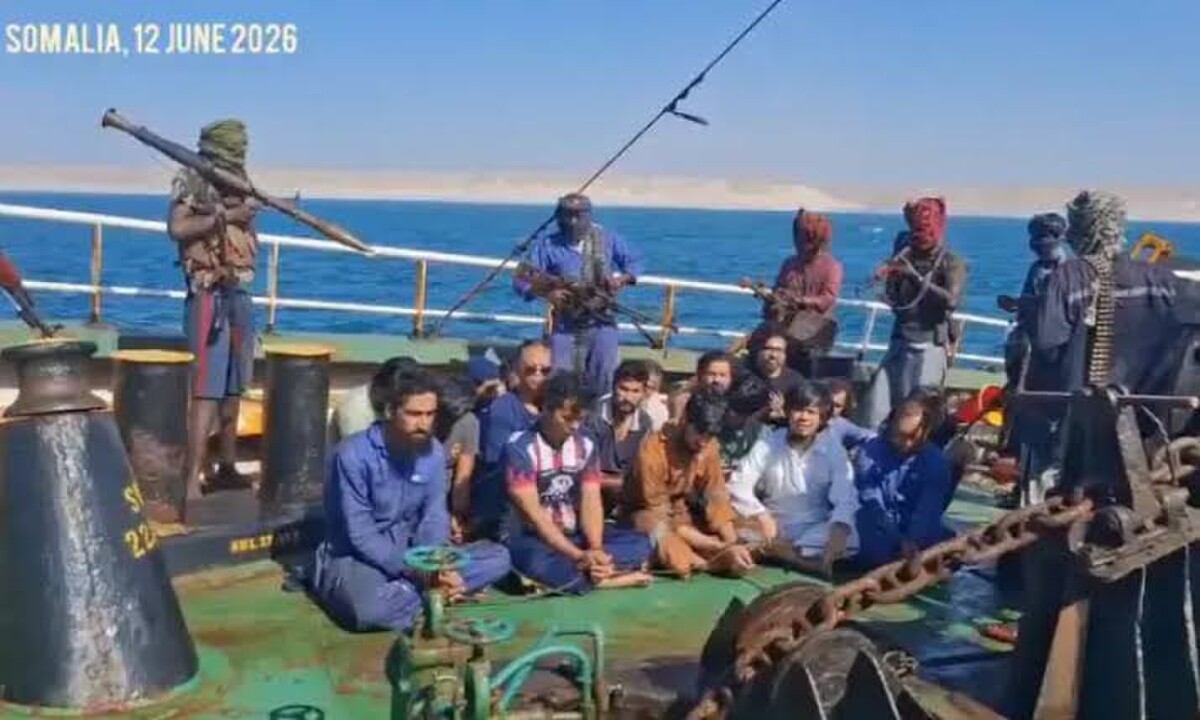
ISLAMABAD: The Senate Functional Committee on Human Rights on Tuesday expressed concern over delays in compensation to families of Pakistani seafarers affected by a hostage-taking incident off Somalia.
The committee, chaired by Senator Samina Mumtaz Zehri, also discussed cybercrime, crypto-currency related scams, fraudulent investment schemes and the circulation of inappropriate content targeting children on social media.
Taking up the case of Pakistani seafarers, the committee sought explanations from officials over delays in the crew’s release, repatriation of a deceased seafarer’s body, medical treatment for injured crew members and financial assistance to affected families.
Director of the Shipping Wing Arif Haroon briefed the committee on the incident. Members were informed that discussions were underway between the ship owner, the manning agency and parties associated with protection and indemnity insurance over compensation payments.
Senator Quratul Ain Marri sought details of assistance provided by the federal government to the families of deceased seafarers.
Senator Samina Mumtaz Zehri directed the authorities to submit a complete record of crew salaries, medical treatment and financial payments made from April to September. They were also asked to verify reports regarding the prime minister’s announcement of financial assistance and provide details of the amount paid to the families.
The chairperson stressed that insurance-related procedures and disputes among the parties concerned should not cause unnecessary delays in payments to affected families. She sought a comprehensive report on compensation, medical facilities and assistance provided to the victims.
The committee also expressed concern over the growing incidence of cybercrime, ransom-ware attacks, cryptocurrency fraud and schemes promising unusually high returns on investments.
Members raised questions about delays in registering complaints and completing investigations, fraudulent calls, misuse of WhatsApp accounts and personal identification information, suspicious bank accounts and the alleged illegal use of SIM cards.
The chairperson called for clear timelines for processing complaints and a mechanism to keep victims informed about progress in their cases. She also asked the relevant authorities to provide verifiable statistics on investigations, recovery of funds and legal proceedings against suspects.
Officials informed the committee that suspicious accounts had been frozen in some cases, while the recovery and return of money were being processed in accordance with court orders and applicable laws.
The committee also reviewed complaints involving people allegedly defrauded by companies and consultants offering overseas education, study visas and employment opportunities.
The chairperson called for verification of the legal status of consultancy firms and effective action against those involved in fraud.
The committee took exception to the absence of representatives of the Higher Education Commission and the Ministry of Foreign Affairs, particularly as the meeting dealt with complaints involving foreign admissions and visa processes.
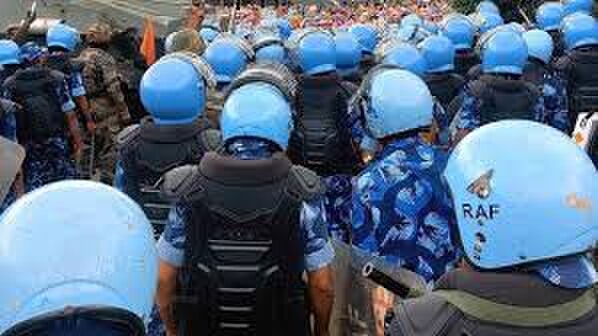
GUWAHATI: India has deployed hundreds of additional security personnel in its remote northeast, authorities said on Tuesday, after youth protesters clashed with police last week over a plan to build a mega-dam to counter a Chinese hydropower project upstream.
Protests in Arunachal Pradesh’s Siang Valley, which borders Tibet, turned violent last week, triggering clashes with police, who made at least 21 arrests.
Police fired tear gas shells, while youth protesters pelted stones and set fire to a police station and an office of the state-owned National Hydroelectric Power Corporation, authorities said.
“Forces are being increased in the places where it is required. We do not want any law and order problem,” SD Singh Jamwal, police chief of Arunachal Pradesh, told Reuters.
Sporadic protests have taken place in the Siang Valley in the last two years, the location of the proposed 11,200-megawatt Siang Upper Multipurpose Project, which will be developed by state-run National Hydroelectric Power Corporation.
Villagers who oppose the project fear that the dam would submerge ancestral villages belonging to the Adi tribe.
“We will keep opposing this dam till they cancel it. If it is constructed, 27 of our ancestral villages will be completely submerged. At least 40 or 50 more will be affected,” Gegong Jijong of the Siang Indigenous Farmers’ Forum told Reuters.
The Siang river flows into Arunachal Pradesh from Tibet, where it is known as the Yarlung Zangbo. China announced plans in December 2024 to build the world’s largest hydropower dam upstream, triggering fears in New Delhi that its longtime strategic rival could weaponise its control of the river.
China claims Arunachal Pradesh, which it calls Zangnan, as part of southern Tibet. India says the state is an integral and inalienable part of its territory.
Arunachal Pradesh’s BJP-aligned chief minister has called the Chinese project an existential threat.
ISLAMABAD: A majority of PTI lawmakers on Tuesday opposed further efforts to negotiate with the powers that be, arguing that the latter had already secured what they wanted, and that pursuing further talks would “only show weakness”.
Several members also expressed dissatisfaction with the party leadership’s handling of the prevailing challenges, questioning its decisions and overreliance on then-Khyber Pakhtunkhwa chief minister Sohail Afridi.
Heated arguments were witnessed during a joint parliamentary party meeting that lasted over seven hours, with some questioning why the top leadership had handed so much authority to Mr Afridi, who, they said, held no position within the party hierarchy.
On the other hand, around 15 lawmakers favoured supporting the proposed 28th Amendment, arguing that it could help normalise relations with the establishment and pave the way for the release of Imran Khan.
The meeting, held at Parliament House to discuss the prevailing political situation and the party’s future strategy, was chaired by PTI Chairman Barrister Gohar Ali Khan. Former National Assembly speaker Asad Qaiser, Senator Ali Zafar and Chief Whip Malik Amir Dogar were in attendance.
An insider, requesting anonymity, said that most participants, including Mr Qaiser, had rejected further efforts to negotiate.
Some criticised Barrister Gohar and Secretary General Salman Akram Raja, questioning why the party leadership appeared to be functioning under Mr Afridi. They alleged that the top leadership had left everything to the KP chief minister, who had become non-functional after the imposition of governor’s rule in KP, because of its interest in transfers, postings and financial matters in the province.
Public support
The insider said members believed that although morale had declined following the PTI government’s removal in KP, the party had not lost public support.
Another participant said Mr Qaiser presented a pre-written declaration containing points that had not been discussed at the meeting, annoying several members. At this, Faisal Amin Gandapur reacted by asking, “Is this a joke?” and walked out following an exchange with Barrister Gohar.
Mobeen Arif Jutt questioned why the party was not speaking up for leaders who were in jail or in hiding, saying he felt embarrassed when speaking to them. He also criticised opposition leader Mahmood Khan Achakzai, alleging that Mr Achakzai had contacted Punjab Chief Minister Maryam Nawaz after his son was arrested near Kharian and stayed in Lahore until his son was released.
Azam Swati urged Barrister Gohar and his colleagues to step down, while MNA Shah Ahad also criticised the leadership. Peshawar MNA Sher Ali said party leaders were receiving calls asking them to surrender to the police or face police raids on their homes.
Consultations go on
After the meeting, party whip Amir Dogar said several prevailing issues had been discussed, but decisions would be taken after consultation with leaders of the opposition in both houses. This was the first session and another meeting would follow, he said.
Senator Ali Zafar said the meeting had discussed possible future decisions and that committees, to be headed by the opposition leaders, would be formed.
Media reports suggested that some lawmakers, including Ali Muhammad Khan, walked out of the meeting before it concluded.
WASHINGTON: Pakistan has warned that the situation surrounding Iran’s nuclear programme has sharply deteriorated, urging all sides to exercise restraint and resolve the dispute through diplomacy amid continued hostilities and divisions within the UN Security Council.
Speaking at a council briefing on Iran and nuclear non-proliferation on Tuesday, Pakistan’s Acting Permanent Representative, Ambassador Usman Jadoon, said mounting tensions and a lack of consensus had made a diplomatic settlement more urgent.
“Pakistan remains concerned that the situation regarding the Iran nuclear file has sharply deteriorated, negatively impacting the consideration of the issue, including in the Security Council,” he said.
The dispute centres on international concerns over Iran’s nuclear activities and the verification of its commitments under the non-proliferation regime. The 2015 nuclear agreement between Iran and world powers sought to limit Tehran’s nuclear programme in exchange for sanctions relief, but the United States withdrew from the accord in 2018 during Donald Trump’s first presidency. Subsequent efforts to restore the agreement failed.
Mr Jadoon urged all parties to avoid rhetoric and actions that could aggravate the situation.
“Pakistan urges all sides to exercise restraint, refrain from irresponsible and destabilizing rhetoric, actions, and postures that could escalate tensions and increase the risk of conflict, and choose a path that delivers peace, security and stability for all,” he said.
Pakistan also called for the International Atomic Energy Agency (IAEA) to be allowed to address technical questions relating to the nuclear dispute without political interference.
“We have consistently maintained that any issues of non-compliance must be addressed through competent technical bodies like the IAEA, without politicization and consistent with the relevant parties’ rights and obligations,” Mr Jadoon said.
“The IAEA must be enabled to carry out its work without any hindrance and within its technical mandate,” he added.
The Pakistani envoy highlighted Islamabad’s diplomatic efforts to promote de-escalation, a ceasefire and negotiations. He cited the memorandum of understanding signed in Islamabad in June as evidence that diplomatic engagement could make progress.
“The Islamabad MoU signed in June is a successful manifestation of this approach. It demonstrates that progress on the diplomatic track is possible,” he said.
He acknowledged the support of Qatar, Saudi Arabia, Turkiye, Egypt, China and other partners, and said Pakistan’s leadership continued working towards a peaceful settlement.
“We believe that diplomacy can once again deliver results in paving the way for settling contentious issues peacefully,” Mr Jadoon said.

 Login