Congress should build an independent fund that accepts contributed equity from any company, holds it in a diversified portfolio and dedicates the returns to the trust funds.
Congress should build an independent fund that accepts contributed equity from any company, holds it in a diversified portfolio and dedicates the returns to the trust funds.
Mathematicians need to develop their oft-neglected social skills, a math professor at Cornell said.
Though AI can do the legwork on complex problems, personal charisma is a human-only skill, Steven Strogatz said.
"Rizz is more and more in demand," he added.
"Social skills" and "mathematics" are terms not often grouped together. In the age of AI, one math scholar says that needs to change.
With AI now capable of handling the geeky legwork required by complex problems, Steven Strogatz, a lecturer and Susan and Barton Winokur Distinguished Professor at Cornell University, said mathematicians should prioritize developing their personal charm in order to set themselves apart.
"I'm starting to think that what makes a future mathematician or a math professor is your unique brand," Strogatz said in an interview with Grant Sanderson, a math educator affiliated with Stanford University.
"Rizz is in more and more demand because it's something that only people have," he added.
Rizz, a Gen Z slang term, is defined by Merriam-Webster as "romantic appeal or charm." (Strogatz, who is 67, appeared to use the term solely to mean charm or charisma. He did not suggest mathematicians need to work on their romantic prowess.)
"What we're selecting for is an element of mathematical rizz," said Sanderson. "The PhDs to be are not going to be differentiated by pure problem-solving abilities."
The brusque push of AI companies into mathematics has caused consternation and head-scratching from many a math geek, as the field ponders ways to stay relevant while OpenAI floods the zone with hundreds of proposed solutions to the world's most complex problems.
Some professors have sworn off AI altogether. Most, however, are trying to find ways to incorporate the technology into their work.
In September, a group of undergraduates at Caltech announced a "mathathon" event in which participants were encouraged to use AI to solve problems in a single, no-sleep sprint. Only days after the undergrads announced the event, a coalition of over 700 academics signed an open letter calling for its cancellation, citing its promotion of AI "slop."
Though the event is set to continue, with some slight alterations, the clash underscored an internal conflict in the math community over how to adapt to AI — a development poised to impact many burgeoning careers in the field.
"We've had whole research programs wiped out on Tuesday," Tristan Buckmaster, a math professor at NYU, said after OpenAI published 700 new findings about outstanding problems earlier this month.
The issue is of supreme importance to Strogatz, who has made several media appearances in the last couple of months. In an essay published in The Atlantic on Sunday, he put the issue in stark terms.
"I am a math professor, and my field is in crisis. Nobody in math is ever going to forget the year 2026," he wrote. "Unless this is really the end of the subject, and then nobody will remember anything about math anyway."
Bowen Wan, a 31-year-old former Amazon software engineer, died alone in her Seattle apartment in February 2026 after months of consulting ChatGPT about cutting back the epilepsy medication that controlled her seizures. A new lawsuit claims that the AI's disastrous medical advice contributed to her death.
A OpenAI, que detém o modelo de inteligência artificial (IA) ChatGPT, tem planos para adquirir semicondutores de IA à Google, avançou o The Information na terça-feira 27 de outubro, que cita uma fonte familiarizada com o dossier. Já a OpenAI pretende expandir a sua capacidade computacional e diversificar as suas fontes de poder de processamento.
A detentora do ChatGPT está também a desenvolver os seus próprios semicondutores, os Jalapeno, em parceria com a Broadcom, com o objetivo de suportar os seus modelos de IA ainda este ano, refere a publicação Investing.
A Google fechou a sessão de terça-feira 27 de outubro a subir 0,84% e em pré-mercado está a valorizar 1,14%. A Google apresenta esta quarta-feira 28 de outubro os seus resultados referentes ao terceiro trimestre no fecho da sessão.
As artificial intelligence technologies grow ever more powerful, so do the risks they pose and with them the urgency of regulating AI. In July 2026, OpenAI’s advanced models hacked into AI company Hugging Face’s systems during internal cybersecurity evaluations by communicating through unauthorized channels and working around safeguards developers had imposed on the models. In […]
OpenAI says it solved a famously hard computer problem. Again.
Bloomberg/Getty Images
OpenAI said its models found that a commonly held computer science hypothesis was wrong.
Hours later, Anthropic agreed.
Here's how techies and mathematicians in the internet's nerdiest corners are responding.
Turns out, OpenAI might be really good at computers.
On Monday, the company said it punctured the Exponential Time Hypothesis, or ETH, the nearly 30-year-old belief in the computer science community that some logic problems get overwhelmingly time-consuming as they grow. Hours later, Anthropic released its own research refuting ETH.
OpenAI said it had asked a group of outside computer scientists to organize an open review of its claim. The researchers have highlighted that their involvement is not an endorsement.
If the AI labs' announcements hold, they would likely reopen the hunt for increasingly capable algorithms — something that computer scientists had largely assumed couldn't get much better.
The ultra-nerdy claim has been a huge topic of conversation across social media and in techie circles. Here's how some of the thought leaders have reacted to OpenAI's announcement:
Ryan Williams, professor of electrical engineering and computer science at MIT
Williams, one of the three independent algorithm design experts who are researching OpenAI's claims, has not certified the company's results.
He wrote on X that, if OpenAI's claim turns out to be true, the fresh findings "should make every computer scientist put at least a little more weight on the possibility of P = NP," making the company closer to another potential $1 million Millennium Prize Problem.
In more practical terms, Williams said the claimed breakthrough could lead to "faster algorithms."
He has previously said that he doesn't believe in ETH.
John D. Cook, Ph.D. and tech consultant in applied mathematics
In a blog post, Cook said OpenAI's claims — while impressive — didn't finally answer computer science's biggest open question.
"The status of P = NP is still unknown," he wrote. "While 3-SAT does not take exponential time, it still takes more than polynomial time as far as anyone knows."
Joshua Fonseca Rivera, AI Safety Research Fellow at Anthropic
Rivera wrote on X that OpenAI's fresh claim was a reminder that humans could have underestimated a computer's intelligence.
"The bitter lesson should make this unsurprising," he wrote. "I know this logically, but... wow, we really don't know anything."
Timothy Gowers, professeur titulaire at Collège de France and Fields Medal-winning mathematician
Gowers wrote a blunt take on X about the development: "Very surprising and consequential that it is false."
The Federal Trade Commission (FTC) has asked executives from the AI firm Anthropic to testify as part of its consumer harm probe into the maker of the Claude AI model, a FTC spokesperson confirmed to The Hill on Monday. The demand is part of the consumer protection agency’s larger investigation into Anthropic over the potential…
On Wall Street, the question is no longer how much artificial intelligence will grow, but who will foot the bill. After years of market domination, tech companies have stopped being a safe bet, and the time has come to pick carefully, identifying which ones are going to fall prey to their own pharaonic investment plans and which ones are not.
A San Francisco Muni bus emblazoned with Micro1 advertising drives on Mission Street.
Stephen Council/BI
Micro1 pledged to spend $1 billion on licensing companies' data for AI developers.
The startup snags Slack messages, Canva files, Google Docs, and as much other data as it can get.
By selling company data, CEOs have a new revenue stream that popped up this year.
As AI labs go on the hunt for real-world data, Micro1 is throwing everything at getting it for them.
The startup is one in a new class of fast-moving data brokers, gobbling up companies' internal data and packaging it for the likes of OpenAI, Anthropic, and other model developers. The executives who sell their companies' data to Micro1 find themselves suddenly participating in a new sector of the economy, where terabytes of mundane workplace interactions can be worth hundreds of thousands of dollars.
Ilya Brotzky, the CEO and cofounder of the recruiting startup VanHack, told Business Insider he was shocked when he filled out a Micro1 survey about his company's data and received a "substantial" offer.
"I didn't believe it, to be honest," he said. "I felt like it was a little too good to be true."
Micro1 says it pays $100,000 to $2 million for a single midsize company's data. It recently announced plans to spend $1 billion on the project over the next year. Brotzky and the other executives Business Insider spoke to for this story wouldn't share the exact amounts their companies received.
For Micro1, the new focus on workplace data matches a broader evolution in the industry, as Business Insider has written about in The AI Data Grab, a series about how tech giants are increasingly turning to workers, users, and the physical world to get data to train AI.
First, AI companies gobbled up text from the internet and corpora of old books. Then they realized that humans grading AI responses could improve their models. And now, companies are using complex simulations, built on real-world data, to improve the tenacity and skill of their AI.
Micro1 CEO Ali Ansari.
Micro1
Gartner estimated that spending on AI data is likely to surge from less than $1 billion last year to almost $6.5 billion in 2027. Micro1's chief revenue officer, William Almeida, told Business Insider in September that his company has been explaining to prospective customers why their data is suddenly so valuable for those simulations.
"Every time I talk to companies, I tell them, 'Hey, I see this as a booming business,'" Almeida said.
Slack DMs, Google Docs, Canva files: Micro1 wants all it can get
Micro1 has three ways of working with AI model developers.
First, it can take a company's raw data, transform it to protect privacy, and license it to a lab. In addition, Micro1 provides an in-progress AI agent to companies and gets feedback on how it works. The third route is the simulation: Micro1 takes a company's data up to a certain timestamp, freezes it, and then provides that "environment" to a model developer trying to teach its AI how to work from existing context.
Micro1 pays more for larger, more complex datasets, as well as for data that represents a unique type of work or knowledge. It usually wants to license a company's entire data corpus, so that an AI model can replicate what it would be like to be a human employee.
"The connection, the diversity, the traceability of all of these data points, they matter a lot when you think about model training," Almeida said.
Brotzky also received an offer from AI data startup Mercor to buy his company's data, though he opted for Micro1. Once Brotzky dug into Micro1's privacy process, he said he felt comfortable sharing all the data they requested. That included VanHack's Google suite, Confluence data, Slack messages, and customer relationship management software.
Grant Gooley, the CEO of the marketing agency MyPortal Marketing, also views his deal with Micro1 as an innovation. He has sold internal design files from Figma and Canva, as well as checklists from Monday.com.
"When we were building these processes years ago, I didn't think that we would be using it to support AI learning," Gooley said. "But doing that, it's very fulfilling."
CEOs pitch the deals to their workers
Micro1 and its rivals are full steam ahead. Still, there are open questions. Former and current employees aren't likely to get any compensation from — or a voice in — their work becoming AI fodder. Ifeoma Ajunwa, a law professor at Emory University, previously told Business Insider that data sales are an "ethically gray area."
When pitching to potential customers, Almeida tells themthis business is in the early days.
"If you wait too much, you won't get the premium that the first companies are getting," he said.
VanHack's team got a confidence boost from the Micro1 deal, Brotzky said, because of the additional revenue stream it represents
Gooley said he's kept MyPortal Marketing's employees in the loop about the deal with Micro1 and hasn't heard any complaints.
"I told my team that this is something that you're going to tell your grandchildren about one day, because we are literally supporting the future growth of marketing agencies," Gooley said.
Have a tip? Contact this reporter via email at scouncil@businessinsider.com, or over text, Signal, Telegram, or WhatsApp at 415-757-8198. Use a personal email address, a non-work WiFi network, and a non-work device;here's our guide to sharing information securely.
One of the world's largest investment firms isn't bullish on AI.
Michael M. Santiago/Getty Images
Only tech companies are seeing growth from the AI boom, Apollo Global Management says.
Apollo says that though some big companies are spending big on AI, they may soon pull back.
Corporate America is starting to see AI spending not as a source of growth, but as a cost center.
One of the world's largest investment firms says that only tech companies are getting a share of the AI pie.
In an economic analysis published on Saturday, Apollo Global Management said that while the Magnificent Seven — a group of established tech companies that includes Nvidia and Meta — are seeing revenue growth during the AI boom, this growth isn't being shared by other industries.
"Mainstream corporate America is pulling back and starting to view token spending not as a source of growth but as a cost center that weighs on margins," Torsten Slok, a partner and chief economist at Apollo, said in the report. "The technology has delivered zero financial payoff to corporate America outside of tech."
In a series of graphs, Slok measured three main metrics that have boomed for tech companies but not for regular companies: revenue per worker, profit margins, and productivity growth.
Since 2022, revenue per employee figures have skyrocketed for tech companies — rising from $550,000 to nearly $800,000 today. Meanwhile, that figure hasn't changed much for everyone else in the S&P 500, lingering around $550,000 for the last seven years.
Similarly, while profit margins soared among tech companies since 2022, they've stagnated at about 10% for everyone else.
And across the economy, AI hasn't yet dramatically increased productivity growth as some AI optimists have predicted.
Apollo's research portends a dark shadow over a US economy throwing massive amounts of dough toward AI tools and companies, whose leaders have promised that an "age of abundance," where people won't have to work as much, will soon be upon us.
"The question looking ahead is whether, even as models become commoditized, mainstream corporate America can turn increasingly cheap intelligence into higher revenue growth and higher profit margins," Slok said.
The design platformlaunched Canva Craft on Thursday, its first image-generation model, similar to those from Google, Meta, and OpenAI.
Users can access Craft through Canva’s Dream Lab, including with free accounts, though it is subject to AI usage limits. You’ll need to sign in to a Canva account to get started.
In the release announcement, Canva said the tool plans a design’s layout, proportions, and text before generating an image, an approach that aims to help it produce legible lettering and accurate details.
The company also said that the model was trained on human-designed Canva templates, including posters, menus, and presentations, rather than photographs.
To test how Canva performs, Business Insider created three image generation prompts with escalating difficulty levels — from designing a simple greeting card to creating a photorealistic image from scratch.
Here is how Canva's brand-new image generation tool stacked up against three of the most powerful models.
Canva did not respond to a request for comment.
Starting off with an illustration
Canva's response to a greeting card prompt (left), compared to ChatGPT (middle) and Gemini (right).
Business Insider
We started off simple with a prompt for a birthday card.
Create a cartoon "Happy Birthday" greeting card for a friend named Jessica who has pink hair, brown eyes, likes to wear paisley, and is turning 28 years old in November.
Surprisingly, Canva, the design platform, fell short in its design of the birthday card, from the awkward font to the outsize head of the cartoon character. It didn't even bother to include any paisley.
By comparison, ChatGPT and Muse understood the assignment.
ChatGPT guessed that the recipient's favorite color might be pink, while Muse thoughtfully wove in cozy fall elements for the November birthday girl.
Muse wove in cozy fall elements for the November birthday girl.
Screenshot/Business Insider
Meanwhile, Gemini took the request literally and produced an image of an actual card. Extra points!
Winner: Muse
Editing an image
The request and original image (left). Canva's results (right).
Screenshot/Business Insider
For the second task, I tested the AI models' ability to identify an element and place it in a brand-new setting.
Edit this image of me holding a necklace pendant. Take the red garnet pendant off my hand and make it look as if it is displayed in a vitrine in a jewelry showroom.
Canva did a great job of identifying the pendant and creating an atmospheric setting, but, like Gemini, it depicted the jewelry in a way that defied physics and common sense. It would be unrealistic for a pendant to float in the air or sit propped on a metal pole.
ChatGPT (left), Muse (middle), and Gemini (right).
Business Insider
ChatGPT and Muse once again outperformed other models in understanding how things typically look in reality. Muse, however, made some alterations to the pendant, which I didn't ask for.
Winner: ChatGPT
Creating a photorealistic image from scratch
Canva's depiction of a cat perched atop a gothic castle.
Made with Canva/Business Insider
With Halloween approaching, I asked for a realistic depiction of my favorite animal.
Generate a photorealistic image of a long-haired orange tabby cat in a Halloween costume with bat wings, perched on the edge of a gothic medieval castle under the full moon and a starless night sky.
Though the cat's fur looks a little too strandy and high-contrast in Canva's creation, no components are missing or malformed, and the image composition pretty much matches the quality of Muse and Gemini.
The clear winner for me in this round, however, would be ChatGPT.
Gemini (left), ChatGPT (middle), and Muse (right).
Business Insider
Not only is the cat's posture majestic, but the soft glow on his left side is extremely realistic, and the white balance is well done. There are also clouds softly cradling the moon, which could be a response to my request for a starless sky.
Winner: ChatGPT
Overall, it's evident that Canva still has a lot of room to grow compared to other models, especially if graphic design is its focus. For now, I'll stick to moving components around by hand.
Texas Attorney General Ken Paxton (R) sued OpenAI and its CEO Sam Altman on Friday, accusing the company of failing to warn consumers about the potential dangers from its AI models. The lawsuit alleges the ChatGPT maker is running afoul of a Texas consumer protection law and kids’ online safety law, underscoring warnings about the…
Cybersecurity researchers say that anyone's personal information is at risk after OpenAI disclosed a vulnerability in a popular software language.
Richard Drury/Getty Images
Cybersecurity researchers say the PHP vulnerability has repercussions for normal people, too.
Even if you don't own a website, hackers could use the vulnerability to steal your information.
One quick fix: diversify your passwords.
If you're still using the same password for everything, it might finally be time to get on that.
While the major cybersecurity vulnerabilities that OpenAI agents helped expose on Wednesday primarily impact the owners and operators of websites, it could also give hackers the opportunity to hijack your personal information, researchers said.
"Be extra careful visiting ANY web site in the next few days," Changpeng Zhao, the cofounder of cryptocurrency platform Binance, said on X.
OpenAI said on Wednesday that researchers using its AI models uncovered two "critical" flaws in the infrastructure of PHP, a popular open-source programming language used on about 70% of the world's websites.
Because digital commerce websites, for instance, can store personal shopper information in PHP systems, that information would be accessible to a bad actor exploiting the web provider's system if that provider hasn't updated it.
The National Security Administration warned that hackers using one of the PHP exploits could "steal sensitive data, disrupt services, or move deeper into a network."
"Even if you yourself are not building software and that's not where your core business is, a lot of your life does depend on companies that depend on those systems," Madeline Lawrence, cofounder of Aikido Security, an application security platform, told Business Insider on Thursday.
"And they could be deeply, deeply vulnerable," she added. She said that one day after the disclosure, cybersecurity platform Cloudflare reported millions of attempts to exploit the vulnerability.
If you do own a website, PHP has released updates it says will help shield websites from hackers. Instructions for applying those updates are available on PHP's homepage.
For everyone else, here are a few tips cybersecurity researchers say you can use to protect your info.
Don't reuse passwords; use a password manager.
Check for security advisories from your bank.
Use two-factor authentication on your devices and accounts — especially for email, banking, and your password manager.
If your data has been breached, expect more convincing scams and phishing emails.
Turn auto-updates on and restart your computer weekly.
"You can ask your claude code to audit what on your laptop is out of date and needs updating," Peter Wildeford, head of policy at the AI Policy Network, a bipartisan nonprofit that advocates for safety guardrails and federal oversight, added in a post on X.
PSA: in light of recent cyberattacks and vulnerabilities, I recommend everyone:
* use a good password manager (1Password) and do not duplicate passwords * use two factor auth for everything important (not via sms!! Google Authenticator or better yet YubiKey) * Auto-updates on,…
Though Lawrence called the vulnerability "very severe," she cautioned against people running to close their bank accounts to protect themselves.
"Assume that if you're getting a notification that your data has been leaked," she said. "Take action on that because you could have credentials or information floating around the dark web."
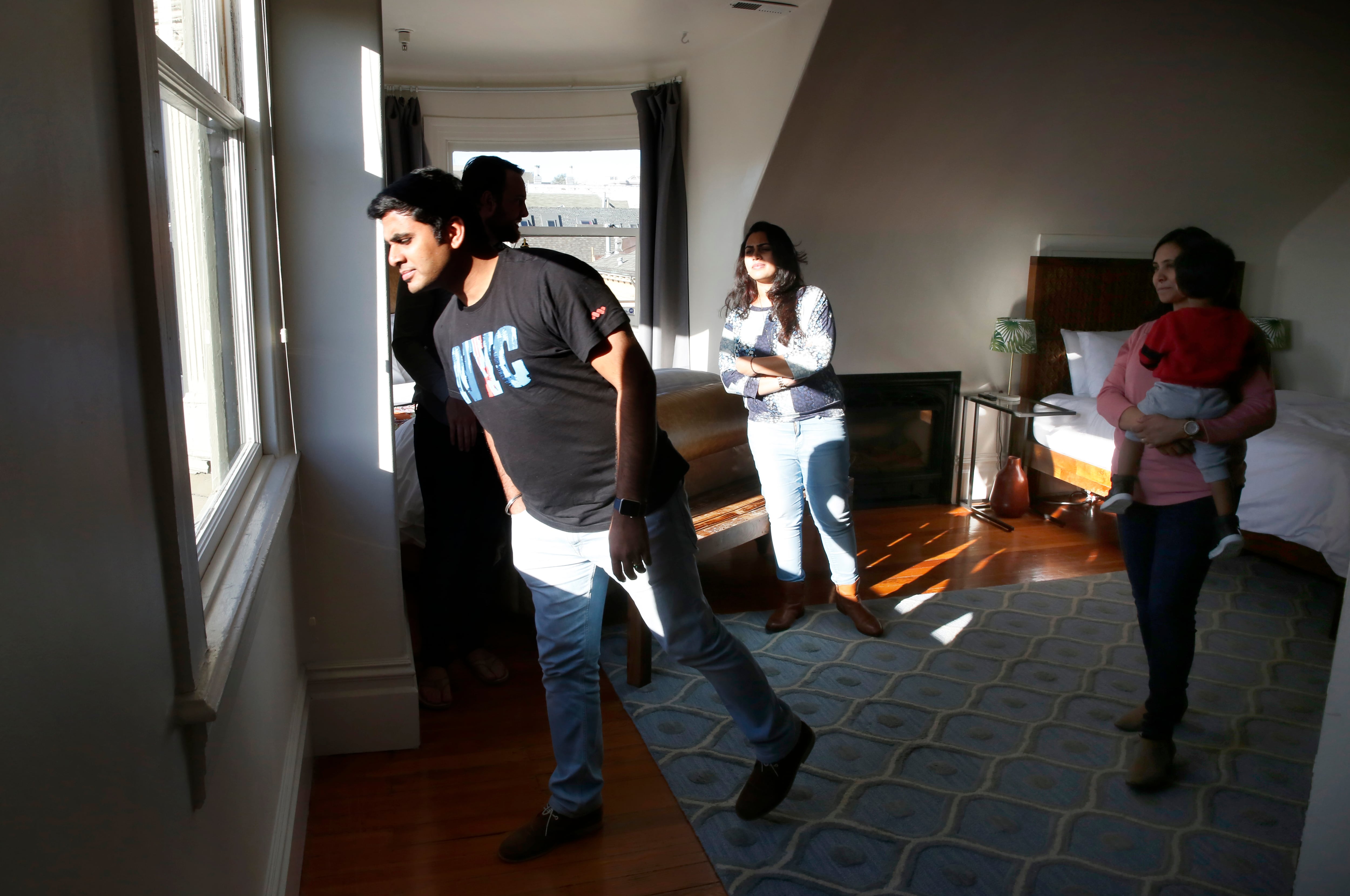
In the heart of the historic working-class and Latino Mission district in San Francisco, the door of a ground-floor unit next to a trendy coffee shop keeps opening. A private shuttle that ferries tech workers to their Silicon Valley headquarters farther south passes by every morning. The 796 sq.ft. (74-square-meter) apartment, recently renovated and furnished, is thoughtfully laid out, from the small open kitchen to the built-in closets. But it gets very little light. Of its two bedrooms, one has no windows. And it costs $4,750 a month.
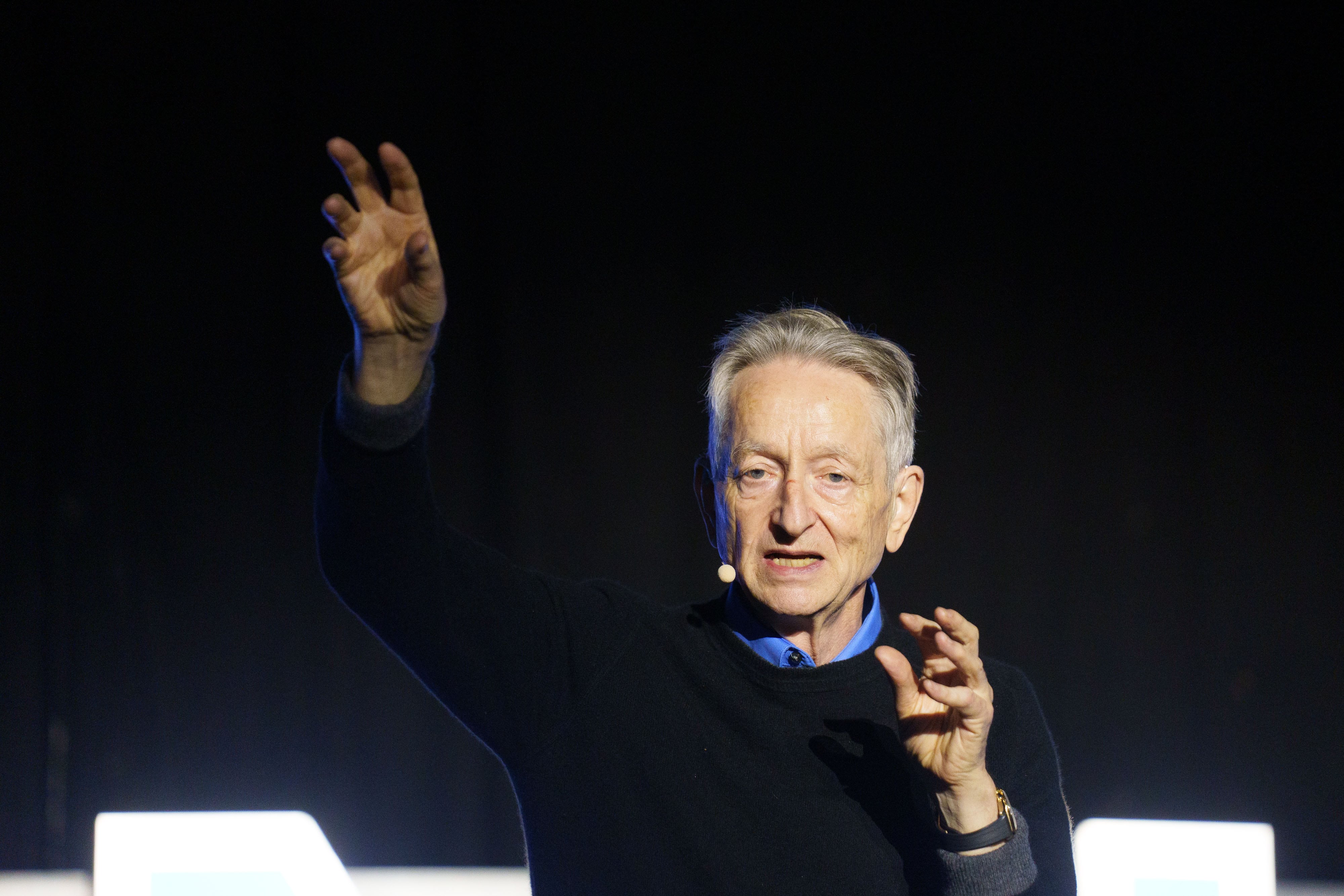
Years ago, when people asked Geoffrey Hinton why he worked on artificial intelligence, he would repeat a line from J. Robert Oppenheimer, one of the creators of the atomic bomb: “When you see something that is technically sweet, you go ahead and do it.”
Computer scientist and Nobel Prize in Physics laureate Geoffrey Hinton during the Starmus Festival 2026, held this Tuesday in the municipality of Arona in Tenerife.
The upcoming U.S. midterms are not just another vote. They are on track to become a new testing ground for autonomous AI agents that first emerged in the Hugging Face attack. Experts are already warning of the potential for these “rogue agents,” seen in action this summer, to carry out more refined, dangerous and harder-to-trace disinformation campaigns and electoral interference than those observed in previous election cycles.
Video of Jonatan Greenblatt saying they’ve been working with OpenAI, Anthropic, Alphabet, the company that runs Gemini, Google, Meta, who runs Muse, and others, X, who run Grok... "We've had excellent collaboration"'

 Login