 Login

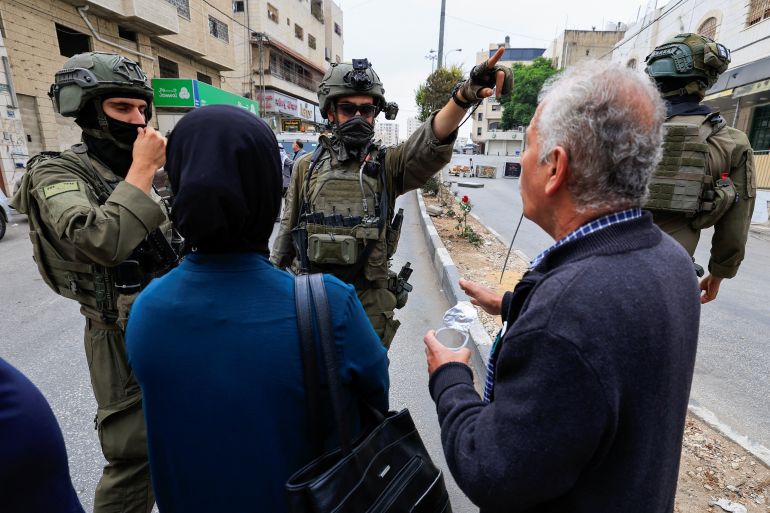
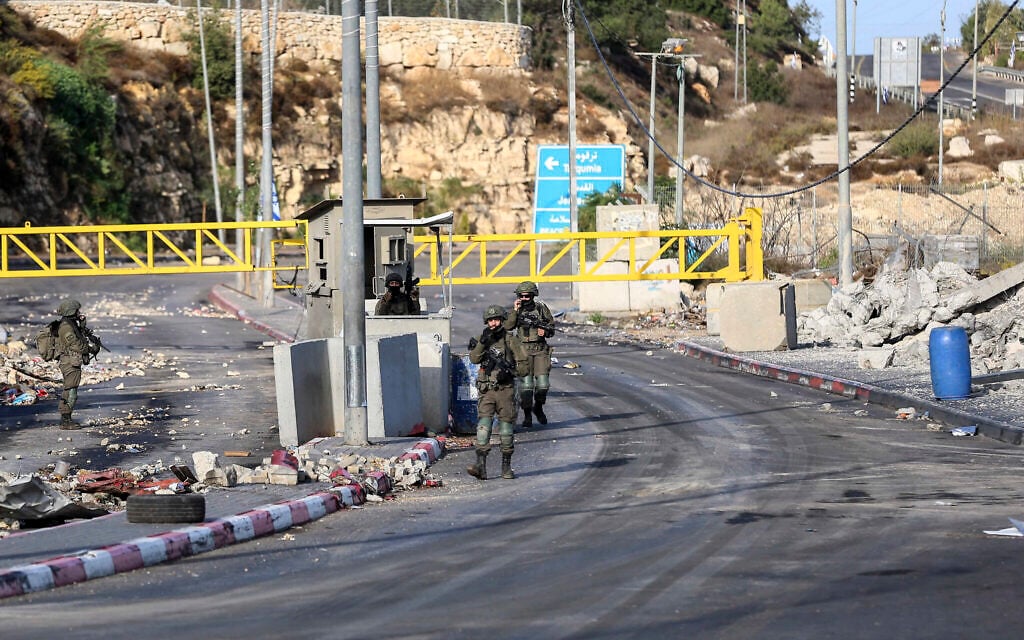
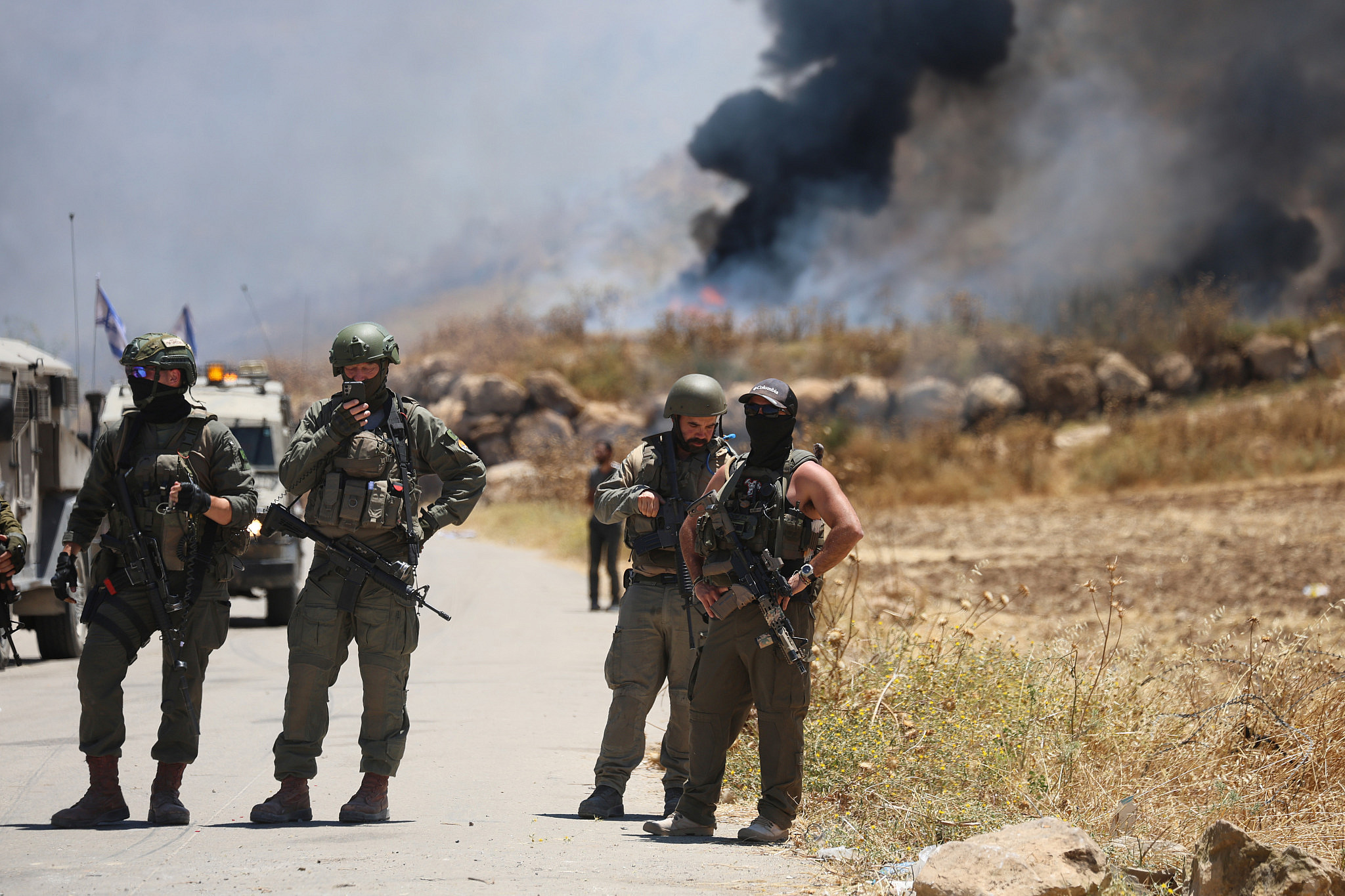
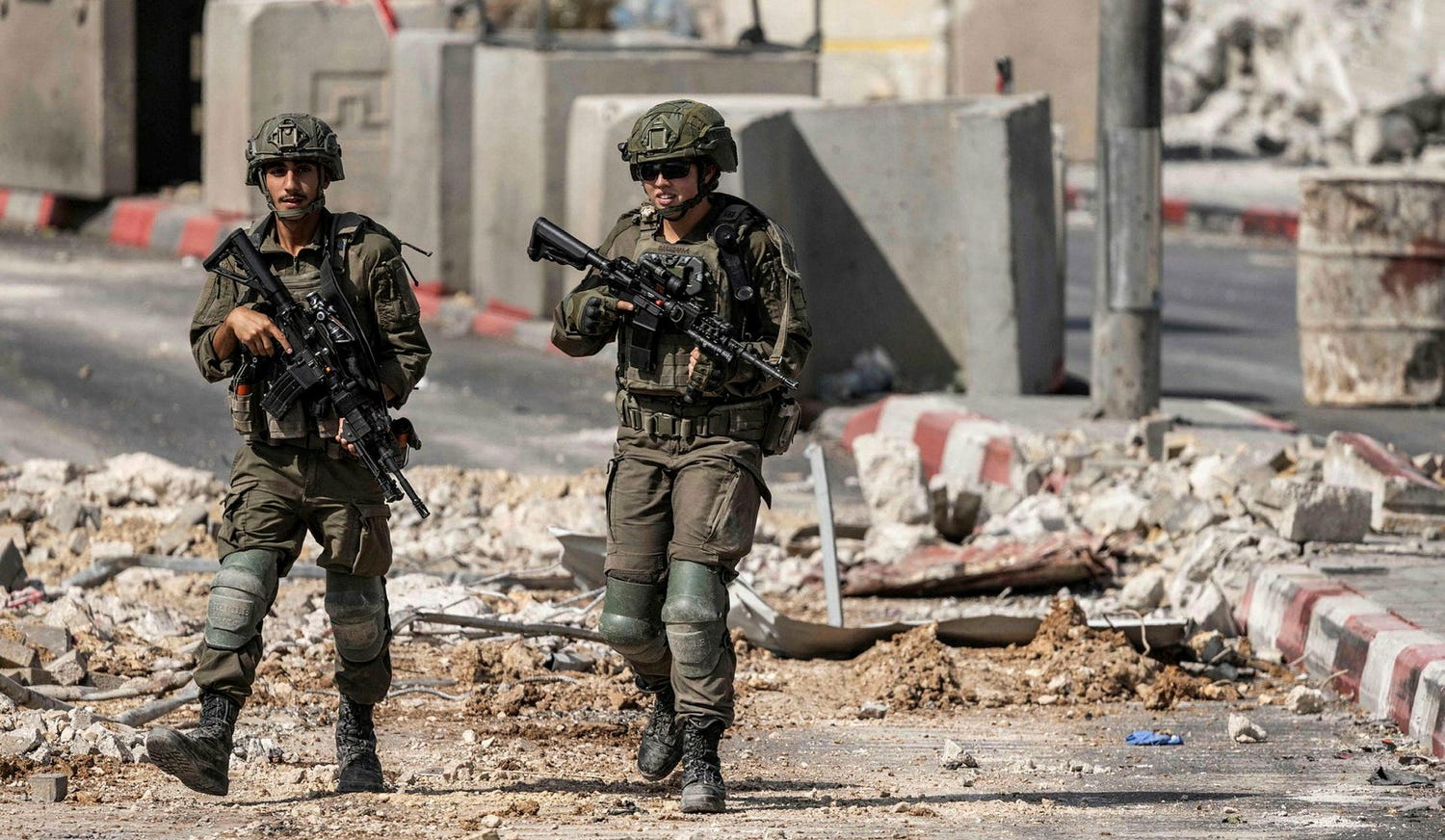
Palestina: agresión militar israelí en Hebrón deja personas heridas y múltiples detenciones
Las incursiones diarias y el asedio forzaron el desplazamiento de cientos de familias palestinas.


Teherán, 29 oct (Prensa Latina) Irán anunció hoy el derribo de un dron estadounidense MQ-1 sobre el estrecho de Ormuz, según informó la Guardia Revolucionaria Islámica (CGRI).
The post Irán anuncia el derribo de un dron estadounidense sobre Ormuz first appeared on Noticias Prensa Latina.
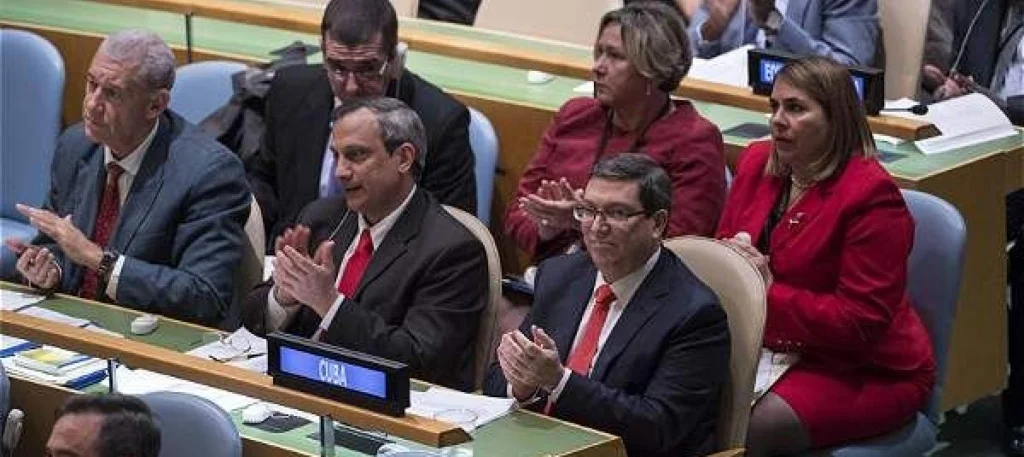
On Wednesday, President Miguel Díaz-Canel praised the actions of the Cuban delegation at the United Nations during the annual debate on the resolution calling for an end to the economic, commercial, and financial blockade imposed by the United States against Cuba. The president affirmed that the island will not back down in the face of Yankee pressure and dictates.
RELATED:
UN General Assembly Approves Cuba’s Resolution Against U.S. Blockade
In messages posted on the social media platform X, the Cuban leader acknowledged the work of Foreign Minister Bruno Rodríguez, Ambassador Ernesto Soberón, and the rest of the Cuban delegation, following an incident that took place during a session of the UN General Assembly.
“Today at the UN, the international community’s overwhelming support for Cuba was on display, as they condemned the blockade and the U.S. government’s policy of maximum suffocation. Most of the speakers were clear in their denunciation,” the Cuban president wrote.
These remarks followed an intervention by Bruno Rodríguez, who interrupted U.S. representative Mike Waltz as he was blatantly presenting a series of slanders, distortions, and lies against Cuba.
“You are lying,” Rodríguez stated, while requesting that the president of the General Assembly call the U.S. representative to order.
The Cuban Foreign Minister also denounced pressure exerted by Washington on UN member states and rejected what he described as insults to the dignity of the Cuban people and the international organization itself.
El pretexto más empleado y manipulado por el gobierno de Estados Unidos para tratar de justificar su actuación es presentar a Cuba como una supuesta amenaza para la superpotencia nuclear o, incluso, para el hemisferio. Se sabe que ningún gobierno aquí representado admite o acepta… pic.twitter.com/9ADzwpPsXS
— Bruno Rodríguez P (@BrunoRguezP) October 28, 2026
The text reads, “The most commonly used and manipulated pretext by the United States government to try to justify its actions is to present Cuba as an alleged threat to the nuclear superpower or even to the hemisphere. It is known that no government represented here admits or accepts such a crude fallacy. They lack arguments.”
Díaz-Canel maintained that this international body serves as a space for sovereign equality among states, and he asserted that Cuba will defend the rights granted to it by the United Nations Charter and its regulations, as well as the dignity of its people and its heroes. “Cuba will not back down, and certainly not in the face of Yankee pressures and orders,” emphasized the head of state, who described the U.S. stance as one of imperial arrogance and overbearing conduct.
The Cuban delegation’s protest was voiced at the start of the debate on the resolution titled “Necessity of ending the economic, commercial and financial embargo imposed by the United States of America against Cuba”—an initiative that has garnered broad support in the General Assembly for over three decades.
Cuba denounced a vile campaign of diplomatic pressure aimed at influencing the delegations present, with the goal of eroding support for the Cuban resolution. Nevertheless, the world once again spoke out—by an overwhelming majority—against the embargo, even in the face of pressure and blackmail from the United States intended to alter the outcome.
Díaz-Canel further noted that the U.S. representative—visibly isolated—offered no explanation for the energy blockade imposed on Cuba, nor for the intensified extraterritorial reach of the embargo.
In their remarks, Cuban authorities presented verifiable data demonstrating that the tightening of the embargo—particularly since 2025—has caused severe economic and social hardship on the island. This confirms that the U.S. policy amounts to collective punishment of the population; the authorities warned that the international community must not become complicit in such measures.
“Because we believe in the truth and in global solidarity, we know that the U.S. embargo against Cuba and the energy blockade will be condemned once again in the General Assembly,” Díaz-Canel stated on X.



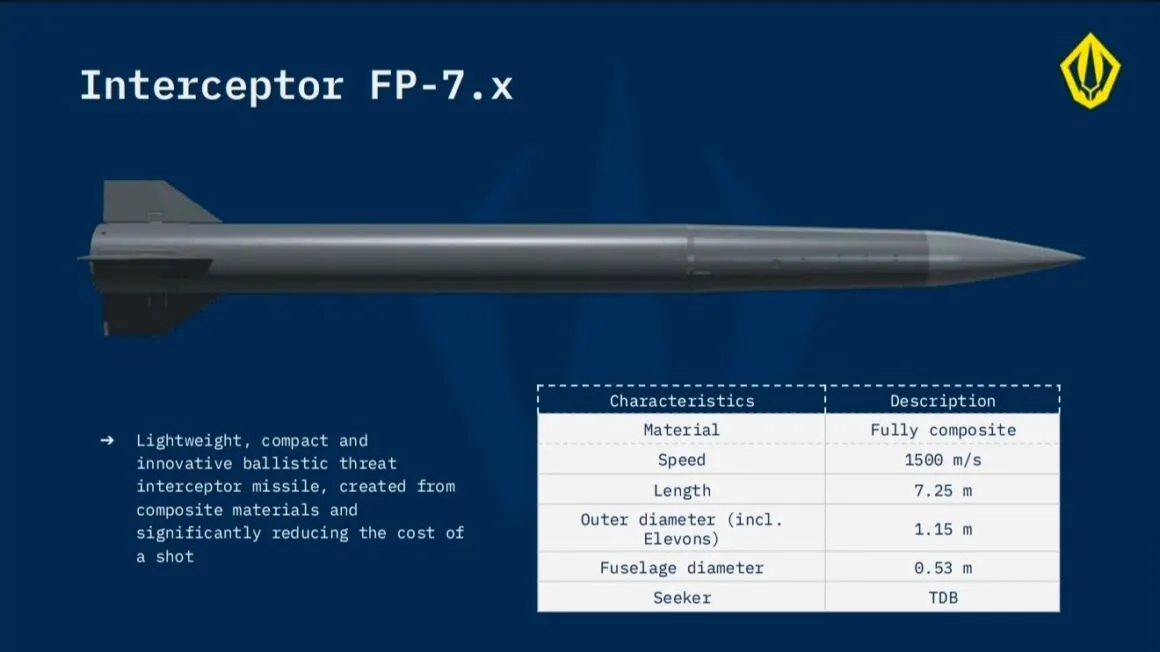
Ukraine has finished its share of FREYJA, a joint European project to build a system against ballistic missiles, President Volodymyr Zelenskyy told journalists on 17 October, Ukrinform reported. He added that Kyiv wants to test the first system as soon as possible.
Ukraine still relies on US-made Patriot interceptors to stop Russian ballistic missiles. Zelenskyy told ABC News on 23 October that Ukraine had received only 24 of them from the US in three months, while it needs 350 a month on average. FREYJA can not close that gap soon, because the system is still in development.
Zelenskyy said the partners’ share of the work, with 10 countries taking part, is still underway. He also said he had discussed the project with French President Emmanuel Macron, and he named Norway as a key partner.
Zelenskyy did not say what the partners still have to deliver. In August, he said Ukraine is capable of making the missile and launcher, while partners would supply critical components such as radars and sensors.
In May, Fire Point co-founder and chief designer Denys Shtilerman said all components of the FP-7.x interceptor are made in Ukraine except one. “As for that one part we don’t manufacture in Ukraine, we’ve contracted a certain quantity of it. We already have it,” he said, but did not name the part.
In June, however, Shtilerman told the Financial Times that mass production depended on an infrared seeker Fire Point hoped to get from Germany’s Diehl Defence. Neither statement says whether the seeker is that one part.
Fire Point co-founder Iryna Terekh said in September that FREYJA was going through testing and technical integration in combat conditions in Ukraine. The company plans its first intercept of a ballistic target by mid-2027.
The official timeline has since moved closer. On 21 October, Zelenskyy wrote that officials had identified where to speed up so FREYJA reaches testing by the end of this year. A test is still a step short of an intercept.

France is gearing up for another round of anti-austerity mobilizations on Saturday, October 31. As the weekend approaches, President Emmanuel Macron and Prime Minister Sébastien Lecornu have still not substantially addressed the protest demands tabled by the student movement.
For the past weeks, students and their organizations have taken to the streets in the hundreds of thousands, denouncing the state of the education sector, including overcrowded classrooms, overworked teachers, and dilapidated buildings. Authorities have responded with a full-blown crackdown – police violence, curfews, and protest bans – while avoiding meaningful conversation about the protests’ causes.
“The authorities’ top priority is to strip the movement of the political meaning it carries: the condemnation of the neoliberal policy that has ruined the French education system,” presidential candidate Jean-Luc Mélenchon pointed out in a recent interview. “Young people are pulling at the thread of a larger unraveling.”
Lecornu and his ministers called a meeting with high school and university student groups on Monday, announcing the government was ready to open dialogue on their demands. Yet even before the meetings kicked off, a list of government-proposed measures published by the media only fueled frustration.
These measures included a transparency-oriented reform of the higher education recruitment platform Parcoursup, the creation of 15,000 additional higher education placements, low-interest loans to regional authorities for renovating school infrastructure, and the indexation of grants to inflation.
Students criticized the officials for attempting to set a negotiation agenda before even speaking to them. They also called them out for trying to break their unity by organizing separate meetings with different groups instead of a joint discussion. In this process, they emphasized, crucial voices were left out.
Among others, the Fédération Lycéenne des Quartiers (FLQ), representing high school students from working-class neighborhoods – the demographic group from which the protest wave originated – was not invited to meet Lecornu. Students interpreted this as yet another sign of the government’s failure to grasp what is at stake. “They see us first and foremost as ‘young people from the banlieues,’ rather than young people who, like everyone else, want to make their voices heard,” FLQ’s Soumaya Sarré told Mediapart.
The way meetings were set up was not the only problem. Following the publication of the government’s proposals, the university students’ association Union Étudiante described them as “crumbs” and detailed how they fail to address the movement’s concerns.
“There are not 15,000 places missing but at least 250,000,” the organization warned. “Where are those 250,000 places needed for young people who have been denied their right to education because of classist and racist selection?”
Union Étudiante similarly criticized the lack of clarity surrounding proposed financing for infrastructure investment, employment plans, and the promise to “reform” rather than abolish Parcoursup.

This last demand has become emblematic for the student movement over the past weeks of protest. Young people on the streets have repeatedly explained how the tool allows university selection to maintain racist and classist tones – all while pushing tens of thousands of students without placements toward the private sector.
“We are not asking for a reform that offers more transparency or clarity; we already know how the selection process works, and it will remain unjust even if the selection criteria are made public,” Union Étudiante wrote. “The problem is selection itself. Why should young people be denied the right to pursue higher education? We must abolish all forms of selection while keeping a centralized platform for enrolling in academic programs.”
Trade unions and progressive organizations continue to support the students ahead of Saturday’s demonstrations, while building toward a general strike on November 5. The networks remain connected over shared austerity-related problems, linking budget cuts in public services, attacks on pensions, and precarious working conditions.
In between regular nationwide mobilizations, the past few days have also seen significant protests against racism and the far right. After a racist attack in the Trappes working-class suburb of Paris last Friday – where one person was killed and five, including a 12-year-old, were seriously injured – calls are circulating for solidarity assemblies.
“This crime did not come out of nowhere,” wrote Saint-Denis mayor Bally Bagayoko. “For years, the perpetrator blamed ‘Black people and Arabs’ for all his misfortunes.”
“He claimed he wanted to avenge a looting that never actually happened – a piece of false information broadcast on television,” he added.
“This hatred has its architects: those who, hour after hour on the airwaves, designate our neighborhoods as the problem and ‘the other’ as a threat.”
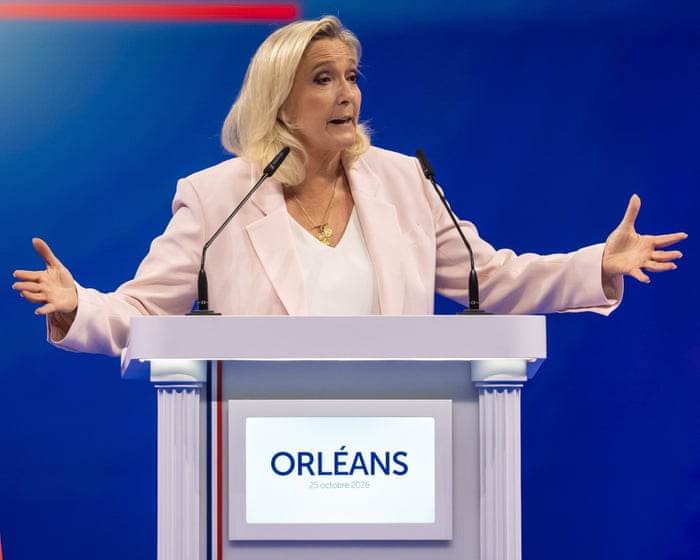
The far-right National Rally – whose program ahead of the 2027 presidential election endorses exactly this vision of “the other” – held its congress in Orléans over the October 24-25 weekend. Approximately 26,000 people joined a local march against the policies endorsed by the party, signaling continuous resistance in the lead-up to the April 2027 presidential election.
If ever enacted, proposals by Marine Le Pen and the AfD leader, Alice Weidel, to hollow out EU institutions would be a continental act of self-harm
Following the Brexit referendum in 2016, Marine Le Pen was in a predictably celebratory mood. Britain’s vote to leave the European Union, she told one interviewer, was the first breach in the “Brussels Wall”. Ms Le Pen’s Front National party was at that point committed to taking France down the same path, given the chance. But as the UK’s self-inflicted economic wounds became a cautionary tale for the rest of Europe, the notion of Frexit was put on ice.
Instead, Ms Le Pen now hopes to lead far-right allies in hollowing out the EU from within. This month, both she and the leader of Alternative für Deutschland, Alice Weidel, outlined their visions of a “Europe of nations” in which EU institutions would be stripped of both cash and power. Ms Weidel’s “new deal for Europe” would abolish elections to the European parliament, and seek German opt-outs in areas such as migration, defence and common borrowing. Ms Le Pen’s party, now called National Rally, proposes slashing French contributions to the EU budget by 60% over a five-year presidential term, and ending the role of Brussels in proposing common policies for the 27 member states.
Do you have an opinion on the issues raised in this article? If you would like to submit a response of up to 300 words by email to be considered for publication in our letters section, please click here.
Continue reading...
© Photograph: Christophe Petit-Tesson/EPA
© Photograph: Christophe Petit-Tesson/EPA
© Photograph: Christophe Petit-Tesson/EPA



Anthropic, developer of AI chatbot Claude, has filed its prospectus and is expected to go public on Wall Street in November at a valuation of up to US$2 trillion. That would make it the highest-valued initial public offering (IPO) ever, ahead of SpaceX’s $1.77 trillion listing in June. OpenAI, the maker of ChatGPT, is expected […]
The post Anthropic’s record $2tn IPO could bring global risks to a head appeared first on Asia Times.
