On this week's episode of Freed Up, Robby "Lestat" Soave and Christian "Lizard" Britschgi sport their Halloween costumes while reviewing Nathan Fielder's buzzy new documentary, You Can See Everything. During their discussion, they analyze the psyche of Elizabeth Holmes as well as the differences between documentaries and biographical dramas, and Christian gets an opportunity to defend his written critique of the film. Next, the boys shift gears and unpack reports that Mary Peltola's Senate campaign in Alaska helped recruit a second "Dan Sullivan" to confuse voters who meant to support the incumbent, Sen. Dan Sullivan (R–Alaska).
0:00—Halloween costumes
4:58—Robby and Christian review You Can See Everything
9:05—The ethical dilemmas in You Can See Everything
16:00—Elizabeth Holmes is still a liar
30:00—The Dropout vs. You Can See Everything
42:24—Mary Peltola's dirty tactics come to light.
54:06—Freed Up live for the 2026 midterm elections
If you enjoy Freed Up, come watch Robby debate at our upcoming Reason Versus event in Washington, D.C. Tickets are available here.
For more than half a century, federal officials have classified drugs into legal categories that determine who can manufacture, prescribe, or study them, and who goes to prison for possessing or selling them. Those classifications carry enormous consequences. They also reflect decades of political pressure, moralization, myth, and stigma.
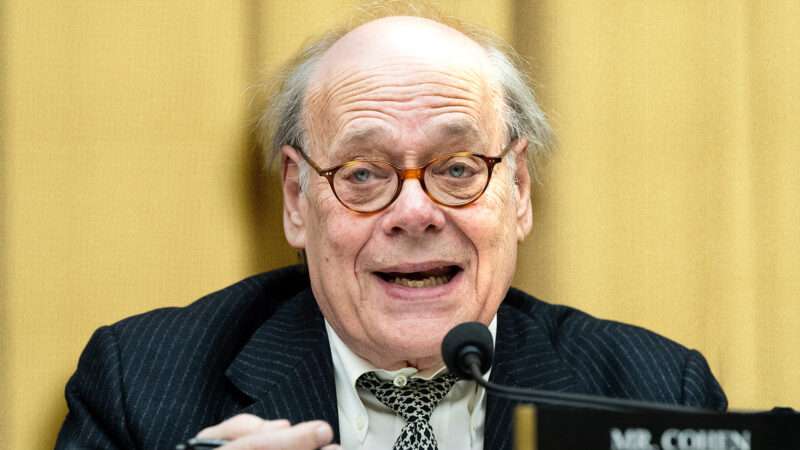
Rep. Steve Cohen (D–Tenn.) proposes to change that. His Public Health and Research Reforms in Controlled Substances Act of 2026 would substantially overhaul federal drug scheduling, shift key decisions from law enforcement to health officials, ease research restrictions, deschedule marijuana, and reduce mandatory prison penalties.
While the proposal preserves too much of the drug prohibition infrastructure, it represents a major step toward a more rational, evidence-based, and humane drug policy.
The Controlled Substances Act currently combines judgments about a drug's potential for abuse with judgments about its medical usefulness. Congress vested scheduling authority in the attorney general, who generally exercises it through the Drug Enforcement Administration (DEA). The Department of Health and Human Services (HHS) evaluates the scientific and medical evidence, but the DEA makes the ultimate legal determination of whether a drug has a "currently accepted medical use" for scheduling purposes, as the Justice Department explained in a 2024 legal opinion. Schedule I, the most restrictive category, includes substances deemed to have a high potential for abuse and no currently accepted medical use. These restrictions impede research, while officials cite insufficient evidence of medical usefulness to justify continued restrictions.
Cohen's bill would transfer authority to assess medical usefulness and drug-related risks—and to make scheduling decisions—from law enforcement to HHS, where those judgments more rationally belong. Under the new system, controlled substances would receive two classifications: a Roman numeral, I through IV, reflecting risks associated with misuse, substance use disorder, and threats to public health; and a letter, A through E, reflecting therapeutic value.
A substance could therefore be classified as high risk while still recognized for substantial medical benefits. That reflects an everyday reality of medical practice. Fentanyl, for example, can cause fatal respiratory depression and remains an indispensable anesthetic and analgesic. A drug's dangers do not erase its benefits.
The bill would also replace the vague "potential for abuse" standard for adding substances to the schedules with a standard based on the potential to develop a substance use disorder, expressly excluding isolated or occasional nontherapeutic use. Taking a substance for pleasure would no longer, by itself, satisfy that threshold.
Among the proposal's most consequential provisions is a requirement that officials consider whether scheduling a substance would itself threaten public health, including by encouraging people to substitute other drugs. They must also consider whether people use a substance to help control problematic use of another scheduled drug, as well as the harms associated with that other drug.
That would force federal officials to confront consequences that drug warriors routinely ignore. Banning a substance does not eliminate demand. Consumers may turn to underground suppliers, face uncertain potency and contamination, or switch to more dangerous products. Making a particular drug harder to obtain can leave its users worse off.
These requirements could be critical in disputes over kratom and its alkaloids, such as 7-hydroxymitragynine (7-OH), which some consumers report using for pain or to reduce their use of other opioids. Such reports should be part of an honest assessment of what consumers stand to lose when the government closes a legal supply channel.
An expert committee would evaluate each substance and publish its evidence and reasoning, making scheduling decisions more transparent and easier to challenge.
HHS would also assume from the DEA responsibility for registering researchers who study controlled substances. Qualifying researchers would gain an expedited registration pathway, with faster decisions for eligible small preclinical pilot studies. Federal officials currently demand evidence that these drugs have medical benefits while imposing restrictions that make it harder for researchers to obtain the drugs and conduct the studies needed to generate that evidence.
Cohen would require officials to reconsider existing classifications, setting a two-year deadline for 32 named substances and an eight-year deadline for most others. If officials miss those deadlines, statutory fallback classifications would apply.
The bill would also repeal the legal obligation of the director of the Office of National Drug Control Policy, the "drug czar," to oppose specified legalization efforts—a remarkable requirement for an office supposedly focused on evaluating drug policy.
Marijuana and tetrahydrocannabinols (THCs) would come off the controlled substance schedules altogether. The bill expressly makes that change retroactive, extending it to past offenses, pending cases, convictions, and juvenile adjudications.
Its sentencing reforms also merit praise. The proposal would remove the quantity-based trafficking provisions that impose five- and 10-year mandatory minimums and eliminate specified mandatory penalties when death or serious injury results. The bill would also limit certain repeat-offender sentencing enhancements to prior convictions that meet the narrower definition of a "serious drug felony." Among other requirements, the person must have served more than a year in prison and been released within 15 years of the new offense. Eligible prisoners could receive reduced sentences, and the Bureau of Prisons would be required to identify them, notify them, and file motions on their behalf.
These changes could spare people years of imprisonment. They deserve support even from those of us who would go much further.
The shortcomings remain significant.
First, the bill preserves criminal penalties for peaceful conduct involving drugs that remain controlled. It leaves the general federal simple-possession statute intact, including mandatory minimum jail terms for repeat offenses. Congress would continue to authorize imprisonment for possessing a substance without government permission.
Second, transferring power to HHS offers no guarantee against political interference. The secretary would appoint the expert committee in consultation with the drug czar. Its required membership emphasizes addiction medicine, toxicology, and substance-use services, without expressly reserving seats for pain patients, ordinary consumers, or civil liberties advocates.
The bill would allow emergency scheduling to bypass the new expert committee's review. It would also retain features of the current system: Temporary restrictions could last two years, with a possible one-year extension, and the statute would expressly exclude those orders from judicial review.
The bill would also transfer production quotas to HHS rather than abolish them. As I have argued before, presuming to know how much of each opioid more than 320 million Americans will need in the coming year exemplifies what economist Friedrich Hayek called the "fatal conceit." These quotas have contributed to shortages of injectable opioids in hospitals, jeopardizing care for surgical patients and those on ventilators. Transferring that power to a health agency does not solve the underlying knowledge problem. Congress should abolish the quotas.
The proposal substantially increases many maximum fines even as it reduces mandatory prison penalties. For an individual convicted of Schedule I or II trafficking without a qualifying prior conviction, the fine ceiling would rise from $1 million to $10 million. Congress should question this punitive expansion.
Finally, marijuana descheduling would leave Food and Drug Administration (FDA) authority intact. The bill expressly preserves the agency's powers under federal food and drug law, allowing it to regulate cannabis products that qualify as drugs, foods, or other products within its jurisdiction. It provides no explicit protection for a recreational cannabis market from FDA restrictions.
Those weaknesses warrant amendments. Scientific evidence can help people understand risks, but it cannot, by itself, justify depriving competent adults of the freedom to decide which risks they will accept. Autonomous adults should remain free to make informed choices about what they put into their bodies.
Cohen, who is retiring from Congress at the end of his term, is unlikely to see this sweeping reform pass during the brief post-election lame duck session. But his proposal can serve as a benchmark for reforming the Controlled Substances Act in the next Congress. Providing his successors with a framework that places greater weight on scientific evidence, recognizes the harms of prohibition, and reduces unjust punishment would leave Cohen with a substantial drug policy reform legacy.
Researchers hope to better understand the drivers of major health challenges facing younger people, such as mental illness and rising cancer rates, through the recruitment of 100,000 people for Australia’s largest intergenerational study of wellbeing and ageing.
The independent and not-for-profit research institute the Sax Institute on Thursday launched the 18 and Up study, which will follow the health of those aged 18 to 45 throughout their lives.
The TechIsland TechPro Community will hold its fourth meetup on November 3, 2026 in Limassol, bringing together professionals working at the core of Cyprus’ technology sector for an evening of discussion, knowledge exchange and networking.
The community was created by TechIsland, the largest technology association on the island, as a dedicated platform for CTOs, CIOs, CISOs, technology architects, software developers, DevOps and platform engineers, data and AI specialists, cybersecurity professionals, UX experts and digital transformation leaders.
Its purpose is to give these professionals a space to meet peers outside their own organisations, exchange practical experience, discuss the challenges they are facing and build stronger connections across Cyprus’ technology ecosystem.
Following three meetups earlier this year, the community will come together with a programme combining a focused panel discussion with informal networking over drinks and bites.
At the centre of the evening will be the panel ‘Inside the Vault: Building Secure Systems for Digital Assets & Data’.
The discussion will take a practical look at how organisations protect what matters most, from customer data and production databases to API credentials, encryption keys, sensitive information and digital assets, while still enabling teams to move fast and keeping systems manageable in practice.
Joining the panel will be Anastasiia Sanina, Head of B2B Partnerships at The Vault, Denis Rybin, Director of Information Security at inDrive, Ingrid Camilleri, Chief Digital Officer at Cablenet, and Igor Bulatenko, Head of Information Security at Exness.
The conversation will be led by Andreas Neocleous, Chief Consulting Officer at PwC Cyprus, who will bring the speakers’ different perspectives together and guide the discussion around the practical decisions technology and security teams face.
The 4th TechIsland TechPro Community Meetup, powered by The Vault, will take place from 19.00 to 21.00.
Attendance is free of charge, including drinks and bites, but registration is required.
Anthropic and OpenAI say they’ve disproved a key tenet of computer science. Researchers are struggling with the fall but also feel like “overexcited bunnies” as they look at new questions to explore.
Death Clock promises to predict when you’re going to die and help you extend your time on Earth. After a month, I felt like it was sucking the life out of me.
Lying beyond Pluto, 2026 ED138 could be as large as 1,500 kilometers in diameter. Astronomers are still working to confirm whether it meets the criteria for a dwarf planet.
To measure a horse painted 37,000 years ago, you would normally walk up to the wall. At Chauvet that is impossible. The cave floor still holds footprints tens of thousands of years old, and nobody is allowed to step on it. So the researchers worked from a metal walkway about 2.5 meters (8 feet) from […]
Cypriot businesses need to organise their data, establish clear rules and train employees before adopting artificial intelligence (AI), according to Kyriaki Parmakki, co-founder and chief executive of Limassol-based solutions studio essere.ai, who hosted the first ClickUp event in Cyprus earlier this month.
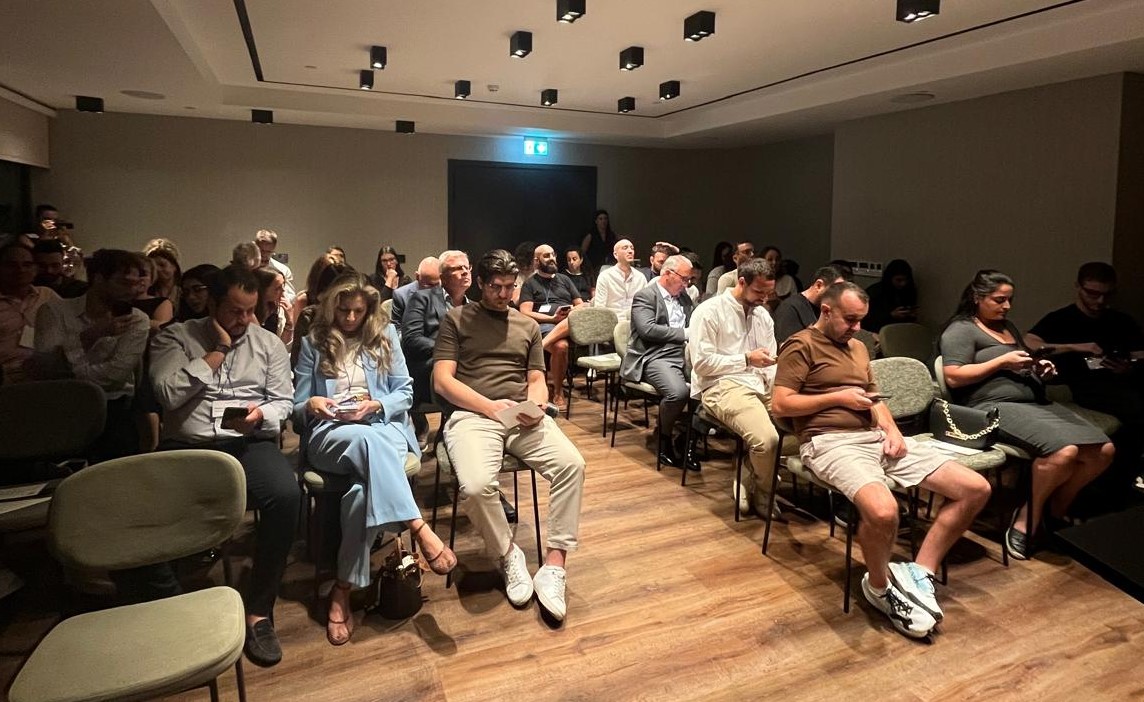
The event, held on October 8, brought together business owners, directors and technology specialists to explore how companies can integrate AI into their operations, with demonstrations of practical applications and discussions on the foundations needed to make the technology effective.
ClickUp, an American software company valued at $4 billion and known for its project management, task management and AI capabilities, held its first event on the island in partnership with essere.ai, which is ClickUp’s official and certified partner in Cyprus and the only partner it works with directly on the island.
In an interview with the Cyprus Mail, Parmakki said that the event highlighted a growing gap between individuals’ willingness to use AI and the extent to which businesses have integrated it into their operations.
“In 2025, 44 per cent of people in Cyprus used generative AI, against an EU average of 33 per cent, while only 9 per cent of Cypriot companies used AI, less than half the EU rate of 20 per cent,” she said.
“People in Cyprus are ahead of their companies.”
She added that the event’s attendance and the questions raised by participants suggested that businesses were increasingly interested in practical implementation rather than simply debating whether to adopt the technology.
“Appetite is not the problem. The room was full on a Thursday evening, with owners and directors, and the questions were about how, not whether,” Parmakki said.
“ClickUp choosing Cyprus for its first event here means international platforms now see this market too.”
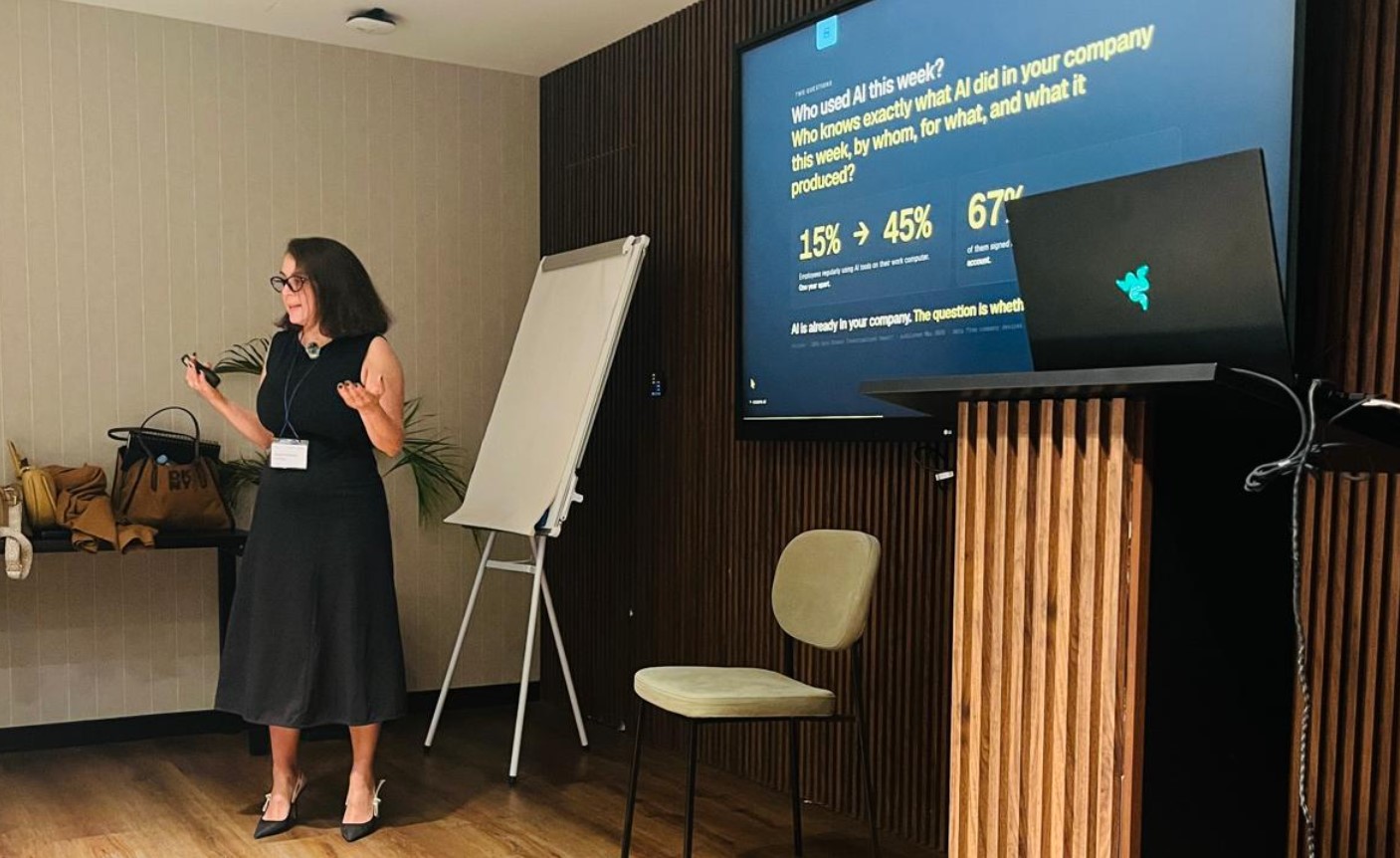
The event featured a presentation by ClickUp guest speaker Mary Bornaghi, who outlined the platform’s approach to bringing work management and AI together, while Parmakki presented the fundamentals businesses need before introducing AI.
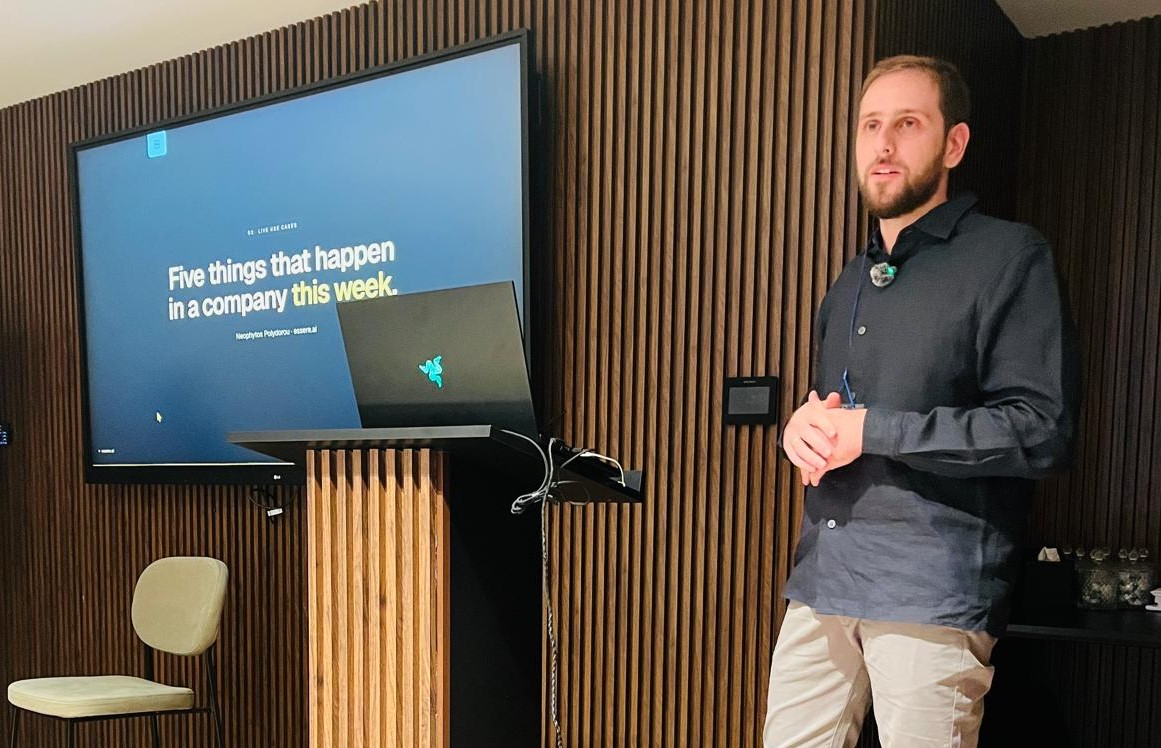
Neophytos Polydorou, senior AI engineer at essere.ai, demonstrated 5 live use cases using real systems and demonstration data, while representatives of 2 companies discussed how moving their work into ClickUp had changed their operations.
The evening concluded with an AI-readiness assessment that participants could complete on their phones, followed by networking.
A central theme was that businesses should focus on their operational foundations before investing in AI tools, with Parmakki arguing that the technology’s effectiveness depends on the quality and accessibility of the information it can use.
“Everything a company does is data. A call, an invoice, a message, an approval. AI can only work with what it can read, so the first question is never which tool, it is where the data lives,” she said.
She described 4 stages of business development according to how information is managed, ranging from data held in employees’ heads to information stored in separate files, then organised in systems, and finally supported by AI intelligence.
“Moving up one step always means the same thing, organising the data, and only then does AI have something reliable to work with,” Parmakki said.
Skipping this groundwork can result in AI producing generic responses or confidently delivering incorrect information, while employees may turn to personal AI accounts to handle company information because their employers have not provided suitable systems.
Businesses may also struggle to translate individual productivity gains into measurable commercial results.
Parmakki cited McKinsey research involving 1,700 executives, saying 80 per cent reported that AI made them personally more productive, while only 37 per cent of companies saw the benefits reflected in their results.
“The gap between those two numbers is the foundations,” she said.
The event also examined the growing use of AI by employees, including the security implications when individuals adopt tools without company oversight.
According to figures presented during the event, the proportion of employees regularly using AI on their work computers had increased from 15 per cent to 45 per cent in 1 year, while 2 thirds of those users signed in through personal rather than company accounts.
“The question is not whether your people use AI. It is whether the company knows,” the event’s presentation stated.
Parmakki said the most immediate returns tended to come from processes involving large volumes of unstructured information, including telephone calls, emails, invoices and documents.
Examples included answering calls in the caller’s language, recording the details and making bookings while other employees continued their work, as well as reading, checking and filing supplier invoices without requiring someone to open each email.
Other applications could prepare short morning briefings identifying tasks at risk of missing deadlines and suggesting how work could be reassigned.
“These are not pilots. Each one removes a chore that repeats every week, and a person can check the result in seconds,” she said.
However, she stressed that businesses must establish clear boundaries for AI agents before allowing them to operate.
“Before an agent goes live we write three things down, what it may read, what it may do on its own, and where a person decides,” Parmakki continued.
“Draft yes, send no. Suggest yes, pay no. No decisions about people or payments without a person.”
She added that every action should be logged and the records reviewed weekly, allowing companies to monitor whether AI systems are operating within their permitted limits.
The live demonstrations illustrated how these principles could work in practice, including a support call recognised and handled by an AI agent called Ciao, which helped the caller and made a booking.
Another demonstration showed an 8am briefing identifying a task at risk and proposing that it be reassigned, while an AI agent prepared month-end billing for approval by a person.
Other examples included filing a supplier invoice without anyone having to read the inbox and conducting a weekly security review in which an agent checked every action against established rules, including access it had been denied.
The event also addressed the distinction between developing bespoke software and configuring existing platforms, with the presentation arguing that although building software has become more accessible, maintaining it still involves logins, permissions, mobile applications, backups, security, updates and support.
The departure of the person who originally built a system can also create difficulties for the business.
The recommendation was to build technology where it creates a genuine competitive advantage and configure existing tools for other requirements.
Regulatory compliance was another key theme, particularly the European Union’s AI Act and the responsibilities it places on businesses.
“The EU AI Act already asks two things of every company, train your people on AI, and tell customers when they are talking to a machine,” Parmakki said.
The event presentation stressed that businesses should provide AI training and retain evidence of that training, while making clear to people when they are interacting with AI.
It also highlighted the heavier requirements for AI systems making decisions about people and money, which Parmakki said were due to arrive in December 2027.
Beyond regulation, she argued that a lack of expertise and uncertainty about legal requirements and data protection were more significant obstacles to adoption than the price of the technology.
“The gap is not technology, and it is not money. It is knowledge, and fear,” she said.
“Most companies do not know where to start and do not know where this is going, so they wait.”
She referred to Eurostat findings on businesses that had considered AI but decided against adopting it, saying the most frequently cited reason in Cyprus and across the EU was a lack of relevant expertise, followed by legal uncertainty and data protection concerns, while cost ranked considerably lower.
Parmakki said essere.ai aimed to bridge that gap through education before technology, helping business owners understand what AI could do within their own operations, where it was appropriate and what needed to be in place first.
For companies seeking to move beyond experimentation, she identified 3 priorities, beginning with establishing a reliable operational system that the business owns.
This should provide a single source of information for clients, tasks, documents and figures, rather than relying on employees’ memories, inboxes and spreadsheets.
The second priority is to establish written rules governing what AI can access, which actions it can perform independently and when human approval is required, with every action logged and a designated employee responsible for oversight.
The third is to train employees, move them away from personal accounts towards company accounts and select a single recurring process in which AI can be introduced and tested.
“Pick one process that repeats every week, put AI inside it, run it for four weeks with a clear yes or no at the end, and only then take the next one,” she said.
“That is the difference between experimenting and integrating.”
Parmakki argued that businesses did not need to begin with an extensive strategy document or bespoke software, but rather with sound preparation and a disciplined approach to implementation.
“None of it needs a strategy document or custom software. It needs the groundwork done properly, and the discipline to start small,” she said.
The event also presented Gartner’s expectation that 60 per cent of AI projects lacking AI-ready data would be abandoned, reinforcing the importance of preparing business information before introducing additional tools.
The broader message was that AI adoption should be treated as an operational change rather than simply a technology purchase, with the potential benefits depending on how well companies organise their work, protect their information and equip employees to use the technology effectively.
Imagine a cell as a vast library where the instructions for every possible identity-from a skin cell to a neuron-are stored. The problem is that many of these books are locked inside heavy, steel archival crates. Even if a scientist has the exact key to open a specific book, they cannot reach it because the crates are packed too tightly together. This is the fundamental struggle of cellular reprogramming: the genetic code is there, but it is physically inaccessible.
In a study published in Matter, researchers from Song Li's laboratory at UCLA discovered that the solution to this genetic blockade isn't a better chemical key, but a physical shove. By momentarily squeezing cells through narrow channels, the team found they could "shake loose" the internal structure of the cell, making the DNA far more receptive to reprogramming.
The barrier is chromatin, the dense protein-and-DNA complex that packages the genome. When chromatin is too tightly wound, tools like CRISPRa-which uses a Cas9 protein to activate specific genes without cutting the DNA-simply cannot reach their target. The proteins are physically blocked by the dense packing of the cell's interior.
In the realm of quantum computing, a photon is not a bullet fired from point A to point B. It is a wave with a specific shape, and that shape dictates whether a second atom will successfully absorb it. Today, the transmission of quantum states between qubits via photons succeeds only 54% of the time. However, researchers at TU Wien have demonstrated through theoretical calculations that by carefully engineering the propagation medium, this efficiency could theoretically be raised to 100%.
The core issue is not that photons are physically lost in transit, but rather a mismatch in their temporal form. When a qubit emits a photon, the resulting wave pulse typically starts strong and gradually decays-a pattern analogous to the sound of a struck bell, with a loud onset and a quiet tail. Yet, the receiving qubit is physically better suited to absorbing a pulse that rises from weak to strong, peaking at the precise moment of arrival. The natural emission process creates a waveform that is poorly matched for absorption, leading to the observed efficiency loss.
Reversing the Temporal Shape
The proposed solution relies on a fundamental principle of quantum mechanics: time-reversal symmetry. In ideal conditions, quantum dynamics are reversible. If a process perfectly describes the emission of a photon with a specific waveform, reversing that process in time reveals the waveform that would be perfectly absorbed by the same qubit.
For centuries, astronomers have relied on a simple visual cue to identify the aftermath of galactic collisions: a perfect, circular ring of newborn stars. These ring galaxies are rare, elusive, and typically found in the relatively nearby universe. But a new observation has pushed that boundary further back in time, capturing a structure that challenges just how common such dramatic events might have been in the early cosmos.
The subject is GS18660, a galaxy observed as it appeared just 2.1 billion years after the Big Bang. In earlier images from the Hubble Space Telescope, the galaxy presented a confusing, elongated shape. It was only when the James Webb Space Telescope (JWST) turned its near-infrared spectrograph toward this distant object that the true geometry emerged: a distinct, circular ring. This is the most distant ring galaxy ever detected, a finding that sharpens our understanding of galactic evolution without yet resolving every detail of the formation process.
Separating the signal from the story
According to Michele Perna, the lead author of the study from the Spanish Astrobiology Center, the key to identifying the galaxy's nature lies in the data gathered by JWST. The telescope's sensitivity allowed the team to map the three-dimensional structure of GS18660, track the motion of hot gas, and reconstruct its star-formation history. However, it is crucial to distinguish between what was directly seen and what is being inferred. The ring itself is an observed feature; the collision that created it is a hypothesis supported by circumstantial evidence.
Russia plans to build own version of US billionaire’s satellite communications to help attack Ukraine
Vladimir Putin praised Elon Musk’s genius and said he was in touch with Starlink’s controlling shareholder as Russia develops its own satellite communications for its military to use against Ukraine.
The Russian president, speaking at a summit with African leaders in Moscow, was comparing the Earth-orbiting network built by Musk’s SpaceX with Russia’s gradual efforts to build its own Rassvet constellation.

 Login