Russia's sanctioned Foreign Minister Sergei Lavrov is heading to a G20 meeting in the US, Russian Foreign Ministry spokeswoman Maria Zakharova stated. Moscow plans to use the trip to argue against sanctions, days after Russian ballistic missiles hit Kyiv. Ukraine, meanwhile, is still waiting for Washington's sign-off on the air defense missiles it needs.
Ukraine is fighting Russia's air war while its main ally squeezes it too, from capped Starlink links to missing US warnings of incoming ballistic missiles, leaving Kyiv weaker before any talks. A new round of the US-Russia-Ukraine trilateral talks is expected in Abu Dhabi in November.
Moscow's sanctioned minister plans to argue against sanctions
Lavrov will lead the Russian delegation at the G20 foreign ministers' meeting, which the US hosts in Atlanta on 30–31 October. In his speeches, he will denounce “the use of economic ‘weapons’ to fight opponents, including sanctions,” Russia's Foreign Ministry stated. The US Treasury sanctioned Lavrov on 25 February 2022, the day after Russia launched its full-scale invasion of Ukraine.
The ministry claimed its delegation ran into American red tape over visas. Journalists in Lavrov's press pool still received US visas without movement restrictions, Russian state news agency TASS reported.
The State Department's announcement of the meeting doesn't mention Russia or say whether Lavrov got a sanctions waiver. Republican Congressman Don Bacon told RFE/RL that Russian leaders “should not be welcomed in any of these forums.”“They lead a pariah state,” he said.
Moscow's demands arrive days after its missiles hit Kyiv
Lavrov will also stress “the cornerstone importance of indivisible security” as the basis of multipolarity, the ministry stated. Ukrainian President Volodymyr Zelenskyy has ruled out neutrality and limits on Ukraine's army.
Explore further
Russian ballistic missiles hit a Kyiv university campus, then return before dawn for the Southern Bridge again
A day before the trip was announced, Lavrov called the US-Russia diesel deal a purely business arrangement. “There were no strings attached,” he claimed.
Lavrov brings these demands days after Russian ballistic missiles hit a Kyiv university campus and the Southern Bridge, killing a 46-year-old woman, the Kyiv City Prosecutor's Office reported. Kyiv has waited almost a month for US Defense Secretary Pete Hegseth's signature on Patriot and NASAMS missiles, Zelenskyy wrote.
Moscow keeps collecting from Washington
The visit adds to a run of US moves in Moscow's favor. This month, the US Treasury cleared Russian diesel blocked by sanctions. US President Donald Trump then waived tariffs on buyers of Russian oil. US Energy Secretary Chris Wright also said investors could buy sanctioned shadow-fleet tankers and return them to legal trade. Russia, for its part, kept striking Ukraine's energy sites during the truce Trump announced.
Russian officials are also back in G20 rooms in person. In late August, Russian Finance Minister Anton Siluanov attended a G20 finance meeting in Asheville, North Carolina. It was his first in-person G20 appearance since 2022, and European officials refused to join the group photo with him. The State Department has stated that Russia is welcome at all G20 meetings, and a senior US official said Russia would be invited to the leaders' summit in Miami in December.
Western ministers used to push back at those tables. When Lavrov spoke at the G20 meeting in Johannesburg in February 2025, then-British Foreign Secretary David Lammy said he saw no appetite for peace.
In Atlanta, Obama accuses the White House of selling out Ukrainians
Former US President Barack Obama campaigned in Atlanta on 28 October, two days before Lavrov's meeting there.
“And while we're alienating key allies like Canada, the White House is bending the knee to Vladimir Putin of Russia and selling out Ukrainians who are fighting for their freedom and democracy,” Obama said.
He also likened Trump's self-enrichment in office to “what dictators in other countries do.”
In 2020, Atlanta police investigated 157 homicides, up from 99 the year before. That was the most the city had seen in more than two decades, according to The Atlanta Journal-Constitution. The next year was worse. Shootings climbed right along with the killings. Even CNN couldn't ignore it. It reported that by early July 2020, Atlanta had logged 282 shooting incidents, up 19% from the same point a year earlier, citing Atlanta police data. By June 2021, the number of people shot in the city was up another 38%.
More than 200 officers left the Atlanta Police Department in 2020 alone. Then-Atlanta Mayor Keisha Lance Bottoms did not have the backs of the Atlanta police, nor did she have the backs of Atlanta's most vulnerable citizens who depended on her for their safety. Her tenure as mayor left the city reeling as crime exploded and hundreds were killed. That is a serious dereliction of duty.
And as the bodies piled up, what did Bottoms offer? She pointed to the pandemic. She pointed to gun laws. In a national television interview, she pointed at Republican Gov. Brian Kemp for reopening Georgia's bars and nightclubs. Meanwhile, residents of Buckhead were so fed up that they launched a movement to break away from the city altogether.
With that list of failures, she wants to convince Georgians she's the right candidate to be governor. Folks, that's a terrible idea, and it would be laughable if it weren't for the fact that, on her watch, hundreds ended up in the cemetery. Georgia cannot afford to risk this. Atlanta's families found out the hard way what kind of mayor they had.
Bottoms spent part of her early childhood traveling the world as the daughter of a famous R&B singer. Republican nominee for governor Rick Jackson spent his in Atlanta's Techwood Homes, America's first public housing project, where his family relied on welfare. He didn't learn about struggling neighborhoods from the newspapers. He lived it. He never met his father, and his mother was a waitress with a sixth-grade education. At 13, he entered foster care, moving through five foster homes and 13 schools before the right foster family came into his life and showed him what love and stability looked like.
From there, he built Jackson Healthcare from the ground up into one of the largest healthcare staffing firms in the country, a company that now reports more than $3 billion in annual revenue. A man who once depended on public assistance, lived in the projects and went through multiple foster homes can speak to the issues that affect everyday Georgians from lived experience. That sets him apart in a way Bottoms can't match.
Jackson's public safety plan reads like it was written by someone who has listened to cops and crime victims. I hear from those families constantly through the Caldwell Institute for Public Safety, which I founded after my innocent brother Christian was murdered in Chicago.
What they ask for is simple: evidence that gets processed, offenders who stay off the street and leaders who take trafficking seriously. Jackson's plan answers all three. He has pledged to invest in additional certified crime labs so evidence stops sitting on shelves while victims wait and dangerous offenders stay on the street. His plan calls for a statewide law enforcement division with one mission: ending child sex trafficking in Georgia. He has promised tax relief for law enforcement officers and veterans.
Georgia has a clear choice on Nov. 3. One candidate has already been tested by a crime crisis and answered with failure after failure. The other has spent a lifetime proving that where you start doesn't determine where you finish, and he has a plan to make every Georgia neighborhood safer.
Moscú, 29 oct (Prensa Latina) El ministro de Asuntos Exteriores de Rusia, Serguéi Lavrov, asistirá a la reunión de cancilleres del G20 que se celebrará en Atlanta (EE.UU.) los días 30 y 31 de octubre, informó hoy la portavoz de la Cancillería, María Zajárova.
I moved from Hawaii to the continental US and have experienced some culture shocks along the way.
Jana Soli
I lived in Hawaii for 13 years and moved to the continental United States in 2021.
Life on the mainland has come with many surprises, from heavier traffic to more air conditioning.
Hawaii doesn't observe daylight-saving time, so the time change has taken some getting used to.
After living in Hawaii for 13 years — my entire adult life — I decided to move to North Carolina in 2021 for my MBA. While in school, I met my husband, and together, we relocated to Atlanta to pursue our careers.
However, after spending so much time in Hawaii, moving to the mainland came with some surprises. Here are eight of the biggest culture shocks I've experienced.
On the mainland, I spend much more time in my car.
Barry Williams/Getty Images
When I lived on the Big Island of Hawaii, I rarely had to drive more than 30 minutes at a time. Everything from work to the grocery store to the beach was just a short car ride away. A trip across the island felt like a journey.
So, it took me some time to adjust to the longer commutes in mainland cities. Rush-hour traffic is now a regular occurrence, rather than something I see in movies. And now, driving an hour to work or to visit friends is standard where I live.
Even though driving isn't always my favorite activity, I love that I can get in my car and head to another state in just a few hours. It's given my husband and me a lot of fun weekend road trips.
Daylight-saving time is new for me.
Jana Soli
Hawaii doesn't follow daylight-saving time, and instead stays on Hawaii Standard Time all year long. So when I first came to the mainland, the time changes twice a year really confused me.
I still have to look up when daylight-saving time begins and ends, especially when I'm referencing what time it is back in Hawaii. Thankfully, I keep a list of cities on my clock app to keep track of the time difference.
Experiencing four distinct seasons has changed how I observe time passing.
Sean Davis/Getty Images
Moving to a place with seasons meant buying winter clothing and seeing the leaves bursting into bright oranges and reds in the fall.
This is different from the islands, where the seasons are largely the rainy season and dry season. I now look forward to seasonal transitions and the festivities that come with each one.
Air conditioning is much more common on the mainland.
Jana Soli
Many homes in Hawaii, including the one where I lived, use the trade winds for cooling. My home had jalousie windows with horizontal glass slats that let the breeze pass through.
In contrast, buildings here in the Southeast are typically climate-controlled using air conditioning and heating units.
If I'm being honest, I still have to carry a sweater around to keep warm when the air conditioning is strong. However, dependable air conditioning is especially nice during hot, humid summers.
Locally grown fruit is now a summer staple.
Jana Soli
In Hawaii, because the climate is pretty mild year-round, many fruits have multiple or continuous growing seasons. Plus, I always knew someone who was giving fruits away from their backyard.
Here in the Southeast, though, fresh fruits feel more seasonal. I now get excited for peach season and the long lines at local farmers markets.
On the mainland, the weather is harder to predict.
Jana Soli
Where I lived in Hawaii, I'd look out over the ocean and be able to predict the next few hours of weather pretty accurately.
After years of living there, I understood the patterns of the clouds and wind, and could typically gauge the amount of time I needed to make it home from a run or the beach before the weather turned.
However, I have a much tougher time guessing what the weather will be like on the mainland. I now rely a lot more on weather forecasts to know what to expect.
The billboards took me by surprise.
Jana Soli
Billboards aren't allowed in Hawaii, so when I first moved to the Southeast, I couldn't believe how many huge signs dotted the skylines.
Now I get a kick out of reading them and analyzing the marketing, but it's always interesting returning to Hawaii and seeing how open the landscape is without them.
Fast-food restaurants on the mainland are missing Spam.
Jana Soli
Chicken and burgers are staples of fast-food restaurants on the mainland, but Hawaii's famous chains often feature rice and Spam.
Now, when I visit my favorite chains, I miss getting Spam musubi — Spam wrapped in rice and seaweed.
Quando os médicos diagnosticaram Jen Chan com uma forma agressiva de câncer de mama no ano passado, ela e sua esposa, Emily, se depararam com uma realidade assustadora: cirurgia, quimioterapia, radioterapia e a incerteza sobre se o tratamento seria eficaz.
Por um tempo, pareceu que sim. Em abril, Jen dançou em direção ao sino da ala de quimioterapia, com um largo sorriso e os punhos erguidos em sinal de triunfo. A equipe médica a aplaudiu e agitou pompons rosa-choque ao seu redor, comemorando o que todos pensavam ser o fim de seu tratamento exaustivo.
Mas exames subsequentes detectaram células cancerígenas nos gânglios linfáticos de Jen. Os médicos disseram que ela precisaria de mais um ano de quimioterapia. Então veio o segundo golpe.
Durante uma das sessões de quimioterapia, Emily recebeu um e-mail de seu corretor de seguros, Trey Wilson. Começou assim: “Emily, eu não sei o que você vai fazer a respeito disso”.
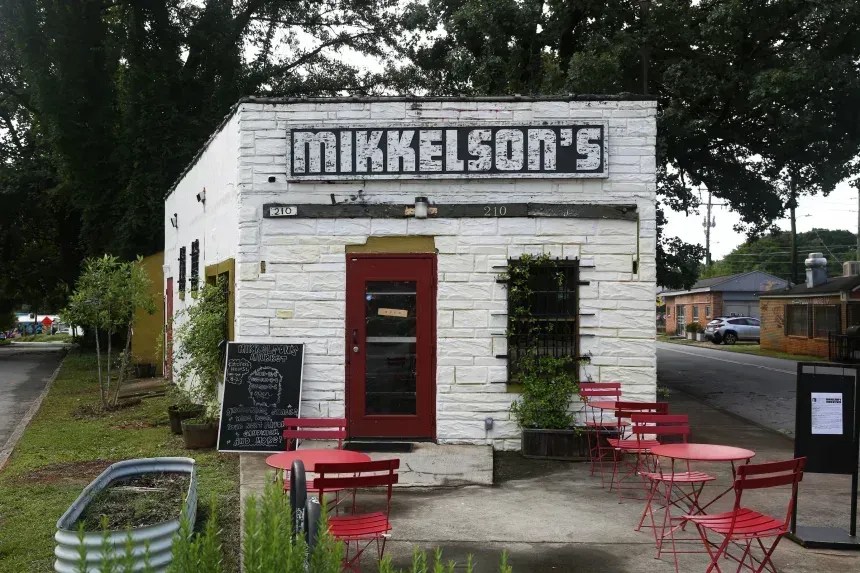
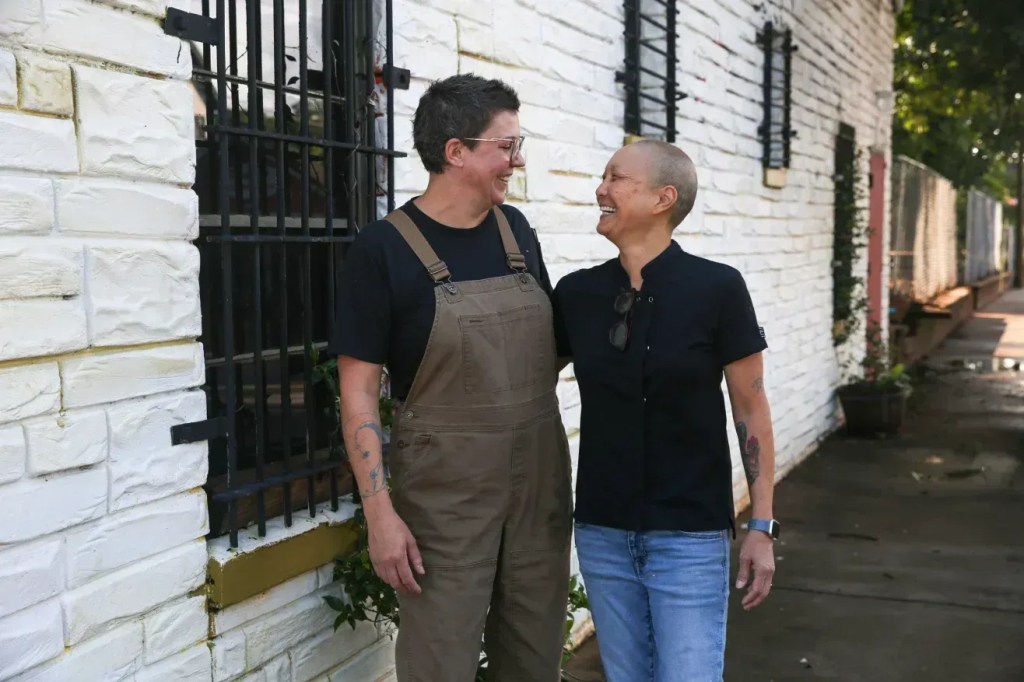
Os custos do seguro deles estavam prestes a aumentar muito. O casal é coproprietário do JenChan’s, um popular restaurante chinês e pizzaria no peculiar bairro de Cabbagetown, em Atlanta, e do Mikkelson’s Market, um mercadinho descolado no bairro vizinho, em Reynoldstown.
Depois que o tratamento de câncer de Jen e a cirurgia decorrente de um acidente de um funcionário aumentaram os custos com seguros, o corretor deles basicamente disse que a conta dobraria, mas não apenas para Jen e o funcionário acidentado. Para todos.
A mensagem capturou uma crise comum para pequenas empresas: muitos proprietários querem oferecer seguro saúde para atrair e reter bons funcionários e protegê-los de um desastre financeiro, mas uma doença ou lesão grave pode fazer os custos dispararem.
Pesquisas do setor mostram que apenas cerca de um terço dos restaurantes nos EUA oferece cobertura de seguro. Pequenas empresas geralmente têm poucas opções acessíveis.
Scott Bierman, vice-presidente de assuntos governamentais da Associação de Restaurantes da Geórgia, afirmou que 9 em cada 10 de seus membros são pequenas empresas e que a maioria não tem condições de oferecer seguro.
“O seguro costuma ser um obstáculo intransponível para pequenas empresas como restaurantes. Muitos dos nossos funcionários gostariam de oferecer essa opção, mas simplesmente não conseguem arcar com os custos”, disse Bierman.
Sistema de saúde falho
E mesmo os restaurantes que conseguem encontrar dinheiro em seus orçamentos podem enfrentar aumentos repentinos e insustentáveis. “Com certeza, esta não é a primeira vez que as taxas disparam entre meus clientes de restaurantes”, disse Wilson, o corretor de seguros independente dos Chans, que trabalha principalmente com pequenas empresas.
“Às vezes, acontecem situações terríveis em que, infelizmente, os preços dobram, o que é péssimo. Mas o que podemos fazer?”
Nas últimas quatro décadas, os custos com planos de saúde têm sido a principal preocupação das pequenas empresas, de acordo com a Pesquisa de Seguros para Pequenas Empresas de março, realizada pela Federação Nacional de Empresas Independentes. Dos pequenos empregadores entrevistados que oferecem planos de saúde, 98% acreditam que os altos custos tornarão essa prática insustentável nos próximos cinco a dez anos.
Os trabalhadores do setor de hotelaria já estão entre os profissionais com menor cobertura de seguro saúde. Um relatório do Departamento de Estatísticas do Trabalho dos EUA de 2021 constatou que cerca de 32% deles possuem plano de saúde, em comparação com 77% de todos os trabalhadores do setor privado.
“Nossa história mostra que realmente precisamos repensar como funciona o sistema de saúde neste país”, disse Emily Chan, que aparece trabalhando no Gala for Hope em julho • Rebecca Carmen
Enfrentando múltiplos desafios inesperados
A experiência dos Chans mostra o quão difícil a situação pode ser. Eles consideram a oferta de seguro para funcionários em tempo integral um benefício essencial, mas os custos já triplicaram há quatro anos.
Em 2024, os Chans adicionaram uma taxa opcional de 4% para contribuição ao plano de saúde nas contas dos clientes, mas receberam ameaças de morte depois que um cliente de fora da cidade reclamou nas redes sociais, contou Emily. A história virou notícia e a comunidade se mobilizou em apoio a eles.
“Temos muita sorte de ter amigos e clientes assim”, disse Emily.
Eles mantiveram a taxa de 4%, mas ainda assim não cobre o custo total. “Longe disso”, disse Emily.
O valor do seguro do restaurante varia mensalmente, dependendo das solicitações de indenização feitas pelos funcionários. Atualmente, nove funcionários estão cobertos pela apólice, e outros serão adicionados em breve. No ano passado, em média, os Chans pagaram cerca de US$ 491 por mês por funcionário. Depois disso, o custo saltou para uma média de cerca de US$ 1.135 por pessoa por mês durante o ano todo.
Só em junho, devido às suas recentes reclamações, a conta subiu para mais de US$ 2.400 por pessoa em um único mês. O valor total chegou a US$ 21.868,71 — quase quatro vezes o valor do aluguel do restaurante.
“As coisas mudaram completamente para nós”, disse Emily Chan.
Os funcionários costumam cumprimentar os clientes habituais do JenChan – e seus cães – pelo nome, com uma pergunta amigável sobre o dia deles • Austin Steele/CNN
Mesmo quando usam seus benefícios, dizem, muitas vezes precisam lutar para conseguir cobertura. O médico de Jen prescreveu um medicamento de imunoterapia que a seguradora não aprovou. Ela teve que optar por um tratamento diferente.
“Não consigo nem dizer quantas vezes fiquei andando de um lado para o outro ao telefone com a seguradora ou com o nosso representante”, disse Emily. “Estamos passando pelo diagnóstico mais devastador que já recebemos na vida, e o médico nos diz: ‘Isso é o melhor que podemos fazer por vocês’, e a gente começa a depositar esperança nisso, e aí a seguradora diz: ‘Que pena’. E aí, na nossa cabeça, a gente pensa: ‘Então, não estamos recebendo o melhor tratamento?’ É muito difícil.”
Emily pediu ao corretor que tentasse encontrar uma apólice mais barata. Mas ele disse que nenhuma outra seguradora aceitaria fechar negócio com eles devido ao histórico de sinistros.“É exatamente por essa situação que, por mais que os restaurantes desejem oferecer seguro, é incrivelmente difícil”, disse Wilson.
O Mikkelson’s Market é um mercadinho de bairro pertencente a Jen e Emily Chan, localizado no bairro de Reynoldstown, em Atlanta • Austin Steele/CNN
Um dos principais problemas é a falta de boas opções políticas.
“Normalmente, a única opção ‘acessível’ que as pequenas empresas têm é contratar um plano de saúde autofinanciado ou parcialmente autofinanciado”, disse Larry Levitt , vice-presidente executivo de políticas de saúde da KFF, um grupo de políticas de saúde.
Não há saúde universal e gratuita
A Lei de Acesso à Saúde não impede que planos autofinanciados ou parcialmente autofinanciados estabeleçam taxas com base no histórico de sinistros médicos de um grupo, disse Levitt. Nesses planos, os empregadores assumem o risco de pagar as despesas médicas. Grandes empresas podem distribuir esse risco entre muitas pessoas; em uma pequena empresa, uma doença grave ou um acidente pode aumentar rapidamente os custos.
“Normalmente, se uma pequena empresa oferece seguro, ela dá aos funcionários um valor fixo para pagar o seguro onde quer que o encontrem, ou as empresas compram o que é conhecido como uma apólice de autogestão, o que significa que as apólices são muito mais sensíveis aos custos reais de saúde dos trabalhadores”, explicou Levitt.
O plano de saúde dos Chans é parcialmente autofinanciado, o que significa que eles pagam diretamente as despesas médicas até um limite preestabelecido, após o qual uma seguradora maior entra em ação.
“As apólices podem parecer muito atraentes e baratas se seus funcionários forem saudáveis, mas se uma pessoa ficar doente, não é um bom negócio”, disse Levitt.
“Só nos Estados Unidos as pessoas podem ser arruinadas financeiramente por uma doença, mesmo tendo plano de saúde.”
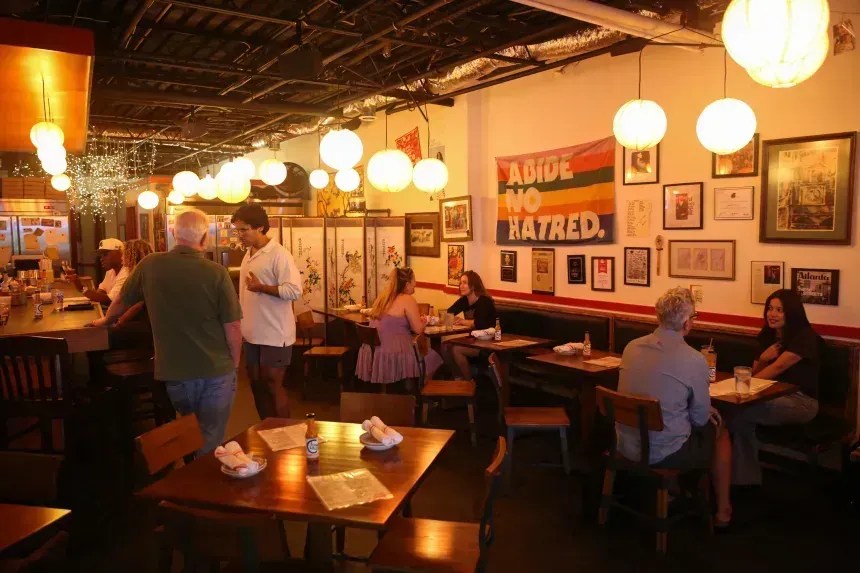
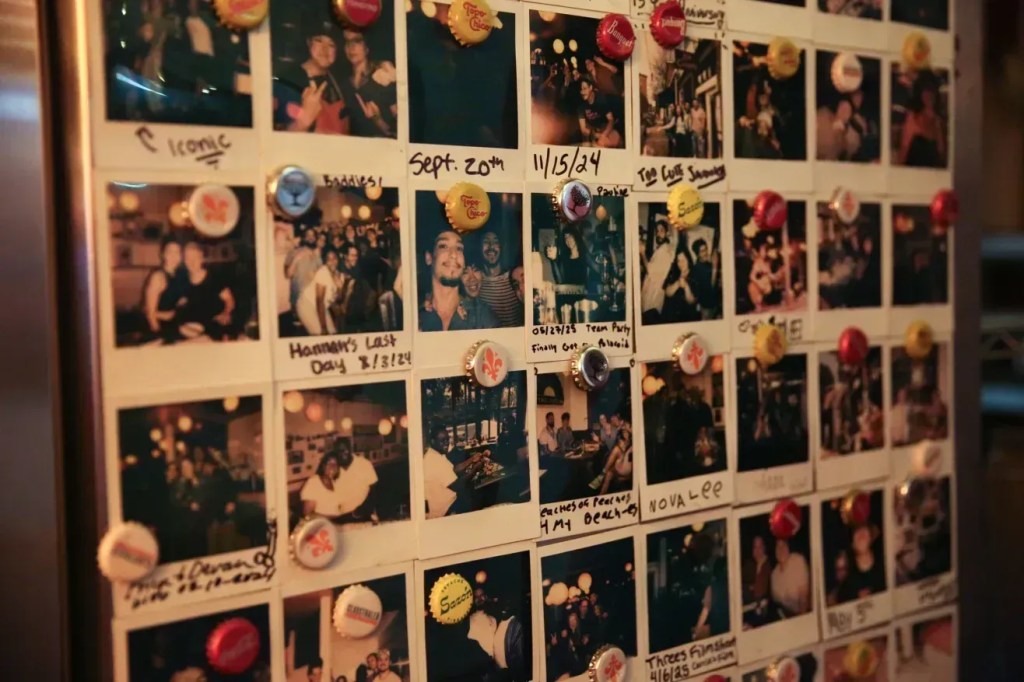
Fotos da equipe decoram uma geladeira no restaurante JenChan’s em Cabbagetown • Austin Steele/CNN
Um restaurante que ‘exala comunidade’
No verão, os Chans se depararam com contas médicas altíssimas e custos de seguro proibitivos. Mas cancelar o plano de saúde significaria o fim do tratamento que salvou a vida de Jen, bem como da cobertura de saúde de sua equipe, e “isso claramente não é uma opção”, disse Emily.
Então Emily procurou uma solução para o problema. Ela criou uma campanha no GoFundMe para ajudar a pagar as despesas. Os Chans tinham uma vantagem que nem todos os pequenos empresários possuem: clientes fiéis e uma comunidade unida.
Mais de 1.700 pessoas fizeram doações. A campanha arrecadou mais de US$ 128.000 . Heather Anderson, frequentadora assídua do mercado e do restaurante, e sua esposa contribuíram.
Anderson diz que adora a fusão “nunca entediante” de comida chinesa e sulista do JenChan, especialmente a pizza de lasanha de burrata estilo focaccia e os “This is My Salad Nachos”, mas sua admiração vai muito além do cardápio.
“Tudo o que os Chans fazem transborda espírito de comunidade”, disse Anderson.
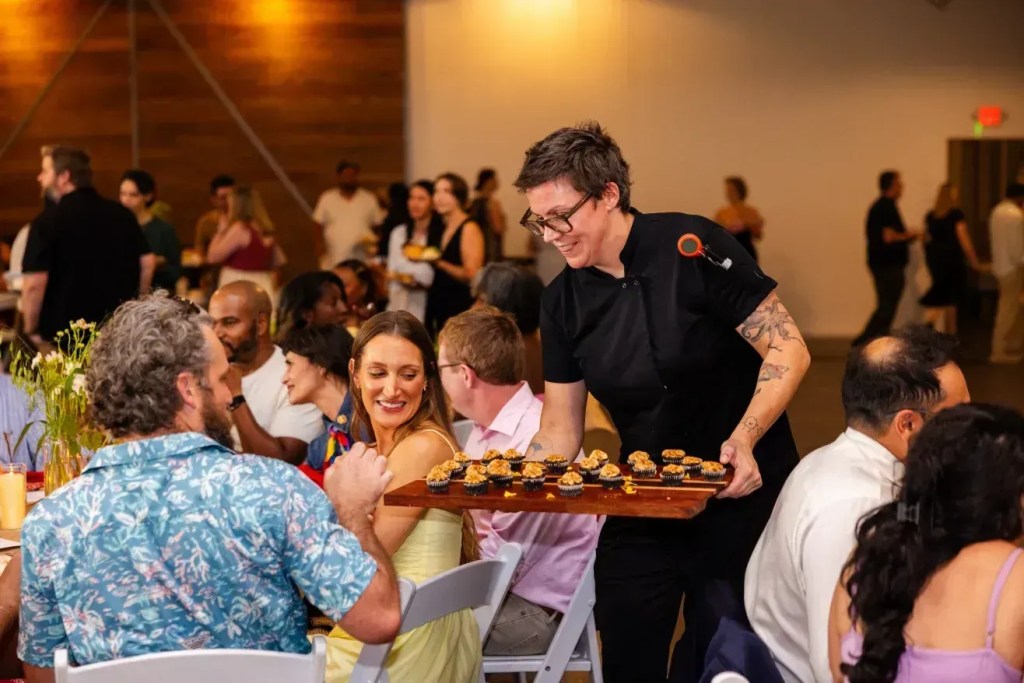
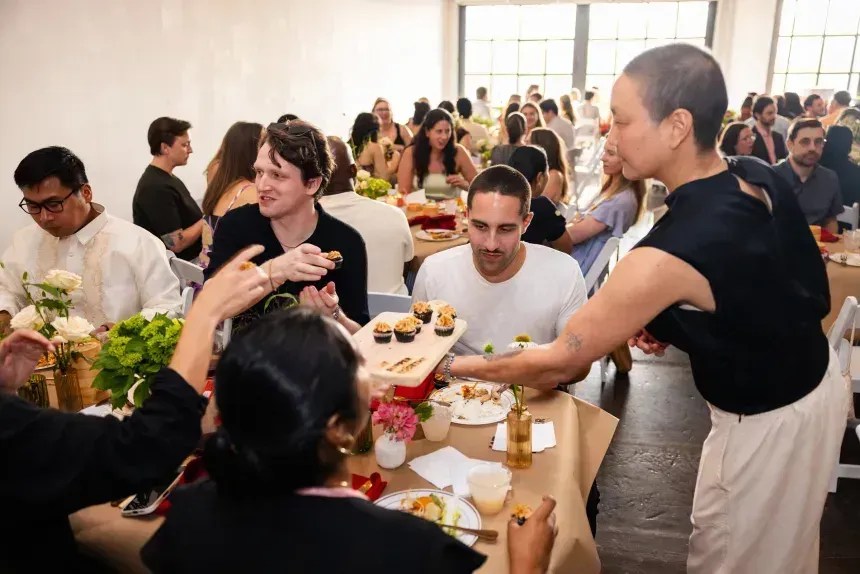
Tanta gente compareceu ao Gala for Hope — uma festa para celebrar a comunidade dos Chans e arrecadar fundos para o Giving Kitchen, uma instituição de caridade que apoia trabalhadores de restaurantes em momentos de crise — que os Chans só conseguiram ver os apoiadores quando estavam servindo a comida • Rebecca Carmen
Emily Chan disse que queria que o restaurante tivesse a atmosfera da “casa da vovó favorita” de todos, com suas paredes de tijolos aparentes cobertas de fotos de família, Polaroids de clientes e mensagens positivas. Os funcionários costumam cumprimentar os clientes habituais — e seus cachorros — pelo nome, com uma pergunta carinhosa sobre o dia deles.
A fidelidade ao restaurante e ao mercado cresceu graças a iniciativas acolhedoras para a vizinhança, como as Segundas-feiras de Mahjong e um Cartão Gay do Mês do Orgulho LGBTQIA + que oferece descontos no restaurante e em outros comércios locais. O Mikkelson’s Market se tornou um ponto de encontro para Anderson e seus vizinhos, onde compartilhavam notícias enquanto saboreavam biscoitos de frango e um café forte no pátio, na maioria dos fins de semana.
“Eles criaram uma comunidade para todos nós, então é claro que nossa comunidade os apoiaria”, disse Anderson.
Courtney Kovanis e sua esposa também contribuíram para a campanha no GoFundMe. Kovanis disse estar emocionada com o fato de o bairro de Reynoldstown ter concedido aos Chans, em setembro, um prêmio por seu trabalho comunitário.
“Com a campanha no GoFundMe, o que realmente me impressionou foi que eles não estavam apenas tentando arrecadar dinheiro para pagar o tratamento de câncer da Jen, que é incrivelmente caro, mas também para fornecer seguro saúde para seus funcionários”, disse Kovanis. “Isso realmente demonstra quem eles são como indivíduos.”
“O setor de serviços é muito difícil, e eles estão dando suporte aos seus funcionários. Contribuir é o mínimo que eu poderia fazer”, acrescentou ela.
‘A matemática é brutal’
Mas o financiamento coletivo dos Chans evidencia um problema mais amplo: mesmo quando há cobertura de saúde, a doença pode ser financeiramente devastadora, iniciando uma espiral de dívidas.
“Não é uma falha pessoal do dono ou funcionário de um restaurante se a cobertura do seguro não estiver completa”, disse Allison Padilla-Goodman, diretora executiva da Giving Kitchen , uma organização sem fins lucrativos de Atlanta que oferece ajuda financeira a trabalhadores de restaurantes em crise, incluindo alguns dos funcionários de JenChan ao longo dos anos.
Uma pesquisa da Gallup de março de 2025 revelou que cerca de 30 milhões de americanos relataram ter contraído empréstimos para pagar por cuidados médicos. Especificamente, estima-se que os americanos tenham tomado emprestado US$ 74 bilhões para pagar contas médicas somente em 2024. Mais de um quarto dos adultos americanos tinham dívidas médicas em 2025, de acordo com um relatório do Urban Institute divulgado este mês.
Antes de lançarem a campanha no GoFundMe neste verão, os Chans deviam cerca de US$ 12.000 referentes ao primeiro ciclo de tratamento de Jen e tinham cerca de US$ 60.000 em contas médicas pendentes. Como o tratamento ainda duraria mais um ano, não estava totalmente claro quanto mais eles teriam que pagar.
“O seguro de saúde já é bastante limitado, e os cálculos são brutais”, disse Padilla-Goodman.
Quando um garçom nos EUA ganha, em média, menos de US$ 17 por hora, de acordo com o Departamento de Estatísticas do Trabalho , isso normalmente não lhe proporciona muitas economias para pagar despesas médicas inesperadas.
“Este é um grupo de pessoas que muitos consideram trabalhadores pobres”, disse ela. “É uma surpresa para alguns, já que são pessoas com quem interagimos regularmente e, em ocasiões especiais, quando vamos a um restaurante para comemorar, elas podem ser como família.”
A maioria dos funcionários de restaurantes também não tem direito a licença médica remunerada. Jen e Emily Chan trabalharam durante todo o tratamento de Jen, assim como outros antes delas.
Maxx Reginello , gerente de piso da JenChan , ficou impossibilitado de trabalhar por algumas semanas no ano passado após ser atropelado enquanto voltava de bicicleta para casa depois de um turno duplo na Páscoa. Ele precisou de cirurgia e usou um colar cervical por cerca de sete semanas.
“Estou feliz por estar vivo e tenho a sorte de ter seguro saúde pelo restaurante”, disse Reginello. Mas ainda havia despesas. Os Chans criaram uma campanha no GoFundMe para ajudar a pagar as contas médicas e outras despesas enquanto ele não podia trabalhar.
“Nossa comunidade realmente se superou”, disse ele. “Temos pessoas muito, muito generosas.”
Jen ainda está fazendo quimioterapia e precisará de tratamento até o final do ano. Depois de usar a campanha no GoFundMe para pagar as contas médicas e do seguro neste verão, os Chans ainda tinham dinheiro suficiente para criar uma espécie de conta poupança saúde para os funcionários, “para que, se algo ruim acontecer com algum deles e eles tiverem uma franquia ou despesas inesperadas, isso seja coberto”.
“Somos muito afortunados por nossa comunidade ter vindo cuidar de nós, e continuaremos a cuidar deles”, diz Emily Chan sobre a experiência do casal. “Mas o seguro coloca muitas empresas como a nossa em uma situação terrível.” • Austin Steele/CNN
Emily disse que estão contando sua história porque os problemas com o seguro que quase levaram a JenChan à falência ameaçam pequenas empresas em todo o país. Eles afirmam que não desistirão de oferecer seguro para seus funcionários e disponibilizaram um link em seu site para que as pessoas possam contribuir e ajudar com esses custos — mesmo sabendo o quão rápido esse benefício pode se tornar um passivo.
“Mas se ninguém falar sobre isso, o problema vai continuar. Temos muita sorte de nossa comunidade ter vindo cuidar de nós, e continuaremos cuidando dela. Mas o seguro coloca muitas empresas como a nossa em uma situação terrível”, disse Emily.
“Acho que nossa história mostra que realmente precisamos repensar como funciona o sistema de saúde neste país. Ou perderemos muitas outras empresas como a nossa.”
Por enquanto, o trabalho deles continua. Neste verão, os Chans organizaram um Jantar de Gala para a Esperança, a fim de agradecer aos apoiadores e arrecadar fundos para a Cozinha Solidária .
A participação foi tão grande que o casal nem precisou fazer um discurso. Eles passaram a maior parte do evento cozinhando.
“Sinceramente, acho que o evento falou por si só”, disse Emily. “Temos uma comunidade incrível.”
One of the unfortunate quirks of the American system is that you can't lie to the government, but the government can lie to you. Samuel Tunick found himself on the receiving end of this setup last year at Atlanta International Airport. When agents from the Department of Homeland Security (DHS) asked for his phone password, he allegedly gave them a self-destruct code that wiped his data. Tunick now faces five years in prison for destroying evidence.
It turns out that the feds were lying to Tunick the entire time. A new court filing, first reported by 404 Media, shows that the DHS had sent out an order to seize Tunick's phone over his involvement in environmentalist protests in Atlanta. When he landed at the airport, however, agents told Tunick that they were looking for "kiddie porn" and he would be allowed to leave with his phone if he cooperated. They also repeatedly denied him access to his lawyer when he asked.
"There can be no real debate that if law enforcement had acted similarly elsewhere in Atlanta, their actions would be unconstitutional. But the government says it was entitled to act this way because Mr. Tunick was returning from an international vacation" in the Dominican Republic, his lawyers wrote in the filing, which includes internal DHS communications and excerpts from his interrogation video.
U.S. law recognizes a "border exception" to Fourth Amendment privacy rights, allowing federal agents to search incoming travelers for contraband. U.S. Customs and Border Protection (CBP) claims that this exemption also allows them to hold travelers for questioning and search their electronic data. Tunick's case reveals just how widely the agency stretches this loophole.
A few hours before Tunick landed, Homeland Security Investigations (HSI) agent Travis Mcghie emailed the CBP station in Atlanta with his photo and information, stating that he is under investigation for "suspected terrorist activities." (Tunick is involved in Save the Atlanta Forest, also known as Stop Cop City, a protest movement against a local police training center.) The email asked CBP to "conduct a 100% baggage exam, retain all electronics and collect passcodes," stating that the HSI will be at the airport to conduct an interrogation.
Pulled into the secondary screening room, Tunick "almost immediately" told CBP officers that "I don't really want to speak without a lawyer any more," according to the filing, which cites the interrogation tape. He would ask for a lawyer multiple times.
The agents asked Tunick if he had "kiddie porn" on his phone and stated that "because you're refusing to talk, we have the authority to go through your phone to see what we're looking for." One of them, Latoya Castro, told Tunick that "either you can give us your password so that we can go through it no problem, or you can refuse to do that, unfortunately, we will have to seize your phone."
Both of those statements were a lie, of course. The HSI's email had asked CBP to take Tunick's phone, whether or not he cooperated.
The lie about child porn may not only have been meant to intimidate Tunick. While there arecontradictory lower court rulings about the border search exemption, some courts have ruled that the CBP can only search electronics for "digital contraband," or files that are themselves illegal. A search for child sex abuse material would be on stronger legal ground than a search for mere evidence of other crimes.
Tunick was using GrapheneOS, a secure phone system that allows users to set both a real password and a "duress password" that wipes out all data when entered. The interrogation tape shows his phone appearing to reset after he gave the officers a passcode. HSI agent Nathan Burnham and FBI agent Andrea Coble then entered the room.
"You are not under arrest. Once these gentlemen are done with you, pursuant to your entry into the country, you're free to leave," Burnham said, referring to the CBP officers.
Tunick's lawyers argue that the judge should throw out the phone password Tunick provided and everything that resulted from entering it as an "involuntary" response made under "unlawful interrogation," because the CBP agents did not read Tunick his Fifth Amendment rights and ignored his multiple requests to consult with his lawyer before answering their questions.
The CBP claims that secondary screening at the border doesn't count as a criminal investigation, so detainees don't have the same rights as criminal suspects. "Since the international arrivals inspection is an administrative function, CBP policy and federal regs do not permit the presence of lawyers during secondary examinations," a spokesmantoldReason earlier this year.
But Tunick's lawyers insist that his experience was "far outside" a normal border crossing: He was accused of a serious crime to his face, faced an investigation for a different serious crime he didn't know about, and clearly could not leave the situation until he gave information to government agents.
"I hope people understand that the charges against me are meant to intimidate people against protecting their data and their privacy, and the government hopes to set a precedent that no one has the right to privacy," Tunick told 404 Media.
Defend the Atlanta Forest, the movement that Tunick is involved with, has been amajor nuisance for authorities in Georgia. Protesters attacked and burned construction equipment throughout 2022, and police shot a protester in 2023 under unclear circumstances, claiming that they were fired at during a raid.
The Trump administration has brought down the federal government against the movement. In June 2026, the Department of Justice broughtfederal charges against two alleged arsonists, citingNational Security Presidential Memo 7, which directs the feds to go after left-wing domestic terrorism.
But beyond the email line about "suspected terrorist activities," there is no indication of what specific crimes the feds suspected Tunick of, or why they suspected him. And the whole setup of the interrogation was designed to hide those answers. In fact, instead of charging Tunick under typical obstruction or evidence-destruction laws, federal prosecutors chose ararely-used statute that doesn't require them to disclose what the underlying investigation was about.
"Many times the government wants to highlight what it was trying to investigate because that ups the stakes on what the defendant was doing," former prosecutor Daniel RichmantoldThe New York Times. "This is a case where I think they're trying to avoid exactly that by focusing only on the destruction, and not what the investigation was about."

 Login