❌

Reading view

Bolsonaro declares himself 'leader' of Brazil after fleeing country, arriving in Miami

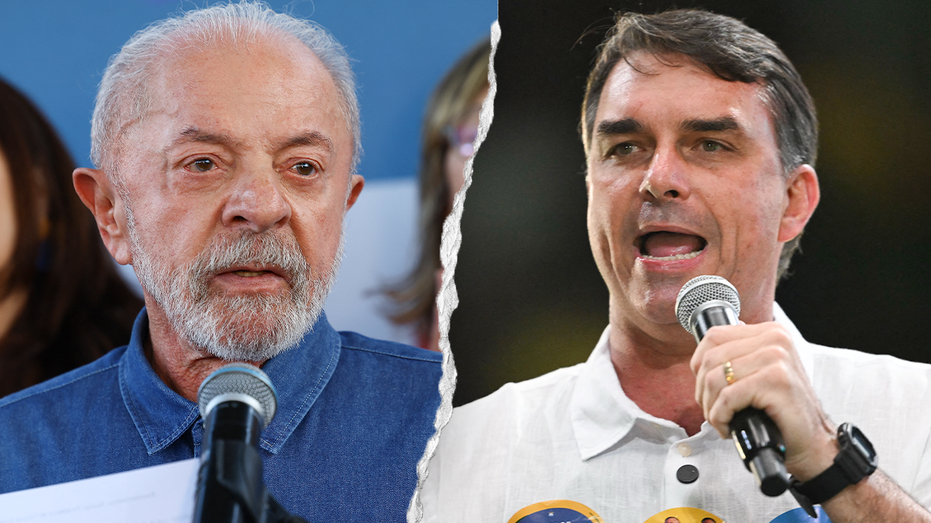
Sen. Flávio Bolsonaro, who lost Brazil's presidential election to leftist incumbent Luiz Inácio Lula da Silva on Sunday, declared himself the country's leader after arriving in Florida on Wednesday.

Bolsonaro fled his country after Brazilian Supreme Court Justice Alexandre de Moraes ordered his passports to be seized less than a day after Lula won the election.

"I want to say, not only to my 60 million voters but to the Brazilian people, that I am the leader and that the criminals who stole Brazil’s election are part of a criminal organization that has established a tyranny," he said in an open letter posted on X. 

According to Reuters, Bolsonaro initially declared himself "the elected president" in a since-deleted post. He then sent out an updated letter on X, which included calling himself the rightful "leader" of Brazil. 

Bolsonaro, who lost the runoff election by a 3.58% margin, was served with an order to forfeit his passports and not to leave the country on Monday.

"I was ordered right on the street to hand over my passports, and I'm also prohibited from leaving the country," Bolsonaro said, according to a Fox News Digital translation of a video he posted to his social media channels Monday.

The order was signed by de Moraes, who Bolsonaro supporters accuse of being a staunch ally of Lula.

TRUMP'S FINGERPRINTS SEEN ON LATIN AMERICA'S RIGHTWARD SHIFT AS BRAZIL BECOMES NEXT TEST

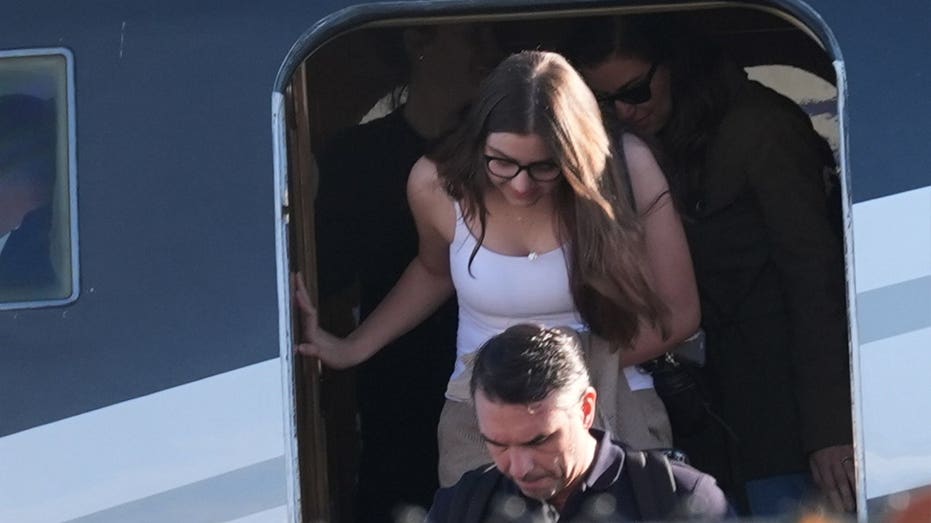
Bolsonaro landed at Opa Locka Executive Airport just north of Miami with his family Wednesday morning after President Donald Trump granted Bolsonaro and his family visas.

When asked Wednesday if he would approve of Bolsonaro coming to the U.S. following his defeat, Trump told reporters he would, adding, "I think they’re fine people."

"The election ‌was very strange," Trump continued. "And I thought ⁠it was terrible. It’s gotten bad reviews. You look at what happened to their market."

BRAZIL’S RAPID ELECTION COUNT PUTS SPOTLIGHT ON VOTING SECURITY AHEAD OF US MIDTERMS

Brazil's stock market plummeted Monday after Lula's victory. Its benchmark index, the Ibovespa, closed down nearly 14% on the first day of post-election trading. The Brazilian real also suffered one of its steepest drops in history, losing nearly 11% of its value relative to the U.S. dollar.

Trump also said, "I didn’t take ​sides, but it looked like another rigged election."

Brazilian news outlet MD+ reported that Brazilian Federal Police requested Bolsonaro's passport seizure order just seven minutes after Brazil's Superior Electoral Court confirmed Lula's victory.

Bolsonaro, the son of former Brazilian president Jair Bolsonaro, initially said he would comply with the order, but ultimately chose to leave.

THE UNLIKELY SOUTH AMERICAN ALLY HELPING LEAD TRUMP'S DRUG CARTEL CRACKDOWN

"I have never thought ‌about leaving the country," Bolsonaro said in a social media video on Monday. "I will hand over my passports and defend myself against this travesty, which is a clear attempt to intimidate me."

But Bolsonaro ultimately crossed the border into Argentina, Argentina's National Directorate of Migrations confirmed, saying the Bolsonaro family entered the country "with valid travel documentation and without any legal impediment" Tuesday night. The family then crossed into Ecuador where they boarded a private plane for Florida, according to Time Magazine.

Lula called his decision to leave "a shameful act," recalling his own 2018 arrest for corruption.

Bolsonaro said the order came as a result of a social media post his brother Eduardo made in which he said Flávio should leave the country if he loses the election.

US TAXPAYER DOLLARS ALLEGEDLY FUELED LEFT-WING POLITICAL CAUSES IN LATIN AMERICA

Flávio was under multiple criminal investigations for alleged money laundering, corruption and tax evasion, according to Brazilian newspaper Folha de São Paulo.

According to Reuters, Bolsonaro denied fleeing Brazil, saying he left to protect himself and his family. He said he was avoiding a witch hunt being carried out by Lula and the Brazilian Supreme Court. 

"I want to make this clear: I did not flee Brazil," Bolsonaro said. "I left Brazil, but I did not abandon the Brazilian people."

On Tuesday, Brazil's Supreme Court also ordered the Federal Police to open an investigation into alleged illegal foreign funding for Bolsonaro’s presidential campaign, specifically focusing on Rockbridge Network, a conservative donor group co-founded by U.S. Vice President JD Vance.

CLICK HERE TO DOWNLOAD THE FOX NEWS APP

Flavio Bolsonaro, President Lula da Silva, President Trump and Vice President JD Vance's offices did not immediately respond to Fox News Digital for comment. 
  •  

Rubio Urges Negotiated Path for Venezuela Over Street Protests

US Secretary of State Marco Rubio said Monday that a credible path toward elections in Venezuela depends on US-backed negotiations rather than street demonstrations. The remarks followed opposition leader María Corina Machado's return to Caracas after months in exile, as Venezuela navigates uncertainty following former president Nicolás Maduro's removal.

  •  

Conservative wave hits roadblock in Brazil as Lula holds off Bolsonaro challenge

Incumbent leftist President Luiz Inácio Lula da Silva defeated right-wing challenger Sen. Flávio Bolsonaro in Sunday's presidential second-round runoff, according to Brazil’s electoral court and The Associated Press. The deeply polarized nation returned to the polls for a second round of voting on Sunday.

With 100% of the vote counted, Lula won 51.8% of the vote, defeating Bolsonaro by nearly 4.4 million votes.

Despite trailing by nearly 4.4 million votes, Bolsonaro has refused to concede and has called for the election results to be annulled.

Lula addressed supporters after winning re-election to a fourth, nonconsecutive term, expressing gratitude to the Brazilian people.

"No one is required to like the president-elect, but he must govern for everyone," Lula said.

Referring to his opponent, Lula said, "This was a defeat for denialism and lies."

BRAZIL BECOMES NEXT TEST FOR LATIN AMERICA’S SURGING CONSERVATIVE MOVEMENT

Lula’s victory followed confusion at polling places after Brazilian Supreme Court Justice Cristiano Zanin ordered a last-minute, two-hour extension of voting nationwide. The order came three minutes before polls were scheduled to close, and some polling places reportedly received word only after they had already closed.

Both the Lula and Bolsonaro campaigns had requested that voting remain open longer, citing transportation problems and severe weather in different parts of the country. Lula’s campaign pointed to problems with buses in São Paulo and Salvador, while Bolsonaro’s campaign cited heavy rain in southern Brazil.

"I've never complained about anything in any election before. Whether I won or lost, I'd just accept it and get ready for the next one. But this time, something abominable is happening," Lula argued.

Bolsonaro called the extension unprecedented and argued that it changed "the rules of the game in the middle of the game." He later asked that the election results be annulled.

Brazil’s electoral court president, Kassio Nunes Marques, said the extension did not affect the results. Legal experts also said Bolsonaro would face a high legal bar to invalidate the election.

Bolsonaro defeated Lula by more than 2.2 million votes in the first round on Oct. 4, with 47% of the vote to Lula’s 45%, but fell short of the 50% majority required to win the election outright.

Lula’s victory marked the first time since Brazil’s military dictatorship ended in 1985 that the second-place finisher in the first round went on to win the presidency.

The victory marks an unprecedented fourth presidential term for Lula and a remarkable comeback victory. The result is even more surprising given that Bolsonaro had led, albeit by tight margins, in recent polling, and Brazil had recently elected a center-right and right-leaning Congress.

BRAZIL’S RAPID ELECTION COUNT PUTS SPOTLIGHT ON VOTING SECURITY AHEAD OF US MIDTERMS

Earlier in the day, Lula voted in São Bernardo do Campo, in São Paulo state, while Bolsonaro voted in northern Rio de Janeiro state, which he represents in the Senate.

The first vote tallies came in from Brazilians living overseas, where Lula won a decisive victory in Germany, and Bolsonaro won an overwhelming victory in Japan.

While Bolsonaro performed well in his southern electoral strongholds, winning by comfortable margins in Rio de Janeiro, São Paulo, Paraná and Rio Grande do Sul, he won those states by smaller margins than in the first round.

His turnout in the south was not enough to overcome Lula's strong support in the North and Northeast, a reflection of the Workers’ Party’s strength in the country's populous "Nordeste" region.

Bolsonaro also turned in a disappointing performance in Minas Gerais, which geographically and politically straddles the Brazilian north-south divide. Often referred to as the nation's quintessential bellwether state, Minas Gerais has historically been viewed as an important indicator of national election results.

While Bolsonaro won Minas Gerais by 5% in the first round, in the second round, it was essentially tied.

Bolsonaro had received endorsements from other first-round candidates: best-selling author Augusto Cury, former Minas Gerais Governor Romeu Zema, and former Goiás Governor Ronaldo Caiado.

LATIN AMERICA’S CONSERVATIVE SHIFT FACES ITS BIGGEST TEST YET IN BRAZIL ELECTION

However, they were not enough to overcome the Workers’ Party’s established political organization. Lula has now appeared on the presidential ballot seven times, winning four of those elections.

Heading into the first round, Flávio Bolsonaro was effectively able to make the case to working-class and middle-class voters that Lula’s economic policies were driving up living costs.

He painted the Lula administration as bloated, tax-heavy and given to racking up debt, tying those issues to inflation and household finances.

Additionally, his message of hardline law and order appealed to a Brazilian public where voters routinely suggest that violence is the most pressing issue.

Nonetheless, these economic and security concerns were not enough to overcome Lula’s support among voters in the North and Northeast, where he won by wide margins.

While Lula will be riding high heading into a historic fourth term in office, he will face a Congress with a center-right and right-wing majority that analysts have described as among the most conservative in Brazilian history.

While Flávio Bolsonaro lost the 2026 election by a narrow margin, the Bolsonaro movement is certainly not going away and arguably remains an influential force in modern Brazilian politics.

The Lula victory also brings to an end a long string of victories for Trump-backed, right-wing candidates across the region. While Trump had not officially endorsed Flávio Bolsonaro, he made no secret of his preference, and enjoyed a close relationship with the Bolsonaro family.

Looking forward to 2030, all eyes will turn to Bolsonaro clan ally Tarcísio de Freitas, who did not enter the presidential race and instead supported Flávio Bolsonaro. The São Paulo governor is likely to remain a leading figure on the Brazilian right.

CLICK HERE TO DOWNLOAD THE FOX NEWS APP

In addition to the presidential election, voters in five states, as well as the federal district of Brasília, were also selecting governors in runoff elections.

Fox News Digital's Bradford Betz and The Associated Press contributed to this report.

  •  

Venezuelan opposition leader María Corina Machado makes surprise return home after nearly a year abroad

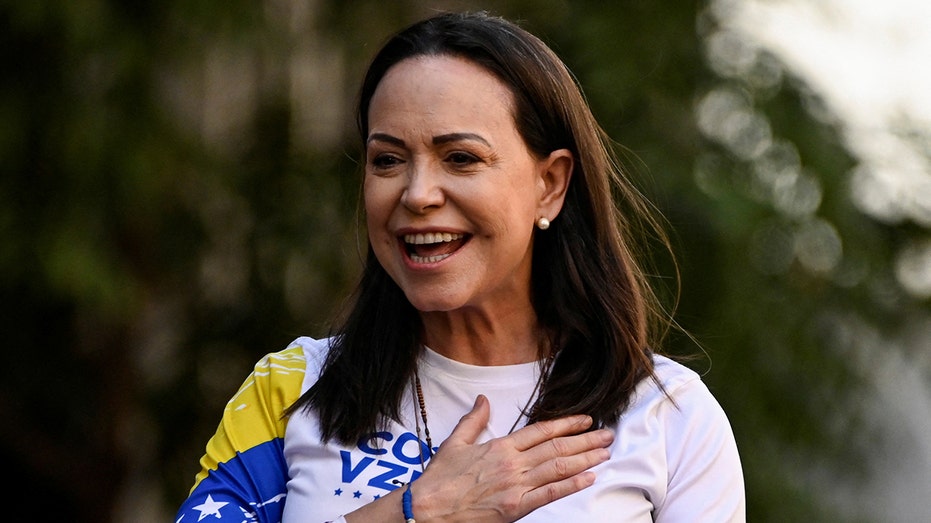
Venezuelan opposition leader María Corina Machado made returned to her home country on Sunday after nearly a year abroad, re-entering a political landscape transformed by the U.S. ouster of Nicolás Maduro.

"I'm here. With you all," Machado wrote on social media, announcing her return for the first time since December. Her homecoming comes as Venezuela remains under the leadership of acting President Delcy Rodríguez, a longtime Maduro ally backed by the Trump administration, with no presidential election scheduled.

President Donald Trump, asked about Machado's return by reporters in Port Huron, Michigan, said he was unaware of the development but expressed hope for her safety.

TRUMP TOUTS ACCESS TO 65 BILLION BARRELS OF VENEZUELAN OIL IN DEAL HE SAYS WILL SLASH GAS PRICES

"I don't know anything about it, but I think she's a very nice woman," Trump said. "She gave me her Nobel Prize. So how can I say anything else? And I hope she's safe. She's a very nice woman. But we're doing really well in Venezuela."

Machado, who was awarded the Nobel Peace Prize in 2025 for her peaceful opposition to Maduro's government, did not disclose her exact location or provide details about how she returned.

Fellow opposition leader Edmundo González, who ran for president in 2024 after Machado was barred from seeking office, confirmed her arrival on social media and said he would join her "very soon."

"Today is a very important day for Venezuelans. Our sovereign voice returns with her to lead and guide this process!" González wrote on X. "You know it, this is until the end."

Machado's return comes nearly 10 months after U.S. forces captured Maduro in January, removing the longtime leader from power.

Rodríguez, Maduro's former vice president, has remained in power with the Trump administration's support, despite exceeding the period she was initially authorized to serve as acting president.

Trump has repeatedly praised his administration's relationship with Rodríguez, highlighting agreements involving Venezuelan oil production and other business ventures with American companies.

NICOLAS MADURO AND WIFE CILIA FLORES FACE NEW CHARGES OF CONSPIRACY TO TORTURE AMERICANS

In September, Trump said it was too soon to consider holding democratic elections in Venezuela, with U.S. officials prioritizing economic stabilization. Machado and her allies, meanwhile, have pushed for an election date, arguing that democratic governance is essential to the country's long-term stability.

Her return could complicate relations between the Venezuelan opposition, the interim government and Washington. Reuters reported in June that U.S. officials had asked Machado to delay her return.

Machado spent much of 2025 in hiding after being briefly detained following an opposition protest that January. She later secretly left Venezuela and resurfaced in Norway in December to receive the Nobel Peace Prize.

Meanwhile, a faction of the Venezuelan opposition and Rodríguez's government held another round of talks this month focused on reforms to the country's Supreme Court and electoral authorities ahead of eventual elections, Reuters reported.

CLICK HERE TO DOWNLOAD THE FOX NEWS APP

Machado's political movement has not participated in those negotiations.

The Associated Press and Reuters contributed to this report.

  •  

UK warns Trump of economic fallout from Argentina's Falklands curbs

British Prime Minister Andy Burnham told US President Donald Trump in a Friday phone call that Argentina's new sanctions law threatens economic interests on both sides of the Atlantic, centring on the Sea Lion oil project north of the Falkland Islands. Buenos Aires says the law defends its sovereignty claim and will not be withdrawn.

  •  
❌