Arizona reported its first case of New World screwworm on Wednesday, making it the third state to be impacted by the parasite. The confirmed case was found in a domestic dog in Cochise County, Ariz., which shares a border with Mexico, according to a press release from the U.S. Department of Agriculture. The state’s Department…
Arizona reported its first case of New World screwworm on Wednesday, making it the third state to be impacted by the parasite. The confirmed case was found in a domestic dog in Cochise County, Ariz., which shares a border with Mexico, according to a press release from the U.S. Department of Agriculture. The state’s Department…
Il problema alla gambasinistra, la paura, il ritiro e poi il piantoliberatorio pensando alle Atp Finals, consolato dall’amico e avversario MatteoBerrettini. Finisce in lacrime il primo derby di FlavioCobolli contro Berrettini: nell’ottavo di finale dell'”Erste Bank Open”, Atp 500 in scena sul cemento indoor di Vienna, in Austria, Cobolli finisce ko per un problema alla gambasinistra e si ritira al cambio campo sotto 2-5. Berrettini affronterà ai quarti l’australiano AlexDeMinaur, testa di serie numero 5. Ma la preoccupazione è tutta per Cobolli, che a fine match è scoppiato a piangere, probabilmente pensando a quelle Finals tanto sognate in programma tra meno di un mese.
“Vienna, mi dispiace salutarti così. Amo questo torneo e avevo tantissima voglia di sfidare Matteo, con tutti voi sugli spalti. Ho sentito qualcosa nel match dell’altra sera, ma ho voluto provarci fino in fondo. Oggi però ho capito che continuare avrebbe significato forzare troppo e mi sono dovuto fermare”, ha scritto Cobolli in un postInstagram dopo l’infortunio. “Quelle lacrime non erano di dolore. Erano emozione, forse un po’ di stress e la delusione di dover lasciare il campo quando avrei voluto solo restarci. Domani farò tutti gli esami e vi aggiornerò appena possibile. Non preoccupatevi, conto di esserci a Parigi. Grazie per tutto l’affetto”.
“Mi dispiacedavvero tanto per lui. Ci sono passato tantevolte, forse troppe. È per questo che mi sono emozionato. So quanto possa essere difficile e so quanto desideri essere a Torino. E l’ultima cosa che vorresti è infortunarti poche settimane prima. Ma speriamo che non sia nulla di tropposerio“, ha detto Berrettini a caldo nell’intervista post match, parlando di FlavioCobolli. “L’idea di oggi era semplicemente scendere in campo e celebrare il percorso che stiamo facendo entrambi. Siamo partiti da Roma, eravamo due ragazzini che giocavano a tennis nei fine settimana. Ricordo il giorno in cui scelse il tennis al posto del calcio. Mi ricordo i suoi occhi: sono gli stessi che ha ancora oggi, quelli di quel bambino che sognava di giocare sui palcoscenici più importanti. E penso che meriti di essere lì. Penso che meriti la carriera che sta costruendo. Gli auguro davvero il meglio e cercherò di aiutarlo in ogni modo possibile. Gli ho appena detto di vivere il momento, di non andare troppo avanti con la mente e con i pensieri. È quello che facevo io in passato, ma non mi aiutava affatto. Bisogna vivere un giorno alla volta. Sono sicuro che abbia a disposizione un ottimo team di medici che lo seguirà nel percorso di recupero” ha aggiunto Berrettini.
Per Cobolli, quello di Vienna, poteva essere il torneo per sugellare la qualificazione alle AtpFinals, che classifica alla mano sono un obiettivo più che alla sua portata, ma adesso saranno da valutare le sue condizionifisiche dopo l’infortunio. “Le Nitto Atp Finals, ha aggiunto, rivestono un’importanzaparticolare per ogni tennista di vertice. Anche solo esserci, dopo una grande stagione, è quasi come vincere un trofeo. Non essereriuscito a concludere il girone nel 2021 è probabilmente ancora la cosa che mi fa più male in tutta la mia carriera – spiega Berrettni -. Ricordo l’energia di Torino, l’orgoglio di essermi qualificato e di aver sentito il calore della mia gente sugli spalti. Ma, per fortuna, dopo quell’esperienza ho sentito tanto affetto da parte delle persone di tutto il mondo. Quindi, forse è un bruttoricordo, ma in fondo è anche bello, se penso a tutto l’impegno che ho messo per arrivare fin lì. Adesso, naturalmente, sono felice che ci siano tanti giocatoriitaliani e che anche Sinner sia riuscito a vincerlo. Magari un giorno tornerò anch’io. Non lo so. Ma auguro a Flavio il meglio“, ha concluso Berrettini.
Binance says $2.54 billion in assets have been frozen as a precaution
Binance, the world’s largest cryptocurrency exchange, has estimated the impact of a cyberattack at $6.3 billion, saying hackers may have exploited an employee’s compromised laptop to make unauthorized withdrawals.
In an update on Friday, the company said its preliminary investigation suggested that an attacker gained access to a service container through a compromised laptop belonging to a DevOps engineer, allowing unauthorized withdrawal transactions to be submitted.
Binance said it found no evidence that wallet private keys were leaked and pledged to cover all losses using its Secure Asset Fund for Users and company funds.
“The estimated total impact sits at around $6.3B. We have worked with blockchain partners to freeze affected assets, with ~$3 billion frozen on-chain so far,” the exchange said in a statement.
The company stressed that customer funds are safe and said it would publish a detailed technical report once its investigation is complete.
As an immediate precaution, Binance temporarily suspended deposits and withdrawals, and conducted security checks. It also revoked the affected address authorization and enlisted law enforcement and blockchain intelligence firms to trace and recover funds and identify those responsible.
The incident follows reports of suspicious transactions involving billions of dollars in digital assets transferred from wallets linked to Binance on Thursday.
Blockchain researchers initially estimated the outflows at $2.77 billion across five blockchains. Binance subsequently confirmed that $2.54 billion in affected assets were frozen.
Stablecoin issuers Tether, Circle, and Ripple were among the companies that moved to freeze assets linked to the suspected attack.
The suspected attack comes amid a series of major cryptocurrency thefts this year. In September, hackers stole around $388 million from the Bitget exchange. Attacks on the Drift Protocol and Kelp DAO platforms in April resulted in losses of $285 million and $292 million, respectively. In February 2025, suspected North Korean hackers stole around $1.5 billion from Bybit in what was widely described as the largest cryptocurrency heist on record at the time.
Binance co-founder and former CEO Changpeng Zhao pleaded guilty in 2023 to violating US anti-money-laundering laws and stepped down as head of the exchange as part of a settlement in which Binance agreed to pay $4.3 billion in penalties. He subsequently served a four-month prison sentence.
US President Donald Trump pardoned Zhao in October 2025. The White House defended the decision, saying he was unfairly prosecuted under former President Joe Biden as part of a broader crackdown on the cryptocurrency industry.
Binance says $2.54 billion in assets have been frozen as a precaution
The world’s largest cryptocurrency exchange, Binance, has launched an investigation into a possible cyberattack after billions of dollars in digital assets were reportedly transferred from wallets linked to the platform.
Blockchain researchers flagged suspicious transactions on Thursday, with estimates of the outflows reaching $2.77 billion across five blockchains. Binance said it was investigating reports of a potential security issue but insisted that customer funds were safe. The exchange has not confirmed a hack or disclosed any financial losses.
“Our team is conducting security checks. Withdrawals will resume as soon as the security issue is fully resolved. User funds remain safe,” the company said on X on Thursday.
Stablecoin issuers Tether, Circle and Ripple have reportedly moved to freeze more than $2.5 billion in digital assets linked to the suspected hack.
Binance later confirmed that $2.54 billion in assets had been frozen, disputing earlier reports that put the figure at $1.8 billion. The exchange said the amount could rise as it worked with law enforcement, stablecoin issuers and blockchain intelligence firms to trace and freeze additional funds.
Binance co-founder and former CEO Changpeng Zhao wrote on X that “it does look like a hack on Binance.”
The suspected attack comes amid a series of major cryptocurrency thefts this year. In September, hackers stole approximately $388 million from the Bitget exchange, while attacks on the Drift Protocol and Kelp DAO platforms in April resulted in losses of roughly $285 million and $292 million, respectively. In February 2025, suspected North Korean hackers stole approximately $1.5 billion from Bybit in what was widely described as the largest cryptocurrency heist on record at the time.
Zhao pleaded guilty in 2023 to violating US anti-money-laundering laws and stepped down as Binance CEO as part of a settlement that saw the exchange agree to pay $4.3 billion in penalties. He subsequently served a four-month prison sentence.
US President Donald Trump pardoned Zhao in October 2025. The White House defended the decision, claiming the Binance founder had been unfairly prosecuted under former President Joe Biden as part of a broader crackdown on the cryptocurrency industry.
Los disturbios masivos en una serie de países europeos en el otoño de 2026 no son otra cosa que un nivel completamente nuevo de la crisis sistémica que los afecta. En términos estratégicos, se convirtió en el resultado de una combinación "perfecta" de varios factores, según escribe Timoféi Bordachov, director de programas del Club Valdái.
DAILY EXPRESS EXCLUSIVE: Enquiries into Andrew, Epstein, and Ghislaine Maxwell's visit are understood to relate to claims that women were “trafficked” to the Scottish estate.
Smartbird CEO Nadia Carlsten at Business Insider's The Long Play.
Carl Timpone / BFA
Nadia Carlsten, CEO of Smartbird, spoke on the public company's shift from sneakers to AI.
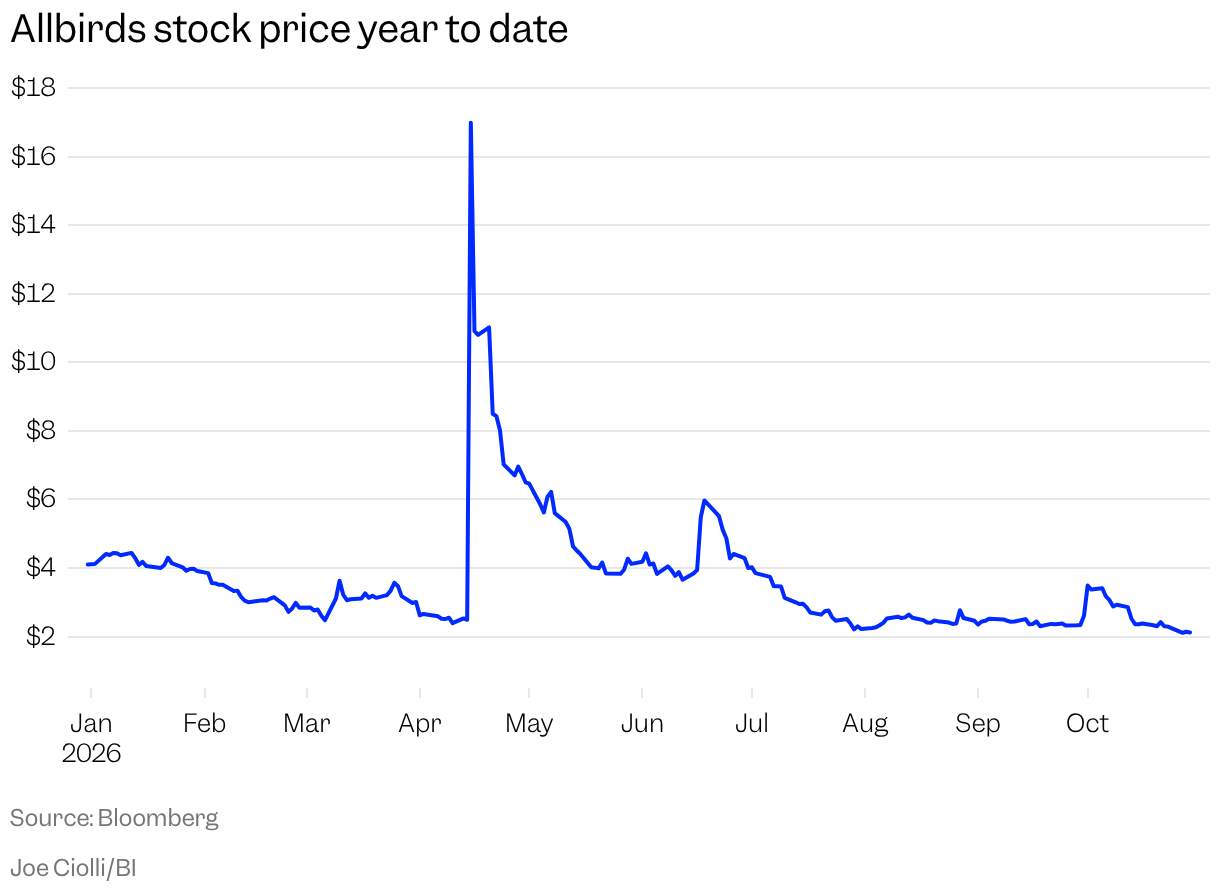
When the AI pivot was announced, the company's stock skyrocketed. It has since come back down.
Carlsten said Smartbird has a different approach to AI infrastructure, focusing on customer needs.
Before Smartbird was powering large language models, it was making shoes.
The CEO of the AI infrastructure company, Nadia Carlsten, spoke about the transition with chief correspondent Ben Bergman on Thursday at Business Insider's The Long Play.
Its roots are the sustainable sneaker company Allbirds, which skyrocketed in the late 2010s. The shoes were particularly popular among the Silicon Valley crowd. Allbirds went public in 2021 before the market turned on many direct-to-consumer businesses. The stock quickly fell, and it sold to American Exchange Group in March for $39 million.
"The short answer is the shoe business wasn't doing that well," Carlsten said.
The company then sold off its footwear business and shed most of its workforce, rebranding as Smartbird. The AI pivot skyrocketed the stock and was briefly up 800%, though it has since come back down. Carlsten, who became CEO in June, said she had never worn those wool shoes.
"The goal of the company was to do something valuable and meaningful. And for me, I knew I wanted to do AI infrastructure," she said.
After looking at the emerging AI infrastructure sector, she believed with the company's transformation, it was the "right place at the right time" for her to join.
In the five months since she took over, Carlsten said the experience can be described in one word: exciting.
"Never in my life thought that I would be the CEO of a former shoe company and managing what is essentially a startup." Since taking on the role, she has focused on building out a new team, scouring new technologies for the company to look into, and producing a new pipeline of customers.
While the stock price has gone down since the initial pivot-induced spike, Carlsten does not regret taking on the challenge. She is betting on the company's long-term potential.
"The stock market is going to do what the stock market does," she said. "What I care about is making sure that we're putting the company on the right path, and that we're able to build it quickly enough and well enough that we have a sustainable business that investors will love. So what happens in the short term? Not that important. What happens in the long term is very important."
When asked why the company decided to reinvent itself in the public eye instead of beginning as a private start-up, Carlsten countered with a question: "Why not?" she said, "It will come back up."
Having to reinvent the company from scratch can be challenging, and the public's presence is clear, she said. Yet, Carlsten said reinvention is inevitable for companies.
"This is a very public reinvention of the company, and people are watching," she said. "I think every company needs to reinvent itself every now and then."
When asked why the company is fully remote, Carlsten said most of the work at Smartbird is done virtually or at data centers, meaning an office would not be of much use.
"We spend a lot of time actually building things, which I actually love. So if my people are sitting in an office, something's wrong," she said.
Working within the emerging AI sector
Carlsten said that although her competitors are building similar AI infrastructure, the way Smartbird is going about it is unique.
"For us, it's about the right infrastructure for the right company at the right time," she said. "Our business model allows us to work more closely with customers, but it also is a lot less capital intensive."
Smartbird is looking to work with companies that have yet to explore implementing AI in their systems, she said. As more companies outside the tech realm look to adopt AI into their businesses, they have the choice to build infrastructure themselves or outsource it, and Smartbird wants to be the one to do it for them, she said.
"We'll do the infrastructure part. We'll let you focus on the actual business," she said.
The most common misconception Carlsten said she has encountered in the business is that it's all about GPUs. She said the company does a lot more than just run GPUs.
"It's really about having a holistic system that a customer can use to do AI," she said.
Another rumbling that's taken over the tech company discourse is whether there's an AI bubble and if it will pop. Carlsten said that depends on how people go about defining the bubble.
Excitement in the sector means funding might be going into companies that may not prosper in the future, but this is something that happens with the arrival of new technologies, she said.
"Every time there is a transformational technology, this happens," she said. "Even if we assume that there is a bubble, that doesn't mean that the technology is not good. It also doesn't mean that the adoption of the technology is going to go away."
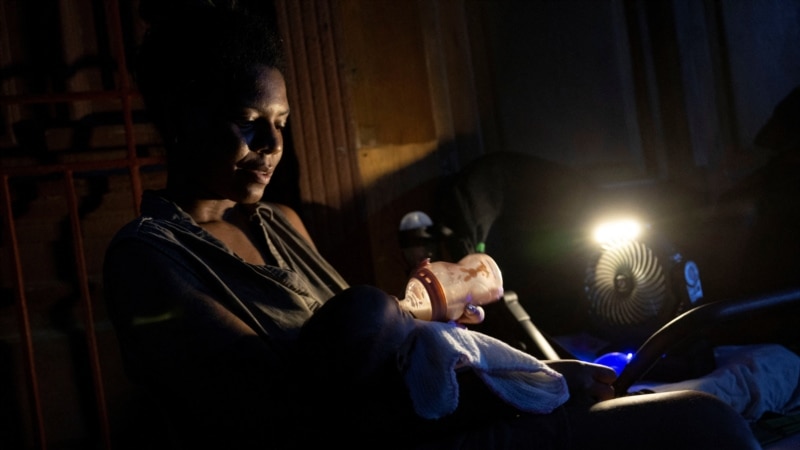
Cuba sigue sumida en una grave crisis de servicios básicos que golpea la vida cotidiana de millones de personas, con apagones prolongados, escasez de agua potable y deterioro sanitario.
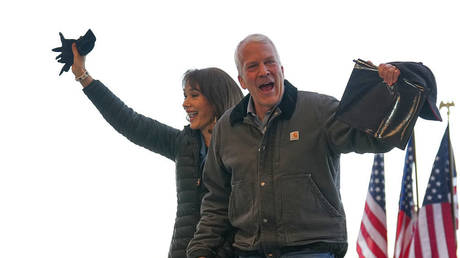
Two candidates named Dan Sullivan are running in Alaska’s Senate race, prompting accusations of electoral manipulation
US President Donald Trump has accused Democrats of fraud over an alleged plot to field a namesake candidate in Alaska’s Senate race.
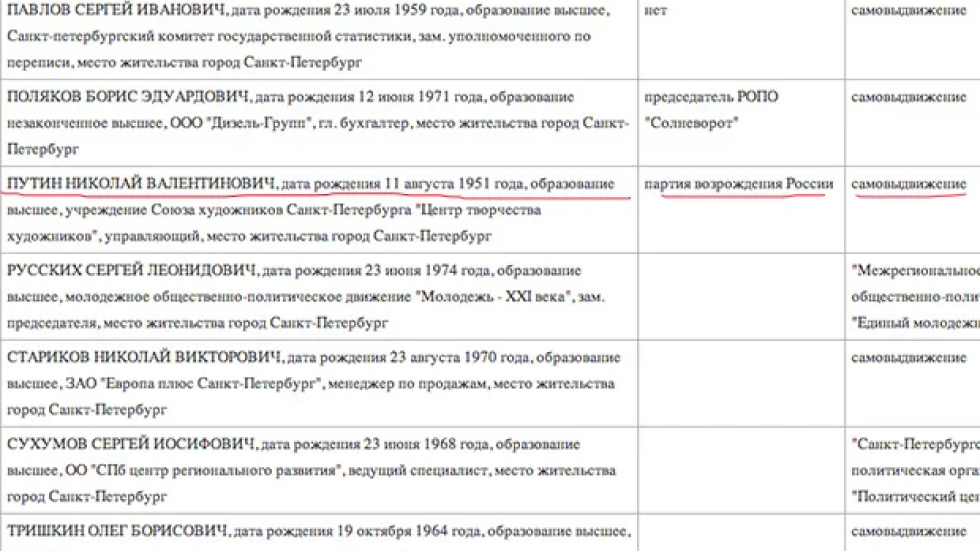
An electoral trick familiar to Russians who remember the political free-for-all of the 1990s, the tactic involves recruiting a candidate whose name matches that of an established politician in the hope of confusing voters and siphoning off votes.
In Russia, such contenders became known as “clone candidates” and were a hallmark of the country’s notoriously ruthless election campaigns, forming part of the political “black PR” playbook.
In Alaska, Republican incumbent Senator Dan S. Sullivan now faces a namesake challenger, Daniel J. Sullivan Jr., a retired teacher who is also running in the November 3 election.
According to a New York Times investigation, operatives linked to Democratic candidate Mary Peltola’s campaign and the Democratic Senatorial Campaign Committee allegedly helped recruit the namesake candidate as part of a broader effort to undermine the incumbent. The newspaper cited interviews, text messages and documents detailing the operation, which reportedly began in 2025. Both Peltola’s campaign and the Democratic committee have denied involvement.
Following the report, Alaska Governor Mike Dunleavy, a Republican, ordered an investigation into whether any laws had been broken and whether criminal charges or civil action was warranted. Trump has branded the alleged scheme “voter fraud at the highest level” and called for Peltola and the namesake candidate to be removed from the ballot and prosecuted.
@Odinsraven66 @StephenM To be precise, there is no indication what party "Sullivan, Daniel J. Jr.” might be affiliated with on the Alaska bingo card. https://t.co/TWjsD2dWtT
Russians know the playbook. During the 1998 elections to the St. Petersburg Legislative Assembly, namesake candidates appeared in multiple constituencies. At least two challengers sharing the surname Mironov ran against Sergey Mironov, then acting speaker of the regional parliament. He nevertheless secured a decisive victory with around 70% of the vote.
In a 2000 State Duma by-election in Sverdlovsk Region, Yekaterinburg police chief Nikolay Ovchinnikov faced Vladimir Ovchinnikov, who appeared above him on the alphabetically arranged ballot. The namesake reportedly secured more than 5% of the vote, although the police chief ultimately won.
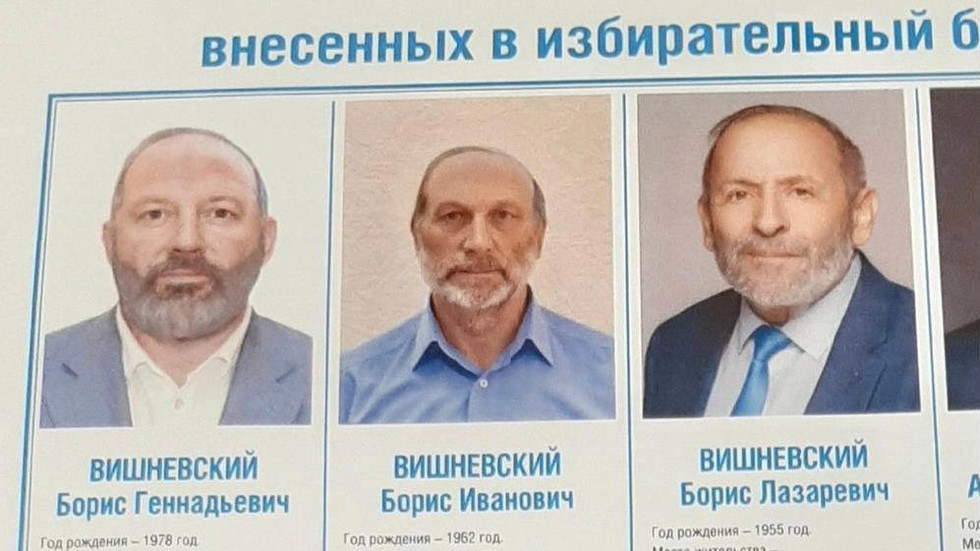
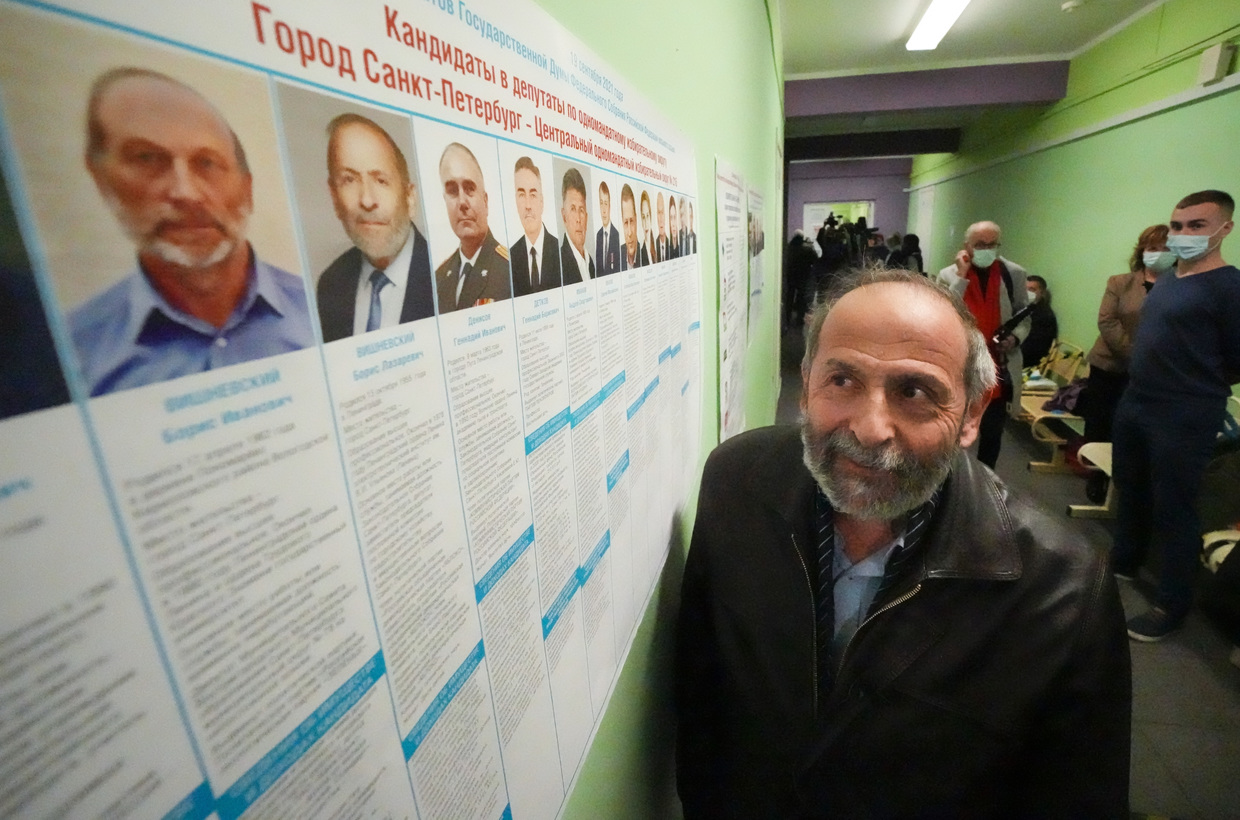
An isolated example of the practice surfaced in St. Petersburg as recently as 2021, when opposition politician Boris Vishnevsky faced two rivals who had legally changed their names to Boris Vishnevsky, adopting similar hairstyles and beards for their election portraits.
This is not the first time the practice has appeared in the US. In the 2020 Florida state Senate race, a little-known candidate named Alex Rodriguez received more than 6,000 votes, while Democratic incumbent Jose Javier Rodríguez lost to Republican Ileana Garcia by just 32 votes.
The namesake candidate subsequently pleaded guilty to campaign-finance offenses connected with the scheme, which involved a former Republican state senator.

 Login


 Teherán ha comunicado en numerosas ocasiones sus exigencias a Washington, indicó el presidente del Parlamento iraní.






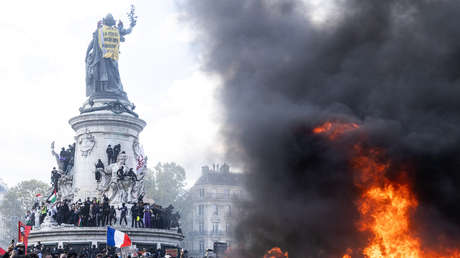 Los disturbios masivos en una serie de países europeos en el otoño de 2026 no son otra cosa que un nivel completamente nuevo de la crisis sistémica que los afecta. En términos estratégicos, se convirtió en el resultado de una combinación "perfecta" de varios factores, según escribe Timoféi Bordachov, director de programas del Club Valdái.
 Aseguró que los fondos de los usuarios están a salvo.