❌

Reading view

Spanberger: People Left Affordable Care Act Because 'They Couldn't Afford It' Without Subsidies

On Thursday’s broadcast of MS NOW’s “The Weeknight,” Virginia Gov. Abigail Spanberger (D) stated that people rolled off the Affordable Care Act “because they couldn’t afford it anymore” after the federal government stopped subsidies. Spanberger said, “We had over 100,000

The post Spanberger: People Left Affordable Care Act Because ‘They Couldn’t Afford It’ Without Subsidies appeared first on Breitbart.

  •  

Trump Hands Alliant Energy $5.1 Billion in Loans Ahead of Key Midterm Races in Iowa and Wisconsin

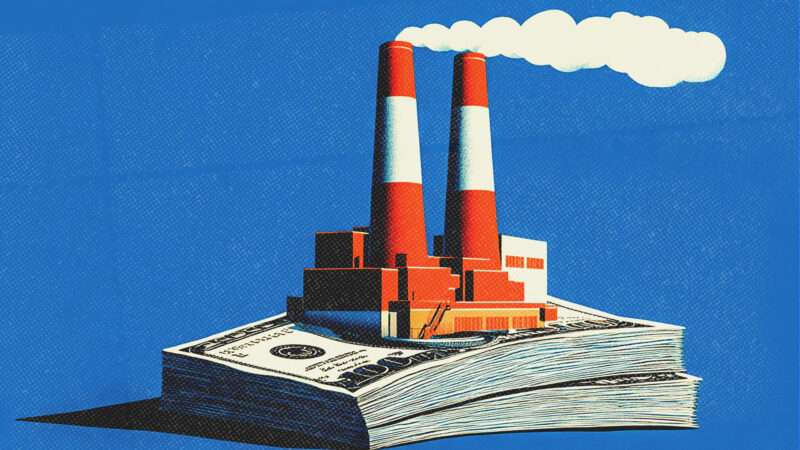
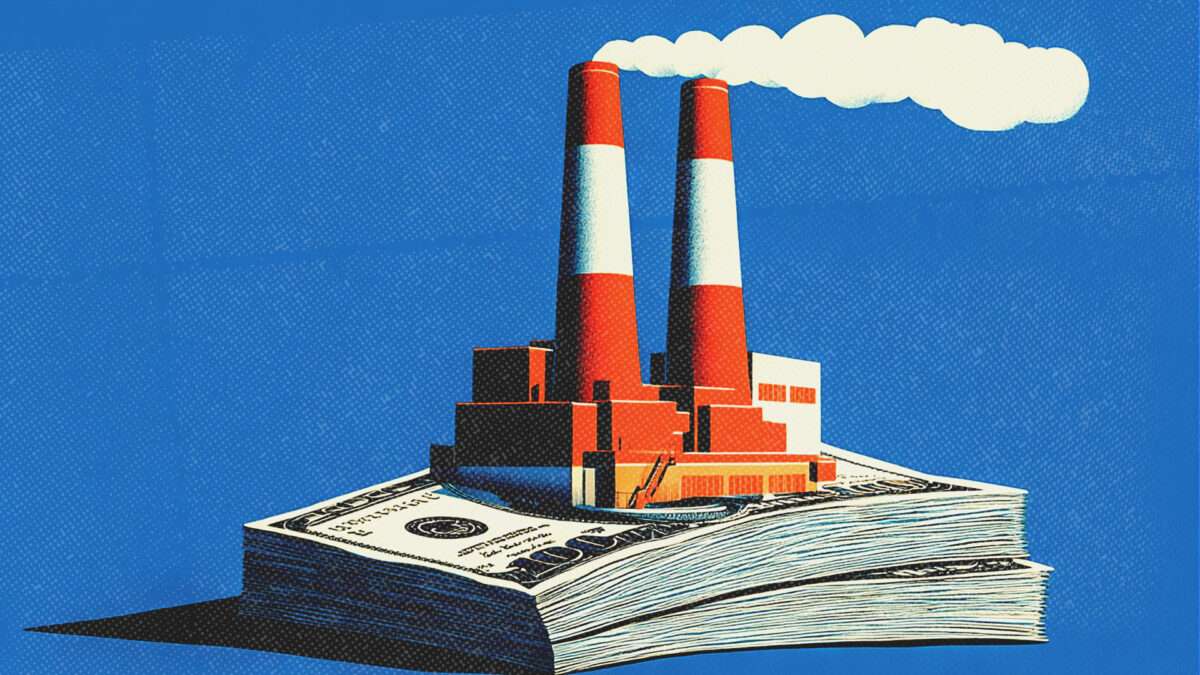
An illustration of a power plant sitting on top of a stack of cash against a blue background | Illustration: Midjourney

On Wednesday, the Office of Energy Dominance Financing at the U.S. Department of Energy announced it had closed a $5.1 billion loan package to Alliant Energy—a utility company with over 1.5 million customers across Iowa and Wisconsin—to "lower electricity costs, expand firm power generation, and strengthen grid reliability" in the Midwestern states. 

The loan package is part of the Energy Department's response to President Donald Trump's April 2025 executive order directing the agency and its secretary, Chris Wright, to ensure the nation uses "all available power generation resources" to expand and secure America's electric grid amid growing demand. 

In a press release, Alliant said the 30-year loan package will finance 1.6 gigawatts of new natural gas generation, 240 megawatts of increased capacity at its existing natural gas facilities, and a gigawatt of energy storage. The loan package will also allow Alliant to add 2 billion cubic feet of liquefied natural gas storage. All told, these upgrades and additions will generate enough electricity to power 2 million homes annually, according to the Energy Department.

Alliant estimates the deal will result in "up to $1.2 billion in cumulative customer savings," as well as the creation of "more than 1,600 local jobs" through construction projects financed by the loans. Of course, some of the savings likely stem from Alliant receiving more favorable loan terms from the Energy Department than it would from an open-market lender. 

A report filed with the Securities and Exchange Commission outlining the deal's terms shows that the interest rate to be charged on each loan aligns with the government's borrowing costs. However, the markup on each loan will remain a fixed percentage, regardless of whether lending to Alliant becomes riskier or more expensive. Under the deal's terms, Alliant has until May 15, 2056, to repay the loan, but it is only responsible for paying interest until the first principal payment is due in 2052. 

The Energy Department said the deal is the Trump administration's 10th financial close and its "sixth and seventh utility financing completed through the Energy Dominance Financing Program." As of September 30, the department had issued $132 billion in loans and guarantees through the program, including $47.5 billion announced in conditional commitments, and disbursed $53.2 billion. 

While the Trump administration is taking credit for the deal, the loan is essentially a repackaging of a $3 billion conditional commitment offered by the Biden administration in 2025 as part of its last-ditch effort to spend as much taxpayer money on green projects as possible before Trump took office. Under the terms of the Joe Biden-era deal, Alliant would have used the loan to "finance multiple clean energy and battery energy storage system projects." Instead, the company will now receive an additional $2.1 billion in funding, without the climate goals the Biden administration stipulated.

Gregory Beard, director of the Office of Energy Dominance Financing, said the agency is "putting capital to work." The deal is perhaps better described as the Energy Department usurping a role that should be reserved for private-sector, institutional lenders. "This type of government involvement is only another example of the current Energy Department distorting the power generation market," says Tom Opdyke, director of energy and environmental policy at the R Street Institute.

The agency's meddling seems even more unnecessary given that Alliant's revenue is expected to grow 6.8 percent annually over the next three years, with its profit margins increasing from 18.4 percent to 22.2 percent, according to the stock research and portfolio-tracking platform Simply Wall St.

The timing of the announcement also raises some red flags. While an Alliant spokesperson tells Reason they spent "months reviewing the details and finalizing contracts" before the loan package "was finalized this week," the money is conveniently being directed to energy projects in two fairly competitive states in this year's midterm elections. The Cook Political Report has the Iowa Senate race as a toss-up and several incumbent House Republican seats in Iowa and Wisconsin leaning Democrat.

The loan package could be a ploy to boost Trump's and Republicans' favorability with the electorate in Iowa and Wisconsin by appearing to address a cost-of-living issue high on voters' list of concerns. "Even if that's the case, those things aren't going to happen by Election Day, and voters' opinions aren't likely to shift on the promise of future jobs and savings," says Opdyke. "So it might be too little, too late."

Trump is scheduled to speak this weekend in an Iowa-Wisconsin border town.

Whatever the reasoning, the loan package is effectively a subsidy for Alliant to expand its operations and grow its customer base at a lower cost. It's cronyism that enriches Alliant and disadvantages its competitors, at American taxpayers' expense.

The post Trump Hands Alliant Energy $5.1 Billion in Loans Ahead of Key Midterm Races in Iowa and Wisconsin appeared first on Reason Magazine.

  •  

EU Governments Agree Agricultural Reform Framework but Leave €300 Billion Funding Question Unresolved

European agriculture ministers have reached a negotiating position on the future Common Agricultural Policy, advancing plans to restructure farm support after 2027. The agreement leaves unresolved the central dispute over funding and the balance of power between Brussels and national governments.

European Union agriculture ministers have agreed a negotiating position on the future Common Agricultural Policy (CAP), advancing a restructuring of the bloc’s agricultural support system while postponing decisions about the financial arrangements that will determine how the reforms operate.

The agreement reached on 26 October establishes the Council’s position on the framework governing agricultural payments and support measures from 2028 onwards.

However, ministers have deliberately excluded funding allocations and several related financial provisions, which remain subject to negotiations over the EU’s next seven-year budget.

The distinction is important.

Governments have agreed how they want the future system to operate, but not how much money will ultimately be available to finance it.

A fundamental restructuring of farm support

The proposed reform would integrate agricultural funding into a broader system of national and regional partnership plans covering several major areas of European spending.

Under the existing CAP, agricultural support is organised around two principal funds: one primarily financing direct payments and market measures, and another supporting rural development.

The Commission wants to replace this arrangement with a more integrated structure, while retaining agricultural policy instruments within the new framework.

Each member state would prepare a comprehensive national and regional plan incorporating agriculture, cohesion, fisheries and several other funding programmes.

Brussels argues that the new system could simplify administration, reduce overlapping procedures and give governments more flexibility to address domestic requirements.

However, greater national discretion also raises questions about whether the policy will remain sufficiently uniform across the European single market.

Agricultural conditions differ considerably between member states, from large cereal producers in Eastern Europe to smaller farms operating in mountainous or Mediterranean regions.

Allowing governments to tailor support to domestic conditions may improve flexibility, but it also creates the possibility of greater variation in how European funds are distributed.

Who should receive agricultural payments?

One of the principal changes concerns the distribution of income support.

The Council supports a proposed system known as Degressive Area-Based Income Support, or DABIS, intended to direct assistance more effectively towards farmers actively engaged in agricultural production.

Member states would be required to establish a definition of an active farmer, although governments would retain discretion over the precise national criteria.

The distinction matters because agricultural subsidies have historically generated disputes over payments based primarily on land ownership or agricultural area rather than the scale of productive activity.

The Council has also proposed an optional redistributive mechanism intended to help governments adjust the distribution of payments.

More contentious decisions, including possible payment ceilings and reductions for larger recipients, have been postponed until the broader budget negotiations.

The problem of Europe’s ageing farmers

The reform also addresses generational renewal.

Governments would be required to provide additional income support for young farmers and assistance to help them establish agricultural businesses.

Each member state would have to develop a generational renewal strategy and provide a package of support measures covering areas such as training, advice and access to agricultural activity.

These provisions reflect the difficulties facing younger people seeking to enter farming.

High land prices, expensive equipment and restricted access to finance can create substantial barriers, particularly where established farms are passed between generations.

The Council also supports expanded risk-management arrangements, including insurance and assistance following severe weather, animal diseases and other agricultural emergencies.

Environmental requirements would remain part of the framework, combining common conditions with incentives for practices intended to protect biodiversity and natural resources.

The €300 billion question

The most consequential disagreement concerns financing.

The European Commission has proposed protecting approximately €300 billion for agricultural income support and crisis measures under the 2028–2034 budget.

Additional agricultural and rural-development funding could be available through the broader national and regional plans.

The final ringfenced amount, however, has not been agreed.

As EU Today reported earlier this month, 17 member states have called for agricultural and cohesion spending to be protected during negotiations over the Commission’s proposed €2 trillion long-term financial framework.

The disagreement reflects competing budgetary priorities.

Agriculture remains one of the EU’s largest expenditure areas, but governments are simultaneously facing demands for greater defence spending, industrial investment, infrastructure and migration-related programmes.

Protecting agricultural funding would therefore limit the financial resources available for other priorities unless governments agree to increase the overall budget.

The latest agreement also follows the Council’s 19 October negotiating position on agricultural market rules, which addressed sectoral support and market organisation but similarly avoided resolving the wider funding dispute.

Negotiations enter a decisive stage

Irish Agriculture Minister Martin Heydon, whose government holds the rotating Council presidency, described the latest agreement as a milestone intended to provide farmers with greater stability and flexibility.

The Council’s position now provides a basis for negotiations with the European Parliament.

However, the final shape of agricultural policy will depend heavily on the separate negotiations over the 2028–2034 financial framework.

Until governments agree how much money will be available, questions about payment limits, distribution between countries and the balance between agricultural and other EU priorities will remain open.

The October agreement establishes the proposed framework for European farming after 2027. The budget negotiations will determine the scale of support that framework can actually provide.

  •  

Trump's $8 Billion Diesel Bailout Pays Farmers for a Problem He Created

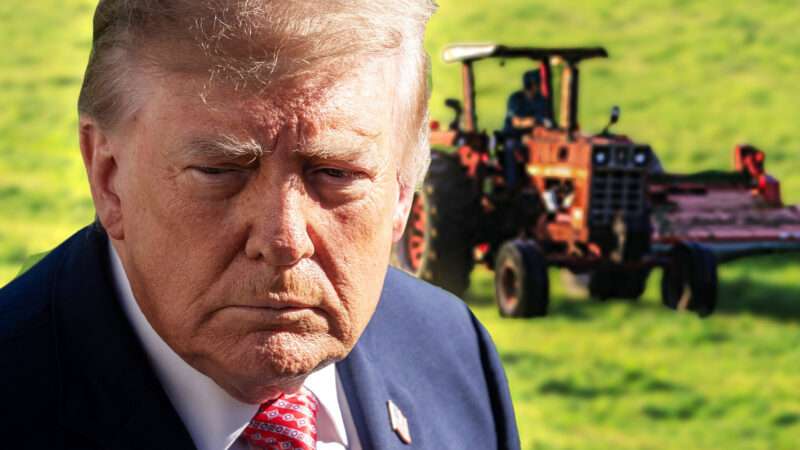
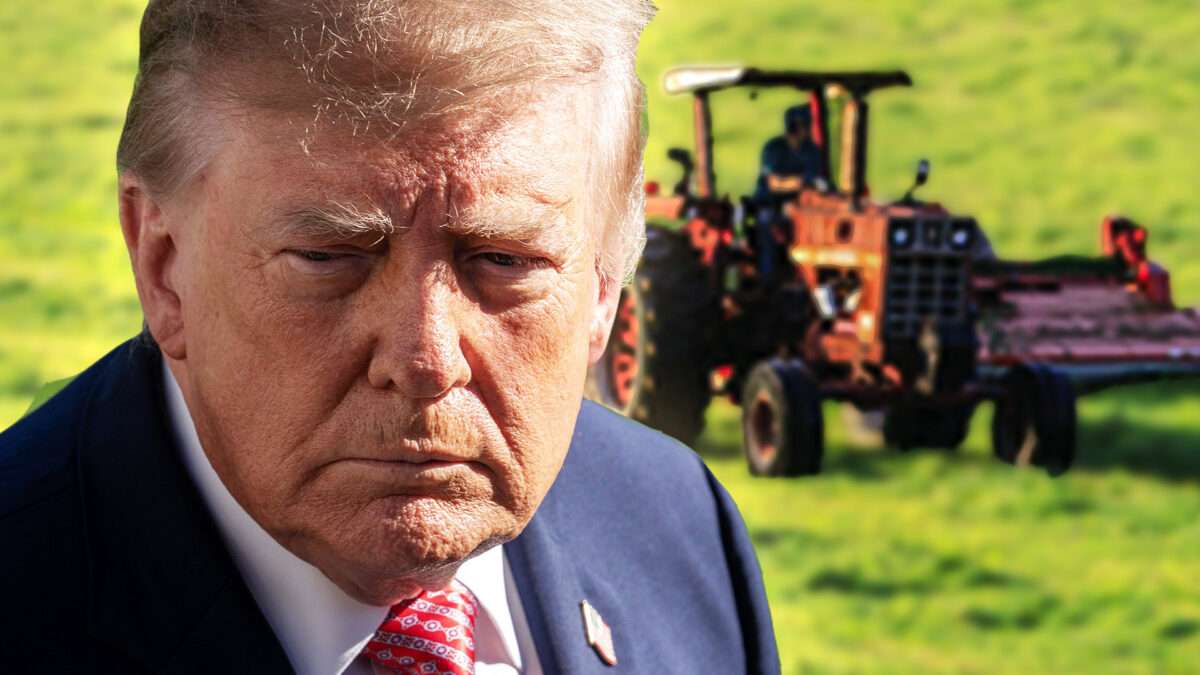
TrumpFarm | Andrew Leyden/ZUMAPRESS/Newscom/Donland/Dreamstime

On Monday, the U.S. Department of Agriculture (USDA) announced it would "make $8 billion available for one-time payments to American farmers this harvest season to provide relief during temporary market disruptions and increased input costs."

Using a formula derived from the USDA's production, yield, and price estimates, the Harvest Fuel Relief program will "provide simple, proportional support to producers." It will only cover a "portion of modeled losses during the 2026 crop year." The Farm Service Agency—an office within the USDA that administers credit and loan programs—will administer the $8 billion in one-time payments using funds from the Commodity Credit Corporation, a federal entity authorized to draw up to $30 billion from the U.S. Treasury to fund agricultural initiatives. Payment rates won't be released until November, and the USDA's notice leaves open the possibility of additional payments for "non-Title I commodities, including specialty crop growers and fishermen."

A fiscally questionable decision, the program comes at a time when farmers are feeling a significant price pinch. The dyed diesel American farmers and ranchers use is exempt from state and federal highway taxes, but that has done little to offset skyrocketing fuel prices. In September, the American Farm Bureau Federation projected that fuel expenses would reach $22 billion this year, up 29 percent from 2025. The Farm Bureau estimates that total production expenses will reach nearly $500 billion in 2026. According to its own predictions, the USDA doesn't expect the situation to improve anytime soon.

In its latest Commodity Costs and Returns report, released in June, the USDA projects farmers and ranchers will face record production costs in 2027—higher than during the COVID-19 supply chain disruptions—driven by higher prices for necessary inputs such as fuel, fertilizer, seeds, machinery, and labor. 

While the USDA has blamed "temporary market disruptions" for these cost hikes, the blame more accurately falls to President Donald Trump, thanks to his illegal war in Iran. As of Tuesday, Trump's war—and the subsequent shocks it has caused to the global diesel supply—have pushed the national average price in the U.S. up $2.70 per gallon from a year ago, a 74.6 percent increase, according to AAA data.

Unfortunately, the war in Iran is just one of several Trump administration policies making life more expensive for everyone, including the nation's farmers and ranchers. Tariffs on imported fertilizer, which began in 2020 during the first Trump administration, have made it difficult for American farmers to afford what they need. By the Farm Bureau's estimates, fertilizer costs for 2026 are projected to reach a record $40 billion, up 15 percent from the previous year.

The $8 billion program is part of a windfall of taxpayer money the Trump administration has sent to farmers as relief for harms caused by the president's actions. Last December, the USDA sent $11 billion in one-time bridge payments to more than half a million farmers nationwide. Earlier this month, the USDA announced it would provide a record $13.8 billion in gross payments to agricultural producers to cover revenue losses. 

In a speech in Kansas touting the program, Trump claimed that the state's residents would see a "plunge" in prices once the war ends. That's likely an exaggeration, given the host of questionable economic policies he seems hell-bent on implementing. 

Still, that shouldn't discredit the president's suggestion. Ending the war would benefit farmers, ranchers, and consumers, without doling out billions in another government bailout for a favored industry.

The post Trump's $8 Billion Diesel Bailout Pays Farmers for a Problem He Created appeared first on Reason Magazine.

  •  

EU Ministers Agree New Agricultural Market Rules as Farm Budget Dispute Continues

European Union governments have agreed a negotiating position on new agricultural market rules intended to take effect under the bloc’s 2028–2034 budget, advancing reforms to support arrangements for farmers while leaving the most contentious financial questions unresolved.

The Council approved its partial negotiating mandate on Monday, 19 October, covering changes to the Common Market Organisation regulation, which governs agricultural markets across the European Union.

The proposals include new arrangements for wine producers, protein crops and oilseeds, revised marketing standards, changes to the EU school food programme and provisions intended to improve preparedness for agricultural market disruptions.

However, the agreement does not settle future funding allocations or the broader structure of agricultural subsidies, which remain under negotiation as EU governments attempt to reconcile farming expenditure with competing demands for defence, industrial investment and regional development.

Agricultural markets under review

The Council’s negotiating position retains much of the European Commission’s original proposal while introducing amendments intended to accommodate national differences in agricultural production.

Under the proposed arrangements, sector-specific interventions would become mandatory in several areas, including beekeeping, fruit and vegetables and, under certain circumstances, wine production.

The Council has also proposed flexibility for countries where particular sectors are absent or relatively undeveloped.

For the wine industry, governments would be able to seek exemptions from certain obligations where national circumstances justify different arrangements.

This would allow the framework to retain common European rules while avoiding requirements that would be inappropriate for member states with little or no domestic wine production.

Sectoral interventions form part of the mechanisms through which the EU supports agricultural markets and producer organisations. They can cover measures intended to improve competitiveness, manage production and strengthen farmers’ commercial position.

New provisions for protein crops

The Council has endorsed the establishment of a separate sector for protein crops and oilseeds, replacing existing provisions covering dried fodder.

The objective is to encourage domestic production and reduce dependence on imported agricultural inputs, particularly crops used in animal feed and food production.

European livestock producers rely on protein-rich feed ingredients, including soyabeans, that are often sourced internationally.

Greater domestic production could reduce exposure to fluctuations in global commodity prices, transport costs and disruptions to international supply chains.

Under the Council’s proposal, member states would be encouraged to recognise producer organisations specialising in protein crops and oilseeds.

Such organisations can help farmers coordinate production, marketing and investment, although the effectiveness of the proposed measures will depend on how they are implemented nationally.

The proposals follow broader EU efforts to improve supply security in sectors extending from agricultural inputs to critical industrial materials.

School food and product labelling

The negotiating mandate also preserves the EU school scheme, which provides support for the distribution of fruit, vegetables and milk to schoolchildren.

Under the proposed framework, the programme would move from a school-year financing cycle to a calendar-year system, with transitional provisions intended to prevent disruption during implementation.

The Council has maintained the Commission’s objective of encouraging healthier eating habits by limiting products containing high levels of free sugars and fats.

The proposal also opens the possibility of additional marketing standards for several agricultural products, including protein crops, beef, pork, sheepmeat, goatmeat and rice.

These standards could provide consumers with more detailed information about product origins, subject to the final legislation.

Such measures would also have implications for producers and food businesses, which would need to comply with any new requirements concerning classification, marketing and labelling.

The Council additionally supports the harmonisation of rules covering industrial hemp, while retaining safeguards concerning seed certification and the permitted level of tetrahydrocannabinol.

Farming subsidies remain contested

The agricultural market agreement forms part of negotiations over the next Common Agricultural Policy, which will operate within the EU’s new seven-year financial framework.

Under the Commission’s proposed budget structure, several funding streams, including agricultural and cohesion programmes, would be brought together within national and regional partnership plans.

The restructuring has encountered opposition from governments and agricultural interests concerned that farming could lose protected access to EU funding.

As EU Today previously reported, 17 member states have called for agricultural and regional development expenditure to be protected against further reductions.

The Council’s latest position addresses how agricultural markets should operate rather than determining the size of the financial support available to them.

A separate debate concerns the conditions for receiving direct farm payments, including the definition of an active farmer and the degree of discretion granted to national governments.

Those questions remain central to the continuing CAP negotiations, which are due to return to the Agriculture and Fisheries Council on 26–27 October.

Negotiations move to Parliament

The Council’s partial mandate now provides a basis for negotiations with the European Parliament on the agricultural market provisions.

The legislation will still require agreement between the institutions, while its financing will depend on the eventual settlement of the 2028–2034 budget.

Governments must also complete negotiations on the wider CAP framework, including direct income support and the distribution of responsibility between Brussels and national administrations.

The market agreement reached on 19 October therefore establishes important elements of the proposed agricultural rules, but leaves unresolved the level of financial support available to European farmers after 2027.

  •  

Britain is Heading Towards Blackouts

Britain is heading towards blackouts because of its overreliance on renewables, says energy expert Richard Lyon, who explains how Britain's power grid works and why Net Zero is making it vulnerable to severe outages.

The post Britain is Heading Towards Blackouts appeared first on The Daily Sceptic.

  •  

Carbon Brief’s Con Trick

Carbon Brief claims that wind and solar power saved the UK from gas imports worth £5.9bn during the Hormuz crisis. Not mentioned, says Paul Homewood, is that the wind and solar power cost more.

The post Carbon Brief’s Con Trick appeared first on The Daily Sceptic.

  •  
❌