Login

Got H2O? Technocracy’s Control Over Water
This content is for members only. Visit the site and log in/register to read.




This article is paid for by Council of the Notariats of the European Union (CNUE).
An address rented in a European capital, an electronic signature obtained online, a 48-hour waiting period.
Under the proposed regulation establishing a 28th company law regime, known as ‘EU Inc.’, this could be enough to establish a company with legal personality throughout the European Union.
No share capital would be required. The founder could complete the entire process without appearing, even digitally, before a public authority or another person entrusted with preventive legal control.
There would be no personal verification of their legal capacity, of whether they understand what they are signing, or of whether they are acting on behalf of someone who wishes to remain invisible.
The company could then open bank accounts, enter into contracts, own assets and employ people across the European Union. If the company later fails to meet its obligations, creditors and employees may find that there are no assets to recover and that the person formally responsible for it was acting merely as a front man.
This scenario illustrates the serious concerns raised by the proposal for a Regulation on ‘EU Inc.’ put forward by the European Commission and currently being examined by the European Parliament and the Council of the European Union.
The preventive checks set out in Article 14 of the commission’s proposal are largely limited to formal requirements.
There is no independent and impartial scrutiny of the founders’ legal capacity, of the lawfulness of the articles of association, or of whether the transaction complies with substantive legal requirements. Transfers of shares and capital transactions are also not subject to substantive control. Liquidation is treated primarily as an administrative formality, even though it can directly affect creditors and employees.
The consequences may extend far beyond company law.
Companies own real estate and are entered in land registers. If it is no longer possible to establish reliably who owns a company, it also becomes more difficult to establish who ultimately owns the real estate held by that company. Reliable company information therefore matters for the transparency of property ownership.
If the information in a register has not been reliably verified, others have to verify it themselves. Banks, business partners and investors may need additional legal opinions, audits and insurance. Costs that a preventive check avoids at the outset may therefore arise repeatedly at a later stage.
This would represent a shift from the European tradition of public preventive legal control towards a model that relies more heavily on resolving disputes after they arise.
Delaware is a prominent example of such an approach, supported by specialised courts and a correspondingly prominent role for litigation. Transplanting it to Europe would place additional demands on national judicial systems that lack the necessary resources.
The proposal also raises questions with regard to the recent European efforts to combat money laundering and the financing of terrorism.
The creation of the Anti-Money Laundering Authority (AMLA) is the latest milestone in this process. To create, at the very same time, a legal form with significantly reduced checks risks severely undermining these efforts.
The same applies to sanctions: their enforcement depends on knowing who is really behind a company – especially when shares are transferred. Without reliable legality control of share transfers, corporate ownership can change unnoticed and become a vehicle for sanctions circumvention.
The amendments required are straightforward. The acquis of European company law, as established by Directive (EU) 2017/1132 and recently reinforced by Directive (EU) 2025/25, should also apply to EU Inc. companies.
This means reliable identification of founders and directors, public oversight of legal compliance at the time of formation and at subsequent stages, and reliable business registers.
These safeguards exist for a reason.
They protect not only the parties to a transaction, but the public at large. Because they serve a public purpose, they must remain a public responsibility. Private service providers cannot replace independent preventive control carried out under public responsibility.
How these checks are organised differs between member states. In some member states, public authorities carry them out directly. In others, the state entrusts notaries with this public function.
Notarial involvement therefore does not add another layer of control: the same public function is simply carried out by different public authorities. In many member states, a company can already be formed digitally within 48 hours, with full legal verification carried out by a public official.
The European Parliament and the Council of the European Union will decide their positions in the coming weeks.
There is still time to improve the legislative framework of EU Inc. significantly and to make it a success.
This requires digital and efficient procedures without compromising legal certainty. The rule of law is one of the European Union’s strengths. EU Inc. should build on that strength, not weaken it.

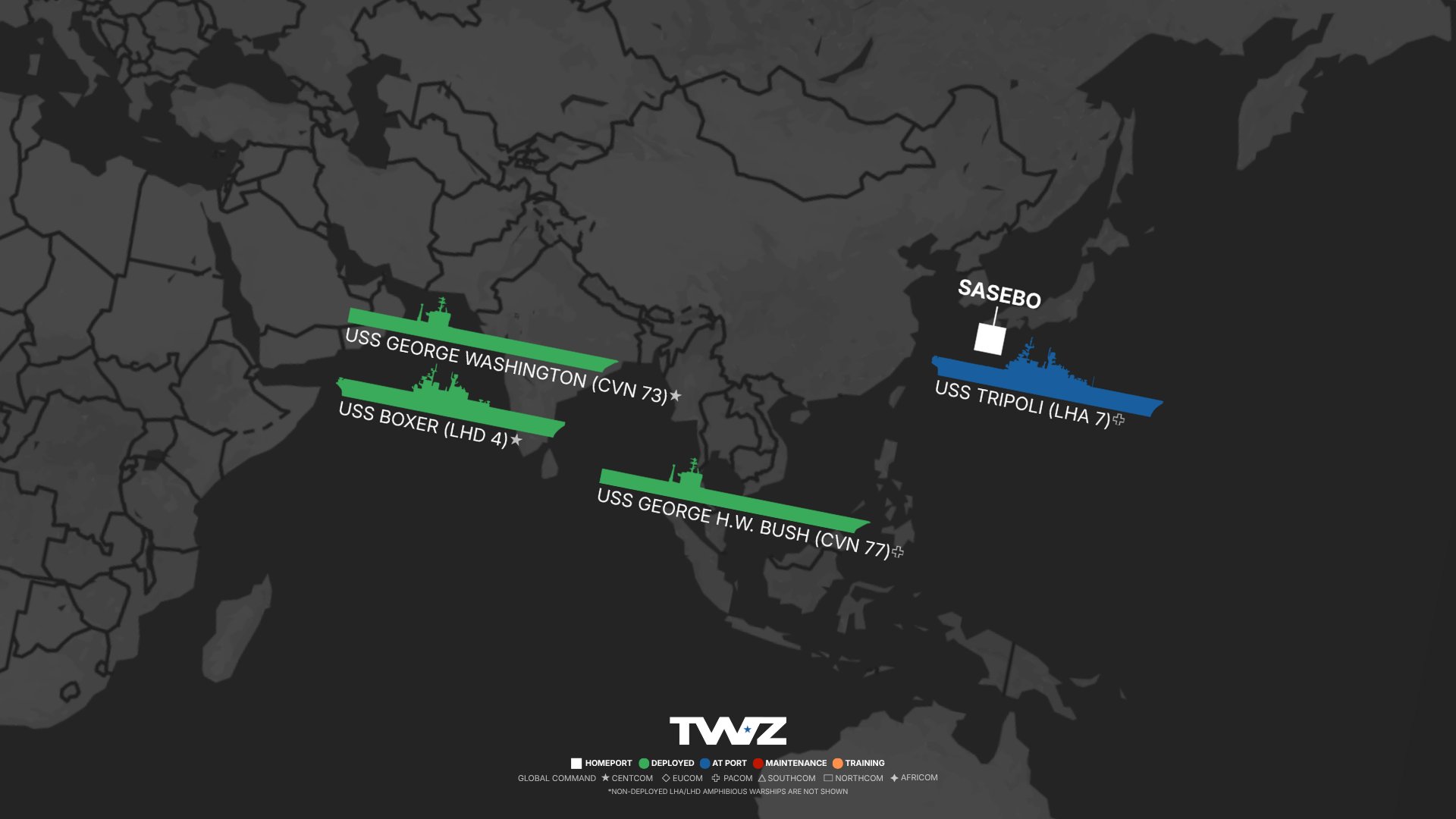
Aircraft carrier USS George H.W. Bush arrived in Phuket, Thailand, on Sunday for a scheduled port call after 188 days at sea, leaving just one carrier strike group, led by USS George Washington, in the Middle East for the first time in months. Across the Pacific, USS Abraham Lincoln, which Washington relieved in August, is holding off the west coast of California to disembark her air wing and offload ammunition ahead of a well-deserved homecoming this week. With several outlets now confirming that USS Theodore Roosevelt will deploy to the Middle East, there very well may be three flattops in the region again, but any overlap will be temporary given normal rotation schedules.
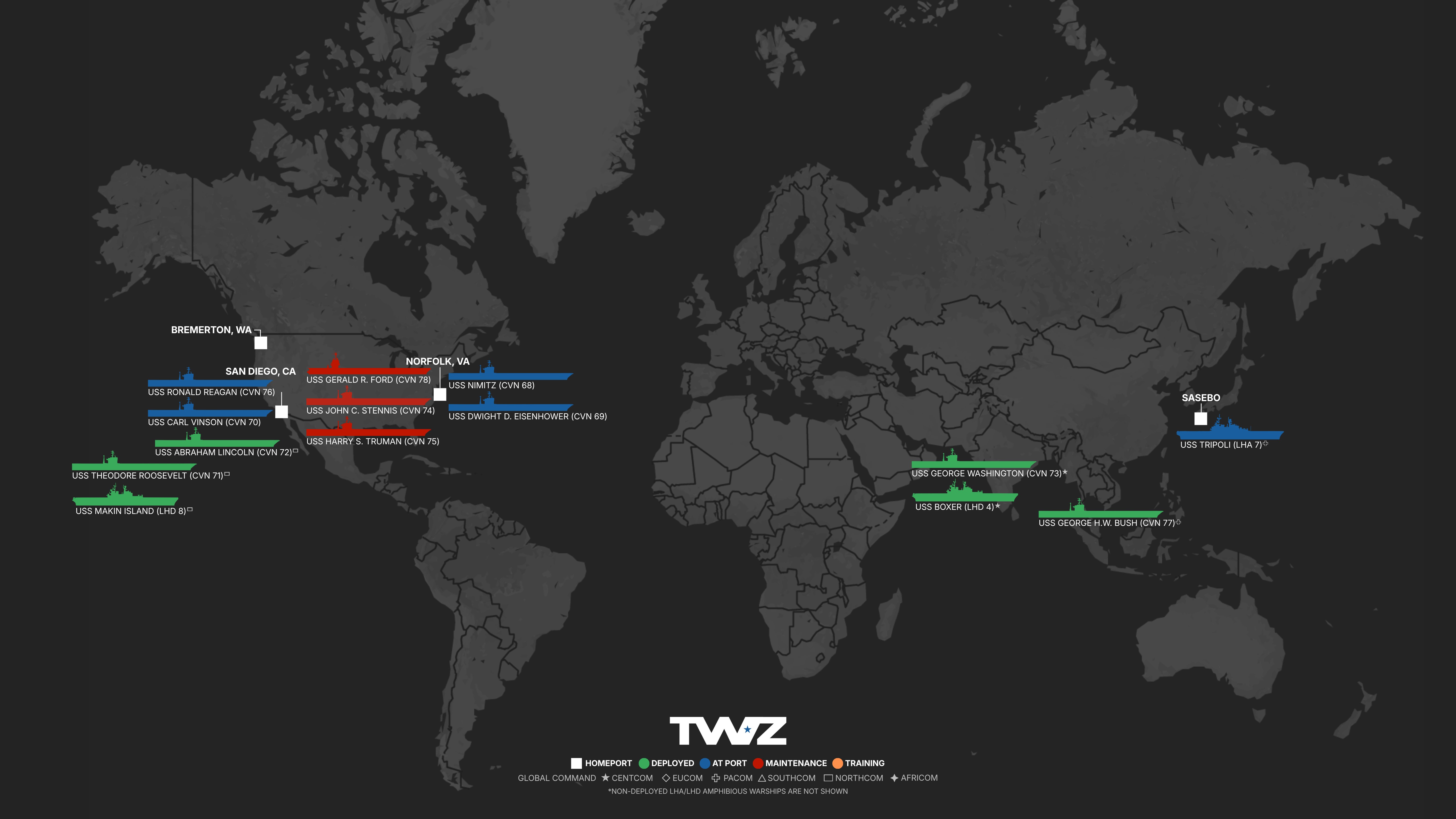
Here’s TWZ’s weekly carrier tracker monitoring America’s flattop fleet, including deployed Carrier Strike Groups (CSG) and Amphibious Ready Groups (ARG), using publicly available open-source information. Check out last week’s report here.
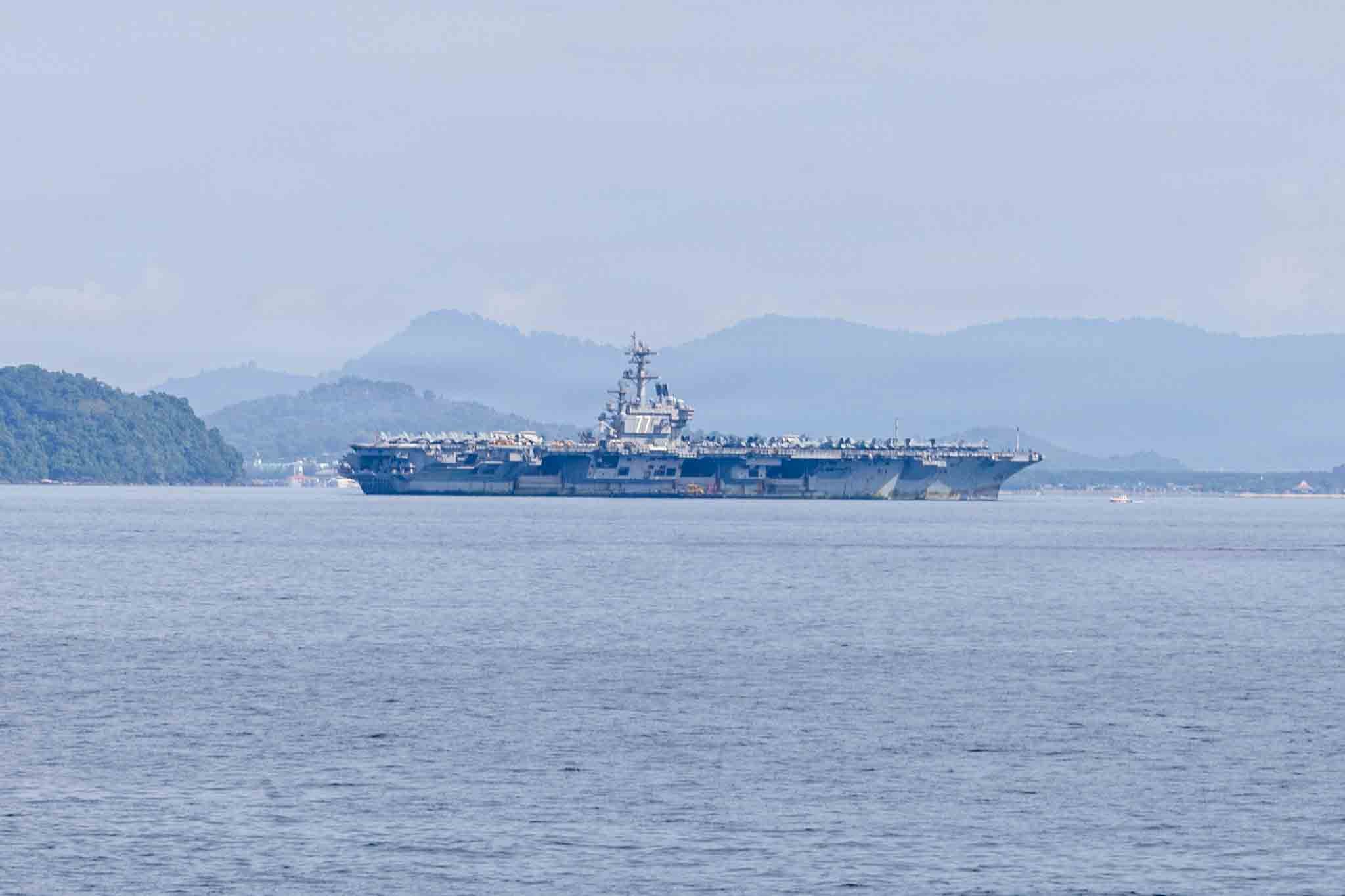
USS George H.W. Bush arrived in Thailand on October 4 for a scheduled port visit, U.S. 7th Fleet announced. Guided-missile destroyer USS Delbert D. Black escorted the flattop from her previous station in the Arabian Sea and joined the call. Bush deployed from the continental U.S. on March 31 and took the long way to the Middle East, rounding the Cape of Good Hope to limit exposure to the treacherous Red Sea and Bab Al Mandeb Strait.
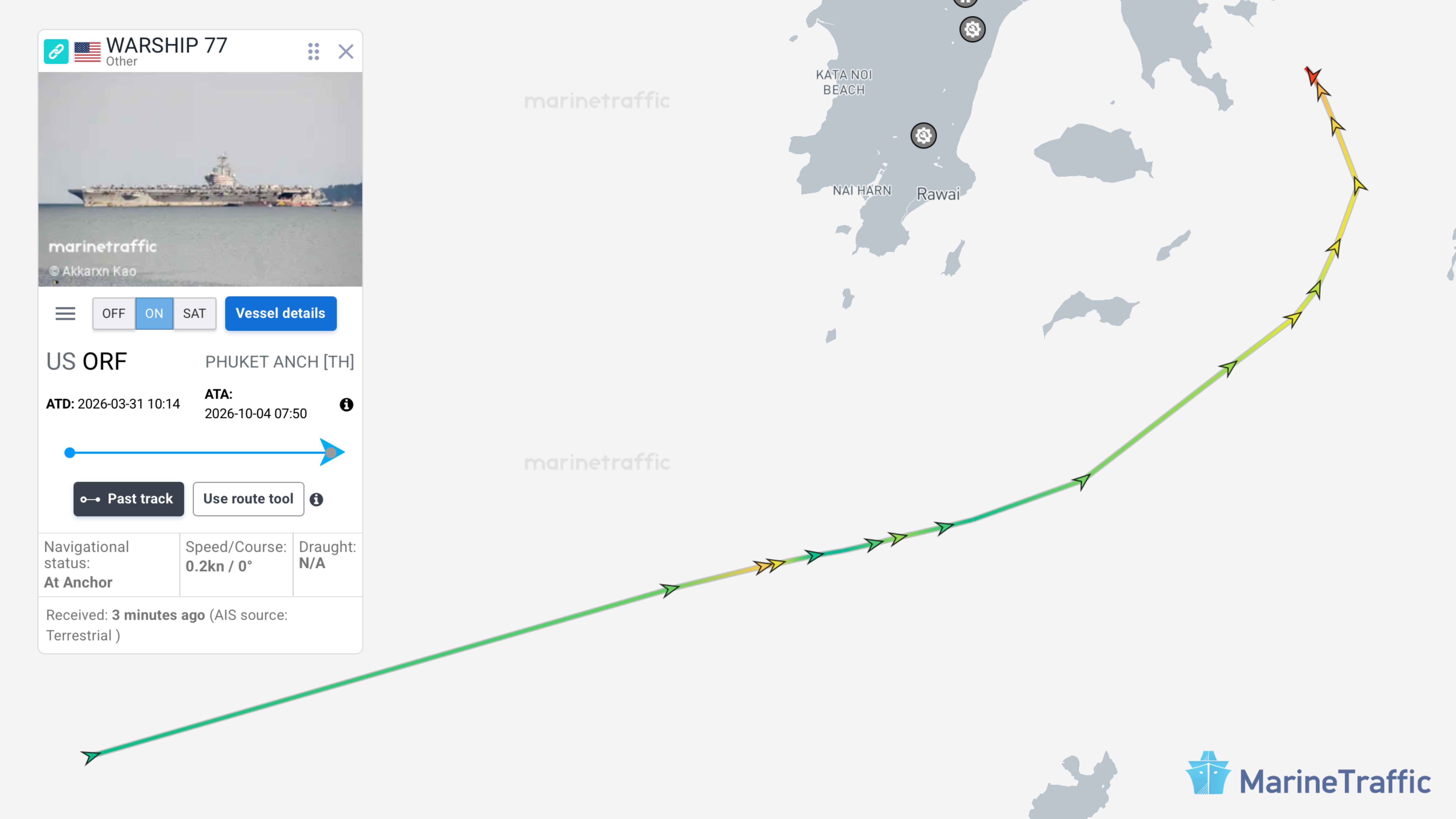
On October 3, Bush switched her Automatic Identification System (AIS) transponder on about 15 nautical miles southwest of Thailand, broadcasting her position publicly for the first time since April, based on data available via MarineTraffic. The carrier dropped anchor approximately two nautical miles off the coast of Phuket the following day.
Bush had been operating in the U.S. Central Command (CENTCOM) area of responsibility (AOR) since April, when the U.S. briefly had three carriers on station, in support of operations against Iran. “For the last six months, the strike group supported Operation Epic Fury and the U.S. naval blockade in the U.S. Central Command area of responsibility to secure maritime security and stability in the Middle East,” according to the 7th Fleet statement. That force posture was short-lived, however, as the USS Gerald R. Ford transited the Suez Canal northbound on May 1 and began her journey home not long after Bush arrived. Bush chopped into the U.S. Pacific Command (PACOM) AOR sometime over the past week while en route to Phuket, leaving a single CSG in CENTCOM.
The current composition of CSG-10 is USS Mason, USS Ross, and USS Donald Cook, but none of the destroyers joined the flagship in Thailand. Why Black escorted the carrier instead is unclear. Black departed Mayport, Florida, on January 3, 2026, for an independent deployment and is long overdue for a liberty call after nine months. Mason transited the Malacca Strait southbound on September 29, according to public AIS data, and is currently in Singapore; the purpose of the stop is unknown. Ross and Cook have not broadcast their positions in months, but were last operating in the Arabian Sea.
The Navy confirmed this was the first port visit for Bush since deploying, marking 188 consecutive days at sea (including the end date), which falls just short of the 200-plus days that USS Abraham Lincoln recently logged.
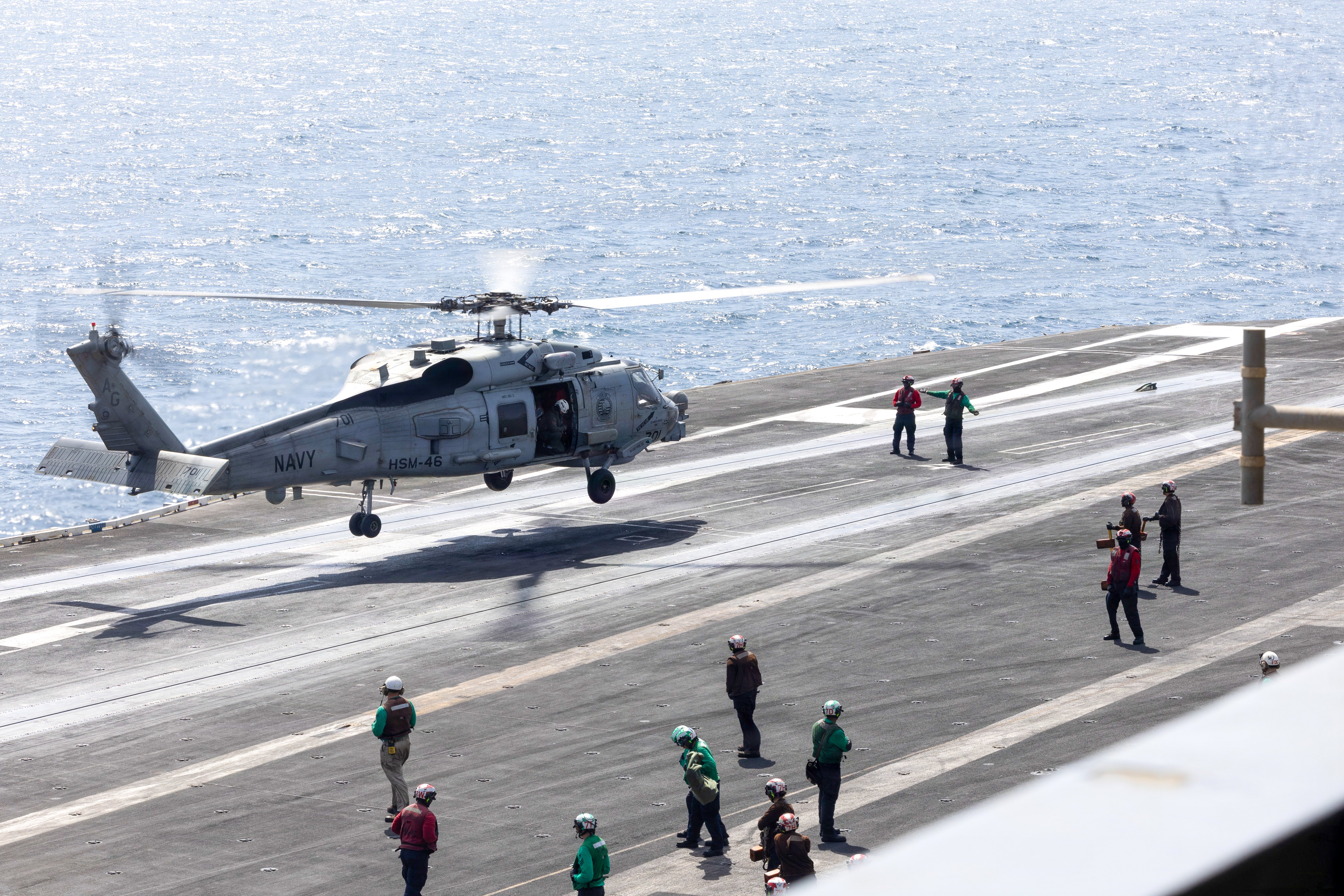
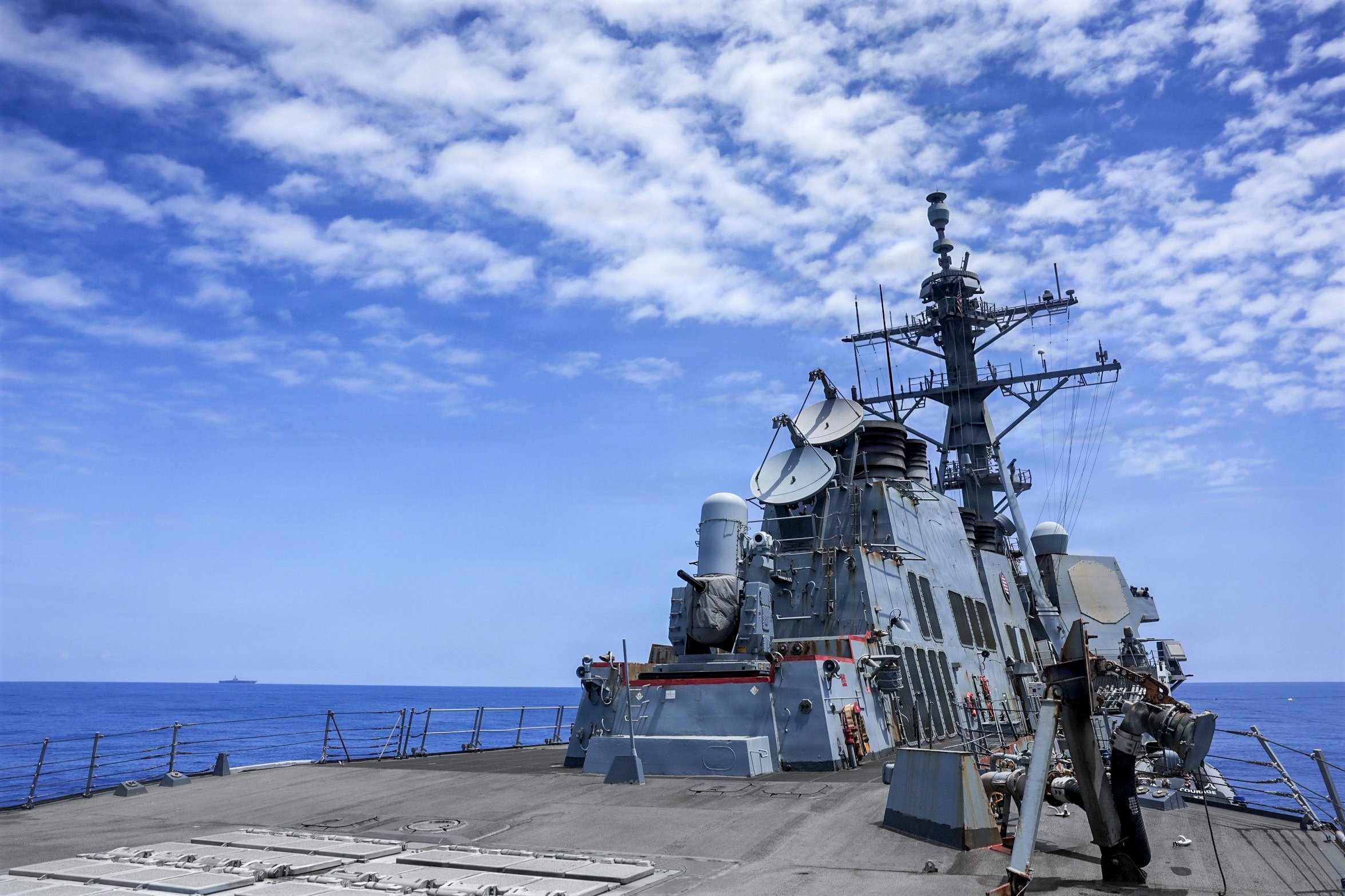
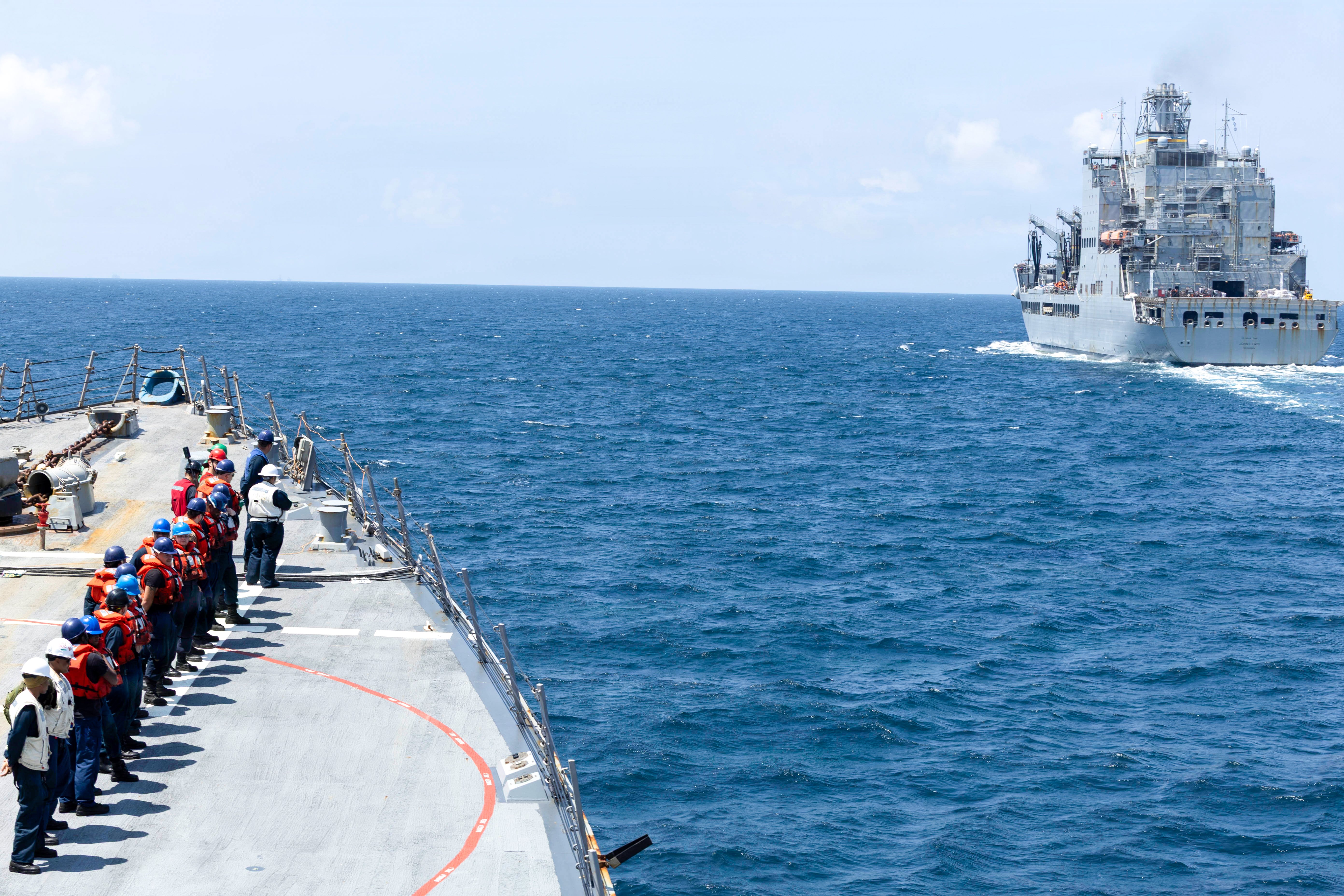
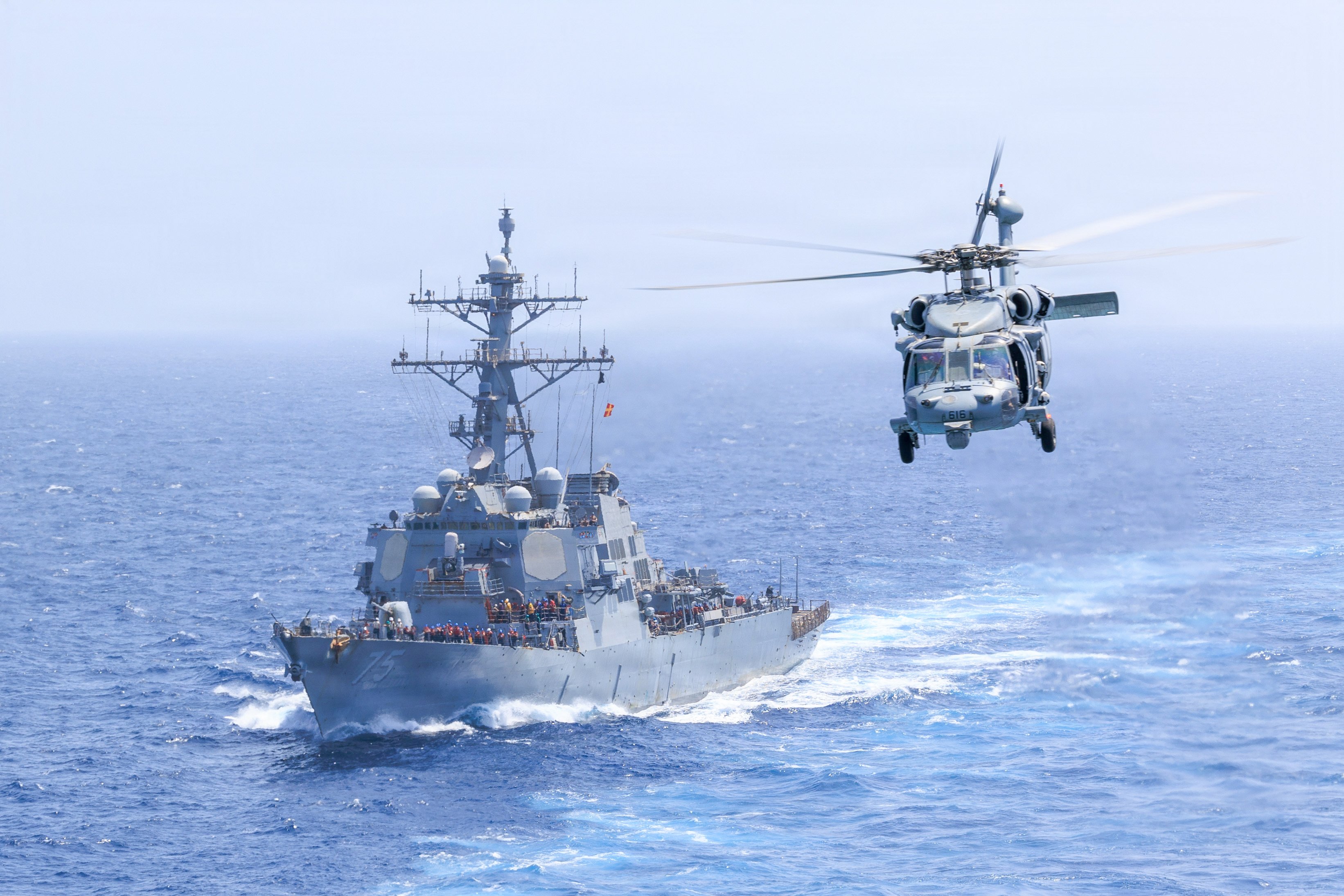
The USS Abraham Lincoln reappeared on AIS on October 3, roughly 200 nautical miles southwest of her homeport at Naval Air Station (NAS) North Island in San Diego, after steaming east across the vast Pacific Ocean. However, instead of returning home, Lincoln is holding off the coast of California, disembarking Carrier Air Wing (CVW) 9 and offloading ammunition alongside Lewis and Clark class dry cargo ship USNS Washington Chambers.
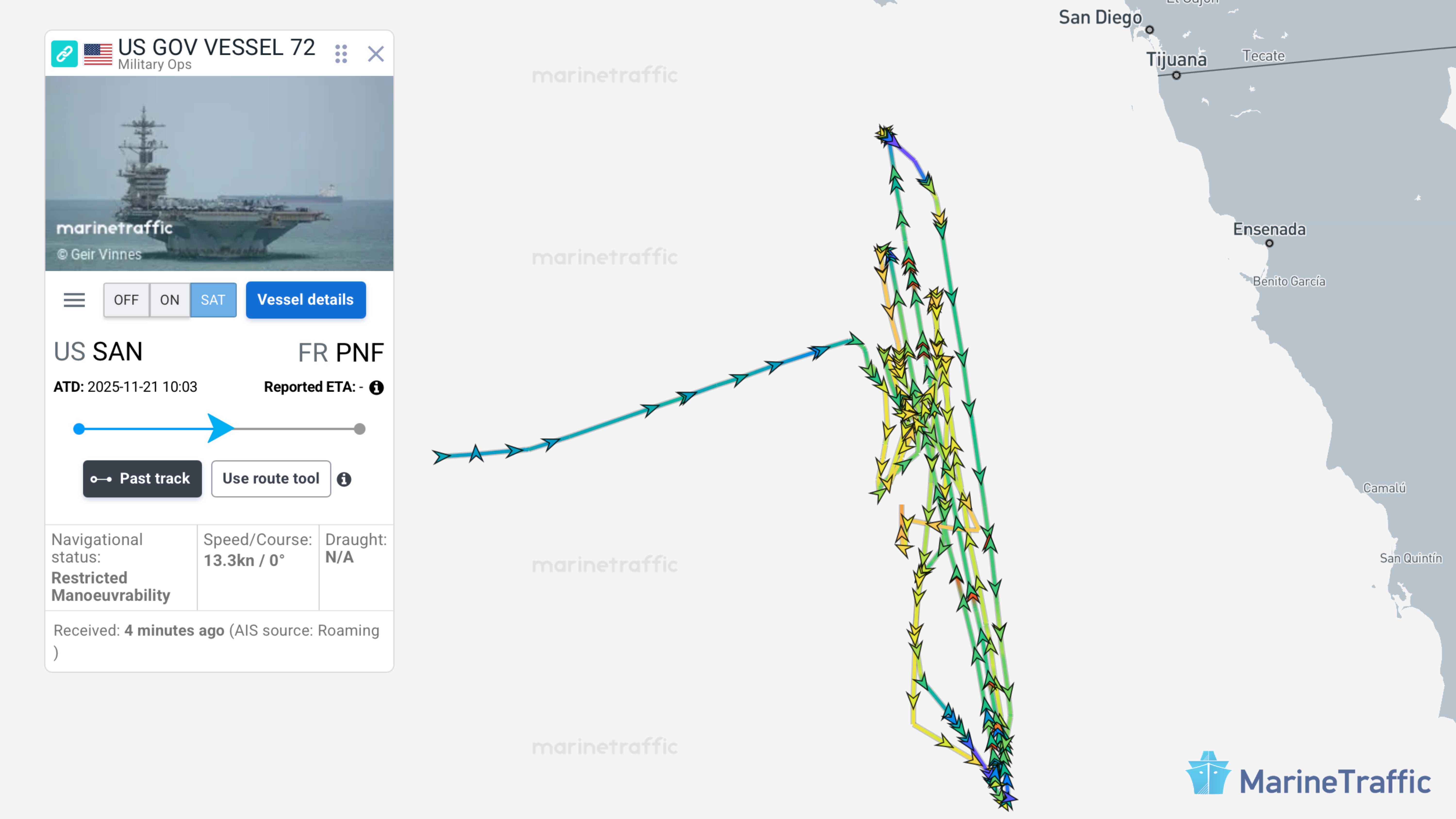
Lincoln is expected to return home on Wednesday or Thursday. The carrier departed San Diego on November 21, 2025, and an arrival this week would close out a total deployment of 321 to 322 days, by our count. That’s just shy of the 326-day record USS Gerald R. Ford set in May, representing the second-longest deployment in the modern carrier era.
The marathon deployment drew scrutiny over the grueling conditions Sailors and Marines experienced aboard. In August, crew families described supply shortages and difficult living arrangements, as TWZ reported at the time. The accounts led to widespread media coverage, which Acting Secretary of the Navy Hung Cao called dishonest while also acknowledging that “a small number of mental health cases were treated with no loss of life, meal plans were adjusted when fresh resupply was unavailable, without a single meal being missed, calls home were limited when the operational threat was too high.” At least eight personnel across the strike group attempted suicide during the cruise, Cao wrote in a letter sent to Sen. Kirsten Gillibrand that was obtained by CNN.
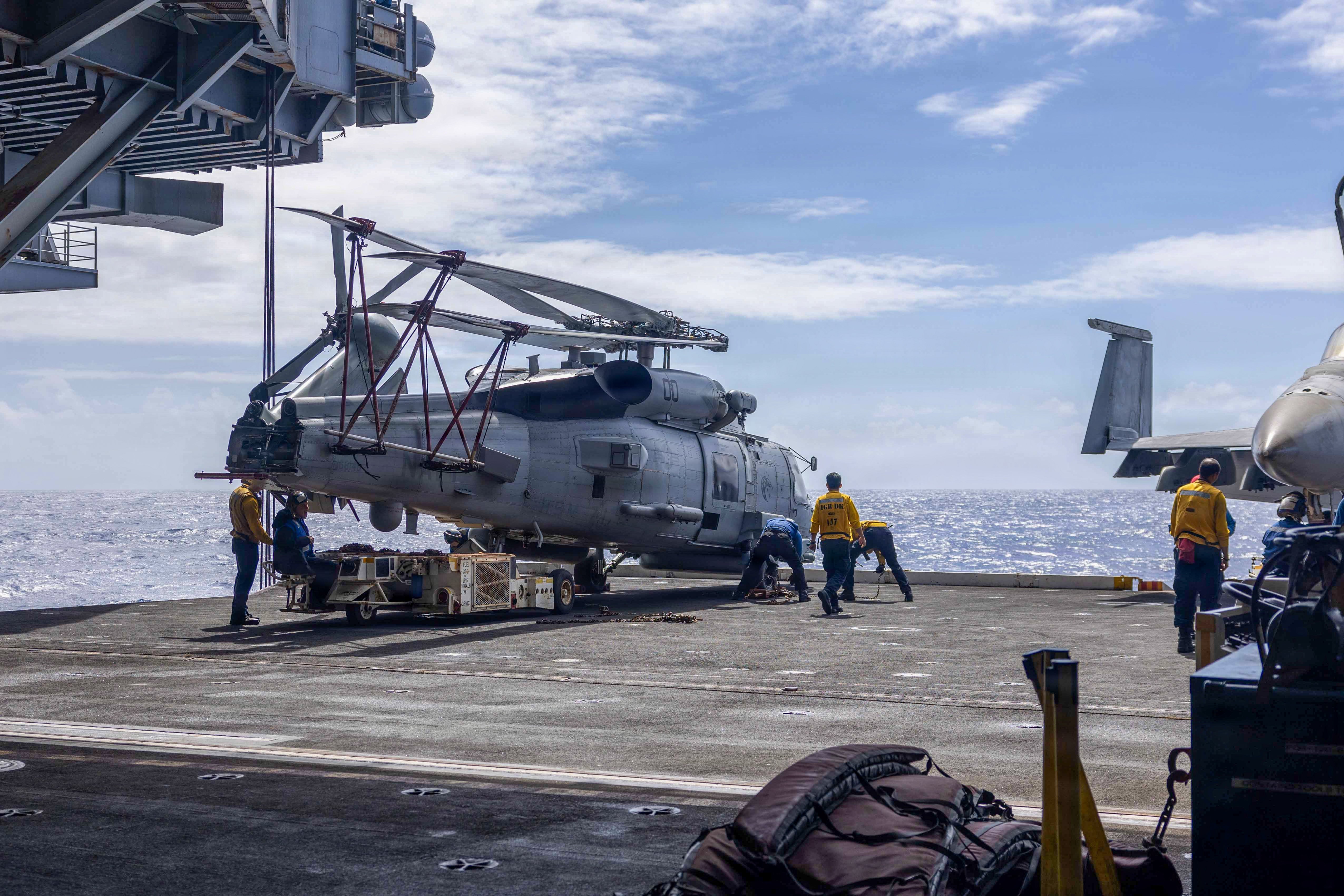
Friends and family welcomed members of Helicopter Maritime Strike Squadron (HSM) 71 back to NAS North Island on Friday, according to a release from DVIDS, the military’s content-sharing portal. A Growler squadron from CVW 9 also recently returned to NAS Whidbey Island in Washington State.

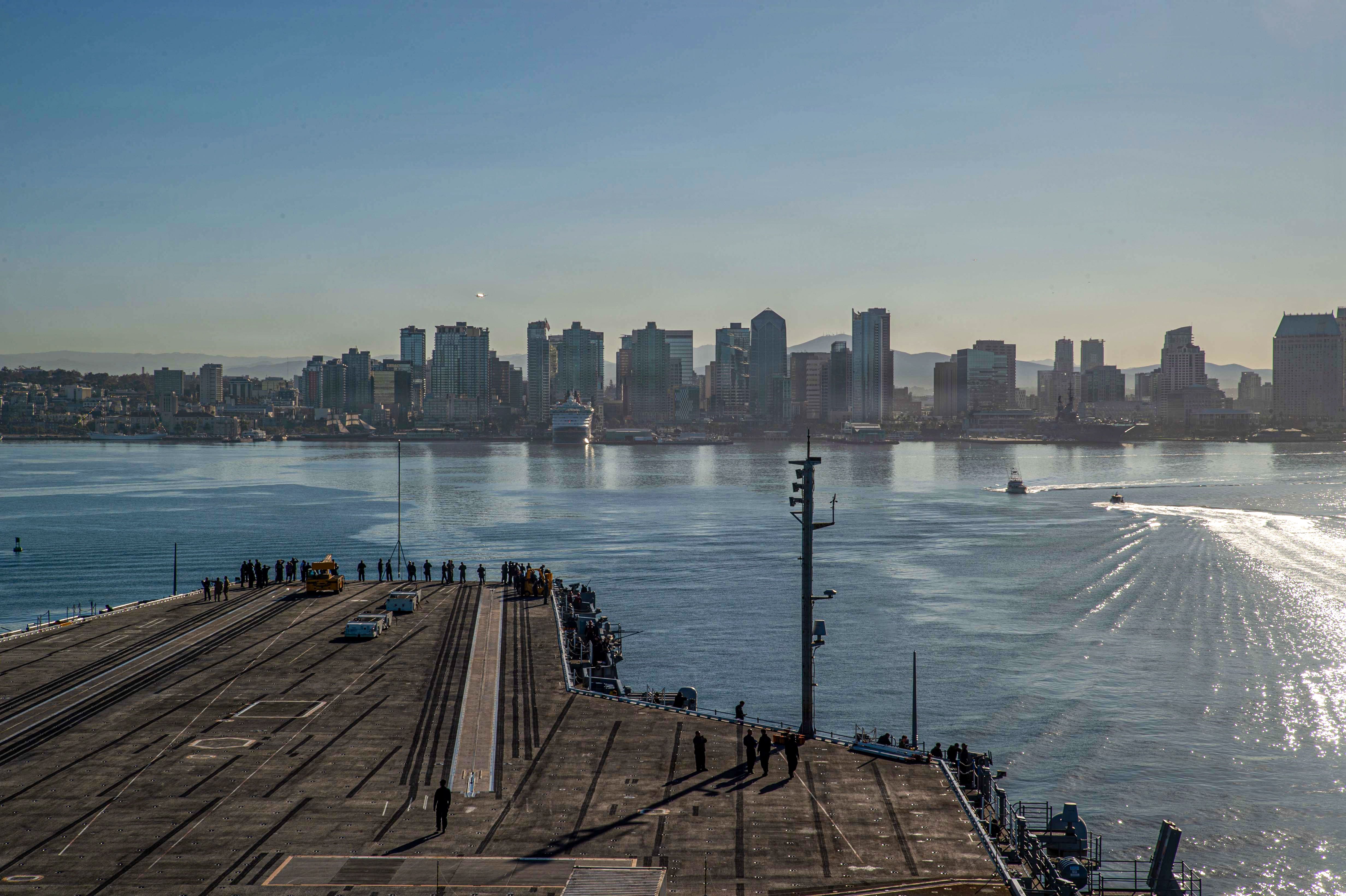
The latest carrier to rejoin the fleet after completing an extended maintenance availability, USS Ronald Reagan, pulled into San Diego on Monday after departing Bremerton, Washington, on September 30, according to public AIS data. Reagan is currently berthed at Kilo Pier on Naval Air Station North Island, a spot now available after USS Theodore Roosevelt vacated it on September 27.
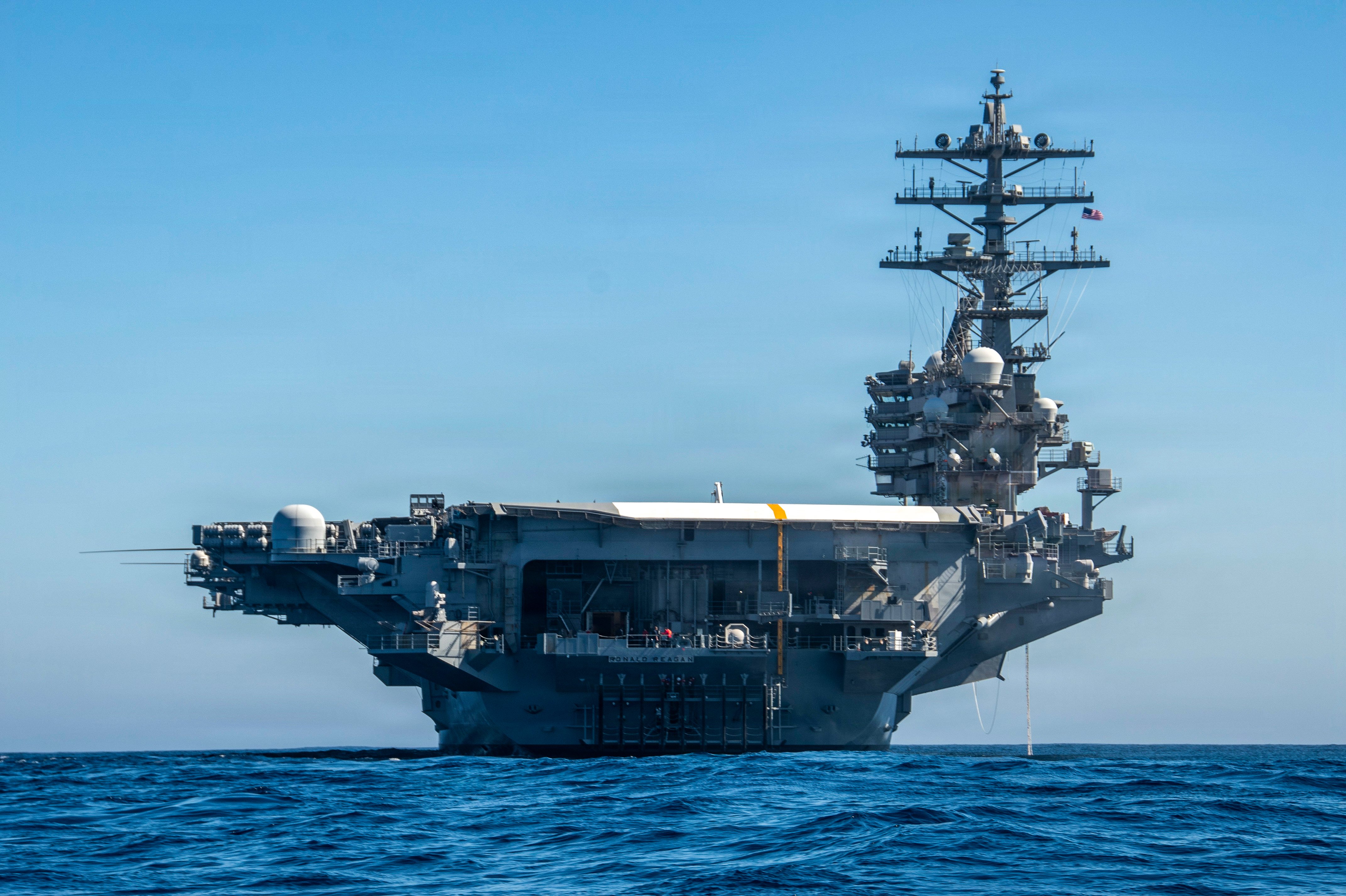
Imagery released by the Navy showed the flattop underway conducting routine operations in the U.S. 3rd Fleet area of operations on Sunday, October 4. Reagan reentered the fleet recently after completing a four-day sea trial and shakedown cruise that capped an extended 17-month Drydocking Planned Incremental Availability.
While docked at Puget Sound Naval Shipyard, she received several upgrades and enhancements, including an Unmanned Air Warfare Center (UAWC) to command and control the MQ-25 tanker drone. The MQ-25 will eventually take on the role of refueling carrier-based aircraft, held today by Super Hornets. The new UAWC makes her the second carrier to receive such an upgrade, following USS Theodore Roosevelt. The crew aboard Reagan has conducted pierside and at-sea testing of the new command center.
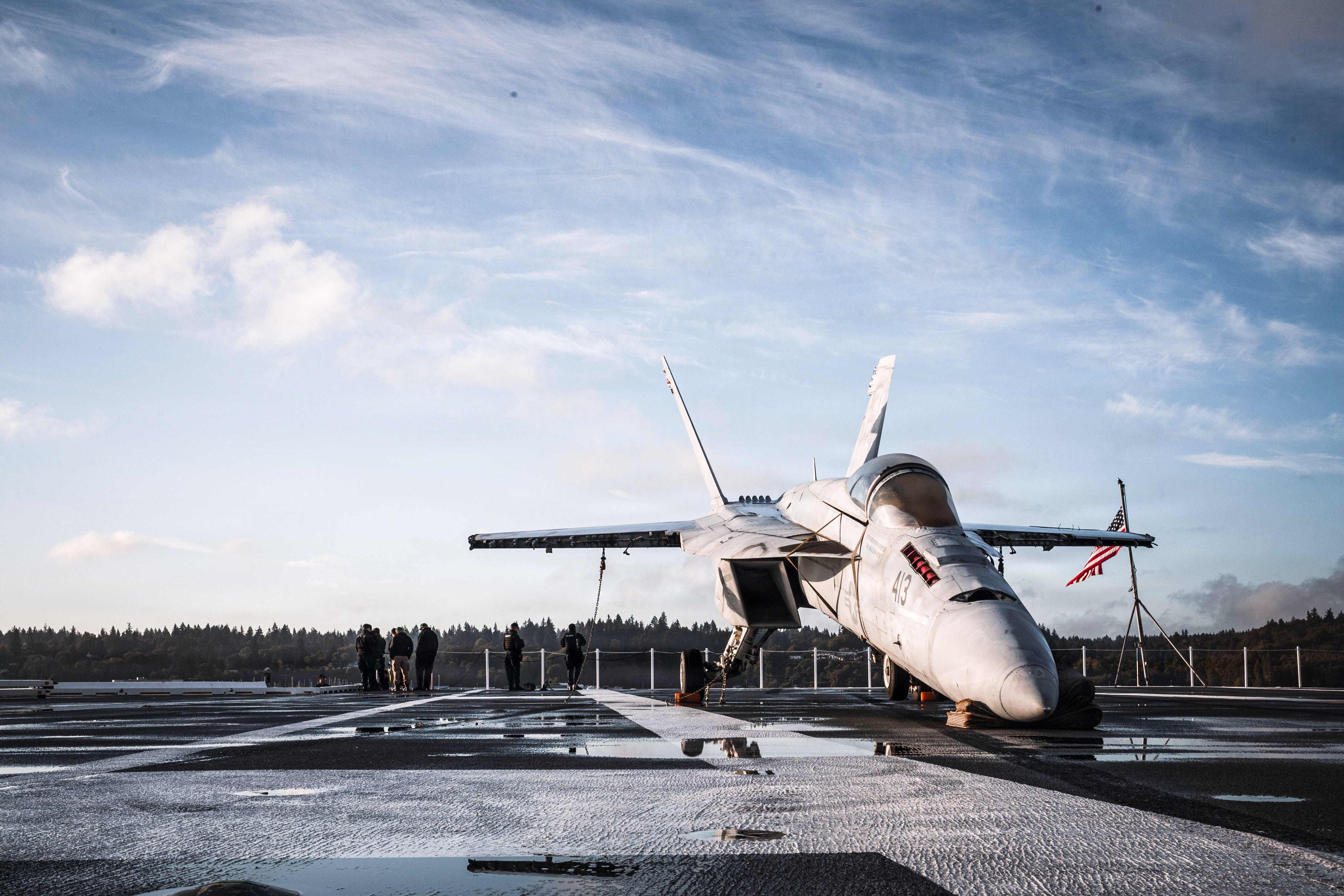
Following an incident off the east coast that resulted in the loss of an EA-18G Growler electronic attack jet, the USS Dwight D. Eisenhower returned to Naval Station Norfolk on October 5 after an eight-day underway.
Prior to her return, the Navy told us the following, published in full: “The Nimitz-class aircraft carrier USS Dwight D. Eisenhower (CVN 69) will return to Naval Station Norfolk to allow for a comprehensive assessment of the ship’s aircraft launch and recovery equipment following the Sept. 28 aviation mishap. The decision reflects the Navy’s deliberate approach to flight safety and readiness. While the cause of the mishap remains under investigation, Navy technical experts will conduct a thorough assessment of the affected systems and complete any necessary maintenance before flight operations resume. USS Dwight D. Eisenhower remains capable of safely navigating and conducting shipboard operations.”

Eight Sailors were ultimately evaluated by medical personnel aboard the ship. The mishap was reportedly due to a failure of the arresting gear, which catches and stops the forward momentum of aircraft after landing, and the Growler was lost overboard. Both crew members safely ejected and were rescued by MH-60 Seahawk helicopters.
USS Harry S. Truman left Naval Station Norfolk on September 30 and moved “dead stick” into Dry Dock 11 at Huntington Ingalls Industries’ (HII) Newport News Shipbuilding (NNS) facility the same day. The carrier will begin the lengthy process of a mid-life Refueling and Complex Overhaul (RCOH).
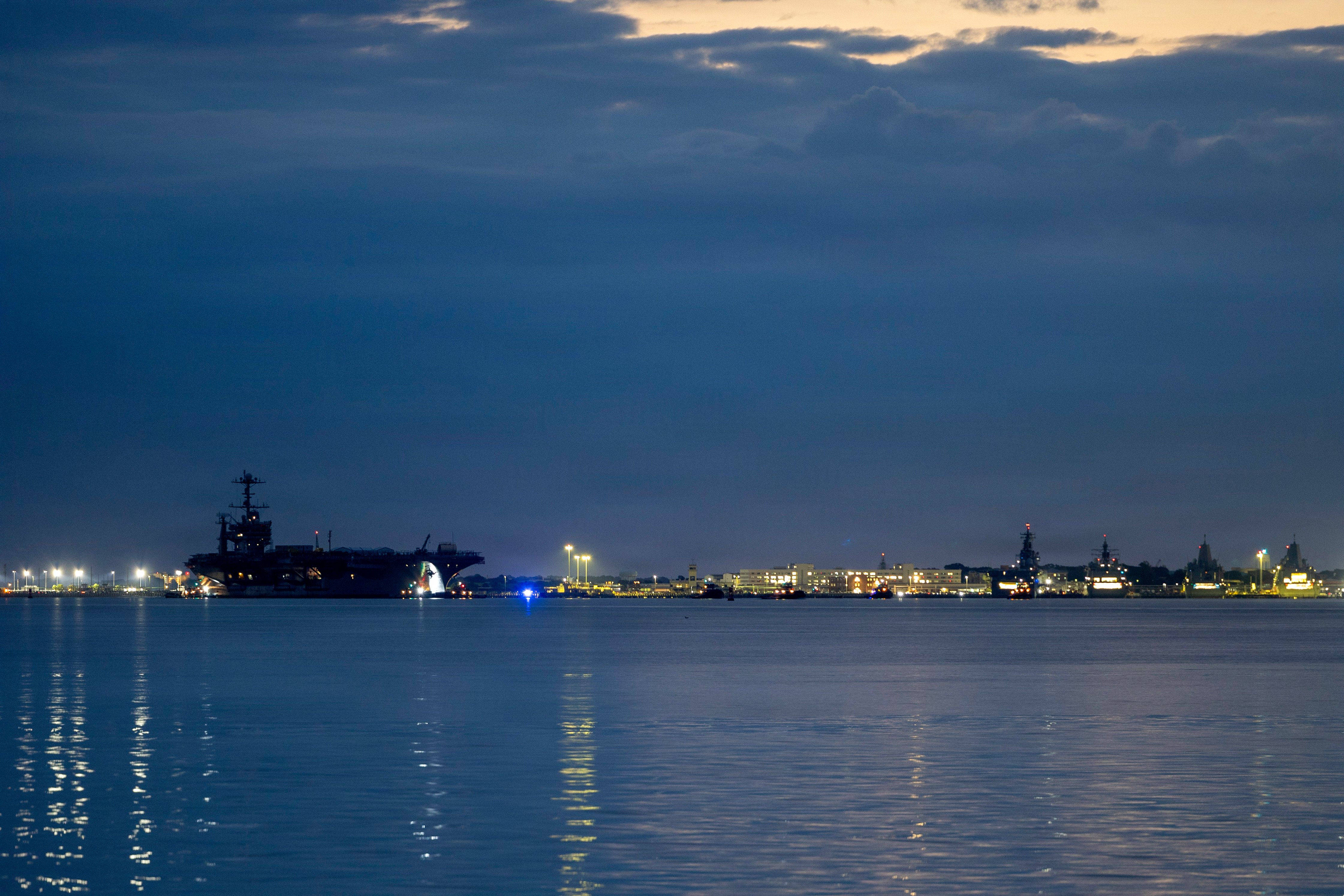
Truman is the eighth Nimitz class carrier to conduct an RCOH at NNS, according to HII, which won a $5.1 billion contract to complete the work. The overhaul accounts for about one-third of the maintenance and modernization work that a carrier will undergo over a 50-year service life and involves defueling and refueling her nuclear reactors, in addition to upgrades made to the ship’s propulsion plant and combat systems.
“Our team has been diligently working to get ahead on this critical engineering and construction project that will prepare USS Harry S. Truman for the second half of her service life,” Bryan Caccavale, the NNS vice president of program management, said in a statement. “When the ship arrives at NNS, we’ll apply that same diligence to working with our suppliers and Navy partners to ensure a successful recapitalization of CVN 75,” he added.
USS John C. Stennis is also currently completing RCOH at NNS, but there has been no announcement of a return to service, as of publication. Stennis began the overhaul in 2021, and budget documents point to an October 2026 redelivery date, but it’s unclear whether that timeline will hold.
The Navy took “preliminary acceptance” of the future USS John F. Kennedy from NNS on September 29. The nation’s newest and second Ford class carrier completed acceptance trials in August.
“Achieving preliminary acceptance marks a new phase for the ship and her crew, allowing them to get more water under the keel as they test and train underway,” the Navy’s Program Manager for Gerald R. Ford-Class New Construction, Capt. Mark Johnson, said. “This milestone is a testament to the shared commitment of our sailors and our combined Navy-industry team, who remain laser-focused on completing the final stages of construction and test with precision and efficiency to deliver combat-ready lethality to the fleet.”
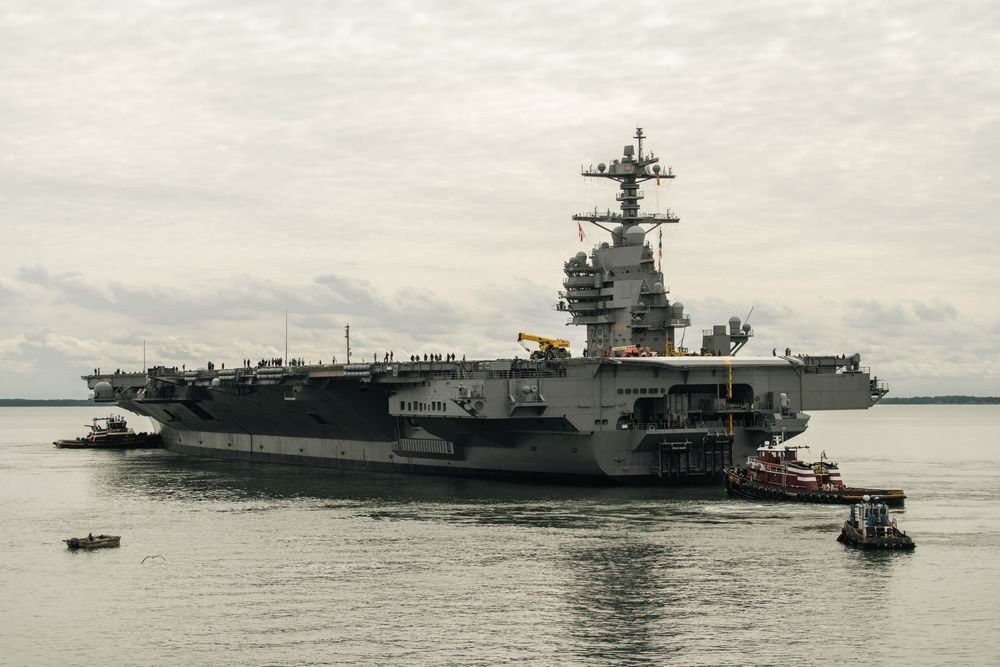
Kennedy is 99% finished, according to the Navy, with formal delivery planned for spring 2027. “All major systems are complete. The shipbuilder is currently completing final ship systems testing, including testing of the remaining four Advanced Weapons Elevators,” the release noted. On the same day as the announcement, September 29, the carrier departed the shipyard, and arrived at her new homeport of Naval Station Norfolk, moored at Pier 11N, on October 2.
Overall, four U.S. carriers are deployed (with one returning home this week), three are working up in various states of readiness, three are in maintenance, one is being used primarily for training before deactivation next year, and another will be delivered in 2027. Two amphibious ready groups are deployed, one is forward-deployed, three are working up or in port, and three are in maintenance.
Note: Positions are general approximations. Non-deployed LHA/LHD amphibious warships are not shown.
Contact the author: ian@twz.com or @ianellisjones
The post Where Are The Aircraft Carriers?: October 6, 2026 appeared first on TWZ.