Despite Illinois’ sanctuary laws, local police in and around Chicago helped ICE investigative agents track activists engaged in First Amendment–protected activities.
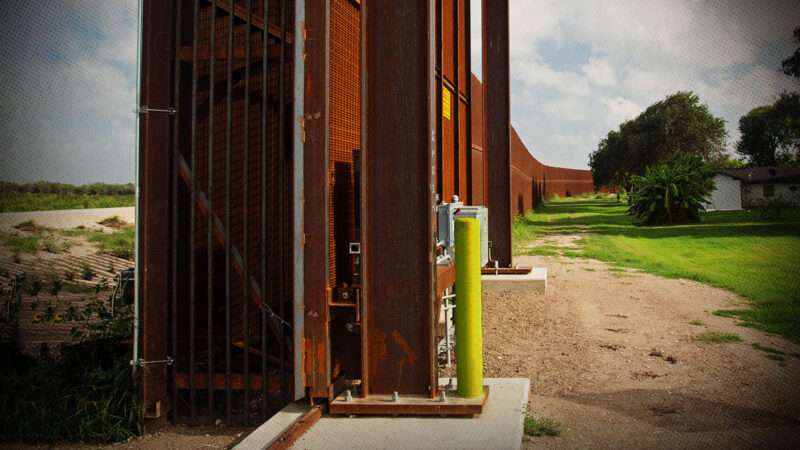
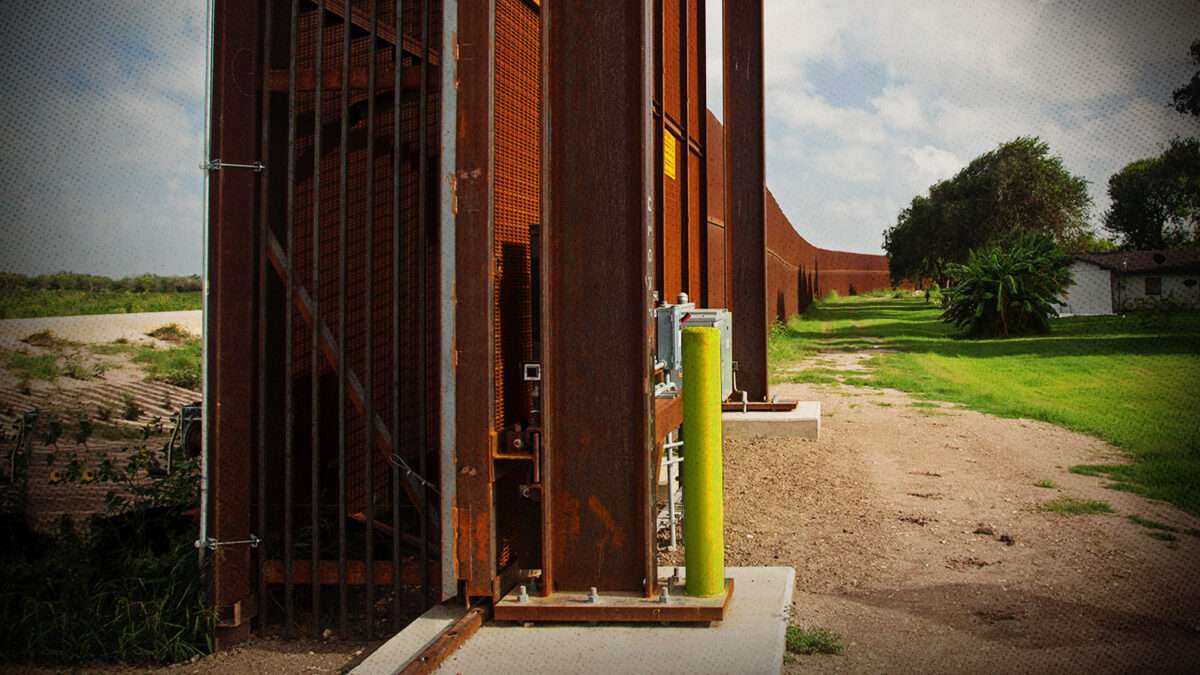
The Trump administration's attempts to fast-track construction of the president's long-promised border wall through Texas' remote Big Bend region have ground to a halt amid fierce opposition, protests, and legal challenges from landowners and conservation groups.
A federal judge on Wednesday released an opinion explaining her decision to issue a preliminary injunction blocking border wall construction through the Big Bend area. U.S. District Judge Kathleen Cardone found that the plaintiffs, which included the Center for Biological Diversity and several longtime residents of the region, had shown a substantial threat of irreparable harm if the construction project is allowed to continue.
The Trump administration wants to spend $7.5 billion building additional security infrastructure along a 500-mile stretch of the U.S.-Mexico border running through the Big Bend region, which includes Big Bend National Park. The federal government began sending threatening letters to property owners announcing its intent to acquire necessary pieces of their land this summer, and it waived several environmental regulations, allowing it to put bulldozers on the ground inside the national park by September.
However, numerous groups and local landowners say the border wall project will alter their way of life and permanently scar one of the most rugged and pristine landscapes in the country. The project attracted bipartisan criticism and protests.
Cardone also found that the plaintiffs were likely to succeed on their claims that Department of Homeland Security (DHS) Secretary Markwayne Mullin exceeded his authority when he issued environmental waivers for the project.
The injunction is a temporary reprieve for property owners such as David Keller, an archaeologist and part-time river guide on the Rio Grande River. The original plans for the border wall expansion would have cut through Keller's 10-acre property near Redford, Texas, putting a 30-foot-tall wall on the levee that sits between the river and the rest of his land.
Keller says the Trump administration gravely underestimated how much anger its tactics and attitude would generate.
"It's a level of arrogance—they're just used to being able to bulldoze over people," David Keller says. "They were moving forward as if they weren't expecting any resistance, but boy, they're due for a wakeup call. And they're having it right now."
Keller is a plaintiff in a separate lawsuit against the DHS by Conserve Big Bend, a coalition of landowners, conservationists, river tour guides, researchers, and other affected parties.
Keller says he's loved wild, open country since he was a child, and as soon as he saw the region in the 1990s, he decided he would find a way to live and work there, which he's done for the past 25 years. "It's visually magnificent," Keller says. "It's incredible. It's like no other place I'd ever seen. It's one of the last unspoiled places remaining in the lower 48."
Keller says it's where he plans on being buried, too, although these days he's unsure whether to say "plans" or "planned." The proposed border construction is an existential threat to the life he's built, he says, and if the wall goes up, he'd likely move.
"I didn't come down here to live in a cage," Keller says.
The proposed border wall would not only block access to the river for farmers, ranchers, and outdoors enthusiasts along the river, as well as block the view into Mexico, it would wreck "the whole feeling of the place, the historical cross-border culture that we've developed," Keller says.
So far, the federal government has not tried to seize any private property in the Big Bend region through eminent domain, although it sent letters to property owners this summer requesting access to survey their land and warning them that it held the option to invoke eminent domain if they did not quickly sell.
Both Keller's and the Center for Biological Diversity's lawsuits argue that the department's justification for building and expediting additional border infrastructure in the Big Bend Region are factually and legally incorrect. The DHS determined that the sector of the border is an "area of high illegal entry."
However, despite making up roughly a quarter of the entire U.S.-Mexico border, the Big Bend sector only accounted for between 0.3 percent and 2.2 percent of total border-wide arrests over the past 30 years.
Cardone cited the low apprehension numbers in her finding that Mullin exceeded his authority to issue the waivers.
"The unrebutted evidence shows that the Big Bend Sector is, by far, the sector with the lowest rate of migrant apprehensions along the entire U.S.-Mexico border, both in terms of gross totals and apprehensions per mile of border," Cardone wrote. "Therefore, if the Big Bend Sector is an area of high illegal entry, so is every other sector, and the waiver authority would apply to the entire U.S.-Mexico border."
The consequences of Kiev’s campaign against Russian refining infrastructure had travelled considerably further than the drones themselves. Months of attacks had damaged refineries, reduced fuel production and contributed to shortages inside Russia. Much of the discussion surrounding the campaign focused on the damage inflicted on Moscow: how many facilities had been hit, how much refining […]
Attacks on Russian and Saudi oil infrastructure threaten global energy security by disrupting supplies, increasing oil prices, and intensifying economic pressures on importing countries. Coordinated international efforts are essential to protect energy facilities, diversify supplies, and secure maritime trade routes. Recently, countries and non-state actors have changed their methods of warfare. The world has witnessed […]
The Saudi kingdom is facing the danger of collapse from soaring war costs as Yemeni air strikes ramp up, hitting its northern neighbor’s capital and industrial centers with impunity.
Yemeni journalist Hussein al-Bukhaiti says the corruption and arrogance of the “House of Evil” is culminating in historic defeat. Its U.S. patron seems unable to avert the coming collapse.
Despite decades of the U.S. selling weapons worth hundreds of billions of dollars to the Saudi rulers, the regime seems shockingly exposed, with no viable defenses. Yemen’s missiles are striking Saudi Arabia at will. The panicky rulers are pleading with the United States and Europe for help.
Yemen’s armed forces are taking the war to Saudi Arabia, striking its airports, imposing a no-fly zone over the entire state and shutting down its vital oil industry.
“The Saudis cannot stop our drones and hypersonic missiles… we are taking the war to them,” says Sanaa-based Hussain al-Bukhaiti.
With no oil exports, Al-Bukhaiti reckons the Saudi rulers are facing an existential nemesis. Many observers have long predicted that the autocratic Saudi kingdom, created by the British Empire, is awaiting downfall from its ossified and family-run power structure.
Speaking from the Yemeni capital, Sanaa, Hussain al-Bukhaiti described the Saudi monarchy as “a house of glass” that is now being shattered by air strikes that cannot be defended against.
“Yemen did not want this war, but we are bringing the fire back to Saudi Arabia.”
Western politicians and media are portraying the conflict between the two Arab Peninsula countries as being caused by recent aggression from the Ansar Allah-led Yemeni government.
Saudi Arabia’s King Khalid international airport was attacked on October 10 with ballistic missiles that killed several people. Other Saudi airports have also been hit. This has led international airlines to suspend flights.
The state-owned Aramco oil industry has also been blasted with missiles. Fires are raging at major facilities, including at the main base of operations in Dammam on the Persian Gulf coast.
Following the missile strike on Riyadh airport at the weekend, U.S. President Donald Trump and all European leaders condemned an “act of terrorism” by Yemen.
Hussain al-Bukhaiti pointed out the gross hypocrisy of European governments not condemning the thousands of Saudi air strikes on Yemen that have occurred since 2015. These governments still remain silent about the ongoing Saudi atrocities against Yemeni civilians. The European Union even declares “solidarity” with Saudi Arabia.
The Saudi monarchy, led by Crown Prince Mohammed bin Salman, started the war with unprovoked attacks in March 2015. The aggression was enabled by the United States, Britain, and France supplying warplanes, bombs, and intelligence.
These Western powers continue to arm and direct the Saudi regime in its war against Yemen.
Since 2015, there have been thousands of Western-backed air strikes on Yemen, resulting in more than 20,000 mainly civilian deaths.
“They hit everything, schools, hospitals, water-treatment plants, farms, homes, wedding and funeral halls,” says Al-Bukhaiti.
In addition, over 400,000 Yemenis have died from starvation and diseases caused by a blockade on the country imposed by Saudi Arabia and its Western backers for over 10 years.
He says the war reignited in July 2026 after the Saudis broke a four-year truce signed in 2022 by bombing Sanaa international airport. There was no condemnation by Europe of the Saudi violation then.
What Yemen is doing to Saudi Arabia now is but a taste of what the House of Saud inflicted on Yemenis since 2015 with Western support.
The Yemenis this week rejected a reported Saudi proposal for a short-term truce because they see it as just a ploy by the Saudis for rearming and regrouping in a losing situation.
For the war to end, Saudi Arabia must respect Yemen’s sovereignty and stop interfering in its internal affairs.
However, Hussain al-Bukhaiti thinks that the United States will double down and escalate its military involvement in Yemen with a full-blown war. This is not primarily to support the Saudi monarchy, he believes, but rather to prop up the Israeli regime.
Yemen has inflicted huge damage on the Israeli state since it intensified the genocide against Palestinians in October 2023. Yemeni air strikes have repeatedly struck Tel Aviv despite American air defenses.
An expanded U.S. war in Yemen might seem surprising given that Trump has made such a mess of his reckless aggression against Iran and may not have the military forces at his disposal.
But Al-Bukhaiti believes the issue is beyond Trump’s choice. Washington is locked in with the Zionist regime and will do whatever it takes to salvage Israel from defeat. Yemen represents the biggest threat to Israel from the cutting off of its shipping in the Red Sea.
“We are ready for the war that is coming,” he warns.
Russia has done a remarkable job by strengthening the multipolar world and hosted Center 2026 and Interaction 2026 military exercises. These were multi-vectored military exercises. Introduction The recent Russia-led military drills ‘Center 2026’ and ‘Interaction 2026’ help explain Russia’s vision of a multilateral foreign policy and its response to the West’s ‘containment’ policy on Russia. […]
 Login



 , X
 , and VK
 .
