
❌

Reading view

Houthis Claim Six Strikes on Saudi Oil, Airports and Bases in 48 Hours
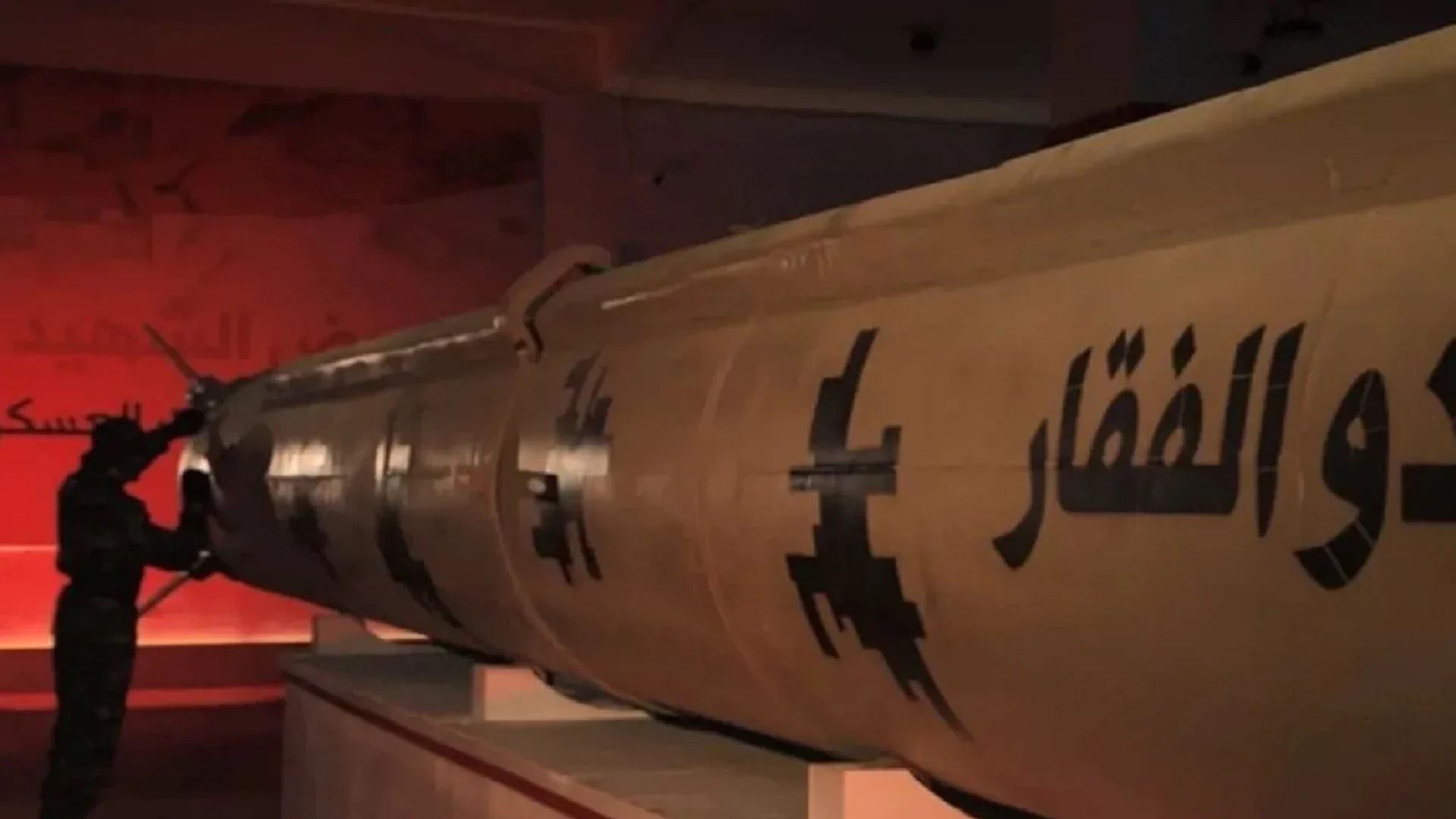
Illustrative image.

Yemen’s Houthis (Ansar Allah) announced on October 19 that they had carried out six operations against Saudi oil facilities, airports and military installations over 48 hours, claiming fires at energy sites, disrupted air traffic and casualties among Saudi forces.

Brig. Gen. Yahya Saree, the Houthis’ military spokesman, said in a statement that the operations involved “a large number of ballistic and cruise missiles and drones.” The targets included Saudi Aramco facilities in Yanbu, the Shaybah oil field, King Khalid International Airport in Riyadh, Abha International Airport and several military installations.

Saree noted that the operation against Aramco facilities in the Red Sea port city of Yanbu was carried out in two phases and caused “large fires” at the targeted sites. A separate strike on the Shaybah oil field also scored a direct hit and sparked fires, he added.

The third operation targeted King Khalid International Airport in Riyadh in three phases. Saree described the strikes as accurate and direct but did not specify any resulting damage.

The fourth operation targeted Abha International Airport, Saudi radar installations in the al-Hisn and al-Rahma mountains, and Khamis Mushait air base. Saree claimed the strikes disrupted air traffic at Abha airport and damaged the air base.

The fifth operation struck a camp belonging to the Saudi naval task force, killing and wounding Saudi personnel, according to Saree. The sixth targeted a Saudi radar installation at Bir Askar, which he said was destroyed.

On the Saudi side, the Saudi-led coalition said a day earlier that its air defenses intercepted and destroyed two ballistic missiles fired toward Khamis Mushait and a drone in the Riyadh region. Saudi Civil Defense separately reported that a projectile fired by the Houthis landed in a residential area of Najran province, wounding six people.

Saree also accused Saudi Arabia of carrying out more than 200 airstrikes and missile attacks against civilian sites in Sanaa and other Houthi-held areas during the same 48-hour period, causing dozens of deaths and injuries, most of them among women and children.

The spokesman said the total number of Saudi airstrikes and missile attacks since the escalation began had exceeded 2,700.

Vowing to continue the campaign, Saree said Yemen would not submit to Saudi Arabia and threatened “wider operations, harsher strikes and more severe targeting.”

“We will continue our military operations deep inside Saudi territory and enforce the equation of blockade for blockade, escalation for escalation,” he said, adding that the attacks would continue until Saudi military operations and the blockade against Yemen ended.

The Houthis’ latest operations show that the conflict is escalating, and despite taking some serious losses, Saudi Arabia and its allies in Yemen do not seem to be planning to take a step back.

_______________________________________________________________________________________________________________________

SouthFront: Analysis and Intelligence

NOW hosted at southfront.press

Previously, SouthFront: Analysis and Intelligence was at southfront.org.

The .org domain name had been blocked by the US (NATO) (https://southfront.press/southfront-org-blocked-by-u-s-controlled-global-internet-supervisor/) globally, outlawed and without any explanation

Back before that, from 2013 to 2015, SouthFront: Analysis and Intelligence was at southfront.com

SOUTHFRONT.PRESS

MORE ON THIS TOPIC:

The post Houthis Claim Six Strikes on Saudi Oil, Airports and Bases in 48 Hours appeared first on South Front.


  •  

Egypt’s Civil Democratic Movement rejects involvement in regional war

Al Mayadeen| October 19, 2026

Egypt’s Civil Democratic Movement rejected any involvement of the Egyptian armed forces in a regional war on behalf of any side, insisting that Cairo make its decisions independently of foreign influence.

The movement said Monday that no outside party should dictate Egypt’s position, arguing that the country’s most important role lies in pursuing “wise mediation to establish peace.”

Turning to domestic affairs, the movement called on civilian opposition groups, its own members included, to begin preparing for the presidential election scheduled for 2030. The call follows President Abdel Fattah el-Sisi’s recent statement that his presidency will end in 2030 and that the matter of constitutional changes to alter that timeline is “completely settled.”

Parliament postpones debate on troop deployment

The statement comes as Egypt’s parliament has yet to take up a proposal to authorize the president to send troops abroad. Lawmakers adjourned an emergency session devoted to discussing support for Saudi Arabia, and deliberations were due to resume on Monday. The debate was postponed again on Monday, this time until October 26.

The session was convened at el-Sisi’s request after he said Cairo would take any action Saudi Arabia asks of it to defend its security and sovereignty.

Yemen’s Sanaa-based Parliament Speaker Yahya Ali al-Ra’i had urged Egypt’s parliament on Saturday not to let the country be drawn into the Saudi escalation, saying such a step would contradict Egypt’s historical role in defending Arab causes.

Yemeni scholars welcome Al-Azhar initiative

Separately, Al-Azhar urged the urgent formation of a mediation committee bringing together respected figures from across the Muslim world. It said the committee should start work immediately to end conflicts and wars in the Arab region, defuse crises, and bridge differences between the parties involved.

The Association of Yemeni Scholars, in turn, reaffirmed its commitment to engaging constructively and in good faith with the invitation extended by the Grand Imam of Al-Azhar, expressing appreciation for the Islamic values and principles it conveyed.

The association also declared Sanaa’s readiness to host the committee proposed by the Grand Imam, comprising respected and wise figures from across the Arab and Islamic worlds.

  •  

Saudi Royal Ties Emerge in OpenAI Spying Case

Click to see full-seize image. (FBI)

A former OpenAI engineer accused of planting a hidden recording device in an executive conference room maintained frequent contact with a Saudi royal who sought to recruit him for an artificial intelligence role in the kingdom, United States prosecutors said on October 19, raising new questions about possible official Saudi role in the spying scandal.

Abdulrahman Alfozan, 35, exchanged messages with an unnamed member of the Saudi royal family as recently as October 5, four days before his arrest, according to a detention memorandum filed by federal prosecutors.

In one exchange, the royal wrote, “Saudi needs you more then the US!” and Alfozan replied, “100,” according to the prosecutors.

The royal’s identity has not been disclosed. Prosecutors allege the communications reflected an effort to recruit Alfozan to work on artificial intelligence in Saudi Arabia, where he had been pursuing professional opportunities while employed at OpenAI.

Prosecutors also cited assistance from Saudi officials in arguing that Alfozan could flee the U.S. if released. A Saudi military official paid for a business-class flight for Alfozan’s wife and infant son, who left San Francisco for Doha, Qatar, on October 10, according to the filing.

His wife told investigators that she intended to move permanently to Saudi Arabia with their son and that Alfozan eventually planned to join them.

Before his arrest, Alfozan had booked a one-way flight to Riyadh for October 12, coinciding with a planned two-month parental leave. Prosecutors argued that his financial resources and apparent support from a foreign government without an extradition treaty with the United States made him a serious flight risk.

The case began after OpenAI employees discovered a concealed audio recording device on September 30, inserted into a USB port behind a television in an executive conference room at the company’s San Francisco offices. The device, which investigators said had been installed around September 28 and contained encrypted recordings, was wrapped in toilet paper.

According to the criminal complaint, the room was regularly used for discussions involving confidential research, product plans, commercial strategy and government engagements.

Prosecutors said government officials attended meetings there around the time the device was installed, heightening concerns about the potential exposure of sensitive discussions.

Investigators cited office surveillance footage showing Alfozan close to the conference room despite lacking authorization to access it. Footage from October 5 allegedly showed him looking behind the television where the device had been placed.

OpenAI security personnel also found a second, similar recording device in a bag containing his identification and other belongings, according to the complaint.

The investigation uncovered additional digital evidence. A chatbot account associated with Alfozan’s wife, which prosecutors said shared multiple identifiers with his own account, had submitted prompts about constructing and concealing an audio recorder, improving live listening and encrypting stored files.

Investigators also cited his inquiries into office locations, meeting-room calendars and scheduled gatherings involving company executives and external partners.

Alfozan was arrested on October 9 and subsequently dismissed by OpenAI, where he had worked as an engineer since July 2025. The company referred the matter to the FBI after discovering the device.

OpenAI has said it found no evidence that the incident resulted in the theft or extraction of model weights, source code or customer data. The case has nevertheless drawn attention to the risks surrounding the protection of advanced artificial intelligence research as governments and technology companies compete for strategic advantages.

Alfozan’s lawyer, William Pernik, has challenged the prosecution’s argument that his client would flee if released. He said the planned travel was for family and immigration reasons, noting that the tickets had been booked in advance and that Alfozan did not leave after learning that OpenAI had discovered the device.

Pernik asked the court to release him under home detention, GPS monitoring and a bond supported by the Saudi consulate.

Alfozan has been charged with using or attempting to use an electronic device to intercept oral communications, an offense punishable by up to five years in prison and a $250,000 fine. He has not been charged with espionage or theft of trade secrets, and prosecutors have not alleged that the Saudi royal directed the placement of the recorder.

The spying attempt may have been to gain a financial edge rather than steal AI technology. Inside knowledge of OpenAI’s investment plans, commercial partnerships, negotiations and business strategy could potentially help Saudi royal-linked interests anticipate market movements, secure more favorable terms in major deals or gain an advantage over competitors. Such intelligence could carry substantial economic value without revealing a single line of OpenAI’s code.

_______________________________________________________________________________________________________________________

SouthFront: Analysis and Intelligence

NOW hosted at southfront.press

Previously, SouthFront: Analysis and Intelligence was at southfront.org.

The .org domain name had been blocked by the US (NATO) (https://southfront.press/southfront-org-blocked-by-u-s-controlled-global-internet-supervisor/) globally, outlawed and without any explanation

Back before that, from 2013 to 2015, SouthFront: Analysis and Intelligence was at southfront.com

SOUTHFRONT.PRESS

MORE ON THIS TOPIC:

The post Saudi Royal Ties Emerge in OpenAI Spying Case appeared first on South Front.

  •  

Saudi Airstrike on Civilian Home in Yemen Kills 10, Including Seven Children: Health Ministry

A Saudi airstrike hit a civilian home in Yemen’s northern Saada province on Sunday, killing at least 10 people, including seven children and one woman, according to the Health Ministry within the Ansar Allah-led Yemeni government, as the US-backed Saudi bombing campaign continues to have a devastating impact on Yemeni civilians. The ministry said that […]
  •  
❌