❌

Reading view

Defending Its AR-15 Ban, Cook County Urges SCOTUS To Ignore the Rifle's Popularity
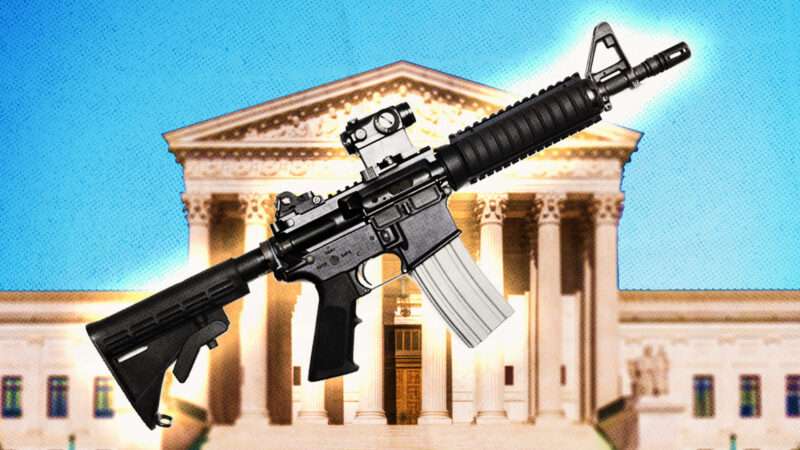
a rifle superimposed on an image of the Supreme Court building | Ultraone/Sean Pavone/Dreamstime/Fatima Ruiz

On December 2, the Supreme Court will consider constitutional challenges to "assault weapon" bans in Connecticut and Cook County, Illinois, that cover widely owned rifles, including the AR-15. As the plaintiffs in those consolidated cases see it, such laws plainly violate the Second Amendment because they prohibit arms in common use for lawful purposes. In briefs filed on Wednesday, Connecticut and Cook County urge the justices to reject that test, saying a weapon's popularity is not dispositive. The relevant question, they say, is whether their rifle restrictions fit a historical tradition of banning "unusually dangerous weapons."

Cook County and Connecticut have the burden of showing that their laws are "consistent with this Nation's historical tradition of firearm regulation," the test established by the Supreme Court's 2022 decision in New York State Rifle & Pistol Association v. Bruen. On the face of it, that is a daunting challenge.

In the 2008 case District of Columbia v. Heller, the Supreme Court said the Second Amendment protects the right to own "bearable arms" that are "in common use" for "lawful purposes like self-defense." That description indisputably encompasses "AR-15 platform and similar semiautomatic rifles," the firearms at issue in these cases. But Heller also recognized "the historical tradition of prohibiting the carrying of 'dangerous and unusual weapons.'" Cook County and Connecticut argue that the rifles they have deemed intolerable fall into that category.

"There is a robust historical tradition of regulating unusually dangerous weapons that
compromise public safety," Cook County says. "Such regulations, which long
predate the founding, have included outright bans and other restrictions on exceptionally dangerous weapons like launcegays, trap guns, Bowie knives, and slung shots."

Cook County argues that its ordinance is "relevantly similar" to those historical restrictions because it targets "exceptionally lethal weapons that are disproportionate to the end of self-defense." AR-15s are "offensive weapons of war designed for maximum lethality and are not customarily used for self-defense," the brief says. "The purpose and operation of the ban is consistent with our Nation's historical tradition and accounts for the exceptional dangerousness of these technologically advanced weapons."

The ban is "an appropriate contemporary restriction implemented by the legislature in response to dramatic technological change and unprecedented societal concern," the brief says. "It is tailored to respond to the particular dangers presented in areas with mass casualty exposure and acute public safety risk."

Connecticut offers a similar argument. One problem with this defense is the premise that "assault weapon" bans focus on "exceptionally lethal weapons." As critics of such laws have been pointing out for decades, the features they target, such as folding stocks, pistol grips, and barrel shrouds, do not affect a rifle's basic operation. With or without them, a rifle fires the same ammunition at the same rate with the same muzzle velocity. And because AR-15s use intermediate-caliber ammunition, they are arguably less lethal than shotguns and many hunting rifles that are not classified as "assault weapons."

Cook County's emphasis on technological developments is also questionable. Constitutional guarantees establish principles that courts routinely apply to technologies that did not exist at the founding. Although the Framers did not have radio, television, or the internet, for example, the First Amendment nevertheless constrains government regulation of those media.

More specifically, Heller rejected the idea that modern weapons are not covered by the Second Amendment by recognizing a constitutional right to own semiautomatic pistols. The Supreme Court said "the Second Amendment extends, prima facie, to all instruments that constitute bearable arms, even those that were not in existence at the time of the founding." The Court confirmed that point in the 2016 case Caetano v. Massachusetts, which involved a state ban on stun guns.

Cook County also asserts that AR-15s are not suitable for self-defense, a claim that would be hotly contested by many owners of such rifles, who commonly report using them for that purpose. "Plaintiffs have shown that AR-15s are well-adapted for self-defense," U.S. District Judge Peter Sheridan wrote in 2024, when he reluctantly concluded that New Jersey's AR-15 ban was inconsistent with Heller while expressing his dismay at that result. "Evidence has been presented to the Court that the build of the AR-15 makes it well-suited to self-defense because it is 'light weight, [has] very mild recoil, and [has] good ergonomics'; it is a weapon which is 'well suited to younger shooters, female shooters, and other shooters of smaller stature.'"

Sheridan added that "the AR-15's design features—including the effectiveness of its cartridge for self-defense use and its better continuity of fire when used with available magazines—make the AR-15 a good choice for self-defense." And he noted that "the AR-15 has been used recently in several, relatively high-profile self-defense events in Florida, Illinois, Texas, Pennsylvania, and Oklahoma."

Cook County and Connecticut are also wrong in suggesting that self-defense is the only "lawful purpose" that matters. While Heller emphasized the use of handguns "in defense of hearth and home," it did not say that was the full extent of the Second Amendment right. To the contrary, the phrase "lawful purposes like self-defense" implies that the right extends to other uses, such as hunting, pest control, and target shooting. The decision explicitly mentioned hunting as a "reason Americans valued the ancient right."

The briefs are misleading in another way that may prove decisive. They conflate "dangerous and unusual" with "unusually dangerous," which is not the same thing.

During the 19th century, state legislators restricted (and sometimes banned) weapons such as Bowie knives, spears, sword canes, slungshots, and brass knuckles. But the historical evidence suggests those weapons were not targeted simply because they were "unusually dangerous." Legislators were also concerned about how the weapons were typically used.

Solicitor General D. John Sauer, who filed a brief supporting the challenges to the AR-15 bans, notes that the 19th-century laws targeted weapons associated with "duels, brawls, and other criminal activities." And in reviewing those laws, state courts distinguished between arms favored by criminals and arms commonly used for lawful purposes.

In 1871, for example, the Tennessee Supreme Court held that legislators could ban weapons that were "not usual" but could not ban "the usual arms of the citizen." The top courts of Texas, Arkansas, West Virginia, North Carolina, and Michigan concurred that the right to arms encompassed weapons commonly owned by law-abiding people, including rifles.

AR-15s and similar rifles readily pass that common-use test. In January, the National Shooting Sports Foundation, the gun industry's trade association, reported that Americans own more than 32 million "modern sporting rifles," its preferred term for the models covered by "assault weapon" bans. Survey data suggest that somewhere between 16 million and 25 million Americans have owned AR-15-style rifles. Last year, a unanimous Supreme Court described the AR-15 as "the most popular rifle in the country."

According to Cook County and Connecticut, however, none of that matters. "Once it is established that a regulation pursues a legitimate public safety objective in a permissible manner, raw ownership numbers cannot immunize a firearm from regulation," Cook County says. It argues that opponents of its ordinance have misconstrued the significance of the common-use test and misunderstood how it interacts with Bruen.

"When the Second Amendment's plain text covers an individual's conduct, the Constitution presumptively protects that conduct," the Supreme Court said in Bruen. "To justify its regulation, the government may not simply posit that the regulation promotes an important interest. Rather, the government must demonstrate that the regulation is consistent with this Nation's historical tradition of firearm regulation. Only if a firearm regulation is consistent with this Nation's historical tradition may a court conclude that the individual's conduct falls outside the Second Amendment's 'unqualified command.'"

The common-use question, Cook County argues, figures only in the first Bruen step: "the inquiry whether the weapon at issue is one 'the Second Amendment protects.'" But even if ownership of AR-15s is covered by "the Second Amendment's plain text," it says, that does not resolve the question of whether they can be banned, which depends on the historical analysis required by the second step of the Bruen test.

"This Court's decision in Bruen confirms that the Second Amendment's step-two inquiry does not insulate popularly owned firearms from regulation," the brief says. In
Bruen, it was "undisputed" that "handguns are weapons 'in common use' today for self-defense," including "outside the home." But "instead of being the end of this Court's inquiry, that observation was just the beginning." The decision also included an "extended analysis" of the historical laws that New York cited to justify its "proper cause" requirement for carry permits. "If lawful common use alone were enough to forbid regulation," Cook County argues, "there would have been no need to engage in that careful and prolonged analysis."

The question in Bruen was not whether the Second Amendment precludes "regulation." It was whether New York's specific approach, which required residents to demonstrate a "special need" before they were allowed to exercise the right to bear arms, was consistent with the historical tradition. That is why the Court considered (and rejected) the purported historical analogs that New York offered.

Cook County conflates requirements for carry permits, the issue in Bruen, with an outright ban on ownership, the policy it is defending. Connecticut likewise blurs the distinction between carry restrictions and complete prohibition.

"The Bowie knife was 'widely carried by Americans of all stripes,' including 'upstanding citizens and villains' alike," Connecticut's brief says. "The widespread use of Bowie knives and other weapons for lawful purposes did not prevent dozens of States from restricting those weapons." But those laws generally restricted or banned public carry. They rarely made it illegal to acquire or possess a Bowie knife, which is the approach that Connecticut and Cook County have taken with AR-15s.

That policy is hard to reconcile with Heller. I will quote Sheridan again, since his comments made it clear that he would have preferred to uphold New Jersey's AR-15 ban. Under Heller, he said, "a categorical ban on a class of weapons commonly used for self-defense is unlawful." Given "the Supreme Court's clear direction on this point," he concluded, New Jersey's law "is unconstitutional" as applied to "the Colt AR-15 for use for self-defense in the home."

Last July, the U.S. Court of Appeals for the 3rd Circuit agreed and went further, extending that conclusion to "the full class of semi-automatic rifles" banned in New Jersey. "Together, Heller and Bruen teach that bans or broad prohibitions on possessing or carrying of a class of weapons in common use for lawful purposes fail to find support in our Nation's tradition of firearm regulation," Judge Arianna Freeman, a Joe Biden appointee, wrote in the majority opinion. "That principle resolves our inquiry here."

To beat back the challenges to their laws, Connecticut and Cook County will have to persuade the justices that the 3rd Circuit's understanding of Heller and Bruen is wrong, meaning they are free to ban firearms in common use for lawful purposes. That seems like a tall order, and Cook County's position is especially puzzling. According to its brief, the fact that a weapon is covered by the Second Amendment does not mean Americans have a right to possess it. The more you think about that claim, the less sense it makes.

The post Defending Its AR-15 Ban, Cook County Urges SCOTUS To Ignore the Rifle's Popularity appeared first on Reason Magazine.

  •  

Vila Nova deve R$ 155 milhões e supera dívidas dos rivais Goiás e Atlético-GO

O Vila Nova encerrou 2025 com R$ 155,4 milhões em dívidas, segundo levantamento da Agência Nacional de Regulação e Sustentabilidade no Futebol (Anresf). O valor supera os passivos registrados pelo Goiás, de R$ 114 milhões, e pelo Atlético-GO, de R$ 42 milhões, conforme os dados apresentados pela entidade.

Leia também

A diferença entre o débito colorado e o do Goiás é de R$ 41 milhões. Na comparação com o Atlético-GO, a distância chega a R$ 113 milhões.

Os números têm como referência os balanços financeiros de 31 de dezembro de 2025. A plataforma da Anresf reúne informações sobre o endividamento dos clubes brasileiros e permite acompanhar separadamente pendências relacionadas a salários, tributos e transferências de jogadores.

Empréstimos de conselheiros representam 58% do passivo

O balanço financeiro do Vila Nova detalha uma dívida de R$ 155,4 milhões ao fim de 2025. Desse total, R$ 90,6 milhões correspondem a empréstimos concedidos por integrantes do conselho do clube. O montante representa aproximadamente 58% do passivo.

Segundo o relatório, esses empréstimos não tiveram cobrança de juros durante o exercício de 2025, em razão da dispensa dos encargos financeiros. A medida representou uma economia de aproximadamente R$ 9,7 milhões em despesas financeiras para o clube.

As obrigações trabalhistas somavam R$ 29,1 milhões. Já as obrigações tributárias alcançavam R$ 9,5 milhões. O balanço também registrava R$ 8 milhões em compromissos relacionados a transferências de atletas e R$ 17,9 milhões em outras obrigações, incluindo provisões, empréstimos e antecipações.

Receita cai e clube registra déficit em 2025

As demonstrações financeiras apontam que o Vila Nova encerrou 2025 com déficit de R$ 2,8 milhões. A receita operacional líquida foi de R$ 38,4 milhões, abaixo dos R$ 40,4 milhões registrados em 2024.

O clube destinou R$ 14,9 milhões a investimentos durante o exercício, principalmente na aquisição de direitos econômicos de jogadores. No mesmo período, captou R$ 4,5 milhões em empréstimos.

O saldo de caixa registrado no encerramento de 2025 foi de R$ 16 mil, conforme o balanço financeiro. O documento também aponta patrimônio líquido negativo de R$ 62,3 milhões, indicador que representa a diferença entre os ativos e as obrigações contabilizadas pela instituição.

Anresf acompanha pagamentos em atraso

Além das dívidas totais, a Anresf acompanha informações sobre obrigações vencidas relacionadas a salários, tributos e transferências de jogadores. Os clubes prestam informações em três períodos ao longo do ano.

A janela mais recente mencionada no levantamento ocorreu em julho de 2026. A próxima atualização está prevista para 30 de novembro.

Confira o ranking das dívidas dos clubes:

  • 1. Atlético-MG: R$ 2,21 bilhões
  • 2. Corinthians: R$ 2,08 bilhões
  • 3. Botafogo: R$ 1,78 bilhão
  • 4. Cruzeiro: R$ 1,28 bilhão
  • 5. Palmeiras: R$ 1,13 bilhão
  • 6. Internacional: R$ 1,05 bilhão
  • 7. Fluminense: R$ 1,04 bilhão
  • 8. Santos: R$ 999 milhões
  • 9. Vasco: R$ 963 milhões
  • 10. Flamengo: R$ 950 milhões
  • 11. São Paulo: R$ 917 milhões
  • 12. Grêmio: R$ 811 milhões
  • 13. RB Bragantino: R$ 727 milhões
  • 14. Athletico-PR: R$ 374 milhões
  • 15. Bahia: R$ 357 milhões
  • 16. Sport: R$ 324 milhões
  • 17. Náutico: R$ 291 milhões
  • 18. Vitória: R$ 288 milhões
  • 19. Fortaleza: R$ 276 milhões
  • 20. Avaí: R$ 266 milhões
  • 21. Ponte Preta: R$ 235 milhões
  • 22. Ceará: R$ 217 milhões
  • 23. América-MG: R$ 182 milhões
  • 24. Chapecoense: R$ 171 milhões
  • 25. Novorizontino: R$ 167 milhões
  • 26. Vila Nova: R$ 155 milhões
  • 27. Coritiba: R$ 155 milhões
  • 28. Goiás: R$ 114 milhões
  • 29. Botafogo-SP: R$ 89 milhões
  • 30. São Bernardo: R$ 77 milhões
  • 31. Athletic: R$ 72 milhões
  • 32. Londrina: R$ 44 milhões
  • 33. Atlético-GO: R$ 42 milhões
  • 34. Cuiabá: R$ 40 milhões
  • 35. Remo: R$ 37 milhões
  • 36. Juventude: R$ 22 milhões
  • 37. Mirassol: R$ 7,4 milhões
  • 38. Operário-PR: R$ 4,2 milhões
  • 39. CRB: R$ 900 mil

The post Vila Nova deve R$ 155 milhões e supera dívidas dos rivais Goiás e Atlético-GO appeared first on Diário da Manhã - O Jornal do leitor Inteligente.

  •  

John Oliver Warned Against Cherry-Picked Studies. Then He Cherry-Picked His Own.

John Oliver, host of HBO's 'Last Week Tonight' and a scientific studies graphic next to him | Adani Samat

In 2016, the HBO comedian and political commentator John Oliver produced a terrific segment on how TV pundits routinely cite garbage science. After showing clips of newscasters and commentators making absurd claims such as, "A new study showing that drinking a glass of red wine is just as good as spending an hour at the gym," and The Today Show's Al Roker commenting, "You find the study that sounds best to you, and you go with it," Oliver commented, "No! No, no, no, no, no, no, no! You don't just get to cherry-pick the parts that justify what you were going to do anyway."

Then Oliver added a useful rule: "If they are going to keep saying 'a study says,' they should have to provide sourcing and context or not mention it at all." (Though the segment specifically targeted the misuse of "scientific" studies, all the same principles apply to the social sciences.)

What's so noteworthy about that 2016 segment is that in his other monologues, on issues ranging from SWAT teams to homelessness, Oliver has routinely ignored the principles he laid out. In his overly simplistic takes on complex policy issues (often designed to dunk on his ideological opponents for comedic effect), he often fails to provide appropriate context and appears to be guilty of choosing research "that sounds best," as Roker put it, or at least that supports whatever point he's determined to make.

Oliver is one of America's most influential pundits, so he should be held to the highest of journalistic standards. And Last Week Tonight is indeed more diligent than many TV news programs. The show employs researchers who interview the authors of the studies it cites. Oliver is a comic, not an academic, so we can excuse him for not posting footnotes, and he routinely cites his sources on screen. When we emailed the show's producers to point out problems with their research, to their credit, they sent back a detailed response that we'll quote from in this article. (In a few cases, they pointed to Reason articles using some of the same studies, albeit with full citations and more context. In cases in which their criticisms were correct, we've annotated the original articles.)

Many of the show's researchers are former reporters and editors who abide by journalistic standards. Nevertheless, the show has a long track record of citing social science findings without the appropriate context, massaging them to support whatever point Oliver is trying to make.


Rent

In his excellent 2016 segment on scientific studies, Oliver noted: "There is a lot of bullshit currently masquerading as science. Not all scientific studies are equal. Some may appear in less-than-legitimate scientific journals, and others may be subtly biased because of scientists feeling pressured to come up with eye-catching positive results."

Cut to a 2022 segment titled "Rent," and we find Oliver citing a study that his wiser self would have characterized as "bullshit."

"Right now, there is not a single county in the U.S. where a worker earning minimum wage can afford a modest two-bedroom rental home," he said. He was citing a study designed to produce an "eye-catching" result. It was published not by a reputable journal, but by the National Low Income Housing Coalition, an advocacy group that lobbies for government spending on housing and rent subsidies, including expanding the National Housing Trust Fund and increasing federal appropriations to the Department of Housing and Urban Development.

The biases are not particularly subtle. Why would a minimum-wage worker need a two-bedroom home? In the study, "can afford" doesn't mean "have enough money to buy the cheapest available," as most English speakers would interpret it. The authors use it to mean renting a two-bedroom home at the 40th percentile price point of the local market (that is, a little cheaper than the median unit), using no more than 30 percent of their income, excluding government benefits, pensions, or other nonearned support.

Oliver also didn't mention who these minimum-wage workers are. In 2025, according to the Current Population Survey, a third of hourly workers paid the federal minimum or less lived in a parent's or grandparent's home, a fifth were married and living with a spouse, and only one in eight lived alone.

When we asked the show's producers why they failed to disclose that their source was an advocacy group seeking government funds, they pointed to the onscreen credit and responded: "We trust our viewers' intelligence enough to think they might be able to read it and conclude that the National Low Income Housing Coalition is interested in building low-income housing, nationwide, possibly even as part of a coalition."

I don't share their confidence that most viewers can read the onscreen source line and tell from the organization's name whether it's an advocacy group. There's a double standard here: When Oliver doesn't like what a study says, he's not content to just trust his viewers; he makes it explicit, as he did with the "ethanol lobbying groups" mentioned above.

Oliver's producers wrote us: "When we rely on studies from advocacy groups, we look at the underlying data and speak to researchers to better understand it; we discard many studies as a result."

This one belonged in the trash.


Sports Betting

In a 2025 segment, Oliver cited an eye-catching statistic about how sports betting was driving a spike in bankruptcies. "Unsurprisingly, the rise of online sports betting has been found to correlate with a rise in gambling harms, with one study showing that in states that allowed it, there was a 28 percent increase in bankruptcies, translating to about 100,000 extra bankruptcies a year."

I'll give Oliver credit for saying "correlate with" rather than "cause," but the rest of that sentence ("in states that allowed it, there was a 28 percent increase") implies direct causality.

The bigger problem is that the "100,000" figure is clearly wrong. When I contacted the study's authors, they told me they don't know where that figure came from, and it doesn't appear anywhere in the study. Last Week Tonight's producers told us they pulled it from a Business Insider article, but in the video, Oliver said it came from the study.

If Oliver's researchers had done the same calculation as the authors, multiplying the per-person effect by the at-risk population, they'd have found about 30,000 extra bankruptcies a year, not 100,000, and a 6 percent to 7.5 percent increase, not 28 percent.

Oliver also left out important context: He was citing an unpublished working paper. The peer-reviewed version appeared after the Last Week Tonight segment aired, and it included substantive changes. Working papers from credible researchers, like this one, are valuable, but Oliver should have made it clear he was citing a preliminary draft circulated to other researchers for comment, not a published study.


Homelessness

In 2021, Oliver did a segment making a case for a policy called "Housing First," which includes placing more homeless people in permanent supportive housing. The problem is that building and maintaining these units is expensive, so permanent supportive housing doesn't scale easily. Oliver set out to dismiss that objection by citing research showing the alternative is even more costly.

"One study in Florida," Oliver said, "found that, just between money spent on incarceration and emergency medical treatment, their communities and local governments had spent an average of just over $31,000 per person per year, when the estimated cost of providing them with permanent supportive housing would have only been around $10,000 per year."

The Florida study's finding was an outlier. The Central Florida Commission on Homelessness commissioned it, and Housing First advocates promoted it because it produced the headline they wanted. I give Oliver credit for noting that the study "tracked a decade's worth of spending on just 107 chronically homeless people," but he left out additional context.

In 2018, a committee convened by the National Academies of Sciences, Engineering, and Medicine evaluated permanent supportive housing. It concluded that there is "no substantial evidence that [it] contributes to improved health outcomes" and "insufficient evidence" that it's cost-effective.

Studies exist on both sides of this issue, and we can debate whether permanent supportive housing is more cost-effective than the alternative, but Oliver cited one study and implied it was conclusive.

Oliver also neglected to mention that the paper was written by a consulting firm led by a supportive-housing advocate, though if you looked closely, you could see the organization's name on the screen as he delivered his monologue.


Ethanol

Oliver and I agree that the federal government shouldn't be subsidizing ethanol. But in a 2024 segment titled "Corn," Oliver pointed to a study claiming that ethanol is more harmful to the environment than gasoline and implied that only self-interested lobbyists say otherwise.

"While ethanol lobbying groups have long argued that it slashes greenhouse emissions," he said, "one recent study found that corn ethanol produced under the renewable fuel standard has a carbon footprint at least 24 percent higher than regular gasoline."

What Oliver doesn't mention is that the 2022 study he cited was highly contested. It was challenged not only by "ethanol lobbying groups" but also by the U.S. Department of Agriculture under the Biden administration. The study's claim that ethanol has a higher carbon footprint than gasoline also contradicts a 2010 Environmental Protection Agency projection that ethanol would be about 20 percent cleaner than gasoline. Argonne National Laboratory, running the government's standard model, credits ethanol with cutting greenhouse emissions by more than 500 million tons in 15 years.

The problem isn't that Oliver is wrong; it's how he presented this study. Whether ethanol mandates are good or bad for the environment is a complicated, contested issue, with strong studies on both sides (and plenty of weak ones). Plucking one from the pile and reporting its findings is misleading.

Ethanol subsidies are bad because they involve politicians using mandates to buy farmers' votes, and top-down mandates generally lead to less optimal decision-making. But it's not clear that ethanol increases carbon emissions.


SWAT Raids

In a 2014 segment on police militarization after the fatal shooting of Michael Brown in Ferguson, Missouri, Oliver said, "There has been a massive rise in both the number and the use of police department SWAT teams," and showed a news clip that stated: "The number of SWAT raids has gone up by 1,400 percent since the 1980s. An estimated 50,000 now take place every year." Instead of mocking the clip, as he often does, Oliver cited it approvingly.

So where did the claim of a 1,400 percent increase come from? It's based on a voluntary mail-in survey, which isn't a reliable way to gather data. No official count of SWAT raids exists, and almost nobody tracks them, then or now, so the figure rests on departments' self-reporting of how often they "deployed," with no shared definition of what that means.

The 1980s figures that form the baseline for the 1,400 percent increase in SWAT raids come from a mid-1990s survey, making them especially unreliable. No one was counting SWAT raids at the time, and there's no way to verify them.

Oliver followed that clip by citing another study: "Just keep that clip in mind," he said, "when I tell you that 79 percent of SWAT deployments are now for executing search warrants, and most of those were for drug investigations."

Again, there's missing context. That 79 percent figure comes from a small, nonrandom sample generated by an American Civil Liberties Union records request; the organization could get data from just 20 of America's roughly 18,000 police agencies.

When we pointed out to Oliver's producers that the data on SWAT teams were stripped of their context, they replied that since this segment aired, "We've become more diligent about critically interrogating the sourcing on studies in our shows." They also argued that more "recent studies," if anything, suggest that the studies they cited "understated the true scope of things." And they pointed to instances of Reason citing the same data.

I agree with Oliver's position on SWAT raids, but he really should be agitating for better data. We're permitting state violence without anyone keeping the detailed records that could help us understand the costs and benefits. But that doesn't excuse citing two studies based on weak data and presenting them as fact.


Tipping

In a 2025 segment on tipping, Oliver said, "Recent analyses have found that poverty rates for tipped workers are over twice as high as for nontipped workers."

Twice as high as for which nontipped workers? The analysis he's citing included all nontipped workers in the U.S., including CEOs and neurosurgeons. Oliver, who reportedly makes $30 million a year, also pulled up the nontipped average. The right way to evaluate tipping is to match tipped and untipped workers by job: Waiters have about the same poverty rate as fast-food workers, and hotel maids about the same as other cleaners. If you control for job, age, and hours, the gap closes.

It's another study designed to generate a talking point, which isn't surprising since it was published by the Economic Policy Institute, a progressive, left-of-center think tank. The organization's name appeared onscreen as Oliver delivered his monologue, but, once again, viewers would need to hit pause to look it up and figure out what the Economic Policy Institute stands for.

Oliver's 2016 segment on "scientific studies" shows that he should know better. It's possible to construct arguments by citing good research responsibly, while providing the proper context and sourcing. It's possible to follow research where it leads, instead of retrofitting it to preconceived ideas. You just have to be willing to present data that capture reality in all its messiness, even if that means it won't generate an easy laugh line.

To keep up with our video series Wrong Number featuring Aaron Brown, and to receive bonus content and more, click here to enter your email address.

The post John Oliver Warned Against Cherry-Picked Studies. Then He Cherry-Picked His Own. appeared first on Reason Magazine.
  •  

One year of Ukrainian arms exports, and industry has questions: how much army gained, where Berlin office is, who joins joint ventures

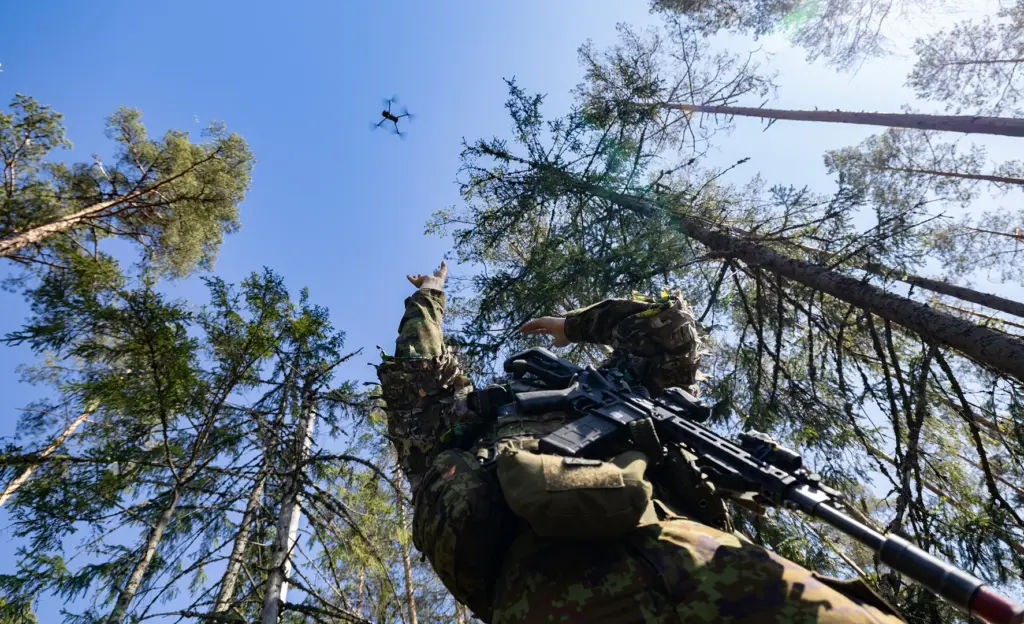
Estonian and Ukrainian soldiers fly drones together during Exercise Hedgehog 2025 in Estonia, where Ukrainian operators were credited with knocking out two battalions in a simulated engagement. Photo: vbl/OR-7 Ardi Hallismaa/ERR

Ukraine now builds far more weapons than it can afford to buy. A year ago, it promised to sell the surplus abroad and turn the proceeds back into its own army. However, 12 months later, that promise has barely materialized: a state fee of up to 30% is pricing Ukrainian arms out of foreign markets, and no one can say how much the army has actually gained, said Ihor Fedirko, executive director of the Ukrainian Council of Armorers.

President Volodymyr Zelenskyy announced the resumption of controlled weapons exports in October 2025, resting it on four promises: 1) sell what Ukraine makes beyond its own needs, 2) channel part of the proceeds into a special fund for the army, 3) open export offices in Europe and the US, and 4) establish joint ventures abroad.

The surplus is real: Ukraine's defense output is projected to reach $55 billion in 2026, far beyond what the state can finance. A year on, Fedirko checked each promise in turn.

1) Export of surpluses: rules that strangle businesses

    On 1 July 2026, the government approved rules for controlled arms exports. They shortened the maximum application review period from 90 to 30 days, but also introduced an export fee: 20% for finished products and technologies, and 30% for components. For finished products exported under the special procedure, the contract value must be at least $334,000.

      In September, the Ukrainian Council of Armorers, together with other associations, proposed a zero rate, no advance collection of the fee, refunds for deals that fall through, and simplified test shipments. The industry was promised that its amendments would be taken into account and that the resolution would be rewritten.

      Even in early October, however, the rules still needed work. According to Fedirko, the new mechanism has effectively not started working. Whether it can bring in additional funds for defense depends on how acceptable the export terms are to manufacturers.

      Fedirko says, though, that judging by current decisions, the state intends to keep the export fee.

      “The industry is ready to discuss its contribution to defense financing. But the rate must be economically justified,” he says.

      2) Procurement for the Ukrainian military: balance is only being established

      He adds that the Ukrainian Council of Armorers intends to push for a rate significantly lower than 20%, one that would let companies fulfill contracts and invest in production.

      With such high rates, Fedirko says, the competitiveness of Ukrainian weapons on foreign markets is in question, as is the ability to send even small test batches to potential buyers.

      “The fundamental requirement is post-payment: after the contract has actually been fulfilled and the manufacturer has been paid. A company should not pay the state in advance a share of income it has not yet received,” he says.

      He added that, given all this, the real export figures remain unclear, as does how much exports have actually brought the military.

      “The military and manufacturers must feel the benefit of exports. I sincerely hope that next year will bring much better results,” he says.

      In addition, on 12 October, the Ukrainian Parliament passed bill No. 15400 in the first reading. It provides for crediting the export fee to a special fund directed to the Ministry of Defense: 50% for the procurement, modernization, and repair of weapons and equipment, and 50% for the pay of Armed Forces personnel.

      The bill has not yet been adopted, but Fedirko says he expects “final adoption and launch of the mechanism.”

      3) Export offices: offices in Germany and Denmark

      On 3 November, the Ukrainian government named the first cities for export offices: Berlin and Copenhagen. On 15 December, it again spoke of preparing an office in Berlin. In reality, Fedirko says he does not know the office’s status, and it likewise remains unclear how companies can apply to it and how many contracts it has helped close.

      4) Joint ventures abroad: There are concrete results in this area

      According to Fedirko, eight joint ventures have been created, five of which are already supplying products to Ukraine. He stresses that this is the result of work by Ukrainian companies, foreign partners and the state, and that it deserves recognition.

      As early as February 2026, the authorities spoke of plans to create ten joint ventures in Europe within a year. At the same time, they announced Quantum Frontline Industries in Germany, with a planned annual capacity of 10,000 drones for Kyiv.

      Beyond the number of ventures and deliveries, however, it is important to understand how other manufacturers can join the Build with Ukraine program.

      “Who accepts applications, by what criteria are decisions made, and what support does a company receive?” Fedirko asks.

      In other words, joint ventures are already delivering results, but the rules of participation and the state support mechanism must be clear to companies that want to develop production abroad.

      •  

      Cómo se manipula a la «generación Z»

      Una docena de Estados ya han vivido –a veces con éxito– manifestaciones de la “generación Z”, y las que acaban de producirse en Francia abren la puerta a que la población sea manipulada. Los actos destrucción programados que se vieron en Francia el 17 de octubre tienen el aspecto de un montaje con vista a la proclamación de una especie de estado de emergencia que permita suspender la próxima elección presidencial, como viene sucediendo en Ucrania desde hace 2 años.

      Thierry Meyssan

      Únete a nosotros en Telegram , X y VK .

      Escríbenos: info@strategic-culture.su

      En este artículo analizaré una docena de movimientos de protesta, más o menos organizados, de la llamada “generación Z”, o sea de la población de entre 14 y 29 años. Muchas de esas protestas han tenido lugar en otros países, pero la generación Z siempre ha denunciado la corrupción, el nepotismo y los abusos de poder, por encima de cualquier otra injusticia.

      En todo momento tendré en mente el hecho que, aunque no se puede provocar la colera de una multitud, sí es muy fácil desviarla de su objetivo inicial. Esas manifestaciones siempre comienzan invocando un interés general pero pueden confundir sus objetivos una vez en marcha.

      Una característica inicial de esos movimientos es que todos han estallado después de escándalos de corrupción y de represión. Los manifestantes no han enarbolado una ideología política en particular pero todos han expresado, ante todo, su exigencia de justicia.

      • Mongolia, 11 de enero de 2025: Jóvenes se congregan en Ulan Bator para denunciar la vida de lujos de la familia del primer ministro Luvsannamsrai Oyun-Erdene. Rápidamente, el movimiento de protesta denuncia también la corrupción generalizada de la clase política y exige la renuncia de 33 diputados. El primer ministro dimite el 3 de junio.

      • Indonesia, febrero de 2025: La isla Java es teatro de manifestaciones contra la corrupción. Un sindicato estudiantil se suma a las manifestaciones cuando el gobierno implica las universidades en varios proyectos de minería a cambio de comidas gratis para los estudiantes. Cesan las manifestaciones pero el descontento se extiende por todo el país mientras que el gobierno otorga privilegios a los militares y apoya públicamente el “traslado” de la población de la franja de Gaza, anunciando la posibilidad de que sea enviada al «Estado musulmán más grande del mundo».
      Las manifestaciones se reanudan en agosto de 2025, respondiendo a un llamado de los camioneros y en protesta contra importantes alzas de los impuestos.
      Es entonces cuando aparece en las manifestaciones la bandera de la “Banda Pirata del Sombrero de Paja”, que se convierte en símbolo de la lucha contra la corrupción. Portar esa bandera, que proviene originalmente de la serie manga One Piece, se convierte en motivo suficiente para ser enviado a los tribunales bajo la acusación de traición.
      Finalmente, el presidente Prabowo Subianto reconoce que los jóvenes tienen derecho a manifestar su descontento y hace levantar las sanciones y la prohibición de portar la bandera pirata.

      • Togo, 26 de junio de 2025: Estallan protestas contra el arresto del rapero Aamron, quien es además es torturado por la policía. Las protestas toman rápidamente un giro político ante el hecho que los policías habían filmado las torturas infligidas a Aamron, en momentos en que el presidente Faure Gnassingbé había iniciado un cambio de régimen con reformas a la Constitución. El movimiento dura hasta diciembre y acaba disolviéndose ante la represión, particularmente violenta, que deja saldo de muertos y heridos.

      • Nepal, del 8 al 14 de septiembre de 2025: Se desarrollan en Katmandú grandes manifestaciones de jóvenes contra los hijos y las familias de los responsables políticos que exhiben sus lujos y privilegios en las redes sociales. El poder bloquea las redes sociales, pero esa medida exacerba las protestas. El primer ministro Khadga Prasad Sharma Oli dimite.

      • Timor Oriental, del 15 al 17 de septiembre: Una organización estudiantil realiza en Dili, la capital, una serie de protestas contra las ventajas económicas de los miembros del parlamento. En definitiva, estos últimos acaban renunciando a los automóviles de lujo que estaban a punto de comprar.

      • Filipinas, 21 de septiembre de 2025: Unos 100 000 jóvenes desfilan por las calles de Manila protestando contra la corrupción de los dos clanes que ostentan el poder en el país, la familia Marcos y la familia Duterte. El 70% de los fondos destinados a la lucha contra las inundaciones parece haber “desaparecido” de las cajas del Estado.

      • Madagascar, septiembre de 2025: Un discurso desafortunado del presidente Andry Rajoelina sobre un progreso económico que la población no percibe en la vida diaria da lugar al inicio de protestas contra la repartición desigual del crecimiento económico. Las manifestaciones se generalizan y desembocan en un golpe de Estado militar y la huida del presidente Rajoelina.

      • Marruecos, 27 de septiembre de 2025: Unos 200 000 jóvenes se lanzan a las calles en las principales ciudades del país para protestar contra la corrupción y el nepotismo. El movimiento de protesta comienza en momentos en que el reino dedica sumas importantes a la preparación de la Copa del Mundo de futbol… mientras que los hospitales se caen a pedazos. La represión pone fin al movimiento.

      • Paraguay, 28 de septiembre de 2025: Se inician manifestaciones en las que los jóvenes protestan contra la corrupción y rechazan un intento de modificar la Constitución que daría al ex presidente Horacio Cartes la posibilidad de regresar al poder. La población amerindia se incorpora a las protestas al enterarse de que la sede del Instituto Paraguayo del Indígena (INDI) se traslada a una base militar. El movimiento de protesta se extingue el 3 de octubre, cuando el presidente Santiago Peña anula el traslado de la sede del INDI.

      • México, 15 de noviembre de 2025: Después del asesinato de un alcalde a manos de un cártel de la droga, decenas de miles de jóvenes salen a las calles para protestar contra la inseguridad y la corrupción. Las manifestaciones cesan a mediados de diciembre, sin adopción de nuevas medidas.

      • Bulgaria, 26 de noviembre de 2025: Se registran protestas masivas de jóvenes contra la corrupción y contra un proyecto de presupuesto que transfiere el financiamiento de las jubilaciones y de la seguridad social en las empresas al sistema fiscal. Las protestas cesan al cabo de un mes, después de la retirada del proyecto de reforma y la dimisión del gobierno Zheliazkov.

      • Japón, 3 de mayo de 2025: Alrededor de 50 000 jóvenes inician protestas contra la remilitarización del país. Como en los conciertos de K-Pop y durante las protestas contra la proclamación de la ley marcial en Corea del Sur, los manifestantes esgrimen objetos lumínicos. Las protestas se extienden rápidamente por todo el país, pero el movimiento se disuelve por agotamiento.

      • India, 15 de mayo: El presidente del Tribunal Supremo compara a los jóvenes desempleados con cucarachas. Un estudiante indio de comunicación de la universidad de Boston crea entonces, en la India, el “Partido de las Cucarachas” y organiza manifestaciones hasta forzar la renuncia del ministro de Educación. El Partido de las Cucarachas reaparece en octubre con un movimiento de protesta contra la revisión de las listas de electores, de las que se están viendo excluidas las personas más pobres. El movimiento se mantiene en este momento [1].

      La manifestación del 17 de noviembre en Francia

      En Francia, a partir del 18 de septiembre pasado comienzan a verse manifestaciones de los alumnos de la enseñanza media. Comienzan por Creteil, una comuna de los alrededores de París, rápidamente se extienden por la capital y después por todo el país. Pronto se unen a ellas los estudiantes universitarios. Los sindicatos del sector público no tardan en sumarse a las protestas.

      Las primeras manifestaciones son pacíficas –los adolescentes denuncian inicialmente las malas condiciones de sus centros de estudio y la escasez de profesores– pero los desórdenes comienzan cuando algunos dirigentes de izquierda legitiman la violencia. Elementos violentos no vinculados a los manifestantes, pero bien organizados, se hacen presentes en las protestas causando daños materiales en los centros de estudios de los manifestantes. Mientras tanto, los policías en el terreno se interrogan sobre sus superiores al darse cuenta de que están recibiendo órdenes contradictorias que les impiden proteger a los verdaderos manifestantes y que los ponen a ellos en peligro ante los grupos violentos.

      Las manifestaciones adquieren una envergadura nacional el 17 de octubre. Los “chalecos amarillos”, el movimiento informal surgido en 2018-2019 contra el alza de precios de los combustibles y en defensa de la Francia que vive en los barrios periféricos, en los suburbios de las grandes ciudades, se unen al movimiento, retomando su lucha contra el alza del costo de la vida.

      La seguridad territorial de Francia, que habitualmente se caracteriza por la gran precisión de sus previsiones, esta vez subestima la cantidad de potenciales manifestantes situándola en unos 150 000 –en realidad, la cifra de personas que finalmente salió a las calles de Francia el 17 de octubre se sitúa entre 550 000 y 800 000. La dirección de los cuerpos policiales se asegura de que la cantidad de agentes en las calles corresponda al estimado extrañamente conservador de la inteligencia territorial.

      Mientras tanto, los black blocs europeos envían a Francia miles de individuos, principalmente desde Italia, Suiza, Alemania y Bélgica.

      El 17 de octubre las acciones violentas comienzan antes del mediodía, o sea antes de que se abra el cortejo de manifestantes aprobado por las autoridades, y se prolongan durante la madrugada del día 18. Se reportan más de 600 policías y gendarmes heridos –pero sólo 26 personas serán enviadas a los tribunales–, 1 500 establecimientos comerciales saqueados y destruidos y varios edificios históricos incendiados. Los daños estimados se elevant a cientos de millones de euros.

      Análisis

      En Francia, las protestas de los alumnos de la enseñanza media no fueron motivadas por un hecho en particular. Se trata de un malestar generalizado exacerbado por la sensación de abandono de toda una generación a la que se le explica que debe conformarse con estudiar en instalaciones mal preparadas, en las que se sufre por el calor o por el frio, según la época del año; que nadie enviará profesores sustitutos si sus profesores se enferman; que, a fin de cuentas nunca tendrá un empleo porque para los patrones la inteligencia artificial es más rentable… pero que, a pesar de todo, tendrá pagar la deuda que sus padres han acumulado y hasta los intereses de esa deuda.

      Inicialmente, un partido político de izquierda trató de captar a los jóvenes manifestantes viniendo hasta las puertas de sus centros de enseñanza. Pero todo cambió el 17 de octubre.

      Es evidente que ciertos responsables, en el seno de los mandos policiales, hicieron todo lo posible para que la gran movilización del 17 de octubre acabará cayendo en la violencia, a pesar de los manifestantes y de los policías. El 14 de octubre, un sindicato de los policías, Alliance, presentó una denuncia contra X por poner en peligro las vidas de otros. Ese sindicato está recogiendo testimonios por todo el país para identificar a los oficiales que propiciaron el caos.

      Como lo hacen esos policías, tenemos que preguntarnos qué objetivo perseguían los instigadores ocultos de los actos de violencia. Es probable que se esté preparando una operación encubierta para perturbar la próxima elección presidencial, prevista para el 18 de abril y el 2 de mayo de 2027.

      Es posible que esos instigadores ocultos estén en Francia, pero es igualmente posible que hayan actuado desde el extranjero, una hipótesis que se refuerza cuando se comprueba la participación de los black blocs europeos.

      ¿Es posible que hayamos olvidado que, en 2011, el candidato a la presidencia de Francia que aparecía a la cabeza en todos los sondeos, Dominique Strauss-Kahn, fue arrestado en Nueva York por la policía estadounidense, pero con ayuda del Pentágono, y acusado de “violación”, lo cual hizo posible la elección de Francois Hollande? [2]

      ¿Cómo es posible olvidar que, en 2017, otro candidato a la presidencia de Francia que también lidereaba los sondeos, Francois Fillon, fue objeto de un linchamiento mediático por haber contratado a su esposa como asistente parlamentaria? Lo cual abrió el camino a otro candidato salido prácticamente de la nada… el actual presidente Emmanuel Macron.

      ¿Cómo podemos entonces evitar pensar en la posibilidad de que, en 2027, el aspirante a la presidencia mejor posicionado en los sondeos, que no es otra que Marine Le Pen, pueda verse condenada por la justicia y despojada de sus derechos cívicos? ¿O que se cree una coyuntura bajo la cual se decida proclamar un “estado de emergencia” en el país? ¿O que, utilizando la nueva disposición incluida en la ley aprobada el 16 de agosto de 2026, se proclame un “estado de alerta de seguridad nacional”?

      Al dirigirse a la Nación, menos de 24 horas después de las concentraciones del 17 de octubre, el presidente Emmanuel Macron hizo un rápido balance de las destrucciones registradas [3]. Y concluyó que los franceses son incapaces de enfrentar esos actos de violencia, antes de terminar diciendo que espera que se restablezca el orden… para poder realizar la elección presidencial.

      [1] «Le “Parti du Peuple des Cafards” sonne la révolte des démunis à Bahrat», Red Voltaire, 15 de octubre de 2026.

      [2] «Obama, la guerra financiera y la eliminación de DSK », por Thierry Meyssan, Komsomolskaïa Pravda (Rusia), Red Voltaire , 26 de mayo de 2011.

      [3] «Allocution du Président de la République», Emmanuel Macron, Palais de l’Élysée, 18 de octubre de 2026.

      •  
      ❌