❌

Reading view

Ramaswamy’s new ad is the most vile Hail Mary I’ve seen in my 40 years of journalism

In political campaigns’ waning days, candidates behind in their races may hope for an October surprise, like a news story or a gaffe in their favor, to propel them to victory.

Particularly panicked campaigns, however, may reject waiting for the organic October surprise in favor of tossing a Hail Mary. I’ve been in journalism for more than 40 years, and I’ve never seen a Hail Mary as desperate, vicious and vile as the one released this week in Ohio by gubernatorial candidate Vivek Ramaswamy.

The Republican nominee has spent his campaign portraying his Democratic opponent, Dr. Amy Acton, as a mentally unstable and violent drunk who is unfit for office.

Portraying an opponent as trigger-happy or lying about her faith is one thing. Going after a sexual abuse survivor is quite another.

In a normal election cycle, that would be repulsive enough, but this week, a video appeared on social media featuring Donna Arthur, Acton’s estranged mother. In the video, after touting her work with sexual abuse survivors, Arthur says her daughter has a “serious problem: She is a liar … She has lied her entire life.”

Writing what Arthur said doesn’t do justice to the wickedness of the spot. Acton is a victim of sexual abuse. Her stepfather, Cledith Arthur, was arrested and indicted by a grand jury in 1978 for raping Acton, who was 12 at the time. Donna Arthur lost custody of Acton and her brother, but she stayed married to Cledith Arthur, who reportedly fled after the indictment and died in 2004 in Pennsylvania. Donna Arthur had not spoken to Acton or her brother in nearly 50 years.

That’s the cliff notes version of a painful family history — and Ramaswamy is looking to capitalize on the agony. Back in April, he appeared to criticize Acton for being sexually abused when he said that he had “a positive vision for our state versus a governor who has none at all other than to complain about what someone else did to her.”

The video caused a firestorm that repulsed Democrats and Republicans. Ohio Gov. Mike DeWine asked Ramaswamy to take down the ad. Sen. Jon Husted, R-Ohio, who is in a close race against former Sen. Sherrod Brown, said that he “would not have run” the ad.

The backlash seems to have only fueled Ramaswamy, however. He acknowledged his campaign was behind the video and will spend $4 million to further advertise it. At a rally for Ramaswamy and Husted, Vice President JD Vance said he was “disgusted” by Republicans “whining” about the ad. Republicans should be more concerned with winning, he argued, echoing remarks Ramaswamy made about the domestic abuse allegations against Rep. Max Miller, R-Ohio. And on Thursday, President Trump defended the ad while calling DeWine “disloyal to the Republican Party.”

Perhaps Ramaswamy has no other tactic. A recurring pattern in his campaign is an emphasis on character assassination instead of issues.

Sometimes Hail Mary ads work. In 1964, Lyndon Johnson’s campaign commissioned the “Daisy” ad, which showed a little girl holding a flower before she’s killed by a nuclear blast. It only aired once, but subsequent news coverage frequently repeated the commercial, spotlighting Republican Barry Goldwater’s controversial views on the use of low-grade nuclear weapons. “Daisy” was the nail in the coffin of Goldwater’s campaign, and a landmark in political advertising.

But most times, Hail Marys fail. In 2008, the campaign of Republican Elizabeth Dole released an ad attacking Democrat Kay Hagan, her challenger for a North Carolina Senate seat. The ad questioned Hagan’s faith in God and featured statements from atheists. That might have been effective, but Hagan was a Sunday school teacher and elder in her church. The ad backfired, and Hagan won.

Portraying an opponent as trigger happy or lying about her faith is one thing. Going after a sexual abuse survivor is quite another.

Donna Arthur calls the daughter she had not seen in decades a “liar,” using the same innuendo Ramaswamy did when he said Acton was simply complaining about what happened to her before she was even a teenager. Doubting victims of sexual assault is bad enough, but using their pain and suffering for political gain is a low point in American politics.

Yet perhaps Ramaswamy has no other tactic. A reoccurring pattern in his campaign is an emphasis on character assassination instead of issues. One ad featured a woman accusing Acton, who ran the Ohio Department of Health during Covid-19, of being responsible for her 88-year-old mother’s death. The mom, however, lived in Kentucky. Other ads from Ramaswamy-aligned PACs have accused Acton of lying on her medical license application and abusing alcohol and prescription drugs. The Acton campaign has rebutted the allegations, and media outlets have found multiple claims “that are unsupported by the facts.”

“It’s not surprising that Vivek Ramaswamy has stooped to such a despicable low as to attempt to turn the sexual abuse Amy endured at 12 years old from our birth mother’s husband into a political talking point,” Philip Stearns, Acton’s brother, said in a statement.

But it should be surprising. Men continue to marginalize women who have experienced an unimaginable violation. These women demand support. Full stop.

I’ve been a reporter and editor, run the largest (at the time) journalism organization in the country and covered my share of elections. The Ohio gubernatorial contest is gutter politics at its best. The Ramaswamy ad featuring a mother who supported her husband over a preteen daughter who said he raped her is the worst I’ve ever seen. Let’s hope it doesn’t get worse from here.

The post Ramaswamy’s new ad is the most vile Hail Mary I’ve seen in my 40 years of journalism appeared first on MS NOW.

  •  

EU’s Arctic oil-and-gas pledge leaves a Norway-sized loophole

Earlier this week, EU officials said in unusually staunch terms that they would not buy Arctic oil and gas.

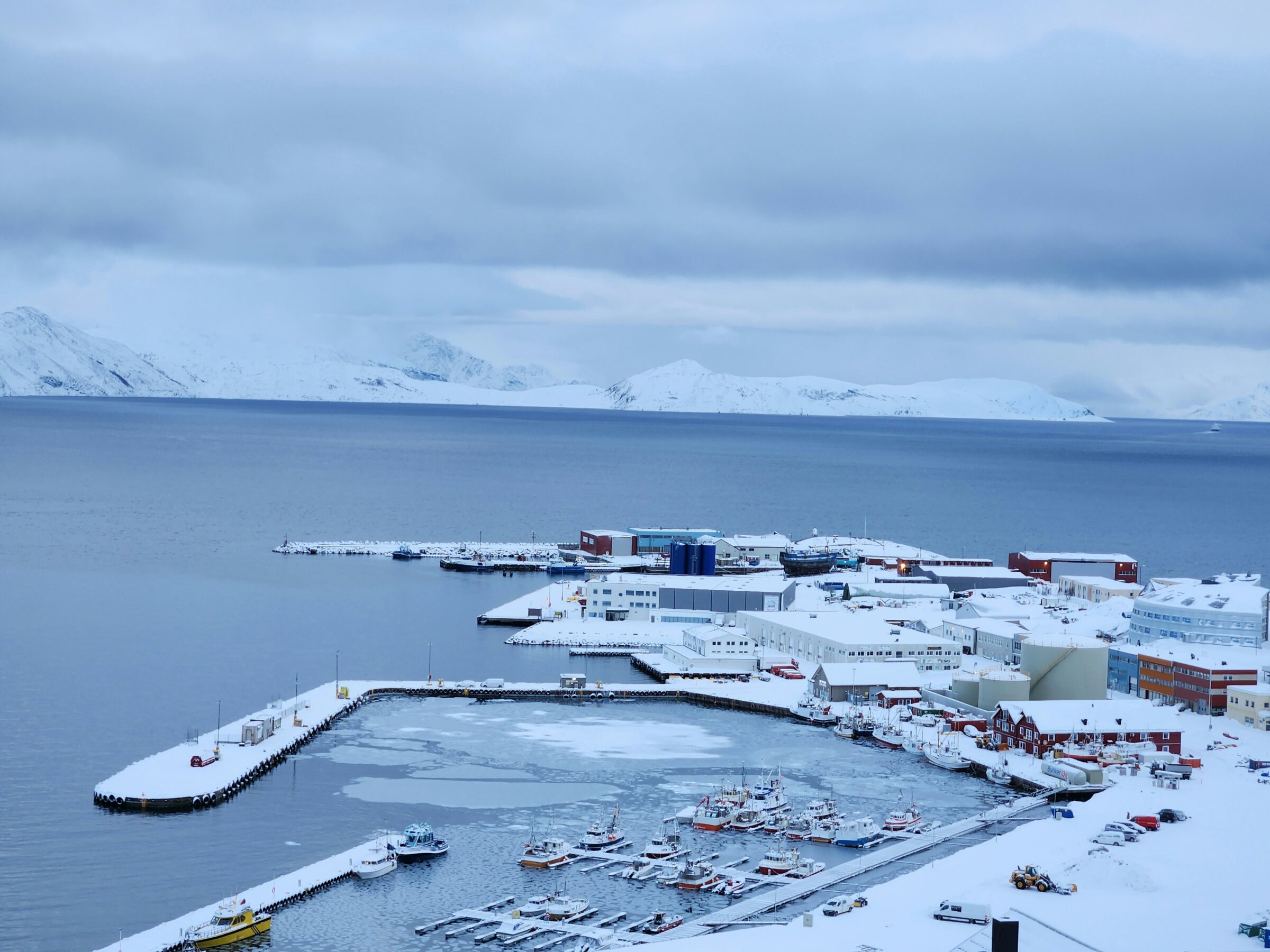
Even if someone (Norway) decided to drill new oil or gas wells in the Barents Sea, which is well above the Arctic Circle, the EU would not purchase it.

The goal is to dissuade investors. It costs many billions of euros to develop gas or oil at scale in the harsh conditions of the far north.

If there is no offtake market in continental Europe, no-one is going to take the risk.

The thing is, EU buyers already buy gas (and oil) from the Arctic. A lot of it.

Most of the gas, some 12 million tonnes so far this year, comes from Russia’s Yamal LNG plant, which sits on the shore of the biggest estuary you have never heard of, the Gulf of Ob (Obskaya Guba in Russian).

But that will end 10 weeks from now, when the EU ban on Russian LNG kicks in.

This article continues, but the full version is available only to EUobserver.com subscribers. Visit account.euobserver.com/membership

  •  

About That Contested Elizabeth Holmes Quote to The Times

In today’s Backstory, the new Holmes film takes issue with our profile, Nikole Hannah-Jones unpacks her viral essay and a professor shares why he thinks we apply “conservative” and “liberal” labels inconsistently.
  •  

Brussels is moving to ban street advertising by fossil-fuel firms – the EU officials who live there should take note

Last week, Elsene became the fifth  municipality to vote for an end to fossil-fuel advertising, joining Saint-Gilles, Jette, Schaerbeek and Molenbeek.

Four of those five votes came in the space of just four months, and together, these municipalities are home to roughly 370,000 people: one-third of the Brussels-Capital Region’s population.

All five are making the same demand: that the Brussels region bans fossil-fuel advertising across the entire city, from metro stations to regional roads. More motions are already being tabled, and by the end of the year, a majority of Brussels’ 19 municipalities could be on record calling for a ban.

While local politicians are taking the lead, the outlook a little higher up the chain looks less promising. 

Europe’s ad town and the EU’s lobby town

Everyday tens of thousands of officials, MEPs, assistants and diplomats brave Brussels morning rush hour on their way to work on the laws that will decide whether Europe meets its climate targets.

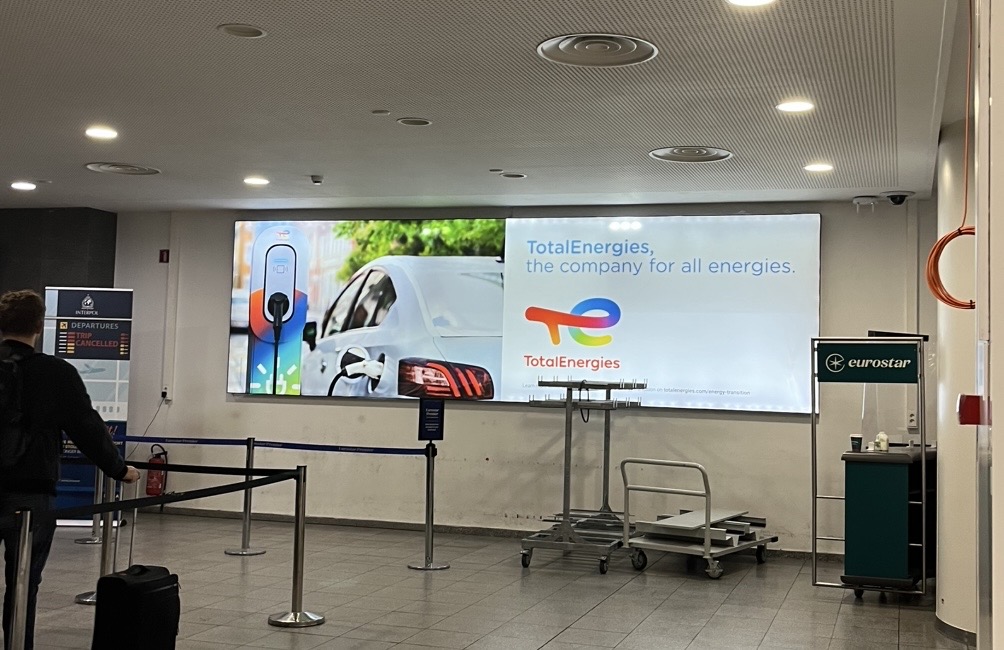
Along the way they pass numerous temptations, bus shelters and metro walls selling them petrol cars, weekend flights and gas contracts, normalising the ongoing mass-consumption of these products. 

Once they reach their offices, they meet the same industry again, this time in person. The seven biggest oil and gas companies alone have declared lobbying budgets of almost €64m.

Fossil Free Politics research shows EU Commissioners and their cabinets had nearly 900 meetings with fossil fuel lobbyists in the last term. That’s nearly once every working day, showing just how embedded the industry is in the daily rhythm of Brussels life.

Some files come under particularly heavy pressure, with one egregious example being how a secretive alliance of eleven large multinational enterprises worked to tear down the EU’s flagship human rights and climate law last year, the Corporate Sustainability Due Diligence Directive (CSDDD).

The fossil fuel industry is currently mounting an extremely intense lobbying campaign to delay and dilute the EU Methane Emissions Regulation over the past year.

Over 80 percent of all commission meetings with external interest representatives on this regulation involved fossil fuel lobbyists, and the European Parliament is no better. All 17 MEPs who called for the methane regulation to be reopened in an April 2026 letter to the commission had met with fossil fuel lobbyists in the preceding year.

And those are only the declared figures.

Lobbyists roaming the corridors

Safe to say, the real total is almost certainly higher. According to new research by Reclaim Finance, on two out of every three days, the fossil-fuel lobbyists present at the European Parliament had no meetings scheduled with MEPs. They roam the corridors and cafés in the building, aiming to bump into the MEPs they wish to influence.

The councillors behind these fossil ad ban motions are not pretending that a few billboards will single-handedly solve the climate crisis, but they refuse to continue letting public spaces be misused by the fossil, automotive and aviation industry to freely promote their propaganda; as for the latter, especially since the advertised destinations are often precisely those places that have been the victims of severe climate disruptions..  

“The summer of 2026 was a painful awakening to the harsh reality of the consequences of the climate crisis,” said Mathias Gyselen, the Ecolo-Groen councillor who tabled Schaerbeek’s motion in September.

“Heatwaves, heat islands and heat deaths are unfortunately becoming the new normal in the city. Doing nothing is no longer an option.”

They are right. Advertising is how the fossil fuel industry keeps its social licence, presenting itself as part of the solution while expanding the very products driving the crisis.

Not just the five sub-municipalities of the Brussels capital acknowledge this, but over 70+ cities worldwide have taken steps to clear their streets from fossil fuel advertising, among them Amsterdam, Sydney, Stockholm and Edinburgh.

The problems with advertisements, and multi-million euro lobby strategies, are not just that they very much harm the planet, they are also fundamentally undemocratic. 

Residents, community groups and civil society organisations cannot match the industry’s firepower. They do not have the budgets, the staff or the open doors that put them across the table from lawmakers week after week.

Europe has dealt with this before.

‘Godfathers of climate chaos’

Tobacco lobbyists no longer get privileged access to health ministers, nor can cigarette brands buy billboards. For many similar reasons the world wants to end fossil fuels, the EU banned tobacco advertising because promoting a deadly product was incompatible with public health.

UN secretary-general António Guterres made the same comparison in 2024 when he urged every country to ban fossil fuel advertising, naming fossil-fuel companies as the “godfathers of climate chaos”

Municipal motions are not binding, so the decision now lies with the Brussels-Capital Region, which controls advertising in the metro, along regional roads and on its own infrastructure. A first obvious step is that it should listen to its municipalities and introduce a city-wide ban.

But the message is also addressed to the institutions on the other side of the Rue de la Loi.

If the streets of Europe’s capital are being cleared of fossil fuel promotion, the corridors of its institutions should be too. That means limiting the industry’s access to decision-makers, closing the revolving door, and rejecting fossil fuel sponsorship and partnerships, just as the EU did with tobacco.

The municipalities of Brussels have shown what local democracy looks like. Now it is up to the region and the EU institutions to show that Europe’s capital is not for sale; not on its billboards, and not in its corridors of power.

  •  

Just How Much Are Young Voters Backing Democrats Now? See the Shift.

In the new Times/Siena poll, 70 percent of young voters identified as Democrats or leaned that way — a jump from just two years ago.

© The New York Times

  •  

Don’t mistake Indonesia’s MSCI scare for economic weakness

When MSCI floated the idea of downgrading Indonesia to a Standalone Market, anxiety quickly swept through Jakarta’s financial community. Predictably, alarming headlines immediately pointed to foreign capital flight, stock prices dropped and local regulators quickly moved to calm jittery investors. Yet, treating this stock market tremor as a proxy for Indonesia’s overall economic health represents […]

The post Don’t mistake Indonesia’s MSCI scare for economic weakness appeared first on Asia Times.

  •  
❌