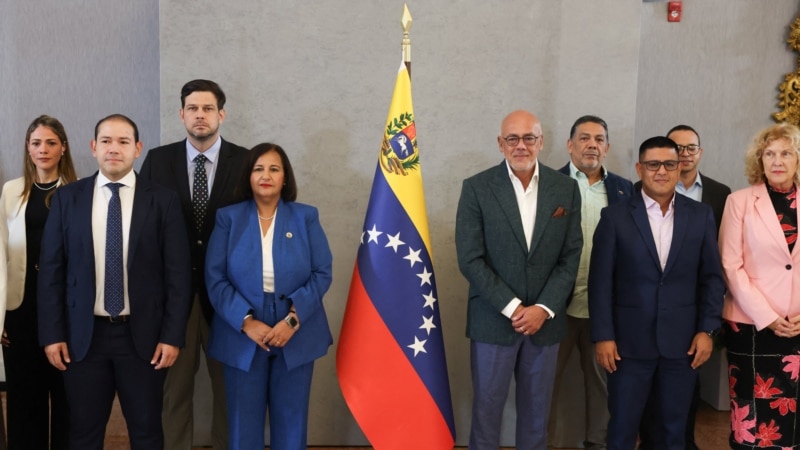
La Asamblea Nacional de Venezuela aprobó por unanimidad la incorporación de 12 representantes de la sociedad civil al Comité de Postulaciones Judiciales, órgano encargado de evaluar a los aspirantes a magistrados del Tribunal Supremo de Justicia como parte de la renovación del Poder Judicial.
Venezuela’s National Assembly President reaffirmed sovereign control over the country’s oil revenues and reported 71 active energy agreements alongside 44 contracts under negotiation, framing the figures as evidence of a sector revival after years of financial restrictions.
The statements came amid what officials called a strategic reconfiguration of the Venezuelan hydrocarbon industry. After years of intense global financial restrictions, the gradual operational reactivation of agreements between state-owned oil company Petroleos de Venezuela (PDVSA) and international firms aims to restore a steady flow of foreign currency into the national treasury.
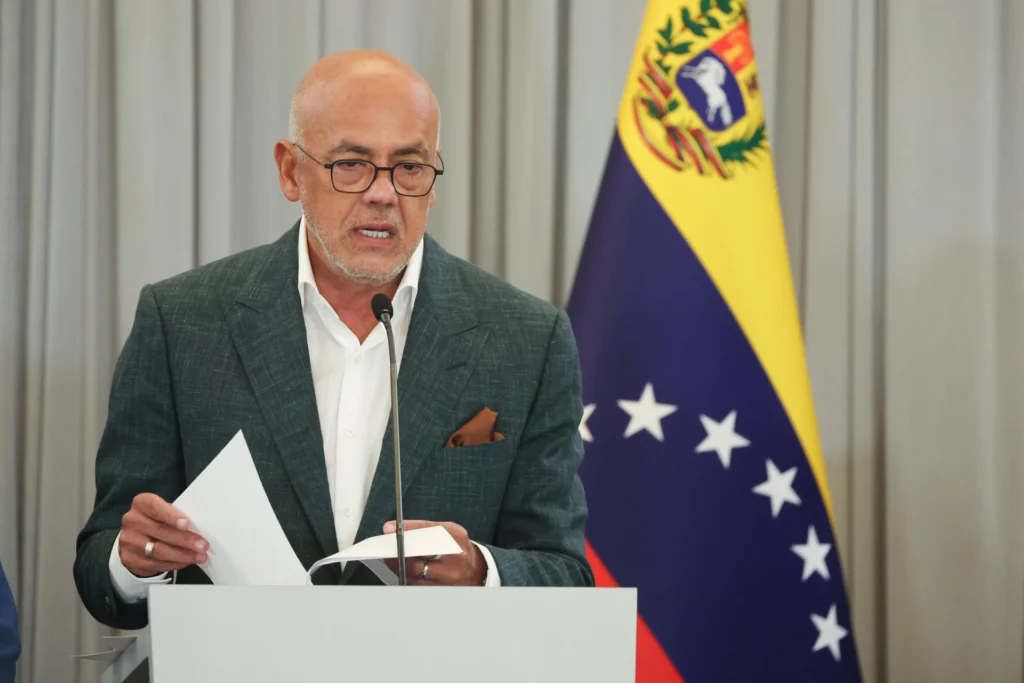
“No foreign agency or international financial entity administers or safeguards the public funds that enter the country from hydrocarbon sales,” National Assembly President Jorge Rodriguez said.
Rodríguez detailed that the money enters the public treasury under the supervision of authorized national banks, and he ruled out any external trust or any management of accounts by third parties outside the country’s institutions. In this sense, he called autonomy over foreign currency “a non-negotiable principle” for the country’s macroeconomic stability.
71 agreements are currently in force, while another 44 contracts are being negotiated. For the government, that volume confirms an operational momentum geared toward diversifying investment across the country’s main extraction fields.
The National Assembly President presented this dynamism as the result of a deliberate push to reopen the sector to international capital without surrendering control. Over the past several years, sweeping financial measures limited Venezuela’s ability to sell crude, collect payments and maintain production infrastructure. The current wave of deals represents a step-by-step return to commercial activity.
#EnVideo📹 | Coordinador del diálogo por el Gobierno Nacional, Jorge Rodríguez, aseveró que Venezuela mantiene el control sobre los recursos financieros obtenidos a través de la comercialización de petróleo hacia distintos países del mundo. pic.twitter.com/MUoEuwKXQI
— Ministerio de Comunicación e Información (@mippci_ven) October 22, 2026
Text reads: “Coordinator of the dialogue by the National Government, Jorge Rodríguez, asserted that Venezuela retains control over financial resources obtained through the marketing of oil to different countries in the world.”
Each reactivated agreement carries a single objective, officials indicated, the capture of hard currency for the public coffers. That revenue is meant to fund the productive apparatus and national infrastructure rather than remain subject to outside oversight.
By spreading investment across the country’s principal extraction zones, the government seeks to reduce dependence on any single field or partner.
Sovereign Control Defended
Reaffirming sovereign control over monetary flows stands as a central pillar of the government’s message. The leadership projected institutional stability at a moment when Washington continues to review and adjust the licenses it grants for oil operations.
Rodríguez also denounced continuous pressure and unilateral coercive measures against the country’s financial system by foreign powers. He said that, despite what he described as an economic siege, the government has consolidated alternative mechanisms to receive payments directly for oil-product exports.
Against that backdrop, the government is working to shield energy agreements legally, dismiss any suggestion of foreign tutelage and guarantee direct financing for public budgets.
Official strategy insists that autonomous management of oil income is an indispensable guarantee for preserving fiscal balance, defending the national currency and sustaining social development programs.
For the Bolivarian government, legal protection of the energy agreements goes hand in hand with financing priorities. The revenue is meant to flow directly toward the productive apparatus and public infrastructure, a framework that Rodriguez described as essential to institutional stability.
Las protestas en Venezuela aumentaron un 229,3 % entre enero y septiembre de 2026, en comparación con el mismo período del año anterior, según el más reciente balance del Observatorio Venezolano de Conflictividad Social (OVCS), que documentó 5.757 manifestaciones en distintas regiones del país.
El incremento refleja una mayor actividad de protesta ciudadana, impulsada por reclamos económicos, sociales y políticos. Entre las principales exigencias figuran mejoras salariales, pensiones...
Durante esta etapa se celebraron dos sesiones plenarias y quince reuniones técnicas, en las que se dio continuidad a las tres mesas de trabajo existentes y se instaló una cuarta dedicada a las garantías políticas, económicas y sociales.
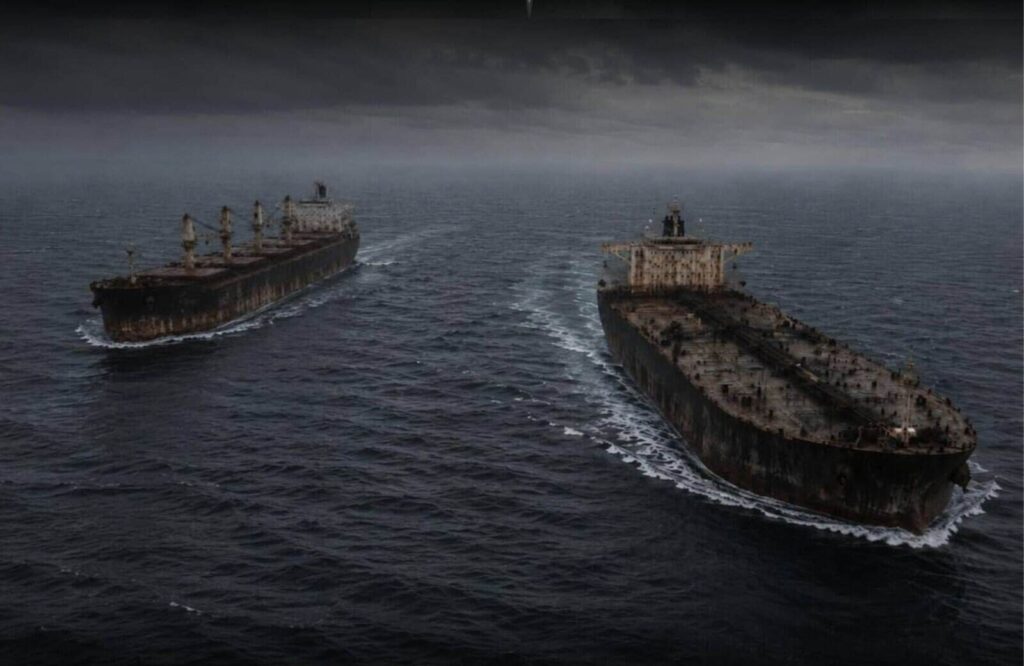
Investors who buy idle sanctioned tankers and refit them could put the ships back into legal oil trade, US Energy Secretary Chris Wright said on 19 October, Bloomberg reported. He laid out the plan five days after a US official described it to Reuters.
That official said the aim was to cut record tanker freight rates. The Energy Department added that any relief would not help Russia move its oil. The plan comes weeks before the 3 November midterms, with voters worried about fuel costs after gasoline and diesel prices surged in the Mideast conflict. Yet the shadow fleet is also how Russia sells oil past sanctions, and those sales fund its war against Ukraine. In December 2025, Ukraine’s foreign intelligence counted more than 1,100 tankers serving Russia alone, 226 of them under US sanctions.
An approval process Wright didn’t detail
Many sanctioned tankers sit idle, Wright told Bloomberg’s Annmarie Hordern, and buyers keep approaching the administration offering to fix them up and carry only legal oil.
“We’re going to move some of the ships from what I call the ‘bad-guy fleet’ to the ‘good-guy fleet,’” he said. “They will not carry sanctioned oil anymore.”
The ships must go through an approval process, Wright said, but he gave no criteria. He insisted “there is no removing of sanctions.”
He put the global dark fleet at about 1,600 ships, a count covering vessels that hauled Venezuelan, Iranian, and Russian oil. Dozens or even hundreds could turn legitimate, he said. The ships are no longer needed for Venezuelan oil, Wright said, and no Iranian oil is moving. Russian oil exports, he added, “are certainly not growing.”
Diesel, a waiver, and the tankers
Earlier, on 9 October, the Treasury issued General License 135, allowing some deals in Russian diesel until 7 April 2027. On 16 October, US President Donald Trump waived sanctions and tariffs under the Graham Act, leaving earlier sanctions intact. That law had directed him to review and sanction shadow-fleet vessels. Trump defended the waiver as a way to keep Moscow at the negotiating table.
House Speaker Mike Johnson told Fox News host Larry Kudlow on 18 October that he had asked the White House team to “carefully consider the unintended consequences,” The Hill reported. He added that he thought “the right decision will be made” in the end.
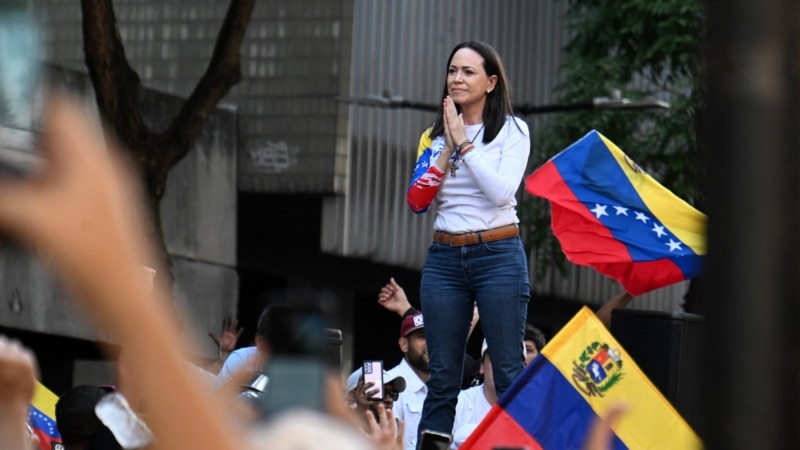
La dirigente opositora venezolana y premio Nobel de la Paz, María Corina Machado, convocó a una nueva jornada de movilizaciones para este jueves 22 de octubre en Caracas y otras ciudades de Venezuela, con el propósito de exigir elecciones presidenciales y mantener la presión ciudadana en favor de una transición democrática.
A través de un mensaje dirigido a los venezolanos, Machado reiteró la importancia de la organización y la participación ciudadana para alcanzar cambios políticos en el...

 Login