
❌

Reading view

Venezuela Opens Process to Choose New Supreme Court Judges
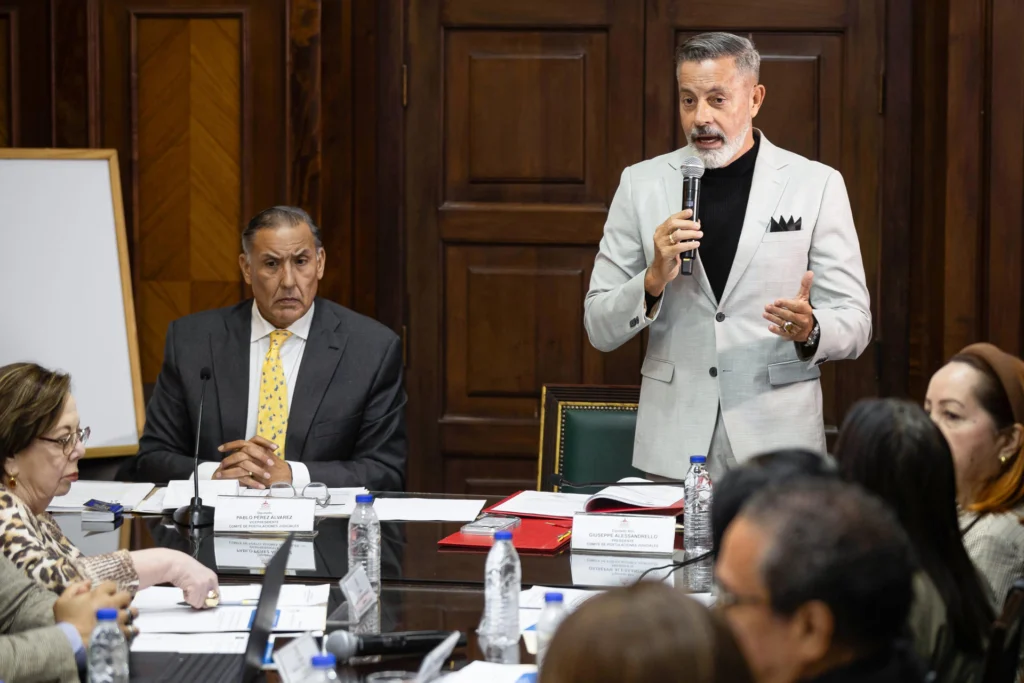
The chairman of the Committee, Giuseppe Alessandrello, announced the early elaboration of a work schedule under the Supreme Court Law to ensure institutional stability and peace. Photo: EFE.

Venezuela’s National Assembly installed a Judicial Nominations Committee on Friday to evaluate and select new Supreme Court justices, a step lawmakers described as central to consolidating institutional stability.


The committee was formally established on October 23, at the Federal Legislative Palace in Caracas, one day after being sworn in during a legislative session.

Giuseppe Alessandrello, who presides over the body, announced that its immediate task is to draw up a work schedule under the Law of the Supreme Court of Justice.

RELATED: Venezuela’s Acting Pres. Delcy Rodríguez Meets 2015 Assembly Delegations

Alessandrello said the law opened the selection process to ordinary citizens. Writing on social media, he stated that the legislation brought people into the work of “evaluating and selecting the leadership, in this case of the Supreme Court of Justice, to seek plurality.”

#23Oct || Desde el Palacio Federal Legislativo se realiza la Instalación del Comité de Postulaciones Judiciales. pic.twitter.com/MczZA2GxJ7

— Asamblea Nacional 🇻🇪 (@Asamblea_Ven) October 23, 2026

Text reads: “From the Federal Legislative Palace is carried out the installation of the Judicial Applications Committee.”

The committee operates within a broader national dialogue that authorities describe as “building a new Venezuela.” Officials have repeatedly framed the judiciary as the institution responsible for guaranteeing what they call true and just peace among citizens. “The judicial branch is the institution that will guarantee peace among us,” Alessandrello said.

The work schedule will set specific periods for the call for nominations, the evaluation of candidates, and the handling of challenges and responses.

The final goal is to present a definitive list of eligible candidates to the National Assembly.

Alessandrello stressed the weight of the assigned tasks, linking them directly to institutional stability. The committee’s operational work and the eventual delivery of the list will follow the terms and periods established by current law.

The process is governed by the Organic Law of the Supreme Court of Justice and the Constitution of the Bolivarian Republic of Venezuela. It covers the selection of both principal and alternate justices of the Supreme Court of Justice.

Subrayó el rol clave de la ciudadanía:

"La ley incorporó a los ciudadanos y ciudadanas de la sociedad en este trabajo de evaluar y seleccionar a las directivas, en este caso del Tribunal Supremo de Justicia, para buscar la pluralidad". pic.twitter.com/LhNVkaK6ov

— Asamblea Nacional 🇻🇪 (@Asamblea_Ven) October 23, 2026

Text reads: “The President of the committee, Giuseppe Alessandrello, highlighted the group’s harmony: “Everything we produce is decided unanimously and the auspices with the work of the committee are positive.” He also emphasized the importance of plurality in this process. He stressed the key role of citizenship: “The law incorporated citizens of society in this work of evaluating and selecting directives, in this case from the Supreme Court of Justice, to seek plurality.”

Selecting Court Leadership

The mandate extends beyond the high court itself. It also includes related judicial positions, among them the directorship of the National School of Magistrates.

The committee emerged from a process announced earlier this month. The National Assembly opened the nomination period between October 2 and October 9, allowing interested citizens and institutions to take part in the selection of the court’s leadership.

Once the schedule is finalized, the committee will move through successive phases, receiving nominations, reviewing candidates, and addressing any challenges filed against applicants. Each challenge will carry its own opportunity for a formal response before the list reaches the legislature.

The final list of selected candidates will be delivered to the National Assembly for consideration. The body’s work therefore functions as a preliminary filter within a process whose ultimate decisions rest with the legislature.
  •  

SCOTUS Week in Review: Back to school, home spirits and a rare decision

Welcome back, Deadline: Legal newsletter readers. Supreme Court justices were off the bench this week because they’re in between their October and November hearing sessions. But they still made plenty of news, in both their written work and public comments.

They started by adding two potent cases to a docket that is growing this term in both size and importance. Following last week’s agreement to review a discovery dispute over Elon Musk’s purported government efficiency effort, on Monday the court added two more appeals: on race in middle school admissions and congressional authority to ban home distilling. The court will keep adding cases throughout the year, with all the rulings in argued cases typically coming by July.

Justices Sonia Sotomayor and Neil Gorsuch were together again, speaking out for the second week in a row about a case the court refused to hear. Last week, Gorsuch joined Sotomayor to lament what they saw as unjust prosecution. This week, the Trump appointee joined the Obama appointee to critique what they saw as constitutional problems with car seizures in Chicago. It’s not new for this duo to team up in a certain type of case that lends itself to bipartisan agreement, but they have been ramping up that agreement so far this term.

Sotomayor’s statement appeared on the order list, which, as regular readers know, is an important document that announces the latest actions on pending petitions. That’s where we learned about the two new cases that the court took up and the (much longer) list of cases the court rejected. It takes four justices on the nine-member bench to grant review, and the court denies most petitions.

But Sotomayor’s statement reminds us that the justices occasionally offer their thoughts even when, as here, they agree with the denial but still find it important to highlight broader issues. These writings help us understand the justices’ priorities and what new cases the court might take up in the future.

Another sort of signal came from Justice Samuel Alito, who didn’t explain himself but noted that he wanted to review one of the petitions the court denied on the list. The failed petition came from Missouri officials who wanted the court to revive a rule that registered sex offenders must put signs on their doors for Halloween that read, “No candy or treats at this residence.” An appeals court said the rule wrongly compelled speech under the First Amendment. Although Alito merely noted, without explanation, his difference of opinion, the vote fits with his overall approach, because he generally backs law enforcement and has split from his colleagues in other First Amendment disputes.

Alito had company later in the week when the court rejected the Trump administration’s request to immediately enforce its preferred policy on gender-affirming care in prison. The justices did not explain the rare (albeit temporary) win for transgender people at a court that has ruled against them in a series of other cases. But whatever the justices were thinking, we know it wasn’t unanimous, because Alito and Justice Clarence Thomas both indicated (also without explanation) that they wanted to grant the government’s request.

Justice Elena Kagan made news outside her written work, with an appearance at a law school in Washington, D.C., the sort of speaking engagement that the justices will do from time to time. Kagan, who was dean of Harvard Law School before she became a justice, gave her GOP-appointed colleagues a failing grade when it comes to democracy. Reprising impassioned criticisms of rulings on voting and campaign finance that she has made in dissenting opinions, the Obama appointee said the court “has kind of blinded itself to the very deleterious effect of their rulings on how the political system works and has created a democracy that does not work as well as it should.”

Kagan apparently agreed with her colleagues this week in an election case, when the Supreme Court granted a Republican-backed request from New Hampshire to block the use of student IDs for voting in the midterms. In a brief unsigned order, the high court chided a lower court judge for, as the justices saw it, improperly interfering with state rules right before an election. Justice Ketanji Brown Jackson was the only one to publish a dissent, in which she contended the judge was justified in trying to protect voting rights.

The justices are still off the bench for another week, as they are set to return to the courtroom in November to hear the next batch of regularly scheduled arguments. But as Election Day approaches on Nov. 3, they will continue to field unscheduled emergency applications on voting and whatever else comes their way.

Subscribe to the Deadline: Legal newsletter for expert analysis on the top legal stories of the week, including updates from the Supreme Court and developments in the Trump administration’s legal cases.

The post SCOTUS Week in Review: Back to school, home spirits and a rare decision appeared first on MS NOW.

  •  

Ask Jordan: Does presidential immunity extend to subordinates who carry out illegal orders?

“If Donald Trump defies court orders because the Supreme Court said he cannot be prosecuted for actions he takes as president, could those people who carry out his illegal requests be prosecuted or fined even though they are acting on his orders?” — Kit Read

Hi Kit,

Maybe.

The Supreme Court’s 2024 ruling in Trump v. United States only dealt directly with criminal immunity for presidents, holding that they have at least presumptive immunity for all official acts, as well as absolute immunity for acts within their “conclusive and preclusive” constitutional authority.

What all that means in practice hasn’t been fully fleshed out. It would take a follow-up case to clarify the ruling’s limits, and it’s unclear if or when such a case will come.

At any rate, the court focused on presidents in that ruling. It did not grant immunity to aides acting on the president’s behalf.

Yet, while arguments have been made against subordinate immunity, it’s technically an open question that the justices haven’t decided one way or the other.

So the answer to your question at the moment is: maybe.

But you might wonder: What could the argument be for immunizing presidential underlings?

One scholarly account argued that the logic of the immunity ruling “renders the President’s subordinates absolutely immune for a potentially broad range of official acts, even if those acts are otherwise unlawful.” That’s because if the president has complete power over executing the law, then, the argument goes, subordinate actions that implement that power are lawful, as opposed to being unlawful but immune from prosecution.

As with clarifying the immunity ruling’s limits as it applies to presidents, whether the Supreme Court will decide the subordinate immunity question depends on the court taking an appeal that raises that issue in the future. And as with presidential immunity itself, there is no clear candidate for an appeal the court would take to answer that question.

Either way, if a president wants to ensure that any of his henchmen won’t be federally prosecuted, he could always pardon them.

Please submit “Ask Jordan” questions through this form for a chance to have your question featured in a future edition of the Deadline: Legal newsletter.

The post Ask Jordan: Does presidential immunity extend to subordinates who carry out illegal orders? appeared first on MS NOW.

  •  

"The District Court—or Perhaps, Being Charitable, Its AI Agent—Ignored and Manipulated Governing Law, Apparently to Satisfy a Policy Agenda"

A short excerpt from the long opinion in Jackson Fed. of Teachers v. Fitch, decided yesterday by Fifth Circuit Judge Jerry Smith, joined by Judge Kurt Engelhardt:

In April 2025, Mississippi enacted House Bill 1193 (H.B. 1193), a law designed to keep Mississippi public education funds from being spent on diversity, equity, and inclusion ("DEI") initiatives and similar controversial programs. The law prevents government-run institutions from requiring activities such as diversity training or pushing DEI ideology, so defined, in the course of government-funded business.

H.B. 1193 does four main things. First, it prevents educational institutions from mandating DEI programs and diversity trainings in a variety of contexts. Second, it stops public educational institutions from punishing students for their views on DEI. Third, it prohibits regulated institutions from endorsing or promoting DEI through course materials. Finally, it prevents institutions and their educators from otherwise engaging in DEI methods or actions, preventing bad actors from circumventing prohibitions and frustrating its purposes. The statute also creates an administrative process to handle claims that a given educational institution is not in compliance. H.B. 1193 excepts several activities from its sweep, including scholarly work, the activities of students and their groups, and creative engagement.

Plaintiffs sued, claiming (among other things) that the law violated the First Amendment, but:

The proceedings in the district court were a botch job, to say the least. Judge Henry Wingate issued a temporary restraining order ("TRO") enjoining enforcement of H.B. 1193 that contained several factual assertions nowhere to be found in the record, or indeed, in any proceeding of the case. Those included mention of plaintiffs and defendants not in the complaint, supposed "declarations" from non-existent or never-present individuals, false quotations purporting to be taken from the text of H.B. 1193, and several erroneous claims that the law had already led to the demise of apparently fictitious programs.

After this came to light, Judge Wingate replaced the TRO without explaining.

Forging forward despite the bungled TRO, Judge Wingate issued a pre-enforcement preliminary injunction. The various state defendants appeal.

At oral argument in this court, it was discovered that even the "corrected" TRO—which was incorporated by reference into the preliminary injunction order—still contained hallucinated information (namely, a citation to a purported Fourth Circuit case, "Cousins v. School Bd. of City of Norfolk," that does not exist).

This district judge carelessly exercised his Article III power by issuing sloppy edicts based on falsehoods and fabrications. Upon discovering some of these falsehoods, Judge Wingate dug in his heels and claimed that the hallucinated claims had no bearing on its reasoning; he offered no explanation as to why he included such apparently irrelevant material in the original TRO or why the TRO nevertheless was justified in its absence.

Moreover, the district court got the law wrong. The TRO and preliminary injunction order rested on impoverished legal analysis that barely paid lip-service to the precedents of the Supreme Court or this court, seeming at times purposely to misconstrue the law by manipulating the words of statutes and cases, without regard to their texts' meaning as a whole. The district court—or perhaps, being charitable, its AI agent—ignored and manipulated governing law, apparently to satisfy a policy agenda.

Because of the extraordinarily grave errors by the district court, we vacate and remand for assignment to a different district judge. Per the Supreme Court's decision in Moody, we instruct the new judge to conduct proceedings consistent with federal law as interpreted by the Supreme Court and this circuit….

The original TRO—the one actually issued on July 20, 2025—named as plaintiffs eleven individuals and organizations who had never been party to the case; named as defendants two officials who were not actually sued; claimed, without evidence, that three post-secondary institutions had already cancelled DEI initiatives or programming because of the act; further declared, again without evidence, that staff at another school had been told not to discuss certain topics, including "historical interpretations involving systemic racism"; misquoted H.B. 1193 as applying to "race or sex stereotyping," "race or sex scapegoating," "critical race theory," and "institutional bias," despite none of these terms' appearing in the act's text; and referenced purported declarations of four individuals who do not appear in the record at all and may not even exist….

On July 22, 2025, defendants filed a motion to clarify, pointing out these errors. In response, the court, without explanation, replaced the original TRO with a seemingly corrected version. Though that document was docketed on July 22, it was backdated to July 20. Defendants requested that the original order be restored to the docket to keep the record whole and requested that the court explain the inaccuracies in the original order. The district court denied that motion, claiming the factual inaccuracies were merely "clerical."

In response, U.S. Senator Chuck Grassley accused the district court of using artificial Intelligence ("AI") to prepare the TRO, with the substantive errors' arising from AI-generated hallucinations. Fifteen days later, Judge Wingate admitted the errors, claiming that a law clerk had used AI to assist drafting an earlier version of the TRO that was docketed by mistake. His letter stated that he had removed the original TRO from the docket to avoid confusion and that the errors were clerical, in his view, because they did not relate to "core legal reasoning or the ultimate judgment on the merits" but instead to "failure to confirm the accuracy of certain information."

The seemingly corrected TRO did not explain how or why the factual inaccuracies were not necessary to the reasoning of the original TRO. The merits analysis failed to cite a binding authority from after the year 2000. It claims that H.B. 1193 constitutes viewpoint discrimination, without any analysis whatsoever of a state government's authority to regulate its own speech. And the document did not correct all of the errors: At Fifth Circuit oral argument, it was discovered that the doctored TRO cited to "Cousins v. School Bd. of City of Norfolk, 503 F.2d 422, 426–27 (4th Cir. 1974)." That case does not even exist; it is an apparent AI hallucination….

Judge Catharina Haynes did not join these parts of the opinion.

There's also some interesting First Amendment analysis in the case, which I hope to blog about later today. (I'm tied up for the next several hours.) Thanks to @WillChamberlain and Glenn Reynolds (Instapundit) for the pointer.

Anthony M. Shults, Justin Lee Matheny, Rex Morris Shannon, III, and Scott G. Stewart represent defendants.

The post "The District Court—or Perhaps, Being Charitable, Its AI Agent—Ignored and Manipulated Governing Law, Apparently to Satisfy a Policy Agenda" appeared first on Reason Magazine.

  •  

Supreme Court rules NH can block voters from using student IDs 

The Supreme Court on Thursday ruled New Hampshire’s top election official can fully stop voters from using their student IDs when showing up to the polls in the midterms — a request backed by the Republican National Committee (RNC). A lower judge ruled officials had improperly gone further than a new state law placing restrictions on…

  •  

Supreme Court backs GOP and New Hampshire against student IDs for voting

A nearly unanimous Supreme Court has granted New Hampshire’s emergency request to block the use of student IDs for voting in the November midterm elections.

The case raised a recurring theme at the high court about the propriety of judges intervening on the eve of political contests, against the familiar backdrop of GOP-backed voting restrictions purporting to ensure election integrity.

On Thursday, the majority said that the district court judge who ruled against the state failed to justify deviating from the general principle that federal courts shouldn’t alter election rules on the eve of an election. Justice Ketanji Brown Jackson dissented, writing she “would not disturb a clearly justifiable federal-court order issued to ensure that the public receives accurate information about a State’s electoral processes.”

The Biden-appointed justice said she wasn’t as sure as the majority that the judge’s action falls under that general noninterference rule, known as the “Purcell principle.” She said the judge was trying to address alleged misinformation rather than change state law.

“When a federal court determines that material misrepresentations are being made about a State’s election rules, an injunction to prohibit that conduct does not contribute to public confusion, it prevents that very problem,” Jackson wrote in her solo dissent.

While New Hampshire’s federal representatives are Democrats, Republicans run the state government. Gov. Kelly Ayotte signed a bill into law this year that prohibits the use of student IDs for voting.

A New Hampshire-based nonprofit called Coalition for Open Democracy sued the state over the law, which the group said needlessly burdens young voters under the guise of trying to solve the “non-existent problem” of nonresident voter fraud.

In a ruling earlier this month, U.S. District Judge Joseph Laplante refused to block the law, called HB 323. But the George W. Bush appointee said related guidance from New Hampshire Secretary of State David Scanlan, a Republican, went too far. Laplante said Scanlan overstepped in barring election officials from considering student IDs even as evidence under a “safety-valve provision” that lets voters prove who they are if they don’t otherwise have a proper photograph.

“The State has offered no independent justification for that broader prohibition,” wrote Laplante, explaining that such justification is needed even for minimal burdens on voting rights. He blocked enforcement of Scanlan’s directive to the extent it “prohibits or discourages election officials from considering student IDs as evidence of voter identity,” and he ordered the secretary of state to issue revised guidance for the midterms.

Laplante declined to halt his ruling, as did an appellate panel over dissent from a Trump-appointed judge. State officials then turned to the justices in Washington, arguing that Laplante’s order risks late-breaking confusion. The Republican National Committee filed an amicus brief supporting the state.

Opposing the state’s emergency application, Open Democracy said granting the application would be the chaos-inducing move. The group noted that Scanlan had already quickly complied with the order to provide revised guidance, and that his website “has told voters since the October 2 Order that supervisors may consider a student ID along with other evidence.”

That guidance is now the status quo, Open Democracy observed. Therefore, it said, granting the state’s application would “reverse the rules for a second time in a month.”

Subscribe to the Deadline: Legal newsletter for expert analysis on the top legal stories of the week, including updates from the Supreme Court and developments in the Trump administration’s legal cases.

The post Supreme Court backs GOP and New Hampshire against student IDs for voting appeared first on MS NOW.

  •  
❌