❌

Reading view

Brazil Prepares High-Security Logistics For Runoff Vote
The Superior Electoral Court enforces free public transport mandates and monitors vote access nationwide.

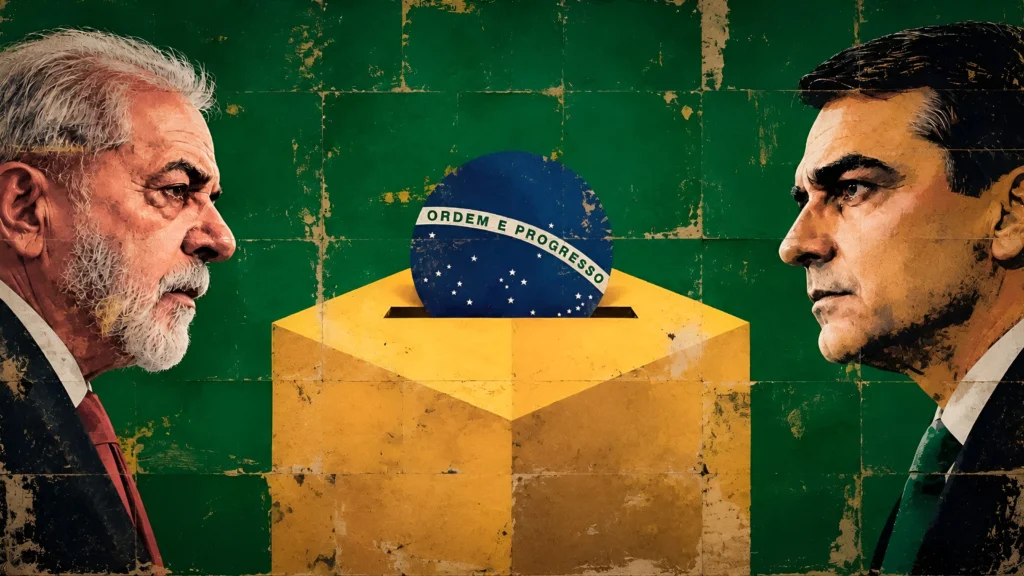
The Brazilian presidential campaign has entered its final stage ahead of the runoff vote scheduled for October 25, 2026. Incumbent President Luiz Inácio Lula da Silva faces Senator Flávio Bolsonaro, a candidate for the Liberal Party (PL), after a competitive first-round election on October 4, 2026.

RELATED:
Lula Proposes Constitutional Amendment for Free Weekend Transit in Brazil

The general election results established a narrow margin between the top two candidates. In the first round of voting, Senator Flávio Bolsonaro finished first, securing 47.03 percent of valid votes, or 56,103,033 ballots. Incumbent President Lula da Silva finished second, receiving 45.16 percent, or 53,870,724 ballots.

Turnout remained consistent with historical participation figures, reaching approximately 79 percent of registered voters. Lula maintained a structural lead throughout the Northeast region, winning majorities in key states such as Bahia, Pernambuco, and Ceará.

Economic indicators and social policy debates formed the primary foundation for candidate speeches throughout the first round. In campaign speeches, President Lula highlighted the accomplishments of his current administration, citing expanding employment rates, social assistance programs, and inflation control measures implemented since 2023.

Flávio Bolsonaro focused his campaign speeches on public security concerns, national debt levels, and economic challenges, presenting his platform as a continuation of conservative governance under his father, former President Jair Bolsonaro, who remains legally barred from holding office.

Street Mobilization and Electoral Propaganda Networks

Campaign operations shifted toward intensive physical rallies and structured broadcast messaging during the runoff period. The Workers’ Party (PT) and its broader political coalition centered their ground mobilization around major urban centers and traditional working-class strongholds.

Popular social movements, including the Landless Workers Movement (MST) and the Homeless Workers Movement (MTST), along with trade union confederations such as the Unified Workers’ Central (CUT), coordinated door-to-door canvassing operations and public rallies in major metropolitan areas including São Paulo, Rio de Janeiro, and Salvador.

Flávio Bolsonaro’s ground strategy relied heavily on state-level executive endorsements and conservative municipal networks. Key allies, including re-elected conservative governors from São Paulo, Minas Gerais, and Rio de Janeiro, organized regional logistics to boost conservative voter turnout.

Flávio Bolsonaro’s campaign speeches during street rallies emphasized hardline public security measures, moral issues, and support for the agribusiness sector, utilizing alliances with conservative caucus members in Congress to secure local political support.

Broadcast media exposure operated under the free electoral advertising time framework regulated by the Superior Electoral Court. The regulations ensured equal daily broadcast time across television and radio networks for both finalists during the runoff window.

Parallel to traditional broadcast propaganda, digital media networks expanded rapidly. Both campaign organizations directed significant funding toward micro-targeted online advertising and social media distribution channels to capture voters outside traditional media formats.

Digital outreach strategies diverged between the two operational teams. Lula’s digital apparatus utilized organized volunteer networks, endorsements from cultural figures, and policy fact sheets distributed through verified messaging channels.

The Flávio Bolsonaro campaign relied on decentralized messaging channels, emphasizing direct-to-voter video distribution, security rhetoric, and critiques of government institutions.

WHO'S THE REAL THIEF? LULA CHALLENGES BOLSONARO TO SHOW RECORDS

Ahead of Brazil’s presidential election, Brazilian President Lula da Silva publicly challenged rival Flávio Bolsonaro to open his bank accounts, release his phone records, and let the Brazilian people decide who… pic.twitter.com/U6Ge0yOV6A

— Sovereign Media (@sov_media) October 21, 2026

Meta, Disinformation, and Electoral Defense

The Superior Electoral Court (TSE) established strict administrative parameters to govern political content across major social networks, focusing heavily on Meta’s platforms, Facebook, Instagram, and WhatsApp.

Electoral judicial resolutions prohibited paid digital political advertising in the final 48 hours leading up to the October 25 vote, restricted automated messaging software, and required tech platforms to execute judicial content removal mandates within expedited timeframes.

Monitoring reports submitted to electoral authorities by digital rights watchdogs and research institutes identified recurring patterns in content dissemination across Meta’s channels.

Independent audits logged instances of dark ads, unverified allegations targeting electoral integrity, and micro-targeted digital campaigns deployed in private messaging groups.

Meta adjusted its content moderation operations in Brazil to comply with TSE directives, expanding its ad library transparency protocols and updating content review procedures.

The company reported the removal of non-compliant posts and the deactivation of unauthorized bulk-messaging networks. Despite these technical platform adjustments, electoral oversight bodies noted that closed messaging networks remained a primary vector for unverified political narratives due to end-to-end encryption limitations.

Broad Coalitions, Strategic Endorsements, and Voter Demographics

The transition from the October 4 first round to the October 25 runoff required both campaigns to expand beyond their primary ideological bases.

President Lula da Silva maintained a broad front coalition uniting left-wing parties with center-right political figures. Vice President Geraldo Alckmin returned as Lula’s running mate, reinforcing ties with business sectors and moderate electors, while key cabinet figures and allied governors led outreach campaign efforts aimed at consolidating anti-far-right voter segments.

Senator Flávio Bolsonaro expanded his campaign footprint by consolidating conservative regional power structures and legislative blocks. Selecting PL lawmaker Alfredo Gaspar as his vice-presidential running mate, a former prosecutor and public security secretary from Alagoas, Flávio Bolsonaro sought to bolster his law-and-order platform while solidifying backing among conservative lawmakers in Congress.

Flávio’s runoff effort secured endorsement commitments from conservative state governors, agribusiness associations, and international right-wing figures, reinforcing his position across traditional conservative strongholds.

Incumbent President Lula retained consistent lead margins among female voters, lower-income households earning up to two minimum wages, residents in the Northeast region, and older age demographics.

Conversely, Flávio Bolsonaro maintained stronger support metrics among male voters, higher-income earners, Evangelical Christian voters, and electors situated in the agribusiness-heavy South, Southeast, and Center-West regions.

Both campaign organizations directed their final operational focus toward undecided voters and middle-income suburban districts in the key battleground states of Minas Gerais, Rio de Janeiro, and São Paulo.

Lula's campaign says Instagram, Facebook, and WhatsApp are muffling the left days before the October 25 vote. Meta blames glitches.https://t.co/qdSD2z01ny pic.twitter.com/SfYhdxpi4L

— The Brazilian Report (@BrazilianReport) October 20, 2026

Debate Performances, Fact-Checking, and Media Coverage

The televised presidential debates between incumbent President Lula da Silva and Senator Flávio Bolsonaro emerged as decisive turning points during the three-week runoff window. Major media coalitions organized direct face-to-face encounters, allowing the candidates to present competing vision frameworks for Brazil’s governance.

During the live broadcast exchanges, President Lula focused his arguments on economic stability, job creation, and social progress achieved during his term, emphasizing the expansion of public investments, inflation control, and environmental protection initiatives.

Lula confronted Flávio Bolsonaro on fiscal proposals, judicial integrity, and the anti-democratic precedents associated with the far-right movement.

In response, Flávio Bolsonaro framed his candidacy around conservative public security policies, government austerity, and tax reforms. Flávio heavily criticized the economic administration’s public debt metrics and targeted the federal judiciary, presenting his campaign as a necessary alternative to political continuity.

Mainstream media coverage focused heavily on candidate posture, tone, and strategic attempts to appeal to the estimated 10 percent of undecided voters heading into the final days of the race.

Brazil’s top electoral court has said it will fine Meta $200,000 a day until it can prove that president Luiz Inácio Lula da Silva and his far-right challenger Flávio Bolsonaro get equal treatment on its platforms.

Last week, a judge at Brazil’s top electoral court ruled that… pic.twitter.com/AWLGPT6mKT

— Novara Media (@novaramedia) October 21, 2026

Election Day Execution, Institutional Resilience, and Regional Impact

Supervised directly by the Superior Electoral Court (TSE), voting logistics across all 26 states and the Federal District rely on fully digitized electronic voting machines (urnas eletrônicas) to ensure rapid processing and secure transmission of total ballots.

To facilitate maximum democratic access, federal judicial rulings mandated free public transportation (passe livre) across capital cities, while electoral inspectors monitored security forces to prevent voter transportation disruptions or targeted law enforcement checkpoints.

Following the October 4 first round, where Flávio Bolsonaro led with 47.03 percent (56,104,503 votes) against Lula’s 45.16 percent (53,879,538 votes), both organizations focused their final operational pushes on key battleground states like Minas Gerais, Rio de Janeiro, and São Paulo.

The outcome of the October 25 vote carries far-reaching geopolitical implications across Latin America and the broader global stage. A victory for President Lula would ensure the continuation of active multilateral diplomacy, regional integration through BRICS and CELAC, and strong federal commitments to Amazonian environmental conservation.

Conversely, a victory for Flávio Bolsonaro would mark a significant resurgence for the continental far-right, shifting Brazil’s diplomatic alignment toward conservative international blocs and introducing sweeping changes to domestic fiscal and environmental policy frameworks.

Sources: Brasil de Fato – Agência Brasil – Gov.br – O Globo – Folha de S.Paulo – O Estado de S.Paulo – El País – CNN Brasil – EFE – Instituto Tricontinental – La Base América Latina – Diario Re
  •  

Friday’s Campaign Round-Up, 10.23.26: Kamala Harris rallies for Colom in Mississippi

Today’s installment of campaign-related news items from across the country.

* In Mississippi’s unexpectedly interesting U.S. Senate race, former Vice President Kamala Harris headlined a rally in support of local prosecutor Scott Colom, the Democratic nominee.

“Mississippi matters!” Harris shouted to thunderous cheers at Thursday’s event.

The rally came on the heels of Donald Trump’s political operation confirming that the president will hold a rally on Monday in hopes of boosting Republican Sen. Cindy Hyde-Smith, who’s struggling to a surprising degree in a race the GOP long assumed would be easy.

The news coincides with an Axios report that said Senate Republicans are so concerned about the Mississippi race that it’s “weighing a cash infusion” for the contest.

* In Maine’s closely watched U.S. Senate race, the latest Fox News poll found Democrat Troy Jackson and incumbent Republican Sen. Susan Collins tied, with each garnering 49% support.

* In Kansas’ closely watched U.S. Senate race, incumbent Republican Sen. Roger Marshall has finally sold his house in Florida. The sale was finalized the same day early voting began in Kansas.

* In Texas’ closely watched U.S. Senate race, The New York Times reported that a covert Russian influence operation is targeting Democratic state Rep. James Talarico’s candidacy as part of an apparent effort to boost Republican state Attorney General Ken Paxton.

* Speaking of Texas, Republican Gov. Greg Abbott recently boasted about endorsements he received from several Democratic sheriffs, but The New Republic reported that some of them deny having endorsed the GOP incumbent.

* While voter turnout is expected to be strong in New Hampshire this year, there is a new hurdle for voters to keep in mind: The Supreme Court granted New Hampshire’s emergency request to block the use of student IDs for voting in the midterms.

* Over the first two weeks of October, Republican megadonor Elon Musk invested an additional $76 million to boost GOP candidates. Five months after the billionaire publicly vowed to curtail his campaign spending, Musk has now donated more than $442 million to advance the Republican cause in the 2026 cycle.

* Speaking of Republican megadonors, billionaire Jeff Yass has now invested nearly $110 million to boost GOP candidates in the midterms. Yass is also the top donor to Vivek Ramaswamy, the Republican’s gubernatorial nominee in Ohio.

* And speaking of Ramaswamy, to appreciate the scope of the controversy surrounding his scandalous attack ad, it’s worth noting that 10 sitting Democratic female governors issued a joint statement on Thursday, condemning the candidate’s vile commercial as “an insult to survivors everywhere.”

The post Friday’s Campaign Round-Up, 10.23.26: Kamala Harris rallies for Colom in Mississippi appeared first on MS NOW.

  •  

Trump administration sues to block possible Democratic win in Alaska Senate race

After months of arguments, a state judge in Alaska ruled in late June that retired teacher Dan J. Sullivan could run against incumbent Republican Sen. Dan S. Sullivan, overturning the ruling from the Alaska Division of Elections. A few months later, after the first round of balloting, state election officials finalized the top four candidates for Alaska’s unique system, and both Dan Sullivans advanced to the general election.

That Donald Trump and his political team are worried about the race is obvious, but what the president’s team is doing about it is another matter entirely.

Late Thursday, Trump’s Justice Department filed a preemptive lawsuit that intends to block certification of the Senate race — but only if the Republican incumbent loses while the rival with the similar name remains on the ballot.

As The Associated Press reported, the litigation kicks off “what many have feared could become a lengthy battle between the U.S. government and states over certifying an election where the president’s party is struggling.”

What’s more, it’s entirely possible that former Democratic Rep. Mary Peltola will win this race and the efforts by Trump’s DOJ will determine whether she’s seated — and which party ultimately holds a majority in the Senate.

The lawsuit is a dramatic escalation, but it didn’t come out of nowhere. At a White House event in early September, the president publicly urged Attorney General Todd Blanche to pursue a case in Alaska specifically focused on the competing candidates with nearly identical names.

Last week, Trump went further, claiming that federal authorities were “looking into” the matter and pushing assorted conspiracy theories for which there was no evidence. As recently as Wednesday of this week, the president used his social media platform to publish a statement that read, in part, “Dan S. Sullivan is leading by a lot, but this is CHEATING in an Election, and the Judge that allowed this to happen should be ashamed of himself. We are looking at powerful legal options to remove the fraudulent Daniel J. Sullivan Jr. from the Ballot, and holding the Democrats accountable for their Election Interference, in the pursuit of Justice and Fairness.”

The statement included obvious falsehoods — most recent polling in Alaska shows the Republican incumbent trailing, not “leading by a lot” — and there is nothing to suggest Democratic officials have engaged in “election interference,” other than championing their party’s nominee.

Nevertheless, there have long been concerns that the Trump administration might try to derail election results it doesn’t like, and the DOJ’s new lawsuit regarding Alaska suggests those concerns are well grounded.

This is a developing story. Check back for updates.

The post Trump administration sues to block possible Democratic win in Alaska Senate race appeared first on MS NOW.

  •  

Ramaswamy’s vile ad is dividing the Republican Party. Trump is leading the wrong side.

Any story about a family dispute is bound to be complex, but the politics surrounding Vivek Ramaswamy’s abhorrent attack ad are relatively straightforward. Amy Acton, the Democratic gubernatorial nominee in Ohio, was allegedly raped by her stepfather when she was a child.

Her Republican opponent, Ramaswamy, is trying to weaponize this in despicable fashion, pushing a campaign commercial that features Acton’s estranged mother, who sided with the stepfather even after his arrest and stayed with him until his death.

But in recent days, it’s become clear that this ad has taken on far greater significance than one commercial in one gubernatorial election. As The New York Times’ Michelle Goldberg summarized in her latest column:

It’s quite a feat, in this numb and debased era, to create a political advertisement so shocking and indecent that people from across the political spectrum feel the need to denounce it. The Ohio gubernatorial candidate Vivek Ramaswamy, who has long fashioned himself as a kind of Donald Trump 2.0 — younger and brainier but just as brash — has managed it.

By releasing what may be the most disgusting ad in American political history, he’s done more than just reveal his own low character. He’s opened a kind of proxy debate on the right about whether a post-Trump conservatism should try to reclaim some base-line morality or continue along its current smashmouth course.

Donald Trump has changed his party and his nation’s politics in a great many ways, but among the most important shifts is the degree to which the president has championed the politics of cruelty and dishonor. There are messages — from attack ads to speeches to social message postings — that Republican officials used to avoid, even when they agreed with the underlying point, in part to avoid backlash and in part to maintain their public reputations and credibility.

In recent years, however, those scruples have been cast aside. GOP officials and candidates no longer hedge on depraved messaging: After having seen Americans twice elevate a malicious television personality to the nation’s highest office, they now routinely echo his amorality and cynicism, seeing it as a way to satisfy the party’s far-right base, to advance their own ambitions or both.

Most decent people can and will agree that Ramaswamy’s attack ad is indefensible, but the ad has also taken on totemic value.

“What the ad represents … is an opening salvo in the post-midterms fight for the Republican Party’s future,” Politico’s Jonathan Martin explained. “It’s a battle that will accelerate next year but may not culminate until the 2030s. Put simply, what sort of party does the GOP want to be — and what will the market bear?”

Trailing in polls and short on options, Ramaswamy made his choice, and the stain on his character is likely to be permanent. What the Ohioan might not have anticipated, however, is just how much his disgusting tactic has divided his own party.

Several prominent Republicans in the state, including outgoing Gov. Mike DeWine, have publicly condemned the ad, and others outside of Ohio have taken similar steps. Former GOP presidential contender Nikki Haley, for example, said via social media that Ramaswamy is “a bad guy.” A day later, Rep. Ashley Hinson, the party’s Senate hopeful in Iowa, called the commercial “absolutely terrible.”

On the other side, there’s the White House, where the politics of cruelty and dishonor still thrive, and where there are Republican leaders who still believe repugnant messaging will dominate for the foreseeable future.

JD Vance, for example, declared this week that he’s “a little bit disgusted,” not by Ramaswamy’s gutter politics, but by members of his own party who are “whining” about civility.

The vice president’s reaction itself drew swift rebukes — The Bulwark published a piece that described Vance as a “sociopath” — but that didn’t stop Trump from picking up where his vice president left off.

On Wednesday, the president told reporters he didn’t “know anything about it,” before shifting gears and talking about how important he considers it to see a mother “hate her daughter that much.”

A day later, Trump went much further and spent much of Thursday defending the ad, urging Ramaswamy to keep running it, demanding the public take the underlying claims “seriously” and at Iowa rally, predicting that the ad would work in the GOP candidate’s favor.

In other words, Trump took care to keep dividing Republicans — with less than two weeks remaining, during the early voting period — in one of the nation’s most important gubernatorial races, by leaning into support for one of the most repulsive campaign ads in recent memory.

Election Day is 11 days away. Watch this space.

The post Ramaswamy’s vile ad is dividing the Republican Party. Trump is leading the wrong side. appeared first on MS NOW.

  •  

Big fish hooked in Hungary, as Orbán’s ex-bank chief placed in custody (Day 163 of the Tisza government)

The series continues as we report on developments following April’s historic election and on the steps taken since then by the Tisza government. This week, we cover the following topics:

  • Orbán’s former right-hand man in custody.
  • What did we learn from Tisza’s first budget?
  • Ursula von der Leyen to give a speech on the anniversary of the revolution.
  • Poll of the week: more than four million people back Tisza.

Orbán’s ex-right-hand man in custody

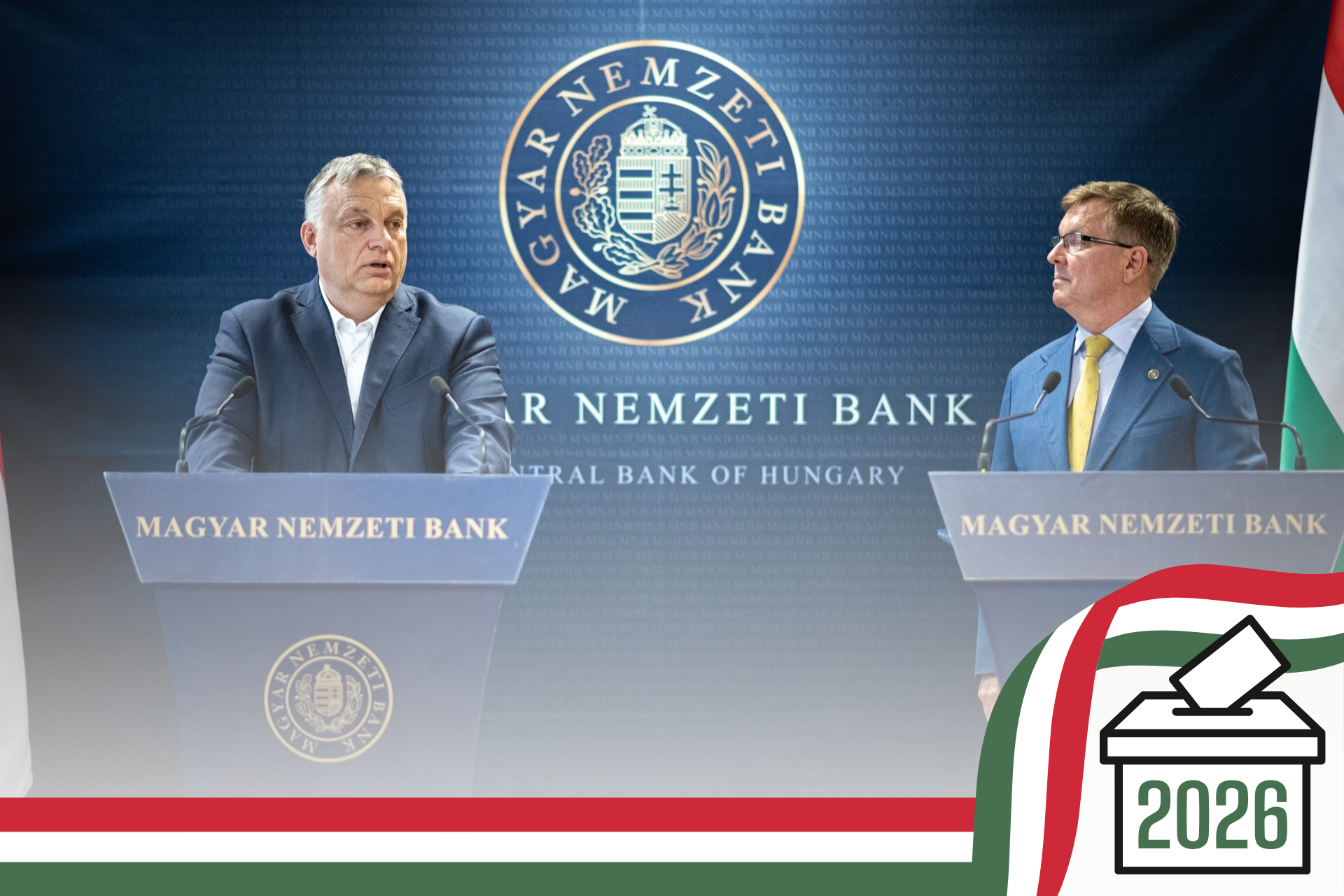
The last time a central bank governor was taken into custody in Hungary was in 1944, during the German occupation, as Válasz Online pointed out. This 82-year hiatus ended on Wednesday (21 October), when György Matolcsy was taken into police custody.

But Matolcsy is not simply a former central bank governor; he is one of the architects of Orbán’s economic policy, a key figure in the former prime minister’s system, and together with his family he has in recent years become one of the symbols of Fidesz’s taste for luxury.

Who is György Matolcsy?

“I have a very strong emotional relationship with Matolcsy. I owe him a great deal, I have learned a great many things from him. Matolcsy is an economist of historic stature,” prime minister Péter Magyar quoted ex-prime minister Viktor Orbán’s words from an interview last November, after the former central bank governor had been taken into custody.

Matolcsy was a member of the Hungarian Socialist Workers’ Party (MSZMP), and after the regime change he became prime minister József Antall’s chief adviser. In 1999 he joined Orbán’s advisory board, and from 2000 to 2002 he served as economy minister in the first Orbán cabinet.

Even after the 2002 election defeat he remained loyal to Orbán, and in 2010 he became minister for national economy, meaning he was put in charge of both the finance and economy portfolios at the head of a merged super-ministry. It was at this time that Orbán called him his right-hand man.

Matolcsy was the architect of Orbán’s “unorthodox economic policy”; he oversaw the nationalisation of private pension funds, the sending home of the IMF from Hungary, and the introduction of high sectoral surtaxes.

The great bank heist

He was appointed central bank governor in 2013, and by 2016 the foundations scandal had already broken. It emerged that 266bn forints’ worth (€840m) of public assets had been shifted into the foundations of the Hungarian National Bank (MNB). These foundations bought buildings and works of art, and also granted substantial benefits to their own leaders.

Later, the foundations’ money was entrusted to an asset management company, which obtained further funds and thus came to control assets of around 500bn forints, of which some 400bn forints (€1bn) – was public money.

This asset manager built up an international corporate network, behind which stood the central bank governor’s son, Ádám Matolcsy, and his circle. The asset manager bought into risky foreign companies, spending a significant part of its resources. The Matolcsy family visibly became very rich, and Ádám also amassed a notorious Porsche collection.

György Matolcsy’s mandate expired in 2025, and after his departure the State Audit Office also concluded that abuses may have taken place at the central bank. For a long time, however, no police investigation was launched.

The current case

The current charges relate to a case that unfolded in the final days of Matolcsy’s activity as central bank governor. Matolcsy wanted to ensure that his family would control the roughly 500bn forints (€1.25bn) of central bank assets even after he no longer held office.

This article continues, but the full version is available only to EUobserver.com subscribers. Visit account.euobserver.com/membership

  •  

Datafolha Poll Shows Lula and Bolsonaro Tied at 50% Ahead of Runoff

Both candidates remain statistically tied three days before the presidential runoff.

On Thursday, polling firm Datafolha published a survey showing far-right candidate Flavio Bolsonaro and Brazilian President Luiz Inacio Lula da Silva tied at 50% of valid votes, three days before the presidential runoff.

RELATED:

Lula Proposes Constitutional Amendment for Free Weekend Transit in Brazil

This is the first runoff poll to show a numerical tie between the two candidates and represents a two-point recovery for Lula compared with the survey released by the same firm last week.

In terms of voter intention, Bolsonaro has 47%, compared with Lula’s 46%, representing a one-percentage-point increase for the incumbent.

On Wednesday, another poll released by Quaest also showed a trend toward a narrowing gap between the two candidates, in this case with Bolsonaro leading by one point, 45% to Lula’s 44%.

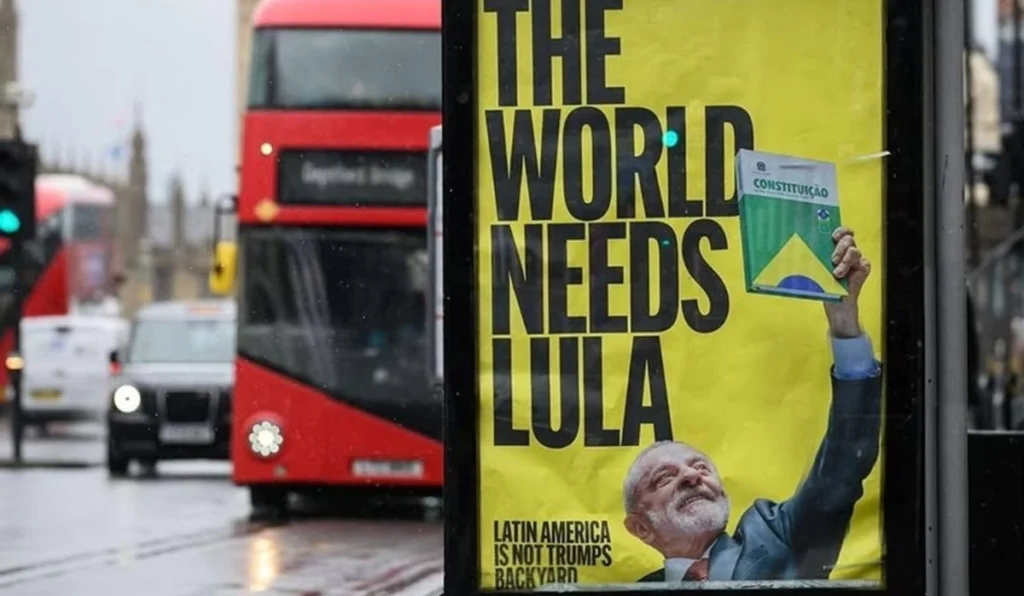
Amazing turnout and energy in London yesterday in support of President Lula, ahead of his crucial election against Bolsonaro. His campaign has given hope to people around the world!

Viva Lula! 🇧🇷 pic.twitter.com/hukUDShmz2

— Jeremy Corbyn (@jeremycorbyn) October 19, 2026

In both polls, the results amount to a statistical tie within the margin of error, which is two percentage points for each survey. For its latest poll, commissioned by television network Globo and Folha de Sao Paulo, Datafolha interviewed 2,520 voters between Tuesday and Wednesday of this week.

Bolsonaro received the most votes in the first round of the presidential election, held Oct. 4, with 47.03% of the vote, followed by Lula with 45.16%. This was the narrowest result between two candidates in the first round of a presidential election held in Brazil, demonstrating the extreme polarization of the Brazilian electorate.

In Brazil’s recent democratic history, presidential runoffs have been held seven times, and in every instance, the candidate who received the most votes in the first round has won.

On Friday, Lula and Bolsonaro will face off in the second and final televised debate and will wrap up their respective campaigns on Saturday, the day before voters head to the polls.

teleSUR/ JF

Source: EFE

  •  

Free lunch, transgender athletes: Voters nationwide face major education decisions

Voters across the country are making big decisions about the education of their children at a local, state and federal level in this year’s midterms. Ballot initiatives, school board elections, governor’s races and Senate spots are all on the line as parents head to the polls thinking about AI, school choice and what topics should…

  •  

Ramaswamy controversy pits Trump, Vance against Ohio GOP establishment

The controversy over Ohio GOP gubernatorial candidate Vivek Ramaswamy’s ad featuring his Democratic opponent Amy Acton’s mother is pitting President Trump and Vice President Vance against Ohio’s Republican establishment less than two weeks out from Election Day.  A number of Ohio Republicans, including Gov. Mike DeWine and Sen. Jon Husted, have denounced the ad, which…

  •  
❌