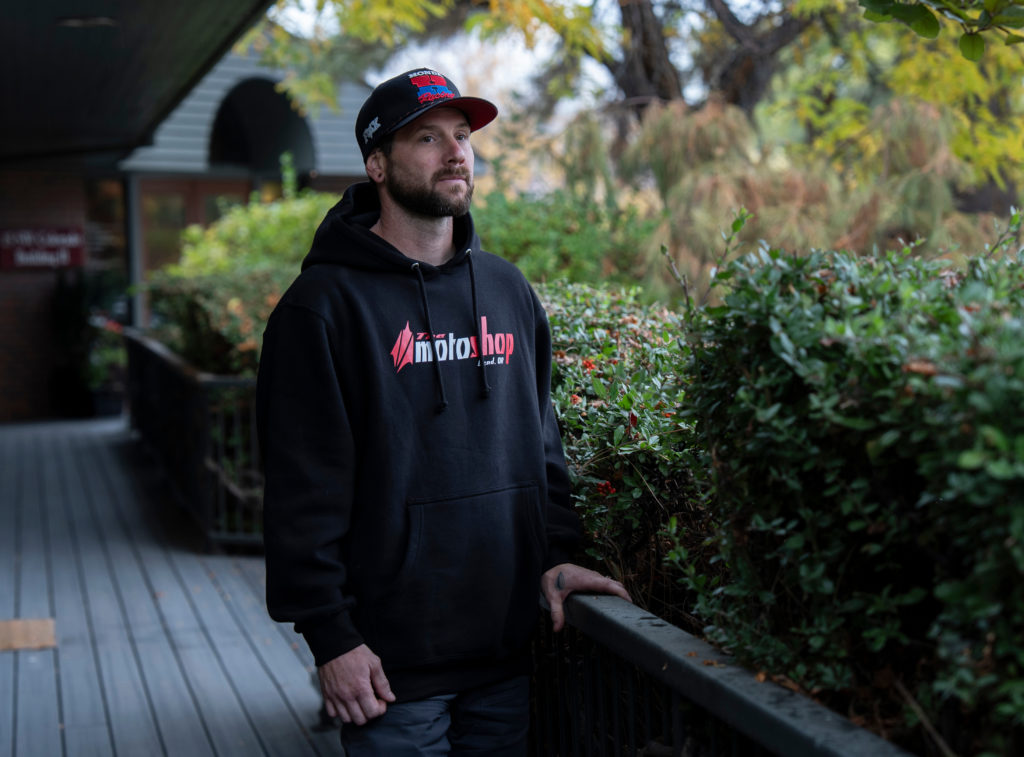
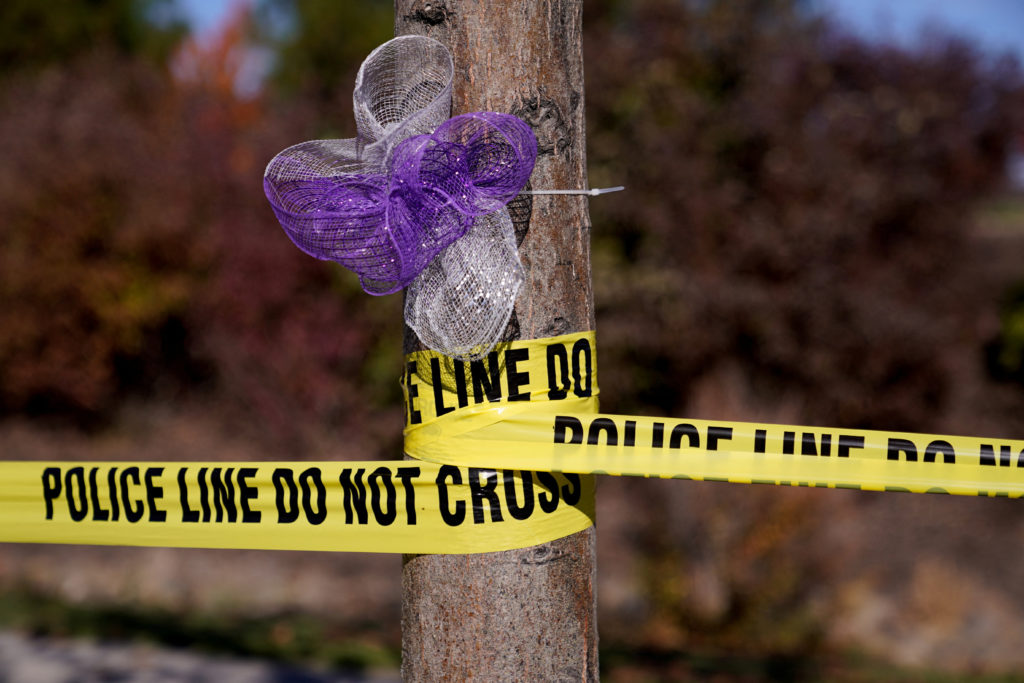
Kaylub Giamanco, whose two daughters attend Silver Rail Elementary, where the Oct. 15 attack occurred, said he was the children's "last line of defense" and that he regrets not arriving soon enough to save them all.
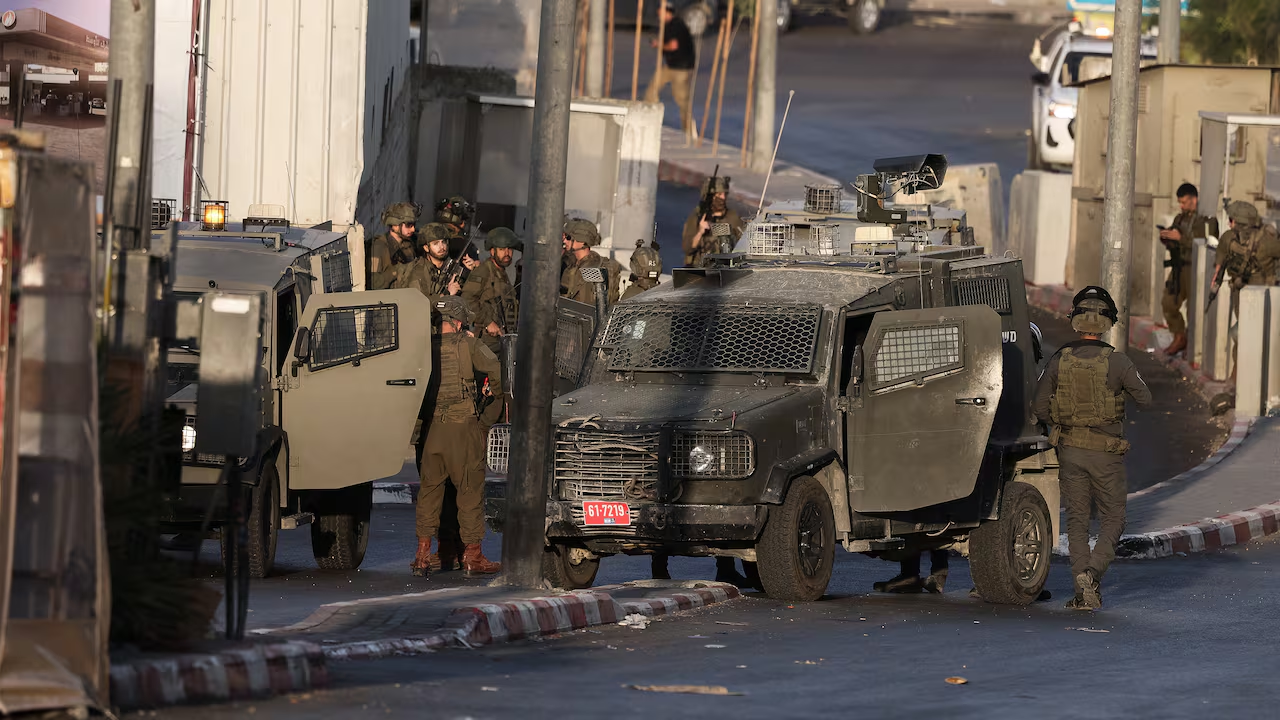
After an attack on a military checkpoint near Hebron, Netanyahu ordered a lockdown of the West Bank and what he said would be the most intense military campaign in the Israeli-occupied West Bank in decades
From a hard-line security agenda to a cultural battle, he is adopting tactics used by Trump, Bukele and Milei.
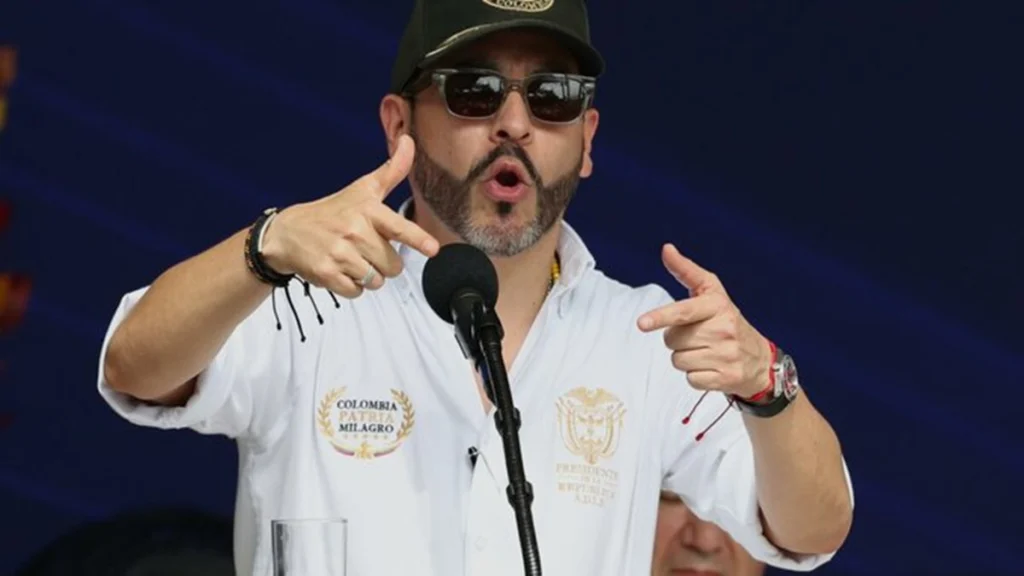
Colombian President Abelardo de la Espriella is following the playbook that other far-right leaders, such as U.S. President Donald Trump, Salvadoran President Nayib Bukele and Argentine President Javier Milei, have implemented in recent years.
The Colombian politician is touting his commitment to the “cultural battle,” along with a hard-line approach to crime and migration, attacks on the opposition, appeals to religion, personalized communications and government actions that threaten to erode democracy and limit rights.
Emphasis on Security
Since taking office in August, De la Espriella has focused on security. Almost every morning, he announces a new operation on social media involving drug and weapons seizures, arrests and the killing of suspected guerrillas and criminals.
The president has emphasized his order to act with an “iron fist” and use the full force of “the weapons and laws of the Republic.” This show of force has led him, not without controversy, to film himself walking among bodies in bags or wearing a pistol on his belt during a police raid in the Caribbean city of Santa Marta. In addition, inspired by Bukele, he has expressed interest in building as many as six mega-prisons.
Colombia has a new far-right multimillionaire president, Abelardo de la Espriella.
He is a US citizen who voted for Trump.
He wants Colombia to adopt the US dollar.
He worked for years as a lawyer in Miami, defending drug traffickers.
Like Trump and Milei, De la Espriella targets the opposition, led by the leftist Historic Pact party and former President Gustavo Petro (2022-2026). He accuses Petro’s administration of having left public finances in their “most critical situation” because of “wasteful spending” and “corruption.”
Centralization of Communications
Similar to Bukele, De la Espriella has become the first and almost sole source of information about his government, whether regarding security operations, infrastructure meetings or talks with the International Monetary Fund (IMF). He has also prohibited all senior officials from making statements without his authorization.
De la Espriella’s approach to communications is one-way: During the 11 weeks of his presidency, he has held no news conferences at which journalists could ask questions and has granted no interviews, limiting accountability.
Alignment With the U.S. and Israel
Like Chilean politician Jose Antonio Kast, Peruvian politician Keiko Fujimori and Ecuadorian President Daniel Noboa, De la Espriella was quick to align himself with Washington, joining the Shield of the Americas, a security alliance promoted by the United States, and advancing his country’s withdrawal from the International Criminal Court.
In his rapprochement with Israel, he has gone further than Milei. The Colombian far-right leader has recognized Israeli sovereignty over the Golan Heights and moved Colombia’s embassy to Jerusalem.
Budget Cuts
De la Espriella promised during his campaign to cut government spending by 40%, following Milei’s chainsaw approach, and has already moved in this direction with his first general budget, approved by decree this week.
In addition to reducing allocations for the Special Jurisdiction for Peace (JEP) and the Ministry of Equality and Equity, the Colombian president is cutting spending on contractors, bureaucracy, subsidies and social assistance.
Colombia has opened an embassy in West Jerusalem under new far-right President Abelardo de la Espriella, who is reversing his predecessor's break with Israel by also restoring a free trade agreement. pic.twitter.com/LnZ4uufnaC
The Colombian president has surrounded himself with Christian symbols since his inauguration and adopted the practice of ending his speeches by shouting, “Long live Christ the King!” This has led to lawsuits accusing him of violating the state’s secular character.
De la Espriella, who has included a significant number of evangelicals in his Cabinet, recalls Milei and Brazil’s Bolsonaro family in these practices, including former President Jair Bolsonaro and his son and presidential candidate, Flavio.
Cultural Battle
The far-right politician has announced a “cultural counterrevolution” to eliminate “wokism,” which he believes entered Colombian institutions under his predecessor.
The most high-profile controversy in this area has been his government’s decision to remove more than 30 works from the National Museum. The move has drawn criticism over “censorship” and sparked protests outside the cultural institution for several days, recalling Trump’s moves involving the Smithsonian and the Kennedy Center.
Irregular Migration
A few days after taking office, the Colombian president announced that immigrants in irregular situations would be “identified and deported.” Although police have conducted some raids in cities such as Cartagena, Cucuta, Bucaramanga and Medellin, the issue does not appear to be a priority for the authorities.
An Outsider to the System
Like Trump, Bukele and Milei, De la Espriella denies being a politician and rejects being like other politicians, whom he disparages in general terms and frequently accuses of corruption and backroom deals. He explains his government in terms of a break with the past and a process of purging the system.
This stance goes hand in hand with behavior that departs from traditional norms, as when he accused two regional leaders of corruption in front of the cameras.
The External Enemy
De la Espriella has just announced that his government will detail, in just one month, what it considers its territories in the Caribbean Sea, including all the islets and reefs of the San Andres archipelago. The move could reignite a decades-old conflict with Nicaragua. The situation, in some ways, though with clear caveats, recalls the Falklands campaign launched by Milei.
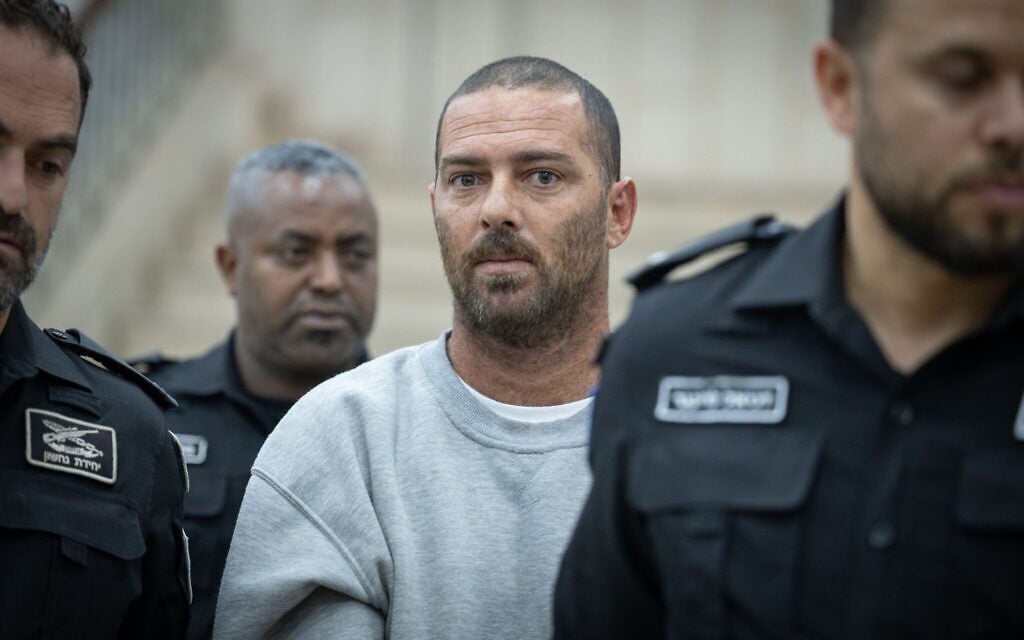
Pinhas Ran allegedly fired toward car after driver, fearing attack, refused baseless demand to show ID and sped off; one bullet lodged itself in passenger's lung, prosecutors say
Haiti’s government said Thursday that rescuing four Salvadoran soldiers kidnapped by armed gangs last Sunday on the outskirts of Port-au-Prince is its absolute priority.
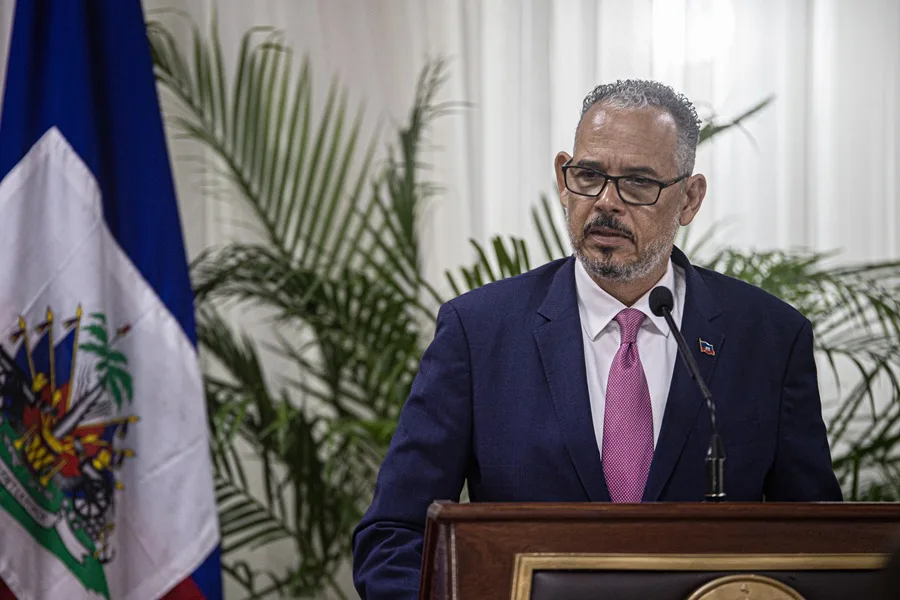
The office of Prime Minister Alix Didier Fils-Aimé said in a statement that the government is fully mobilized and intends to assert state authority with the greatest firmness against armed groups. It called the soldiers’ release an absolute priority and said all necessary resources are being mobilized to achieve that goal.
The prime minister met with competent authorities to assess the situation comprehensively and to determine, in close collaboration with the Salvadoran Gang Suppression Force (GSF), measures to reinforce ongoing operations against the armed gangs that attacked the vehicle carrying the Salvadorans.
Haitian security forces and the GSF have conducted an intense search since Sunday for the four Salvadoran aviation technicians, with whom contact was lost after the ambush in the Santo area of the Croix-des-Bouquets commune, within the Port-au-Prince metropolitan area.
#Haiti | The UN Security Council reaffirms its commitment to the Gang Suppression Force despite armed attacks and the kidnapping of four Salvadoran personnel. Rescue efforts continue as international forces maintain their security mission.#UnitedNations#teleSUREnglishpic.twitter.com/kKX5oDtQ0i
In its first official statement on the attack, the Prime Minister’s Office said that given the seriousness of the act, the State reaffirms its authority and determination, and that security forces are continuing operations firmly to secure the soldiers’ release and protect human life.
The GSF reported Tuesday that several members of the gangs controlling most of Port-au-Prince were killed and others wounded in clashes with forces searching for the Salvadoran military personnel. The GSF also reported that four of its own personnel were wounded during the operation and received medical care.
A teacher wounded in last week's attack on a special education classroom at an Oregon elementary school never had a chance to try to shelter any of the children inside, she said Wednesday in a statement issued by a family friend.

 Login