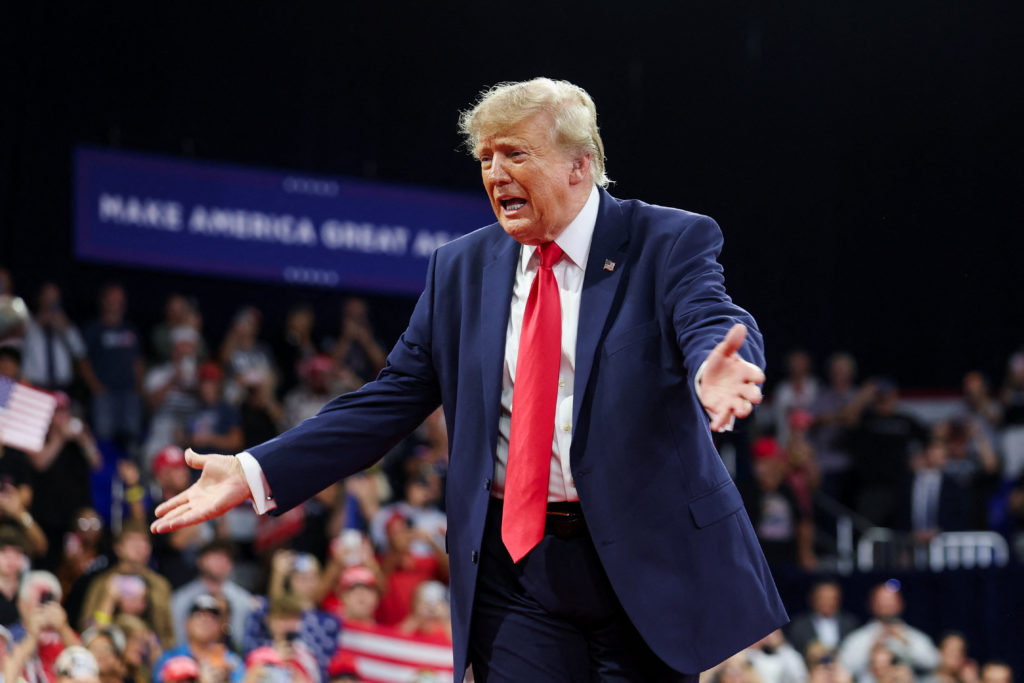
President Donald Trump on Friday told a rally for candidates in South Florida that U.S. warships returning from the Middle East could stop over in Cuba on their way back from the Iran war, his latest suggestion of taking an interventionist approach to the nearby country.
YEREVAN, Armenia — A Mozambican safari operator credited with helping restore wildlife populations in Mozambique’s Zambezi Delta, has won the 2026 Markhor Award, which recognizes contributions to conservation through sustainable wildlife management. Zambeze Delta Safaris, led by professional hunter Mark Haldane, received the award on Oct. 22, 2026, at the ongoing U.N. Biodiversity Conference, COP17, in Yerevan, Armenia. The company combines regulated trophy hunting with wildlife restoration, anti-poaching efforts and community development in an area of Mozambique that was devastated by the country’s civil war. “There is no other way to describe it than it’s a truly humbling feeling,” Haldane told Mongabay in a WhatsApp interview. “In my wildest dreams I never imagined this or anything close to this.” The award comes as governments at COP17 review progress toward global biodiversity targets adopted in 2022. One of them, Target 9, calls for sustainable wildlife management that also benefits communities. A new U.N. assessment warns that the world remains off track to meet its biodiversity commitments by the 2030 deadline. Astrid Schomaker, executive secretary of the Convention on Biological Diversity (CBD), welcomed the recognition. “Here is something we can celebrate,” she said during a press conference announcing the winner. Haldane began working in Coutada 11, a hunting concession in central Mozambique, in 1994, after years of conflict had severely depleted wildlife populations. He later established Zambeze Delta Safaris with Mozambican businessperson Carlos Pacheco Faria. According to the company’s award nomination, since the safari outfit began working in the region, the African…This article was originally published on Mongabay
The U.S. Secret Service and D.C. police are investigating reports of a “suspicious item” near the Eisenhower Executive Office Building, which resulted in a road closure. “Around 2:40 p.m., on October 23, 2026, Secret Service Police were notified of a suspicious item near 17th St. and Pennsylvania Avenue,” according to a statement from a Secret Service…
Sen. Susan Collins (R-Maine) announced Friday that nine categories of Canadian products “crucial for Maine’s agricultural industries” will be exempted from U.S. tariffs. The types of exempted goods include paperboard cartons, plastic boxes, refrigeration equipment, agricultural cleaning and sorting machinery, packing and wrapping machinery and seaweed and algae products, among others, according to a press release…
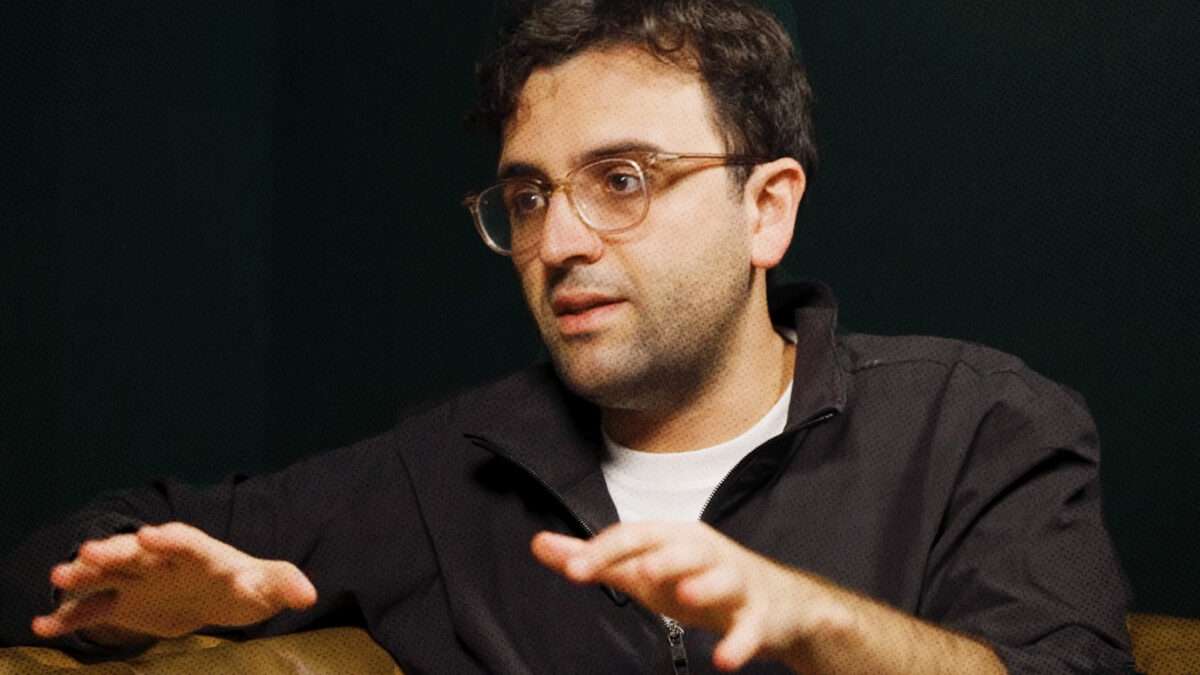
"I think capitalism is a good thing, but I think what we need to contend with and be aware of is that a lot of people are not part of it," Tarek Mansour, co-founder and CEO of prediction market platform Kalshi, recently toldReason's Nick Gillespie. "They don't feel like they're part of it. And that's a reality."
Mansour has set out to change that by making it easier for consumers to experience and participate in financial markets. Kalshi's premise is simple: Mansour says the platform matches traders with differing opinions on the outcome of future events, aggregating the "bits and pieces of information" siloed across the country, so long as that information isn't privileged or obtained illegally.
He's up against a rising number of federal and state lawmakers—not to mention the NFL, traditional sportsbooks, casinos, and other regulated gambling operations—who view Kalshi as yet another gambling app. "As of early 2026, more than 20 lawsuits and cease-and-desist actions are pending across the country, filed by state attorneys general, gaming regulators, tribal governments and private plaintiffs," according to the National Conference of State Legislatures. This includes Utah, whose attorney general, Derek Brown, escalated an ongoing legal dispute with Kalshi on Tuesday by filing a complaint against the prediction market in state district court. In his complaint, Brown called Kalshi an "unconscionable and illegal gambling operation." He accused the company of engaging in a "brazen pattern of unlawful conduct."
At the federal level, Bloomberg Lawreported last Friday that Sen. Ted Cruz (R–Texas) is preparing to introduce a bill after the midterm elections that would give state and tribal governments authority to regulate sports-related event contracts offered by prediction markets.
Cruz's state-by-state regulatory regime is exactly the kind of scheme Mansour wants lawmakers to avoid. Mansour recently toldReason that, ideally, there'd be a "federal uniform set of rules that apply across all 50 states." Those rules would then "promote and foster" a "multilateral, peer-to-peer idea," where, for example, someone in California, Oregon, or Washington could trade on an event's outcome based on information supplied by someone in Texas.
Mansour, who calls insider trading an "unfair dynamic that over time dries up liquidity," also argues that prediction markets are uniquely positioned to self-regulate because trades on Kalshi are "fully transparent," making it "easy to flag" suspicious trading patterns. The platform's users play a key role in that work. Mansour says that in February, when convicted fraudster and former Rep. George Santos (R–N.Y.) tried to engage in insider trading, Kalshi received "a hundred whistleblower complaints within a few minutes."
The company's public commitment to rooting out insider trading on its platform may be laudable. Still, it has done little to dispel the prevailing sentiment among state and federal regulators that Kalshi—and prediction market platforms writ large—is indistinguishable from traditional gambling markets.
Indeed, the legal cases against Kalshi are centered on state regulators' belief that the platforms' sports event contracts are the same as the bets offered by legal gambling operations like casinos and sportsbooks. Kalshi has argued that the U.S. Commodity Futures Trading Commission has exclusive jurisdiction to regulate the kinds of contracts it can offer under federal law, preempting states from exercising any gambling authority over prediction markets.
In March, Arizona became the first state to file criminal charges against Kalshi. Arizona Attorney General Kris Mayes accused the company of "running an illegal gambling operation and taking bets on Arizona elections, both of which violate Arizona law." Not everyone in the state shares Mayes' view. One Arizona resident, Zach, a 35-year-old man who makes a living trading sports-related event contracts on prediction markets, tells Reason he'd "move to another state" if Arizona succeeds in driving out prediction markets.
"There's nothing that is excluding other people from the profits that I'm making right now," he says. "I'm under no obligation to bet on Monday Night Football….I'm able to look at all the markets and decide which ones I want; I'm setting a limit order and just saying, 'OK, if I get my price, then hooray.' If I don't, then that's not something that I add to my portfolio."
Of course, not everyone acts as responsibly. Mansour knows that in any competition, including trading, "some people are going to win," while "some people lose." He believes in "individual freedom" and in the idea that "people should be able to choose" which financial markets they engage in, with "some regulations on irresponsible use" so that companies can't target people who exhibit addictive or destructive betting patterns.
The degree to which Kalshi and other prediction market platforms should be regulated will likely be a high priority for federal lawmakers after the midterm elections and in the next Congress. Mansour appears optimistic that there's enough bipartisan support for what he calls "sensible guardrails." He says there's a "big group" on both sides of the aisle that's "actually pro" prediction market platforms. There's reason to be skeptical of Mansour's claim, given that several members of Congress—such as Sen. Elizabeth Warren (D–Mass.), the ranking Democrat on the Senate Banking Committee—have said prediction markets need to be reined in.
In Mayes' case, her antipathy toward prediction markets might cost her at least one vote in Arizona's attorney general race. Zach says that with Mayes waging a legal battle against Kalshi, he'd have to take that into account "hypothetically, if someone knocked on my door tonight and they want me to vote for Kris Mayes to be reelected."
"If I'm not gonna vote on my own behalf, then who is, right?" he says. (Mayes might not be a fan of Kalshi, but with the platform's penchant for accurately predicting election winners, she can take solace in her current trading position, which shows an 84 percent chance she retains her position.)
Mansour says he's a "free market guy" who wants everyone to "have a shot in the competition." To succeed, he'll have to withstand a host of paternalistic government officials hell-bent on controlling financial decisions made by consenting adults.
Hurricane Vance is expected to steadily intensify in the next 24 hours and turn into a major hurricane by Friday night, according to projections from the National Hurricane Center. “Swells generated by Vance are expected to begin affecting portions of the coast of southern and southwestern Mexico this weekend and continue into next week,” the…
Two former FBI officials are facing charges for lying to Congress about their involvement in the agency’s investigation into Hunter Biden’s laptop. Nikki Floris and Bradley Benavides, who worked in the FBI’s Foreign Influence Task Force (FITF) in 2019 and 2020, were taken into custody Friday, FBI Director Kash Patel said in a post on…
YEREVAN, Armenia — More than 80 conservation, Indigenous and civil society organizations have called on governments meeting at the COP17 U.N. biodiversity summit in Armenia to keep mining, oil and gas operations out of protected areas. “Meeting a numerical target will mean little”, if areas designated for conservation remain exposed to industrial activities, the organizations warn in a joint letter released in advance of COP17 on Oct. 2. An Oct. 8 report by Earth Insight and partners says that nearly 62 million hectares (153 million acres) of protected and conserved areas across the tropics overlap with oil and gas blocks, while mining concessions overlap with 43 million hectares (106 million acres). World leaders agreed in 2022 to protect 30% of the planet’s land and waters by 2030, a commitment known as “30×30” or Target 3 of the Global Biodiversity Framework. The signatories argue that this commitment must be achieved “not just on paper, but in reality.” Conservation officials argue that mining has no place in protected and conserved areas. “Protected areas are protected areas,” Nadège Nzoyem, WWF’s Congo Basin regional director, said in a recent interview with Mongabay. Madhu Rao, chair of the IUCN World Commission on Protected Areas, has echoed that concern, arguing that “some places are so critical that they have to be secured against extractive industries.” The head of Nigeria’s National Park Service also acknowledged in a recent interview with Mongabay the challenges posed by illegal mining and insecurity in the country’s national parks. Signatories to the…This article was originally published on Mongabay
A proposito dei lavori della Commissione parlamentare d’inchiesta sulla morte di David Rossi, presieduta da Gianluca Vinci (Fratelli d’Italia), riceviamo e pubblichiamo il commento dell’avvocato Jacopo Pensa, uno dei principali del foro milanese, già difensore di Giuseppe Mussari, ex presidente di Mps
La violazione dei principi costituzionali e di civiltà giuridica sono già stati ben espressi dall’Unione delle camere penali. Ma al di là delle questioni giuridiche sapientemente trattate, c’è da chiedersi sul piano del ragionevolezza e del senso comune quale può essere stata la ratio e quale l’interesse a divulgare in una conferenza stampa nome e cognome del mandante e dell’organizzatore di quella turpe missione finita così tragicamente.
Mi ha colpito in particolare l’aria serafica e compiaciuta con la quale il presidente ha pronunciato quei nomi. Aggiungendo poi, paradossalmente, una nota quasi giustificativa in favore dei rei affermando che i due avevano solo lo scopo di intimidire e non già di uccidere, suggerendo così una sorta di linea difensiva: il reato commesso è più grave di quello voluto.
I due nominati hanno così modo di consolarsi. La pena potrà essere diminuita. Con un buon avvocato, si intende.
The United States Secret Service and D.C. police investigated reports of a “suspicious package” near the Ukrainian Embassy on Friday morning, according to a Secret Service statement provided to NewsNation. Out of an “abundance of caution,” the 3300 block of M Street in Northwest D.C. and the Francis Scott Key Bridge were closed, according to…
First lady Melania Trump has secured a localized ceasefire between Russia and Ukraine in the front-line city of Oleshky, the White House said in a press release Friday morning. The ceasefire will begin Thursday with both nations agreeing to temporarily stop all military action in the city “to allow for humanitarian aid to enter and…
The U.S. must attract the most talented foreign academics and researchers, but it cannot open its doors to students with direct links to the Chinese Communist Party.
Nonpartisan election forecaster Cook Political Report has shifted 19 House seats in Democrats’ direction less than two weeks before the midterm elections, according to its latest report published Friday. The shift includes six Republicans whose races were previously noted as “toss-ups” and have now been changed to “Lean Democrat”: Reps. Juan Ciscomani (Ariz.), Gabe Evans (Colo.), Jen…
Steve Moore, a former senior economic adviser to President Trump, said Thursday that while the U.S. economy is “the strongest in the world,” it would be appropriate for Republicans to acknowledge the grievances of the people. “I think maybe to borrow a line from Bill Clinton, I feel your pain would be an appropriate thing…
ORQA supplies drones to NATO militaries and views working in Ukraine as key to making the standard of drone technology that the alliance needs.
Stefan Wermuth/REUTERS
A major Western drone firm says working in Ukraine is key to getting gear to the standard NATO needs.
ORQA is partnering with Ukraine's industry to co-produce drone systems, including for the NATO market.
Its CEO said Ukraine has battlefield experience and operational excellence that can shape gear for NATO.
A Western company developing drone technology for NATO militaries says that working in Ukraine is the best way to ensure its gear meets the alliance's needs for a future fight.
ORQA, a Croatian company that makes drones and drone technology, including controllers, receivers, goggles, video equipment, and flight simulators, already supplies parts and systems to two dozen NATO allies. But it wants to draw on Ukraine's battlefield experience to improve its products.
Working in Ukraine "creates an opportunity to really channel this sort of operational expertise to shape these products. And then these products can be made to a standard that NATO demands," CEO Srđan Kovačević told Business Insider.
ORQA produces components used by Ukrainian defense tech company General Cherry and is partnering with the firm to jointly make drone systems and spread Ukraine's drone expertise.
The war in Ukraine is the most intense drone war ever fought, and getting feedback from the battlefield provides critical insight into what soldiers need most.
ORQA and General Cherry are working together to produce for both Ukraine and the NATO market.
John Keeble/Getty Images
"If I'm being blunt, there are only a few parts of the world where you can actively shoot down these unmanned aerial threats in a real-world environment," Kovačević told Business Insider.
That same drive has prompted Western defense companies, ranging from small start-ups to major primes, to set up manufacturing facilities, repair hubs, and offices in Ukraine, seeking battlefield feedback to improve their technology faster.
ORQA is also seeking to better understand how Ukraine's defense industry scales, moves quickly, and works in wartime.
Kovačević said that "the West has a tremendous amount to learn from Ukraine," saying that the "operational excellence that Ukrainian defense forces have developed is unparalleled in the Western world."
He said that while the West "has a very deep technology expertise," it lacks "this lived experience of taking that technology and applying it to the operational reality of the 21st-century warfare."
"Now," he said, "it's time to merge the two and emerge better off on both sides of this partnership."
General Cherry is one of Ukraine's biggest drone companies and has announced partnerships with other Western defense tech companies.
Ukraine is fighting the most drone-heavy war ever.
Diego Herrera Carcedo/Anadolu via Getty Images
ORQA and General Cherry intend to manufacture in both countries, supplying NATO and its allies with Ukrainian-developed counter-drone technology while expanding domestic production of drone components in Ukraine.
Kovačević said Ukrainian companies like General Cherry have "immensely valuable lived experience of building and scaling under fire," something that is often "neglected by Western companies," but they can learn.
The significant "volumes that Ukrainian drone companies are able to produce really dwarf anything that's happening in the West right now," he added.
Western leaders are encouraging industrial collaboration, andNATO has launched programs to bring Ukrainian and allied defense companies together.
ORQA isn't alone in looking to Ukraine's extensive battlefield experience to develop better weapons for NATO. Latvia-based Origin Robotics, for example, makes BLAZE interceptor drones purchased by several NATO militaries and BEAK, a drone-launched precision-guided weapon used by Ukrainian forces.
Its CEO, Agris Kipurs, previously told Business Insider that the company takes lessons from its work in Ukraine, "but we adapt those weapons systems specifically to be used in a NATO country. And NATO countries and the armies of NATO countries are our customers. That is the user we build for."
Kovačević said Ukrainian technology can't simply be transplanted into NATO militaries. Ukraine has had to develop weapons at breakneck speed and make do with what's available.
NATO, however, has time to take operational knowledge, contextualize it for alliance forces, and build these products to the necessary standards using Western technology, he said.
Kovačević said the goal of these industrial partnerships is to supply NATO without undermining Ukraine's ability to meet its own wartime needs.
ORQA also aims to boost Ukraine's domestic production of drone components and reduce its reliance on foreign suppliers.
Ukraine is "relying heavily on non-Ukrainian and non-European supply chains," Kovačević said, adding that reducing that dependence is strategically important. ORQA says it manufactures key components in-house and avoids Chinese-made parts to strengthen its supply chain.
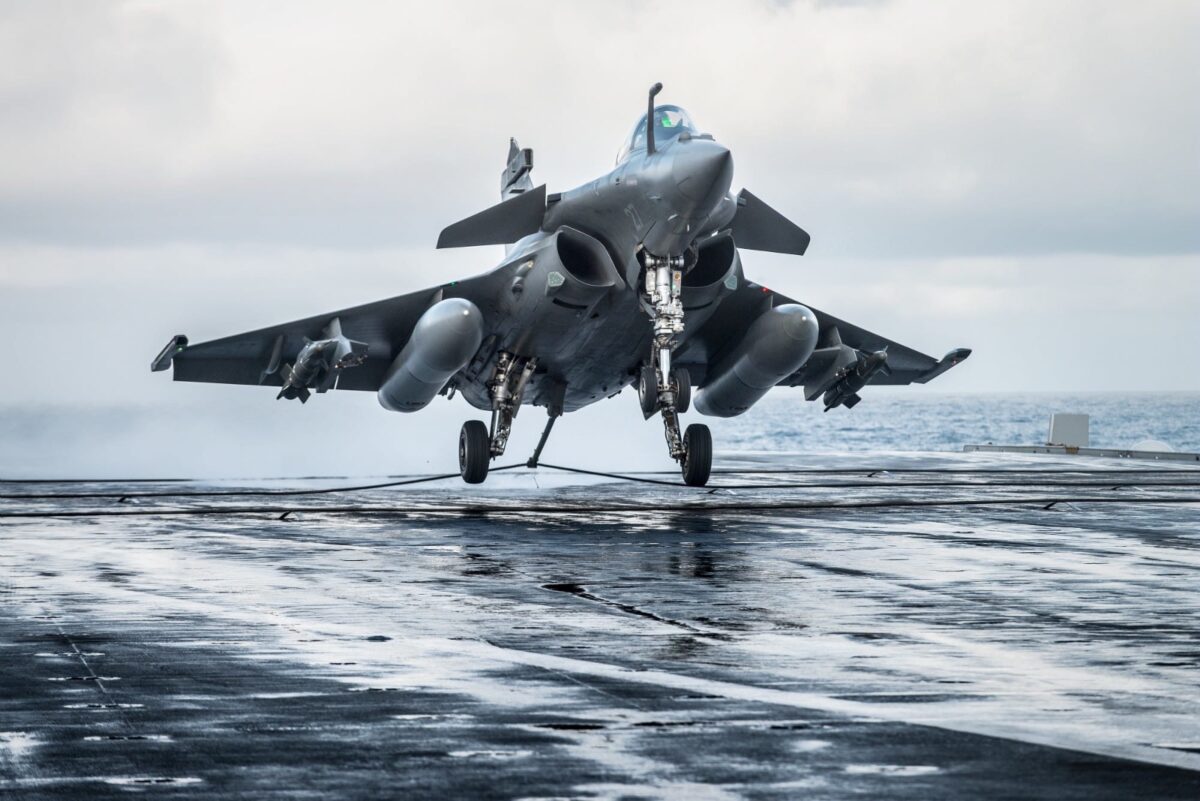
The Indian Navy is conducting trials of the French Dassault Rafale-M, the naval aircraft that edged out the American F/A-18E/F Super Hornet in a tight contest.
Interestingly, the Indian Navy already operates a substantial number of American platforms. Against that backdrop, Boeing had expected to secure yet another major Indian contract.
Why did the French Rafale-M ultimately edge out the Super Hornets?
In April 2025, India ordered 26 Rafale Marines to replace the Russian-origin MiG-29K, which currently operates from Indian aircraft carriers– INS Vikramaditya and INS Vikrant.
More than a year after signing the contract, the Indian Navy is running Rafale-M trials at the Shore-Based Test Facility (SBTF) at INS Hansa in Goa and is reportedly considering some minor modifications to its aircraft carriers to accommodate the French aircraft.
According to the reports, the service is considering these small modifications because the Rafale-M fighters were originally designed to operate from CATOBAR (Catapult Assisted Take-Off But Arrested Recovery) carriers—such as the French carrier Charles de Gaulle—whereas Indian carriers use a Short Take-Off But Arrested Recovery (STOBAR) system.
Additionally, the Rafale-M has a wingspan of almost 10.9 meters, and unlike the MiG-29K, it is not designed to fold its wings to take up less space on the deck. This creates a larger deck or hangar footprint. So, the Navy is purportedly examining minor procedural workarounds, such as temporarily detaching the wingtip missile launch rails to reduce the effective span to roughly 9.6 meters, along with handling and stowage adjustments.
Rafale-M deliveries are expected to begin in 2028 and likely conclude by 2030, marking the first time in a decade that the Indian Navy will operate a non-Russian or Western fighter. Its last Western carrier fighter was the British Sea Harrier aircraft, which it retired in 2016 after more than three decades of service.
Notably, the Indian Navy has operated French equipment before, though never on this scale.
Earlier, it acquired 12 Breguet Alizé carrier-based anti-submarine warfare (ASW) aircraft that participated in the 1961 Goa operations and the 1971 Indo-Pakistani War and served the Navy until 1991. The service has also operated the HAL Chetak, a French-designed light utility helicopter produced in India for decades, though it is now being phased out in favor of more advanced indigenous aircraft.
By contrast, the Indian Navy operates a range of US-origin equipment, from helicopters to spy aircraft, making the choice of a French carrier-based jet particularly interesting.
File Image: Rafale-M
Indian Navy: Full of US-Origin Weapon Systems
Despite the push for indigenization, the Indian Navy has steadily acquired American platforms and weapons over the past few decades.
One of the most important items on this list is the P-8I Poseidon maritime surveillance aircraft. India first ordered eight P-8I aircraft in January 2009, becoming the type’s first international customer.
It signed a follow-on order for four additional aircraft in 2016, significantly enhancing its maritime surveillance, anti-submarine warfare, and ISR capabilities and positioning it as a critical asset in the Indian Ocean Region.In February 2026, the Defense Acquisition Council (DAC) officially cleared an additional P-8I purchase.
In addition to the Poseidon, the Indian Navy ordered 24 MH-60R Seahawk Multi-mission naval helicopters in February 2020. It has since received 21, and the rest are expected to arrive in 2027. These helicopters can conduct anti-submarine warfare, anti-surface warfare, shipborne multi-role operations, and networked operations, arming the Navy with the capability to detect and neutralize underwater and surface threats in the Indian Ocean.
The Navy has also leased two MQ-9B Sea Guardian drones from US-based General Atomics since 2020. It is supplementing these by leasing two more as per a contract signed in August 2026. These drones have supported maritime surveillance and intelligence, surveillance, and reconnaissance (ISR) missions in the Indian Ocean Region, complementing the Navy’s P-8I and helping maintain vigilance.
India also signed a $3.3 billion deal with the US in October 2024 to acquire 31 MQ-9B High-Altitude Long-Endurance UAVs. Of the 31 Sea Guardians the MoD purchased, the Indian Navy will receive 15 drones, while the Indian Army and the Indian Air Force will each receive 8 to strengthen surveillance along the northern and western borders.
The Indian Navy operates one US-acquired INS Jalashwa (the former USS Trenton), an Austin-class amphibious transport dock with a sealift capability for over 3,500 troops and a squadron of armored vehicles.
Furthermore, the service has also acquired several lethal US munitions over the years, including the AGM-84 Harpoon Block II anti-ship missile, Mk 54 lightweight torpedoes, and the AGM-114 Hellfire, to name just a few.
Despite these rather high-value acquisitions, the Indian Navy has never purchased or operated an American fighter jet. When it finally got the chance to buy a US aircraft, i.e., the F/A-18E/F Super Hornet, the service chose the Rafale-M instead.
Why did India Opt For Rafales over Super Hornets?
When India opened the contest for a carrier-based fighter to replace the MiG-29K jets, Boeing offered its F/A-18E/F Super Hornet Block III.
In 2022, Boeing India marketed the F/A-18 Super Hornet Block III as a carrier-based fighter designed for high-load, high-stress operations, and stressed that the multi-role naval fighter would be fully compatible with Indian Navy carriers.
Boeing pitched the Super Hornet as a jet that required minimal support equipment and had a remarkably low cost per flight hour while maintaining high mission readiness. It tried to woo the Indian Navy by emphasizing that the aircraft would become a force multiplier because it could interface with the P-8I and other US-origin systems the service operates.
To sweeten the deal, Boeing also announced a roadmap to significantly increase its investments in line with the “Make in India” initiative and pledged to transfer cutting-edge technologies to Indian industry if the Super Hornet was selected.
However, the Super Hornet had to dogfight with the French Rafale, a cutting-edge fighter for India’s carrier-borne aircraft tender.
In a tightly fought contest, both jets underwent extensive testing at a shore-based facility, including take-off trials from both ski-jump and catapult launchers. Both aircraft reportedly met the Indian Navy’s requirements, but the Rafale-M ultimately won.
Speaking to the EurAsian Times earlier, an ex-Indian Navy pilot who had flown both the Super Hornet and Rafale said both aircraft were extremely capable and on a level playing field. “The only issue I can think of is that the F-18 is a heavier aircraft, and the Rafale M is lighter. So, when it comes to arrested landing on the aircraft carrier, Rafale has more flexibility,” the naval aviator said at the time, requesting anonymity.
In this image released by the US Department of Defense, an F/A-18F Super Hornet launches from the flight deck of the world’s largest aircraft carrier USS Gerald R. Ford in the Eastern Mediterranean Sea, October 11, 2023. (Photo by Triniti Lersch / US Department of Defense / AFP) /
The Rafale-M shared a very high degree of commonality with the 36 Rafale jets operated by the Indian Air Force (IAF). This meant several parts, tools, and test equipment could be interchanged, and India could share ground-support systems, simulators, and diagnostic software.
Additionally, India had already established maintenance infrastructure, trained technicians, and supply chains for the IAF Rafales, which could support the Rafale-Ms.
The Navy would have assessed that Rafale-Ms would reduce costs by creating an inventory of maintenance facilities, spare parts, logistics, and potential future overhauls. Meanwhile, introducing the Super Hornet would require building an entirely separate support ecosystem.
In this scenario, the air force can familiarize itself with the Marine aircraft, while naval pilots can transition to the IAF’s twin-seat Rafales.
The IAF is now poised to acquire 114 Rafale multi-role fighters, most of which will be manufactured locally. Therefore, one could argue that the decision to choose French jets for the Indian Navy may have been driven by the need for uniformity and interoperability, which are crucial in fast-paced conflict zones.
A secondary factor could have been the Infrared Search and Track (IRST) system, which provides a stealthy advantage in detecting and engaging threats, including potential low-observable aircraft. The Rafale-M came with an integrated IRST, whereas the Super Hornet Block III lacked one, although Boeing offered a podded solution.
Moreover, the Meteor beyond-visual-range air-to-air missile on the Rafale also offered superior standoff capability compared to the Super Hornet’s AIM-120 AMRAAM.
More importantly, however, strong defense ties between India and France, smoother government-to-government negotiations even in past deals, the potential for indigenous weapons integration, and the presence of French fighter jets in the IAF played a crucial role in the decision.
India has never acquired US fighter jets for several reasons, including export controls and restrictions on their use.
Despite its best efforts to market the Block III jet to potential customers such as Canada, Finland, Germany, Poland, and Switzerland, Boeing failed to secure any new contracts and kept losing out to rivals such as Saab Gripen, Dassault Rafale, and the Lockheed Martin F-35.
Contact the author at sakshi.tiwari13 (at) outlook.com
In some first-class cabins, travelers can enjoy private suites with double beds and food by Michelin-starred chefs. Other airlines offer spacious pods with multiple seating options and headrests with built-in speakers.
Between September 2025 and August 2026, travelers from over 100 nationalities filled out an airline passenger satisfaction survey conducted by Skytrax, an aviation rating company, to determine the best airlines to fly first class.
Here are the winning first-class carriers in Skytrax's 2026 World Airline Awards.
10. Qatar Airways
Qatar Airways' Airbus A380 first class.
Bloomberg/Getty Images
Qatar Airways made the top 10 of Skytrax's ranking with amenities such as an à la carte menu, Diptyque amenity kits, and loungewear from The White Company.
9. Qantas Airways
Qantas
First-class travelers on Qantas can enjoy perks like armchair seating with in-seat massages and a self-service bar and lounge.
8. ANA (All Nippon Airways)
First class on ANA All Nippon Airways.
David Slotnick/Business Insider
First class on ANA includes sliding doors, lie-flat seats, and lavish meals featuring items such as sashimi, wagyu beef, and miso soup.
In a 2023 press release unveiling Lufthansa's new first-class suites, Lufthansa Airlines CEO Jens Ritter said that the design "conveys the feeling of privacy and individuality similar to a hotel room." Skytrax named Lufthansa the third-best airline to fly first-class.
2. Singapore Airlines
Singapore Airlines' Airbus A380 first-class.
ROSLAN RAHMAN/AFP via Getty Images
Singapore Airlines' first-class suites are spacious enough for a bed plus a reclining chair, and two suites can be combined into a double for two people. It's the runner-up in Skytrax's ranking of the best first-class airlines.
1. Air France
Air France plans to unveil a new first-class cabin in late 2024.
STR/AFP via Getty Images
Skytrax named Air France, whose first-class cabins offer a nearly 38-square-foot La Première suite and food created by Michelin-starred chefs, the best airline for first-class travel.

 Login