❌

Reading view

Lula Rallies Millions in Rio and is Confident of Victory Over Far-Right Bolsonaro
The progressive leader seeks a fourth nonconsecutive term as Brazil heads to its tightest election in recent history.

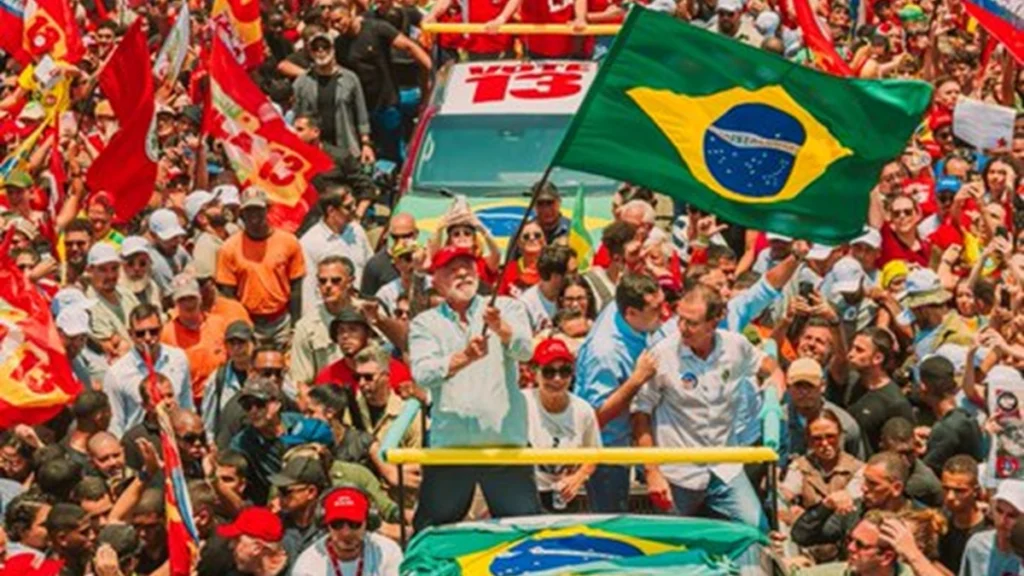
On Saturday, Brazilian President Luiz Inacio Lula da Silva gathered millions of supporters in Rio de Janeiro and said he was convinced of his victory over far-right Senator Flavio Bolsonaro.

RELATED:

Brazil Faces Pivotal Presidential Runoff Between Lula and Bolsonaro

“I am sure we are going to win the elections. You can write it down: tomorrow I will be elected president of the Republic again,” the progressive leader declared to journalists just before setting off on a march along the Copacabana beach promenade.

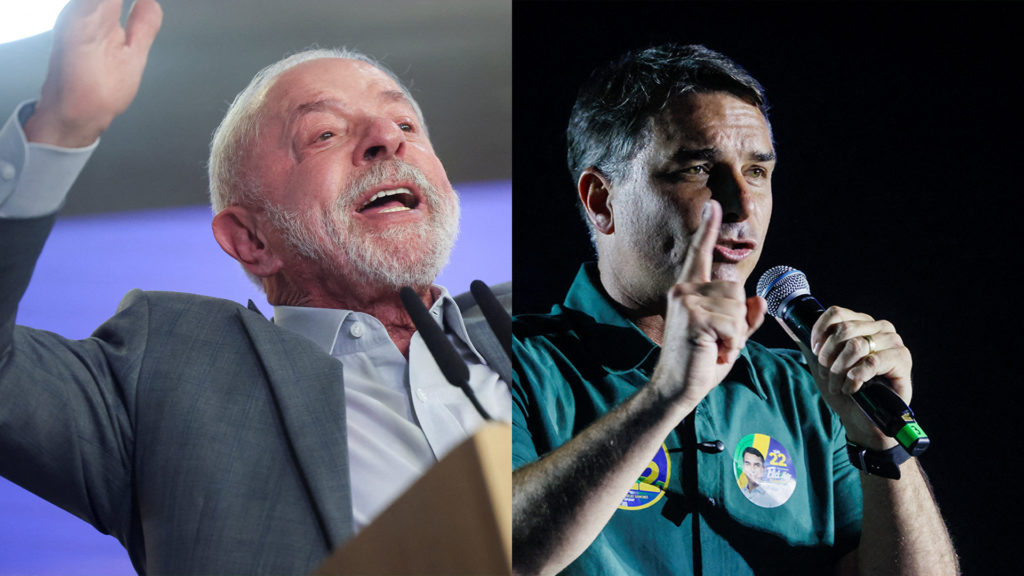
The Workers’ Party (PT) leader and the son of former ruler Jair Bolsonaro will face off this Sunday for the presidency in the tightest election in Brazil’s recent history.

Lula, seeking his fourth nonconsecutive term at 80 years of age, began this last day of campaigning with a massive event in Rio, where his supporters dressed in red and unfurled a huge Brazilian flag.

Bora Rio de Janeiro! Bora Lula!
Os cariocas já estão nas ruas iniciando os atos por de a opoio a Lula que vão ocorrer em todo o Brasil todo.
Em Porto Alegre, nos encontramos às 17h, no Largo Zumbi dos Palmares.
Até breve.#Lula13 pic.twitter.com/dcVaYPu134

— Fernanda Melchionna (@fernandapsol) October 24, 2026

The text reads, “Let’s go Rio de Janeiro! Let’s go Lula! Cariocas are already in the streets starting the acts of support for Lula that will be held throughout Brazil. In Porto Alegre we meet at five in the afternoon, at Largo Zumbi dos Palmares. See you soon. Lula 13”

“We are going to win the elections, it is true that the people want change but a change for the better, forward. The people do not want to go backward,” said the former lathe operator who has become an indelible figure in South American history.

The Workers’ Party candidate accused Flavio Bolsonaro of being a “militiaman” in an allusion to the far-right candidate’s ties to relatives of Rio paramilitary groups.

“It is not possible that we fail to convince Brazilian society of the risk that democracy, freedom and people of good will face in this country,” Lula warned, and thanked the militancy for taking on the responsibility of the campaign after the first round with massive events in the streets and a strong mobilization on social networks.

“I have an army bigger than the Chinese and the American. It is the army of Lula,” the Brazilian president said in an allusion to a public WhatsApp channel that has gathered more than 10 million users who define themselves as soldiers of democracy in the fight against fascism.

On Saturday afternoon, Lula will travel to Sao Paulo, the country’s largest electoral district, to close his campaign. Meanwhile, Flavio Bolsonaro marched through the city of Belo Horizonte and will then move to Rio de Janeiro, the political cradle of bolsonarismo.

teleSUR/ JF

Source: EFE
  •  

Brazil Faces Pivotal Presidential Runoff Between Lula and Bolsonaro

Nearly 159 million voters are expected to cast ballots in a closely contested election, with polls showing the two candidates tied.

On Sunday, Oct. 25, Brazil will decide its future in the presidential runoff election, pitting President Luiz Inacio Lula da Silva against far-right Sen. Flavio Bolsonaro.

RELATED:

Lula Pledges Universal Full-Day Schooling in Brazil

Nearly 159 million Brazilians are eligible to elect their next president, who will take office on Jan. 5, 2027. Polling stations will be open for nine hours, from 8 a.m. to 5 p.m. local time. Results will be known on Sunday, thanks to the country’s efficient electronic voting system.

The eldest son of former President Jair Bolsonaro enters the runoff with an advantage after receiving the most votes in the first round on Oct. 4, winning 47% of the vote, two percentage points more than the progressive leader. However, polls conducted in recent days have shown an upward trend for the Workers’ Party leader, who, at 80, is seeking his fourth nonconsecutive term.

According to the latest poll, released Thursday by polling firm Datafolha, the two candidates are tied at 50% of the valid votes. The outcome of the race is shaping up to be extremely close, even more so than in 2022, when Lula defeated Jair Bolsonaro by just over 2 million votes.

The leftist leader faces the difficult challenge of winning the election after finishing second in the first round. In the nine presidential elections held since the end of the military dictatorship (1964-1985), no one has managed such a feat. To make history, Lula will have to overcome the 2.2 million-vote gap separating him from Bolsonaro after the first round.

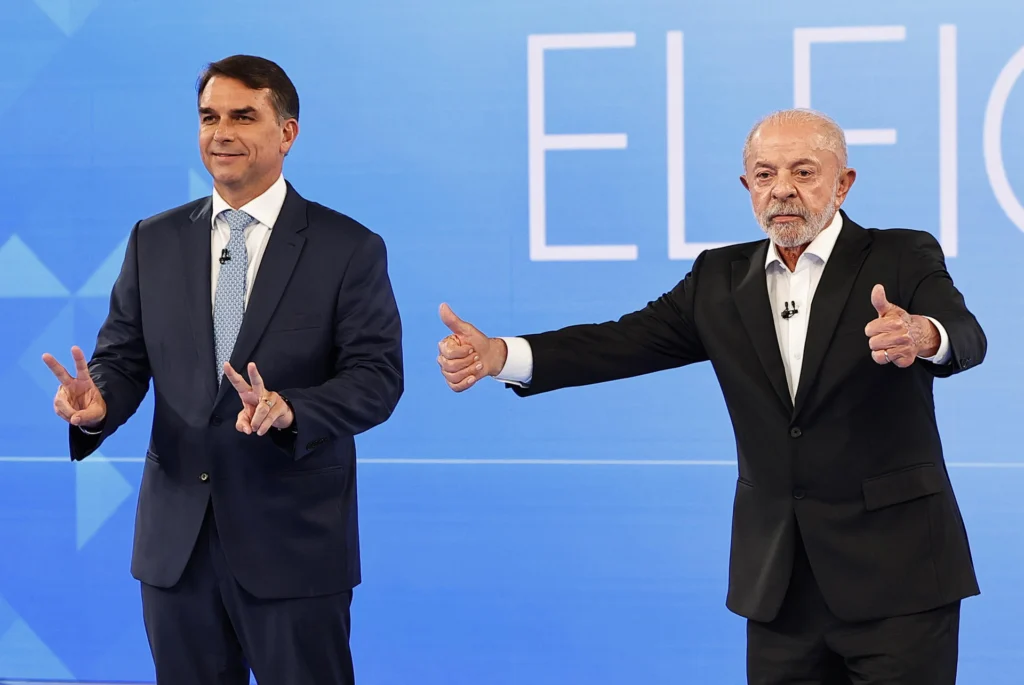
“I would like to ask for your vote because either we keep democracy functioning or we will have a militiaman governing this country,” Lula said on Friday night during the final televised debate before the runoff.

Este es Lula liderando con el sindicato del metal a los 33 años la huelga que desafió a la dictadura militar en Brasil. Logró aumentos salariales y fue encarcelado. Mientras, la única profesión del ultraderechista Flávio Bolsonaro ha sido la de político desde que tiene 21 años. pic.twitter.com/pp7YHexIqf

— Fonsi Loaiza (@FonsiLoaiza) October 23, 2026

The text reads, “Here is Lula, at age 33, leading the metalworkers’ union in a strike that defied Brazil’s military dictatorship. He secured wage increases and was subsequently imprisoned. Meanwhile, the far-right figure Flávio Bolsonaro has had only one profession—that of a politician—since the age of 21.”

Lula Changes Strategy

Over the past three weeks, Lula has radically shifted his campaign strategy. He has immersed himself in social media and energized his supporters with massive rallies in cities such as Belo Horizonte and Sao Paulo.

He has also stepped up announcements from the presidency: he obtained congressional approval for the reduction of the workweek, forgave the debts of millions of self-employed workers, and introduced incentive measures for the video game industry.

Lula also sent Parliament a proposal to make public transportation free on weekends and holidays in the country’s nearly 6,000 municipalities.

In recent weeks, the far-right Liberal Party (PL) senator has been significantly affected by the possible consequences of his own proposals. Among them is his intention to cut public spending by US$40 billion, although Flavio insists he does not intend to take a single cent from the most vulnerable.

In recent days, the Brazilian press has also revealed new suspicions about Flavio’s involvement in a money-laundering scheme linked to online betting.

📊 PESQUISA DATA FOLHA – NACIONAL
✅ VOTOS VÁLIDOS | 2º TURNO

🔴 Lula (PT): 50% (+1) ⬆️
🔵 Flávio Bolsonaro (PL): 50% (-1) ⬇️

CONTINUEM EMPENHADOS VIRANDO VOTOS PRO LULA, AGORA É GUERRA! pic.twitter.com/vEqZ2Yp3Le

— Nordeste é 13 (@thiegocomenta) October 22, 2026

The text reads: “Datafolha poll – valid votes nationwide | Runoff. Lula (Workers’ Party): 50% (+1). Flavio Bolsonaro (Liberal Party): 50% (-1). Keep working hard to secure votes for Lula—it’s all-out war now!”

Zuckerberg’s Meta Under Scrutiny for Aiding the Far Right

The 2026 presidential campaign has become embroiled in legal disputes on an unprecedented scale. The Superior Electoral Court has received more than 800 complaints throughout the election campaign.

One of those disputes has centered on the controversial conduct of Meta, the owner of WhatsApp, Instagram, and Facebook.

Lula’s supporters have requested the annulment of Bolsonaro’s candidacy over alleged interference by Mark Zuckerberg’s company, which they accuse of favoring the circulation of far-right content while restricting progressive content.

teleSUR/ JF

Source: EFE

  •  

Flávio Bolsonaro Apologizes to Lula During Brazil Presidential Debate

Lula da Silva and Flávio Bolsonaro debate maternity leave, Bolsa Família and poverty during Brazil’s presidential election.

Flávio Bolsonaro admitted he was wrong to oppose extending maternity leave and apologized to Lula for a personal insult during a heated debate.


Brazilian presidential candidate Flávio Bolsonaro apologized to President Luiz Inácio Lula da Silva during a televised debate after Lula challenged him over his past opposition to extending maternity leave, sparking a heated exchange over social welfare, poverty and personal attacks.

RELATED: Lula Pledges Universal Full-Day Schooling in Brazil

Flávio Bolsonaro, who represents the Liberal Party (PL), acknowledged that his earlier vote was a mistake and said he would take a different position today. He also apologized for calling Lula “nine fingers,” a reference to the president’s missing finger, but followed the apology by demanding that Lula answer for his government’s record on poverty and social assistance.

The confrontation unfolded during the debate’s second segment, after Lula requested a right of reply over remarks he considered offensive. The production team had yet to rule on the request when the candidates resumed their exchanges.

Lula chose social policy as the subject of his question and returned to an issue he said Flávio Bolsonaro had left unanswered in the previous debate. He challenged his opponent to explain why he had been the only state legislator in Rio de Janeiro to vote against extending maternity leave.

Qual a justificativa para votar contra a licença-maternidade? Contra o direito das mulheres e da família? Explique, Flávio Bolsonaro. pic.twitter.com/17ibHC7knP

— Lula (@LulaOficial) October 24, 2026

Text Reads: What is the justification for voting against maternity leave? Against the rights of women and the family? Explain, Flávio Bolsonaro.

Flávio Bolsonaro defended his earlier decision by saying he had believed the measure could make employers less willing to hire women. He acknowledged that he had been wrong, adding that marriage and having two children had changed his perspective.

He said he now understood the importance of mothers staying close to their children and would support extending maternity leave beyond 180 days where possible. He maintained that he would vote differently today.

Lula dismissed the explanation, arguing that Flávio Bolsonaro had failed to support the measure when he had the opportunity and was now changing his position as women became more politically active and fought for their rights.

The president then challenged his rival over the term “Bolsa Farelo,” which Flávio Bolsonaro had used to disparage Bolsa Família, Brazil’s income-transfer program. Lula called the expression disrespectful to poor people, arguing that those removed from economic hardship often treated the poor as though they had no value.

The exchange escalated when Lula responded to Flávio Bolsonaro’s use of the nickname “nine fingers.” The president explained that he had lost a finger at age 17 while working the night shift at a factory, saying he had needed the job to afford food.

“I will not allow a militiaman to call me ‘nine fingers,’” Lula declared. He also accused Flávio Bolsonaro of never having worked, alleging that the first job recorded in his rival’s employment record was a fictitious position arranged by his father.

Flávio Bolsonaro offered an apology, saying he had not intended to offend Lula with the remark. He then turned the criticism back on the president, demanding that Lula apologize to people experiencing homelessness and recipients of Bolsa Família.

Flávio Bolsonaro claimed that the number of people living on the streets had nearly doubled under Lula’s current government, citing a figure of 199,000 people as the starting point. He also accused the president of neglecting Bolsa Família beneficiaries for four years and addressing their concerns only 17 days before the election.

The candidate criticized a recent adjustment to the benefit, claiming the increase amounted to three Brazilian reais a day — enough, he quipped, to buy three eggs.

The exchange brought the candidates’ competing arguments over social policy into sharp focus. Lula pressed Flávio Bolsonaro to account for his legislative record on maternity leave, while his opponent sought to shift scrutiny toward the government’s handling of homelessness and income support.

  •  

Lula Pledges Universal Full-Day Schooling in Brazil

Lula da Silva and Flávio Bolsonaro debate education policy, full-day schools and student aid in Brazil.

Lula promises to expand full-day schooling and student aid as Flávio Bolsonaro challenges his education record and attacks his family.


Brazilian President Luiz Inácio Lula da Silva pledged to bring full-day schooling to every school through the secondary level if re-elected, while opposition candidate Flávio Bolsonaro accused his government of cutting education funding and attacked the president’s family over online gambling.

RELATED: Datafolha Poll Shows Lula and Bolsonaro Tied at 50% Ahead of Runoff

The exchange during an education segment of the presidential debate centered on extended school hours, student assistance and childcare before turning into a personal confrontation over jogo do tigrinho, an online gambling game.

Lula, of the Workers’ Party (PT), challenged Bolsonaro to explain his plans for full-day schooling. Bolsonaro, of the Liberal Party (PL), responded that he would deliver what the current government had failed to achieve, accusing Lula’s administration of cutting federal funding for the program and attempting to conceal the reductions.

Enseñanza de tiempo integral enfrenta a Lula y Bolsonaro en el debate

🏫 Lula se comprometió a "concluir en el próximo mandato el 100% de las escuelas de tiempo integral en este país hasta la enseñanza media".

🎓 Defendió su gestión y destacó la creación del ProUni. También… pic.twitter.com/DHaNmtcXCo

— teleSUR TV (@teleSURtv) October 24, 2026

Text Reads: Full-Day Schooling Pits Lula Against Bolsonaro in Debate
Lula committed to “concluding in the next term 100% of full-day schools in this country up to secondary education.”
He defended his administration and highlighted the creation of ProUni. He also denounced the conditions in which he received the presidency regarding education.

Bolsonaro then shifted the discussion to online gambling, accusing Lula of being responsible for the rise of jogo do tigrinho. He claimed the game was created and authorized in 2022 by those now in government and alleged that its cancellation was being pursued only as the election approached. He also invoked the nicknames Lulinha and Tigrinho in referring to the president’s sons.

Lula responded by pointing to his party’s record on education since it first took office in 2003. He credited former education ministers Fernando Haddad and Camilo Santana with leading what he described as a transformation of Brazil’s education system. If re-elected, he said, he would ensure that all schools offered full-day schooling through the secondary level.

He also pledged to expand Pé de Meia, a financial assistance program designed to keep students in school, making it available to all secondary students and extending it to university students. Lula said the program had helped prevent 66% of participating students from dropping out, arguing that no young person should have to abandon their education.

“Não existe nenhum país do mundo que conseguiu se desenvolver sem antes investir na Educação. A gente tem mais universidades, IFs e escola em tempo integral. A gente cuidou da educação como jamais tinha sido cuidada na história desse país"

– Lula no debate da Globo…

— União Brasileira das/dos Estudantes Secundaristas (@ubesoficial) October 24, 2026

Text Reads: “There is no country in the world that managed to develop without first investing in Education. We have more universities, IFs, and full-time schools. We took care of education like it had never been taken care of in the history of this country” – Lula in the Globo debate

The president further recalled that his administration had inherited 5,600 stalled projects involving daycare centers, schools and federal institutes from the previous government. He contrasted those unfinished projects with the civic-military school model promoted by his predecessors, which he also described as incomplete.

Bolsonaro rejected claims that he intended to abolish Pé de Meia, calling the allegation a falsehood spread by his opponent’s campaign. He pledged to maintain the program and cited measures taken under the administration of his father, former President Jair Bolsonaro, including the cancellation of nearly 99% of the debt owed by students who had completed higher education and a 33% teacher salary increase, which he described as the largest in history.

The opposition candidate also proposed a childcare subsidy for mothers unable to work because they lacked access to daycare. He said more than one million children had no place in the public childcare system and pledged to allow families to enroll them in private facilities where public places were unavailable.

On full-day schooling, Bolsonaro proposed using the additional hours for vocational training and instruction in technology, artificial intelligence and application development. He argued that keeping children closer to school would put them farther from crime.

The candidates presented contrasting approaches to education, with Lula emphasizing universal full-day schooling and expanded financial support for students, while Bolsonaro focused on childcare subsidies and vocational training alongside accusations over education funding and the president’s family.

  •  

Brazil's high-stakes presidential runoff could reshape country's future

This weekend, voters in Brazil head to the polls in a high-stakes presidential runoff that could reshape that country's political future. Will Brazil join a rightward shift across parts of the Americas, or stick with its left-wing leadership? Voting is compulsory for most adults, and the race has deepened political divisions across the country. Stephanie Sy reports.

  •  
❌