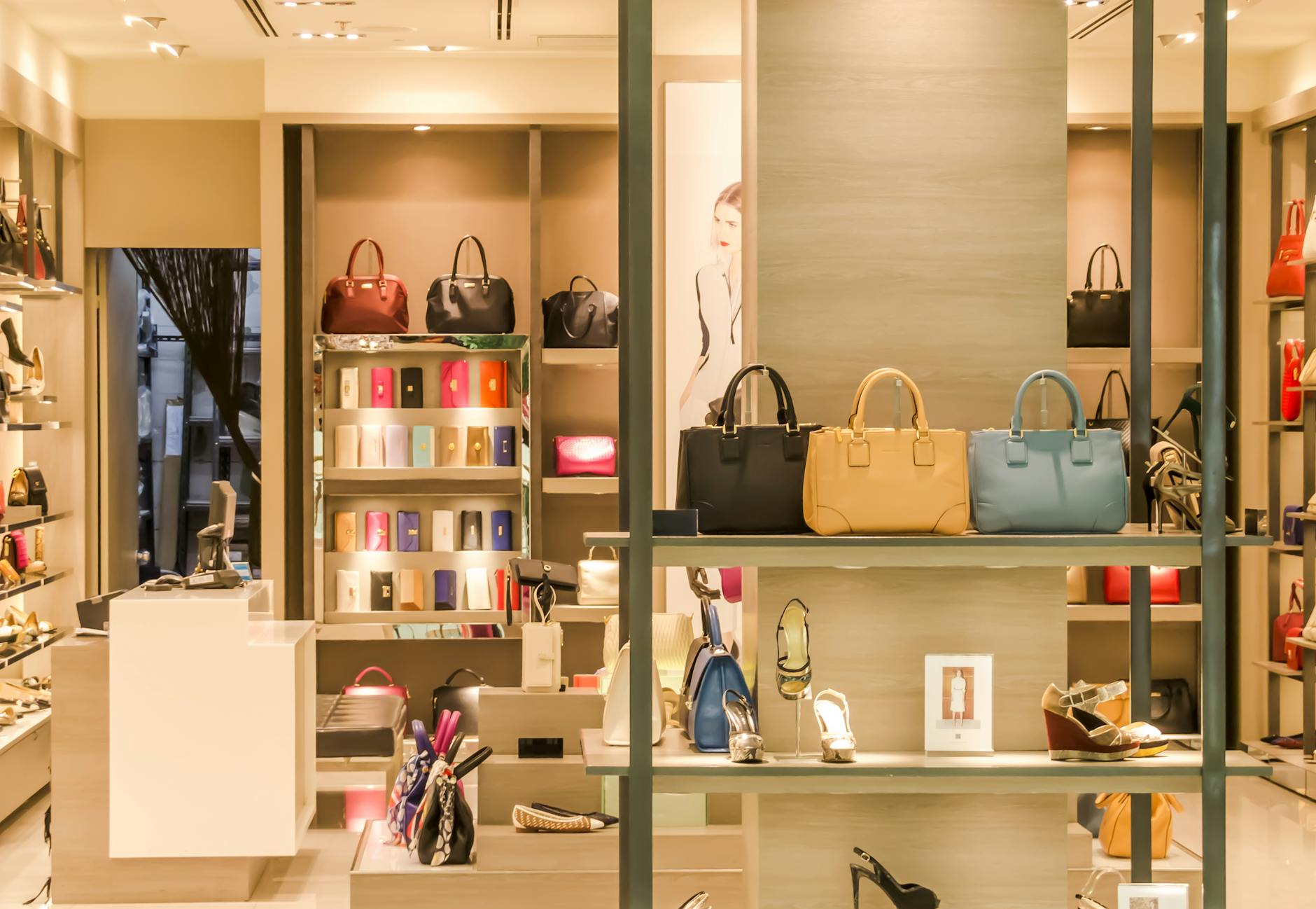
Luxury brands including Hermès and Cartier are seeing weaker demand in China as even affluent shoppers reduce high-end spending, extending a broader slowdown.
Two Palestinian men carried out a shooting attack, targeting a group of Israeli soldiers near the Farsh al-Hawa military checkpoint in the southern West Bank governorate of Hebron on Friday, October 23.
According to media reports, the attackers were assassinated by the Israeli forces after engaging in an exchange of fire for about 20 minutes. They were later identified as Firas al-Ju’ba and Hamoudah al-Ju’ba.
The attack also resulted in the killing of two Israeli soldiers and the injury of three others.
Netanyahu announces refugee-camp model campaign in Hebron and broader West Bank operation
In response to the attack, Israeli Prime Minister Benjamin Netanyahu declared a full lockdown in the West Bank and a large-scale operation that will start from the city of Hebron and the neighboring city of Halhul, and further expand to the entire occupied territory.
Wearing a bulletproof vest, Israeli Prime Minister Benjamin Netanyahu threatened from Hebron that the Israeli military will apply the “successful and aggressive model” that the Israeli forces used in the Palestinian refugee camps in the north.
The operations in those refugee camps already resulted in the displacement of tens of the thousands of Palestinians, the killing of hundreds, the arrest of over 1,000, and severe damage and destruction of residential buildings, infrastructure, and properties.
“We will evacuate the residents, we will go house to house, remove the weapons there, and all terrorist infrastructure will be dealt with and destroyed,” Netanyahu threatened.
The Israeli military already began to demolish buildings and homes in Hebron shortly after the attack was carried out.
Referring to the West Bank as Judea and Samaria, Netanyahu continued:
“The defense minister and I have seen plans for a very extensive IDF operation in Judea and Samaria, the likes of which have not been carried out since the Six-Day War.”
The Six-Day War was a brief, intense conflict fought between Israel and a coalition of Arab states, primarily Egypt, Syria, and Jordan in 1967.
As a result of the war, Israel occupied Egypt’s Sinai Peninsula, Syria’s Golan Heights, the West Bank, and the Gaza Strip. It also forced 300,000 Palestinians and 100,000 Syrians to flee into neighboring countries.
It is worth noting that Netanyahu and Defense Minister Israel Katz have already threatened a possible war in the West Bank in the last couple of weeks.
These threats came hand in hand with an unprecedented escalation of settler violence under the protection of Israeli forces across the occupied territory, alongside intensified military raids.
Over 79 Palestinians have been killed in the West Bank in 2026, and more than 1,870 others have been injured since the beginning of 2026.
Analysts suggest that the escalation in the West Bank aims to push Palestinians towards a confrontation with the Israeli military, a few days before Israel’s legislative elections, scheduled for October 27.
The Spanish president warns of potential cuts to social and economic rights under far-right governments.
On Saturday, Pedro Sanchez, Spain’s President and secretary of the Spanish Socialist Workers’ Party (PSOE), pledged that if his party governs in the next legislative term, he will strengthen the right to abortion and enshrine its protection in the Constitution.
During a pre-campaign rally in Granada, he also said he would keep euthanasia “standing as an achievement” and warned of cuts to social and economic rights that could be implemented by governments led by the conservative People’s Party (PP) or the far-right Vox party.
He began his speech by reading the poem “New Songs” by Spanish poet Federico Garcia Lorca in front of a special guest, singer Miguel Rios. The reading was a nod to the poet’s hometown, as Hispanist Ian Gibson had sent Sanchez an email asking him to include Lorca in his speech, coinciding with the 90th anniversary of the poet’s death.
Sanchez was particularly harsh on Alberto Nuñez-Feijoo, leader of the People’s Party, accusing him of trivializing and bargaining over women’s rights.
DIRECTO | Pedro Sánchez lee el poema 'Cantos nuevos' de Lorca en el mitin de Granada: "Esta es la España que no tiene miedo a su cultura, que no borra su cultura para vivir confortablemente" https://t.co/VWsIfGJLg7pic.twitter.com/HNJKrfnjG3
The text reads, “Pedro Sanchez reads Lorca’s poem ‘New Songs’ at a rally in Granada: ‘This is the Spain that is not afraid of its culture, that does not erase its culture in order to live comfortably.’
“I don’t know whether Feijoo’s position stems from insolence or sectarianism,” Sanchez said, before criticizing the PP leader for calling himself a feminist because he grew up surrounded by women. He was referring to a statement the opposition leader made in an interview on Friday.
“Being a feminist does not mean growing up surrounded by women. Being a feminist does not mean cutting women’s rights. No man will ever again have a say in or control women’s rights and bodies,” the Spanish president said.
Sanchez also asked why all far-right politicians, such as Argentine President Javier Milei and U.S. President Donald Trump, “look to Spain.”
He answered his own question: “I’m very clear about that. They come because this government and this nation, Spain, are living proof that hope is far more effective than the hatred they spread.”
Hilary Tang, second from right, and her college friends bought an abandoned home in Hiroshima, Japan.
Courtesy of Hilary Tang
Hilary Tang and her college friends bought an akiya in Hiroshima, Japan, for a little over $11,000.
The group of friends spent months living at the property while renovating it.
They plan to use it mostly for gatherings but are open to renting it out to cover yearly costs.
This as-told-to essay is based on a conversation with Hilary Tang, 23, a recent college graduate from Hong Kong who purchased a home in Hiroshima, Japan, with her college friends. The following has been edited for length and clarity.
I graduated from Minerva University in San Francisco last May.
I was planning to work at a startup in San Francisco, but I decided that I wanted to take a gap year. At Minerva, our cohort is pretty diverse, and I have quite a few friends from Japan. One of my friends had this concept: "There are these akiyas, but no one actually buys them."
I actually never saw any of those videos about akiyas before, but I did know about the 1 euro house in Italy thing. I didn't know there was a similar concept in Japan.
My friend was initially planning to buy a house with his high school friends, but they backed out very early on. After they backed out, he asked if we were interested in buying a house.
That was in June. We bought the house in late July, and then we got the keys on August 6.
At first, we were trying to recruit people, but no one really wanted to. We even tried to recruit outside our school. I tried asking people from Hong Kong, but no one wanted to go somewhere random and buy a house in Japan because there's quite a lot of risk.
From the initial six people who bought the house, five people are from my university.
Tang and some of the other homeowners.
Courtesy of Hilary Tang
Then two other people joined, because my friend's friends also came over after we started the renovation. They're from Japan and really liked the house, so they decided to chip in as well. So currently, we have eight people.
We always wanted to have eight people in the house — it's just easier if we have a bigger budget.
We wanted to buy and renovate the house for less than $20,000
After we assembled the people who decided to buy the house, we had an initial meeting to understand each person's motivations and expectations, because that would determine what kind of house we buy and how we want to treat it.
When we were talking about things we would want in the location, something that was common was that, firstly, we all preferred being in nature or easily accessible to nature. Within the group, most of them are Japanese and already live in Tokyo, Osaka, or another big city, so for them, they wanted to have a second house in a more rural area.
Secondly, we wanted somewhere that is easily accessible, even internationally. Another friend is planning to work in the US, and there's also a Korean member, so it's better if there's more motivation, or it's easier for us to actually go there if there's an international airport nearby.
And thirdly, we wanted somewhere with better weather and with lower earthquake and tsunami risk.
Some homeowners at a nearby train station.
Courtesy of Hilary Tang
We ended up finding a house in Hiroshima.
The house itself was 1.8 million yen (or $11,371), but the price was negotiated because the house was initially listed on the website at 3 million yen.
We also had to pay the agent fee and other fees, so we spent about 2.3 million yen in total.
The house is around 315 square meters (or 3,390 square feet), and almost 500 square meters of land.
We have nine Japanese-style rooms, which are rooms with tatami flooring, and two Western-style rooms, which are rooms without tatami flooring.
Initially, we wanted to do the whole renovation within $4,000, but since we have more people chipping in, our budget expanded. We still haven't used up our original $20,000 budget. Just for the renovation, we've used around $1,262, as of start of October.
We hang out there once a month, but we're also thinking about renting it out
We've been staying in the house the entire time we've renovated it, and luckily the house was in better condition than we expected.
Some of the homeowners gathering for a meal.
Courtesy of Hilary Tang
The timeline was so tight that we couldn't actually go there to see the house before we bought it. But the agent did a video tour, and we looked around, and it was quite nice.
We also talked to our neighbors, because the person who lived in the house passed away about five years ago, and then afterward it was left vacant. But before he passed away, the neighbors said how the previous owner was really diligent with cleaning stuff; that they always saw him cleaning, even toward the end of his life.
When we got there, we realized it was actually a lot more well-maintained than we thought, so we didn't have to do a very big renovation. At first, we thought we'd have to change all the tatami, or rebuild certain parts, or put down certain parts. But it turns out there hasn't been a super big expense that would require us to rebuild the entire thing.
We did paint and also repaired some curtains and lights because they weren't working. We added a fire alarm and air conditioning because they only had one or two aircons, and it gets really hot in Hiroshima during the summer and really cold in the winter. Those wooden houses don't insulate very well.
When we first got there in August, there were five of us. Then maybe for the first three days, there was always someone new coming, because there are a lot of friends who wanted to come here. So there are always visitors, and they also helped out because there's a lot going on — we even had friends' parents come over as well.
Some homeowners and other guests helping with the renovation.
Courtesy of Hilary Tang
That's been my favorite part.
You see sides of people that you don't know. Everyone has some sort of expertise to bring. For example, some people are really good at painting. Our friend helped us paint the bathroom wall — he wanted to paint a Fuji mountain, but none of us really knew how to paint. So I'm really glad he came and helped us paint.
There's a girl who went to a lot of auctions growing up, so she specialized in artwork and helped us go through the things the previous owner left behind.
It would be nice to do Airbnb and learn about the process and to experience what it's like to manage an Airbnb. Maybe with the house on Airbnb we can cover at least the running costs every year.
Still, we want to prioritize us hanging out.
Every month we try to gather there, and so far we've been going consistently once a month.
We wanted to create a place we could always come back to whenever life gets a little overwhelming, where any of us could take a break, have some space to ourselves, and take time to process whatever was going on in life.
North Korean leader Kim Jong-un called on his military to train toward becoming the world's strongest force at a two-day company commanders' meeting in Pyongyang, state media reported. The call came the same week an explosion inside the DMZ strained inter-Korean ties.
Two SF-260 training aircraft of the Philippine Air Force collided mid-air near Fernando Air Base in Batangas province during a training flight, killing all four pilots on board. Officials said both planes crashed within the base perimeter and no one else was hurt.
Online fast-fashion giant Shein has agreed to pay US$100 million to settle a US Federal Trade Commission probe, as the company also faces a wider regulatory and tax crackdown in Europe.
A new CSIS mapping tool shows the US, China and their allies pursuing a fast-growing web of security agreements across the Pacific islands. The tool counts 56 arrangements involving 14 Pacific nations alongside the US, Australia, New Zealand, China and Taiwan.
 Login