The progressive leader seeks a fourth nonconsecutive term as Brazil heads to its tightest election in recent history.
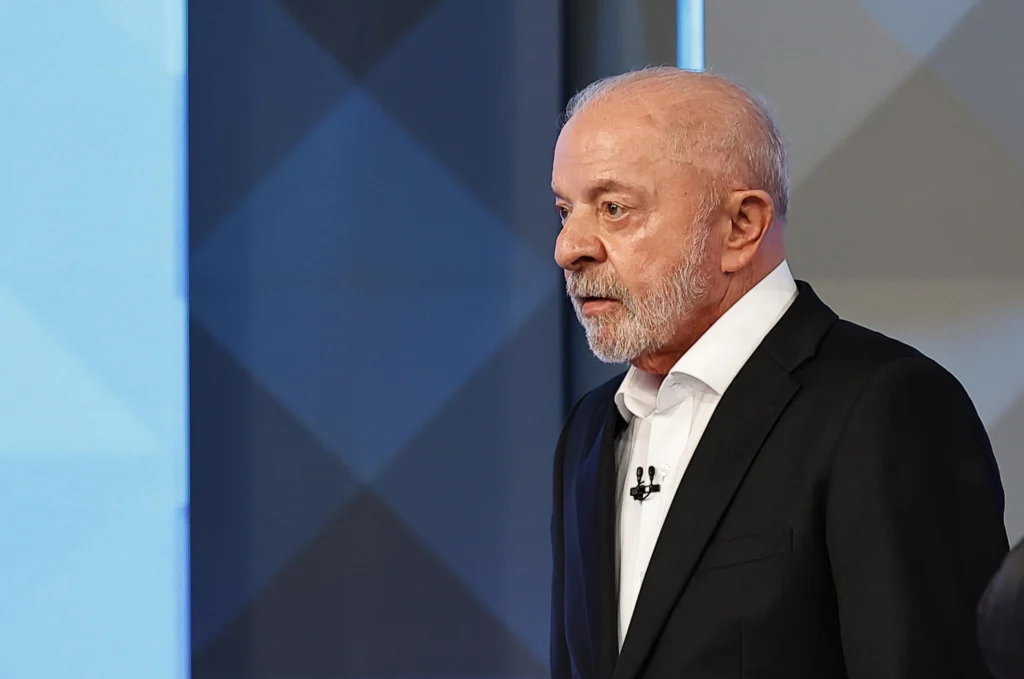
On Saturday, Brazilian President Luiz Inacio Lula da Silva gathered millions of supporters in Rio de Janeiro and said he was convinced of his victory over far-right Senator Flavio Bolsonaro.
“I am sure we are going to win the elections. You can write it down: tomorrow I will be elected president of the Republic again,” the progressive leader declared to journalists just before setting off on a march along the Copacabana beach promenade.
The Workers’ Party (PT) leader and the son of former ruler Jair Bolsonaro will face off this Sunday for the presidency in the tightest election in Brazil’s recent history.
Lula, seeking his fourth nonconsecutive term at 80 years of age, began this last day of campaigning with a massive event in Rio, where his supporters dressed in red and unfurled a huge Brazilian flag.
Bora Rio de Janeiro! Bora Lula! Os cariocas já estão nas ruas iniciando os atos por de a opoio a Lula que vão ocorrer em todo o Brasil todo. Em Porto Alegre, nos encontramos às 17h, no Largo Zumbi dos Palmares. Até breve.#Lula13pic.twitter.com/dcVaYPu134
The text reads, “Let’s go Rio de Janeiro! Let’s go Lula! Cariocas are already in the streets starting the acts of support for Lula that will be held throughout Brazil. In Porto Alegre we meet at five in the afternoon, at Largo Zumbi dos Palmares. See you soon. Lula 13”
“We are going to win the elections, it is true that the people want change but a change for the better, forward. The people do not want to go backward,” said the former lathe operator who has become an indelible figure in South American history.
The Workers’ Party candidate accused Flavio Bolsonaro of being a “militiaman” in an allusion to the far-right candidate’s ties to relatives of Rio paramilitary groups.
“It is not possible that we fail to convince Brazilian society of the risk that democracy, freedom and people of good will face in this country,” Lula warned, and thanked the militancy for taking on the responsibility of the campaign after the first round with massive events in the streets and a strong mobilization on social networks.
“I have an army bigger than the Chinese and the American. It is the army of Lula,” the Brazilian president said in an allusion to a public WhatsApp channel that has gathered more than 10 million users who define themselves as soldiers of democracy in the fight against fascism.
On Saturday afternoon, Lula will travel to Sao Paulo, the country’s largest electoral district, to close his campaign. Meanwhile, Flavio Bolsonaro marched through the city of Belo Horizonte and will then move to Rio de Janeiro, the political cradle of bolsonarismo.
Organizers, including survivors, former hostages and bereaved families, demand independent Oct. 7 probe, warn police of pro-government elements seeking to disrupt protest
Sixteen days before Election Day, Abdul El-Sayed is sitting at the dinette of a bus that has his face plastered all over it.
I had just played him a clip on my iPad. It was of Tashawna Gill, a Detroit organizer he knows well and who was one of his earliest supporters, describing an alarming trend in what she and her canvassers were hearing from Black voters in the city’s retirement communities.
“They’re skipping that part of the ballot,” Gill said. “We do the senior home tour, and they’re not interested. They skipped that on the ballot. They have returned their absentees, and some of them have shared that they’ve returned their absentees without checking the box for anything for the Senate race.”
In the tight space on the bus, the clip finishes, and El-Sayed says: “I hope more folks will fill out that part of the ballot. This one’s for all the marbles.”
El-Sayed watches a video on his campaign busMS NOW
How did it feel, I asked? Hearing that his story, his message isn’t landing with people in a community he has long served, people he needs if he wants to become Michigan’s next senator?
El-Sayed has a reputation of being pretty sure of himself. Unflappable, quick on his feet, someone who leans into the “don’t let ’em see you sweat” brand of politics.
For a second, that drops.
”Obviously, it’s heartbreaking. I’ve spent most of my career serving exactly those communities,” he says. “But I also get that campaigns are complicated.”
He blames the tens of millions of dollars in PAC money for the tepidness within the Black community toward his attempt to hold Michigan’s open Senate seat for Democrats, and for “destroying trust” he built with the Black community in his time as a public health official in Detroit.
“Rebuilding it takes a long time, so I’ve got work to do to rebuild trust, but I’ve been serving those communities for a long time,” he said. “I’m confident in the work I have done and confident in the work that I will do. And I hope I get the opportunity to do it.”
He notes that he’s not sure, either, just how widespread the sentiment Gill related is among his would-be constituents.
And just like that, the self-assuredness is back.
It’s clear, though, that he’s hurt that the work he has done in Detroit is being misconstrued or discounted, or that folks just don’t know about it. And he’s running out of time to spread the word.
Empty yards
Greenview Avenue in the North Rosedale Park neighborhood of DetroitMS NOW
The clip that I had El-Sayed respond to was from a walk I took with Gill on a quiet street back in Detroit.
She wanted me to see the lawns on Greenview Avenue in North Rosedale Park. It’s a neighborhood of brick houses on Detroit’s northwest side that she calls one of the most educated, highest-turnout precincts in the city. And she would know — her office is one block over.
Gill is a well-known organizer who chairs the Michigan Democratic Party’s Grassroots caucus, founded the African American Leadership Institute, helped get Gretchen Whitmer elected governor and was an early endorser of El-Sayed’s Senate campaign when most of the party establishment — including Whitmer — was behind U.S. Rep. Haley Stevens. Every day, Gill’s office sends out about 70 canvassers across Wayne County.
Tashawna Gill, chair of the Michigan Democratic Party’s Grassroots caucusMS NOW
She knows of what she speaks, especially when it comes to Black voters.
“If you look down here, do you see any yard signs? Look left and right,” she says. I do, and it’s … empty. “It doesn’t even look like it’s an election going on anywhere,” she said.
Typically, Gill said, the streets are pretty lined with them. That they aren’t now, so close to the election, “is scary to me.”
Yard signs are not votes, but they are a sign of enthusiasm and of a campaign that is working hard to get those signs stuck in lawns.
Detroit is 75% Black, according to census data, the largest majority-Black big city in the country. And the Democratic playbook for winning statewide has not changed in a lifetime: run up the score in Wayne and Genesee counties, then hang on everywhere else.
When Detroit doesn’t turn out, Democrats lose. Two years ago, when Elissa Slotkin narrowly held Michigan’s other Senate seat, she won 86% of the Black vote compared with Republican Mike Rogers’ 12%. Recent polling shows El-Sayed hovering below 80% of the Black vote.
The concerns aren’t new. Back in the primary in August, El-Sayed eked out a 1-point win against Stevens. He won the college towns and progressive strongholds. He lost Detroit by 28 points.
El-Sayed seems well aware that the tepidness exists. The campaign says it and party entities have spent nearly $14.3 million in paid media specifically for the Detroit and Flint markets.
They’ve invited the equivalent of the Black political Avengers to endorse and campaign with him in the state, including former Vice President Kamala Harris, Georgia Sen. Raphael Warnock and Rep. Ayanna Pressley of Massachusetts. Former President Barack Obama is stumping with El-Sayed in Detroit this weekend.
The campaign says it has been to 45 Black churches and had more than 125 meetings and roundtables with Black elected officials, faith leaders and community organizations.
It’s not something that’s been lost on his opponent either; they see an opening. The Rogers campaign opened a storefront office on Livernois Avenue in Detroit while we were there, and a group calling itself Democrats for Mike Rogers has been campaigning for him. A recent ad features Black voters saying they felt El-Sayed cared more about Palestine than Detroit.
“If you’re from Detroit, you know no Republican will be going through Detroit like they’re going through Detroit. They are in places a Republican would never be,” Gill said. “So I’m scared that a slice of that, just a little bit, will go to them.”
A Rogers campaign spokesperson touted their outreach, saying they are the first Republican to open a Detroit office, have visited a dozen Black churches and visited Flint and Pontiac “multiple times.” And multiple Democrats in Michigan have told me that Rogers is showing up in places in Detroit that haven’t seen a statewide GOP candidate in years.
Nearly every person I talked to on the ground in Detroit pointed to three reasons why El-Sayed is underperforming with Black voters.
Community conflict
The first one is uncomfortable to talk about: historic tensions between Black and Arab Michiganders. Dearborn sits right on the edge of Detroit, and today Arab Americans are estimated to make up the majority of that city’s 105,000 residents. Older Black voters know the long, violent history between the two communities. In 1980 an Iraqi immigrant store owner shot a Black customer he suspected of stealing soda. In 2023 a clerk at a gas station locked customers inside with an armed man after a card used to purchase less than $4 was declined. One of them was killed. A crash this fall reignited the fight.
Gill puts it in plain terms: “African Americans, especially seniors, feel like they were treated disrespectful, targeted, kicked out of the stores in Dearborn. So our seniors and our parents, when they see Abdul, they blame him for all of that.”
He wasn’t there, I point out. She knows that but says that trauma is unfairly being taken out on his candidacy.
Former Obama administration official Portia Roberson is CEO of Focus: HOPE, a civil rights organization in Detroit founded in 1968. She put those tensions this way:
Portia Roberson, CEO of Focus: HOPEMS NOW
“It has seemingly been that Arab people have been able to move to Detroit in this area and find ways to be successful, whether that is owning gas stations, whether that is owning party stores, and that Blacks who have been here have been locked out of those places,” she said.
I asked El-Sayed about the tension.
“I’ll be honest with you, I understand. I’ve worked in the city of Detroit. You walk into one of these party stores, you walk into a gas station and you’ve got somebody that looks like me behind bulletproof glass, and you look at the way that they’re treating customers. The number of times that people have been denied a bathroom or their kid gets sold a loosie cigarette out of the back or they’re catcalling a woman in the community. That’s deeply inappropriate. It’s wrong and I’ve never been one of those guys,” he said, “even if I look like one of those guys.”
While he was health director in Wayne County, he said, he led a conversation with “those guys” about why that behavior was inappropriate, adding, “You can’t just take money out and not invest in the local community. You can’t just deny local contractors opportunities to service your business and think that’s OK.”
A fateful stance
That second reason? The Uncommitted movement in 2024. In February of that year, more than 101,000 Michigan Democrats, about 13%, voted “uncommitted” in the presidential primary to protest President Joe Biden’s support of Israel’s war in Gaza. El-Sayed publicly announced that he was one of them. Nine months later, Harris lost the state as Black voters watched a party they had carried for decades fail to show up for the first Black woman at the top of the presidential ticket.
When it comes to the Black community, El-Sayed leans hard on his track record. Detroit Mayor Mike Duggan’s mandate to him when he hired him back in 2015 to run a health department that had been gutted: “rebuild it.” In his first year, the department restarted lead screenings for children and helped pay for them in Detroit schools. The department also partnered with a nonprofit to offer free eye exams and glasses to thousands of students. After his failed run for governor in 2018, El-Sayed became director of Wayne County’s Department of Health, Human and Veterans Services.
His stance on Uncommitted is overshadowing all of that.
Roberson has voted consistently her entire adult life, and that movement still stings.
“As a Black woman, I’ve never had the luxury of voting on one issue. I’ve never had that luxury. I’ve never been able to walk into a polling booth and say, this is my one issue and if it doesn’t correlate with my one issue, I’m willing to throw the rest of it away,” she said. “We knew all of the things that have now happened to us, and you still decided to be uncommitted because of your issue.”
El-Sayed endorsed Harris the day after she became the nominee; Uncommitted largely was about the primary for him. And Harris came to Detroit just last month to endorse and campaign with El-Sayed. She has gotten over his criticism of the Biden-Harris policies.
“But a lot of folks haven’t,” Roberson said, laying out the very kind of single-issue objections she had just disavowed. “And I have friends who are very politically astute, and they have said, ‘I will never forgive that.’ It got so big so quickly that they couldn’t pull it back when it was time to coalesce around Kamala Harris, and now we are here.”
At the doors Gill’s team knocks on, the version that seniors are sharing is harsher than what actually happened and full of wrong information, she said.
They tell her teams, “‘He didn’t vote for Kamala. He didn’t help her get in.’ That’s the No. 1 thing,” she said. So the message from his campaign to set the record straight “needs to be louder.”
Democrats’ dilemma
The third reason is largely ideology, and in some ways reflects the maneuvering between progressives and mainstream Democrats within the larger party. Older Black voters in Detroit are more likely to be politically moderate. El-Sayed is running on Medicare for All, and Rogers has spent the fall telling anyone who will listen that Detroit is about to elect a socialist. For the record, El-Sayed says he is a capitalist.
The campaign’s answer to older Black voters has largely been to head to the Black church, the Old Faithful of politics. His team says he has been to 45 Black churches during this election season.
Last Sunday he visited two churches in Flint. His message was, yes, political and full of references to a shared God between his Muslim and their Christian faith. But one of his biggest applause lines was his promise to be back as Sen. El-Sayed.
Abdul El-Sayed speaks to a crowd in Flint, Michigan on Oct. 18, 2026MS NOW
“This is not my first time in communities like these,” he said from the front of the stage. “I’ve been showing up to do this work for the better part of a decade, and I hope that I can show up for you in the United States Senate. If you give me that honor, I promise you this will not be the last time you see me, and the next time I come, God willing, I’m bringing resources and I’m taking your pain and your purpose with me to the halls of power.”
The bridge he’s trying to build is a difficult one. A 2024 poll from AARP found that among Black Michaganders, only 29% called themselves “liberal.”
El-Sayed’s bet is that a different Black voter can come and make up the difference. “There’s a generational divide, and even if there are some seniors who might say, ‘You know what, we’re going to leave this blank because we’ve seen all the ads,’ there are a lot of young Black voters who are like, ‘This is the first time I’ve ever voted,’” he said.
The candidate isn’t blind to the tensions. On the contrary, he seems very aware of them and how hard they may be to overcome. But he’s also running out of time.
I asked Roberson if she thinks he has done enough in the short period he has been the nominee to get the Black vote where it really needs to be.
“That’s tough. Probably not,” she said. “I think there’s more he could have done. And listen, I’m giving grace to the fact that he had a contentious primary. But I do think there were more voters out there, and there are still more voters out there that he could be talking to.”
Her larger point is that it’s less about effort and more about translation. That in a lot of his ads, his platform sound great to the voters who follow politics closely, and who maybe aren’t affected by those three points of tension.
She’s also pretty hopeful. That when Detroit’s most reliable voters wake up on Election Day, they will do what they’ve always done.
”We know what we’re going to get if he doesn’t win,” she said. “So what are we so afraid of that we’re going to get if he does win?”
Nobody on Greenview Avenue has answered that yet. The lawns are still empty.
“Detroit just needs to be waking up. It needs to be waking up because it is asleep,” Gill said. “That is my fear, that Detroit has not woken up.”
El-Sayed says he’ll keep coming back either way.
“At the end of the day, whether folks vote for me or they don’t vote for me, I intend to serve in the same way that I showed up to serve back in 2015 when I came to Detroit to rebuild the health department.”
MS NOW producer Alexander Trowbridge contributed to this report.
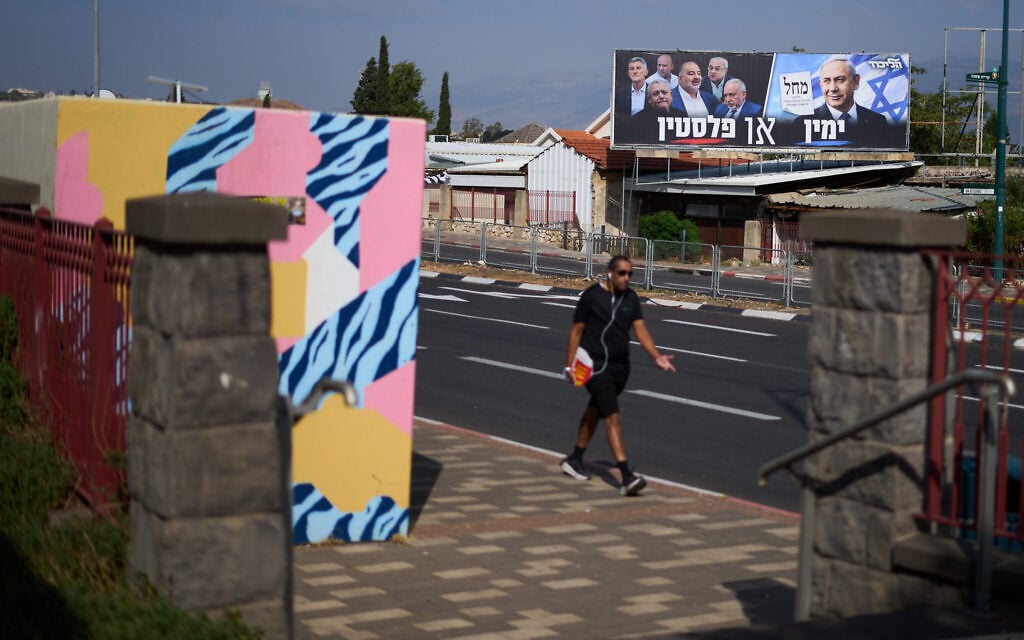
Some voters in traditionally pro-Likud Kiryat Shmona quietly question loyalty amid frustration over the government’s handling of the war with Hezbollah, broken security promises
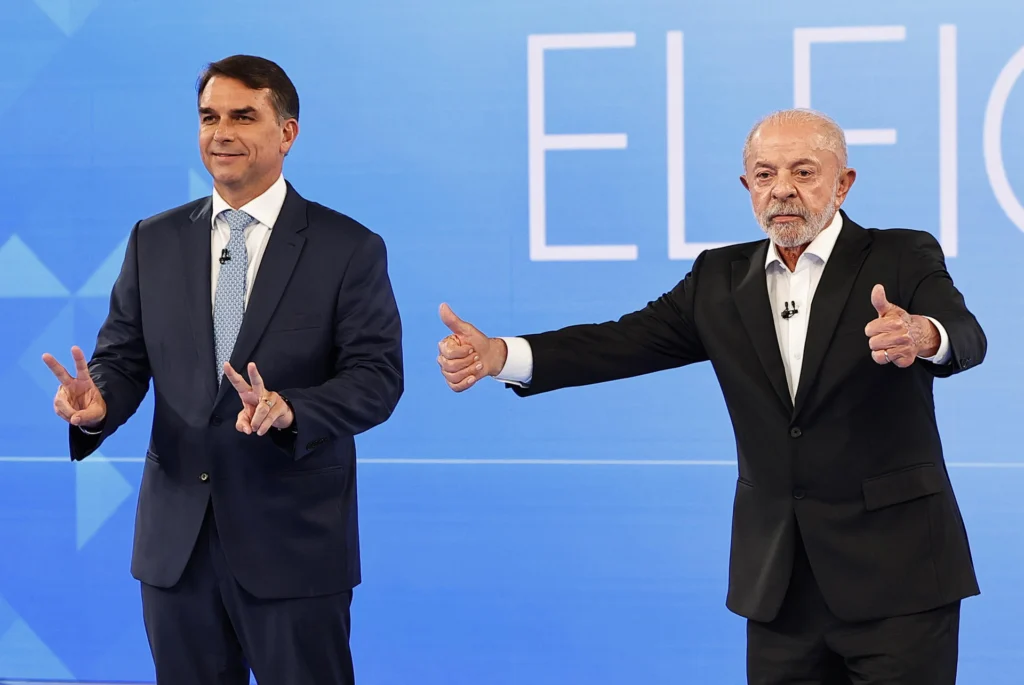
Flávio Bolsonaro admitted he was wrong to oppose extending maternity leave and apologized to Lula for a personal insult during a heated debate.
Brazilian presidential candidate Flávio Bolsonaro apologized to President Luiz Inácio Lula da Silva during a televised debate after Lula challenged him over his past opposition to extending maternity leave, sparking a heated exchange over social welfare, poverty and personal attacks.
Flávio Bolsonaro, who represents the Liberal Party (PL), acknowledged that his earlier vote was a mistake and said he would take a different position today. He also apologized for calling Lula “nine fingers,” a reference to the president’s missing finger, but followed the apology by demanding that Lula answer for his government’s record on poverty and social assistance.
The confrontation unfolded during the debate’s second segment, after Lula requested a right of reply over remarks he considered offensive. The production team had yet to rule on the request when the candidates resumed their exchanges.
Lula chose social policy as the subject of his question and returned to an issue he said Flávio Bolsonaro had left unanswered in the previous debate. He challenged his opponent to explain why he had been the only state legislator in Rio de Janeiro to vote against extending maternity leave.
Qual a justificativa para votar contra a licença-maternidade? Contra o direito das mulheres e da família? Explique, Flávio Bolsonaro. pic.twitter.com/17ibHC7knP
Text Reads: What is the justification for voting against maternity leave? Against the rights of women and the family? Explain, Flávio Bolsonaro.
Flávio Bolsonaro defended his earlier decision by saying he had believed the measure could make employers less willing to hire women. He acknowledged that he had been wrong, adding that marriage and having two children had changed his perspective.
He said he now understood the importance of mothers staying close to their children and would support extending maternity leave beyond 180 days where possible. He maintained that he would vote differently today.
Lula dismissed the explanation, arguing that Flávio Bolsonaro had failed to support the measure when he had the opportunity and was now changing his position as women became more politically active and fought for their rights.
The president then challenged his rival over the term “Bolsa Farelo,” which Flávio Bolsonaro had used to disparage Bolsa Família, Brazil’s income-transfer program. Lula called the expression disrespectful to poor people, arguing that those removed from economic hardship often treated the poor as though they had no value.
The exchange escalated when Lula responded to Flávio Bolsonaro’s use of the nickname “nine fingers.” The president explained that he had lost a finger at age 17 while working the night shift at a factory, saying he had needed the job to afford food.
“I will not allow a militiaman to call me ‘nine fingers,’” Lula declared. He also accused Flávio Bolsonaro of never having worked, alleging that the first job recorded in his rival’s employment record was a fictitious position arranged by his father.
Flávio Bolsonaro offered an apology, saying he had not intended to offend Lula with the remark. He then turned the criticism back on the president, demanding that Lula apologize to people experiencing homelessness and recipients of Bolsa Família.
Flávio Bolsonaro claimed that the number of people living on the streets had nearly doubled under Lula’s current government, citing a figure of 199,000 people as the starting point. He also accused the president of neglecting Bolsa Família beneficiaries for four years and addressing their concerns only 17 days before the election.
The candidate criticized a recent adjustment to the benefit, claiming the increase amounted to three Brazilian reais a day — enough, he quipped, to buy three eggs.
The exchange brought the candidates’ competing arguments over social policy into sharp focus. Lula pressed Flávio Bolsonaro to account for his legislative record on maternity leave, while his opponent sought to shift scrutiny toward the government’s handling of homelessness and income support.
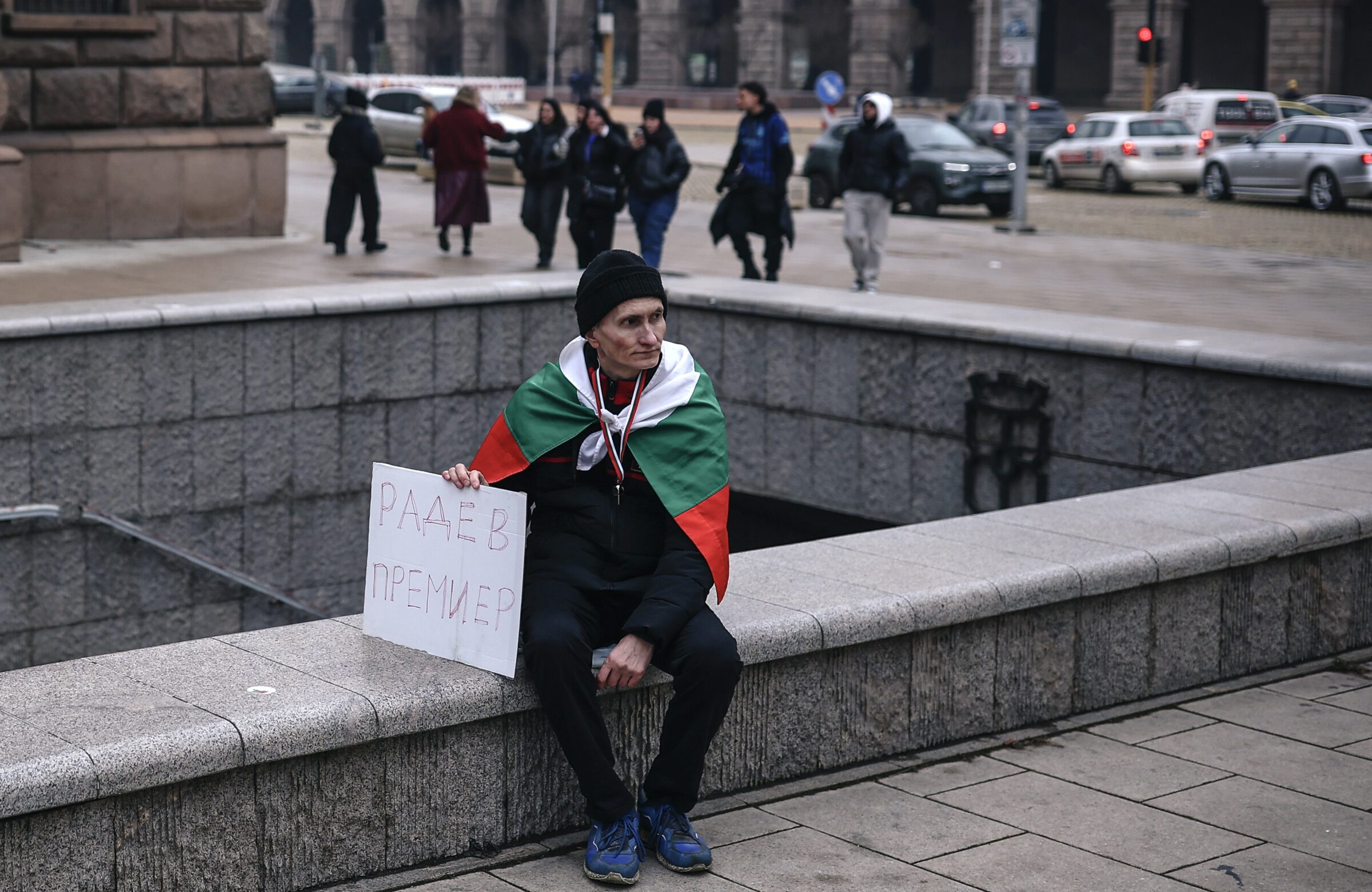
Incumbent president Iliana Yotova is leading Bulgaria’s 2026 presidential election race, alongside her running mate, Kiril Vulchev, securing 47.3 percent support among likely voters, according to a poll released on Wednesday (21 October).
Andrei Gyurov, a former caretaker prime minister, and his running mate, Georgi Kandev, rank second with around 30 percent. Leaving the pro-Russian Kostadin Kostadinov and Petar Volgin is in third place on just over ten percent.
Bulgaria is voting on Sunday (25 October) and the vote can be seen as “a test of the government’s stability”, according to Ivaylo Iliev, a political scientist, with whom we analyse Bulgarian presidential elections in three points.
1. A test of the government’s stability
The election could consolidate political influence around prime minister Rumen Radev, or expose the limits of his camp’s support.
The PM’s Progressive Bulgaria, which secured a parliamentary majority in April 2026, is facing criticism over its budget plans and handling of security threats. Recent attacks on merchant vessels in the Black Sea have raised questions about Bulgaria’s ability to protect its interests and reassure its allies.
Iotova, who served as Radev’s vice-president for nine years, is closely associated with the prime minister. And her victory could be interpreted as an endorsement of the governing camp.
“Radev has his candidate in these elections and he is obviously the favourite to win a second round,” Iliev says.
However, the Black Sea attacks have “definitely negatively affected both” Iotova’s campaign and public confidence in the government’s security response, he adds.
The government’s response, alongside its nuanced position on Russia’s war against Ukraine, may appeal to voters sceptical of confrontation with Moscow. At the same time, it also risks complicating Bulgaria’s relations with its European and Nato partners.
“Radev demonstrates two different types of behaviour”, says Iliev.
On the domestic front, he is “balanced”, “vague” or even “without specifics”, Iliev says. For Radev does not want “to cause discontent among his pro-Russian voters”.
On the foreign policy however, Radev is more seeking to get as close as possible to the European consensus, but “with a minimal effort.”
2. Taking the government to account?
The second question is whether the presidency can act as a counterweight to the executive or will reinforce the same centre of political influence.
Gyurov’s campaign has warned against putting “all the eggs in one basket”. Concentrating power around Radev and Iotova could weaken independent scrutiny he says.
A Gyurov victory could give the presidency a more “independent voice”, says Iliev.
However, institutional checks and balances do not necessarily translate into electoral support.
This article continues, but the full version is available only to EUobserver.com subscribers. Visit account.euobserver.com/membership
Lula promises to expand full-day schooling and student aid as Flávio Bolsonaro challenges his education record and attacks his family.
Brazilian President Luiz Inácio Lula da Silva pledged to bring full-day schooling to every school through the secondary level if re-elected, while opposition candidate Flávio Bolsonaro accused his government of cutting education funding and attacked the president’s family over online gambling.
The exchange during an education segment of the presidential debate centered on extended school hours, student assistance and childcare before turning into a personal confrontation over jogo do tigrinho, an online gambling game.
Lula, of the Workers’ Party (PT), challenged Bolsonaro to explain his plans for full-day schooling. Bolsonaro, of the Liberal Party (PL), responded that he would deliver what the current government had failed to achieve, accusing Lula’s administration of cutting federal funding for the program and attempting to conceal the reductions.
Enseñanza de tiempo integral enfrenta a Lula y Bolsonaro en el debate
🏫 Lula se comprometió a "concluir en el próximo mandato el 100% de las escuelas de tiempo integral en este país hasta la enseñanza media".
Text Reads: Full-Day Schooling Pits Lula Against Bolsonaro in Debate Lula committed to “concluding in the next term 100% of full-day schools in this country up to secondary education.” He defended his administration and highlighted the creation of ProUni. He also denounced the conditions in which he received the presidency regarding education.
Bolsonaro then shifted the discussion to online gambling, accusing Lula of being responsible for the rise of jogo do tigrinho. He claimed the game was created and authorized in 2022 by those now in government and alleged that its cancellation was being pursued only as the election approached. He also invoked the nicknames Lulinha and Tigrinho in referring to the president’s sons.
Lula responded by pointing to his party’s record on education since it first took office in 2003. He credited former education ministers Fernando Haddad and Camilo Santana with leading what he described as a transformation of Brazil’s education system. If re-elected, he said, he would ensure that all schools offered full-day schooling through the secondary level.
He also pledged to expand Pé de Meia, a financial assistance program designed to keep students in school, making it available to all secondary students and extending it to university students. Lula said the program had helped prevent 66% of participating students from dropping out, arguing that no young person should have to abandon their education.
“Não existe nenhum país do mundo que conseguiu se desenvolver sem antes investir na Educação. A gente tem mais universidades, IFs e escola em tempo integral. A gente cuidou da educação como jamais tinha sido cuidada na história desse país"
– Lula no debate da Globo…
— União Brasileira das/dos Estudantes Secundaristas (@ubesoficial) October 24, 2026
Text Reads: “There is no country in the world that managed to develop without first investing in Education. We have more universities, IFs, and full-time schools. We took care of education like it had never been taken care of in the history of this country” – Lula in the Globo debate
The president further recalled that his administration had inherited 5,600 stalled projects involving daycare centers, schools and federal institutes from the previous government. He contrasted those unfinished projects with the civic-military school model promoted by his predecessors, which he also described as incomplete.
Bolsonaro rejected claims that he intended to abolish Pé de Meia, calling the allegation a falsehood spread by his opponent’s campaign. He pledged to maintain the program and cited measures taken under the administration of his father, former President Jair Bolsonaro, including the cancellation of nearly 99% of the debt owed by students who had completed higher education and a 33% teacher salary increase, which he described as the largest in history.
The opposition candidate also proposed a childcare subsidy for mothers unable to work because they lacked access to daycare. He said more than one million children had no place in the public childcare system and pledged to allow families to enroll them in private facilities where public places were unavailable.
On full-day schooling, Bolsonaro proposed using the additional hours for vocational training and instruction in technology, artificial intelligence and application development. He argued that keeping children closer to school would put them farther from crime.
The candidates presented contrasting approaches to education, with Lula emphasizing universal full-day schooling and expanded financial support for students, while Bolsonaro focused on childcare subsidies and vocational training alongside accusations over education funding and the president’s family.
PM thanks Haim Yosef Abergel for 'truly caring for our people,' as he presses small factions to quit race; TV report says Likud already preparing to challenge results from Arab polling stations
Eisenkot's Yashar is forecast to be largest faction in surveys aired by Israeli TV, followed by Netanyahu's Likud; Hendel's Reservists makes it into Knesset in one of the three polls; Winter falls short

 Login