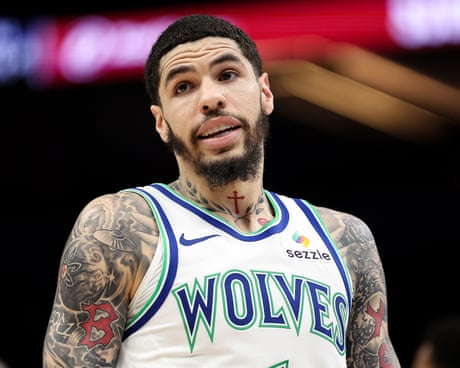
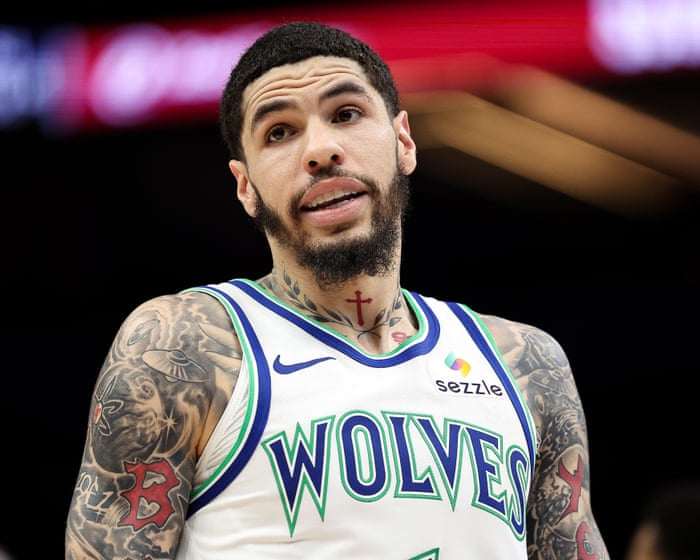
The basketball star seems proud to leave the job to his partner. That’s so last century
Nobody can accuse the basketball star LaMelo Ball of being bad at his job. That said, the Minnesota Timberwolves point guard doesn’t seem to be a huge fan of dribbling.
Ball has a nine-month-old son, LaOne, with his partner Ana Montana (real name: Analicia Chaves) and is apparently uninterested in dealing with all the body fluids that come with a baby.
Business Insider wants to hear from moms who work for Uber and Lyft.
: Jeffrey Greenberg/Universal Images Group via Getty Images
Being a mom can be challenging and expensive.
Some have turned to apps like Uber and Lyft to make extra money — or as their main source of income.
Fill out our survey if you're a mom who does gig work.
Uber and Lyft often talk about the flexibility of working as a driver on their apps.
That aspect of the gig has attracted moms, among other people who often want to earn money outside a 9-to-5 schedule. The job can be appealing to mothers who need to juggle school drop-offs, childcare, and other obligations of parenting.
Others, including single moms, say they feel stuck in ride-hailing work and end up having to drive for Uber or Lyft at set times anyway, depending on when the most passengers need rides.
With costs like childcare and college rising, Uber and Lyft offer some moms a way to make extra money — if they can earn enough on the apps and keep costs like gas and car maintenance under control.
Business Insider wants to speak with moms who drive for Uber, Lyft, or other ride-hailing apps. We want to hear about how you combine the gig with taking care of your kids, including both what's working and what isn't. Please fill out the survey below.
Lynch syndrome, a hereditary condition that increases cancer risk, has no symptoms. Most people don't realize they have it until after a cancer diagnosis.
iStock; Tyler Le/BI
After Bryce Ramsey was diagnosed with stage 3 colon cancer at 33, she learned another piece of shocking news: She had a genetically high chance of developing it from the very beginning.
Ramsey tested positive for Lynch syndrome, a silent, inherited condition that heightened her lifetime risk of being diagnosed with colorectal cancer by up to 56% for her variant. It also put her at greater risk of developing ovarian, uterine, stomach, pancreatic, and other forms of cancer.
Before she learned she had Lynch, Ramsey urged her relatives to also get screened for colon cancer. Since then, her father, brother, and aunt have all been diagnosed with various stages of colon cancer. Like Ramsey, her aunt also tested positive for Lynch.
"I was the whistleblower," Ramsey, 40, based in Mississippi, told Business Insider. Ramsey now wants her two young sons to test for Lynch once they're in their early 20s, the recommended starting age for her specific Lynch mutation.
Bryce Ramsey only learned she had Lynch syndrome after being diagnosed with colon cancer.
Bryce Ramsey
Like most genetic testing, Lynch syndrome testing is relatively quick, cheap, and non-invasive. It involves a saliva test, a cheek swab, or a blood test, with the latter having the least room for error.
Still, it hasn't caught on: About 1 in 279 Americans (1.2 million people) are estimated to have Lynch syndrome, including between 3 to 5% colon cancer patients. Yet an estimated 95% of Americans with Lynch syndrome have no idea they have it.
All the while, cases of colon, breast, uterine, and pancreatic cancers are rising in young people, with colon cancer the deadliest cancer for adults under 50. "If you don't know, then you can't get help," Ramsey said, including earlier screenings or preventive measures such as hysterectomies.
"Ignorance is not always bliss."
The 'lowest hanging fruit' for cutting down cancer risk
Some experts view broader Lynch syndrome testing as a way to get more people screened for cancer before symptoms arise — and a way to potentially help entire families better understand their cancer risks.
Like Ramsey, the majority of people diagnosed with Lynch syndrome only get screened after they have cancer. In the US, the CDC's general guidelines recommend that colon and uterine cancer patients have tumors biopsied for Lynch, followed by Lynch syndrome screening for the patient if there are abnormal findings.
Some experts believe the lack of early genetic testing is a huge missed opportunity for reducing cancer risk. One 2021 study found that about 16.4% of 713 early-onset colorectal cancer cases could have been prevented if patients knew either their family history or had been genetically screened, and would have subsequently started getting colonoscopies sooner.
Lynch syndrome testing "has got so much potential, but it's not being utilized," Heather Hampel, a professor at City of Hope in California who specializes in clinical cancer genomics and Lynch syndrome, and a co-author of the study, told Business Insider.
While Lynch syndrome remains unknown to most Americans, some health systems are trying to expand testing to the broader population. Helix, a genetic screening company that first started out as a consumer DNA marketplace, started partnering with 17 health systems in 2021 as part of its "Population Genomics Initiative." The goal has been to introduce broader population-scale genomic programs that include testing for Lynch syndrome.
Helix offers broad, population-based Lynch syndrome testing through participating health systems.
Helix
Dr. Cassie Hajek, the medical director of Helix, told Business Insider that most patients diagnosed with one of these hereditary conditions by Helix were completely taken aback by the news. "They're kind of operating on the assumption that their risk is just as it is in the general population, but in fact, it's significantly elevated," she said. "The whole goal is to identify these patients hiding in plain sight."
By knowing their genetic predispositions for cancer, they can both more easily start earlier cancer screenings and also inform their family members of their potential genetic risks.
Hampel noted that lowering overall cancer rates is complicated. We still don't know why colon cancer cases are rising so rapidly among young people, and lifestyle factors like sedentary routines and diets high in ultra-processed foods are far more difficult to control for.
"If the lowest-hanging fruit is family history and gene testing, and we can't even prevent those," Hampel said, "how are we ever going to prevent things where we need people to make lifestyle or behavioral changes?"
The ripple effects for families
Michelle York was 33 when she first heard of Lynch syndrome.
Up until that point, all she'd known was that her mom's side of the family had a long cancer history. Her great-grandmother died from colon cancer. Her grandfather had stomach and brain cancer. Her great-aunts died from liver, ovarian, and breast cancer, respectively. Her mother's cousin died from pancreatic cancer.
York (second from left) with her mother, sister, and brother — all of whom tested positive for Lynch syndrome.
Michelle York
York's mother, a nurse at the time, had come across the term through her work. She tested positive for Lynch, along with York, her two siblings, aunt, uncle, and cousin.
At first, the news caused some anxiety. "Does this mean I'm going to get cancer at a young age?" York, 43 and based in Los Angeles, told Business Insider. "Does this mean every time I don't feel well, I'm going to immediately think I have cancer?"
However, once York and her family started getting routine cancer screenings, including annual colonoscopies, they felt more reassured than afraid, because they knew they could catch cancer early. York's mother had multiple precancerous polyps removed.
"None of us have had cancer yet, but we've had lots of scares," York said. She also wants her kids, ages 17 and 14, to test once they're older.
York's mother triggered something called "cascade testing," in which other family members test for Lynch and can take preventive measures to reduce their cancer risk.
Dr. Sapna Syngal, the director of research at the division of cancer genetics and prevention at the Dana-Farber Cancer Institute in Boston and the founder of its Lynch Syndrome Center, sees cascade testing for Lynch as a "real opportunity" to lower cancer risk, she told Business Insider.
Particularly for young people, if they test positive for Lynch in their 20s and start getting cancer screenings, "there's a really, really good chance that you could prevent that cancer by taking out polyps earlier on," she said.
There are also financial benefits to knowing you have a genetic predisposition to cancer. While insurance coverage for Lynch-related cancer screenings can vary, Hajek said her patients typically have a more "straightforward" experience in getting otherwise expensive screenings like colonoscopies covered. York, for example, said her insurance covered her cancer screenings once she got her Lynch syndrome diagnosis.
York, pictured with her family, wants her kids to test for Lynch syndrome when they're old enough.
Michelle York
Ultimately, Hajek said Lynch syndrome testing can help patients get more precise care than simply knowing they have a family history of cancer. Just as testing positive for Lynch can prompt someone to start cancer screenings sooner, testing negative can also relieve a person of anxiety about being at high risk of early-onset cancer and potentially call for less frequent cancer screenings than if they had Lynch.
York said she's ultimately grateful for finding out and knowing she can catch any early signs of cancer by starting annual screenings such as colonoscopies in her 30s — over a decade before the average-risk recommended screening age of 45. Both Ramsey and York also had hysterectomies and oophorectomies unrelated to cancer, which brought extra relief in also reducing their uterine and ovarian cancer risks to essentially zero.
"I think knowledge is power," York said. "Now, it almost feels comforting because I know that I started doing this young."
Lynch needs its Angelina Jolie
Angelina Jolie appearing on the red carpet a month after her May 2013 op-ed revealing her BRCA1 diagnosis and decision to undergo a preventive double-mastectomy.
LEON NEAL/AFP via Getty Images
In 2013, Angelina Jolie revealed in a New York Times op-ed that she had tested positive for BRCA1, a gene that increases the risks of breast and ovarian cancer.
Her revelation — and subsequent operations to remove her breasts and ovaries — sparked an international drive to get tested for BRCA1/BRCA2. Years later, a study found that 15 business days after Jolie's op-ed went live, BRCA testing rose 64% in the US.
Over a decade later, researchers and patients are working to make Lynch syndrome screening similarly universal.
Getting every person screened comes with its own obstacles.
Lynch could be added to the list of genetic conditions screened for in newborn heel tests. However, critics of the idea believe it can create years of stress when the person with Lynch isn't recommended to start getting colonoscopies until they're in their early 20s.
Other routes, such as including Lynch syndrome testing when people join the military or go to college, would miss broad swaths of the population.
There's also the question of funding. Helix, for example, doesn't bill patients and instead relies on the participating health systems for financial support. Few hospital systems can afford to prioritize testing for a gene condition that impacts a small portion of the population.
Ramsey's advocacy work includes raising more awareness around colon cancer as well as Lynch syndrome.
Bryce Ramsey
Syngal said one immediate option for getting more people screened for Lynch is to follow York's route: consider getting tested if you have a family history of colon or other relevant cancers.
Since their diagnoses, Ramsey and York have tried to spread the word about Lynch syndrome testing. Ramsey is an official advocate for the non-profit Lynch Syndrome Awareness, while York, a full-time content creator, has shared her story on social media.
"It's scary when you first find out that you have a genetic mutation that predisposes you to cancer," York said. "But at the end of the day, knowing that and taking those precautions could ultimately save your life."
Pat Zawko (second from left) raised three adopted children and then her grandson. Now, she helps raise her great-grandson.
Pat Zawko
Pat Zawko, a 67-year-old nurse, raised her grandson and now helps raise her great-grandson.
Pat adopted three children, facing challenges with their health and legal issues over the years.
Pat balances full-time work with supporting her great-grandson, cherishing her role as a grandmother.
This as-told-to essay is based on a conversation with Pat Zawko, 67, who lives in upstate New York and works full-time as a nurse. Zawko raised her grandson from birth, and she is now helping him raise her great-grandson. This interview has been edited for length and clarity.
My husband and I raised our grandson from age 5 months to adulthood. We are now helping him raise his son, whom he raises as a single parent.
I was raised in upstate New York in a very rural area. I was one of nine children, the first girl after six boys. My grandmother helped shape who I am today. I didn't go to college until I was 29, and I became a nurse. I progressed to completing my Ph.D.
All our children are adopted. We made that decision very consciously. I found out that I couldn't have biological children, so in 1982, we adopted our first son. He had lots of health issues, and he was in and out of psychiatric facilities. We paid for all of his rehabs and facilities, and he didn't qualify for any subsidies back then. My husband and I decided to adopt two more children, and both of them are very successful in their adult lives.
We got custody of our grandson when he was an infant
When he was 17, he and a young lady ran away to Florida, and they had a child. They were involved with drugs, and we got custody of their son when he was 5 months old. My son died when he was 23.
Raising our grandson wasn't really a choice, and we had to do what was right. He had special needs, which brought with it an entirely new set of needs medically, psychologically, and educationally. There were many challenges in raising him. We couldn't get him insurance for about six months. My husband didn't grow up with money, and he worked very hard in his life, but he never questioned taking the money that he had saved long before he met me and pouring it into these children.
He went down a similar road to his biological father. He got a young girl pregnant, and he became a single dad. He was left with this baby. We were living in Ohio at the time, and we moved back to New York to help him. The parents of the baby's mother are wonderful people and are very supportive financially, physically, and emotionally. There's never tension between us. My great-grandson's birth mother hasn't seen him in two and a half years.
When we took in our grandson, my other children were 10 and 11. We didn't have any baby stuff. We didn't have day care. We were used to sleeping all night because our kids were pretty independent.
Getting my grandson upset the equilibrium of the family. We had to give our kids the attention they needed, but we also had a baby with different needs.
My grandson is 25 now. Back when we started raising him, nobody was talking about the financial and emotional impact that grandparents raising grandchildren has. Nobody stopped to look at how it impacts family dynamics. We couldn't get help. You're stretching out that time period when you're parenting, where you think that you can't be a grandmother because you have to parent this child.
I see it more frequently in my profession, where grandparents, some of them older than I am, bring in grandchildren, sometimes four or five little ones running around.
My grandson needs a fair amount of support with his autism diagnosis. It's a huge transition for him, and he's needed lots of support and guidance.
I can be a grandmother to my great-grandchild
Now that my grandson has a son, I can finally be a grandmother; before this, we were our grandson's only parents. There were times that I felt robbed of being a grandmother with my grandson, as we had to be parents. I wanted to spoil him and send him on his way, but I couldn't.
Now I am technically a great-grandmother, and being able to be a grandmother for the first time. I am overjoyed and thrilled to finally be a grandma and not a parent. I can spoil him, play with him, teach him old songs, and send him home with his dad.
I still work full-time at 67, partly because raising grandchildren is very expensive. I often put in 12-hour night shifts at the hospital. I also had to pay for cancer treatments that ate through my retirement. We poured much of our life savings into making sure he had everything he could to become a productive member of society. He has a home and a car. He works full-time. He's able to experience success in being a parent, which neither he nor I ever dreamed was possible.
We know we did the right thing, but you don't think about the strain it puts on your finances, especially as you approach retirement in your later years. It takes a village to be successful as grandparents raising grandchildren. We don't have the energy that we did when we were 30.
We raised kids for 35 years
For 35 years, we raised kids, and now we have to take care of ourselves, which is not nearly as easy as one might think. We feel the pinch now with our health. But these kids have been worth the investment.
My great-grandson is 3 years old, and helping raise him is the greatest thing I've ever done. He's the light of our life. They don't live far from us, and the baby often stays with us. We get to impact his life on the level that grandparents should. We're probably more active in his life than the average grandparent. He knows nothing other than absolute unconditional love.
When he comes here, we call him the "hurricane" because he trashes the house. When he leaves, we clean it up and take joy in that. He's able to be a kid. We don't need to worry about his doctor's appointments or getting him into preschool.
My other son came by and saw we had given the baby Cheetos. He said, "You would never let us eat that. How come you're letting him?" I told him it's because I don't have to worry about all the other stuff. I understand that a Cheeto is not going to ruin his life, whereas when you're raising your own children, you are so worried about everything that you're going to make a mistake that's going to derail their life.
I used to say that we can make every generation better. If my great-grandson can have a better life than his father, and his father can have a better life than his father, that's the goal.

 Login