Be among the first to hear about early discounts on Orlando theme park tickets including Walt Disney World, Universal Orlando Resort and SeaWorld Orlando
The Justice Department sent threatening letters to California election officials on Friday demanding local registrars immediately sequester ballots from voters the Trump administration alleges are noncitizens.
The letters were hand-delivered to counties across the state in a move that some clerks viewed as an attempt to intimidate state election officials despite ongoing litigation.
In the letter to Contra Costa County Clerk-Recorder Kristin Connelly, a copy of which was obtained by MS NOW, U.S. Attorney Craig Missakian warned Connelly that she will face prosecution if she fails to “segregate” ballots from the suspected noncitizens on the department’s list.
“It’s an unenforceable 48-hour deadline delivered late on a Friday,” Connelly told MS NOW. “There’s nothing about this that is actionable for me at this moment, because I need to follow the state and federal laws.”
The move by the Justice Department marks the latest escalation by the administration as President Donald Trump repeats false claims of widespread voter fraud by noncitizens. Voting by noncitizens is extremely rare, and data from nonpartisan organizations and state audits have shown that those isolated incidents have not changed the outcome of an election.
The Justice Department sent Connelly a list of 407 suspected noncitizens registered to vote in Contra Costa County. That number is a subset of the 20,000 alleged noncitizens the department sent to California’s secretary of state and Los Angeles County last week.
“I write to make unmistakably clear the legal implications of continuing to send vote-by- mail ballots to those people on the list or tabulating ballots cast by them until citizenship can be verified,” DOJ attorney Missakian wrote to Connelly. The DOJ told Connelly to “temporarily set aside” but “not cancel” the mail ballots until “citizenship status can be determined.”
They gave Connelly and other clerks “48 hours” to work with the DOJ and DHS “to identify who on the accompanying list is a citizen and who is not.” The counties must provide social security numbers, a copy of state IDs, a copy of voter registration applications for people on its list, the DOJ ordered in the letter.
“The legal consequences for either facilitating or ignoring federal crimes are significant,” the letter to Connelly and other clerks state.
Asked if she’d afraid of prosecution, Connelly said “no.”
“Because I’m not doing anything wrong. I protect our voter rolls, we’re very meticulous about it,” Connelly said. “We follow the law. Do I want a target on my back? No, I do not. Do I want to get prosecuted? No, I do not.”
The Justice Department directly contacted every county in California, DOJ spokesperson, Kiersten Pels, told MS NOW.
“We are asking each county election official to commit to working with us by providing the necessary information for DHS to quickly verify citizenship status,” Pels said. “With their help, we can ensure the most secure election in California history.”
The latest threats to election officials come after the Justice Department sent similar orders to LA County and California Secretary of State Shirley Weber on Oct. 13, after counties had already begun to mail ballots to voters across the state.
In a message to fellow California clerks and election officials Friday, LA County Registrar Dean Logan said the new letter from the DOJ “misrepresents the facts of their own actions” and “threatens local election officials twelve days before the election.”
“To have them threaten me with prosecution at this hour is not what’s helpful for democracy,” Connelly told MS NOW. “I want to make sure that the voters know that we have safe and secure elections.”
The escalation comes after the Justice Department sued California, asking a judge to block the state from counting roughly 20,000 ballots from people the administration claims are “likely noncitizens.” A hearing on the lawsuit is scheduled for next week, but the DOJ is asking an appeals court to make a decision this weekend.
In Los Angeles County, a preliminary sampling of the suspected noncitizen names sent by the Justice Department found that “approximately 43% had canceled voter registrations, and more than 70% had no voting history,” Logan said in a prior statement. And in a court filing, LA County said some 25.8 percent of the sampled voters listed a “place of birth in the United States, a strong indicator of citizenship status.”
Those findings fit a pattern. In Nevada, state officials reviewed suspected noncitizen lists provided by the Trump administration, only to find zero were noncitizens, according to email exchanges between state and federal officials obtained by MS NOW. And in other states, local officials have told MS NOW that the lists of alleged noncitizens are unreliable and risk disenfranchising eligible voters.
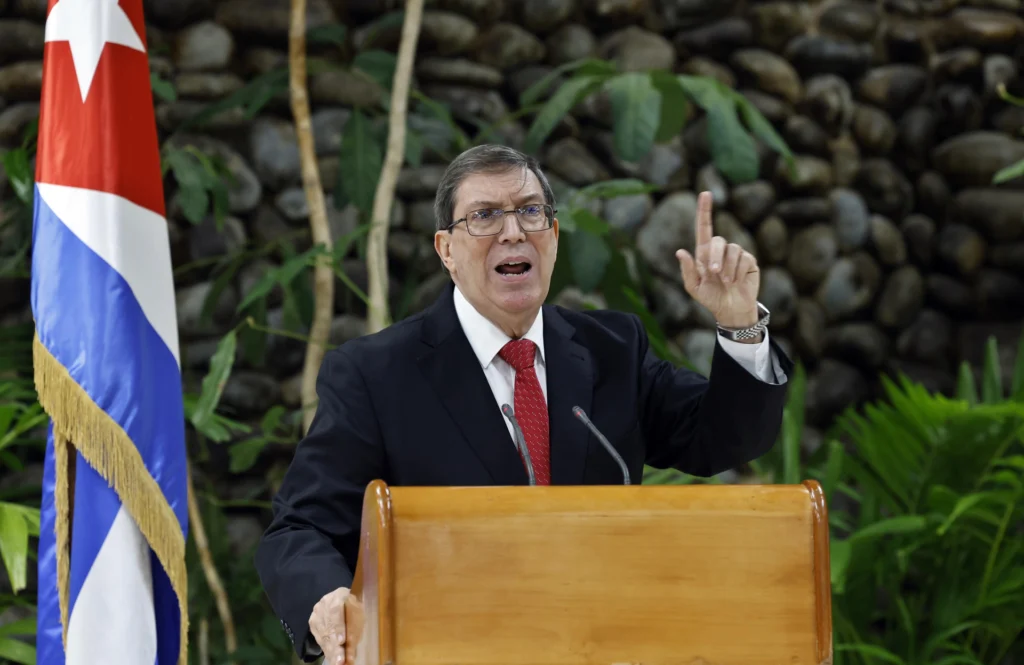
Cuban Foreign Minister Bruno Rodríguez Parrilla on Friday rejected a new threat from U.S. President Donald Trump, who said U.S. ships would make a “small stop” off the island on their return from Iran.
President Donald Trump has issued a new threat against Cuba as U.S. officials reportedly press ahead with military planning for the Caribbean country, an escalation that coincides with an intensified oil blockade and UN vote scheduled for October 28.
At a campaign rally in Fort Myers, the Republican President laid out his plan in vivid terms. “What we are going to do with Cuba is we are going to come back from Iran. Those beautiful ships, we will pass by Cuba, we will have one of them stop about 50 yards (45 meters) from the coast. They will raise their hands and then we will send Marco Rubio to close the deal,” he said.
The U.S. President closed the scene with a concrete promise: “We will take care of Cuba on our return from Iran. We will make a small stop.”
Cuba answered on X. “We reject all threats related to the ambitions of United States toward Cuba,“ wrote the Caribbean nation’s FM Bruno Rodriguez Parrilla.
He added a description of the coastline that carried an unmistakable warning. “Our coastline is full of beautiful beaches, but there ara also razor-sharp limestone spikes,” he said, referring to the karst rock formations along the shore. “Inhospitable to those who arrive with hostile intentions and dreams of domination,” he warned. The jagged coastal limestone, sharp and cutting, gave the response its edge.
We reject every threat related to US ambitions toward Cuba.
Our coastline is full of beautiful beaches, but there are also razor-sharp limestone spikes, an inhospitable environment for those who make it to our shores with hostile purposes and lust for domination.… pic.twitter.com/jrrBc1jR8S
Meanwhile, U.S. Secretary of State Marco Rubio used the same platform to urge those pushing for “change” on the island to engage in “discreet collaboration with the CIA.” In August, The New York Times reported that the intelligence agency had secretly set up a task force focused on Cuba.
The threat came amid a heated campaign in a state that is home to the largest Cuban community in United States. Its lawmakers and an influential segment of that community shape Washington’s decisions on Cuba.
Rodriguez Parrilla’s post also echoes another phrase from the current U.S. President. In March, speaking at the White House, Trump said he would have “the honor of taking Cuba” and that he “could do whatever he wanted with it.” He described Cuba then as a beautiful place, with “good land, landscapes, wonderful weather and great potential for tourism centers.”
On that occasion his unfamiliarity with the territory was on display. He argued that taking control would be good because the country is “not in the path of hurricanes.” “They won’t ask us for money for hurricanes every week,” he said in that time.
Passing by the island after Iran is not a new idea. In early May, while signing the Executive Order that launched an unprecedented wave of unilateral and illegal penalties against Cuba, Trump had already spoken of “taking control” once his military objectives in Iran were met. Following that, he has promised the war will end “immediately” after the November 3 elections, without explaining how.
The new threat coincides with the campaign Rubio himself is leading to sway the votes of UN member states on the resolution against the blockade against Cuba. In a recent press conference, Rodriguez Parrilla denounced the pressures and threats against governments to make them change their position.
In recent weeks the U.S. administration has seized fuel shipments bound for Cuba as part of an oil blockade. The campaign against Cuba’s international medical cooperation has intensified in parallel.
Elections Add Pressure
The escalation arrives at a difficult political moment for the U.S. President. Midterm elections take place on November 3, and the Republican Party could lose control of Congress. Trump’s approval has sagged, and a majority of voters now reject his management of the country’s main fronts, a rejection that cuts across every issue.
The domestic scenario is complicated further by the conflict with Iran. Tehran retains control of the Strait of Hormuz and has inflicted significant destruction on U.S. military bases in West Asia.
Fuel prices keep climbing in the meantime. The increase strikes U.S. households directly, and every rise deepens the damage to the President’s public standing at a moment when he can least afford it.
The pattern toward Cuba has hardened even as those pressures mount at home. The fuel seizures, the diplomatic campaign and the military planning all point in the same direction, toward an increasingly explicit posture of confrontation against the island.
With the United Nations vote set for October 28 and the U.S. midterm elections following days later on November 3, the coming weeks will reveal whether the planning described in U.S. media translates into further concrete action against Cuba, or whether it remains a lever of pressure in a campaign that already weighs heavily on the island.
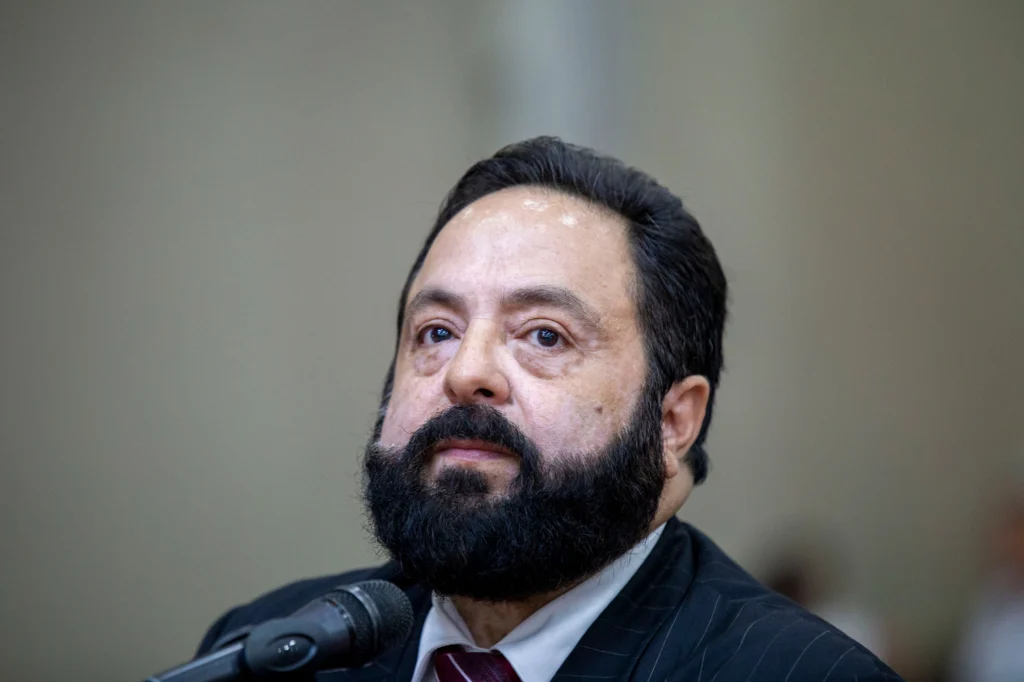
A Honduras’ court issued arrest warrants with international alerts against former Congress president Luis Redondo and former state printing manager Edis Moncada over a parliamentary order for a vote-by-vote recount of the 2025 general election.
A Honduran court ordered the international capture of former National Congress president Luis Redondo and Edis Moncada, former manager of the National Graphic Arts Company, attaching international alerts to both warrants.
The measure took effect after the deadline expired for their voluntary appearance before charges filed by the Public Ministry.
The prosecutorial request names 14 former members of the now-defunct Permanent Commission of the legislative power. The criminal case brought by the Prosecutor’s Office contains 21 charges against the former leadership of that parliamentary body, alleging disturbance of institutional functioning, usurpation of functions and violation of officials’ duties.
#HCHNoticias | En exclusiva HCH le muestra la orden de captura contra el expresidente del Congreso Nacional, Luis Redondo, quien está acusado de dos delitos de violación a los deberes de los funcionarios. FP pic.twitter.com/EzLfq095Wk
The charges target two central decisions adopted by the legislature. One was the installation and institutionalization of the commission itself. The other was the promulgation of a sovereign decree ordering a vote-by-vote recount of the 2025 general election.
Opposition sectors describe the prosecution as part of a campaign to criminalize officials and mechanisms that flagged irregularities in those elections. The parliamentary order to audit the ballot count challenged the authority of the National Electoral Council and drew the reaction of power groups opposed to democratic control of the vote.
The activation of international alerts and the prosecution of numerous former legislative officials shows, in the view of critics, the use of the punitive apparatus to intimidate state institutions. The case sets a precedent against the power of elected representatives to safeguard the legitimacy and transparency of electoral processes, they argue.
The 2025 elections remain at the center of the dispute. The legislative power had demanded verification of the tally sheets after the vote, a step that conservative sectors rejected. The recount order sought to audit what those lawmakers considered irregularities in the results.
Text reads: “Statement / LIBRE party: Requiring votes to be counted is not a crime! Defending democracy is not a crime! We denounce the political persecution against the deputies of LIBRE Party for demanding that the electoral count be completed and the popular will be respected. The defense of democracy cannot become a reason for persecution. Political persecution will not silence LIBRE or the Honduran people!”
Opposition Denounces Political Persecution
In September, former presidential candidate Rixi Moncada of the Freedom and Refoundation Party (LIBRE), publicly denounced what she called “systematic political persecution and the establishment of a judicial dictatorship” in Honduras.
Moncada questioned decisions by the National Congress and the judiciary that led to the abrupt dismissal of senior constitutional officials. Among those removed were the Attorney General, the President of the Supreme Court, a councilor of the National Electoral Council and a magistrate of the Electoral Justice Tribunal.
She also warned about regulations aimed at mass dismissals of public employees and an energy counter-reform designed to hand over the management of the National Electric Energy Company (ENEE, in Spanish), to banking corporations and private generators.
In her analysis, Moncada linked the parliamentary offensive to impunity rulings handed down by the courts. She highlighted the acquittal of former President Juan Orlando Hernández in the so-called Pandora Case, which investigated the diversion of 282 million lempiras (about 14,252,618 dollars) to parties of the traditional oligarchy of the country.
The international arrest warrants extend the reach of the judicial process beyond Honduran borders. The alerts would allow authorities in other countries to detain the former officials if they travel or are located abroad.
For now, the courts move forward with the charges while the opposition frames the case as retaliation against those who pushed to audit the 2025 vote. The next phase will determine whether the former officials appear before the court, are detained, or contest the prosecution as politically motivated.
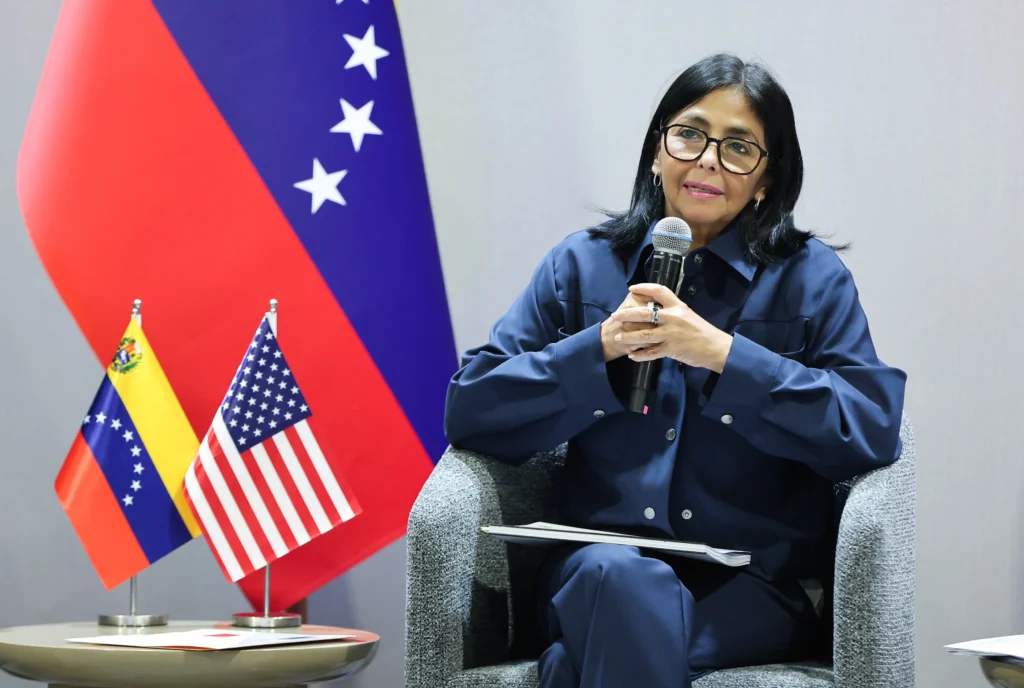
Venezuela’s Acting President, Delcy Rodríguez, inspected progress Friday on a package of 17 oil agreements signed with the United States, as the state of Zulia reported record output of 115,000 barrels per day.
The inspection covered joint projects aimed at extracting crude from national reserves. Eight of the 17 agreements involve the development of so-called green fields, new areas set aside for exploration and exploitation.
“We want to show the country the progress, to make clear that we do not leave things unfinished, that we go further: to action and to production. Once again, Zulia state broke its production record, reaching 115,000 barrels per day today,” Acting President Delcy Rodriguez said.
Rodriguez added that projections call for closing December at 120,000 barrels. The Acting President framed the tour as proof that the partnership has moved beyond paperwork into concrete output.
The cooperation framework was signed in August through North American Blue Energy Partners (NABEP). The 17 strategic agreements target the extraction of 65 million barrels of crude from Venezuela’s reserves.
On maritime infrastructure and logistics, Rodriguez said activity in Zulia will jump from 100 to 900 vessels, an increase of 800% in mobilized capacity. The figure signals a major expansion of port and transport operations tied to the oil sector.
The Acting President also outlined a plan for the progressive creation of jobs driven by industrial activity. Employment will begin in the food sector, continue in ironworks and industrial areas, and later extend to public accounts with the goal of raising working-class incomes.
Rodríguez said the central objective of the alliance is to develop the hydrocarbon industry and consolidate the country’s sovereign position. She stressed that Venezuela seeks to affirm itself as the nation with the largest oil reserves on the planet and to rank among the world’s leading producers and exporters. “We want to show the country the progress of these agreements,” she said.
Acting President Delcy Rodriguez insisted that rising production must translate directly into the welfare of the population. Following this, she pointed to concrete areas where the gains should appear: “In the daily life of Venezuelan men and women: in pay for workers, in health, public hospitals, schools, food, roads, water and public services. That is where Venezuela’s development goes,” she said.
The comments link oil revenue to social spending at a time when the government has promised greater transparency over hydrocarbon and mining income. The Acting President’s emphasis on hospitals, schools and food echoes longstanding official messaging that resource wealth should fund public services.
The Zulia figures mark a significant benchmark for the country’s oil industry, which has sought to recover output after years of decline. The jump from 100 to 900 vessels suggests broader commercial activity around the crude operations, beyond the wells themselves.
Eight green-field projects form part of the package, indicating that the partnership extends into undeveloped territory rather than relying solely on existing infrastructure. Rodríguez described the agreements as a path toward consolidating Venezuela’s position in global energy markets.
The inspection tour took place as the government pushes to showcase tangible results from the August accords. The Acting President’s visit to the field operations was intended to demonstrate that the agreements are generating activity on the ground, not only on paper.
The production target of 120,000 barrels by December would extend the record reported Friday. If achieved, it would reinforce the government’s narrative of recovery built around the US partnership and the state of Zulia’s role as the engine of national output.
Rodríguez closed her remarks by linking the oil gains to broader national development, arguing that the industry’s expansion must reach Venezuelans through wages and public services rather than remaining confined to export statistics.
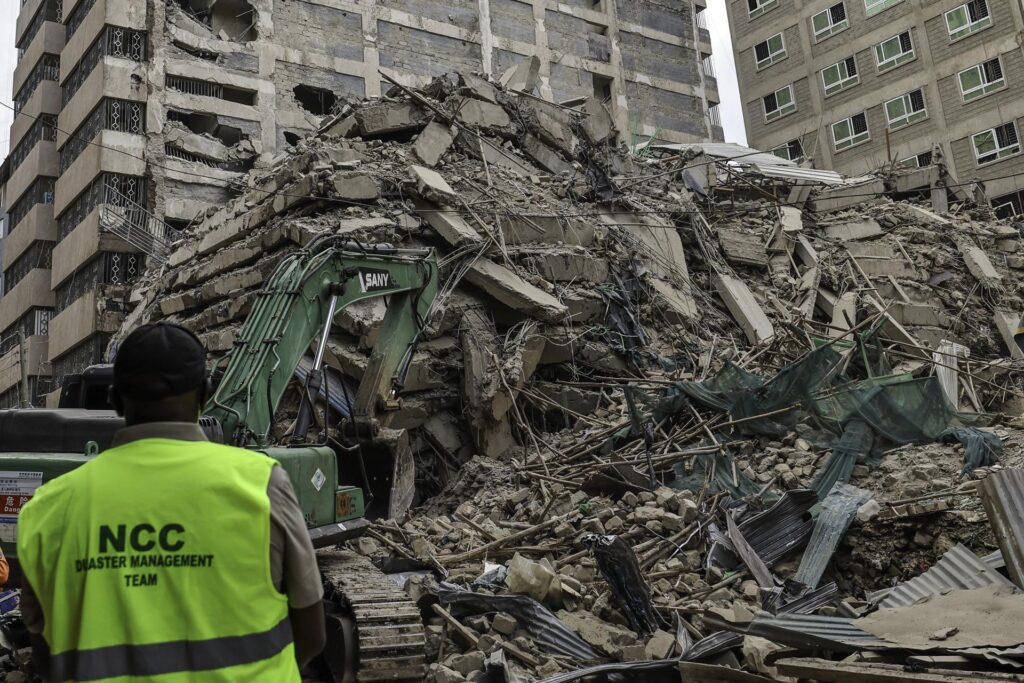
An 18-story building under construction collapsed Friday in Nairobi, Kenya, triggering an emergency operation as authorities feared workers and passersby were trapped beneath the rubble.
The structure gave way on Friday, October 23, near Yusuf Haji Avenue, inside the busy Eastleigh commercial district on the eastern side of the Kenyan capital. Security forces and the Kenya Red Cross deployed rescue brigades to the scene immediately.
Two people were pulled from the wreckage and rushed to Kenyatta National Hospital for specialized care, according to the latest report from relief agencies. The Kenya Red Cross confirmed that search and rescue operations continued without interruption at the collapse site.
The humanitarian organization located 26 people who had initially been reported missing. Tracking teams deployed across the sector found them safe and sound.
Given the heavy foot traffic in the commercial area, county security forces used tear gas to disperse crowds. The measure sought to protect nearby businesses from looting and to clear access routes for emergency vehicles.
🇰🇪 An 18-storey building under construction collapsed in Nairobi, Kenya
Numerous people, including construction workers and nearby pedestrians, are trapped under the rubble. pic.twitter.com/ErrXr9dzJE
Authorities asked residents to keep the perimeter clear so Red Cross teams and partner agencies could work safely. “Kenya Red Cross teams are working with partners from various agencies to support search and rescue operations,” the organization said in a statement.
Governor Deploys Machinery
Nairobi Governor Johnson Sakaja said relief agencies kept heavy machinery and specialized personnel on Yusuf Haji Avenue to remove debris and investigate possible failures in the construction project.
Sakaja also announced the installation of a guidance and information center at the site of the disaster. The facility aims to serve the families of workers and area residents directly, providing updated reports on the removal of materials and the status of the investigation into the responsible construction company.
The governor’s office described the operation as ongoing, with no timetable for when the rubble would be fully cleared or the cause determined.
The collapse added to concerns about construction safety standards in Nairobi, where rapid urban growth has pushed a wave of high-rise building across the city. The structure was still under construction when it fell, leaving questions about the materials, the design and the permits behind the project.
Rescue crews continued combing through the debris for any remaining victims. The Red Cross reiterated its call for the public to stay away from the area. “Clear the area to allow rescuers to work safely,” the organization urged.
Authorities have not yet confirmed whether anyone remains unaccounted for. The two injured patients were receiving treatment while investigators began examining the site for signs of structural failure.
The Eastleigh neighborhood, known for its dense commercial activity and large Somali community, sits in the eastern part of Nairobi. The collapse disrupted business operations across the district as authorities cordoned off streets around the disaster zone.
The investigation will look at the construction firm’s permits, the quality of materials used and whether the building met the standards required for an 18-story structure. Governor Sakaja said those findings would be shared with the families awaiting answers.
 Login