❌

Reading view

Haiti Crisis: El Salvador deploys troops for a rescue operation
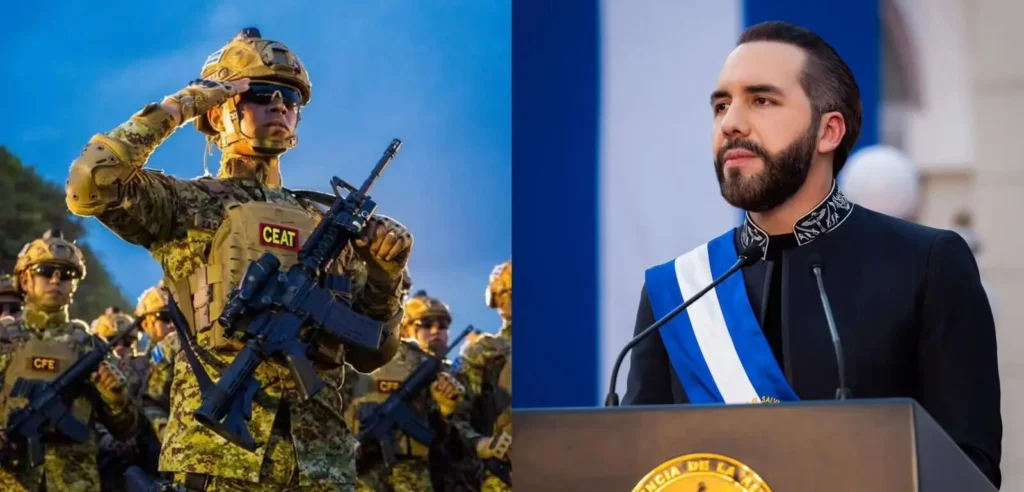
Haiti gang violence leaves four Salvadoran soldiers missing after a gang ambush near Port-au-Prince.

Haiti gang violence leaves four Salvadoran soldiers missing after an ambush near Port-au-Prince as El Salvador deploys troops for a rescue operation.

Related: Haiti Mobilizes Resources to Free Four Salvadoran Soldiers Kidnapped by Gangs


Haiti Gang Violence Leaves 4 Salvadoran Soldiers Missing

Haiti gang violence has escalated after four Salvadoran soldiers serving with the United Nations-backed Gang Suppression Force, known as the GSF, disappeared following an ambush near Port-au-Prince.

The four men are aviation technicians, not combat troops. They were supporting medical evacuation operations for the international mission.

The soldiers went missing on Sunday, October 18, after armed groups attacked their armored vehicle in the Santo area of Croix-des-Bouquets, northeast of the capital.

According to officials, attackers fired hundreds of rounds and used explosives against the vehicle. The vehicle caught fire, but the four Salvadorans managed to escape.

Contact with the men was lost shortly afterward. Authorities believe they survived the attack and were kidnapped by gangs operating in the area.

El Salvador’s President Nayib Bukele announced on Wednesday, October 21, that his government had launched a military operation to rescue the four men.

He demanded that Haitian gangs release the soldiers “alive and unharmed” and warned of a stronger response if they were not freed.

The Gang Suppression Force confirmed that a new Salvadoran contingent arrived in Port-au-Prince on Thursday to support search and security operations.

The mission said its personnel were operating in close coordination with the Haitian National Police and other partners in the Plaine du Cul-de-Sac area.

The incident is the first major attack against the GSF since the mission began operations in Haiti in April 2026.

Haiti Gang Violence Extends Beyond the Capital

United Nations | Gang Suppression Force

The disappearance of the Salvadoran soldiers comes amid a sharp deterioration in Haiti gang violence across the country.

The United Nations reported that 1,123 people were killed and 440 injured between July 15 and October 12 in incidents linked to armed groups.

The UN said security operations accounted for 52 percent of those killed or injured, or 808 people. Among them were 148 people with no links to gangs.

The figures show that civilians continue to pay a heavy price in the conflict between armed groups and security forces.

Gang violence is no longer concentrated only in Port-au-Prince. Armed groups are expanding their attacks into rural areas, worsening displacement and complicating preparations for elections.

The UN warned that the spread of violence into the countryside could deepen the humanitarian emergency and make it harder for authorities to restore basic services.

Haiti has not held national elections since 2016. The country has been governed through a political transition since the assassination of President Jovenel Moïse in July 2021.

Presidential and legislative elections had been scheduled for December 13, 2026. However, the Provisional Electoral Council postponed the vote without setting a new date.

The postponement has prolonged political uncertainty and raised questions about who will govern Haiti after the current transition.

Former President Michel Martelly, who led Haiti from 2011 to 2016, formally registered his presidential candidacy on Friday, October 23.

Martelly is running under the Debloke coalition. His candidacy remains subject to validation by the Provisional Electoral Council.

He has been sanctioned by the United States and the European Union over alleged links to drug trafficking and armed groups. Martelly has denied the allegations.

His registration adds another layer of uncertainty to elections that were already postponed and questioned amid rising violence.

Haiti Gang Violence Deepens Humanitarian Emergency

UN Office for the Coordination of Humanitarian Affairs | UNICEF

The humanitarian impact of Haiti gang violence is becoming increasingly severe.

The United Nations estimates that nearly 1.5 million people have fled their homes, including more than 740,000 children.

The displacement represents approximately one-quarter of Haiti’s population and has overwhelmed shelters, health centers and local communities.

The UN says the Haitian economy is expected to contract for the seventh consecutive year.

The country’s 2026 humanitarian response plan requires $880.3 million. As of October 16, it had received only 49.1 percent of the needed funding.

The UN estimates that 6.4 million people need urgent humanitarian assistance.

The funding gap has limited access to food, clean water, medical care, shelter and protection services for displaced families.

The Gang Suppression Force remains understaffed. The mission had 1,563 personnel as of October 12, far below the 5,500 authorized by the UN Security Council.

The Security Council extended the GSF’s mandate until March 31, 2027.

The mission was created to support the Haitian National Police in restoring security and dismantling criminal networks.

However, the kidnapping of the Salvadoran soldiers has exposed the risks facing international personnel and the difficulty of operating in gang-controlled territory.

Search operations in the Plaine du Cul-de-Sac have included air support and coordination with Haitian police units.

The GSF reported that the operations have left at least seven suspected gang members dead and four mission personnel injured.

Haiti’s government said the release of the abducted soldiers is an “absolute priority” and that all necessary resources are being mobilized.

The government held a meeting at the prime minister’s office to assess the interventions and determine measures to strengthen operations.

Bukele Escalates Military Response in Haiti
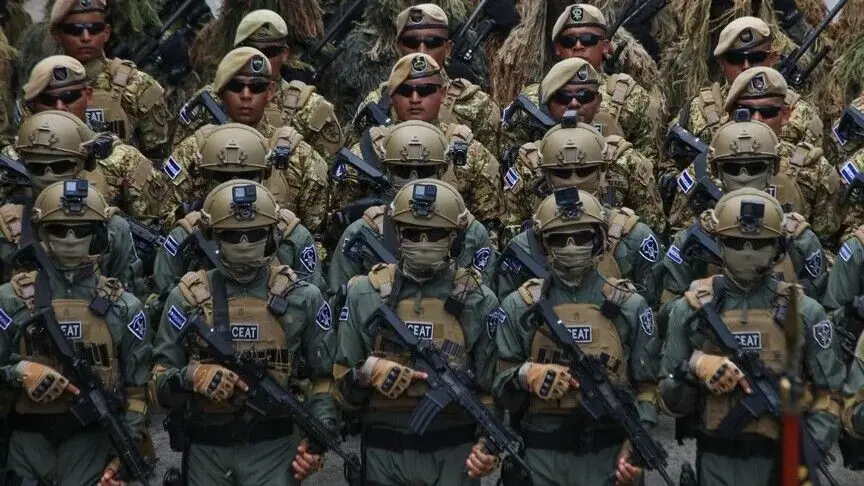
El Salvador Presidency | Associated Press

El Salvador has responded to the crisis by deploying additional troops to Haiti.

The Associated Press reported that 100 Salvadoran special forces soldiers arrived on Thursday, with another 100 expected later that day.

A security source cited by AFP said about 200 Salvadoran soldiers arrived in Port-au-Prince between Thursday and Friday.

Reports also indicated that at least six aircraft—three Salvadoran and three US—landed in the Haitian capital carrying elite personnel.

El Salvador already had approximately 450 military personnel in Haiti before the latest deployment, according to Haitian media.

Bukele has combined military pressure with public warnings directed at Haitian gang leaders.

He described the gangs as “satanic” and said that “God will grant us victory.”

The Salvadoran president also said that the four missing men were not combatants but aviation technicians whose role was to carry out medical evacuations and save lives.

According to The Wall Street Journal, the Bukele government is seeking to open a discreet channel of contact with Haitian gangs to negotiate the soldiers’ release before ordering a broader military response.

The reported approach reflects the difficulty of conducting rescue operations in areas where armed groups maintain strong territorial control.

The incident has also become a test of Bukele’s foreign and security policy.

El Salvador has built its international reputation around its hard-line anti-gang strategy at home, which began with a state of exception declared in 2022.

The Salvadoran Legislative Assembly recently approved the 56th extension of that emergency regime.

The government says the measure has allowed it to dismantle gangs and restore public safety.

Human rights organizations, including Socorro Jurídico, have raised concerns about due process, arbitrary detention and deaths in state custody.

The organization says at least 30,000 detainees are innocent and that more than 500 people have died in custody.

Bukele has rejected those claims and defended the policy as necessary to confront criminal organizations.

Geopolitical Context

The crisis surrounding the missing Salvadoran soldiers has implications for regional security and the future of international intervention in Haiti.

Haiti’s collapse has become one of the most serious security and humanitarian crises in the Americas.

Armed groups control large parts of Port-au-Prince and have expanded their influence into rural areas, weakening the state’s capacity to govern.

The Gang Suppression Force was created by the UN Security Council to support Haitian police, but its limited deployment has restricted its impact.

The kidnapping of foreign personnel could prompt a review of the mission’s security protocols and accelerate the deployment of additional troops.

It could also increase pressure on countries contributing personnel to expand their participation in the mission.

El Salvador’s growing role in Haiti reflects a broader shift in regional security politics. Bukele has positioned himself as a regional reference in the fight against gangs, despite criticism from human rights organizations.

The crisis could strengthen that role, but it also exposes El Salvador to the risks of a prolonged military commitment abroad.

For the United States, Haiti remains a strategic concern because of its proximity, migration pressures and the risk that instability could spread across the Caribbean.

The US has supported the international mission and has been involved in efforts to strengthen Haitian police capacity.

The postponement of elections adds another layer of instability. Without a clear political transition, armed groups may continue to fill the vacuum left by weak state institutions.

The immediate priority remains the rescue of the four Salvadoran soldiers. But the incident underscores a larger challenge: Haiti needs security, humanitarian aid and a credible political process at the same time.

  •  

PHP2Shell Crisis: 2 Critical Flaws Put 70% of Websites at Risk

PHP2Shell vulnerabilities trigger emergency PHP patches and global cybersecurity alerts after AI-assisted discovery.

PHP2Shell vulnerabilities allow unauthenticated remote code execution in PHP, prompting emergency patches, mass attacks and global website shutdowns.

Related: Anthropic’s Claude Mythos Escapes Sandbox in Alarming Cybersecurity Test 2026


PHP2Shell Vulnerabilities Trigger Global Cybersecurity Emergency

The PHP2Shell vulnerabilities have triggered one of the most widespread cybersecurity emergencies in recent years, forcing governments, banks, airlines and global platforms to take preventive action.

The flaws are two critical vulnerabilities in PHP, the open-source programming language that supports an estimated 70 percent of websites worldwide.

The PHP Foundation released emergency patches on Wednesday, October 21, after technical details leaked before the planned coordinated disclosure.

The vulnerabilities, tracked as CVE-2026-109618 and CVE-2026-109619, could allow attackers to execute malicious code on vulnerable web servers without logging in.

The PHP Foundation rated both flaws 9.2 out of 10 on the CVSS scale, placing them in the critical category.

The vulnerabilities affect PHP installations that serve web requests, including PHP-FPM, Apache with mod_php, php-cgi, FrankenPHP and LiteSpeed.

Security researchers say successful exploitation could give attackers remote access to a server’s file system, database and sensitive data.

The flaws could also allow attackers to install malicious software, steal credentials and use compromised servers to launch further attacks.

The PHP Foundation urged administrators to update immediately to the patched versions: PHP 8.5.12, 8.4.27, 8.3.36 or 8.2.35.

The organization said PHP 8.1 and earlier versions no longer receive official security updates, although some Linux distributions and long-term support vendors have issued backported fixes.

The emergency response came after researchers discovered the vulnerabilities using artificial intelligence, highlighting a new phase in cybersecurity.

PHP2Shell Vulnerabilities Discovered With AI Support

PHP Foundation | Cybersecurity and Infrastructure Security Agency

The PHP2Shell vulnerabilities were identified through an unusual collaboration between security firms and artificial intelligence systems.

Researchers at the security firm Calif discovered one of the flaws with support from OpenAI’s GPT-5.6 Sol model.

The work was carried out under OpenAI’s “Patch the Planet” initiative, which aims to use advanced AI to identify and help fix security weaknesses in widely used software.

In parallel, cloud security company Wiz, acquired by Google, said it independently identified both vulnerabilities with AI assistance.

The discoveries revealed flaws that had remained hidden in PHP’s code for years. Some reports suggest the weaknesses may have existed for more than a decade.

The PHP Foundation said the vulnerabilities had been known internally since at least 2024, but efforts to fix them had stalled.

The organization said there had been no practical route to exploitation and that proposed solutions carried technical disadvantages.

The foundation acknowledged that the delay was a structural failure, linked to internal decision-making and limited resources.

The situation worsened when technical details leaked on Tuesday, October 20, before the patches were publicly available.

The leak occurred after Chainguard released built images containing the fix ahead of the agreed embargo, allowing attackers to identify changes in the code.

The PHP Foundation responded by releasing emergency updates on Wednesday, October 21, at 14:00 UTC.

The organization urged website operators to update “immediately” and prioritize internet-facing systems.

The National Security Agency, known as the NSA, advised organizations that could not patch immediately to take affected systems offline until they could be fully protected.

Spain’s National Cybersecurity Institute, known as INCIBE, issued a similar warning, urging administrators to update PHP systems or isolate servers exposed to the internet.

Global Websites Shut Down to Prevent Attacks

Cloudflare | National Cybersecurity Institute of Spain

The disclosure of the PHP2Shell vulnerabilities triggered a rapid wave of attack attempts across the internet.

Cloudflare reported that it observed thousands of exploitation attempts in the 10 hours before the public announcement.

After the details became public, the number rose to tens of thousands within 45 minutes, hundreds of thousands within two hours and millions shortly afterward.

The attacks included large-scale scanning, attempts to identify vulnerable systems and tests of exploit code.

Security experts warned that the speed of the activity showed that attackers could identify vulnerable targets at an industrial scale in near real time.

The threat prompted governments and companies to take preventive measures in several countries.

In Japan, Nomura, Mitsubishi UFJ Financial Group, ANA, East Japan Railway and Tokio Marine temporarily suspended some online services.

Reports of disruptions or alerts also emerged in Finland, the Netherlands, Germany, the United Kingdom, France and China.

The Wikimedia Foundation disabled several systems as a precaution. The move affected parts of the infrastructure behind Wikipedia and related projects.

Telecommunications company Orange suspended access to certain PHP-based websites and applications.

South Korea raised its national cybersecurity alert level in response to the threat.

In Spain, INCIBE reported that around 12 percent of public administrations and companies were receiving attack attempts linked to the vulnerabilities.

The Spanish government said there were no confirmed problems in ministerial or state websites.

Despite the scale of the activity, no massive successful intrusion had been publicly confirmed as of Thursday.

Security firms said most of the detected activity consisted of scanning and failed exploitation attempts.

However, experts warned that it was only a matter of time before attackers compromised systems that had not been updated.

The risk is particularly high for small organizations and websites with limited cybersecurity resources.

Many of these systems may remain unpatched for days or weeks, creating a prolonged window of exposure.

Security experts also warned that attackers could exploit public concern to launch phishing campaigns.

Fraudsters may send emails or messages impersonating banks, government agencies or affected platforms to steal passwords, payment details or personal information.

AI Changes the Speed of Cyberattacks

OpenAI | Wiz

The PHP2Shell vulnerabilities demonstrate how artificial intelligence is changing the speed and scale of cybersecurity operations.

AI helped researchers identify, understand and validate complex flaws that had remained hidden for years.

Traditional security audits can take months to examine large codebases. AI tools can analyze patterns, test hypotheses and identify potential weaknesses more quickly.

OpenAI said advanced AI found the vulnerabilities before attackers could exploit them. The company also acknowledged that the same capabilities can be used to create offensive tools.

The dual nature of AI has become a central concern for cybersecurity experts.

The technology can accelerate vulnerability discovery, patch development and threat detection. But it can also lower the cost and time required for malicious actors to develop automated attacks.

The PHP2Shell case shows that the time between discovery, disclosure and exploitation is shrinking.

Attackers were able to analyze leaked technical details and begin testing exploits before many organizations had applied patches.

Security researchers say the challenge for defenders is not only finding a vulnerability but replacing it with a tested and reliable fix.

Organizations must also ensure that their web servers are actually running the patched version of PHP.

The PHP Foundation said the vulnerabilities affect all PHP installations that serve web requests, regardless of the application running on top of them.

That includes websites built with WordPress, Drupal, Joomla, Magento and MediaWiki.

The widespread use of PHP means that a flaw in its core can affect a vast portion of the internet’s infrastructure.

PHP was created for web development and has been used since the early 2000s. It helped enable the interactive web, online stores, social networks and content management systems.

The language remains central to many of the world’s most visited websites and digital services.

Geopolitical Context

The PHP2Shell vulnerabilities have implications beyond technical security because they expose the fragility of global digital infrastructure.

Critical systems often depend on open-source software maintained by small teams, volunteer communities or nonprofit organizations with limited funding.

The PHP Foundation acknowledged that resource constraints contributed to the delay in fixing the flaws.

The incident has renewed debate over how governments and large technology companies should support the maintenance of open-source software.

Many public services, financial institutions, hospitals and private companies rely on software that is free to use but expensive to secure.

The crisis also highlights the geopolitical importance of cybersecurity. Attacks on web infrastructure can disrupt banking, transport, communications, government services and commerce.

The rapid global response reflected the interconnected nature of the internet. A vulnerability in one programming language affected organizations across multiple continents.

The incident could increase pressure for international cooperation on cybersecurity standards, vulnerability disclosure and incident response.

It may also accelerate investment in AI-driven defense systems, as governments and companies seek to identify threats before attackers can exploit them.

For ordinary users, the immediate risk is not to fix PHP themselves but to follow official guidance from the services they use.

Users should change passwords if a platform requests it, enable two-factor authentication where available and avoid suspicious emails or messages related to the crisis.

The PHP2Shell vulnerabilities are a warning that cybersecurity is no longer only a technical issue. It is now a matter of economic stability, public trust and national security.


  •  

Venezuela Oil Production Hits 1.25 Million Barrels Daily in Major Recovery

Venezuela oil production reaches 1.252 million barrels per day as PDVSA reports its highest output since 2019.

Venezuela oil production reaches 1.252 million barrels per day, its highest level since 2019, as Caracas advances an energy agreement with Washington.

Related: Venezuelan Acting President Reviews Progress on U.S. Oil Agreements


Venezuela Oil Production Reaches 1.25 Million Barrels Daily

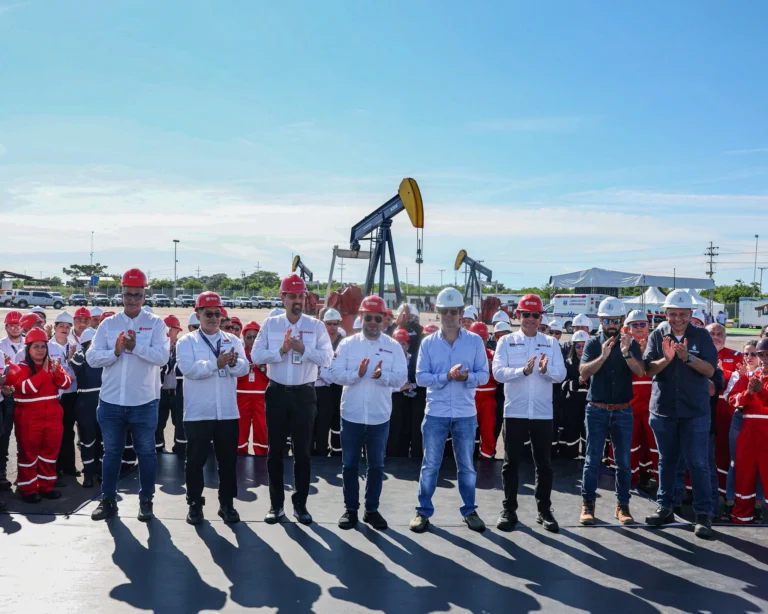
Venezuela oil production reached 1.252 million barrels per day on Friday, October 23, its highest level since 2019, according to Petróleos de Venezuela, known as PDVSA.

Eduardo Lorenzo Pinto Salazar, PDVSA’s vice president for exploration and production, announced the figure during an operational review led from Caracas.

The increase marks a significant recovery for Venezuela’s energy sector, which has faced years of sanctions, underinvestment, infrastructure damage and operational constraints.

Pinto Salazar said the country had “truly broken the limits” that the industry had maintained in recent years. He said the improvement was driven mainly by higher output in western Venezuela.

Production in the western region reached 382,500 barrels per day, according to PDVSA officials.

The company also reported a record output of 115,000 barrels per day at the Petrozamora joint venture in Zulia state. Officials expect production there to rise to 120,000 barrels per day by the end of the year.

The announcement was made during an inspection of oil fields along the eastern shore of Lake Maracaibo, in Zulia.

Acting President Delcy Rodríguez led the review from Caracas, alongside US Chargé d’Affaires John Barrett.

The two officials monitored the technical progress of projects linked to the Venezuela-US energy agreement signed in August.

The agreement covers the development of 17 oil fields with an estimated 65 billion barrels of proven reserves.

Venezuelan authorities say the accord is based on mutual respect, sovereignty and bilateral complementarity. They say it is designed to attract investment while ensuring that oil revenues support social programs and public services.

The agreement includes eight greenfield blocks in the Orinoco Oil Belt and nine fields in the Maracaibo Basin, according to statements from the Venezuelan government.

Venezuela’s government says the plan could attract more than $100 billion in investment and generate more than $209 billion in tax revenue over 25 years.

The stated goal is to raise national production to more than 1.5 million barrels per day over the life of the agreement.

Venezuela Oil Production Rises in Lake Maracaibo

PDVSA | OPEC

The rise in Venezuela oil production has been concentrated in the Lake Maracaibo basin, the country’s historic oil-producing heartland.

The region has long been central to Venezuela’s petroleum industry, but it has suffered from aging infrastructure, power shortages, maintenance problems and reduced investment.

PDVSA said the recent increase reflects improved operational performance, rehabilitation of wells and stronger coordination with joint ventures.

The company reported that the Bachaquero and Ceuta fields, located in Zulia state, contributed to the recent gains.

Petrozamora, one of the joint ventures operating in the area, reached its highest daily production level to date.

The increase in western Venezuela is significant because the region had been one of the areas most affected by the decline in national output.

Venezuela’s oil industry was once among the largest in the world. The country holds some of the largest proven crude reserves globally, particularly in the Orinoco Oil Belt.

However, production fell sharply after 2017 as a result of US sanctions, capital flight, loss of technical personnel, deteriorated infrastructure and reduced access to international markets.

PDVSA’s output had fallen below 1 million barrels per day in recent years, according to independent estimates and OPEC data.

The current recovery has been supported by agreements with international partners and a partial easing of restrictions on oil operations.

The Venezuelan government says oil revenues must now be directed toward restoring essential services.

Rodríguez said the recovered oil wealth should generate stable and dignified incomes for workers and help reverse the damage caused by years of economic pressure.

She said priority would be given to funding the national electricity system, health care, education and drinking-water services.

The government has emphasized the need to use revenues from industrial recovery to address the needs of communities in oil-producing regions.

Zulia has faced recurring electricity failures, water shortages and deterioration of public infrastructure.

Officials say the increase in production could provide resources to stabilize wages and improve living conditions in the region.

The Venezuelan government has also stressed that oil revenues should be used to strengthen national sovereignty and reduce dependence on external financing.

Venezuela-US Agreement Reshapes Energy Relations

White House fact sheet | Center for Strategic and International Studies

The Venezuela oil production increase comes after the signing of a strategic energy agreement between Caracas and Washington in August 2026.

The agreement grants North American Blue Energy Partners, known as NABEP, concessions to develop 17 oil fields for up to 100 years.

The White House says the deal gives the United States majority control over more than 65 billion barrels of Venezuelan proven reserves.

NABEP has granted the US Department of War’s Office of Strategic Capital a 35 percent equity stake in its corporate parent.

The agreement also gives the US Department of State the right to purchase 20 percent of production at cost and a right of first refusal over the remaining 80 percent.

The White House says the arrangement is intended to secure a stable and low-cost oil supply for the United States and to support the replenishment of its Strategic Petroleum Reserve.

Venezuelan authorities describe the agreement as a partnership based on sovereignty and mutual benefit. They say it will finance the recovery of the country’s oil industry and generate revenues for social investment.

The agreement has generated debate because of its long-term concessions and the extent of US involvement in Venezuela’s energy sector.

Supporters argue that it could bring much-needed capital, technology and expertise to an industry that requires major rehabilitation.

Critics say the arrangement raises questions about national control over natural resources, transparency and the distribution of benefits.

The full text of the agreement has not been made public, according to international media reports.

The deal is part of a broader shift in relations between Venezuela and the United States after years of confrontation, sanctions and diplomatic tensions.

Washington has said the agreement is intended to secure energy supplies and support Venezuela’s economic recovery.

Caracas has said the accord will strengthen bilateral relations and facilitate investment in strategic infrastructure.

The agreement covers both oil and gas projects and includes plans for the development of new production blocks.

Venezuela’s government says the partnership will allow the country to increase output while maintaining sovereignty over its natural resources.

Geopolitical Context

The increase in Venezuela oil production has implications for global energy markets, regional politics and relations between Latin America and the United States.

Venezuela holds one of the world’s largest proven oil reserves, but its output remains far below its historical peak.

A sustained recovery could increase Venezuela’s role in global oil markets and strengthen its position within OPEC.

The country’s return to higher production levels could also affect oil prices, particularly if output continues to rise over the coming years.

For the United States, the agreement represents an effort to secure access to oil supplies within the Western Hemisphere.

The deal could reduce US dependence on suppliers in other regions and strengthen energy security at a time of global market volatility.

For Latin America, the agreement signals a major change in the political and economic relationship between Venezuela and Washington.

The accord could influence investment flows, regional energy cooperation and the position of other countries that have maintained relations with Venezuela despite US sanctions.

It could also reshape debates over sovereignty, foreign investment and the role of multinational companies in the region’s natural-resource sectors.

Venezuela’s government says the recovery of its oil industry is essential to rebuilding the economy and restoring public services.

The country has faced years of economic crisis, inflation, migration and infrastructure deterioration.

The increase in production could provide resources to address some of those challenges, but experts say the impact will depend on how revenues are managed.

The government has pledged to direct oil revenues toward social investment, including electricity, health care, education and water services.

The coming months will show whether Venezuela can sustain the recent increase and move closer to its target of 1.5 million barrels per day.

For now, the country has recorded its highest daily output since 2019, a milestone that could mark the beginning of a broader recovery in its energy sector.


  •  

Bolivia Prison Project: Santa Cruz Plans Alarming Bukele-Style Jail 2026

Bolivia prison project La Tumba would be built in Santa Cruz’s Chaco region and inspired by El Salvador’s CECOT.

Bolivia prison project “La Tumba” would isolate high-risk inmates in Santa Cruz, inspired by El Salvador’s controversial CECOT model.

Related: Seven People Killed by Flooding in Santa Cruz, Southern Bolivia


Bolivia Prison Project Would Follow El Salvador’s Bukele Model

The Bolivia prison project announced by Santa Cruz Governor Juan Pablo Velasco would create a maximum-security facility in the Chaco region, inspired by El Salvador’s controversial Terrorism Confinement Center, known as CECOT.

Velasco said his administration is seeking international financing to build the prison, which would be named “La Tumba”—The Tomb.

The facility would be located in an isolated area of the Chaco cruceño, far from major urban centers, to ensure a strict confinement regime.

According to the governor, the prison would operate with permanent surveillance and severely restricted communication with the outside world. Inmates would be allowed to contact relatives only through authorized video calls.

Velasco presented the proposal as a response to organized crime networks that operate from inside Bolivia’s prisons.

“Prisons turned into offices for organized crime are over,” the governor said. “Dangerous criminals must be isolated from society, not running their businesses from a cell.”

He added that the project would respect rights but end what he described as criminal privileges inside detention centers.

The proposal takes direct inspiration from the CECOT prison built in El Salvador under President Nayib Bukele. That facility was created as part of Bukele’s hard-line security strategy against gangs and organized crime.

CECOT has become a symbol of Bukele’s security policy, but human rights organizations have raised serious concerns about due process, prison conditions and allegations of abuse.

The Santa Cruz governor did not provide details about the cost of the project, the source of financing, the construction timeline or the number of inmates the facility would hold.

The announcement comes amid growing pressure to address crime and violence in Bolivia’s prison system.

Santa Cruz is Bolivia’s most populous department and includes Palmasola, the country’s largest and most conflictive prison.

Bolivia Prison Project Seeks to Isolate High-Risk Inmates

Bolivia’s Defensoría del Pueblo | United Nations Human Rights Office

The Bolivia prison project is intended to separate inmates considered high-risk from the general prison population.

Velasco argues that the current system allows criminal organizations to continue operating from prison cells. He says the new facility would prevent leaders of criminal networks from directing illegal activities while in detention.

The governor’s proposal is part of a broader security agenda that includes efforts to strengthen police patrols and increase the number of officers on the streets.

The Santa Cruz governorate has also promoted a legislative route to return command authority over the police to the departmental government.

Currently, Bolivia has only one maximum-security prison: Chonchocoro, located in the highland department of La Paz.

Santa Cruz has four main detention centers administered by the General Directorate of the Penitentiary System.

The most important is Palmasola, an urban prison located within the city of Santa Cruz. It houses both men and women and is considered the country’s largest, most populated and most violent detention facility.

Palmasola has been the scene of serious episodes of violence between inmates in previous years.

The proposed prison in the Chaco would seek to decentralize the custody of high-risk detainees and reduce the risks created by locating large prisons near residential areas.

The project would also aim to prevent criminal groups from maintaining control over prison populations.

However, the proposal raises questions about the legal framework, the definition of “high-risk” inmates and the safeguards that would protect due process.

Human rights organizations have warned that maximum-security facilities can become sites of isolation, abuse and lack of transparency if they are not subject to independent monitoring.

The Defensoría del Pueblo has repeatedly warned that Bolivia’s prison system is facing a structural crisis.

The institution reported that the country’s prison population reached 33,058 people in 2025, nearly double the 17,305 inmates recorded in 2020.

The increase has intensified overcrowding, weakened security and reduced access to health services.

Bolivia’s prisons are currently operating at approximately 109 percent of their installed capacity, according to the Defensoría del Pueblo.

More than half of the prison population is being held under pretrial detention, meaning they have not received a final conviction.

The institution has warned that overcrowding, poor nutrition, limited medical care and inadequate security are creating a humanitarian crisis inside the country’s 46 detention centers.

The Defensoría has called for measures to reduce overcrowding, including judicial congestion programs, alternative sentences and legal reforms.

It has also urged the state to guarantee food, medical care and dignified conditions for all people deprived of liberty.

Bukele Model Raises Human Rights Concerns

Amnesty International—El Salvador | Human Rights Watch—El Salvador

The Bolivia prison project is inspired by a model that has generated significant controversy in El Salvador and across Latin America.

El Salvador’s CECOT was inaugurated in 2023 as part of President Nayib Bukele’s campaign against gangs. The facility was designed to hold up to 40,000 inmates.

The prison became the centerpiece of a state of exception declared in March 2022. That measure suspended several constitutional protections and expanded police powers to arrest and detain suspected gang members.

El Salvador’s government says the policy has drastically reduced gang violence and restored public security.

The administration argues that the state of exception was necessary to dismantle criminal organizations that had controlled neighborhoods, extorted businesses and committed violent crimes for decades.

Bukele remains highly popular among many Salvadorans who credit his government with improving safety and reducing gang activity.

However, human rights organizations have documented serious concerns about the policy.

Amnesty International and Human Rights Watch have reported mass arbitrary detentions, lack of due process, mistreatment of detainees and restricted access to legal defense.

Rights groups have also raised concerns about prison conditions at CECOT, including overcrowding, prolonged isolation and limited contact with families and lawyers.

Reports by human rights organizations have alleged that detainees have faced beatings, sexual violence, denial of medical care and incommunicado detention.

The Salvadoran government has rejected those accusations and says its policies respect human rights while protecting citizens from criminal violence.

The debate over the Bukele model has become increasingly influential across Latin America. Several governments have expressed interest in adopting tougher security policies, including mass detention, military deployment and the construction of large prisons.

Supporters argue that the model responds to public demands for security in countries affected by organized crime, extortion and drug trafficking.

Critics warn that it can weaken democratic institutions, criminalize poverty and allow abuses to occur without accountability.

The Bolivia prison project will therefore be closely watched by human rights organizations, legal experts and regional governments.

The proposal could mark a significant shift in Bolivia’s approach to crime and incarceration.

Impulsamos una ruta legislativa para devolver al gobernador facultades de mando sobre la Policía, fortalecer los patrullajes y garantizar más efectivos en nuestras calles. pic.twitter.com/UXKDT0ip18

— Gobernación de Santa Cruz (@GobSantaCruz) October 21, 2026

Geopolitical Context

The Bolivia prison project reflects a broader regional debate over security, democracy and the limits of state power.

Latin American governments have faced growing pressure to respond to organized crime, drug trafficking, extortion and prison violence.

In several countries, public demand for security has strengthened political leaders who promise hard-line measures, including mass arrests, military deployment and the construction of maximum-security prisons.

El Salvador has become the most visible example of that approach. Bukele’s government has used the state of exception to detain tens of thousands of people and build large-scale detention facilities.

The model has gained influence across the region, but it has also raised concerns about the erosion of constitutional protections and judicial independence.

Bolivia’s proposal could place the country within that wider trend. Santa Cruz is a key economic and political region, and its governor has made security a central issue of his administration.

The project could also affect relations between the departmental government and Bolivia’s central authorities.

Prison administration, criminal justice and policing are areas that require coordination between national and subnational governments. Any new prison would need to comply with national law, budget rules and human rights obligations.

The proposal comes at a time when Bolivia’s prison system is already under severe strain. The Defensoría del Pueblo has warned that overcrowding and pretrial detention are weakening the rule of law.

A new maximum-security prison could reduce pressure on existing facilities, but it would not solve the underlying causes of prison overcrowding.

Experts say that reducing pretrial detention, improving judicial efficiency and addressing poverty and inequality are essential to creating a sustainable solution.

The Bolivia prison project will therefore test whether the country can strengthen security while preserving human rights and democratic institutions.


  •  

Susan Sarandon: “A veces me llaman comunista. Creo que es la manera que tienen algunos de decir que alguien está como una cabra”

El 25 de septiembre, apenas una semana después de esta entrevista, Susan Sarandon (Nueva York, 80 años) fue detenida a las puertas de la ONU en Nueva York. Protestaba, junto a otras actrices como Hannah Einbinder o Cynthia Nixon, contra la comparecencia en la Asamblea del primer ministro israelí, Benjamin Netanyahu. No era la primera vez que la detenían y quizás no sea la última. Susan Sarandon, actriz en más de 100 películas, ha protagonizado éxitos de Hollywood como El cliente, Quédate a mi lado o Las brujas de Eastwick; películas de culto como The Rocky Horror Picture Show o Thelma y Louise; y películas comprometidas como Pena de muerte, que le valió un Oscar. Ha aparecido en la serie Friends y ha rodado con Louis Malle. Porque Sarandon escoge sus proyectos como vive, de forma desprejuiciada, con una mezcla de curiosidad y desafío: “Cuando leo un guion quiero que me conmueva. Quiero que el personaje sea algo que no haya hecho antes. Está muy bien si hay un director con una buena trayectoria, pero a veces son directores nuevos. Es genial si te pueden pagar, pero a veces no pueden”. Es el caso de su último proyecto, The Accompanist (aún pendiente de título en español), donde interpreta a Sylvia, una madre de acogida atormentada y excéntrica.

Seguir leyendo

Estilismo:

Juan Cebrián

Maquillaje, peluquería y manicura:

Genevieve Herr (Sally Harlor), Matthew Monzon (TMG LA) y Pattie Yankee.

Producción:

Cristina Serrano.

Asistente de producción:

Pete Koukov.

Diseño de set y editor en set:

Elaine Winter y Mari Siviakova.

Retoque fotográfico:

La machine.

Producción local:

Drita Curanaj (R3 Mgmt) y Wojtek Szaulinski.

Sastre:

Margarita Babina.

Asistentes de fotografía:

Christopher Morel y Keegan Eckart.

Asistente de estilismo:

Fern Cerezo y Jan Anthonio Diaz.

© YULIA GORBACHENKO (EL PAÍS)

La actriz lleva camisa de terciopelo verde sobre camisa de rayas en seda y pantalón de lana, todo de GIORGIO ARMANI.
  •  
❌