❌

Reading view

Pak-US reset?

SINCE early 2025, Pakistan’s relations with the US have taken an upturn after years of mutual disenchantment. Why did the US opt for this reset? And will this bonhomie last?

Historically, Pakistan and the US have come close only when their interests converged. America has preferred a transactional relationship with Pakistan based on specific issues of its geopolitical agenda.

The recent thaw in ties can, therefore, be better understood in terms of how global geopolitics is evolving. It is no longer a unipolar world led by the US. Since the dawn of this century, several centres of power have arisen while the US remains entangled in long, distant wars. The US reliance on its military might to subdue adversaries has taken a heavy toll on America’s world standing.

Into this evolving geometry of global power politics stepped Donald Trump, who has ruptured the trans-Atlantic alliance, pulled back support for Ukraine in its war against Russia, and sought to stabilise America’s ties with China. However, nothing has compromised America’s domestic and international standing more than the recent US-Iran war.

As for Pakistan-US ties, three developments seem to have contributed to the recent thaw. First is Pakistan’s role in countering terrorism. In March 2025, President Trump thanked Pakistan in his State of the Union address to Congress for apprehending the mastermind of a bombing in Kabul on the eve of the US exit from Afghanistan.

Later, Centcom chief Gen Michael Kurilla described Pakistan to Congress as a “phenomenal partner in the world of counterterrorism”. In June 2025, Trump hosted Pakistan’s army chief for lunch at the White House. And in August, BLA was designated as a terrorist organisation by the US.

Three developments seem to have contributed to the recent thaw.

Second, the US, like the rest of the world, saw Pakistan robustly counter Indian aggression in May 2025. The US mediated a ceasefire on May 10. Pakistan acknowledged America’s positive role. New Delhi, on the other hand, was reluctant to acknowledge Trump’s role, even though India itself had asked the US to secure a ceasefire.

Third, Pakistan’s mediatory role in the recent US-Iran conflict has convinced Washington of Pakistan’s important role as a net stability provider in the region.

Meanwhile, America’s distrust of India has deepened because the latter has bought Russian oil while ignoring US sanctions, and has maintained continued economic ties with China while pretending to be a US partner to counterbalance China. America is no longer convinced that India can be a trustworthy counterweight to China.

How will this reset impact Pakistan’s other key relationship?

Islamabad’s close ties with Beijing are not unknown to Washington. The Chinese leadership is also well aware of the strategic nature of Sino-Pak relations. In an era where cooperation and confrontation coexist, Pakistan has ample space to pursue mutually beneficial relations with both China and the US based on its own national interest.

India is upset at the uptick in Pakistan’s ties with the US, and its own failure to isolate Pakistan diplomatically. As for Afghanistan, the US has not shown any interest in it, even as the country is on the cusp of becoming a safe haven for world terrorists. The US is also aware of the fine balance that Pakistan has always maintained in its ties with both Iran and Saudi Arabia.

How should Pakistan use this reset in its relationship with the US, even if it was transactional, for mutual benefit?

Several promising areas can be identified: Pakistan must ensure that its share of flourishing trade with the US is maintained and enhanced. The US offers bright prospects for Pakistan’s yo­­ung, tech-savvy entrepreneurs, IT exports, startups, software de­­velopment, growing digital adoption, and e-commerce.

American companies shou­­ld be encouraged to invest in Pak­istan’s shale oil potential and minerals sector, especially lithium, rare earth elements, and copper — crucial for the semiconductor industry, defence technology and robotics, among others. Other promising areas of cooperation include defence, security, and counterterrorism. Agriculture has been a legacy area of cooperation since the 1950s, as have education and public health.

However, all this will only be possible if Pakistan addresses its policy and regulatory hurdles, cost of doing business, security risks, and infrastructure issues.

Today’s Pakistan stands tall as a competent, self-confident power that can contribute to regional peace, stability, and development. However, this window of opportunity may be limited because global geopolitics is constantly evolving. What matters most is making the best use of the recent thaw in Pakistan-US ties while preserving our other key relationships, including with China.

The writer is a former ambassador to the US and is currently serving as chairman of the Sanober Institute.

Published in Dawn, October 25th, 2026

  •  

SMOKERS’ CORNER: WHY POLITICAL RADICALISM EATS ITSELF

Political radicalism sits uneasily within the paradigm of mainstream politics. Interestingly, this phenomenon has increasingly manifested among the middle classes.

The lineage of both left and right ideological extremes can be traced to two historical junctures. Left-wing radicalism finds its genesis in the 18th century French Revolution and right-wing extremism in the ascent of Nazism in 1930s Germany. In both instances, the working classes served primarily as foot soldiers. They were mobilised by middle class concepts and aspirations. The French Revolution was animated by the theories of ‘enlightened’ middle-class intellectuals and Nazism was built upon convoluted race theories conceived by middle-class thinkers.

In 18th century France, radical philosophies emerged from an ascending and fledgling middle class that felt its economic and social progress impeded by the remnants of the ancien régime, such as decadent monarchs, landed nobility and an exploitative clergy. These were overthrown through bloody upheaval, driven largely by downtrodden mobs. However, when this triumph’s middle-class architects attempted to translate their radical philosophies into governance, they plunged the nation into further turmoil.

This instability was checked by the rise of Napoleon Bonaparte, who established a dictatorship. The resultant political trajectory finally matured into the secular democratic system that endures in France till today. The maturation was a synthesis of clashing ideas, crystallised by an overwhelming need for moderation and stability in a country that had been turned on its head.

From revolutionary France to contemporary Pakistan, radical movements have repeatedly demonstrated how the pursuit of political absolutism can become an instrument of self-destruction

By the 1930s, Europe’s middle class was expanding its influence within this evolving arrangement. But the arrangement was suddenly unsettled by the expansion of socialist movements following the 1917 Bolshevik Revolution in Russia. As socialist ideologies gained political traction among the growing working classes, the middle class began to experience severe insecurity. They felt they were being squeezed between entrenched elites and increasingly active working class constituencies.

In Germany, this middle class anxiety manifested as hostility toward democracy. It began being blamed for Germany’s economic ruin, military humiliation and the perceived infiltration of communism. To the middle classes, communism threatened the socio-economic hierarchy through which their own aspirations were sustained.

As a result, in 1933, a significant portion of the German middle class cast its ballots for Adolf Hitler’s radical far-right Nazi party, viewing it as a bulwark against communism. Many middle class intellectuals, professionals and jurists aligned themselves with traditional economic and religious elites to elevate a fanatic to power. But Hitler’s ensuing radical agenda plunged Germany into catastrophic warfare and widespread devastation, underscoring the destructive capacity of radicalism when integrated into mainstream statecraft.

Political radicalism in mainstream politics often operates through a self-consuming dynamic, ultimately destroying the very leaders and movements that champion it. According to American political scientists Steven Levitsky and Daniel Ziblatt, when radical movements enter the political mainstream, their rejection of political norms invites counter-mobilisation and their own downfall. Radical actors trigger a chain reaction that eventually dismantles their power, fractures their movements, and leaves them vulnerable to judicial and political prosecution.

Levitsky and Ziblatt suggest that the main problem with bringing radical ideas into mainstream politics is that they simply do not work with normal governance or the art of working together. Governing effectively requires making deals and knowing when to compromise. Radical political figures who refuse to compromise or work within institutional rules eventually undermine their own ability to govern.

They view political rules and traditions not as guidelines, but as traps set by their ‘corrupt’ rivals. Their strict ‘no-compromise’ attitude makes it nearly impossible to build stable alliances. Moderate voices inside the party are slowly pushed out or silenced. This leaves the leader surrounded only by yes-men and extreme loyalists, destroying the party’s ability to think pragmatically or adapt when a major political crisis hits.

On a social level, political radicalism creates deep divisions in society and leaves the public exhausted. Indeed, tapping into anti-establishment anger can be an effective way to turn economic frustration into massive street rallies, but keeping that radical momentum alive requires the constant sustaining of the outrage. This leads to protest fatigue.

According to the Dutch political scientist Cas Mudde, radical populism splits society into hostile camps, turning normal debates over policy into dramatic ‘us versus them’ battles. Over time, average citizens, the more thoughtful voters, and the business community grow weary of the continuous turmoil. The country becomes politically exhausted and economically fragile.

The researchers Erica Chenoweth and Maria J. Stephan concluded that when society begins to crave stability, radical politics rapidly loses its broad electoral appeal. Its practitioners become isolated. When radical leaders urge their followers to confront state authorities directly, public sentiment gradually begins to move toward the desire for order and security, legitimising the state’s countermeasures.

In 1972, the British psychologist Irving Janis demonstrated that radical movements are driven by collective arrogance and a charismatic leader’s illusion of invincibility. Such leaders often develop “hubris syndrome”, mistaking mass rallies for absolute mandates. They believe they are immune to legal or institutional limits and begin to couple their personal political survival with the destiny of the nation itself. This prompts them to make constant strategic blunders.

A modern illustration of all this is Imran Khan’s Pakistan Tehreek-i-Insaf (PTI). PTI entered mainstream Pakistani politics by mobilising public discontent against established political parties. Khan put forward a radical agenda that mostly attracted the middle classes. However, after bumbling across his three-year government, and losing parliamentary support in 2022, he and his party escalated their anti-establishment rhetoric to unprecedented levels, framing the struggle for Khan’s political survival as a ‘national liberation’ movement.

This radical route culminated in the violent events of May 2023, and November 2024, where party supporters targeted state and military installations. The state responded with crackdowns, mass arrests and judicial trials. Khan’s strategic reliance on populist radicalism and uncompromising confrontation resulted in his imprisonment, and then his party’s gradual organisational paralysis, demonstrating how mainstream radicalism provokes its own undoing. PTI’s undoing now seems complete with the sidelining of its one remaining provincial government in Khyber Pakhtunkhwa. What’s more, the party’s core middle class constituency followed it all the way till it crumbled into a political black hole.

Radical populists destroy their own political longevity by rejecting formal and informal political norms, and confusing their irrational bullheadedness as an uncompromising commitment. The German sociologist Max Weber warned of a mindset where leaders prioritise absolute moral purity over pragmatic political outcomes.

Weber argued that political figures driven by radical moral conviction inevitably produce catastrophic results and trigger their own downfall, whereas enduring statesmanship requires an “ethic of responsibility”, grounded in compromise, foresight and restraint.

Published in Dawn, EOS, October 25th, 2026

  •  

13 remanded in NCCIA custody in animated child sexual abuse material cases

KARACHI: A court on Saturday remanded over a dozen suspects in the custody of the National Cyber Crime Investigation Agency (NCCIA) in the cases pertaining to alleged online sale and production of animated child sexual abuse and pornographic material and deceptive social media activities.

The NCCIA Karachi Zone claimed to have arrested the suspects on Oct 23 during a raid at Rabia City in Gulistan-i-Jauhar, targeting three firms allegedly involved in production, promotion, and online sale of sexually explicit animated cartoons, animated child sexual abuse material, pornographic digital content and other digital designing services to international customers.

The NCCIA officials produced 13 suspects before a judicial magistrate (East) and sought their custody for further investigation and arrest of their alleged accomplices.

They also submitted that mobile phones had been seized from the detained suspects and further time was required for technical examination and forensic analysis of these devices.

The magistrate handed over the suspects to the NCCIA on four-day physical remand with direction to produce them at next hearing along with the progress report.

Earlier, during the operation, 42 individuals, including company owners and employees, were arrested, while 45 mobile phones were seized.

Regarding their method of operation, officials said as per preliminary findings, the companies were operating through organised teams of online agents who approached foreign customers using various social media platforms, particularly Instagram and X.

The agents allegedly created and operated multiple social media accounts using fictitious identities, female names, and impersonated profiles to attract international clients.

Published in Dawn, October 25th, 2026
  •  

First infant battling mpox dies in Karachi hospital

KARACHI: An infant boy battling mpox for more than a week at a hospital died early on Saturday morning — the first mortality of a baby from the contagious viral infection in Karachi.

Sources told Dawn that the 52-day-old baby boy had reportedly contracted the infection during circumcision performed at an “illegal” hospital located in Malir. He remained under treatment at the Sindh Infectious Diseases Hospital & Research Centre (SIDH&RC) for at least 10 days.

Speaking on the condition of anonymity, a senior doctor at the hospital said that another infant patient with mpox was still in critical condition.

“His key health indicators are not good. The information gathered from his parents indicates that he too underwent circumcision at the Malir hospital that has been officially sealed recently over concerns related to lack of infection control measures,” he said.

Death takes Sindh’s tally to 12, with 98 cases reported so far this year

According to the sources, at least seven patients, including a SIDH&RC worker who is believed to have contracted the infection from the hospital, are currently under treatment for mpox at the healthcare facility. They all are residents of Karachi.

These cases include two workers employed at the fruit and vegetable market on Superhighway and a female patient, who reportedly contracted the infection from her husband.

First infant’s death in city

The sources said the latest death is the first death of an infant in Karachi.

Earlier, two patients with chronic lung and kidney diseases were admitted to the SIDH&RC with mpox.

They died during treatment but their chronic illnesses were recorded as the cause of their deaths.

With the latest death, the total number of mpox deaths recorded this year in Sindh has risen to 12 with 98 cases reported so far.

The sources said nearly all victims were either infants or newborns who contracted the infection from hospital/clinic settings lacking infection control protocols.

In April, an outbreak of mpox, which was earlier restricted to patients with a history of foreign travel, was reported from Khairpur, claiming the lives of at least seven infants. The babies were under treatment in the intensive care units of two hospitals. Investigations showed that these facilities lacked infection control protocols.

The district of Sukkur also saw two infants’ deaths from mpox.

Sources of transmission

According to experts, mpox transmission occurs through close contact with someone who has mpox, contaminated bedding, towels, medical instruments, surfaces or objects.

“People with mpox can spread it to animals or vice versa through close contact. Vertical and perinatal transmission is possible as well. Some people are infectious 1-4 days before getting symptomatic,” said Dr Samreen Sarfaraz, consultant infectious diseases and the Chairperson of Infection Control Services at the Indus Hospital.

Most patients, she said, recover fully within 2-4 weeks without treatment, while some develop complications.

“A patient remains infectious till his or her rashes are completely healed (and a fresh layer of healthy intact skin has formed underneath),” she said.

Prof Faisal Mahmood, senior infectious disease specialist at the Aga Khan University Hospital, said that mpox can spread through the air to a limited extent, but only when lesions or material from lesions are aerosolised.

“This may happen when a sample is taken or when lesions are in or around the airway. Compared with chickenpox, mpox is much less contagious. Chickenpox can spread through the air over a considerable distance and does not require direct contact. The same applies to measles,” he said.

He further added: “Mpox outbreaks can occur where infection prevention and control measures, such as environmental cleaning, are suboptimal, or where people are in close quarters or have significant body-to-body contact.”

It might be recalled that the Sindh Health Care Commission has recently sealed Ibn-i-Hassan Hospital at Malir 15 following a laboratory report confirming an mpox case in an infant, after concerns were identified regarding infection prevention and control practices.

Published in Dawn, October 25th, 2026
  •  

Decoding defence deals

SINCE September 2025, Pakistan has signed multilayered and multi-domain defence agreem­e­nts with several Arab and Muslim states. It has sig­­ned a Strategic Mutual Defence Agreement (SMDA) with Saudi Arabia, the Makkah Joint Def­­ence Agreement (MJDA) with Turkiye and Saudi Arabia, and a defence pact with Kuwait. Pak­istan has recently signed another defence agree­ment — the Badr agreement. Pakistan, Turkiye, Qatar, and Indonesia are signatories to this pact.

These defence deals have, in the past year, increased Pakistan’s strategic relevance in the Middle East. Interestingly, each accord carries the explicit provision for joint defence production and investment in the defence industry. This clause in every defence pact reveals Islamabad’s long-term strategic objective of moving from a buyer-seller relationship to a co-production partnership with reliable partners in the region.

There are four primary strategic factors that have driven Islamabad’s emphasis on the joint defence production clause in each defence pact.

The India factor remains the primary driver. New Delhi’s defence budget now exceeds $80 billion, and its rapid induction of advanced platforms has widened the qualitative gap. Joint production arrangements with middle powers are likely to allow Pakistan to accelerate defence modernisation without bearing the full research and development cost. By manufacturing components and subsystems domestically, Pakistan can sustain a higher operational tempo and maintain credible conventional deterrence.

Islamabad believes that strategic parity in South Asia does not require numerical equivalence. It primarily requires the ability to absorb, adapt, and indigenise technology at a pace that may prevent New Delhi from achieving decisive superiority over Islamabad. These defence deals, therefore, function as a force-multiplier for Pakis­tan’s conventional and strategic capabilities.

Pakistan’s defence pacts over the past year have increased its strategic relevance.

Islamabad’s second strategic objective is the diversification of defence suppliers and reduced reliance of its defence supply chain on Western weapons.

Historically, Islamabad has relied on Chinese weapons but the extent of dependency has increased significantly in the last two decades. The Stockholm International Peace Research Institute has noted that this dependency is nearly 80 per cent. Although Pakistan and China enjoy unprecedented trust and depth in their all-weather strategic relationship, in theoretical terms, heavy reliance on any single external source worries Islamabad.

Similarly, Islamabad is increasingly seeking to decouple its military procurement from Western-reliant supply chains. This approach is rooted in Pakistan’s historically bitter experiences with sudden embargoes and sanctions, alongside Islamabad’s broader resistance to the West’s tendency to use defence exports as political leverage over the Global South during geopolitical crises.

Primarily, Islamabad is eager to cultivate robu­­st, non-Western defence partnerships to secure reliable and uninterrupted arms supplies free from the influence of foreign powers. By integrating affluent Saudi and Qatari capital with the technologically advanced Turkish weapons industry, Pakistan is building an insulated, collaborative defence network with the middle powers to achieve this strategic objective. Islamabad belie­ves that these defence deals, alongside its strategic alliance with China, may allow Islamabad to minimise its conventional vulnerabilities, help mod­­ernise its armed forces, and ultimately achieve a much higher degree of long-term strategic autonomy.

Moreover, Islamabad is acutely aware that the intensifying US-China strategic competition will make it increasingly difficult to maintain a purely China-centric defence supply chain in the long run. Therefore, by building parallel defence production partnerships with Saudi Arabia, Qatar, Turkiye, and Indonesia, Pakistan is creating a middle-power buffer to avoid unwanted political pressure from the US. Interestingly, these countries are not fully aligned with either Washington or Beijing, and provide Islamabad greater room for manoeuvre.

Third, the economic factor equally occupies the strategic motivations of Islamabad. Pakistan wants to enhance its ability to modernise the defence production industry and increase defence exports. Pakistan’s official defence exports stood at approximately $280m in 2024. The recently concluded deals can significantly enhance defence exports to $650-700m by 2027, crossing the $1bn mark by 2030.

The Gulf states, seeking to reduce their own dependence on Western suppliers, constitute the most immediate and lucrative market for Pakistani defence exports. Joint ventures under the Badr agreement, MJDA and SMDA are designed to produce systems that meet the Gulf’s operational requirements, while carrying Pakistani certification, and, crucially, a lower price tag. Successful penetration of these markets would generate much-needed foreign exchange for Pakistan, create skilled employment, and justify further capital investment in the domestic defence industry.

Beyond the Gulf, there is also potential for niche exports to African and Central Asian countries that face similar budgetary constraints and seek cost-effective, reliable platforms.

The fourth objective linked to the third is to attract foreign direct investment to Pakistan’s defence sector. The joint production clauses are structured to encourage equity participation rather than simple technology licensing. Early commitments already indicate potential inflows of $1.2-1.5bn over the next five years in manufacturing facilities, testing ranges, and human capital development. These investments will upgrade the physical infrastructure of Pakistan’s public-sector defence industry. These inflows can stimulate related industries, including electronics, metallurgy, and software, while creating thousands of high-skill jobs for individuals who would otherwise migrate overseas.

Time will tell whether these defence deals can deliver a meaningful technology transfer. The most important question is whether such a multipronged approach can genuinely enhance Pakis­tan’s long-term strategic autonomy or will merely redistribute its dependencies. It is also unclear to what extent these defence deals can genuinely reduce Pakistan’s strategic vulnerabilities.

However, despite these uncertainties, these defence deals will bring critical capital and technical know-how, while reducing vulnerability to external supply shocks. Yet Islamabad must calibrate its exposure with precision. Over-commitment in the complex security theatres of the Middle East can risk entangling Pakistan in conflicts whose political and military logic lies beyond Islamabad’s core interests. Therefore, Pakistan must pursue these opportunities with strategic clarity and within well-defined red lines.

The writer is a strategic analyst of international security. The views expressed are his own.

X: @itskhurramabbas

Published in Dawn, October 25th, 2026

  •  

Bestway launches Geely Auto in Pakistan

ISLAMABAD: Bestway Group on Saturday launched Chinese automaker Geely Auto in Pakistan, acquiring the Proton plant at Port Qasim, Karachi, for assembly.

Bestway Automotive, Geely’s sole authorised distributor, will handle sales and after-sales service.

The Group Managing Director, Irfan Sheikh, said the company would focus on localisation and build a charging network to support its long-term presence.

The launch includes three models: the EX2 compact electric hatchback, the EX5 electric SUV, and the Starray EM-i with range-extended EV technology.

Bestway said it has invested over $350 million in Pakistan and created 20,000 jobs in the last three years.

Geely Auto Inter­national Corporation Vice President Evin Ye said Pakistan was Geely’s first market in South Asia, adding that it was the only automaker with a low-orbit satellite network.

Published in Dawn, October 25th, 2026
  •  

Pakistan export initiative

DOES any such initiative exist in our country, or is it a figment of my imagination? For sure, there is an initiative for remittances — but not for exports. One wonders about the presence of one and the strange absence of the other.

Exports are stagnating, and remittances are rising. Are exports falling because of unwise policies or despite them? Are remittances rising because of good policy initiatives or despite them?

The point here is not to denigrate the remittances initiative or its continually renewed push, but to emphasise that exports should be given greater policy priority than remittances — because, in some growth-promoting way, exports matter far more than remittances. Here we explore the reasons.

This article focuses on increasing exports, not reducing remittances. In fact, remittances should continue to be promoted. Both exports and remittances matter to our economy. Both help contain the current account deficit.

Exports are driven by agricultural, industrial, and services output — sectors that already provide a direct impetus to employment in the country. This impetus also has an indirect impact on the economy through spending by household members employed in export industries.

Remittances follow increased output in foreign countries that employ Pakistani workers and pay them abroad. Part of their overseas earnings/ savings is sent home to their families.

The economic impact of remittances is indirect and arises from spending by remittance-receiving families. Hence, both help fill the gap in the current account, but the growth impact of exports is both direct and indirect, while it is only indirect for remittances.

Another, far more crucial point is that increasing exports to raise the economy’s productivity is paramount for growth. This is not true for rising remittances in Pakistan, although it is theoretically possible if a larger proportion of remittances goes towards export production.

Our policymakers seem to have forgotten the importance of exports. A policy to increase exports is more likely to raise productivity than a policy to increase remittances. Increased productivity can fuel long-term sustainable growth. Exporting exposes domestic firms to international competition, better management practices, international quality standards, global supply chains, and new technologies. There is considerable empirical evidence that exporters tend to be more productive and that export expansion can generate productivity gains. For example, the World Bank reports that a 10 per cent increase in exports across its cross-country sample was associated with higher employment, earnings, and productivity.

Another point to note is that exports are always preceded by the actual rise in production and employment (direct impact), as well as the indirect impact through consumption made possible by spending of wages by export-related employees. Contrast this with remittances, whose economic impact is not only indirect but also follows the receipt of remittances.

This means that prioritising sustained export growth would create more employment in the country and reduce the desperation of unemployed people pushed abroad to find jobs, even at the risk of their lives. At the same time, increasing exports would have boosted the productivity our economy so badly needs. This is why remittances should not be seen as a substitute for exports. Exports should be promoted with more vigour than remittances.

In terms of promoting growth, exports matter far more than remittances.

Our analysts tend to blame high unemployment almost entirely on high population growth. The fact is that our unwise economic policies are at the root of frequent economic crises that cause growth and productivity to decline. The resulting rise in joblessness leads to greater migration abroad, which, in turn, drives remittances up. Of course, Pakistan’s remittance initiative has helped. But if we had implemented prudent policies that avoided various crises, exports as a proportion of GDP would have risen much faster than remittances.

The export-to-GDP ratio peaked at 17.3pc in 1992 (according to World Bank data). It went down to only 10pc of GDP in 2025. The trajectory of the fall was not linear. Every onslaught of a balance-of-payments crisis precipitated a large decline. It fell to 9.6pc of GDP in 2000 in the wake of the 1998-99 crisis. With more prudent policies after the crisis, it recovered somewhat — only to decline again when imprudent policies followed, leading to other crises between 2000 and now.

In contrast, our remittances have been rising almost consistently during this period as a proportion of GDP. Remittances dipped from 3.2pc of GDP in 1992 to 1.1pc of GDP in 2000, then rose to 9.9pc.

The presence of a falling trend in exports and a rising trend in remittances indicates that exports always respond positively to prudent economic policies, while remittances largely show autonomous growth.

Refinements in the banking infrastructure have indeed helped to increase remittances, but economic policies also played a role that pushed people into boats to find employment abroad. Subsequent remittance growth has largely occurred despite these economic policies.

Pakistan’s export potential is much higher than its current level suggests. The simplest way to estimate what the level of exports could have been in 2026 is to assume the export-to-GDP ratio of 1992 (17.3pc). This translates to exports valued at $78bn, compared with the actual export value of $41bn (FY26 State Bank data).

Frequent balance-of-payments crises in our country seem to have clouded the thinking of our policymakers. When they think about exports or remittances or even foreign investment, they only think in terms of foreign exchange earnings or inflows that fill a gap in the balance-of-payments.

Constant firefighting and pressing short- and mid-term foreign financing needs have created a policy psyche that is obsessed with mobilising foreign exchange liquidity and has forgotten productivity and growth. Exports are badly in need of an initiative based on collective policy expertise in the country.

The writer is a former deputy governor of the State Bank of Pakistan.

rriazuddin@gmail.com

Published in Dawn, October 25th, 2026

  •  

Prudent warning

AS speculation grows regarding fresh US-Israeli aggression against Iran, major Muslim states of the wider Middle East, as well as European powers, have clearly expressed their lack of appetite for any such misadventure.

Meeting in Istanbul on Friday under the ‘R4+E3’ umbrella, the foreign ministers of Pakistan, Saudi Arabia, Egypt, Turkiye, the UK, Germany, and France discussed several global hotspots, including Iran and Ukraine. Italy also participated in the meeting. The Turkish foreign minister said that “no one supports” military intervention in Iran at this moment, while France’s top diplomat said any escalation “would only have losers”, besides increasing oil prices, which are already high.

There is good reason for the international community to be worried. Strong signals are emerging from Tel Aviv and Washington that the US and Israel are planning a new assault on Iran, reportedly after the American midterms on Nov 3 — perhaps even earlier.

US President Donald Trump has himself said that “we may do another little Epic Fury”, referring to the name America gave to the aggression launched in February. While the US leader is known for his bluster and often non-serious threats, in this regard he may actually mean what he has said.

The US has been sending more troops and military equipment to the Middle East, and American and Israeli forces have reportedly rehearsed attack plans. Tel Aviv is particularly enthused about going after Iran again.

Doing the same thing over and over again and expecting different results each time is equated with folly. But arrogance has blinded both the US and Israel to this reality.

Israel had first attacked Iran in October 2024, while both the US and the Zionist state initiated two more aggressive operations against the Islamic Republic, in June 2025 and February 2026. These attacks, particularly the assault launched this year, inflicted huge damage on Iran, decimating its military, political, and religious leadership. But the country regrouped, defended itself, and fought back against the aggressors. The Iranians have reaffirmed that any new attack will be met with “offensive” measures.

All of this is cause for alarm. The Gulf states that host American facilities will again be in the line of fire, which is why Muslim countries have warned against a new conflict. But will the war lobbies in Washington and Tel Aviv listen?

Many governments and most people of the Middle East are tired of war, and want to rebuild their lives and economies. If conflict and bloodshed return, the shockwaves caused by disrupted energy and trade flows will leave few economies unscathed.

Therefore, America should abandon its plans to further destabilise the region. Instead, it should rein in its ally Israel and its bloodthirsty leaders.

Published in Dawn, October 25th, 2026

  •  

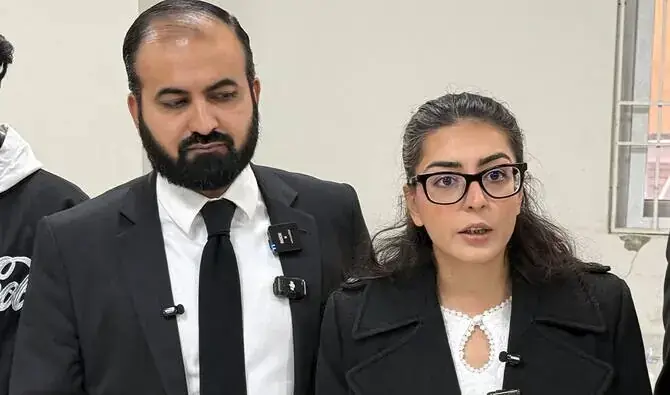
ATC warns Imaan, husband of verdict sans testimony

• Couple refuses to record statements under Section 342 of CrPC; judge directs them to respond at next hearing on Monday
• Defence seeks delay in verdict pending IHC ruling on transfer plea

ISLAMABAD: While offering yet another opportunity to human rights lawyer Imaan Zainab Hazir-Mazari and her husband Hadi Ali Chattha to record their statements in a security breach case, an anti-terrorism court (ATC) on Saturday warned them that a verdict could come even without their testimony if they refused.

ATC Judge Tahir Abbas Sipra, who conducted the proceedings at Adiala jail, issued the warning after both accused declined to record their statements under Section 342 (power to examine the accused) of the Code of Criminal Procedure (CrPC) during Saturday’s hearing.

The judge directed the couple to record their statements at the next hearing and adjourned the case until Monday, Oct 26.

During Saturday’s proceedings, Hadi requested the court, “Let the state counsel record the statement under Section 342 on our behalf.”

However, the judge replied that recording statements under Section 342 was a matter between the court and the accused, adding that they would have to respond themselves. “We will not record the statement under Section 342,” Ms Mazari stated.

The judge warned that if the accused did not comply, the court would mention in its order that no response had been submitted.

Ms Mazari and Mr Chattha are facing a jail trial in a 2024 case pertaining to the alleged disruption of an international cricket team’s security route and incitement to public unrest. The couple, accused of removing barriers from the route, was indicted on Oct 7.

At the last hearing, a state-app­ointed counsel had cross-examined all prosecution witnesses. The court appointed Atif Mehmood as the state counsel to cross-examine the prosecution witnesses, replacing Taimoor Janjua, who was dismissed from the case over his past conduct.

The court had ruled to appoint the state attorney after the defence counsel failed to cross-examine the prosecution witnesses.

Separately, the defence filed an application requesting the trial court to refrain from delivering a final judgement until the Islamabad High Court decided a petition seeking the transfer of the case to another court.

The application stated that the transfer petition was already pending before the IHC and requested that this development be made part of the trial court’s judicial record.

The defence also pointed out that the appointment of the state counsel had been challenged before the IHC. The application urged the trial court to defer its final decision until the high court ruled on the transfer petition.

Published in Dawn, October 25th, 2026

  •  

Stakeholders see monetary tightening tomorrow

KARACHI: Amid inflationary pressure from costly oil imports linked to the Middle East conflict, economic stakeholders have called for a 50- to 100-basis-point hike in interest rates to curb inflation.

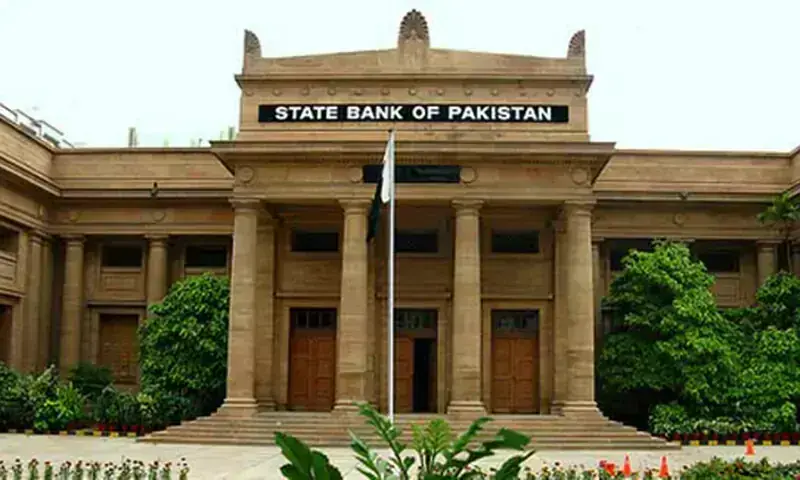
The State Bank of Pakistan’s (SBP) Monetary Policy Committee is scheduled to meet on Monday, while the financial market is filled with speculation. However, it was observed that most of the financial experts believe a 50bps hike in the interest rate is imminent. The SBP’s policy rate is 11.5 per cent.

Analysts and bankers said the central bank appears to be caught between a rate hike and the long-awaited breakthrough in economic growth.

“I am sure of a 50bps increase in the interest rate, but the market requires a 100bps hike to tame rising inflation,” said Rashid Masood Alam, a senior banker.

Bankers say 100bps hike needed to tame inflation as Middle East conflict drives up oil import costs

He said the looming US attacks on Iran are another factor that may push inflation higher and prompt the central bank to deliver a rate hike.

In the first quarter of FY27, CPI inflation stood at 10.2pc, up from 4.3pc in the same period last year.

“A 50bps hike looks like the sensible middle ground. Enough to acknowledge the changing risks, without unnecessarily damaging growth,” said Faisal Mamsa, CEO of Tresmark.

A 50bps hike may help preserve confidence and monetary stability but the longer-term challenge is considerably bigger, he said, adding that a100bps hike would increase borrowing costs for the government and private sector, with limited additional benefit over a measured 50bps increase.

All key central banks, including the Reserve Bank of India, have raised interest rates, while the IMF expects global inflation to reach 4.7pc in 2026, with a 4.1pc projection for 2027. Inflation is proving harder to contain than previously expected.

Experts said the government has decided to pursue growth after achieving sustainability, but many factors are against this approach. The primary concern is the escalating war in the region, rising oil prices, and serious problems for both exports and imports as shipping costs reach their peak. A larger hike would make borrowing and investment even more difficult.

“Pakistan has become better at maintaining stability, but we also need to find a way to grow without losing it,” said Mr Mamsa.

At the same time, the industry is on the other side, demanding a cut in interest rates to bolster economic activity.

“Raising interest rates merely in the name of controlling inflation would not prove effective in any way and would turn out to be a failed measure, the burden of which is always borne by traders and industrialists,” said Pakistan Chemicals and Dyes Merchants Association Chairman Saleem Mukati.

Korangi Association of Trade and Industry and SITE Association of Industry also demanded that the interest rate be brought down to single digits.

Published in Dawn, October 25th, 2026

  •  

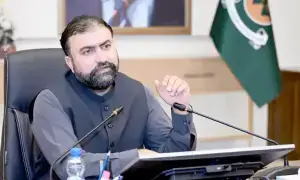
‘No-go areas’ do not exist in Balochistan, claims Bugti

QUETTA: Balochistan Chief Minister Sarfraz Bugti claimed that no-go areas did not exist in the restive province and that lawmakers regularly visited their constituencies to attend public events.

Speaking at an open court during his visit to North Dera Bugti on Saturday, the CM said the government had taken concrete steps to ensure there were no no-go areas in the province.

He said resolving public grievances and providing basic facilities to people were among the government’s top priorities, adding that open courts were intended to allow citizens to present their complaints directly to the government and ensure that the relevant departments were held accountable.

He directed officials to act promptly on public complaints and ensure that people’s problems were resolved without delays. Highli­ghting the importance of regional development, CM Bugti said efforts had been made to secure the release of federal funds for a highway linking Taunsa in Punjab with Balochistan.

He said directives had also been issued to conduct a survey for the construction of a road linking the Chhapar National Highway with Kharar Buzdar. Upon completion, the project would provide Balochistan with an alternative route to Punjab.

Published in Dawn, October 25th, 2026

  •  

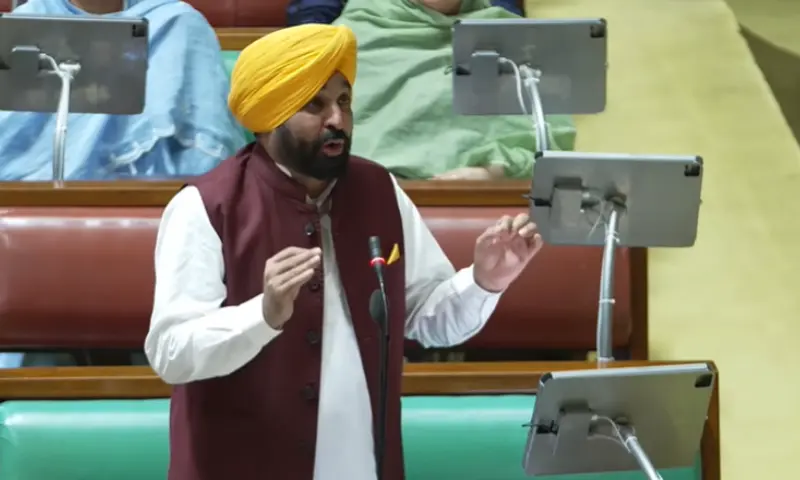
Indian Punjab CM wants to attend Lahore moot

• Bhagwant Mann says World Punjabi Conference organisers invited him; doubts BJP-led government will let him visit
• Speaker Sandhwan jokes, ‘If you get permission, take us along as well’

INDIAN Punjab Chief Minister Bhagwant Mann expressed desire on Friday to attend the World Punjabi Conference in Lahore, claiming he had received an invitation, while taking a jab at the ruling Bharatiya Janata Party (BJP) over whether it would allow him to visit Pakistan, according to a BBC report.

The 4th International Punjabi Confer­e­nce is scheduled for Nov 27-29 in Lahore.

Mann made the remarks while addressing the Indian Punjab assembly. “They do not even let me go to France or Japan. How will they let me go to Pakistan?” he said, in a jibe at the BJP-led government in Delhi.

In a video posted on his official YouTube channel, Mann said many poets from Indian Punjab would travel to the conference. “I also want to go, because our roots are one, our problems are also similar,” he said.

The CM mentioned the invitation after reciting verses by Pakistani Punjabi poet Tajammul Kaleem. He said he had spoken to Pakistani Punjabi poet, Baba Najmi and received the invitation, adding that people on both sides of the border shared a culture and should interact.

Speaker Kultar Singh Sandhwan replied, “If you get permission, take us along as well.”

At this, voices of some other members also rose from within the house, endorsing what the speaker said.

Mann also demanded the reopening of the Kartarpur corridor, sacred to Sikhs.

Ties between India and Pakistan have been extremely strained since a four-day battle last year, with limited trade and diplomatic contact. Social media users in both countries called Mann’s wish pleasant despite the chill, according to BBC.

Published in Dawn, October 25th, 2026

  •  

Gabd border crossing with Iran reopened

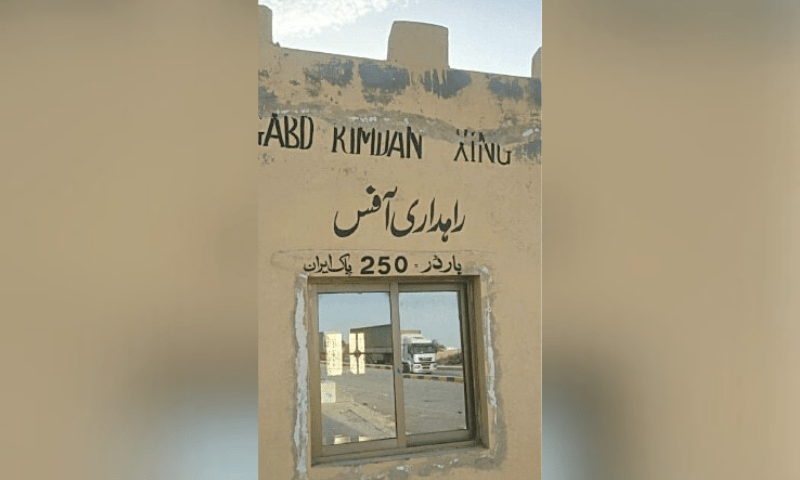
GWADAR: Pakistan reopened its border crossing with Iran at Gabd-Rimdan on Saturday, restoring bilateral trade and allowing stranded trucks carrying LPG and essential food commodities to resume movement after a weeklong suspension that began on Oct 17.

Border officials cleared commercial consignments holding a consignment note dated Oct 16 or earlier to cross at the Gabd-Rimdan point, known as Gate 250, in Gwadar.

Mir Naveed Jan Kalmati, president of the Gwadar Chamber of Commerce and Industry, confirmed that trade operations resumed on Saturday morning.

“Pakistan has opened the border with Iran at Gabd-Rimdan this morning and allowed trucks and other vehicles to move toward Iran and Pakistan with import and export goods,” Kalmati said.

Kalmati welcomed the decision, noting that the resumption of cross-border commerce will bring immediate relief to traders and transporters stranded on both sides.

He added that the restored supply chain is expected to ease a nationwide LPG shortage and reduce soaring energy and food prices across Pakistan.

Saturday’s reopening came after local administrators reviewed the security situation and deployed additional forces to protect trade convoys following an attack earlier in the week.

On Thursday, unidentified gunmen had targeted the backlog of freight vehicles parked near the closed Gabd-Rimdan crossing, setting dozens of trucks ablaze and damaging several others.

Those trucks had been stranded since Oct 17, when Pakistan’s Ministry of Commerce abruptly suspended trade at both the Gabd-Rimdan and Taftan crossings. The ministry issued a memorandum withdrawing an Oct 3 trade order with immediate effect without specifying a reason for the halt.

Published in Dawn, October 25th, 2026

  •  

Pakistan Railways hits panic button after repeated accidents

• Emergency declared, holidays cancelled for officers until Dec 31
• Minister orders removal of operational flaws by year-end
• Says health analysis of 1,546 coaches, wagons completed
• Deteriorating tracks, faulty rolling stock among causes of accidents

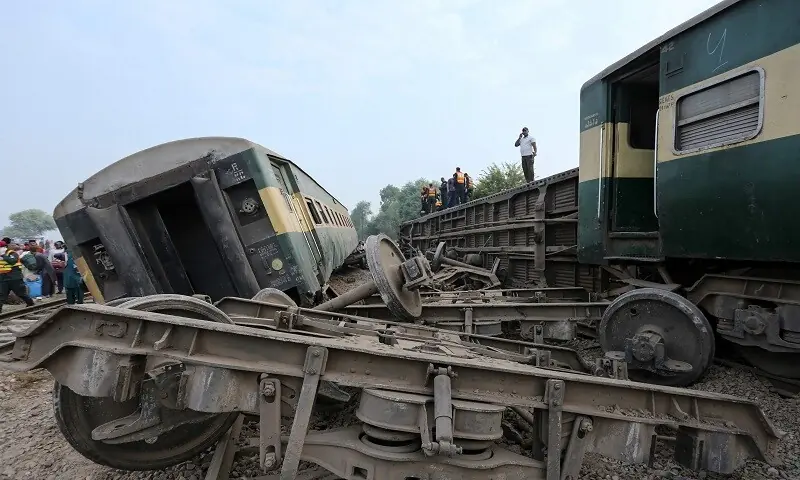
LAHORE: In view of repeated derailments and accidents, including a recent incident near Multan that killed and injured several passengers, Pakistan Railways on Saturday declared an emergency until Dec 31, cancelling all public holidays for officers and directing them to address operational deficiencies to ensure safe passenger journeys and freight transportation across the country.

“Till December 31, neither I nor the officers concerned will take rest. Until all deficiencies in passenger coaches, goods wagons, locomotives, signalling and other infrastructure are removed, no one in the operations department, including me, will be allowed to avail themselves of Saturday and Sunday as holidays. Anyone found flouting these orders will be taken to task,” Minister for Railways Hanif Abbasi warned while sharing details of the emergency, which came into effect on Oct 24 (Saturday).

Under the emergency, aimed at ensuring safe train operations, all kinds of leave, except medical leave, as well as public holidays, including Saturdays, Sundays and other holidays, have been cancelled for officers and officials. They have also been directed to monitor train operations in the field.

Railway officers travelling to other cities on official business are required to use trains. Chief engineers of the civil and mechanical departments have been directed to submit daily reports to the ministry on matters relating to their respective departments. The head of the safety department is required to submit a daily report.

“It is hereby directed that all officers of Pakistan Railways shall travel by rail for all official tours, and no air travel shall be allowed or reimbursed for official tours. Furthermore, the use of official vehicles for official tours is also not allowed,” read a letter titled “Mandatory Use of Rail Transport for Official Tours”, issued to all senior and junior officers on Saturday.

The minister said all dummy (faulty or brakeless) passenger coaches and goods wagons would be removed from service by Dec 31, with all such rolling stock made fully fit for operations.

“Parts for coaches, wagons and locomotives, including 36,000 brake cylinders, have started arriving. Officers have been asked to start work on an emergency basis,” the minister said, adding that he was clearing a maintenance backlog accumulated over the past 10 years. “From January next year, all faulty coaches, wagons and locomotives will be fit for operations.”

The minister said he would himself travel by train (railcar) from Rawalpindi to Lahore until Dec 31. Similarly, all officers would use trains to perform their official duties. “Air travel will only be allowed for me and the officers in cases of extreme emergency,” Mr Abbasi said, warning officers to remove all deficiencies in trains by Dec 31, failing which he would have no option but to take them to task.

He said the health analysis of 1,546 coaches and wagons had been completed, while the inspection of the remaining around 3,000 would be completed by Nov 10.

“I have directed the officers concerned that parts which can be manufactured locally should be produced at our workshops. Similarly, I have also directed the officers to meet the demand for concrete and wooden sleepers by Nov 30,” he explained.

Several train accidents and derailments have been reported in recent months, including seven in July alone.

The major issues identified as causes of derailments and accidents included deteriorating railway tracks, the use of dummy coaches and wagons, the manual point system (kanta system), human error, inadequate maintenance, and a lack of sufficient resources.

Published in Dawn, October 25th, 2026

  •  

Veto power hinders efforts to end conflicts: UN

• Says geopolitical fragmentation rises as major powers vie for influence
• Calls for stronger cooperation on debt, technology, development

ISLAMABAD: A new United Nations report has warned that the veto power of the five permanent members of the Security Council is one of the reasons multilateral mechanisms have been unable to prevent or stop the growing number of state-based conflicts.

The resulting paralysis has weakened decision-making processes, prompting the UN secretary-general to call for Security Council reforms, including an expansion of its membership to ensure fairer representation, particularly for Africa, Latin America and the Caribbean, and the Asia-Pacific region. All these voices are underrepresented despite bearing much of the burden of peacemaking in an increasingly multipolar world.

The ‘World Social Report 2026’ says geopolitical fragmentation has considerably heightened global risks, with multiple centres of power competing for economic, military and political dominance.

According to the report, the number of countries exercising substantial influence in another country has risen from six in the 1970s to 34 today.

The rise in geopolitical fragmentation is also evident from the neighbouring countries relations indicator, which has substantially deteriorated since 2008, with 59 countries recording poor ties with neighbours in 2024-25, while only 19 improved.

The evolving global order demonstrates a change from two competing countries (like the bipolar world during the Cold War) to a multipolar economic, military and political power structure.

In theory, a more multipolar world could strengthen multilateralism, compared to a world order dominated by two competing countries or one superpower. However, the current geopolitical fragmentation and pursuit of strategic dominance risk undermining multilateral processes and global collective actions, giving rise to “minilateralism” or “coalitions of the willing”, the report says.

Accelerating climate change, rapid technological advancements and geopolitical fragmentation demand a new generation of development planning that places social inclusion at the centre of economic, digital and energy transformations.

The report, prepared by the UN Department of Economic and Social Affairs (DESA), says the experience of multilateral cooperation demonstrates that collective action can mobilise resources, strengthen accountability, support social progress, and expand opportunities for development.

Renewed international cooperation is therefore essential to addressing structural constraints that exceed national capacities, including debt burdens, financing gaps, digital taxation challenges, technological divides and climate-related vulnerabilities.

The report suggests that a renewed multilateral agenda should focus on three priorities.

First, expanding fiscal space for social investment through stronger international tax cooperation, improved domestic resource mobilisation, and comprehensive and systematic support for developing countries to reduce the cost of capital and debt service burden.

Second, promoting wider access to technology, innovation and digital infrastructure so that developing countries can participate more effectively in the global economy.

Third, reforming global governance arrangements to make them more representative, inclusive and responsive to contemporary challenges, thereby restoring confidence in collective action and strengthening accountability to development outcomes.

Rising conflicts and geopolitical tensions are weakening international cooperation, disrupting trade and supply chains, and diverting financial and political resources away from development priorities.

Not surprisingly, military expenditures are also rising sharply: more than half of countries increased defence spending as a share of GDP between 2020 and 2024, and all nine nuclear-armed states have expanded their arsenals since 2022.

As multilateral coordination becomes more difficult, countries with limited fiscal and institutional capacity face growing obstacles in accessing the financing, technology and knowledge needed for digital transformation, climate action and poverty reduction.

In low-income and vulnerable economies affected by conflict and fragility, including least developed countries, these are not background conditions but direct constraints on both transformation and inclusion: conflict destroys productive assets, deters investment and weakens institutions, while displacement disrupts education, health services and livelihoods.

The report stresses that although economic, digital and energy transformations are reshaping the world at an extraordinary pace, billions of people remain excluded from the jobs, skills, services, infrastructure and social protections needed to benefit from these changes.

Published in Dawn, October 25th, 2026

  •  
❌