❌

Reading view

French Yellow Vests Call for Pot-Banging Protests Outside National Assembly
They reject restrictions on demonstrations and partial curfews as a broader wave of protests spreads across France.

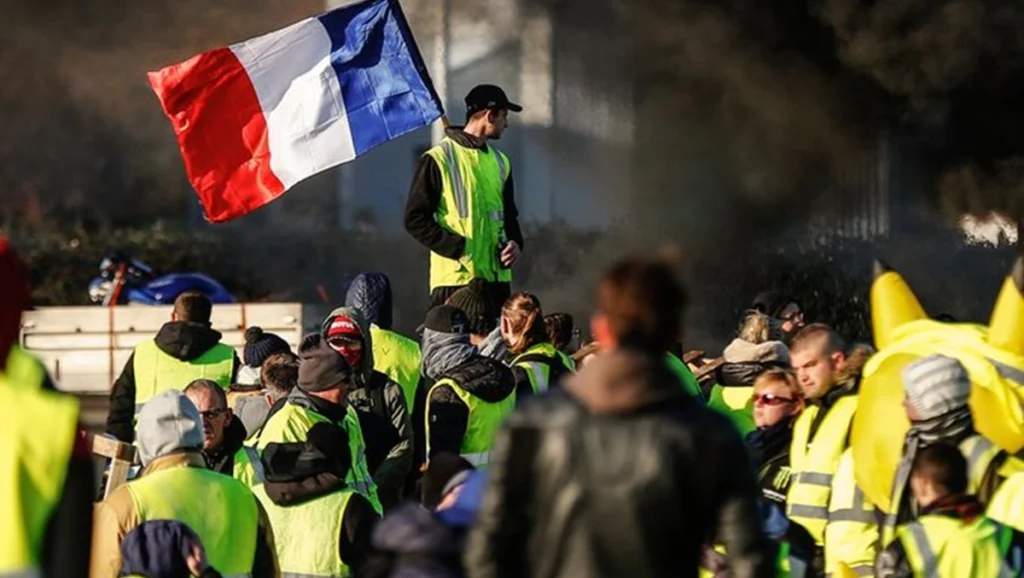
On Sunday, the Yellow Vests movement’s coordination group called for demonstrations featuring pot-banging protests outside the National Assembly on Friday, Oct. 30, to protest French President Emmanuel Macron.

RELATED:

Police Violence Escalates During Mass Protests in France

“Macron and his administration have decided to take another step toward authoritarianism. They ban our demonstrations, impose curfews, and close city centers to protesters. We will make our pots and pans heard beneath the windows of lawmakers,” the Yellow Vests said.

The group, whose demonstrations shook France in 2018 during Macron’s first term, also called for the action to be extended to areas outside city halls in protest of restrictions on demonstrations and partial curfews in some cities.

These demonstrations are part of a wave of protests that began in September, when high school students took to the streets to demand improvements at their schools.

Le 24 octobre, manifestation dans la rue avec les étudiants et les gilets jaunes.

Des gens si différents, un même rythme. Pour le pouvoir d'achat, la dignité et l'avenir.

📸 Crédit photo : Desteek Photography#24Octobre #GiletsJaunes #etudiant #Act2 #act3 pic.twitter.com/1QF1oNp9Gm

— Desteek Jeya (@DesteekJeya) October 25, 2026

The text reads, “On Oct. 24, a street demonstration with students and the Yellow Vests. Such different people, yet sharing the same rhythm. For purchasing power, dignity, and the future.”

They later received support from college students, labor unions and the Yellow Vests, who added their demands for action against the rising cost of living and in defense of public services.

Organizers of the demonstrations held over the past two weekends have called for another day of protests on Saturday, Oct. 31, and are preparing a general strike for Nov. 5.

On Monday, in an effort to avert those events, Prime Minister Sebastien Lecornu will meet with representatives of student organizations, teachers, labor unions, business organizations, local authorities and lawmakers.

teleSUR/ JF

Source: EFE
  •  

Portuguese Police Violently Evict Housing Rights Camps in Lisbon and Oporto

Police operations left 31 people detained and more than 20 injured, prompting parties to criticize PM Montenegro.

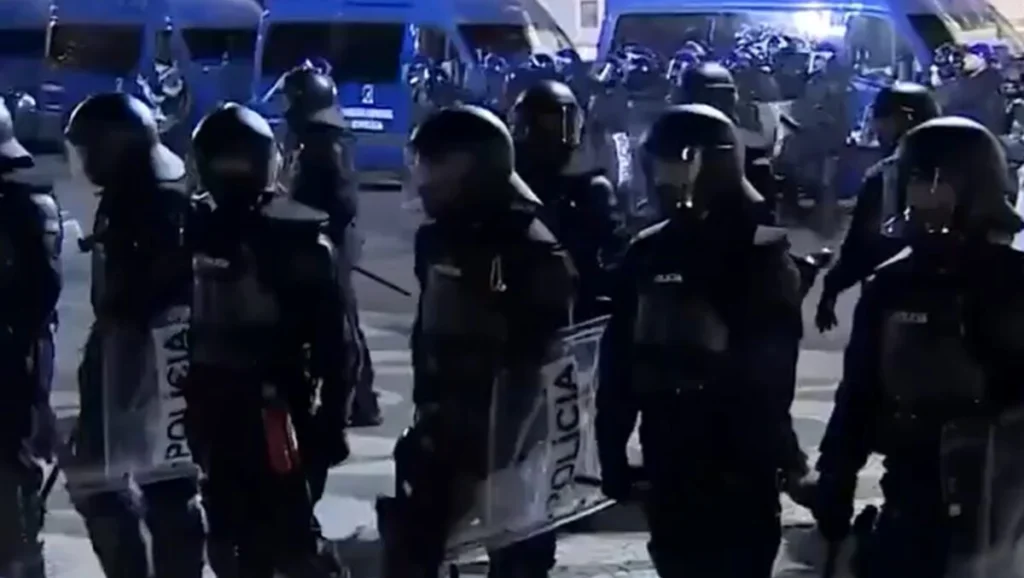
Early Sunday morning, Portuguese police violently evicted housing rights encampments that had been taking place in Lisbon and Oporto. The police operations left 31 people detained and more than 20 people injured.

RELATED:

Portugal Public-Sector Workers Begin 24-Hour Strike

The police action prompted reactions from most opposition parties, which criticized Prime Minister Luis Montenegro and his convenient silence in the face of the events.

Socialist Party (PS) leader Jose Luis Carneiro demanded a “comprehensive explanation” from the Montenegro administration regarding the police action at the encampments. He emphasized that the solution to the housing problem “is political, never police-related.”

“Montenegro cannot, through his silence, continue to pit the police against citizens and citizens against the police,” the Socialist leader said.

Although the government has not yet commented on the police operation, one of the parties in the governing coalition, the Social Democratic Party (PSD), has spoken out.

Its spokesman, Sebastiao Bugalho, defended the “proportionality” of the police action, which took place “within the legal framework that is supposed to apply to protect the right to demonstrate.”

🇵🇹 Manifestação pacífica pelo direito à habitação, foi violentamente desmobilizada pela polícia de intervenção, no centro de Lisboa. O governo de direita português mandou evacuar a praça do Rossio durante a madrugada. Houve 31 detenções. pic.twitter.com/CgJBaD9cyU

— geopol•pt (@GeopolPt) October 25, 2026

The text reads, “A peaceful demonstration for the Right to Housing was violently dispersed by riot police in downtown Lisbon. The right-wing Portuguese government ordered the evacuation of Rossio Square in the early hours of the morning. There were 31 arrests.”

Meanwhile, far-right politician Andre Ventura, founder and leader of the Enough! party (Chega), defended the eviction, asserting that “the police have been very patient with these people camping out in the squares. Too patient, even!”

Nevertheless, even Ventura criticized the stance adopted by Montenegro and the Social Democratic Party, accusing the prime minister of hiding from problems and failing to come out publicly in support of the police.

In recent weeks, police violence against Portuguese citizens has drawn criticism from international humanitarian organizations such as SOS Racismo and from European left-wing parties, which have denounced the excessive use of force.

The housing movement has called for demonstrations in Lisbon and Oporto on Sunday to reject police violence, as well as another protest on Tuesday outside Parliament, where debate will begin on the 2027 state budget.

teleSUR/ JF

Source: EFE

  •  

Right to housing encampments return to squares of Lisbon and Porto

Anyone imagining that this morning’s scenes of violence were an end to ‘right to housing protests’ will be thinking again following news that protesters are set to return to the

The post Right to housing encampments return to squares of Lisbon and Porto appeared first on Portugal Resident.

  •  

Peru’s Youth Protest Government Over Crime And Forest Fires

Young protesters march in Lima, Peru, against Keiko Fujimori’s government over extortion, forest fires and police reform.

Students, unions and families of protest victims demand action on extortion, environmental damage, living costs and police reform.


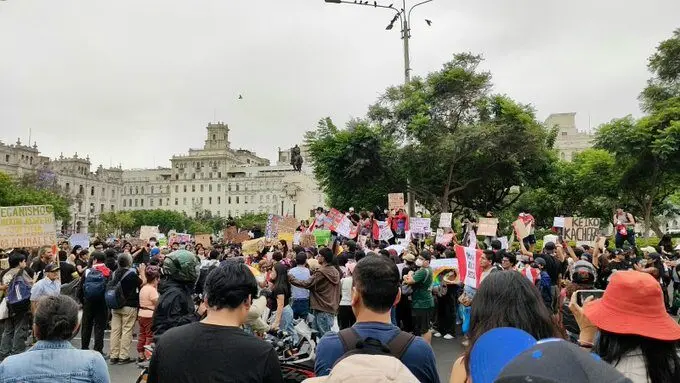
Young people, students, trade unions and human rights groups marched through central Lima on Saturday, demanding that President Keiko Fujimori’s government address rising extortion, deadly forest fires, the cost of living and alleged impunity for state repression.

RELATED: Peru Reached $4.813 Billion in Mining Investment Between January-August

Demonstrators began gathering at 4 p.m. in San Martín Square, a historic rallying point for popular movements in Peru. Participants included students from San Marcos and Catholic universities, human rights organizations, trade unions and members of the self-organized Generation Z movement.

The protests unfolded amid mounting concern over forest fires that have affected 16 regions across the country. Figures from Peru’s National Emergency Operations Center and the National Institute of Civil Defense recorded 479 emergencies, leaving 12 people dead and 708 displaced or otherwise affected.

The fires destroyed 1,299 hectares of crops and more than 13,800 hectares of natural vegetation, while also causing significant damage to local wildlife and livestock.

🚨 #URGENTE | Contra la extorsión y la crisis ambiental: jóvenes y colectivos sociales protestan en el centro de Lima

📲 Más información en https://t.co/cslnEWTq0k pic.twitter.com/9bIQWzwTbf

— RPP Noticias (@RPPNoticias) October 25, 2026

Text Reads: 🚨 #URGENT | Against extortion and the environmental crisis: young people and social groups protest in downtown Lima

Carrying banners calling for an end to the fires, police reform and solidarity with affected communities, demonstrators marched along Jirón de la Unión and Grau and Abancay avenues. Police blocked the procession from approaching the grounds of Congress.

Environmental concerns featured prominently in the march, with protesters criticizing what they described as inadequate government preparation and response to fires in the Andean highlands and Amazonian regions, including Cusco, Puno, Junín, Apurímac, Áncash, Huancavelica, Arequipa, Amazonas and Cajamarca.

One young demonstrator denounced the lack of firefighting teams, funding and preventive measures, arguing that the fires were extinguished only after rain arrived. The crisis, she said, had inflicted heavy losses on rural farmers and Indigenous communities.

Another protester highlighted flooding caused by heavy rains in Piura, in northern Peru, and the absence of a strategic plan to address the El Niño phenomenon. She also pointed to corruption in reconstruction projects and the neglect of infrastructure serving working-class communities.

Extortion was another central grievance. Transport workers, shopkeepers and small-business owners in working-class neighborhoods have been among those affected by the crime, according to the protest account. Demonstrators called for far-reaching police reform to dismantle corruption networks within the security forces and prioritize intelligence gathering and community-based prevention over the repression of social protests.

Families of people killed during social protests between December 2022 and June 2023 also joined the march, carrying photographs of their relatives and demanding justice. Their presence underscored the demonstrators’ broader call for accountability from a government they accuse of perpetuating impunity.

  •  
❌