❌

Reading view

The largest militaries in the world, ranked by the number of active troops

Military parade in Kim Il Sung Square in Pyongyang, capital of the Democratic People's Republic of Korea (DPRK). The Democratic People's Republic of Korea (DPRK) staged a military parade marking the 60th anniversary of the founding of the nation.
North Korea has the fourth-largest number of active armed forces in the world.

Alain Nogues/Corbis via Getty Images

  • China, India, and the US have the largest active armed forces in the world.
  • The International Institute for Strategic Studies compiled data about the world's militaries.
  • The world's top armies spend hundreds of billions of dollars on defense each year.

The US military may lead the world in budget size and in the ambitions of its warfare technology, but there is one measure by which it is outsized by other nations.

Using data from the International Institute for Strategic Studies' 2026 Military Balance report, Business Insider ranked the top 25 countries by the size of their active armed forces during 2025 and listed their defense budgets that same year.

Active-duty force size is a tally of a country's uniformed troops: airmen, soldiers, sailors, special operators, and Marines.

Armies, in particular, depend on size to gain and occupy ground during armed conflicts.

Militaries can also be a tool of domestic repression. North Korea, for example, is one of the world's most repressive states, led by a dictator who has repeatedly threatened neighboring South Korea — and it also has one of the world's largest militaries.

The number of active-duty military personnel is far from the only factor that matters when comparing military power between countries, but it reflects latent power.

"Numbers have value, but there's a lot more to military capability," Mark Cancian, a senior advisor at the Center for Strategic and International Studies, a Washington, DC-based foreign policy and national security think tank, told Business Insider.

IISS, a London-headquartered think tank, counts active armed forces, reservists, and paramilitaries as separate categories in its analysis, showing a fuller picture of each nation's manpower.

Some countries have significantly more reservists than others — Vietnam has the largest number in the world, estimated at 5 million — but the quality and longevity of their expertise can vary between systems.

"When you look at some countries' reserve numbers, you're often looking at people who haven't trained in 10 or 20 years," Cancian said. "It gives you a big number, but their military value is questionable."

Even when accounting for all of a military's manpower, personnel is only one of the factors that can qualify a nation's military strength, which also includes equipment and readiness.

There's also the role of technologies in global warfare, the size and sophistication of air forces and naval fleets, amphibious capabilities for landing assault forces, command-and-control systems, and nuclear forces, all of which shape military power.

Still, comparing global manpower offers insight into how countries prioritize military power.

See how the world's largest militaries stack up in terms of active troop numbers.

25. Iraq
Iraqi soldiers

Khalil Dawood/Xinhua via Getty Images

Active armed forces: 193,000

Defense budget: $12.7 billion

24. Morocco
Members of the Morocco Armed Forces

ISSOUF SANOGO/AFP via Getty Images

Active armed forces: 196,000

Defense budget: $7.5 billion

23. France
French soldiers

Ludovic MARIN / AFP via Getty Images

Active armed forces: 204,000

Defense budget: $70 billion

22. Japan
Japan Air Self-Defense Force

STR/JIJI Press/AFP via Getty Images

Active armed forces: 247,000

Defense budget: $58.9 billion

21. Saudi Arabia
Tanks from the Kuwaiti and Royal Saudi Land Force

YASSER AL-ZAYYAT/AFP via Getty Images

Active armed forces: 257,000

Defense budget: $72.5 billion

20. Sri Lanka
Sri Lanka Army

Pushpa Kumara/Anadolu via Getty Images

Active armed forces: 260,000

Defense budget: $1.4 billion

19. Colombia
Colombian soldiers

RAUL ARBOLEDA/AFP via Getty Images

Active armed forces: 285,000

Defense budget: $8.3 billion

18. Mexico
Members of the Mexican Army

Daniel Cardenas/Anadolu via Getty Images

Active armed forces: 301,000

Defense budget: $11.4 billion

17. Eritrea
Eritrean soldiers

credit should read STRINGER/AFP via Getty Images

Active armed forces: 302,000

Defense budget: Not reported

16. Turkey
Turkish soldiers

Samir Jordamovic/Anadolu via Getty Images

Active armed forces: 355,000

Defense budget: $21.5 billion

15. Thailand
Thai Royal Guards

MANAN VATSYAYANA/AFP via Getty Images

Active armed forces: 361,000

Defense budget: $5.8 billion

14. Brazil
Brazilian military forces

Fabio Teixeira/Anadolu via Getty Images

Active armed forces: 375,000

Defense budget: $24.2 billion

13. Indonesia
indonesian Army troops

Claudio Pramana/NurPhoto via Getty Images

Active armed forces: 434,000

Defense budget: $15 billion

12. Egypt
Egyptian army special forces soldiers

KEROLOS SALAH/AFP via Getty Images

Active armed forces: 439,000

Defense budget: $2.3 billion

11. Vietnam
Vietnamese People's Army

NHAC NGUYEN/AFP via Getty Images

Active armed forces: 450,000

Defense budget: $8.4 billion

10. South Korea
South Korean Air Force

Chris Jung/NurPhoto via Getty Images

Active armed forces: 450,000

Defense budget: $43.8 billion

9. Ethiopia
Members of the Ethiopian National Defense Force

AMANUEL SILESHI/AFP via Getty Images

Active armed forces: 503,000

Defense budget: $484 million

8. Iran
Soldiers from a unit of the Iranian army

ATTA KENARE/AFP via Getty Images

Active armed forces: 610,000

Defense budget: $6.1 billion

7. Pakistan
pakistan military

Rizwan TABASSUM / AFP

Active armed forces: 660,000

Defense budget: $10 billion

6. Ukraine
Ukrainian soldiers

Sean Gallup/Getty Images

Active armed forces: 677,000

Defense budget: $44.4 billion

5. Russia
Russian servicemen attend the Victory Day military parade on Red Square in Moscow

NATALIA KOLESNIKOVA/AFP via Getty Images

Active armed forces: 1,264,000

Defense budget: $161.2 billion

4. North Korea
Military parade in Kim Il Sung Square in Pyongyang, capital of the Democratic People's Republic of Korea

Alain Nogues/Corbis via Getty Images

Active armed forces: 1,280,000

Defense budget: Not reported

3. United States
U.S. Army soldiers

Kayla Bartkowski/Getty Images

Active armed forces: 1,340,000

Defense budget: $921 billion

2. India
Indian Army personnel

Vishal Bhatnagar/NurPhoto via Getty Images

Active armed forces: 1,501,000

Defense budget: $78.3 billion

1. China
Members of Chinese People's Liberation Army

VCG/VCG via Getty Images

Active armed forces: 2,035,000

Defense budget: $251.3 billion

Read the original article on Business Insider

  •  

I've lived in Las Vegas for almost 20 years. Tourists should stop wasting money on these 5 things.

slot machines in a casino in las vegas
If you're going to spend money in Las Vegas casinos, you may as well try to save on other things.

Jena Brown

  • I live in Las Vegas, and the city often feels like it was designed to take money from tourists.
  • ATMs on the Strip often charge steep fees, and parking can be costly if you don't do your research.
  • Many things, from toiletries to clothing, tend to be more expensive in the casinos.

Las Vegas is one of the most popular tourist destinations in the world.

And, in a lot of ways, it's designed to take your cash. From the moment you step off the plane, you're greeted with the flashing lights and glitzy promise of easy money topped with a good time. Just put a dollar or 10 into the slot machines, and all your dreams might come true!

I've lived here for almost 20 years, and the first thing you learn as a local is that the house always wins. The second thing you learn is how to make sure it doesn't win everything.

Here are a few things I think tourists should stop wasting money on when they visit Las Vegas.

ATMs on the Strip can have really high fees.
at, screen in vegas displaying a $20 withdrawal with a $10 service fee

Jena Brown

No one should come to Vegas without a plan, and that includes a gambling budget.

It's rare for someone to walk through the winding maze of slot machines and not feel inclined to drop a few dollars. It's like an adult video game that often comes with free drinks.

But the last thing you want is to find yourself in the middle of a gambling streak without any cash. Many casino ATM fees hover around $10 a transaction, but I've also seen worse.

Instead, stop by an ATM or a bank off the Strip. It might seem inconvenient, but between resort fees, room taxes, and inflated prices, the last thing you want is to lose money by simply taking out cash.

You'll probably be paying a premium if you buy a drink at the first bar you see.
three drink sizes on a bar in las vegas

Jena Brown

In my experience, if the bar is conveniently located, you're probably going to pay too much for the drink. Even inside the casinos, the bars closest to the lobby will often be more expensive than others tucked in the back.

For example, in the same section of a casino, I once found two vendors selling nearly identical frozen cocktails, but the one closer to the action had prices double the other's.

So, before ordering, walk around a bit and see if you can find a better deal.

And if you have the time, play a few dollars at the slots and wait for the cocktail server. Most casinos offer free drinks if you're actively gambling.

Getting advanced tickets for shows is often way pricier than waiting until the day of.
half-price ticket booth on the street in las vegas next to a raising canes

Jena Brown

Vegas is known for its broad selection of world-class shows. From Cirque du Soleil to any number of all-star residencies, there's no shortage of killer entertainment on the Strip.

However, that doesn't mean you have to pay full price for tickets. In fact, given how unpredictable a day in Las Vegas can be, waiting until the last minute has its perks.

Kiosks along the Strip often offer unsold, day-of tickets for around half the original price. Plus, several websites and other vendors have similar deals with casinos and entertainment venues.

This requires some flexibility and risk — not all shows have unsold tickets or offer lower prices every day. However, if you don't mind some uncertainty and love a good deal, it's easy enough to find cheap seats not long before a show starts.

Clothes, toiletries, and other essentials tend to cost a lot more on the Strip.
sparkly and comfy sweatshirts hanging in a gift shop in las vegas

Jena Brown

Whether you're looking for designer duds or a toiletry you forgot, you'll be able to find it in Vegas.

There are tons of shops conveniently located near every major casino property and all along the Strip.

However, at a lot of these places, you may find yourself paying a premium for basics and items that aren't that special. For example, I've seen a four-pack of Motrin for $5 and a not-officially-licensed Las Vegas Raiders jacket going for $150.

So, pack your essentials from home whenever possible and be vigilant when you browse. And, if you want to do some shopping during your trip, head just north of the Strip to the Premium Outlets for better deals.

Parking fees can really add up.
self-parking rates sign in a parking garage in las vegas

Jena Brown

For years, casinos didn't charge for parking in their garages — and some still don't. So knowing which ones do can stop you from wasting money.

Additionally, it might seem like renting a car is the way to go to save on rideshare or cab fees. However, if you don't pay attention, you could easily spend way more on parking for a day than on a few rideshare trips.

Before you head to Vegas, definitely research parking garages and do a little math to see if it's even worth having a car.

This story was originally published on January 6, 2024, and most recently updated on October 26, 2026.

Read the original article on Business Insider
  •  

No 10 plays down UK joining EU single market after Burnham suggests referendum would be needed – as it happened

The prime minister previously said that he wanted a debate on how Britain can establish a closer relationship

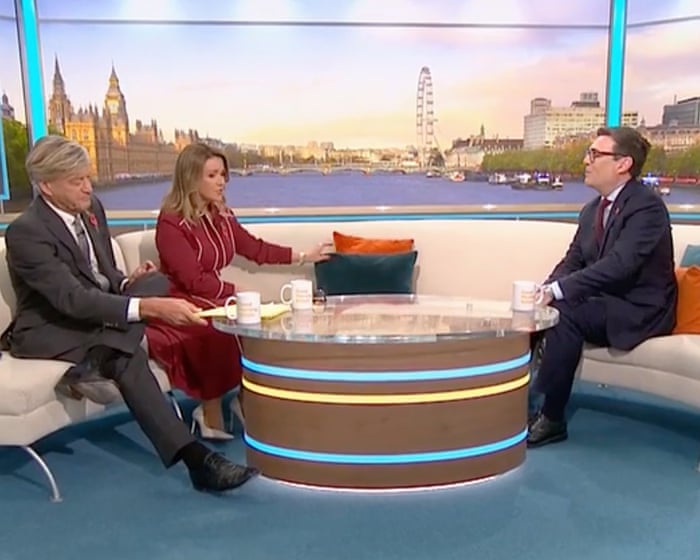
Speaking at his rough sleeping summit in Downing Street this morning, Andy Burnham expanded on the claim he made on Good Morning Britain about tackling rough sleeping being cheaper than ignoring the problem. (See 11.13am.)

He said:

We’ve also got to be conscious when we speak to the rest of the country, the taxpayers of this country, that actually to leave people sleeping rough has financial consequences. It doesn’t work for anybody and it doesn’t work for the public purse, because if you leave people in a position where they are in and out of A&E, and in and out of a hospital bed, that doesn’t make sense for anybody.

There is a rock-solid business case to do something to end homelessness, to put people on a path to recovery, so that they can contribute once again. And that should be the thinking that we take to this conversation.

Burnham is throwing another £432m at a problem he failed to solve in Greater Manchester. Under Labour, rough sleeping has hit record highs – yet their answer is always more taxpayers’ money and more empty promises.

[John] Healey must use his budget this week to cut taxes for working people, get the ballooning benefits bill under control, and stop pushing up energy prices.

John Healey is expected to confirm on Wednesday that the full state pension will rise by £489 to £13,036 – equivalent to 3.9%.

However, the rise will push about one million people on low incomes who rely on the state pension above the £12,570 personal allowance threshold, meaning they would be dragged into paying income tax.

Continue reading...

© Photograph: ITV

© Photograph: ITV

© Photograph: ITV

  •  

Does Japan need nuclear subs? The debate is bigger than China

Japan’s debate over nuclear-powered submarines is gaining momentum, but political deliberation should not be mistaken for a done deal. As Tokyo prepares to revise its three principal national security documents by the end of 2026, Prime Minister Sanae Takaichi has opened the door to a long-politically sensitive capability. On October 14, she told parliament that […]

The post Does Japan need nuclear subs? The debate is bigger than China appeared first on Asia Times.

  •  

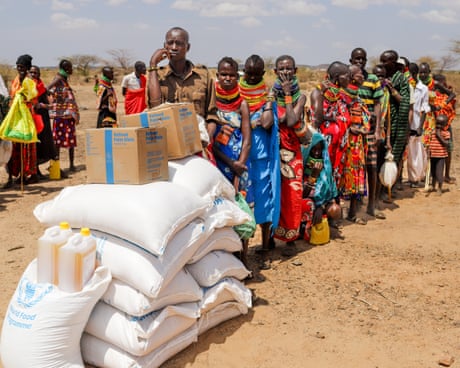
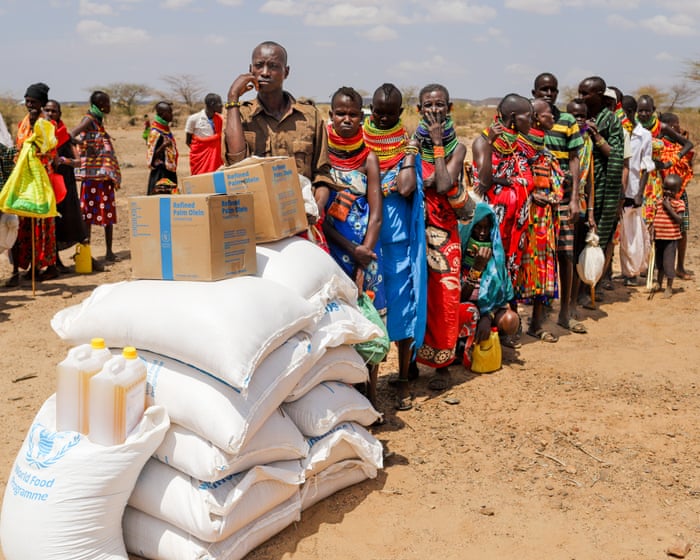
UK poised to miss reduced aid spending target of 0.3% of national income

Calculations from the Center for Global Development say spending next year is likely to be £410m less than anticipated

The UK is on course to miss its target of spending 0.3% of national income on international aid by an estimated £400m by the end of next year.

Calculations from the Center for Global Development (CGD) found the UK was on course for a large shortfall in promised official development assistance at the end of 2027.

Continue reading...

© Photograph: Patrick Ngugi/AP

© Photograph: Patrick Ngugi/AP

© Photograph: Patrick Ngugi/AP

  •  
❌