Mississippi Republicans’ newfound objection to AI-generated ads is the latest sign that MAGA world is fretting over the state’s U.S. Senate race.
The Democratic candidate, Scott Colom, said late last week that his campaign would delete an ad created with the help of artificial intelligence tools that depicted his Republican opponent, Sen. Cindy Hyde-Smith, hurrying away from reporters, as she has done before. The ad has been online for weeks, but Mississippi’s Republican attorney general demanded that Colom’s campaign take it down.
Republican Attorney General Lynn Fitch said Friday that Scott Colom, the Democratic nominee for U.S. Senate, likely violated state law with a digital ad that featured an artificial intelligence-generated depiction of Republican Sen. Cindy Hyde-Smith running away from reporters.
Colom told Mississippi Today he would delete the post because he didn’t want Fitch to launch litigation with taxpayer money. That came after Fitch sent Colom a complaint letter demanding that he remove that ad from his social media accounts. If he did not, the complaint said, the attorney general’s office could file an injunction against him.
“As violations of this election integrity law can carry criminal penalties, Attorney General Fitch has also asked Scott Colom and his campaign to preserve all records related to this matter so as not to obstruct justice,” the statement reads.
The article quotes Colom as saying Hyde-Smith is “clearly desperate” and that her allies are attempting to “weaponize the justice system to distract from the real issues, which is that she has sold out our farmers, sold out our small businesses, and sold out our families.”
You can judge for yourself whether you believe the Mississippi GOP truly cares about the scourge of AI-generated political ads, but the party’s fierce support for President Donald Trump — whose social media feeds have become cesspools of political AI slop — raises doubt in my mind.
What seems more likely to me is that Mississippi Republicans are trying to undercut Colom’s campaign, which has already garnered laughter for another ad targeting Hyde-Smith — in a midterm race the GOP didn’t think would be competitive.
Short of a victory, one could argue that Colom improving on Democratic Senate nominee Mike Espy’s 2020 election numbers would be a remarkable feat for liberal activists in Mississippi, which boasts the largest percentage of Black eligible voters out of any state in the country but has — with help from decades of racist voter suppression — remained almost exclusively under control of white conservatives.
Colom is looking to change that. His ads prove that his campaign has the GOP’s attention — and help support Georgia Democratic Sen. Raphael Warnock’s argument that Democrats need to invest more heavily in Southern states.
Today’s installment of campaign-related news items from across the country.
* In Ohio’s gubernatorial race, the editorial board of The Plain Dealer in Cleveland announced months ago that it would no longer make endorsements in top-of-the-ballot races. After seeing Republican Vivek Ramaswamy’s notorious attack ad, the editors changed their mind and endorsed Ramaswamy’s Democratic rival, Amy Acton. From the endorsement:
There are moments when a community must decide what it stands for, when its institutions have a duty to speak and when silence itself becomes a statement. Ohio has reached such a moment.
Vivek Ramaswamy, seeking the highest office in this state, has produced a campaign advertisement that weaponizes the sexual abuse his opponent, Amy Acton, suffered as a child. People across the political spectrum have rightly condemned it.
But condemnation has to mean something. Our politics have been debased for a decade, but this we will not accept. A candidate who uses childhood sexual abuse as a weapon against the person who endured it has crossed a line that Ohioans should defend, whatever their party.
Ramaswamy also appeared on Fox News on Monday morning and accused Acton of being “crazy” and “unstable,” which came after Donald Trump spent part of the weekend reiterating his support for the vile attack.
Also on Monday morning, Acton appeared on MS NOW and said, “I can tell you that decency is on the ballot in this election.”
* In Mississippi’s unexpectedly competitive U.S. Senate race, Democrats supporting local prosecutor Scott Colom began investing in the contest last week. And soon after, the Senate Leadership Fund, the top Senate Republican super PAC, announced that it’s spending more than $1 million in the hopes of rescuing Sen. Cindy Hyde-Smith.
These moves precede the president’s scheduled rally in Mississippi in support of Hyde-Smith.
* In Texas’ U.S. Senate race, Democratic state Rep. James Talarico continues to pick up some GOP endorsements, including a new one from Thomas Phillips, the former Republican chief justice of the Texas Supreme Court.
“Paxton’s longstanding reputation will embarrass Texas in ways our state simply cannot afford,” Phillips wrote in an op-ed for The Beaumont Enterprise, referring to Republican state Attorney General Ken Paxton.
On a related note, ProPublica reported last week that the scandal-plagued GOP nominee’s trust invested $600,000 in a convicted fraudster’s company, Paxton’s “tough on crime” claims notwithstanding.
* In South Carolina’s U.S. Senate race, a new super PAC representing the data center industry is scrambling to try to help appointed Republican Sen. Darline Graham in South Carolina.
* And in North Carolina,The New York Times reported that new mail ballot rules are opening the door to thousands of ballots not being counted.
“At issue is a requirement that voters seal not only the outer envelope of their mail ballot but also an inner envelope that contains the ballot itself,” the article explained.
Sen. Kevin Cramer is calling on Congress to reauthorize and modernize the Export-Import Bank by Dec. 31 to prevent China from dominating global energy markets and to protect over 45,000 U.S. jobs.
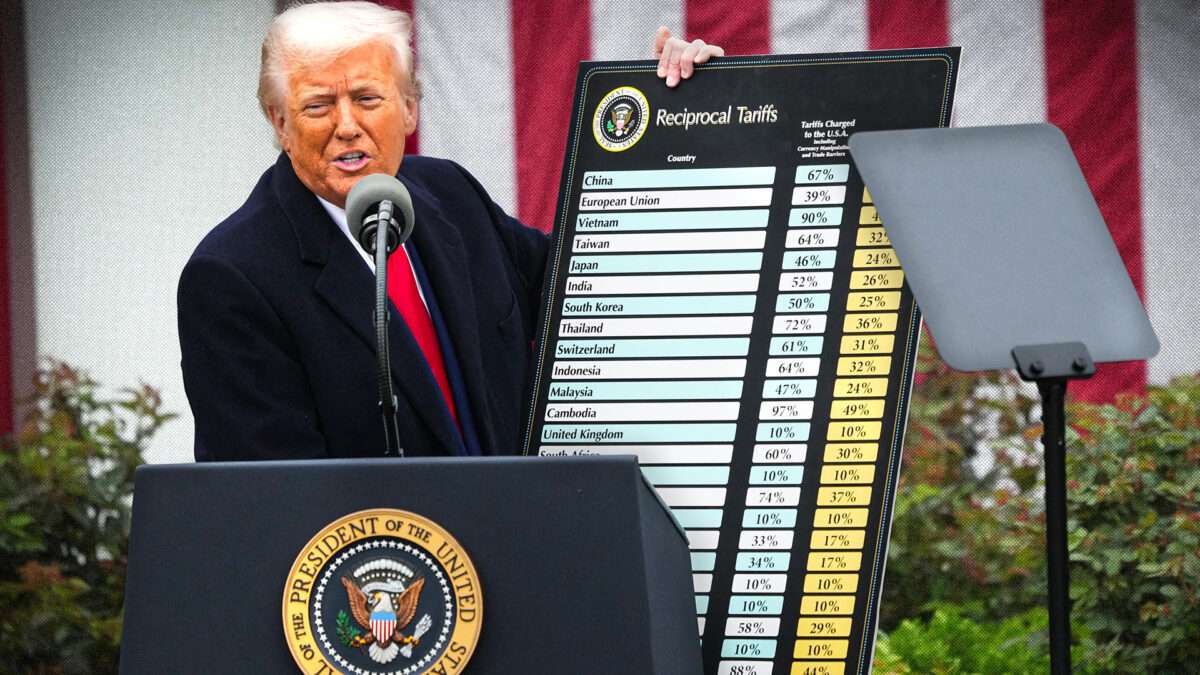
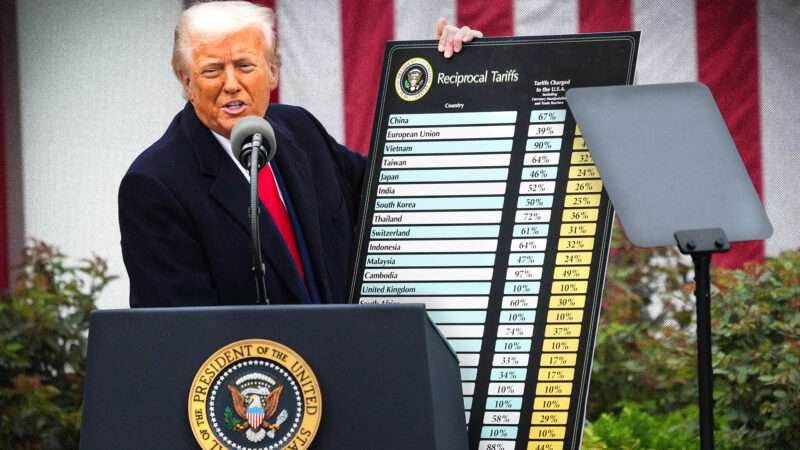
When the White House rolled back tariffs on coffee, fruit, beef, and farm equipment, it was effectively an admission that the tariffs were raising prices—and that Americans, not foreigners, had been paying for them.
Now, in the closing stages of the midterm campaign, the White House is once again rolling back some of those import taxes—and once again making an awkward implicit admission.
President Donald Trump's tariffs have become politically toxic.
The administration announced late last week that it would lift the 50 percent tariffs on some Canadian imports, apparently in an attempt to help Sen. Susan Collins (R–Maine) survive a tough reelection campaign in which the tariffs have played a significant role.
If this is indeed an attempt to sway voters in Maine, it is not a very convincing one. The Trump administration is removing tariffs on some agricultural and mechanical goods, as well as packaging and plywood, The Wall Street Journalreports. But Trump is also imposing new 50 percent tariffs on "other Canadian goods, including carpet, certain valves, and waste products."
Collins issued a statement thanking the White House for the changes. This is what members of the U.S. Senate have been reduced to—begging the president to cast his capricious, tariff-happy eyes toward products that will hurt people in other states more than in your own. (In fairness to Collons, she has voted repeatedly to roll back Trump's tariffs, but not enough of her fellow Republicans went along with it.)
Still, it's worth asking: What exactly is the pitch to voters here? Here's a tariff cut, now vote for Republicans so the president can continue to arbitrarily tax imports whenever the mood strikes?
It's easy to see why Trump's tariffs have become so unpopular. They are a huge and broad tax increase—the Tax Foundation estimates that 54 percent of imports are subject to Trump's tariffs, which are costing the average household about $1,000 annually—that was imposed without congressional authorization or popular support. They create more losers than winners, as downstream businesses and consumers pay the price for the protectionism offered to American manufacturers. Even the supposed "winners" of the tariff policy tend also to be "losers," since so much manufacturing depends on importing raw materials and intermediate goods.
Perhaps more surprising is how unwilling Republicans are to defend the president's signature economic policy. Or to even talk about it.
The Wall Street Journal's Greg Ip crunched the numbers and found that House GOP candidates have not run a single ad talking about the tariffs during this election cycle.
That silence speaks volumes. Trump says "tariff" is "the most beautiful word in the dictionary." But it is now "one of the most hated words in politics," writes Ip.
The only Republicans to mention trade or tariffs in a campaign ad, as far as I've seen, is former Rep. Mike Rogers, who is now running for the Senate seat in Michigan (and thus was not included in Ip's analysis). And he's calling for an end to the "tariff war."
There is a lesson here that hopefully will linger beyond the next week: If you support a policy that deliberately and unlawfully raises taxes and prices, voters will not reward you for it.
It's a lesson that the Republican Party learned long ago, but apparently forgot.
Against economists' advice, a Republican-led government in 1930 implemented a huge tariff hike intended to protect American farms and factories at the start of the Great Depression. Instead, those tariffs worsened economic conditions and triggered foreign retaliation.
When voters went to the polls in 1930, the first midterm after the Smoot-Hawley tariffs were passed, they registered their displeasure. The GOP lost 52 seats in the House that year. Two years later, an even larger landslide would sweep Democrats into power in Congress and the White House, ushering in the New Deal era that reshaped the federal government forever. The two lawmakers who lent their names to the legislation were among those who lost their seats, fittingly.
The most notable difference this time around is that Congress didn't actually pass a tariff bill. The trade barriers were instead imposed directly by the executive. Voters don't seem to care. Republicans were too cowardly to stand up to Trump's unilateral power grab, and now they seem too ashamed to try to defend that policy (and their largely complicit response) on the campaign trail.
As they say, those who don't learn from history are doomed to repeat it. And "doomed" may be a fitting way to describe the Republican majority in Congress right now, thanks in no small part to Trump's tariffs.
As October got underway, Donald Trump threw an online tantrum by way of his social media platform, lashing out at Sen. Tom Cotton because the Arkansas Republican hedged on a daylight saving time proposal supported by the White House. The president, however, didn’t just throw around some juvenile names.
Nearly two weeks later, as the president expressed fears about Texas’ U.S. Senate race, he threw another online tantrum, this time targeting Republican Sen. John Cornyn of Texas, whom Trump labeled a “WEAK and INEFFECTIVE” political hack who would deserve the blame if state Attorney General Ken Paxton loses.
On Friday, after Trump’s Justice Department filed an outlandish lawsuit targeting Alaska’s U.S. Senate race, Republican Sen. Lisa Murkowski of Alaska (who is not up for re-election this year) denounced the radical gambit, declaring in a statement, “Alaskans don’t need any help voting for their preferred candidates, and the State of Alaska has already handled this by clearly distinguishing the candidates on this year’s ballot. The Department of Justice should never have filed this lawsuit.”
Naturally, the president who demanded the lawsuit wasn’t pleased. In yet another lengthy online rant published Saturday night, Trump labeled Murkowski “the Republicans’ Worst Senator, by far,” before falsely saying that the senator “only got elected” because of the state’s system of ranked choice balloting, which he falsely described as “corrupt” and a “total Democrat [sic] scam.”
He added that Murkowski “probably wants” Democrats “to steal the Election,” before adding, “Lisa Murkowski is a DISGRACE to Alaska and our Country. You just don’t get any worse!”
Trump concluded that if incumbent Republican Sen. Dan Sullivan loses, “everything we’ve done for Alaska will come to an immediate hault.” (In context, I suspect he meant “halt.”)
For good measure, shortly before midnight, the president kept going, adding in a follow-up tirade, “They’ve been trying to get rid of Lisa Murkowski forever in Alaska, then she came up with the Ranked Choice Voting SCAM.” (Again, it’s not a scam; Murkowski isn’t the one who came up with it; and the system was not responsible for rescuing her career.)
That Trump holds the GOP senator in contempt is not exactly new, but the recent series of harangues directed at senators from his own party is a timely reminder that this guy, 11 years into his political career and nearly six years into his presidency, still has no idea how to deal with Congress.
Evidently, as the president sees it, if he can just harass his ostensible allies enough through online antics, then maybe they’ll succumb to his intimidation efforts and follow his demands.
Except, as he probably ought to know by now, his harassment efforts tend not to work. Cotton didn’t change his mind about daylight saving time; Cornyn hasn’t become a Paxton cheerleader; and Murkowski hasn’t backed off her criticisms of an indefensible lawsuit.
What we’re left with is a president who keeps picking pointless fights with intraparty allies, whose support he might yet need in the near future, in the run-up to critically important U.S. elections — which is every bit as foolish as it sounds.
Elon Musk, the world’s richest person and already the biggest single donor this election cycle, poured even more money into midterm campaigns on behalf of Republicans in early October. The $445 million he has allocated this cycle makes him a unique force in American politics — but he’s not the only deep-pocketed power. A slew of Republican megadonors, super PACs and other sources of outside spending are aligning to dwarf the amount that Democratic-aligned groups have on hand in the campaign’s final week.
As stunning as the amounts are, there are drawbacks to the GOP’s reliance on big donors. The ways that money is being spent and for whom — especially on contests in historically red states — speak to long-term issues for the Republican Party. These factors appear to be keeping this enormous infusion of money from fatally damaging Democrats.
Much of Musk’s spending has gone to his super PAC, which The New York Times says has built “a sprawling canvassing program to try to turn out hard-to-reach Republican voters.” Musk’s America PAC is active in almost three dozen House campaigns and seven Senate battlegrounds, the Times reports. Musk has almost single-handedly helped keep Texas in play for Republican Senate nominee Ken Paxton. Musk’s $158 million donation to the Senate Leadership Fund, a Republican super PAC that backs senatorial candidates, got passed on to Texas PAC and has helped keep Paxton afloat amid a bruising campaign against Democratic state Rep. James Talarico.
As many beneficiaries of these GOP funding boosts are realizing, late money is often inefficient.
Meanwhile, President Donald Trump’s MAGA Inc. super PAC has finally begun spending its massive reserves. In federal disclosure forms published last week, the group reported $300.5 million in disbursements this election cycle. The Federal Election Commission documents include data through Oct. 14 and show that $75.5 million of MAGA Inc.’s total spending came during the first two weeks of the month. The group reported having $164.3 million on hand.
It’s a political axiom that campaigns should never have money in the bank at the end of the race. But as many beneficiaries of these GOP funding boosts are realizing, late money is often inefficient. The earlier that spending can be directed toward strategic outlays such as ad buys in larger markets, door-to-door canvassing and other field infrastructure, the more likely it is to pay off down the line. Floods of last-minute cash don’t go as far as earlier contributions would have.
Although the Supreme Court struck down limitations on coordination between national and state party committees and federal candidates, the firewall between campaigns and super PACs remains in place. The first part has helped Democrats only slightly amid lackluster fundraising by the Democratic National Committee this cycle. But some individual Democratic candidates have been drawing in buckets of cash. (It must be noted, though, that Democrats have also benefited from the largesse of billionaires including George Soros and Michael Bloomberg.)
The result is evident in 10 competitive Senate races, Politico recently noted, where “the Democratic campaigns raised more than five times as much as the Republican ones. Put another way: Talarico alone raised more than all those Republicans combined.” As it stands, many of the closest races, including the Senate contest in Texas, wouldn’t have needed pallets of cash airdropped in during most campaign cycles.
The disparity in fundraising by individual campaigns has made Republicans reliant on outside spending for broadcast ads, Politico reported last week, often one of the biggest campaign expenses:
In Ohio’s Senate race, Republican groups make up 63% of the $218 million spent. But in spite of their nearly 2-to-1 spending advantage over Democrats, they make up just over half of ads that are on the airwaves, according to data from the tracking service AdImpact. In Texas, Republicans have outspent Democrats by a 3-to-1 margin but have aired just 58% of the ads. And in Michigan, the GOP accounts for 60% of the spending but just over half of the ads.
A large part of this discrepancy comes down to the mechanics of broadcast advertising. Candidates, and now political parties thanks to a recent Supreme Court ruling, are entitled to significantly lower rates. That has allowed Democratic candidates — who have posted bonkers fundraising hauls — to offset much of the GOP advantage in super PACs. Republican Senate candidates, on the other hand, struggled overall with their fundraising. And some GOP outside groups bought their ad time later, when it was even more expensive.
Historically, Republican congressional candidates have relied more on big donors than Democrats have, but Trump’s fundraising operation has upended norms on multiple levels. Although the MAGA Inc. reserves mostly came from the president pressing big donors for seven-figure checks, his past campaigns were financed largely by a wide swath of loyal supporters, sometimes via questionable means, such as fine print saying that donations would be converted into recurring payments. In 2024, there was already evidence that well was running dry, and donor fatigue has since increased among GOP small-dollar supporters.
The economic fallout from Trump’s tariffs and war against Iran, including higher prices on a range of goods and services, also helps explain the decline among ordinary GOP donors. If enough Republicans continue to feel alienated from politics, that could be disastrous for the party’s long-term electoral outlook.
If enough Republicans continue to feel alienated from politics, that could be disastrous for the party’s long-term electoral outlook.
The DNC, by contrast, is reporting a late surge of small donors as the cycle finishes. The hope among Democrats is that this support translates into voter turnout and possibly also volunteers. (And while new research dims the shine on small donors as the saviors of democracy, it still beats the rich trying to buy the Congress they want to see.)
However unlikely campaign finance reforms are in the near term to stanch the flood of megadonor money into politics, there is still reason to be optimistic about what money can, and cannot, buy Republicans. In 2025, Musk poured $20 million into a Wisconsin Supreme Court race and even promised million-dollar checks to two voters — and his preferred candidate still lost. If history is any guide, Musk can try to buy his preferred outcome, but there are limits to what even his vast fortune can accomplish.
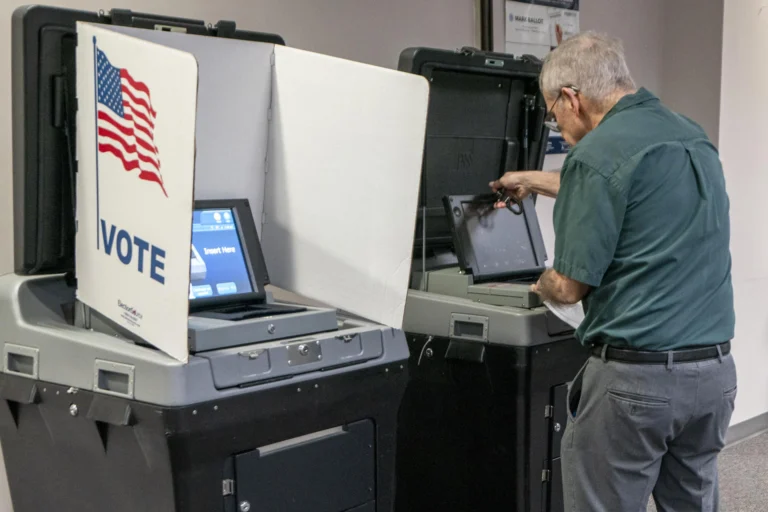
Mail-in ballots account for more than half of votes cast so far, as early turnout builds across the United States ahead of Election Day.
More than 26.6 million U.S. citizens have already voted in the midterm elections, according to data released October 24 by the University of Florida’s Election Lab, with mail-in ballots accounting for 14 million of the votes recorded nationwide.
The latest figures show that 26,608,029 votes had been cast ahead of Election Day, including 14,006,420 ballots returned by mail and 12,601,609 votes cast in person. Election authorities have also received requests for more than 59.4 million mail-in ballots nationwide.
Early voting has increased in states including North Carolina, Kansas, Maine and Iowa, while Texas has seen a rise in mobilization among Latino voters, according to the report. The figures come amid concerns over economic conditions and the cost of living.
California has recorded 2,943,863 early votes, overwhelmingly through mail-in voting. Of those, 2,936,954 were returned by mail and 6,909 were cast in person. Voters in the state have requested more than 23.4 million mail-in ballots.
🚨 Estados Unidos se aproxima a unas elecciones legislativas decisivas, con la popularidad de Donald Trump en retroceso y creciente malestar por la economía. Los comicios del 3 de noviembre de 2026 definirán la composición del Congreso.
Text Reads: 🚨 The United States is approaching pivotal legislative elections, with Donald Trump’s popularity on the decline and growing discontent over the economy. The November 3, 2026, elections will determine the composition of Congress. 🗳️🇺🇸 What do you think?
Democrats account for the largest share of California’s early votes, with 1,383,916 ballots, or 50.2% of the total. Republicans have cast 799,054 votes, representing 29%, while voters registered without a party preference and those affiliated with minor parties account for 575,130 votes, or 20.9%.
Los Angeles County leads California in early voting, with 539,589 ballots processed. San Diego County follows with 356,667 votes, ahead of Orange County, where 279,953 ballots have been returned.
The elections will determine all 435 seats in the House of Representatives, 35 Senate seats and 36 governorships.
The run-up to Election Day has also been marked by a legal dispute over the certification of results in Alaska. A federal court challenge backed by former President Donald Trump seeks to block the potential certification of the state’s election results, raising questions about the electoral process as voting approaches its conclusion.
PEEKSKILL, N.Y. — When Cait Conley took the stage here Saturday, she introduced Hakeem Jeffries by a title he doesn’t yet hold: “Speaker Jeffries.”
Jeffries himself won’t go that far. He won’t talk numbers or margins, or even officially say he’s running for speaker. But just over one week out from Election Day, he’s “confident” Democrats are going to win back the House.
“We’re watching the races in Texas and Florida closely,” the House minority leader said in an interview with MS NOW when asked what races might inform if Democrats are having a good night. “The MAGA extremists gerrymandered the congressional map in Texas and gerrymandered the congressional map in Florida to try to steal from those two states, nine different seats. That ain’t happening on Election Day, and we’re going to win several of those seats that were previously thought to be out of reach.”
The polls, the pundits and, privately, even some Republicans share his read of the national map, if not of every race on it. That includes this one in New York’s Hudson Valley, where Conley is challenging Republican Rep. Mike Lawler in the 17th District.
“What we’re thinking about right now is winning every single seat in front of us that’s competitive,” Jeffries told MS NOW.
Many of his members — and would-be members — already call him speaker. Jeffries won’t engage, insisting “we’ll cross that bridge when we get to it.”
Yet his rise to the speakership is one of Washington’s safest predictions. Pressed on why he keeps dodging questions about his future plans, Jeffries said it’s “because we have to be focused on what’s in front of us. And what’s in front of us is November 3. Once we get through November 3, then we can focus on January 3 — which is the first day of the new Congress.”
Last week, a bipartisan group of lawmakers sent a letter to Jeffries and Speaker Mike Johnson urging a peaceful transfer of power. Jeffries said he hasn’t spoken to Johnson specifically about that letter. But, “generally, I’ve made clear to Speaker Johnson and to the Republicans — and we’ve said this publicly and privately — that we have to respect the will of the voters to ensure that there’s a peaceful transfer of power,” Jeffries said. “Whatever happens on November 3rd has to translate into who is in the majority on January 3rd.”
Asked how Johnson responded, Jeffries said: “Mike Johnson is not going to get into what he views as a hypothetical situation, and at the end of the day, we’ll cross that bridge when we get to it. I think the elections are going to be decisive enough that it’s going to be clear that Democrats are going to be in control of the House of Representatives. We’re going to see Democrats win up and down the ballot, and all across the country, as we’ve seen repeatedly since the very beginning of the Trump administration.”
Affordability and accountability
Jeffries believes the electoral tides have shifted in his party’s favor because of how he has guided its pushback against the president.
Polls show Trump as unpopular as ever, though Democrats still lag in favorability themselves. Jeffries pointed to polling that gives Democrats an edge in trust on most key issues, from the economy and inflation to the ongoing war in Iran. He credits that shift less to backlash against Trump than to “the fact that we’ve successfully and aggressively pushed back against MAGA extremism.”
That pushback is central to the two-part message Democrats are pitching on the trail: affordability and accountability.
On accountability, the next target may be Defense Secretary Pete Hegseth, who has lately drawn fire from members of both parties in Washington. On the stump Saturday, Jeffries vowed to “run Pete Hegseth out of town.”
“It means that we’re going to hold him accountable in the same way that we held Pam Bondi and Kristi Noem accountable,” Jeffries said afterward. But Trump is the one who pushed out both Bondi, as attorney general, and Noem, as homeland security secretary, after controversies mounted, many of them stoked by lawmakers from both parties on Capitol Hill.
“And Pete Hegseth needs to be pushed aside by the president, or we’re going to have to deal with that situation if he is not.”
That is the closest Jeffries has come to backing impeachment. His stance could be tested days after the midterms, when a resolution introduced earlier this fall to impeach Hegseth is set to reach the House floor.
“What I’m inclined to do,” Jeffries said when asked whether he would support it, “is to act consistently with what I’ve said relative to Pete Hegseth from the very beginning: I called for Pete Hegseth to be fired by Donald Trump in the spring of 2025. He is deeply unqualified.”
The Brooklyn native has kept a close eye on how New York’s politics have shifted since 2022, when a string of House losses in the state helped give Republicans control of the chamber. Two years later, as Democrats reeled from Trump’s re-election, New York was a bright spot for the party: It flipped three of those five seats back into the blue column.
That’s the work Jeffries came to the Hudson Valley on Saturday to finish.
“This is the MAGA extremist’s last stand,” he said of New York’s 17th. “In 2024, we flipped four seats that were previously won by Republicans that are now held by Democrats, and we’re going to hold those seats in 2026. Mike Lawler pretends to be a common sense Republican, but he’s really just a MAGA puppet. Cait Conley is an American patriot, and I’m confident she’s going to flip this seat.”
A flipped seat and a new majority would bring Jeffries one step from the speakership. That would complete a generational handoff that began three years ago, when he succeeded Nancy Pelosi, who led House Democrats for two decades. If he wins the gavel, Jeffries would be the first Black speaker of the House.
He’s reluctant to talk about that, too, and invoked the late Rep. John Lewis, D-Ga., to explain why.
“John Lewis, who we all, many of us, had the honor to serve with … he would always say, ‘Keep your eye on the prize.’”
Nothing is done until it’s done. But for Lewis, a lion of the civil rights movement, seeing a Black man hold the speaker’s gavel would surely have meant something.
“Well,” Jeffries allowed, going further than he has before, “it means a lot to me that I stand on his shoulders and the shoulders of so many incredible legends, like Shirley Chisholm, whose district I in part represent, and they would all encourage us, like Shirley Chisholm, to be ‘unbought and unbossed’ in the face of the type of extremism that’s been unleashed on the American people. We got to get through this moment. We got to win the House so we can begin the process of decisively ending this national nightmare.”
 Login



pic.twitter.com/1X4AWcWQMV