Commission also alleges crimes against humanity, including torture and rape, by Israeli forces in West Bank; Israel blasts report as effort to demonize and delegitimize it
Inquiry Panel Reports Sharp Rise in Air Strikes, Forced Displacement and Violence Against Palestinian Children.
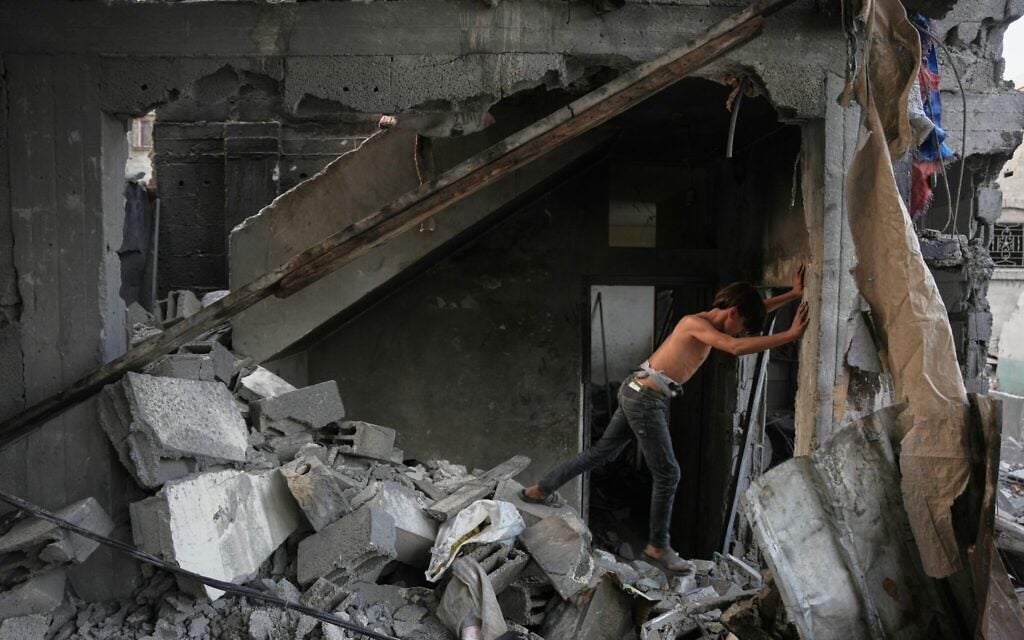
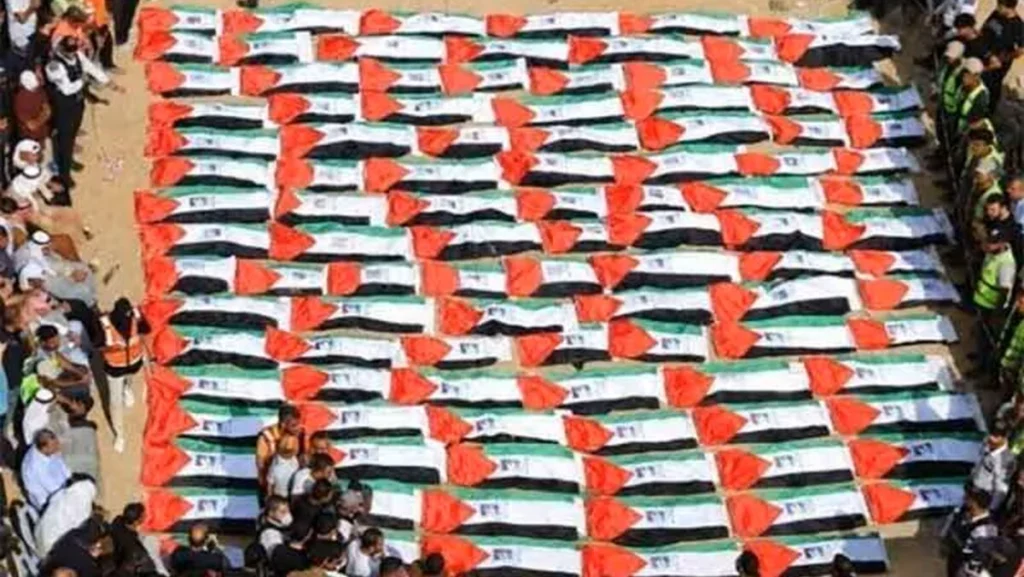
On Monday, the Independent International Commission of Inquiry on the Occupied Palestinian Territory reaffirmed that Israel has committed war crimes and crimes against humanity against the civilian population in the West Bank and Gaza, including crimes such as extermination, persecution, torture, rape and other forms of sexual violence.
The Commission will present a report to the United Nations General Assembly (UNGA), which tasked it with focusing this phase of its investigation on killings and physical and mental harm caused by state agents.
The report confirms the sharp increase in Israeli air strikes against the West Bank since Oct. 7, 2023, the date of Hamas’ large-scale attack on Israel.
The Commission notes that while between 2018 and Oct. 6, 2023 — the eve of the Hamas attack — six Palestinians had died in air strikes, between Oct. 7, 2023, and last Sept. 30, those killed numbered 254.
“The killing and deliberate injury of Palestinian civilians, as well as the destruction of homes in the West Bank, plus Israel’s refusal to assume its responsibility, form part of a broader strategy to exterminate and displace Palestinians and impose unbearable living conditions on them,” said the Commission’s chairman, Srinivasan Muralidhar.
"I'm not a target, I want to live like you"
Today she cries for her friend, tomorrow she fears she will be the news.
— Palestine Daily News✌️🇵🇸✌️ (@Palestinedaily1) October 25, 2026
From January 2025 through August 2026, military operations caused the displacement of over 34,000 Palestinians in the West Bank. This forced movement of people is the largest recorded since 1967, when Israel fought the Six-Day War against a coalition of Arab countries.
Children have been main victims of Israeli military violence, which has caused them “serious physical and mental harm,” not far from what minors suffer in Gaza, which for the Commission means Israel perpetrates “acts of persecution against Palestinian children on the basis of age.”
The Commission found that Israeli authorities and forces have continued to commit acts of genocide in Gaza even after the so-called cease-fire agreement of more than a year ago, and that they did so “with the intent to destroy the Palestinian people, in whole or in part.”
🎥 "I thought they forgot about me."
17-year-old Mohammed Ibrahim, a U.S. citizen who was released from Israeli military prison after ten months of detainment, came to the UNGA this week to advocate for hundreds of Palestinian children still held in Israeli military detention.… pic.twitter.com/7yTTPAYxrM
More broadly, the investigation reaches the conclusion that Israel’s will since its very creation has been to expand its territory and to that end displace Palestinians, which it considers one of the central causes of this prolonged conflict.
“The appropriation of as much land as possible, while minimizing the Palestinian population in terms of size, autonomy and viability, has its origin in Israel’s colonizing policies,” Muralidhar said.
In its conclusions, the UN Commission calls on Israel to immediately end the illegal occupation of Palestine and, among other actions, return land and all confiscated property to Palestinians.
The Commission also denounces the Palestinian Authority for persecuting Palestinians with dissenting opinions and for failing to effectively and impartially investigate the deaths or injuries suffered by journalists and human rights defenders in actions committed by Palestinian security forces.
When Russia invaded Ukraine, it was summarily booted from one of the world’s greatest—or worst, depending on your taste—pop-culture celebrations: Eurovision. When Israel launched its genocidal campaign in Gaza, it was allowed to keep competing. And it’s done very well. Lisa Borst goes into the pulsing belly of the gaudy Eurovision beast to interrogate the competition’s politics:
One word that comes up a lot in attempts to describe the Eurovision aesthetic is “camp.” In a blog post for the London Review of Books, Andrew O’Hagan pronounced that Eurovision 2009 was “the biggest, campest carnival yet.” The following year, Anthony Lane, in The New Yorker, characterized the contest by its “reliable deployment of camp, whether sly or unwitting.” I’d brushed up on my Sontag before heading to Vienna and thought I’d prepared for artifice, for schlock, for the pileup of off-kilter theatricality and post-disco schmaltz that inspired Carl Wilson, in Let’s Talk About Love, to label Eurovision the “Cheeseball Olympics.”
But as the hook to “Ferto” lodged itself further in my head and Eurovision’s physical presence continued to intrude, it was becoming harder to see all this as properly winking, witty, and “disengaged, depoliticized—or at least apolitical,” as Sontag puts it in her second Note on Camp. What was emanating from the Stadthalle seemed closer to “kitsch,” that nice German loanword for camp without wit. Kitsch is politicized and shaped by residual history; its precondition, Clement Greenberg wrote in 1939, is “the availability close at hand of a fully matured cultural tradition” whose familiar formulas could be recycled by reactionary regimes toward the aim of mass appeal.

 Login