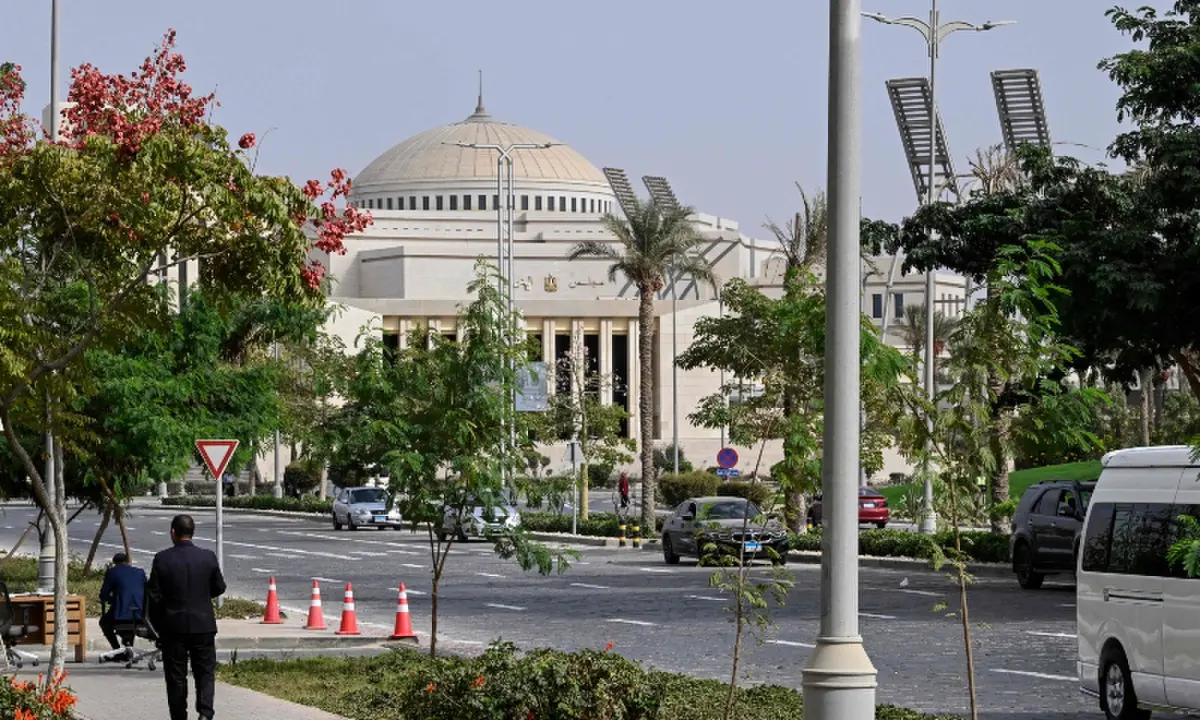
La Jordanie a annoncé avoir arrêté lundi trois suspects et mené des frappes contre des « repaires d'organisations terroristes » en Syrie, après une attaque meurtrière contre une église du royaume vendredi.
Donald Trump a promis lundi de verser 1 million de dollars à toute personne en possession d'informations aboutissant à une condamnation pour fraude électorale, à quelques jours des élections de mi-mandat.
Après son spectaculaire retour d'exil dimanche, l'opposante vénézuélienne et prix Nobel de la paix Maria Corina Machado est prête à rencontrer la présidente par intérim du pays Delcy Rodríguez, qui de son côté a fustigé un retour au pays en forme de « show » inutile.
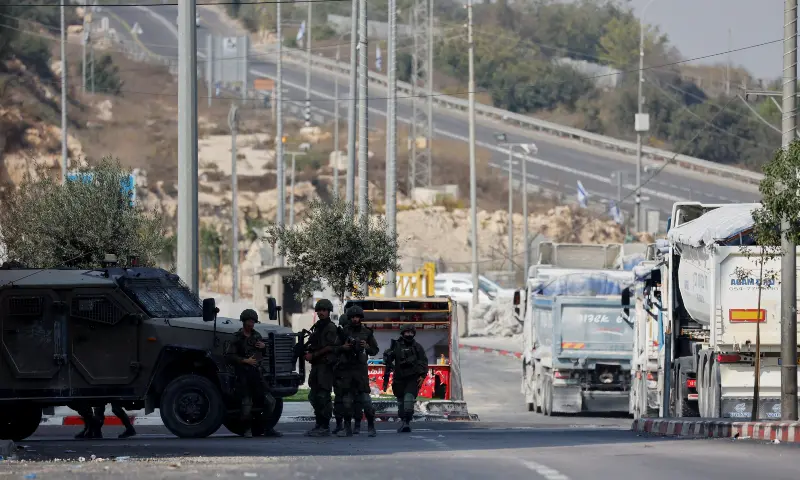
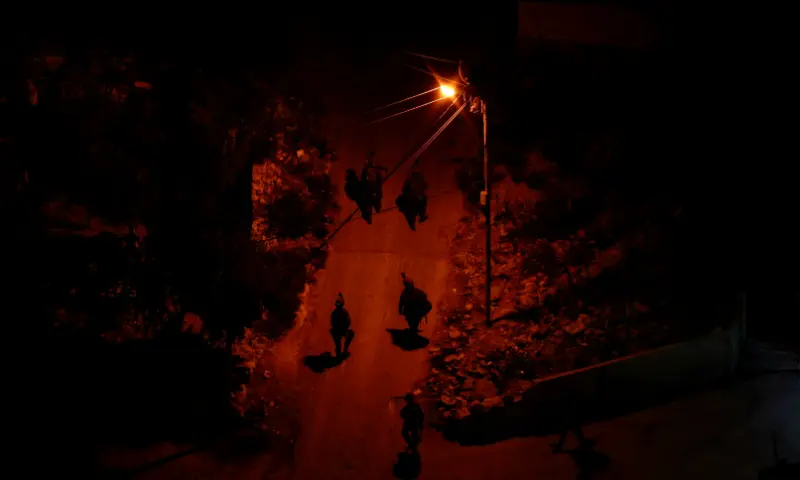
Le haut-commissaire de l'ONU aux droits de l'homme a alerté lundi 26 octobre sur le risque de « nettoyage ethnique » à Hébron, en Cisjordanie occupée, où l'armée israélienne a lancé une intervention militaire après la mort de deux soldats vendredi dans une attaque.
WASHINGTON — Democratic lawmakers called on Monday, eight days before crucial midterm elections, for the appointment of a special counsel to probe Republican US President Donald Trump's ties to convicted sex offender Jeffrey Epstein. In a 53-page report, Democrats on the House Judiciary Committee revived allegations of sexual misconduct made against Trump, a one-time close friend of the disgraced financier. Epstein died in federal custody in 2019 while awaiting trial on sex trafficking charges involving minors in what was determined to be a suicide. Trump fought for months to prevent release by the Department of Justice (DOJ) of the so-called "Epstein Files" but eventually signed a law passed by Congress requiring their publication. The 80-year-old president's name appears repeatedly in the documents but he denies any wrongdoing and has not been charged with any criminal offenses connected to the affair. Representative Jamie Raskin, the ranking Democrat on the House Judiciary Committee, accused the Justice Department of covering up "crimes to protect the president." "Five women have dire
WASHINGTON — Democratic lawmakers called on Monday, eight days before crucial midterm elections, for the appointment of a special counsel to probe Republican US President Donald Trump's ties to convicted sex offender Jeffrey Epstein. In a 53-page report, Democrats on the House Judiciary Committee revived allegations of sexual misconduct made against Trump, a one-time close friend of the disgraced financier. Epstein died in federal custody in 2019 while awaiting trial on sex trafficking charges involving minors in what was determined to be a suicide. Trump fought for months to prevent release by the Department of Justice (DOJ) of the so-called "Epstein Files" but eventually signed a law passed by Congress requiring their publication. The 80-year-old president's name appears repeatedly in the documents but he denies any wrongdoing and has not been charged with any criminal offenses connected to the affair. Representative Jamie Raskin, the ranking Democrat on the House Judiciary Committee, accused the Justice Department of covering up "crimes to protect the president." "Five women have dire
Microsoft propose un nouveau plan de départs volontaires à environ 60 000 salariés aux États-Unis, au Canada, en Inde et au Royaume-Uni, a indiqué lundi le groupe à l'AFP, six mois après un premier dispositif du même type.
Microsoft is offering voluntary buyouts to about 60,000 employees, the company said on Monday, roughly a quarter of its workforce, as the tech giant seeks to cut costs while pouring money into artificial intelligence.
Staff on select teams in the United States, Canada, India and Britain at vice president level and below will be eligible, a Microsoft spokesperson said, while some groups of employees, including some working on data centres, sales and marketing, are excluded.
“The Voluntary Exit Offer reflects an important part of how we’re evolving our approach to change: creating greater flexibility and, where possible, more ways for employees to shape their next chapter,” Amy Coleman, an executive vice president and chief people officer, told employees in a memo.
It’s the second voluntary buyout offer that Microsoft has offered employees this year.
In April, the company reportedly offered around seven per cent of its US workforce the option to retire early.
Around 30pc of those eligible took the voluntary retirement plan, according to CNBC.
Microsoft had 223,000 employees globally at the end of June, down from 228,000 at the end of 2025, according to regulatory filings.
Around 27pc of Microsoft’s workforce is eligible for the new buyout offer.
The company is expected to report quarterly earnings later this week.
Tech layoffs
As major tech giants continue to spend heavily on AI-related investments, concerns persist about the impact of the technology on jobs.
Even industry insiders, such as Anthropic Chief Executive Officer Dario Amodei, have warned of mass job losses.
Netflix will reportedly cut around 6pc of its workforce, or 1,000 jobs, US media reported last week.
Auction site eBay laid off 1,000 employees earlier this month, adding to a previous round earlier this year which impacted 800 jobs.
In May, Meta laid off around 10pc of its global workforce, impacting around 8,000 employees.
In April, Meta also said it would cancel plans to hire an additional 6,000 people and also shift 7,000 other employees into AI workflow-related roles.
Ride-hailing giant Uber said in September that it would lay off around 10pc of its staff, impacting an estimated 3,000 or more employees.
And e-commerce giant Amazon announced 16,000 global job cuts in January.
Microsoft previously cut nearly 5,000 jobs in July that heavily targeted its Xbox gaming division.
Amazon, Microsoft, Alphabet and Meta are collectively on track to pour roughly $700 billion into AI data centres, chips and computing infrastructure this year alone.
In July, Microsoft said it spent $41bn overall between April and June and expected to increase its spending to $50bn between July and September.
However, the company also adjusted its forecast for total spending in the 2026 calendar year to $175bn, down from $190bn previously.
Around two-thirds of its spending goes towards “short-lived assets,” specifically chips, due to customer demand for “both AI and non-AI infrastructure”, Chief Financial Officer Amy Hood said during a call with analysts.
Israeli military operation in the occupied West Bank’s Hebron city, launched after a deadly attack by Palestinian gunmen, raises serious concerns of “ethnic cleansing”, the United Nations (UN) warned Monday.
The municipality in Hebron, the Palestinian territory’s largest city, said in a statement that 3,189 people had been forced from their homes by the ongoing operation.
It followed Friday’s attack in which two Palestinian gunmen killed two soldiers at a checkpoint near the city, just days before Tuesday’s Israeli elections. The gunmen were killed in a shootout.
Israeli troops entered the Hebron neighbourhood of Ein Deir Baha, where the two assailants lived, and ordered residents to pack up and leave.
Israel’s “aggressive operation” has already resulted in the forcible displacement of thousands of Palestinians, “demolished homes and commercial property, and deprived residents of the ability to move freely”, UN rights chief Volker Türk said in a statement.
“The sweeping steps taken raise grave concerns of unnecessary and disproportionate use of force — which must end.”
He said the lockdown was confining many to their homes and immediate neighbourhoods.
“Declarations by senior Israeli government officials indicate that the measures implemented are punitive in nature and designed to instil fear. This is unacceptable,” said Turk.
“Those who have been displaced must be allowed to return home. Israel must ensure compensation and reparation for unlawful evictions and demolitions, and associated displacement.
“Collective punishment is a grave violation of international law. Threats to empty and erase entire neighbourhoods also raise serious concerns of ethnic cleansing.”
Speaking earlier in Cairo, UN Secretary-General Antonio Guterres said he was deeply alarmed by Israeli actions in the West Bank.
“Evictions are unrelenting, with Palestinians driven from their lands. Settler violence is surging,” he said.
“We are seeing an increasingly coercive environment, with the spectre of ethnic cleansing looming ever larger. This must end.”
Guterres said there could be no durable peace in the Middle East “without the realisation of the legitimate rights of the Palestinian people to self-determination”.
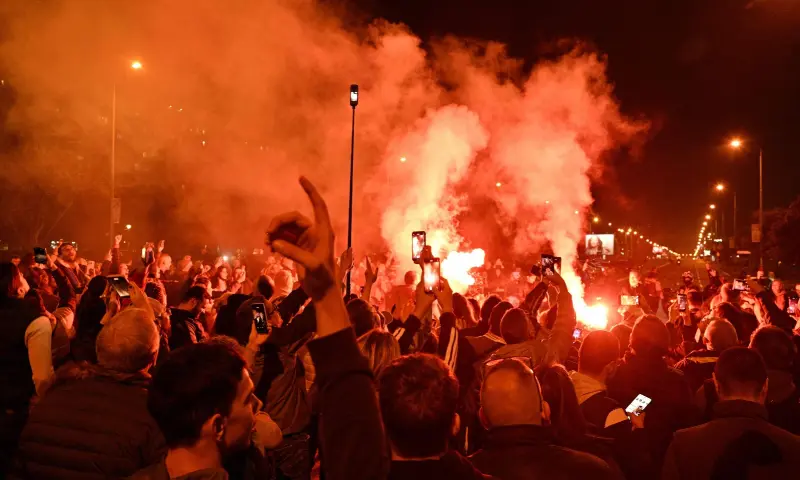
Serbia’s long-running student protest movement celebrated a historic win in the country’s election, ending 14 years of rule by the country’s right-wing populist leader Aleksandar Vucic.
Born out of nearly two years of anti-corruption protests sparked by a deadly railway station canopy collapse, the Students’ List is now eyeing a majority.
Here some key points about Serbia’s student-led movement as its candidates prepare to form government.
How did Serbia’s student movement start?
On Nov 1, 2024, a concrete awning at the entrance to Novi Sad train station collapsed, killing 16 people and sparking outcry over the tragedy at the newly renovated station.
Demanding a swift investigation, peaceful protests grew over months into some of the largest demonstrations recorded since the fall of strongman Slobodan Milosevic in 2000.
From the start, university students led the protests, blockading faculties and organising nationwide rallies.
The movement is deliberately leaderless and built around collective decision-making.
Just over a month before the second anniversary of the disaster, Vucic announced early elections, and the students assembled an electoral list drawn largely from academia and professional circles.
They are all deliberately outside any major political party.
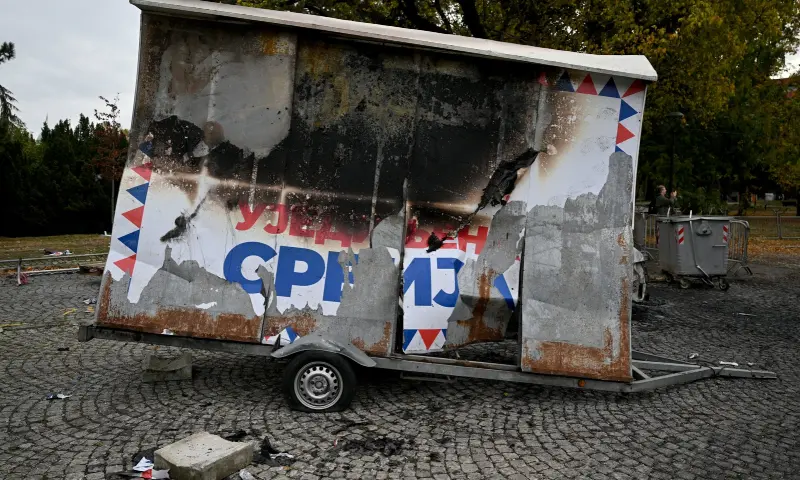
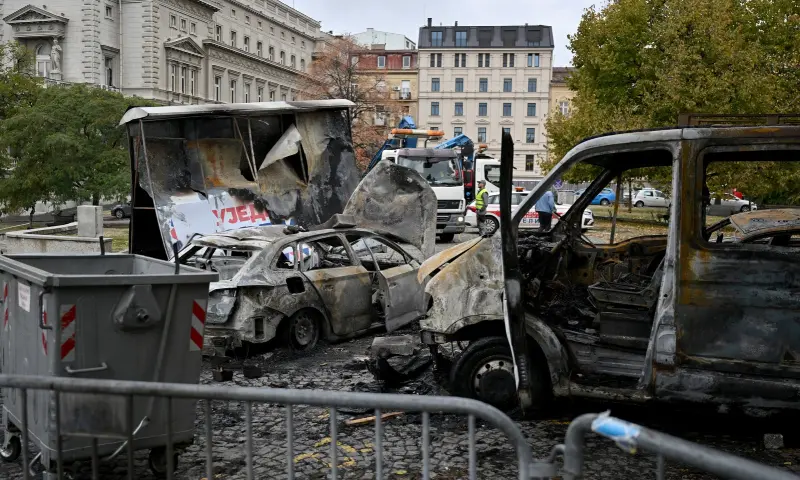
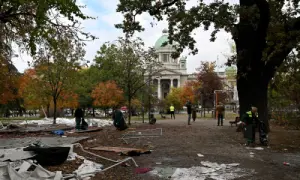
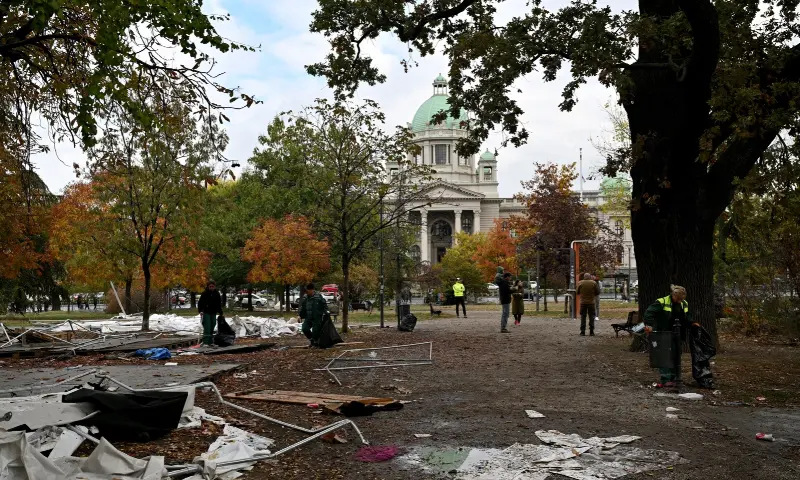
A burned election campaign banner of the Serbian Progressive Party (SNS) is pictured at a pro-government encampment in a park opposite the Serbian Parliament in Belgrade on Oct 26, 2026, after crowds celebrating election results entered the site the previous night and dismantled tents that had occupied the area for months, setting them alight along with a number of cars. — AFP
How did it win?
The movement built its campaign around opposing Vucic, setting aside issues that could divide its supporters.
“In order to win an election, the students needed the support of both groups of voters: those who are pro-European and those who are Eurosceptic,” political analyst Dusan Vucicevic told AFP.
Its campaign focused on corruption, the rule of law and attacks on press freedom.
Its collective decision-making, developed during the protests, continued into the campaign.
Who will lead?
The movement has repeatedly called for an end to the “cult of personality” that has dominated the country’s political system for decades.
The movement has not said who would be prime minister, leaving open who will lead the government, Vucicevic said.
Leading figures include Ilija Srdanovic, a cardiologist who headed the electoral list, and Radomir Saicic, a chemistry professor prominent in the campaign.
But Vucicevic stressed that Serbia’s prime minister does not have to be a member of parliament.
“So they have other people available whom they could bring into the government. We will have to wait and see.”
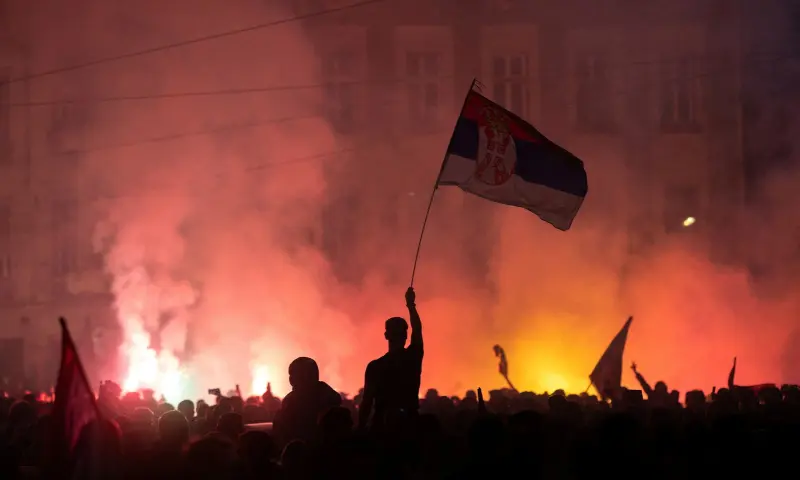
Supporters of the electoral list “Student List — Students Win” celebrate after Aleksandar Vucic, Serbian Progressive Party (SNS) prime ministerial candidate, conceded defeat in the parliamentary election in Belgrade, Serbia, on October 26, 2026. — Reuters
What are the key policies?
The candidates will need to adapt quickly to deliver on their broad reform platform, with the fight against corruption at its centre.
On foreign policy, the movement has offered fewer details. It previously said it would maintain Serbia’s refusal to impose sanctions on Russia over its invasion of Ukraine.
In a country still heavily dependent on cheap Russian gas but also supported by large European Union (EU) loans, the students will likely inherit Vucic’s political balancing act.
For now, the students’ focus will remain largely domestic, as they continue with their electoral strategy of uniting an “anti-regime electorate” and setting aside differences, Vucicevic said.
But he said the movement’s proposed reforms would likely bring Serbia closer to the EU.
“If the students do what they have announced, they will take much more significant steps towards EU membership for Serbian society than they would by simply draping themselves in European flags.”
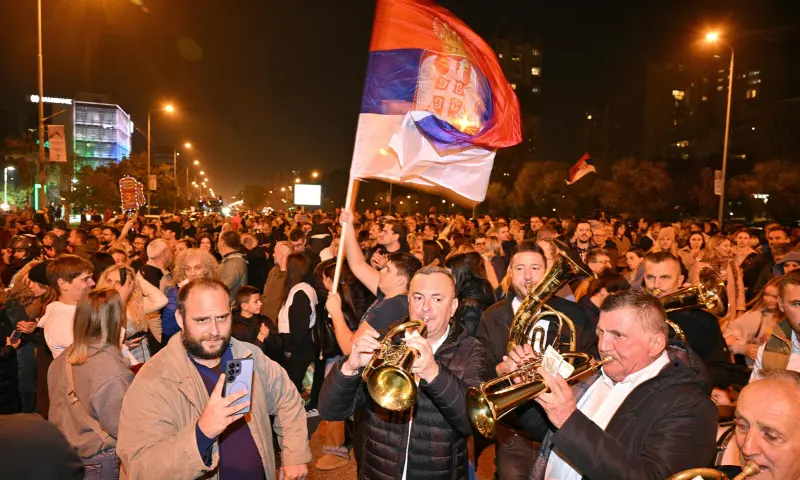
Supporters of the Students’ List wave a giant Serbian flag as they celebrate their victory in the Serbian parliamentary elections, in downtown Belgrade on October 25, 2026. — AFP
What will happen to Vucic?
A deputy prime minister from 2012, then prime minister and finally president, Vucic is “politically dead”, according to Vucicevic.
He resigned ahead of the elections to run as prime minister, while his Serbian Progressive Party (SNS) won over 100 seats in the country’s parliament.
Presidential elections are due soon, but Vucic is ineligible to run, and the SNS has no obvious candidate.
The question of possible prosecutions remains and will depend on the students’ ability to restore the rule of law.
Parliament authorised Egypt’s military on Monday to provide support to help defend Saudi Arabia, parliamentarians said, and local media reported, a move that could push Cairo directly into the regional conflict that has expanded with intensified attacks by Yemen’s Houthi rebels on the Gulf kingdom.
President Abdel Fattah al-Sisi had asked parliament last week to approve defending its Gulf Arab ally and the world’s biggest oil exporter if Riyadh requests help against the Houthis, whose advances also threaten the strategic Bab al-Mandeb strait, a gateway to Egypt’s Suez Canal.
The House of Representatives “approved authorising President Abdel Fattah al-Sisi to take the necessary measures to support the Kingdom of Saudi Arabia”, state newspaper Al-Ahram reported.
Egypt has frequently condemned Iranian attacks on Gulf countries but has not publicly engaged in direct combat or joined the Makkah mutual defence pact between Saudi Arabia, Pakistan and Turkiye that was signed in August.
Foreign Minister Badr Abdelatty said this month that Egyptian membership in the pact remains “under serious consideration”.
Egypt, the Arab world’s most populous state with one of the region’s largest militaries, joined the Saudi-led coalition in an earlier phase of Yemen’s war in March 2015 mainly as a naval partner, sending warships to secure Red Sea shipping lanes while pledging air support. It also deployed around 800 ground troops but played only a limited combat role.
Egypt was involved in a costly military intervention in Yemen in the 1960s and has not undertaken a large-scale foreign ground deployment since the 1991 Gulf War.
Saudi Arabia is a major political and financial partner of Cairo, providing billions of dollars in aid, deposits at the central bank and energy supplies under Sisi.
Fighting between the Saudi-led coalition backing Yemen’s internationally recognised government and the Houthi militia, which controls the capital Sanaa, has escalated in recent weeks, becoming a volatile front in the US-Israeli war on Iran.
The Houthis have attacked Riyadh’s international airport and the state oil giant Saudi Aramco, disrupting flights and oil exports, while aid agencies have warned of worsening conditions in Yemen, already suffering one of the world’s worst humanitarian crises.
FM Abdelatty and Egyptian intelligence chief Hassan Rashad travelled to Riyadh on Wednesday to deliver a letter to Saudi Crown Prince Mohammed bin Salman from Sisi, who said Egypt’s support would be limited to defending Saudi territory and borders rather than attacking Yemen.
Abdelatty said after that visit that Cairo advocates exploring “every opportunity” to resolve the Yemen conflict diplomatically.
The Saudi crown prince visited Sisi in Cairo on Sept 15 to discuss security and navigation in the Red Sea after the fighting in Yemen reignited.
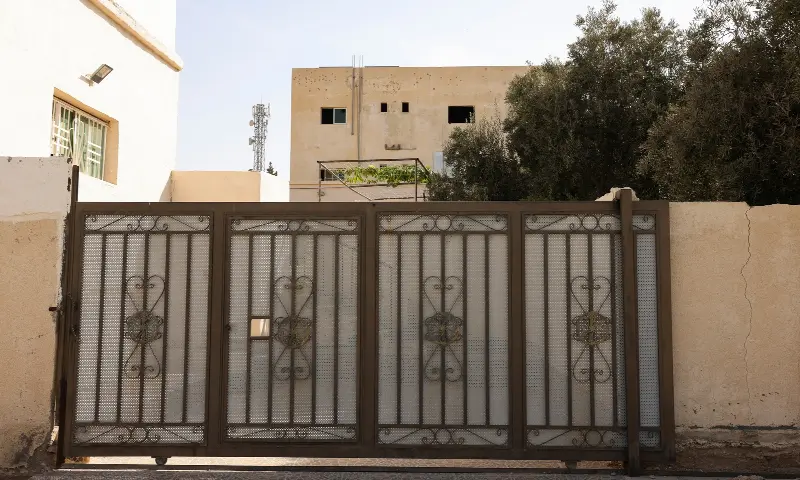
Jordanian security forces on Monday arrested three suspects over an attack on a church last week that killed nine people, with the trio wounded in a dawn raid and shootout, authorities said.
The kingdom’s Public Security Directorate said the group were apprehended at an abandoned house where they had barricaded themselves inside and opened fire on security forces.
One of the suspects was taken to hospital in critical condition, while the other two were stable, Jordan’s state broadcaster Al-Mamlaka reported.
There were no casualties among security forces, it added.
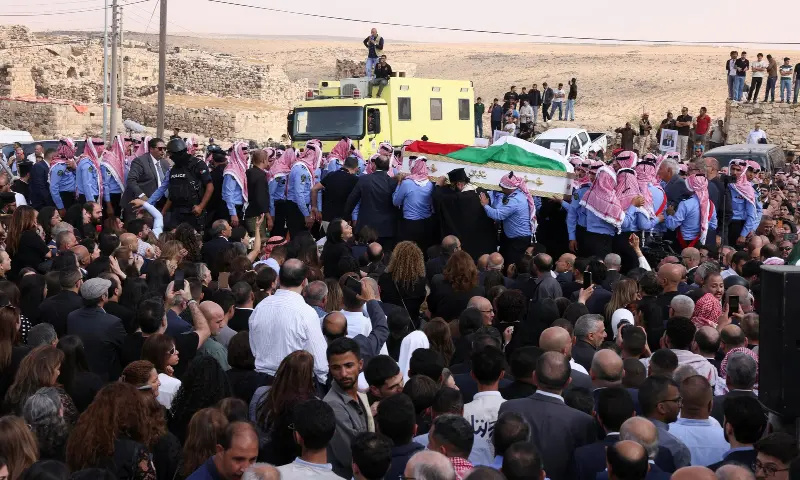
On Friday, gunmen stormed the compound of the Greek Orthodox St George’s Church in the village of Hammoud in Karak governorate during a funeral procession, authorities said.
Karak is home to a significant Christian community in Muslim-majority Jordan, where Christians make up between two and three per cent of the population.
“Specialised investigation and raid teams apprehended the three terrorists responsible for the cowardly terrorist attack,” Al-Mamlaka said on X on Monday.
The Public Security Directorate said the three suspects had “refused to surrender and opened fire on the security forces”.
‘We will show them’
Jordan’s King Abdullah II said in a post on X that security forces “chased them to the very end”.
“We vowed the terrorists would not escape punishment, and no proponent of dark ideologies that divide Jordanians will be tolerated,” he wrote.
Earlier, the king visited the injured victims of the church attack in hospital, dressed in military fatigues and carrying a pistol on his hip.
“We will show them,” he vowed.
Interior Minister Mazen al-Faraya told Al-Mamlaka on Monday that the attackers were all Jordanians and “had been holed up in a building in one of the villages near the site of the attack”.
“There is no indication of any external contacts or collaboration with foreign parties,” he said.
Government communications minister Mohammad al-Momani said “we stand ready and will strike with an iron fist, without mercy or leniency, against anyone who attempts to undermine Jordan’s security”.
Under Jordanian law, murder is punishable by death by hanging.
On Friday, Prime Minister Jafar Hassan ordered a three-day period of national mourning for the victims of the church attack, with flags to be flown at half-mast over government and public institutions.
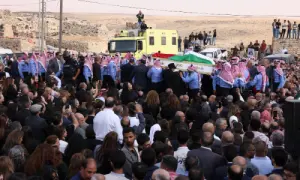
Eight of the nine victims were laid to rest on Sunday next to the church in a funeral that drew a huge crowd amid a large security presence, AFP images showed.
The ninth person, Mohammed al-Qasous, will be buried on Monday, his family said.
On Saturday, officials at the church were digging a mass grave that was set to become a memorial.
President Luiz Inacio Lula da Silva will have to wrestle with a divided Brazil, an unfriendly Congress, feeble public finances and a Donald Trump-shaped menace during his unprecedented fourth term.
Days before his 81st birthday, the former union leader won Sunday’s runoff with 51.7 per cent of the vote over 48.2pc for his right-wing challenger Flavio Bolsonaro.
The narrow result confirms the political divide that has split Brazil for a decade and shows that Bolsonarism remains strong, despite its far-right leader’s 27-year prison sentence for attempting a coup.
Here are the main challenges awaiting Lula in his next mandate.
Governability
As in his current term, Lula will not have a majority in Congress.
Legislative elections earlier this month bolstered the right, making Bolsonaro’s Liberal Party the leading force with 121 out of 513 deputies and 28 out of 81 senators.
To get his proposals through, Lula will depend heavily on the so-called “Centrao,” a bloc of centre-right parties that usually backs whoever is in power in exchange for benefits.
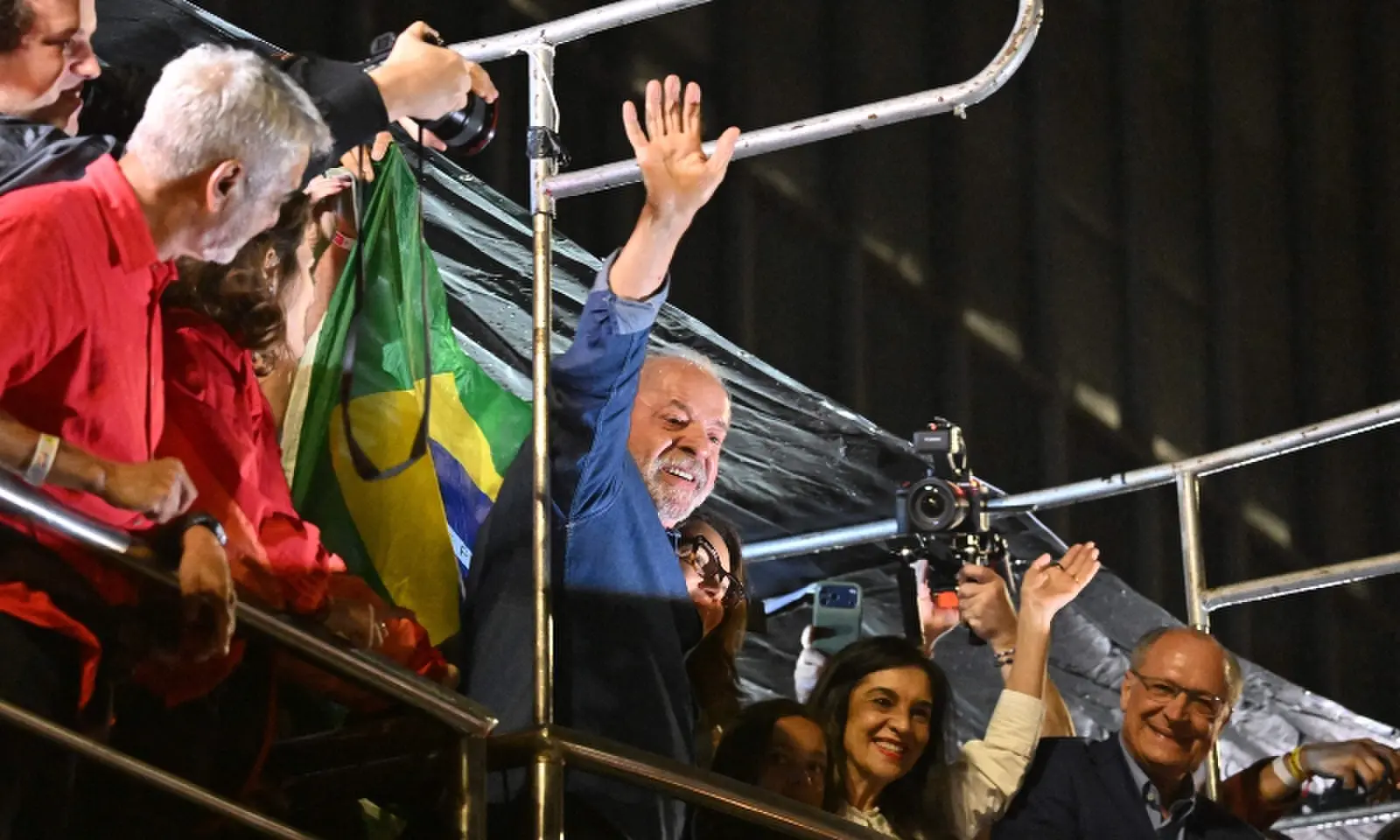
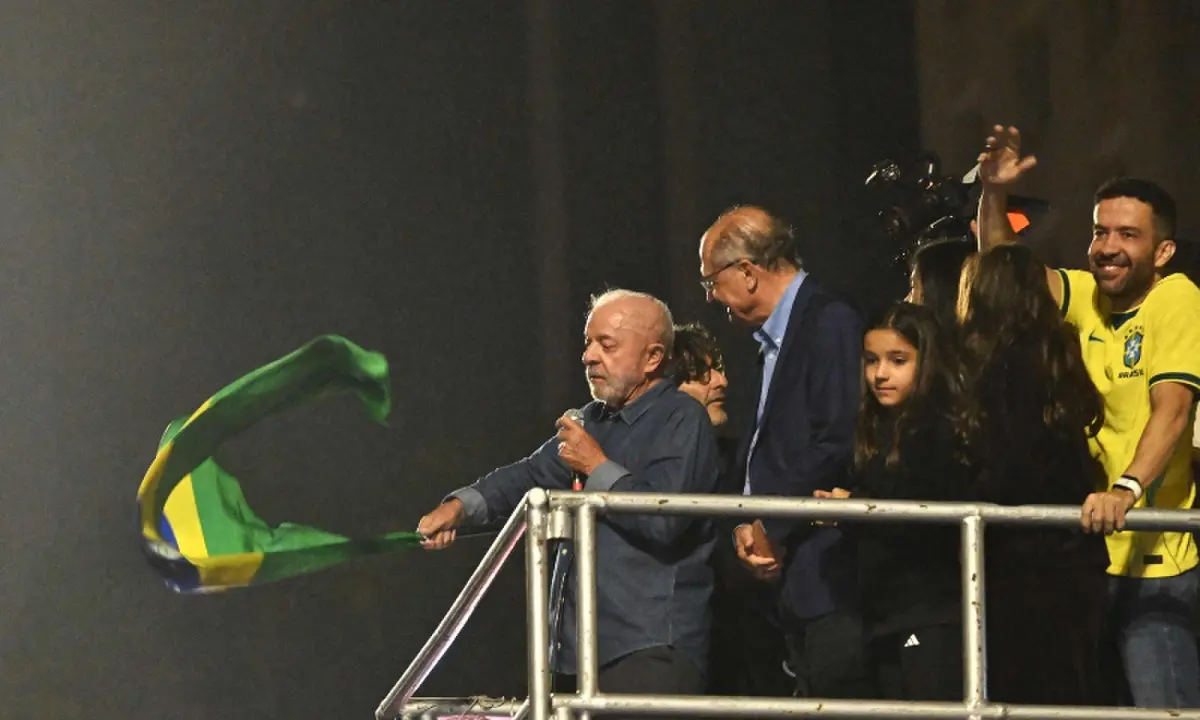
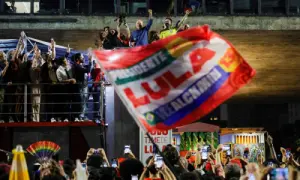
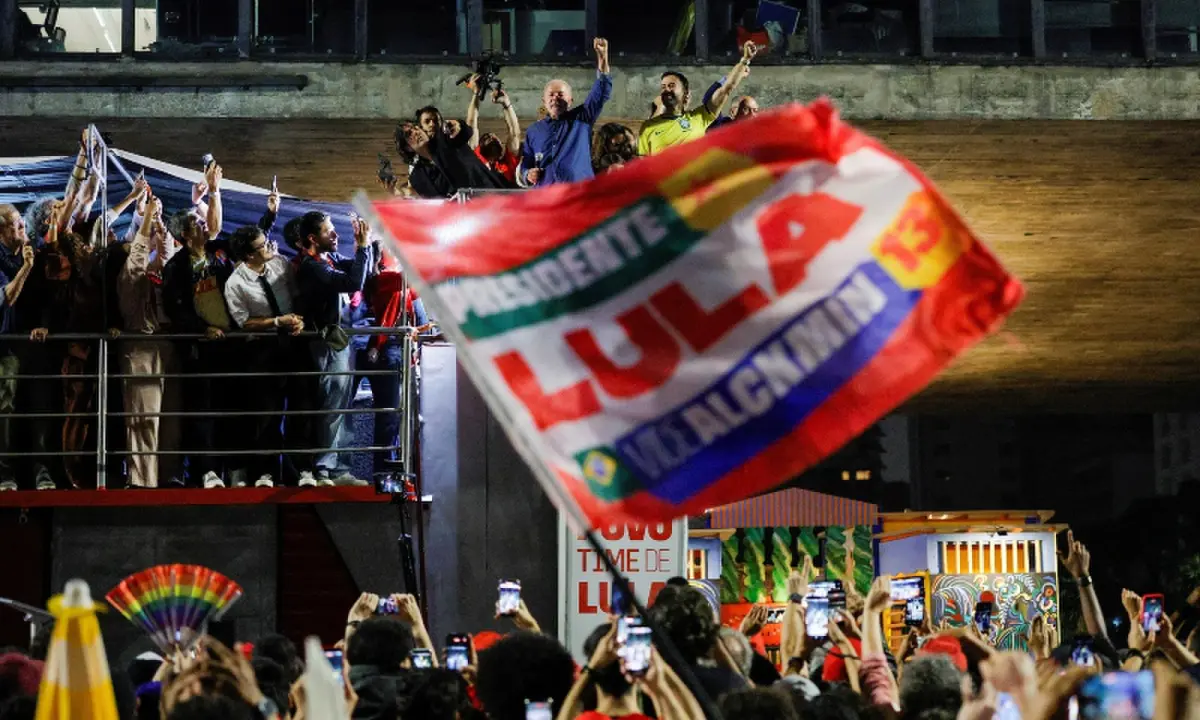
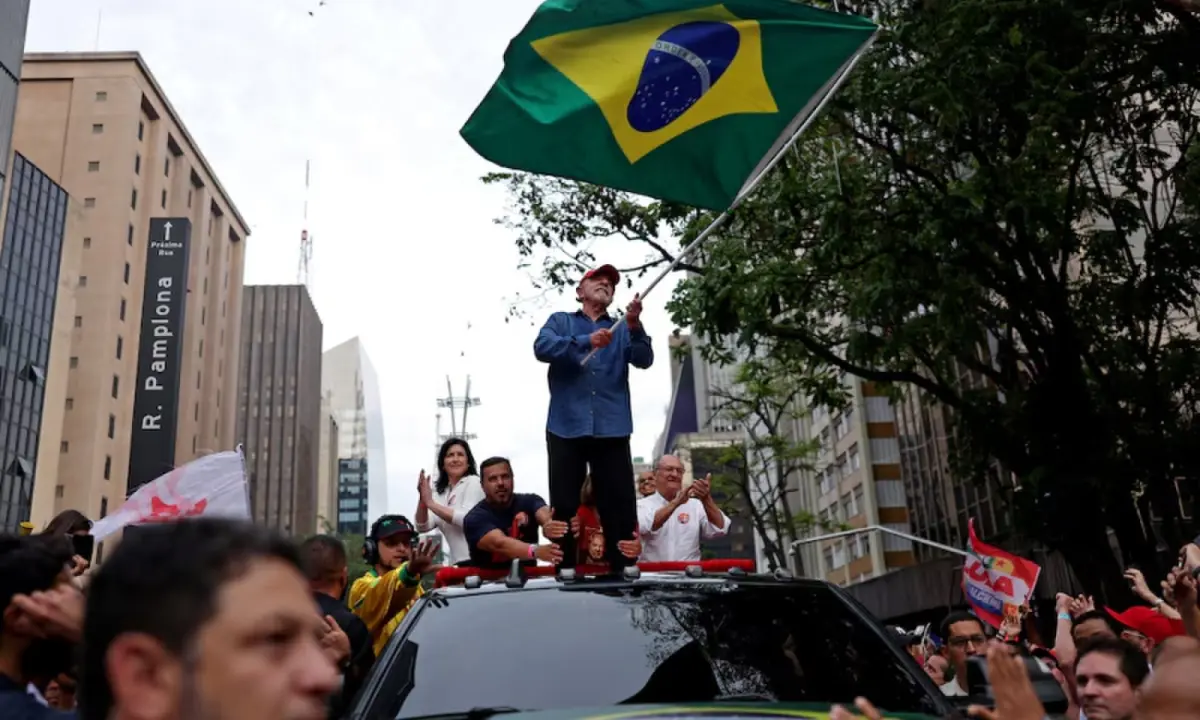
Brazil’s President and presidential candidate Luiz Inacio Lula da Silva gestures to supporters after winning the presidential runoff election in Sao Paulo, Brazil, on October 26, 2026. —AFP
But negotiating with them is becoming increasingly difficult, according to political scientist Mayra Goulart of the Federal University of Rio de Janeiro.
Lawmakers now decide the fate of an ever larger share of the federal budget, she told AFP, giving them “more independence from the executive.”
Money
Economically, “Brazil’s three big problems are the fiscal problem, the fiscal problem, and the fiscal problem,” economist Mauro Rochlin of the Getulio Vargas Foundation (FGV) told AFP.
The state spends more than it collects, public debt exceeds 80 percent of GDP, and Brazil’s central bank maintains one of the world’s highest interest rates to contain inflation.
The situation “could very quickly turn into an economic crisis,” said Rochlin.
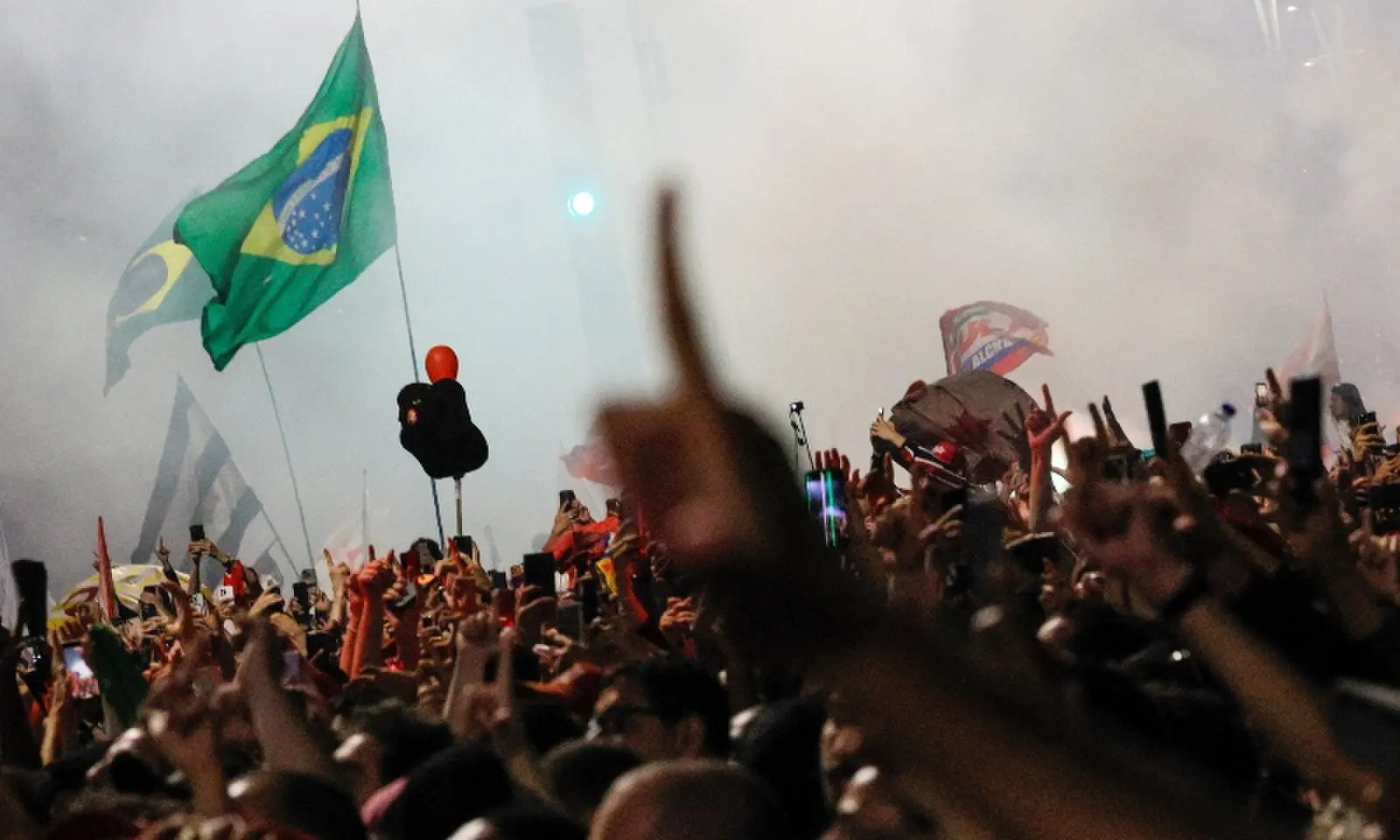
Supporters make an “L” sign as people gather to watch Brazil’s President Luiz Inacio Lula da Silva, the Workers’ Party (PT) candidate for re-election, speak after his victory in the presidential runoff election, at Paulista Avenue, in Sao Paulo, Brazil, October 26, 2026. —Reuters
Adjustment is inevitable but difficult since it involves “unpopular measures” and confronting “very powerful lobbies within Congress,” he said.
The challenge is likely going to clash with Lula’s flagship welfare programs, which have lifted millions out of poverty, and which he expanded during the campaign to win voters —drawing fierce criticism from the opposition.
Insecurity
The election campaign was dominated by security concerns, with violence a huge worry for many Brazilians.
Accused by the opposition of having a soft touch, Lula will be under pressure to show results, particularly by tackling criminal groups and militias that control territory in several cities.
On the campaign trail, he said he would support lowering the age of criminal responsibility from 18 to 16 for heinous crimes, while the political right wants to reduce it to 14 years.
Trump
Lula campaigned on a pledge to protect Brazilian sovereignty as concerns grow about the broadening interventions of the United States across Latin America.
Trump slapped tariffs on Brazil last year in retaliation for legal proceedings against his ally Jair Bolsonaro, followed by another 25pc tariff on some products this year.
Brazil’s President and presidential candidate Luiz Inacio Lula da Silva gestures to supporters after winning the presidential runoff election in Sao Paulo, Brazil, on October 26, 2026. —AFP
Brazil’s president will have to manage relations with Washington without relaxing his anti-imperialist tone, all while the Trump administration increasingly asserts itself in the region.
Right-wing leaders across Latin America have meanwhile aligned with Trump in a trend dubbed the “Orange Wave,” in reference to the US leader’s complexion.
Although ideology “matters for symbolic encounters,” it is “not that relevant” in practice, according to Oliver Stuenkel, an international relations professor at the FGV.
He points to Brazil-Argentina relations as an example.
“Deep down, the substance of the relationship hasn’t changed that much” despite Argentine leader Javier Milei’s insults toward Lula, Stuenkel told AFP.
“Quem pode dizer que há Estado de direito quando hordas vêm saquear e queimar os nossos edifícios?”. Marine Le Pen promete que a nacionalidade francesa vai voltar a ser “um privilégio que se herda ou se conquista”. A candidata de extrema-direita a suceder ao Presidente Emmanuel Macron no próximo ano, prometeu no seu primeiro discurso de campanha, no domingo, “repor o Estado de direito” se for eleita. Marine Le Pen, que lidera as sondagens, parece estar a beneficiar da agitação que a França atravessa há semanas, marcada por grandes manifestações contra o custo de vida e por alguns confrontos violentos
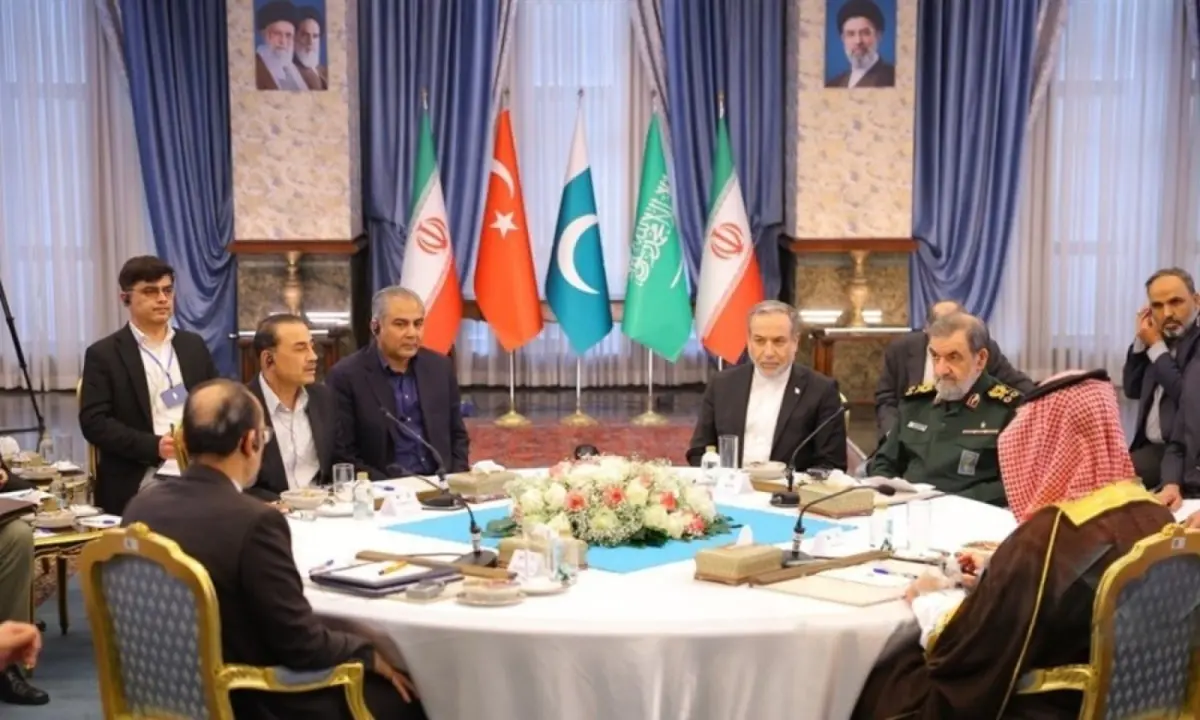
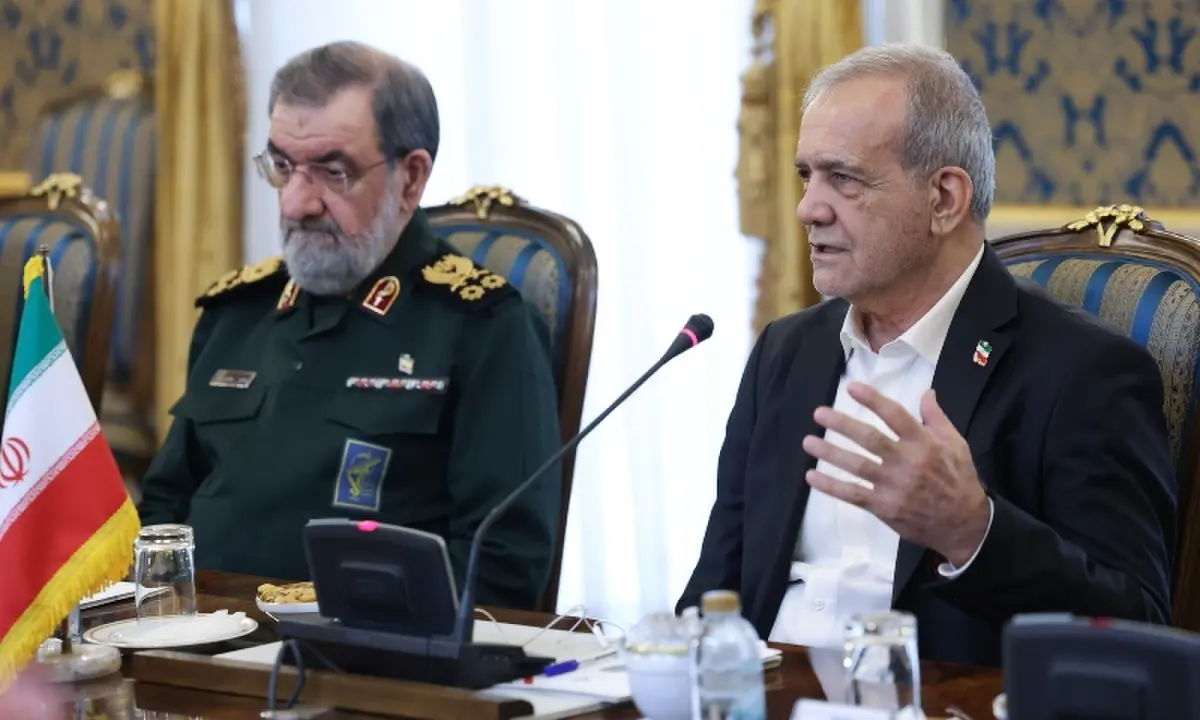
Iranian President Masoud Pezeshkian on Monday called for “regional unity” at a meeting in Tehran with representatives of Pakistan, Saudi Arabia and Turkiye, which recently signed the Makkah defence pact.
“I hope that the presence of representatives of important and influential Islamic countries at this meeting will help further consolidate regional unity and cohesion,” Pezeshkian said, according to a statement shared on the presidential website, urging Islamic countries to “stand together and adopt a coordinated position”.
“Muslims are brothers to one another and must stand together as a united front against threats and actions targeting Muslim nations,” he stressed.
Condemning Israel’s actions in Gaza and other regional countries, he said: “We must not allow the Israeli regime to assassinate and aggress against any individual or country whenever it desires. I am confident that if Islamic countries stand alongside each other and adopt a coordinated stance, the possibility of such actions repeating will not exist.”
The Iranian president also criticised the United States for claiming “readiness for negotiation and dialogue simultaneously with attacking Iran” during the war.
Pezeshkian stressed the need for translating political understandings into practical actions, stating: “We are determined to tread this path, but achieving this goal requires Islamic countries to reach a common understanding of their objectives, draw a clear vision, and pursue the implementation of agreements with mutual commitment until results are achieved.”
He cautioned against policies of the United States and Israel that were aimed at “creating a rift among Muslim nations”, and called for heightened vigilance.
The Iranian president also called for increased cooperation among regional countries in various fields.
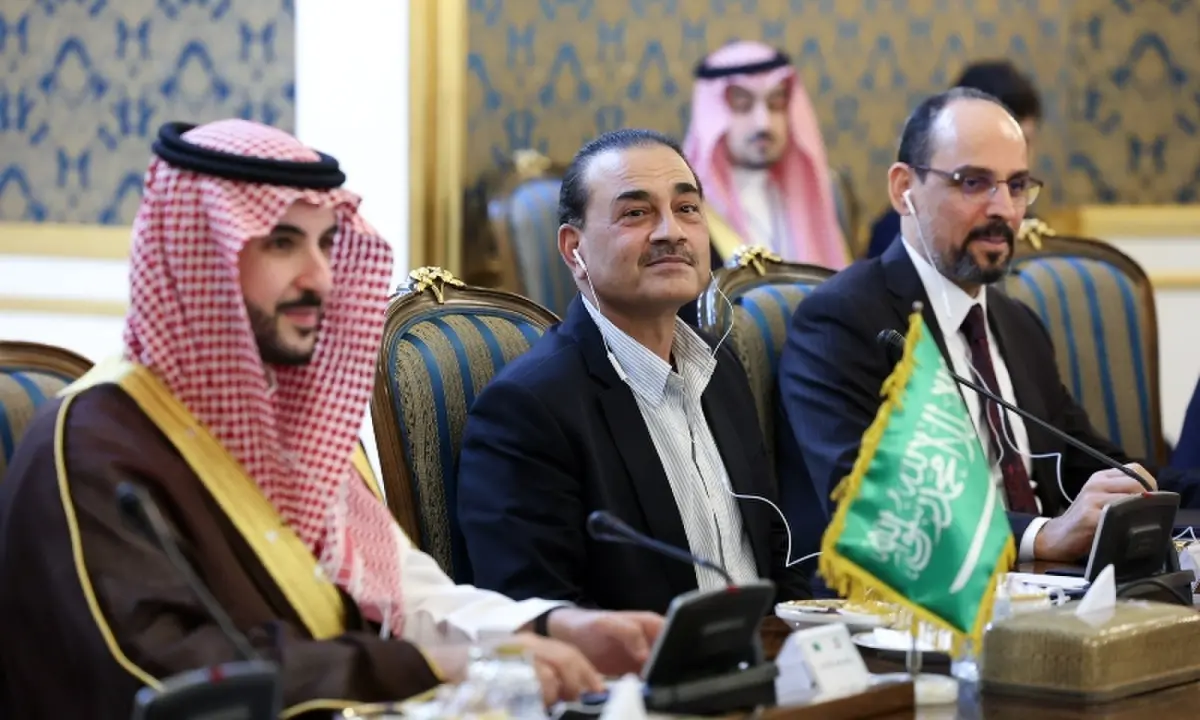
Iran’s IRIB state broadcaster earlier shared a video of the meeting, saying the quadrilateral meeting on “regional security and stability” had begun. The video showed Chief of Defence Forces (CDF) and Chief of Army Staff Field Marshal Asim Munir and Interior Minister Mohsin Naqvi sitting with Iran’s president, Foreign Minister Abbas Araghchi and security chief Mohsen Rezaei.
Earlier in the day, Inter-Services Public Relations had confirmed that CDF Munir was visiting Tehran, but did not share any further details.
The talks also included Saudi Defence Minister Prince Khalid bin Salman and Turkiye’s intelligence chief, Ibrahim Kalin.
At the start of the meeting, Iran’s state broadcaster reported the meeting was bringing together Iran, Pakistan, Saudi Arabia and Turkiye to discuss “regional cooperation, the US-Israeli aggression against Iran and its consequences”, among other topics.
State-run PressTV also shared pictures of the meeting.
Following the meeting, Rezaei, head of Supreme National Security Council, told state television, “Very good discussions took place between us.”
“I feel that a new atmosphere is emerging in the region … I sensed a very positive atmosphere in the discussions among the gentlemen.”
Iranian state television reported that the four countries agreed to continue talks after a “first” meeting in Tehran. It said they “agreed to continue discussions to strengthen cooperation… including on regional peace and security”.
‘Endogenous security’
Earlier, Iran’s state-run IRNA news agency quoted the deputy secretary of Iran’s top security body, Ali Bagheri Kani, as saying that the visit was part of efforts to implement the idea of endogenous security in West Asia.
Iran’s foreign ministry spokesperson, Esmaeil Baqaei, said during a media briefing that the meeting with officials from the three countries would cover “most pressing issues threatening our region”, which included Israel’s expansionist policies, developments in Palestine and Lebanon.
He added that the topic of “top priority on the agenda would be consequences of the US-Israeli aggression against Iran and its ramifications for the entire region”.
IRNA further quoted him as saying that this meeting could be a prelude to further steps towards shaping “endogenous security — an issue that we have been insisting on for decades”.
“We emphasise that regional security will not be ensured except by relying on the … security considerations of the countries of the region,” he said, adding that events of the last two years, especially the past eight months, had shown that sustainable and reliable security would only be made possible by “building trust and cooperation among the countries in the region”.
Saudi Deputy Minister for Public Diplomacy Rayed Krimly had also confirmed the visit in a post on X. Krimly described the visit as “part of the continued efforts by the Makkah Defence Alliance members for de-escalation between parties involved in the ongoing crisis, and promoting dialogue and diplomatic solutions, in support of the mediation efforts carried out by Qatar and Pakistan”.
“The visit underscores the pivotal role of Makkah Defence Alliance members in reinforcing regional security and stability, and working with all countries in the region to achieve that goal,” he added.
The visit comes as attacks by Houthis have spiralled over recent weeks and rhetoric between Washington and Tehran has grown more heated.
Monday’s planned talks would be the first high-level contact between Iran and all members of the Makkah Defence Alliance since Saudi Arabia was drawn deeper into the conflict. Under the Makkah pact, signed in August, an armed attack on one member is considered an attack on all.
CDF Munir had visited Iran last week. During the visit, Iranian leaders had conveyed that the US must take the first steps to rebuild trust, and that the acceptance of Tehran’s seven-point proposal could provide a starting point for renewed negotiations.
According to Iran’s ISNA news agency, Baqaei said during the media briefing that the suggestion for the meeting was made during CDF Munir’s visit to Tehran last week. Tehran reviewed the proposal “favourably … and it is scheduled to be held today”, he added.
War has engulfed the Middle East since late February when the US and Israel launched a wave of surprise attacks on Iran, just as Washington and Tehran were in the middle of negotiations on Iran’s nuclear programme.
An April ceasefire brought an end to the initial phase of intense bombardment but the two sides have continued to vie for control of the Strait of Hormuz, through which around a fifth of the world’s oil and liquefied natural gas used to travel.
Iran claims control over the strait and regularly targets vessels that attempt to cross without its authorisation, while the United States has imposed a naval counter-blockade on Iranian ports.
Diplomatic efforts to resolve the crisis remain stalled, especially since the collapse of a June deal which laid out a pathway to a permanent settlement.
The war has since spread across the region to include fighting between Saudi Arabia and the Houthis in Yemen.
A vitória dos estudantes põe fim a cerca de 14 anos de domínio político de Aleksandar Vučić e dos seus aliados. Milhares de pessoas saíram à rua em várias cidades da Sérvia, na noite de domingo, para festejar a vitória dos estudantes nas eleições antecipadas. O partido de Aleksandar Vučić perdeu o poder. O dirigente admitiu a derrota antes de serem conhecidos os resultados finais, avança a Reuters. Segundo estimativas do próprio Vučić, a Lista dos Estudantes deverá conseguir entre 135 e 140 dos 250 lugares no Parlamento, É mais do que suficiente para uma maioria absoluta. Em Belgrado, os
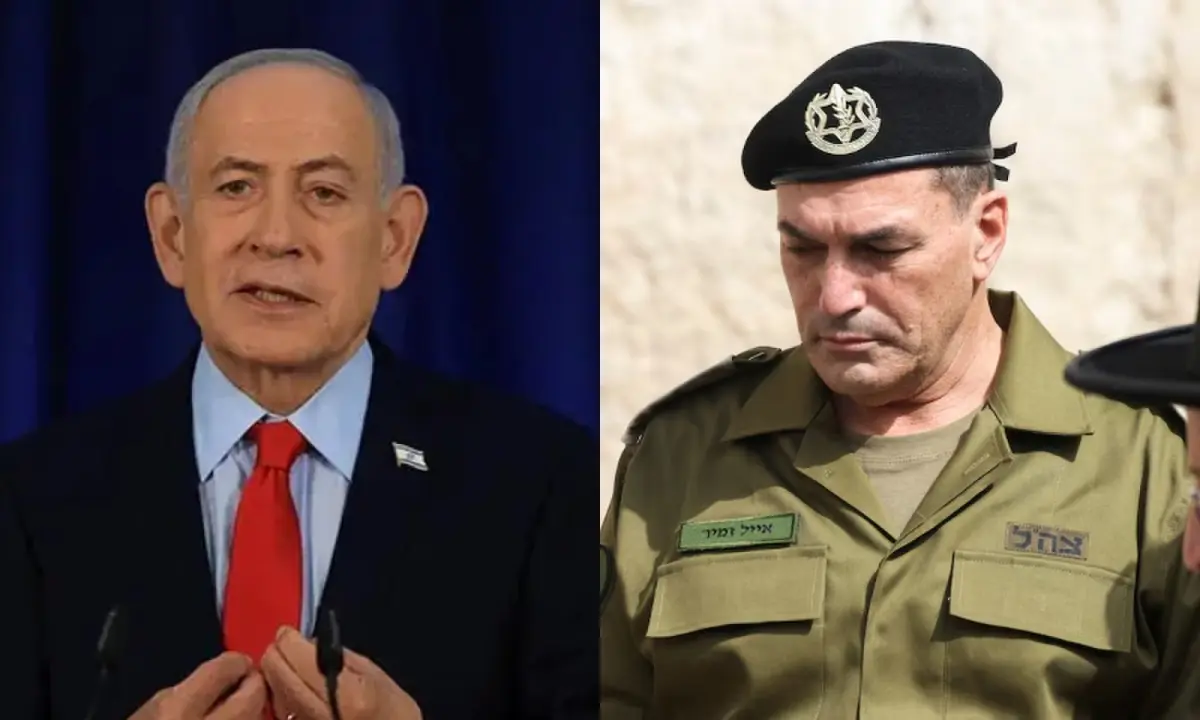
Israeli Prime Minister Benjamin Netanyahu on Sunday denied reports of a clash with Army Chief of Staff Eyal Zamir over a proposed military operation that could trigger fighting with Iran ahead of Israel’s election.
Channel 12 reported on Sunday that Zamir requested a detailed discussion and signed legal authorisation from political leaders before carrying out their instructions. The broadcaster did not disclose the nature of the operation.
The report cited military concerns that the political leadership could exploit tensions with Iran for electoral gain before the Oct 27 parliamentary vote.
A security official warned that the operation could rapidly escalate into a confrontation with Iran and lead to a miscalculation at a particularly sensitive time.
Netanyahu denied any dispute with Zamir during an interview with Israel’s Channel 14 later on Sunday.
“There is no confrontation,” he said.
Political officials also rejected the claim that the Iranian issue was being used for electoral purposes, according to Channel 12.
In the same interview, Netanyahu said he had instructed the Mossad intelligence agency and the military to work toward toppling Iran’s government.
Channel 12 did not establish whether the undisclosed operation was connected to those instructions.
Defence Minister Israel Katz said on Monday that reports of a rift between Israel’s army and its civilian leaders over fresh action in the war with Iran were “entirely baseless”.
“The reports about gaps between the political echelon and the IDF (army) on the Iran issue are entirely baseless and false,” Katz said on X, insisting there was “complete” coordination between the two.
Katz stated “unequivocally that there was no intention on Israel’s part to initiate an attack on Iran before the elections”.
Opposition leader Yair Lapid referenced the report in a post on X on Sunday, accusing Netanyahu of seeking to put off the vote.
“Tonight it was published that he wants to set off an escalation and a confrontation with Iran, just to postpone the elections,” he said.
“This man has lost his grip. We absolutely must send him home.”
Netanyahu also claimed Iran had resumed its nuclear programme and portrayed the election as a matter of Israel’s survival.
On Sunday, he posted an AI-generated image of a nuclear explosion over Tel Aviv alongside a warning about Iran obtaining nuclear weapons. Opposition party leaders Gadi Eisenkot and Yair Golan accused him of spreading fear and panic before the vote.
Brazil’s leftist President Luiz Inacio Lula da Silva pulled off a dramatic comeback on Sunday as he clinched a re-election victory, but his rival Flavio Bolsonaro refused to accept the loss and said he would seek to annul the vote.
With Lula’s victory, Brazil staved off a conservative wave that has seen numerous countries — such as Argentina, Chile, Colombia, and Peru — all shift right, backed by US President Donald Trump.
The leftist icon, who turns 81 on Tuesday, defied projections to win an unprecedented fourth term.
According to official results, he won 51.8 per cent of the votes to 48.2pc for Flavio Bolsonaro, with Lula pulling around 4.4 million more votes.
The senator is the son of former far-right president Jair Bolsonaro, who is serving a 27-year jail term for attempting a coup after his loss to Lula in the country’s last election in 2022.
Sunday’s vote was marked by confusion after a Supreme Court ruling extended voting by two hours as some polling stations had already closed.
The move came at the request of Lula who complained that buses had been pulled from circulation in various cities, barring citizens from voting.
Flavio Bolsonaro also requested an extension in some regions due to heavy rains, but he described the decision as “unacceptable” and a “dirty trick”.
“It is impossible to recognise the results. I am going to request the annulment of these elections,” he said, stone-faced, in a brief speech in Brasilia.
No candidate who lost the first round has gone on to win the second in Brazil since 1989, the first direct election after the end of the country’s military dictatorship.
“People went to vote because we managed to convince them that voting was very important for ensuring democracy in the country,” Lula said in his first comments after the win.
Fireworks and vuvuzelas rang out in Rio de Janeiro, while thousands of people dressed in red, the color of Lula’s Workers’ Party, streamed into the streets of Sao Paulo to celebrate.
Lula’s fight back
After the first-round defeat, the left swung into action with massive rallies, declaring “Never Again Bolsonaro” and revamped their social media strategy.
The abstention rate decreased from the first round, falling from 21pc to 19pc.
Julio Canelo, 42, a lawyer celebrating in Rio de Janeiro hailed a victory for “the entire democratic spectrum.”
“It was the result of the people mobilising, in the streets and online,” he told AFP.
A fierce social media battle drew in Meta, parent company of WhatsApp, Facebook and Instagram, which Lula’s campaign accused of favouring his opponent with “algorithmic manipulation”.
Meta denied this but acknowledged that some of Lula’s campaign ads had been mistakenly deactivated due to technical errors.
“We are going to have to regulate them,” Lula said of social media companies after his win.
A bitter campaign marred by scandals and mudslinging laid bare the deep divisions that have plagued Brazil over the past decade.
A country split in two
Lula heads into a fourth term with almost half of the nation having rejected him, desperate for change.
He rose from poverty to become president in 2003 and was re-elected in 2006.
Lula made a dramatic return to office in 2022 elections after a corruption scandal saw him jailed for over 18 months.
The charges were annulled on procedural grounds.
In his third term, Lula oversaw a drop in inflation and unemployment, and lifted millions out of hunger, but many voters felt gloomy about the high cost of living and crime.
Flavio Bolsonaro, 45, pitched himself as more moderate and jovial than his father and managed to galvanise conservatives as well as less ideological voters wanting something new.
“We’re in a deep hole, things are dire. People can barely afford to eat — buying meat is out of the question,” said Tereza Cristina Ramos, a 68-year-old retiree, who voted in Rio de Janeiro.
Already one of the world’s oldest leaders, Lula will be 85 by the end of his new term in 2030.
He is also facing a hostile Congress dominated by the right.
Lula’s campaign leaned heavily on the theme of sovereignty in the face of commercial and diplomatic pressure from Trump’s United States.
“This country will not accept being anyone’s backyard,” he said on Sunday.
Lula received congratulations from Chile’s far-right president, Jose Antonio Kast, and Ecuador’s right-wing Daniel Noboa — both close Trump allies.
President Asif Ali Zardari also congratulated Lula on his “historic re-election”.
He “expressed confidence that the longstanding friendly relations between Pakistan and Brazil would continue to grow, with enhanced cooperation in trade, investment, agriculture and multilateral forums for the mutual benefit of both countries and their peoples”, a statement issued by the Presidency said.
O antigo sindicalista é reeleito aos 80 anos. É o quarto mandato não consecutivo de Lula da Silva, que se apresentou como um escudo contra a interferência dos EUA e o recuo da democracia. Valeu a pena comprar o seu primeiro telemóvel. Luiz Inácio Lula da Silva foi hoje reeleito na segunda volta das eleições presidenciais do Brasil, com 51,75% dos votos, para o quarto mandato como chefe de Estado, e fez história como o primeiro candidato a vencer depois de ter perdido na primeira volta. Lula conseguiu 63.388.523 de votos, contra os 59.099.143 de Flávio Bolsonaro, quando estavam contabilizadas
El joven piloto Andrea Kimi Antonelli, de la escudería Mercedes, ganó el domingo de punta a punta el Gran Premio de Estados Unidos que se llevó a cabo en Austin, Texas. El resultado le deja cerca de ganar un histórico primer título como campeón mundial de la Fórmula 1.

 Login